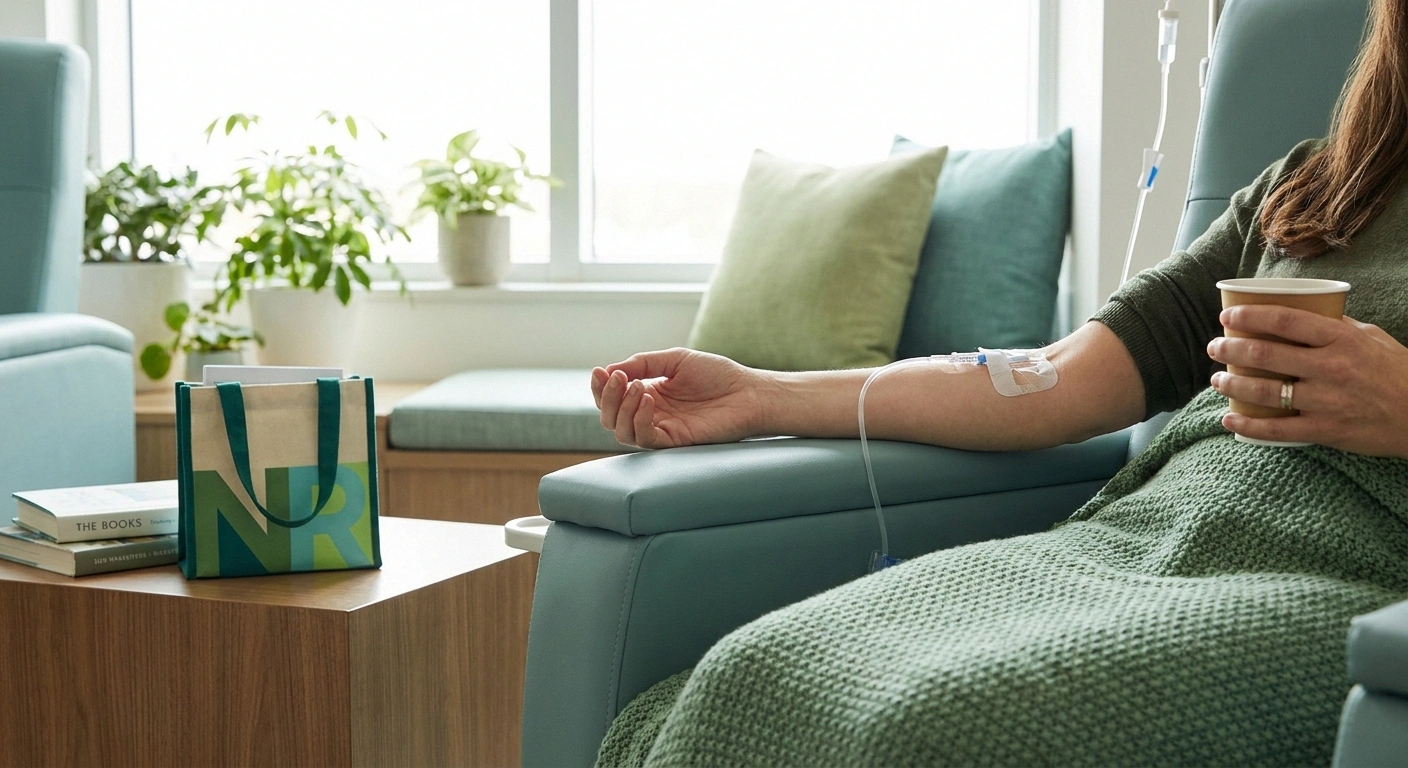
I want to talk today about a cancer drug that many people in our neuropathy community have crossed paths with without necessarily knowing the name. It's called enfortumab vedotin — brand name Padcev — and it has become a mainstay treatment for advanced bladder cancer. It is remarkably effective. It is also remarkably hard on peripheral nerves.
If you or someone you love is on Padcev, or considering it, or has finished treatment and is now living with lingering neuropathy in the feet and hands, this article is for you. I'll cover how the drug damages nerves, what the numbers really look like, when to speak up, and what your oncology team can do about it.
A note before we start: I am not a doctor. I write from the perspective of someone who has lived with neuropathy for years and who translates the medical literature into plain language for people navigating hard treatment decisions. Nothing here replaces the conversation you should be having with your oncologist. It's meant to help you have a better one.
What Enfortumab Vedotin Actually Is
Enfortumab vedotin is what's called an antibody-drug conjugate, or ADC. That's a fancy way of saying the drug is built like a guided missile.
The “guidance system” is an antibody — a monoclonal antibody, in this case — that finds and binds to a protein called Nectin-4 that sits on the surface of many bladder cancer cells. The “warhead” is a chemotherapy molecule called MMAE (monomethyl auristatin E), stuck onto the antibody by a chemical linker. When the antibody binds to a cancer cell, the whole package gets pulled inside, the linker breaks, and the MMAE is released to kill the cancer cell from within.
The design is clever. It concentrates a very potent chemotherapy right where it's needed. But two things complicate the picture. First, Nectin-4 isn't only found on bladder cancer — small amounts sit on healthy skin, bladder lining, and other tissues, which is where the skin toxicity comes from. Second, MMAE that leaks out of dying cancer cells doesn't care what it hits next. And unfortunately, one of the things it hits is the microtubules inside long peripheral nerve axons.
Why This Drug Hurts Nerves
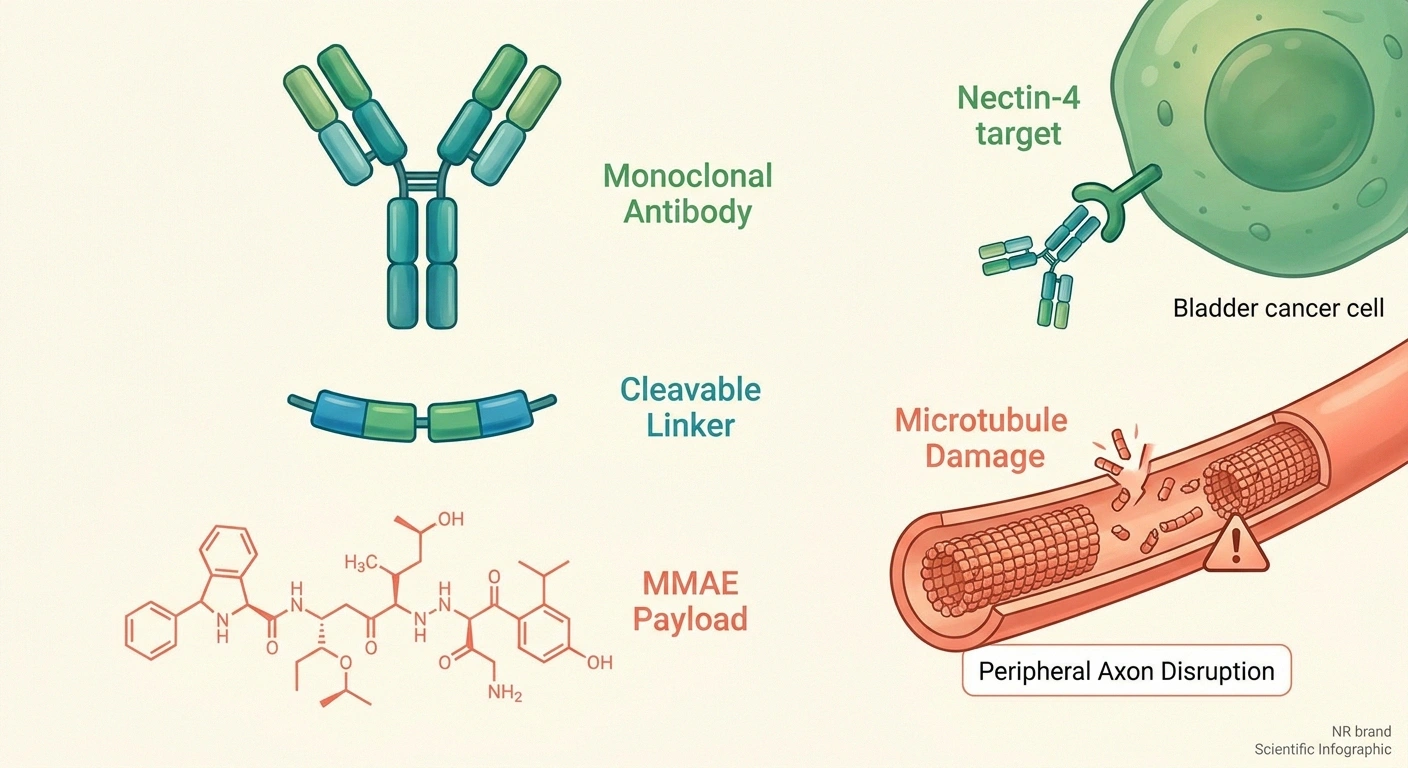
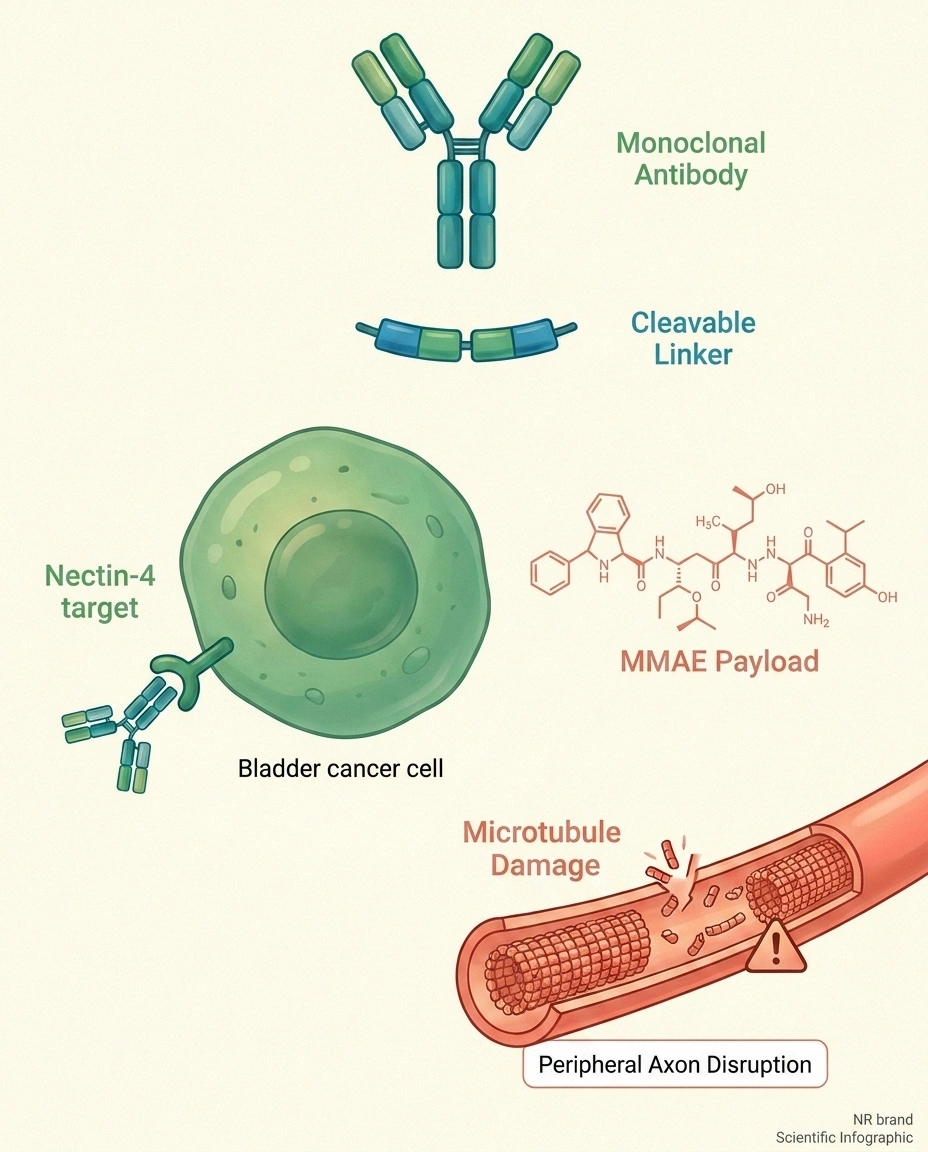
MMAE is a microtubule-disrupting agent. Microtubules are the internal skeletal system inside every cell, and they're especially important inside long peripheral nerves, where they act as a molecular railway that transports proteins, energy, and repair materials from the nerve cell body all the way down to your fingertips and toes.
Break that railway, and the far ends of the nerves — the longest and most vulnerable parts — start to fail first. That's why enfortumab vedotin neuropathy nearly always shows up in the feet and hands, and why it follows the same “stocking and glove” pattern as chemotherapy nerve damage from paclitaxel or vincristine.
You can read our overview of chemo-induced neuropathy for the broader picture — the underlying mechanism in enfortumab vedotin is very similar to the other microtubule-targeting agents.
The Numbers on Enfortumab Vedotin and Nerve Damage
Here's what the clinical trial data show, and I want you to have real numbers so you can weigh things clearly.
Source: Padcev prescribing information + EV-302 combination trial data.
As a single agent (enfortumab vedotin by itself, mostly used in later-line settings):
- Peripheral neuropathy of any grade: around 50% of patients
- Grade 3 or worse (severe, function-limiting) neuropathy: about 4% to 8%
- Neuropathy accounted for 5.8% of dose modifications
In combination with pembrolizumab (the current first-line standard of care for advanced urothelial cancer after the EV-302 trial):
- Peripheral neuropathy of any grade: 65% of patients
- Grade 2 (moderate, interferes with daily activities): 45%
- Grade 3: 3.3%
Those are not small numbers. Roughly two out of every three patients on the modern combination therapy will develop some level of nerve damage from this drug. Nearly half will develop moderate neuropathy that affects daily life.
I share these numbers not to alarm anyone, but because too many patients walk into this treatment without a real understanding of what's likely to happen. When you know it's coming, you can partner with your care team to catch it early and manage it well.
Timing: When to Expect Symptoms
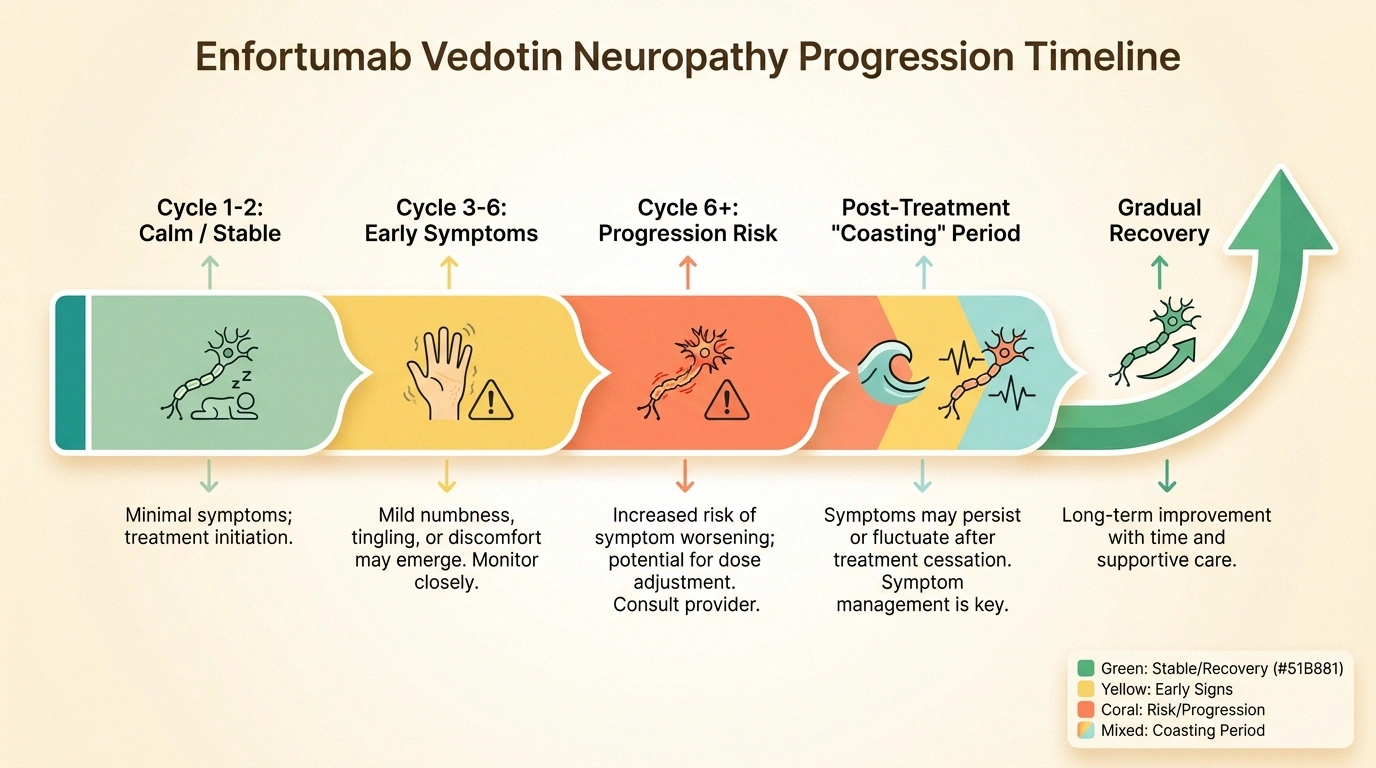
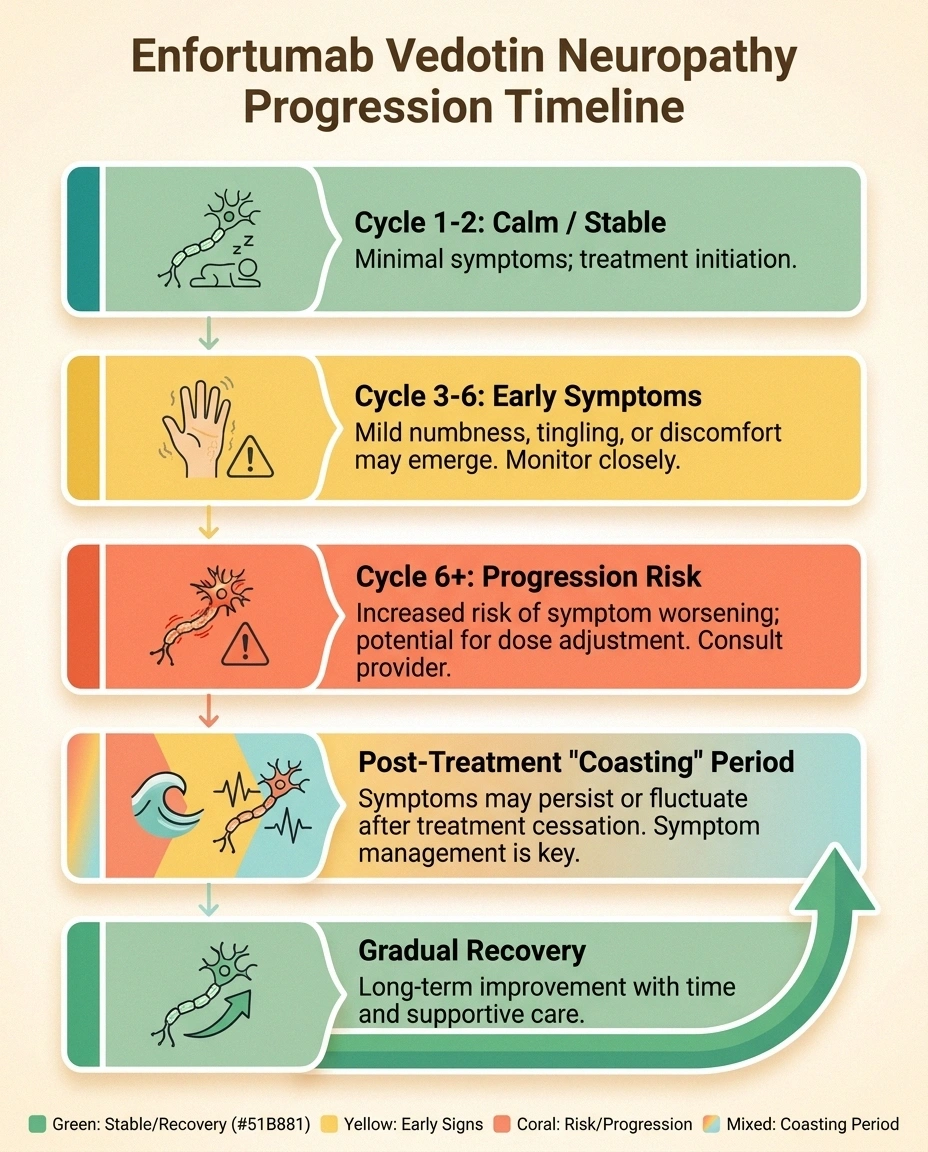
Enfortumab vedotin neuropathy is cumulative. It gets worse with each cycle. The typical pattern:
Cycles 1-2: Most patients feel nothing neurologically. Skin reactions and fatigue may show up early, but nerves are usually quiet.
Cycles 3-6 (weeks 12-24): This is when neuropathy commonly appears. Early symptoms are subtle — tingling in the toes at bedtime, a sensation of numbness that comes and goes, coldness in the feet that wasn't there before. The tips of the fingers may feel less precise when you're threading a needle or buttoning a shirt.
Cycles 6+: If nothing is adjusted, symptoms can progress. Numbness moves up from toes toward the ankle. Walking on uneven surfaces feels less stable. Fine motor tasks get harder. Some patients develop burning pain at night. Others describe “walking on cotton” or “walking on pebbles.”
After the last dose: An important and often surprising phenomenon called coasting. Neuropathy can continue to worsen for weeks or even months after treatment stops, because the microtubule damage is still working its way down the axons. Then, slowly, recovery begins. For most people, sensory symptoms improve gradually over 6-12 months. For some, recovery is incomplete and the neuropathy becomes permanent.
Grade: What the Grading Actually Means
Your oncology team will grade your neuropathy at every visit. It's not medical jargon — it's the framework that drives dose decisions. Here's the plain-English version:
Grade 1: You notice symptoms. Numbness, tingling, or mild loss of sensation. But it doesn't affect what you can do. You still button your shirt, walk normally, feel your feet.
Grade 2: Symptoms interfere with what the medical world calls “instrumental activities of daily living” — the things that make up a functional life. Trouble with small buttons. Difficulty writing legibly. Balance concerns walking on carpet or on uneven ground. You can still get through the day, but activities take longer or are harder.
Grade 3: Symptoms interfere with self-care. You can't fasten your own clothes reliably. You use a cane or walker where you didn't before. You've had a fall or near-fall from your feet not sensing the ground.
Grade 4: Disabling. This is uncommon with enfortumab vedotin but can happen with cumulative exposure.
The critical thing to know: Grade 2 is not a “wait and see” grade. It is the trigger point where your oncologist should be actively discussing dose modification. Don't downplay Grade 2 symptoms to seem tougher. They matter.
What Dose Adjustments Look Like
The Padcev prescribing information gives oncologists a clear playbook for handling neuropathy:
Do not downplay Grade 2 symptoms to “keep the dose up.”
Real-world data show that dose reductions of more than 20% do not meaningfully reduce cancer response with enfortumab vedotin. Pushing through Grade 2-3 neuropathy is much more likely to leave you with permanent nerve damage than to improve your cancer outcome.
- Grade 2: Hold the drug until symptoms return to Grade 1 or lower. Then resume at a lower dose (one dose level reduction).
- Grade 3: Hold the drug until symptoms return to Grade 1 or lower. Then either reduce further or discontinue, depending on the pattern.
- Persistent Grade 2 or worse after dose reduction: Discontinue the drug.
An encouraging finding from real-world experience: dose reductions do not appear to significantly compromise the cancer-fighting effect of enfortumab vedotin. A 2023 retrospective study of metastatic urothelial carcinoma patients found that patients whose relative dose intensity was reduced by more than 20% still had comparable outcomes to those who stayed on full dose.
That matters because it means the “have to keep pushing full dose to beat the cancer” trade-off some patients fear is not as steep as it sounds. Dose modifications for neuropathy are a legitimate, evidence-supported choice, not a compromise of your cancer care.
How to Track Symptoms Between Appointments

The single most useful thing you can do is keep a simple written record between infusions. Not a spreadsheet — just a running note.
Each day, jot down:
- What you can and can't feel in your fingers and toes today
- Any new area of numbness (write down where — “left second toe” is more useful than “worse”)
- Fine motor moments — buttoning, writing, opening jars
- Balance moments — did you catch yourself, did you use a wall, did you avoid a walk
- Any pain, especially burning or shooting pain at night
Bring the notes to your next infusion. This gives your oncology nurse and doctor something objective to work with, rather than the fuzzy “I think it's a little worse” that patients often report because they're afraid of derailing treatment. See our full guide to keeping a neuropathy symptom diary for more on how to track without turning it into a burden.
Talking to Your Oncology Team

Speak up early. Speak up specifically. Speak up honestly.
Specific language triggers action. Vague language triggers waiting.
Say “I dropped three pens this week” instead of “my hands feel funny.” Say “I couldn't feel the gas pedal yesterday” instead of “my feet aren't great.” The specificity is what turns a routine check-in into a dose conversation.
Oncology teams are extraordinarily good at handling chemotherapy nausea, fatigue, and blood-count issues. Neuropathy is where I've seen the biggest disconnect between what patients feel and what their doctors know. Because there's no blood test that shows nerve damage in real time, your oncologist relies almost entirely on what you report. If you say “I'm doing fine,” they take that at face value and keep the dose steady. If you say “I've dropped three pens this week and I couldn't feel the pedal in the car yesterday,” they have information they can act on.
Concrete language works better than general complaints. Instead of “my feet are numb,” try “I couldn't feel the cold tile floor this morning until my ankle” or “I'm not sensing the gas pedal the way I did last month.” That specificity is what triggers a dose conversation.
What Symptom Management Actually Looks Like
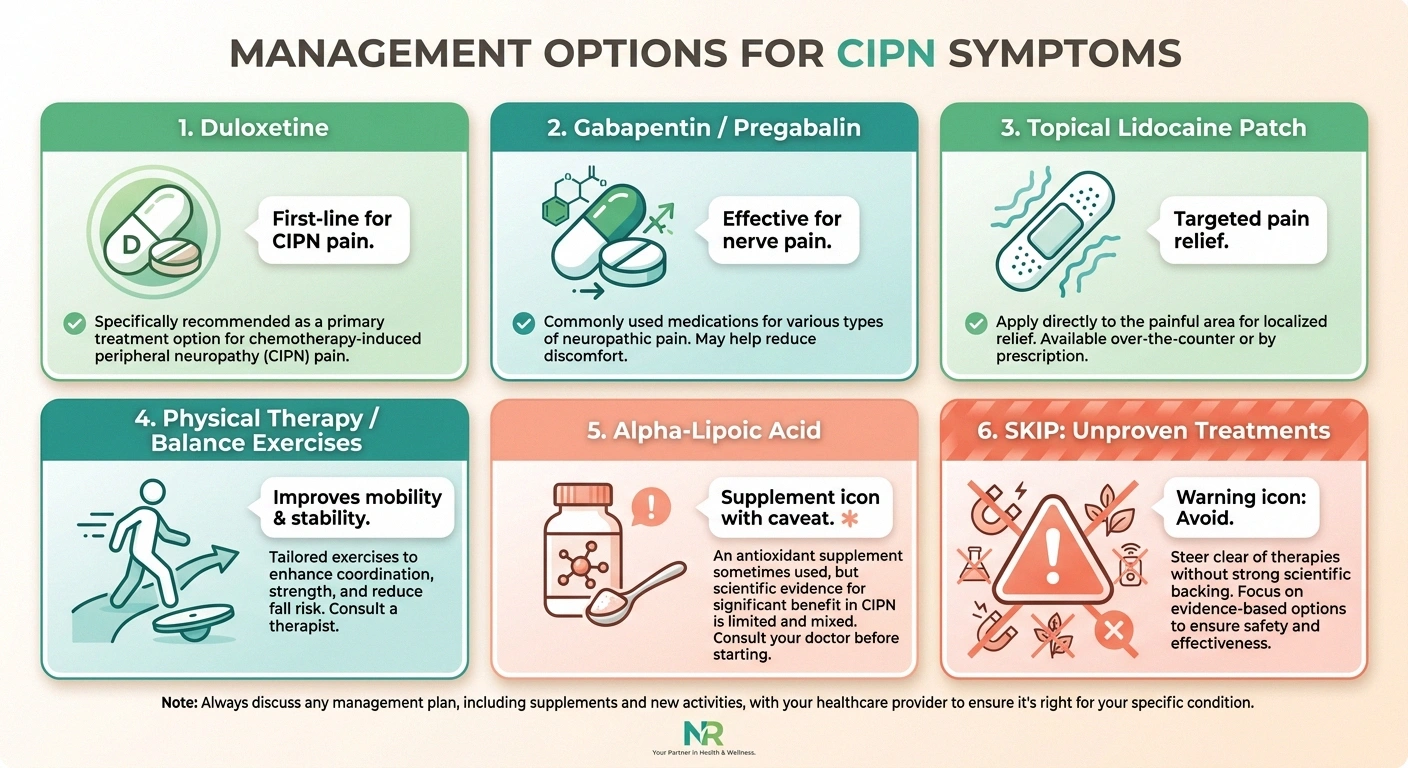
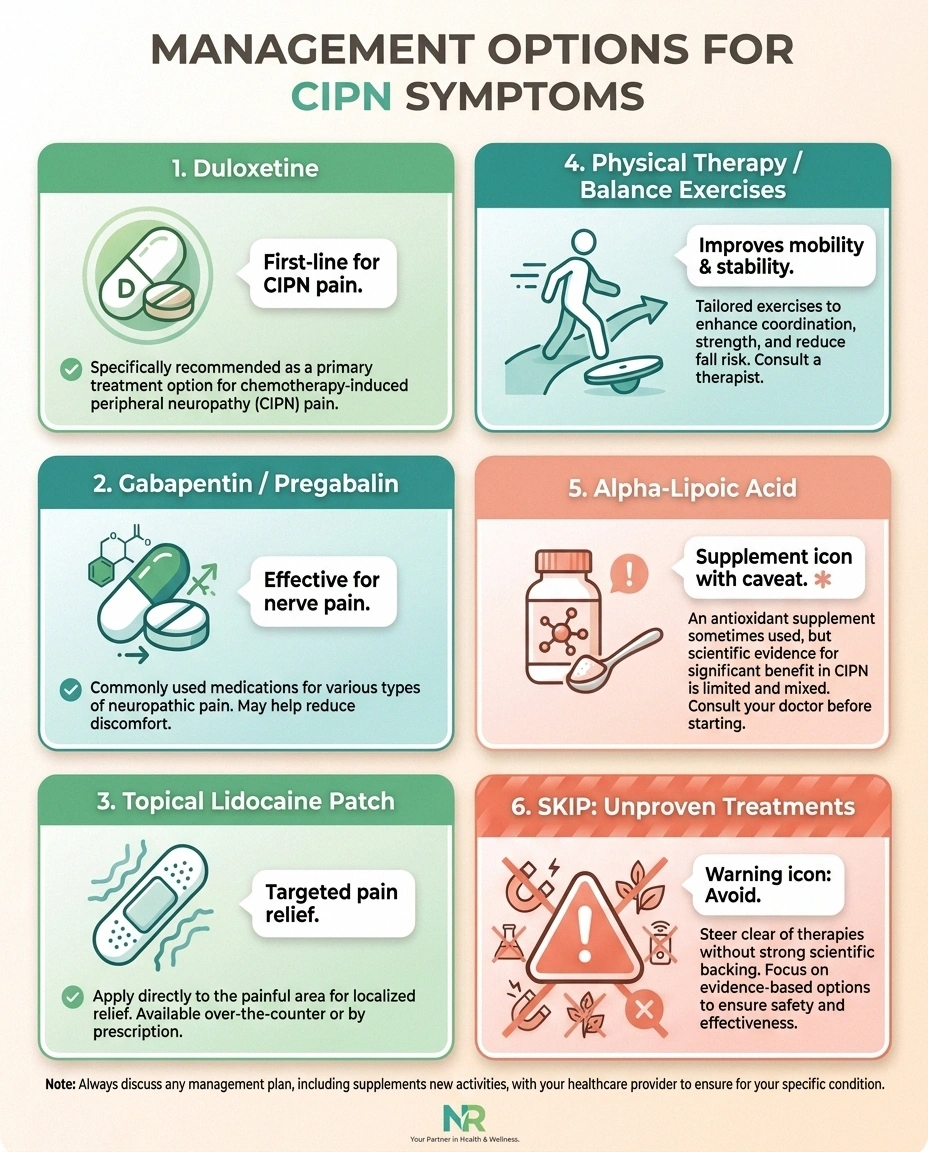
Managing already-present neuropathy from enfortumab vedotin combines two things: reducing the exposure that's causing it (dose adjustments, as above) and treating the symptoms that are already there.
Duloxetine is the medication with the strongest evidence base for chemo-induced peripheral neuropathy pain. It's endorsed as first-line by ASCO (American Society of Clinical Oncology). It's an antidepressant class drug (SNRI) that also modulates pain signals. Typical starting dose is 30 mg daily, increased to 60 mg if tolerated. Not a miracle, but for many patients it reduces the burning and shooting pain enough to sleep.
Gabapentin and pregabalin are also commonly prescribed. The evidence for them in CIPN is weaker than for duloxetine, but they help some people. See our detailed breakdowns of gabapentin for neuropathy for how these medications work.
Topical treatments — lidocaine patches, capsaicin cream, compounded pain creams — can help with focal symptoms without adding another systemic medication.
Physical therapy and balance training is genuinely useful. Not for pain, but for the fall risk that comes with numb feet. Even simple strengthening and balance exercises reduce the risk of a fall that would set your cancer care back much more than the neuropathy itself would.
Alpha-lipoic acid has been studied in chemotherapy neuropathy with mixed results. Some patients report benefit; the trial evidence is inconsistent. If you consider it, discuss with your oncologist first — see our overview of alpha-lipoic acid for neuropathy.
What doesn't reliably work: IV magnesium/calcium infusions (studied primarily for oxaliplatin), most vitamin supplements marketed for neuropathy, and any product that claims to “reverse chemotherapy nerve damage.” Be skeptical of these, especially when they're expensive.
Prevention: What Actually Might Reduce Risk
Here's an honest answer: prevention of enfortumab vedotin neuropathy is an active area of research, and there are no proven interventions that reliably prevent it. That's the truth, and I don't want to sell you snake oil.
- Exercise during treatment — growing evidence of reduced CIPN severity across multiple chemotherapies
- Cryotherapy (cold extremities) — studied primarily in taxanes; some centers use off-protocol for EV
- Prophylactic duloxetine — evidence is early; some oncologists start before symptoms appear
- Metabolic optimization first — good blood sugar, B12, and thyroid status likely improves nerve resilience
No intervention has been proven to prevent enfortumab vedotin neuropathy. Ask your oncologist which of these fit your situation.
Some things being studied or occasionally used:
- Exercise during chemotherapy — a growing body of evidence suggests aerobic exercise and resistance training during treatment reduces the severity of chemo-induced neuropathy across several agents.
- Cryotherapy (cold hands/feet during infusion) has been studied for taxane and platinum drugs. It's not established for enfortumab vedotin specifically, but some centers use it off-protocol.
- Duloxetine started prophylactically — some clinicians start duloxetine early rather than waiting for symptoms. The evidence for prevention (vs. treatment) is still limited.
- Optimizing metabolic health before treatment — controlled blood sugar, good B12 status, treated thyroid disease — likely improves resilience to any neurotoxic chemo, though it hasn't been proven to prevent enfortumab vedotin neuropathy specifically.
Ask your oncologist whether any of these fit your situation. And ask what CIPN prevention research they're following. Some centers are running trials of new agents specifically aimed at preventing chemotherapy nerve damage; being at such a center can matter.
When Recovery Happens (and When It Doesn't)
Most people who develop enfortumab vedotin neuropathy see meaningful improvement in the months after treatment ends. The sensory symptoms — numbness, tingling, cold sensitivity — tend to improve first and most completely. Fine motor and balance changes often improve too, though sometimes more slowly.
But recovery isn't guaranteed for everyone. Studies from paclitaxel and oxaliplatin (which share the same MMAE-like mechanism family) suggest that 30% to 40% of patients with significant chemo-induced neuropathy have some persistent symptoms at 1-2 years post-treatment. Some of those symptoms are mild. Some are life-altering.
The best predictors of full recovery: early dose modification (before Grade 3 hits), shorter total exposure, younger age, absence of other neurological conditions (diabetes especially), and prompt aggressive symptom management during and after treatment.
The Big-Picture Trade-Off

Enfortumab vedotin, especially in combination with pembrolizumab, has genuinely extended survival for people with advanced urothelial cancer. Before this combination became first-line, median survival with metastatic disease was measured in single-digit months. Now it's substantially longer, and some patients experience durable remissions.
That's the trade-off. This treatment gives you more time. It also asks you to accept a real risk of lasting nerve damage. For most people facing advanced bladder cancer, that trade-off is worth making. The goal isn't to avoid neuropathy entirely — the goal is to minimize it through smart dose management while preserving the cancer-fighting benefit.
What matters most, in my experience talking with patients who have walked this road, is not being blindsided. Knowing that this is likely coming, knowing what early symptoms look like, knowing you can and should speak up, and knowing that dose reductions won't ruin your cancer care — all of that changes the experience from “why didn't anyone tell me?” to “this is hard but I'm ready for it.”
Frequently Asked Questions
How likely am I to get neuropathy on Padcev?
In the combination regimen with pembrolizumab, about 65% of patients develop some level of peripheral neuropathy. About 45% develop Grade 2 or worse neuropathy that interferes with daily activities. Roughly 3-4% develop severe (Grade 3) neuropathy. As a single agent, rates are somewhat lower but still substantial.
Will neuropathy from Padcev go away after I stop treatment?
For most people, symptoms improve significantly over the 6-12 months following treatment, especially sensory symptoms like numbness and tingling. But for a meaningful minority — perhaps 30-40% — some symptoms persist longer or become permanent. Early dose modification and shorter total drug exposure improve the odds of complete recovery.
What is coasting?
Coasting refers to neuropathy continuing to worsen for weeks or months after your last dose of a neurotoxic drug like enfortumab vedotin. It happens because the microtubule damage keeps propagating down the axons even after the drug is gone. It can be frightening if you're not warned about it, but it eventually stops and recovery begins.
Can I refuse dose reductions to fight the cancer harder?
You can ask your oncologist to keep the full dose, but real-world data suggest that dose reductions for neuropathy do not meaningfully compromise cancer outcomes with enfortumab vedotin. Pushing through severe neuropathy is more likely to leave you with permanent nerve damage without improving your cancer response.
Are supplements safe to take during Padcev treatment?
Always check with your oncologist first. Some supplements (particularly high-dose antioxidants) can theoretically interfere with cancer chemotherapy. B12 correction if you are deficient is generally safe and reasonable. Alpha-lipoic acid, acetyl-L-carnitine, and other CIPN supplements have mixed evidence and possible interactions worth discussing.
What's the difference between neuropathy from Padcev and diabetic neuropathy?
Both can cause similar symptoms (numbness, tingling, foot pain in a stocking-and-glove pattern), but the causes differ. Diabetic neuropathy is driven by chronic high blood sugar damaging nerves over years. Padcev neuropathy is driven by the drug's microtubule-disrupting effect on axons over months. When someone has both diabetes and receives Padcev, nerve damage tends to be worse and recovery slower.
Should I keep exercising during Padcev treatment?
Yes, if your oncology team clears it. Aerobic exercise, walking, and gentle strength training during chemotherapy have been associated with reduced neuropathy severity across several chemotherapy drugs. Balance training especially matters if you're already developing foot symptoms, because it reduces fall risk.
Cancer treatment in 2026 is doing things that would have been fiction fifteen years ago. Antibody-drug conjugates like enfortumab vedotin are part of that quiet revolution. The nerves pay a price for that revolution, and being informed about that price — knowing when to speak up, what to expect, and how to manage what comes — is one of the best things you can do for yourself as you walk through this.
About the Author