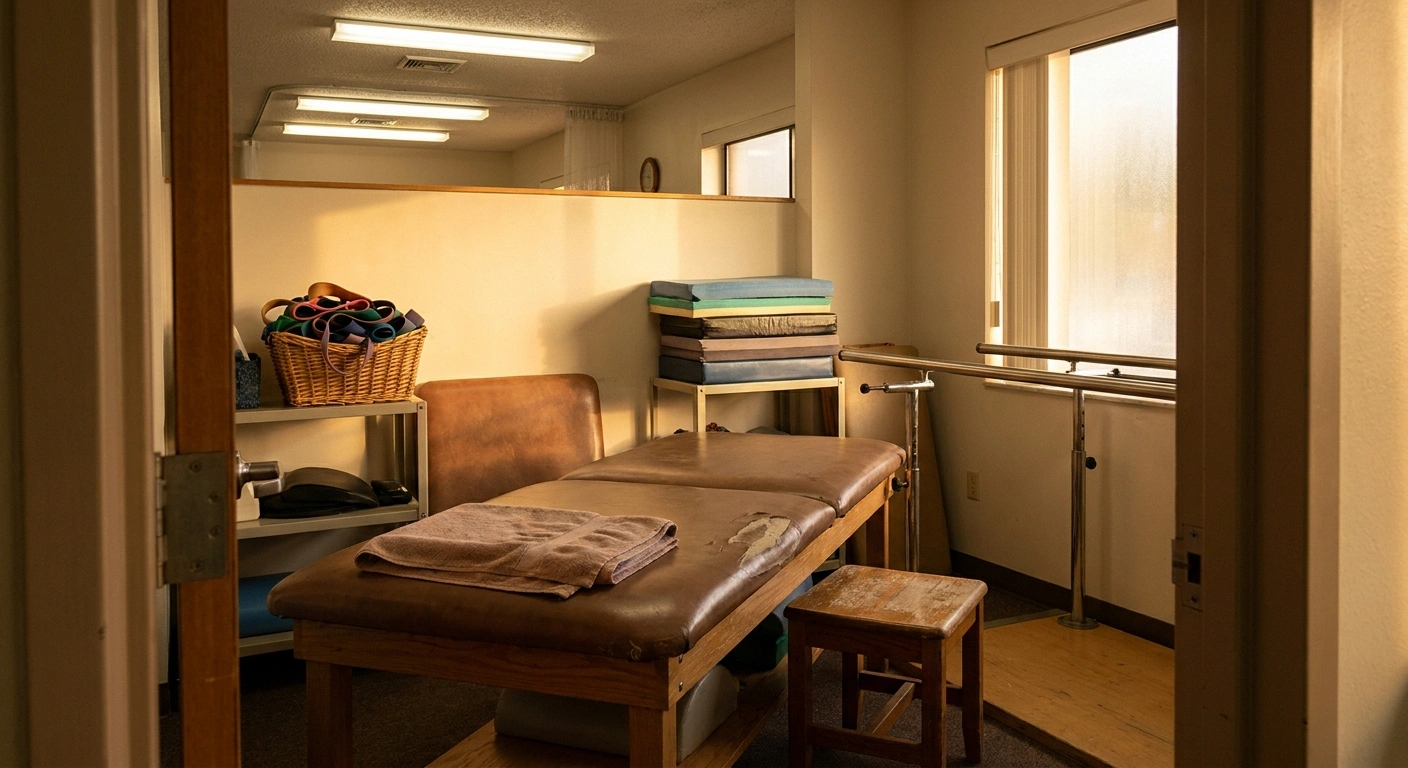
Most people schedule the appointment and then quietly worry about one specific thing: whether they will be asked to do something that hurts, in front of a stranger, and whether saying “I can't” will make them look like they are not trying.
That worry is worth addressing directly, so here it is. A first physical therapy visit for neuropathy is almost entirely talking, watching, and gentle testing. The hard work comes later, at your pace, and the therapist's job on day one is to find out where your limits actually are. Reporting a limit is not failure. It is the data they came for.
What follows is the visit in order, start to finish, plus the handful of things that make a real difference and that nobody tells you in advance.
Before You Go
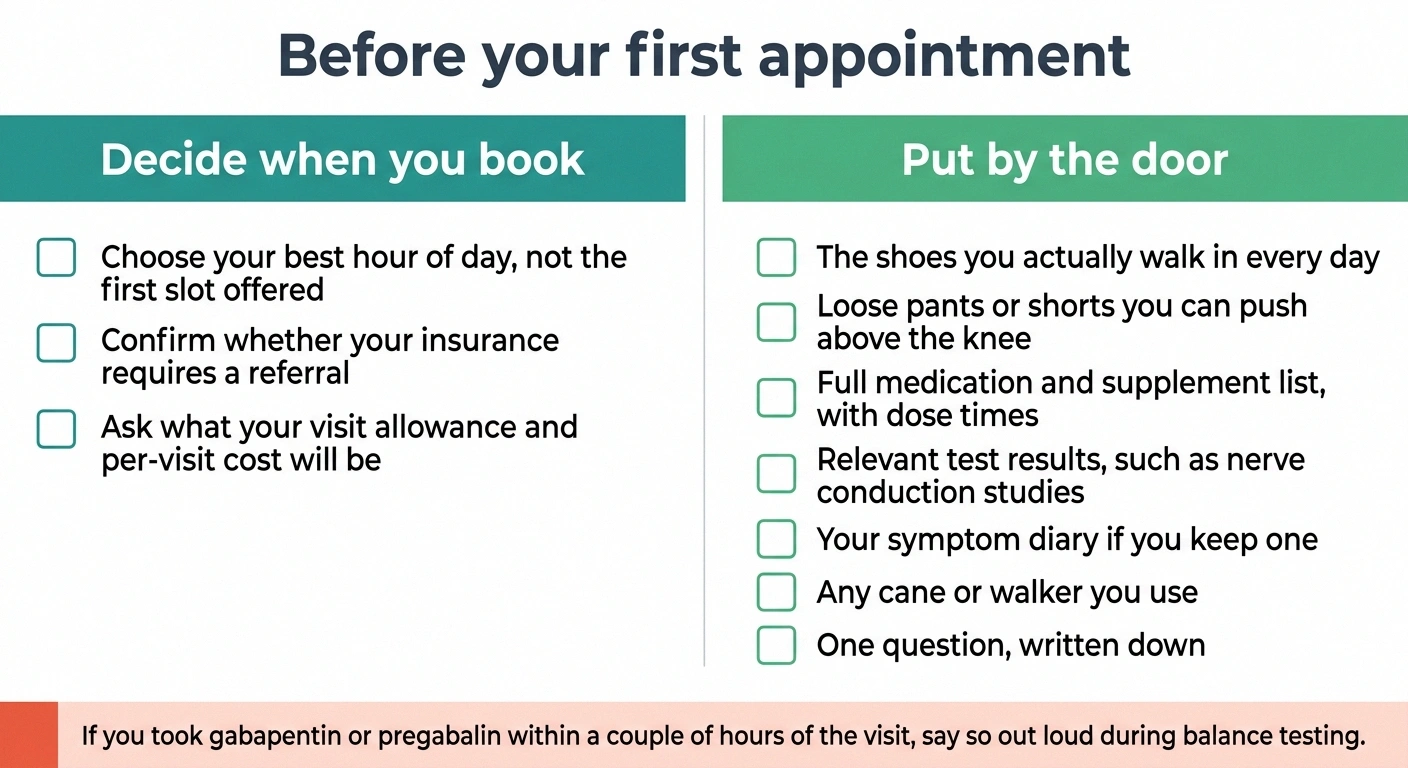
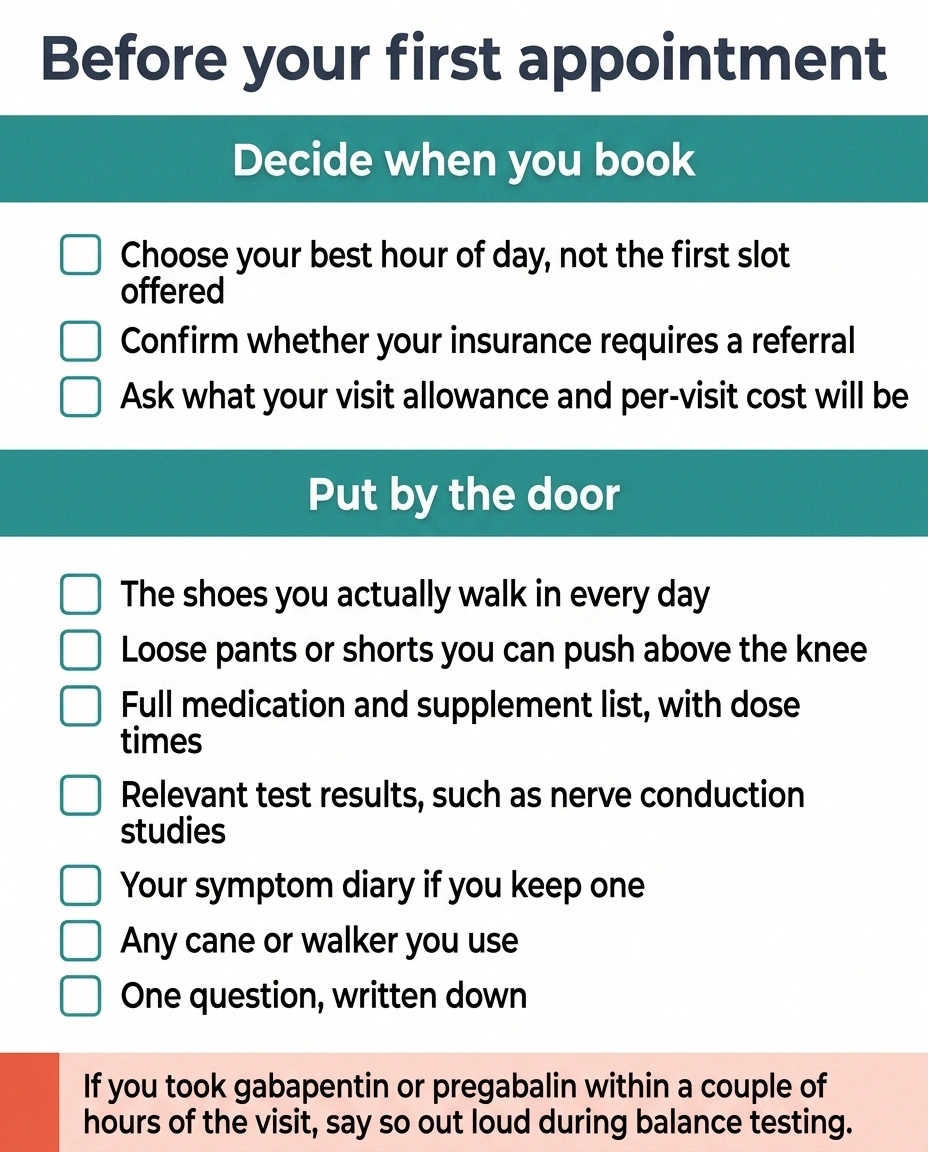
Five things to sort out ahead of time. The first two matter more than people expect.
Book your best hour of the day, not the first slot offered. If mornings are stiff and evenings burn, aim for the window in between. An evaluation done in the middle of a flare produces a plan built around your worst day, and you will be working from that plan for weeks.
Wear the shoes you actually walk in. Not the newest pair, not the ones you keep for appointments. The therapist wants to see the wear pattern on the sole and how you move in your real footwear, and that information is genuinely useful. Bring a second pair if you have been going back and forth about whether they help. If footwear turns out to be part of the problem, you will end up in a longer conversation about what actually works for neuropathic feet, and it helps to start that with evidence in hand.
Wear loose pants or shorts. They need access to your legs and feet. Something you can push above the knee saves an awkward moment.
Bring your full medication list, supplements included. Gabapentin and pregabalin affect balance, and the timing matters. If you took a dose an hour before the appointment, say so out loud during the balance testing. Otherwise a medication effect can get recorded as your baseline.
Write down one question. By minute forty of an evaluation, nearly everyone forgets the thing they most wanted to ask. A note on your phone solves it.
If you have been keeping a symptom diary, bring it. Two weeks of notes about when symptoms flare and what preceded them tells a therapist more in thirty seconds than fifteen minutes of recollection.
The First Twenty Minutes: Your Story

You will sit down, usually in a private room or a curtained bay, and someone will ask you to describe what has been happening.
Four complaints, four different plans
Most people arrive saying “my feet bother me.” Which of these you actually mean determines what gets built.
| If you say | They hear | The plan leans toward |
|---|---|---|
| “I can't feel the floor” | Sensory loss, feedback problem | Balance training, visual strategies, footwear, home safety |
| “It burns at night” | Neuropathic pain, not mechanical | Pacing, graded activity, symptom management, coordination with prescriber |
| “My foot slaps when I walk” | Weakness in the muscles that lift the foot | Targeted strengthening, gait retraining, possible brace assessment |
| “I get dizzy standing up” | Possible autonomic involvement | Position-change training, and a referral back to your physician |
Most people have three of the four in different amounts. Rank them by which one is costing you the most right now, and say that ranking out loud.
Take this seriously, because it shapes everything after it. Expect questions about when symptoms started, how they have changed, what they feel like, where exactly they are, what makes them worse, what helps, how you sleep, what you have stopped doing, and what you want to be able to do again.
Three things worth saying clearly.
Separate numbness from pain. People routinely merge these into one complaint, and they lead to completely different treatment plans. Numbness is a safety and feedback problem, so the plan aims at balance, footcare, and compensating for information your feet are no longer sending. Pain is a symptom management problem. Most people have both, in different amounts, in different places. Say which is which.
Name the specific activity you have lost. Not “I want to feel better.” Say that you have stopped walking the dog past the corner, or that you hold the counter to get from the sink to the table, or that you have not been down to the basement in a year. Goals in physical therapy get written as concrete tasks, and a concrete goal produces a concrete plan.
Mention every fall, including the ones that did not hurt. Trips, stumbles, and near-misses count. People downplay these out of embarrassment, and it is the single most useful piece of information you can offer, because fall risk in neuropathy is the thing therapists are most equipped to reduce.
The Hands-On Exam
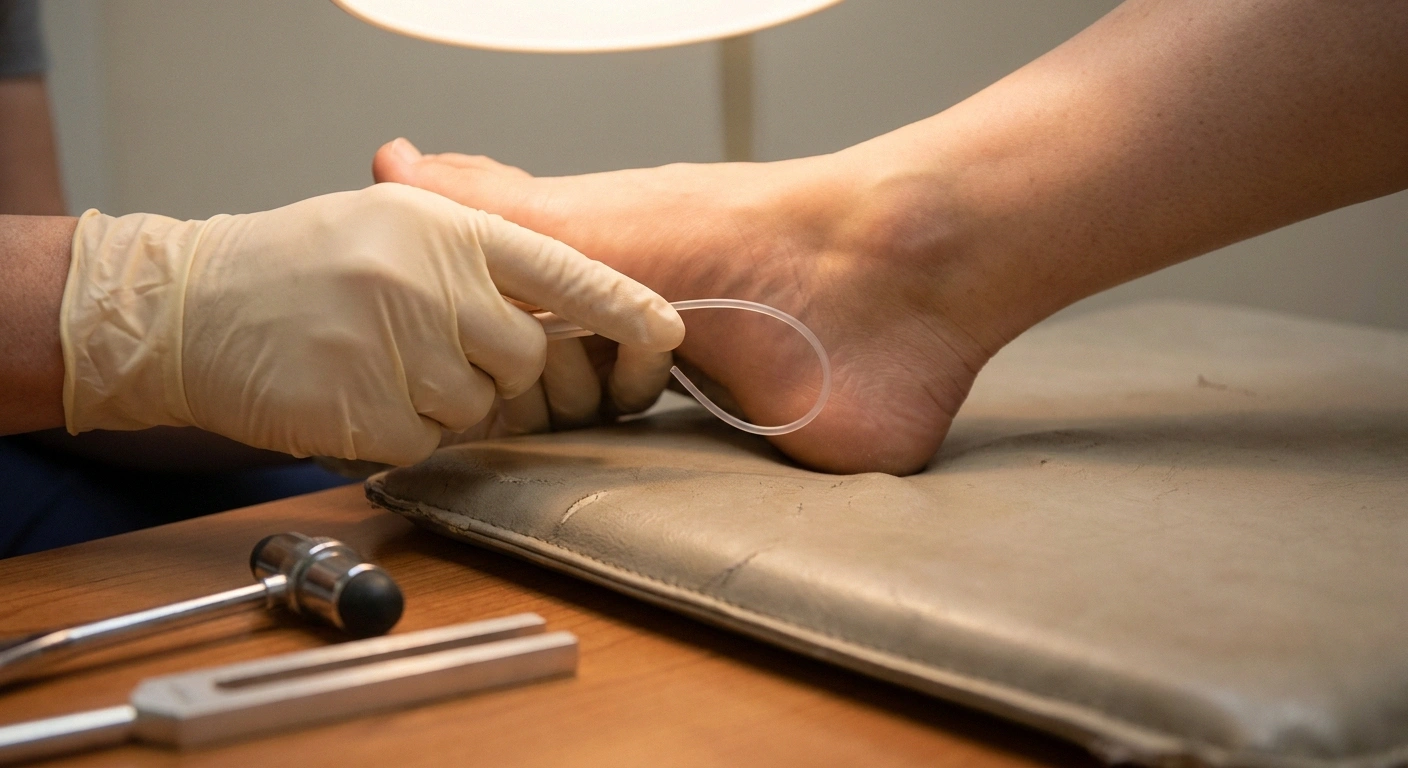
Shoes and socks come off. This portion is unhurried and none of it is designed to hurt.
Ask for a copy of the foot diagram
The sensation results get marked on an outline of both feet, with the spots you felt and the spots you did not. That sheet is your baseline, and it is the only objective record of where your sensation stood on this date.
Two reasons to have your own copy. It gives any future clinician something to compare against rather than starting from scratch, and it tells you which specific areas need the most attention during daily foot checks, since those are the places an injury will go unnoticed longest.
Ask before you leave. Requesting it a month later usually means a records department and a wait.
Sensation testing. The most common tool is a monofilament, a short plastic filament that gets pressed against different spots on your foot until it bends, delivering a standard amount of pressure. You close your eyes and say when you feel it. They may also use a tuning fork for vibration and something cool for temperature. If you cannot feel the filament in certain places, that is information being mapped, not a verdict being handed down. Everyone gets a little tense during this part. It helps to know the results go onto a foot diagram that becomes your baseline for comparison later.
Reflexes. The rubber hammer at the ankle and knee.
Strength. They will ask you to push and pull against their hand at the ankle, knee, and hip. Small weaknesses in the muscles that lift the foot are common in neuropathy and easy to miss without this.
Range of motion. Particularly ankle flexibility, which quietly tightens over years of walking differently and affects everything above it.
Skin check. They will look at the tops and bottoms of your feet, between the toes, and at your nails. Reduced sensation means injuries go unnoticed, so this is a genuine safety inspection and a good moment to ask anything you have been wondering about regarding daily foot care.
Walking and Balance

This is the part people dread, and it is briefer than expected.
You will be asked to walk across the room a few times while the therapist watches from the front, the back, and the side. They are looking at step length, whether your feet clear the floor, how wide your stance is, whether you are watching your feet, and how you turn. Turning is where a lot of neuropathy balance trouble reveals itself.
Then balance testing. Standing with feet together. Standing with one foot slightly ahead of the other. Possibly eyes closed. Possibly on a foam pad, which removes the reliable floor feedback your feet were compensating with. Some clinics use a timed sit-to-stand test or a short timed walk.
Two things to know going in.
Ask for a gait belt or position yourself near a rail. Therapists guard closely during these tests and most will offer, but asking is entirely normal and changes nothing about the result. Nobody is scoring your bravery.
And if you feel unsteady, say so while it is happening rather than after. The moment you feel your body start to search for the floor is exactly the observation the therapist wants, and it often does not show from the outside.
The Plan, and the Homework
The visit ends with the therapist explaining what they found and what they propose. Expect some combination of balance training, strengthening for the ankles and hips, gait work, stretching, and possibly manual therapy or modalities depending on the clinic.
You will leave with a home exercise program. This is the part that determines your outcome. Two or three supervised sessions a week cannot compete with daily practice, and therapists consistently report that the people who improve are the ones who do the home work. Expect two to four exercises, ten to fifteen minutes, most days.
Ask for it written down or on video before you leave. A demonstrated exercise looks obvious in the room and becomes surprisingly ambiguous in your kitchen on Thursday.
Two questions to ask before you walk out
How many visits, how often, and for how long? You need this for scheduling, for your insurance visit limit, and for knowing whether the plan is on track.
What does finishing look like? Ask what specific change would tell you both that it is working. Naming the target on day one turns a vague course of treatment into something you can actually measure.
Will It Make the Pain Worse?
The honest answer is that some temporary increase in symptoms after new activity is common, and it should settle within a day.
Call the clinic instead of waiting for Thursday
Ordinary soreness settles overnight and gets reported at the next visit. These do not wait:
- A new blister, cut, or red area on a foot you cannot fully feel
- Swelling or warmth in one foot or ankle that was not there before
- New or worsening weakness, particularly if the foot is catching on the floor
- Pain that is still clearly elevated more than 48 hours after a session
- A fall, even one that did not injure you
Clinics expect these calls and would far rather adjust the program early than find out three weeks later. Reporting a problem is participation, not complaint.
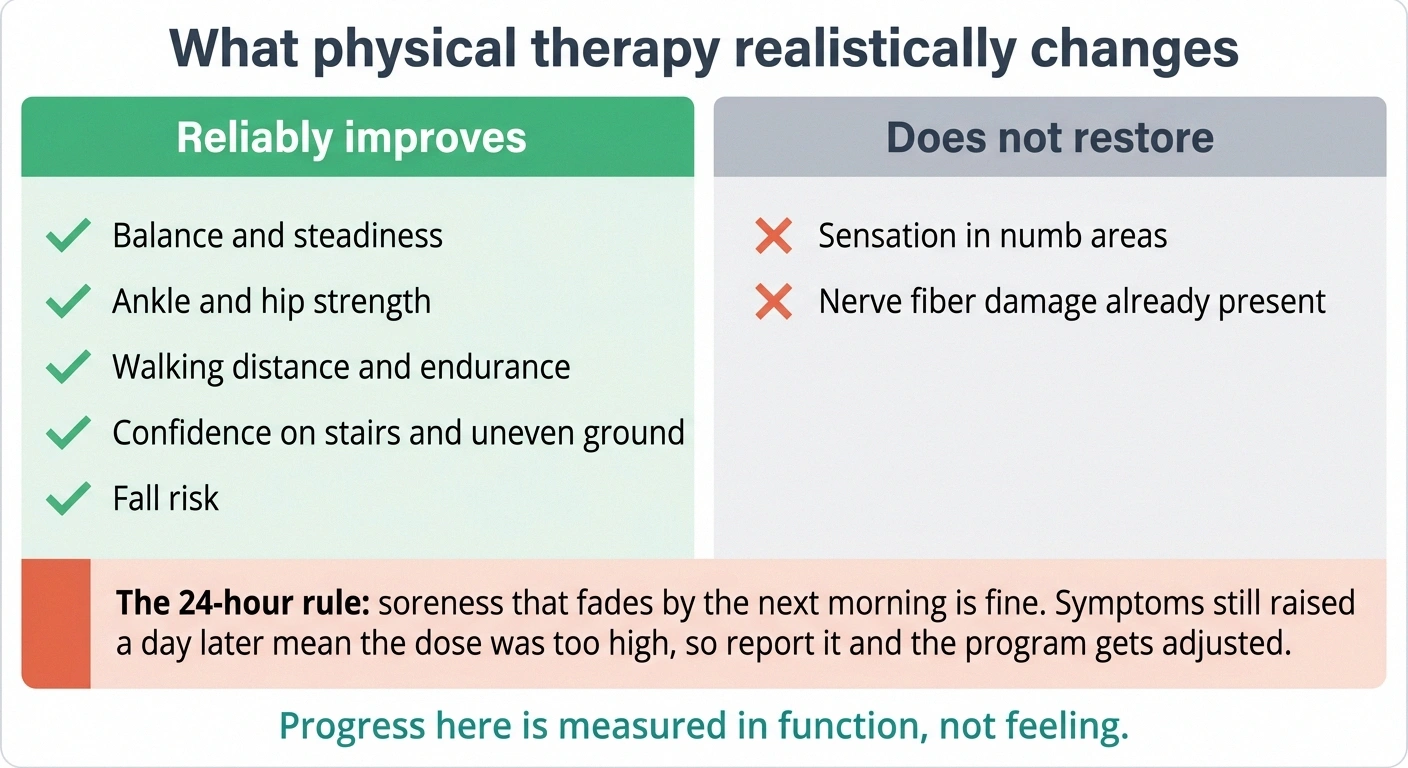
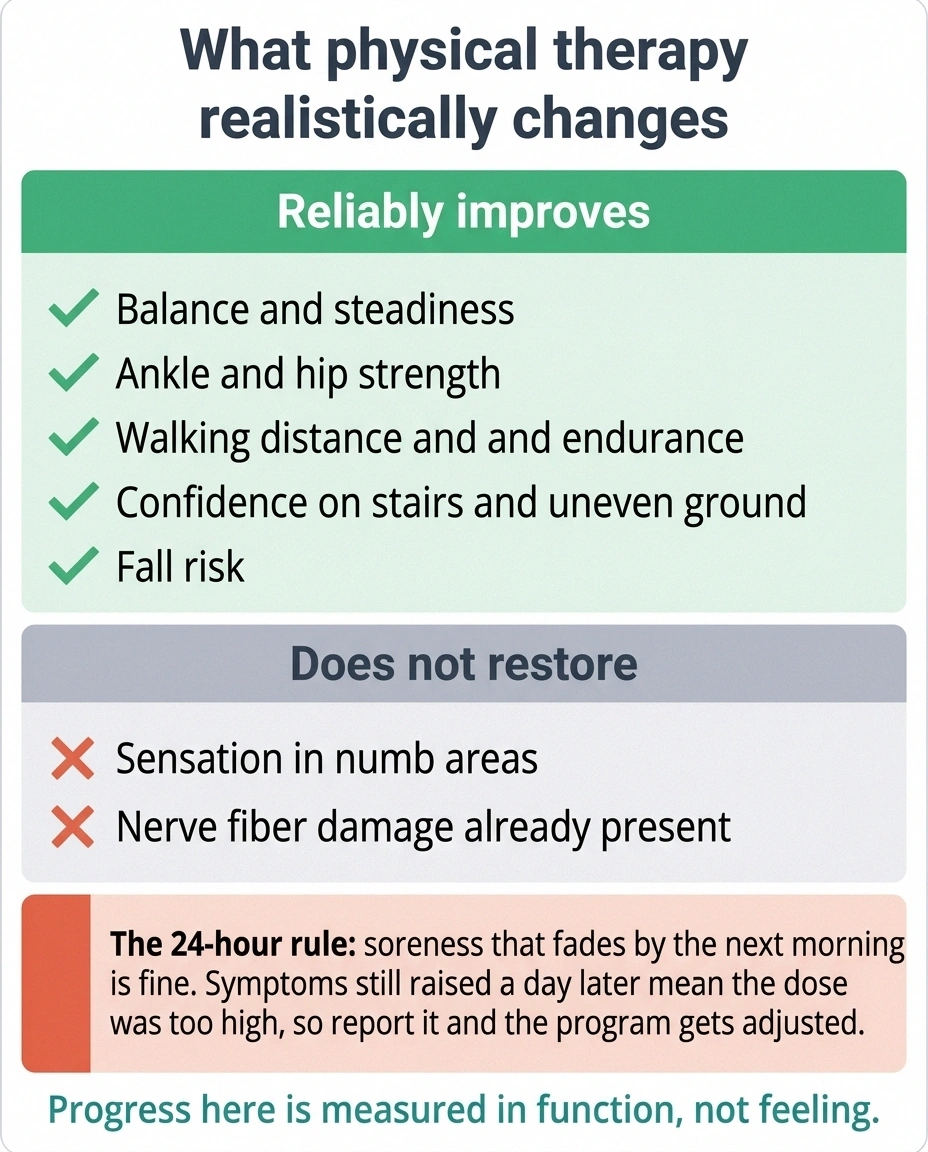
The rule most therapists use is that soreness which fades by the next morning is acceptable, while pain that is still elevated 24 hours later means the dose was too high. That is not a reason to stop. It is a reason to report it at the next session so the exercises can be adjusted, which is a routine conversation and not a complaint.
A good therapist working with neuropathy expects this and builds up gradually. If yours is pushing through clearly worsening symptoms without adjusting, that is worth raising directly, and it is reasonable to ask for a therapist with more nerve-related experience.
What Comes After
Follow-up visits are shorter, usually 30 to 45 minutes, and mostly consist of doing the exercises with supervision while the therapist progresses the difficulty and corrects your form.
Progress in neuropathy rehab is usually measured in function rather than sensation. Physical therapy is not going to restore feeling to numb feet. What it reliably improves is balance, strength, walking distance, confidence, and fall risk, and those are the outcomes that determine how your day actually goes. The broader case for physical therapy in neuropathy rests on exactly those gains.
Many people continue with a maintenance routine long after formal sessions end, and the ones who keep it up hold their gains. If you are eventually looking for more to work with, both gentler exercise routines and a structured walking habit pair well with what a therapist gives you.
One last thing. You are allowed to say that something feels wrong, that you are frightened of a particular movement, or that you would rather try it holding onto something first. Every one of those is useful clinical information, and the appointment goes better when you offer it.
Frequently Asked Questions
How long does the first physical therapy visit for neuropathy take?
Typically 45 to 60 minutes. Evaluations run longer than follow-up appointments, which are usually 30 to 45 minutes. Arrive 15 minutes early for paperwork if you have not completed it online.
What should I wear to physical therapy for neuropathy?
Loose pants or shorts that can be pushed above the knee, and the shoes you actually walk in day to day rather than your newest pair. Your therapist needs access to your legs and feet and wants to see how you move in your real footwear.
What should I bring to my first appointment?
Your insurance card and referral if required, a complete medication and supplement list, any relevant test results such as nerve conduction studies, your symptom diary if you keep one, any assistive device you use, and one written-down question.
Do I need a referral to see a physical therapist for neuropathy?
It depends on your state and your insurance. Most states allow some form of direct access to physical therapy without a physician referral, but many insurance plans still require one for coverage. Call your insurer before booking to confirm.
Will physical therapy make my nerve pain worse?
A temporary increase in symptoms after new activity is common and should settle within about a day. Soreness that resolves by the next morning is generally acceptable. Symptoms still elevated 24 hours later mean the exercise dose was too high and should be reported so the program can be adjusted.
What tests will the therapist do at the first visit?
Expect sensation testing with a monofilament and possibly a tuning fork, reflex testing, manual strength testing at the ankle, knee, and hip, range of motion measurement, a skin and nail inspection of your feet, observed walking, and standing balance tests that may include eyes closed or a foam surface.
How many physical therapy sessions will I need for neuropathy?
This varies widely with your goals, severity, and insurance limits. Ask directly at the first visit for the proposed number of visits, the frequency, and the criteria for discharge, so you can plan and track whether the program is working.
Can physical therapy restore feeling in numb feet?
Physical therapy does not typically restore lost sensation. Its established value is in improving balance, strength, walking capacity, and confidence, and in reducing fall risk, which are the outcomes that most affect daily function.
Does insurance cover physical therapy for neuropathy?
Most plans including Medicare cover physical therapy when it is medically necessary, though visit limits, copays, and prior authorization requirements differ considerably. Confirm your visit allowance and your per-visit cost with your insurer before starting, and ask the clinic to verify benefits.
About the Author