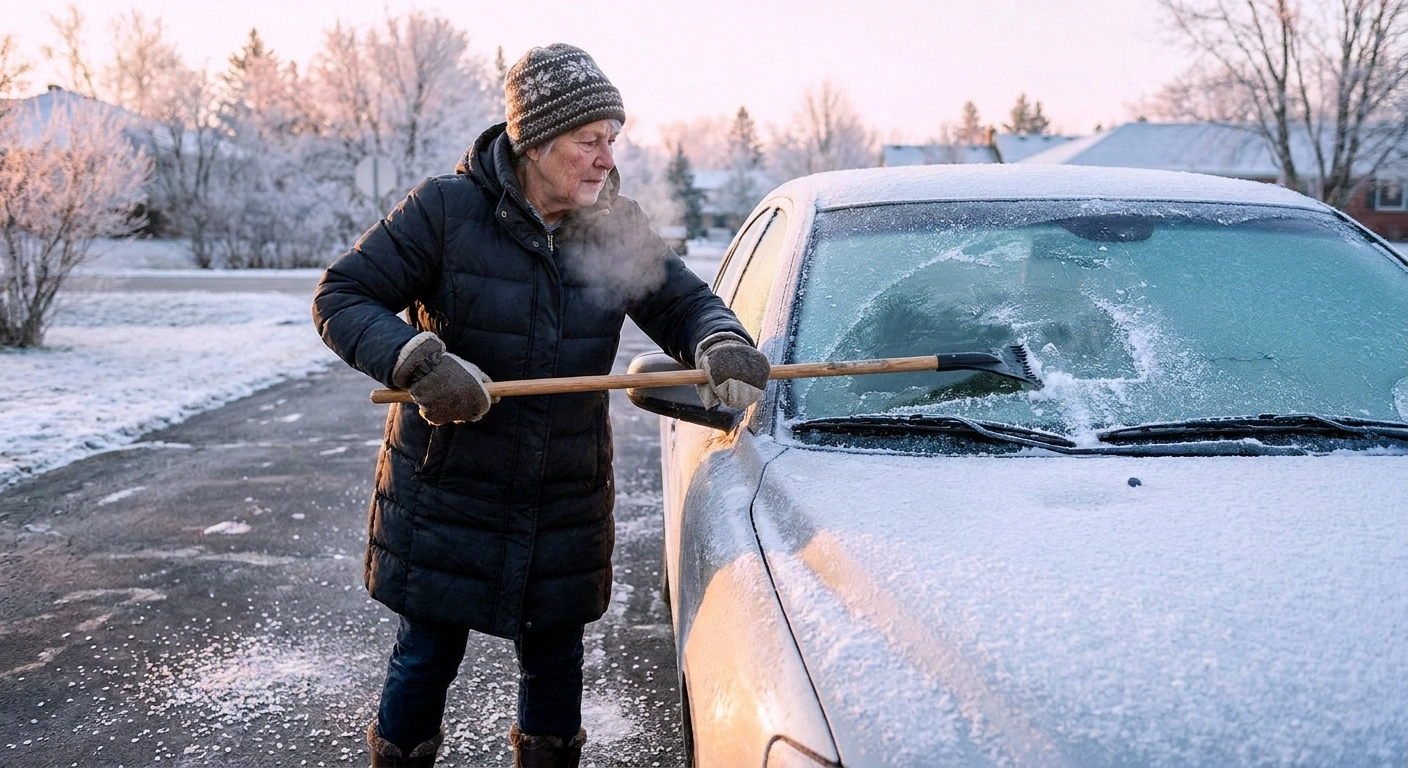
Frost doesn't wait for a freeze warning. On clear, calm nights it can form while the air is still in the mid-30s, according to the National Weather Service — which is why the first white windshield of the season so often catches people unprepared. You step out with your keys and your coffee, the glass is coated, and the scraper is buried somewhere in the trunk.
For most drivers that's a five-minute nuisance. With neuropathy in your hands, it's a chore with several quiet ways to go wrong. Fingers that judge cold poorly make a poor frostbite alarm. A weak grip turns a plastic scraper into a wrestling match. Numb feet on a glazed driveway, plus a long reach across the glass — that's a fall waiting for an excuse. And the easiest fix, warming up the car, brings a hazard you can't see or smell.
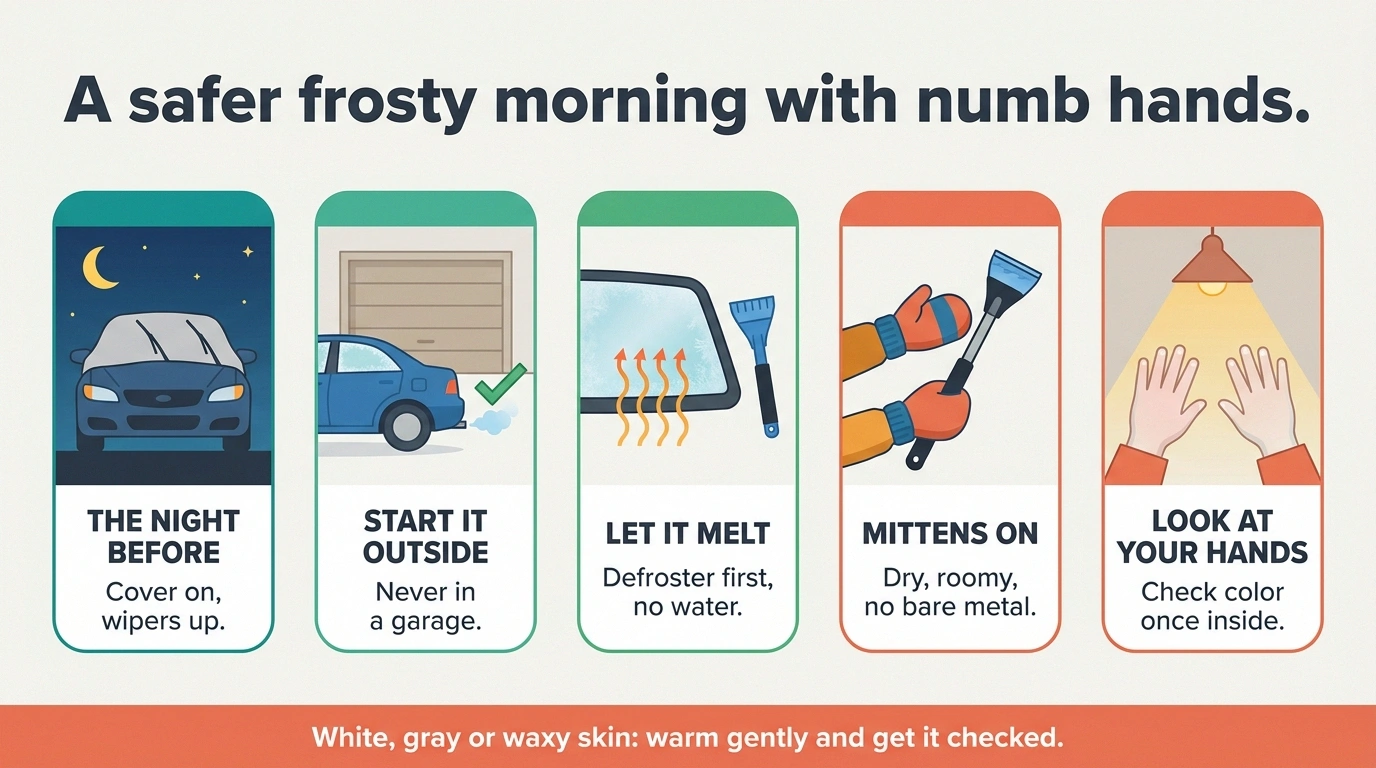
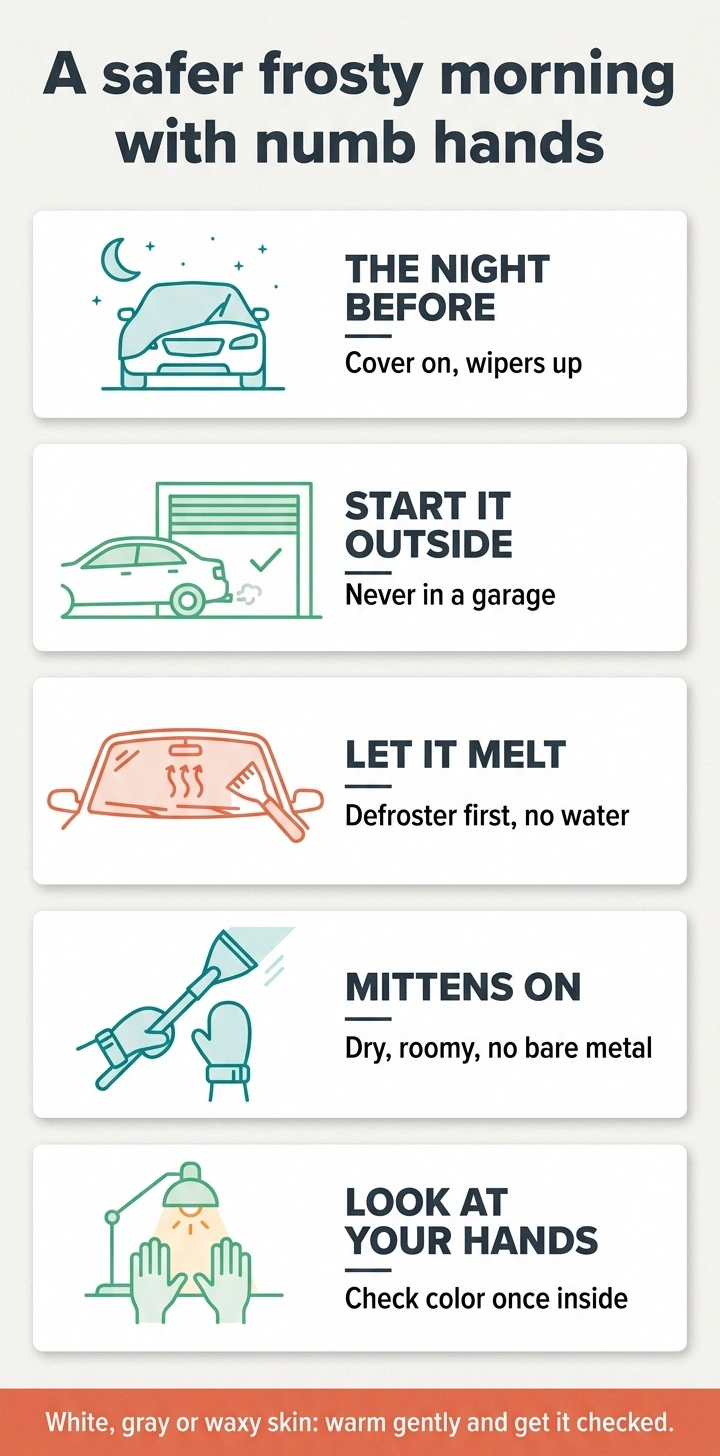
So this is the whole frosty morning, start to finish, from the night before to the minute you're back inside looking at your hands. The safety rules come from the CDC, the National Weather Service, NIOSH (the federal workplace-safety institute), the NIDDK and a few state agencies. Where something is simply my own habit, I'll say so. It's written for the winter ahead, as of October 2026, and none of it is legal or medical advice.
Two Alarms Neuropathy Turns Down
The NIDDK's description of peripheral neuropathy reads like an inventory of everything this chore depends on. People with it can lose some of their ability to sense pain or temperature in the hands and feet, the agency says, and they can lose balance and muscle tone in the hands and feet too. It can change the way you walk and make it harder to sense movement or position. Put those together and you've lost the two built-in alarms that normally handle a frosty morning: the sting that says your fingers have had enough, and the steady footing that catches you when a heel slides.
Age stacks on top of that. The CDC notes that our ability to feel a change in temperature decreases with age, and that older adults often make less body heat. The Weather Service adds that circulation problems and some medicines can reduce your ability to resist the cold, and it lists tricyclic antidepressants among the drugs that may cause a problem. Some doctors prescribe a tricyclic for nerve pain, so if you take one, it's worth asking whether it changes your cold-weather risk.
Timing makes it worse. The coldest part of the day is typically the early morning, the Weather Service says, and that's also when black ice is most dangerous after a night below freezing. It's exactly when most of us are out scraping. My page on neuropathy in the hands goes deeper on the grip and numbness side of this.
Frostbite You Might Not Feel Coming
Frostbite is a freezing injury that robs the affected skin of both feeling and color, in the CDC's description. Here's the uncomfortable part — even people with healthy nerves miss it. The CDC notes that people often don't realize they have frostbite until somebody else spots it, precisely because the frozen skin has gone numb. It lists poor blood circulation as something that raises your chances, and a NIOSH guide written for employers names diabetes, a past case of frostbite, and contact with metal or water among the risk factors. A bare hand on an icy door handle counts, and so does a glove soaked through with slush. Then there's the overlap I can't stop noticing. NIOSH's list of frostbite symptoms includes numbness, tingling or stinging, and aching. Those are the same sensations many of us live with every single day. If your fingers always tingle, tingling can't tell you anything new. The signs worth trusting are the ones you can see, so get in the habit of looking at your fingers instead of waiting to feel them.
| What the skin looks like | What the agencies say to do |
|---|---|
| Redness, or pain if you can feel it | Frostbite may be starting. Get out of the cold or cover the skin. |
| White or grayish-yellow skin, or skin that feels unusually firm or waxy | Signs of frostbite. Seek medical care, and rewarm gently in the meantime. |
| Blue or gray, very swollen, blistered, or hard and numb even under the surface | Go to a hospital as soon as possible. |
Sources: CDC, Preventing Frostbite (2026); National Weather Service, During Extremely Cold Weather.
It doesn't take long, either. The Weather Service says frostbite can happen in minutes, especially on fingers, toes, nose and ears. Its own example: with the thermometer at zero and a 15 mph breeze, the wind chill drops to -19°F, cold enough to freeze bare skin in half an hour. Wind chill alone doesn't cause frostbite, though — according to the Weather Service, you can only get it when the actual air temperature near your skin is below freezing. Hypothermia is another matter, and the CDC says it can happen even above 40°F if you get chilled and wet. Its warning signs include shivering and fumbling hands, and the CDC says a body temperature below 95°F needs medical attention immediately.
If Your Fingers Look Wrong
The CDC's first-aid steps are worth knowing almost word for word, because the instinctive moves are the wrong ones. If you notice signs of frostbite, seek medical care. Until you can get it, the CDC says: “Do not rub the frostbitten area with snow or massage it at all. This can cause more damage.” Put the affected areas in “warm—not hot—water,” meaning water that feels comfortable to the touch for unaffected parts of your body, or tuck frostbitten fingers into an armpit. And this line matters most for us: “Do not use a heating pad, heat lamp, or the heat of a stove, fireplace, or radiator for warming. Affected areas are numb and can easily burn.”
The Weather Service adds hot water bottles and hair dryers to the list of things to avoid (“You may burn yourself before feeling returns”) and says to remove rings, watches and other tight jewelry. By the same logic, I never hold numb fingers against a car's hot air vent. Whatever happens at home, the CDC says frostbite should be checked by a health care provider. My page on why heating pads and numb skin don't mix explains that burn risk in more detail.
Warming the Car Without Breathing Its Exhaust
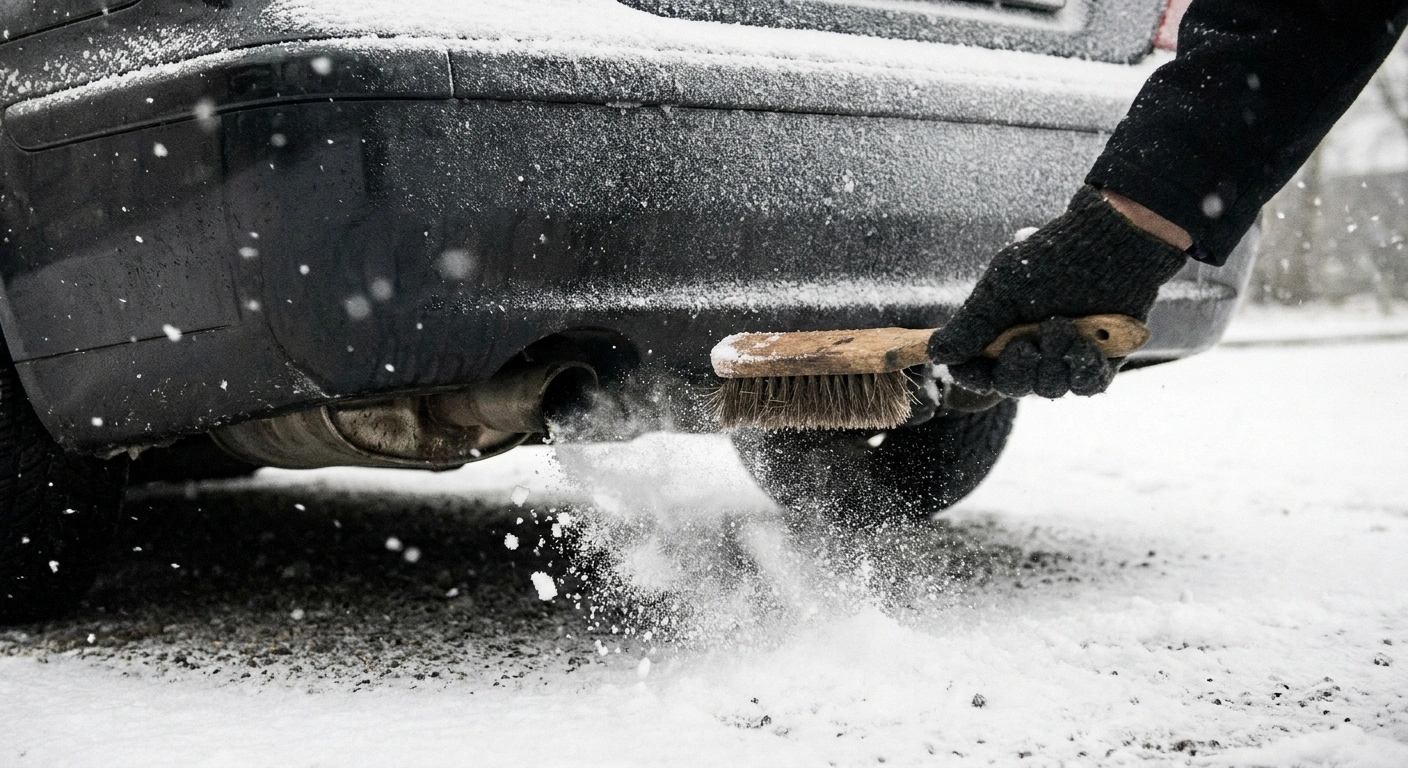
Letting the defroster soften the ice first means far less scraping force, which is the whole game for weak hands. It's also where people make the most dangerous mistake of the season. The CDC is blunt: never run a car or truck inside a garage attached to a house, “even with the garage door open.” For a detached garage, it says to always open the door before running a vehicle inside. Vermont's health department goes further, warning that an open door “does not keep CO from building up” and advising people to start the car and get it out of the garage right away.
Remote starters deserve their own warning. Vermont's health department notes that they “may turn on a vehicle by accident,” and that keyless systems can make it easy to start a car, or leave it running, without meaning to. The Rhode Island State Police add two rules of their own: never warm a vehicle in an enclosed area such as a garage, and never leave it unattended while it warms up.
Snow is the other trap. Vermont's page says an exhaust pipe covered with snow can cause carbon monoxide to build up inside the car, and the Weather Service's advice is simple: before you drive, make sure the exhaust pipe is clear. The CDC also suggests having a mechanic check the exhaust system every year, since a small leak can let CO collect inside.
Why so much caution? The CDC calls carbon monoxide “an odorless, colorless gas that kills without warning.” Each year more than 400 Americans die from unintentional CO poisoning not linked to fires, and more than 100,000 visit an emergency department. Those figures cover every source, not just cars, but the elderly are among the groups the CDC says are more likely to get sick from it. The CDC lists headache, dizziness, weakness, upset stomach, vomiting, chest pain and confusion as the most common symptoms. As a general safety rule, if anyone near a running car feels that way, turn the engine off if you safely can, get everyone into fresh air and call emergency services.
What I do: once the tailpipe is clear and the car is outside, I start it, turn the defroster up and sit in the driver's seat with the door shut while the glass softens. It keeps me out of the wind, keeps the car attended and saves my hands for the last few passes.
Most of the Work Happens the Night Before
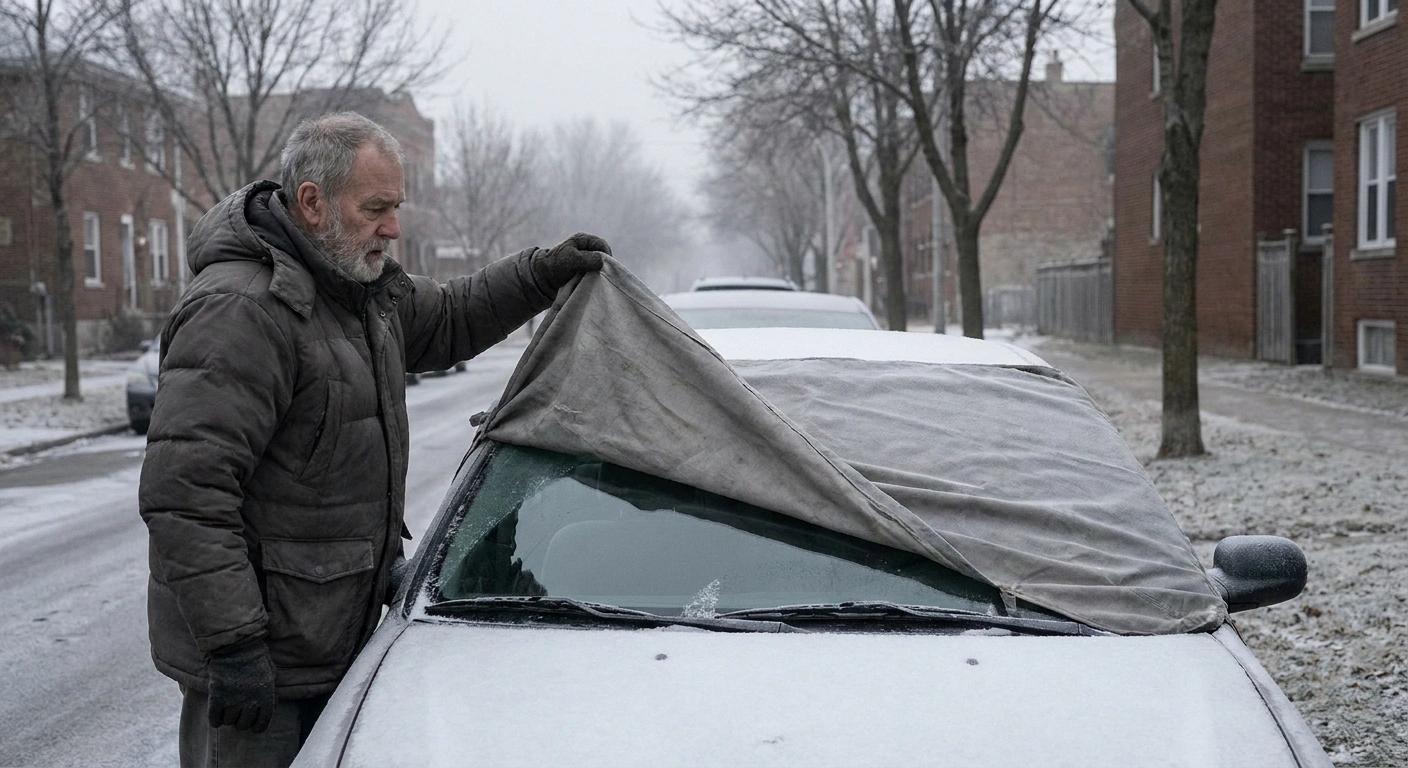
The best scraping session is the one you never have to do. AAA calls a garage the most effective way to prevent ice on a windshield, says even a covered carport can help, and says a windshield cover works nearly as well when sheltered parking isn't an option, though it may scratch the paint. AAA also suggests folding the wiper arms up off the glass when freezing weather is expected.
- Swap the windshield-wiper fluid for a wintertime mixture.
- Check the heater, defroster, brakes, battery and exhaust.
- Keep the tank close to full, which helps prevent ice forming in the tank and fuel lines.
- Keep a scraper and brush in the car, even if you usually park in a garage.
- Stash extra hats, mittens and blankets in the car.
A few habits of my own, for what they're worth. I put the cover on the evening before, while the glass is dry and my hands are warm, instead of wrestling it off a frozen windshield in the morning. I keep a long-handled scraper with a brush on the other end, so I'm not leaning over the hood at full stretch. And there's a spare pair of dry mittens in the glove box, because a wet pair stops working fast.
Let the Defroster Melt It First
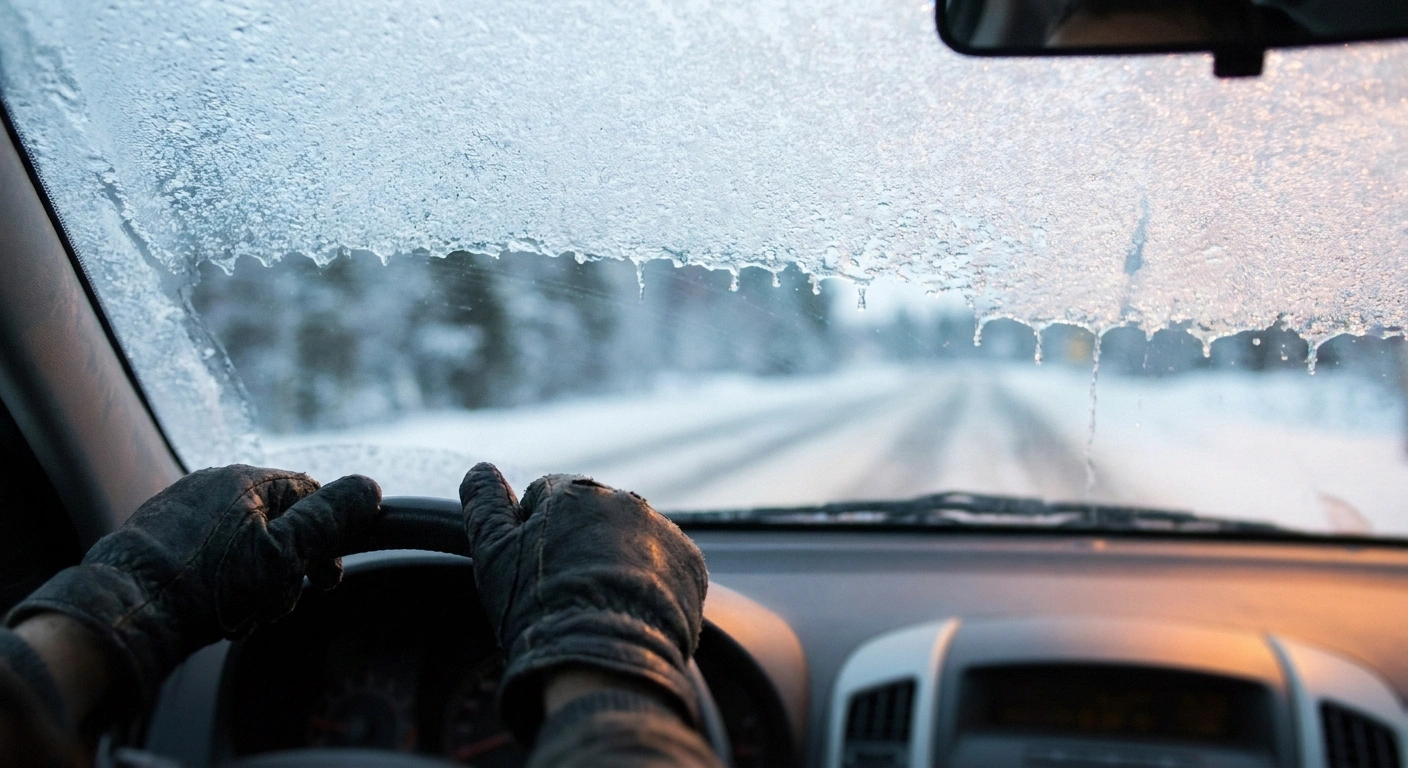
Once the car is running, AAA's order of operations is defroster first, then scraping as the ice begins to melt, with a plastic scraper, the wipers, a rubber squeegee or a soft brush. Metal scrapers are out, since they can scratch the glass and damage the wiper blades. AAA also wants ice and snow cleared from all the glass, not just a porthole in front of the steering wheel.
Then there's the shortcut that keeps getting passed around online. Don't pour water on the windshield, hot or otherwise. The CDC puts it plainly: “Never pour water on your windshield to remove ice or snow—this can cause your windshield to shatter.” AAA calls hot water a no-no because the sudden temperature change can crack glass. Neither says it always will, but a broken windshield on a freezing morning is a poor trade for a few minutes saved.
De-Icer Sprays and Washer Fluid Are Chemicals
AAA says commercial de-icer sprays generally contain methanol, and that some products contain ethylene glycol. The CDC warns against getting gasoline or alcohol on your skin while de-icing, because it makes your body lose a lot more heat. That matters more when your hands can't tell you a glove has soaked through. AAA also mentions that some people mix their own de-icer from rubbing alcohol and water; I couldn't find any testing of that home mix, so I'd treat it as untested.
- Methanol (many sprays and washer fluids)
- Irritates eyes and skin and can cause headache and dizziness; swallowed, it can damage the optic nerve and cause blindness. NIOSH's first aid for swallowing it is medical attention immediately. A 1994 EPA fact sheet said a few teaspoons can blind and a few tablespoons can be fatal if untreated.
- Isopropyl, or rubbing, alcohol (home mixes)
- Irritates the eyes, nose and throat, can cause drowsiness and dizziness, and leaves skin dry and cracking.
- Ethylene glycol (some de-icers and antifreeze)
- Odorless but sweet-tasting, which is how accidental swallowing happens. Get medical attention as soon as possible if it's swallowed, and keep skin contact to a minimum.
These products are poisons if swallowed, so I keep de-icer and washer fluid in their original closed containers on a high shelf, away from grandchildren and pets. If anyone does swallow de-icer, washer fluid or antifreeze, get medical help right away, even if they seem fine. Many washer fluids contain methanol, so it's worth reading the label before you top up.
Mittens, Dry Gloves and No Bare Metal
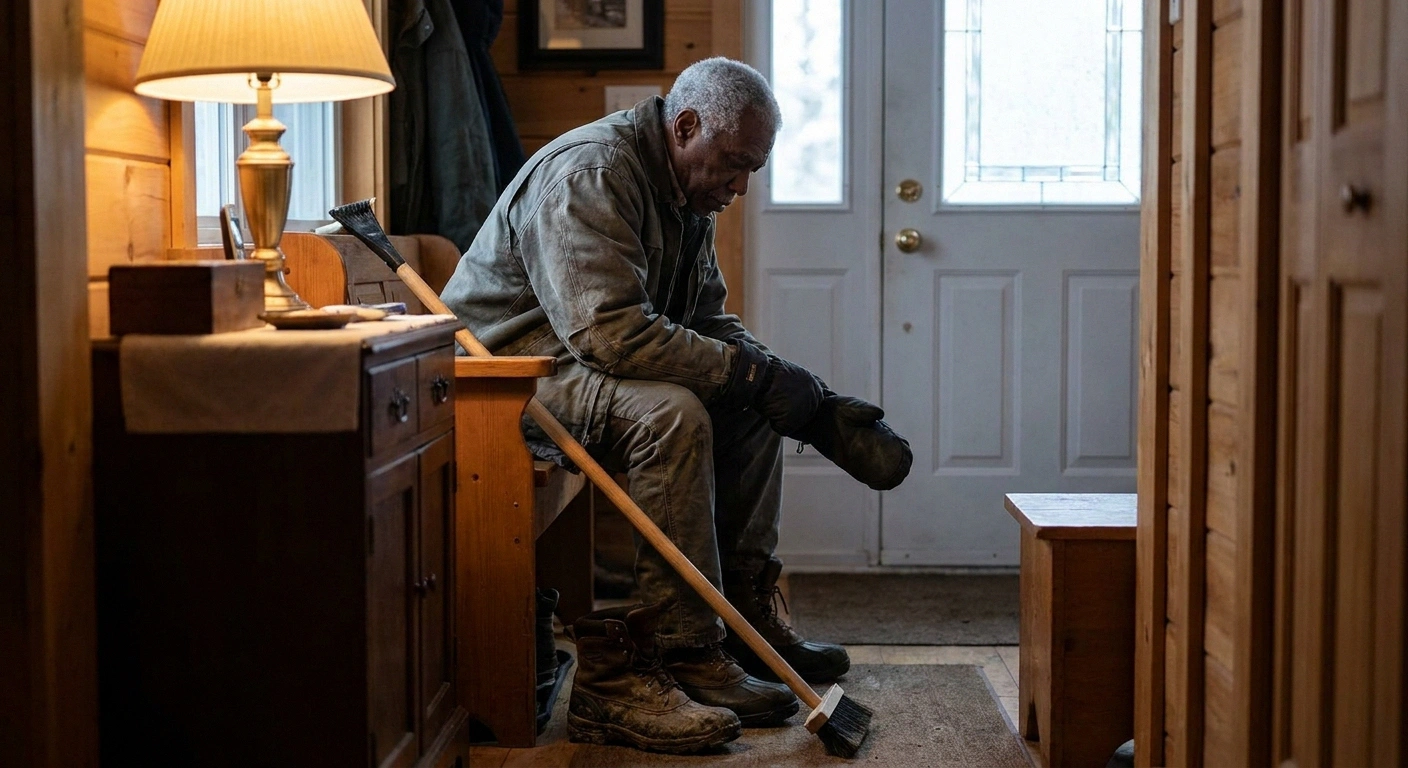
On the mittens-versus-gloves question, the federal agencies agree. The CDC recommends mittens because “they are warmer than gloves,” and the Weather Service says mittens snug at the wrist are better than gloves. Staying dry matters just as much: wet clothing chills the body quickly, the CDC notes.
Fit is the part people miss. NIOSH warns that tight clothing reduces blood circulation to the extremities and that some clothing can restrict movement, which is a real problem when you're trying to grip a scraper. In one NIOSH workplace case, workers chose thin gloves over thicker, better-insulated ones so they could handle things, and their hands got cold and numb. So I look for mittens roomy enough not to squeeze, with a palm that grips. NIOSH also says to keep bare skin off cold metal, which covers door handles, the gas cap and a metal scraper blade. My guide to pumping gas safely with neuropathy has more on bare metal and a winter car kit.
The Few Steps Between the Door and the Car
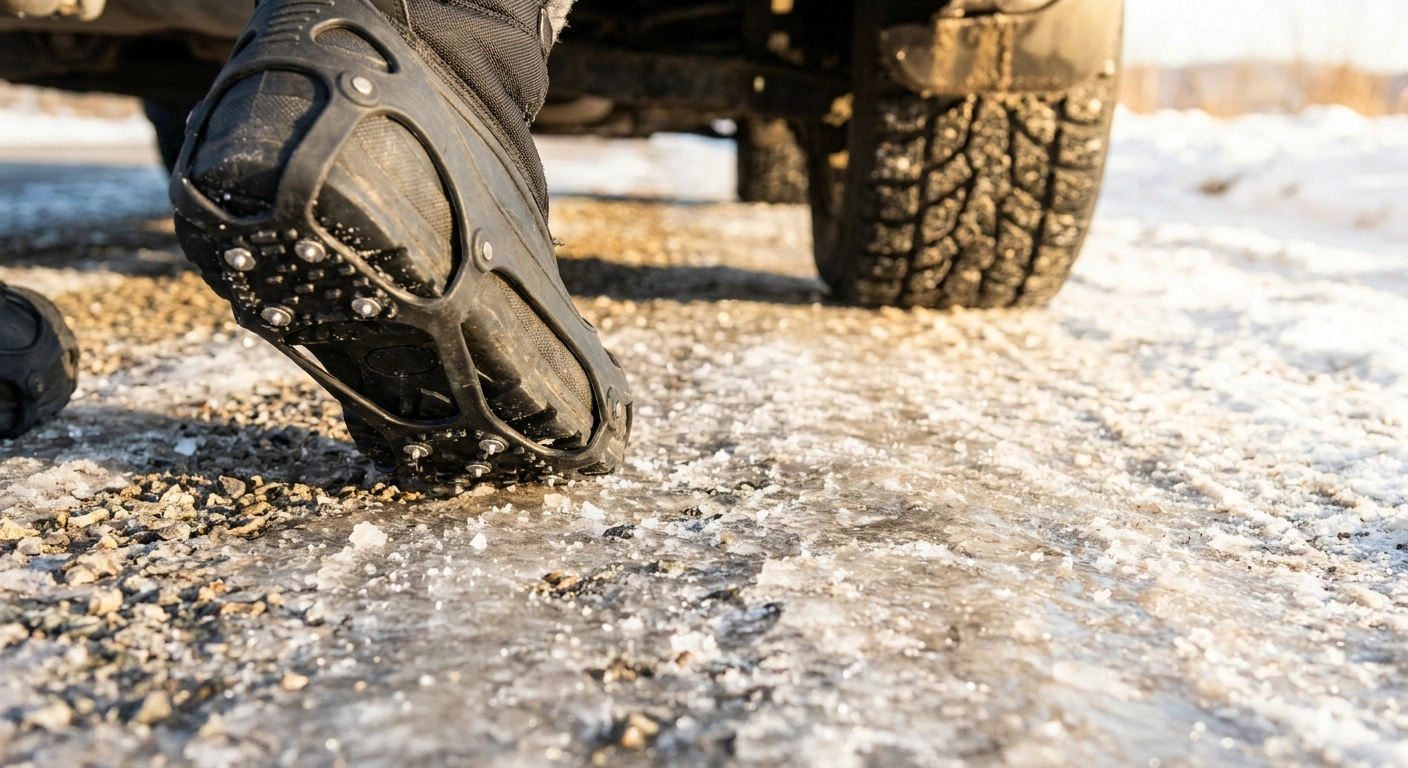
The CDC calls walking on ice extremely dangerous and traces a large share of winter injuries to falls on frozen walkways, porches, steps and driveways. It suggests keeping steps and walkways as free of ice as possible with rock salt or another de-icing compound, or using sand to cut the risk of slipping. My own routine is to salt the path to the driver's door the evening before a frost.
Traction devices have a little real evidence behind them. In a randomized trial published in 2005, 109 fall-prone adults aged 65 and older in the northern United States (average age 74.2) kept fall diaries through one winter. Those wearing the study's slip-on gait-stabilizing device had fewer outdoor falls on snow and ice days, with a relative risk of 0.42, and fewer injurious falls, at 0.13. Twelve of the 19 outdoor falls in the device group happened when people weren't wearing it, and no one in either group had a serious injury or fracture. It's one device, one winter and one group of people — none chosen for neuropathy — so I read it as encouraging rather than proof. Two observational studies from Sweden, where some towns hand out ice cleats to older residents, point the same way, though the researchers say the results still need replicating.
Beyond that, it's habit. I take short, flat-footed steps on anything shiny, keep one hand on the car as I walk around it, and stand on the cleared side to scrape. If I'm wearing cleats, they come off before I step onto a hard indoor floor or get behind the wheel. Those are my tips, not research. If you're weighing a cane for winter, my page on canes and other walking aids covers how to choose one.
Clearing the Whole Car, and What Some States Require
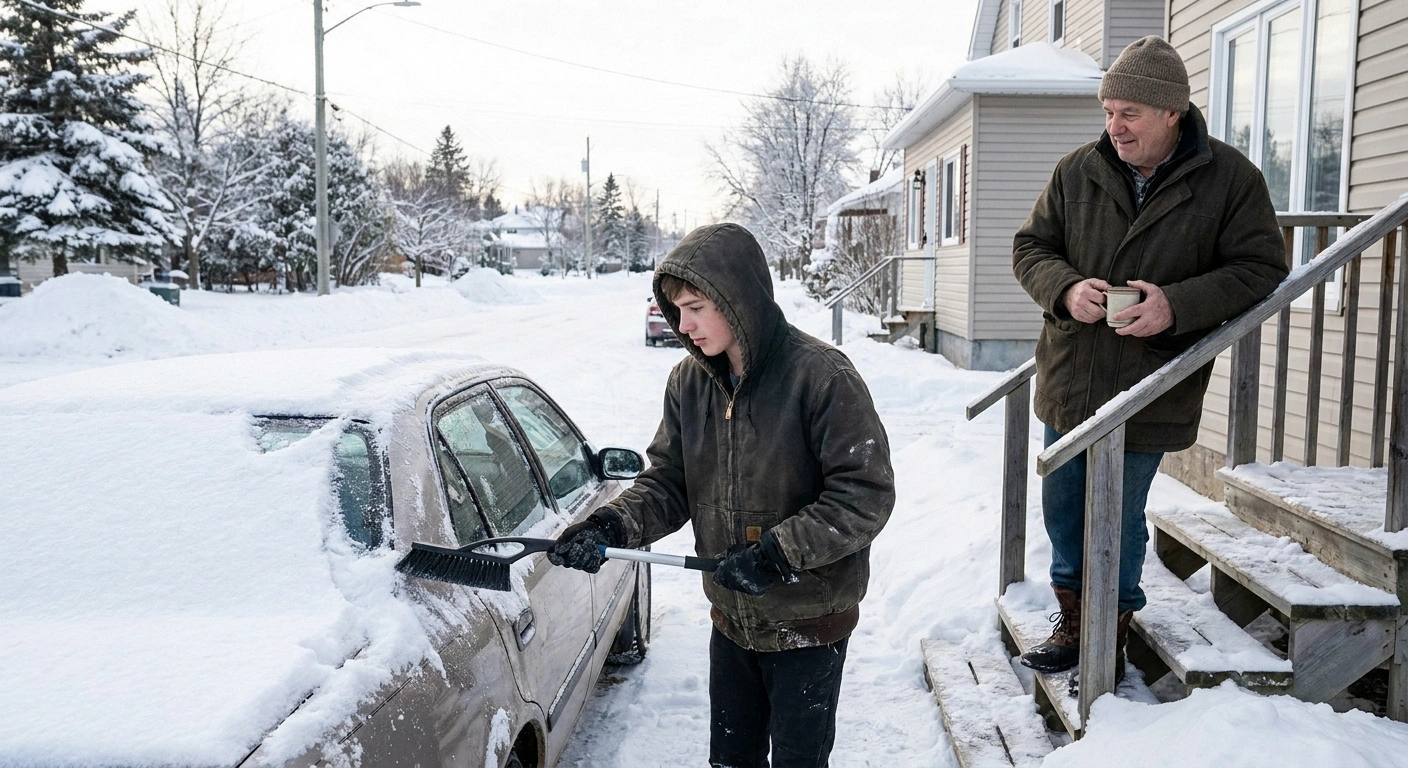
A peephole in the windshield isn't enough. The Weather Service says to make sure your vehicle is completely clear of ice and snow before the trip, because flying snow from cars causes accidents, and to brush the roof so snow doesn't slide onto your windshield while you're driving. PennDOT adds the side windows, mirrors and all the lights.
| State | What the rule says | Penalty |
|---|---|---|
| New Jersey | Make all reasonable efforts to remove ice and snow from the hood, trunk, windshield, windows and roof before driving. | $25 to $75 per offense; $200 to $1,000 if it strikes a vehicle or pedestrian and causes injury or damage |
| Connecticut | Remove accumulated ice and snow, including from the hood, trunk and roof. | $75; $200 to $1,000 if it causes injury or damage |
| Rhode Island | No driving with significant amounts of snow or ice on the vehicle. | Set in a separate fines law, not checked for this table |
| New Hampshire | No snow-specific statute; police cite drivers under the negligent-driving law known as Jessica's Law. | $250 to $500 first offense; $500 to $1,000 after |
| Pennsylvania | PennDOT says you can be ticketed if snow or ice from your vehicle strikes a vehicle or person and causes death or injury. | Amounts not confirmed for this table |
New Jersey and Connecticut exempt parked cars and trips made while a storm is still falling. General information only, not legal advice.
Sources: N.J. P.L. 2009, c.138; Conn. Gen. Stat. 14-252a; R.I. Gen. Laws 31-23-16; N.H. RSA 265:79-b and the NH Law Library; PennDOT, Winter Driving.
Several states write that into law, but the details vary a lot, so I've gathered the ones I could check against official pages. Treat it as general information as of October 2026, not legal advice; rules change, and your own state or city may say something different. If a foot of snow is sitting on the roof, that's a bigger job than scraping, and my guide to shoveling snow safely applies.
Where Idling Limits Come In
Some cities and states cap how long an engine can idle, which can collide with letting the defroster do the work. New York City sets a three-minute limit (one minute near schools) and lists no cold-weather exception. Massachusetts law bars “unnecessary” idling beyond five minutes. Washington, D.C., exempts private non-commercial passenger cars from its idling rule entirely, and Minneapolis allows three minutes except in traffic. If you live somewhere with a tight limit, that's one more reason to do the prevention work the night before.
Checking Your Hands Once You're Inside

The NIDDK tells people with diabetic nerve damage to check their feet every day, since a problem can be sitting there with no pain to announce it. I borrow the same idea for my hands after any cold chore. Once I'm inside, I take the mittens off under a good light and look at each fingertip, both hands side by side, for any patch that's white, grayish-yellow, waxy or blistered. It takes a minute, and it's the only frostbite check that doesn't depend on feeling anything.
If something looks off, go back to the CDC's steps above rather than running your hands under the hot tap; the NIDDK's warning that nerve damage can let you burn your feet without noticing applies just as well to numb fingers, in my view. Some people's fingers turn pale or white in the cold for a different reason, Raynaud's phenomenon, which NIAMS describes as fingers or toes that become cold and numb and change colors, most often triggered by cold. If that sounds familiar, it's worth raising at your next appointment.
Days to Skip It Altogether
Some mornings the right move is not to scrape at all. If winter weather is forecast, PennDOT's advice is to eliminate all unnecessary travel, and Ready.gov says to stay off roads if at all possible. If you live alone, the CDC suggests asking a family member or neighbor to check on you daily, and a neighbor who's already out brushing off their own car may be glad to do yours as well.
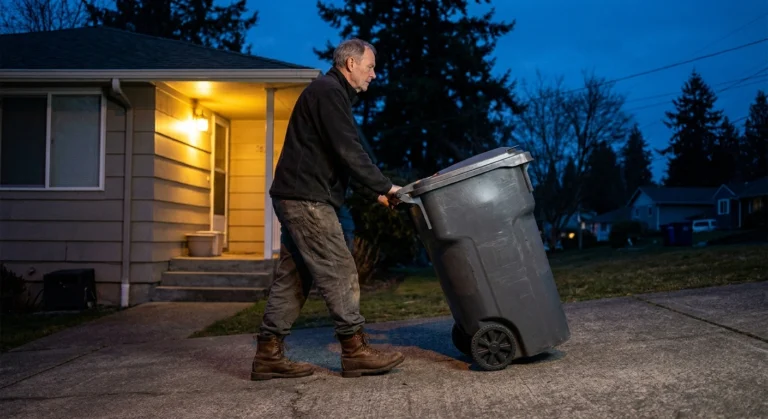
Heavy snow is a different job. The CDC says cold weather puts extra strain on the heart, and the Weather Service warns against overexertion such as pushing a car or walking in deep snow if you're not in good health. If you have heart disease or high blood pressure, follow your own doctor's advice about hard work in the cold. And if winter driving is starting to feel like more risk than it's worth, my guide to staying safe behind the wheel covers the alternatives. Trash day brings many of the same cold-morning hazards, which I cover in taking out the trash bins safely.
Frequently Asked Questions
Can I pour hot water on a frozen windshield?
No. The CDC says never to pour water of any temperature on a windshield to clear ice or snow because the glass can shatter, and AAA warns that hot water can crack glass through thermal shock. Run the defroster and use a plastic scraper instead.
Is it safe to warm up my car in the garage with the door open?
Not in a garage attached to your house. The CDC says never to run a car there even with the door open, and Vermont's health department says an open door does not stop carbon monoxide from building up. Open the door, start the engine only long enough to drive fully outside, and do the warming and defrosting there with the tailpipe clear of snow. Be wary of remote starters for a car kept in an attached garage.
How can I tell if my numb fingers have frostbite?
Look rather than wait to feel. The CDC lists redness or pain as early signs and white or grayish-yellow skin, or skin that feels unusually firm or waxy, as signs of frostbite. The National Weather Service says skin that turns blue or gray, swells badly, blisters or feels hard under the surface needs a hospital as soon as possible.
Are mittens or gloves better for scraping ice?
Mittens are warmer, according to both the CDC and the National Weather Service. Pick a pair roomy enough not to squeeze your fingers, since NIOSH warns that tight clothing reduces circulation, and keep a dry spare pair in the car.
Is it illegal to drive with snow on my car roof?
In some states, yes. As of October 2026, New Jersey, Connecticut and Rhode Island have laws about clearing snow and ice from vehicles, New Hampshire enforces it through its negligent-driving law, and Pennsylvania can ticket a driver whose snow or ice causes injury or death. Check the rules where you live.
Can I use rubbing alcohol as a windshield de-icer?
AAA reports that some people mix rubbing alcohol with water, but no testing of that mix was found. Keep any alcohol-based product off your skin and gloves, because the CDC warns that alcohol on the skin while de-icing makes the body lose heat much faster.
About the Author