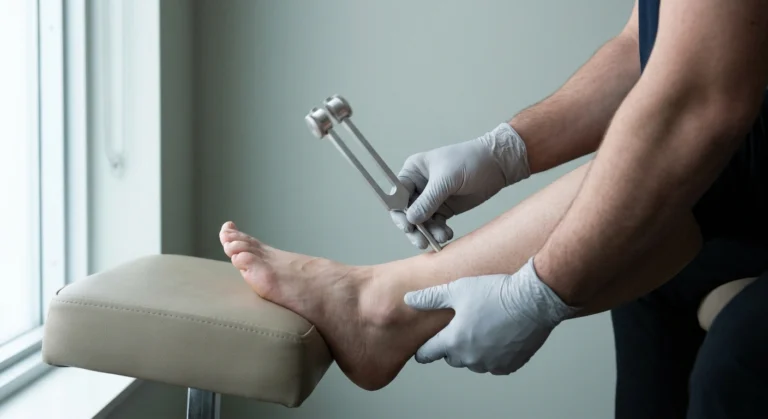
There’s a bottle of foot cream in my bathroom cabinet that sat unopened for most of a year.
Not because I didn’t believe in it. My podiatrist had told me plainly that dry, cracking skin on a foot that can’t feel pain is how small problems turn into serious ones, and I’d nodded along and bought the cream that afternoon. The bottle wasn’t the problem. Bending over far enough to reach my own heel, holding that position long enough to actually rub something in, and getting back up without grabbing the sink — that was the problem.
So the cream sat there, and my heels got worse, and I felt vaguely guilty every time I opened that cabinet.
What eventually fixed it wasn’t willpower. It was an eleven-dollar plastic stick with a sponge on the end, plus about four adjustments to how and when I did it. This is that whole system, including the parts specific to feet you can’t feel, which is where the standard advice tends to stop being useful.
This Is a Medical Task Wearing Ordinary Clothes
Worth being clear about why this matters, because moisturizing sounds cosmetic and here it isn’t.
Nerve damage doesn’t only take sensation. The same nerves also control the sweat glands in your feet, and when they stop signaling properly, your feet stop sweating. Skin that doesn’t get its own moisture goes dry, then thick, then it splits.
On a normal foot a split heel hurts, you notice, you deal with it. On a foot with neuropathy it’s an open wound in skin you can’t feel, in a place you probably can’t see, that you’ll keep walking on all day. That’s the front end of the path toward a foot ulcer, and foot ulcers are the complication that changes lives.
Preventing that costs about ninety seconds a day, and it sits alongside the rest of daily foot care as one of the few things in this condition you genuinely control. The trouble is those ninety seconds require reaching your feet.
The Two Rules, Before Anything Else
Rule one: cover the tops, the bottoms, the heels, and the sides. The heel and the ball of the foot carry the most pressure and go first, but a partial job leaves the dry patch you can’t feel.
Rule two: nothing between your toes. Ever.
That second rule surprises people, and it’s the one that gets broken most. The skin between toes doesn’t dry out the way the rest of the foot does, because air barely moves through there. Add lotion and it stays damp, and damp skin in a warm dark space is where fungal and bacterial infections start. Between the toes, the job is the opposite: dry thoroughly, then leave them alone.
If you’re already doing a daily foot check, the between-toe spaces are part of that inspection. Look, dry, move on.
Start With the Bottle, Not the Foot
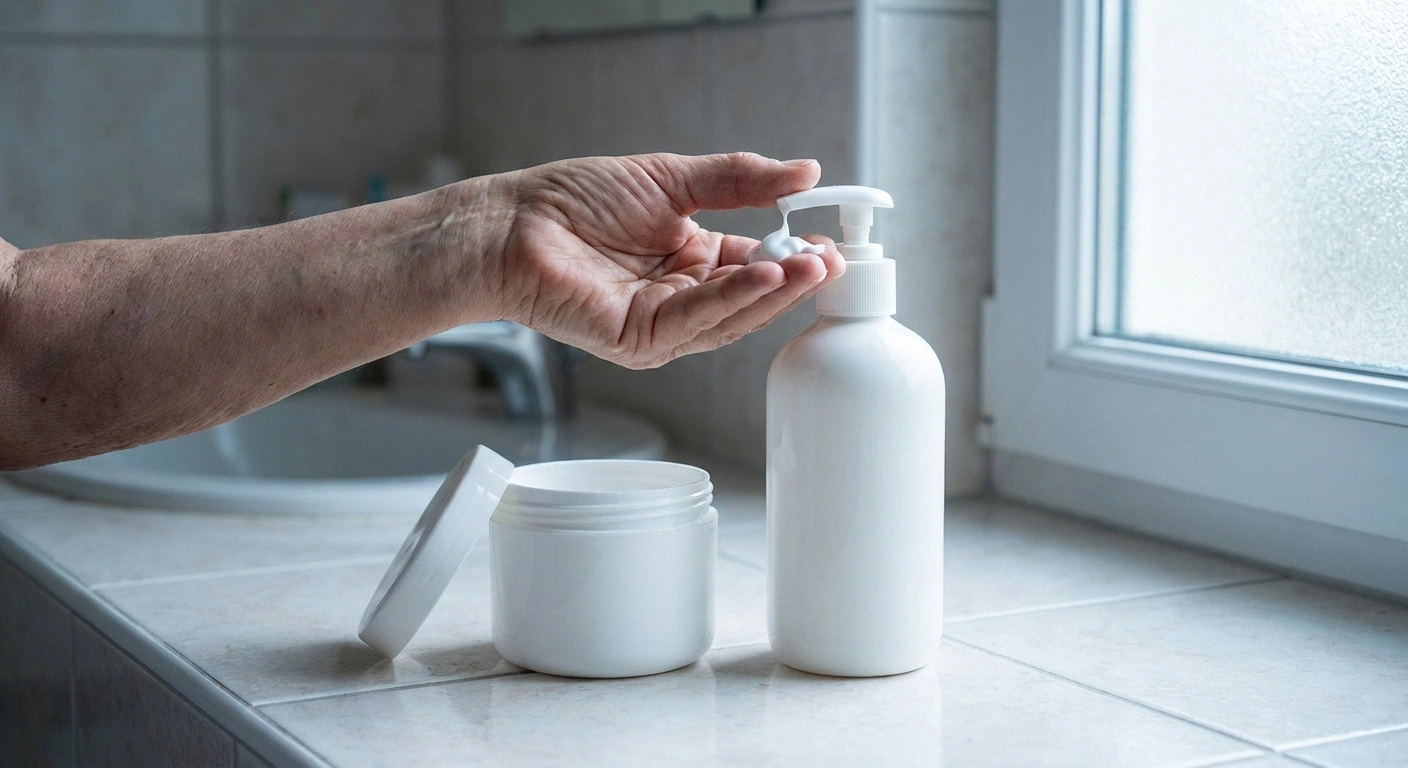
Most people plan the reaching and forget the container, then discover that a screw cap defeats them before they get anywhere near their heel. Numb fingertips and a slick plastic lid are a genuinely bad match.
Three fixes, cheapest first.
Buy a pump bottle instead of a squeeze tube or a jar. One-handed, no grip strength, no lid to retrieve off the floor.
If the cream you want only comes in a tub, decant some into an empty pump bottle and keep the tub for refills. A shampoo pump works fine.
Run the bottle under warm tap water for a minute before you start. Thick cream flows much more easily when it’s warm, which means less squeezing and better spread. One caution that applies specifically here: warm, not hot. You can’t reliably judge temperature against skin that doesn’t report it accurately, so test on the inside of your wrist or forearm, never on your foot.
The Tool That Closes the Gap
The single change that made this work for me was a long-handled lotion applicator. They’re sold for reaching your own back, and they work at least as well pointed downward.
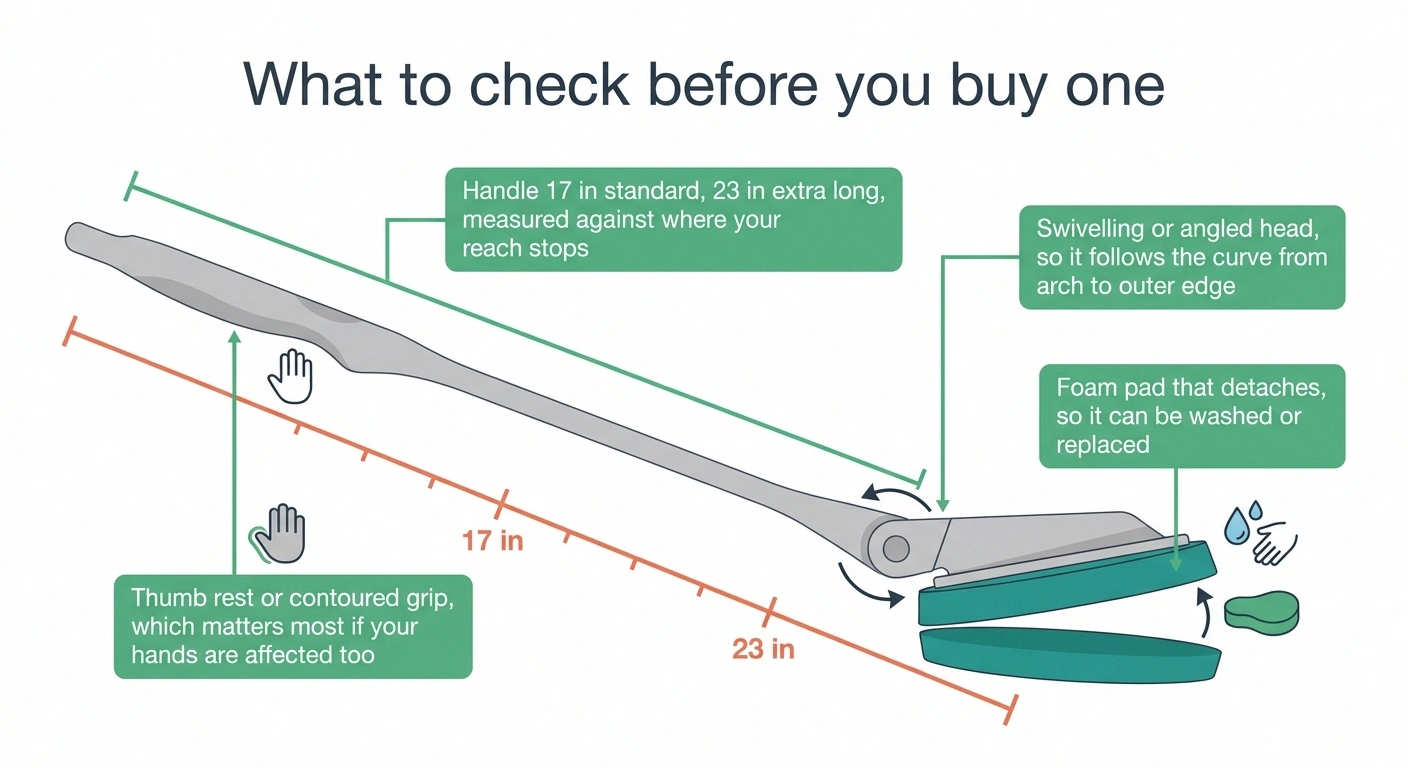
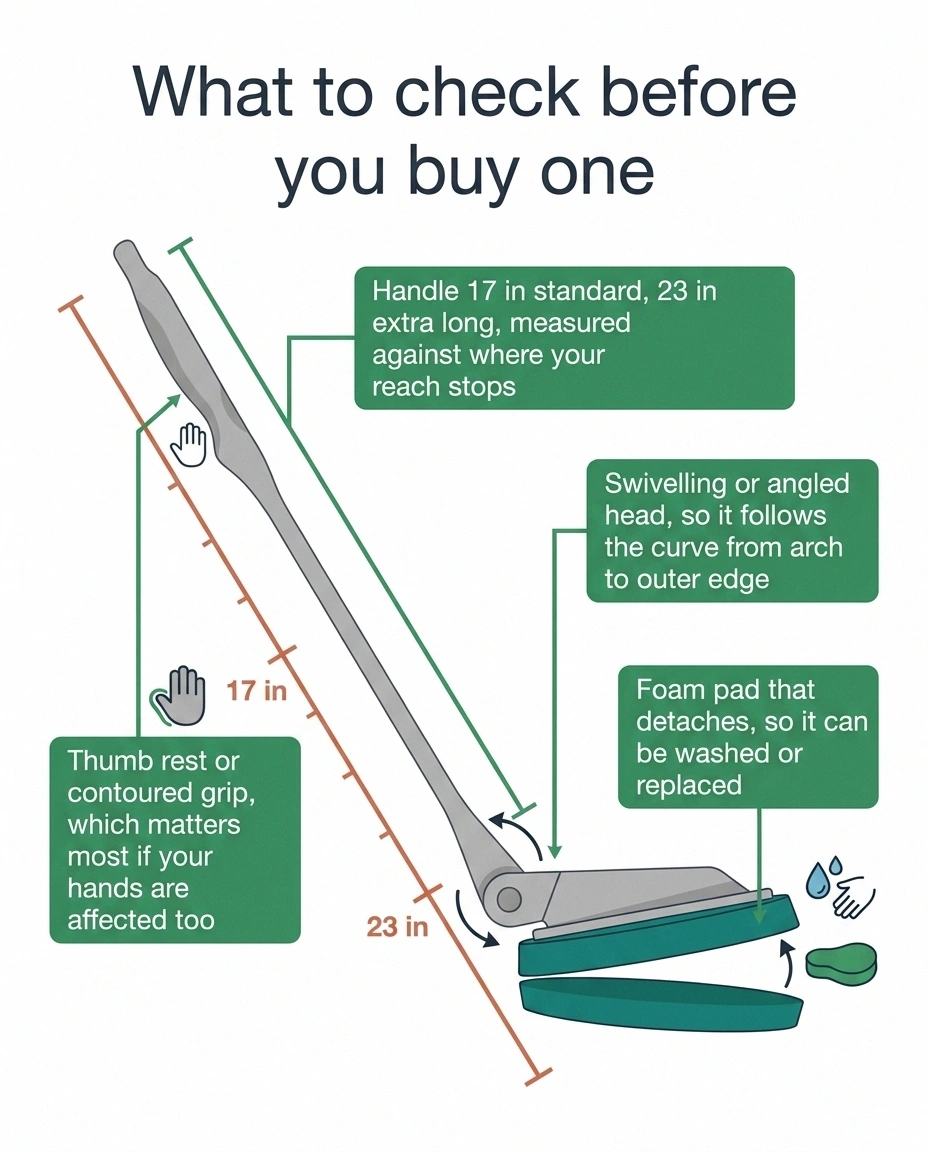
Handle 17 in or 23 in. Sit in the chair you will actually use, reach toward your foot, and see where your hand stops. If you can reach mid-shin, 17 is plenty and gives you better control. If bending is the barrier, take the longer one.
Replaceable pad. Foam that cannot be removed cannot be washed, and an applicator that lives in a bathroom for months is not a clean surface to press against skin you cannot feel.
Swiveling heads follow the curve from arch to outer edge without forcing your wrist to rotate, which matters most if your hands are affected too. A back applicator does the job; foot-specific models cost more for a modest gain.
What to look for:
Handle length. Standard is around 17 inches; extra-long versions run to about 23. Longer means less bending, but also less control. If you can reach mid-shin comfortably, standard is enough. If bending at all is the problem, go long.
A swiveling or angled head. Feet are not flat. A head that pivots follows the curve from the arch around to the side without you rotating your wrist into an awkward position.
A foam pad, and a spare. Foam holds cream instead of dumping it on the floor. Pads get grubby, so buy one that lets you replace or wash the pad rather than the whole tool.
A thumb rest or contoured grip. This is the difference between a tool you can hold and one that rotates out of your hand, and it matters most for anyone whose hands are affected too.
Foot-specific applicators exist with flexible heads shaped to wrap the contours. They’re good, though a decent back applicator covers most of the same ground for less money.
If You’d Rather Not Buy Anything
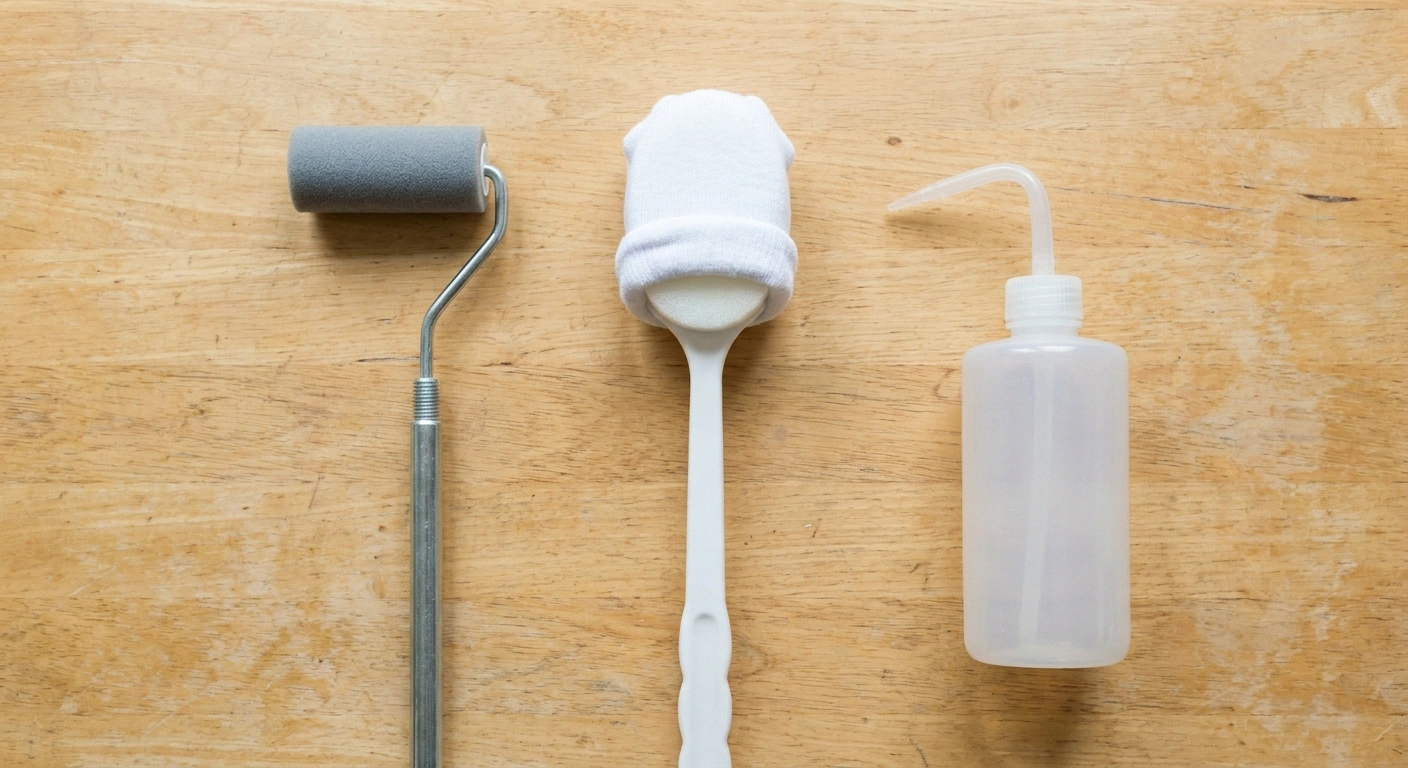
Three improvised versions that work, roughly in order of how well.
A small foam paint roller on an extension handle. The roller spreads cream evenly, the handle is already designed to be gripped, and the whole thing costs a few dollars at a hardware store. Keep it for feet only, obviously.
A long-handled bath sponge with a clean cotton sock pulled over the head. The sock gives a softer surface than a bath sponge alone and comes off to be washed.
A squeeze bottle with a long angled spout, the kind sold for hair dye. This one only dispenses; you still need something to spread with. But it solves the aiming problem if you’re working by feel.
And the version that’s free: a family member. I know that’s the answer nobody wants. It’s also the one every clinical guideline gives when someone can’t see, reach, or feel their own feet — and asking for two minutes of help is a smaller concession than most people make it out to be.
How to Tell You Actually Covered It
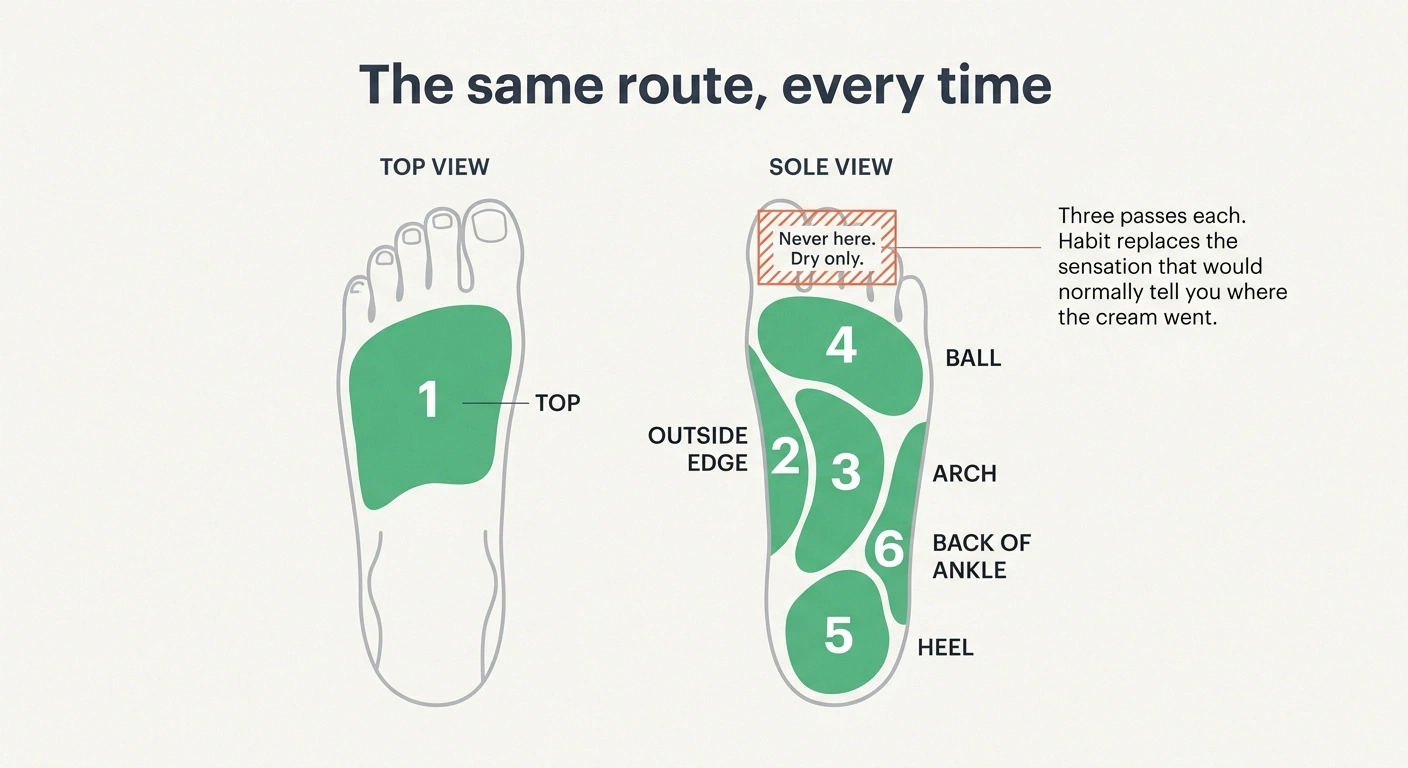
Here’s the part that generic foot-care advice skips entirely. On a normal foot, you know where the cream went because you felt it go on. That feedback isn’t available to you.
Top of the foot, outside edge, arch, ball, heel, back of the ankle. Three passes each. Same sequence every single time, so that habit does the work sensation would otherwise do.
Then check the pad. Cream still sitting on the foam means you dispensed too much or stopped short, and after about a week you will recognise what a correctly emptied pad looks like.
Moisturised skin looks shinier and slightly darker than dry skin. A mirror flat on the floor turns that into a two-second visual check of the sole, which is the one area you can neither see nor feel.
Four ways to close that gap.
Work a fixed route, every time. Top of the foot, then the outside edge, then the arch, then the ball, then the heel, then the back of the ankle. Same order, every day. When you can’t verify by feel, verify by habit — a route you never vary is much harder to leave a gap in.
Use a mirror on the floor. Wet skin looks different from dry skin — shinier, slightly darker. Put a mirror flat on the floor, rest your foot beside it, and look at the sole. This is the same mirror trick used for daily inspections, so it fits a routine you may already have.
Count. Three passes per area. Counting substitutes for the sensation that would otherwise tell you when you’re done.
Check the applicator. If the foam still has cream on it after you’ve finished, either you dispensed too much or you stopped early. Over a week you’ll learn what a correctly emptied pad looks like.
What to Put on It
Ingredients matter more than the brand on the front.
| Ingredient | What it is for |
|---|---|
| Urea 20-25% | The recommended daily range for neuropathic and diabetic feet. Adds water and softens thickened skin at once. A randomized trial of 25% urea found improved hydration and fewer heel fissures against placebo over four weeks. |
| Urea 40% | A callus remover, not a moisturiser. Too aggressive for daily use on thin or fragile skin, and you will not feel it working harder than you wanted. |
| Ammonium lactate 12% | A cheaper option that handles mild dryness well. Widely stocked, often less expensive than urea creams. |
| Petroleum jelly | Seals moisture in but adds none, so it belongs on damp skin straight after a shower. Stays slippery longer than a cream does. |
Fragrance-free is the safer default throughout. Irritation you cannot feel is irritation you will not catch early.
Urea at 20% to 25%. This is the range clinicians generally recommend for neuropathic and diabetic feet. Urea both adds water and helps soften thickened skin, so it works on exactly the problem these feet have. A randomized trial of 25% urea cream found improved hydration and fewer heel fissures against placebo over four weeks.
Skip the 40% products for daily use. Forty percent urea is a callus remover, not a moisturizer. On thin or fragile skin it can do more than you intended, and you won’t feel it happening.
Ammonium lactate 12% is a reasonable cheaper option for mild dryness, widely available and often less expensive than urea creams.
Plain petroleum jelly seals in moisture but adds none, so it works best applied over damp skin right after a shower. It’s also slippery for longer, which matters for the next section.
Fragrance-free is the safer default. Scented lotions carry more potential irritants, and irritation you can’t feel is irritation you won’t catch early.
The Cracked Heel Exception
If a heel is already split open, that changes the instructions.
Don’t put urea or ammonium lactate directly into an open fissure. Both sting badly on exposed tissue and can slow healing rather than help it, for different reasons: ammonium lactate because it is acidic, urea because it is keratolytic and breaks down the surface layer of skin, which is the opposite of what a raw wound bed needs. Around the crack is fine. In it is not.
A deep heel fissure on a numb foot is worth showing to a podiatrist rather than treating alone. It’s an open wound with a poor blood supply on a limb with reduced sensation, which is precisely the combination that turns minor into serious. The same goes for any crack that’s bleeding, weeping, or ringed with red.
The Hazard Nobody Mentions

Freshly moisturized feet are slippery feet.
You’ve just applied a lubricant to the surface you balance on, and if your balance is already compromised, that’s a real risk rather than a theoretical one. Hard bathroom floors are the worst case.
So: put socks on before you walk anywhere. Clean cotton is the usual advice, and the seams and fit matter here as much as they do the rest of the day. Give the cream a minute or two to absorb before they go on — pulling socks over a wet coating just moves it onto the sock. Better still, do this sitting on the edge of the bed rather than in the bathroom, where the floor is hard and often wet.
Never do it standing at the sink. That’s the fall this section exists to prevent.
Making It Actually Happen
The reason my bottle sat unopened for a year wasn’t laziness. It was that the task had no fixed home in my day, so it competed against everything else, and it lost every time.
What worked was attaching it to something that already happens without deciding. Right after the evening shower, sitting on the bed, before pajamas. Skin is still damp, which is when moisturizer works best anyway; I’m already sitting; and the applicator lives on the bedside table where I trip over it visually.
Three things that keep it going:
Keep the supplies where the task happens. If the cream is in the bathroom cabinet and you do this on the bed, you’ll skip it. Move the cream.
Combine it with the foot check. You’re already looking at your feet daily. Doing both at once means one setup instead of two, and you’re looking closely at skin at the exact moment you’d notice a change in it.
Missing a day is not failure. Dry skin doesn’t crack overnight. Miss Tuesday, do it Wednesday. The pattern that fails is missing one day, deciding you’ve fallen off, and stopping.
When to Hand This Off
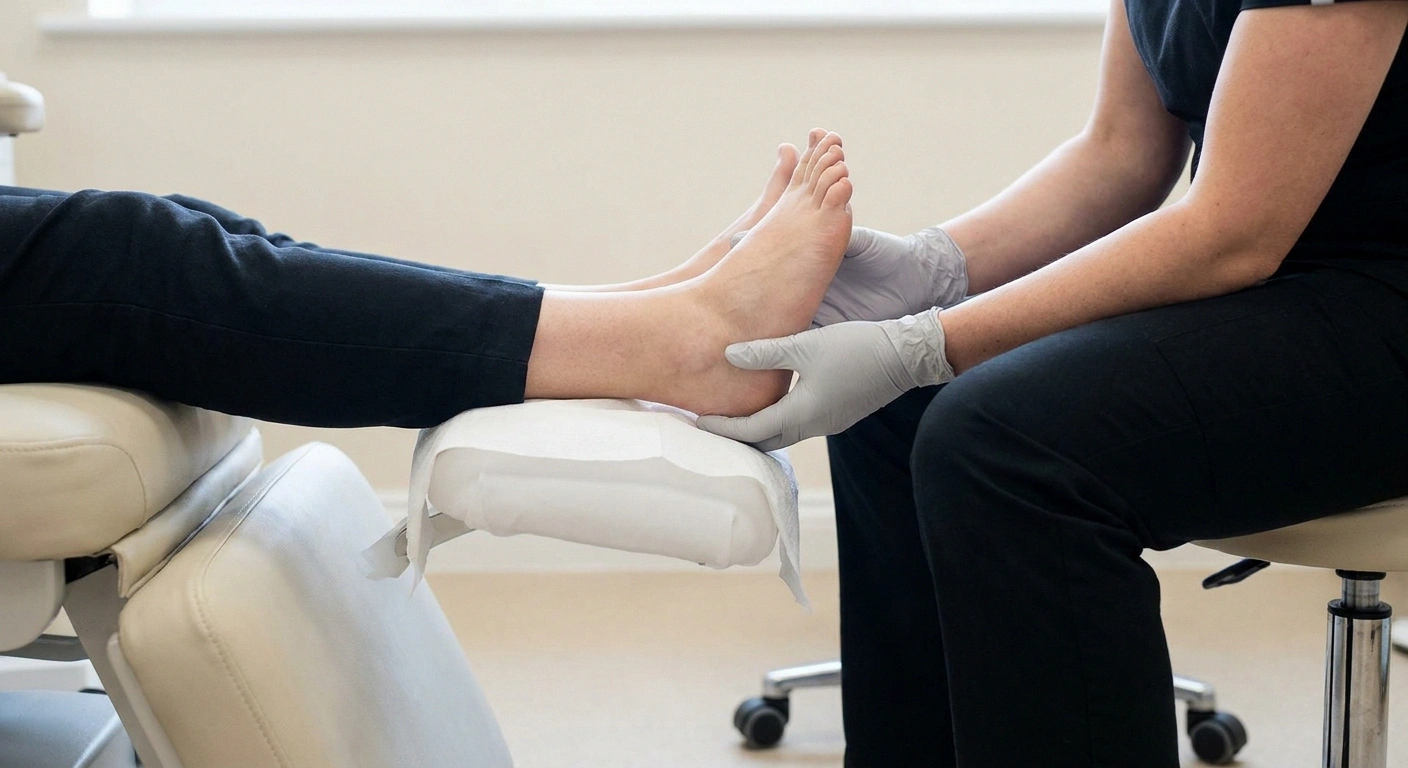
Some situations call for someone else doing it, and recognizing them early is good judgment rather than surrender.
- Warmth or swelling in one foot
- On a numb foot this can signal infection or early Charcot foot, both urgent. Do not massage it, do not apply anything, get it assessed the same day.
- A fissure that is bleeding or weeping
- An open wound with poor blood supply on a limb with reduced sensation. Cream around it is fine; cream in it stings and can slow healing. This one is a podiatry visit.
- Redness spreading from a crack
- Spreading is the word that matters. Draw a pen line at the edge if you want to know whether it moves overnight.
- You cannot see the sole even with a mirror
- Not an emergency, but it is the point where routine podiatry appointments become the sensible arrangement rather than a concession.
If you can’t see the bottoms of your feet even with a mirror. If you can’t safely reach them without losing balance. If your hands are affected badly enough that holding an applicator is its own struggle. If there’s an open wound, a color change, swelling, or heat anywhere on the foot.
That last one isn’t a lotion problem at all. Warmth and swelling on a numb foot can signal infection or the early stage of Charcot foot, and both are urgent. Stop, don’t massage it, get it looked at.
Otherwise, a podiatrist will do foot care including moisturizing as part of a routine visit, and for people who can’t manage it at home, regular podiatry appointments are the standard answer — the same way toenail trimming gets handed over when it stops being safe to do yourself.
Frequently Asked Questions
How often should I moisturize my feet with neuropathy?
Once a day for most people, ideally right after a bath or shower while the skin is still damp, since moisturizer applied to damp skin holds more water in. If your skin is very dry or already cracking, twice a day helps until it settles. The habit is what matters more than the frequency.
Why can’t I put lotion between my toes?
Air circulates poorly between the toes, so that skin stays damp on its own. Adding lotion keeps it damp longer, and warm damp skin in a closed space is where fungal and bacterial infections start. With reduced sensation you may not notice an infection beginning. Dry between the toes thoroughly instead, and leave them without product.
What is the best lotion for neuropathy feet?
Look at ingredients rather than marketing. Urea at 20% to 25% is the range generally recommended for diabetic and neuropathic feet, because it adds moisture and softens thickened skin. Ammonium lactate 12% is a less expensive alternative for mild dryness. Fragrance-free reduces irritation risk. Products at 40% urea are callus removers rather than daily moisturizers.
How do I put lotion on my feet if I can’t bend over?
A long-handled lotion applicator, sold for reaching your back, is the standard solution. Handles run from about 17 to 23 inches, and models with a swiveling foam head follow the shape of the foot best. Cheaper improvisations include a foam paint roller on an extension handle or a long-handled bath sponge with a cotton sock over it.
Can I use regular body lotion on my feet?
You can, and it’s better than nothing, but the skin on the sole is far thicker than skin elsewhere and standard body lotions are usually too light to do much for it. If your feet stay dry despite daily use, that’s a sign to move to a urea-based foot cream rather than to apply more of the same product.
Should I wear socks after applying lotion?
Yes, and for two reasons. Socks hold the moisture against the skin so it absorbs better, and they stop you slipping on a hard floor with freshly greased feet. Wait a minute or two for the cream to absorb first, use clean cotton socks, and put them on sitting down rather than balancing on one leg.
My heel is cracked open. Should I put cream in the crack?
No. Both sting on exposed tissue and can slow healing, for different reasons: ammonium lactate is acidic, while urea is keratolytic, meaning it softens and breaks down the surface layer of skin, which is not what a raw wound bed needs. Moisturize the skin around it and leave the crack itself alone. An open fissure on a foot with reduced sensation should be examined by a podiatrist, especially if it is bleeding, weeping, or surrounded by redness, because a wound you cannot feel is a wound you will keep walking on.
Is it safe to warm the lotion first?
Warming a bottle under the tap makes thick cream easier to dispense and spread, and it is fine as long as you test the temperature somewhere with reliable sensation, such as the inside of your wrist. Never judge it against your feet. Reduced sensation means a burn can happen without any warning, and the same principle applies to heating pads, hot water bottles, and foot soaks.
About the Author