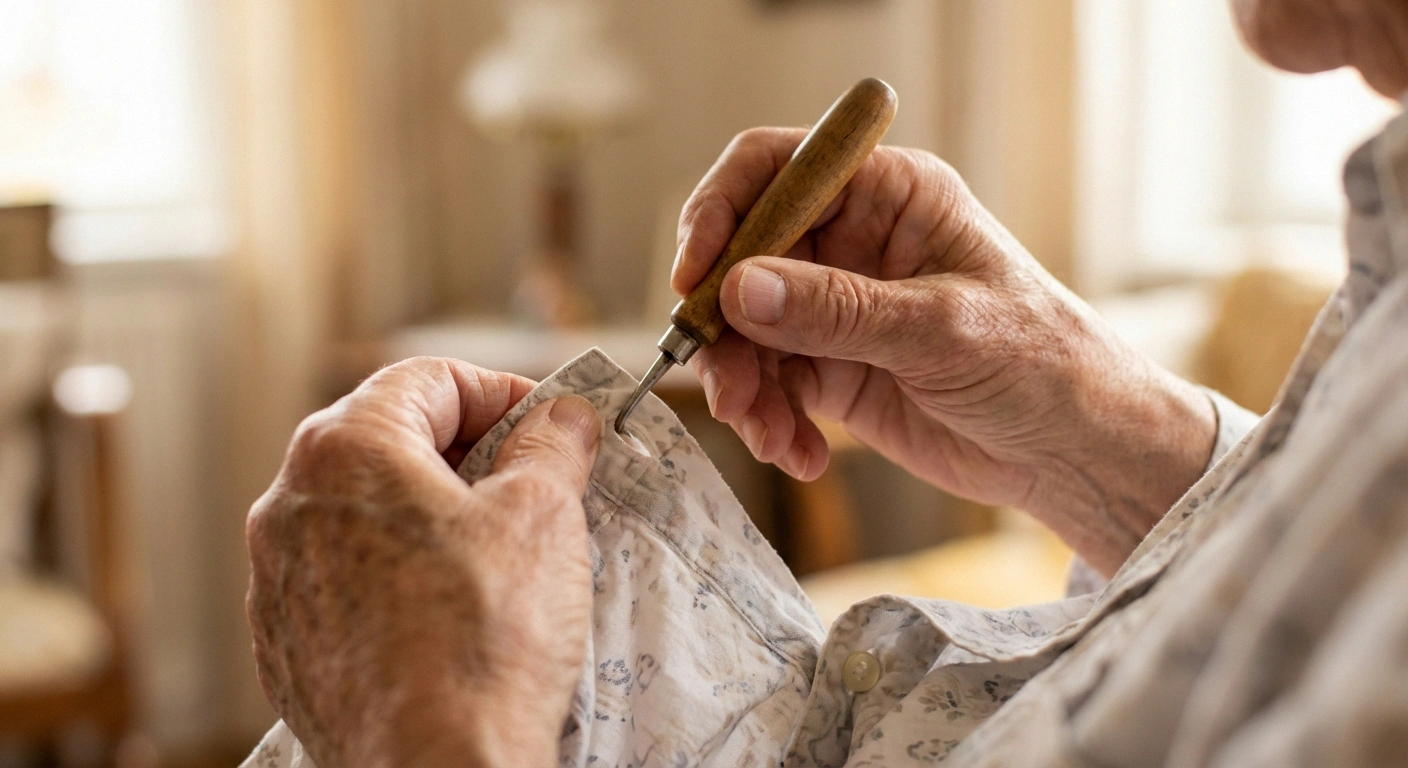
There came a morning when I couldn’t button my own shirt. My fingers — numb and clumsy from the neuropathy that had been slowly advancing for two years — simply couldn’t manage it. I stood in front of my closet for five minutes, increasingly frustrated, before my occupational therapist’s words finally sank in: “There’s a tool for that.” She was right. A $4 button hook changed my morning. And that small moment changed my perspective on what “independence” actually means when you’re living with nerve damage.
Assistive technology isn’t about giving up — it’s about refusing to let neuropathy take more than it has to. From low-tech gadgets that cost a few dollars to sophisticated wearable devices backed by clinical research, the right tools can help you maintain safety, independence, and dignity in daily life. This guide covers everything available, organized by the daily challenges neuropathy creates.
Understanding How Neuropathy Creates Daily Challenges
Before diving into specific devices, it helps to understand the three primary ways peripheral neuropathy affects daily function — because the right assistive technology depends on which challenges dominate your experience.
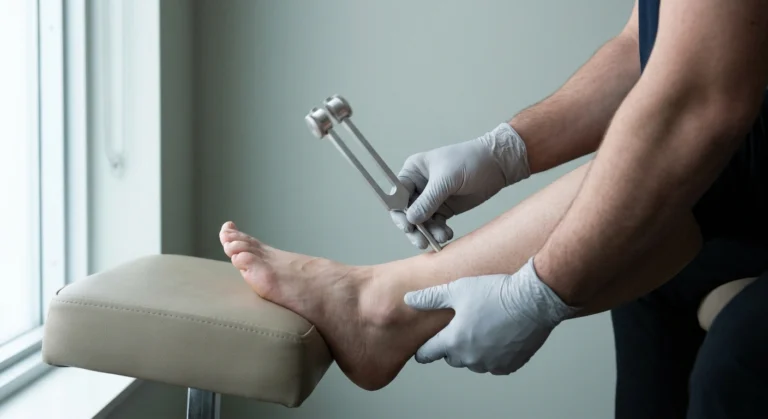
Sensory loss — When nerves can’t transmit sensation properly, you may not feel temperature extremes, pain from injuries, or the texture and position of objects in your hands. This creates safety risks: burns from hot water, cuts that go unnoticed, inability to distinguish items by touch.
Motor impairment — Damaged motor nerves weaken muscles, particularly in the hands and feet. Grip strength declines, fine motor control deteriorates, and tasks requiring dexterity — buttoning, writing, opening containers — become increasingly difficult.
Balance and proprioception loss — When your feet can’t accurately sense the ground beneath them, your brain loses critical data for maintaining balance. Falls become a serious risk, and even simple movements like standing up from a chair or turning around in a bathroom require conscious effort.
Most people with neuropathy experience some combination of all three. The assistive technology landscape addresses each category, and many devices serve multiple functions.
Devices for Dressing and Personal Care
Getting dressed and managing personal hygiene are often the first daily activities affected by neuropathy in the hands. These low-cost, high-impact tools can restore independence in minutes:
Dressing Aids
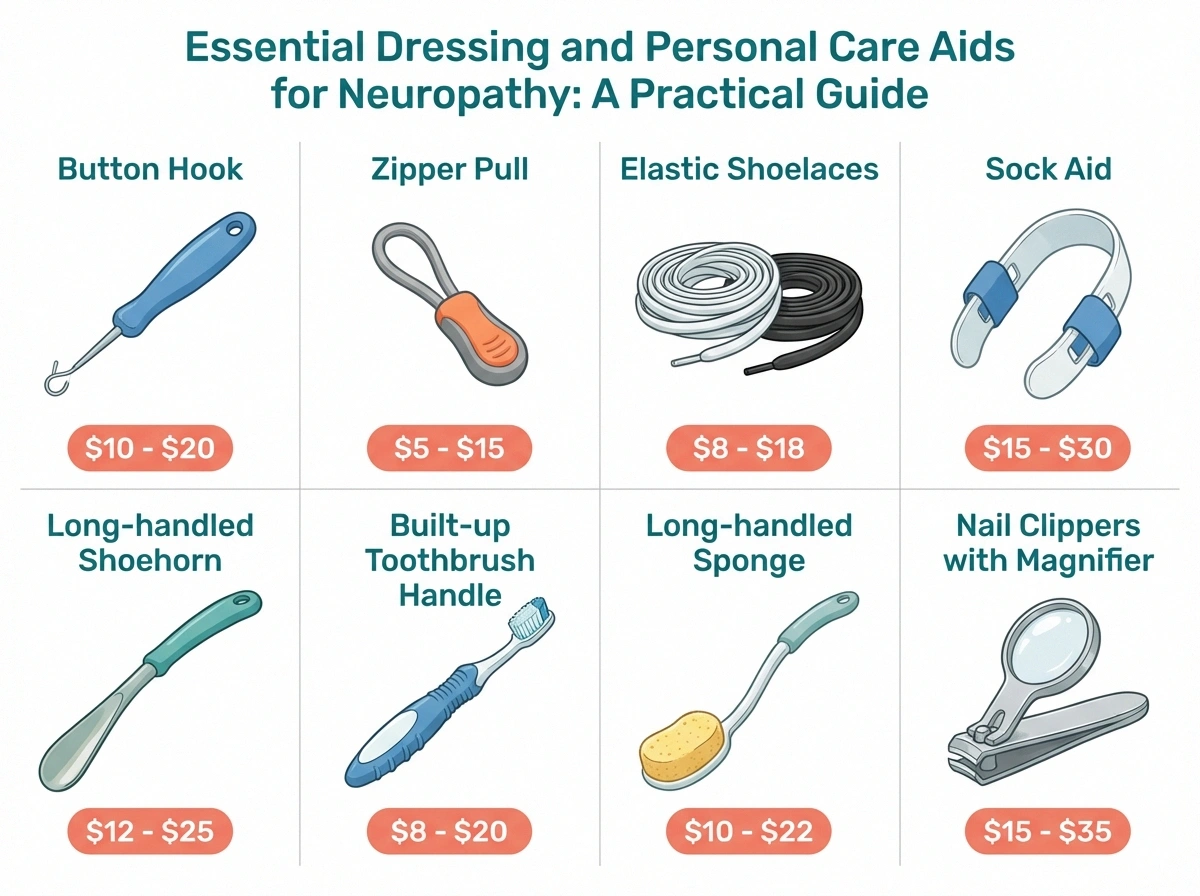
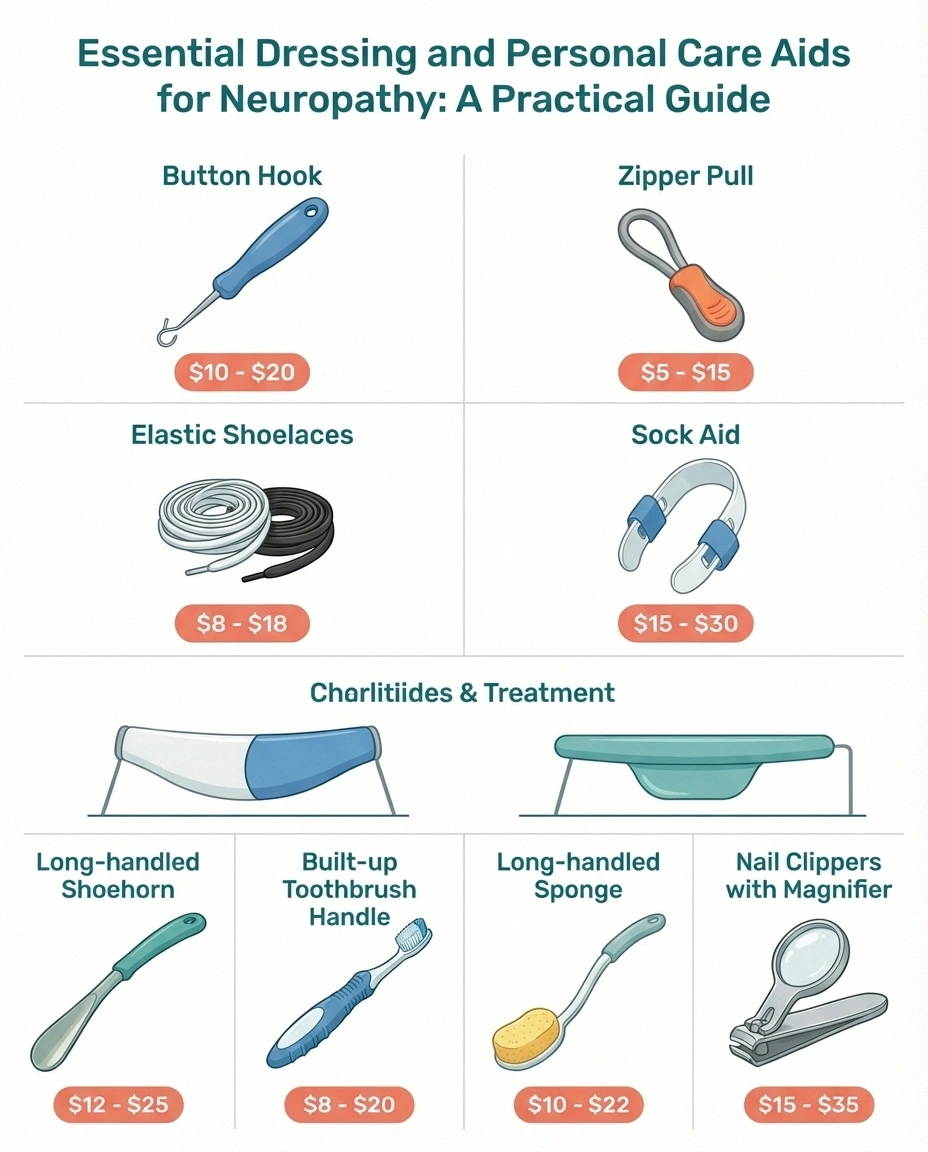
- Button hooks — A wire loop with a built-up handle that threads through buttonholes and pulls buttons through. Eliminates the fine motor demand of buttoning entirely. Look for versions with thick, cushioned handles for easier gripping. ($4-$15)
- Zipper pulls — Large ring or hook attachments that clip onto zipper tabs, making them graspable without pinching. ($3-$10)
- Elastic shoelaces — Convert tie shoes into slip-ons. No bending, no tying, no fine motor work required. ($5-$12 per pair)
- Sock aids — A molded plastic frame that holds the sock open while you slide your foot in, eliminating the need to bend down and manipulate fabric with numb fingers. ($8-$20)
- Long-handled shoehorns — Standing-length shoehorns prevent bending and reduce fall risk when putting on shoes. ($6-$15)
- Dressing sticks — A long rod with hooks on each end for pushing clothing over shoulders and pulling pants up without excessive bending. ($8-$18)
Grooming and Hygiene Tools
- Built-up handle toothbrushes — Thick, spongy handles that don’t require tight gripping. Electric toothbrushes are even better since the brush does the work. ($3-$8 for handle adapters; $20-$60 for electric)
- Long-handled sponges and loofahs — Reach your back and feet without dangerous bending or twisting in a wet, slippery environment. ($5-$15)
- Nail clippers with magnifiers — Essential for neuropathy foot care when you can’t feel what you’re cutting. The magnifier helps prevent cutting too short and causing wounds. ($8-$15)
- Suction cup-mounted items — Nail brushes, soap holders, and razor holders that mount to shower walls with suction cups, keeping everything at a safe, reachable height. ($5-$12 each)
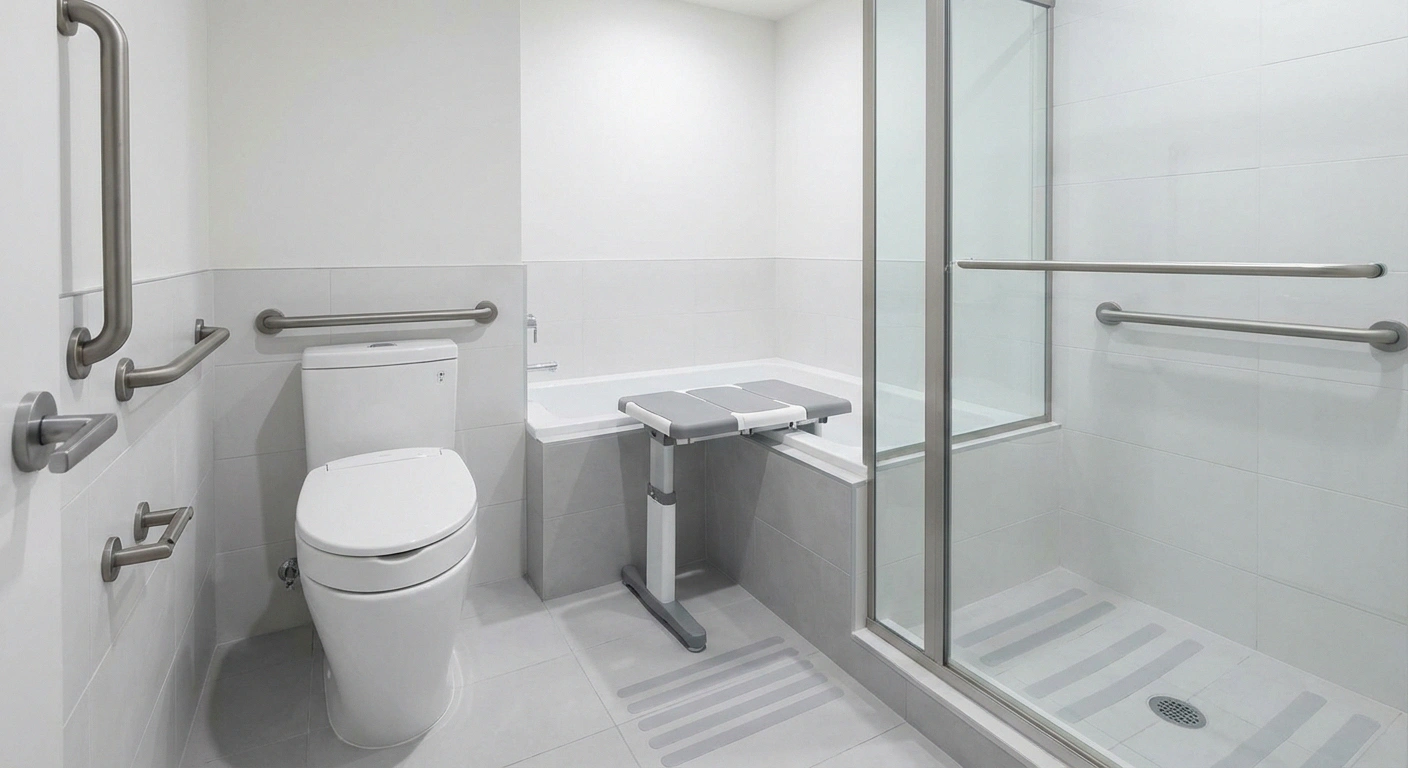
- Shower chairs and transfer benches — Critical fall prevention tools. A shower chair lets you sit while bathing; a transfer bench allows you to sit, swing your legs over the tub edge, and slide into position without standing on a wet surface. ($30-$80 for chairs; $50-$150 for transfer benches)
Kitchen and Meal Preparation Devices
Cooking with neuropathy presents unique challenges — hot surfaces you can’t feel, knives you can’t grip securely, containers you can’t open. The right kitchen adaptations make safe, independent meal preparation possible.
• Button hook ($4-8) — buttons without fine motor skills
• Elastic shoelaces ($5-8) — tie shoes become slip-ons
• Sock aid ($8-12) — socks on without bending
• Built-up pen grip ($3-5) — writing without pinching
• Jar opener ($6-10) — containers without grip strength
Gripping and Opening Aids
- Multi-openers — Combination tools that open jars, bottles, pull tabs, and cans with minimal grip strength. Look for versions with rubber-lined grips. ($10-$25)
- Electric can openers — Touch-start operation eliminates the wrist strength and hand coordination traditional can openers demand. ($15-$40)
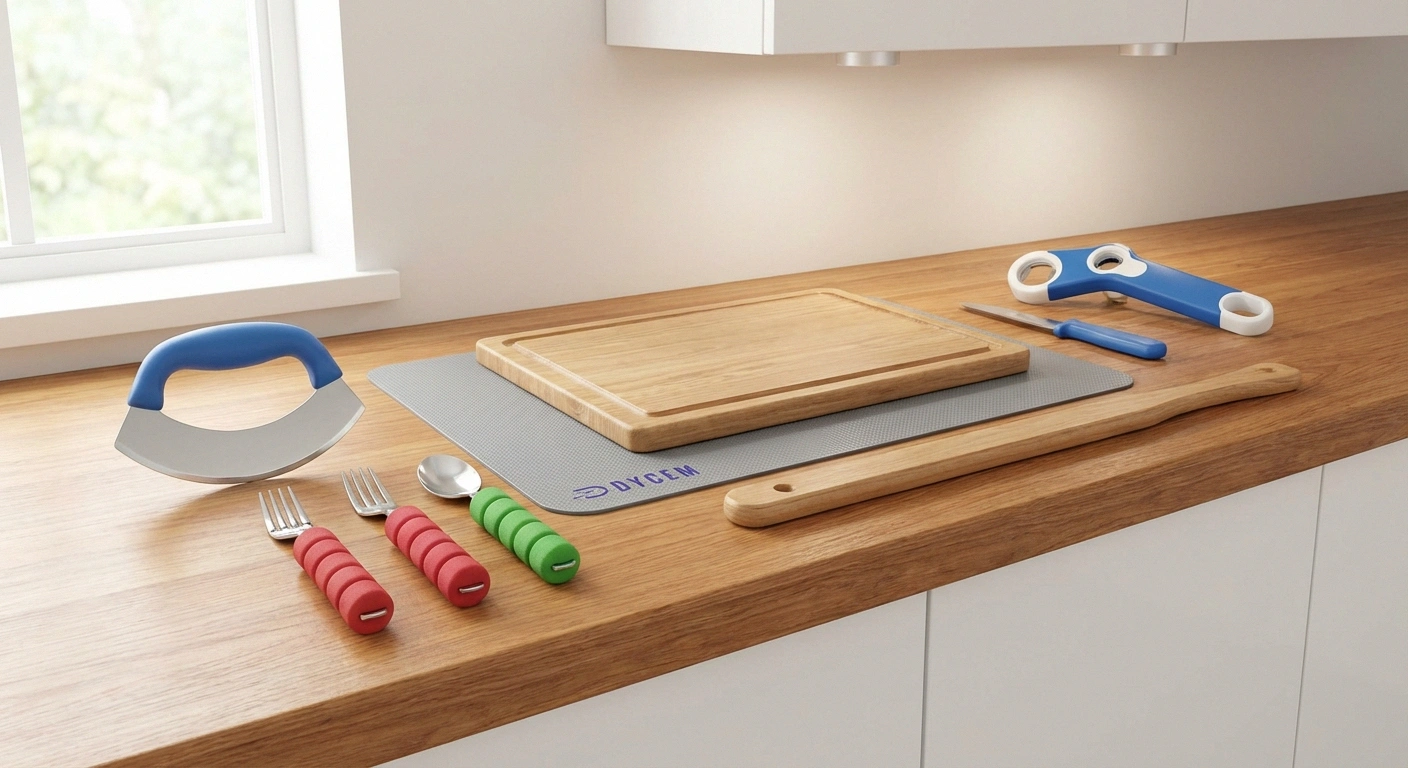
- Dycem non-slip mats — Thin, grippy mats that stabilize plates, bowls, and cutting boards on countertops. Place one under anything that tends to slide away from you. ($10-$20)
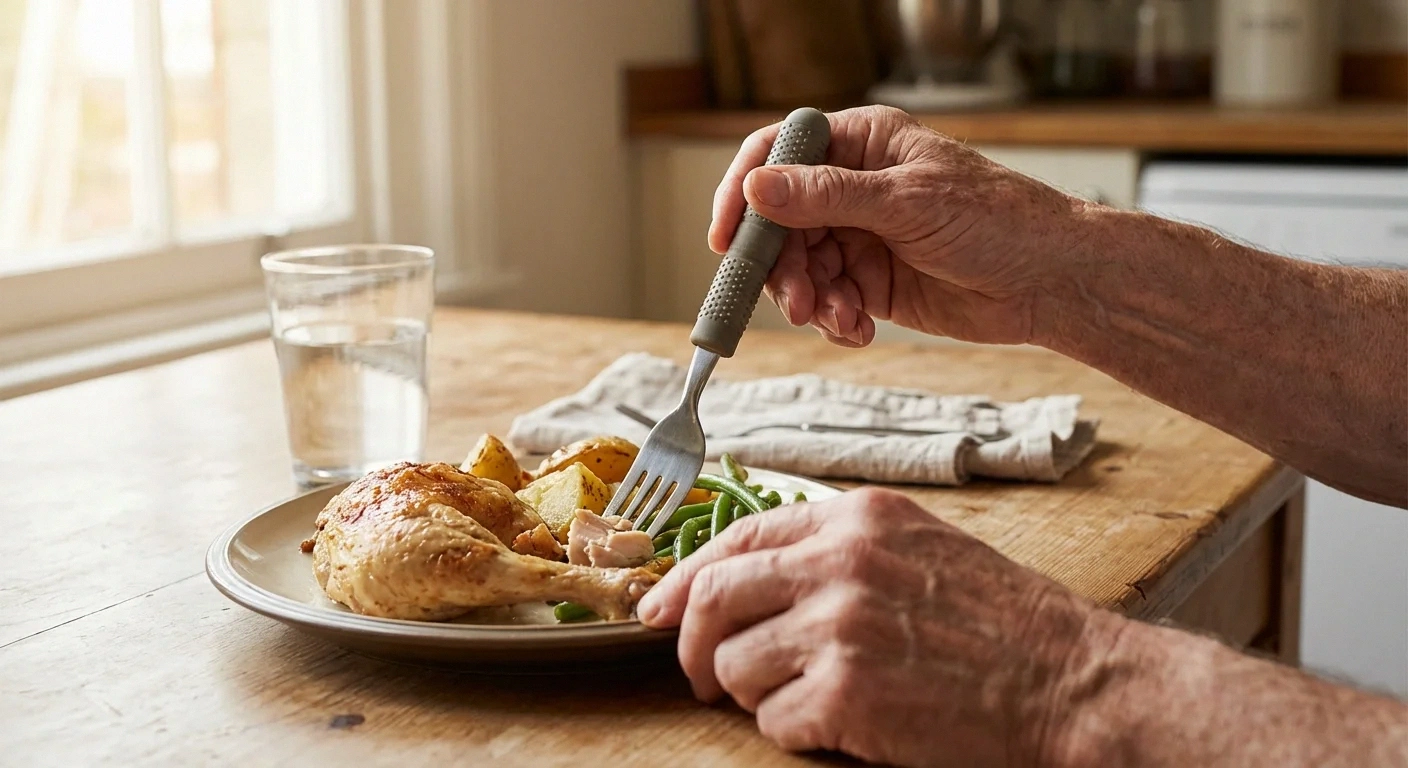
- Built-up utensil handles — Foam or rubber grip sleeves that slide onto forks, spoons, and knives, increasing diameter to reduce the force needed to hold them. ($8-$15 for a set)
- Rocker knives — A curved blade with a vertical handle that cuts food with a rocking motion instead of the grip-and-push motion of traditional knives. Much safer when grip strength is unreliable. ($12-$30)
Safety Devices for Sensory Loss
- Oven rack pushers/pullers — Long wooden or silicone tools for sliding oven racks without reaching into the oven. Critical when you can’t feel heat accurately. ($5-$12)
- Talking thermometers — Kitchen thermometers that announce the temperature aloud, ensuring food is properly cooked without relying on touch to gauge heat. ($15-$30)
- Stove knob covers and auto-shutoff devices — Prevent accidental burner activation. Smart stove monitors can automatically shut off burners after a set period. ($15-$60)
- Silicone oven mitts (full forearm) — Standard pot holders leave wrists and forearms exposed. Full-forearm silicone mitts protect areas where you may not feel a burn. ($12-$25)
- Kettle tippers and liquid level indicators — Tippers hold the kettle so you pour by tipping a lever instead of lifting and pouring. Level indicators beep when liquid reaches a certain point, preventing overflow when you can’t feel the cup warming. ($10-$25 each)
Mobility and Balance Devices
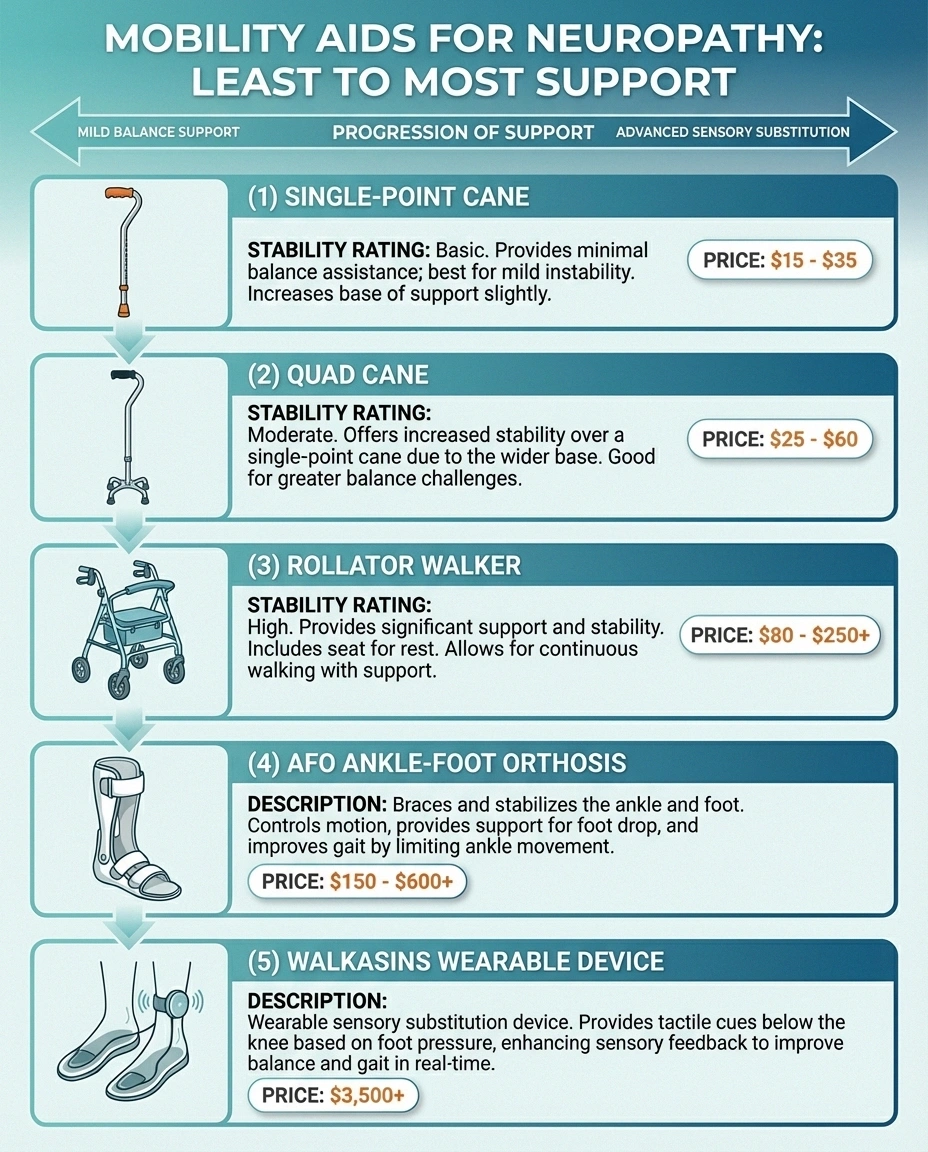
When neuropathy affects your feet and legs, maintaining safe mobility becomes the single most important factor in preserving independence. Falls are the leading cause of serious injury in neuropathy patients over 60, and the right mobility aids dramatically reduce that risk.
Traditional Mobility Aids
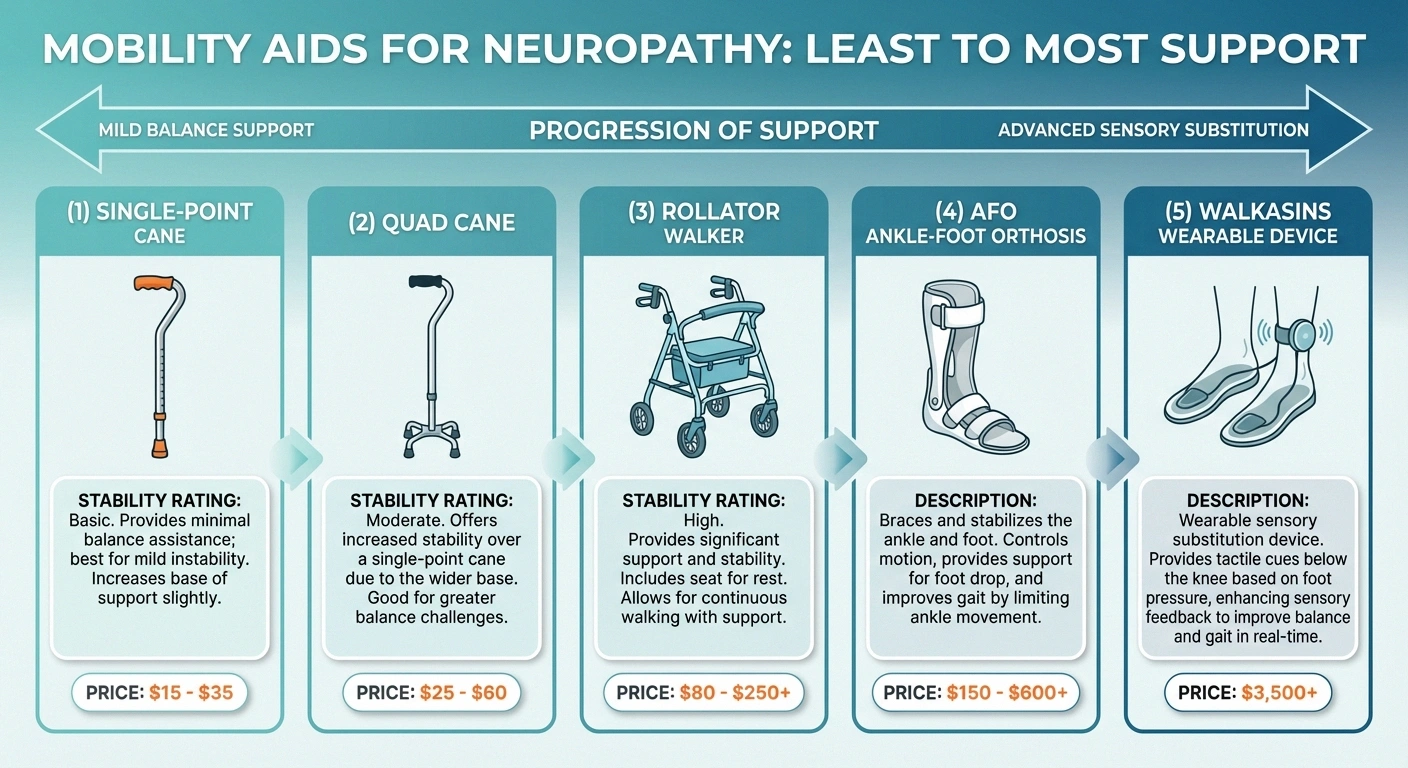
- Canes — For mild to moderate balance impairment. Choose a cane with an ergonomic handle that accommodates grip weakness. Quad canes (four-point base) provide more stability than single-point canes. ($15-$60)
- Rollator walkers — Four-wheeled walkers with a seat, hand brakes, and a storage basket. The gold standard for neuropathy patients who need continuous support. The built-in seat means you can rest anywhere when fatigue hits. ($60-$200)
- Ankle-foot orthoses (AFOs) — Custom or off-the-shelf braces that support the foot and ankle, preventing the foot drop and ankle instability common in motor neuropathy. Prescribed by a physician and fitted by an orthotist. ($100-$800 depending on customization)
Advanced Wearable Technology
Several newer devices address neuropathy-specific balance problems using sensory substitution — essentially replacing lost nerve signals with alternative sensory input:
FDA status: Cleared (not experimental)
Clinical evidence: Improved balance, gait speed, and reduced fall rates
Cost: $3,500–$5,000 (may be partially covered with documentation of medical necessity)
Best for: Patients with significant plantar sensation loss who remain ambulatory
- Walkasins (by RxFunction) — An FDA-cleared wearable device that provides vibrotactile feedback to the lower leg based on foot pressure readings. Clinical studies show improved balance, gait speed, and reduced fall rates in patients with peripheral neuropathy. The device essentially gives your brain balance information that your damaged nerves can no longer transmit. ($3,500-$5,000; may be partially covered by insurance with documentation of medical necessity)
- Smart insoles — Pressure-sensing shoe insoles that connect to smartphone apps, providing real-time feedback on gait patterns and weight distribution. While primarily used in research settings, consumer versions are becoming available for self-monitoring. ($100-$300)
Home Safety Modifications
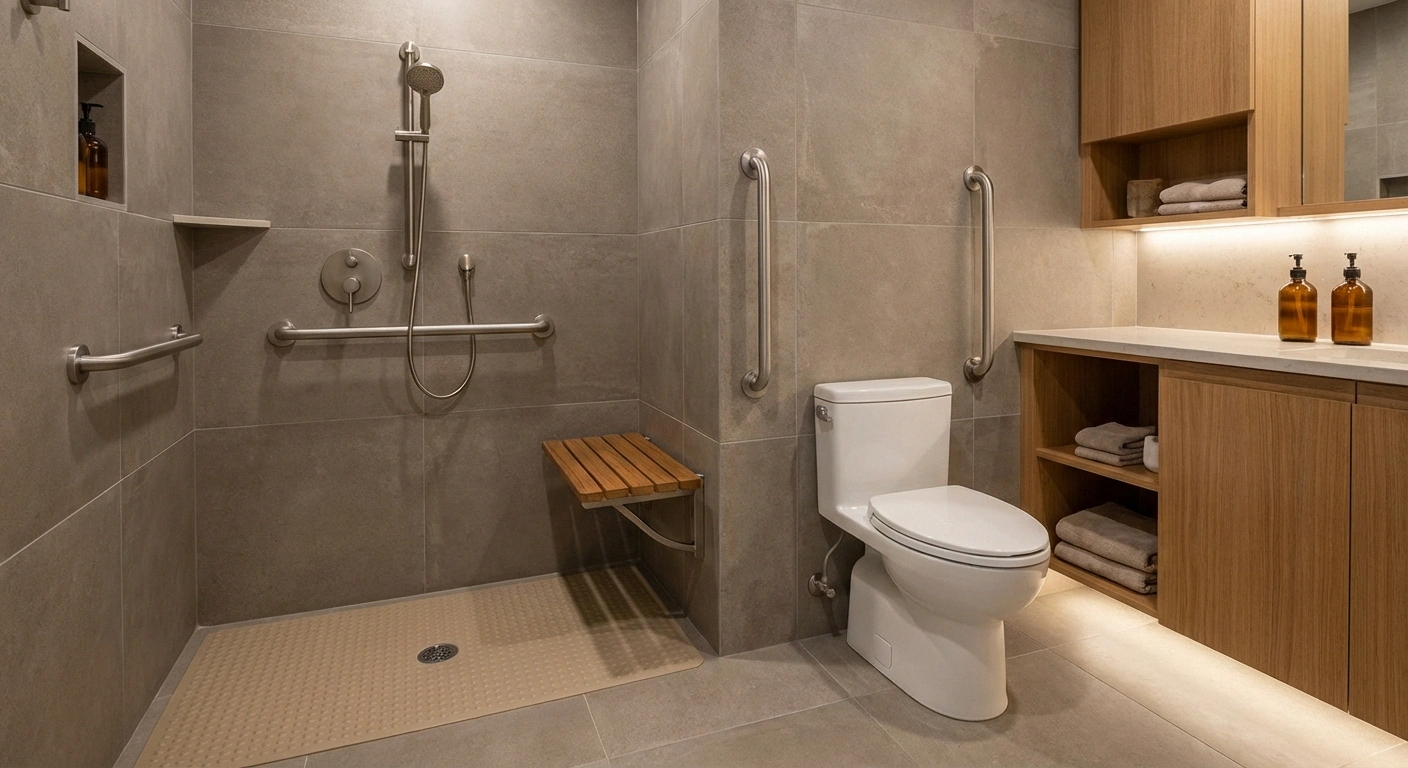
Your home should be your safest environment, but standard home design often creates hazards for people with neuropathy. These modifications address the most common risks:
Fall Prevention
- Grab bars — Install in bathrooms (next to toilet, inside shower, at tub edge), in hallways, and at any transition point where you change direction. Modern grab bars come in decorative finishes that blend with home décor. ($15-$50 per bar; professional installation recommended)
- Non-slip flooring and adhesive strips — Adhesive non-slip strips for bathtubs and shower floors. Non-slip rugs or removal of throw rugs entirely (a leading tripping hazard). ($5-$20 per application)
- Motion-activated lighting — Nightlights and under-cabinet lighting that activate automatically in hallways, bathrooms, and stairs. When you can’t feel the floor beneath you, seeing it clearly becomes doubly important. ($10-$25 per unit)
- Stair modifications — Contrasting color tape on stair edges to improve visibility. Secure handrails on both sides. Consider a stair lift ($2,000-$5,000) if stairs become unsafe
- Raised toilet seats — Reduce the distance you need to lower yourself, decreasing fall risk at one of the most dangerous locations in the home. ($25-$60)
Temperature Safety
- Thermostatic mixing valves — Install on showers and faucets to prevent water from exceeding a safe temperature. Essential when you can’t feel scalding water. ($50-$200 for the valve; professional plumbing installation recommended)
- Digital water thermometers — Battery-powered devices that display water temperature before you step into a bath or shower. ($10-$20)
- Infrared thermometers — Point-and-read devices for checking surface temperatures of stovetops, heating pads, and other potential burn sources. ($15-$35)
Digital and Communication Technology
When neuropathy affects hand function, standard digital devices — phones, keyboards, tablets — become unexpectedly difficult to use. Adaptive technology for computing is a rapidly growing field with many practical options:
☐ Grab bars by toilet, shower, and tub
☐ Non-slip strips on shower/tub floor
☐ Shower chair or transfer bench
☐ Thermostatic mixing valve on shower
☐ Raised toilet seat
Throughout home:
☐ Motion-activated nightlights in hallways
☐ Remove all throw rugs
☐ Contrasting tape on stair edges
☐ Handrails on both sides of stairs
☐ Good lighting at all transition points
Input Devices
- Ergonomic keyboards — Split keyboards, curved layouts, and models with larger key spacing reduce the precision demands on numb fingers. Mechanical keyboards with tactile feedback help when you can’t feel whether you’ve pressed a key. ($30-$150)
- Trackball mice — Eliminate the need to grip and slide a mouse. A large trackball moved by the palm or fingers controls the cursor while the mouse stays stationary. ($25-$60)
- Voice-to-text software — Dragon NaturallySpeaking, built-in dictation in Windows and Mac, and Google voice typing can replace typing entirely. Modern accuracy rates exceed 95 percent. (Free to $150)
- Stylus pens for touchscreens — Large-diameter stylus pens with soft grips are easier to hold than bare-finger touch interactions, especially on tablets and smartphones. ($8-$20)
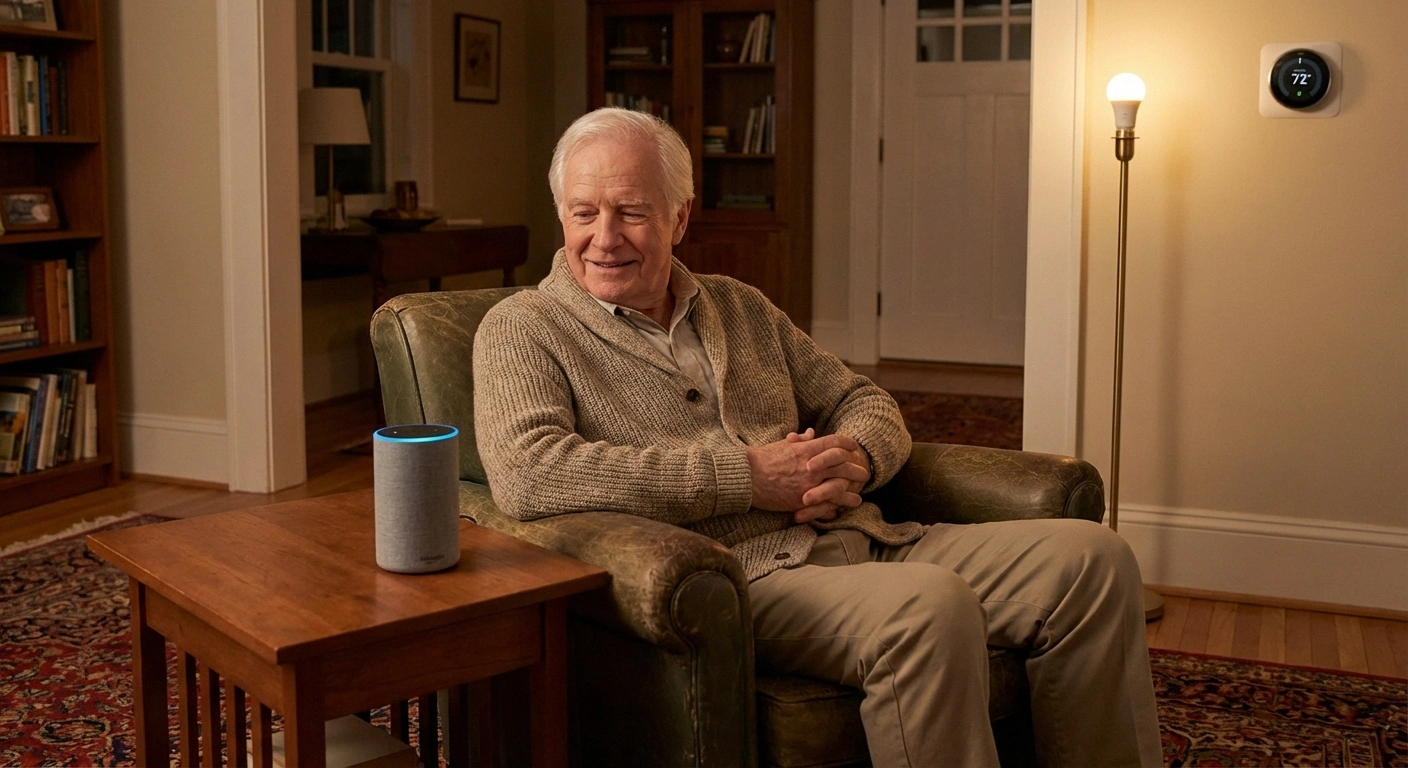
- Smart home voice assistants — Amazon Alexa, Google Home, and Apple HomePod can control lights, thermostats, locks, and more by voice command — eliminating the need to manipulate small switches and dials. ($30-$100)
Smartphone Adaptations
- Phone cases with grip surfaces — Textured or rubberized cases prevent drops when hand sensation is unreliable
- Accessibility settings — Both iOS and Android have built-in features: larger touch targets, voice control, text-to-speech, and haptic feedback adjustments specifically designed for users with motor impairment
- PopSockets and ring holders — Simple attachments that reduce the grip strength needed to hold a phone. ($5-$15)
Therapeutic and Pain Management Devices
Beyond assistive devices for daily tasks, several therapeutic devices specifically target neuropathy symptoms:
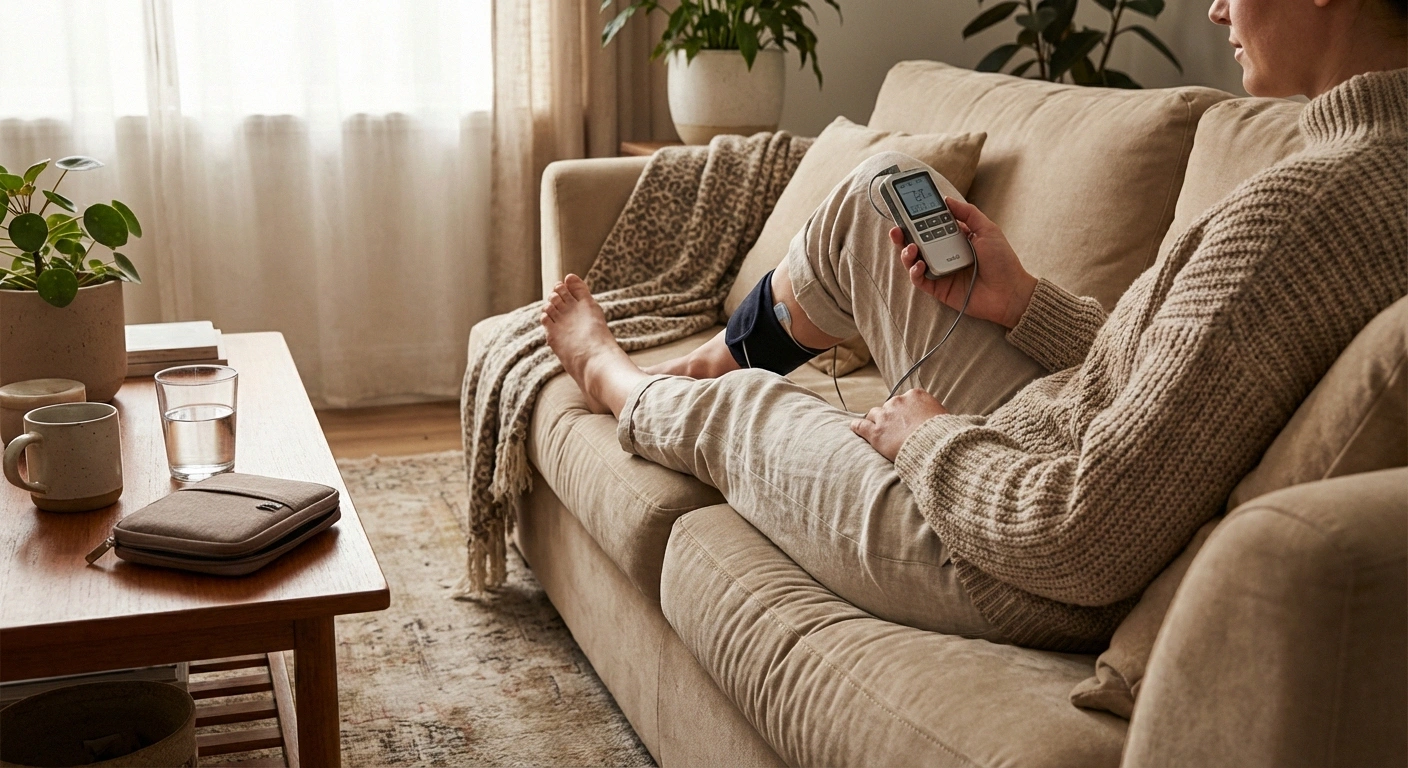
- TENS units — Transcutaneous Electrical Nerve Stimulation devices deliver mild electrical impulses that may block pain signals and stimulate endorphin release. Compact, portable units are available over the counter. ($25-$80 for consumer units; prescription units may be covered by insurance)
- Infrared therapy devices — LED pads and boots that deliver near-infrared light to affected extremities. Some clinical evidence supports improved sensation and pain reduction in diabetic neuropathy. ($100-$500)
- Vibration therapy platforms — Whole-body vibration platforms may improve circulation, balance, and sensory function. Research is mixed but some neuropathy patients report benefit. ($100-$500)
- Foot massagers — Electric foot massagers with heat and various pressure settings can provide temporary pain relief and improve local circulation. ($40-$150)
- Paraffin wax baths — Warm wax treatments for hands that ease pain, reduce stiffness, and improve mobility. Particularly helpful for morning hand stiffness from neuropathy. ($30-$80 for home units)
How to Get Assistive Devices: Insurance, Medicare, and Resources
Cost is a real barrier to assistive technology. Here’s how to navigate the financial side:
What Medicare Covers
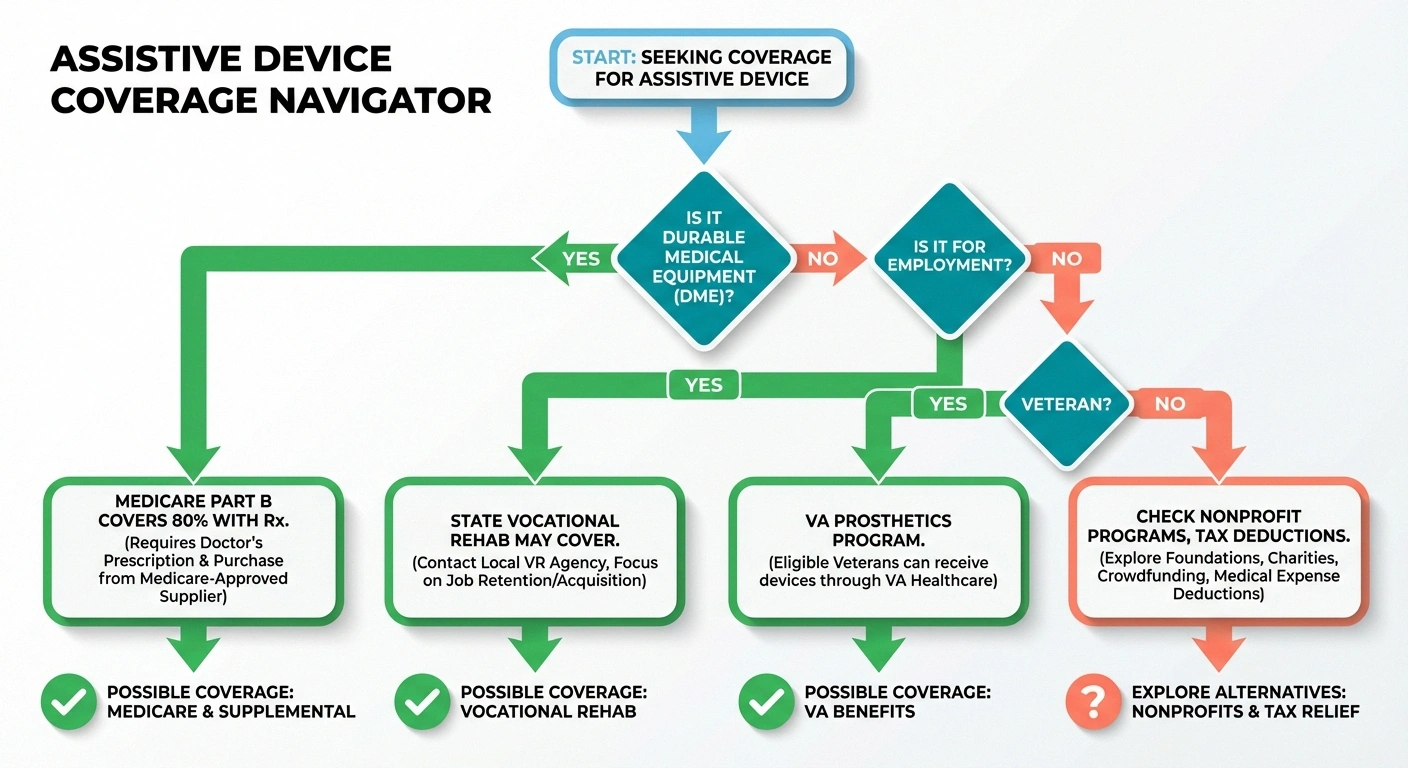
Medicare Part B covers Durable Medical Equipment (DME) that is medically necessary and prescribed by a physician. This typically includes walkers, canes, AFOs, shower chairs, and TENS units. Coverage is usually 80 percent after the Part B deductible, meaning you pay 20 percent out of pocket. Medicare does not typically cover lower-cost assistive devices like button hooks, built-up utensils, or adaptive kitchen tools — these are considered “convenience items.”
Other Coverage Sources
- Private insurance — Coverage varies widely. Get a prescription and letter of medical necessity from your neurologist
- Veterans benefits — The VA provides assistive devices to eligible veterans through its prosthetics and sensory aids program
- State vocational rehabilitation — If you’re still working, state VR agencies may fund assistive technology that helps you maintain employment
- Nonprofit assistance programs — Organizations like the Foundation for Peripheral Neuropathy and AbleData maintain databases of resources and sometimes offer direct assistance
- Tax deductions — Assistive devices prescribed by a physician may qualify as deductible medical expenses on your federal taxes
Working With an Occupational Therapist
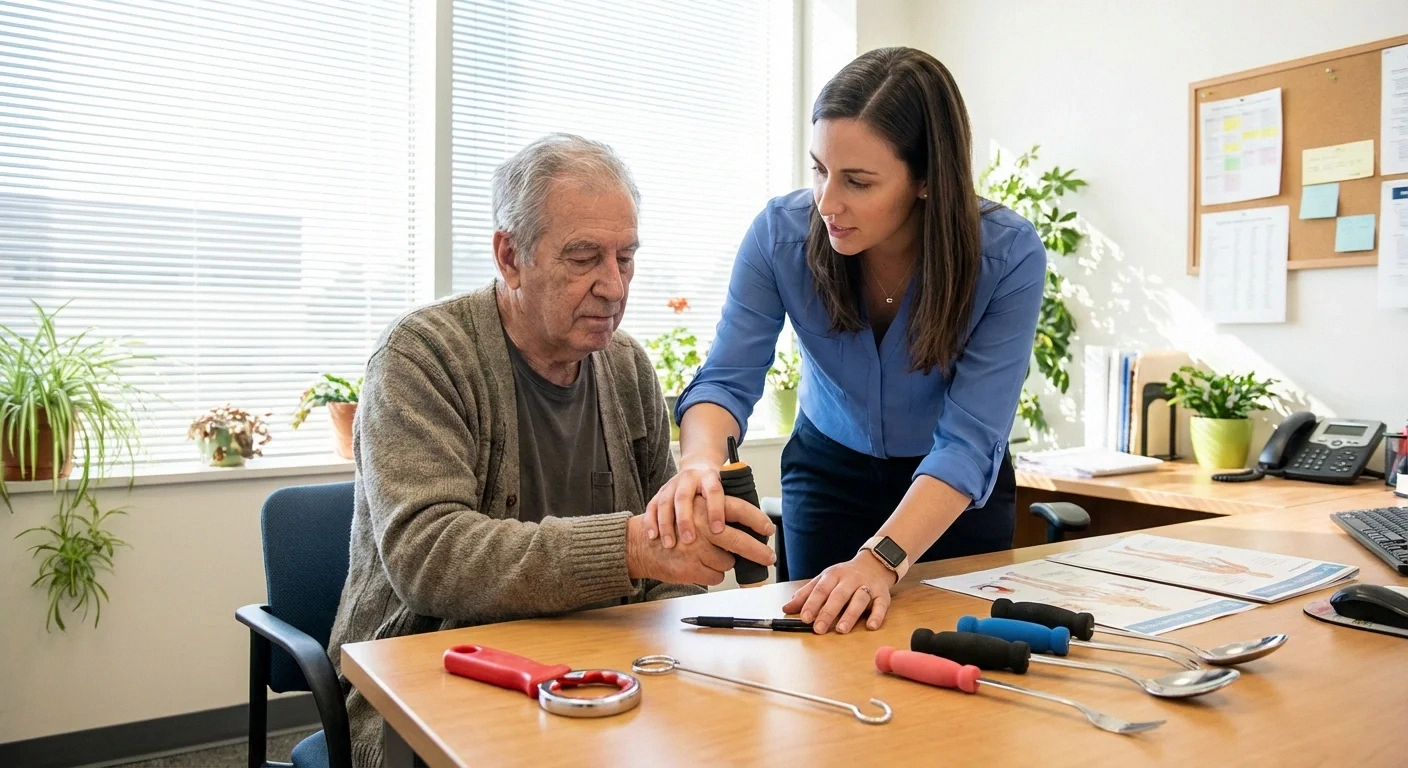
An occupational therapist (OT) is your best ally in identifying the right assistive technology for your specific needs. OTs assess your daily activities, identify where you’re struggling, and recommend targeted solutions — often ones you wouldn’t have found on your own. Most insurances, including Medicare, cover OT referrals from your physician. A single evaluation can produce a personalized assistive device plan that saves months of trial and error.
Frequently Asked Questions
What are the most important assistive devices for neuropathy?
The most impactful devices depend on your specific symptoms. For hand numbness, start with built-up utensil handles, a button hook, and ergonomic jar openers. For balance and mobility issues, a cane or rollator walker and bathroom grab bars are priorities. For temperature sensation loss, thermostatic mixing valves on showers and an infrared thermometer for the kitchen are essential safety devices. An occupational therapist can help identify your highest-priority needs.
Does Medicare pay for assistive devices for neuropathy?
Medicare Part B covers medically necessary Durable Medical Equipment including walkers, canes, ankle-foot orthoses, shower chairs, and TENS units at 80 percent after your deductible. Lower-cost daily living aids like button hooks, adaptive utensils, and non-slip mats are generally not covered by Medicare. A physician’s prescription and documented medical necessity improve your chances of coverage for more expensive items.
What is the Walkasins device and does it help neuropathy?
Walkasins is an FDA-cleared wearable sensory substitution device made by RxFunction. It measures pressure under your feet and converts that data into vibrotactile signals on your lower leg, essentially giving your brain balance information that damaged nerves can no longer provide. Clinical studies show improvements in balance, gait speed, and fall reduction. It costs $3,500 to $5,000 and may be partially covered by insurance.
How can I make my home safer with neuropathy?
Start with the highest-risk areas: install grab bars in bathrooms, add non-slip strips in showers and tubs, improve lighting with motion-activated nightlights, remove throw rugs, and install a thermostatic mixing valve on your shower to prevent burns. Add a raised toilet seat and consider a shower chair or transfer bench. For stairs, add contrasting tape to edges and ensure handrails are secure on both sides.
Are there high-tech devices specifically for neuropathy balance problems?
Yes. The Walkasins device provides sensory substitution for lost foot sensation. Smart insoles with pressure sensors can track gait patterns and alert to fall risk. Vibration therapy platforms may improve proprioception and balance. Research is also advancing on electrical stimulation devices and smart shoe inserts that provide real-time balance feedback. Consult with your neurologist or physical therapist about which technology might benefit your specific balance challenges.
Where can I try assistive devices before buying them?
Occupational therapy clinics often have sample devices you can try during a session. Many states operate Assistive Technology Act programs with lending libraries where you can borrow devices for a trial period. Medical supply stores sometimes allow hands-on testing. Online retailers with generous return policies (such as Amazon) also let you try and return if a device doesn’t work for your needs.
Taking the First Step
The world of assistive technology can feel overwhelming when you first encounter it — shelves of gadgets, unfamiliar devices, and the uncomfortable feeling that needing help means losing independence. Let me reframe that: choosing the right tool isn’t admitting defeat. It’s engineering a solution. It’s the same impulse that makes someone wear glasses instead of squinting, or use a power drill instead of a hand screwdriver.
Start small. Pick the single daily task that frustrates you most — the one where neuropathy steals the most time, causes the most pain, or creates the most risk. Find the tool that addresses that one task. Use it for a week. Then move to the next. You don’t need to overhaul your entire life at once.
And if you’re not sure where to start, ask your doctor for a referral to an occupational therapist. One appointment can change the way you navigate your day. That button hook changed mine.
About the Author