
Somewhere in your paperwork there is a sentence that ends with five words you were never given a translation for.
Chronic idiopathic axonal polyneuropathy. Or CIAP, if the letter was written by someone in a hurry.
Nobody sat you down and explained it. The appointment ran long, the phrase got said once, and you went home and typed it into a search bar and found a paywalled neurology reference and three research papers. That is genuinely what is on the first page of results for this term, which tells you something about who has bothered to write for the person actually holding the diagnosis.
So let us take it apart. Every word in that phrase is carrying information, and only one of them means what you are afraid it means.
Five Words, Translated
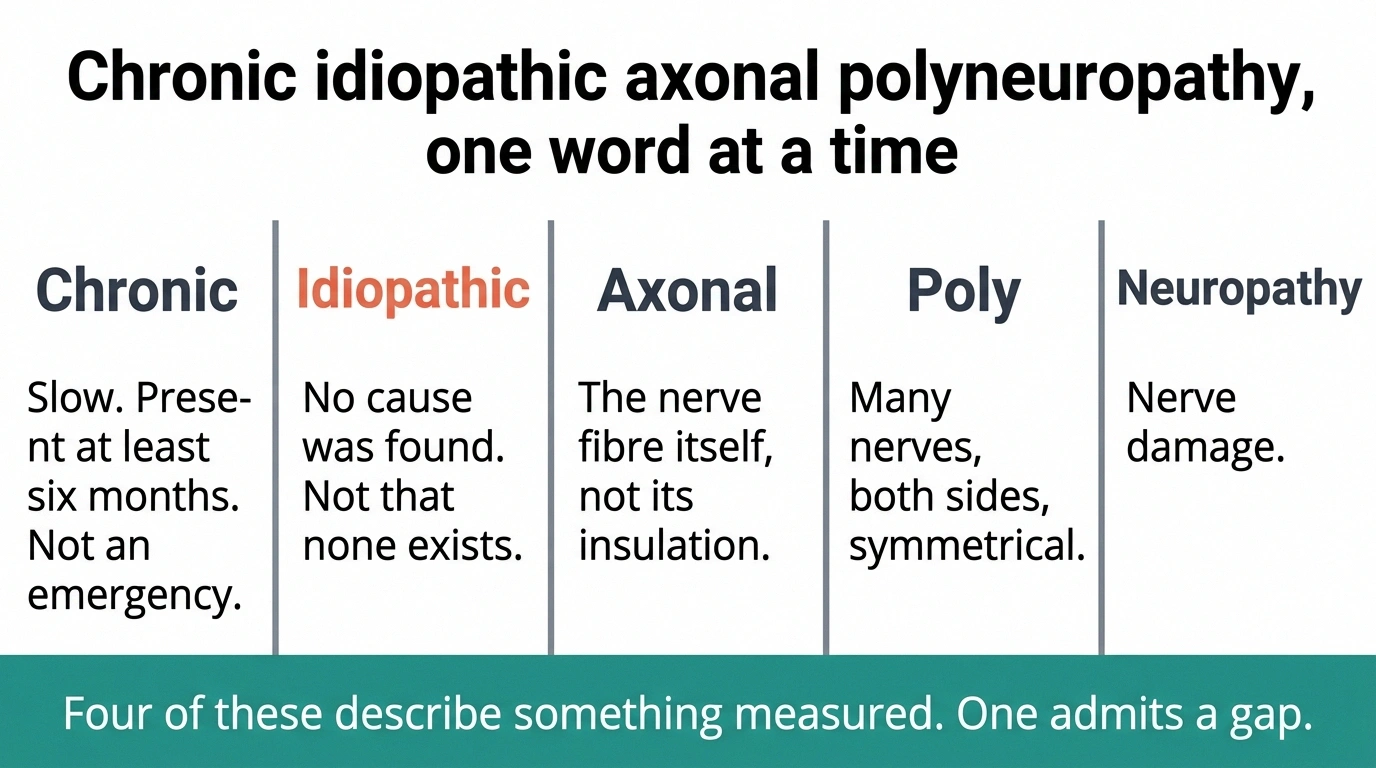
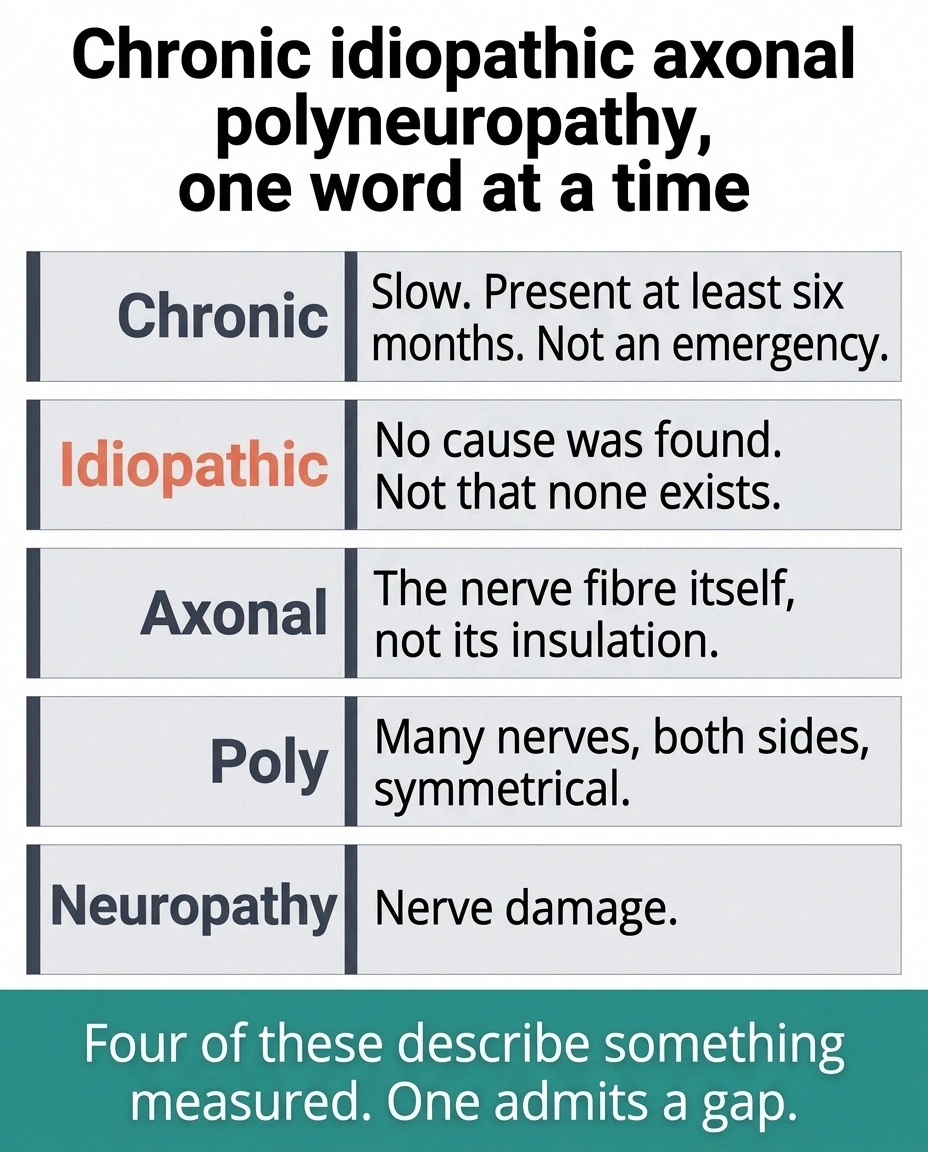
Chronic. It has been going on a while and it is not an emergency. Specifically, the diagnosis requires slow onset and slow or no progression over at least six months. If this had come on over weeks, you would be looking at an entirely different set of conditions with an entirely different urgency.
Idiopathic. This is the one that stings. It means no cause was found. Not that no cause exists, and not that nobody looked — the word is doing double duty in a way that hides the effort behind it. Reaching this label properly requires ruling out a long list of alternatives, which we will get to, because the quality of that ruling-out is the single most useful thing you can audit about your own diagnosis.
Axonal. This is real information and it came from your nerve tests. Nerve fibres can be damaged in two broad ways. The insulation can degrade, which is called demyelinating, or the fibre itself can be damaged, which is axonal. Yours is the second kind. That single word rules out a whole family of inflammatory conditions and points toward a different, generally slower, group of causes.
Poly. Many nerves, not one. Both feet rather than one foot, symmetrically, in the classic stocking pattern that starts at the toes and creeps upward. If one nerve were trapped or injured, that would be a mononeuropathy and a very different problem.
Neuropathy. Nerve damage. You knew that part.
Put back together: slow-moving, symmetrical damage to the nerve fibres themselves, cause unknown after appropriate investigation. Four of the five words describe something specific that was measured. One admits a gap.
You Are Not an Unusual Case
The isolation of this diagnosis comes partly from how rare it sounds. It is not rare at all.
Polyneuropathy overall affects somewhere between 75 and 125 people per 100,000. Of those with chronic polyneuropathy, no cause is established in anywhere from 5% to 30% of cases depending on the series and how hard anyone looked, and in some cohorts that figure reaches roughly one third after a thorough evaluation.
Which makes CIAP the second most common polyneuropathy there is, after the diabetic kind.
Most people are in their sixties when it is diagnosed. The presentation is predominantly sensory, or sensory with some motor involvement — numbness, tingling, burning, unsteadiness, and often not much visible weakness.
If you have been quietly assuming your case is peculiar, it is not. There are a great many of you, and the reason it feels like a diagnostic dead end is that the label describes the limits of the investigation rather than a distinct disease. There is no CIAP patient association because CIAP is not really one thing.
What Should Have Been Ruled Out

This section exists so you can check your own workup. “Idiopathic” is only trustworthy in proportion to what was excluded, and gaps happen — especially when a workup was spread across two clinics, or done years ago, or interrupted by something else going on in your life.
Serum protein electrophoresis, sometimes written SPEP, with immunofixation. It looks for a paraprotein, an abnormal antibody made by a single clone of cells. It slips through more than anything else on the workup list for a mundane reason: it is not bundled into any routine blood panel and has to be requested by name.
Why it matters more than its obscurity suggests: a paraprotein moves you out of the idiopathic category entirely and into a group with its own monitoring and, in some cases, its own treatment. Checking whether it was done costs one look at your results and one question.
A proper evaluation before this label is applied normally includes:
- Blood glucose, properly assessed. HbA1c rather than a single fasting glucose. This matters enormously and gets its own section below.
- Vitamin B12, plus folate. And ideally methylmalonic acid if B12 sits in the low-normal grey zone, since that catches deficiency a plain B12 misses. B12 deficiency is one of the genuinely treatable causes and one of the more common ones to slip through.
- Thyroid function.
- Kidney and liver function. Urea, electrolytes, liver enzymes.
- Full blood count and ESR.
- Serum protein electrophoresis and immunoglobulins. This is looking for a paraprotein, an abnormal antibody produced by a single clone of cells. It is one of the most important tests on the list and one of the most frequently omitted, because it is not part of a routine panel and has to be specifically requested.
- Serum ACE. Screening for sarcoidosis.
- Nerve conduction studies. Confirming axonal loss in at least two nerves and excluding a demyelinating pattern.
Beyond the bloods, a competent history should have covered alcohol intake honestly, every medication and supplement you take including B6 in high doses, chemotherapy exposure, occupational chemical exposure, and family history.
If you can look at that list and identify something that was never done — the paraprotein screen is the usual candidate — that is a reasonable and specific thing to raise. Our guide to reading neuropathy blood work covers what the numbers mean once you have them.
The Two Causes Hiding Behind the Label
Two things turn up often enough in previously-idiopathic patients that they deserve naming, and neither is exotic.
| Label | Nerve conduction result | How it is actually confirmed |
|---|---|---|
| CIAP | Axonal loss in at least two nerves | By exclusion, once the workup finds nothing |
| CIDP | Demyelinating pattern, not axonal | By the conduction pattern itself, and response to treatment |
| Small fiber neuropathy | Often completely normal | Skin biopsy, because standard testing cannot see small fibres |
A normal nerve conduction study is the one result people most often read as reassurance. It rules out the large-fibre problems. It says nothing at all about the small ones.
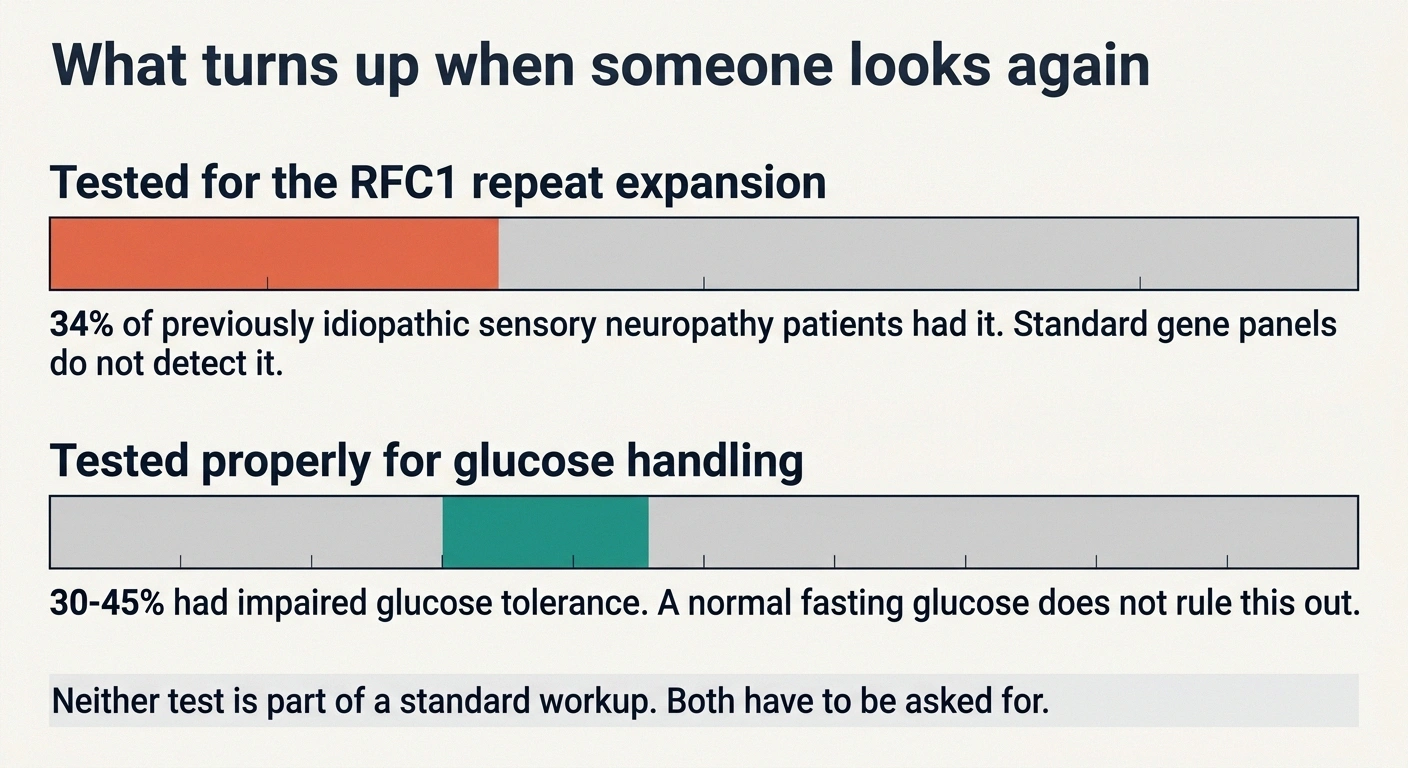
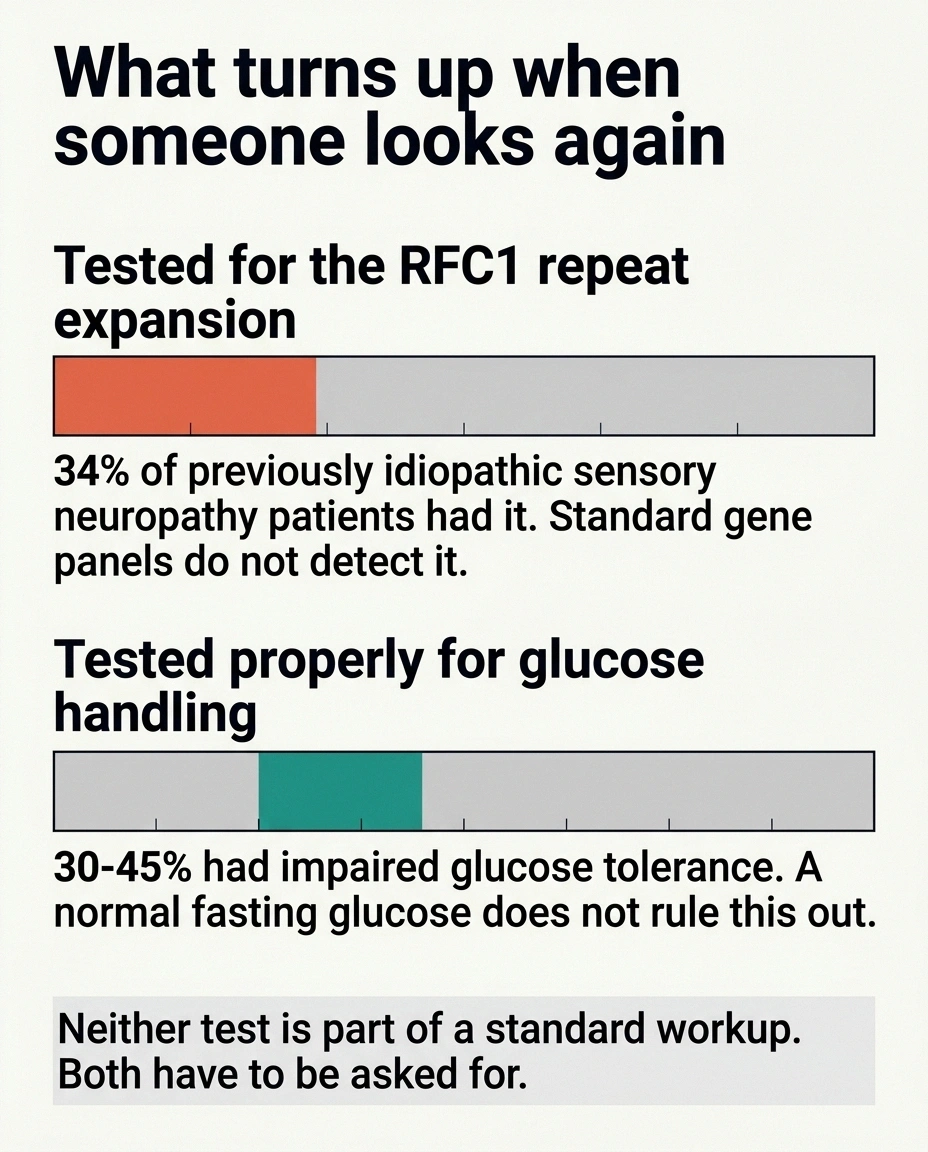
Blood sugar that is not quite diabetes. Studies have repeatedly found impaired glucose tolerance in 30% to 45% of people with otherwise idiopathic neuropathy. CIAP has also been shown to be independently associated with metabolic syndrome, the cluster of raised blood pressure, waist circumference, triglycerides, low HDL and raised glucose.
The trap is that a normal fasting glucose does not exclude this. Glucose can be perfectly respectable first thing in the morning and behave badly after a meal, and it is the after-meal excursions that appear to matter for nerves. Catching it needs an HbA1c at minimum, and ideally a two-hour glucose tolerance test. This is worth knowing because nerve damage from borderline blood sugar is one of the few situations where the finding directly changes what you can do about it.
Genetic causes that leave no family trace. When one large cohort of people carrying an idiopathic sensory neuropathy label was tested for a specific repeat expansion in a gene called RFC1, 34% of them had it. A quarter of those had previously been given a different and incorrect diagnosis, and three had been treated with immune therapies they did not need.
Standard gene panels do not find this particular abnormality — it needs a specific test for repeat expansions. And recessive hereditary neuropathies can affect a single person in a completely healthy family, so “no family history” does not close the door the way people assume it does.
Also worth having on the list: hereditary transthyretin amyloidosis. ATTR amyloid neuropathy can present as a progressive sensorimotor neuropathy and has genuinely changed in the last decade, from untreatable to having several approved therapies. That change makes it a diagnosis worth not missing, particularly alongside unexplained heart, gut or autonomic symptoms.
The Prognosis You Were Probably Not Given

This is the part I most want you to read, because it is the question people ask at two in the morning and rarely ask out loud in the appointment.
Long-term follow-up studies of CIAP are genuinely reassuring. The condition progresses very slowly. Over ten years from onset, the extent of disability is not severe, and there is no loss of ambulation. People keep walking.
Some researchers have gone further and framed CIAP in the context of the peripheral nervous system simply ageing — the observation being that some proportion of what gets diagnosed here overlaps with nerve changes that accompany getting older rather than a disease process eating away at you.
That does not make the symptoms less real. Burning feet are burning feet regardless of what is causing them. But it does mean that the mental image most people build when they hear “progressive nerve damage, cause unknown” — the wheelchair, the decline, the timeline — is not what the data describes.
If you want the general picture of how nerve damage typically advances, we cover the stages of neuropathy separately. For CIAP specifically, the honest summary is: slowly, and not as far as you fear.
Pain Is the Main Event, and It Is Treatable
Sixty percent. That is the proportion of people with CIAP who have neuropathic pain, from one of the better quality-of-life studies on this condition.
The same study found that pain, rather than numbness or weakness, was what tracked with poorer emotional wellbeing, worse general health perception and increased fatigue. In other words, in a condition where the disease itself is not modifiable, the symptom that dominates your quality of life is the one thing that responds to treatment.
That reframes the whole management conversation. You are not being fobbed off with symptom control because nothing better exists. Symptom control is aimed squarely at the thing doing the most damage to your daily life.
What Actually Moves the Needle
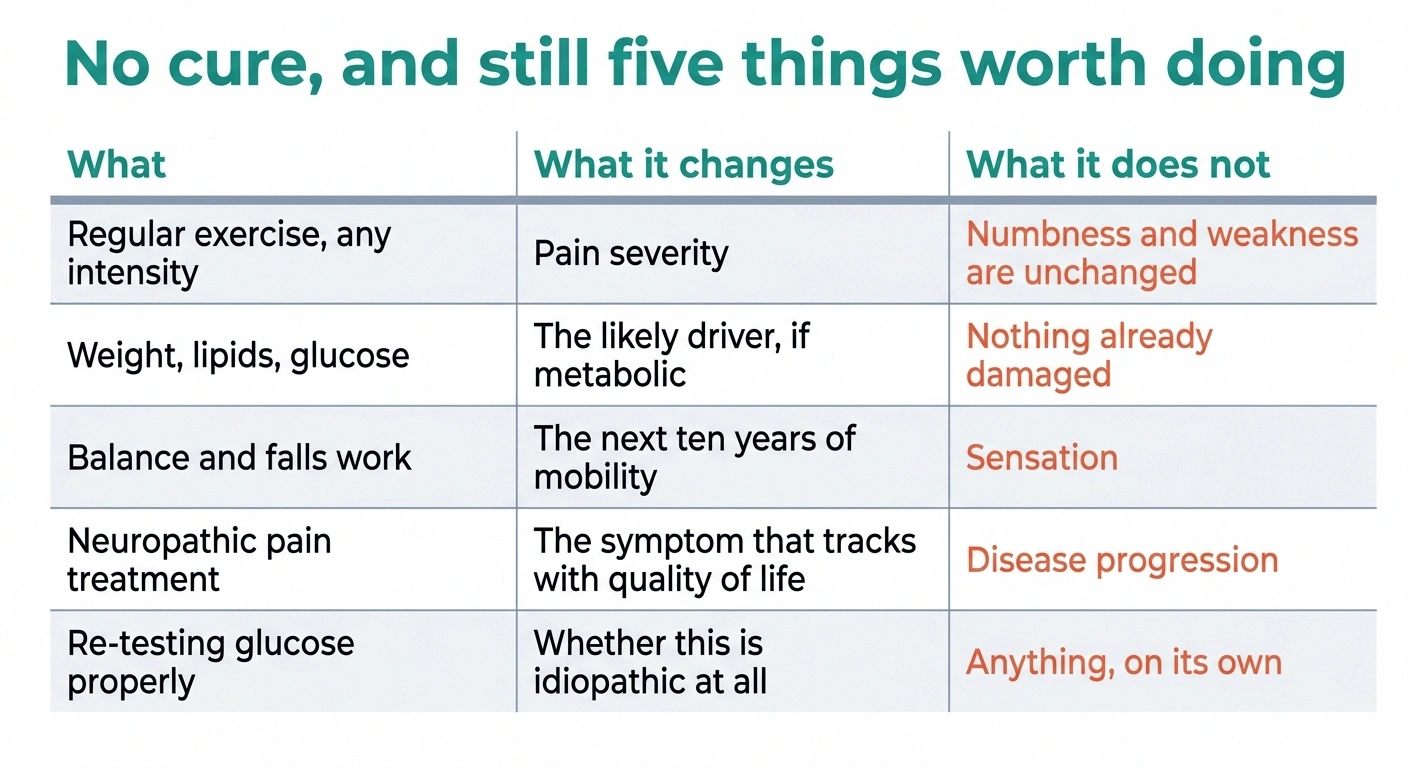
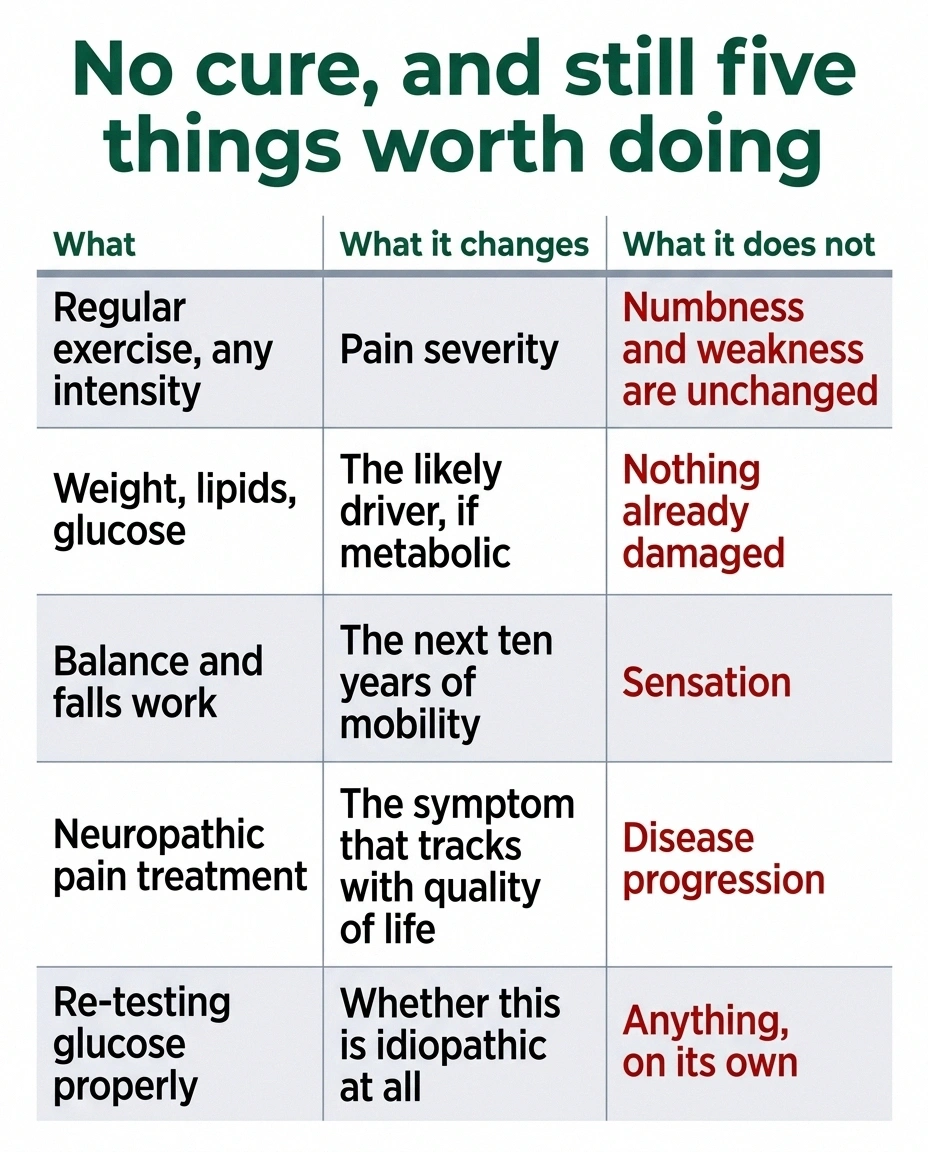
There is no disease-modifying treatment for CIAP. Here is what the evidence supports doing anyway.
- It sped up
- CIAP is defined partly by being slow. Noticeable change over months rather than years does not fit the label.
- Weakness took the lead
- CIAP is predominantly sensory. Prominent new weakness points toward a motor-involving cause that behaves differently.
- It went lopsided, or reached the hands early
- Asymmetry breaks the symmetrical length-dependent pattern the diagnosis assumes.
- Autonomic symptoms appeared
- Fainting, unexplained gut trouble, bladder or sweating changes suggest involvement beyond the sensory nerves.
- Several years have passed
- The list of identifiable causes is longer now than it was. A workup from a decade ago was searching a shorter list, not searching badly.
Exercise, for pain specifically. A Johns Hopkins study of people with idiopathic distal axonal polyneuropathy found that those who exercised regularly were less likely to report severe pain symptoms. Both low and high intensity were associated with benefit.
The finding came with an important honesty clause: exercise affected reported pain, and did not change numbness or weakness. Knowing that in advance protects you from concluding it failed. It is a pain intervention, and judged as one, it works. Our guide to walking with neuropathy covers how to build up without provoking a flare.
Metabolic management. Given the glucose and metabolic syndrome associations, weight management, treating raised lipids and daily activity are recommended components rather than general health advice attached out of habit. If your glucose sits in the borderline range, this is the closest thing to disease modification available to you.
Balance and falls. Reduced sensation in the feet means reduced information for your balance system, and that risk is independent of how much pain you have. Fall prevention is the intervention with the clearest effect on how the next decade actually goes.
Neuropathic pain treatment. The standard options, worked through methodically. This takes patience and usually more than one attempt, and it is worth treating as a process rather than a single prescription.
Re-testing glucose periodically. If your first workup used only a fasting glucose, this is the highest-value single thing left on the table.
When to Go Back and Ask

A diagnosis of exclusion should be revisited when something about the picture changes. Reasons to ask for another look:
- Symptoms are progressing noticeably faster than the slow creep described above.
- Weakness is becoming prominent, rather than sensory symptoms dominating.
- The pattern has become asymmetrical, or has jumped to your hands early.
- Autonomic symptoms have appeared — fainting, unexplained gut trouble, bladder changes, sweating changes.
- You have identified a specific gap in the workup, such as a missing paraprotein screen or a glucose tolerance test never done.
- Several years have passed. The list of identifiable causes has grown, and a workup from 2014 was working from a shorter list than one today.
What I would not recommend is repeating the same panel annually because it feels like doing something. Testing that has already come back normal twice is unlikely to change on the third pass. Aim at the gaps, not the coverage you already have.
One distinction worth clearing up while you are there: if your symptoms are predominantly burning, painful and sensory with normal nerve conduction studies, small fiber neuropathy is a different diagnosis reached a different way, usually with a skin biopsy. Standard nerve conduction tests only see large fibres, so a normal test does not mean nothing is wrong — it means the small fibres were never examined.
Frequently Asked Questions
Does chronic idiopathic axonal polyneuropathy mean my doctors gave up?
It means the standard investigation did not find a cause, which is a description of the search rather than a decision to stop. It is a legitimate diagnostic category applied after specific testing, not a shrug. That said, it is worth confirming which tests were actually done, because the label is only as reliable as the workup behind it, and gaps do happen when care is split between clinics.
Will CIAP put me in a wheelchair?
Long-term follow-up studies are reassuring on this point. Over ten years from onset, disability is generally not severe and there is no loss of ambulation. CIAP progresses very slowly, which is one of its defining diagnostic features. Falls, rather than the neuropathy itself, are the main threat to mobility over time.
What is the difference between CIAP and idiopathic neuropathy?
They overlap heavily and the terms are often used interchangeably. CIAP is the more precise version, specifying that the damage is axonal rather than demyelinating, that it affects many nerves symmetrically, and that it has been present with slow or no progression for at least six months. Idiopathic neuropathy is the broader umbrella term.
Can a cause still be found later?
Yes, and it happens more often than the label suggests. Genetic causes such as RFC1 repeat expansions have been found in around a third of previously-idiopathic sensory neuropathy patients when specifically tested. Impaired glucose tolerance turns up in 30% to 45% of otherwise idiopathic cases. Both require tests that are not part of a standard panel.
Is CIAP hereditary?
By definition, no cause has been identified, so it is not classified as hereditary. However, some people carrying this label turn out to have an inherited neuropathy that was never tested for. Recessive genetic conditions can affect one person in an otherwise healthy family, so an absent family history does not rule out a genetic cause.
Why does it mostly affect older people?
Most people are diagnosed in their sixties. Part of this is cumulative exposure over a lifetime to factors that damage nerves. Part of it may be that some of what gets labelled CIAP overlaps with the normal ageing of the peripheral nervous system, which is a framing some researchers have explicitly proposed.
Does exercise help CIAP?
For pain, yes. A study of people with idiopathic distal axonal polyneuropathy found regular exercisers reported severe pain less often, at both low and high intensity. The same study found no effect on numbness or weakness, so it is best approached as a pain and function intervention rather than something that will restore sensation.
Should I be taking B vitamins for it?
If you have a documented B12 deficiency, correcting it is treatment. If your levels are normal, supplementing has not been shown to help, and high-dose B6 specifically can cause a neuropathy of its own, so more is not better here. Worth checking the dose in any combination supplement you are already taking.
About the Author