Most nap advice fits on a sticky note. Keep it short. Keep it early. For a lot of people that really is the whole story — and the government's sleep pages say much the same thing, as you'll see below.
With neuropathy, my sticky note needs a few more lines. Heat off before you close your eyes. Legs uncrossed. Arms resting on the armrests — not draped over them. Sit for a moment before you stand. You won't find those in the usual nap articles, and every one of them matters when your feet and hands can't send the warnings they used to.
This page is about the daytime half of the sleep problem: the after-lunch slump that pulls so many of us into the recliner — and how to rest without paying for it at 2 a.m. It gathers what the nap studies actually found, the safety checks numb skin calls for, the medicines that add to the drowsiness, and the kind of sleepiness that deserves a mention at your next appointment. I'm a patient advocate, not a sleep doctor, so I'll flag anything that's simply my own habit.
Why the Afternoon Pull Is Stronger With Neuropathy
If you're nodding off after lunch, there's a fair chance last night had something to do with it. In a survey of 255 people with painful diabetic neuropathy, average age 61, pain substantially interfered with sleep, and they reported more sleep problems than the general U.S. population. A 2022 clinic study in south India found impaired sleep in 151 of 156 people with painful diabetic neuropathy. The NIDDK puts the pattern plainly: “Symptoms are often worse at night.” Our page on why neuropathy flares at night digs into the reasons.
Sleep and pain also feed each other. A 2013 review in The Journal of Pain concluded that sleep problems predict new or worsening chronic pain more reliably than pain predicts sleep problems. That review covered chronic pain in general rather than neuropathy, but it's a good reason to guard the night instead of treating the afternoon nap as a free extra.
Age plays a part too. MedlinePlus says there's no evidence that adults need less sleep as they get older, though older adults often sleep less, spend less time in deep sleep and wake more easily; adults need 7 to 9 hours a day. And napping is common later in life, especially with diabetes or pain. In one study of 414 adults aged 70 to 89, 54% napped, for 55 minutes on average, and diabetes nearly doubled the odds. In another, of 235 adults averaging 80 years old, diabetes and pain both went with higher odds of napping.
What Nap Research Actually Found
Nap research is smaller and messier than the confident advice online suggests. The trials in older adults enrolled between 9 and 32 healthy volunteers each, and none was designed around neuropathy or insomnia. Read together, though, they say something useful about length, and the table lines them up.
| Study | Who took part | The nap | Night sleep afterward |
|---|---|---|---|
| NASA report, 1994 | 21 long-haul airline pilots | A 40-minute rest window in flight; about 26 minutes asleep | Layover sleep unaffected |
| Tamaki and colleagues, 2000 | 10 healthy older adults who already napped | 30 minutes at 1 p.m., compared with resting in front of the TV | Not reported; afternoon sleepiness and fatigue eased |
| Campbell and colleagues, 2005 | 32 healthy adults, ages 55 to 85 | An afternoon nap in the lab | Little effect; more total sleep across 24 hours |
| Campbell and colleagues, 2011 | 22 healthy adults, ages 50 to 88 | 45 minutes or 2 hours a day for a month | No harm found; the 45-minute plan was easier to keep |
| Monk and colleagues, 2001 | 9 healthy adults, ages 74 to 87 | 90 minutes daily, 1:30 to 3 p.m. | Lab night sleep fell 48 minutes, mostly from earlier waking; at home it didn't drop significantly |
None of these studies enrolled people with neuropathy or insomnia. Sources: NASA Technical Memorandum 108839; Sleep Research Online, 2000; Journal of the American Geriatrics Society, 2005 and 2011; Sleep, 2001.
The Official Short Version
The most useful sentence I've found comes from the federal National Heart, Lung, and Blood Institute, or NHLBI: “Napping during the day may boost your alertness and performance. However, if you have trouble falling asleep at night, limit naps or take them earlier in the afternoon. Adults should nap for no more than 20 minutes.” MedlinePlus, from the National Library of Medicine, adds a time limit of its own: “Don't take a nap after 3 p.m.”
Notice the condition tucked into that first quote. The 20-minute limit is aimed at people who have trouble sleeping at night, which, judging by the studies above, describes a great many of us.
What NASA Learned From Napping Pilots
The famous NASA nap study wasn't about older adults at all — it was about airline pilots. In a report published in 1994, NASA researchers randomly assigned 21 long-haul airline pilots to two groups. The 12 in the rest group were allowed a planned 40-minute rest during the quiet cruise portion of the flight; the 9 in the other group weren't. The resting pilots managed to sleep on 93% of their chances, took about 5.55 minutes on average to drop off, and slept about 25.78 minutes per rest. Late in the flight, the no-rest group logged 120 brief lapses in alertness, picked up from brain waves and eye movements, against 34 for the rest group.
The authors advised keeping cockpit rest under an hour, because a longer nap raises the chance of deep sleep and of sleep inertia, the heavy grogginess of being woken from deep sleep. They also built in 20 minutes after each nap to let the fog lift. You may have read that NASA proved a 26-minute nap boosts alertness by some exact percentage. I couldn't find any such figures in the report, and its authors wrote that the study “did not specifically address the effects of nap duration on alertness.”
Grogginess matters more for us than for well-rested pilots. A 2019 review of sleep inertia notes that the fog after waking is worse after earlier sleep loss. After a broken night, a long nap may leave you foggier, not fresher.
Studies in Older Adults
The trials in older adults point in both directions, and that's the instructive part. Shorter and moderate naps in healthy volunteers mostly left night sleep alone, and in one small study a 30-minute nap at 1 p.m. eased afternoon sleepiness and fatigue better than resting in front of the television. The exception was the longest nap — an enforced 90-minute siesta every afternoon for healthy adults aged 74 to 87, whose night sleep in the lab shrank by 48 minutes, mostly because they woke earlier.
The researchers behind the month-long study found people stuck with 45-minute naps more easily than 2-hour ones, and suggested daily 1-hour naps as a reasonable balance for healthy older adults. That was their suggestion for people who sleep well at night, not a tested rule, and it doesn't cancel NHLBI's shorter limit for anyone whose nights are a struggle.
The Scary Headlines, Read Carefully
You may have seen headlines tying naps to heart disease, dementia or an early death. The studies behind them are real and worth understanding properly. They're observational, which means researchers followed people who happened to nap and compared what happened to them later; nobody was assigned to nap. The table below shows the three biggest.
- Yamada and colleagues, 2015: 11 cohorts, 151,588 people, about 11 years of follow-up
- Naps of 60 minutes or more a day were linked with an 82% higher rate of cardiovascular disease (rate ratio 1.82) and a 27% higher death rate (1.27), compared with not napping.
- EPIC-Norfolk, 2014: 16,374 adults in Britain, 13 years
- Hazard ratio for death of 1.14 with naps under an hour a day and 1.32 with an hour or more, and the link was stronger for deaths from respiratory disease.
- Rush Memory and Aging Project: 1,401 older adults, average age 81.4, up to 14 years
- Napping an hour or more a day, measured by a wrist sensor, went with a 1.4-fold risk of Alzheimer's dementia; napping once or more a day went with a 40% higher risk.
Two details matter. First, the heart and death links in the big 2015 analysis showed up for naps of an hour or more a day, not for shorter ones. Second, the researchers themselves suggest the arrow may point the other way. The EPIC-Norfolk team in Britain called excessive daytime napping a possible “marker of underlying health risk,” and the Rush researchers wrote that napping may be partly “a reflection of poorer health.” Long, frequent naps can be a sign that something else is going on. That's a reason to mention a change in your napping at your next appointment, not a reason to panic.
When Nights Are the Real Problem

If insomnia is what drives your afternoon naps, the advice gets stricter. NHLBI lists “Taking long naps during the day” among the habits that raise your risk of sleep problems, and its insomnia treatment page goes further: “Avoid naps, especially in the afternoon. This may help you sleep longer at night.” That's a different message from the general 20-minute guidance. The honest reading, I think, is that naps are a judgment call — the worse your nights, the more a nap may be costing you.
For long-term insomnia, tips alone aren't the treatment. The American College of Physicians (2016) recommends cognitive behavioral therapy for insomnia, or CBT-I, as the first treatment for chronic insomnia in adults, and the American Academy of Sleep Medicine (2021) strongly recommends it too. NHLBI describes it as a 6- to 8-week plan to help you fall asleep faster and stay asleep longer, and it can include sleep restriction and firm rules about when you go to bed and get up. The sleep academy's guideline also advises clinicians not to use sleep hygiene tips as a stand-alone treatment. If you're working with a CBT-I therapist, they set the nap rules, not a website.
The same government pages offer two daytime habits that help the night. NHLBI suggests regular physical activity during the day, “at least 5 to 6 hours before going to bed,” and MedlinePlus recommends getting enough sunlight exposure during the day.
What about resting without sleeping? Lying down with your eyes closed hasn't been studied as a nap substitute in anything I found, and the National Center for Complementary and Integrative Health says relaxation techniques on their own “don't seem to be especially promising for sleep.” I still value a quiet sit on a bad-pain day — not as a cure, just as rest. Our guide to pacing your energy through the day covers rest breaks in more detail.
Five Checks Before You Doze Off
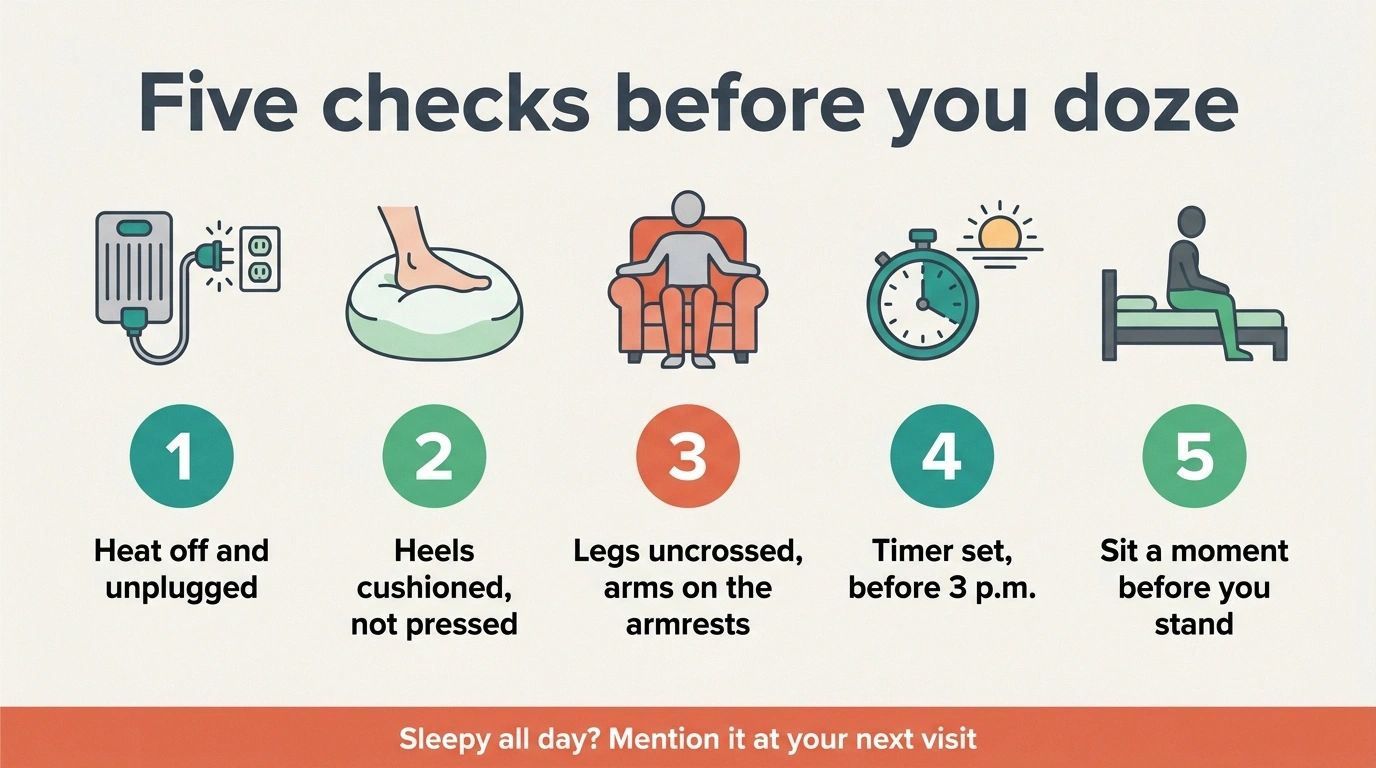
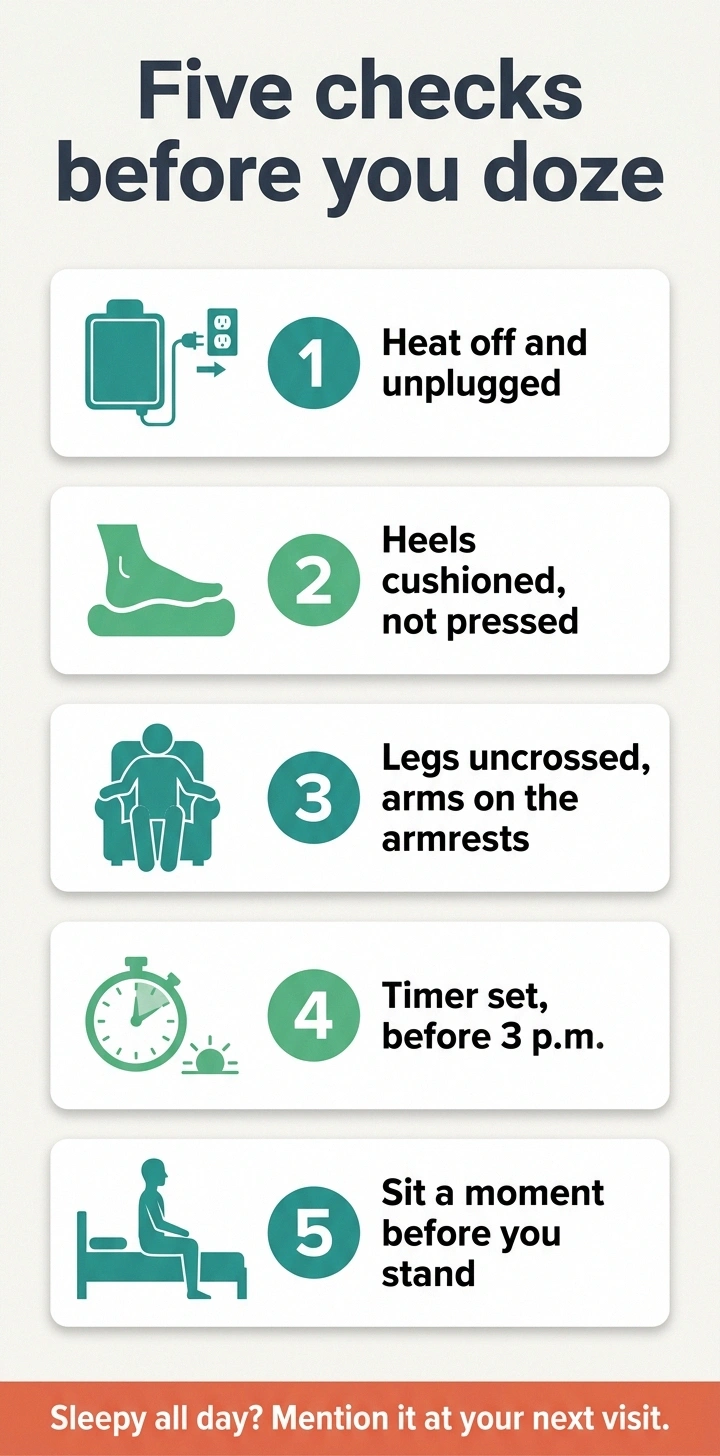
This is the part the general nap articles skip. Numb skin and quiet nerves change what a harmless doze looks like, so here are the checks I run through before I let myself drift off. The graphic sums them up, and the details follow.
Heat Off Before Your Eyes Close
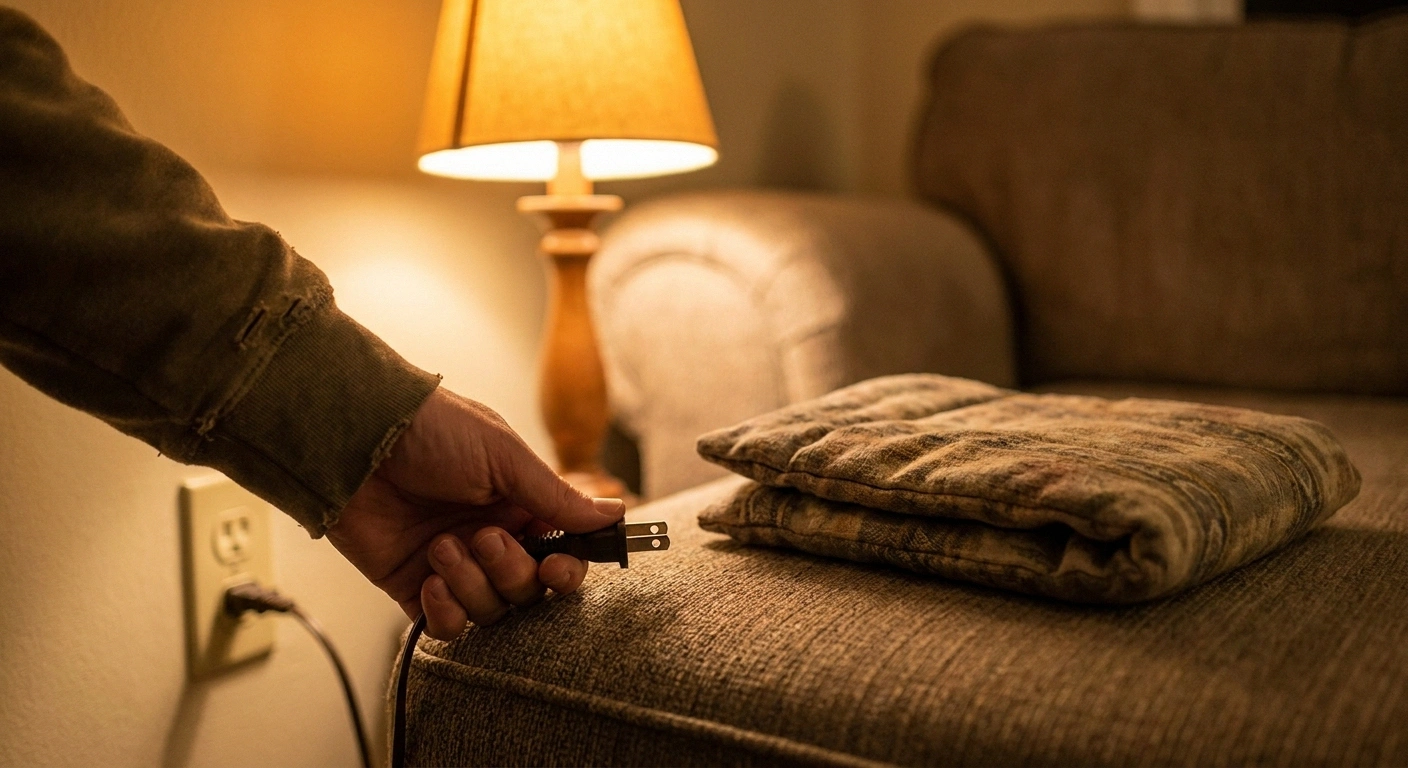
The NIDDK's foot-care page doesn't mince words. With diabetic nerve damage, it says, a burn can happen without your noticing, so it advises keeping heating pads and hot water bottles off your feet entirely. That guidance was written for diabetic nerve damage, but the reason behind it, skin that can't warn you, applies to numb feet from any cause.
The burns are real. In an older chart review of 37 hospitalized burn patients with diabetes, 10 had preventable lower-leg burns tied to sensory loss, most from heat they'd used to care for themselves, including hot tap water, hot compresses and heating pads. A 2020 review of 1,343 people burned by body-heating devices such as hot water bottles and heating pads found the injuries were mostly on the legs and feet. And a nap is exactly when you stop paying attention — that's the whole point of one. So in our house, the heating pad, the heated throw and the chair's heat setting all go off, and the pad gets unplugged, before anyone closes their eyes. If your feet run cold, the NIDDK's suggestion is simple: socks to bed instead of heat, loose ones, since it also advises against tight socks. And if you ever find a burn, blister or sore on a numb foot, have it looked at promptly instead of nursing it yourself. Our page on heating pad safety with numb skin has the full checklist.
Go Easy on Your Heels
Numb feet don't just miss heat. The NIDDK warns that once neuropathy takes the feeling from your feet, pressure and small injuries can go unnoticed until they've turned into blisters or sores. MedlinePlus lists heels among the places pressure sores form, because the bone sits close to the skin. Its advice about shifting position every two hours is meant for people who are bedridden or can't move on their own, not for a short nap, but the principle carries over: a long doze with your heels pressed into the same hard spot isn't ideal.
Two other NIDDK ideas fit here. It mentions a bed cradle, a frame that keeps sheets and blankets off your legs and feet while you sleep, and its list of tips for blood flow includes “Put your feet up when you are sitting.” That second one is a circulation tip, not a nerve treatment, but it pairs nicely with a padded footrest.
Arms and Legs Off the Pressure Points
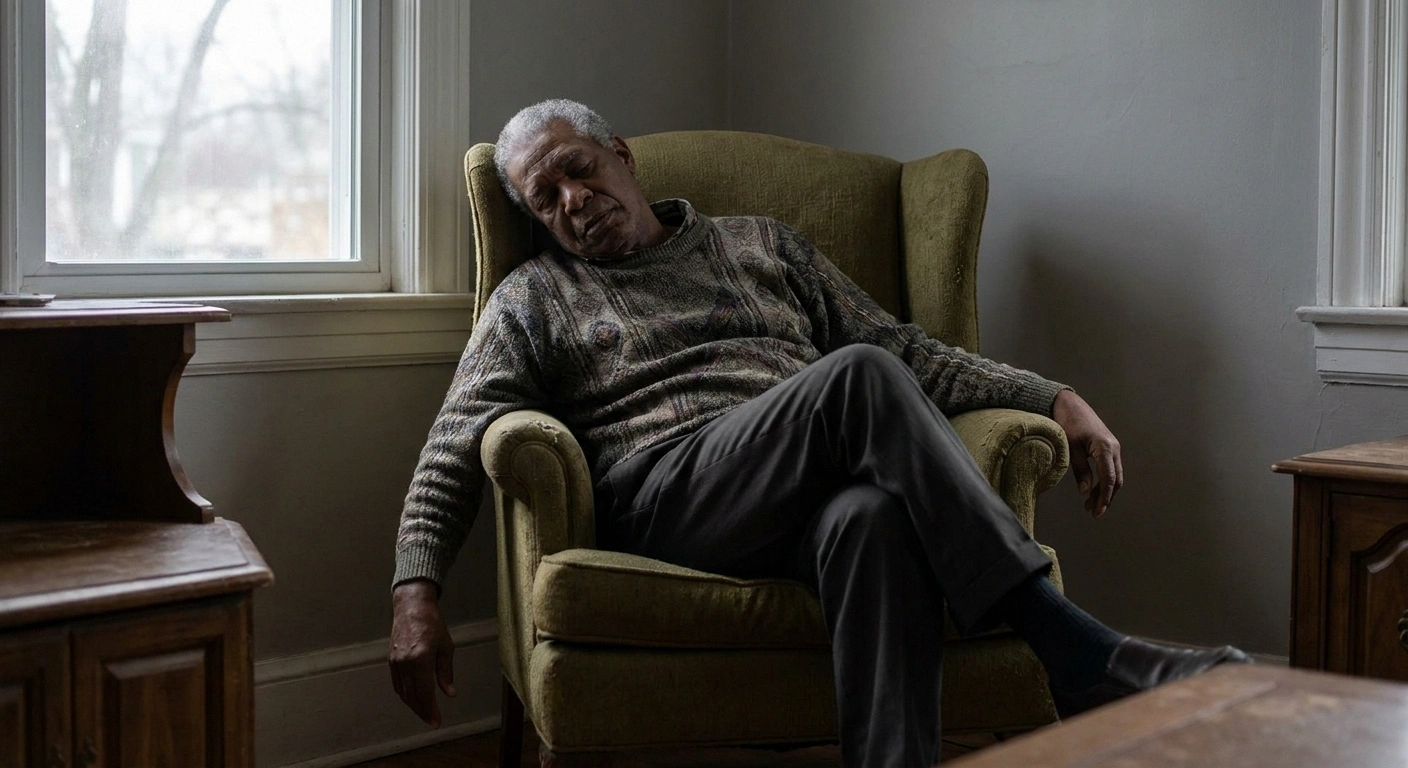
Dozing upright in a chair has its own hazard: nerves squeezed where they run close to the surface. The NIDDK notes that people with diabetes are more likely to have nerve entrapments than people without it. In a series of 25 patients with wrist drop from a compressed radial nerve, the causes included sleeping with the arms hanging over the armrest of a chair; many of those cases involved alcohol, and improvement began after an average of 2.4 weeks. A single case report described ulnar nerve trouble at the elbow from an unusual sleep position, which improved markedly three weeks after the man changed how he slept. And a neurologist's review of foot drop suggested habitual leg crossing may well be the most frequent cause of a squeezed peroneal nerve at the knee, adding that most patients improve when they stop.
These are small reports, not proof that a nap will hurt you. But the fix costs nothing — arms resting on the armrests rather than hanging over them, legs uncrossed, nothing pressing on the outside of the knee. Our page on peroneal neuropathy and foot drop explains what that particular nerve does.
Stand Up in Stages
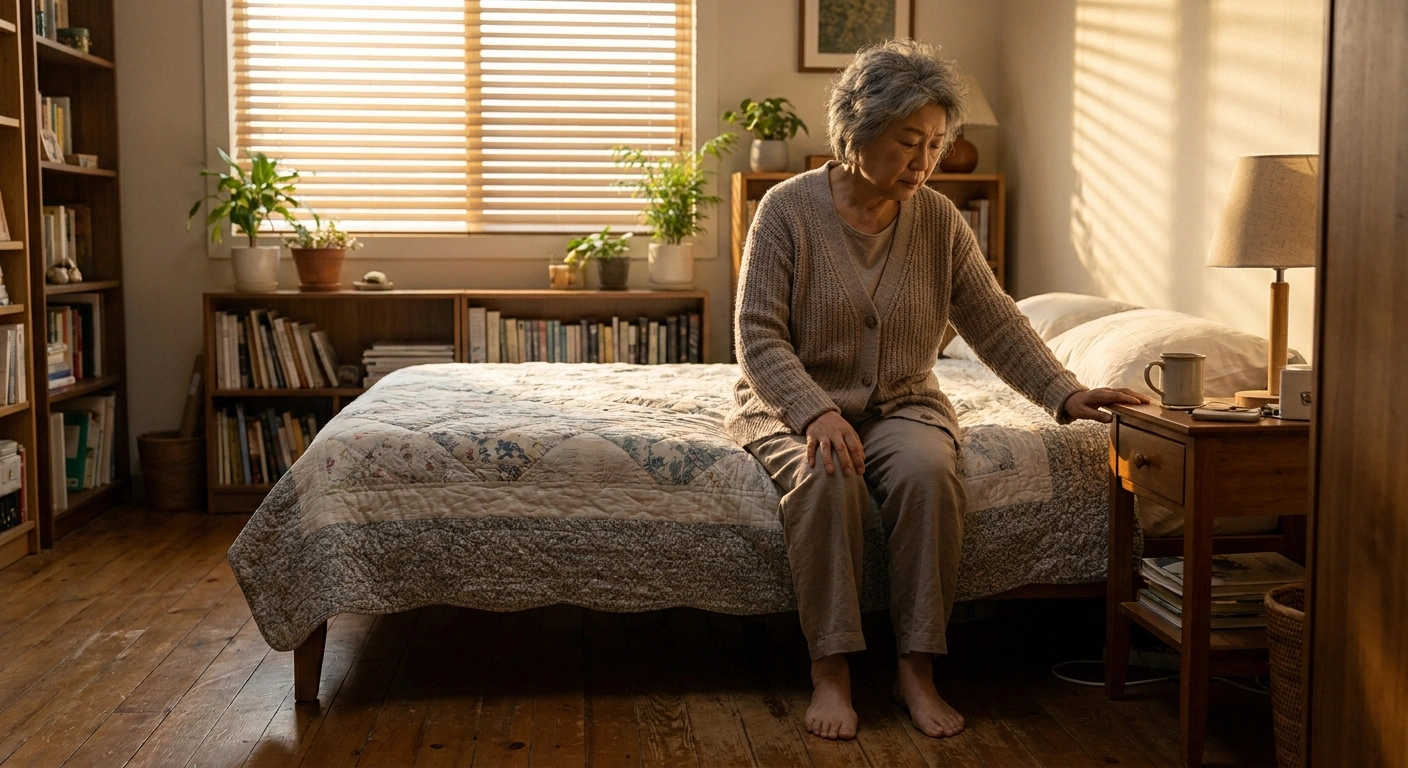
Getting up after a nap is when a lot of us feel woozy. If neuropathy has reached the nerves that steer your heart rate and blood pressure, the NIDDK warns that getting up from lying down or sitting can leave you light-headed or faint. Among the measures doctors may recommend, it lists “sitting or standing slowly.” NHLBI adds that older adults are more prone to dizziness when they stand up or after they eat, which is worth remembering when the nap comes right after lunch, and that sitting down may relieve the symptoms.
Some medicines add to it. The duloxetine label says orthostatic hypotension, a blood pressure drop on standing, along with falls and fainting, tends to occur in the first week of treatment, though it can happen at any time, particularly after a dose increase. My own routine is plain: feet flat on the floor, a slow count while I sit on the edge, then up with a hand on something solid. NHLBI's emergency line is just as plain: “Call 9-1-1 if you notice signs of shock in yourself or someone else.” Those signs include cold, sweaty skin, fast breathing, a bluish tinge to the skin, or a pulse that is both weak and fast. As general safety advice rather than anything from the sources above, fainting, chest pain, trouble breathing, sudden weakness or numbness on one side, trouble speaking, or a fall with a blow to the head calls for 9-1-1 — not a wait-and-see. Our overview of autonomic neuropathy explains the body side of all this.
Restless Legs Don't Wait for Bedtime
If your legs start crawling the minute you settle into the recliner, that may be restless legs syndrome rather than neuropathy alone. MedlinePlus says RLS makes your legs “uncomfortable when you are lying down or sitting,” and that moving helps, but not for long; it also names caffeine, tobacco and alcohol as things that may make symptoms worse. Our page on restless legs syndrome and neuropathy explains how to tell the two apart.
When the Sleepiness Comes From a Prescription
Several of the medicines most often prescribed for nerve pain list drowsiness among their common side effects, and the label numbers are higher than many people expect. The table gives each one with the trial population it comes from, because those details change what the numbers mean.
| Medicine | Where the numbers come from | Sleepiness, drug vs placebo | Dizziness, drug vs placebo |
|---|---|---|---|
| Gabapentin (Neurontin) | Postherpetic neuralgia trials, doses up to 3,600 mg a day | 21% vs 5% | 28% vs 8% |
| Pregabalin (Lyrica), all doses | Diabetic nerve pain trials | 12% vs 3% | 21% vs 5% |
| Pregabalin (Lyrica), 600 mg a day | Diabetic nerve pain trials | 16% vs 3% | 29% vs 5% |
| Duloxetine | Pooled trials in low back pain, osteoarthritis, fibromyalgia and diabetic nerve pain | 11% vs 3% | 9% vs 5% |
| Amitriptyline, nortriptyline | Older labels | Drowsiness listed, no rates given | Dizziness listed, no rates given |
Gabapentin's U.S. label has no diabetic nerve pain trial table, so its figures come from shingles-pain trials. Sources: prescribing information via openFDA, as of October 2026: Neurontin (effective May 12, 2026), Lyrica (effective April 15, 2025), a generic duloxetine delayed-release label (effective August 20, 2026), and generic amitriptyline and nortriptyline labels.
Two details from the Lyrica label stand out. Dizziness and sleepiness generally began shortly after people started the drug and were more frequent at higher doses. And among trial patients who had sleepiness in the short-term studies, it lasted until their last dose in 42%, so waiting for it to wear off doesn't always work. In the Lyrica fibromyalgia trials, dizziness, blurred vision, balance problems, confusion and lethargy were all more frequent in people 65 or older.
The gabapentin label adds a humbling point: people's ability to judge their own driving, and how drowsy the drug has made them, “can be imperfect.” It also warns that other drugs with sedative properties may increase these effects, and that breathing can slow dangerously when gabapentin is combined with opioids or other drugs that depress the nervous system, or in someone whose breathing is already impaired. If an afternoon slump started or deepened after you began a new medicine or changed a dose, that's worth a call to your doctor or pharmacist. Please don't stop or adjust the medicine on your own; the same label calls for a taper of at least one week when gabapentin is stopped. Our page on pregabalin (Lyrica) for neuropathy covers that drug in more depth.
Sleepiness Worth Mentioning at Your Next Visit
Some daytime sleepiness is just a broken night catching up with you. Some of it is a symptom. The box below gathers the signs that MedlinePlus and NHLBI say deserve a conversation with your care team.
- MedlinePlus: “You often feel sleepy during the day, take frequent naps, or fall asleep at the wrong times during the day.”
- MedlinePlus: “You regularly take more than 30 minutes to fall asleep.”
- A bed partner notices that you “snore loudly, snort, gasp, make choking sounds, or stop breathing for short periods.”
- NHLBI, on sleep apnea: “You may not know you have these symptoms until someone tells you.”
- Sleepiness or dizziness that began soon after starting a new medicine or a higher dose, the pattern the Lyrica label describes.
Sleep apnea deserves special attention in our crowd. NHLBI lists daytime sleepiness and tiredness among its symptoms, along with “Waking up often during the night to urinate,” which many of us blame on other things, and it notes that the risk rises with age. In a 2012 study of 234 adults with type 2 diabetes from the diabetes clinics of two UK hospitals, 65% had sleep apnea, and neuropathy was more common in those with apnea than without, 60% versus 27%. That's an association, not proof that apnea damages nerves, and the researchers called for further studies. But if you snore, gasp at night or wake often to urinate, and find yourself napping a lot, it's a fair question to raise.
Two more cautions. If you have diabetes, the NIDDK notes that nerve damage can hide the early warning signs of low blood sugar, such as feeling confused, dizzy, hungry, irritable or nervous. If you have diabetes and wake from a nap confused or dizzy, don't just sleep it off; check your blood sugar if you can and follow your care team's plan for lows. And NHLBI says sleepiness while driving “is responsible for serious car crash injuries and death.” It adds that microsleep, brief moments of sleep while you're otherwise awake, can happen without your knowing it. If you're drowsy, don't drive. The gabapentin and Lyrica labels both advise against driving until you know how the drug affects you.
My Afternoon Rest Routine
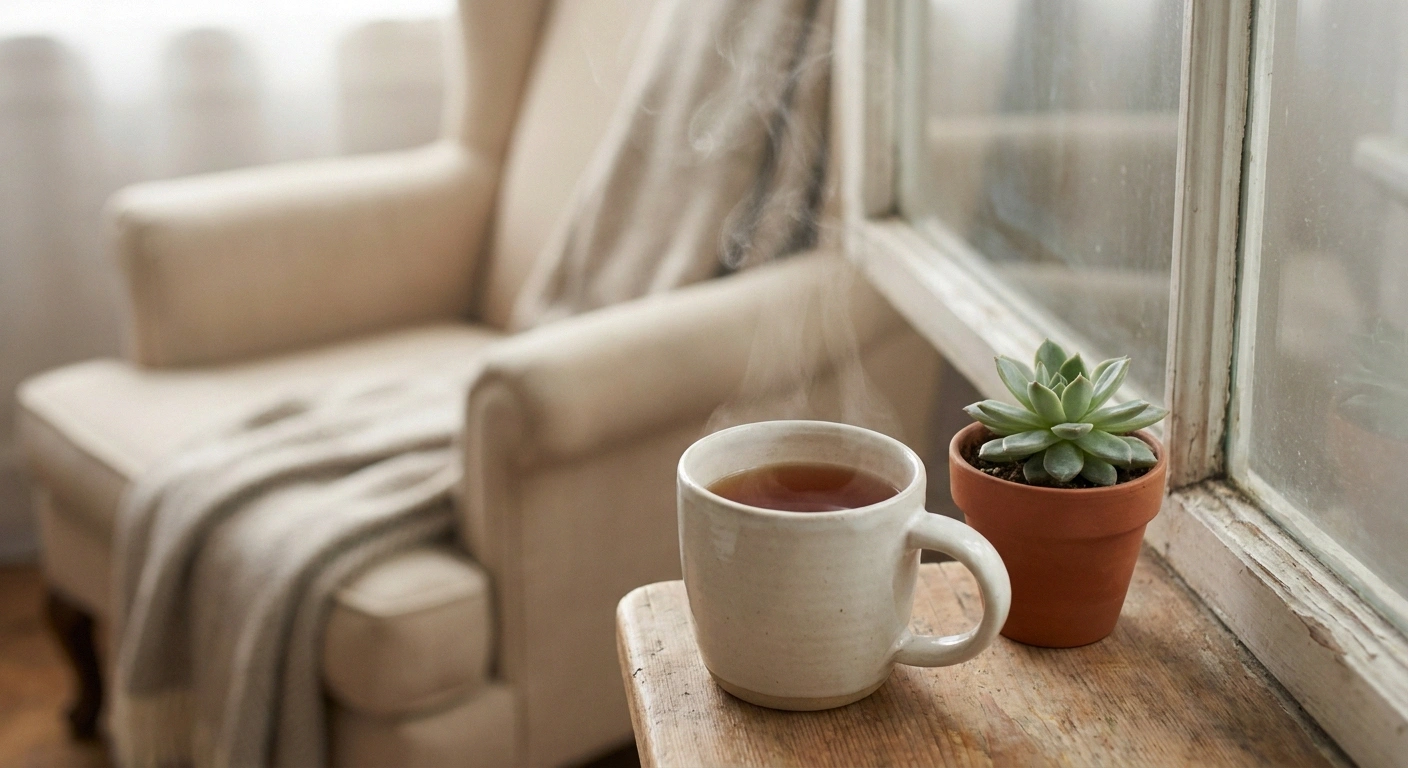
Here's what a nap looks like at my house these days. It's habit, not prescription, and yours may well look different.
- Before 3 o'clock, or not at all. That's MedlinePlus's cutoff, and it's the one that protects my nights the most.
- A timer within reach. After a rough night I aim for NHLBI's 20 minutes, give or take.
- Every heat source off and unplugged, and socks on if my feet are cold.
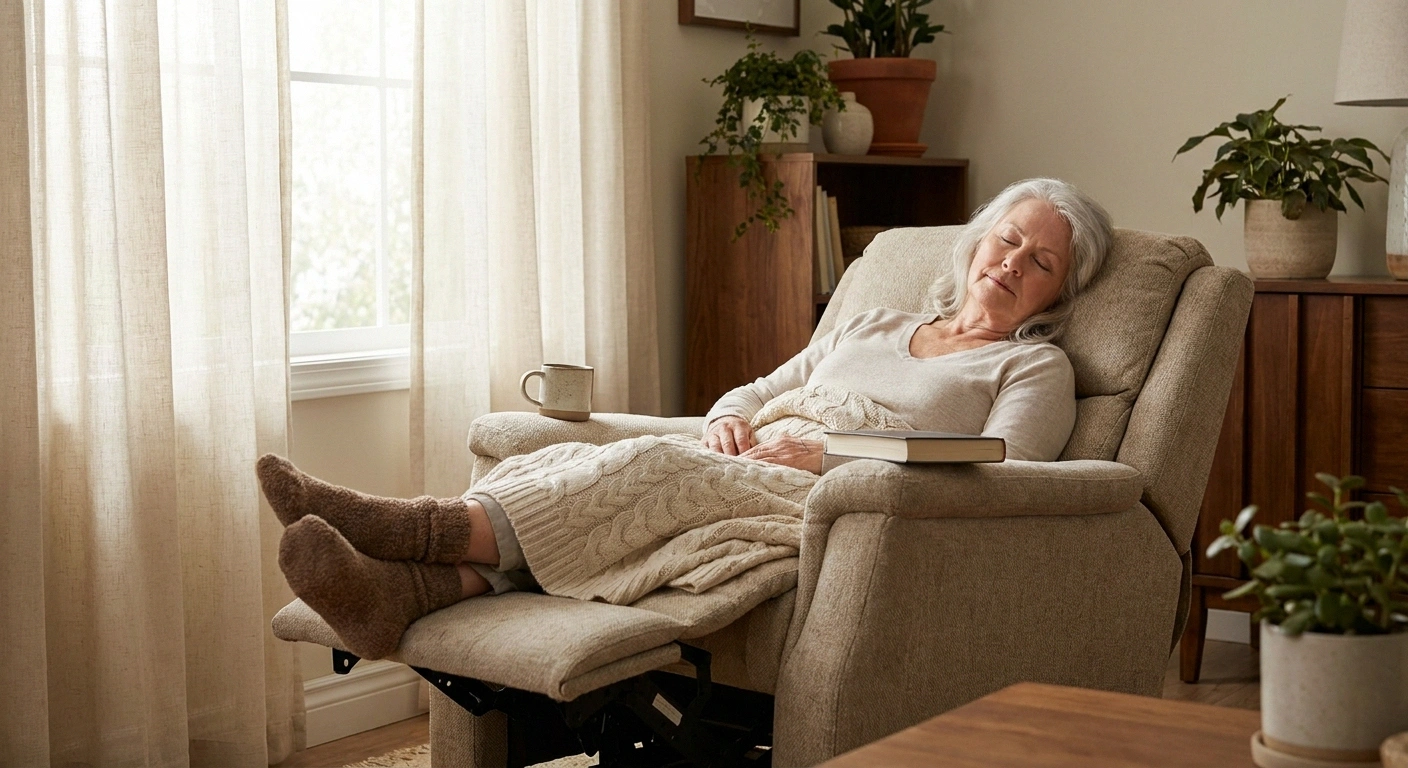
- Feet supported but not pressed into one hard spot, legs uncrossed, arms resting on the armrests instead of hanging over them.
- Up in stages: sit on the edge, feet flat, a slow count, then stand with a hand on something solid.
- No coffee after lunch. NHLBI says caffeine's effects can last up to 8 hours, and a lab study found that a large dose taken 6 hours before bed still disrupted sleep. Our page on caffeine and neuropathy has more.
- A few minutes outside in the daylight once I'm up.
- A line in my notebook: what time, how long, and how I felt afterward. If naps start getting longer or more frequent, that note is the first thing I'll show my doctor.
Rest is part of living well with neuropathy — not a failing. The goal is simply to rest in a way that leaves your night intact and keeps your skin and nerves out of harm's way.
Frequently Asked Questions
Is it okay to nap if I have neuropathy?
For many people, yes. NHLBI says naps may boost alertness and performance, but if you have trouble falling asleep at night, it suggests limiting naps or taking them earlier in the afternoon, and keeping them to 20 minutes or less. With numb feet or hands, turn off any heat, keep your legs uncrossed and stand up slowly afterward.
How long should a nap be?
NHLBI's guidance for adults is no more than 20 minutes, particularly if nights are hard, and if you're being treated for chronic insomnia, your therapist's nap plan comes first. In the NASA study, pilots slept about 26 minutes during a 40-minute rest window, and the authors advised keeping rest under an hour to avoid heavy grogginess. In large observational studies, naps of an hour or more a day were linked with heart disease and death, though that link may reflect poorer health rather than the naps themselves.
What time of day is best for a nap?
MedlinePlus advises against napping after 3 p.m., and NHLBI suggests earlier in the afternoon if you have trouble sleeping at night. In one small study of healthy older adults, a 30-minute nap at 1 p.m. reduced afternoon sleepiness and fatigue.
Can I fall asleep with a heating pad on my feet?
No. For people with diabetic nerve damage, the NIDDK advises keeping heating pads and hot water bottles off the feet, because a burn can happen without your noticing. Burns from heating pads and hot water bottles are well documented, mostly on the legs and feet. Turn heat off and unplug it before you doze.
Why do I feel dizzy when I get up from a nap?
Autonomic neuropathy can slow the nerves that adjust your blood pressure when you change position, and older adults are more prone to dizziness on standing or after a meal. Some medicines, including duloxetine, can add to it. Sit on the edge first and rise slowly, and tell your doctor if it keeps happening. Call 9-1-1 for signs of shock.
Why am I so sleepy on gabapentin or Lyrica?
Drowsiness is a well-known side effect on both labels. In Lyrica's diabetic nerve pain trials, 12% of people reported somnolence compared with 3% on placebo, and for some it lasted as long as they took the drug. Never stop or change the dose yourself; a doctor or pharmacist can review what's causing it.
Is needing lots of naps a sign of something serious?
Not always, but it is worth mentioning. MedlinePlus lists feeling sleepy during the day and taking frequent naps among the signs of a possible sleep disorder, and researchers describe long daytime napping as a possible marker of underlying health problems. Snoring, gasping or pauses in breathing at night point toward sleep apnea, which is common in type 2 diabetes.
Is resting with my eyes closed as good as a nap?
No study I found shows that. In one small trial, a 30-minute nap beat resting while watching TV for afternoon sleepiness, and the NCCIH says relaxation techniques alone are not especially promising for sleep. Quiet rest still has a place on a hard day; it just isn't the same thing as sleep.
About the Author