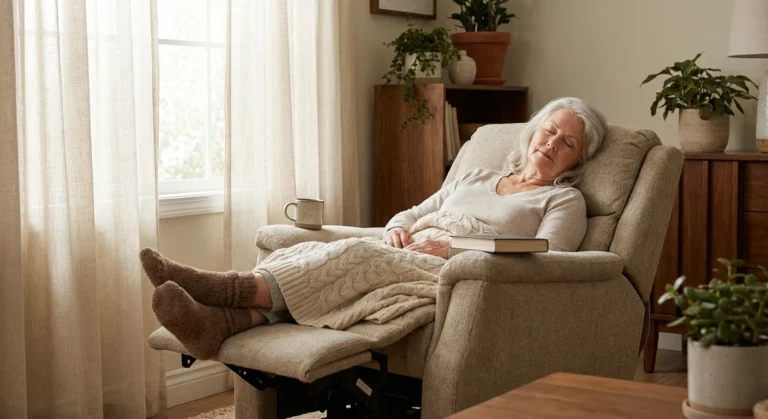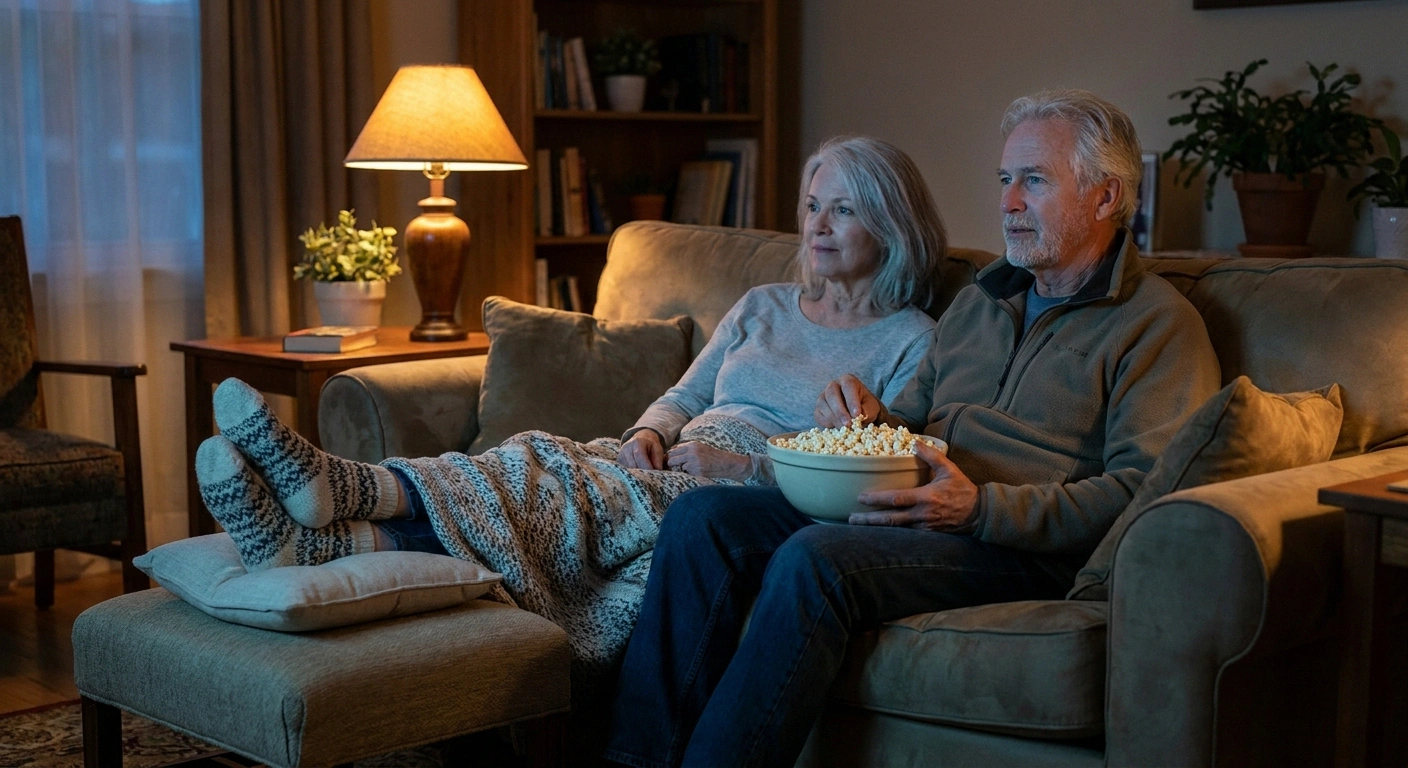
An evening of television asks almost nothing of your feet. That’s the trouble. Over two or three hours, the same spots on your heels carry the weight of your legs, fluid settles into your calves and ankles, and a blanket or a heater can warm your skin far past comfortable — and feet that have lost feeling won’t report a bit of it.
None of this means giving up your shows. My book club friends and I trade mystery series like recipes — I’m not about to stop. It means setting up the chair with a little thought, using the commercial breaks, keeping heat away from your feet, standing up slowly when the credits roll, and taking a two-minute look at your feet before bed.
Everything below comes from federal health agencies and published studies, and I’ve marked my own habits as mine. Much of the federal foot advice I quote was written for people with diabetes, but its heat, pressure and daily-check points fit anyone whose feet have lost feeling. Since I’m a patient advocate and not a clinician, please treat it as general guidance. If you have peripheral artery disease, heart failure, a wound on your foot or a recent surgery, a few of these tips need your doctor’s okay first, and I’ve flagged each one where it comes up.
What a Long Sit Does to Feet That Can’t Report Back
NIDDK, the federal institute that covers diabetes and its complications, puts the core problem plainly: “If peripheral neuropathy causes you to lose feeling in your feet, you may not notice pressure or injuries that lead to blisters and sores.” The same page says you may have trouble sensing temperature, and that symptoms “are often worse at night.” That’s exactly when most of us settle in with the remote.
| Who sat | For how long | What changed |
|---|---|---|
| 22 young, healthy adults, asked to avoid big leg movements | 2 hours | Calves grew by about 0.9 cm around; it took roughly 20 minutes of walking for them to return to their starting size |
| 9 healthy men in their early twenties | 8 hours | Calf size up 2.4% and ankle size up 2.7%; blood flow in a foot artery fell to about 61% of where it started |
Neither study included older adults or anyone with neuropathy, so these numbers show how bodies respond to stillness, not what will happen to yours. Sources: Rigby and colleagues, Ergonomics, 2022; Kurosawa and colleagues, Medicine & Science in Sports & Exercise, 2022.
Pressure is the first issue. MedlinePlus, the National Library of Medicine’s health site, defines pressure sores as “areas of damaged skin caused by staying in one position for too long,” and it names heels and ankles among the usual spots. Its strictest advice is written for people who are bedridden or can’t shift themselves, not for a TV evening. Still, the idea carries over — a heel resting on one hard edge for hours is a heel you can’t feel complaining.
Swelling is the second. Even healthy young volunteers in small lab studies showed measurable calf swelling after a few hours of sitting still, and their feet got less blood flow during a much longer sit. Nobody in those studies had neuropathy, so read them as a sign of how bodies respond to stillness, not as a forecast for yours.
The third is circulation in general. Diabetes can lower blood flow to the feet, NIDDK notes, and poor flow makes it hard for a sore or an infection to heal. A small blister from a long evening matters more when your feet heal slowly.
Set Up the Chair Before the Opening Credits
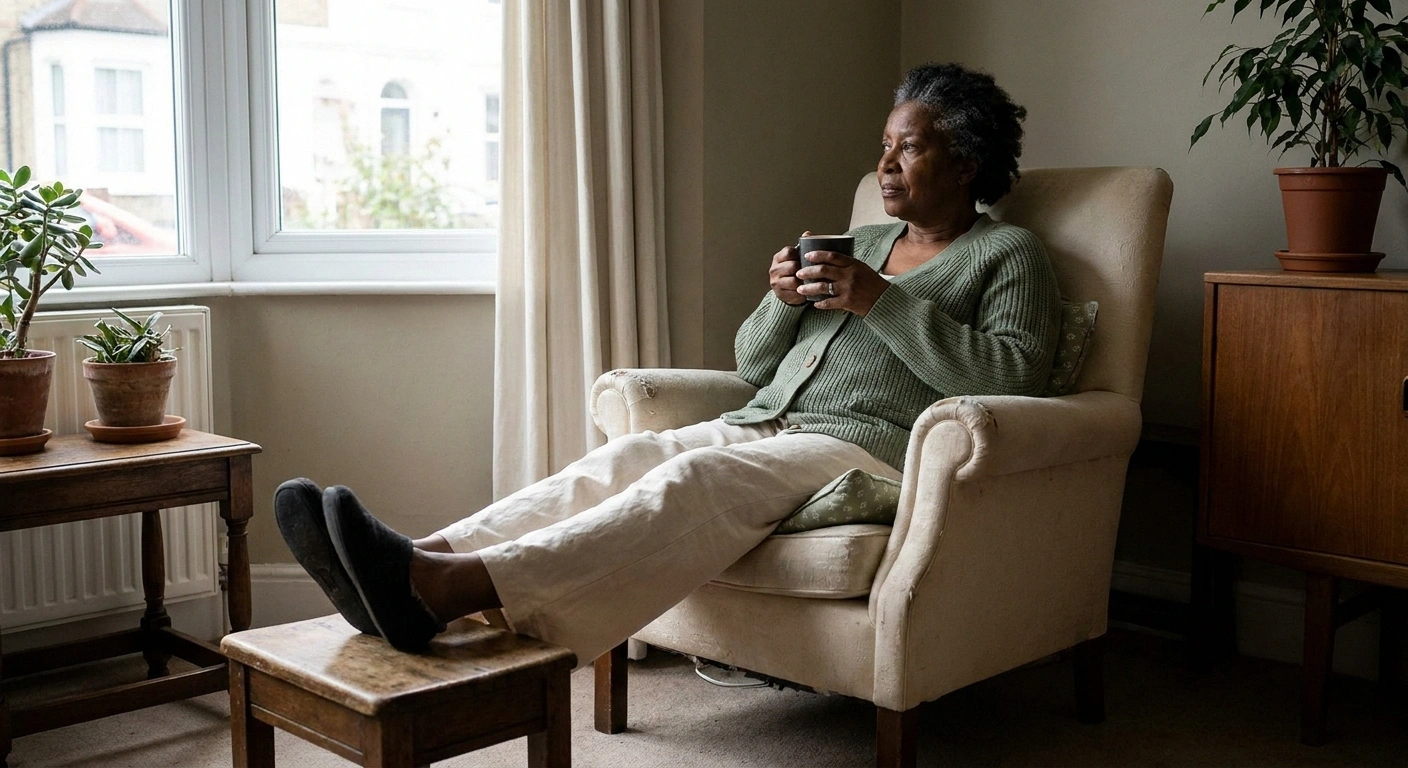
NIDDK’s foot-care page for people with diabetes keeps it short and friendly: put your feet up whenever you sit. MedlinePlus repeats it almost word for word on its diabetic foot page. Neither one gives a height or a number of minutes, and I couldn’t find a federal source that does. When a website names an exact height, such as 6 to 12 inches above the heart, it isn’t quoting these agencies.
Here’s what I do with that advice. A footstool or ottoman takes the weight of my legs, and a small pillow goes under my calves so my heels aren’t parked on the hard front edge. I keep my knees soft rather than locked straight. If raising your legs makes them ache or your feet look pale, lower them and call your doctor’s office soon; the section just below explains why, and a foot that suddenly turns pale or cold is an emergency. For swollen ankles specifically, MedlinePlus says “your health care provider may recommend keeping your legs raised when sitting,” which tells you elevation is a reasonable thing to ask about, not a rule that fits everyone.
When Feet Up Needs a Doctor’s Okay First
Peripheral artery disease, or PAD, is the big exception, and MedlinePlus lists diabetes among its risk factors. In severe PAD, a review in Thrombosis Research notes, ulcers from poor blood flow are typically painful when the leg is raised and most bothersome at night. Worse, a podiatry review explains that many people with diabetes don’t get the usual warning pains, because neuropathy and inactivity mask them. So the advice to put your feet up can backfire — and for exactly the readers least likely to feel it.
- Clues to poor artery flow
- One foot that feels colder than the other; sores on the toes, feet or legs that heal slowly, poorly or not at all; leg aching that comes on with walking and eases with rest. A podiatry review adds a foot that turns pale when raised or red when lowered. By NHLBI’s count, roughly 1 in 5 people who have PAD don’t report any symptoms.
- Clues that point to the heart
- Swelling in the ankles, feet and legs together with shortness of breath when lying flat, or trouble sleeping flat (NHLBI’s heart failure symptoms).
- Not an elevation question at all
- A foot you suddenly can’t feel or move, a leg or foot that hurts or tingles while resting together with a foot that’s paler or colder than the other: NHLBI’s instruction for that picture is to call 9-1-1 right away, because “Every minute matters.”
Heart failure is the other one. It swells the feet and legs too, and NHLBI, the federal heart and lung institute, lists trouble breathing while lying flat among its symptoms. No source I found says elevation is harmful with heart failure. The honest advice is simply to ask first. The same goes for an open wound on your foot or a recent operation on your legs.
Socks, Stockings and the Compression Question
Snug socks feel cozy, but NIDDK’s list for keeping blood flowing in your feet tells people with diabetes to skip tight socks and elastic stockings. It also warns against holding up loose socks with rubber bands. A doctor may still prescribe compression for a particular reason, such as certain vein problems, and NHLBI frames compression as something “your provider may talk to you about.” That’s a prescription conversation, not a drugstore impulse.
Two reasons for caution stand out. A 2017 review of 20 guidelines on compression therapy for leg ulcers caused by vein problems found they agreed on blocked-artery disease and heart failure as absolute contraindications, meaning reasons not to use that therapy at all. And in a large hospital trial of immobile stroke patients, thigh-length stockings didn’t lower the rate of clots but did cause more skin damage, at 5% versus 1%. Numb skin under a tight band may not warn you that it’s breaking down.
Uncross Your Legs at the Knee
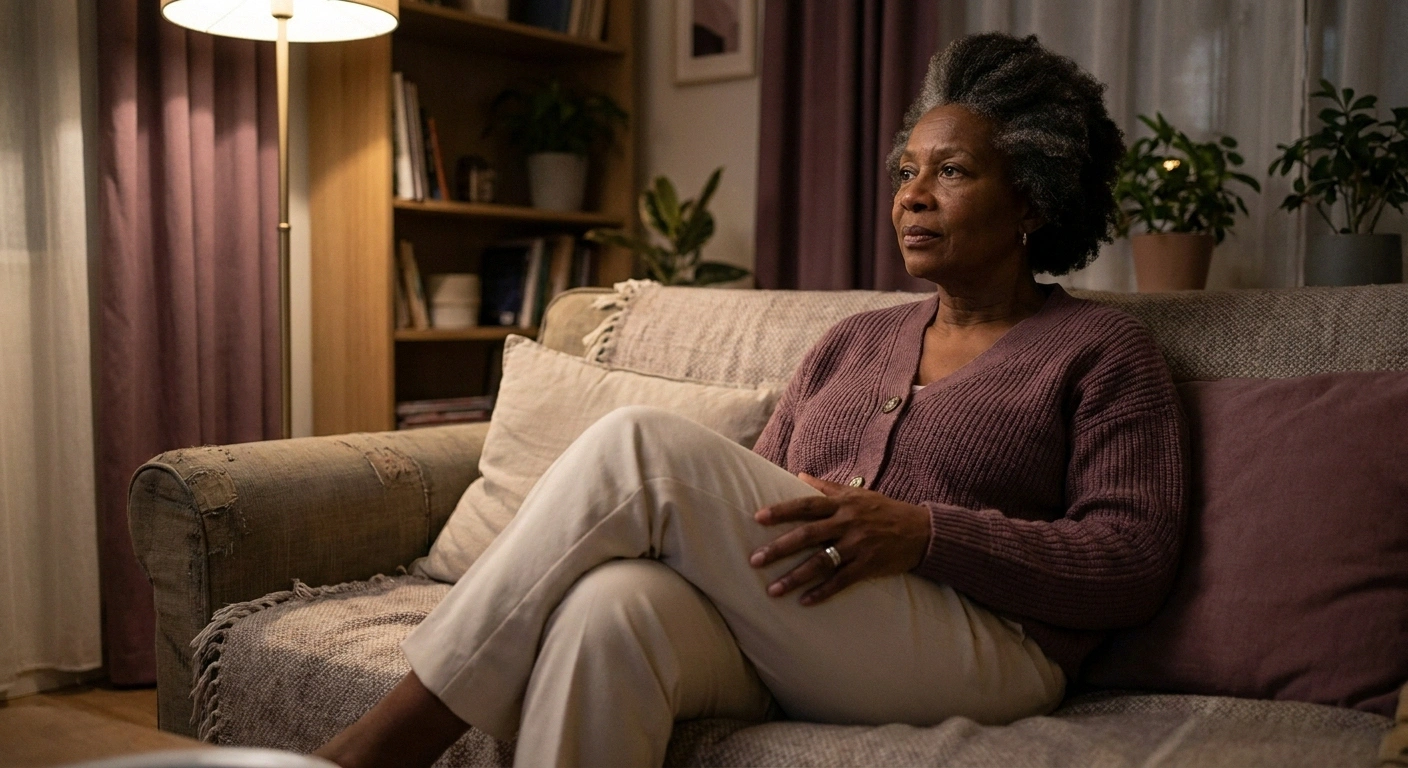
Crossing one knee over the other is one of the most natural ways to sit — and it can press on a nerve that’s already vulnerable. The peroneal nerve, also called the fibular nerve, wraps around the bony bump just below the outside of your knee, close to the skin. NIDDK lists peroneal entrapment among the focal neuropathies and says entrapments happen more often in people with diabetes than in people without it.
A neurologist’s review in Practical Neurology calls a leg-crossing habit quite possibly the most common cause of foot drop from this nerve, and notes that most people get better once they drop the habit. In a Korean series of 26 people whose peroneal palsy followed a held posture, 6 had been sitting cross-legged, and the most common complaint was tingling on the top of the foot. Improvement in that group began after about 6 weeks on average. Rapid weight loss may raise the risk too, according to small case series, though researchers have argued over exactly why.
To be clear, crossing your legs doesn’t cause diabetic or general peripheral neuropathy. It can add a second, separate problem on top of it — worth avoiding when your first warning sign may already be muted. NHLBI’s tips for long flights say to change positions often “avoiding crossing your legs if possible,” which suits a long movie just as well. Our page on peroneal nerve trouble and foot drop covers the symptoms, testing and recovery in detail.
Small Moves for the Commercial Breaks
NIDDK’s sitting advice comes with a second half: “Wiggle your toes for a few minutes throughout the day. Move your ankles up and down and in and out to help blood flow in your feet and legs.” MedlinePlus adds circling your feet, and its page on inactive lifestyles even names the TV directly: “Keep moving while you watch TV. Lift hand weights, do some gentle yoga stretches, or pedal an exercise bike.”
| Toe wiggles; ankles up, down, in and out | NIDDK, for people with diabetes, through the day |
| Foot circles | MedlinePlus diabetic foot page |
| Bend and straighten knees and ankles; shift positions; stand and walk every 1 to 2 hours if you can | NHLBI, for flights longer than 4 hours |
| Flex and stretch your feet when walking isn’t possible | NHLBI, for recovery after surgery or a hospital stay |
| Half-squats, calf raises and knee raises, 3 minutes every half hour | A 2016 lab trial in 24 adults with type 2 diabetes, done standing |
None of these lists was written for people with neuropathy watching TV. If your balance is shaky, keep the standing moves for when a sturdy counter or chair back is under your hand.
My own break routine is nothing fancy — and nobody has tested it. When an ad comes on, I point and flex each foot ten times, draw slow circles with my ankles, and press my toes into the footstool and let go. When a show ends, I stand up and walk to the kitchen and back. If you’d like more variety, our seated routines for neuropathy page has a fuller set you can do without leaving the chair.
What the Break Studies Actually Measured
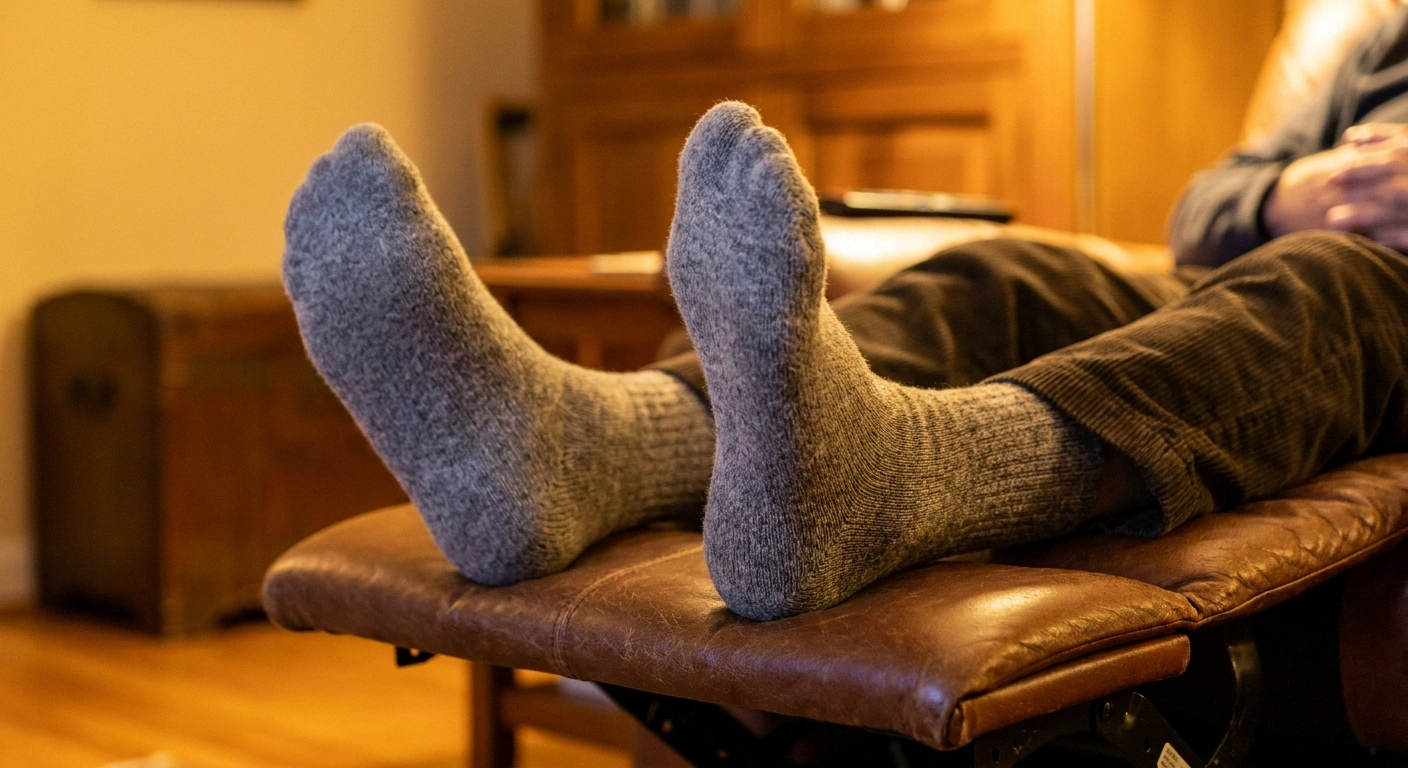
How often should you move? The federal Physical Activity Guidelines for Americans tell adults to “move more and sit less throughout the day,” and then admit the evidence was insufficient to recommend how many times a day sitting should be interrupted. So any rule that says to get up every 20 minutes is somebody’s suggestion, not an official one.
The studies behind those suggestions measured blood sugar, not feet. In a 2016 Diabetes Care trial, 24 inactive adults with type 2 diabetes spent three lab days sitting, and on two of them they took 3-minute activity breaks every 30 minutes; the rise in their after-meal blood sugar dropped by about 39%. A 2026 review of lab studies in Obesity Reviews found that breaks every 15 to 20 minutes did the most for blood sugar, with walking breaks working best. Those are useful findings, but they’re short lab studies with standing breaks, and they say nothing direct about numb feet.
Standing Up Mid-Show
Standing breaks are good if your balance allows them. If it doesn’t, NHLBI’s advice for people who can’t get up and walk applies: “try to flex and stretch your feet to improve blood flow in your calves.” I keep a hand on the chair arm for my first few steps after a long sit, because stiff, numb feet take a moment to find the floor. Our page on why numb feet lose track of where they are explains the balance side of this.
Blood Clots, Kept in Proportion
NHLBI explains the basic concern in one sentence: “Being still slows blood flow through the veins in your arms and legs, raising the likelihood of DVT.” DVT, or deep vein thrombosis, is a clot in a deep vein, usually in the leg. NHLBI’s examples are long flights of more than 4 hours and bed rest in a hospital or nursing home, “especially when combined with other risk factors.” Age is one of those factors; the agency says the chance of a clot nearly doubles every 10 years after 40. A normal evening on the couch isn’t a long-haul flight — but the same simple moves fit it just as well.
- In a leg: pain, swelling, tenderness and warmth that come on suddenly or gradually, sometimes with redness of the skin (MedlinePlus). Call your doctor right away.
- In the lungs: shortness of breath, pain with deep breathing, rapid breathing and a faster heart rate; chest pain that worsens when you cough; coughing up blood; light-headedness or fainting (MedlinePlus).
- My own rule: chest pain, trouble breathing or fainting gets a 911 call, not a message on the patient portal.
NHLBI adds a sobering note: a clot sometimes causes no symptoms until serious complications develop, which is one more reason to keep moving during long sits.
Research on TV itself is mixed. In one long-running US study, the ARIC cohort, adults who said they watched TV “very often” had 1.71 times the clot risk of those who seldom watched. A larger and newer study, REGARDS, followed 30,239 adults and found no link between heavy viewing and clots. Both are observational, so neither proves TV caused anything. What they do suggest is that stillness, more than the screen, is the part worth changing.
Know the warning signs, because they’re the part that can’t wait. NHLBI says to “Call your healthcare provider right away if you think you may have symptoms of VTE,” and MedlinePlus says that with a clot in the lungs, “you need medical treatment right away.” One leg that’s newly swollen, warm, red or tender isn’t something to prop up and watch. It’s a reason to call right away.
Warm Feet Without a Burn
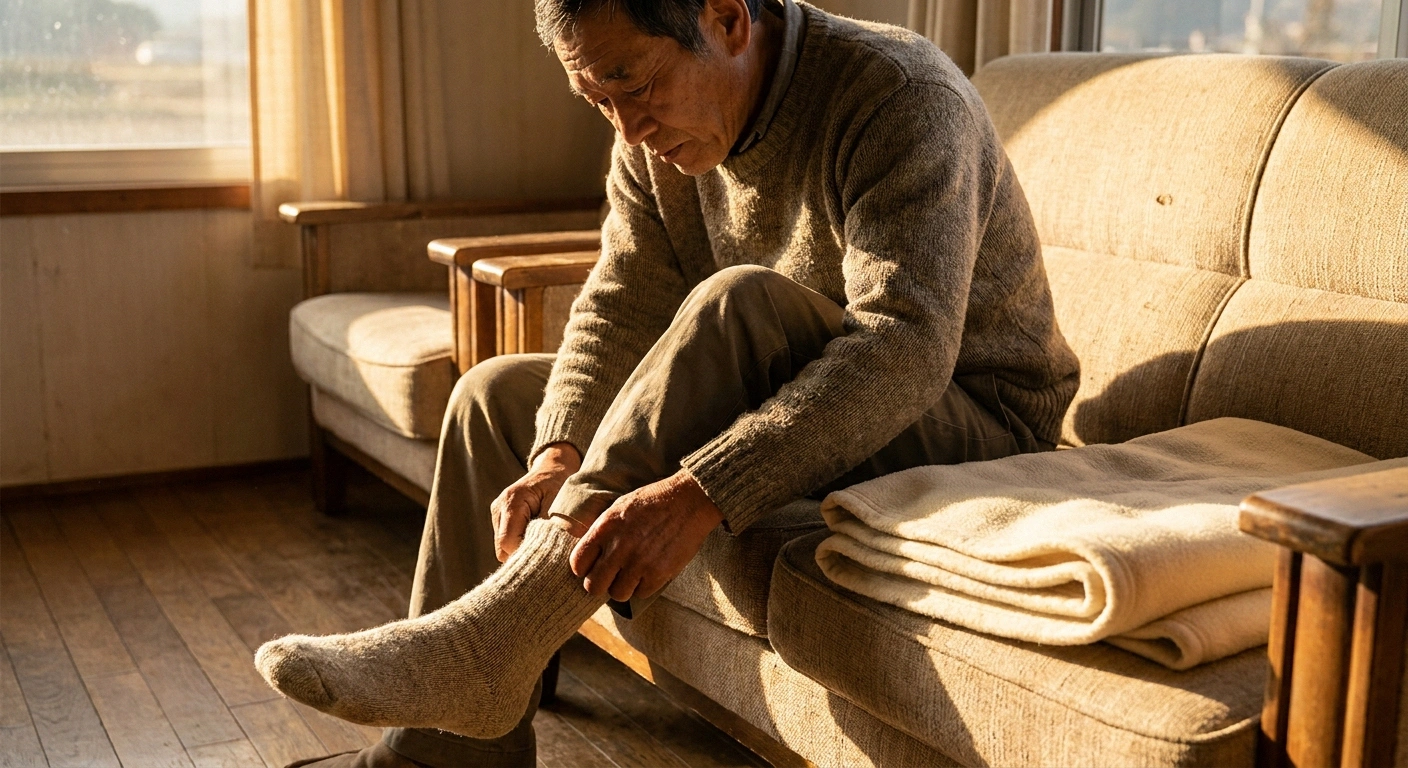
Cold feet and a long movie seem made for each other. NIDDK’s rules on this are blunt, and I’d rather quote them than soften them. It warns that nerve damage from diabetes can let you burn your feet without realizing it. Then: “Keep your feet away from heaters and open fires.” And: “Do not put a hot water bottle or heating pad on your feet.”
The burn reports explain the bluntness. Doctors writing in the Journal of Emergency Medicine described two people with numb skin who got deep burns on their feet from an electric heating pad. A Singapore team reported five people with diabetes who used heat to soothe neuropathy and ended up needing surgery and long hospital stays. A Sydney burn unit that treated 797 foot burns found people with diabetes were 3.8 times more likely to have contact burns, from touching something hot, and 1.7 times more likely to be hurt in winter. In an Iranian burn center, people with diabetic foot burns waited an average of 2.5 days before coming in, and half of them had neuropathy. That delay — days, not hours — is what numbness does.
NIDDK’s answer to cold feet is wonderfully low-tech: “Wear socks in bed if your feet get cold.” MedlinePlus says the same thing for the daytime, recommending warm socks over warming your feet near a heater or fireplace. Loose wool socks and a throw over the knees are my winter uniform. Electric blankets, heated socks and chemical warmers weren’t covered by the federal pages I could check, so I keep them away from my feet. And if you ever find a burn or a blister on a numb foot, call your doctor rather than waiting to see what it does.
Blankets, Space Heaters and the Fireplace
A lap blanket brings its own heat question, because it’s the thing most likely to drift toward a heater. The US Fire Administration says to keep anything that can burn, “like bedding, clothing and curtains,” at least 3 feet from a heater, and to turn space heaters off when you leave the room or go to bed. That distance is about fire, not skin; NIDDK simply says to keep your feet away from heaters, with no safe distance attached.
| Situation | The rule | Source |
|---|---|---|
| Cold feet in the chair | Warm socks, not a spot near the heater or fireplace | MedlinePlus |
| Heating pad or hot water bottle | Never on your feet | NIDDK |
| Where the space heater sits | On a solid, flat surface, plugged straight into a wall outlet, with no extension cord or power strip | US Fire Administration |
| The lap blanket and slippers | At least 3 feet from the heater, along with anything else that can burn | US Fire Administration |
| Washing feet before bed | Warm water, 90° to 95° F on a thermometer or checked with your elbow; no soaking | NIDDK |
Bath water belongs in this section too, since a warm soak sounds like the perfect end to a chilly evening. NIDDK says to wash feet in warm, not hot, water, test it with a thermometer or your elbow first, and not to soak your feet at all, because soaking dries the skin. If an evening soak is part of your routine, that’s worth raising with your podiatrist.
When the Credits Roll: Getting Up Without the Head Rush
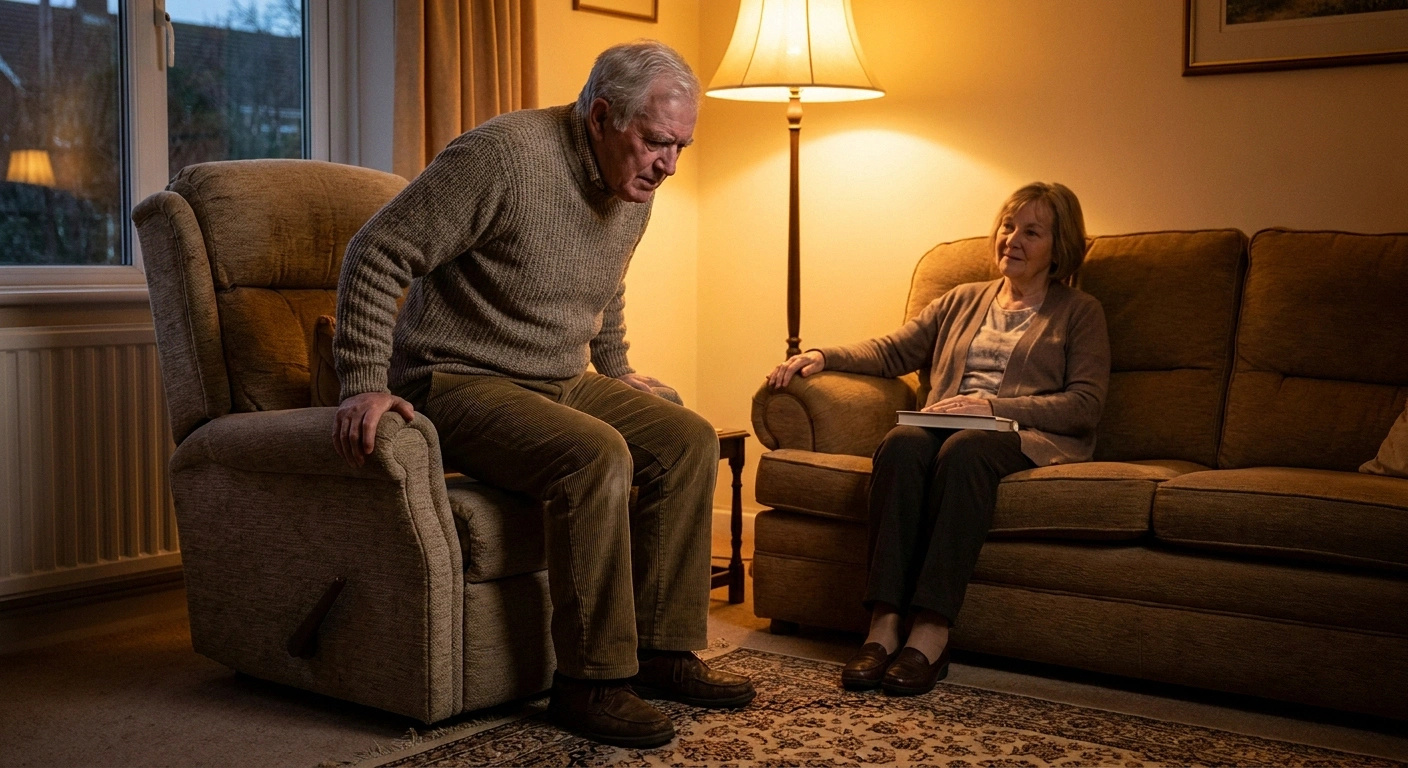
The end of the show is a risky little moment. If autonomic neuropathy affects you, NIDDK says it can leave you light-headed or even faint as you rise from a seat or a bed, and it lists sitting or standing slowly among the things a doctor may recommend. NHLBI says older adults run a higher risk of low-blood-pressure symptoms such as dizziness when they stand or after eating, which describes plenty of TV dinners, and that sitting back down may relieve it. A 2017 analysis pooling 21 studies put this kind of blood pressure drop on standing at about 24% of people with diabetes.
My routine has three parts — mine, not a clinical protocol. I scoot to the front of the seat and plant both feet flat. I wiggle my toes and wait until my head feels steady. Then I stand with my hands on the chair arms and pause before the first step. Peripheral neuropathy already makes falls and fractures more likely, NIDDK warns, and a woozy first step on feet that can’t feel the rug is how a lot of evenings go wrong. If dizziness on standing is new or keeps happening, tell your doctor, and our guide to autonomic neuropathy explains what else it can affect.
A Two-Minute Look Before Bed
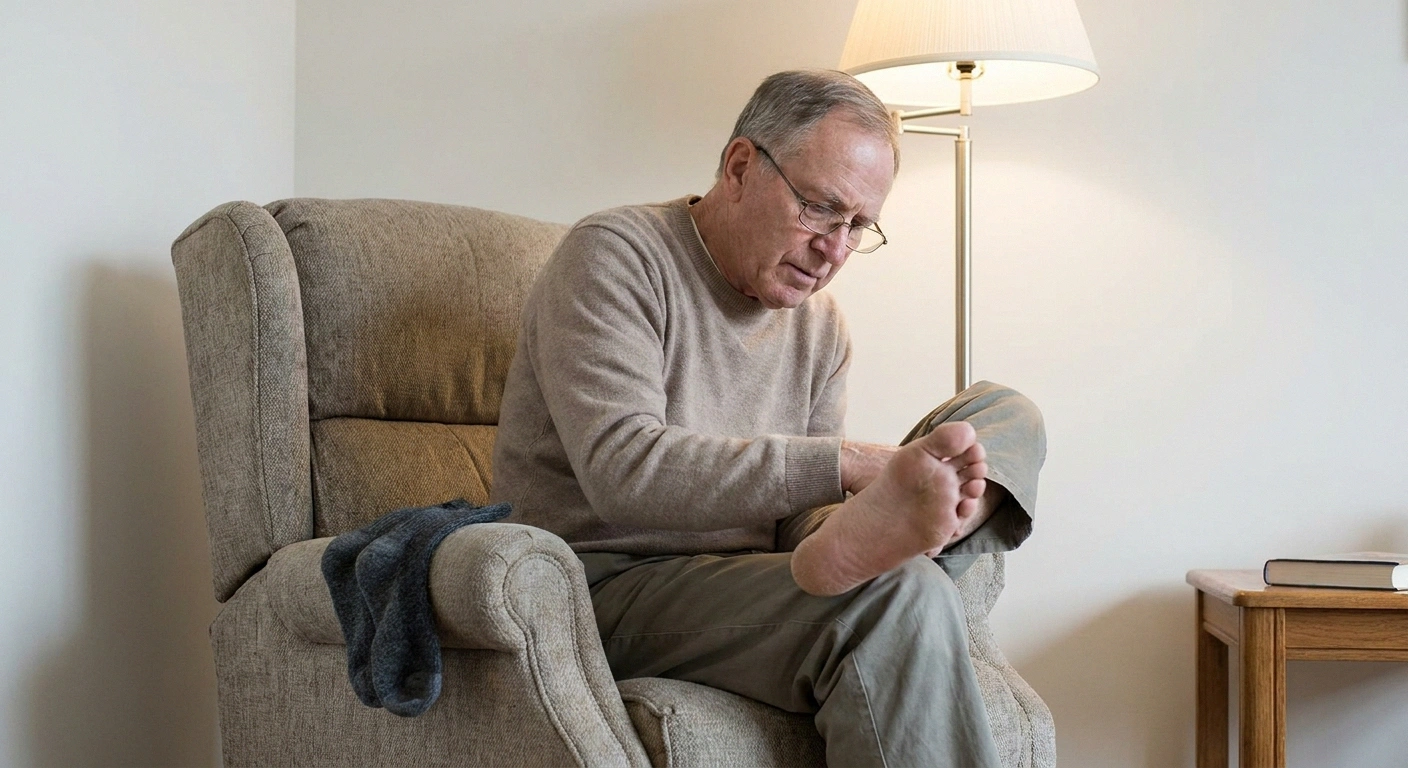
NIDDK offers a tip that fits a TV evening perfectly: make the daily foot check part of taking your shoes off in the evening, and look between your toes as well. It suggests a mirror or a helper if bending is hard. After a long sit, I look hardest at the backs of my heels, the outer edge of each foot, and anywhere a sock seam or the footstool pressed.
What you’re looking for, in NIDDK’s words, includes “cuts, sores, or red spots,” swelling, blisters and warm spots. The timing rule matters too. NIDDK’s list of reasons to call right away includes foot skin that turns red, warm or painful, since those can be signs of infection, and for a cut, blister or bruise that hasn’t started healing after a few days. Our daily foot care routine walks through the rest of the check, nails and moisturizer included.
From the Couch to the Pillow
Screens and sleep don’t mix especially well. NHLBI suggests using the hour before bed for quiet time and avoiding bright light “such as from a TV or computer screen,” because that light may signal your brain that it’s time to be awake. MedlinePlus goes further and suggests getting rid of distractions such as TVs, computers and phones in the bedroom. I watch in the living room and read in bed, which keeps my bedroom feeling like a place for sleeping.
If your legs feel jumpy or crawly by the end of the evening, it may not be neuropathy alone. MedlinePlus describes restless legs syndrome as a powerful urge to move your legs, with legs that turn uncomfortable when you’re sitting or lying down. Our page on telling restless legs apart from neuropathy can help you describe it accurately at your next appointment.
What the TV-Time Research Does and Doesn’t Say
You may have seen headlines tying TV hours to diabetes or an early death. They come from real studies. A 2011 analysis in JAMA pooled long-term cohorts and found each extra 2 hours of daily viewing was linked with about a 20% higher risk of type 2 diabetes, a 15% higher risk of cardiovascular disease and a 13% higher risk of death. The Nurses’ Health Study also found that time spent standing or walking around the house went with a lower diabetes risk.
These are associations. People who watch a lot of TV differ in many ways from people who don’t, and no study here shows the screen itself causes harm. The federal guidelines simply count TV as sedentary time, and their advice is the same for everyone: some activity is better than none, and for people who aren’t very active, swapping some sitting for light movement is likely to help.
Putting the Whole Evening Together
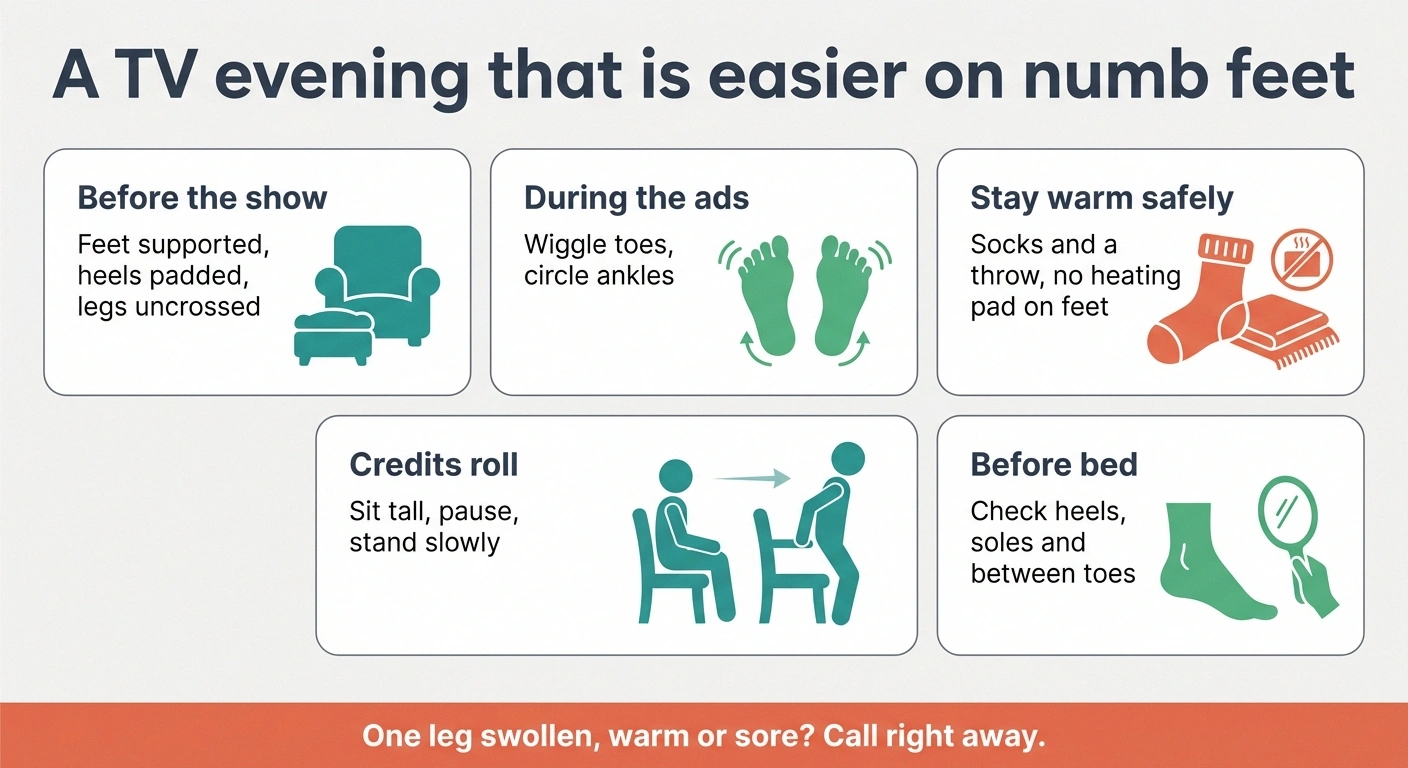
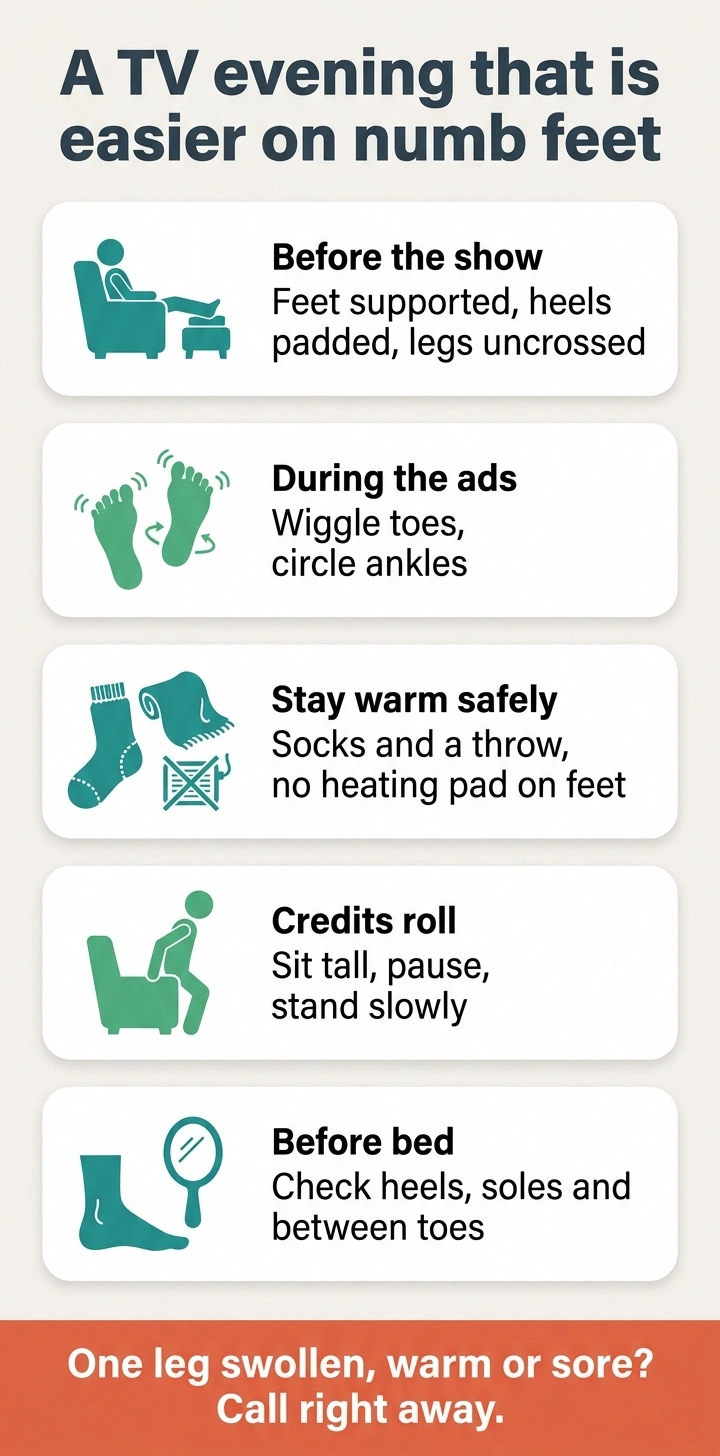
Written down, my own evening looks like this. Before the show, I set the footstool and the calf pillow and put on loose socks. During ads, it’s toes and ankles. Between episodes, I take a walk to the kitchen. At the end, I sit at the front of the chair, steady my head and stand slowly, and before bed I take two minutes to look at my heels and soles. None of it takes away from the show, and on most nights my feet are no worse for it.
Whatever routine you build, keep the two non-negotiables: no heating pad or hot water bottle on your feet, and a call right away for one leg that turns swollen, warm and sore. The rest is comfort, and comfort is allowed to be personal.
Frequently Asked Questions
Should I put my feet up while I watch TV if I have neuropathy?
NIDDK’s general advice for people with diabetes is to put their feet up while sitting, but neither NIDDK nor MedlinePlus gives a height or a time limit. If you have peripheral artery disease, heart failure, a foot wound or recent leg surgery, ask your doctor before making elevation a habit, since raising the legs can worsen pain from severe artery disease.
How often should I get up during a long movie?
There’s no official interval. The federal Physical Activity Guidelines say to move more and sit less but found the evidence insufficient to set a target for how often to break up sitting. NHLBI’s tips for flights longer than 4 hours suggest standing and walking every 1 to 2 hours when possible, and lab studies of blood sugar have tested breaks every 15 to 30 minutes.
Is crossing my legs bad for neuropathy?
Crossing one knee over the other can press the peroneal nerve below the outside of the knee, which can cause foot drop and tingling or numbness on the top of the foot. A neurology review says most people improve once they stop the habit. Leg crossing does not cause diabetic or general peripheral neuropathy, but it can add a second nerve problem.
Can I use a heating pad on my feet while I watch TV?
NIDDK says not to put a hot water bottle or heating pad on your feet if you have nerve damage from diabetes, because you can burn your feet without knowing it. Its suggestion for cold feet is to wear socks, and it also advises keeping feet away from heaters and open fires.
Can sitting through a long show cause a blood clot?
Sitting still slows blood flow in the leg veins, and NHLBI says long flights of more than 4 hours more than double clot risk, especially alongside other risk factors. Studies of TV viewing are mixed: one US cohort linked very frequent viewing with higher clot risk, while a larger one found no link. A newly swollen, warm or tender leg needs a call to your doctor right away, and sudden shortness of breath, chest pain or fainting is a reason to call 911.
Should I wear compression socks while I sit and watch TV?
Not without your doctor’s advice. NIDDK advises people with diabetes against tight socks and elastic stockings, and compression guidelines list arterial disease and heart failure as reasons to avoid it. A doctor may prescribe compression for a specific problem, in which case follow those instructions.
Why do I feel dizzy when I stand up after a show?
Autonomic neuropathy can make you light-headed or faint as you get up from a chair, and NHLBI notes that older adults have a higher risk of dizziness on standing or after eating. Standing up slowly helps, and sitting back down may relieve the feeling. Tell your doctor if it is new or keeps happening.
About the Author