If you've ever lain awake at 2 AM with your feet burning, tingling, or throbbing — watching the clock and dreading tomorrow's exhaustion — you already know that neuropathy and sleep problems go hand in hand. What you might not realize is just how deeply intertwined these two issues are, and how addressing one can meaningfully improve the other.
After more than a decade of managing peripheral neuropathy, I can tell you that sleep was one of the hardest battles. Not because I didn't know sleep was important, but because nobody explained the full picture to me — the specific sleep disorders linked to neuropathy, why pain worsens at night, and what actually works beyond the generic “practice good sleep hygiene” advice you find everywhere.
This is the guide I wish I'd had years ago.
Why Neuropathy Wreaks Havoc on Your Sleep
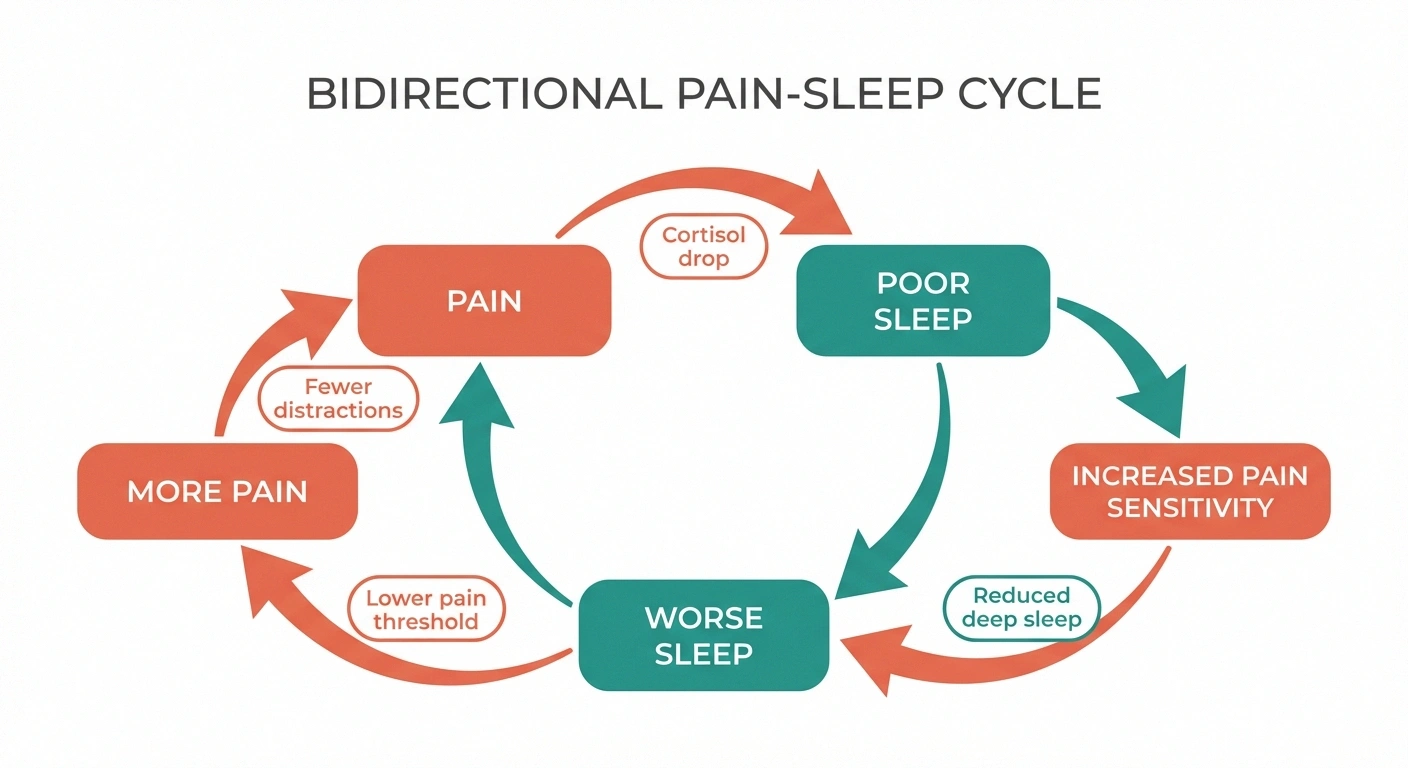
The relationship between neuropathy and sleep is what researchers call bidirectional — meaning it goes both ways. Your nerve pain disrupts your sleep, and your disrupted sleep makes your nerve pain worse. It's a vicious cycle, and understanding it is the first step toward breaking it.
The Pain-Sleep Cycle
When you lie down at night, several things happen that can amplify neuropathy symptoms:
- Fewer distractions: During the day, you're busy — working, talking, watching TV, moving around. These activities compete with pain signals for your brain's attention. At night, in a quiet dark room, there's nothing else to focus on, so pain signals take center stage.
- Cortisol drops: Your body's natural cortisol levels decrease in the evening. Cortisol has anti-inflammatory properties, so as it drops, inflammation and nerve sensitivity may increase.
- Body temperature changes: Your extremities often warm slightly as your body prepares for sleep, which can intensify burning sensations in neuropathic feet and hands.
- Pressure on nerves: The way you position yourself in bed can compress already sensitive nerves, particularly in the feet, legs, and hands.
Then comes the cruel second half of the cycle: poor sleep increases your pain sensitivity the next day. Research published in Pain Medicine has shown that even one night of poor sleep can lower your pain threshold, meaning the same nerve signals that were manageable yesterday now feel unbearable today. If you've noticed that your neuropathy is worse at night, this is a major reason why.
⚠️ The Vicious Cycle
Even one night of poor sleep can lower your pain threshold, meaning the same nerve signals that were manageable yesterday may feel unbearable today. This creates a self-reinforcing cycle: pain disrupts sleep, poor sleep increases pain sensitivity, and increased sensitivity leads to worse sleep. Breaking this cycle at any point can start positive momentum in both directions.
Sleep Disorders That Commonly Accompany Neuropathy
Many people with neuropathy assume their sleep problems are simply caused by pain keeping them awake. While that's often part of it, neuropathy can actually trigger or worsen specific, diagnosable sleep disorders that need their own treatment approaches.
Restless Leg Syndrome (RLS)
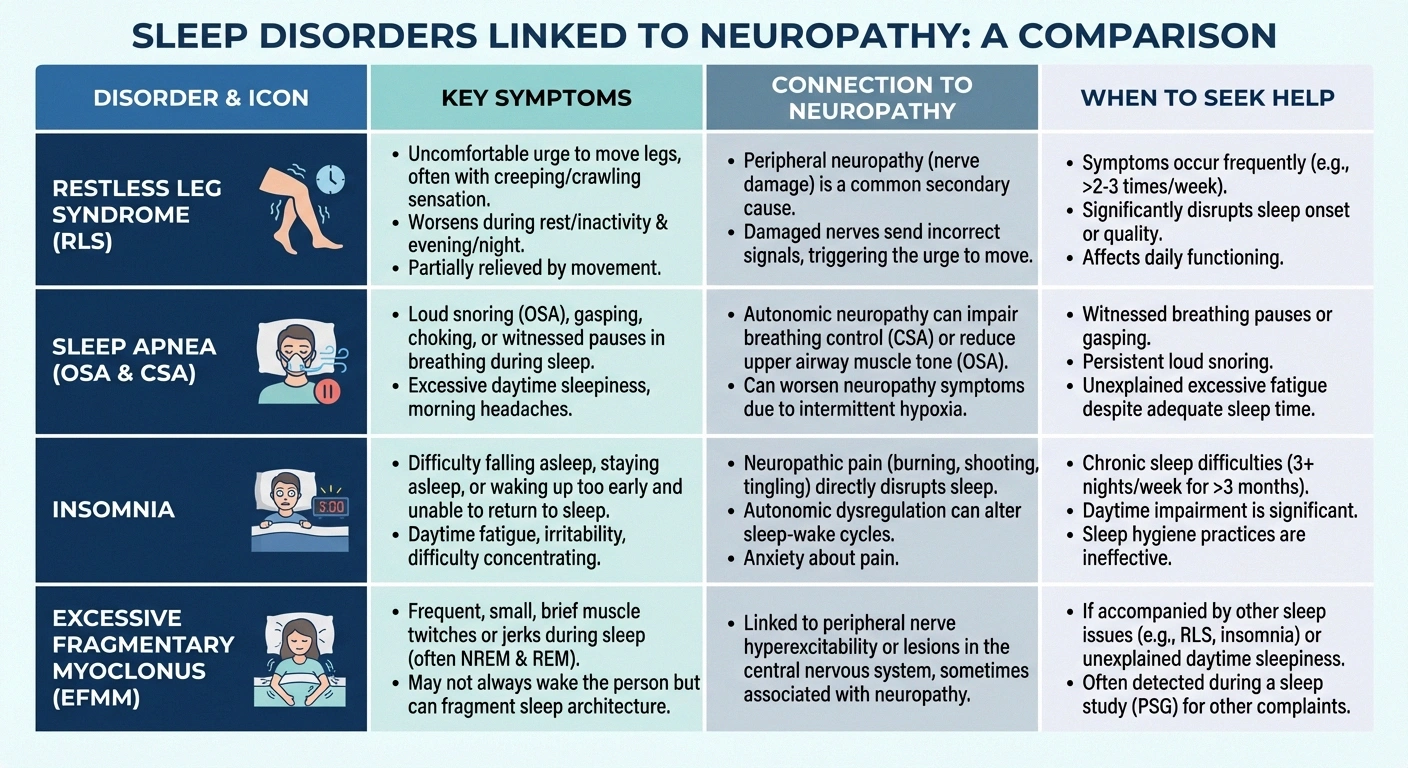
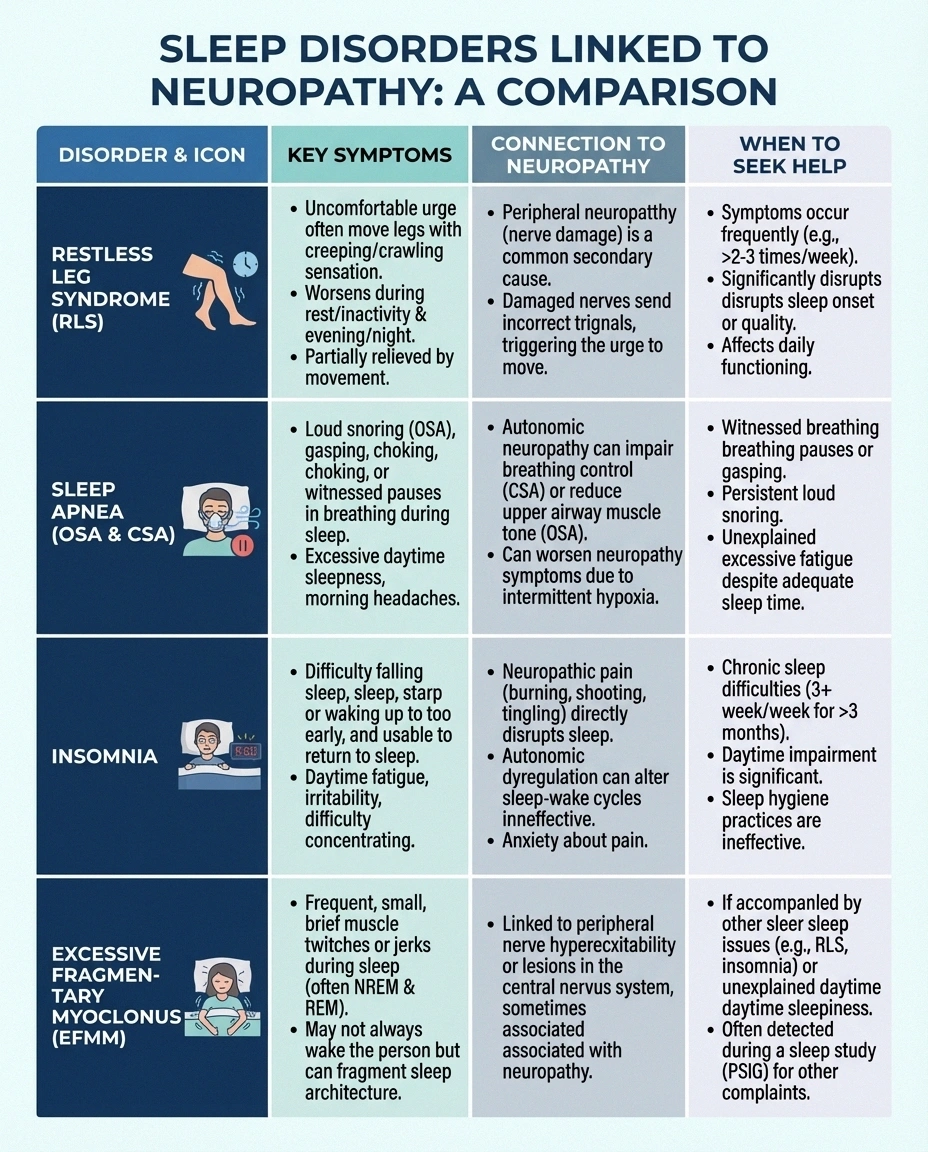
Restless leg syndrome causes an irresistible urge to move your legs, typically accompanied by uncomfortable sensations like crawling, pulling, or aching. Symptoms are worst in the evening and at night, and temporarily relieved by movement — which is obviously not compatible with falling asleep.
The connection between RLS and neuropathy is well-documented. Research shows that people with peripheral neuropathy are significantly more likely to develop RLS than the general population. The damaged nerves that cause your neuropathy symptoms during the day contribute to the abnormal sensations that drive restless legs at night.
If you find yourself constantly needing to move, kick, or stretch your legs when trying to sleep, mention it to your doctor. RLS has specific treatments that differ from general neuropathy pain management.
Sleep Apnea
Sleep apnea — a condition where breathing repeatedly stops and starts during sleep — has a significant overlap with neuropathy, particularly in people with diabetes. Diabetic neuropathy and sleep apnea share common risk factors including obesity, metabolic dysfunction, and autonomic nerve damage.
Here's what makes this connection particularly important: sleep apnea may actually worsen neuropathy. The repeated drops in blood oxygen levels that occur with each apnea event can damage nerves and impair nerve repair processes. One study found that sleep apnea patients were more likely to show test evidence of peripheral neuropathy compared to controls.
Autonomic neuropathy — damage to the nerves controlling involuntary body functions — can also directly contribute to sleep apnea by affecting the muscles and reflexes that keep your airway open during sleep.
Warning signs of sleep apnea include loud snoring, gasping awake during the night, morning headaches, and excessive daytime sleepiness even after seemingly adequate time in bed.
Insomnia
Chronic insomnia — difficulty falling asleep, staying asleep, or waking too early — affects a large percentage of people with neuropathy. It's more than just “pain keeping you up.” Chronic pain can fundamentally alter your sleep architecture, the natural progression of sleep stages that your body needs for physical repair and emotional processing.
People with neuropathy-related insomnia often spend more time in light sleep stages and less time in deep, restorative slow-wave sleep. This is the sleep stage during which your body does most of its repair work, including nerve maintenance. Missing out on deep sleep doesn't just leave you tired — it may actively slow your body's ability to manage nerve damage.
If you're dealing with the mental health impact of neuropathy, insomnia can intensify anxiety, depression, and that overwhelming feeling of being unable to cope.
Excessive Fragmentary Myoclonus (EFM)
This lesser-known sleep disorder involves brief, involuntary muscle twitches that occur during sleep. Unlike RLS, you may not even be aware these twitches are happening — but they fragment your sleep, preventing you from reaching deep sleep stages.
A 2016 research study found that half of patients diagnosed with EFM had evidence of peripheral neuropathy. Researchers now recommend that anyone diagnosed with EFM be tested for neuropathy as well. If you consistently wake up feeling unrefreshed despite spending enough hours in bed, EFM could be worth discussing with a sleep specialist.
Restless Leg Syndrome
Signs: Irresistible urge to move legs, crawling/pulling sensations
Neuropathy link: Damaged nerves drive abnormal sensations
Action: Tell your doctor — has specific treatments
Sleep Apnea
Signs: Loud snoring, gasping, morning headaches
Neuropathy link: Low oxygen damages nerves; autonomic dysfunction
Action: Request a sleep study
Chronic Insomnia
Signs: Difficulty falling/staying asleep, early waking
Neuropathy link: Pain disrupts sleep architecture; less deep sleep
Action: Consider CBT-I therapy
Fragmentary Myoclonus
Signs: Waking unrefreshed, may not notice twitches
Neuropathy link: 50% of EFM patients have neuropathy
Action: Requires polysomnography to diagnose
Practical Strategies for Better Sleep with Neuropathy
Now let's get to the actionable part. These strategies go beyond basic sleep hygiene advice because basic advice often isn't enough when neuropathy is in the mix.
Optimize Your Sleep Environment for Nerve Pain
Temperature control is critical. Many people with neuropathy find that their symptoms are temperature-sensitive. Experiment with:
- Keeping your bedroom between 65-68°F (18-20°C)
- Using breathable, moisture-wicking sheets (bamboo or high-quality cotton)
- Keeping a separate lightweight blanket for your feet that you can easily kick off if they start burning
- Using a bed fan that directs airflow under the covers toward your feet
Bedding matters more than you might think. Heavy blankets pressing on sensitive feet can be agonizing. Consider:
- A blanket lift or bed cradle that keeps covers off your feet while keeping them warm
- Loose, soft socks if your feet need warmth but can't tolerate pressure (cotton or bamboo are usually most comfortable)
- A quality mattress that supports your body without creating pressure points — this can make a meaningful difference for nerve pain. You can explore our guide to the best mattresses for neuropathy for specific recommendations.
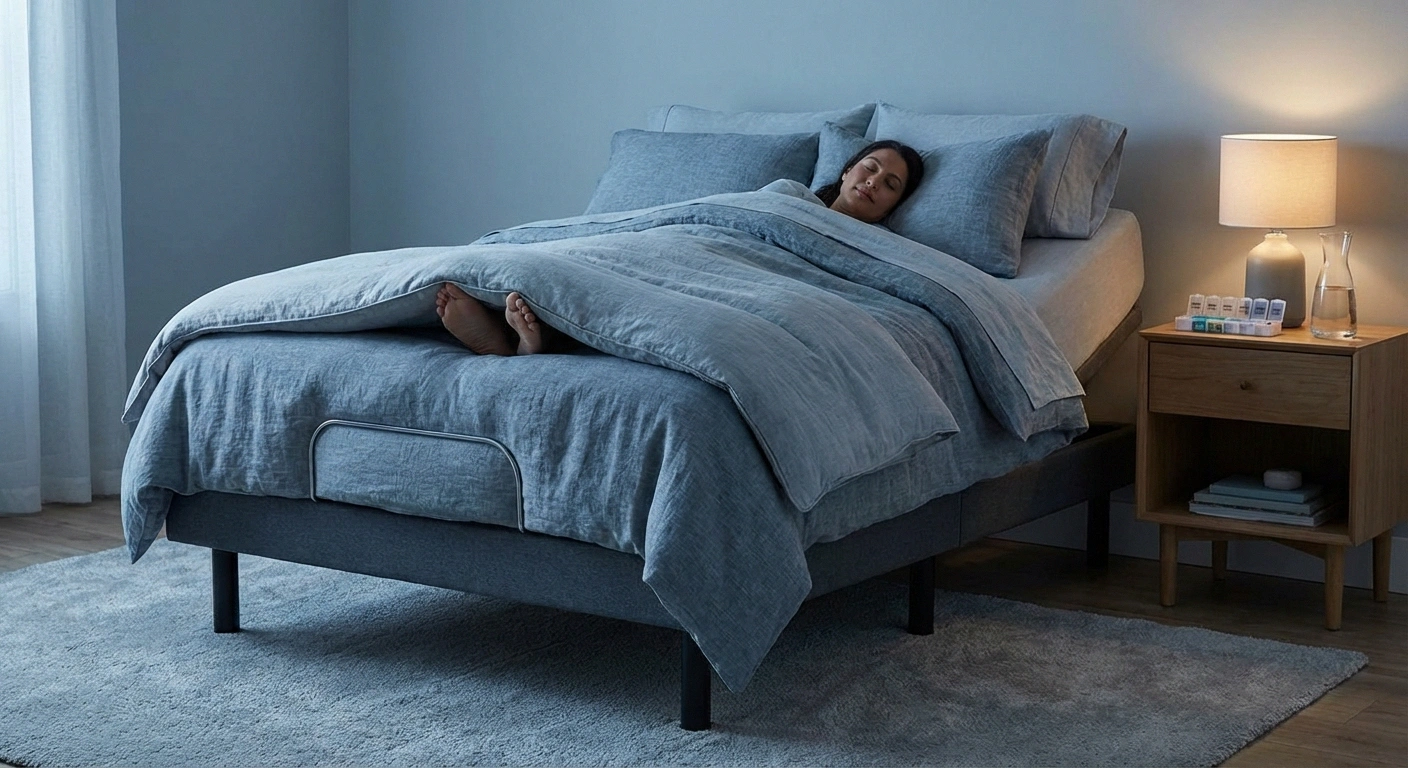
✅ Sleep Environment Checklist
☐ Bedroom temperature 65-68°F (18-20°C)
☐ Breathable, moisture-wicking sheets
☐ Blanket lift or bed cradle for sensitive feet
☐ Pillow under knees (back sleeper) or between knees (side sleeper)
☐ Loose, soft socks available if feet need warmth
☐ Medications and water on bedside table
☐ Room dark and quiet (blackout curtains, white noise if needed)
☐ Blue light devices off 1-2 hours before bed
Find Your Best Sleeping Position
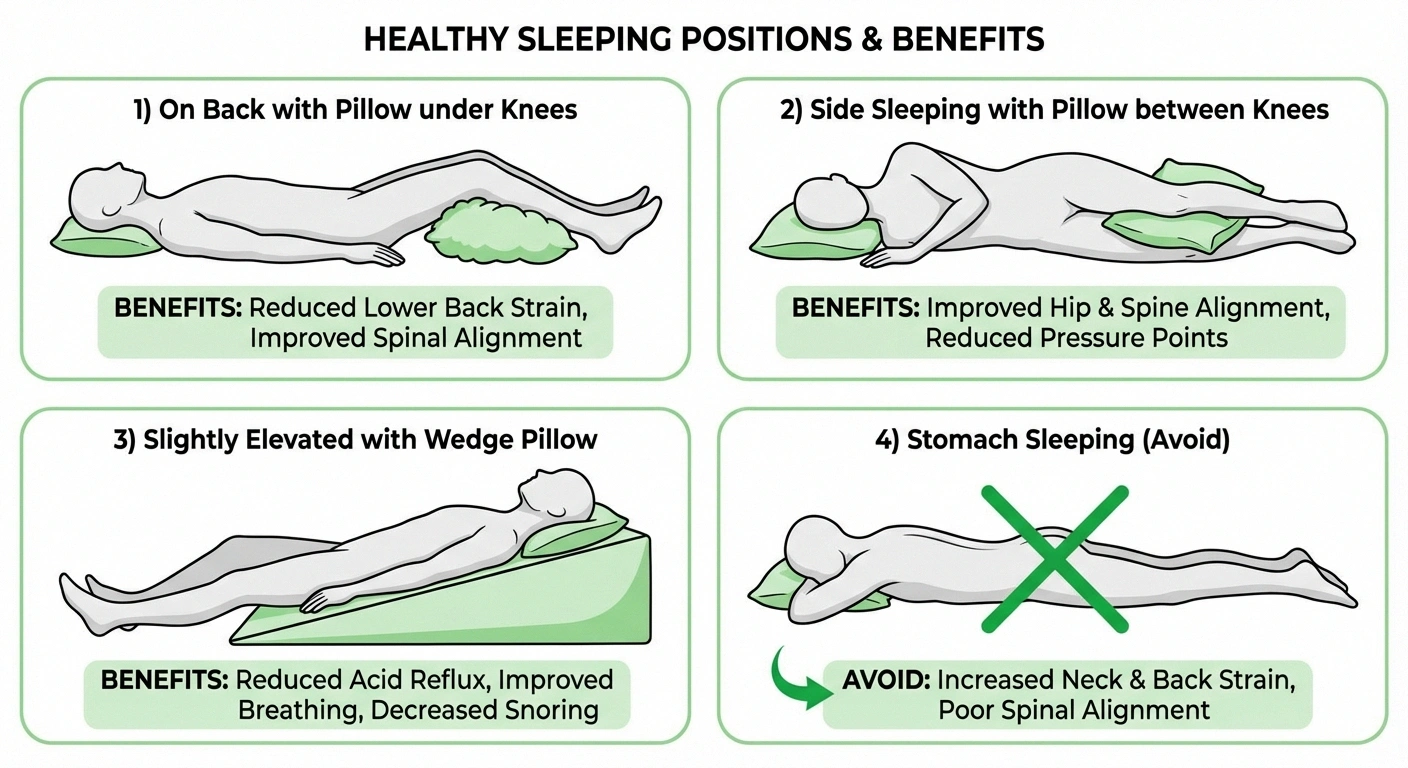
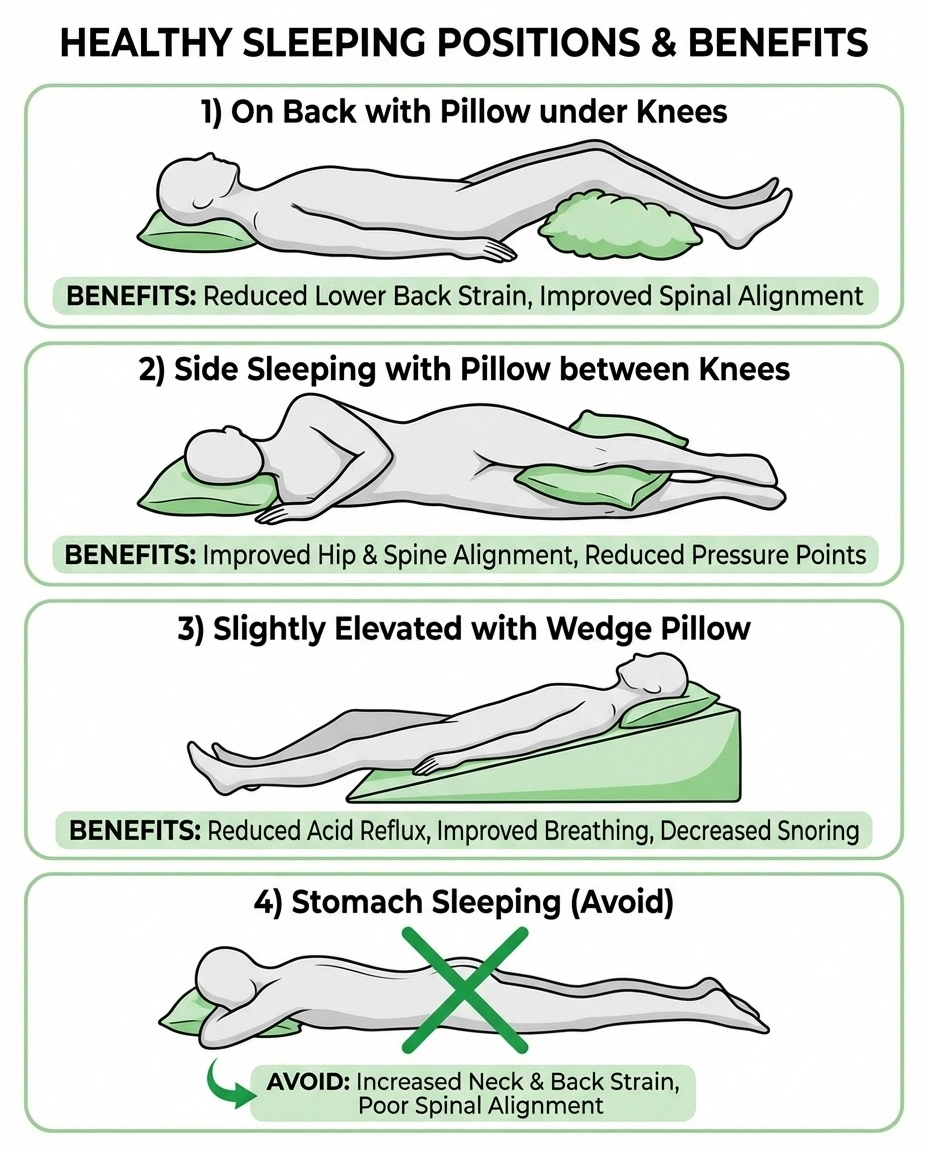
Position can significantly affect nighttime nerve pain:
- On your back with a pillow under your knees: This takes pressure off your lower back and can reduce pain in the legs and feet. Slightly elevating your feet may also help reduce swelling and burning.
- On your side with a pillow between your knees: This keeps your spine aligned and prevents your top leg from compressing nerves in the lower extremities.
- Slightly elevated: If you have autonomic neuropathy or balance issues, a wedge pillow or adjustable bed base that raises your upper body slightly may improve both circulation and breathing.
Avoid sleeping on your stomach if possible, as this position tends to compress nerves in the arms and puts strain on the neck and lower back.
Create a Neuropathy-Specific Bedtime Routine
A consistent pre-sleep routine signals to your body that it's time to wind down. For neuropathy, consider incorporating:
- A warm (not hot) foot soak 1-2 hours before bed: The warmth can be soothing, and the subsequent cooling as your feet dry may actually help trigger sleep. Just test the water temperature with your elbow or a thermometer first if you have reduced sensation — you need to protect against burns.
- Gentle stretching or yoga: 10-15 minutes of gentle stretching can reduce muscle tension that compounds nerve pain at night. Focus on your calves, hamstrings, and feet.
- Mindfulness or relaxation exercise: Even 5-10 minutes of guided meditation or progressive muscle relaxation can lower stress hormones and help break the anxiety-pain cycle that keeps many neuropathy patients awake.
- Apply topical treatments: If you use topical pain relievers, applying them 20-30 minutes before bed allows time for them to take effect while you're still going through your routine.

🌙 Sample Neuropathy Bedtime Routine
2 hours before bed: Warm foot soak (test temperature with thermometer first)
90 minutes before: Dim lights, stop screen use
1 hour before: Gentle stretching (calves, hamstrings, feet)
30 minutes before: Apply topical pain relievers; take bedtime medications
10 minutes before: Guided relaxation or progressive muscle relaxation
Strategic Medication Timing
If you take medications for neuropathy, the timing of your doses can significantly affect your sleep. Talk with your doctor about:
- Taking gabapentin or pregabalin closer to bedtime: These medications cause drowsiness, which can be used to your advantage. A higher portion of your daily dose at bedtime (with your doctor's guidance) may help both pain and sleep.
- Nortriptyline or amitriptyline at bedtime: These tricyclic antidepressants are commonly prescribed for neuropathy at lower doses and have sedating properties that make bedtime dosing ideal.
- Avoiding stimulating medications in the evening: Some pain medications or supplements can interfere with sleep. Review your full medication and supplement list with your pharmacist.

When to Consider a Sleep Study
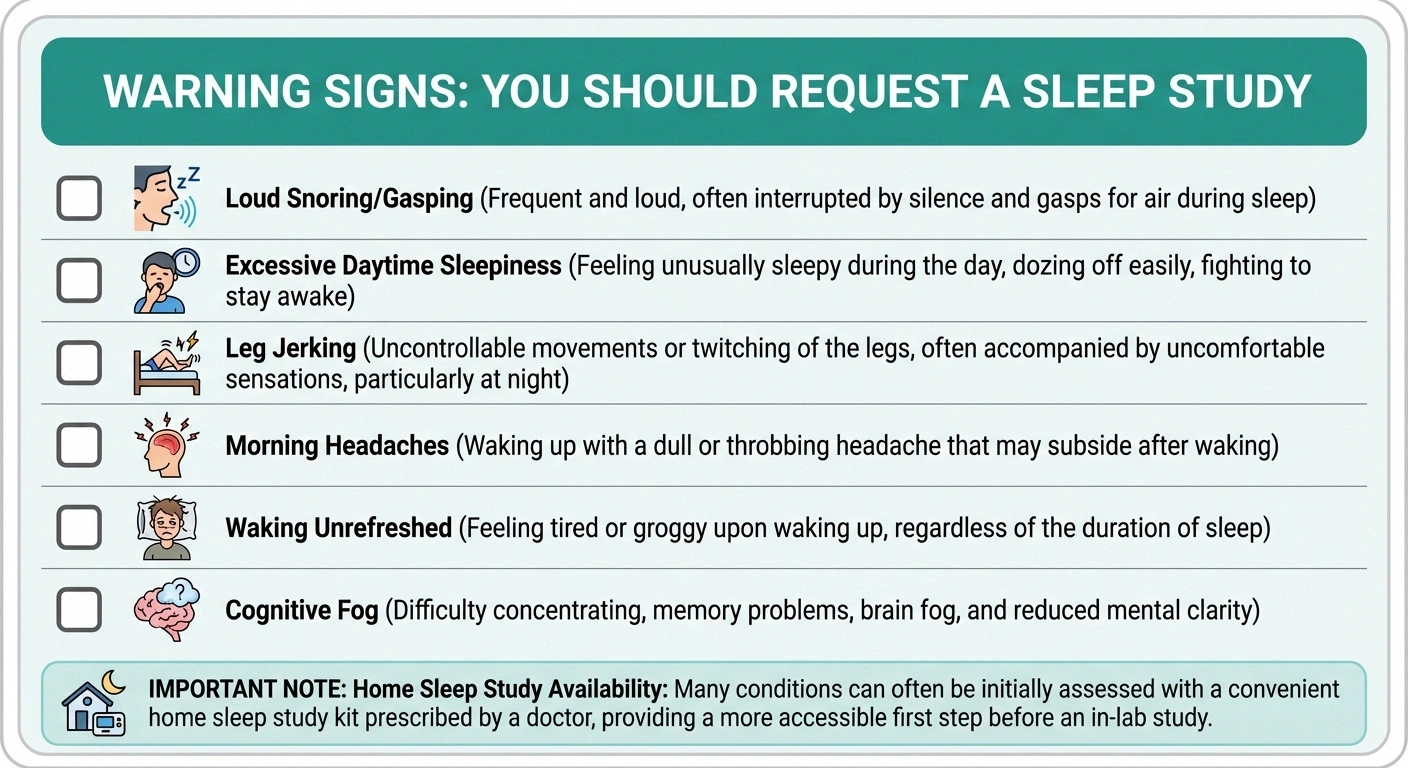
If your sleep problems persist despite good sleep practices, it may be time to ask your doctor about a formal sleep evaluation. A polysomnography (sleep study) can identify specific disorders that require targeted treatment.
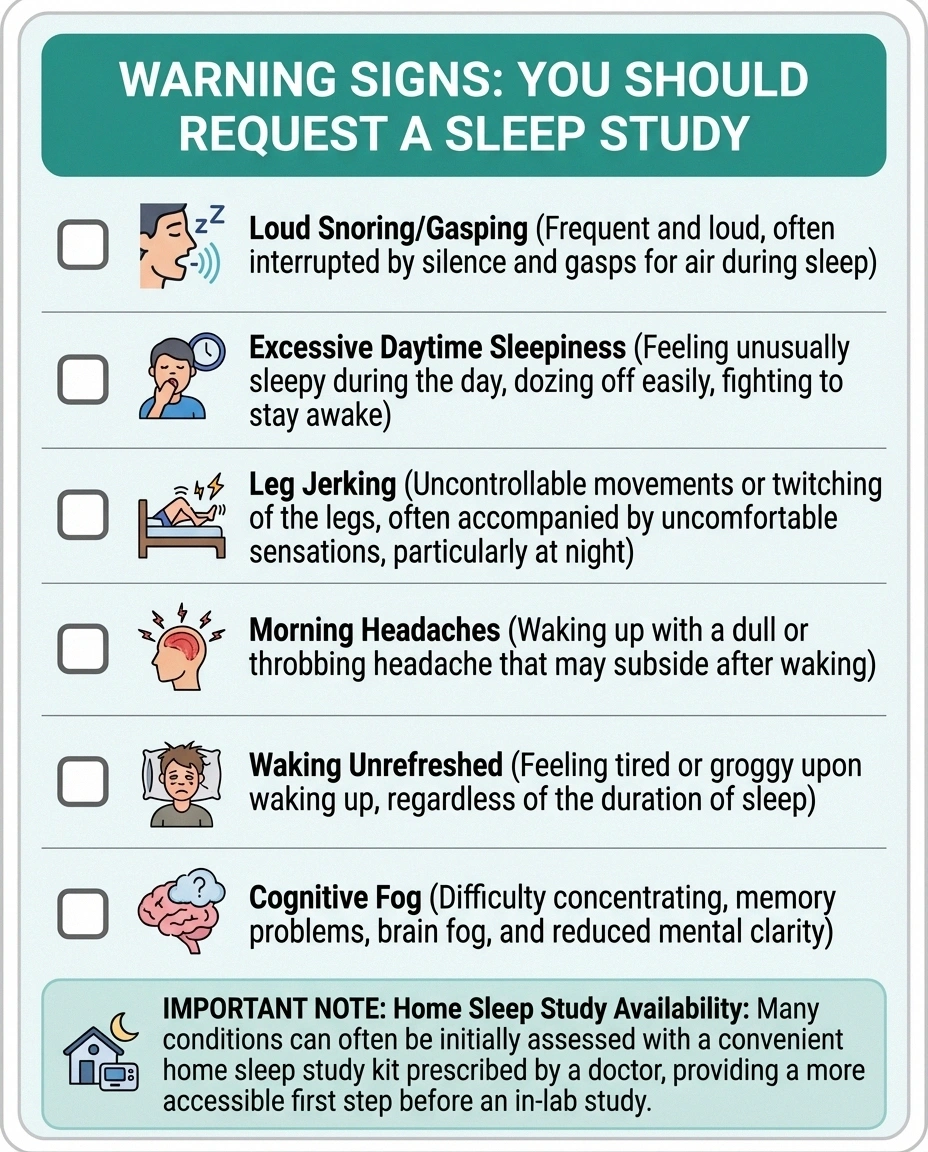
Consider requesting a sleep study if you experience:
- Loud snoring, gasping, or choking during sleep (reported by a bed partner)
- Excessive daytime sleepiness despite adequate time in bed
- Legs that kick or jerk during sleep
- Morning headaches that occur regularly
- Waking unrefreshed after what should be a full night's sleep
- Difficulty concentrating, memory problems, or cognitive fog beyond what your neuropathy alone would explain
Sleep studies can be done at specialized sleep centers or, increasingly, at home with portable monitoring equipment. The results may reveal treatable conditions — like sleep apnea or periodic limb movement disorder — that are quietly undermining your health.
Cognitive Behavioral Therapy for Insomnia (CBT-I)
If chronic insomnia is your primary sleep challenge, CBT-I deserves serious consideration. It's now recommended as the first-line treatment for chronic insomnia by the American College of Physicians — ahead of sleep medications.
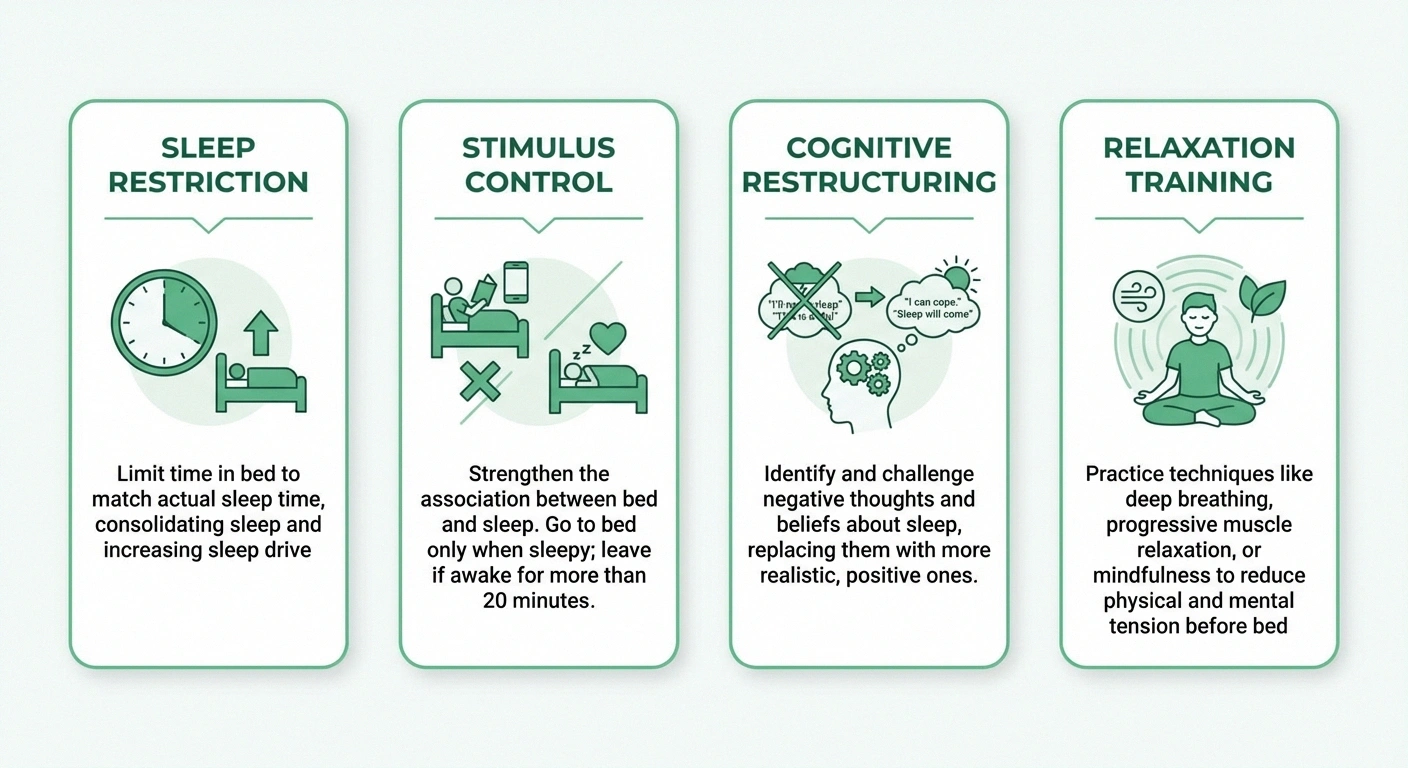
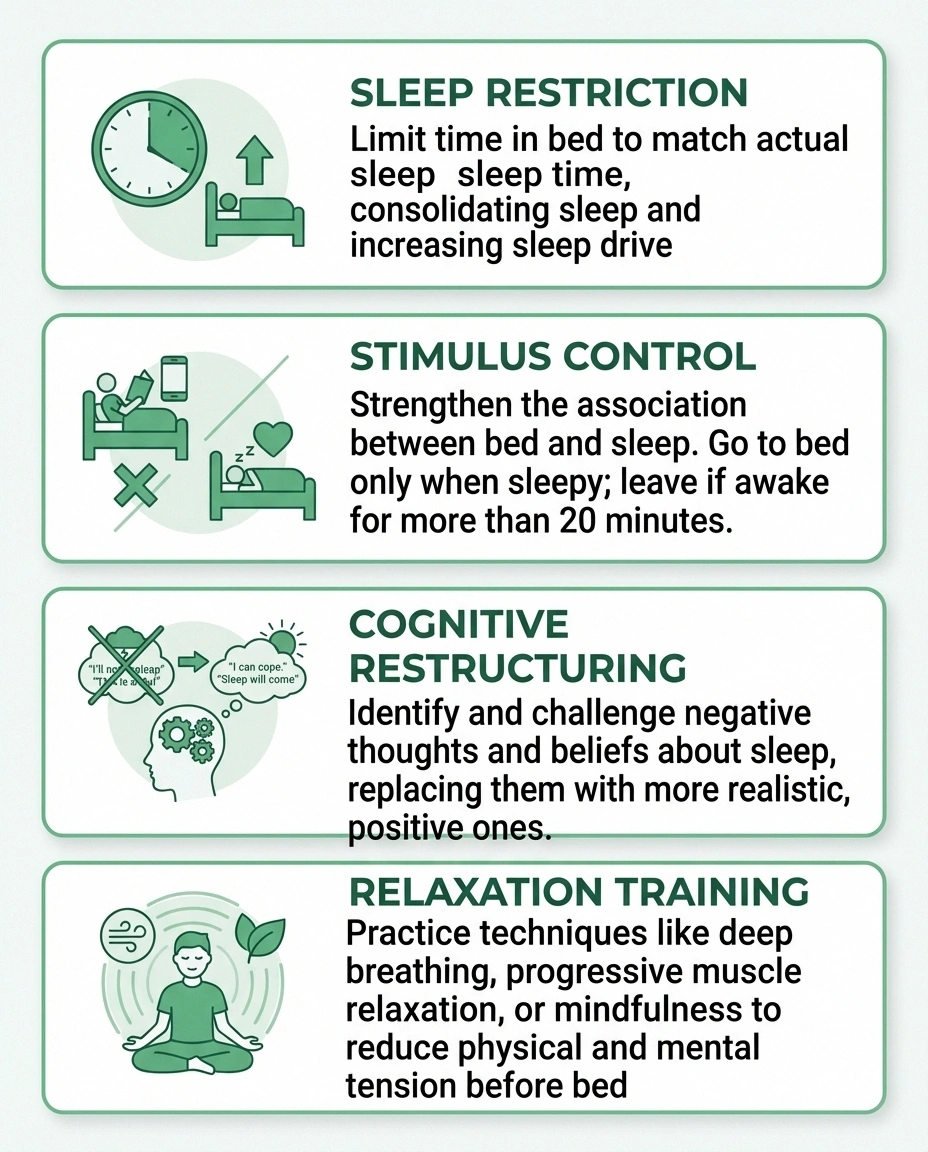
CBT-I works by addressing the thoughts, behaviors, and habits that perpetuate insomnia. It typically includes:
- Sleep restriction: Counterintuitively, you temporarily limit your time in bed to match the amount of sleep you're actually getting. This builds sleep pressure and helps consolidate your sleep into fewer, more restorative hours.
- Stimulus control: You retrain your brain to associate your bed with sleep rather than with lying awake in pain. This means getting out of bed when you can't sleep and returning only when you feel sleepy.
- Cognitive restructuring: Identifying and challenging the anxious thoughts about sleep that keep you wound up. “If I don't fall asleep in the next 10 minutes, tomorrow will be terrible” becomes a self-fulfilling prophecy. CBT-I teaches you to break that cycle.
- Relaxation training: Progressive muscle relaxation, guided imagery, and breathing techniques tailored to your needs.
For neuropathy patients specifically, CBT-I can be adapted to account for the reality that some sleep disruption will always come from pain. The goal isn't perfect sleep — it's the best possible sleep given your circumstances.
CBT-I is available through trained therapists, and there are now evidence-based digital programs that deliver it through apps and online platforms. Ask your doctor for a referral or look into programs like Insomnia Coach (a free app from the VA) or SHUTi.
ℹ️ CBT-I: The First-Line Treatment for Insomnia
The American College of Physicians recommends CBT-I as the first treatment for chronic insomnia — ahead of sleep medications. For neuropathy patients, CBT-I can be adapted to account for pain-related disruption. Available through trained therapists, online programs (SHUTi), and free apps (Insomnia Coach from the VA). Ask your doctor for a referral.
Natural Approaches to Better Sleep
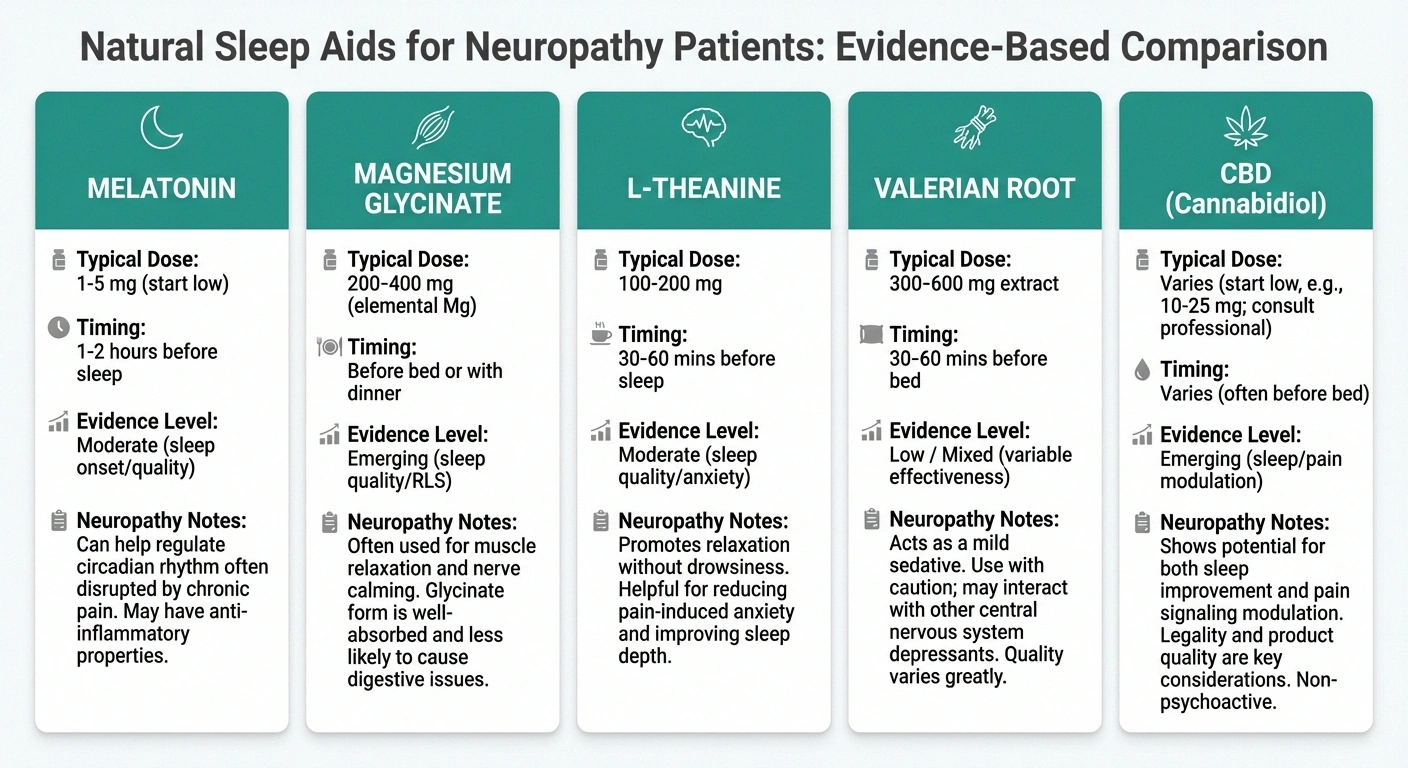
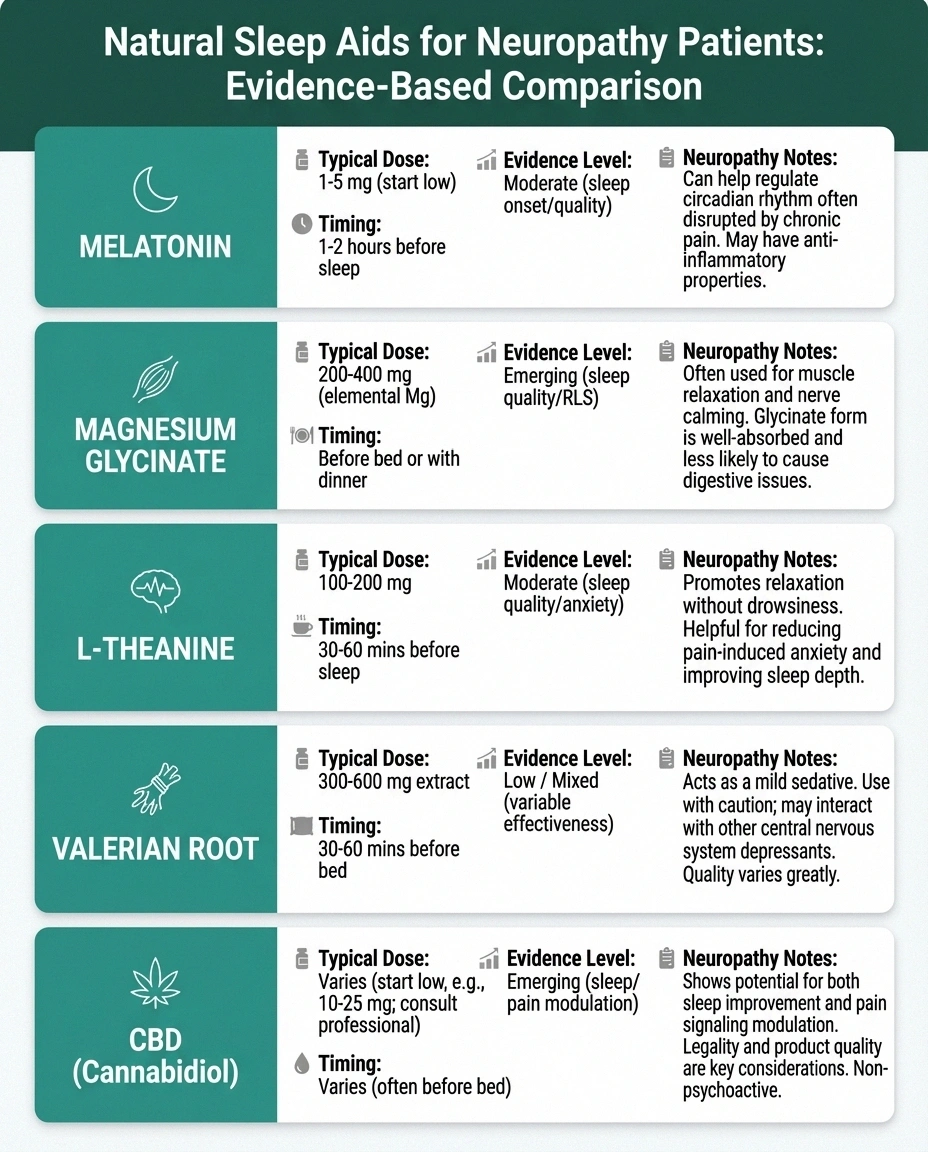
Several natural strategies may help improve sleep quality for people with neuropathy. As with any supplement or practice, discuss these with your healthcare provider:
Melatonin: This natural sleep hormone can help regulate your sleep-wake cycle, particularly if neuropathy pain has disrupted your normal circadian rhythm. Start with a low dose (0.5-3mg) taken 30-60 minutes before your target bedtime.
Magnesium: Some research suggests magnesium may help with both sleep quality and nerve function. Magnesium glycinate is often recommended for sleep because it's well-absorbed and less likely to cause digestive issues. For more on this, see our article on supplements for nerve health.
Exercise timing: Regular physical activity improves sleep quality, but timing matters. Walking and gentle exercise earlier in the day can promote better sleep at night. Avoid vigorous activity within 3-4 hours of bedtime, as it can increase pain and overstimulate your nervous system.
Light exposure management: Get bright light exposure during the day (especially morning light) and minimize blue light from screens in the 1-2 hours before bed. This helps synchronize your circadian rhythm, which can become disrupted when chronic pain keeps you up at irregular hours.
65-68°F
Ideal bedroom temperature for sleep with neuropathy
0.5-3mg
Recommended starting dose of melatonin
50%
Of EFM patients also have peripheral neuropathy
The Autonomic Connection: When Your Nervous System Can't Regulate Sleep
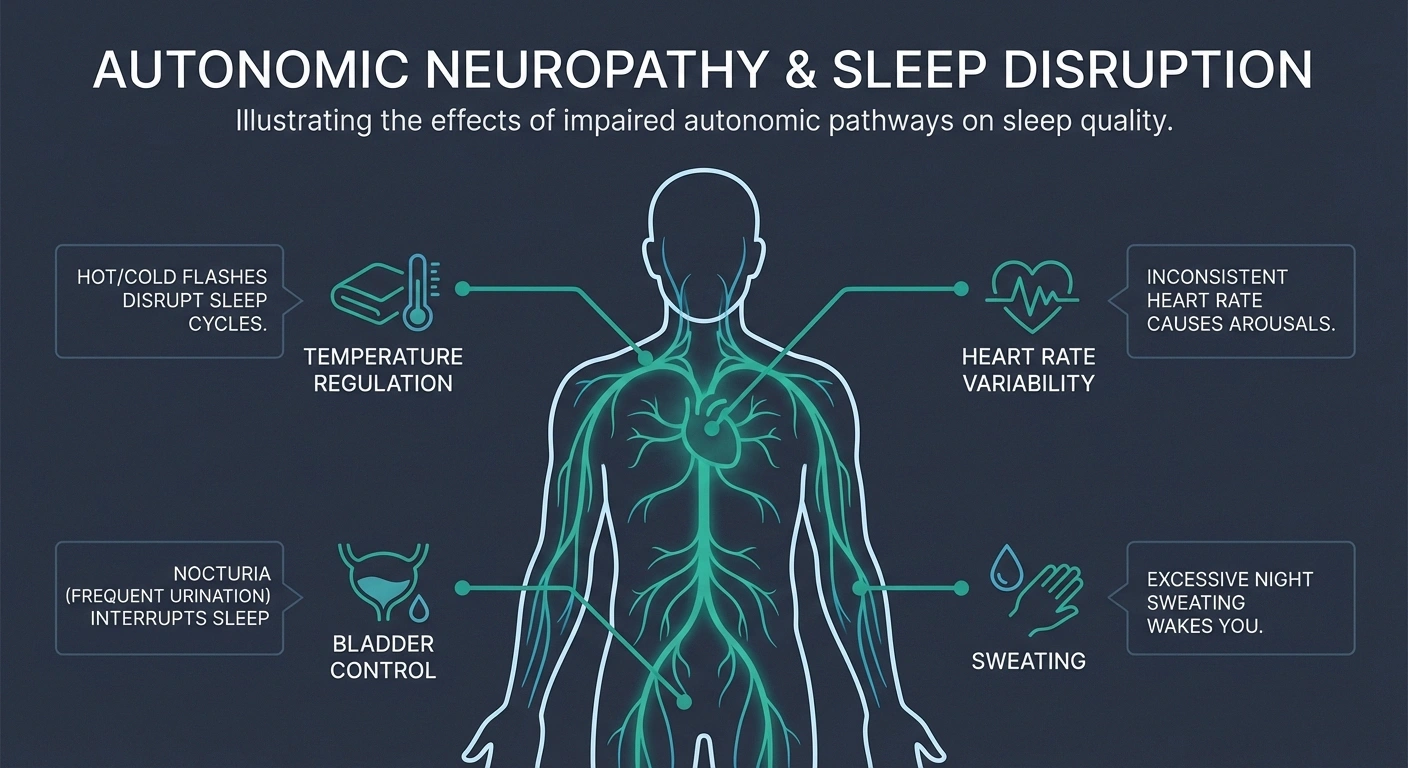
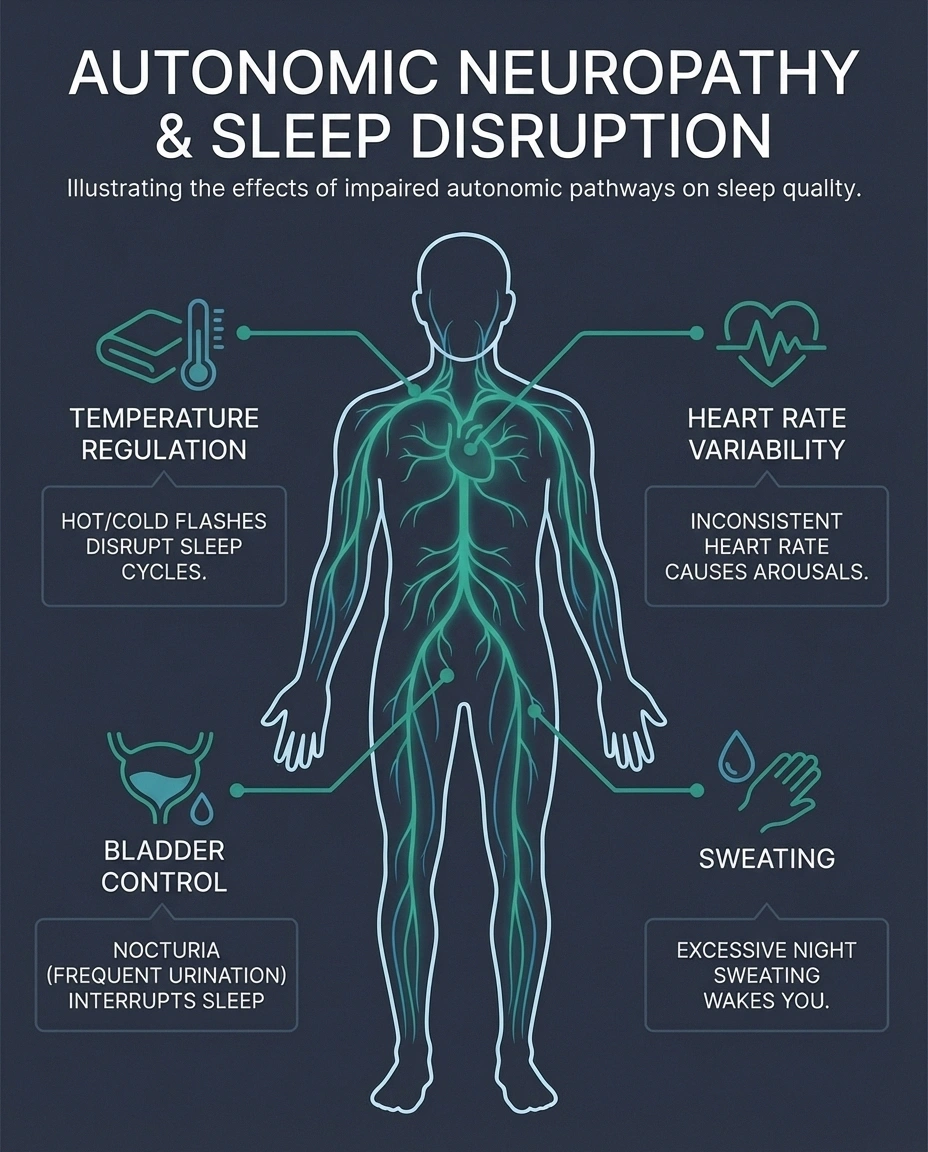
Some people with neuropathy have damage to their autonomic nerves — the nerves that control involuntary functions like heart rate, blood pressure, digestion, and temperature regulation. This is called autonomic neuropathy, and it can profoundly affect sleep in ways that aren't always recognized.
Autonomic neuropathy may disrupt sleep by:
- Causing blood pressure drops when lying down or upon standing (orthostatic hypotension)
- Disrupting normal heart rate variability during sleep
- Impairing temperature regulation, leading to nighttime overheating or chills
- Causing digestive symptoms like bloating or nausea that worsen when lying down
- Affecting bladder function, leading to frequent nighttime urination
If you're experiencing these types of symptoms alongside your neuropathy, mention them to your doctor. Autonomic dysfunction often requires its own set of management strategies and may explain why standard sleep advice hasn't worked for you.
Building a Long-Term Sleep Strategy
Improving sleep with neuropathy isn't usually a quick fix — it's an ongoing process of finding what works for you and adjusting as your condition evolves. Here's my recommendation for building a sustainable approach:
- Start with your environment: Make the physical changes to your bedroom, bedding, and temperature control that address your specific symptoms
- Establish your routine: Build a consistent bedtime routine that includes relaxation and any topical treatments you use
- Talk to your doctor about medication timing: Optimize when you take your existing medications
- Address specific sleep disorders: If sleep problems persist, pursue a sleep study to identify any treatable conditions
- Consider CBT-I: If insomnia remains a significant problem, this evidence-based approach may provide lasting improvement
- Monitor and adjust: Your neuropathy and sleep needs may change over time. What works this year may need tweaking next year
The encouraging news is that the pain-sleep cycle works in your favor once you start improving either side. Better sleep leads to lower pain sensitivity, which leads to better sleep, which leads to even lower pain sensitivity. Breaking the cycle in any way you can starts this positive momentum.

💡 The Silver Lining
The pain-sleep cycle works in your favor once you start improving either side. Better sleep leads to lower pain sensitivity, which leads to better sleep, which leads to even lower pain sensitivity. You don't have to fix everything at once — breaking the cycle at any point starts this positive momentum.
And on the nights when nothing seems to work — when you're lying awake at 3 AM with your feet on fire — know that you're not alone. Millions of people with neuropathy are fighting this same battle, and continuing to search for better solutions shows real strength. You can connect with others who understand at neuropathy support groups.
Frequently Asked Questions
Why does neuropathy pain get worse at night?
Several factors combine to make neuropathy worse at night. Fewer distractions mean your brain focuses more on pain signals. Natural cortisol levels drop in the evening, reducing their anti-inflammatory effect. Body temperature changes in your extremities can intensify burning sensations. Lying down may also put pressure on sensitive nerves. This is why many people with neuropathy report their worst symptoms occurring between 10 PM and 4 AM.
Can neuropathy cause sleep apnea or restless leg syndrome?
Yes, neuropathy is linked to both conditions. Peripheral neuropathy significantly increases the risk of developing restless leg syndrome because the same nerve damage that causes daytime symptoms drives the uncomfortable sensations and urge to move at night. Autonomic neuropathy can contribute to sleep apnea by affecting the muscles and reflexes that keep the airway open during sleep. People with diabetes are especially at risk for both neuropathy and sleep apnea.
What is the best sleeping position for neuropathy in the feet?
Most sleep specialists recommend sleeping on your back with a pillow under your knees and your feet slightly elevated. This reduces pressure on foot nerves and may help with swelling and burning. Side sleeping with a pillow between your knees is another good option. Avoid sleeping on your stomach as this tends to compress nerves. A blanket lift or bed cradle can keep covers from pressing on sensitive feet regardless of your position.
Should I take my neuropathy medication before bed?
Many neuropathy medications like gabapentin, pregabalin, and tricyclic antidepressants cause drowsiness, which can be used to your advantage by taking them at bedtime. Some doctors prescribe a higher portion of the daily dose at bedtime specifically to help with sleep. However, never adjust your medication timing without consulting your doctor, as this can affect how well the medication manages your pain throughout the full day.
Can poor sleep actually make neuropathy worse?
Yes, research clearly shows that poor sleep lowers your pain threshold, meaning the same level of nerve damage creates more perceived pain when you are sleep-deprived. Sleep deprivation also increases inflammation, impairs nerve repair processes that occur during deep sleep, and worsens anxiety and depression that amplify the pain experience. This creates a vicious cycle where pain disrupts sleep and poor sleep increases pain.
When should I ask my doctor about a sleep study?
Request a sleep study if you experience loud snoring or gasping during sleep, excessive daytime sleepiness despite adequate time in bed, legs that kick or jerk during sleep, regular morning headaches, or if you consistently wake unrefreshed. Sleep studies can identify treatable conditions like sleep apnea, restless leg syndrome, and periodic limb movement disorder that may be compounding your neuropathy-related sleep problems.
What is CBT-I and can it help neuropathy-related insomnia?
Cognitive Behavioral Therapy for Insomnia is a structured program that addresses the thoughts, behaviors, and habits that perpetuate insomnia. It is recommended as the first-line treatment for chronic insomnia by the American College of Physicians. For neuropathy patients, CBT-I can be adapted to account for pain-related sleep disruption. It includes sleep restriction, stimulus control, cognitive restructuring, and relaxation training. It is available through therapists, online programs, and apps.
Sleep is not a luxury when you're living with neuropathy — it's medicine. Your body needs restorative sleep to manage nerve pain, support nerve function, and maintain your mental health. Investing in better sleep is one of the highest-impact things you can do for your overall neuropathy management.
This article reflects my experience as a patient advocate. Please consult your healthcare provider for personalized advice about your sleep and neuropathy management.
About the Author