There is a particular kind of dread that comes with seeing an event on the calendar — a niece’s wedding, a grandson’s graduation, a memorial service, a charity gala — knowing that the standing portion will be longer than your feet can comfortably manage. The first time I felt it was at a cousin’s outdoor wedding ceremony, on a hot summer afternoon, on grass, in shoes that had felt fine for an hour but became unbearable by the time we sat down. After that I started thinking about events the way a hiker thinks about a route — what is the terrain, what is the gear, where are the rest stops, what do I bring back from this trip if I want to do it again next month.
I’m Janet Ellis. I am a community advocate who has lived with neuropathy for years; I am not a doctor or a podiatrist. What I can do is share the practical playbook that I and others in our group have worked out for getting through concerts, weddings, funerals, religious services, fundraisers, and the long ceremonies of family life — and getting home without the kind of three-day flare that makes you swear off events forever.
The Reframe That Changes Everything
The single most useful shift I made was treating events as a logistics problem rather than a willpower problem. You are not “soldiering through” — you are planning. The same way a person with a knee injury plans a long airport day, a person with neuropathy plans a long event day. The planning is the love and the respect for your own body. It is not a sign of weakness; it is the reason you get to show up for the people you care about.
Events with neuropathy are a logistics problem, not a willpower problem. Asking about seating in advance, breaking in real shoes, scouting rest bases on arrival, and protecting a recovery day afterward turn ceremonies that used to ruin a week into something you can actually attend.
What follows is a practical playbook organized by what to do before, during, and after the event.
Before the Event — The Quiet Work
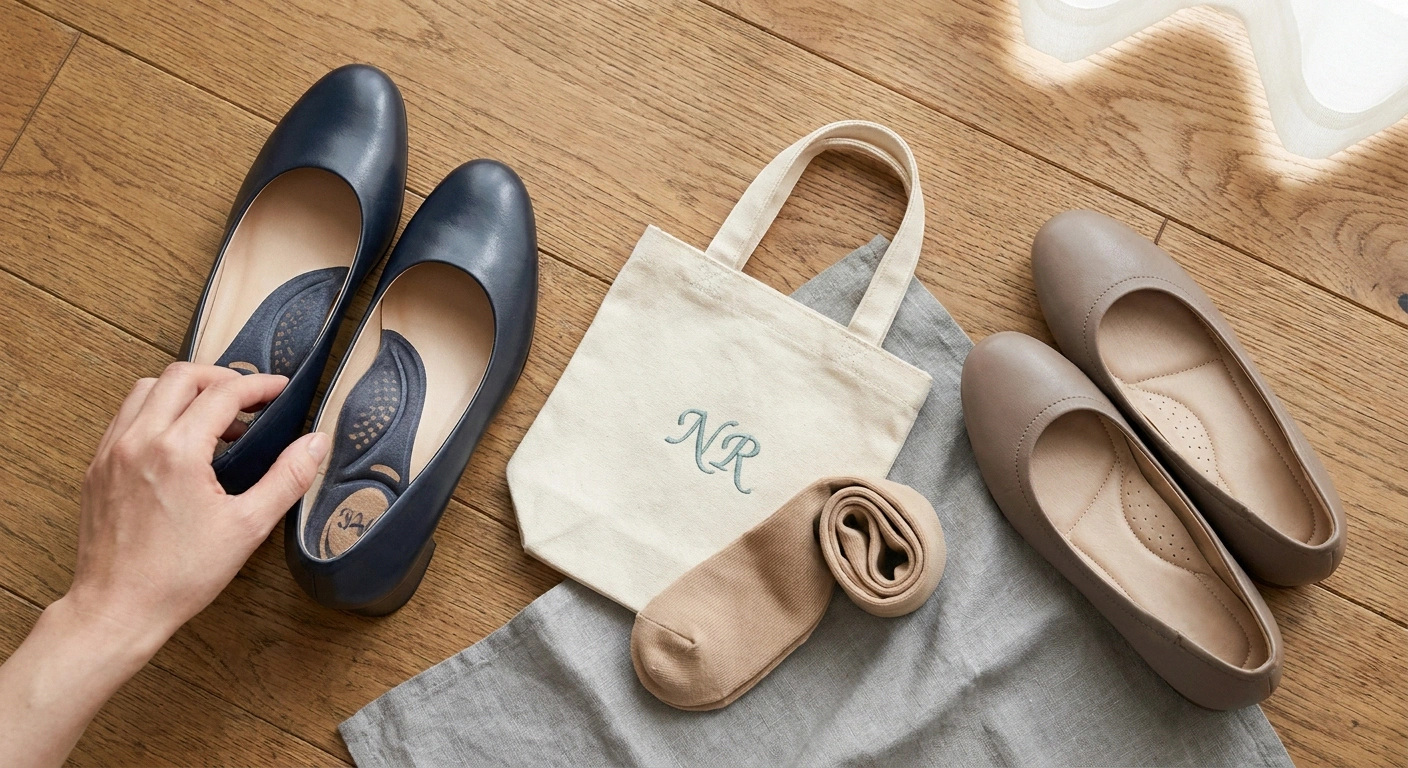
Most of what determines how an event goes happens before you walk in the door.
Pre-Event Checklist
Ask Questions Early
When you RSVP, you have permission to ask questions about logistics. Most hosts genuinely want their guests to be comfortable and will tell you what you need to know if you ask:
- Will there be seating during the ceremony? Open or assigned?
- If standing is part of the format (a religious service, a graduation), is there a section with chairs for people who need them?
- How far is the parking from the venue? Is there closer drop-off?
- What is the terrain — grass, gravel, stairs, long hallways?
- Is there an indoor space if it’s an outdoor event in case the weather makes things harder?
You are not being a difficult guest. You are giving the host useful information so that they can help you be present. Most weddings have a designated person who can help find a chair for the ceremony if you ask quietly when you arrive. Most religious services have an usher who will discreetly direct you to a pew or seat that fits.
Train For It a Little
If the event will require thirty minutes of standing, do a thirty-minute standing walk in the days leading up — at the grocery store, around the kitchen, in the garden. The point is not to “prove” you can do it but to remind your feet of the demand and to test the shoes you are planning to wear in the actual conditions. Our guide to getting through standing lines with neuropathy has many of the same micro-strategies that apply to events.
Plan the Day Around the Event
Light commitments on the day before and the day after. No errands stacked on top of the event. A real breakfast or lunch beforehand — low blood sugar makes neuropathy symptoms worse, so do not skip meals to “make room” for cake. Drink water steadily but plan your bathroom stops so you are not racing.
Get the Shoes Right
The shoe decision is the highest-leverage choice you will make. A few rules that have stood the test:
- Comfortable first, dressy second. Sensible cushioned dress shoes exist now in genuinely formal-looking styles — brands like Vionic, Clarks Unstructured, Cole Haan with rubber soles, Naturalizer, Mephisto, and similar make dress shoes that take orthotic insoles and have real cushioning. Spend the money once if you attend events regularly.
- Never break in new shoes at the event itself. Wear the shoes for at least three or four normal days before the event. If you discover a hot spot on day two, you have time to adjust or switch. Discover it during the ceremony and you are stuck.
- Heels at most one to one-and-a-half inches, with a block (not stiletto) shape that distributes weight. For neuropathy, true low heels or flats are kindest. Our guide to the best shoes for neuropathy covers what to look for in detail.
- Add an orthotic or premium insole inside the dress shoe if there is room. Custom orthotics from a podiatrist are worth it for regular event-going; over-the-counter options like Powerstep, Superfeet, or Vionic insoles work well for many people.
- Bring backup comfort shoes in a bag. A pair of cushioned slip-ons, ballet flats, or supportive sandals in a tote in the trunk of the car can rescue the second half of an event when the dress shoes have done their job.
- Sock choice matters. For diabetic neuropathy especially, a moisture-wicking sock without seams reduces blister risk. Compression socks (15-20 mmHg) can help with the swelling that comes from long standing — our guide to compression socks for neuropathy covers when they help.
The Bring-Along Kit
A small bag or pocket that contains:
Your Pocket-Sized Event Kit
- Your usual neuropathy pain medications, in case you need a top-up dose later than planned
- A water bottle or commitment to refill when offered
- A small pack of nuts or a granola bar for blood sugar steadiness
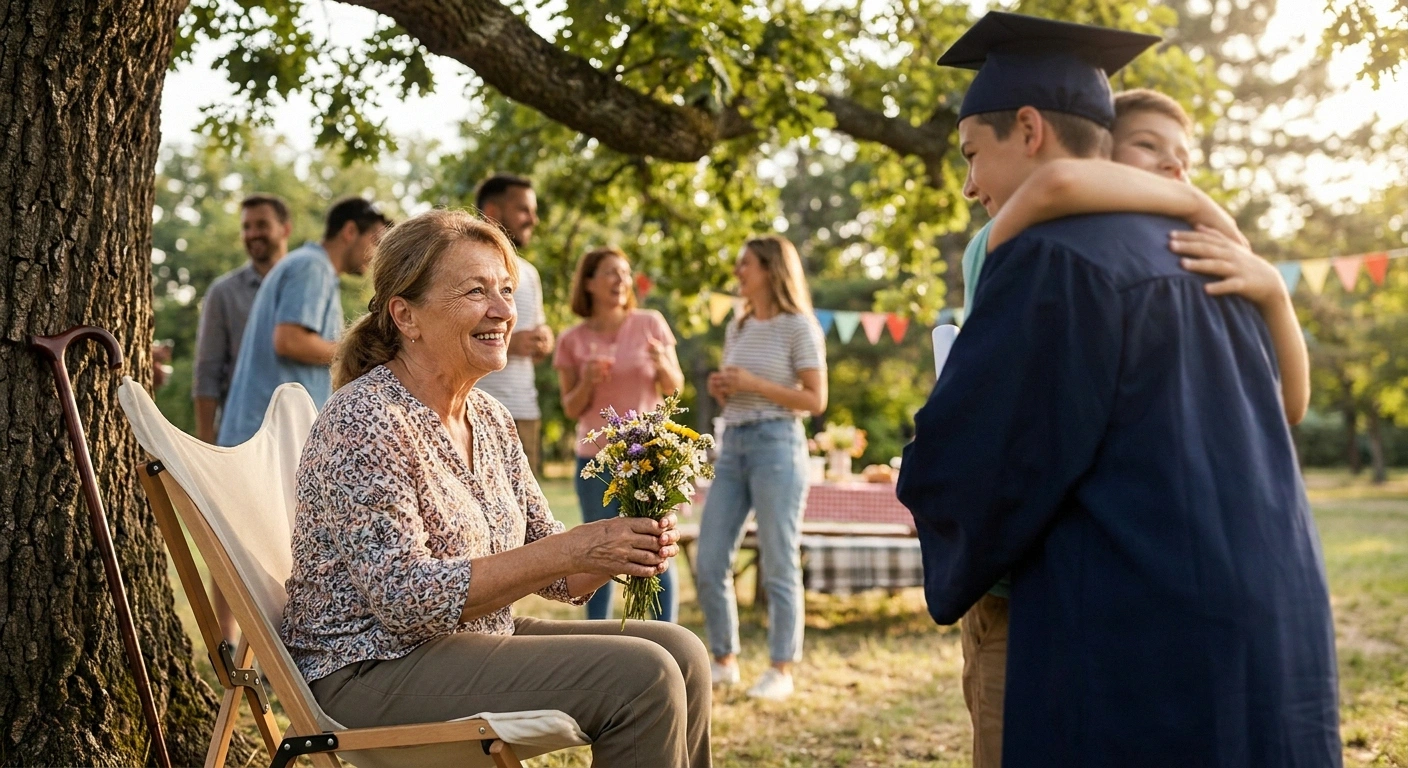
- A folding cane-seat (TrekStool, FlipStick) if the event is outdoor or seating is uncertain — looks like an elegant walking cane that opens into a small seat. I have brought one to two outdoor weddings and a graduation and no one has remarked on it except to ask where to buy one.
- A car key so you can step out to the car for a real sit-down if needed
- Capsaicin cream or lidocaine patches if those are part of your usual routine
During the Event — Micro-Strategies That Add Up
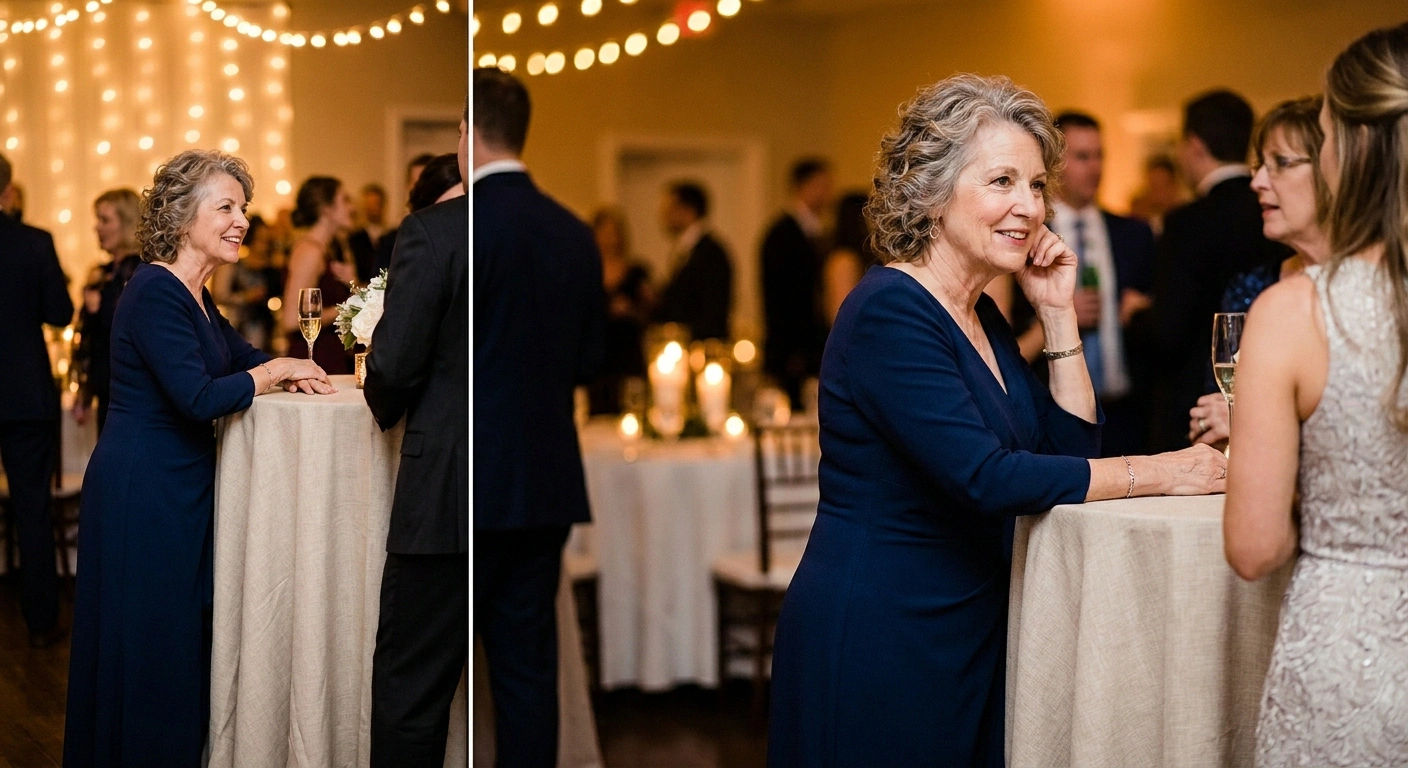
Once you are at the event, a few habits stretch your standing tolerance considerably.
Five Invisible Habits That Stretch Standing Tolerance
Scout Your Rest Bases on Arrival
The first three minutes after walking in: identify two places you could discreetly sit if needed. The chairs along the wall in the reception room. The bench in the foyer. The car. The pew at the back. Knowing these are there reduces the anxiety that makes standing feel worse — and means you can move toward one without a scene if the moment comes.
Shift Constantly, Almost Invisibly
The damage of “standing” is mostly the damage of “standing still.” Shifting weight foot to foot every fifteen or twenty seconds, gentle ankle circles in your shoes, subtle calf raises during a long conversation — all of these keep blood moving and reduce the static pressure on weight-bearing nerves. Done casually, none of it is visible to the people around you.
Find a Wall, a Pillar, a Counter
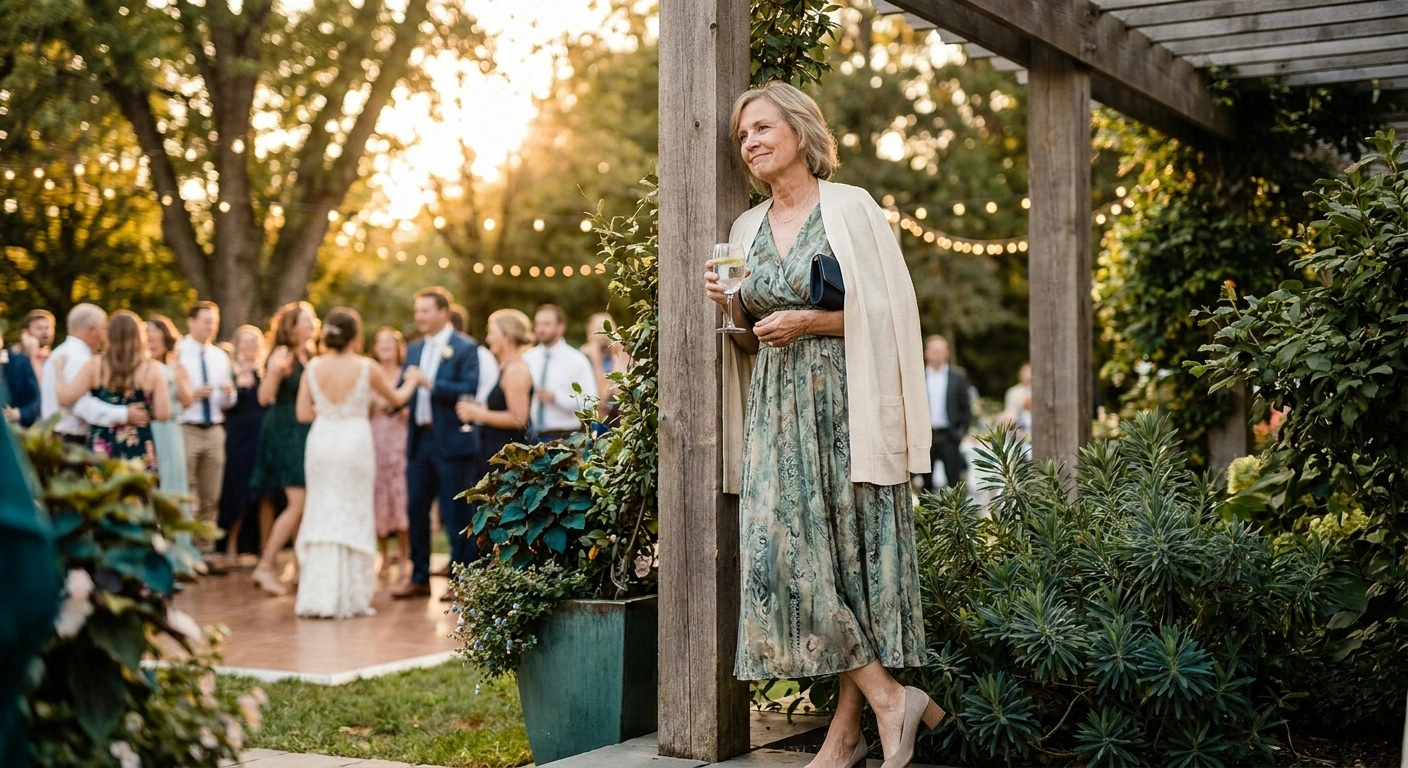
Leaning lightly against a stable surface during a long ceremony or speech changes the load on your legs dramatically. Look for the perimeter of any room and choose your spot near a wall or pillar. At weddings, the back row often has more leaning options than the front. At graduations, the side aisles let you step out and lean briefly without disturbing anyone.
Use the Surface to Your Advantage
If you can choose, stand on carpet, grass, or rubber matting rather than tile, marble, or concrete. The softer surface absorbs shock and reduces the pounding that travels up through neuropathic feet. At outdoor receptions, the lawn is your friend; at indoor venues with hard floors, the carpeted areas (often near the entrance or by the rugs) are gentler.
Take Real Breaks, Without Drama
Every twenty or thirty minutes, find an excuse to sit for five. The restroom (sit on a bench in a women’s lounge area for two extra minutes). The bar (perch on a stool while ordering). A conversation with someone who is also seated. Stepping out to “make a call” and sitting in a quiet hallway. None of these reads as you struggling — they read as you being present. The break is the gift you give your feet.
Watch the Alcohol
Alcohol makes neuropathy symptoms worse for several reasons: it is mildly neurotoxic in regular doses, it dehydrates, it impairs balance (a real fall risk for someone with reduced foot sensation), and it can interact with neuropathy medications. One glass at a wedding toast is usually fine. Three drinks across the evening will often make the next day painful. Our guide to neuropathy and alcohol limits covers the longer story.
Eat the Real Meal
If food is served, eat it. Skipping the meal to look polite or because nothing on the menu seemed appealing is the fast track to a low-blood-sugar flare halfway through the reception. A small plate of something substantive — protein and complex carbs more than dessert — keeps your nerves on better behavior for the rest of the night.
The Scripts That Make Conversations Easier
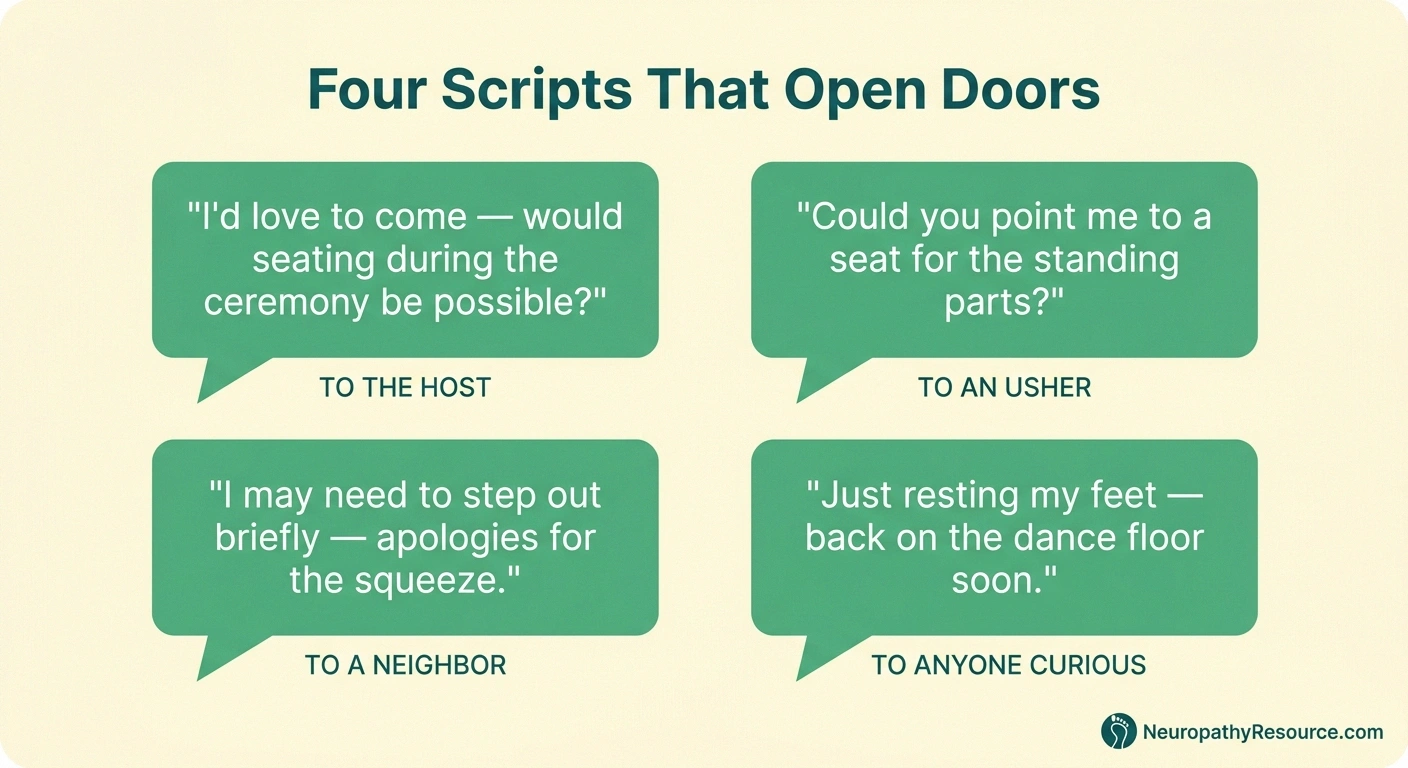
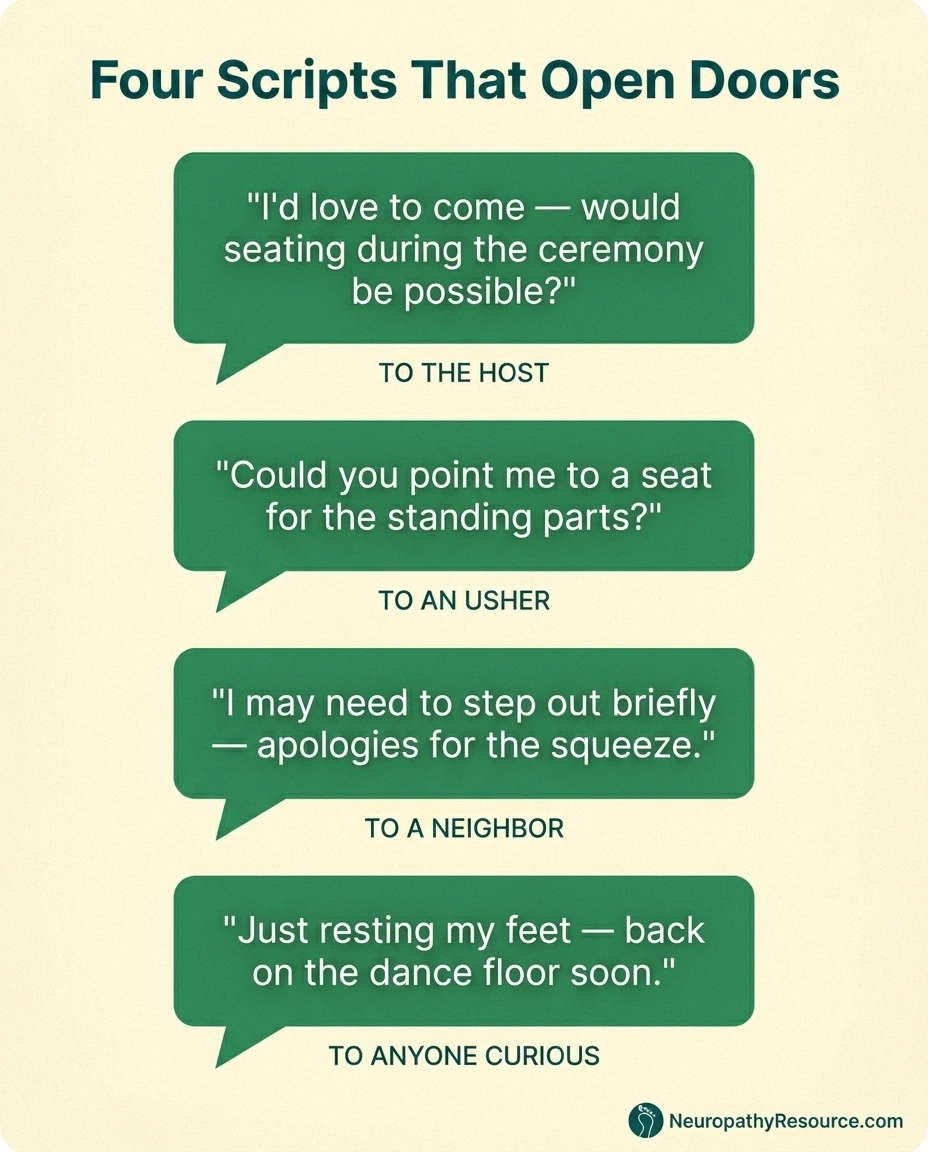
These are short, polite phrases that have done a lot of work for me and others in our group:
- “I’d love to come — would it be possible to ask about seating during the ceremony?”
- “Could you point me to a seat where I can sit during the standing parts if I need to?”
- “I may need to step out briefly during the service — apologies in advance for the squeeze.”
- “Just resting my feet for a minute — I’ll be back on the dance floor soon.”
- To the host before RSVP: “I’d love to come. Would it be possible to ask about seating for the ceremony? I have a condition that makes long standing hard.”
- To an usher at a religious service or wedding: “Could you point me to a seat where I can sit during the standing parts if I need to? Thank you.”
- To a pew or row neighbor: “I may need to step out briefly during the service — apologies in advance for the squeeze.”
- To a family member who is helping coordinate: “If you see me looking like I need a chair during the reception, would you grab one for me? I’ll be discreet, but I might need a hand.”
- To anyone curious why you’re sitting: “Just resting my feet for a minute — I’ll be back on the dance floor soon.” (No further explanation is owed.)
The thing I notice is that almost no one minds, almost no one judges, and many people are quietly grateful you said something because they were uncomfortable too.
Special Cases by Event Type
Weddings
The ceremony is the highest-standing-load portion at most weddings. Many ceremonies last 20-45 minutes and include several “please stand” moments. Sit during the seated portions, stand if you can during the ceremonial standing moments, and excuse yourself to the back if you need to. Receiving lines are the second hardest part — they involve standing in one place for a long time. If you can attend the ceremony and skip the receiving line, that is often the right trade. The reception itself is more forgiving because chairs are usually plentiful.
Event-Type Quick Guide
Funerals and Memorial Services
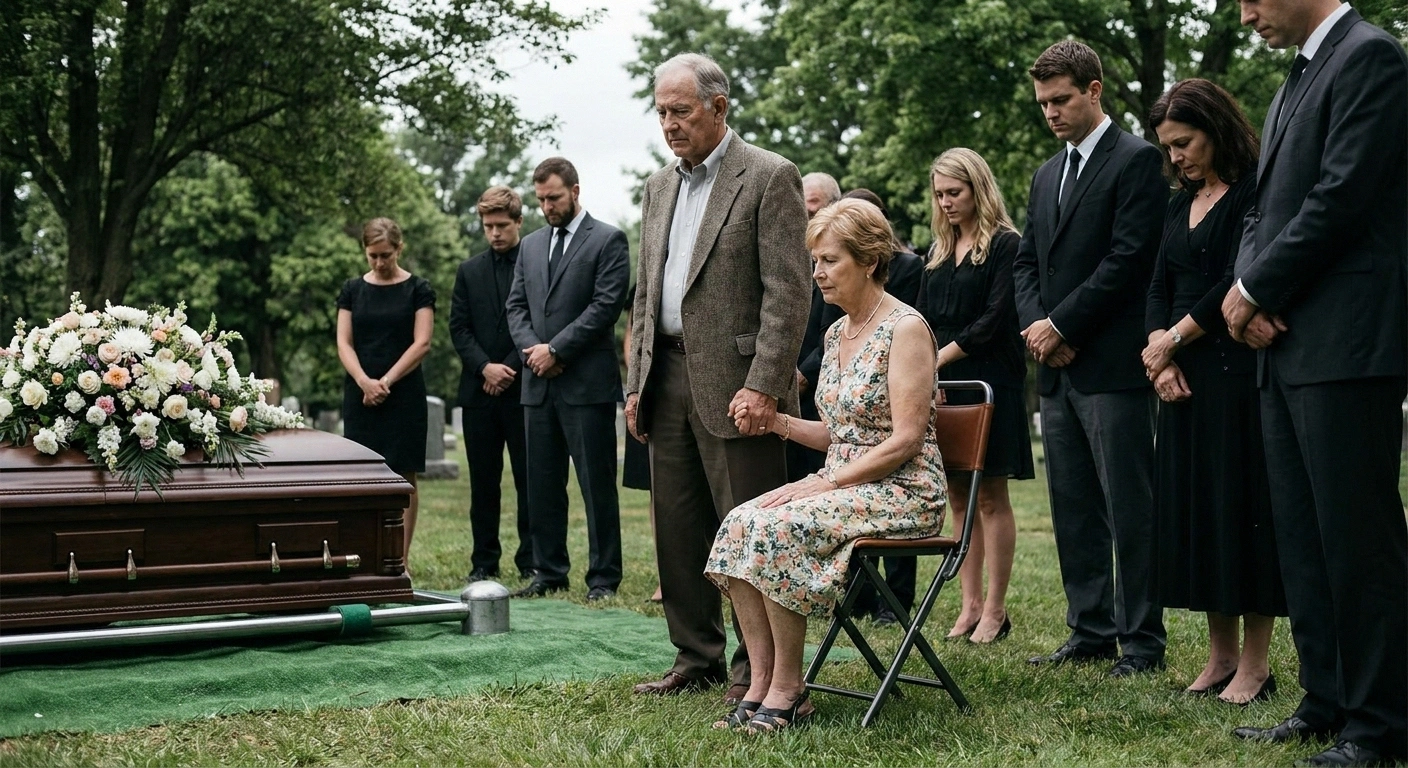
These are the events most worth being honest with yourself about. Bring whoever can sit with you. Take the seat that is offered without apology. If standing during a graveside service is too much, sitting on a folding cane-seat or remaining in the car with a view is a real and respected option. Our guide to attending church and worship services with neuropathy covers many of the same situations.
Concerts
Choose seated tickets when available. For seated venues, mezzanine or balcony seats often offer slightly more legroom and easier exit access than orchestra. For general-admission shows, arrive early enough to claim a wall, a railing, or a spot near a bar with stools. Bring earplugs that don’t compromise sound quality (musician’s earplugs) so you can stay engaged without sensory overload, which makes pain harder to manage.
Religious Services
Most clergy and ushers can quietly direct you to a pew where you can remain seated during the standing portions. Many congregations have explicit “stand as you are able” language; the implicit understanding is that you should not feel obligated to stand. Aisle seats let you step out for a longer break if needed.
Graduations
Bring a stadium cushion for the hard chairs. Identify the bathroom and the back-of-arena standing rail before the ceremony starts. Plan to skip the receiving-line portion if your graduate’s school does one — they will understand. Two hours in fixed seating with one ceremonial “rise to honor” moment is far gentler than two hours of true standing.
Outdoor Events on Grass
Grass is gentler than concrete but harder to walk on safely. Bring a wider-base shoe than usual. A folding cane-seat is especially valuable here. Sunglasses and a hat reduce sensory load. If it is hot, hydration and shade become much more important than at indoor events.
After the Event — The Recovery That Buys You the Next One
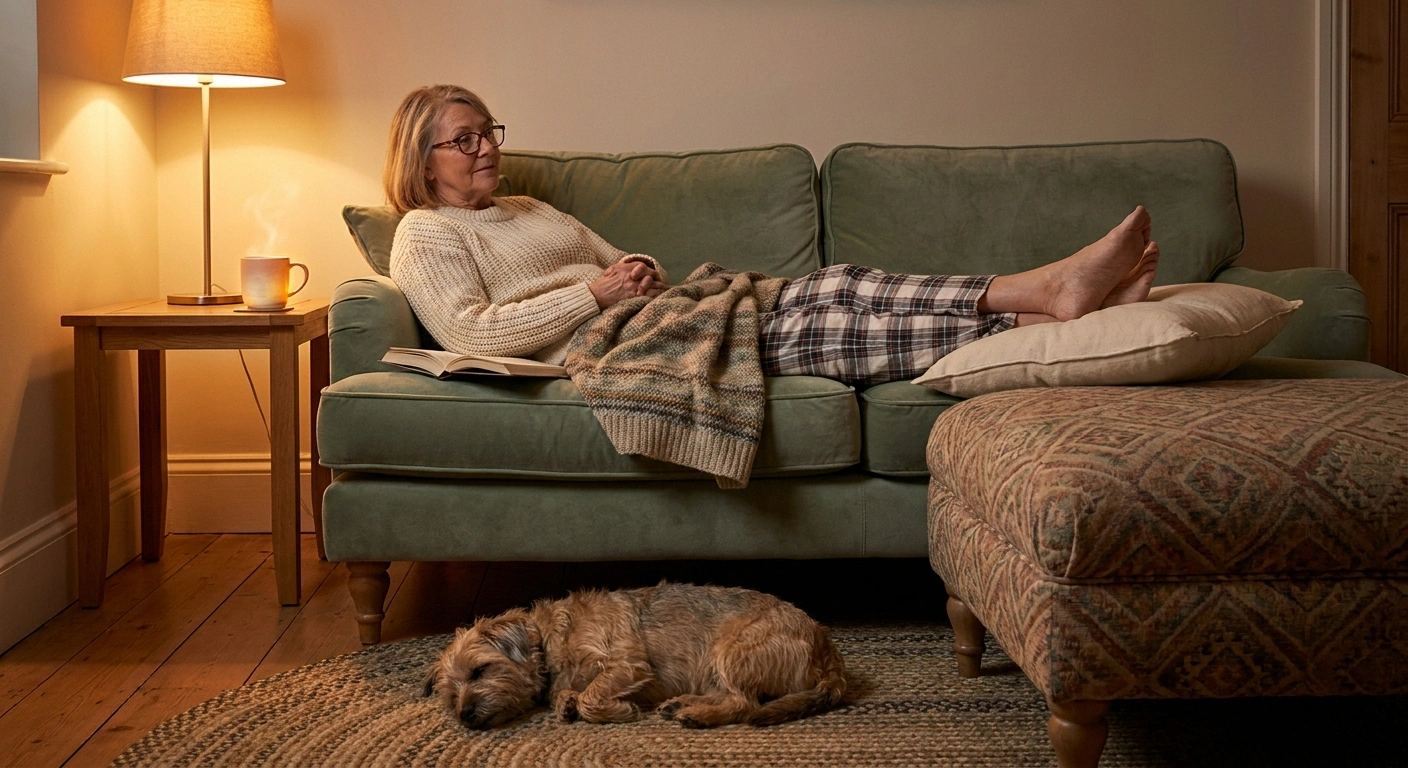
What you do in the hours and the day after an event determines whether you pay the price for two days or for two weeks.
The Recovery Routine That Buys You the Next Event
- Elevate your legs for 20 to 30 minutes within an hour of getting home. Couch, ottoman, pillows under your calves.
- A warm bath (kept below 100°F if your neuropathy is diabetic — temperature sensation is unreliable) eases the muscle tightness that accompanies a long standing day. Our guide to warm baths for neuropathy covers when these help and when they don’t.
- Gentle stretching — calves, hamstrings, ankle circles. Five minutes. The point is to release tension, not to “exercise.”
- A scheduled-quiet next day. No errands, no other commitments. Your body did a thing; let it recover.
- A TENS unit or foot massage for the early symptoms of a flare if those are part of your usual toolkit. Our guides to TENS units for neuropathy and foot massage cover how to use these well.
- A note in your symptom log. What worked, what didn’t, what you would do differently. Our guide to keeping a neuropathy symptom diary includes a template that makes this easy to capture.
The Permission Slip Nobody Hands You
You are allowed to skip events that you cannot do safely. You are allowed to attend only the part that fits — the ceremony but not the reception, the wake but not the burial, the first hour of the party. You are allowed to leave when your body says it is time, even if the cake has not been cut. The people in our lives who love us mostly want us present and well, not present and suffering. Showing up partially is still showing up.
And you are allowed to plan ruthlessly for the events that matter — the wedding, the graduation, the once-a-year reunion — saving your bandwidth so that you can be fully there when it counts. Pacing is not avoidance. Pacing is how you keep showing up over the long run.
Frequently Asked Questions
How can I stand longer at events with neuropathy?
Three things help most: supportive cushioned footwear with good orthotic support, shifting weight constantly rather than standing still, and finding a wall or pillar to lean against discreetly. Eating a real meal beforehand, staying hydrated, and limiting alcohol all extend your standing tolerance. Taking a sit-down break every 20-30 minutes — even just for five minutes — resets your feet and prevents the slow build of fatigue that leads to a flare.
What shoes are best for weddings with neuropathy?
Cushioned dress shoes with a low block heel (no more than 1 to 1.5 inches), a stable supportive sole, and room for an orthotic insole. Brands like Vionic, Clarks Unstructured, Cole Haan with rubber soles, Naturalizer, and Mephisto make dressy options that protect your feet. Never wear shoes for the first time at a wedding — break them in for at least three or four days first. Bringing a backup pair of comfort shoes for the reception is a worthwhile insurance policy.
Is it rude to bring a folding chair or cane-seat to a wedding ceremony?
Almost never. A modern folding cane-seat looks like an elegant walking aid; most guests will not even notice it, and the few who do will assume you have a medical reason — which you do. If you are concerned, mention it quietly to the host or wedding coordinator in advance. They will almost always be supportive and may even suggest a location where you can use it without obstructing the view.
How do I ask a host about seating without seeming like a difficult guest?
Frame it as a logistical question, not a complaint: “I’d love to come — would it be possible to ask about seating during the ceremony? I have a medical condition that makes long standing hard.” Most hosts genuinely want their guests to be comfortable and will take the question as a sign of your wanting to be fully present, not as an inconvenience. Asking in advance is far better than discovering the problem on the day.
What should I do if my neuropathy flares during an event?
Find a place to sit immediately — that bench in the foyer, a chair against the wall, the car. Take any rescue or as-needed medication that is part of your routine. Drink water. Eat something if low blood sugar might be a factor. If the flare is severe, leave early without apology; your body’s signal is more important than the social etiquette of staying. A brief stepping-out break of even ten minutes can sometimes reset you enough to return for the rest of the event.
Can compression socks help with standing at events?
Often, yes. Light compression (15-20 mmHg) reduces the swelling and pooling of fluid in the lower legs that builds during prolonged standing, and many people with neuropathy find it makes a meaningful difference in evening symptoms. Compression socks come in styles that work under dress slacks and longer dresses. If you have not used them before, try them on a test standing day first to make sure the compression level is comfortable.
Should I avoid alcohol at events because of my neuropathy?
You do not have to avoid it completely, but moderation matters more for people with neuropathy than for others. Alcohol is mildly neurotoxic, impairs balance (a real fall risk with reduced foot sensation), can interact with neuropathy medications, and tends to worsen symptoms the next day. One drink with a meal at a wedding toast is usually fine; multiple drinks across an evening often guarantees a difficult next day.
How long should I plan to rest after a big standing event?
Most people in our group plan for a quiet next day after any event with more than 30 minutes of cumulative standing — no errands, no other commitments, time to elevate legs, gentle stretching, and a real rest. For longer or more demanding events (a multi-hour wedding, an outdoor graduation, a memorial with a graveside service), expect to need a quiet day before and a quiet day after. Recovery time is not waste; it is what makes the next event possible.
About the Author