When your feet hurt, when balance feels uncertain, when every step on a hard floor sends unwelcome signals shooting up your legs — the idea of exercising can feel not just unappealing but genuinely intimidating.
Here’s something I’ve come to believe deeply after years of navigating neuropathy: movement is medicine. Not the intense, demanding kind of movement that requires perfect feet and perfect balance. The gentle, consistent, accessible kind that you can do from a chair — and that your nerves will genuinely thank you for.
Chair exercises aren’t a consolation prize for people who “can’t really exercise.” They’re a legitimate, evidence-backed approach to maintaining nerve health, improving circulation, strengthening the muscles that keep you stable, and reducing the severity of neuropathy symptoms over time. And the fact that they require no special equipment, no gym membership, and no putting your weight on painful feet makes them one of the most practical tools in the neuropathy management toolkit.
Let me walk you through how to get started — including the specific exercises that are most beneficial, how often to do them, and how to do them safely.
Why Exercise Matters for Neuropathy
Before we get into the movements themselves, it’s worth understanding why this matters — because understanding the “why” makes it much easier to stay motivated.
Key Takeaway
You don’t need to stand, go to a gym, or push through foot pain to get real exercise benefits with neuropathy. Ten to fifteen minutes of daily chair exercises improves circulation, strengthens muscles, and supports nerve health — from the comfort of your own home.
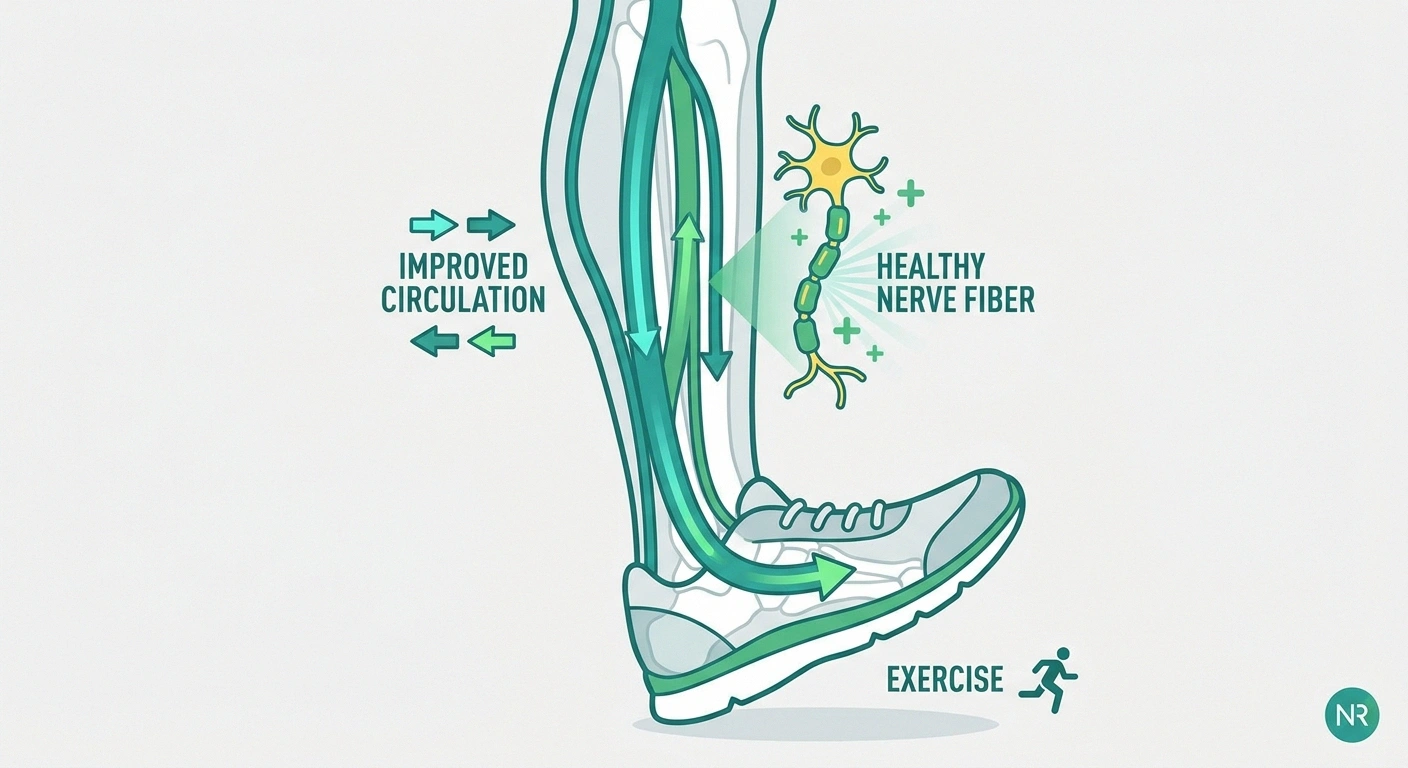
Neuropathy is, at its core, a problem of nerve communication. Damaged nerves don’t transmit signals correctly. But exercise influences nerve health in several direct ways:
- Improved circulation: Peripheral nerves depend on blood flow for oxygen and nutrients. Movement — even gentle seated movement — pumps blood into the legs and feet and keeps small blood vessels healthier. Poor circulation is both a contributor to neuropathy progression and a consequence of it; exercise helps interrupt that cycle.
- Reduced inflammation: Chronic low-grade inflammation contributes to nerve damage. Regular exercise is one of the most effective anti-inflammatory interventions available, and it works without the side effects of medication.
- Muscle strengthening: Neuropathy often weakens the small muscles of the feet and lower legs that provide support and stability. Strengthening these muscles reduces fall risk and improves your ability to walk with confidence.
- Proprioception training: Neuropathy impairs your ability to sense where your body is in space — your body’s “GPS.” Specific exercises can help train other sensory systems to partially compensate for this loss.
- Nerve regeneration support: Research suggests that exercise may actually support nerve regeneration by increasing nerve growth factor (NGF) — a protein that helps peripheral nerves grow and maintain themselves.
The research backing exercise for neuropathy is solid. The Foundation for Peripheral Neuropathy recommends it as a core component of management — not as a nice-to-have, but as a genuine therapeutic intervention. Studies in diabetic neuropathy specifically have shown that regular exercise can slow progression and, in some cases, improve nerve function scores.
Getting Started Safely
Before beginning any exercise program, check in with your doctor or physical therapist — especially if you have significant balance issues, active foot ulcers, severe numbness, or cardiovascular conditions. For most people with neuropathy, gentle chair exercises are safe; for some, there may be specific modifications needed.
Research Says
Studies in diabetic peripheral neuropathy show that regular aerobic exercise — even low-intensity forms — can improve intraepidermal nerve fiber density (a measure of small nerve fiber health) and reduce symptom severity over 10–16 weeks. Consistency matters more than intensity.
A few principles to keep in mind:
- Always wear footwear during exercises, even while seated. Numbness means you may not notice if you scrape or injure your foot during movement.
- Start with fewer repetitions than you think you need and build gradually. Consistency over weeks matters far more than intensity in a single session.
- Stop if you feel sharp pain that’s different from your usual neuropathy sensations. Some tingling or burning during exercise is normal; new sharp pain is a signal to pause.
- Use a sturdy chair without wheels for seated exercises. Your feet should be able to reach the floor comfortably.
- 10–15 minutes daily is a great starting point. You can work toward 20–30 minutes as you build comfort and endurance.
The Chair Exercise Routine
The exercises below are organized to work progressively from the feet upward. Do them in sequence as a routine, or choose individual exercises to focus on areas of greatest need.
Before You Start: Safety Checklist
1. Ankle Circles
What it does: Improves ankle mobility and circulation to the feet. Helps maintain range of motion in a joint that neuropathy often stiffens.
How to do it: Sit comfortably with your back supported. Cross one ankle over the opposite knee. Slowly rotate your foot in a large circle — 10 rotations clockwise, then 10 counterclockwise. Switch feet. Keep the circles slow and deliberate.
Repetitions: 10 each direction, each foot
2. Toe Flexion and Extension (Dorsiflexion)
What it does: Works the muscles that flex and extend the foot, improves ankle flexibility, and sends blood flow to the toes.
How to do it: Sit with feet flat on the floor. Keeping your heels on the floor, slowly flex your feet and toes upward as far as comfortable — hold for 2 seconds. Then push them down (plantarflex) as far as comfortable — hold for 2 seconds. Repeat in a slow, controlled rhythm.
Repetitions: 15–20 times per foot
3. Toe Spreads
What it does: Activates the small intrinsic muscles of the feet — the muscles most affected by neuropathy-related weakness.
How to do it: Sit with feet flat on the floor. Keeping your feet relaxed, try to spread your toes as wide apart as possible — think of fanning them outward. Hold for 3–5 seconds, then relax. This may feel difficult at first, especially if your toes have become less mobile; that’s normal.
Repetitions: 10 times per foot
4. Towel Scrunches
What it does: Strengthens the intrinsic foot muscles and improves dexterity and grip in the toes — functions that neuropathy often diminishes.
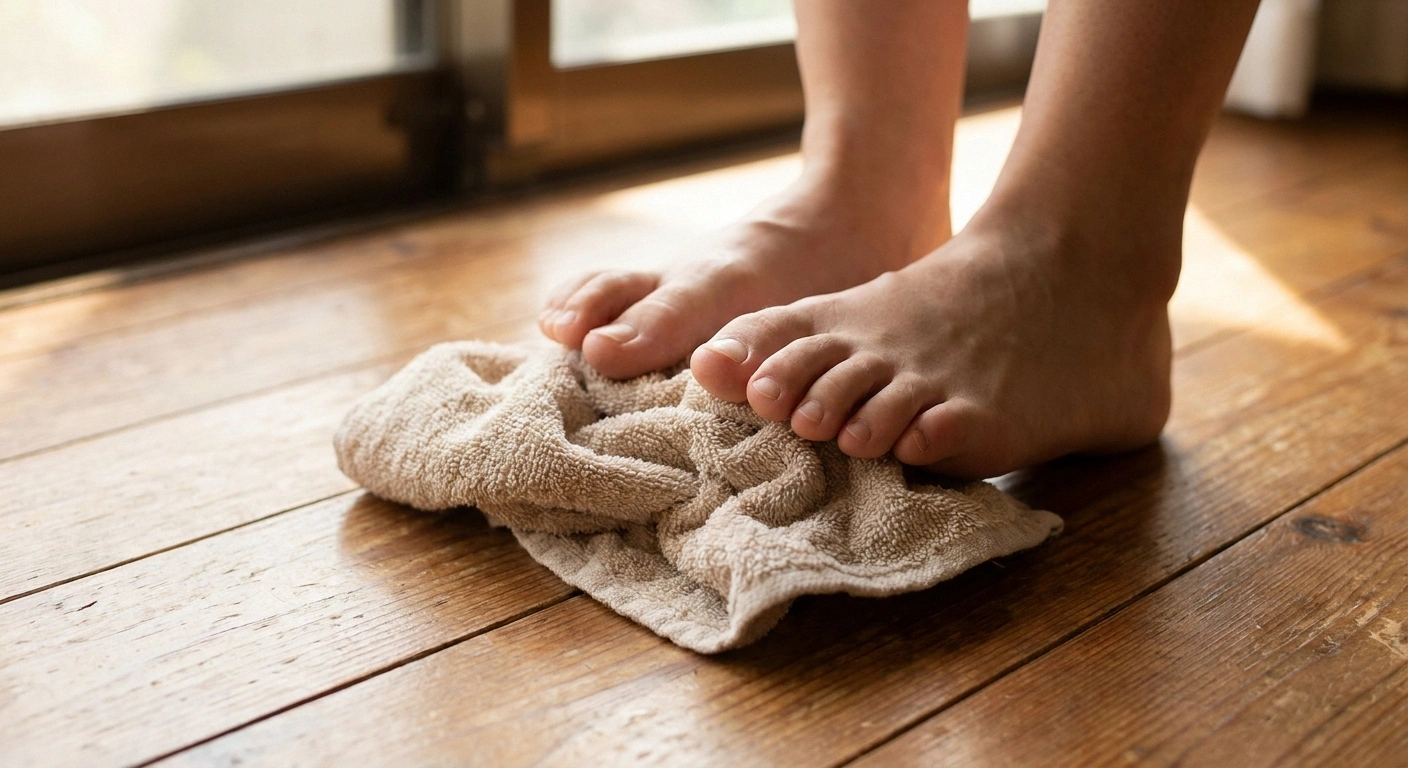
How to do it: Place a small hand towel flat on the floor in front of your chair. Put one foot on the towel. Using only your toes — not your leg — try to scrunch the towel toward you by curling your toes. Then spread the towel back out and repeat. Work one foot at a time.
Repetitions: 10 scrunches per foot
5. Seated Heel Raises
What it does: Strengthens the calf muscles (gastrocnemius and soleus) which are critical for walking stability and ankle strength. Calf raises also powerfully pump blood upward from the lower legs, which helps with circulation.
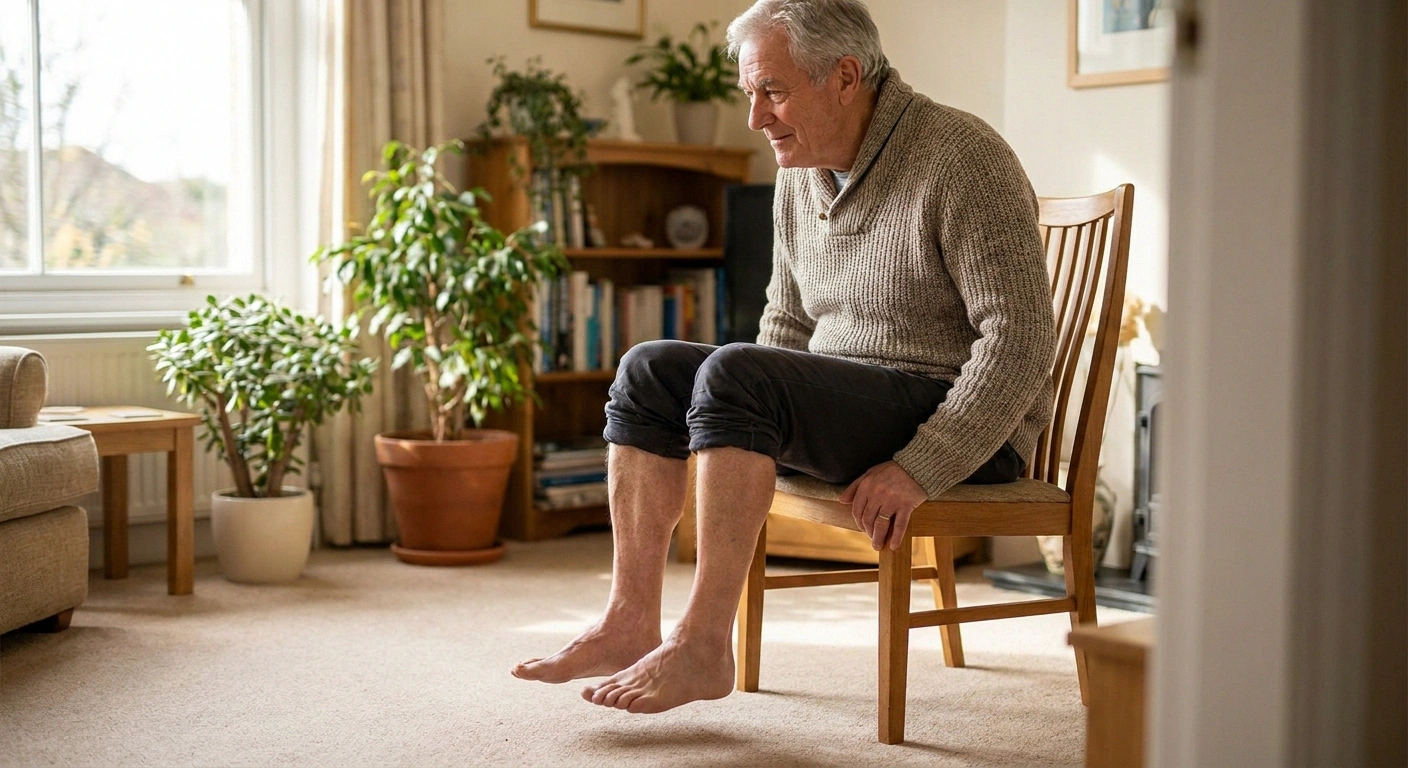
How to do it: Sit with both feet flat on the floor, feet hip-width apart. Press through the balls of your feet to lift both heels as high as comfortable. Hold briefly at the top. Lower slowly. Maintain upright posture — avoid leaning forward.
Repetitions: 15–20 times
6. Seated Marching
What it does: Gets hip flexors and thigh muscles working, improves circulation throughout the lower body, and provides light cardiovascular benefit. Also helps with coordination.

How to do it: Sit tall in your chair. Alternately lift each knee upward toward your chest — like a slow march in place. Lift to a comfortable height, hold briefly, then lower and switch sides. Add a light arm swing for additional benefit if comfortable.
Repetitions: 20–30 total (10–15 per leg), or march continuously for 1–2 minutes
7. Seated Leg Extensions
What it does: Strengthens the quadriceps (front thigh) muscles, which are essential for standing from a seated position, climbing stairs, and walking stability.
How to do it: Sit tall with feet flat on the floor. Slowly straighten one leg until it’s parallel to the floor (or as far as comfortable). Hold for 2–3 seconds, feeling the contraction in the front of the thigh. Lower slowly. Alternate legs.
Repetitions: 10–15 per leg
8. Seated Hip Abduction
What it does: Strengthens the outer hip muscles (hip abductors) that stabilize your gait and help prevent falls when you step sideways or navigate uneven surfaces.
How to do it: Sit toward the front of your chair. Keeping both feet on the floor, slide one foot outward to the side, pressing against the floor as you go — you should feel the outer thigh and hip working. Hold briefly, then slide back. Alternate sides.
Repetitions: 12–15 per side
9. Calf Stretch
What it does: Stretches the calf muscles and Achilles tendon — structures that often tighten with neuropathy and contribute to gait problems and pain.
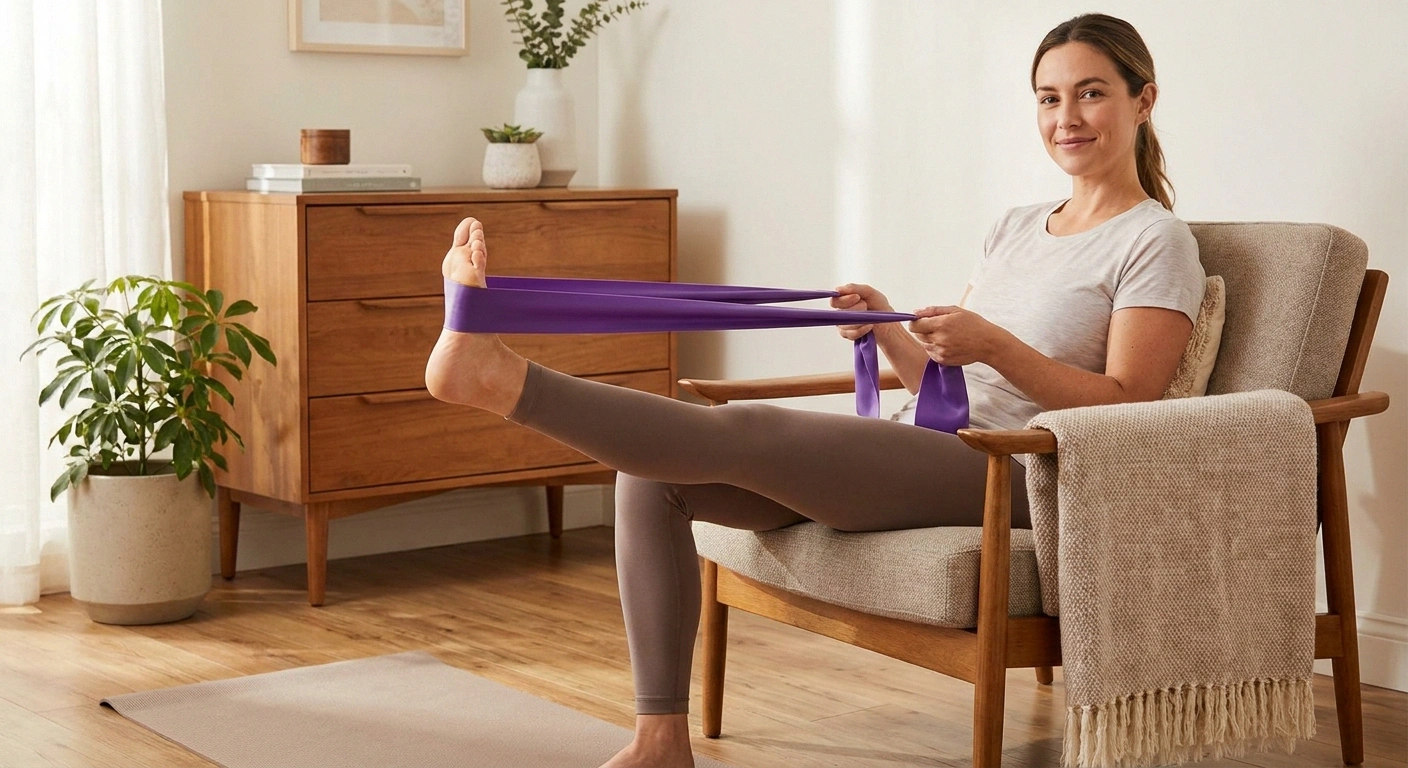
How to do it: Loop a towel or resistance band around the ball of one foot. Sit with that leg extended in front of you (not crossed). Gently pull the towel toward you so your toes are drawn back toward your shin. Hold for 20–30 seconds, feeling the stretch along the back of the lower leg. Switch feet.
Repetitions: Hold 20–30 seconds, 2–3 times per foot
10. Hand and Wrist Exercises (for Upper Extremity Neuropathy)
If your neuropathy affects your hands, add these seated hand exercises:
- Finger spreads: Spread fingers wide, hold 3 seconds, then bring together. Repeat 10 times.
- Wrist circles: With arms extended, slowly rotate each wrist in full circles — 10 clockwise, 10 counterclockwise.
- Finger taps: Touch each fingertip to your thumb in sequence (pointer, middle, ring, little) and back again. Improves dexterity and nerve feedback.
- Towel squeeze: Hold a soft rolled towel and squeeze firmly for 3–5 seconds, then release. Repeat 10–15 times per hand.
How Often and How Long
Consistency is far more important than any single long session. For neuropathy management, the research supports daily gentle movement over occasional intense exercise. Here’s a practical framework:
Quick Reference: Chair Exercise Routine
| # | Exercise | Target Area | Reps |
|---|---|---|---|
| 1 | Ankle Circles | Ankle mobility, circulation | 10 each direction, each foot |
| 2 | Toe Flexion/Extension | Ankle flexibility, foot blood flow | 15–20 per foot |
| 3 | Toe Spreads | Intrinsic foot muscles | 10 per foot |
| 4 | Towel Scrunches | Toe strength and dexterity | 10 per foot |
| 5 | Seated Heel Raises | Calf strength, venous pump | 15–20 |
| 6 | Seated Marching | Hip flexors, cardiovascular | 20–30 total or 1–2 min |
| 7 | Leg Extensions | Quadriceps strength | 10–15 per leg |
| 8 | Hip Abduction | Outer hip, gait stability | 12–15 per side |
| 9 | Calf Stretch | Calf flexibility, Achilles | 20–30 sec × 2–3 per foot |
- Beginner: 10–15 minutes, 5 days per week. Focus on 5–6 exercises from the list above.
- Intermediate: 20–25 minutes, daily. Full routine from the list above.
- Advanced: 30 minutes daily. Full routine plus 10–15 minutes of gentle walking if tolerated, or swimming/water therapy as an additional form of exercise.
Many people find morning exercise helpful because it can reduce morning stiffness and set a positive tone for the day. Others prefer late afternoon when muscles are warmer and more flexible. Try both and see what works for you.
If you want to eventually progress toward standing exercises, our guide to the best exercises for neuropathy covers the full spectrum of options at different activity levels.
Complementing Chair Exercise With Other Movement
Chair exercises are a fantastic foundation, but they work best as part of a broader approach to movement:
Exercise Frequency Progression Guide
- Walking: Even short walks make a big difference. Walking helps neuropathy by improving circulation and nerve health — 10–15 minutes at a pace that feels manageable is a great starting point.
- Water exercise: Swimming and water therapy provide resistance training without joint impact and with the added benefit of even gentle water pressure that many people find soothing for sensitive feet and legs.
- Balance training: Once you’ve built some strength with chair exercises, work with a physical therapist on graduated standing balance exercises. Falls are one of the most serious consequences of neuropathy, and balance training directly addresses this risk.
Don’t underestimate the value of everyday movement either: getting up from your chair more frequently, walking to get a glass of water, gently moving through your morning routine — accumulated movement throughout the day adds up in meaningful ways.
Frequently Asked Questions
Can chair exercises actually help reverse neuropathy symptoms?
In most cases, chair exercises will not reverse established nerve damage. However, they can genuinely improve the functional consequences of neuropathy — better circulation, stronger stabilizing muscles, improved balance, and reduced pain and discomfort. Some studies in diabetic neuropathy suggest exercise may slow progression and modestly improve nerve function scores. The realistic goal is management and maintenance of function, not reversal.
10–15 min
of daily chair exercises is a meaningful, achievable starting point — and it adds up significantly over weeks and months
Is it safe to exercise if my feet are numb?
Yes, with precautions. Always wear supportive footwear — never exercise barefoot when you have significant numbness, because you may not notice a scrape or bruise. Inspect your feet before and after exercise. Do not exercise on surfaces with objects that could injure your feet without your noticing. Seated exercises carry lower injury risk than standing exercises for people with significant foot numbness.
My feet burn more during and after exercise. Is that normal?
Increased blood flow during exercise can temporarily intensify burning sensations in people with neuropathy. This is generally normal and usually settles within 30–60 minutes after exercise ends. If the burning is severe, try starting with very gentle, brief sessions and building very slowly. If it persists for hours after exercise or is accompanied by new symptoms, check in with your doctor.
How long before I notice a difference from chair exercises?
Most people notice improved energy and slightly reduced stiffness within the first 2–3 weeks of consistent daily exercise. Meaningful improvement in strength and circulation takes 4–8 weeks of regular practice. Benefits to nerve function, to the extent they occur, take longer — think in terms of months of consistent effort. Don’t measure week to week; measure month to month.
Should I see a physical therapist, or can I do these on my own?
Both approaches have value. Starting with a physical therapist — even just a few sessions — gives you the benefit of personalized assessment and guidance on which exercises are most appropriate for your specific situation. From there, many people successfully continue their routine independently. If your neuropathy is causing significant balance problems, physical therapy is particularly valuable because a PT can design a progressive program that safely challenges your balance without putting you at risk.
About the Author