
Here is something that surprised me when I first learned it: you do not need a diabetes diagnosis for sugar to be damaging your nerves. Many people with neuropathy — including people with “normal” fasting blood sugar — are experiencing nerve damage driven by blood sugar spikes they do not even know they are having. And the mechanism behind it is far more aggressive than most people realize.
In over a decade of running neuropathy support groups, the single most impactful change I have seen people make is getting their blood sugar under control. Not because they were all diabetic — many were not — but because even moderately elevated blood sugar creates a toxic environment for nerves. Let me explain exactly how this works and what you can do about it.
How Blood Sugar Damages Nerves: The Four Pathways
When most people hear “sugar damages nerves,” they think of diabetes. But the truth is more nuanced. High blood sugar injures nerves through at least four distinct biochemical pathways, and understanding them helps explain why blood sugar management is the single most important thing you can do for neuropathy prevention and management.
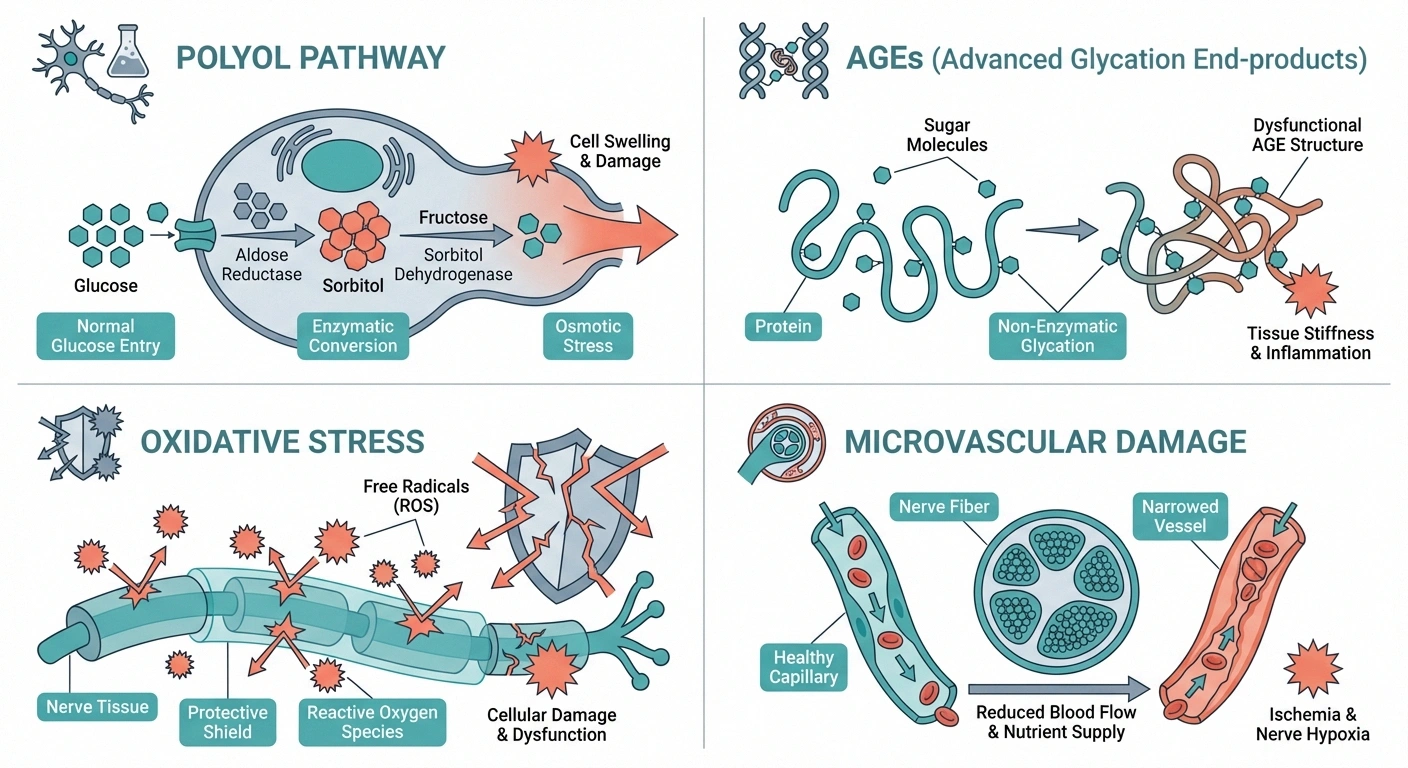
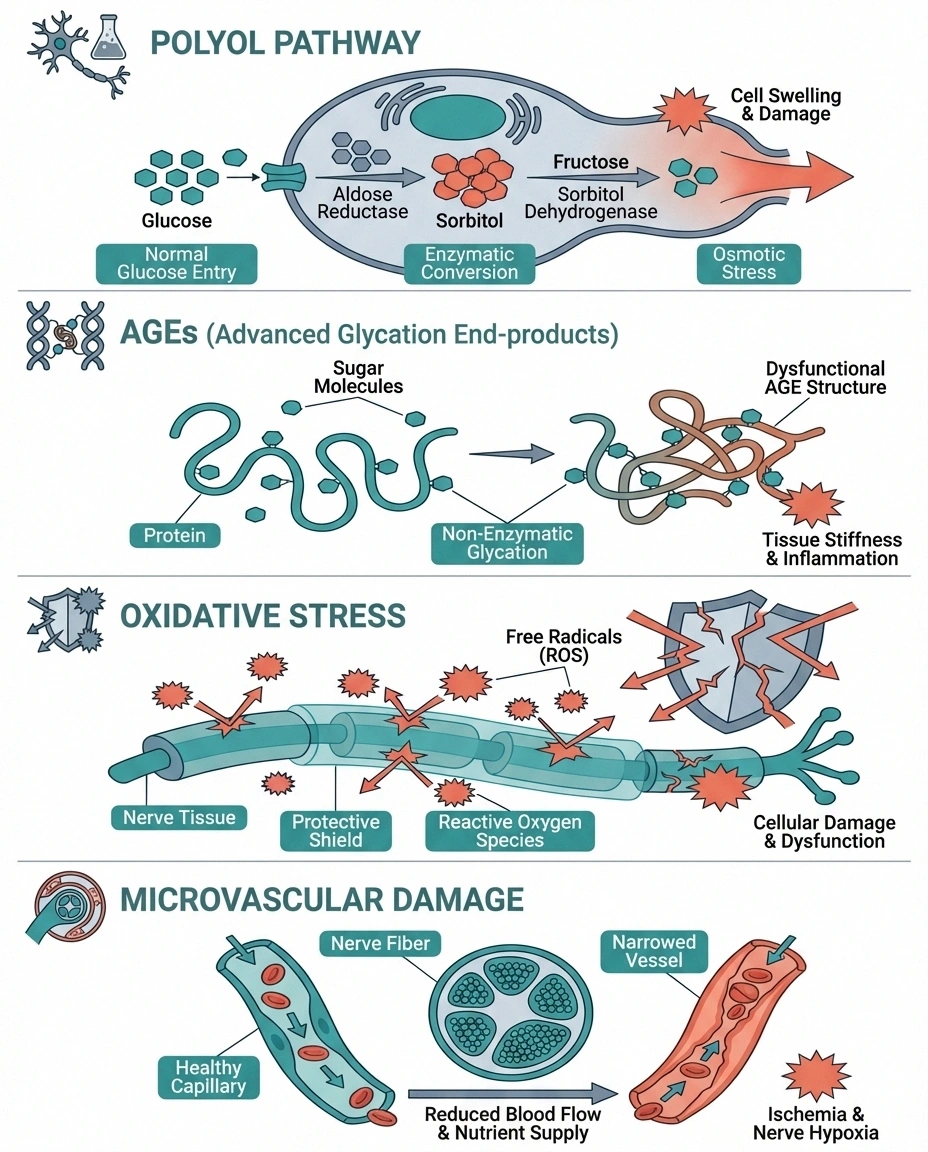
High blood sugar damages nerves through sorbitol accumulation, glycation (AGEs), oxidative stress, and microvascular damage — simultaneously
Pathway 1: The Polyol Pathway (Sorbitol Accumulation)
When blood sugar is high, your nerve cells absorb excess glucose. An enzyme called aldose reductase converts this surplus glucose into sorbitol — a sugar alcohol that nerve cells cannot efficiently export. Sorbitol accumulates inside the nerve, drawing in water through osmotic pressure and causing the nerve to swell. This swelling compresses the tiny blood vessels that feed the nerve, cutting off oxygen and nutrients. Over time, the nerve suffocates from the inside.
Pathway 2: Advanced Glycation End-Products (AGEs)
Excess sugar molecules attach to proteins in a process called glycation — essentially, sugar “caramelizes” the proteins your nerves need to function. This creates toxic compounds called advanced glycation end-products, or AGEs. These AGEs damage the structural proteins in nerve fibers, impair the myelin sheath, and trigger inflammatory responses. AGEs are permanent — your body cannot reverse the glycation process. The damage accumulates with every blood sugar spike.
Pathway 3: Oxidative Stress
High blood sugar dramatically increases the production of reactive oxygen species (free radicals) in nerve tissue. These free radicals overwhelm your body's natural antioxidant defenses — including glutathione and superoxide dismutase — and directly damage nerve cell DNA, proteins, and lipid membranes. This is one reason why antioxidant supplements like alpha-lipoic acid show some benefit for neuropathy: they help counteract this oxidative onslaught.
Pathway 4: Microvascular Damage
Your peripheral nerves depend on a network of microscopic blood vessels (called the vasa nervorum) for their blood supply. Chronically elevated blood sugar damages the endothelial cells lining these tiny vessels, causing them to thicken, narrow, and eventually close. When nerves lose their blood supply, they cannot repair themselves or transmit signals properly. This is the same mechanism that damages the eyes and kidneys in diabetes — but it hits your nerves first because they are the body's most exposed tissue.
You Don't Need a Diabetes Diagnosis to Have Sugar-Related Nerve Damage
This is perhaps the most important message in this entire article. Research has established that nerve damage begins at blood sugar levels well below the diagnostic threshold for diabetes.
The Prediabetes Problem
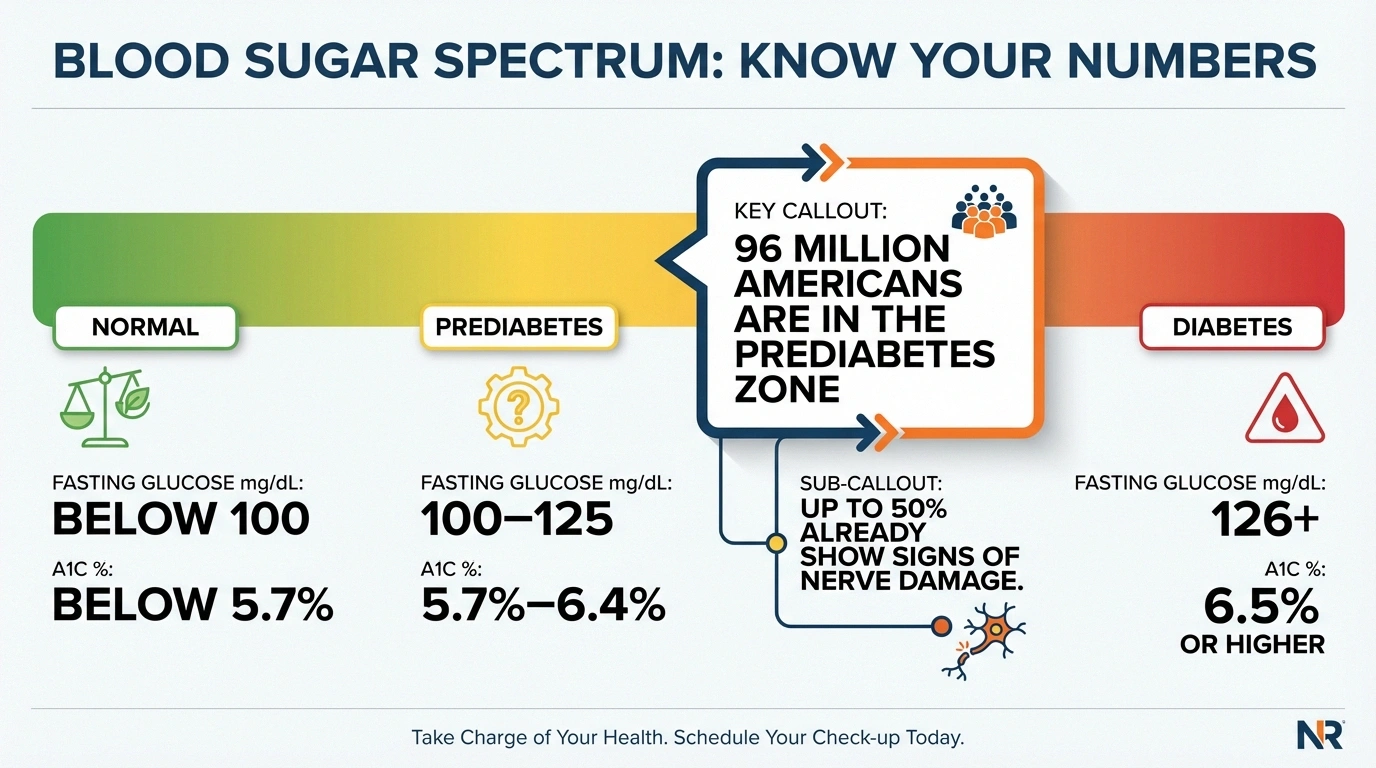
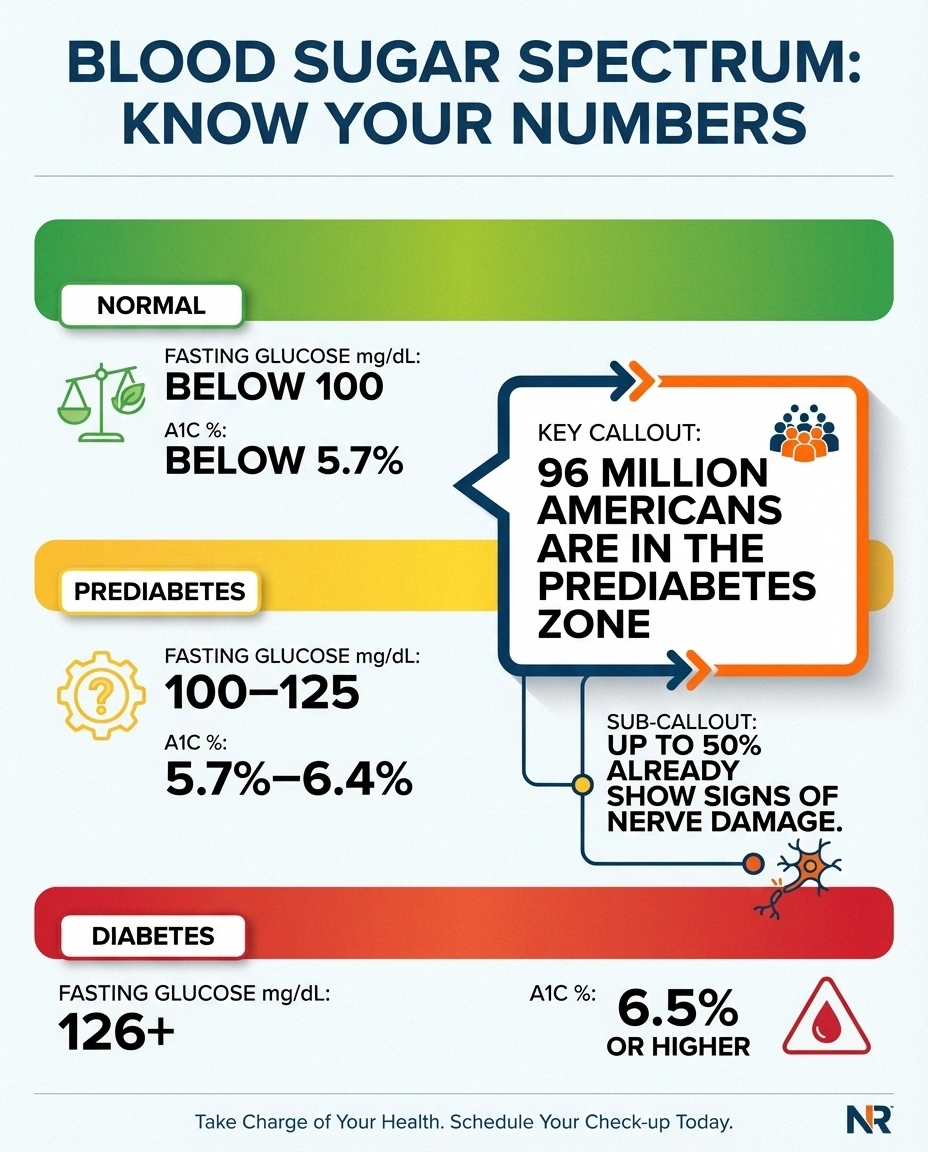
96 million American adults have prediabetes — and up to 50% already show signs of peripheral neuropathy on careful testing. Most don't know they have either condition. A standard fasting blood sugar test can miss the post-meal spikes causing the damage.
A condition called prediabetes — defined as fasting blood sugar between 100 and 125 mg/dL or an A1C between 5.7% and 6.4% — affects approximately 96 million American adults. Many of these people already have early nerve damage without knowing it. Studies have found that up to 50% of people with prediabetes show signs of peripheral neuropathy on careful testing.
Even people with “normal” fasting glucose can experience damaging post-meal blood sugar spikes. Your fasting blood sugar may be a perfectly normal 90 mg/dL, but if your blood sugar rockets to 180 mg/dL after a bagel, that spike is actively damaging nerves. Standard blood tests often miss this pattern because they only measure fasting glucose or an A1C average — neither captures the peaks.
If you have idiopathic neuropathy — meaning no identified cause — asking your doctor for an oral glucose tolerance test (OGTT) may reveal hidden blood sugar problems that a standard fasting test missed. Many cases of “unexplained” neuropathy turn out to have a blood sugar component.
The Blood Sugar Threshold: When Damage Begins
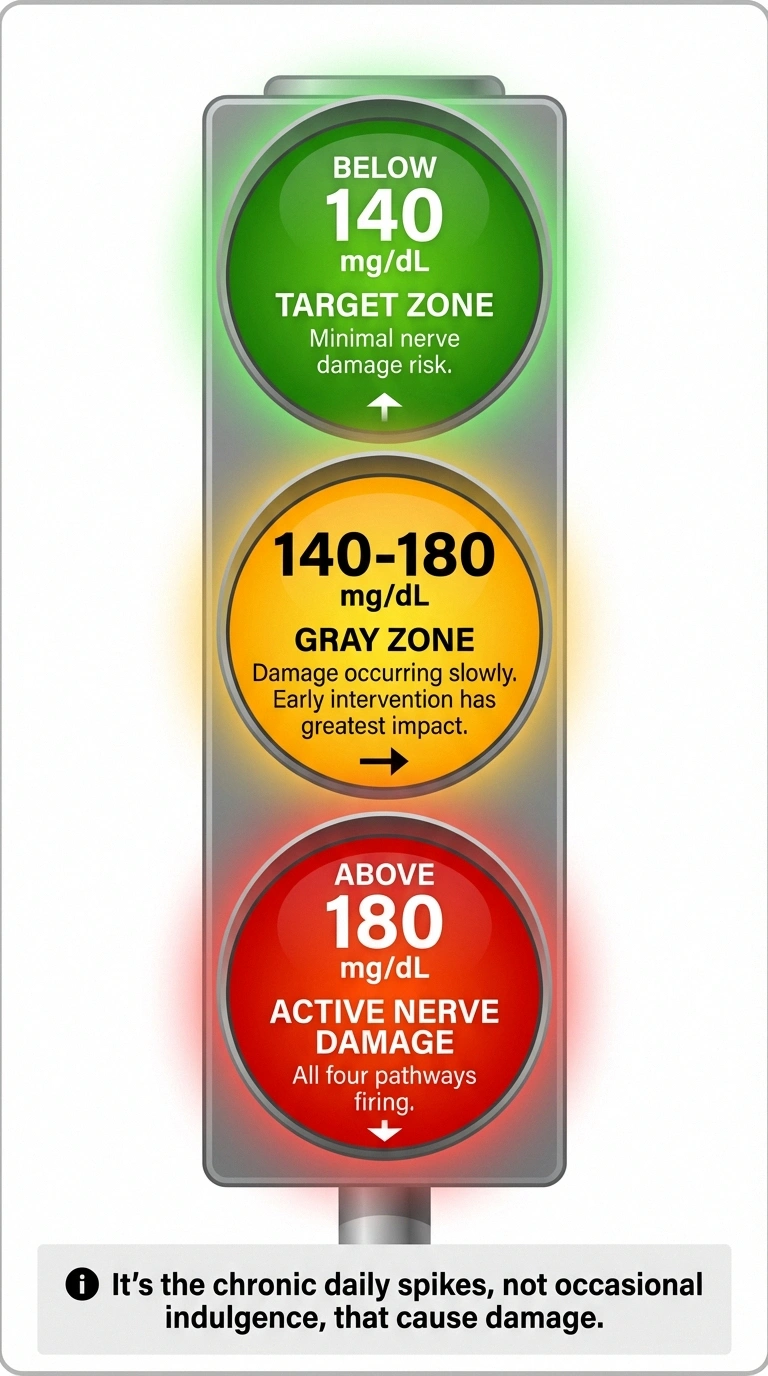
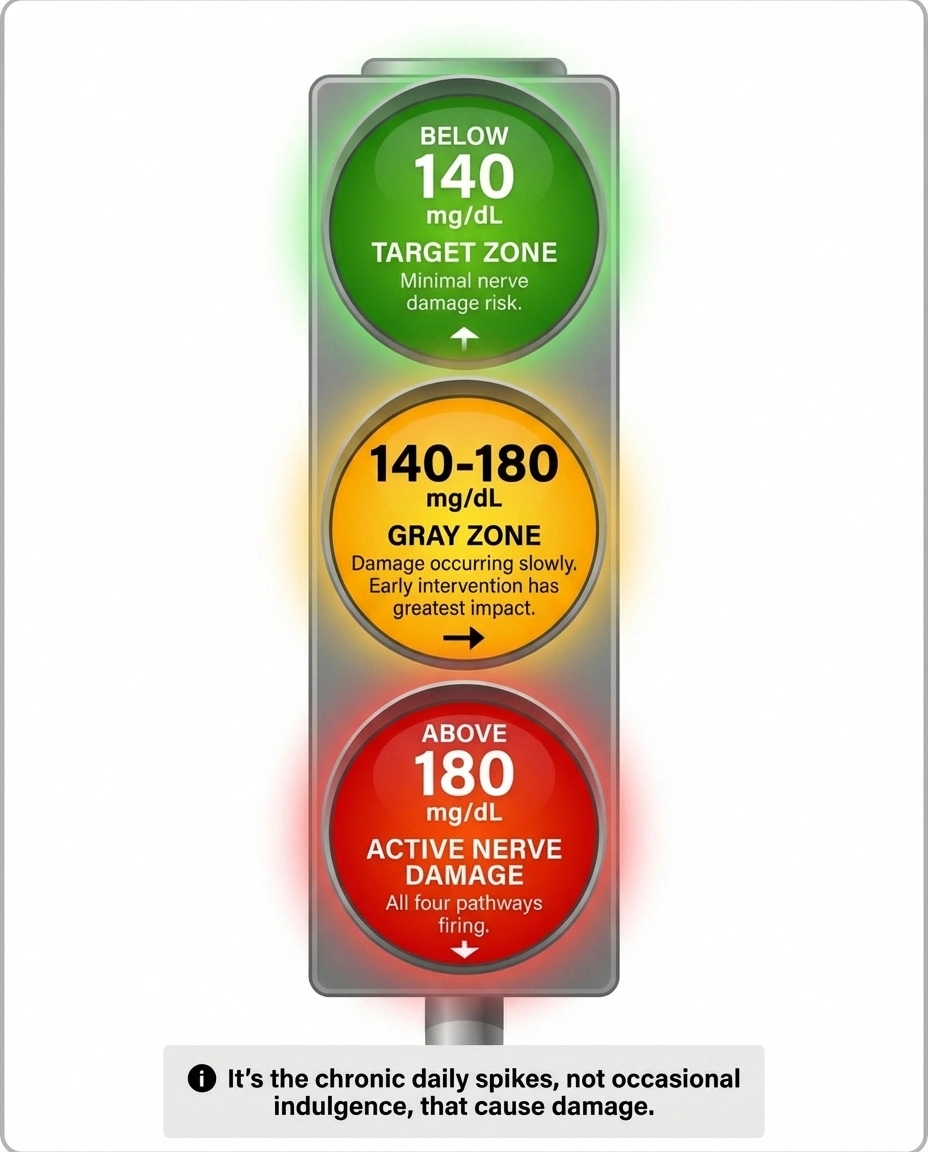
Research suggests that nerve damage risk increases significantly once blood sugar regularly exceeds 140 mg/dL after meals. The CDC notes that anyone with diabetes can develop nerve damage, but the risk increases with duration of elevated blood sugar and with how high levels climb.
Hidden Spikes
Your fasting blood sugar may be normal (90 mg/dL), but if it rockets to 180 mg/dL after a bagel, that spike is actively damaging nerves. Standard blood tests often miss this pattern. Ask your doctor about an oral glucose tolerance test (OGTT) or consider a continuous glucose monitor.
Here is how to think about it practically:
Below 140 mg/dL post-meal: This is the target zone. Nerve damage risk is minimal at this level for most people.
140 to 180 mg/dL post-meal: The gray zone. Damage is occurring, though slowly. This is where prediabetes lives, and where early intervention has the greatest impact.
Above 180 mg/dL post-meal: Active nerve damage territory. At this level, all four damage pathways are firing, and the damage accelerates the longer blood sugar stays elevated.
The key word here is “regularly.” An occasional blood sugar spike from a holiday meal is not going to destroy your nerves. It is the chronic, repeated exposure — daily spikes from high-carbohydrate meals — that creates cumulative damage over months and years.
Which Foods Spike Blood Sugar the Most?
Not all carbohydrates affect blood sugar equally. The glycemic index and glycemic load help predict how different foods will impact your blood sugar, but individual responses vary. Here is what the research and real-world experience consistently show:

The Simple Rule
Eat protein and vegetables first, carbohydrates last. This simple meal-ordering trick can reduce post-meal blood sugar spikes by 30-40% — even when eating the same total amount of food.
Worst offenders: Refined grains (white bread, white rice, pasta, crackers, cereal), sugary drinks (soda, fruit juice, sweetened coffee drinks), sweets and desserts (cookies, candy, cake, ice cream), and starchy processed foods (chips, pretzels, instant mashed potatoes). These foods are rapidly converted to glucose and create sharp blood sugar spikes.
Moderate impact: Whole grains (brown rice, whole wheat bread, oatmeal), starchy vegetables (potatoes, corn, peas), and fruit (especially tropical fruits like bananas and mangoes). These raise blood sugar but more gradually when eaten in reasonable portions.
Minimal impact: Non-starchy vegetables (leafy greens, broccoli, peppers, cauliflower), healthy fats (avocado, olive oil, nuts), protein (chicken, fish, eggs, legumes), and high-fiber foods. These cause little to no blood sugar spike and can actually help blunt the impact of carbohydrates eaten alongside them.
For a deeper dive into nerve-protective eating, our neuropathy diet guide and foods that trigger neuropathy article provide comprehensive dietary frameworks.
Practical Strategies to Protect Your Nerves from Sugar Damage
The good news: blood sugar management is one of the few areas where your actions have a direct, measurable impact on neuropathy progression. Here are the strategies that evidence and experience support:
Strategy 1: Track Your Post-Meal Blood Sugar
You cannot manage what you do not measure. If you have neuropathy or are at risk, consider checking your blood sugar one to two hours after meals using an inexpensive glucometer. This tells you exactly how YOUR body responds to the foods you eat. Continuous glucose monitors (CGMs) like Freestyle Libre or Dexcom are even more revealing — they show you the full spike-and-recovery curve after every meal, including the overnight pattern.
Strategy 2: The Plate Method
Fill half your plate with non-starchy vegetables, a quarter with protein, and a quarter with complex carbohydrates. Eat the protein and vegetables first — research shows this can reduce the post-meal blood sugar spike by 30 to 40% even when eating the same total amount of food. The fiber and protein slow the absorption of carbohydrates that follow.
Strategy 3: Walk After Meals
A 10 to 15 minute walk after eating can significantly reduce post-meal blood sugar spikes. Your muscles act as glucose sinks during exercise, pulling sugar from your bloodstream for fuel. This is one of the simplest and most effective strategies available — and it also benefits neuropathy directly through improved circulation and nerve stimulation.
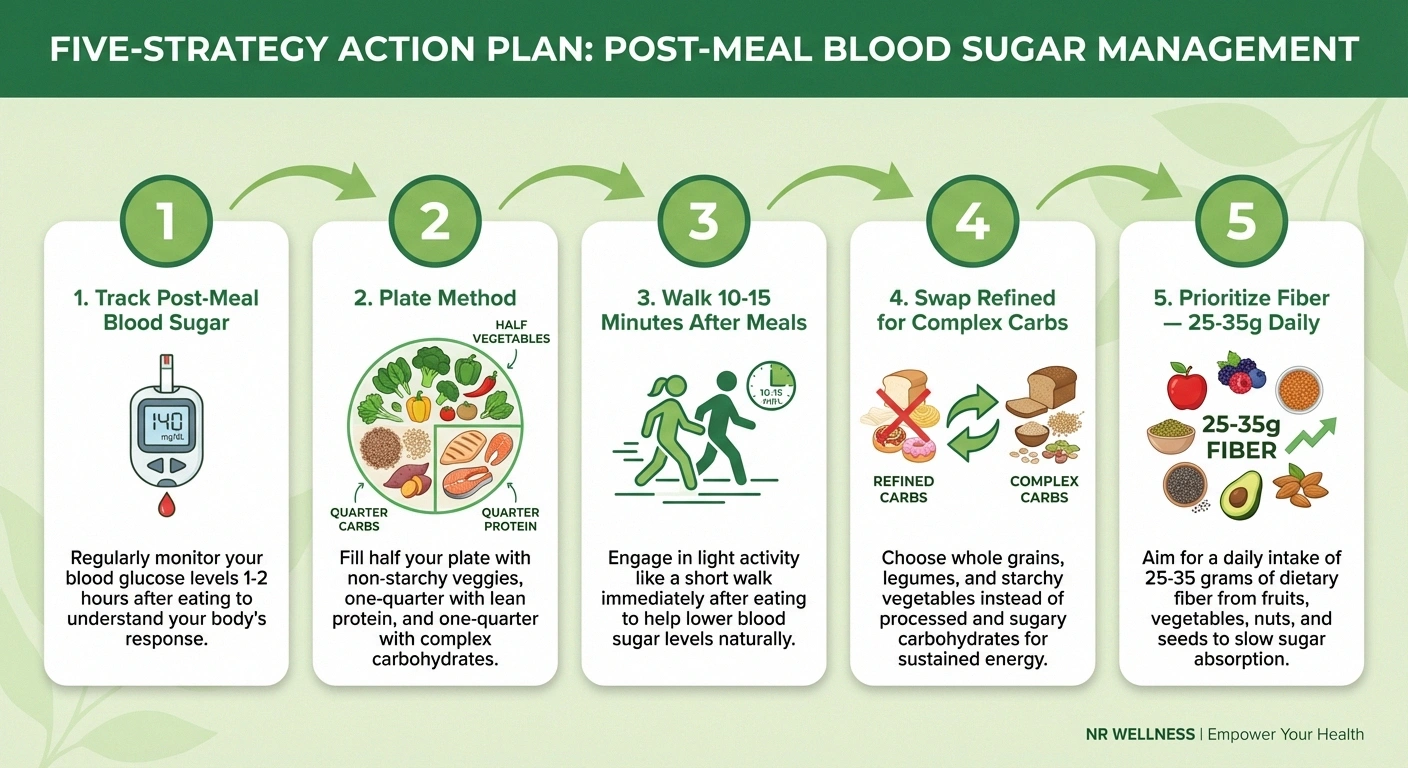
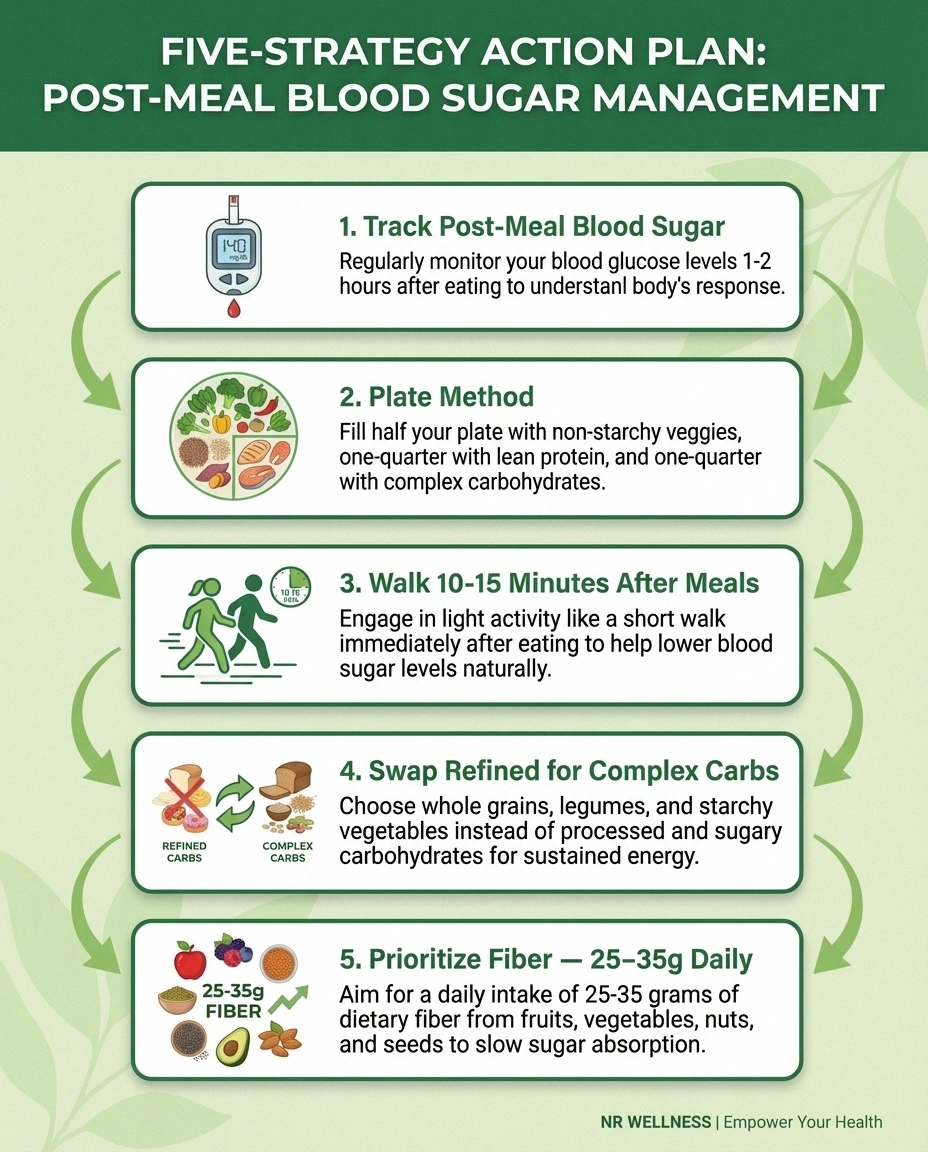
Strategy 4: Reduce Refined Carbohydrates
You do not have to eliminate carbohydrates entirely. But switching from refined to complex carbohydrates — and reducing your total carbohydrate load per meal — can dramatically reduce blood sugar spikes. Swap white bread for sourdough or whole grain. Replace pasta with lentils or cauliflower rice. Choose berries instead of tropical fruits. Small swaps compound over time.
Strategy 5: Prioritize Fiber
Fiber slows the absorption of glucose from your digestive tract into your bloodstream. Aim for 25 to 35 grams daily from vegetables, legumes, nuts, seeds, and whole grains. Adding a fiber supplement like psyllium husk before high-carbohydrate meals can also help blunt the spike.
The Hidden Sugar Problem: Processed Foods
One of the most frustrating aspects of managing blood sugar for nerve health is how much hidden sugar exists in processed foods. Sugar is added to bread, pasta sauce, salad dressings, yogurt, granola bars, and hundreds of other products that do not taste sweet. On average, Americans consume roughly 17 teaspoons of added sugar daily — nearly three times the American Heart Association's recommended limit.
Label Reading Tip
Sugar hides under dozens of names: high-fructose corn syrup, dextrose, maltose, sucrose, agave nectar, rice syrup, and more. If sugar (in any form) appears in the first three ingredients, the product is heavily sweetened — even if it doesn't taste sweet.
But it is not just the sugar itself. Processed foods also tend to be high in refined carbohydrates that convert rapidly to glucose, inflammatory omega-6 fats from seed oils, and artificial additives — all of which compound the nerve damage from blood sugar. Trans fats found in some processed foods are particularly harmful: they impair blood flow to nerves and have been independently associated with increased neuropathy risk.
Reading nutrition labels is essential. Look for added sugars (listed under total carbohydrates) and be aware that sugar goes by dozens of names: high-fructose corn syrup, dextrose, maltose, sucrose, agave nectar, rice syrup, and many more. If sugar (in any form) appears in the first three ingredients, the product is heavily sweetened.
Supplements That Help Manage Blood Sugar and Nerve Damage
Several supplements have evidence for helping with blood sugar management AND nerve protection simultaneously:
Alpha-lipoic acid (600 mg daily) acts as a powerful antioxidant in nerve tissue and may improve insulin sensitivity. It directly addresses the oxidative stress pathway of sugar-related nerve damage.
Magnesium is critical for glucose metabolism and insulin sensitivity. Many people with blood sugar issues are also magnesium deficient, creating a vicious cycle.
Benfotiamine (a form of vitamin B1) blocks the formation of AGEs — those toxic glycation products that permanently damage nerve proteins. It is one of the few supplements that addresses a specific biochemical pathway of sugar-related nerve damage.
Chromium picolinate may help improve insulin sensitivity in some people, though the evidence is mixed and it should be used alongside — not instead of — dietary changes.
These are supplementary strategies. The foundation is always dietary change and, if applicable, working with your healthcare provider on appropriate medications for blood sugar control.
When to Talk to Your Doctor
If you have neuropathy — especially if the cause is unknown — bring the blood sugar conversation to your next appointment. Ask about an oral glucose tolerance test, not just fasting glucose. Ask about your A1C trend over time. If you are already diagnosed with diabetes or prediabetes, ask your doctor about a more aggressive blood sugar management strategy with specific neuropathy prevention in mind.

Talk to Your Doctor
If you have neuropathy with no identified cause, ask about an oral glucose tolerance test — not just fasting glucose. Many cases of “unexplained” neuropathy turn out to have a blood sugar component that standard testing missed.
The connection between diabetes management and nerve protection is well-established. The earlier you take action on how blood sugar spikes damage nerves even before diabetes, the more nerve function you can preserve. This is one area where prevention genuinely works — once nerves are severely damaged, the damage may be irreversible regardless of how well you manage blood sugar afterward.
Browse all our nutrition and supplement guides for more evidence-informed approaches to managing neuropathy through diet and lifestyle.
Frequently Asked Questions
Can sugar cause neuropathy even if you don't have diabetes?
Yes. Research shows that blood sugar levels below the diagnostic threshold for diabetes can still damage nerves over time. Prediabetes — which affects roughly 96 million American adults — is associated with early signs of peripheral neuropathy in up to 50% of cases. Even people with normal fasting glucose may experience damaging post-meal blood sugar spikes.

How quickly does high blood sugar damage nerves?
Nerve damage from high blood sugar is a gradual, cumulative process that typically takes months to years of repeated exposure. A single blood sugar spike will not cause neuropathy. However, chronic daily spikes from a high-carbohydrate diet create progressive damage that compounds over time. Some people with poorly controlled diabetes develop neuropathy symptoms within just a few years of diagnosis.
Can lowering blood sugar reverse neuropathy?
In some cases, yes — especially in the early stages. People with prediabetic neuropathy who achieve normal blood sugar levels through diet and exercise often experience meaningful improvement or stabilization of symptoms. However, once nerve damage becomes severe, lowering blood sugar may slow further progression but cannot fully reverse the existing damage. The key is early intervention.
What is the best blood sugar level for preventing neuropathy?
Research suggests keeping post-meal blood sugar below 140 mg/dL minimizes nerve damage risk. For people already managing diabetes, an A1C below 7% is the general target, though some experts advocate for below 6.5% for optimal nerve protection. Work with your healthcare provider to set personalized targets based on your specific situation.
Does artificial sweetener cause neuropathy?
There is no strong evidence that FDA-approved artificial sweeteners directly cause neuropathy. However, some people report worsened symptoms with certain sweeteners, particularly aspartame. Stevia and monk fruit extract are generally well-tolerated alternatives. The more important concern is that diet soda and artificially sweetened foods may still contribute to insulin resistance through other mechanisms, indirectly affecting nerve health.
How does the glycation process damage nerves specifically?
Glycation occurs when excess sugar molecules bind to proteins without enzymatic control. This creates advanced glycation end-products, or AGEs, which are permanently altered proteins that no longer function properly. In nerve tissue, AGEs damage structural proteins in the myelin sheath and nerve fibers, trigger inflammatory immune responses via RAGE receptors, and generate additional oxidative stress. Unlike most biological processes, glycation is irreversible — the damaged proteins cannot be repaired, only replaced.
About the Author