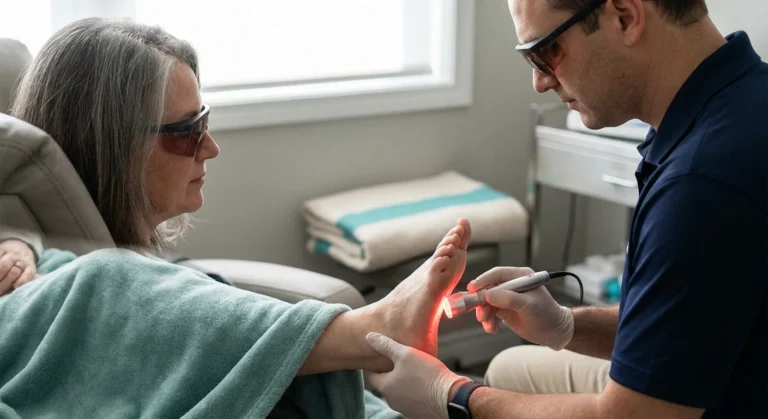
I used to eat terribly on flare days. Not because I didn’t know better — by then I’d read enough to understand which foods help nerve health and which ones don’t — but because cooking from scratch when my hands and feet are screaming feels impossible. The freezer-aisle convenience meal would win, the heavy carbs would spike my blood sugar, and the next day I’d feel worse. The cycle was predictable and it was kicking me.
What changed it was meal prep. Not in the social-media sense of fifteen identical Tupperware containers all the same shade of beige. The version that actually works for neuropathy is more like a Sunday afternoon hour at the kitchen counter — sitting on a stool, building five anti-inflammatory base ingredients that mix into a different meal every day of the week. By the time Tuesday’s flare hits, dinner is already most of the way made.
I’m Janet Ellis, and this is the meal-prep system I’ve landed on. None of it is fancy. None of it requires a stand mixer or a sous-vide. It’s the version that fits between aching hands, a tight grocery budget, and a chronic condition that doesn’t take days off.
Why Diet Matters More Than Most Patients Realize
Before I get to the recipes, the why. Peripheral neuropathy is, at its core, a condition of nerve cells under stress. Inflammation, oxidative damage, and unstable blood sugar all push nerves further into dysfunction. The right foods reduce that stress. The wrong foods compound it. A neuropathy-friendly diet isn’t a cure, but it’s a lever you can pull every day, three times a day. Few other interventions for neuropathy are that available.
The Mediterranean pattern — fatty fish, leafy greens, beans, nuts, olive oil — has the most consistent evidence for slowing neuropathy progression. The goal isn’t perfection; it’s consistent average quality across the week.
The pattern that keeps coming up in the research is the Mediterranean diet — fatty fish, olive oil, leafy greens, nuts, berries, whole grains, beans. It hits omega-3s, B vitamins, magnesium, and antioxidants in one approach. It’s also the eating pattern with the most consistent evidence for slowing neuropathy progression in studies on diabetic populations. You don’t need a special “neuropathy diet” — you need a pattern of meals that lean Mediterranean with a few neuropathy-specific tweaks.
Three things to remember as we go.
The first is that meal prep is a tool, not a moral test. If a week’s meals end up half home-prepped and half a frozen burrito, that’s still a win over takeout pizza. Don’t let perfect be the enemy of good.
The second is that what we’re aiming for is consistent average quality, not one perfect meal. A week of mostly-good meals beats two perfect meals and five collapsed ones.
The third — and this is the one that changes everything for neuropathy patients — is that prep itself has to be hand-friendly. If the prep day creates a flare, the system has cost more than it gave. Sitting, electric appliances, pre-chopped produce, slow-cooker shortcuts. We use them all without apology.
The Five Building Blocks for the Week
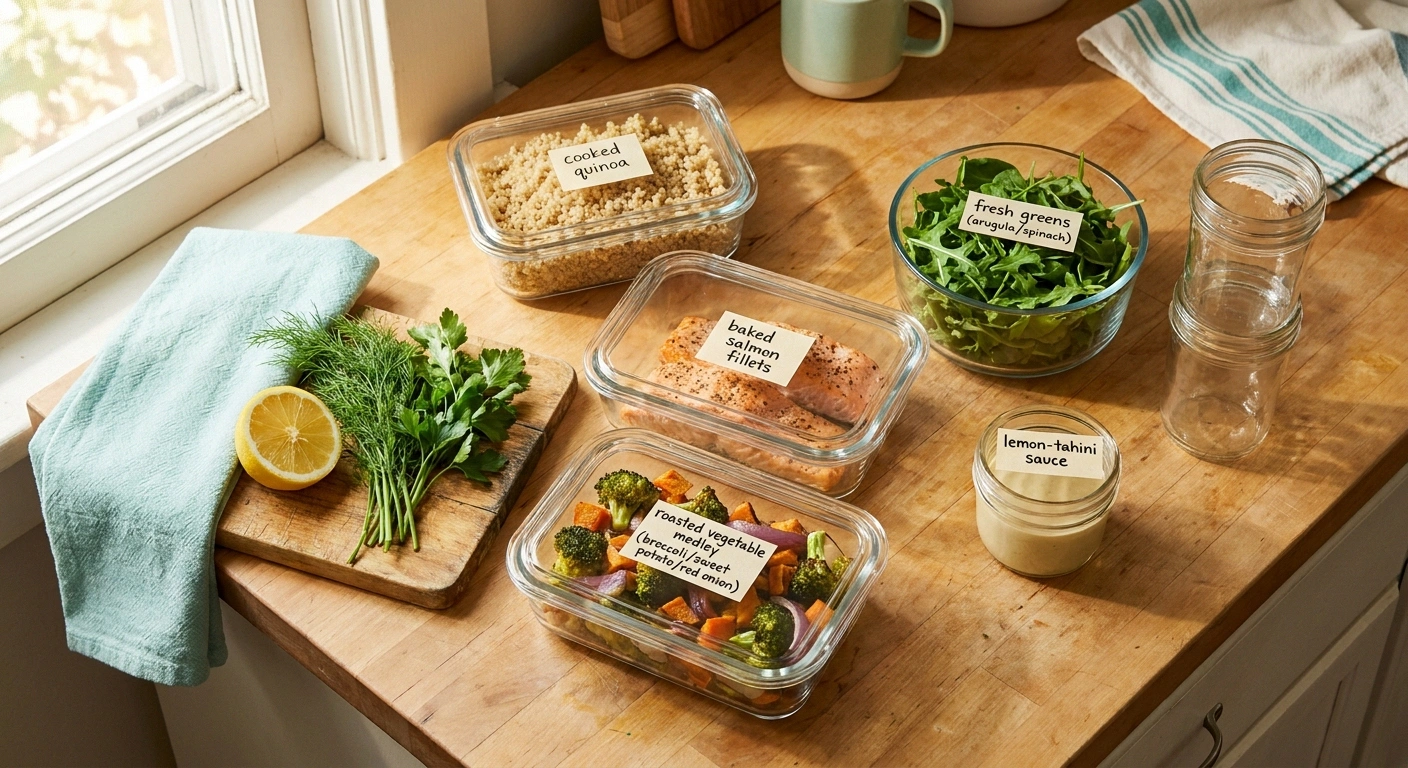
The whole system rests on prepping five base ingredients on Sunday. By Wednesday these blocks turn into seven different meals without any one of them feeling repetitive. The blocks are anti-inflammatory at the core, which means they’re working for your nerves with every meal — not just on the days you remember to think about it.
The 5 Sunday Building Blocks
Five blocks → seven dinners + lunches without repetition.
The five blocks are: a cooked grain base, a cooked protein, a roasted vegetable medley, a leafy-green raw mix, and a flavor sauce. With those five ingredients in the fridge, almost any meal becomes a fifteen-minute assembly job. No knife work after Sunday.
Block 1: The Grain Base
I rotate between three grains: quinoa, brown rice, and farro. Quinoa is the most nutrient-dense for the calories, with all nine essential amino acids and a low glycemic load that doesn’t spike blood sugar. Brown rice is the most familiar and pairs with anything. Farro has a chewy texture that makes salads feel heartier.
Cook three cups dry on Sunday. That’s about nine cups cooked, enough to base seven dinners and a few lunches. Toss with a tablespoon of olive oil and a pinch of salt before refrigerating — keeps the grains from clumping and makes them taste better cold.
The shortcut version: pre-cooked microwave pouches. Two minutes from package to plate. Higher cost per ounce, lower hand-strain. On a flare day this is the right call.
Block 2: The Protein
I prep two proteins on Sunday — one fish-based and one plant-based — so I can rotate through the week without ever getting bored.
Twice-weekly fatty fish is associated with moderate reduction in neuropathic pain and slower progression in diabetic populations. Salmon, sardines, and mackerel deliver the most omega-3 EPA/DHA per dollar.
Frozen wild salmon is usually cheaper than fresh and just as nutrient-dense.
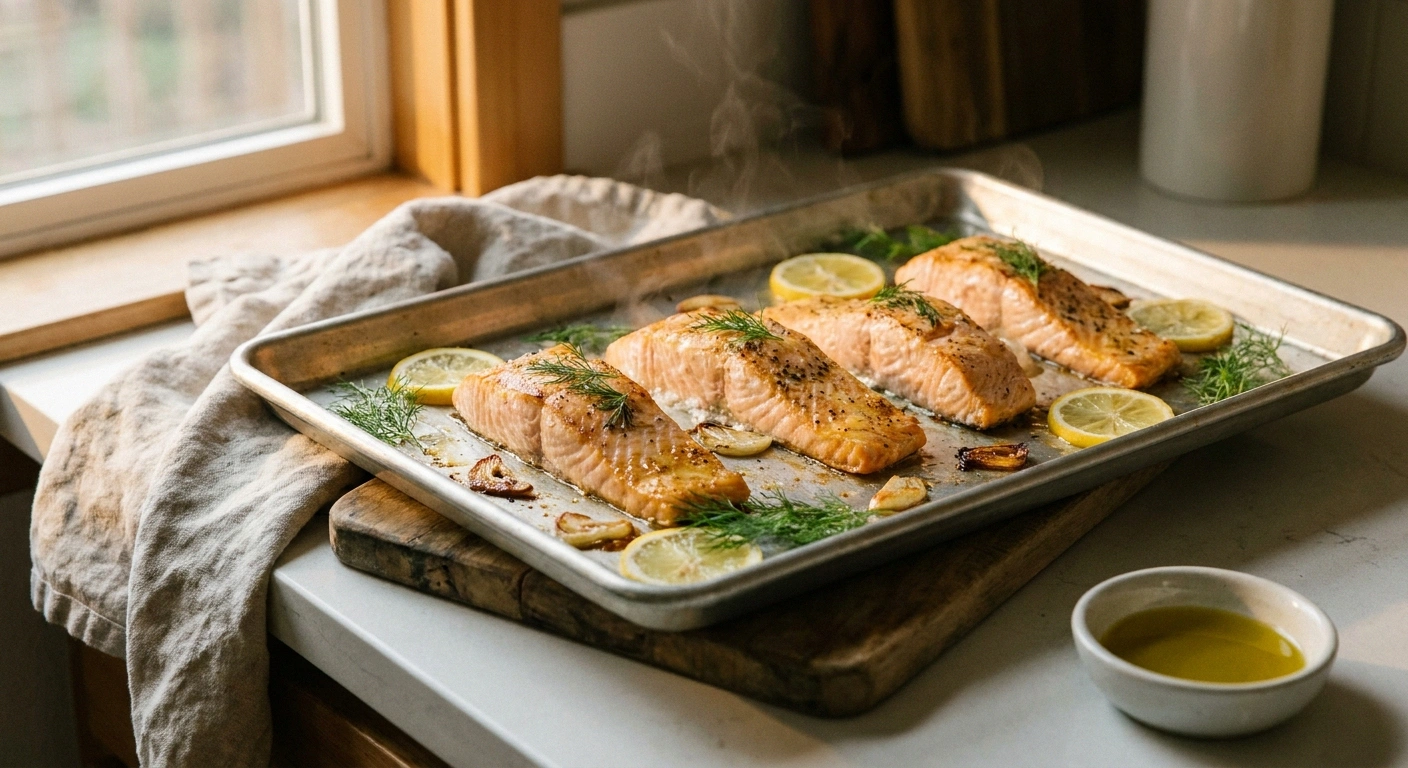
The fish: a sheet pan of salmon, four to six fillets at a time. Olive oil, lemon, dill, salt, pepper, 425°F for 12-14 minutes. Salmon is the highest-omega-3 fish that’s also widely available and relatively affordable. Omega-3s have moderate evidence for reducing neuropathic pain, and the dose you get from twice-weekly fatty fish is meaningful. Frozen wild salmon fillets are usually cheaper than fresh and just as nutrient-dense.
The plant protein: a pot of lentils or a tray of roasted chickpeas. Lentils need no soaking, cook in 25 minutes from dry, and provide iron, B vitamins, and fiber that stabilizes blood sugar. Chickpeas roasted with smoked paprika and salt become a snack and a salad-topper at the same time.
If meat is part of your week, swap one protein for shredded rotisserie chicken from the grocery. No prep, no cleanup, two pounds of usable protein for under ten dollars.
Block 3: The Roasted Vegetable Medley
One sheet pan, three vegetables, 425°F, 25 minutes. The combination changes weekly. My standby is broccoli, sweet potato, and red onion — sweet, savory, and stays good in the fridge for five days. Other reliable trios: brussels sprouts plus carrots plus shallots; cauliflower plus bell peppers plus zucchini; butternut squash plus kale plus garlic.
The trick is to cut everything roughly the same size so it cooks evenly. If knife work is hard, frozen pre-cut vegetable mixes work nearly as well — slightly less browned, but the nutrient content is intact.
Block 4: The Leafy-Green Raw Base
Pre-washed bagged spinach, baby kale, or spring mix. Buy the box, transfer half to a Tupperware lined with a paper towel (the paper towel pulls humidity and the greens last twice as long), keep the original bag for the rest. That’s it. There’s no actual prep here.
Greens go on the bottom of every dinner bowl and form the base of two lunch salads during the week. They are by far the best magnesium-and-folate source in the kitchen, and magnesium intake correlates with reduced neuropathic symptoms in some patient populations.
Block 5: The Flavor Sauce
One sauce on Sunday — this is what makes the whole week not taste like the same meal four times. The sauce is the variable; everything else is the constant.
My three rotation sauces:
Lemon-tahini drizzle. Half cup tahini, juice of two lemons, two crushed garlic cloves, water to thin, salt. Stays good a week, brightens any bowl.
Turmeric-yogurt. One cup plain Greek yogurt, two teaspoons turmeric, one teaspoon honey, pinch of black pepper (helps turmeric absorb), salt. Turmeric’s curcumin has anti-inflammatory effects that may modestly help nerve pain, and this sauce delivers a daily dose without the supplement bottle.
Olive oil and balsamic with herbs. Half cup good olive oil, quarter cup balsamic, two tablespoons mustard, fresh or dried herbs to taste. The simplest of the three and never gets old.
The 7-Day Meal Calendar
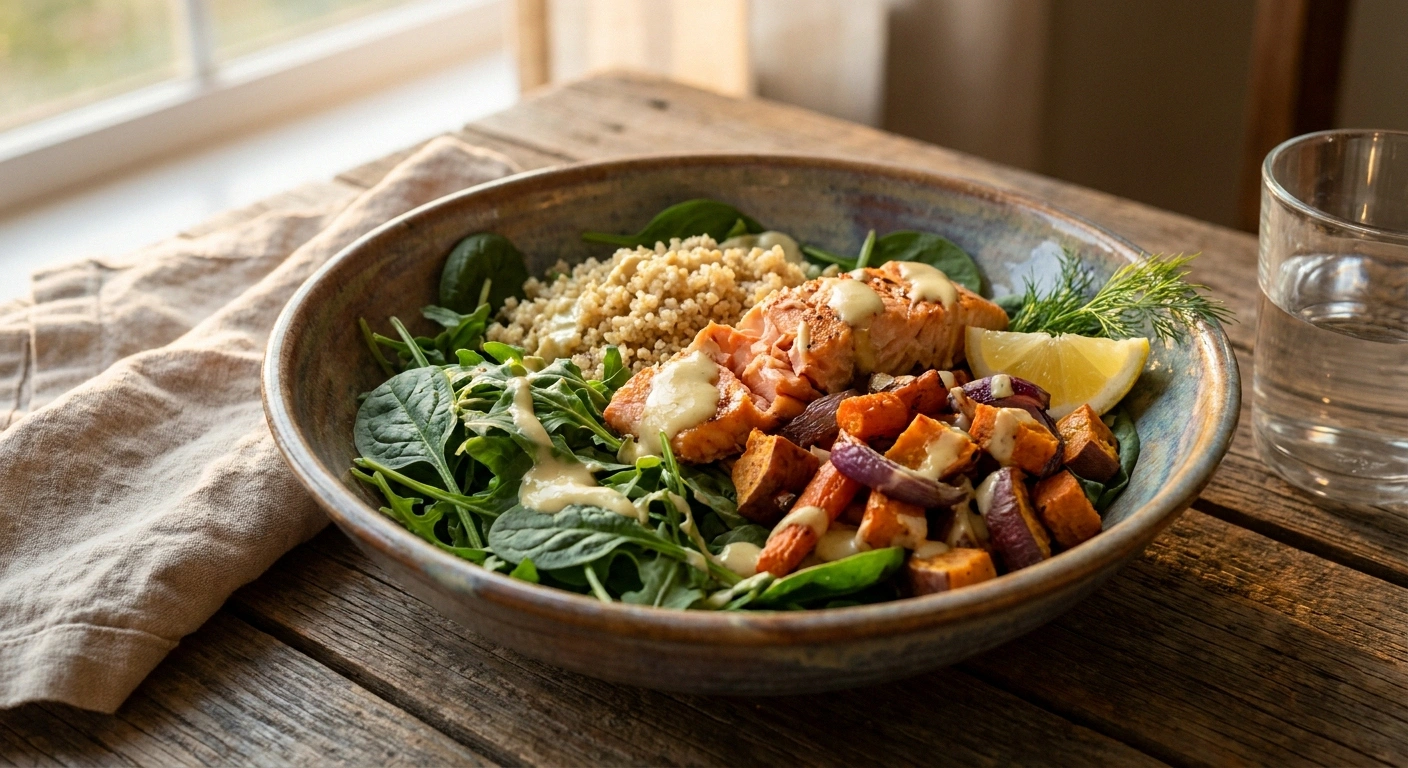
Here’s how the five blocks become a week of meals. The pattern stays loose so you can swap days based on what you’re craving.
A Week of Meals From the Same 5 Blocks
Monday lunch. Greens base, grain, salmon, roasted veg, lemon-tahini. Bowl form.
Monday dinner. Grain, lentils, roasted veg, turmeric-yogurt drizzle. The yogurt makes it feel like a different meal from lunch.
Tuesday lunch. Greens, grain, leftover salmon flaked over the top, balsamic dressing. Cold lunch — works at home or packed.
Tuesday dinner. Grain bowl, chickpeas, roasted veg, lemon-tahini. Full plant-based meal.
Wednesday lunch. Mid-week reset. Greens, leftover lentils, half avocado, balsamic. Sometimes lunch is a big salad.
Wednesday dinner. A quick stir-fry: sauté frozen mixed vegetables and pre-cooked grain in olive oil with garlic, top with whatever protein is left, finish with turmeric-yogurt. New format, same building blocks.
Thursday lunch. Grain, salmon, roasted veg, lemon-tahini. (Yes, similar to Monday — the sauce variation is the point.)
Thursday dinner. An open-faced piece of toast on whole-grain bread topped with mashed avocado, roasted vegetables, and a fried egg. Eggs are budget-friendly protein with B12 and choline. Five-minute dinner.
Friday lunch. Bowl of leftovers, whatever remains. Always one sauce option, always a green base.
Friday dinner. Restock day. Order in or eat very simply — soft-scrambled eggs and toast, plus roasted vegetables on the side. The week is over; the week ahead resets Sunday.
Weekend. Off the system. Eat what you want within reason — Mediterranean-leaning is fine, but the goal is rest, not strict compliance. Saturday is groceries. Sunday is prep. The weekend is the breath.
The Sunday Prep Workflow (Hand-Friendly Version)
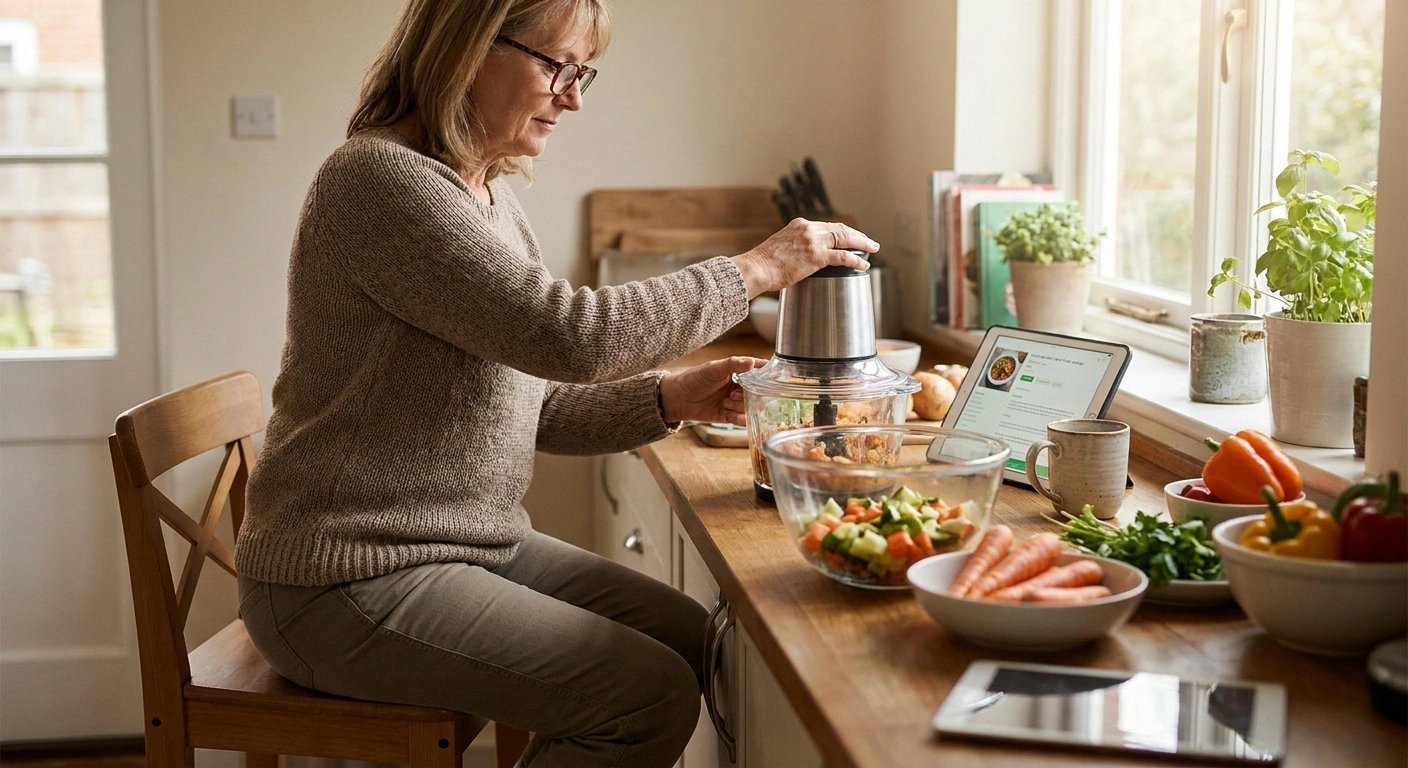
The whole prep takes about an hour and fifteen minutes. The actual hands-on work, if you’re using shortcuts, is closer to thirty minutes. Here’s the workflow that minimizes hand strain.
Set up the kitchen first. Pull out a counter-height stool. If your kitchen counter is too high to sit at, use the kitchen table and bring the prep to you. Put a gel mat where you’ll be standing for the parts that need it. Do not start cooking from a standing-cold start.
Start the longest things first. Grain on the stove. Salmon in the preheating oven. Lentils in the slow cooker or instant pot. These are walk-away tasks.
Use the food processor for chopping. A small food processor, even a $40 one, eliminates 90% of the knife work. Onions, garlic, vegetables for the roasted medley if you’re cutting them yourself — into the bowl, pulse, done.
Use pre-cut produce when hands are bad. The price difference is real but small in absolute terms — a few dollars a week for not flaring. Buying pre-cut produce isn’t quitting, it’s energy conservation.
Build the sauce while the oven works. Tahini sauce takes three minutes in a jar with a lid — shake, no whisking required.
Pack as you go. Glass containers with locking lids. Salmon in one, grain in one, vegetables in one, sauce in one. Greens stay in the bag with the paper towel trick. Don’t wait until everything’s done to put it away.
Wash dishes immediately. Or load the dishwasher as you go. A pile of pots Sunday night is a mood-killer that bleeds into the rest of the week.
The Flare-Day Backup Plan
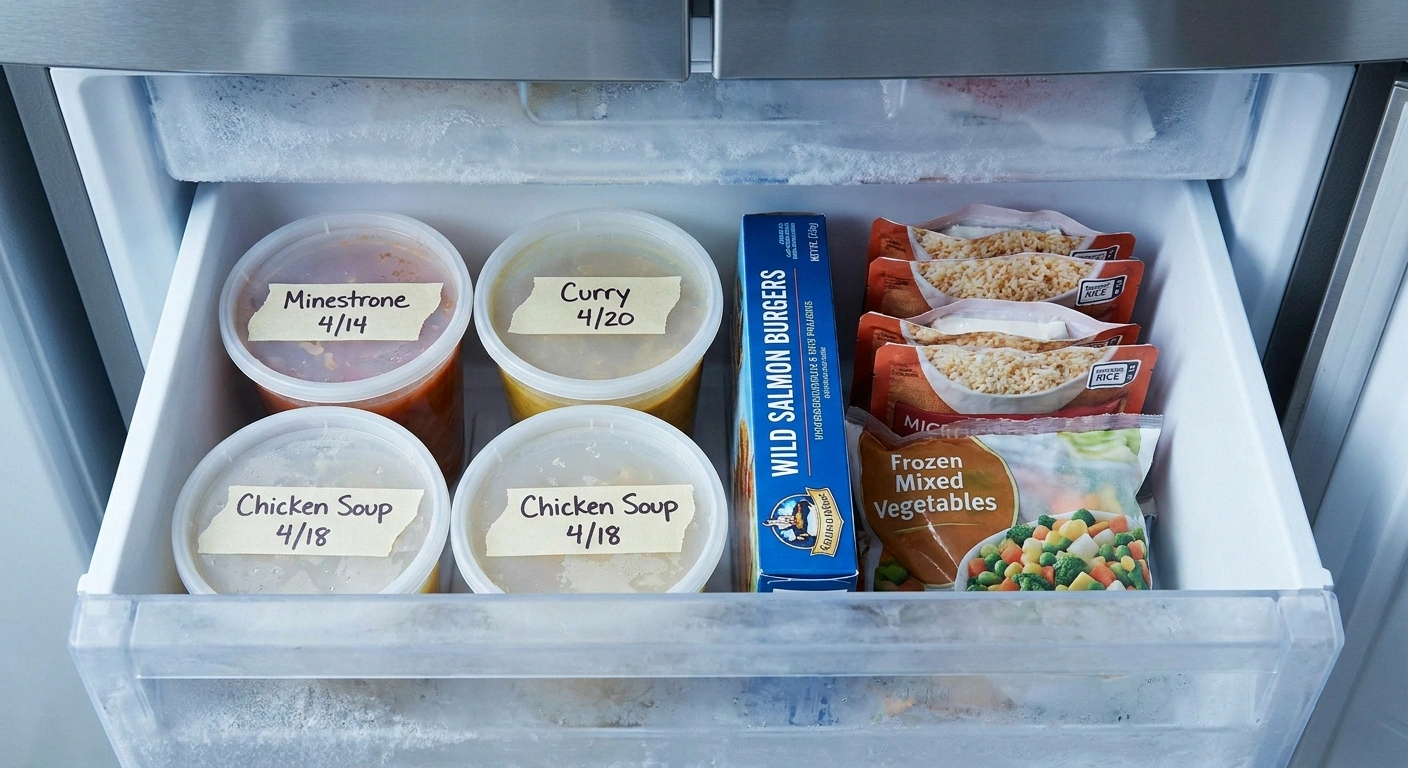
Some weeks the Sunday prep doesn’t happen. Migraine, flare, exhaustion, life. The system has to survive that, or it’s not a real system.
Flare-Day Freezer Stash
- Minestrone (8 quart portions)
- Chicken-and-bean soup
- Vegetable curry
- Frozen wild salmon burgers
- Microwave rice pouches
- Frozen riced cauliflower
- Eggs + canned beans
Five-minute dinner is always possible.
Two layers of backup, both built into the freezer.
Layer one: emergency real meals. Three or four times a year I batch-cook a soup or stew specifically for the freezer — minestrone, chicken-and-bean soup, a vegetable curry. Each batch makes six to eight quart-sized portions. Labeled, dated, frozen flat. On a flare day: defrost in the microwave, pour over a piece of toast, done.
Layer two: shortcut staples. Frozen wild salmon burgers (most grocery stores carry them), microwaveable rice pouches, frozen riced cauliflower, frozen mixed vegetables, eggs, canned beans. With those staples in the kitchen, a five-minute dinner is always possible. Bake a salmon burger, microwave a rice pouch, sauté frozen vegetables, top with a simple sauce. That meal hits all the same anti-inflammatory notes as the Sunday-prep version.
Don’t underestimate the flare-day plan. The week the system has to carry you is the week it earns its keep.
What to Snack On (and What to Avoid)
Snacking is where a lot of well-intentioned diets fall apart. The meals are fine; the afternoon trail-mix bag has 700 calories of refined sugar. For neuropathy patients, blood-sugar stability matters more than for most other folks, because glucose spikes drive nerve damage.
The snacks I keep stocked:
- Almonds, walnuts, pumpkin seeds — magnesium and healthy fats
- Berries (fresh in season, frozen otherwise) — antioxidants without high glycemic load
- Greek yogurt with a teaspoon of honey — protein and probiotics
- Apple slices with peanut butter — fiber plus protein, blood-sugar friendly
- Hard-boiled eggs (made in batches on Sunday) — instant protein
- The leftover roasted chickpeas from Block 2 — savory crunch without the chip aisle
- Hummus and cut-up vegetables (or pre-cut from the produce section)
The snacks I keep out of the house, because if they’re there I’ll eat them:
- Refined-sugar candy and pastries
- Most “healthy” granola bars (sugar in disguise)
- Chips and crackers in family-size bags
- Sweetened beverages including fruit juice in the heavier portions
This isn’t about willpower. It’s about not depending on willpower. If the snack drawer holds nuts and fruit, the snack drawer holds nuts and fruit.
The Drinks Question
Most patients underdrink water and overdrink other things. Both shows up in nerve symptoms.
Blood-sugar spikes drive glycation, and glycated proteins damage nerves over time. The mechanism is identical in diabetic and non-diabetic neuropathy. One change, daily, every day.
Water first — eight glasses a day is a reasonable target, more if you’re hot or active. Dehydration aggravates nerve symptoms and muscle cramps in patients I’ve talked to consistently. A water bottle on the counter beats the abstract goal.
Coffee in moderation is fine for most neuropathy patients. One or two cups in the morning. The black-coffee-on-empty-stomach pattern occasionally makes some patients jittery in a way that worsens nerve sensations — pair coffee with breakfast and that usually goes away.
Green tea has antioxidant compounds (catechins) with research support for vascular and inflammatory health — relevant for nerve health. A cup or two a day is a reasonable add.
Alcohol is the harder conversation. Alcohol is directly neurotoxic to peripheral nerves, and patients who already have neuropathy worsen it with regular drinking. Some patients can tolerate one drink occasionally. Many find that even one drink causes a noticeable flare the next day. The honest framing is that there is no “neuropathy-safe” amount of alcohol, just amounts you tolerate. Less is better.
What to Skip and Why
The foods that keep showing up in research as making neuropathy worse:
Excess vitamin B6 supplementation can cause the very neuropathy you’re trying to treat. Doses above 100 mg/day for months can produce a sensory neuropathy. Check the B6 in any “nerve support” supplement before adding more.
Refined carbohydrates and added sugars. Blood-sugar spikes drive glycation — sugar molecules attaching to proteins — and glycated proteins damage nerves over time. This is the mechanism behind diabetic neuropathy and it applies to non-diabetic neuropathy too. Cutting refined sugar is the single highest-leverage food change for most patients.
Processed meats. The combination of preservatives, sodium, and inflammatory compounds in deli meats, bacon, and cured products correlates with worse outcomes in neuropathy populations. Some processed meat occasionally is fine. Daily processed meat as the protein source is not.
High-mercury fish. Large tuna, swordfish, king mackerel, tilefish. Mercury accumulates in nerves. Salmon, sardines, anchovies, light tuna in cans, rainbow trout — these are low-mercury and appropriate.
Trans fats. Found in some baked goods, margarine, fried foods. Drive systemic inflammation. Read labels for “partially hydrogenated.”
Excess vitamin B6 supplementation. This one surprises patients. B6 is good — but at chronically high doses (typically over 100 mg/day for months), B6 itself causes a sensory neuropathy that mimics the one you’re trying to treat. If you’re taking a “nerve support” supplement, check the B6 dose. Anything above 50-100 mg daily long-term should be discussed with a clinician.
Special Notes for Diabetic Neuropathy
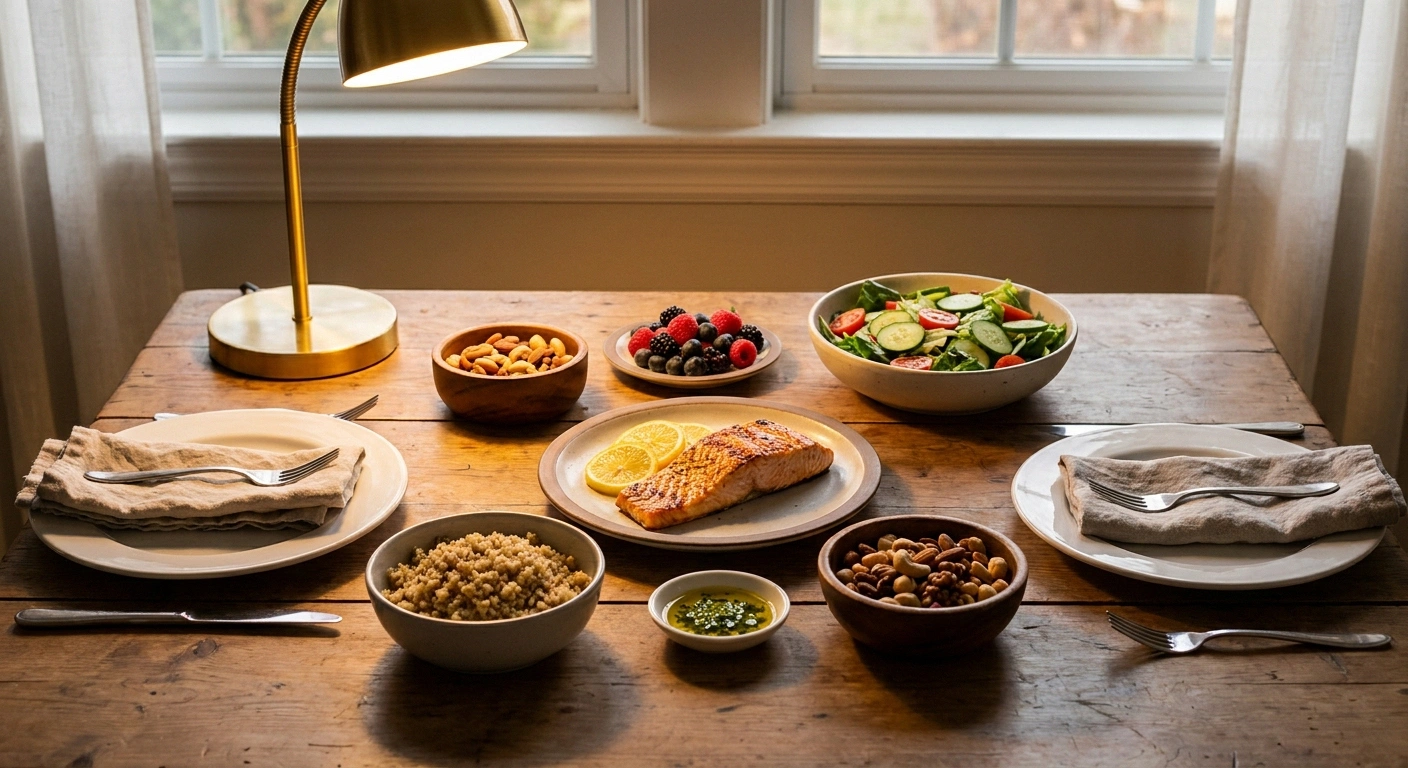
If you have diabetic neuropathy, the meal-prep system above still works but with one tighter focus: blood-sugar stability is the primary lever. The Mediterranean pattern naturally helps because it’s high in fiber and healthy fats — both slow glucose absorption.
Two adjustments worth making:
First, time meals consistently. Erratic meal timing produces erratic glucose, which produces nerve stress. Eating around the same hours every day — even rough hours — meaningfully helps.
Second, watch portion sizes on the grain block. A half-cup cooked grain is a single serving and that’s appropriate for most diabetic patients. Doubling up on rice or quinoa runs glucose higher than a non-diabetic would notice. The greens base and protein can be larger; the grain stays modest.
When the System Stops Working
Sometimes the system stops working — meals get boring, prep day starts feeling like a chore, the discipline cracks. That’s normal. Three things usually fix it.
Rotate one new recipe per week. Not five new recipes — one. A new sauce, a new grain base, a new vegetable trio. The 90% stays the same; 10% rotates. This keeps the system feeling alive instead of like a sentence.
Allow yourself a real off-week. Once a quarter, skip prep entirely. Eat whatever. Order out. Frozen burritos. The system survives off-weeks. It does not survive guilt.
Adjust for season. Summer eating is lighter — more salads, less roasted veg, more cold grain bowls. Winter eating is heavier — soups, stews, roasted root vegetables. The blocks rotate with the season. Don’t try to eat July food in January.
Frequently Asked Questions
How long does meal-prepped food keep in the fridge?
Most cooked grains, roasted vegetables, lentils, and chickpeas keep five to six days in airtight containers. Salmon and other cooked fish keep three to four days. Sauces with dairy keep about a week. Sauces without dairy (tahini, olive-oil based) keep up to two weeks. If anything smells off, throw it out — neuropathy patients sometimes have impaired sense of smell or taste, so when in doubt, the rule is throw it out.
Can I freeze meal-prepped meals for later weeks?
Most components freeze well — cooked grains, cooked lentils, cooked salmon (reheated gently), and roasted vegetables. Greens, sauces, and cooked rice with high water content do not freeze as well. The freezer-friendly approach is to freeze entire meals as soup-and-stew portions rather than trying to freeze every component separately. If you have a flare-prone month, doubling Sunday batch sizes and freezing half is a smart move.
Do I need a special supplement on top of this diet?
Most neuropathy patients eating a Mediterranean-style diet still benefit from a few targeted supplements — particularly alpha-lipoic acid, B-complex including B12, and possibly magnesium. The diet provides the foundation; targeted supplements fill specific gaps. Talk to your doctor before starting anything new, especially if you take medications that interact with supplements (such as blood thinners interacting with omega-3s or vitamin K from leafy greens).
What if I don’t like fish?
Plant-based omega-3s come from flaxseed, chia seeds, and walnuts. The conversion to the active forms (EPA and DHA) is less efficient in plants, but it’s still meaningful. Algae-based omega-3 supplements are the vegetarian alternative that delivers EPA and DHA directly. The rest of the system works without fish — chicken, lentils, beans, eggs, and tofu all serve as the protein block.
Is this diet good for my non-neuropathy family members too?
Yes — the Mediterranean pattern is one of the most-studied healthy eating approaches for the general population. Everyone in the household can eat from the same meal-prepped components. The proportions adjust (a healthy adult without neuropathy can have a larger grain portion than a diabetic neuropathy patient), but the food itself is the same. This is one of the gifts of this approach: it doesn’t isolate you from family meals.
How much does this cost compared to my current grocery bill?
It depends entirely on what you’re replacing. If you’re swapping takeout and convenience food for home-prepped Mediterranean meals, you usually save money — often significantly. If you’re swapping the typical American refined-grain-and-processed-meat diet for fish, leafy greens, and nuts, your grocery bill goes up but your medication and clinic costs often go down. The honest answer for most patients I’ve talked to is that it’s roughly cost-neutral within a couple of months, and a good investment over years.
Can this diet help reverse my neuropathy?
Honest answer: it depends on cause and stage. For diabetic neuropathy in early stages, dietary improvement combined with blood-sugar control can sometimes meaningfully improve symptoms over six to twelve months. For most other neuropathy types, the realistic goal is to slow progression, reduce flare frequency, and modestly reduce symptom intensity — not full reversal. The diet is a foundational piece of the management strategy, not a cure. Anyone promising reversal through diet alone is overpromising.
What if I’m too tired or sore to do prep day?
Skip it. Use the flare-day backup plan: frozen salmon burgers, microwave rice, frozen vegetables, eggs. The system survives skipped weeks. What it doesn’t survive is forced prep days that wreck you and bleed into the rest of the week. Pacing applies in the kitchen the same as everywhere else with chronic illness.
About the Author