The hardest car ride of my life was a six-hour drive to see my granddaughter's first dance recital. I wasn't driving — my son was — but by the time we pulled into the parking lot, I couldn't feel my left foot, my right calf was on fire, and my lower back had decided to retire from working entirely. I shuffled into the auditorium twenty minutes late, missed the opening number, and spent the rest of the evening trying not to cry from how uncomfortable my own body felt.
It didn't have to go that way. I just hadn't planned for it. The passenger seat, when you have neuropathy, is its own form of endurance event — long stretches of being immobile in a confined space, no control over the climate, no permission to stop on your own schedule, your feet stuck in the same position for hours. Driving has its own challenges, but as a passenger you don't even have the steering wheel and pedals to give your body micro-movement.
This guide is what I figured out, mostly the hard way, after years of family drives, doctor visits, and trips to see grandkids. The point isn't to make a long ride feel like a spa. It's to arrive at your destination still functional, still able to enjoy why you came.
Before You Even Get in the Car
The work that pays off most happens before the trip starts. Five minutes of prep saves an hour of pain.
Key Takeaway
A long passenger ride doesn't have to wreck the rest of your day. The two highest-leverage habits: front seat with a proper footwell setup, and stopping every 60 minutes for a five-minute walk. Plan five minutes of prep before you leave and you'll arrive functional.
Eat something light, drink some water — but not too much. Hunger and dehydration both make nerve pain worse, but a full bladder turns a stop you needed anyway into a stop you can't postpone. Aim for a small protein-and-complex-carb breakfast and modest fluids in the hour before leaving.
Take any scheduled medication on time. If you take gabapentin, pregabalin, duloxetine, or any other neuropathy medication on a schedule, time your dose so the morning one is fully on board before you leave. Don't skip it because you're rushing.
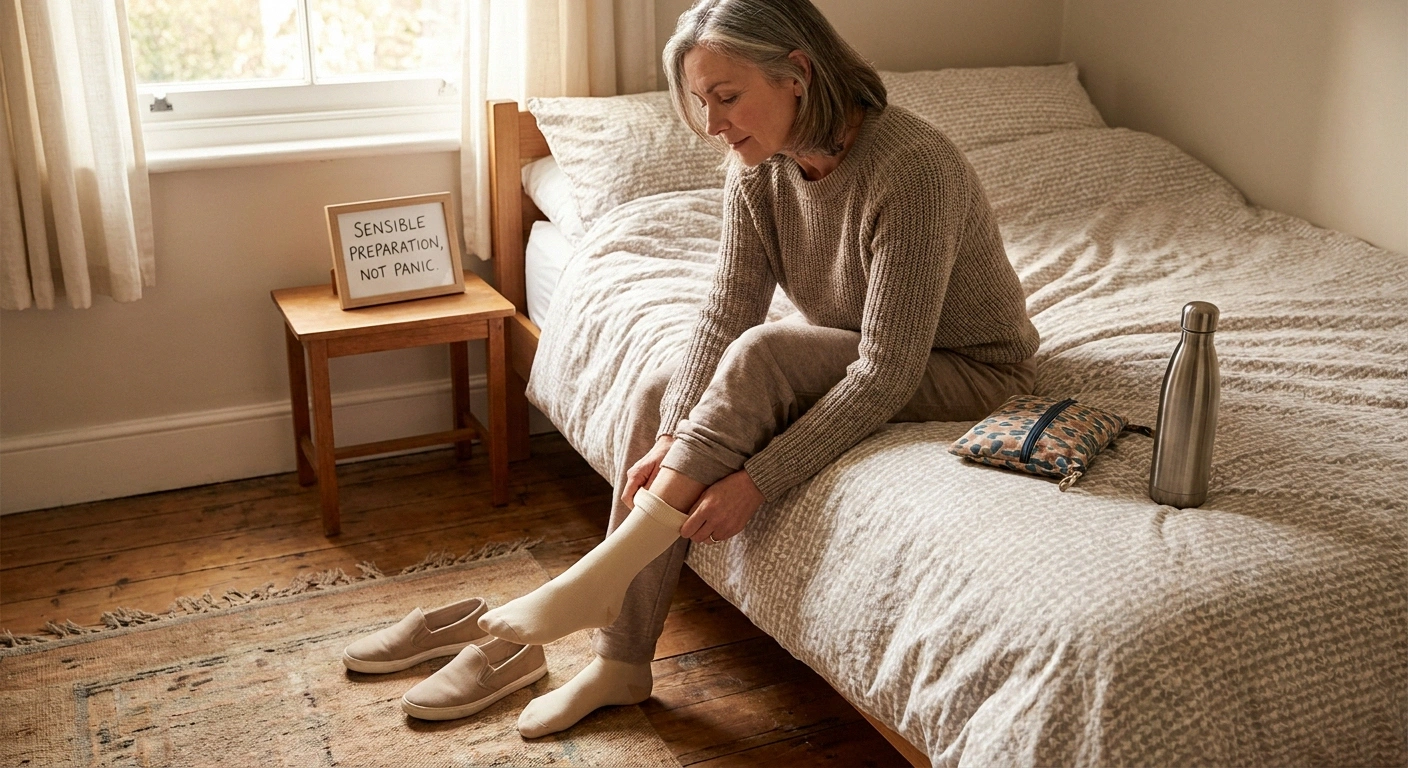
Put on compression socks before you leave the house. Once you're in the car, leaning forward to pull up socks while seated is awkward and uncomfortable. Mild graduated compression socks applied at home, before any swelling has started, do far more than ones you fight with at a rest stop.
Wear loose, layered clothing. Car climate is unpredictable — too cold near a window, too hot under direct sun through the windshield. Layers let you adjust without drama. Avoid waistbands that dig in when you sit, tight socks above the compression layer, or anything with a hard seam at the back of the knee.
Wear shoes you can take off easily. Once seated, you'll want to slip your shoes off and rest your feet on a soft surface. Tie-on sneakers, lace-up boots, or anything with stiff structure makes that hard. Slip-ons or shoes with a single Velcro strap are ideal. The right shoes for neuropathy matter just as much for sitting in a car as for walking.
Seat Selection: Front Almost Always Wins
If you have a choice, sit in the front passenger seat. Always.
Front seats are larger, have more legroom, and adjust further than back seats in almost every car made in the last twenty years. The footwell is bigger. The seat back reclines further. You can see the road, which reduces motion sickness and gives your eyes something to track instead of staring at the back of someone's headrest.
If you're traveling with multiple people and there's a polite competition for the front seat, name the issue out loud once. “I'd really do better up front because of my feet.” Most family members will say yes immediately if they understand it's not preference, it's medical. The conversation is awkward exactly once.
If you absolutely must take the back seat: pick the side opposite the sun, slide the seat back as far as the passenger behind you allows, and ask the driver to keep that side's vent slightly cooler than the rest of the car (ankle-level vents on hot days are brutal on hot, burning feet).
Setting Up Your Footwell
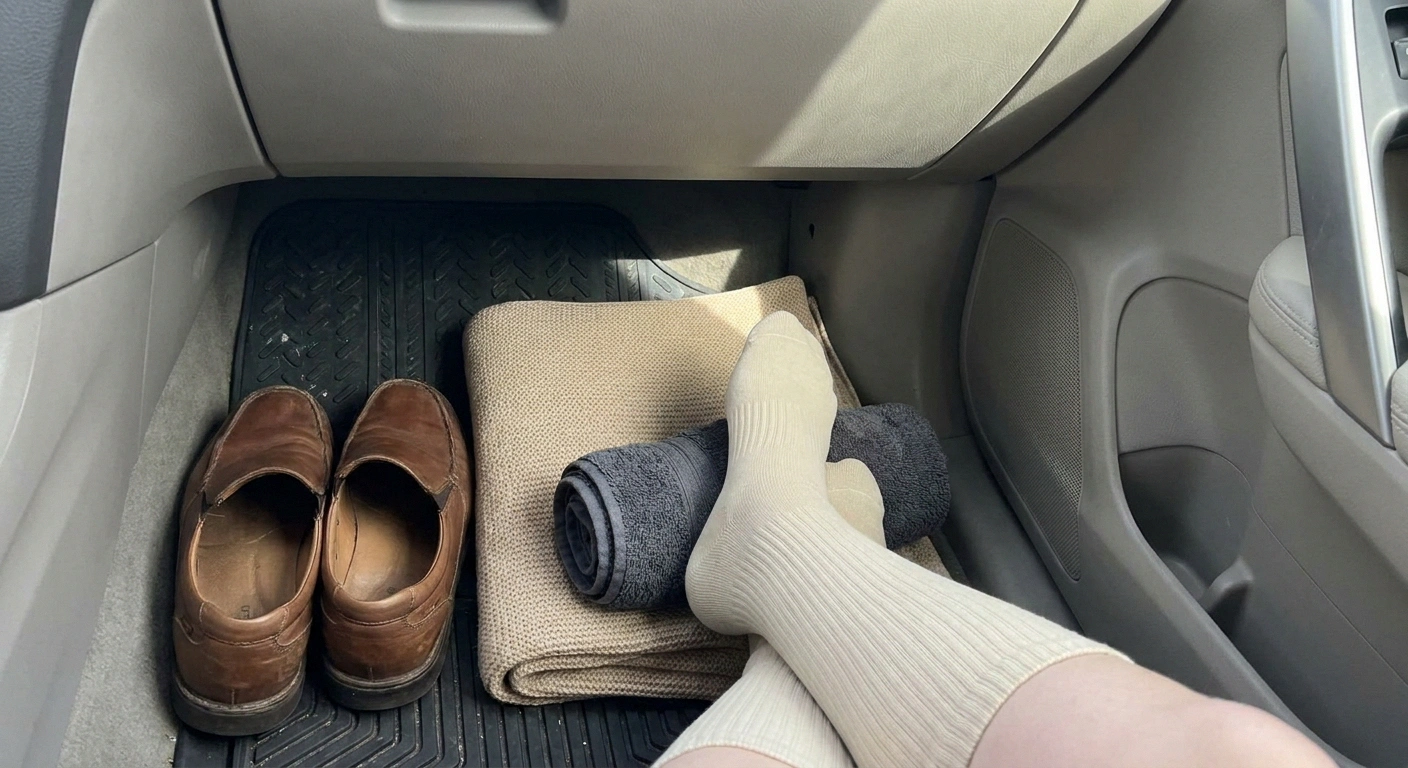
Where your feet are during a long drive determines how you feel when you get out. The default footwell — feet flat on a hard rubber mat, knees at 90 degrees, no support — is exactly what neuropathy doesn't want.
Footwell Setup — What Each Element Does
Portable footrest (rolled blanket, firm pillow, inflatable wedge)
Raises feet just enough to take pressure off the heels and improve circulation. Even a scrunched sweatshirt helps.
Shoes off, compression socks on
Lets feet breathe and supports circulation. Wiggle toes every few minutes; rotate ankles in slow circles.
Seat height: hips level with knees
If your feet barely reach the floor, lower the seat. If knees rise above hips, raise it.
Slight recline (110–115 degrees)
Reduces pressure on the lower back. Never full recline in a moving vehicle — the seatbelt won't restrain you correctly.
A small portable foot rest changes everything. A folded firm pillow, a rolled blanket, or a purpose-built inflatable footrest (sold for long flights, around $25) raises your feet just enough to take pressure off the heels and improve circulation. Even a sweatshirt scrunched up under your feet helps for a couple of hours.
Slip off your shoes once you're moving. Let your feet rest on the soft surface in just compression socks. Wiggle your toes every few minutes. Rotate your ankles in circles. The micro-movements are the thing — total stillness is what the nerves can't tolerate.
Adjust the seat height. Many people leave the seat at the height the last passenger used. If your feet barely touch the floor, lower the seat. If your knees are higher than your hips, raise the seat. The goal is feet flat (or supported on your footrest) and hips level with knees.
Use the recline — but not too much. A slight recline (about 110 to 115 degrees from vertical) reduces pressure on your lower back. Full recline causes its own problems and isn't safe in a moving vehicle. Find the angle that feels neutral.
The Lumbar Support Problem (and the Fix)
Most car seats, even nice ones, don't fit a 60-something body well in the lumbar region. You spend the trip slumped, your lower back curled in the wrong direction, and the pain works its way down through your hips into your already-cranky legs.
Five-Minute Pre-Trip Checklist (Do at Home)
The fix is small: a lumbar pillow, a rolled-up sweatshirt, or a $20 wedge cushion placed in the small of your back. You want the support behind the curve, not pressing into your spine. Adjust until your lower back feels supported and your shoulders relax against the seat back. If your back unclenches, you've found the right spot.
For longer trips, a small seat cushion under your bottom — a memory foam wedge or a coccyx-cutout cushion — adds another layer of comfort and reduces the burning that can develop on the back of the thighs after hours in one position.
The 60-Minute Rule
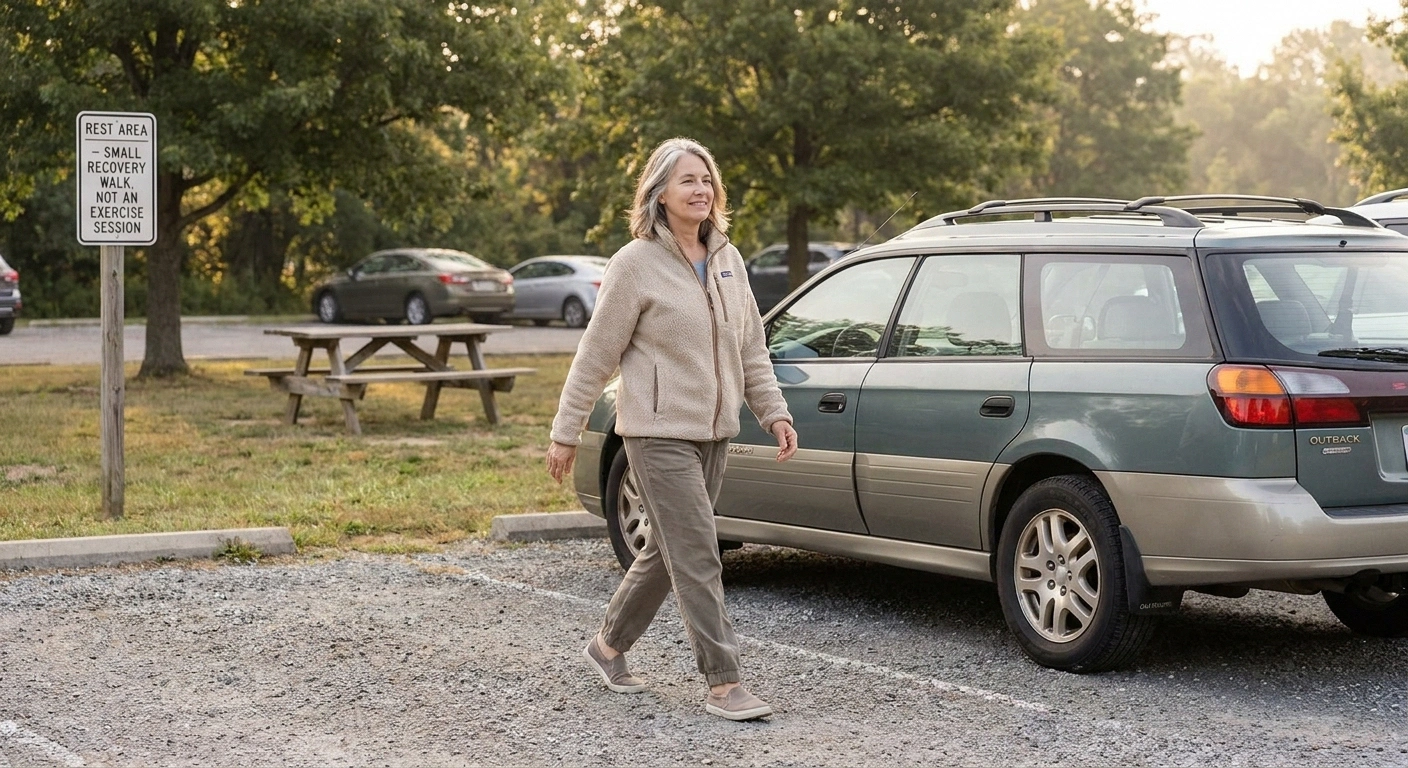
Stop every hour. I know that sounds like it'll add hours to a trip. It won't, because the alternative is either arriving wiped out or making fewer but longer stops to recover from how stiff you've gotten. Six-by-ten-minute stops feel about the same on the clock as three-by-twenty-minute stops, but the first option keeps your legs alive.
The 60-Minute Stop — What to Do
- Get out of the car — don't just shift in the seat
- Walk slowly for 2–5 minutes around the car or parking lot
- Five ankle pumps + five calf raises
- Sip water — even a few ounces; dehydration silently worsens nerve pain
- If feet are numb, sit on a bench briefly before walking — falls happen when you walk on numb feet
Six short stops add about the same total time as three long ones — but they keep your legs alive.
What to do at each stop:
- Get out of the car. Don't just shift in the seat. Stand up, even if you're not going into the gas station.
- Walk for two to five minutes. Slow walking, around the car, around the parking lot. The point is to move blood through the legs, not exercise.
- Do five ankle pumps and five calf raises. Pumping your ankles up and down, then rising onto your toes and back down, is the simplest thing for circulation.
- Sip some water. Even a few ounces. Dehydration is the silent contributor to nerve pain on long trips.
- If your feet are numb or burning, sit on a bench for a minute before walking. Walking with no foot feedback is when falls happen.
If your driver is reluctant to stop, frame it once: “I need a stretch break every hour for my circulation. It'll add about an hour to the day, but I'll be in much better shape when we arrive.” Most drivers, told once, will adjust without grumbling. If they don't, that's a different conversation worth having calmly.
Hands, Wrists, and the Lap-Belt Problem
If your neuropathy affects your hands, the long-ride problems are different. Holding a phone, a book, or a snack pack in the same position for hours sends your wrists and fingers into a slow ache.
A few things help:
- Bring a small lap pillow. Even a folded blanket. Anything on your lap so your hands don't have to grip whatever you're using to occupy your time.
- Switch hands and switch tasks. If you're listening to an audiobook and your right hand is holding the phone, hand it to your left for a while. Better, set the phone in a cupholder or a small phone stand and just listen.
- Stretch your fingers and wrists every stop. Gentle finger spreads, wrist rolls, opening and closing the fists slowly. Ten seconds of each at every break.
- The seatbelt across the lap can cut into compromised skin. A small sheepskin or fleece seatbelt cover (around $10) softens it. If you have abdominal sensitivity from autonomic neuropathy, this is worth doing.
Temperature: The Thing You Can't Control From the Passenger Seat
Air conditioning blowing directly on cold, painful feet is one of the most reliable ways to amplify nerve pain. Heat blasting on the same feet feels good for ten minutes and then makes them swell. Most cars have separate driver and passenger climate zones, but the driver may not realize you need a different setting.
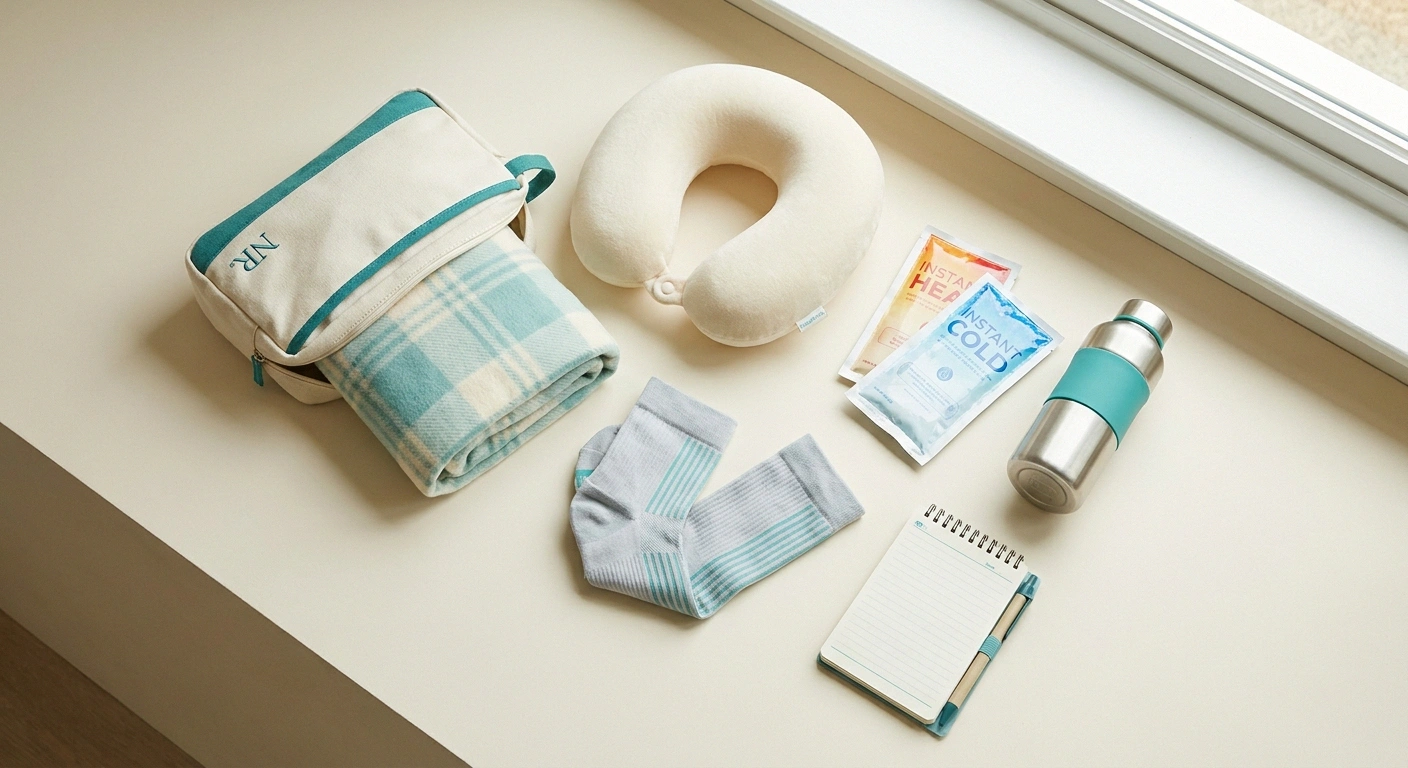
The Passenger Comfort Bag — What to Pack
Two strategies that work:
- Bring a soft lightweight blanket for your lap and feet. Easier than constantly negotiating the climate. You can drape it as needed and remove it when you don't.
- Carry an instant heat pack and an instant cold gel pack in your car bag. The kind that activates by snapping a metal disc. They work for one ride and are perfect for a flare you didn't see coming. Available at any drugstore.
If cold weather is the issue more broadly, our guide to neuropathy and cold weather walks through layering strategies and warming tools that work in a car too.
Sleeping in the Car (Or Trying To)
On a long ride you may want to sleep, especially if you're traveling overnight or early-morning. The natural curl-up position — knees tucked, head against the window — is exactly what neuropathy doesn't want. You'll wake up worse than when you started.
The better way:
- Recline the seat slightly. Not all the way — just enough that your weight shifts off your tailbone.
- Use a U-shaped neck pillow. Keeps your head from falling sideways onto your shoulder, which causes the wakeup neck stiffness that ruins the rest of the day.
- Keep your feet supported and shoes off. Same setup as for the awake portion of the trip.
- An eye mask helps. Light entering your eyelids fragments sleep. A soft mask is $5 and worth carrying.
- Let yourself sleep no more than 20 to 40 minutes at a time. Long deep sleep in a fixed position will make every nerve pain worse on waking. Short power naps are fine.
Arriving at Your Destination
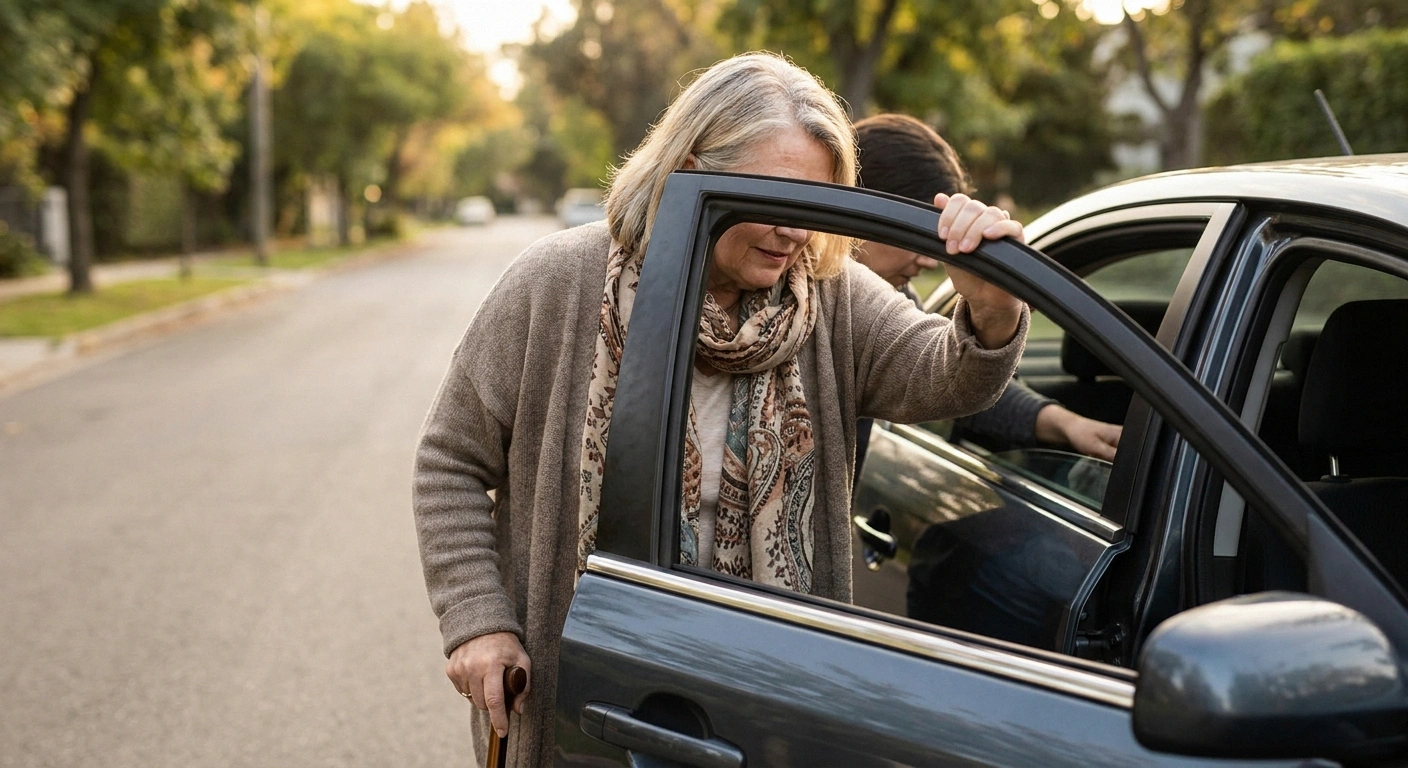
The first ten minutes after getting out of the car set the tone for the next several hours. Don't rush.
First 10 Minutes Out of the Car — Don't Rush
- Stand up slowly. Hold the door frame. Let blood pressure adjust before stepping away.
- Walk a few steps before walking with purpose — rebuild proprioception
- Hands free of bags for the first 30 seconds — let someone else carry the suitcase if you can
- If there are stairs, sit for two minutes first, then climb slowly with one hand on the railing
- Build a one-hour recovery buffer before any planned event — shoes off, feet up, water, breath
Standing too quickly after hours seated is one of the most common fall moments for people with neuropathy.
Stand up slowly. Hold the door frame. Let blood pressure adjust. Standing up too quickly after hours seated is one of the most common fall moments for people with neuropathy.
Walk a few steps before walking with purpose. Rebuild proprioception before you head into a building. Hands free of bags for the first thirty seconds — let someone else carry the suitcase if you can.
If your destination has stairs, sit for two minutes first. Then climb slowly with one hand on the railing.
Plan a recovery hour. When you're inviting yourself to a family event after a long drive, build in an hour of arrival buffer before anything starts. Take off shoes, elevate feet, drink a tall glass of water, and let your body settle. Trying to walk into a recital, a wedding, or a holiday meal straight from the car is asking for a flare.
The goal of all of this isn't to make long car rides effortless — they're not, and pretending they are sets you up for disappointment. The goal is to make them survivable, so the destination is still worth getting to. Plan five minutes before you leave, stop every hour, set up your footwell properly, and the recital you drove six hours to see is still something you can enjoy when you get there.
Frequently Asked Questions
Is the front or back seat better for someone with neuropathy?
Front seat almost always. Front passenger seats have more legroom, recline further, and let you see the road, which reduces motion sickness. The footwell is larger and the seat adjustments are more flexible. If you're traveling with multiple people, name the issue out loud once — most family members will give up the front seat without resistance once they understand it's medical, not preference.
How often should I stop on a long car ride with neuropathy?
Every 60 minutes, even if it's just a five-to-ten-minute stretch break. Get out of the car (don't just shift in the seat), walk slowly for two to five minutes, do a few ankle pumps and calf raises, sip some water, and reset. Six short stops add about the same total time as three long ones, but they keep your legs functional. Sitting still for two or three hours straight is what creates the post-ride wipeout.
Should I wear compression socks during a long car ride?
Yes — and put them on at home before the trip starts. Mild graduated compression socks help with circulation, reduce ankle and foot swelling, and ease the burning that builds during long stretches of immobility. Putting them on before any swelling has started is much easier than fighting them on at a rest stop after hours of sitting.
What should I bring in the car for neuropathy comfort?
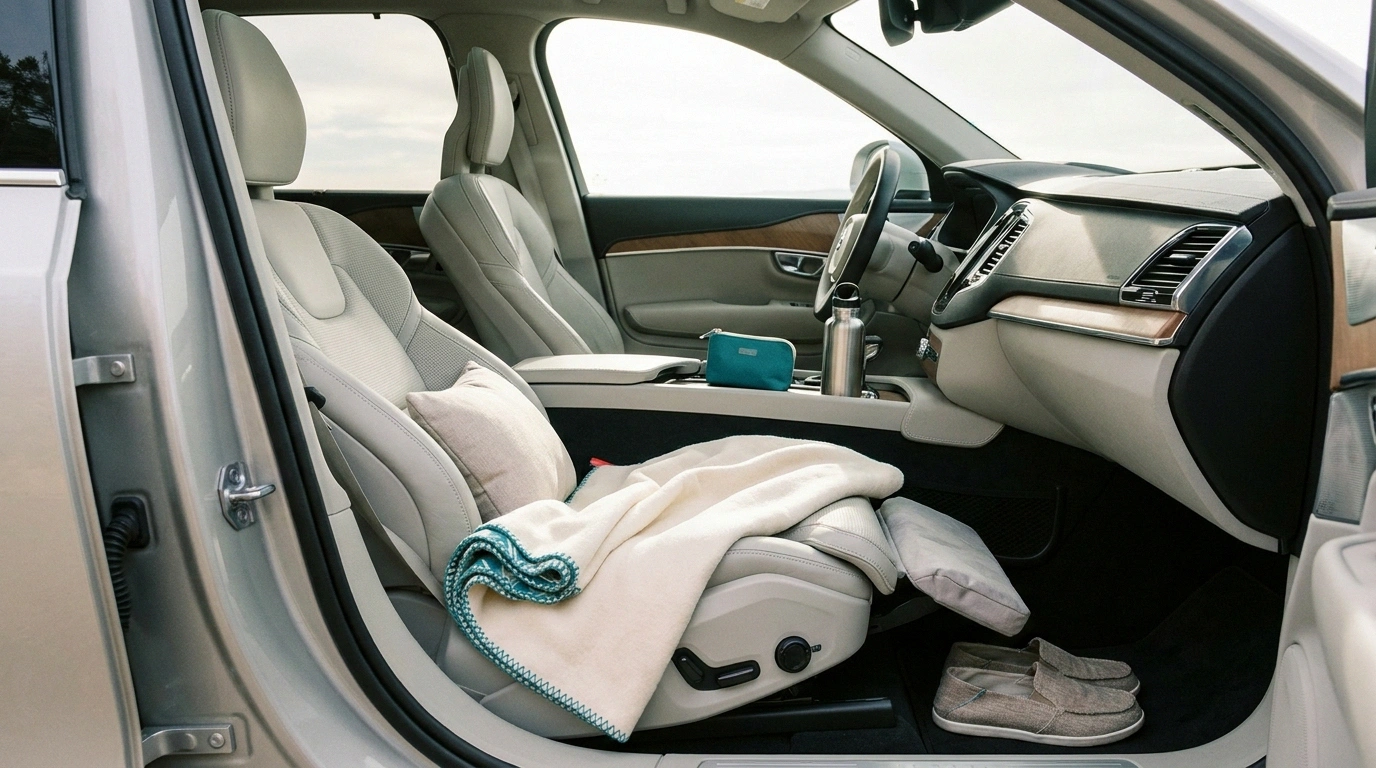
A small portable footrest or rolled blanket for under your feet, a lumbar pillow or rolled sweatshirt for your lower back, a soft lap blanket for temperature control, an instant heat pack and instant cold pack in case of a flare, a U-shaped neck pillow if you'll try to sleep, easy slip-on shoes you can take off, a refillable water bottle, and your scheduled medications. A small zip pouch keeps everything organized.
How do I keep my feet from going numb on a long drive?
Keep them moving in small ways throughout the ride. Take your shoes off once seated, wiggle your toes every few minutes, rotate your ankles in slow circles, and rest your feet on a soft elevated surface rather than flat on the rubber mat. Stop every hour to walk for a few minutes. Numbness is what happens when feet stay perfectly still in compressive footwear with the heels bearing weight. Reverse those conditions and the numbness usually doesn't develop.
Is it safe to recline the passenger seat for sleeping?
A slight recline (around 110 to 115 degrees from vertical) is comfortable and safe with the seatbelt properly worn. A full recline is not safe in a moving vehicle — the seatbelt can't restrain you correctly if you're nearly horizontal, and an emergency stop or impact becomes much more dangerous. Find the angle that takes pressure off your lower back without putting you flat.
What should I do as soon as I arrive after a long ride?
Stand up slowly, hold the door frame, and let your blood pressure adjust before walking. Take a few steps to rebuild balance and proprioception before heading into a building. If there are stairs, sit for two minutes first, then climb slowly with one hand on the railing. Build a one-hour recovery buffer before any planned event so your body has time to settle — taking off shoes, elevating feet, hydrating, and resting briefly. Walking straight from a car into a recital or family meal is one of the most common ways to trigger a post-trip flare.
About the Author