Dishes are one of those chores that nobody talks about as a hazard, but for those of us with hand neuropathy, the kitchen sink is a surprisingly risky place. Hot water you can't quite feel. Slippery glasses that don't quite fit the grip. Knives in cloudy water. Wet floor underfoot. None of it is dramatic, but all of it stacks up, and the worst injuries I've seen friends describe didn't happen on staircases — they happened at the sink.
I want to walk you through the changes I've made in my own kitchen and the ones I've watched friends in my support group adopt, because hand neuropathy doesn't have to mean giving up the satisfaction of a clean kitchen. It just means we re-engineer the sink so the safety doesn't depend on feeling things we can't reliably feel anymore.
What Hand Neuropathy Actually Changes at the Sink
Before we talk about fixes, it helps to name what we're working around. Hand neuropathy affects three things that matter for dishwashing:
Temperature feedback (you can't feel hot water in time). Fingertip feedback (slips don't register before they happen). Grip endurance (hands fatigue faster). Every strategy in this article removes your reliance on one of those three.
- Temperature feedback. The “this is too hot” warning signal from your fingertips is delayed or missing. By the time you notice, the burn has already happened.
- Fingertip feedback. Subtle slips — a glass starting to slide, a knife edge turning the wrong way — used to register before they became problems. Now they don't.
- Grip endurance. Small hand muscles fatigue faster than they used to. Twenty minutes at the sink that used to be nothing is now a real ask.
Every strategy in this article is designed to remove your reliance on one of those three things. We're not trying to push through them. We're routing around them.
Tier 1: The Temperature Fix Nobody Talks About
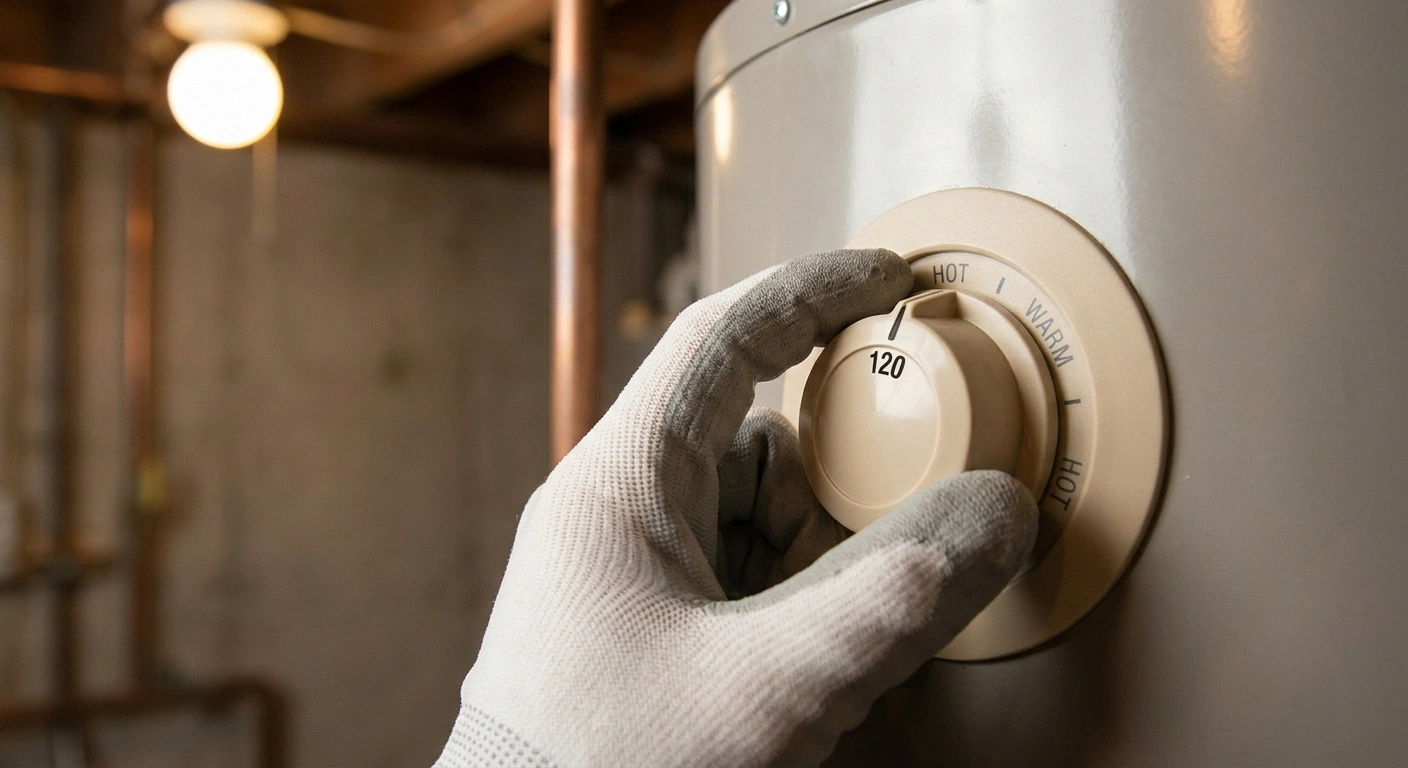
The most important change I'll suggest in this whole article costs nothing and takes 10 minutes. Go to your water heater and turn the thermostat down to 120 degrees Fahrenheit. This is the maximum the U.S. Consumer Product Safety Commission recommends for households with anyone whose temperature sensation is reduced — neuropathy patients, older adults, young children. Most household water heaters come from the factory set at 140 degrees, which can cause a third-degree burn on numb skin in about five seconds.
Turn your water heater down to 120°F. Most home water heaters come set at 140°F, which can cause third-degree burns on numb skin in under five seconds. The 120°F setting is the maximum the U.S. Consumer Product Safety Commission recommends for households with reduced temperature sensation.
This single change protects you 365 days a year at every faucet in the house. It also lowers your energy bill slightly. There's no downside.
For the sink specifically, get a small non-breakable water thermometer for under ten dollars. Drop it in the basin while you fill. Target water between 100 and 110 degrees for washing — warm enough to dissolve grease, cool enough that a delayed-feedback hand has a wider safety margin. The “test with the back of your hand” trick that we all grew up with is unreliable for neuropathic hands. The thermometer takes the guessing out of it.
When you're filling the sink, mix cold first and add hot gradually — the opposite of what most people do. That way if the temperature creeps past what you wanted, you can stop without already having scalded yourself.
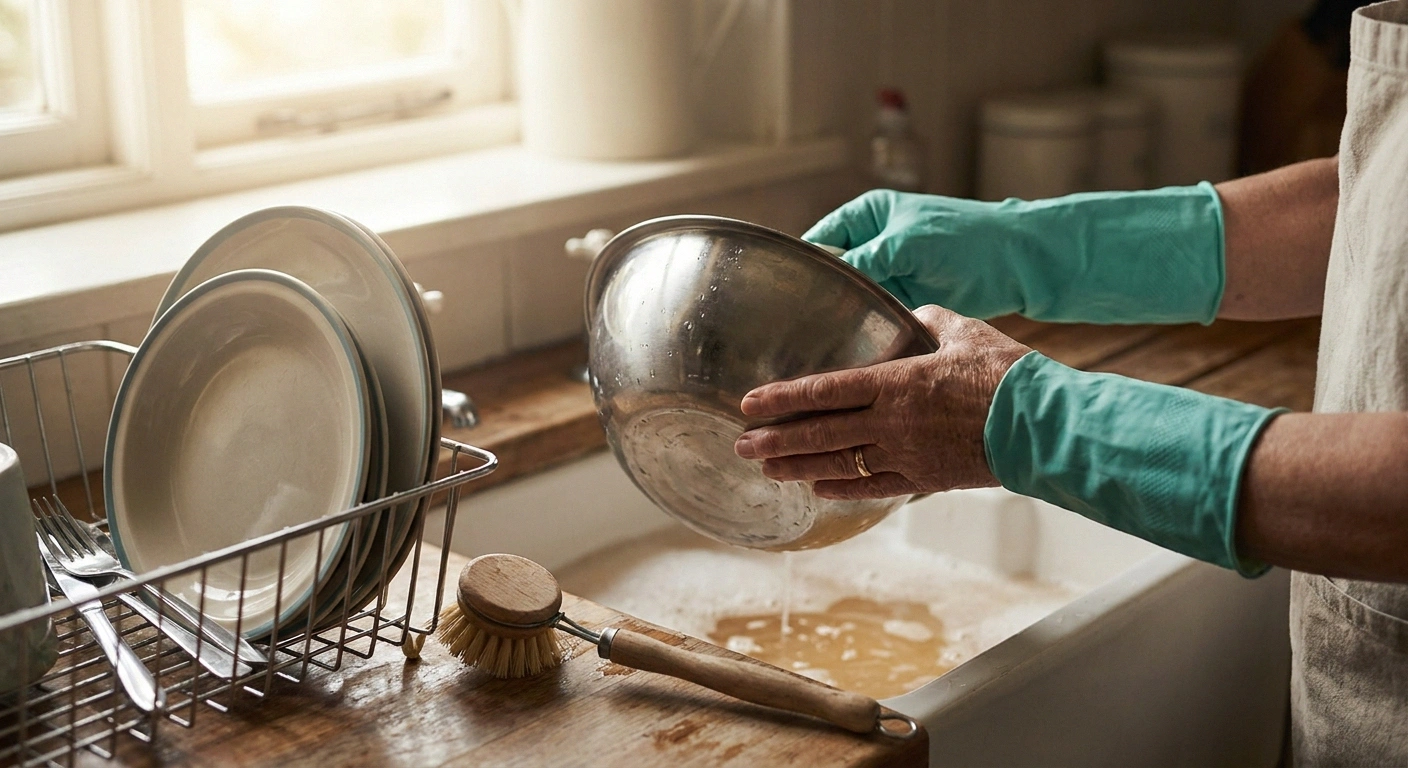
Finally, wear elbow-length rubber gloves with cotton liners. The gloves protect your skin from soap, give you a few extra seconds of warning before heat reaches your skin, and protect against minor cuts. The cotton liners wick sweat and prevent the rash that rubber alone can cause. A good pair runs $15 to $20 and lasts months.
Tier 2: Cuts and Breaks (The Sneaky Risks)
The second-most-common kitchen injury at the sink — after burns — is laceration from picking up something sharp in soapy water you can't see clearly. Numb fingertips make this much worse because you don't get the early “this feels wrong” warning.
Three changes essentially eliminate this risk:
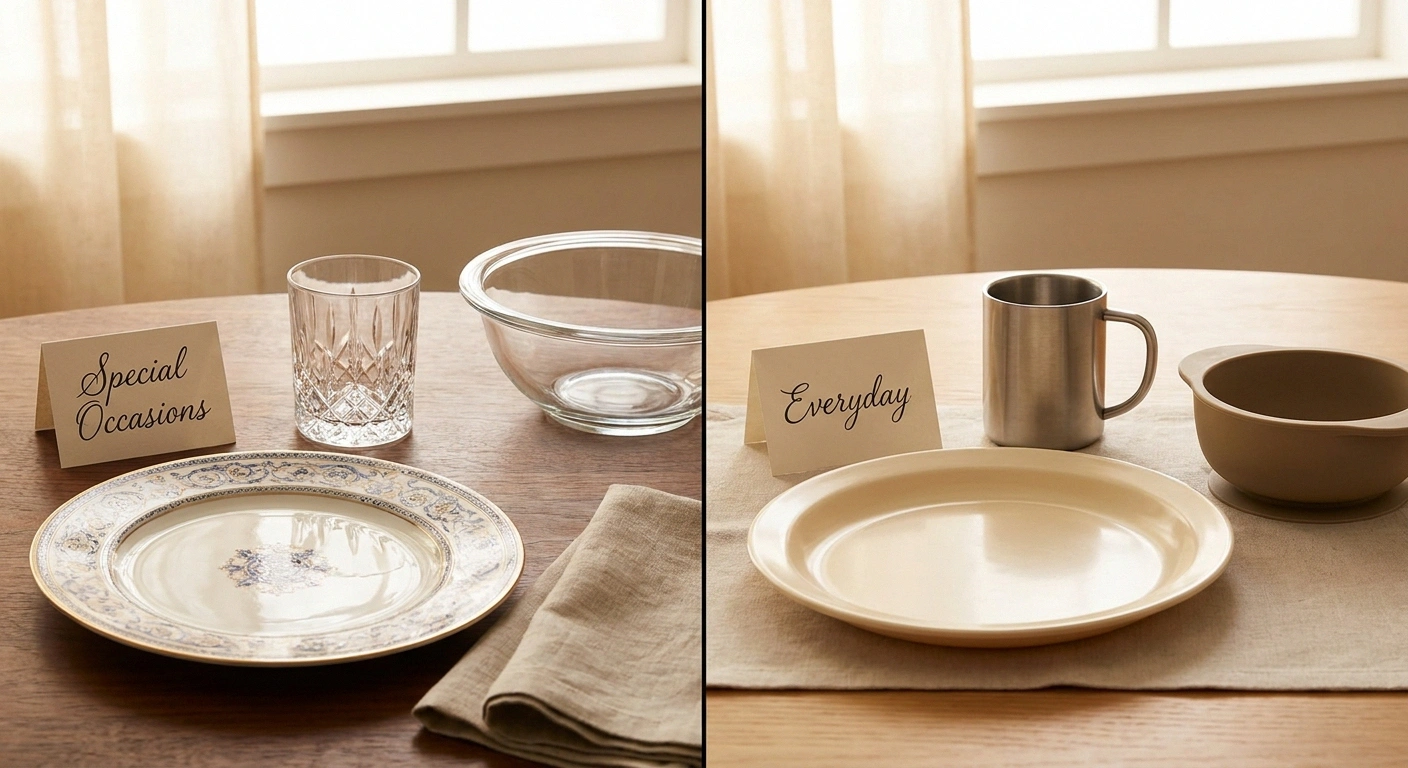
Switch your everyday dinnerware. Save the wedding china for special occasions. For daily use, switch to melamine, bamboo, silicone, or stainless steel plates, bowls, and cups. They're sold in complete sets for $30 to $60. They don't shatter into shards if you drop them in the sink. They don't slip out of grip the way wet glass does. They're dishwasher-safe. And honestly, modern options look quite nice — far from the camping plates of decades past.
Never pile sharp items in suds. Wash knives and other sharp items one at a time, immediately, before they go under the soap. A knife sitting blade-up in cloudy water is asking for a serious cut. If you must collect a few before washing, stand them blade-down in a separate cup so you can see and grip them.
Consider a cut-resistant glove for your non-dominant hand when you're washing anything sharp. They're sold in single-glove packs for $10 to $15. Wear it under your rubber glove. The combination protects against both heat and blades, and it doesn't significantly affect your grip.
Tier 3: Grip and Endurance
If your hands fatigue at the sink, the solution isn't pushing harder — it's reducing the work each hand has to do.
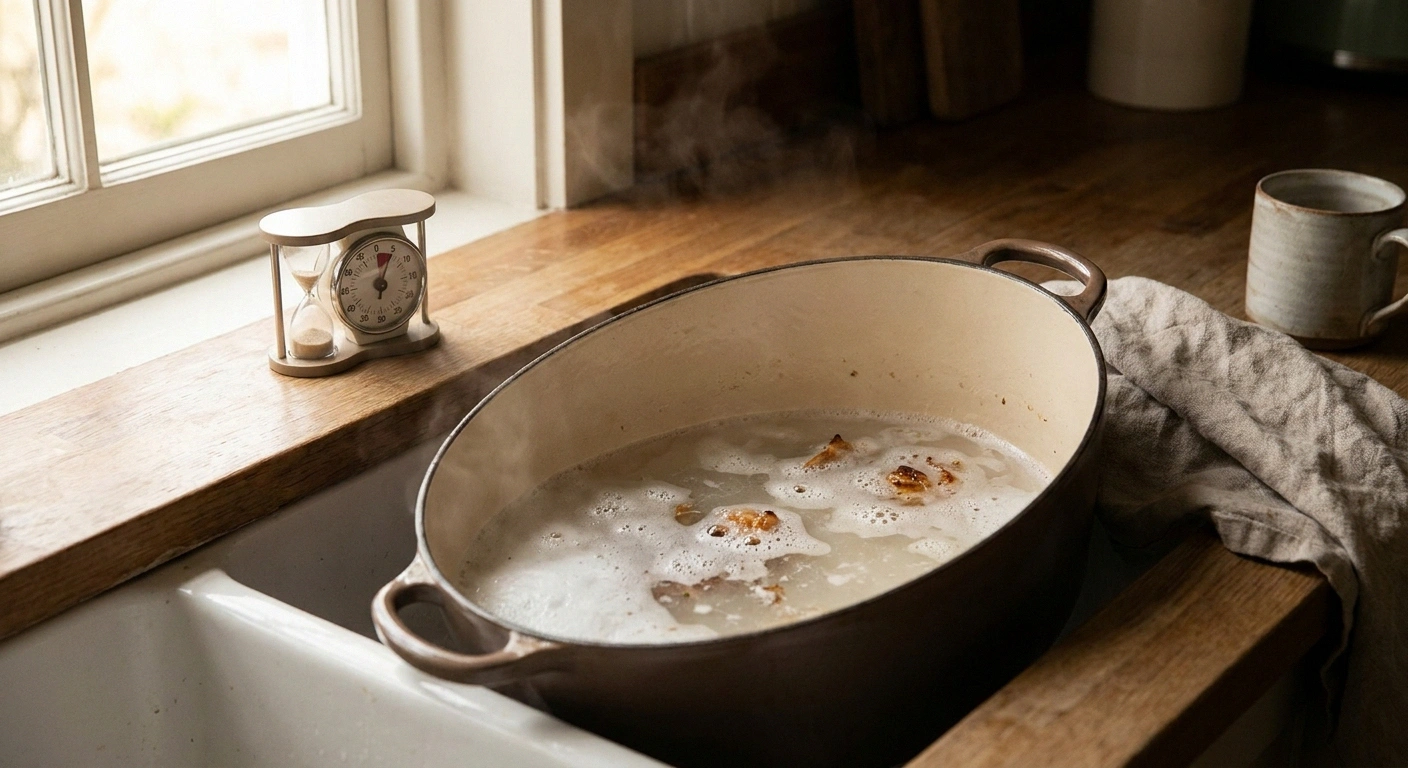
Soak first, scrub second. A five-minute soak in hot, soapy water dissolves most stuck food. The amount of scrub force needed afterward drops by maybe 70 percent. Less force, less grip fatigue, fewer mistakes. This is the single biggest workload reduction available without buying anything.
Get a long-handled scrub brush with a foam grip. Look for one with an 8- to 12-inch handle and a thick built-up grip. The longer handle gives leverage; the foam grip is easier on small finger joints than a slim sponge. They cost five to eight dollars at any grocery store.
Two-handed grip on anything that requires force. Twisting open a stubborn jar, scrubbing a baked-on pan, lifting a heavy pot — use both hands. This isn't weakness; it's distributing load. The “real adults use one hand” voice in your head can stop talking.
Take breaks. Wash half the dishes, sit down for two minutes, finish. Your grip strength is what it is. Respecting it is smarter than fighting it.
Tier 4: The Best Option Is Often Not Doing the Dishes
I want to push back on a piece of received wisdom from our generation: the idea that hand-washing dishes is somehow more virtuous than running the dishwasher. It isn't. It uses more water. It takes more time. And for neuropathic hands, it's measurably more risky.
Modern Energy Star dishwashers use about 3 gallons of water per load. Hand-washing uses 8 to 27 gallons depending on technique. The dishwasher sanitize cycle reaches 140–155°F, hot enough to kill bacteria your hands can't safely reach. For neuropathic hands, the dishwasher is the safer, cleaner, and more water-efficient choice.
If you have a dishwasher, run it daily, even if it's only half full. Modern Energy Star dishwashers use about three gallons of water per load. Hand-washing uses eight to twenty-seven gallons depending on technique. The dishwasher also reaches 140 to 155 degrees during the sanitize cycle, which kills bacteria better than your hands can. The dishes come out cleaner and safer.
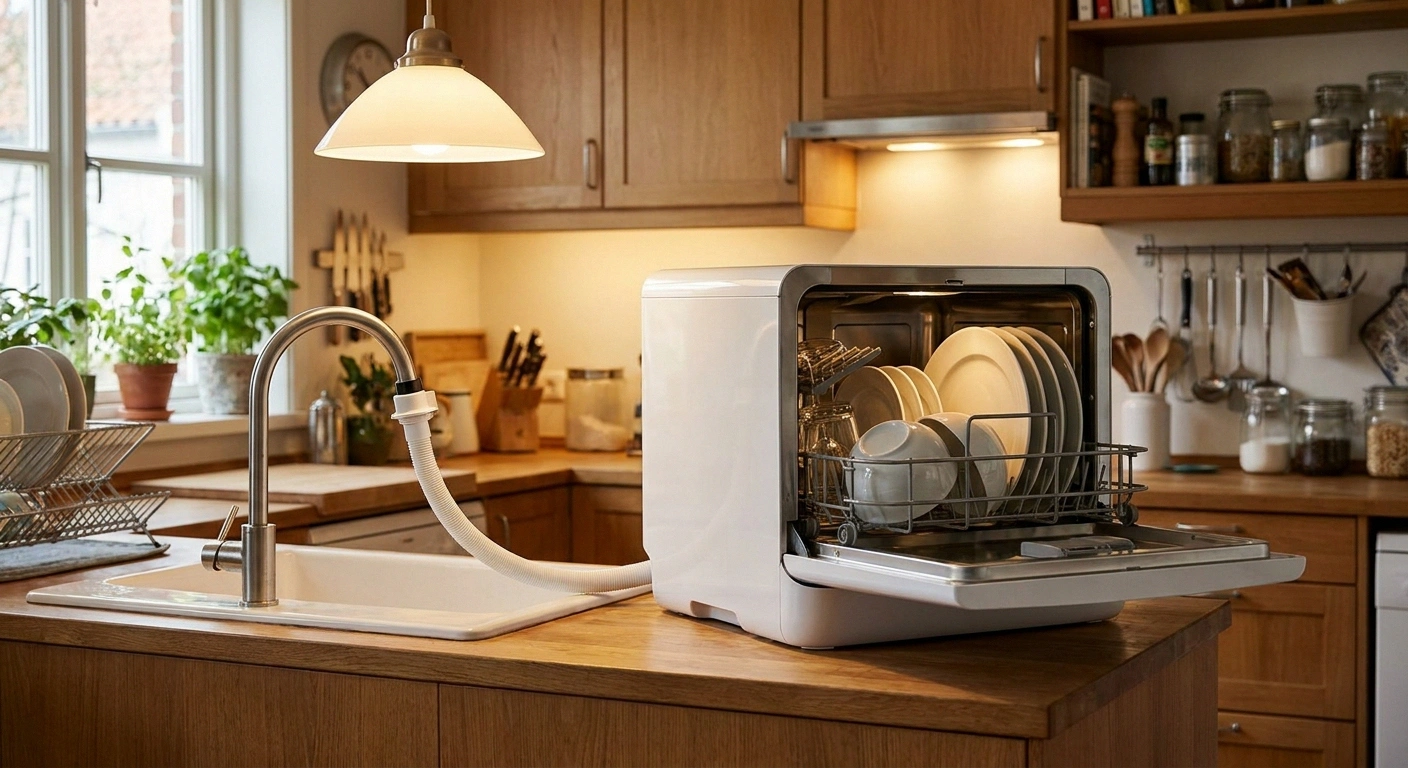
If you don't have a built-in dishwasher, look at a portable countertop dishwasher. They cost $200 to $350, sit on your counter, hook up to your sink faucet for the few minutes they're running, and disconnect when done. They hold a place setting for two to four people. For renters, apartment dwellers, or older homes without dishwasher plumbing, these have transformed kitchen routines for people I know.
Beyond the dishwasher, three other strategies dramatically reduce dish volume:
- Buy half as many dishes. If you only own six plates instead of twelve, you'll wash them every day instead of letting them stack up for three days, and the daily load is small and manageable.
- One-pot meals. Sheet pan dinners, slow cooker meals, Instant Pot recipes. They cut total dish count by maybe 60 percent compared to traditional multi-pan cooking.
- Disposable plates on fatigue days. Not as a daily habit, but as an option in your back pocket when your hands are flared or you're just tired. There's no medal for refusing to use them when it would protect you.
Tier 5: Floors and Footing
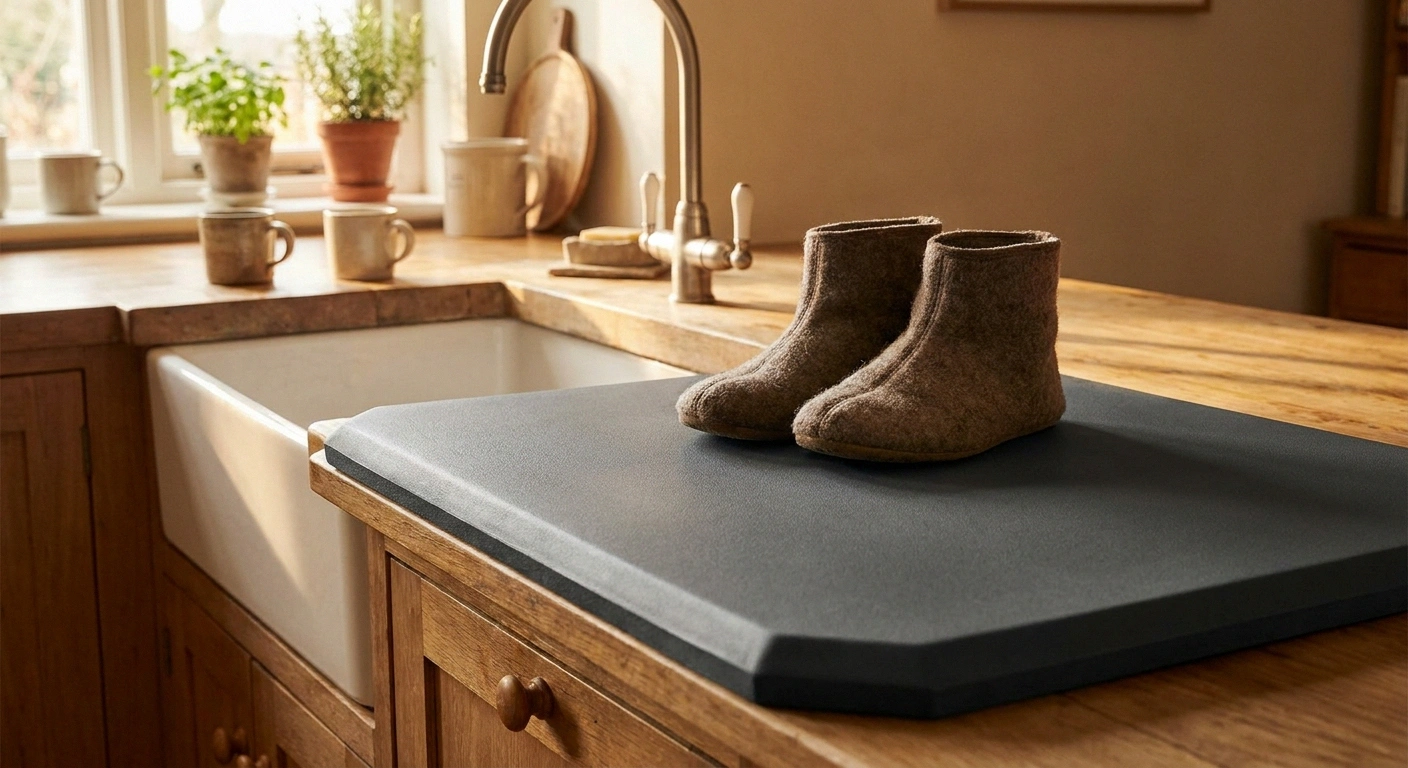
The kitchen floor in front of the sink is one of the most predictable fall locations in any house. Wet floor, neuropathic feet, distracted attention on the dishes in front of you — it's a setup. The fix is straightforward:
Anti-fatigue gel mat in front of the sink. About $25 to $40. The mat does three things: it provides cushion that reduces foot pain during longer sessions, it grips both the floor and your shoes, and it gives you a slightly raised edge that contains drips.
No loose rugs near the sink. If you have an area rug there, replace it with one that has solid non-slip backing, or remove it entirely. Loose rugs on tile or vinyl are slip hazards for neuropathic feet that can't feel the edge curling under.
Wipe drips immediately. A quick swipe with a towel after each batch of dishes prevents the slow puddle that becomes the surprise fall. This is one of those small habits that costs five seconds and prevents months of recovery.
Wear closed-toe shoes in the kitchen. Not socks alone, not slippers without grip, never barefoot. Your shoes should have a grippy sole and protect the top of the foot from dropped items. House shoes designed for kitchen use exist; they're worth owning.
Tier 6: Protecting Your Skin (The Slow Damage)
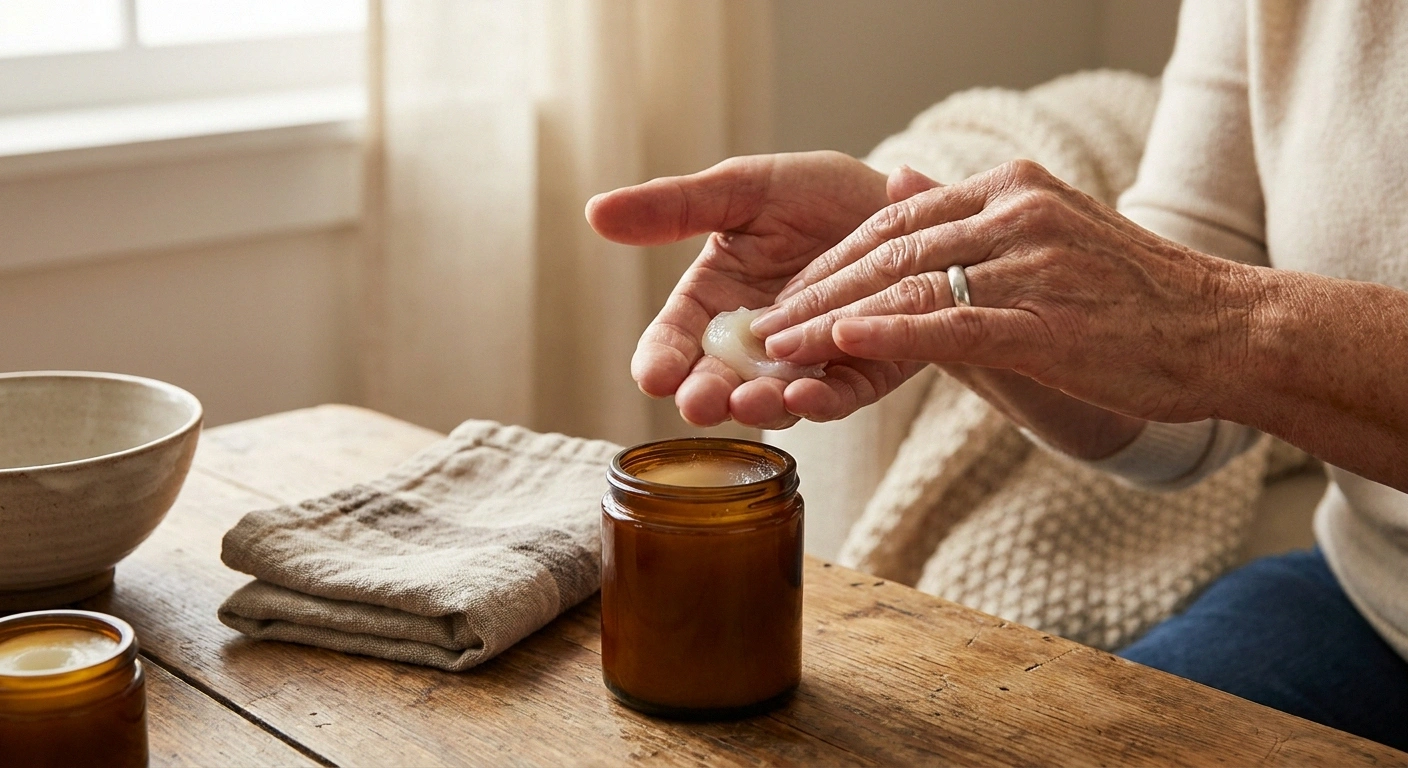
One of the things nobody warned me about with hand neuropathy is how badly neuropathic skin handles repeated dish-soap exposure. The combination of damp skin, detergent, and impaired healing creates contact dermatitis — cracked, dry, slow-to-heal patches that look mild and feel like nothing because of the neuropathy but quietly become infection sites.
Protecting your skin is a small daily routine:
Rinse your forearms. When you take the gloves off, run cool water over your arms to remove any residual soap. Skin that sits in soap residue between washes is skin that breaks down.
Moisturize within three minutes of drying. Skin loses moisture fastest in that window. Use a petrolatum-based ointment (like a heavy hand cream or even plain petroleum jelly) rather than a thin lotion. The greasier feel is a fair trade for skin that stays intact.
Inspect your hands daily. Once a day, in good light, look at your palms, between your fingers, around your nails, and on the backs of your hands. You're checking for small cuts, splits in the skin, color changes, or any tender spots. On neuropathic hands, small problems become big problems fast because you can't feel them developing. Catching them in the first day or two is the difference between a band-aid and a doctor's visit.
The Adaptive Tools Worth Owning
Here's a practical shopping list that completely re-engineers a kitchen sink for under $200. None of these require a prescription or a referral, and most are at any major retailer or online:
| Item | Cost |
|---|---|
| Long-handled scrub brush with foam grip | $5–8 |
| Cut-resistant glove (non-dominant hand) | $10–15 |
| Elbow-length kitchen gloves with cotton liners | $12–18 |
| Non-breakable everyday dinnerware set | $30–60 |
| Anti-fatigue gel mat | $25–40 |
| Stand-up dish drying rack | $20–30 |
| Basin water thermometer | $8–12 |
| Magnetic wall-mount knife strip | $15–20 |
- Long-handled scrub brush with foam grip — $5 to $8
- Cut-resistant glove (single, for non-dominant hand) — $10 to $15
- Elbow-length kitchen gloves with cotton liners — $12 to $18
- Non-breakable everyday dinnerware set (melamine or silicone) — $30 to $60
- Anti-fatigue gel mat — $25 to $40
- Stand-up dish drying rack — $20 to $30
- Tap or basin thermometer — $8 to $12
- Magnetic wall-mount knife strip — $15 to $20
If you go beyond that and the budget allows, a portable countertop dishwasher at $200 to $350 transforms the situation entirely. It pays for itself in the time and risk it eliminates.
What I Wish Someone Had Told Me Earlier
When my hands first started giving me trouble, I assumed it was a temporary thing I'd push through. I assumed asking my husband to do the dishes was somehow giving in. I assumed the wet floor wasn't a real risk because I'd been standing in this kitchen for forty years and never fallen.
I was wrong on all three counts. The neuropathy wasn't temporary. Asking for help on hard days wasn't giving in — it was managing my health. And the slip-and-fall that I thought couldn't happen to me ended up happening to my friend Ruth, who broke her wrist at her own sink and was in a cast for ten weeks.
The strategies in this article won't make hand neuropathy go away. Nothing will. But they will keep you doing what you love in your own kitchen for years longer, with fewer injuries and less fatigue. That's worth a few small changes and a few inexpensive tools.
If you have a moment after reading this, go look at your water heater. Set it to 120 degrees if it isn't already. That's the single biggest gift you can give yourself today.
Frequently Asked Questions
Can I just wear thick gloves and skip the thermometer?
Thick gloves delay the heat signal reaching your skin, but they don't prevent burns. They give you a few extra seconds, not minutes. If the water is genuinely too hot, you'll still get hurt; you'll just have a slightly bigger margin to notice. The thermometer plus the gloves is the right combination. The thermometer alone tells you what's actually in the basin.
Is the dishwasher really as clean as hand-washing?
Modern dishwashers are typically cleaner than hand-washing. The sanitize cycle reaches 140 to 155 degrees, hot enough to kill most bacteria. Your hands can't reach those temperatures safely. The dishwasher also uses fresh water throughout each rinse cycle rather than the soapy basin water that hand-washing uses. For neuropathic hands, the dishwasher is the safer and more hygienic choice.
My partner does the dishes, so do I really need to change anything?
Probably yes. Two reasons. First, anything that's true for your hands is true for your partner's hands if they have neuropathy or are aging. Second, there will be days when your partner isn't available — when they're traveling, sick, or busy — and you'll be back at the sink. Having the strategy in place before you need it is much easier than trying to retrofit it during a flare.
What if I have arthritis in my hands too?
The same strategies apply, with the addition that lightweight tools matter even more. Look for the lightest scrub brushes, the lightest dinnerware (silicone tends to be lighter than melamine), and consider a smaller daily wash load split into two short sessions rather than one long one. Pelvic-floor or occupational therapy can also teach hand-saving grip techniques for arthritic joints.
How do I bring up adaptive equipment with my doctor without feeling like I'm overreacting?
You're not overreacting. Adaptive equipment for neuropathic hands is standard of care, not luxury. Ask for an occupational therapy referral — OTs specialize in exactly this kind of practical adaptation and can evaluate your kitchen, recommend tools specific to your situation, and often help you get them covered by insurance.
Are silicone or melamine dishes safe? I keep hearing different things.
Both are safe for cold and warm food when used as directed. The food-safety concerns you may have heard about are mostly related to melamine at very high temperatures (over 160 degrees Fahrenheit), which doesn't happen with typical washing or eating. Silicone is safe across a wider temperature range. Buy from reputable brands sold in major U.S. retailers and you'll be fine.
What about washing pots and pans that are too big for the dishwasher?
For oversized items, use the soak-first principle aggressively. Fill the pot or pan with hot soapy water and let it sit for 15 to 30 minutes — or overnight for stubborn cookware. The vast majority of cleanup is done by chemistry, not scrubbing. When you do scrub, use the long-handled brush, take breaks, and consider tackling one big item per day rather than batching them.
How do I know if my neuropathy is bad enough to need these changes?
The honest answer is: if you have any reduction in temperature sensation, grip strength, or fingertip feedback, these changes are worth making before you have a kitchen injury, not after. The water-heater setting in particular costs nothing and protects against the most dangerous risk. Start with the free changes today, add the inexpensive tools as you can, and consider the larger investments based on how much you use your kitchen.
About the Author