The evacuation checklists you find online are written for people who can feel their feet.
Water, batteries, documents, three days of medication, phone charger. All good advice, all missing the part that matters most if you have neuropathy: an evacuation is hours of walking and standing on feet that can't report damage, in places you've never been, often in the dark, sometimes through water.
That's the real risk — not the storm. The unfelt cut on day one that becomes a problem on day five, in a shelter, with no podiatrist for fifty miles.
So here's a list built around that, on top of the standard prep everyone needs.
Shoes Are the Most Important Item You Pack
Ahead of the flashlight, ahead of the phone charger — genuinely.
Evacuation day is the worst possible day to break in shoes. You will be on your feet for hours you did not plan for, and a blister on numb feet gives no warning while it forms.
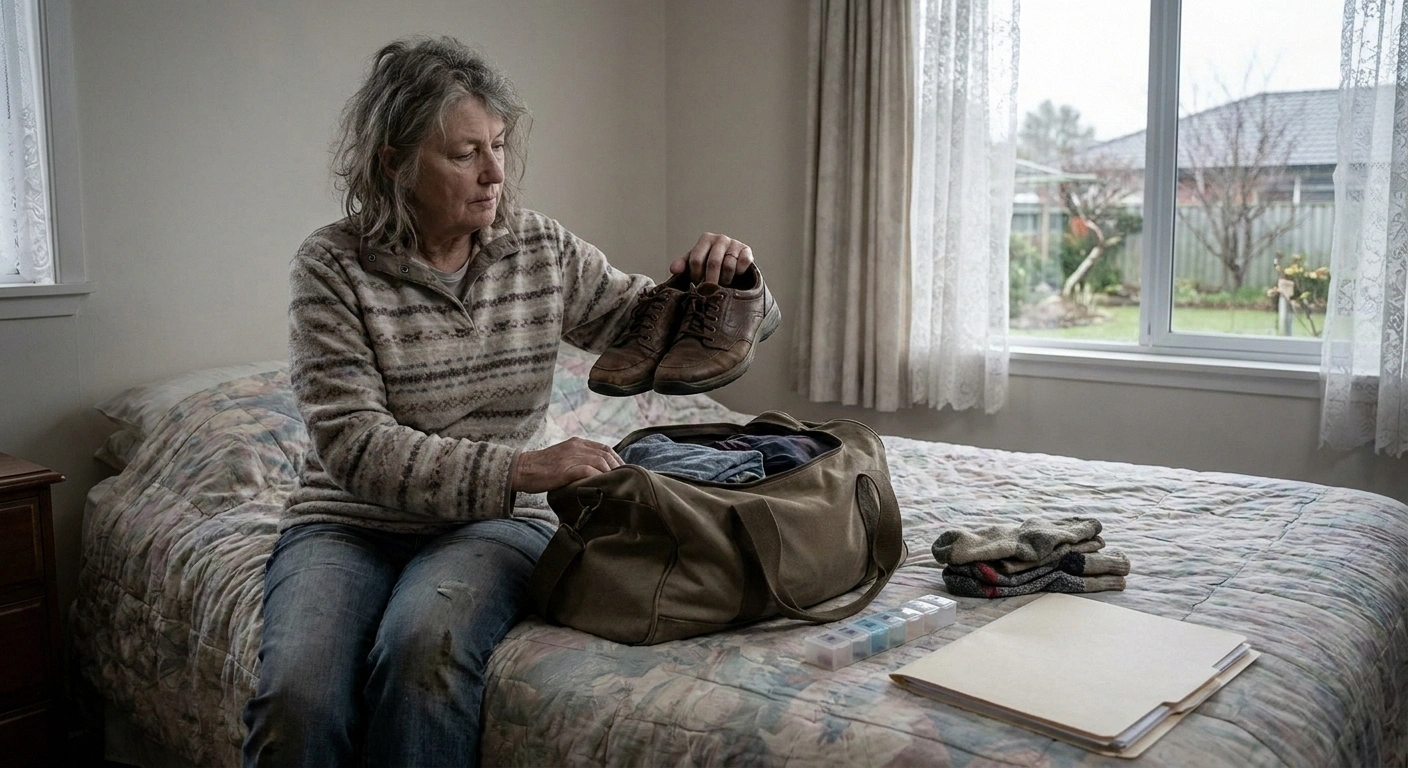
- Wear your most broken-in supportive pair, not your newest
- Pack a second pair, because wet shoes on numb feet for hours cause real damage
- Bring more clean dry socks than seems reasonable
- Never go barefoot or in flip-flops indoors at a shelter
Custom orthotics and diabetic inserts belong in the bag, not only in the shoes you happen to be wearing when you leave.
An evacuation means standing in lines, walking farther than you normally do, navigating parking lots and shelter hallways, and being on your feet at hours you'd usually be sitting. Whatever is on your feet is going to be there for a long time.
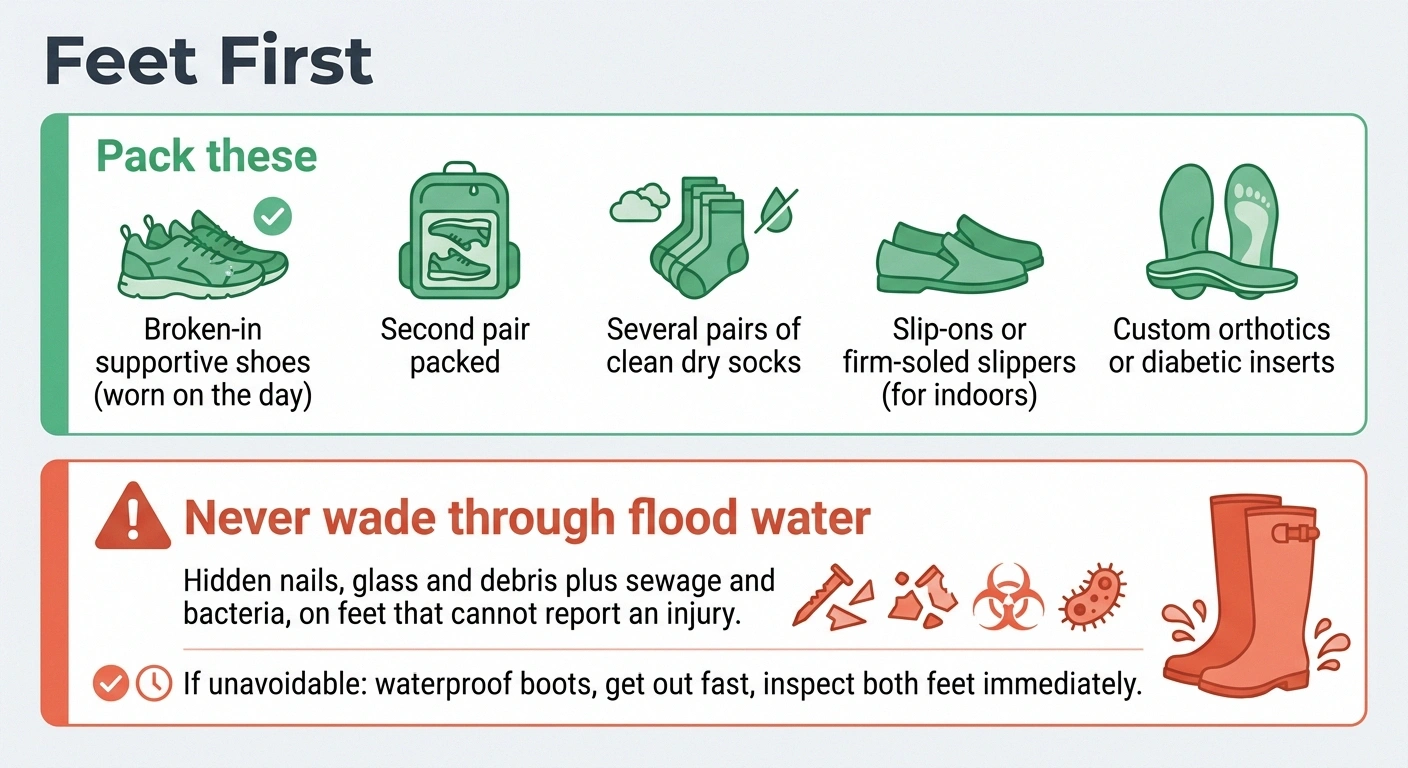
Wear your most broken-in supportive shoes, not your newest ones. A fresh pair of shoes on evacuation day is how you get a blister you never feel. And pack a second pair, because shoes get wet and wet shoes on numb feet for hours is a genuinely bad combination.
The rest of the footwear list:
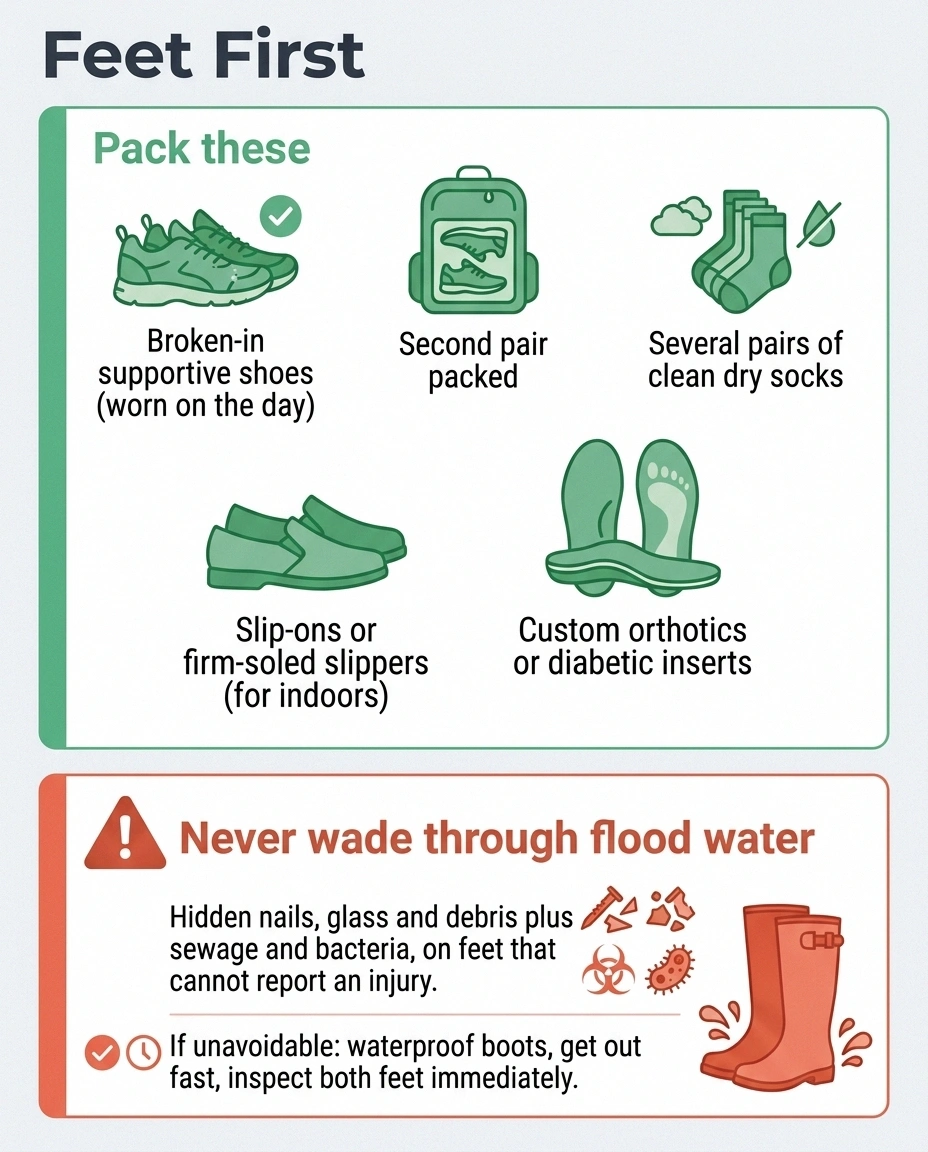
- Several pairs of clean, dry socks. More than you think. Damp socks cause problems fast when you can't feel the friction.
- Slip-on shoes or firm-soled slippers for inside the shelter. Not flip-flops, not bare feet. Shelter floors collect things you won't feel until they've done damage.
- If you use custom orthotics or diabetic inserts, they go in the bag, not just in the shoes you're wearing.
If you're between shoes right now and wondering what to grab, the features that matter most for neuropathy apply here too, with the one addition that broken-in beats ideal in an emergency.
Never Walk Through Flood Water
This is the single most important rule on the page — the one to remember if you forget everything else.
Do not wade through standing flood water. It hides nails, glass and metal, and it carries sewage. With normal sensation you would feel the cut and get out. With neuropathy you can walk on an open wound for hours and never know.
If you truly have no choice: waterproof boots, out as fast as possible, then inspect both feet the moment you reach dry ground. Clean and cover anything you find, and get it looked at rather than waiting to see whether it worsens.
A contaminated wound on a foot with reduced sensation and possibly reduced circulation is the fastest route to a foot-threatening infection.
Flood water hides nails, glass, metal, and debris, and it carries sewage and bacteria. With normal sensation you'd feel a cut and get out. With neuropathy you may walk on an open wound for hours without knowing.
A contaminated wound on a foot with reduced sensation and possibly reduced circulation is how a serious infection starts. Not a scrape — an infection that can threaten the foot.
So: don't wade through standing water. If you genuinely have no choice, wear waterproof boots, get out as soon as possible, and inspect both feet thoroughly the moment you're somewhere dry. If you find anything at all, clean it, cover it, and get it looked at by a clinician. Don't wait to see if it gets worse — you won't get the usual warning that it has.
The Foot Check Comes With You
Your daily foot check is the routine most likely to disappear during an evacuation, and it's the one that matters most while you're in one.
Everything about the situation works against it. More walking than usual, unfamiliar surfaces, wet shoes, shared bathroom floors, no good lighting, no privacy, and a hundred other things demanding attention.
Make it possible by packing for it. A small unbreakable mirror for the bottoms of your feet. A compact flashlight (shelter lighting is bad, and you'll often be checking at odd hours). Antiseptic wipes, adhesive bandages, and gauze. Moisturizer, since sweaty shoes and dry air both crack skin.
Then pick a fixed time, ideally right before sleep, and look at both feet: tops, bottoms, between every toe, and both heels. You're looking for redness, blisters, cuts, swelling, warm spots, or anything that wasn't there yesterday. The full inspection routine takes two minutes, and in an evacuation it's the difference between catching something early and finding it when it's already infected.
Medications: Pack More Than the Checklist Says
The standard guidance is three to five days. For neuropathy medications, aim for seven or more if you can manage it — and here's why that gap matters.
- Pharmacies close, and records go offline
- You may end up in a county where your pharmacy chain does not operate, with no way to verify a prescription.
- Stopping gabapentin or pregabalin abruptly is not neutral
- Several missed days can bring withdrawal symptoms on top of returning nerve pain, at the worst possible moment.
- Original labeled bottles are your proof
- The label is what lets an unfamiliar pharmacy issue an emergency refill. A pill organizer alone will not.
The reason is practical. Pharmacies close during disasters, records go offline, and you may end up somewhere your pharmacy chain doesn't operate. And stopping gabapentin or pregabalin abruptly isn't a neutral event. Missed doses for several days can bring withdrawal symptoms on top of returning nerve pain, at the worst possible moment.
What goes in the medication bag:
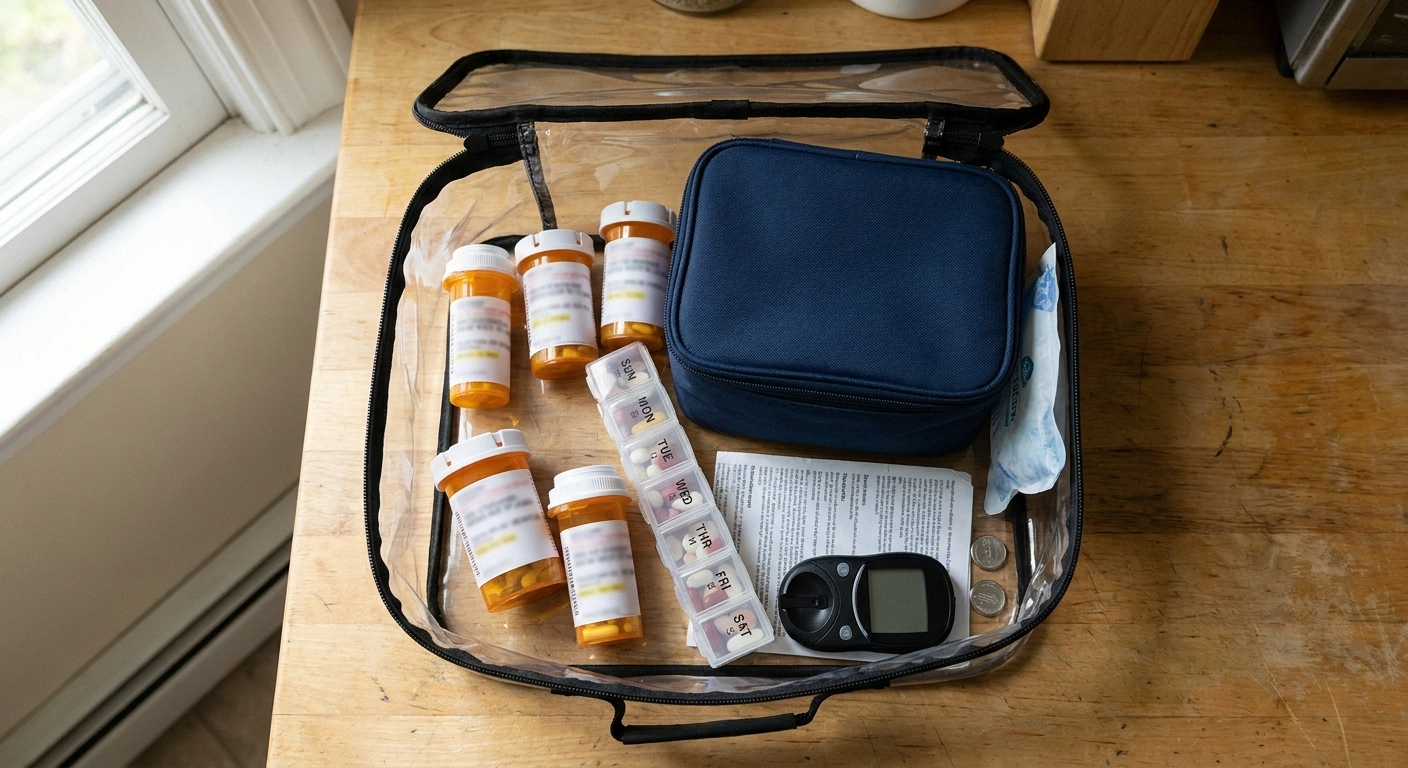
- All prescriptions in their original labeled bottles. The label is your proof of prescription for an emergency refill.
- A printed list of every medication with dose, frequency, and prescribing doctor. Phones die.
- Insurance card copy, photo ID copy, pharmacy phone number.
- Any diabetes supplies: meter, extra batteries, strips, lancets, and insulin in an insulated container with refreezable packs. Do not let insulin freeze against ice.
- Your usual over-the-counter items, including topical creams, since these are hard to replace mid-evacuation.
Keep it all in one waterproof bag, and keep that bag with you rather than in the trunk. If you already have your medical records organized, this bag is mostly assembled already.
One thing worth doing before hurricane season rather than during it: ask your pharmacy about emergency refill rules in your state. Many allow early refills once a state of emergency is declared, but knowing this in advance beats discovering it in a phone queue.
The Drive
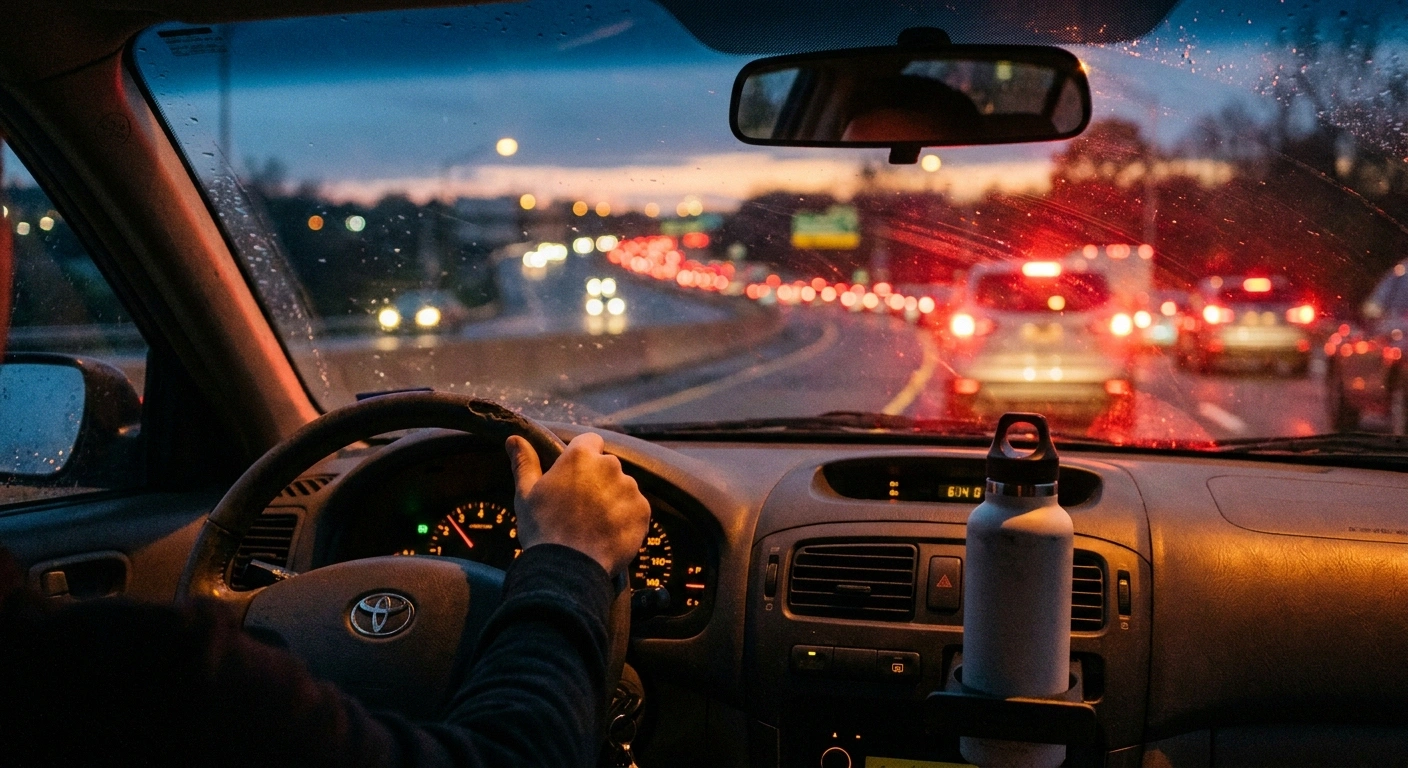
Evacuation traffic turns a two-hour drive into eight — that is the normal case, not the worst one. For neuropathy, that means hours of sitting still, which brings swelling, burning, and stiffness.
Plan for it. Stop and walk for a few minutes every hour or two if traffic allows, even just around the car at a standstill. Flex your ankles and wiggle your toes while seated (ankle pumps genuinely help circulation). Keep your feet flat rather than crossing your legs. Loosen your shoes but don't take them off entirely, because feet swell and getting them back on becomes a struggle. If you wear compression socks, a long drive is exactly what they're for, as long as they fit properly and aren't bunching.
Keep water within reach. Dehydration worsens both swelling and blood sugar, and people drink less in traffic to avoid bathroom stops, which backfires in both directions.
Surviving the Shelter or the Hotel Room
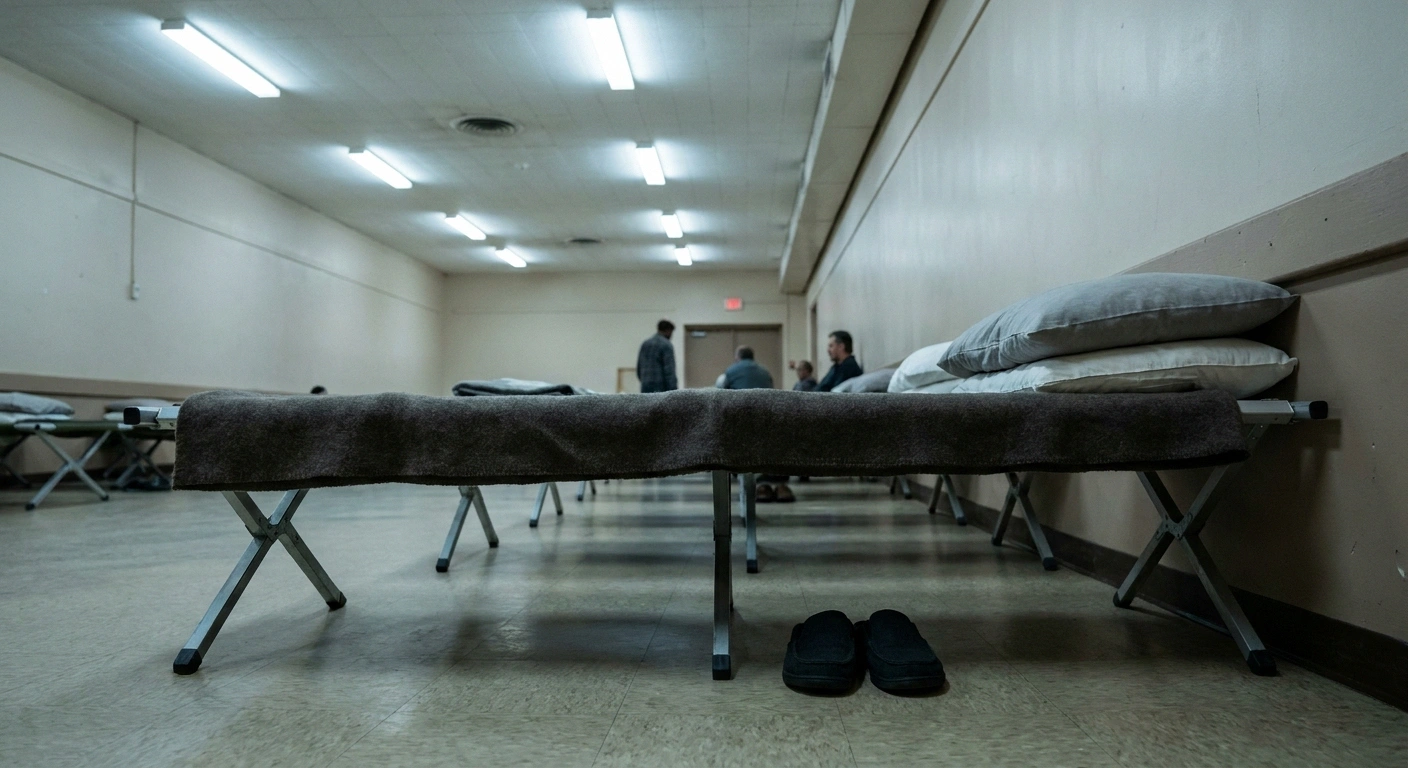
Wherever you land, it wasn't built with your feet in mind.
Shelter cots are short and often leave feet hanging off the end. Floors are concrete and cold. There's no cushioned chair, no recliner, no familiar place to put your feet up.
Small things that help a lot: an extra pillow or two for elevating your feet, which is one of the better uses of limited bag space. A light blanket, because shelters run cold and cold makes nerve pain worse for a lot of people. Something to sit on if seating is limited, since standing for long stretches is harder than walking.
Always wear something on your feet, including on the way to the bathroom at 3am. Shared floors plus reduced sensation is exactly the combination to avoid.
And if there's air conditioning or heat, position yourself thoughtfully. Directly under a vent is uncomfortable for anyone with temperature sensitivity, in either direction.
Moving Around in the Dark
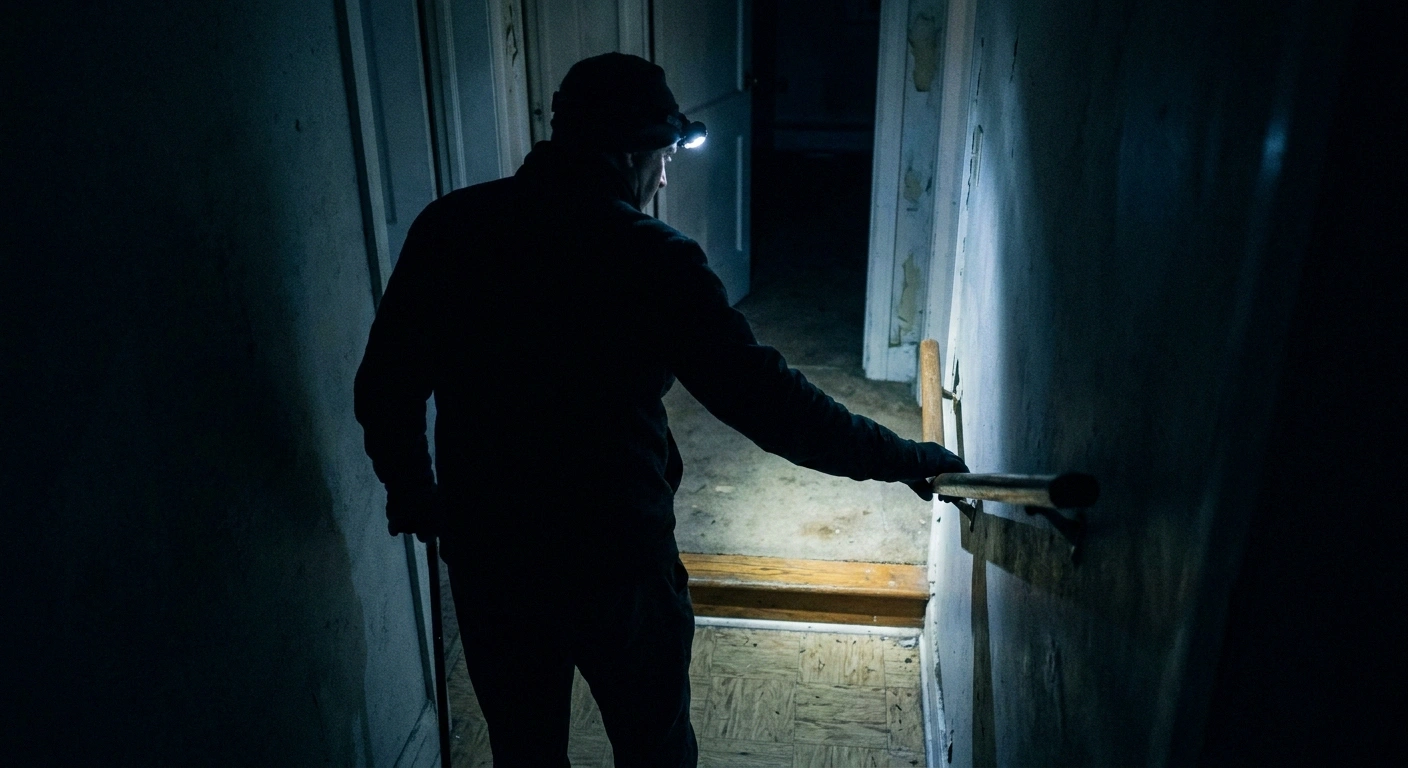
Power outages and unfamiliar buildings are a real fall risk when your feet already give you unreliable position information.
A flashlight occupies a hand. In an unfamiliar dark building you may need one hand for a railing and the other for a cane, which leaves nothing for the light. That is the whole argument.
The rest of the dark-hours kit:
- A small battery nightlight for the path to the bathroom
- Your cane or walker, even if you only use it occasionally
- Spare batteries for everything
Walk your route once in good light before you need it at 3am. Most falls in this situation come from a surface change nobody expected, and fatigue makes balance worse by the second night.
Pack a headlamp, not just a flashlight. It sounds like overkill until you're trying to hold a flashlight, a cane, and a railing — with two hands. A headlamp leaves both hands free, and that's worth more than the light itself.
Also useful: a small battery-powered nightlight for the path between your sleeping spot and the bathroom. Your cane or walker even if you only use it occasionally, since unfamiliar surfaces and fatigue both make balance worse. And take the time to walk your route once in good light so you know where the steps and thresholds are.
Move slowly on unfamiliar ground. Most falls in this situation come from a surface change you didn't expect — a threshold, a step down, a wet patch — and balance problems from neuropathy get worse when you're tired, which you will be.
Pace Yourself, Because Nobody Else Will
Evacuations reward people who can push through — and pushing through is exactly what makes neuropathy flare.
Sit when sitting is available, even briefly. Let other people carry things. Take the offered wheelchair or shuttle ride if it exists, without arguing about whether you technically need it. Say out loud, to whoever you're with, that you need to stop and check your feet, so it gets built into the group's plan rather than being something you skip to keep up.
If you're going somewhere for more than a day or two, tell the shelter staff or your host that you have neuropathy and need to keep your feet elevated, check them daily, and take medication on schedule. People generally accommodate that easily when they know — they just can't accommodate what they don't know about.
The Go-Bag, Short Version
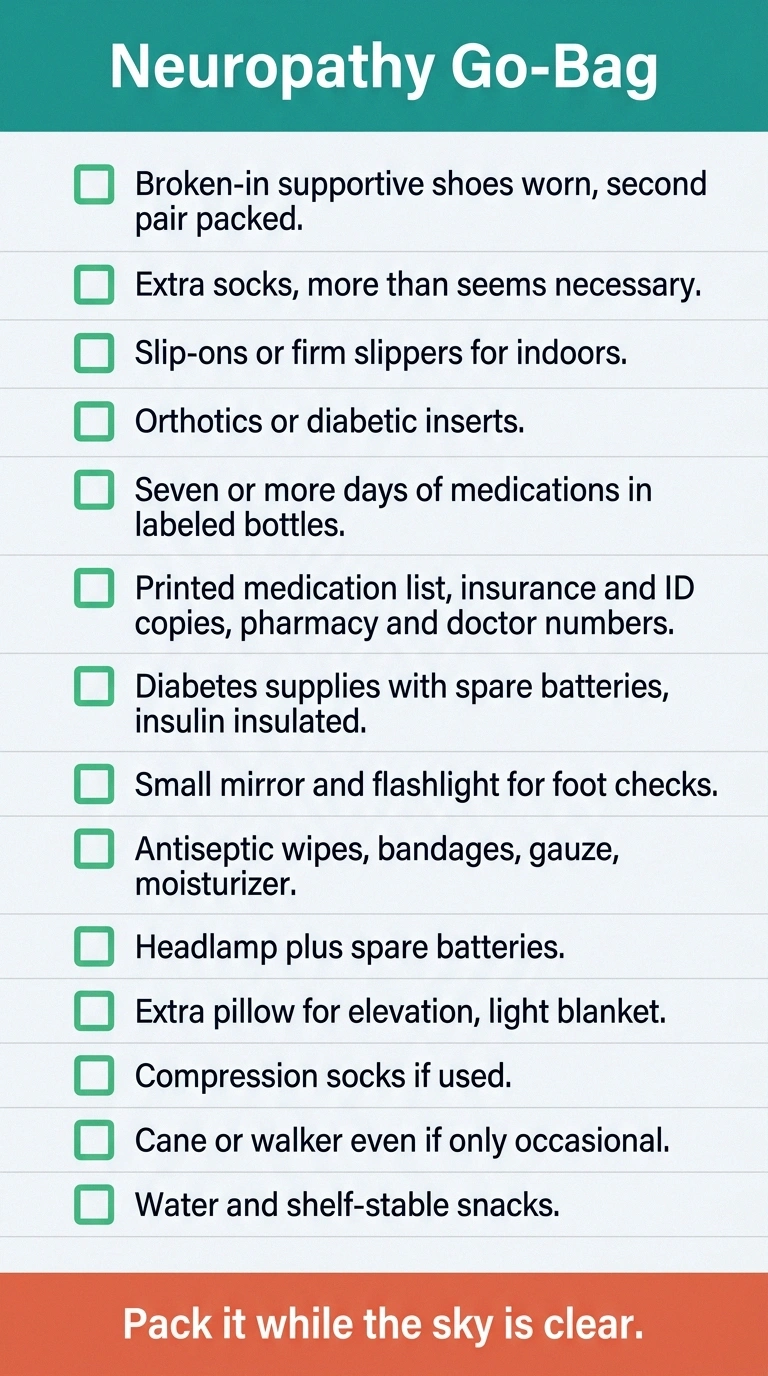
- Broken-in supportive shoes on your feet, second pair packed
- Extra socks, more than seems necessary
- Slip-ons or firm slippers for indoors
- Orthotics or diabetic inserts
- 7+ days of all medications in labeled bottles
- Printed medication list, insurance and ID copies, pharmacy and doctor numbers
- Diabetes supplies with extra batteries; insulin in an insulated container
- Small mirror and flashlight for foot checks
- Antiseptic wipes, bandages, gauze, moisturizer
- Headlamp plus spare batteries
- Extra pillow for elevation, light blanket
- Compression socks if you use them
- Cane or walker, even if only occasional
- Water and shelf-stable snacks that fit your eating plan
Pack it now, while the sky is clear. The whole point of a go-bag is that the thinking happens before the adrenaline does, and foot care is the first thing adrenaline throws overboard.
Frequently Asked Questions
What should someone with neuropathy pack first for an evacuation?
Broken-in supportive shoes and extra socks, before anything else. An evacuation involves far more walking and standing than a typical day, and a blister or cut on feet with reduced sensation can go unnoticed for hours. New shoes are a poor choice for evacuation day, and a second pair matters because wet shoes on numb feet cause problems quickly.
Is it safe to walk through flood water with neuropathy?
No. Flood water conceals nails, glass and debris while carrying sewage and bacteria, and reduced sensation means an injury can go unnoticed. A contaminated wound on a foot with impaired sensation and possibly impaired circulation carries serious infection risk. If wading is unavoidable, wear waterproof boots, exit as soon as possible, and inspect both feet immediately once dry.
How many days of neuropathy medication should I pack?
Aim for seven days or more rather than the three to five days most general checklists suggest. Pharmacies close during disasters and records may be unavailable. Stopping gabapentin or pregabalin abruptly can cause withdrawal symptoms in addition to returning nerve pain, so a longer supply provides meaningful protection.
How do I check my feet in a shelter?
Pack a small unbreakable mirror and a compact flashlight, then pick a fixed time each day, ideally before sleeping. Examine tops, bottoms, between all toes and both heels, looking for redness, blisters, cuts, swelling or warm areas. Telling shelter staff you need a few private minutes for this usually gets an accommodating response.
Why is a headlamp better than a flashlight during an evacuation?
A headlamp leaves both hands free for a railing, a cane or a door. Power outages and unfamiliar buildings raise fall risk considerably when neuropathy already affects balance and foot position awareness, and holding a flashlight occupies a hand that may be needed for support.
How do I manage a long evacuation drive with neuropathy?
Stop and walk briefly every hour or two when traffic permits, perform ankle pumps and toe movements while seated, keep both feet flat rather than crossing your legs, and loosen shoes without removing them since feet swell during long sits. Keeping water within reach helps, as dehydration worsens both swelling and blood sugar.
Should I tell shelter staff about my neuropathy?
Yes. Staff generally accommodate needs such as a cot near a bathroom, a chair for elevating feet, or a reminder schedule for medications, but only when they know about them. Mentioning it on arrival is more effective than waiting until a problem develops.
Can I get an emergency prescription refill during a disaster?
Often yes. Many states permit early refills once a state of emergency is declared, and pharmacies can sometimes transfer prescriptions to a location near where you evacuated. Keeping medications in their original labeled bottles helps considerably, and asking your pharmacy about the rules before hurricane season beats finding out during one.
About the Author