
The first time someone in my support group mentioned citicoline, I half-listened. It sounded like another supplement-of-the-month, and I had been burned enough times to be careful with anything new. But then a second person brought it up. Then a third. They were all describing the same thing: they’d started taking it for “brain fog” — that fuzzy, slow-thinking feeling so many of us live with — and noticed something else happening to their feet.
That got my attention. I’m Janet, and I write here as a patient advocate, not a doctor. When something keeps showing up in my circle, I dig in. So I sat down with the research on citicoline (also called CDP-choline), tried it myself for a few months, and put together what I learned. Here’s the honest version — including where the evidence is strong, where it’s thin, and what I’d want a friend to know before spending money on it.
What Citicoline Actually Is
Citicoline is the friendly nickname for a compound your body already makes called cytidine 5′-diphosphocholine. Don’t let that mouthful scare you off. Think of it as a two-piece puzzle: one half is cytidine (a building block your nervous system uses), and the other half is choline (the same nutrient found in eggs, beef liver, and soybeans).
Key Takeaway
Citicoline is a precursor your body uses to build phosphatidylcholine (a myelin component) and acetylcholine (a major neurotransmitter). It’s not a foreign chemical — it’s extra raw material for nerve-relevant repair, with the strongest evidence in brain conditions and a smaller but growing case in peripheral nerve health.
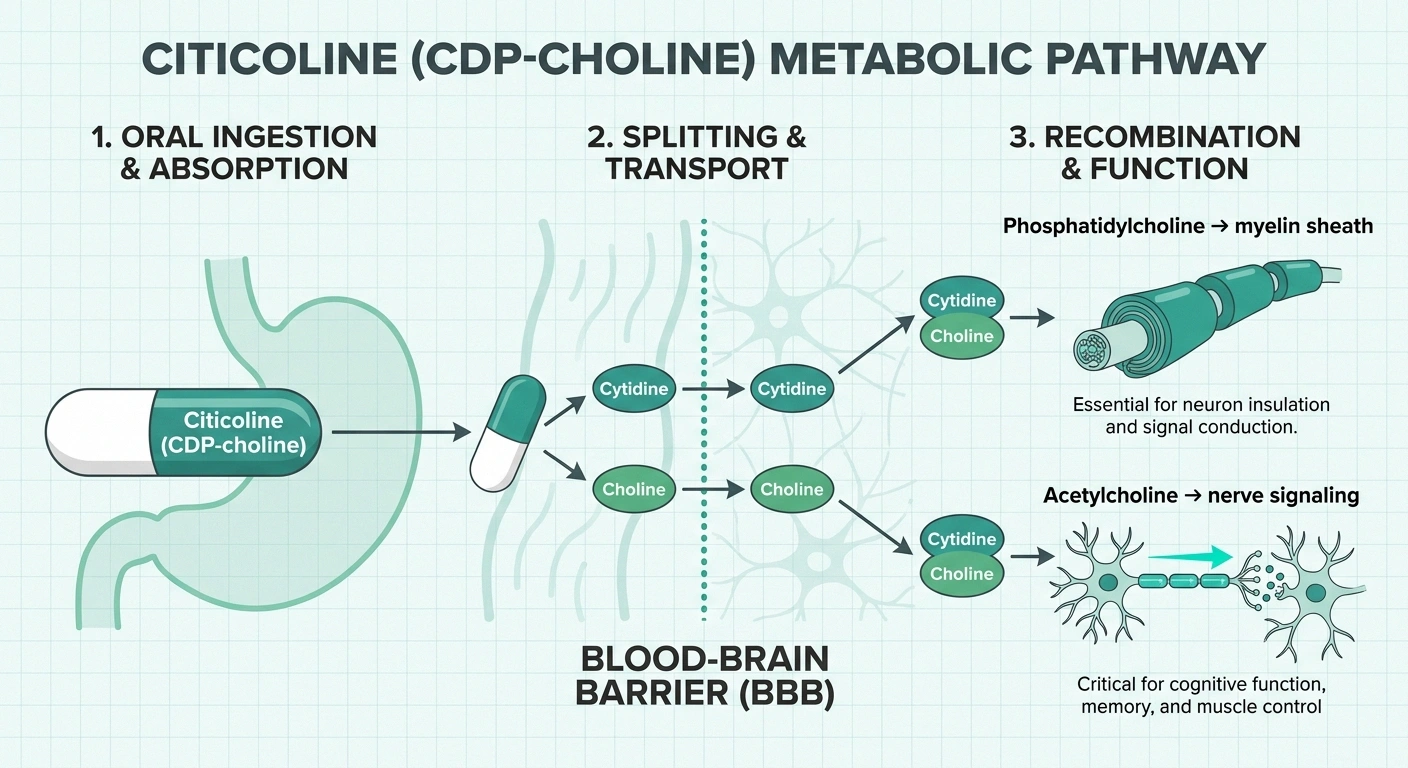
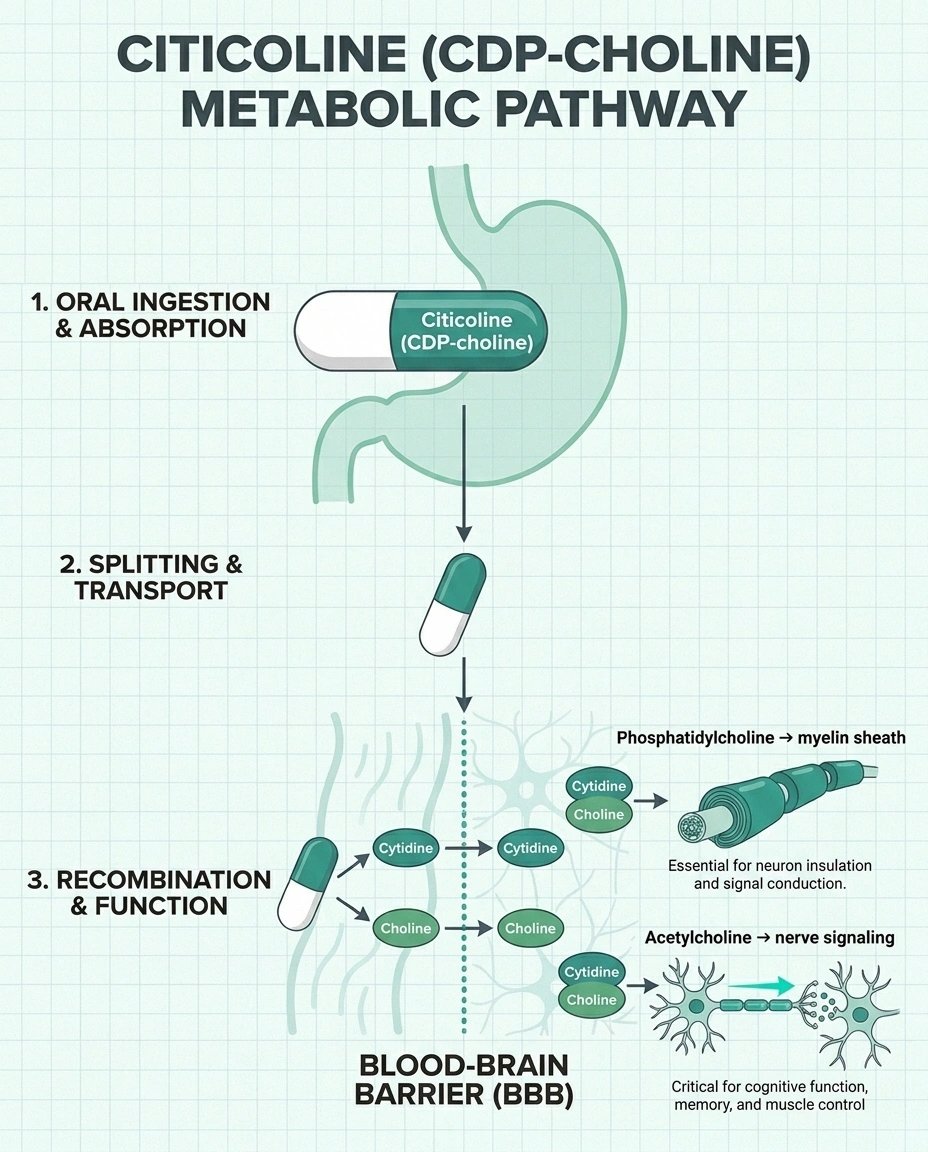
When you swallow a citicoline capsule, your gut breaks it apart into those two pieces. Both halves cross the protective barrier around your brain (the blood-brain barrier), then snap back together inside your nervous system to do two jobs:
- Build phosphatidylcholine — a structural fat that helps form the myelin sheath, the insulation around your nerves. When myelin is damaged (as it is in many forms of neuropathy), the signal traveling down the nerve fizzles and sputters.
- Boost acetylcholine — one of your main neurotransmitters, important for memory, muscle signaling, and the autonomic functions like blood pressure regulation that often go haywire in autonomic neuropathy.
So it’s not a foreign chemical. It’s a head start — extra raw material your body can use to make nerve-relevant compounds. That mechanism is what makes people curious about it for neuropathy.
The Brain Evidence Is Strong. The Nerve Evidence Is Thinner.
Here’s where I have to be straight with you. The bulk of the research on citicoline is for the brain — stroke recovery, age-related memory decline, glaucoma (which is technically a nerve-of-the-eye condition). Those studies use it at clinical doses, often for months, and have produced mostly encouraging results, though not without controversy. A large 2012 stroke trial called ICTUS came back negative, while a number of smaller, earlier trials were positive. The cognitive-aging research is more consistent.
But for peripheral neuropathy — the kind that makes your feet burn or your hands feel like they’re wearing invisible gloves — the human evidence base is small. What we have is mostly:
- Animal studies showing faster nerve regrowth after crush injuries in rats given citicoline.
- A handful of small open-label studies (no placebo group) in diabetic neuropathy and carpal tunnel syndrome suggesting symptom improvement.
- Theoretical reasoning: if myelin needs phosphatidylcholine, and citicoline provides the building blocks for phosphatidylcholine, supplementing it should help — though “should” is not “does.”
I want you to read that and not feel let down. Almost every supplement I cover on this site lives in this same evidence neighborhood — strong mechanism, decent animal data, hopeful but limited human trials in the exact condition you have. That’s why I always say these are tools to discuss with your doctor and try thoughtfully, not magic bullets to spend the rent on.
Citicoline vs. Plain Choline vs. Cognizin
Walk into any vitamin shop and you’ll see all three names. Here’s how they relate.
Three Names, One Family
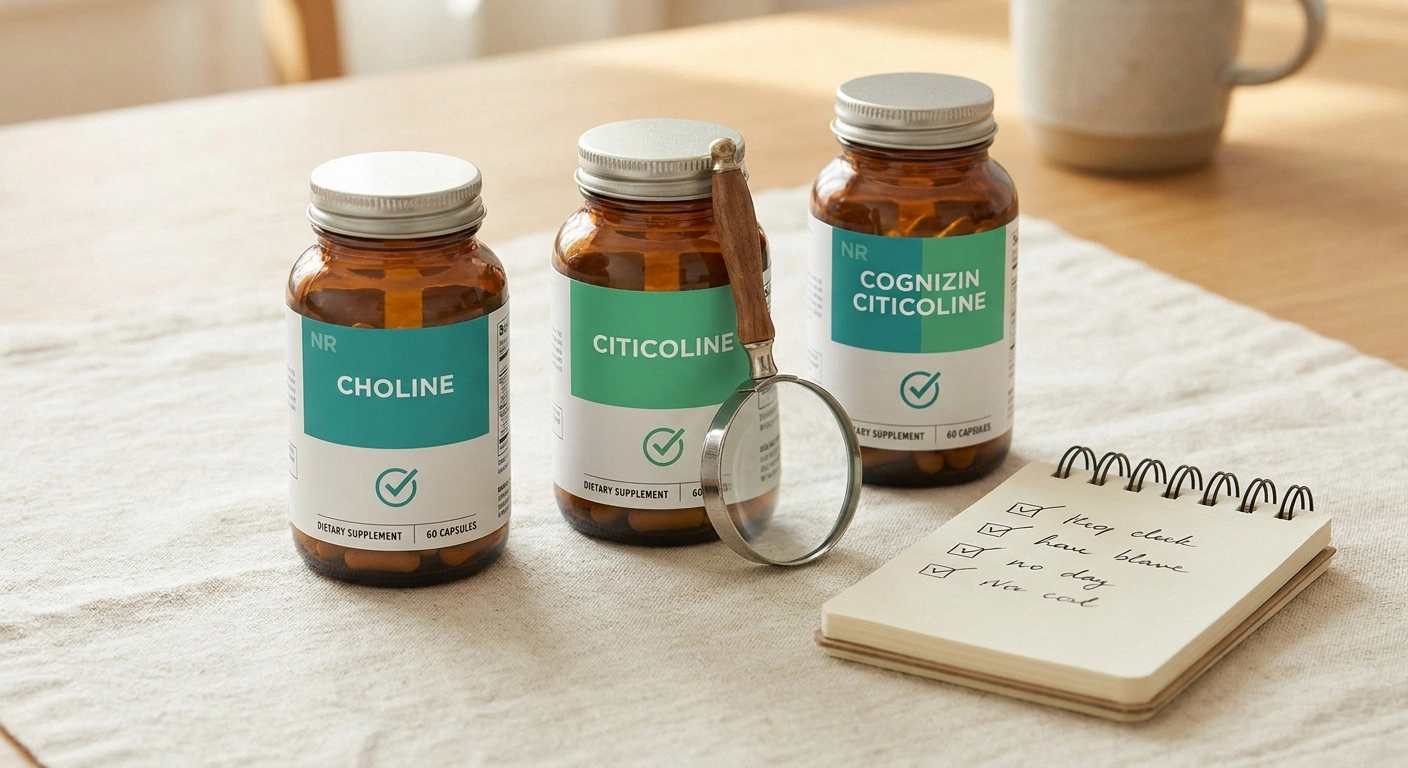
- Choline is the nutrient itself. You can get it from eggs (one yolk has about 150 mg), liver, soybeans, and a regular choline supplement. It’s essential, and many adults don’t get the recommended daily amount.
- Citicoline (CDP-choline) is choline bundled with cytidine in a more bioavailable form. It crosses into the nervous system more readily and supports both myelin repair and acetylcholine production. This is the form used in most of the research.
- Cognizin is a patented, standardized version of citicoline made by a Japanese company called Kyowa Hakko. Most of the published clinical trials used Cognizin specifically. If you see “Cognizin” on a label, you know exactly what you’re getting and at what purity.
Are they all the same? Almost. A generic citicoline from a reputable brand should be chemically identical to Cognizin. The reason people pay a little more for the branded form is the certainty — third-party testing, consistent dosing, and the comfort of knowing it matches what the studies measured. If a supplement is going to live in my body for months at a time, that consistency matters to me. But it’s a preference, not a requirement.
If you’re already working through a thoughtful supplement plan — and the broader best neuropathy supplements roundup walks through how to layer the major players — citicoline can fit alongside others without much friction.
What a Realistic Citicoline Routine Looks Like

If you and your doctor decide to try it, here’s the lay of the land based on what the studies and most clinicians use.
What the Research Says
Strongest evidence: ischemic stroke recovery, age-related cognitive decline, glaucoma neuroprotection — typically at 500–2,000 mg/day for several months.
Peripheral neuropathy evidence: mostly animal studies + small open-label work in diabetic neuropathy and carpal tunnel syndrome. Mechanism is plausible; placebo-controlled human trials in feet-and-hands neuropathy are still missing.
- Typical dose range: 250 mg to 2,000 mg per day. The sweet spot for most adults in the research is 500 mg once or twice daily.
- Splitting the dose: Two smaller doses (morning and early afternoon) tend to be gentler on the stomach than one large one. Avoid the late-evening dose if you find it makes sleep difficult — some people do.
- With or without food: Either works. Many people prefer with food to minimize any mild stomach upset.
- How long to give it: At least 8 to 12 weeks before judging it. This is not a “take one pill, feel better tomorrow” supplement. Like most nerve-support nutrients, it works on the slow timescale of cellular repair.
- Tracking: Keep a simple symptom journal. Rate pain, numbness, and balance on a 0–10 scale once a week. Trying to remember in your head how you felt three months ago is a losing game.
Safety, Side Effects, and Who Should Be Careful
Citicoline has one of the gentler safety profiles of any nerve-support supplement I cover. Most people who don’t tolerate it well report:
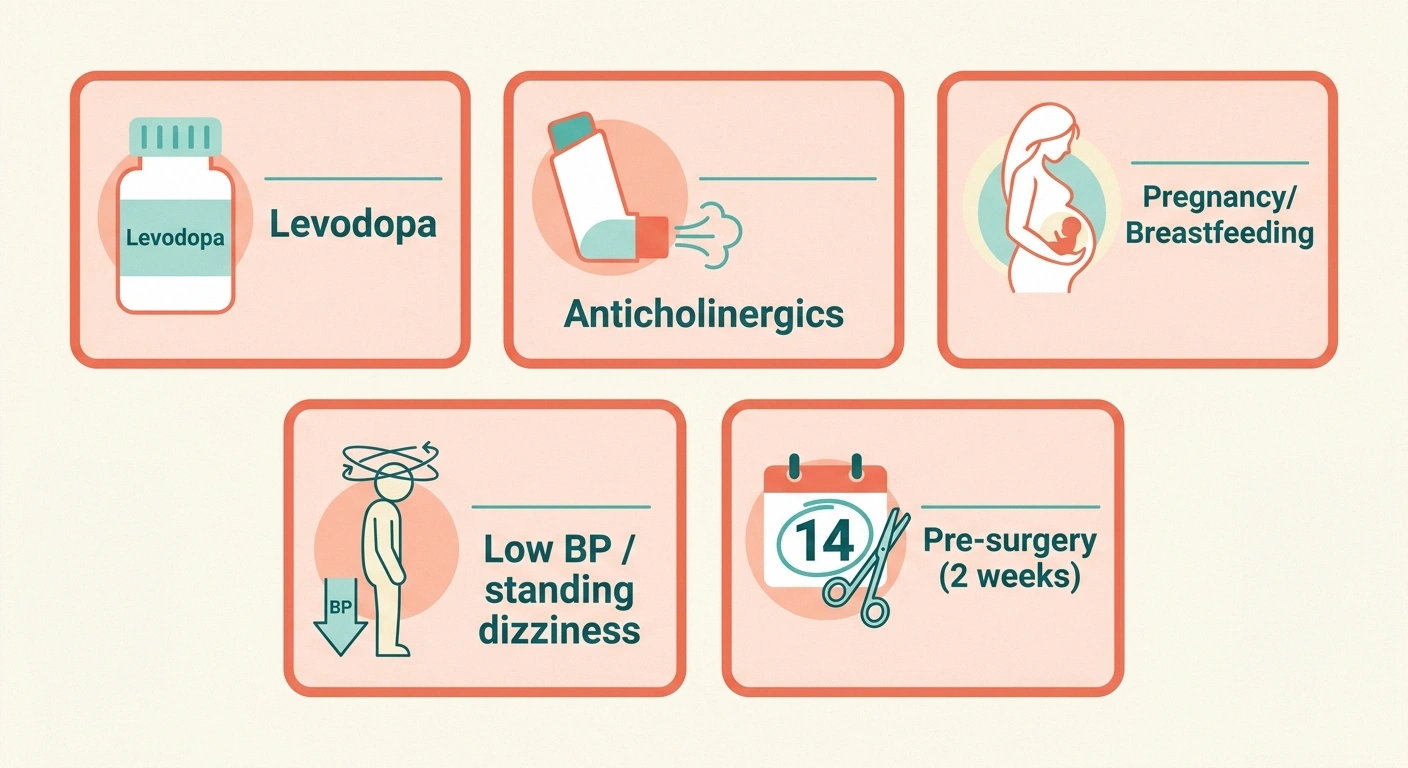
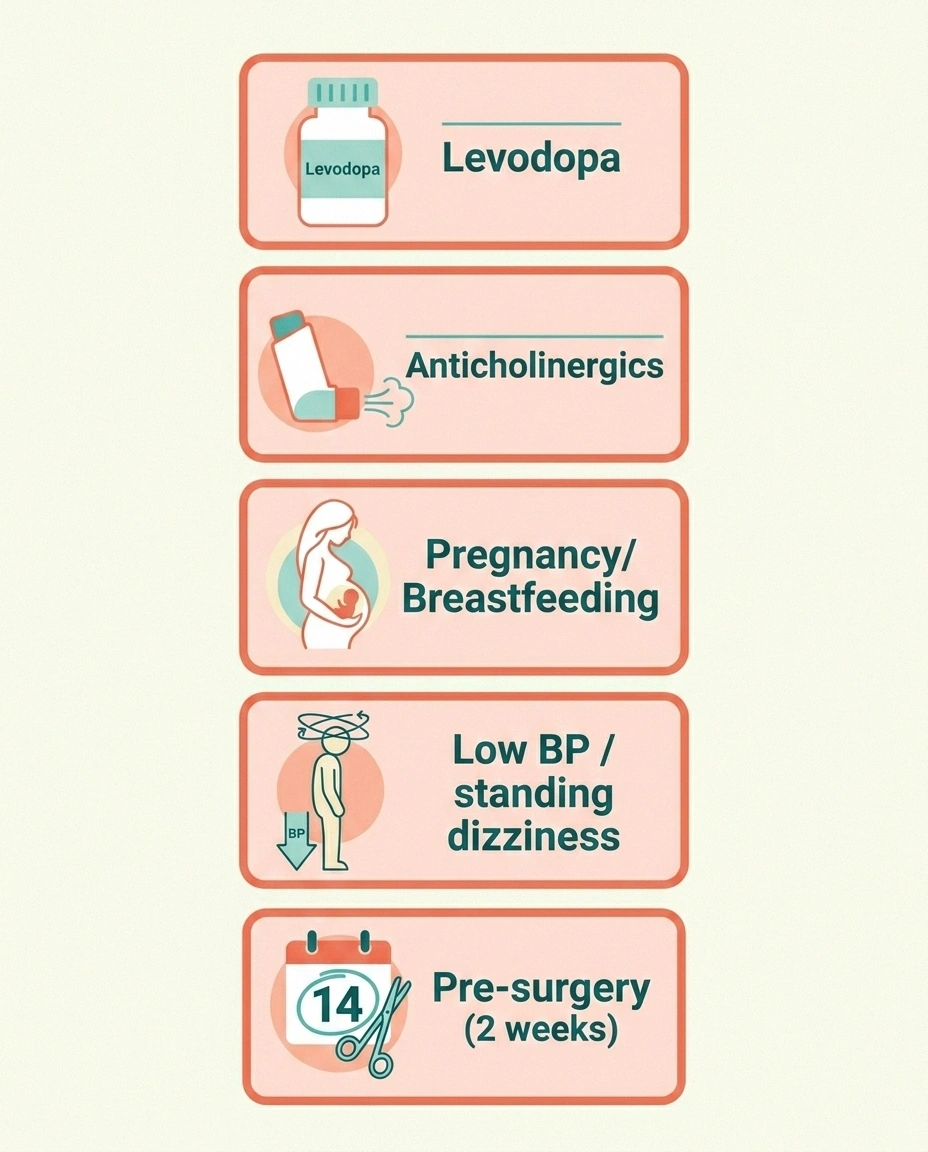
Check with Your Doctor First If…
- You take levodopa for Parkinson’s (citicoline can enhance its effect)
- You’re on prescription anticholinergic drugs
- You’re pregnant or breastfeeding (data is too thin)
- You already feel lightheaded standing up or take BP medication
- You’re scheduled for surgery within two weeks
- Mild stomach upset, nausea, or loose stools — usually resolves by lowering the dose or taking it with food.
- Headache, especially in the first week or two.
- Sleep disturbance if taken too late in the day.
- Slight changes in blood pressure, mostly minor — but worth knowing if you’re already on blood pressure medication.
Where I’d ask extra questions before starting:
- If you take levodopa for Parkinson’s disease. Citicoline can amplify levodopa’s effect. Not necessarily bad, but your doses may need adjustment.
- If you’re on prescription anticholinergic drugs (some bladder medications, certain antidepressants, some COPD inhalers). The mechanisms can interact in theory.
- If you’re pregnant or breastfeeding. The data is just not there. Wait.
- If you have low blood pressure or already feel lightheaded standing up. Citicoline’s effects on autonomic tone are subtle but real for some people.
None of those are absolute “do not take.” They’re “talk to the doctor who knows your medication list” items. That conversation is also the right place to compare citicoline against other options like alpha-lipoic acid, acetyl-L-carnitine, or B12 injections — each works through a different mechanism, and your doctor can help you stack them sensibly rather than throwing everything at the wall.
Where Citicoline Fits in the Bigger Picture

I think of nerve-support supplements as a small orchestra. Each instrument plays a different note. Alpha-lipoic acid handles the antioxidant melody — soaking up the free radicals that hammer nerves in diabetes and chemo. Methylcobalamin (B12) repairs the wiring directly. Acetyl-L-carnitine fuels the mitochondria — the little power plants inside nerve cells. Magnesium calms the over-firing.
Citicoline plays the structural-building note: providing raw materials for myelin and for the chemistry of signaling. It doesn’t replace any of those other instruments. But if your particular form of neuropathy involves cognitive symptoms (brain fog), or if you have an autonomic component, or if you’ve already optimized the others and want to add another reasonable, low-risk layer, it’s a defensible addition.
What it is not: a stand-alone cure, a substitute for treating the underlying cause (whether that’s tight glucose control, B12 repletion, alcohol cessation, or something else), or a reason to skip the foundations like good footwear and regular gentle walking.
How I Personally Approached My Trial
For full transparency: I tried 500 mg of Cognizin once daily with breakfast for ten weeks. I kept a weekly journal of pain (0–10), numbness coverage (which toes/which areas), and a separate column for mental clarity. I made no other changes during that window — same diet, same exercise, same other supplements.
A 12-Week Trial Plan You Can Actually Follow
What I noticed: a real and somewhat surprising improvement in mental clarity by week three (which the research would predict). A modest reduction in the constant pins-and-needles in my left foot by about week eight. Nothing dramatic for the burning sensation in my right foot. No side effects to speak of.
I’m sharing my experience as one data point. Your nerves are not my nerves. Your underlying cause may be different. The reason I run these trials slowly with a journal is precisely so I can tell the difference between something working and the placebo of finally doing something after a hard month.
Buying Smart: What to Look For on the Label
- Form: Either “citicoline” or “CDP-choline” — both refer to the same compound. Cognizin is the branded, third-party-tested version.
- Dose per capsule: 250 mg and 500 mg are most common. Buying 500 mg lets you split if you want a smaller dose.
- Other ingredients: Look for the shortest possible ingredient list. The active compound, a flow agent (rice flour is common), and the capsule shell. Skip anything stuffed with proprietary blends.
- Third-party testing: USP, NSF, ConsumerLab, or Informed Choice marks all mean a real lab verified what’s in the bottle. This is true for any supplement, but especially worth it for one you’ll take for months.
- Country of manufacture: US and Japan have stricter quality oversight than some other regions.
Cost-wise, expect to spend $20 to $60 a month for a quality product. Cognizin formulations tend to land at the higher end. If price is tight, a third-party-tested generic CDP-choline from a reputable brand is a reasonable alternative.
Cognizin-branded formulas land at the higher end. Third-party-tested generic CDP-choline lands lower. Either is reasonable — read the label and confirm a USP, NSF, or ConsumerLab mark.
The Honest Bottom Line
Citicoline is a thoughtful, low-risk addition to a nerve-support plan — particularly if your neuropathy comes with a mental-fog component, or if you have an autonomic angle, or if you’ve worked through the better-studied options and want another reasonable card to play. The evidence for direct peripheral nerve benefit is suggestive but not definitive, and that means honest patient-advocate writing has to say so out loud.
If you decide to try it, give it real time. Use a journal. Add only one supplement at a time so you can tell what’s actually doing the work. Talk to the doctor who knows your full medication list before you start. And remember the whole picture: whether nerves can recover depends far more on addressing the underlying cause and stacking small, consistent gains than on any single supplement, branded or otherwise.
I’ll keep watching this one. If newer trials come out — particularly any placebo-controlled work in diabetic or chemo-induced neuropathy — I’ll update this page so you have the current picture. That’s the deal.
Frequently Asked Questions
Is citicoline FDA-approved for neuropathy?
No. Citicoline is sold in the United States as a dietary supplement, which means it is not approved or evaluated by the FDA as a treatment for any specific condition, including neuropathy. In some other countries it is regulated as a prescription medicine for stroke recovery and cognitive disorders, but in the US it lives in the supplement aisle. That regulatory status doesn’t mean it doesn’t work — it means the same standards that apply to other supplements apply here.
How long does citicoline take to work for nerve symptoms?
Plan on 8 to 12 weeks at a minimum before deciding whether it’s helping. Citicoline supports slow processes like myelin maintenance and cell-membrane repair, so improvements show up on the timescale of weeks, not days. People often notice mental clarity improvements before physical nerve symptom changes. If you’ve given it a full three months at a reasonable dose and seen nothing, it’s fair to stop.
Can I take citicoline with gabapentin, pregabalin, or duloxetine?
There are no well-documented serious interactions between citicoline and those common nerve-pain medications, but I’d still want your prescribing doctor or pharmacist to sign off — they’re the only ones who know your full medication list. Citicoline works through different mechanisms than those drugs, so it’s reasonable to combine them rather than choose between them.
Is citicoline the same as CDP-choline?
Yes. Citicoline and CDP-choline are two names for the same compound — cytidine 5′-diphosphocholine. You’ll see both names on supplement labels and in research papers. Cognizin is a patented, standardized version of the same molecule. Functionally, a quality generic CDP-choline and Cognizin do the same thing.
Can I get enough citicoline from food alone?
Not really. Foods like egg yolks, liver, soybeans, and beef provide choline, but the body has to assemble it into citicoline through several enzymatic steps. If your goal is the higher CNS-available level used in studies, a supplement is the only practical way to get there. Eating choline-rich foods is still worth doing for general nervous system health.
Will citicoline help if my neuropathy is caused by chemotherapy?
The direct evidence for chemotherapy-induced peripheral neuropathy is limited, mostly preclinical. Some oncologists are open to it as a low-risk add-on alongside other nerve-protective strategies during and after chemo, but you must check with the oncology team first — they need to weigh anything you take against your specific regimen.
What’s a reasonable starting dose?
Most people in the research and in clinical practice start at 250 to 500 mg once daily with breakfast and see how they tolerate it. If well-tolerated after two weeks, increasing to 500 mg twice daily is common. The dose that worked in most of the cognitive and stroke trials was 500 mg twice daily or 1,000 mg once daily.
Does citicoline have a withdrawal or rebound effect if I stop?
No documented withdrawal syndrome. Stopping is straightforward — no taper required. Any benefits you felt may gradually fade over weeks if you discontinue, but there’s no acute “crash.”
About the Author