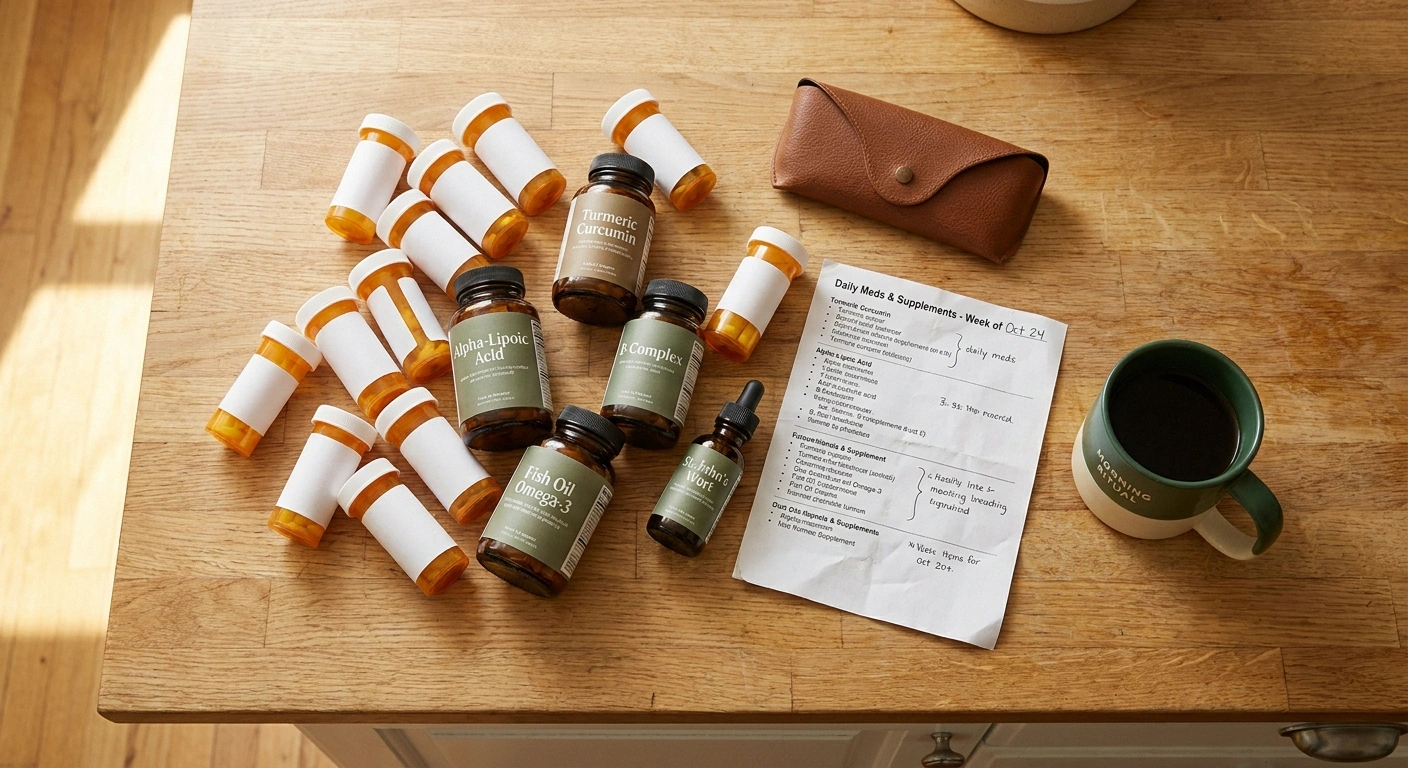
One of the harder lessons I’ve learned since becoming my own advocate for neuropathy is this: the medicine cabinet and the supplement shelf don’t always know about each other. My prescribing doctor rarely asks what’s in my morning smoothie. My local supplement store has never asked what’s on my prescription. And somewhere in the middle of that gap is where problems quietly begin — a supplement that speeds a drug out of your body, a mineral that keeps a pill from being absorbed, an herbal blend that stacks with an antidepressant to produce a real and dangerous serotonin problem.
I want to give you a practical reference for the interactions that actually matter for people managing neuropathy. This isn’t every possible combination — that would be a pharmacology textbook. This is the shortlist that comes up over and over again in the neuropathy world, drawn from what pharmacists flag, what the research warns about, and what I’ve watched cause trouble in the support group I’ve helped facilitate.
Before we start: please treat this as a starting point for conversations with your pharmacist and prescriber, not as replacement advice. Every body is different. Every drug list is different. What follows is the map — the terrain still needs a professional to walk it with you.
How Supplement-Drug Interactions Actually Work
Interactions come in a few flavors, and knowing which flavor a given pair belongs to helps you spot problems earlier. The three that matter most for neuropathy patients:
Three flavors of interaction — three different fixes.
Absorption interference. Some minerals and supplements physically bind to a drug in the gut and reduce how much reaches your bloodstream. Calcium, magnesium, iron, and certain antacids are classic examples. The fix is usually simple: space them by two to four hours, and the problem largely disappears. But if you don’t know the interaction exists, you take them together and quietly get less of your drug than you’re supposed to.
Metabolism interference. Your liver uses a set of enzymes — cytochrome P450 (CYP) enzymes are the big ones — to break down most medications. Some supplements speed those enzymes up, others slow them down. St. John’s Wort is a famous accelerator: it can drop the blood level of many drugs by half or more, meaning your medication silently stops working. Grapefruit juice does the opposite — slows a specific enzyme (CYP3A4) and makes some drug levels rise dangerously high.
Additive effects. Two things doing the same thing to your body at the same time can produce a bigger effect than expected. Fish oil plus warfarin — both thin the blood. 5-HTP plus duloxetine — both raise serotonin. Melatonin plus a benzodiazepine — both sedate. Additive effects don’t require any pharmacology magic; they just require both agents to be active simultaneously.
Every interaction I’ll walk through below is one of these three types. Understanding which type helps you know whether the fix is spacing, stopping, or watching.
Gabapentin and Pregabalin (Lyrica): The Absorption Trap

Gabapentin and pregabalin are the workhorses of neuropathic pain treatment. They also have one very specific absorption vulnerability that pharmacists have been trying to spread the word about for years:
Antacids containing magnesium or aluminum (Maalox, Mylanta, Rolaids Extra Strength) reduce gabapentin absorption by roughly 20% when taken together. The manufacturer’s own labeling recommends waiting at least two hours after an antacid before taking gabapentin.
Dietary magnesium supplements haven’t been formally studied the same way, but many pharmacists recommend the same two-hour spacing to be safe. If you take magnesium for sleep, cramps, or as a general supplement, put gabapentin on the opposite side of that dose.
Multivitamins with iron or calcium may reduce absorption slightly. If you notice your gabapentin dose seems less effective than it used to be after starting a new multivitamin, spacing them two to four hours often fixes it.
Opioids and gabapentin/pregabalin together are not a supplement issue, but they are a serious additive-sedation issue with an FDA boxed warning about respiratory depression. Never combine without a specific plan from your prescriber.
Diphenhydramine (in Benadryl, Tylenol PM, ZzzQuil) adds to gabapentin’s sedation and cognitive slowing. In older adults, this combination is a real fall risk. If you take gabapentin at night and reach for a PM sleep aid on top, you’re stacking more than you may realize.
For more on how gabapentinoids work and are dosed, see our overview of gabapentin for neuropathy and pregabalin (Lyrica) for neuropathy.
Duloxetine (Cymbalta) and Venlafaxine (Effexor): The Serotonin Problem
SNRIs like duloxetine and venlafaxine are excellent for painful diabetic neuropathy and small fiber pain. They also raise serotonin. That means anything else that raises serotonin can push you into a state called serotonin syndrome — sweating, tremor, agitation, high heart rate, and in severe cases confusion, high fever, and rigidity. It’s rare, but it’s real, and the supplements that can trigger it are worth naming:
If you’re on an SNRI (duloxetine, venlafaxine) or SSRI, watch for: sweating, tremor, agitation, racing heart, high blood pressure. Severe: confusion, high fever, muscle rigidity, jerky movements. Any of these after starting a supplement — stop the supplement and call your prescriber (ER for severe symptoms).
St. John’s Wort. Raises serotonin on its own AND accelerates the enzymes that break down many drugs. Combining with an SNRI or SSRI is high risk for serotonin syndrome and also unpredictably drops levels of other medications you may be taking. This combination should generally be avoided.
5-HTP and L-tryptophan. These are direct serotonin precursors. Adding them to an SNRI stacks up serotonin production. Avoid unless a knowledgeable prescriber has specifically approved and is monitoring.
SAMe. Sometimes used for depression and joint pain. Similar concerns to 5-HTP when combined with SNRIs.
Rhodiola rosea. Some evidence of mild serotonergic activity. Modest risk, usually well tolerated, but worth flagging to your prescriber.
Ashwagandha. Not classically serotonergic, but has been reported to potentiate SSRI/SNRI effects in some individuals. Worth mentioning.
Ginseng. Has been associated with rare serotonin-like symptoms when combined with SSRIs. Not a hard rule, but a “mention it” item.
Tramadol added to an SNRI is not a supplement issue, but it’s a common pharmacy mistake — tramadol is serotonergic and stacks with duloxetine or venlafaxine. Your pharmacist should catch this. If they don’t, ask.
Our page on duloxetine for neuropathy covers the medication itself in more depth.
Tricyclic Antidepressants (Amitriptyline, Nortriptyline): The Anticholinergic Stack
Tricyclics like amitriptyline and nortriptyline are old, cheap, and effective for neuropathic pain. They also have anticholinergic effects — dry mouth, constipation, urinary hesitancy, blurred vision, confusion in older adults. Layer other anticholinergic agents on top and those side effects grow quickly.
Diphenhydramine (Benadryl, Tylenol PM). Strong anticholinergic. Stacking with amitriptyline can produce urinary retention in older men, confusion, and fall risk. Skip PM sleep aids while on a tricyclic.
Certain bladder medications (oxybutynin, tolterodine). Additive anticholinergic burden. Talk to your prescriber if you’re on both.
St. John’s Wort. Reduces tricyclic blood levels via CYP induction. Your pain relief silently drops.
Grapefruit juice. Can raise levels of some tricyclics. Not a common problem at moderate consumption, but worth knowing if you drink it daily.
Kava. Additive sedation and potential liver strain when combined with tricyclics. Generally avoid.
Alpha-Lipoic Acid (ALA): Blood Sugar and Thyroid Watch-Outs

ALA is one of the better-supported neuropathy supplements, especially for diabetic nerve pain. It’s also a supplement that quietly interacts with more medications than most patients realize:
Insulin and sulfonylureas (glipizide, glimepiride). ALA can enhance insulin sensitivity and glucose uptake. In practice, that means blood sugar can drop lower than expected. If you’re on any diabetes medication, monitor blood glucose more closely for the first few weeks after starting ALA and share the numbers with your prescriber. Dose adjustments are sometimes needed.
Thyroid hormone (levothyroxine, Synthroid). ALA may reduce absorption of levothyroxine. Space the two by at least four hours. Take levothyroxine on an empty stomach first thing in the morning and put ALA at lunch or dinner.
Chemotherapy. Some oncologists advise against antioxidant supplementation during chemotherapy on the theory that antioxidants may protect cancer cells from the drug’s oxidative damage. This is debated. Do not start ALA during active chemotherapy without your oncologist’s approval.
Vitamin B1 (thiamine) deficiency. ALA competes with thiamine metabolism. In someone already low on B1 (chronic alcohol use, poor nutrition, post-bariatric surgery), ALA can worsen thiamine deficiency symptoms. If you fit any of those categories, get a B1 level checked before starting.
Our page on alpha-lipoic acid for neuropathy covers dosing and evidence in more detail.
The Vitamin B6 Trap Nobody Talks About
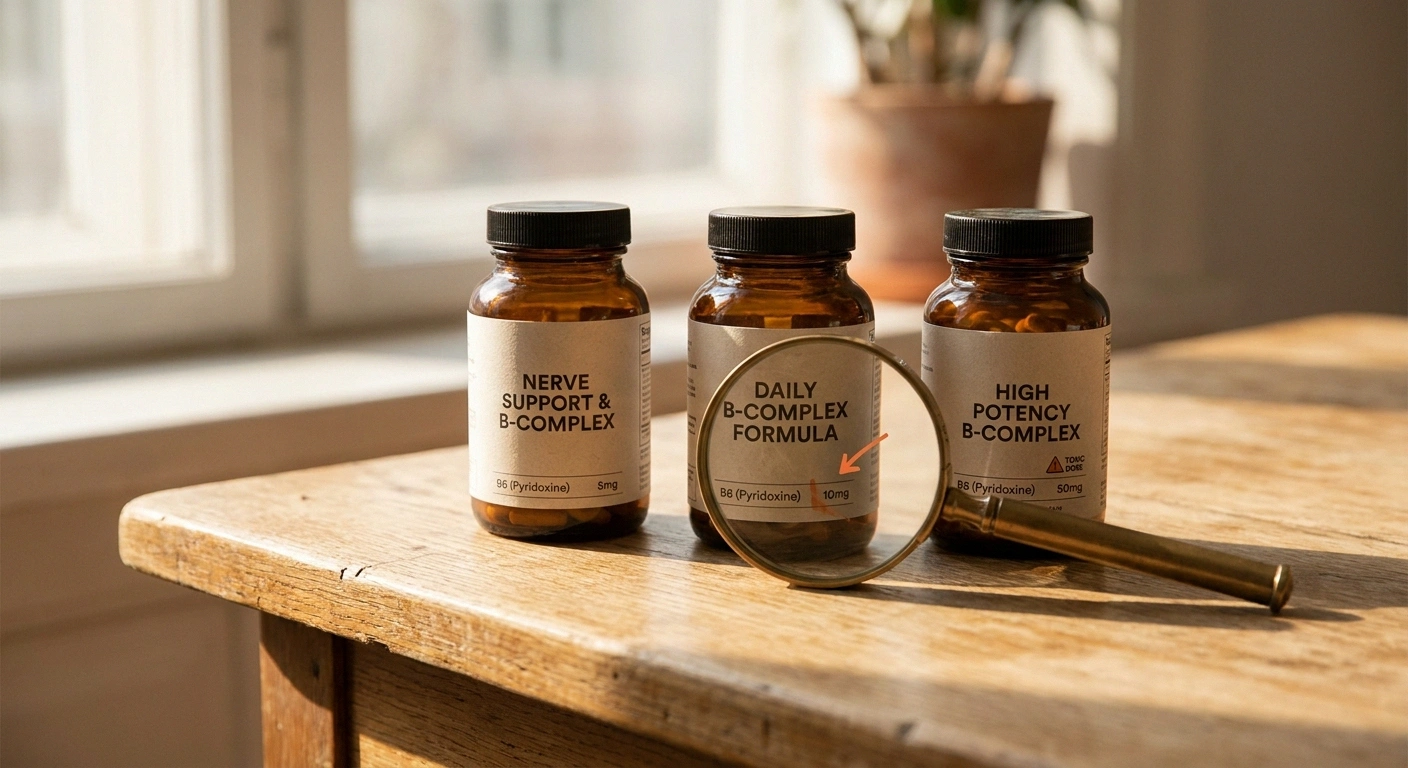
Vitamin B6 (pyridoxine) is essential for nerve health at normal intakes. In excess, it becomes toxic to nerves — the very thing it’s supposed to support. Cases of B6-toxicity neuropathy are underreported and often misdiagnosed. A few interactions worth naming:
Read every “B-complex” and “nerve support” supplement label. Stacking three products with 50 mg B6 each = 150 mg/day, well into the range that has caused paradoxical B6-toxicity neuropathy. Total B6 across all supplements generally stays under 100 mg/day without a specific medical reason.
Levodopa (without carbidopa). High-dose B6 accelerates peripheral breakdown of levodopa, neutralizing the dose before it reaches the brain. Sinemet (carbidopa/levodopa) protects against this — the carbidopa blocks peripheral breakdown. If you’re on plain levodopa, keep B6 below 5 mg/day and avoid B6 supplements entirely without your neurologist’s blessing.
Isoniazid (INH) for tuberculosis. Depletes B6 and causes neuropathy. Prescribing physicians typically add B6 (usually 25-50 mg/day) as protection. This is a case where B6 supplementation is the treatment, not the problem.
Hydralazine, penicillamine, cycloserine. Also deplete B6. Supplementation is often warranted.
Everyone else — the toxicity ceiling. Chronic intake above 100 mg/day of B6 can cause its own neuropathy. Above 200 mg/day the risk grows quickly. Read the labels on your “B-complex” and “energy” supplements — some pack 100 mg or more per capsule, and stacking multiple products has caused real cases of paradoxical worsening. If your neuropathy is getting worse and you’re taking high-dose B6, this may be part of the picture.
Vitamin B12 and the Drugs That Steal It
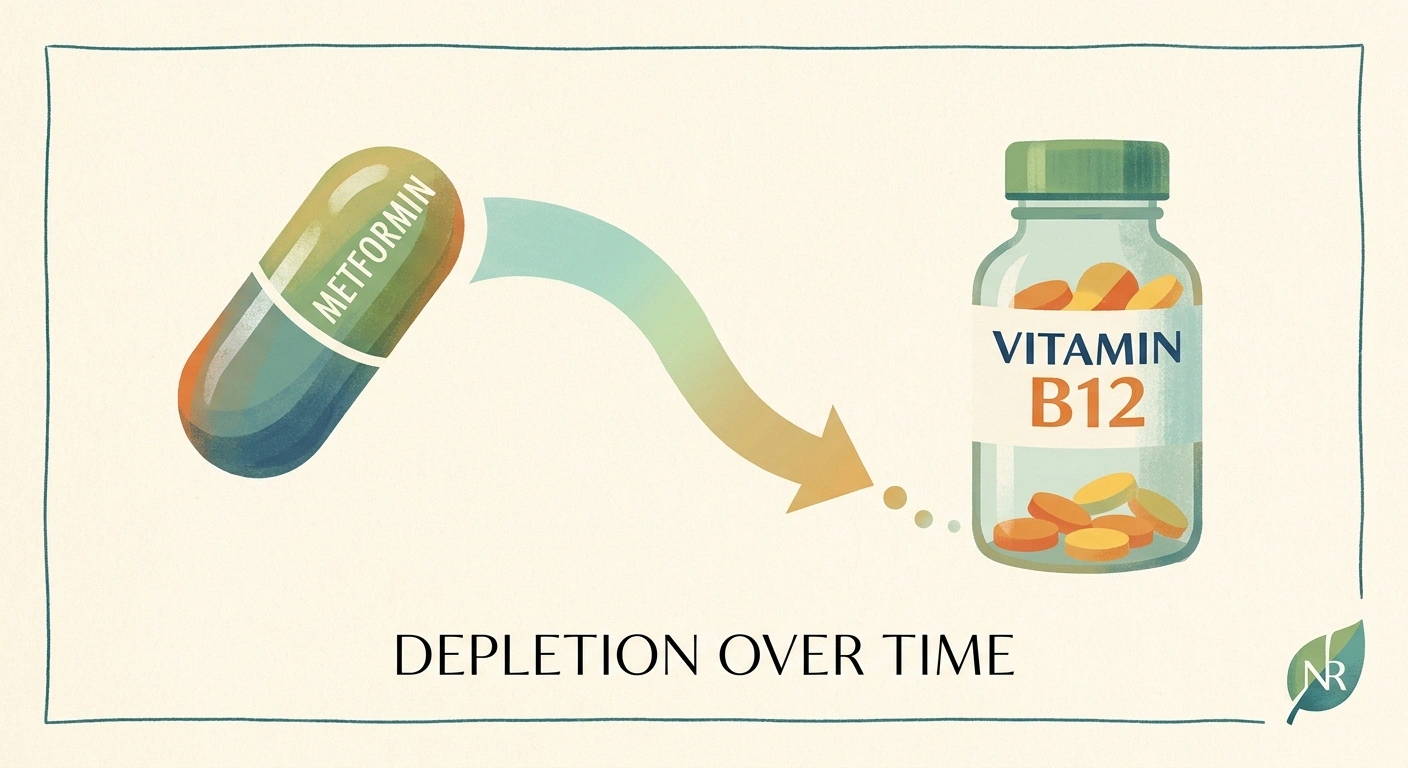
Several extremely common medications quietly deplete vitamin B12 over months to years. If you’re on one of them, ask your doctor to check a B12 level (and ideally a methylmalonic acid level, which catches early deficiency the plain B12 test misses):
Long-term metformin use is associated with vitamin B12 deficiency in an estimated 10-30% of users. Consensus recommendations increasingly call for B12 monitoring after four years of use (sooner in patients with neuropathy symptoms), and oral methylcobalamin supplementation when levels are low.
Sources: American Diabetes Association Standards of Care; Journal of Clinical Endocrinology & Metabolism reviews of metformin-associated B12 deficiency.
Metformin. The most common cause of iatrogenic B12 deficiency in the diabetic neuropathy world. Estimated to affect 10-30% of long-term users. Guidelines increasingly recommend annual or every-other-year B12 monitoring for anyone on metformin more than four years.
Proton pump inhibitors (omeprazole, esomeprazole, lansoprazole, pantoprazole). Reduce stomach acid needed to release B12 from food. Long-term use also depletes magnesium.
H2 blockers (famotidine, ranitidine — now withdrawn). Similar B12 issue, milder than PPIs.
Nitrous oxide. Inactivates B12 with even short exposures. Repeated dental or recreational exposures are increasingly recognized causes of neuropathy.
The fix is usually oral B12 supplementation (methylcobalamin 1,000 mcg daily is a common dose), sometimes injections if absorption is impaired. Our page on B12 injections vs oral supplements for neuropathy walks through the choice.
Fish Oil, Turmeric, and the Blood Thinner Question
A large share of neuropathy patients are on blood thinners — warfarin, apixaban, rivaroxaban, aspirin, clopidogrel — for atrial fibrillation, stents, DVT prevention, or after a stroke. Two very common supplements interact:
Fish oil (omega-3). Modest anticoagulant effect on its own. At typical wellness doses (1-2 g/day) it’s generally fine with blood thinners under monitoring. At high doses (3 g/day or more), bleeding risk rises. Discuss with your prescriber if you’re above 2 g/day and on any anticoagulant.
Turmeric/curcumin. Antiplatelet activity in laboratory studies, with case reports of increased bleeding when combined with warfarin. Culinary amounts are fine. High-dose supplements (500-1,000 mg curcumin twice daily) warrant a conversation with your prescriber if you’re anticoagulated. Also chelates iron — take separately from iron supplements.
Ginkgo biloba. Similar antiplatelet concern. Case reports of bleeding when combined with warfarin, aspirin, or NSAIDs.
Garlic supplements. High-dose garlic tablets have antiplatelet effects. Culinary garlic is fine.
Vitamin E. Above 400 IU/day may increase bleeding risk with anticoagulants.
None of these are absolute contraindications. All are conversations. If you take any anticoagulant, put “supplement changes” on the list of things you tell your prescriber about before starting anything new.
St. John’s Wort: Why This One Belongs in Its Own Section

St. John’s Wort deserves its own paragraph because it interacts with more medications than any other supplement in wide use. It’s a strong inducer of the CYP3A4 and CYP2C19 liver enzymes — meaning it accelerates the breakdown of dozens of drugs, some of which you may be taking for reasons that have nothing to do with your neuropathy:
One supplement, dozens of drug interactions. It speeds up CYP3A4 and CYP2C19 liver enzymes, silently dropping the blood level of many medications. It ALSO raises serotonin, adding serotonin-syndrome risk on top of SNRIs and SSRIs.
- Warfarin, apixaban, rivaroxaban (blood thinners — reduced protection)
- Oral contraceptives (reduced effectiveness — pregnancies have occurred)
- Immunosuppressants (cyclosporine, tacrolimus — transplant rejection has occurred)
- HIV medications
- Certain chemotherapy drugs
- Carbamazepine, phenytoin (anticonvulsants)
- Digoxin
- Statins
- Tramadol, methadone
- Duloxetine, venlafaxine, sertraline (SNRIs/SSRIs — both reduced effect AND serotonin syndrome risk)
If you take St. John’s Wort and any of the above, please talk to your pharmacist before your next refill. This is not an alarmist list — it’s a well-documented one. St. John’s Wort’s serotonergic effect can also stack additively with SNRIs and SSRIs, creating the serotonin syndrome risk mentioned earlier. Between the metabolism interference and the serotonin stacking, this is the single supplement most likely to cause problems in a person taking neuropathy medications.
The Sneaky OTC Blind Spots
Over-the-counter products don’t feel like drugs to most people, but they interact just like prescriptions do. A few that catch neuropathy patients off guard:
Tylenol PM, Advil PM, ZzzQuil. All contain diphenhydramine, which stacks with gabapentin, pregabalin, tricyclics, and duloxetine to worsen sedation and fall risk in older adults. Not the sleep solution for someone already on a nerve-pain medication.
Excedrin Migraine and similar caffeine-containing combos. Can worsen anxiety, insomnia, and blood pressure in patients on tricyclics or SNRIs.
NSAIDs (ibuprofen, naproxen). Reduce kidney blood flow — a concern for anyone on diabetes medications, ACE inhibitors, or diuretics. Also raise bleeding risk with anticoagulants. Long-term daily use for neuropathy pain is generally not recommended.
Cough and cold combos with dextromethorphan. Have mild serotonergic effect. In someone on duloxetine or an SSRI, avoid.
Antacids and calcium supplements. Space away from gabapentin and thyroid medications.
Drug-Nutrient Depletion: The Slow-Motion Deficiencies
Some drugs don’t interact directly with supplements — instead, they slowly deplete a nutrient over months and years. Knowing which drugs deplete what helps you decide whether replacement is worth discussing:
Metformin → depletes vitamin B12 (and to a lesser extent folate). Monitor B12 annually after four years.
Proton pump inhibitors → deplete vitamin B12 and magnesium. Monitor both if on long-term therapy.
Statins → deplete Coenzyme Q10 (CoQ10). Supplementation is common for statin-related muscle symptoms.
Diuretics (furosemide, hydrochlorothiazide) → deplete potassium, magnesium, and B1.
Levodopa → depletes B12 and folate. Nitrous oxide, hydralazine, and isoniazid deplete B6.
Long-term antibiotics → deplete vitamin K and disrupt gut flora, potentially affecting B vitamin production.
Corticosteroids → deplete calcium, vitamin D, potassium, and magnesium; long-term use increases fracture risk.
Oral contraceptives → deplete folate, B6, B12, magnesium.
Not every depletion needs replacement — many people never become symptomatic. But if you’re on one of these and developing neuropathy or worsening symptoms, the depleted nutrient is a reasonable early check.
How to Have This Conversation With Your Pharmacist
Your community pharmacist is the most under-used interaction-check resource in your care team. They’re trained to catch this, they have software that flags most of it, and they’re generally free to consult. A few habits that make the most of them:
- Put every bottle you take into one bag — prescriptions, OTC, supplements, herbal teas, topical creams.
- Bring it to your primary care visit or a pharmacist appointment (many pharmacies offer this free).
- Ask them to check for: duplicates, expired products, interactions, dose creep, unnecessary drugs.
- Update your one-page medication list based on what you learn.
- Take a photo of the updated list — keep it on your phone for every doctor visit.
Consolidate all your prescriptions at one pharmacy. The interaction software works best when it can see everything.
Update the “over-the-counter and supplement” list at that pharmacy. Ask if you can add these to your record. Many chains have a spot for it. If not, bring a printed list to every refill visit.
Ask specifically: “Any interactions I should know about?” every time you start something new. Prescription, OTC, or supplement.
Request a “medication therapy review.” Under Medicare Part D and many private plans, one is available annually at no cost. A pharmacist walks through your entire regimen looking for problems.
Do a “brown-bag review” once a year. Put every bottle you take — prescription, OTC, supplements — into a bag and bring it to your primary care visit or pharmacy. The visual audit catches duplicates, expired products, and dose creep that lists alone miss.
What to Tell Every New Prescriber (Even Specialists)
Neuropathy patients often see three or four doctors — primary care, neurology, endocrinology, sometimes pain management. Each prescribes; none has the full picture. Your job (and yes, it’s your job whether you like it or not) is to bring the full picture to each of them.
A one-page current list solves 80% of this. On it:
- Every prescription with dose and how often
- Every OTC you take regularly (pain relievers, sleep aids, antacids, allergy pills)
- Every supplement (name, dose, when you take it)
- Every herbal tea or “wellness blend” — if it has effects, it can interact
- Any topical creams or patches (lidocaine, capsaicin, hormone patches)
- Any recent starts or stops in the last month
Bring the list to every visit. Take a photo of it on your phone so it’s always with you. Update it the day anything changes.
This may sound obsessive. It’s the single most protective habit I’ve built in fifteen years of managing neuropathy alongside the other things that come with age. Every doctor I’ve handed a current list to has thanked me. Several have caught interactions we’d never have found otherwise.
When Interactions Have Already Happened

If you suspect an interaction is causing symptoms — new confusion, unexplained bleeding or bruising, unusual sweating or tremor, worsening pain or reduced medication effect after starting something new — do this:
- Don’t stop prescription medications abruptly. Some cause withdrawal or rebound symptoms. Call the prescriber first.
- Do stop the supplement. Supplements can be paused without medical harm in almost every case.
- Call your pharmacist first if it’s not an emergency. They can often triage.
- Call the prescriber second.
- Go to the ER for: severe bleeding, chest pain, sudden severe confusion, high fever with rigidity or tremor, severe rash, difficulty breathing, thoughts of self-harm.
Most interactions are more nuisance than emergency. But knowing where the line is means you can act calmly when something crosses it.
Frequently Asked Questions
Do I really need to tell my doctor about every vitamin I take?
Yes. Vitamins interact with medications more than most people realize — B6 with levodopa, vitamin E with blood thinners, high-dose B6 producing its own neuropathy, vitamin K with warfarin. “Just a vitamin” is a phrase that has caused real harm. Include everything on your list, even things labeled as “natural” or “food-based.”
Is it safe to take magnesium if I’m on gabapentin?
Generally yes, with spacing. Take gabapentin at one time, magnesium at another, at least two hours apart. Many people take gabapentin with meals and magnesium at bedtime, which works well. The main interaction is absorption interference, not toxicity, so spacing solves it.
Can I take St. John’s Wort with duloxetine or amitriptyline?
No, this combination is not recommended. With duloxetine, the serotonin syndrome risk is real. With amitriptyline, St. John’s Wort speeds up your liver’s breakdown of the drug and reduces its effect. If you’re considering St. John’s Wort for mood, talk to your prescriber about safer options that don’t interact with your neuropathy medications.
My metformin bottle doesn’t mention B12. Should I be taking a supplement anyway?
Ask your doctor to check a serum B12 and ideally a methylmalonic acid level, especially if you’ve been on metformin four years or more. If your levels are low or borderline, oral methylcobalamin 1,000 mcg daily is a common replacement dose. If your levels are fine, routine supplementation is optional. The point is monitoring, not automatic replacement.
Are fish oil supplements safe with blood thinners?
At typical wellness doses of 1-2 grams per day, generally yes with monitoring. At higher doses (3 grams or more), bleeding risk climbs and the combination needs prescriber approval. If you’re on warfarin, tell your anticoagulation clinic when you start or stop fish oil so they can watch your INR.
Why do so many “nerve health” supplements contain B6?
Because B6 is genuinely needed for nerve function. The problem is that many stack multiple B-complex products with 25-100 mg of B6 each, and chronic intakes above 100 mg/day can cause paradoxical B6-toxicity neuropathy. Read every label. Total B6 across all your supplements should generally stay under 100 mg/day without a specific medical reason.
Can I take turmeric with my blood pressure or diabetes medications?
Culinary turmeric in food is fine. High-dose curcumin supplements can modestly enhance blood-pressure medications and improve insulin sensitivity, so monitor blood pressure and blood sugar more closely for the first month if you’re starting a high-dose product. Also chelates iron — space at least two hours from any iron supplement.
What’s the single most important interaction check for neuropathy patients?
Ask your pharmacist to do a full interaction check every time you start any new prescription, OTC, or supplement. It takes them five minutes and it catches what would otherwise slip through. Most pharmacies do this at no cost. If yours doesn’t, find one that does.
Nothing on this page is a substitute for personalized medical advice. Interaction severity depends on doses, your other conditions, and your unique metabolism. Please review your full regimen with your pharmacist and prescribers. Janet writes as a patient advocate who has lived with neuropathy — not as a medical professional.
About the Author