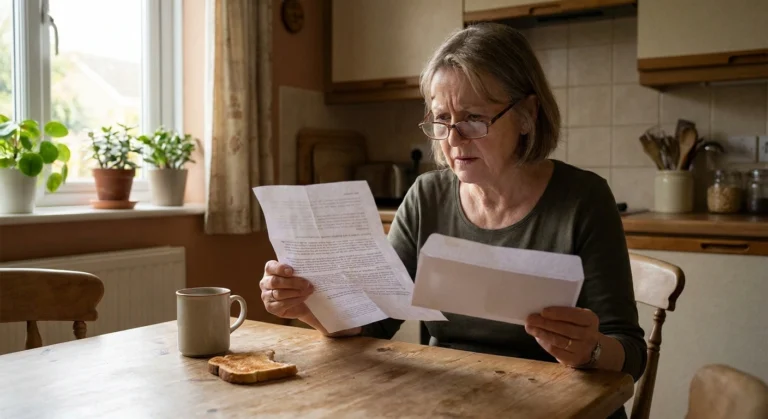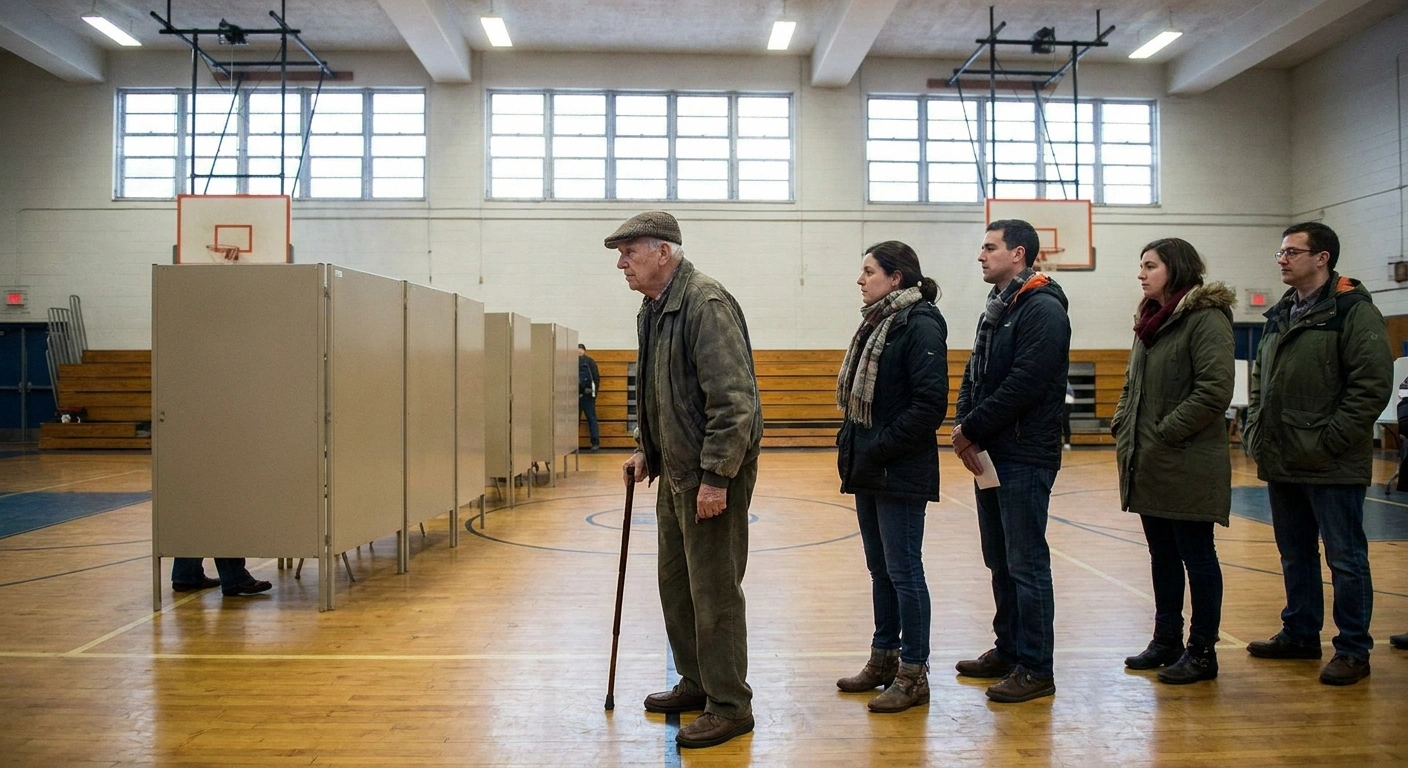
Election Day is Tuesday, November 3, about five weeks from the morning I'm writing this. For a lot of us with neuropathy, the ballot itself isn't the hard part of voting in person. The line is. So is the walk in from the parking lot, the drafty doorway in November, and the pen waiting at the end — the one numb fingertips never seem to grip quite right.
You have more room to plan around all of that than most people realize. Federal law requires accessible polling places for federal elections and an accessible voting machine at each one. Some states move you to the front of the line, and others bring the ballot out to your car. Every state allows absentee voting for an illness or disability that keeps you from the polls, and 47 states plus Washington, D.C., open early voting to everyone, which can mean a calmer day to go.
I'm a patient advocate, not a lawyer or an election official. What follows comes from statutes, federal guidance and official election pages as they read on October 1, 2026, and your county election office is usually the best place to confirm how things work where you live. The approach is the same one that helps with jury duty with neuropathy: learn what you're allowed to ask for, then ask early.
What Federal Law Promises Voters With Disabilities
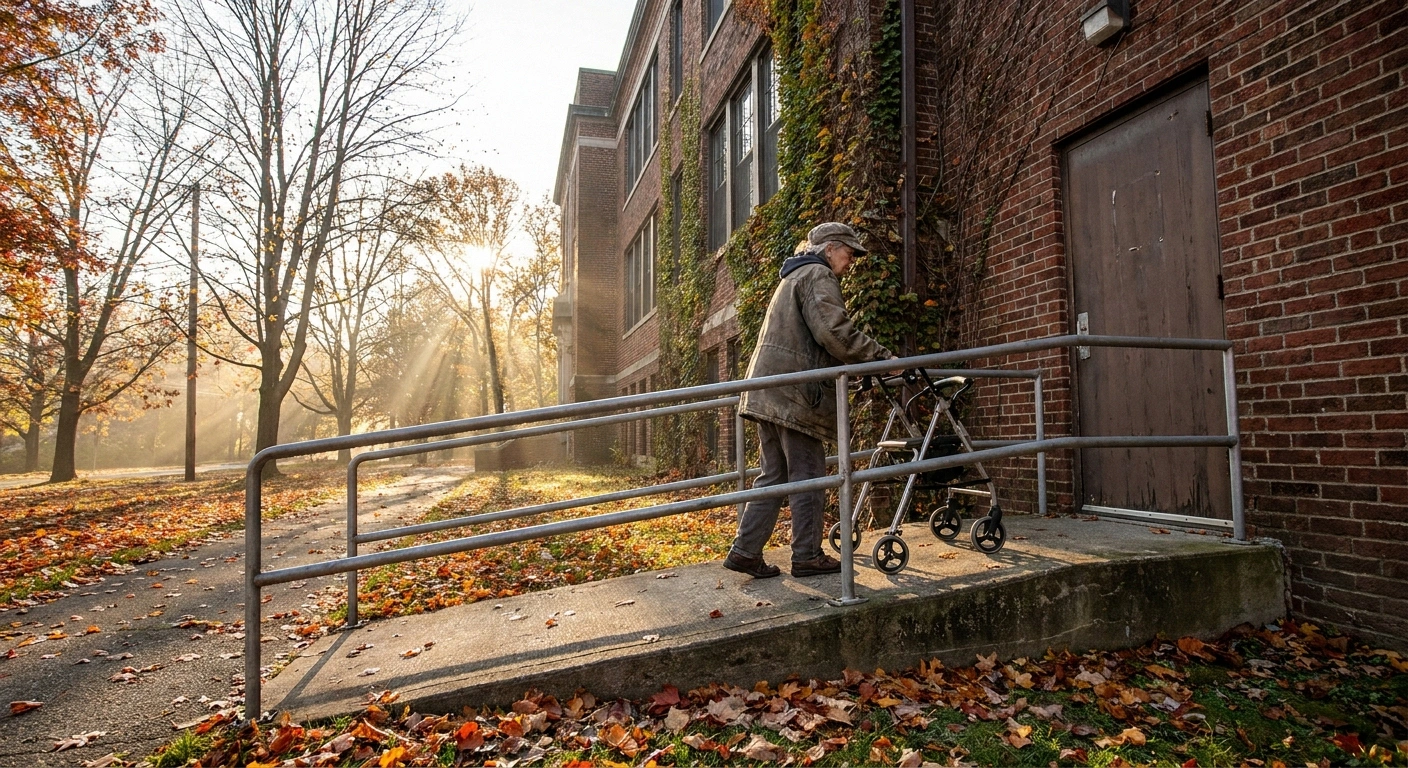
Four federal laws do most of the work, and each one covers a different piece of the trip. Knowing which is which makes it easier to ask for the right thing at the right desk.
- Voting Accessibility for the Elderly and Handicapped Act (1984), 52 U.S.C. 20102
- Covers polling places for federal elections. Ask for the accessible entrance, or ask in advance to be moved if your assigned site isn't accessible.
- Help America Vote Act (2002), 52 U.S.C. 21081
- Covers voting equipment in federal elections. Ask for the accessible machine, and for a replacement ballot if you make a mistake.
- Americans with Disabilities Act, Title II
- Covers state and local governments, so every election, early or on Election Day, in person or absentee. Ask for a reasonable change in how things are done, such as a chair while you wait.
- Voting Rights Act, section 208, 52 U.S.C. 10508
- Covers help casting your ballot. Bring someone you choose, as long as it isn't your employer, someone acting for your employer, or an officer or agent of your union.
The oldest, the Voting Accessibility for the Elderly and Handicapped Act of 1984, says each local election office “shall assure that all polling places for Federal elections are accessible to handicapped and elderly voters.” The exceptions are narrow: an emergency, or a place where no accessible site can be found. Even then, a voter assigned to an inaccessible polling place who asks in advance has to be moved to an accessible one or given another way to cast a ballot on Election Day.
The Help America Vote Act of 2002 requires “at least one direct recording electronic voting system or other voting system equipped for individuals with disabilities at each polling place” in federal elections, with the same privacy and independence other voters get. The Justice Department adds that under the Americans with Disabilities Act, those machines have to actually work, and the poll workers have to be trained to run them.
The ADA itself reaches every election, not only federal races. In guidance dated April 18, 2024, the Justice Department wrote, “The ADA's provisions apply to all aspects of voting, including voter registration, polling place site selection, election websites, and the casting of ballots, whether on Election Day or during an early voting process, and whether in-person or absentee.” It also says something I'd underline twice: “While absentee balloting can be offered to voters with disabilities, it cannot take the place of in-person voting for those who prefer to vote at the polls on Election Day.” If you want to vote in person, that's your choice to make.
The fourth law is the Voting Rights Act's helper rule, section 208, which lets you bring a person you choose. I'll come back to it further down, because its two exceptions trip people up.
Choosing the Way to Vote That's Easiest on Your Body
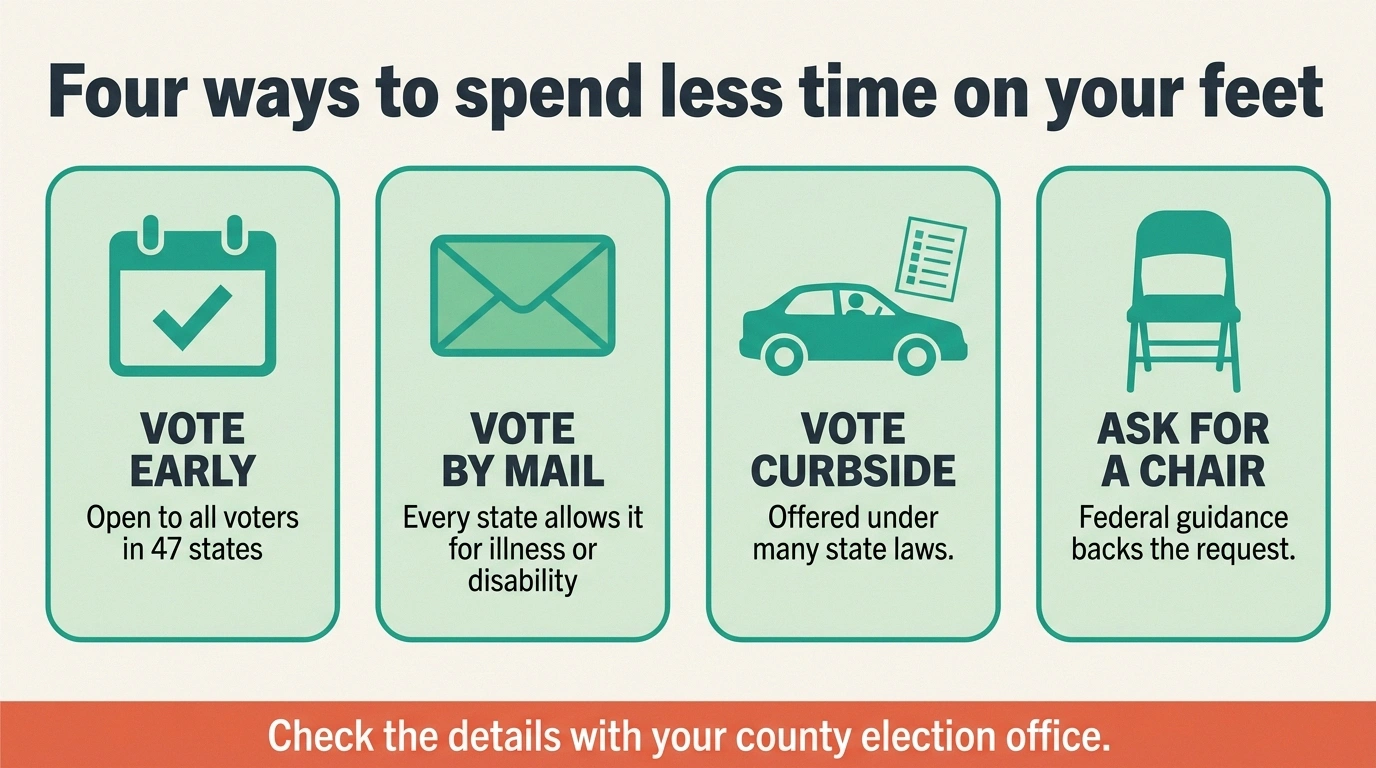
Before planning around the line, ask whether you need to stand in it at all. In a Rutgers University survey of the 2022 elections, prepared for the U.S. Election Assistance Commission (EAC), close to three in five voters with disabilities voted by mail or early in person, compared with just over half of voters without disabilities.
- Where is the accessible entrance at my polling place, and is accessible parking close to it?
- Do you offer curbside voting there, at early-voting sites, or both? How do I let workers know I've arrived?
- Will there be chairs for voters in line, or a way to hold my place while I sit?
- Which accessible voting machine will be there, and does it have a keypad or paddles as well as a touchscreen?
- If I can't sign my name the way I used to, what happens instead?
- If I vote by mail, is the signature on file current, and how will you reach me if there's a problem with it?
Early voting is the closest thing to a quiet polling place. As of 2026, 47 states and D.C. offer early in-person voting to all voters, according to the National Conference of State Legislatures (NCSL); Alabama, Mississippi and New Hampshire don't. Early voting periods run anywhere from 3 to 46 days depending on the state, about 20 days on average. If your state has a window, a midweek morning is the slot I'd try first.
Mail voting is open to any voter — no excuse needed — in 37 states and D.C. The other 13 states require a reason, but NCSL reports that every state lets voters with an illness or disability who know ahead of time that they can't get to the polls vote absentee. Nine states (Connecticut, Delaware, Kansas, Louisiana, Mississippi, New York, Tennessee, West Virginia and Wisconsin) also let voters with a permanent disability join a permanent list. Many states take emergency requests after the normal deadline for a sudden illness, a hospital stay or an injury, so a fall or a bad flare in the final week may still leave you an option. Ask your county.
A note on doctor's paperwork. Federal law says “No notarization or medical certification shall be required of a handicapped voter with respect to an absentee ballot or an application for such ballot,” with exceptions for things like qualifying for a standing list or applying after the deadline. A state may want medical proof to put you on a permanent list, then, but not for an ordinary absentee request.
Pennsylvania has one more option. Its alternative ballot is a mail ballot for voters 65 and older, or voters with a disability, who are assigned to a polling place the county has found isn't accessible. The application is due at the county election office by 5 p.m. on the Tuesday before Election Day, which this year works out to October 27.
Standing in Line: Chairs, Placeholders and Moving Up
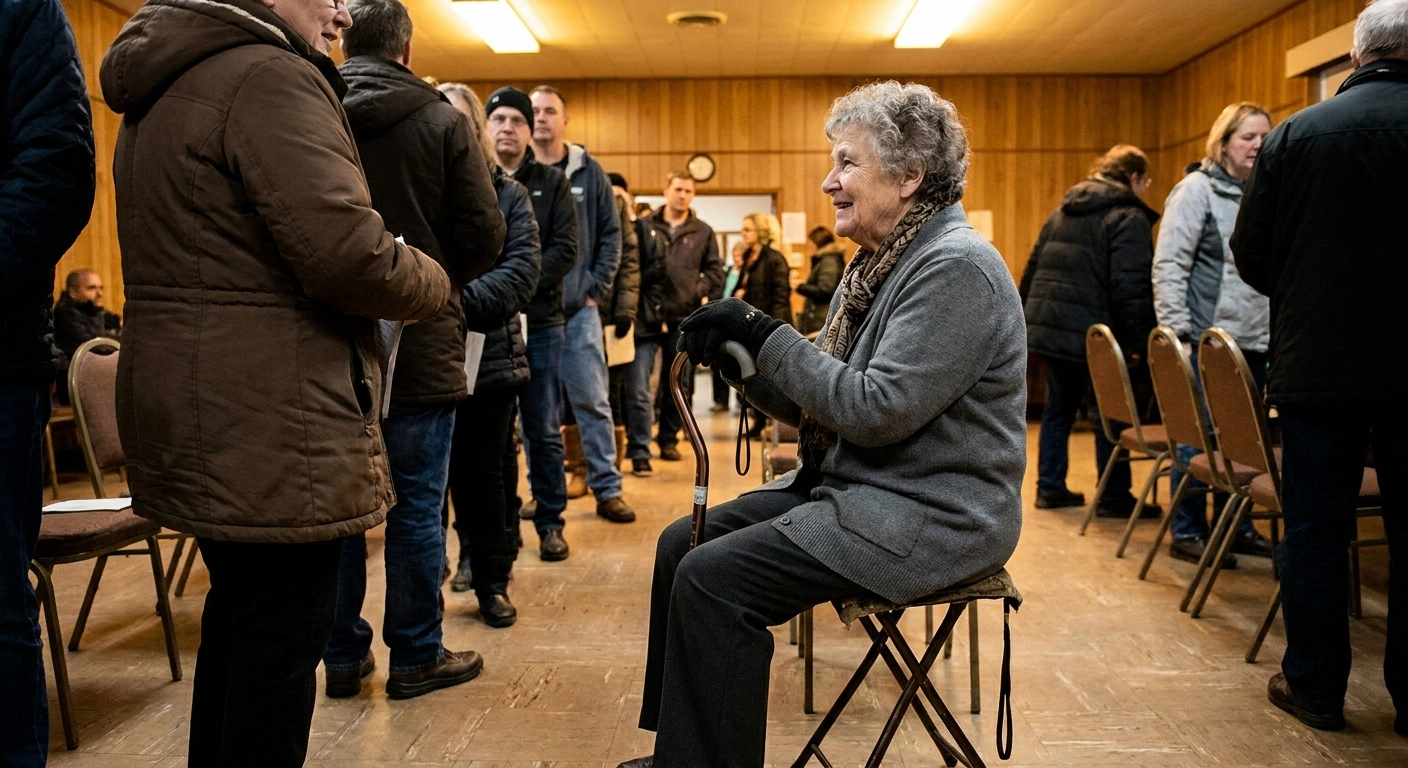
The line is where most of us feel it. In the same 2022 Rutgers survey, waiting in line was the most common in-person problem for voters with and without disabilities, reported by 7.4% of in-person voters with disabilities against 1.6% of those without. Most waits were short. The median was five minutes for both groups, but 1.4% of in-person voters with disabilities waited more than two hours. Five minutes is manageable for most people. An hour on a gym floor is a different story.
| Where | What you can ask for | Conditions |
|---|---|---|
| Federal (ADA guidance) | A chair while you wait, but no right to move up | Justice Department guidance, which isn't legally binding |
| Texas | A move to the front of the line | A mobility problem that substantially impairs walking, and you agree to it; your helper can come along |
| Nevada | A separate line, or a move to the front | Voters with disabilities, or voters not physically able to wait in line |
| Georgia | The next open voting booth, without waiting | Election Day, 9:30 a.m. to 4:30 p.m.; age 75 or older, or disabled and needing help to vote |
| Maryland | A placeholder card and a seat | Tell the election judge you can't stand for long; another voter holds your place |
Sources: Justice Department ADA guidance (April 2024); Texas Secretary of State; Nevada Revised Statutes 293.2955; Gwinnett and Oconee county election pages in Georgia; Maryland State Board of Elections Policy 2025-01. Georgia lawmakers introduced bills in 2025 that would change its rule, so confirm with your county.
Federal guidance gives you a starting point, not a guarantee. The Justice Department's example is a voter who uses crutches: “The ADA does not require that these voters be moved to the front of the line, but the public entity should provide a chair for them while they wait.” For a voter with multiple sclerosis who may not tolerate extreme temperatures, it says a chair inside the polling place may be an appropriate change. The department also says its guidance documents “have no legally binding effect” (the ADA itself is the law), and neither example names neuropathy. Still, the reasoning fits feet that start burning after ten minutes of standing — and the EAC's checklist for election officials asks, plainly, “Are chairs available to voters in line?”
Some states go further. The table above sums up four of them, but Texas deserves a closer look, because its posted notice reads like a description of neuropathy. According to the Texas Secretary of State, the examples of a qualifying mobility problem include a neurological condition that severely limits walking, a foot disorder, not being able to walk 200 feet without stopping to rest, and using a cane or brace. The notice never names neuropathy, though, so you still have to tell an election officer and agree to be moved up.
Here's how I'd ask, wherever you vote: “I have nerve damage in my feet and can't stand for long. Is there a chair, or a way to hold my place?” Say it to the first poll worker you see, before the line wears you down. The small weight shifts and shoe choices that help with standing in line with neuropathy work at the polls, too.
Curbside Voting: Where It's Offered and How It Works
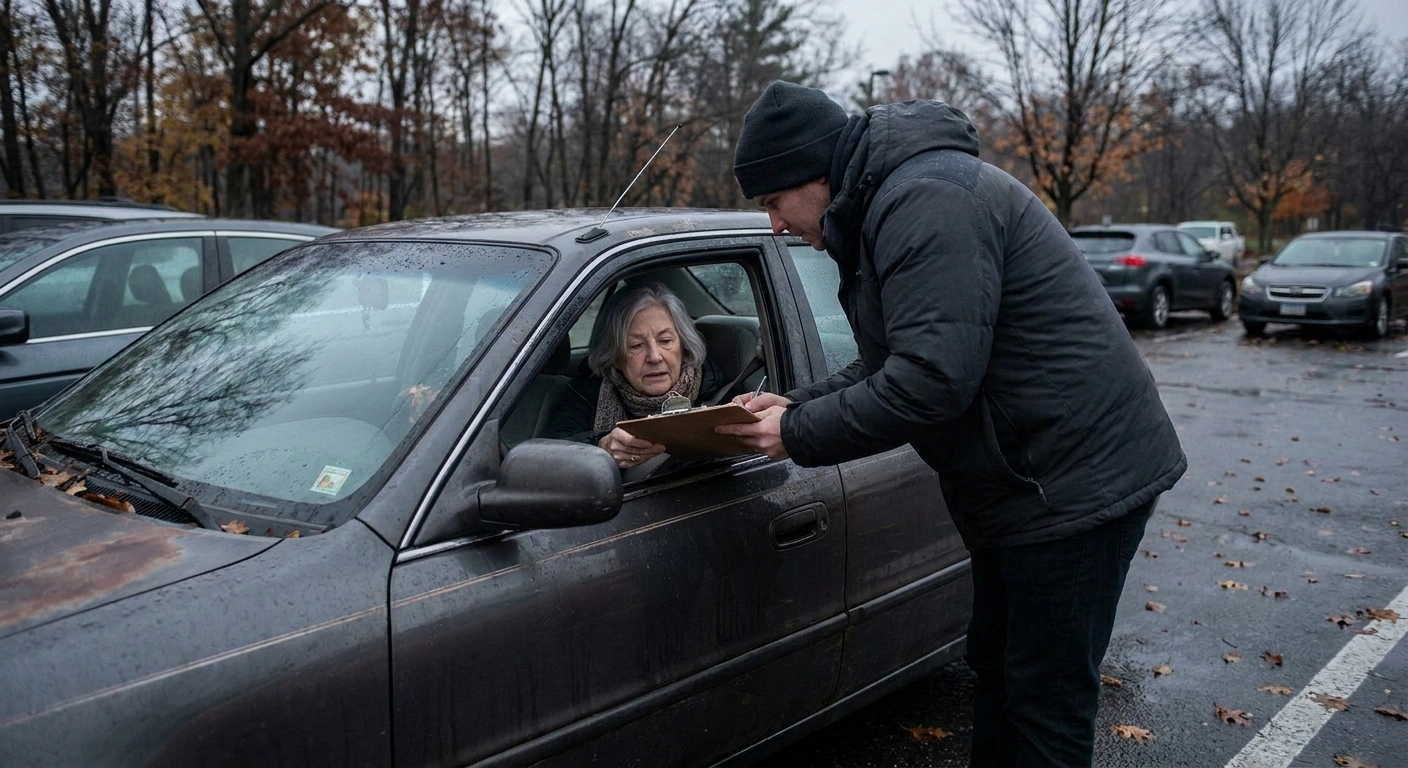
Curbside voting brings the ballot to you. The EAC's guide for election officials describes it this way: “Typically, elections workers will bring the voter a poll book to sign, a ballot, and any other voting materials needed to cast a ballot privately and independently.” You can vote from your car or from a spot near the entrance, and “A curbside voter has the same right to assistance as any other voter.”
Sources: Code of Virginia § 24.2-649.1; Texas Secretary of State Election Advisory 2023-14; N.C. Gen. Stat. § 163-166.9; California Secretary of State.
It isn't a nationwide right. Curbside voting comes mostly from state law, and the Justice Department treats it as an ADA fallback only in limited situations, mainly when no accessible polling place is available. By the Movement Advancement Project's count, 27 states and D.C. explicitly allow curbside voting for voters with disabilities, while 23 states have no law on it either way. No law isn't the same as a ban, so it's worth a call.
If your state offers it, a little planning keeps you from waiting in a cold car. The EAC recommends that officials offer appointments for curbside voting and hand out clipboards for marking ballots; those are best practices, not rights, but it's fair to ask whether your county does either. Find out ahead of time how you're supposed to let workers know you've arrived. Texas, for one, requires a reserved curbside space at least the size of one parking space, with a sign telling voters how to reach a poll worker for curbside help. Park as close as you're allowed, and bring your disability parking placard if you have one.
If the Polls Close While You're Still in Line
Don't step out of line at closing time — not even for a few minutes in a warm car. In many states, a voter who's already in line when the polls close still gets to vote, but the rule comes from each state's law. North Carolina's statute spells it out: “If any voter is in line to vote at the time the polls are closed, that voter shall be permitted to vote.” If you need to sit, tell a poll worker rather than giving up your spot.
Marking a Ballot With Numb Fingertips
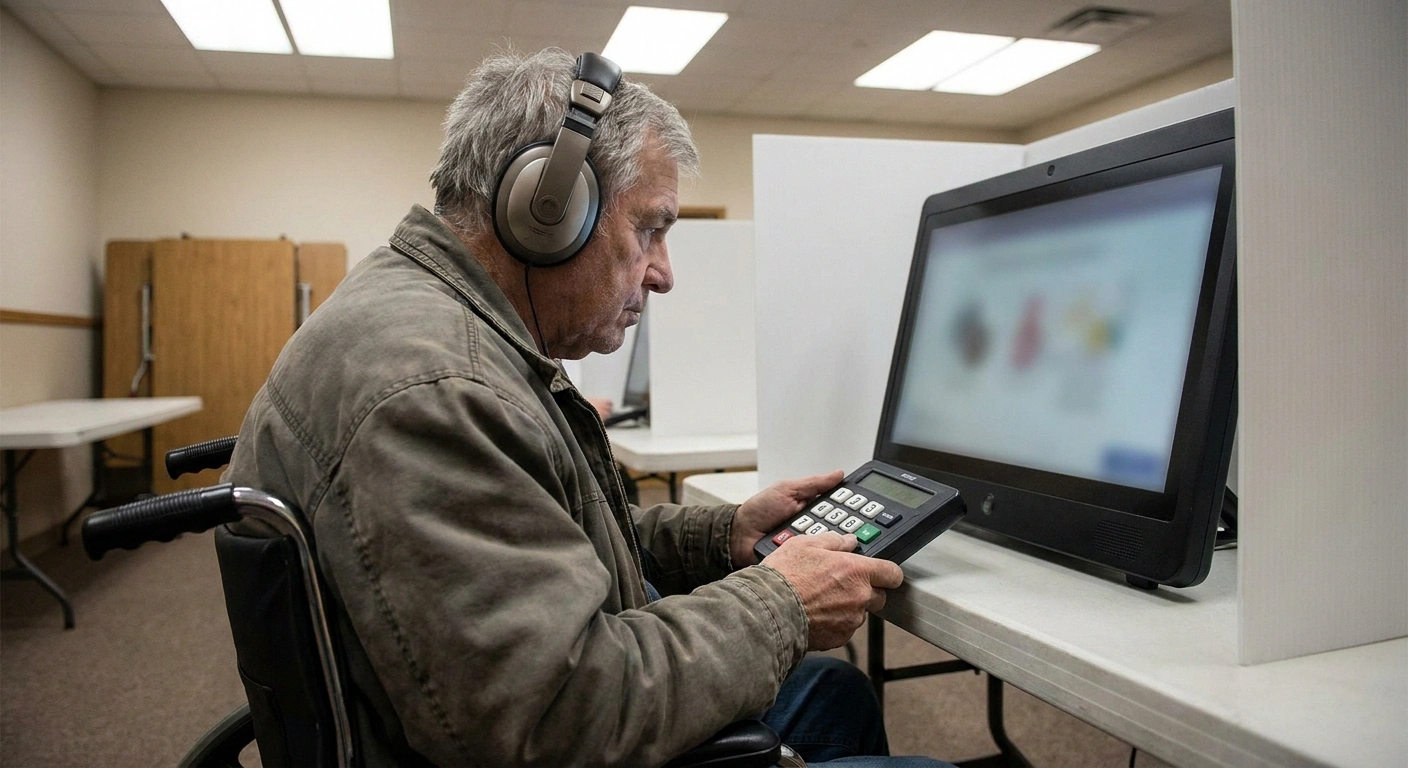
A pen and a row of small ovals are harder than they look when your fingertips are numb. That's what the accessible voting machine is for — and federal law requires it to serve voters with disabilities in general, not only voters who are blind. Features vary by county and model. One Florida county's page for its ExpressVote machine describes a touchscreen, a keypad with Braille labels, sip-and-puff controls, and rocker paddles that some voters press with their hands or feet. Pennsylvania's accessible-voting page mentions audio and tactile keys.
With numb fingers, a keypad or paddles can be easier than a touchscreen. It's perfectly fine to ask a poll worker to walk you through the controls before you start, the same way you'd ask a pharmacist to show you a new inhaler.
Mistakes happen, especially when your hands don't send back good feedback. Under the Help America Vote Act, you get a private chance to change your ballot or fix an error before it's cast, “including the opportunity to correct the error through the issuance of a replacement ballot if the voter was otherwise unable to change the ballot or correct any error.” In plain words, ask for a fresh ballot. You can also have someone help you mark it. The Justice Department says a voter with a disability who needs help marking a ballot “must be allowed to receive assistance from the person of their choosing and is not limited to assistance from an election worker.”
Voting by mail? Some states let voters with disabilities receive and mark a ballot electronically at home. California calls its version remote accessible vote by mail. Florida's elections division says you'll need at least a computer and a printer, and the marked ballot still goes back in person or by mail, not electronically. Pennsylvania now offers electronic marking of mail ballots for voters with disabilities, too. The pen grips that help with neuropathy in the hands around the house can make a paper ballot at the kitchen table easier.
When Signing Your Name Is the Hard Part
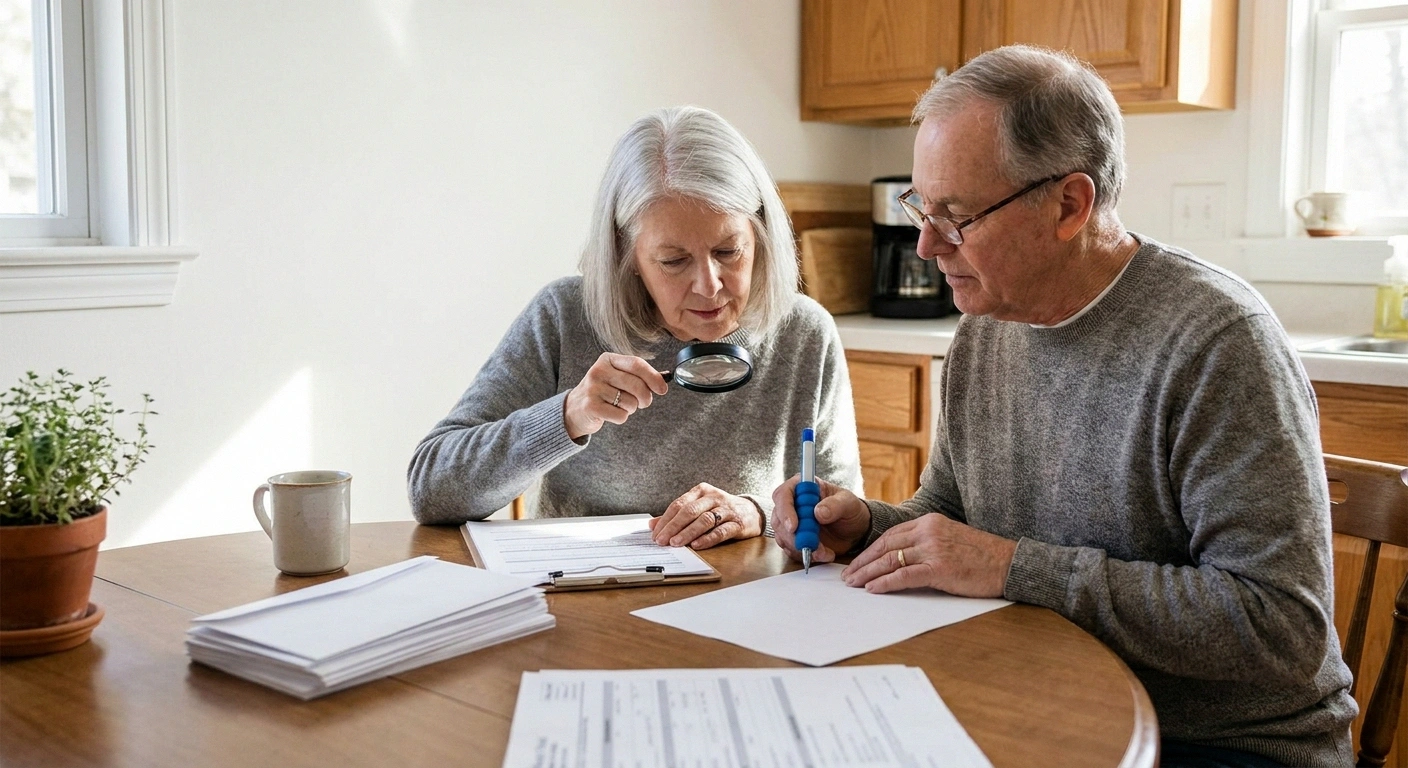
A signature that has drifted over the years, or one you can't produce at all anymore, doesn't have to stop you. The EAC lists accessible alternatives that officials can offer: “physical marks indicating a signature line, electronic signatures, stamps, and affidavits of assistance.” What's actually allowed depends on your state.
A few examples show the range. In Texas, when a voter can't sign because of a physical disability, a witness may sign for them while the voter adds a mark the witness attests, according to the Texas Secretary of State; a voter who can't sign the pollbook has their name entered with a note explaining why. Virginia's law accepts a voter's own mark, acknowledged before an officer of election, on the request for help inside the polling place. Nevada lets a voter who can't sign identify themselves by answering questions about their registration details. Georgia counties say state law requires a mark on the absentee ballot envelope when a voter can't sign.
Mail ballots raise the stakes. NCSL reports that 35 states and D.C. have a statewide process requiring officials to notify voters when a mail-ballot signature is missing or doesn't match; in states without one, it says, those ballots aren't counted, so check your state's rules well before you mail anything. If your handwriting has changed since you registered, ask your county how to update the signature or mark on file; Gwinnett County in Georgia notes that disabled or elderly voters may be asked to do exactly that. Then give the office a phone number or email so it can reach you quickly if something looks off.
Bringing a Helper You Trust
Section 208 of the Voting Rights Act is short enough to quote in full: “Any voter who requires assistance to vote by reason of blindness, disability, or inability to read or write may be given assistance by a person of the voter's choice, other than the voter's employer or agent of that employer or officer or agent of the voter's union.” A spouse, an adult child, a friend or a neighbor can help you. Your boss and your union officer can't.
The Justice Department says that help can cover every step, “including in requesting, completing, and returning a ballot, whether in person, absentee, or by mail-in ballot.” States add their own wrinkles. Pennsylvania doesn't let your Judge of Elections be your helper and has you sign a declaration the first time you get help. California lets you choose up to two people. Florida has you, and a helper who isn't an election official, take a short oath. And in Texas, the person helping a voter with a qualifying mobility problem can, at the voter's request, move to the front of the line along with them.
A November Plan for Feet, Hands and Weather
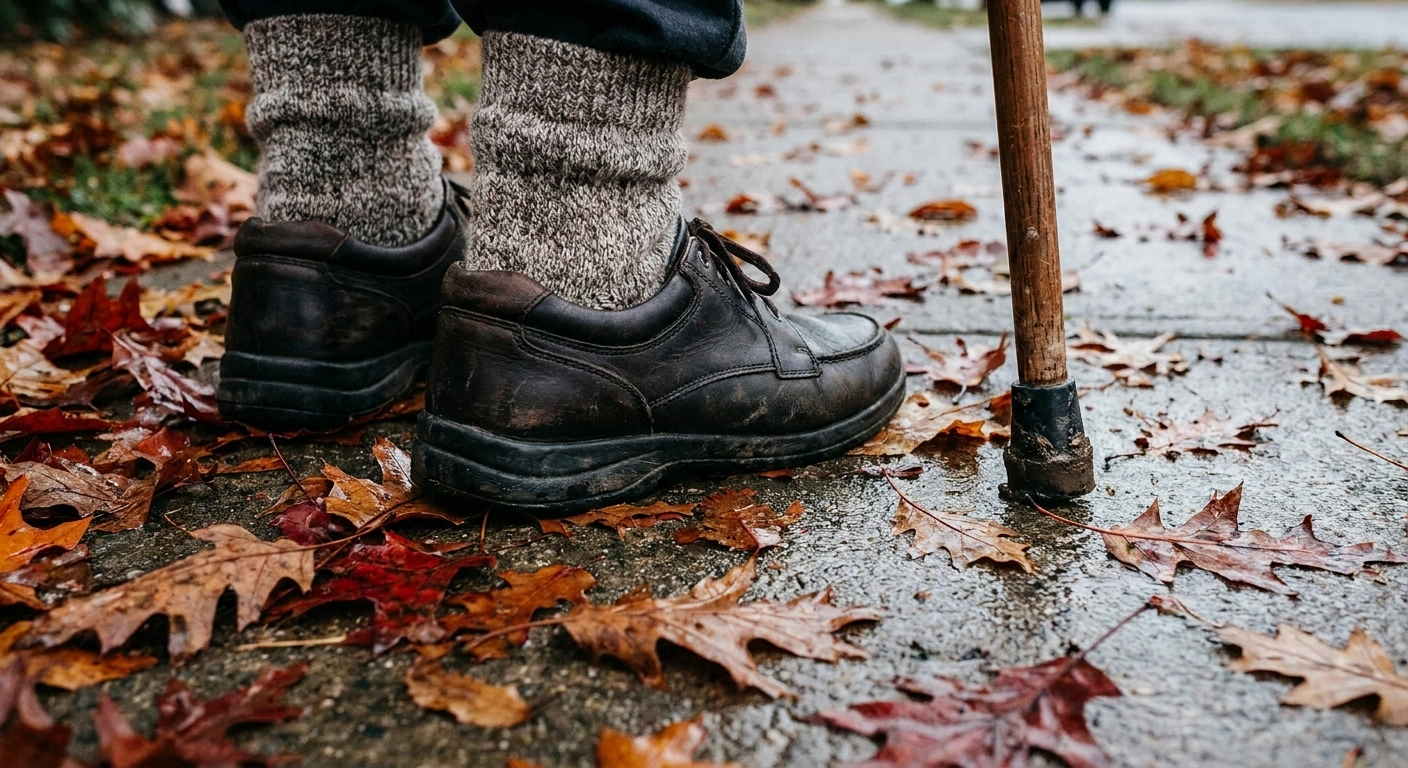
These are my own habits, not rules or research. They're built around what tends to go wrong for feet and hands like ours in a November line.
- Wear broken-in shoes that fit well, with comfortable socks that don't bunch or make the shoes tight, and check your feet when you get home. Numb feet don't always report a blister, so get any blister or sore looked at promptly.
- Bring a folding cane seat or a rollator with a seat, but only one you already know how to use safely, and lock a rollator's brakes before you sit. My page on choosing a cane or walking aid compares the options.
- Dress in layers. Drafty gym doors hit hard, and cold weather can make nerve pain worse for many of us.
- Take the accessible entrance even if you could manage the steps. The Justice Department's polling-place checklist points out that “Even one short step at an entrance or in a hallway can prevent access by a person using a wheelchair, walker, or cane.”
- Watch wet leaves, curbs and ramps on the way in. The CDC says more than a quarter of adults 65 and older fall each year, and fewer than half of them mention it to a doctor. It counts trouble with walking and balance, and foot pain, among the risk factors.
- Go at the time of day you usually feel best, eat first, and don't stack three errands onto the same trip. Pacing your energy applies to Election Day as much as any other day.
- Bring your reading glasses, whatever ID your state asks for, and your helper's name if someone's coming with you.
When Something Goes Wrong at the Polls
If you're refused a chair, curbside help or the accessible machine, calmly ask for the person in charge of the polling place — the title varies by state. A lot of problems get fixed right there. If not, contact your county or state election office, which is usually the fastest route on the day itself. You can also file a report with the Justice Department's Civil Rights Division through its online form at civilrights.justice.gov. Among its examples of voting problems is being “Denied adequate voting assistance or accommodations for a disability at a polling place.”
Frequently Asked Questions
Can I skip the line to vote if I have neuropathy?
Not under federal law. Justice Department guidance says the ADA doesn't require moving voters to the front of the line, although officials should provide a chair. Some states go further: Texas requires front-of-line priority for voters with a qualifying mobility problem, Nevada requires a separate line or a move to the front, and Georgia counties describe an Election Day no-wait rule for voters 75 and older or disabled voters who need help voting.
Does the polling place have to give me a chair?
Federal guidance says officials should provide a chair to a voter who has trouble waiting in a long line, but that guidance isn't legally binding. Ask the first poll worker you see. Maryland uses a placeholder card so you can sit while another voter holds your place.
What is curbside voting, and can I use it?
Election workers bring the poll book, a ballot and other materials out to your car or to a spot near the entrance. Whether it's offered depends on state law. The Movement Advancement Project counts 27 states and D.C. that explicitly allow it for voters with disabilities, so check with your county election office.
Who is allowed to help me vote?
Anyone you choose, except your employer or someone acting for your employer, and an officer or agent of your union. Some states add rules. Pennsylvania doesn't allow your Judge of Elections to help, and California lets you bring up to two helpers.
What if I can't sign my name anymore?
Many states have a process, such as signing with a mark, having a witness sign for you, or answering identifying questions. If you vote by mail, ask your county how to update the signature on file, because 35 states and D.C. notify voters about signature problems and the rest don't have to.
Can I still vote if I'm in line when the polls close?
In many states, yes. North Carolina, Virginia, Florida, California and Pennsylvania all let voters who are in line at closing time cast a ballot. Stay in line, and tell a poll worker if you need to sit.
Do I need a doctor's note to vote by mail because of a disability?
Not for an ordinary absentee ballot. Federal law bars requiring medical certification for a disabled voter's absentee ballot or application, except when a state uses it to qualify you for a standing list or for a late application.
About the Author