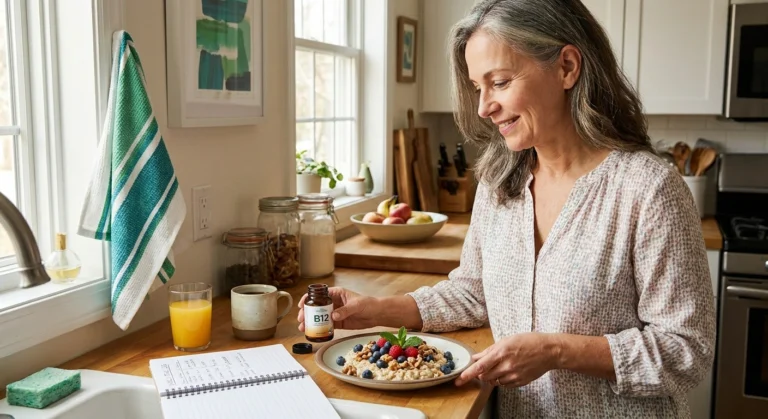
I was sitting at the kitchen table last week with my neighbor Ellen, looking at a printout from her dietitian. The handout had two columns and a long list of foods. “High GI on the left,” she said. “Low GI on the right. She told me to eat from the right column. Janet, I don't even know what half of these foods are.”
This is the moment a lot of us hit when a doctor or dietitian tells us to “eat low glycemic” for nerve protection. The idea is right — keeping blood sugar steady is one of the most powerful things you can do to protect peripheral nerves from further damage — but the typical handout looks like a vocabulary test from a nutrition class. Buckwheat. Quinoa. Steel-cut oats. Bulgur wheat. Adzuki beans. Coconut flour.
This article is the version of that handout I wish someone had given Ellen. We are going to translate “low glycemic index” into ordinary meals that ordinary people in ordinary American grocery stores can actually make. We will look at why this matters for your nerves specifically, then walk through a week of breakfasts, lunches, dinners, and snacks. By the end you will have a real meal plan that fits a Tuesday — not just a list of unfamiliar grains.
Why Blood-Sugar Steadiness Matters for Your Nerves
Peripheral nerves are exquisitely sensitive to blood-sugar swings. When your glucose surges after a meal, the mitochondria inside your nerve cells get overwhelmed and start producing bursts of free radicals — unstable molecules that damage the nerve from the inside. The microscopic blood vessels that feed your nerves also stiffen and constrict during glucose spikes, briefly starving the nerve of oxygen.
Repeat this several times a day, every day, for years, and the dying-back pattern of diabetic neuropathy takes hold — feet first, then lower legs, then hands. The damage is cumulative. Each spike adds a little. Each crash adds a little. Over time, the small fiber nerves in your feet die back faster than your body can repair them.
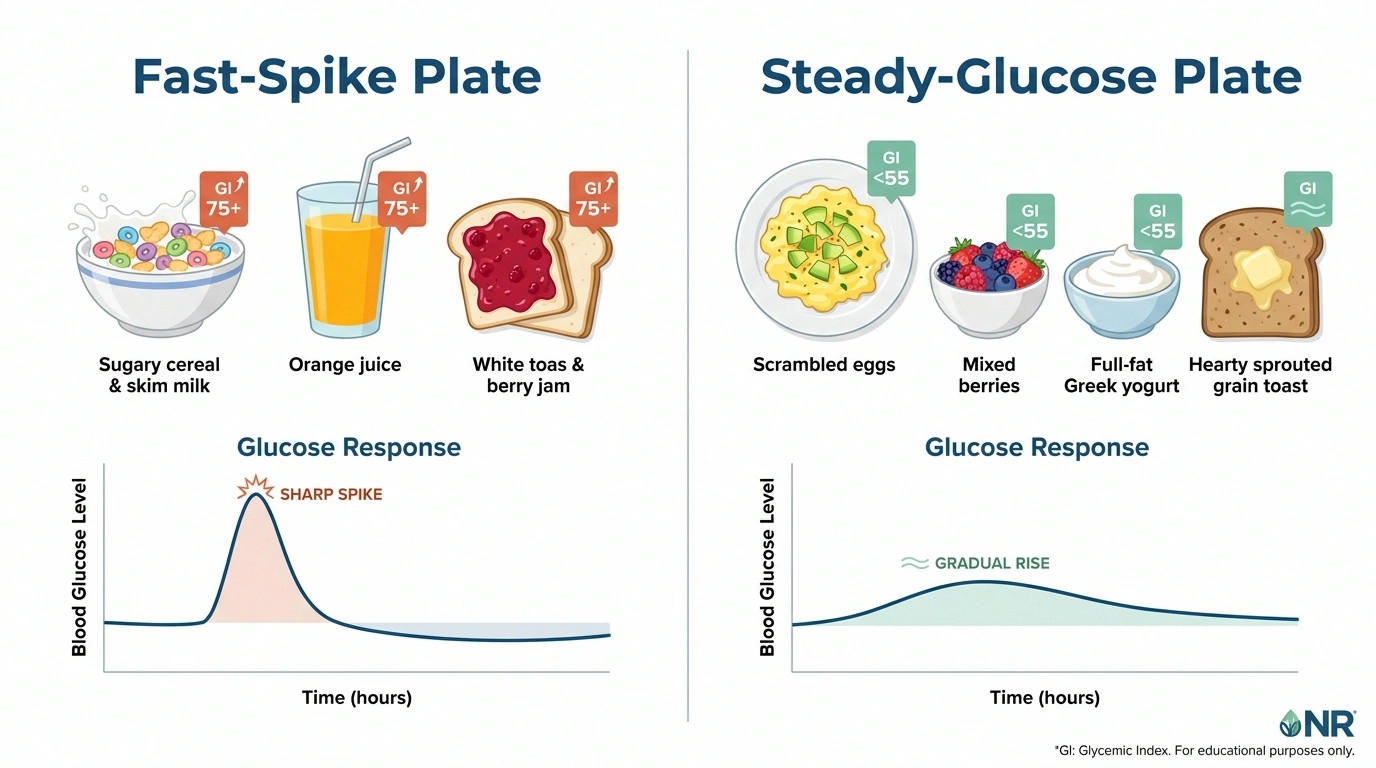
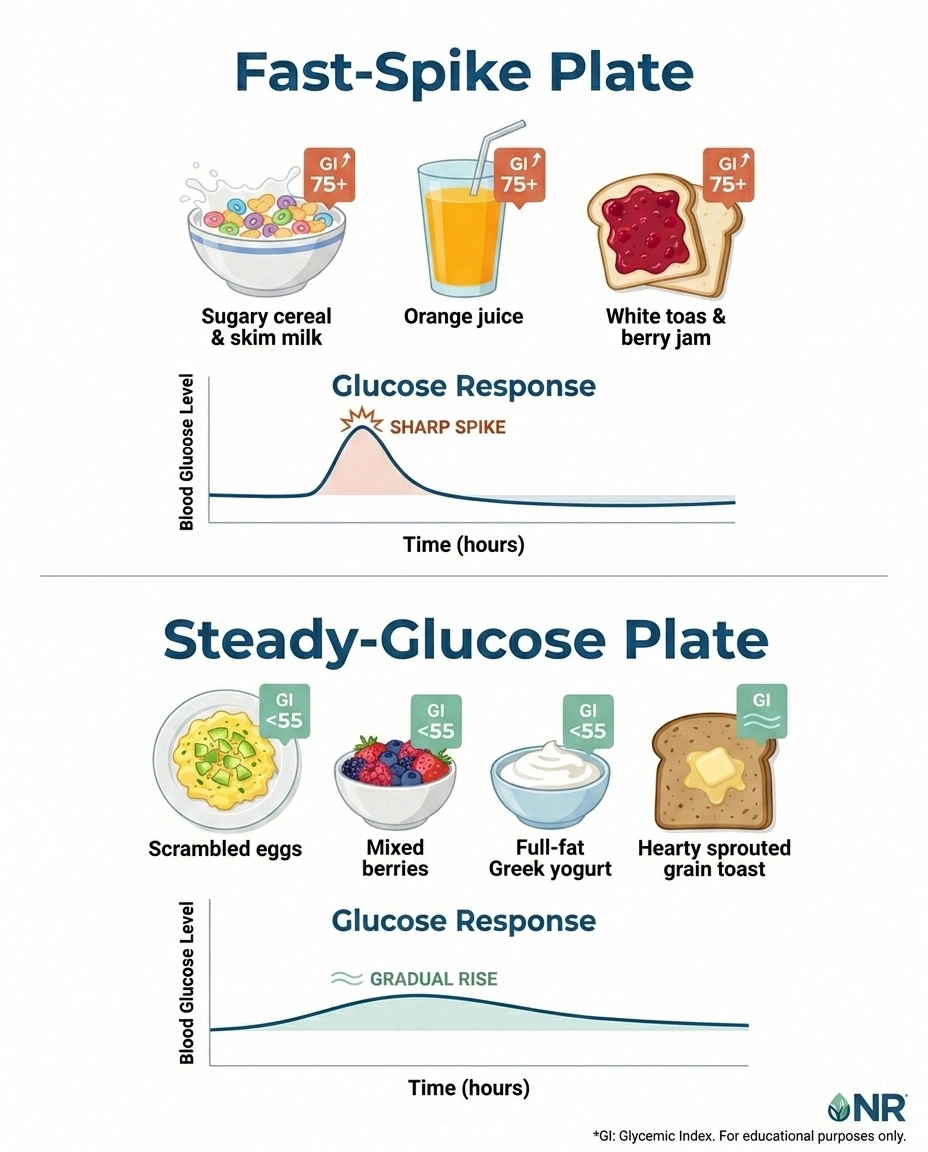
A low-glycemic-index (low-GI) eating pattern is, at its core, an attempt to flatten that curve. Foods are ranked by how fast and how high they push your blood sugar after a typical serving. Sugar and refined grains rank high — they hit your bloodstream like a wave. Slow-digesting foods with fiber, protein, and fat alongside them rank low — they release glucose gradually, like a steady drip instead of a flood.
The benefit you are after is not a single perfect number on a glucose meter. It is hundreds of fewer spikes a year. Over months and years, that adds up to less oxidative damage to the nerves you still have — and a real chance to slow neuropathy progression.
The Three Numbers Worth Knowing (and Why GI Alone Is Not Enough)
Before we get to the food, three terms worth learning. These will save you from a lot of bad supermarket advice.
Glycemic Index (GI) ranks a food by how high it raises blood sugar compared to pure glucose. Below 55 is “low.” 55–69 is “medium.” 70 and above is “high.” A baked potato is around 85. A bowl of steel-cut oatmeal is around 55. A handful of strawberries is around 40.
Glycemic Load (GL) adjusts GI for portion size. A watermelon has a high GI (around 72), but each cup contains very little carbohydrate, so the actual glucose impact is small. GL of about 8 per cup. Below 10 is low. 11–19 is medium. 20+ is high.
The full meal — what you eat with what — usually matters more than either number on a single food. A slice of white bread eaten alone produces a much bigger spike than the same slice eaten with eggs, avocado, and olive oil. This is why a recipe approach beats a list-of-foods approach. You are managing the meal, not the ingredient.
If you remember nothing else: low-GI does not mean low-carb. It means slow-carb. Whole oats, beans, lentils, and barley are all low GI even though they contain significant carbohydrate. Sugar and white flour are high GI even in small amounts.
The Five Anchors of a Low-GI Plate
Every meal in the week-of-eating below uses the same five anchors. If you internalize these, you can build your own meals forever without looking at another GI chart.
1. Build the plate around protein. Eggs, fish, chicken, Greek yogurt, cottage cheese, beans, lentils, tofu, edamame. Protein slows glucose absorption and triggers satiety hormones. Aim for 20–35 grams per meal.
2. Choose slow carbs over fast carbs. Steel-cut or rolled oats (not instant). Berries. Apples, pears, citrus. Beans, lentils, chickpeas. Barley, bulgur, quinoa. Sweet potato. Whole-grain bread with intact kernels. Avoid white bread, white rice, instant oatmeal, sugary cereals, white potato (large portions), most pastries, and almost everything in a wrapper labeled “low fat” with a sweet ingredient list.
3. Add fat without apology. Olive oil, avocado, nuts, seeds, full-fat Greek yogurt. Fat slows gastric emptying and flattens the glucose curve. The decades of “low-fat” advice did real damage to blood sugar control — it pushed people toward more sugar to make food palatable.
4. Pile on non-starchy vegetables. Leafy greens, broccoli, cauliflower, bell peppers, cucumber, tomatoes, zucchini, mushrooms, green beans, asparagus. These are essentially free from a glucose standpoint and provide fiber, antioxidants, and volume that fills you up. Half your plate, almost every meal.
5. Sequence smart. When you sit down to eat a meal that contains carbs, eat the protein and vegetables first, then the carbs. This single habit — backed by surprisingly robust research — can cut a meal's glucose spike by 20–30%. It feels strange at first. It works.
That is it. Five rules. The rest is just applying them to real food.
A Week of Real Low-GI Meals
Below is a full week of breakfasts, lunches, dinners, and snacks I have actually fed my family and recommended to friends. Nothing requires unusual ingredients. Everything is buildable from a normal grocery store in a normal week.
If you are going to follow this, lean into one principle: repeat your wins. If a breakfast works for you, eat it three times that week. Variety is overrated. Consistency is what flattens your glucose curve.
Day 1 — Foundations
Breakfast: Two-egg veggie scramble with spinach, sautéed mushrooms, and a slice of avocado. One slice of stone-ground whole-wheat or sprouted-grain toast. Black coffee or unsweetened tea.
Lunch: Big salad bowl. Mixed greens, a can of drained tuna or three ounces of grilled chicken, half a cup of chickpeas, cherry tomatoes, cucumber, olive oil and lemon. A few walnuts on top.
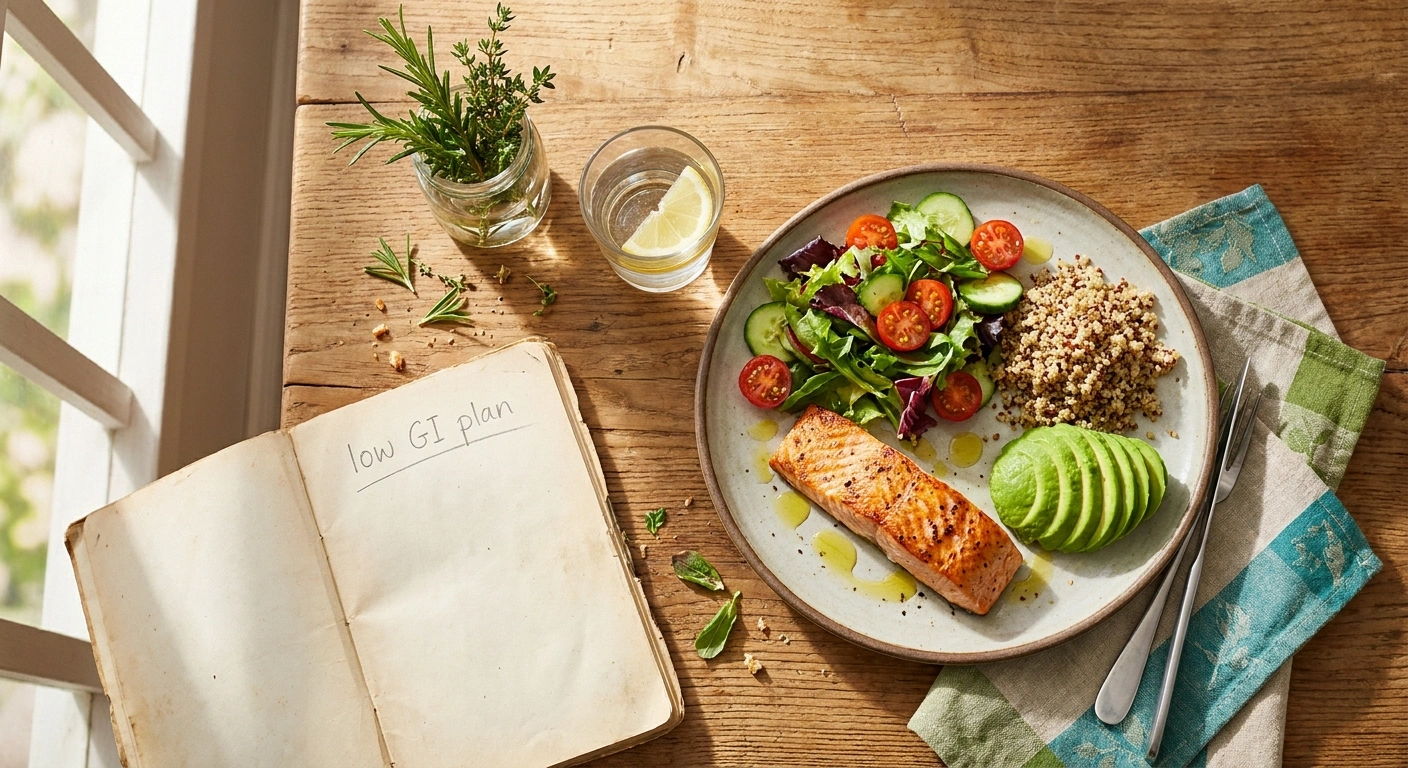
Dinner: Baked salmon (4 ounces), roasted broccoli with olive oil and garlic, and three-quarters of a cup of cooked quinoa or barley.
Snack: A small handful of almonds and a few slices of apple.
Day 2 — A Steel-Cut Oat Day
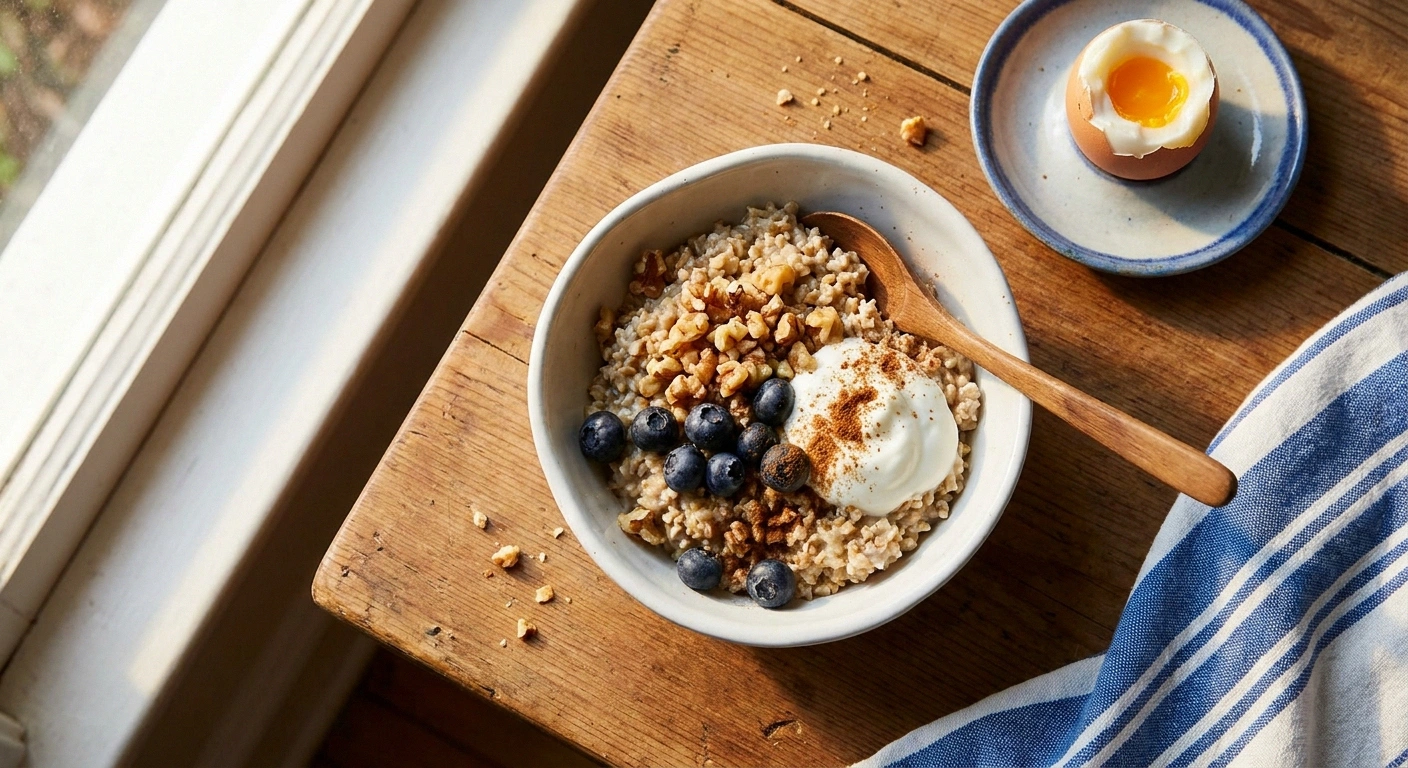
Breakfast: Steel-cut oatmeal (half cup dry, cooked) topped with two tablespoons of chopped walnuts, a small handful of blueberries, and a dollop of plain Greek yogurt. Cinnamon on top. A boiled egg on the side for protein.
vegetables
+ healthy fat
Lunch: Lentil soup (homemade or a quality store brand with no added sugar), a side salad with olive oil dressing, a few olives.
Dinner: Grilled chicken thigh, roasted Brussels sprouts, half a baked sweet potato with a small pat of butter and cinnamon.
Snack: A pear with a tablespoon of natural peanut butter.
Day 3 — Slow Cooker Day
Breakfast: A big bowl of full-fat plain Greek yogurt with a few sliced strawberries, a tablespoon of chia seeds, and a tablespoon of chopped pecans. Black coffee.
Lunch: Turkey and avocado wrap in a whole-grain low-carb tortilla with lettuce, tomato, mustard. Side of baby carrots and hummus.
Dinner: Slow-cooker chicken chili with kidney beans, black beans, tomatoes, peppers, onions, and spices. Half a cup of cooked brown rice on the side if desired.
Snack: A small square of dark chocolate (70% or higher) and a few walnuts.
Day 4 — Fish and Greens
Breakfast: Two scrambled eggs with sliced avocado and salsa. One small whole-grain English muffin toasted with a little butter.
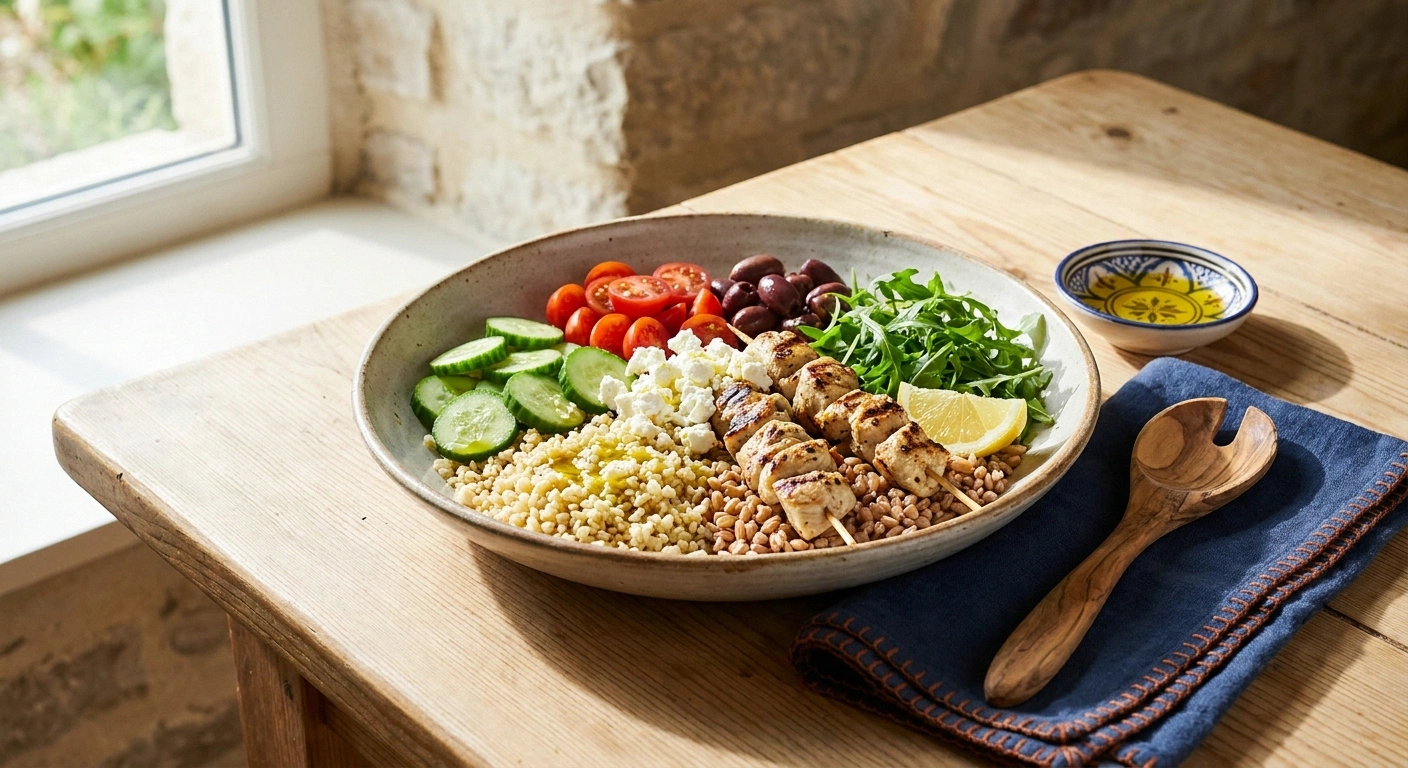
Lunch: Mediterranean grain bowl. A quarter cup of bulgur wheat or farro, grilled chicken or shrimp, cucumber, tomato, kalamata olives, feta cheese, olive oil and lemon, a big handful of arugula.
Dinner: Pan-seared cod or tilapia, sautéed kale with garlic, a small portion of roasted butternut squash.
Snack: Cottage cheese (half cup) with a few sliced peaches or berries.
Day 5 — A Soup-and-Salad Day
Breakfast: Two-egg omelet with sautéed peppers, onions, and a handful of shredded cheese. One small slice of sprouted-grain toast.
Lunch: Big Caesar-style salad with grilled chicken, lots of romaine, parmesan, olive-oil-based dressing. A side of homemade vegetable soup or a clean store brand.
Dinner: Stir-fry of ground turkey or chicken, broccoli, snap peas, mushrooms, garlic, and ginger in sesame oil. Served over half a cup of cauliflower rice mixed with a small amount of brown rice for texture.
Snack: A handful of mixed nuts and a few cherries or grapes.
Day 6 — Family Dinner Day
Breakfast: A protein smoothie. Unsweetened almond milk, a scoop of whey or pea protein, half a banana, a handful of spinach, a tablespoon of almond butter, ice. Quick and portable.
Lunch: Leftover dinner from Day 5 — or two hard-boiled eggs, a string cheese, an apple, and a small handful of almonds packed as a quick lunch.
Dinner: Grass-fed beef burgers (no bun, or a low-carb/sprouted-grain bun) topped with avocado, lettuce, tomato, and onion. Side of roasted vegetables and a big salad with olive oil dressing.
Snack: Plain full-fat Greek yogurt with a few raspberries and a sprinkle of cinnamon.
Day 7 — Reset and Prep
Breakfast: Vegetable frittata (eggs baked with whatever vegetables need to be used up, a little cheese). Makes leftovers for tomorrow.
Lunch: A big bean and barley soup (or beef and barley) with a side salad. The barley is a slow carb. The beans add protein and fiber.
Dinner: Roasted whole chicken, roasted carrots and parsnips (small portions), and a big green salad. Use the bones for stock for next week.
Snack: An apple sliced with a tablespoon of almond butter — a near-perfect bedtime snack for steady overnight blood sugar.
Smart Snacks That Will Not Spike You
Snacks are often where a clean meal plan falls apart. Anything that comes from a vending machine or a gas station counter is almost certainly the wrong choice. Here is the short list of snacks that genuinely will not spike you:
- A small handful of nuts (almonds, walnuts, pecans, pistachios) — about 1 ounce
- A hard-boiled egg
- Plain full-fat Greek yogurt with a few berries
- Cottage cheese with sliced cucumber or tomato
- A square or two of dark chocolate, 70% cocoa or higher
- Apple slices with natural peanut or almond butter
- A small handful of olives
- String cheese
- Edamame (frozen, microwaved with a sprinkle of salt)
- Beef or turkey jerky (check ingredients — many brands add sugar)
What to avoid for snacks: anything labeled “low fat” with sweeteners, granola bars (almost all are dessert bars in disguise), pretzels, crackers, rice cakes, dried fruit (concentrated sugar), fruit juice, sweetened yogurts, “healthy” smoothies from chain shops that are sugar bombs.
The Walk-After-Meals Multiplier
The single most powerful lever you can pull on top of low-GI eating is moving after meals. A 10–15 minute walk starting within 30 minutes of finishing a meal can reduce the post-meal glucose spike by 20–30%. This is the kind of intervention that almost feels like cheating — small effort, big metabolic payoff.
The mechanism is simple: muscle contraction pulls glucose out of your bloodstream and into the muscle cells, where it gets used or stored. Even slow walking works. If walking is painful or unsafe because of your foot symptoms, alternatives like a recumbent bike, seated marching, light housework, or standing weight shifts also work. The goal is muscle activation, not specifically walking. More on this in our piece on walking for neuropathy.
Pair a low-GI plate with a post-meal walk and you have stacked the two highest-leverage habits for blood-sugar steadiness available.
Grocery Shopping the Low-GI Way
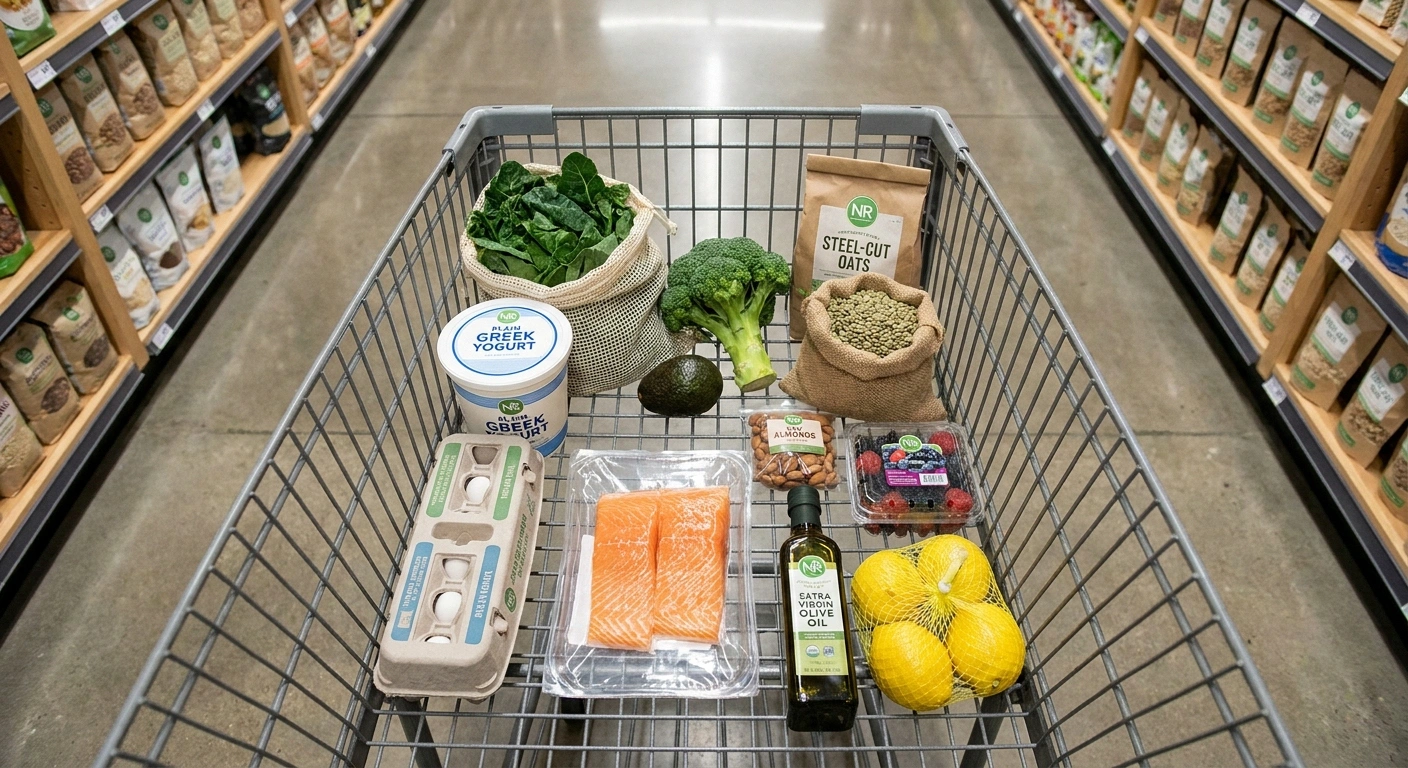
If you cleaned out your kitchen and started fresh tomorrow, the shopping list would look like this. Print it. Take it to the store. Stock the pantry.
Proteins: Eggs, plain Greek yogurt (full fat), cottage cheese, canned tuna and salmon, chicken thighs and breasts, ground turkey, salmon or other fatty fish, grass-fed ground beef, firm tofu, edamame.
Slow carbs: Steel-cut or old-fashioned rolled oats, lentils, dried or canned beans (kidney, black, chickpea, navy), barley, bulgur wheat, quinoa, sweet potato, sprouted-grain bread, brown or wild rice.
Vegetables (load up): Spinach, kale, romaine, mixed greens, broccoli, cauliflower, Brussels sprouts, bell peppers, cucumber, tomato, zucchini, mushrooms, asparagus, green beans, onions, garlic.
Fruits (in moderation, with protein and fat): Berries, apples, pears, citrus, peaches, plums, a small banana now and then. Skip the dried fruit and juice.
Healthy fats: Olive oil (the workhorse), avocados, walnuts, almonds, pecans, pistachios, pumpkin seeds, chia seeds, ground flaxseed, butter or ghee (small amounts).
Flavor builders: Garlic, ginger, cinnamon, turmeric, fresh herbs (parsley, cilantro, basil), lemons and limes, apple cider vinegar, mustard, hot sauce, soy sauce or tamari (low sodium).
What is conspicuously not on the list: white bread, white rice, white pasta, sugary cereals, sweetened yogurt, sugary drinks, juice, most processed snacks, pastries, ice cream, sugar-sweetened condiments like ketchup and barbecue sauce, “low fat” salad dressings (almost always sugar-loaded).
If you stock the kitchen with the food on this list, you will eat low GI by default. If your kitchen is full of the other stuff, willpower will fail you within a week.
Special Situations: Dining Out, Travel, and Family Events
Real life is not a meal plan. Here is how to handle the messy moments without falling apart:
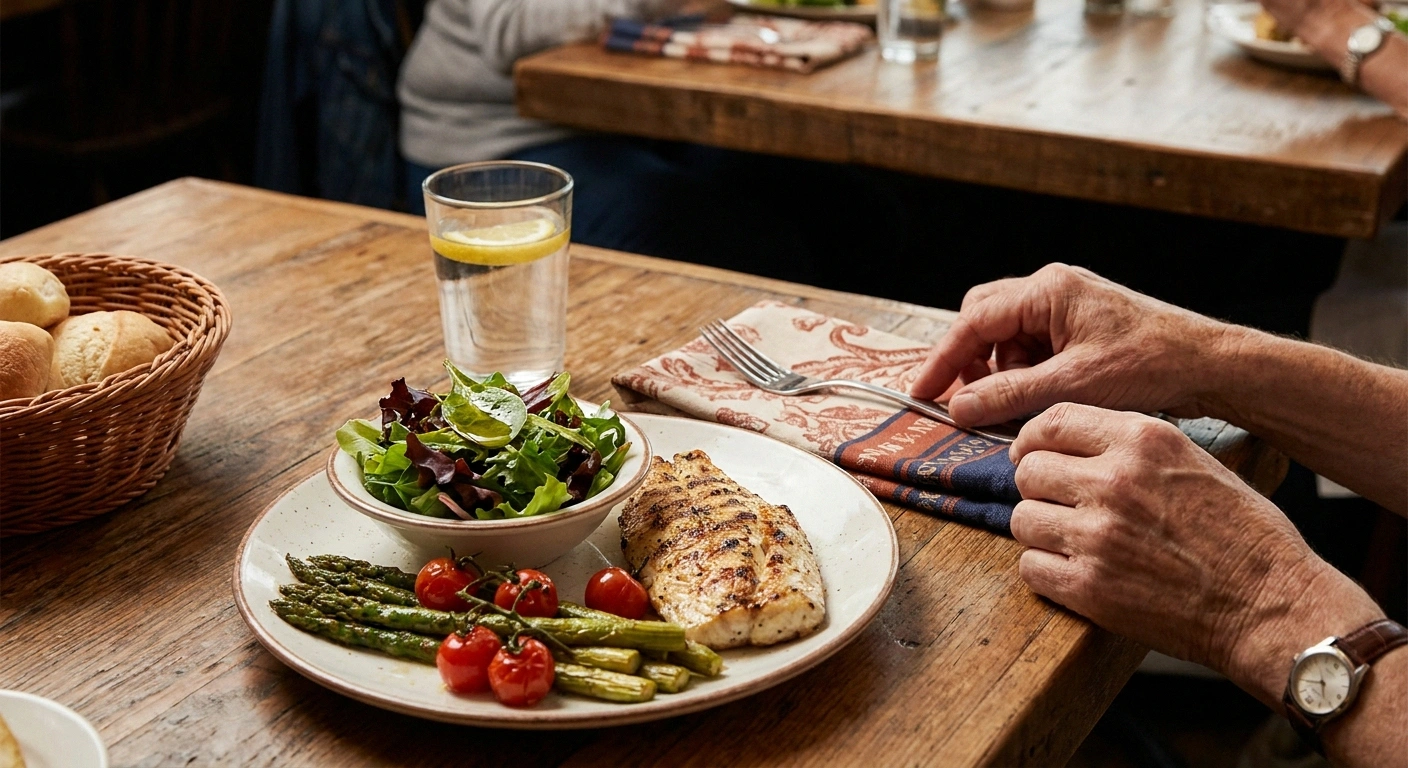
Restaurants: Look for the meal architecture, not the menu category. A salad with grilled protein and olive oil dressing works almost everywhere. A bunless burger with a vegetable side works almost everywhere. A piece of grilled fish with vegetables works almost everywhere. Skip the bread basket. Decline the rice or fries (or eat half) — substitute extra vegetables. Sip water with lemon, not sweet drinks.
Family dinners and holidays: Eat a protein-and-fat snack 30 minutes before you arrive — a hard-boiled egg, a handful of almonds, or some cheese. You will sit down already partially full and make better choices. Then fill your plate with protein and vegetables first. Take a small amount of the carb-heavy items if you want them, eat them last, and walk for ten minutes after the meal.
Travel: Airport food can be done — sushi, a salad with grilled protein, a hard-boiled-egg-and-cheese plate, a cup of Greek yogurt with nuts. Pack a small bag of mixed nuts in your carry-on as insurance. Hotel breakfast: eggs, sausage, smoked salmon, plain yogurt, berries. Skip the pancakes and pastries.
Birthdays and special occasions: One serving of cake or pie at a real celebration is not the problem. Daily small treats are the problem. Be deliberate. Enjoy the moment fully. Walk afterward. Get back to your standard pattern the next day.
Realistic Expectations: What This Eating Pattern Can and Cannot Do

Honest section. A low-GI eating pattern is one of the highest-leverage things you can do for your nerves if your neuropathy is metabolic. It is not a cure. Here is the realistic picture:
Energy steadies.
Brain fog improves.
Lipids improve.
Some weight loss.
Pain improves first,
numbness is slower.
prevents further damage
to remaining fibers.
Months 1–3: Blood sugar variability drops. If you wear a CGM, time-in-range climbs. Energy steadies. Brain fog often improves. Many people lose some weight without trying. Nerve symptoms may not change much yet.
Months 4–6: A1C typically drops if you started with it elevated. Lipid panel often improves. Some people begin to notice that their nerve pain is slightly less intense at night, or that their feet feel less inflamed in the morning.
Months 6–12: The bigger nerve effects, if you are going to get them, show up here. Pain often improves more than numbness — pain is a sign of irritation, which is reversible; numbness reflects dead fibers, which is harder to recover. Burning, tingling, and night symptoms tend to ease first.
Year 2 and beyond: If you sustain the pattern, the slow-burn benefit is preventing further damage. Nerve fibers you still have stay healthier. This is the long game — not a transformation but a quiet protection.
Pair the eating pattern with movement, sleep, stress management, and any prescribed treatments — and you have a real, defensible nerve-protection plan. The food is the foundation. Everything else gets built on top.
Frequently Asked Questions
Is low GI the same as low carb or keto?
No. Low GI is about how fast carbs hit your bloodstream, not how few of them you eat. A keto diet is very low in total carbohydrate. A low-GI pattern can include meaningful amounts of carbohydrate as long as it comes from slow-digesting sources like beans, lentils, oats, barley, and whole fruits. Both can work for blood-sugar control; the low-GI pattern is easier to sustain long-term for most people.
Can fruit fit into a low-GI plan?
Most whole fruits fit beautifully — berries, apples, pears, citrus, peaches, plums. Tropical fruits and bananas raise glucose faster, so smaller portions and pairing with protein or fat help. Avoid fruit juice entirely (concentrated sugar without the fiber) and limit dried fruit (sugar-dense by volume).
Do I have to count carbs or calories?
You can if you find it useful, but you do not have to. The five anchors and the protein-first sequencing produce most of the benefit without counting. If your weight is not moving and you want it to, then portion size becomes the next lever to pull.
What about wine or other alcohol?
A glass of dry red or white wine with a meal does not spike glucose meaningfully for most people. Sweet wines, dessert wines, beer, and cocktails do. If alcohol is part of your evening, dry wine with a meal is the cleanest choice — and one drink, not three. If you have any history of alcohol-related nerve damage, it is worth reading our piece on alcoholic neuropathy.
I am not diabetic. Should I still eat this way?
If your neuropathy has another driver — toxin exposure, autoimmune, chemotherapy, idiopathic — the food pattern still helps. Steady glucose reduces systemic oxidative stress and inflammation regardless of whether you are diabetic. Many people without diabetes feel meaningfully better on a low-GI pattern, especially in energy and sleep quality.
How do I handle holidays and family gatherings without going completely off plan?
Eat a protein-and-fat snack before you arrive so you are not starving. Fill the plate with vegetables and protein first. Take small portions of carb-heavy dishes if you want them and eat them last. Walk for 10–15 minutes after the meal. Get back to your normal pattern the next day. One meal does not undo months of consistency; daily off-plan eating does.
Will this help me lose weight?
Most people lose some weight without trying when they switch to this pattern — typically 5 to 15 pounds over six months — because protein and fiber are filling and refined carbs are gone. Significant weight loss may require additional portion control. Weight loss in turn improves insulin sensitivity, which further protects nerves. The whole loop reinforces itself.
Can I drink coffee on a low-GI plan?
Yes. Black coffee or coffee with a splash of unsweetened milk or cream is fine. The flavored creamers and sweet syrups are the problem — many add 10 to 30 grams of sugar per serving. Plain coffee, plain tea, and unsweetened sparkling water are your daily drinks.
About the Author