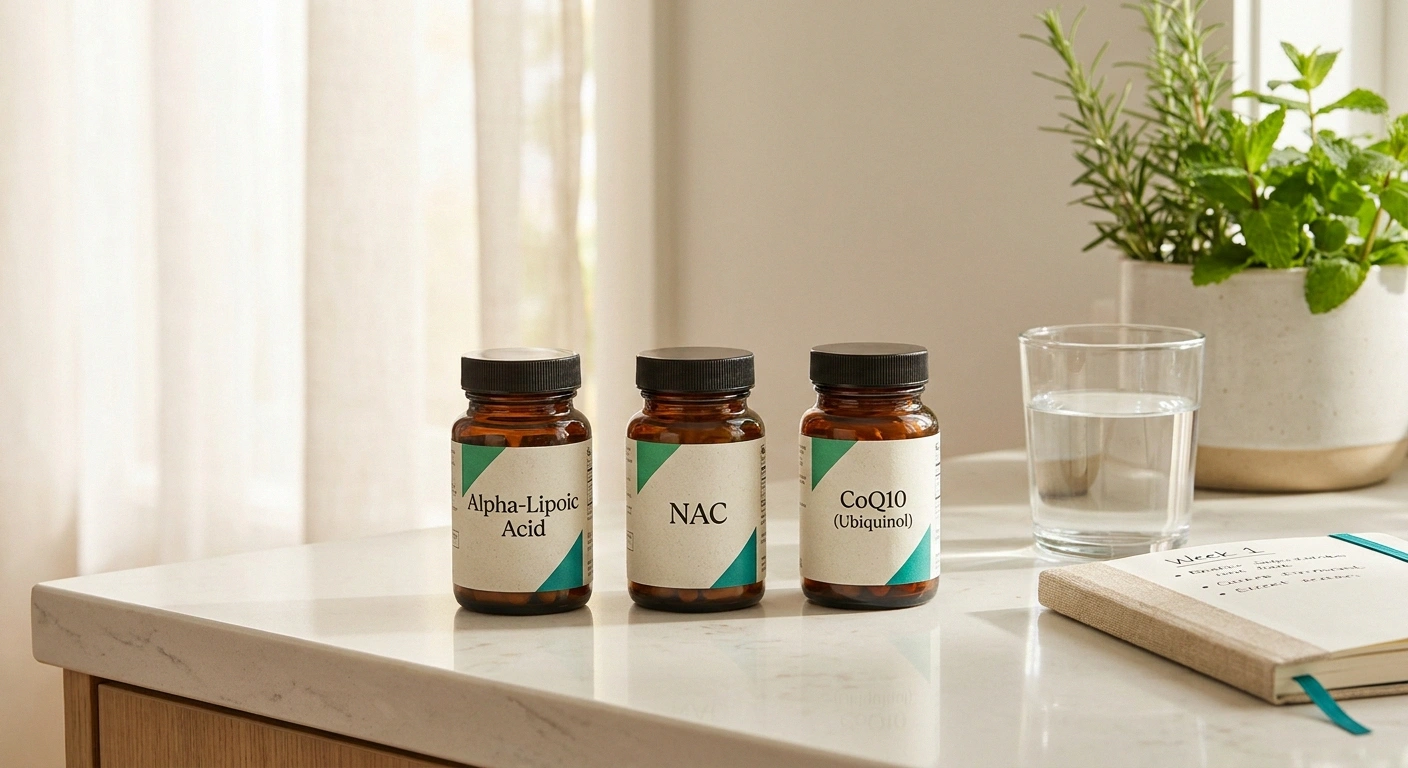
A reader named Marie wrote to me last month with a question I get all the time: “Janet, my supplement cabinet looks like a small pharmacy. Alpha-lipoic acid. NAC. CoQ10. B vitamins. Acetyl-L-carnitine. Magnesium. Turmeric. Am I helping my nerves, or am I just expensive pee?”
It's the right question. The antioxidant story in neuropathy is real — oxidative stress damages nerves, and the right antioxidants can blunt that damage. But the supplement aisle has gotten so crowded that most of us are stacking pills without understanding which ones actually work together, which ones overlap, and which ones we should probably stop wasting money on.
This article is about a specific, evidence-leaning trio that keeps showing up at the top of every honest neuropathy supplement conversation: alpha-lipoic acid (ALA), N-acetyl cysteine (NAC), and coenzyme Q10 (CoQ10). Each has a distinct mechanism. Together, they cover three different antioxidant lanes that single-supplement protocols miss. And — this matters — they have a real-world safety story that I'll walk through honestly, including the situations where you should not take this stack without your doctor.
This is not a “buy this miracle pill” piece. It is a practical decision guide for the person who is going to spend the money anyway and wants to spend it on the combination most likely to actually help.
Why Antioxidants Even Matter for Damaged Nerves
Inside every nerve cell, mitochondria — the little energy factories — burn fuel to produce ATP, the energy currency that keeps the nerve alive and signaling. In a healthy nerve, this process is efficient. In a damaged nerve, it is not. Mitochondria leak electrons, electrons combine with oxygen, and the result is free radicals — unstable molecules that damage proteins, fats, DNA, and the nerve membrane itself.
This is called oxidative stress, and it is a central driver of nerve injury in diabetic neuropathy, chemo-induced neuropathy, alcohol-related neuropathy, and most cases of small fiber neuropathy. Even idiopathic neuropathy — where no cause has been found — typically shows oxidative-stress markers in nerve biopsies.
Your body has a built-in antioxidant defense system: glutathione, vitamin E, vitamin C, superoxide dismutase, and others. The problem is that in chronic disease — particularly diabetes — that defense system gets overwhelmed and depleted. The free radicals win. The nerve takes daily damage. And over months and years, the dying-back pattern of neuropathy progresses from the toes upward.
Antioxidant supplementation is an attempt to put more soldiers on the wall. Not every supplement works. Not every antioxidant gets where it needs to go. But three of them — when taken together — have a coherent mechanistic story and a real, if imperfect, evidence base.
The Three Players: What Each One Actually Does
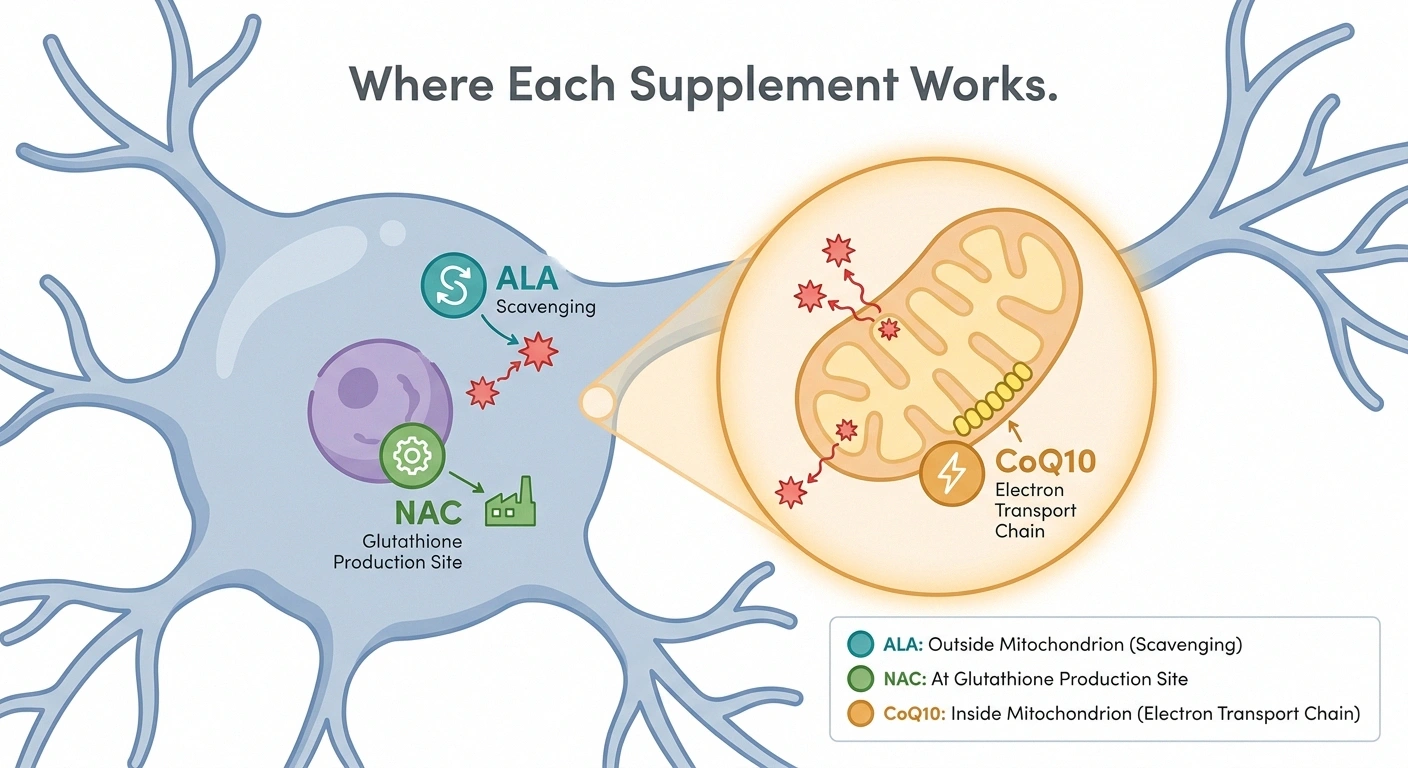
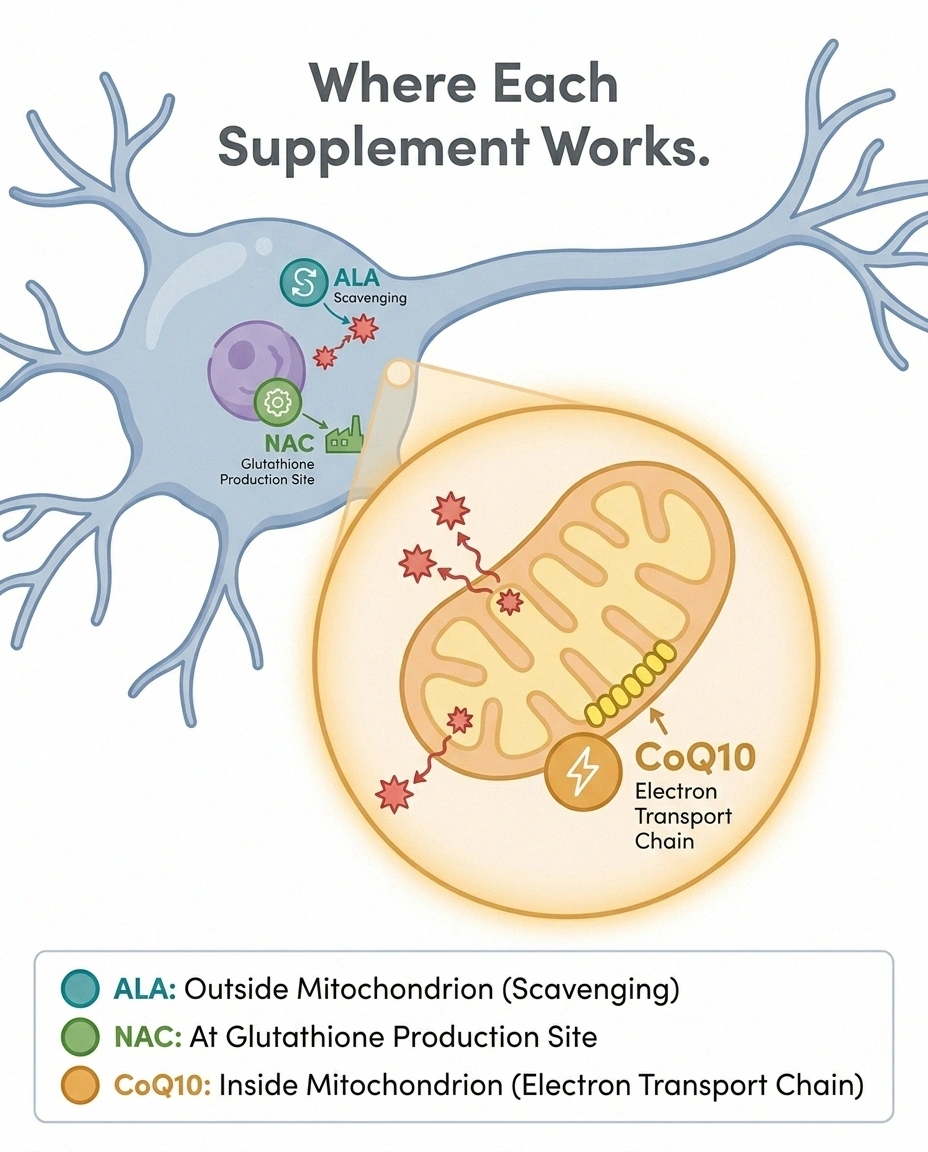
This is where the stack starts to make sense. ALA, NAC, and CoQ10 are not redundant — they target different parts of the antioxidant machinery, and they work in different places inside the cell.
Alpha-lipoic acid (ALA) is the headliner of the neuropathy supplement world, and for good reason. It is a small, fat-and-water-soluble molecule that can cross the blood-brain barrier and get inside mitochondria. Once inside, it acts as a direct free-radical scavenger and — uniquely — it regenerates other depleted antioxidants like glutathione, vitamin C, and vitamin E. It is the only common supplement that has been studied at IV doses in randomized controlled trials specifically for diabetic neuropathy pain, and the results have been positive enough to drive prescription approval of ALA in several European countries. Oral ALA is less well-studied than IV but is the practical choice for at-home use. Typical dose: 600 mg per day, taken on an empty stomach for absorption.
N-acetyl cysteine (NAC) is a precursor to glutathione, the master antioxidant the body makes itself. The catch with glutathione is that you cannot effectively supplement it directly — most of it gets broken down before it reaches cells. NAC sidesteps that problem by giving your cells the raw material to manufacture more glutathione where it is needed. Inside neurons, this matters a lot. Glutathione is the main defense against the kind of mitochondrial damage that drives nerve cell death. NAC has been studied in chemotherapy-induced neuropathy with promising results, and in oxidative-stress conditions broadly. Typical dose: 600–1,200 mg per day, divided.
Coenzyme Q10 (CoQ10) covers the third lane: the mitochondrial respiratory chain itself. CoQ10 sits inside the inner mitochondrial membrane and shuttles electrons during energy production. Without enough of it, mitochondria become inefficient and produce more free radicals. As we age — and especially if we take statins, which deplete CoQ10 — our levels drop. Supplementation restores efficiency, reduces free-radical production at the source, and supports the energy demands of repair. Animal models of diabetic neuropathy show clear nerve-protective effects from CoQ10, and small human trials have shown reductions in oxidative stress markers and modest symptom improvement. Typical dose: 100–200 mg per day, taken with a fatty meal for absorption. Use the ubiquinol form if you are over 50 — it absorbs better.
Now look at what each one is doing: ALA scavenges and regenerates other antioxidants. NAC builds more glutathione. CoQ10 fixes the source of the free radicals in the first place. They are not the same pill in three bottles. They are three different mechanisms layered on top of each other.
Why the Combination May Beat Any Single Supplement
When researchers combine ALA and CoQ10 in animal models of diabetic neuropathy, the protective effect is larger than either supplement alone. When NAC is added to an ALA regimen in oxidative-stress conditions, the glutathione recovery is faster. These are not large, definitive human trials — the supplement industry rarely funds them — but they are mechanistically consistent.
Think of it as covering three weak points at once:
The cytoplasm and outer membrane — ALA scavenges free radicals here and recycles vitamin C and vitamin E.
The cellular glutathione pool — NAC refills the most important endogenous antioxidant your body makes.
The mitochondrial electron transport chain — CoQ10 fixes the leaky source and lowers free-radical production at its origin.
A single supplement covers one. The stack covers three. For someone trying to get serious about slowing nerve damage from a metabolic or chemotherapy cause, the stack is a more defensible approach than the random shotgun of seven different bottles a lot of people end up taking. Building a coherent supplement plan is one of the goals I cover in my overview of neuropathy supplements — the antioxidant stack is the most evidence-leaning subset of that bigger picture.
Safe Daily Dosing: What I Actually Recommend Reading Carefully
Doses below are the ranges most commonly used in studies and clinical practice. They are not personal medical advice. Run them by your prescriber, especially if you take any medication.
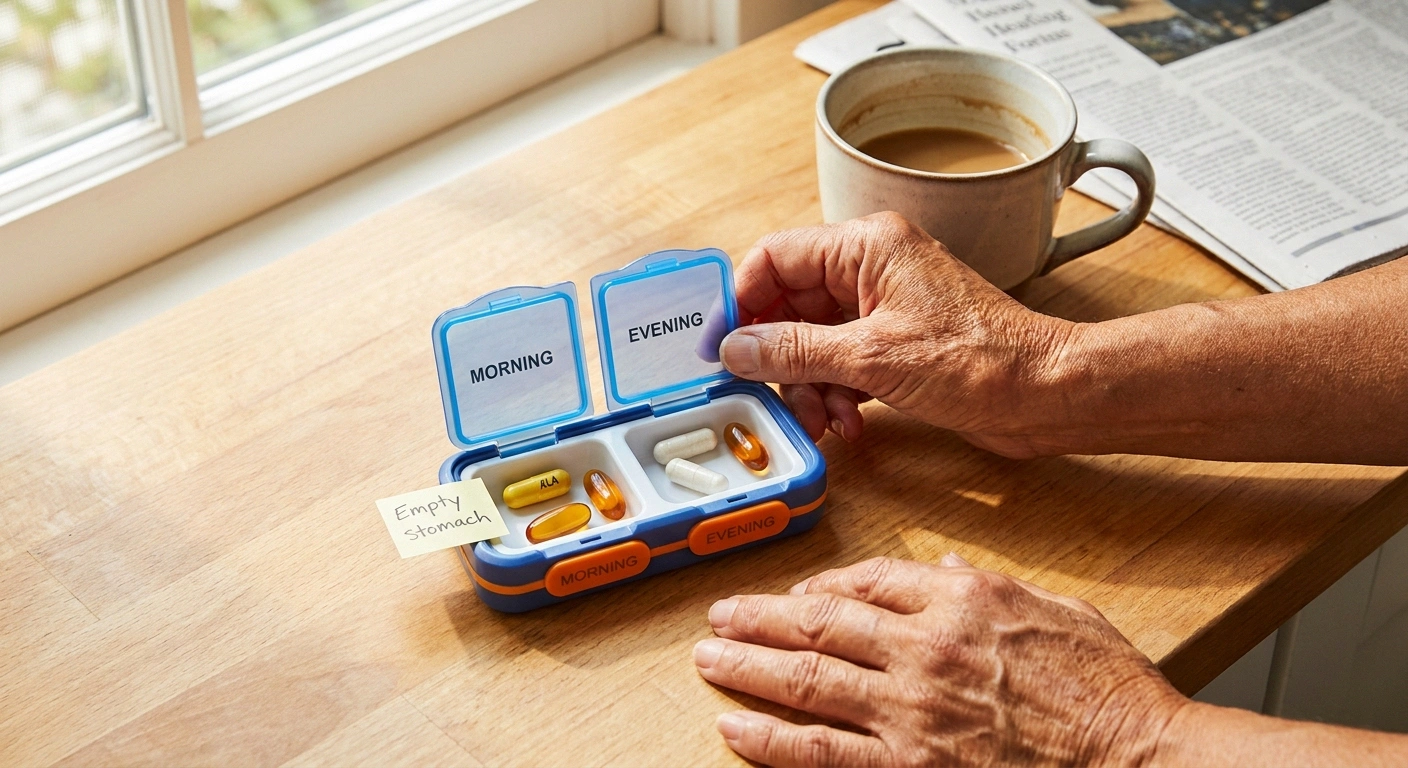
Alpha-lipoic acid: 600 mg once daily, on an empty stomach. Taking it with food cuts absorption substantially. Most people take it 30 minutes before breakfast. Some studies have used 1,800 mg per day in divided doses for short courses; 600 mg is the standard maintenance dose and what I tell most people to start with.
NAC: 600 mg twice daily. Total 1,200 mg per day is the most common practical dose. Some people work up to 1,800 mg per day, but the diminishing returns are real and the GI side effects get worse. Take with or without food. The sulfur smell of NAC capsules can be a turnoff — coated or odor-controlled brands solve this.
CoQ10 (ubiquinol form preferred over age 50): 100 mg twice daily, with a fatty meal. Total 200 mg per day. Ubiquinone is fine and cheaper if you are younger and your liver is healthy. Ubiquinol is the already-reduced form that absorbs better in older adults. Splitting the dose between meals is better than one big dose because absorption tops out at around 100 mg per sitting.
This is a daily regimen. There is no loading dose. There is no benefit to mega-dosing. The therapeutic effect, if you are going to see one, builds over 8–12 weeks and is most noticeable in pain levels and tingling rather than in numbness (numbness is harder to reverse). Give the stack three months before deciding whether it is helping you.
Real-World Drug Interactions and Safety Cautions

Honest section, because this is where people get into trouble.
If you are on a sulfonylurea (glipizide, glyburide) or insulin: ALA can lower blood sugar. Combined with a glucose-lowering drug, it can push you into hypoglycemia. This is the single most common preventable problem with this stack. If you take either of those drugs, talk to your prescriber before starting ALA and check your glucose more often during the first two weeks.
If you are on a blood thinner (warfarin, apixaban, rivaroxaban): NAC has mild antiplatelet effects and CoQ10 can interfere with warfarin specifically. The interactions are not catastrophic, but they require monitoring. Tell your prescriber.
If you are on chemotherapy right now: This is a hard stop. NAC and ALA are both being studied in chemo-induced neuropathy, but there is a legitimate concern that antioxidants taken during active chemo may reduce the chemo's tumor-killing effect. Most oncologists ask patients to stop antioxidant supplements during chemo cycles and restart after treatment ends. Ask your oncologist.
If you are pregnant or nursing: Do not start a new supplement stack. The safety data is thin and the stakes are high.
If you have a thiamine (B1) deficiency: ALA can cause problems in people who are severely B1-deficient. This rarely matters in the general population but can matter in people with long-term alcoholic neuropathy or after bariatric surgery. A B-complex on board is sensible insurance.
Common, mild side effects: All three can cause some GI upset (nausea, loose stools) in the first week or two. Starting at half the dose for a week and ramping up usually solves this. Taking CoQ10 with food helps. NAC has a distinctive sulfur smell some people dislike.
How This Stack Fits Into a Bigger Neuropathy Plan
I want to be clear about what the antioxidant stack is and is not.
It is a slow, mechanism-targeted intervention that may reduce ongoing nerve damage and modestly improve symptoms over months. It is not a fast pain killer. It is not a substitute for prescription neuropathic-pain medications like gabapentin or duloxetine. It is not a substitute for treating the underlying cause — which, for diabetic neuropathy, means glucose control above almost everything else.
The realistic role of the stack:
- Slow the underlying nerve damage process
- Modestly improve pain, tingling, and burning over 8–16 weeks
- Support nerve repair if the underlying cause is being addressed
- Provide a defensible, mechanistically coherent supplement choice instead of the random-shotgun approach
If you are running a serious nerve-protection program, the stack is one of five layers. The other four:
Address the underlying cause. For most readers that means tight glucose control, alcohol cessation, B12 repletion, or a chemotherapy plan that minimizes neuropathy risk.
Run a thoughtful diet. The anti-inflammatory diet reinforces what the supplements are doing — antioxidants in food matter as much as antioxidants in capsules.
Move daily. Walking improves microvascular blood flow to peripheral nerves and is the single most consistently beneficial behavior change.
Pair supportive supplements where indicated. Methylcobalamin (B12) for B12-related neuropathy. Magnesium if you are deficient. Acetyl-L-carnitine is another evidence-leaning option that pairs cleanly with this stack if your budget allows.
Address pain with the right tools. If your pain is significant, prescription neuropathic-pain medication is appropriate. Supplements are not a substitute for it.
Quality and Brand Selection: How Not to Get Ripped Off
The supplement industry is loosely regulated, and a depressing percentage of bottles do not contain what the label claims. A few practical tests:
Look for third-party testing. USP, NSF, or ConsumerLab certifications mean the product was independently verified to contain what the label says. The premium is small relative to the assurance.
Check the form. For ALA, R-ALA is the form your body makes on its own. Standard “ALA” is usually a 50/50 mix of R- and S-forms, and the label calls that mix racemic. This matters when you compare bottles. A racemic label counts both halves, so 600 mg of racemic carries about 300 mg of R-ALA, while an R-ALA label counts only the R. The two numbers are not the same kind of number, so do not stack capsules to make an R-ALA bottle add up to 600. Whether R-ALA actually works better in people has not been settled, and nearly every published trial used racemic. Either form is fine in practice; just know which one you are holding.
For CoQ10 after 50, choose ubiquinol over ubiquinone. Better absorbed in older adults.
For NAC, look for “Sustained Release” or odor-controlled formulations if the sulfur smell bothers you.
Avoid mega-blend “nerve support” products that throw fifteen ingredients into one capsule at sub-therapeutic doses. You will pay more and get less. Buying ALA, NAC, and CoQ10 as three separate bottles from reputable brands costs about the same as one premium “nerve formula” and gives you actual therapeutic doses.
A Realistic Timeline: What to Expect (and What Not To)
I get asked all the time, “how fast will I feel better?” Here is what is realistic, based on the literature and on what I have seen with the dozens of people I have walked through this:
Watch for mild GI side effects.
less night burning, calmer mood.
Lower pain, fewer flares, better sleep.
if underlying cause is controlled.
First two weeks: You will probably not feel different. Some people get mild GI side effects. A few report sleep changes (usually better with the stack on board, but a small number sleep worse for a few days). Watch your blood sugar if you are on glucose-lowering drugs.
Weeks 3–6: The earliest meaningful symptom changes typically show up here, and they are usually small. Less burning at night. Tingling that is slightly less intense. Mood often feels marginally steadier — this is real and probably reflects reduced systemic oxidative stress.
Weeks 7–12: If the stack is going to help you, this is when you will know. The biggest reported gains: lower baseline pain, fewer breakthrough flares, better sleep. Numbness improvement, if any, is slower and more partial.
Months 4–6 and beyond: Continued slow improvement if the underlying cause is being controlled. Plateaus are normal. The stack is a long game.
If you have not seen any meaningful change by month 4 and you have been faithful to the protocol, that is real information. It may mean the underlying cause is not adequately controlled. It may mean your particular nerve damage pattern is not oxidative-stress driven. It may mean the dose is too low. Have an honest conversation with your provider before doubling down or quitting.
And if you are seeing improvement, do not stop because you feel better. The nerve damage process is ongoing in most cases. The stack works by being on the wall every day.
Tracking Whether It Is Actually Working

The single best thing you can do is track. Memory is unreliable. Pain is famously hard to recall accurately month-over-month. A simple weekly 0–10 score for pain, tingling, and burning — kept in a notebook or a phone app — produces real data over twelve weeks that lets you see the trend. I built a simple symptom diary template for exactly this purpose; many readers find it more useful than expected.
What to track:
- Average pain (0–10) over the past 24 hours
- Worst pain in the past 24 hours
- Burning (0–10)
- Tingling (0–10)
- Sleep quality (0–10)
- Any side effects
- Any blood sugar concerns (if applicable)
Score once a week, same day of the week, same time of day. After 12 weeks, look at the trend. Numbers do not lie the way memory does.
What to Bring to Your Next Doctor Appointment

If you are going to start this stack, the cleanest path is to tell your prescriber what you are doing and why. Most providers are supportive when patients bring evidence-based supplement plans to the table. Some will have specific concerns based on your medications or medical history.
What to bring:
- The names and doses of the three supplements you intend to start
- The reason — slowing oxidative damage to your peripheral nerves
- A request for a baseline reading on whatever lab makes sense for you (A1C if diabetic, B12 if deficiency suspected, kidney/liver function if needed)
- A request for a follow-up in 12 weeks to review symptom changes and any necessary medication adjustments
A useful sentence to have ready: “I would like to add alpha-lipoic acid 600 mg daily, NAC 600 mg twice daily, and CoQ10 100 mg twice daily for nerve oxidative-stress support. Are there any interactions with my current medications I should know about? Can we plan a 12-week follow-up to assess?”
That sentence makes you sound like a thoughtful patient with a real plan, not a person who saw a supplement ad. It opens a partnership conversation rather than a lecture about supplements.
The Bottom Line for Marie — and for You
The antioxidant stack is not a miracle. It is a coherent, mechanism-targeted, evidence-leaning combination of three supplements that work in three different parts of the cell to reduce ongoing oxidative damage to peripheral nerves. For someone with diabetic neuropathy, chemo-induced neuropathy, alcohol-related neuropathy, or idiopathic neuropathy with documented oxidative-stress markers, it is one of the more defensible supplement choices available.
It works best when:
- The underlying cause is being addressed
- Doses are at study levels — not bargain-bin sub-therapeutic doses
- Quality is verified by third-party testing
- You give it 12 weeks and track honestly
- You have looped in your prescriber for safety and drug-interaction review
It is not a replacement for prescription pain medication. It is not a replacement for glucose control. It is not magic. But it is one of the cleanest, most defensible supplement protocols you can run for nerve health, and it is the one I would build if I were starting from scratch with what we know today.
Marie wrote back two months ago. Her pain scores had dropped from a baseline 6 to a baseline 4. Her tingling was about the same. Her A1C had also improved because she had cleaned up her diet at the same time. She said the stack felt like a real shift, not a miracle — and that is exactly the right description.
Frequently Asked Questions
Can I take this stack with my prescription neuropathy medication like gabapentin or duloxetine?
Generally yes, with no major direct interactions documented. The supplements work on a different mechanism than gabapentinoids or SNRIs. Many people end up using both. Tell your prescriber so they have the full picture, and never stop or reduce your prescription medication on your own based on supplement progress.
How long do I need to take the stack before I know if it is working?
Twelve weeks is the honest answer. Real, measurable changes typically appear between weeks 4 and 8 but build through weeks 8 to 12. If you are not seeing any change after 12 weeks of consistent, properly dosed use, you have meaningful data — either the underlying cause needs more attention or the stack is not the right intervention for your particular nerve damage.
Is there a benefit to adding turmeric, magnesium, or other antioxidants on top?
Diminishing returns. Magnesium is a useful add-on if you are deficient or have nighttime cramps. Turmeric is reasonable if cost is no object and you tolerate it, but the absorption issues are well known. The three-supplement stack hits the major antioxidant lanes; piling on more rarely changes outcomes and definitely increases cost and pill burden.
Do I need to cycle off the stack, or can I take it indefinitely?
There is no good evidence requiring cycling, and the supplements are generally well tolerated long-term. A reasonable practice is to reassess every 6 to 12 months with your prescriber, check labs if you are diabetic or on interacting medications, and consider whether the cost and pill burden still feel worth it given your symptom trajectory.
What if I cannot afford all three? Which one should I prioritize?
Alpha-lipoic acid has the strongest direct evidence for diabetic neuropathy and is the one most worth keeping if the budget is tight. CoQ10 is the next most defensible. NAC is the most affordable of the three but has the weakest direct neuropathy evidence on its own — its value really comes from the combination effect.
Can I open the capsules and mix the contents with food?
Most ALA capsules can be opened, but absorption is significantly reduced when taken with food. CoQ10 needs fat for absorption and works better swallowed whole with a meal. NAC capsules can usually be opened if needed but the smell is unpleasant. Whole capsules with the right timing is the cleaner path.
Will the stack help if my neuropathy is from a non-diabetic cause?
Maybe — it depends on whether oxidative stress is driving your nerve damage. Most metabolic, toxic, and inflammatory neuropathies do involve oxidative stress to some degree. Mechanical neuropathies like a pinched nerve or tarsal tunnel syndrome do not respond to antioxidant strategies because the problem is compression, not oxidation.
Can I take this stack with B vitamins?
Yes, and many people do. A high-quality B-complex on board is reasonable insurance, especially if you take ALA (which can interact with thiamine in deficient people). Methylcobalamin for B12 is a sensible add if you are over 60, vegetarian, on metformin, or on long-term acid-reducing medication.
About the Author