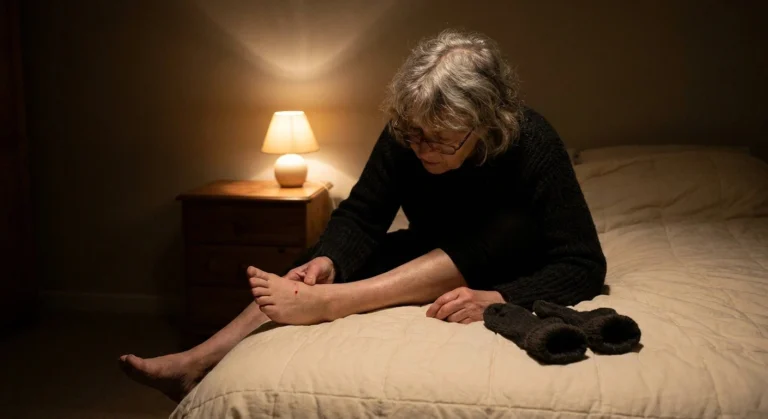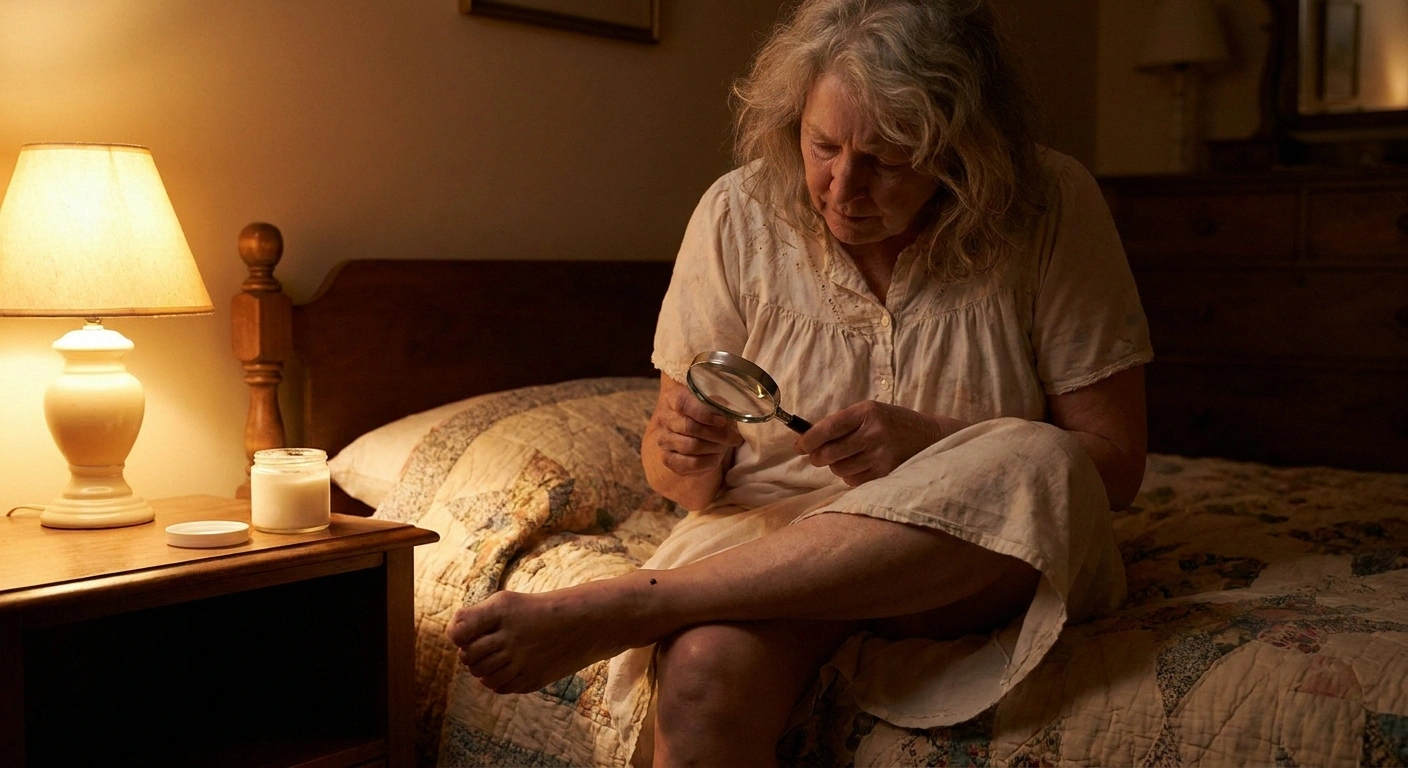
A woman in my support group, I’ll call her Ruth, found a sliver of wood in her heel while she was putting lotion on her feet one night. It was dark, about a quarter-inch long, and it had clearly been there a while: the skin around it was pink and a little puffy. She thought back and realized it probably came from the old porch steps she’d crossed barefoot to get the mail. Two days earlier. She’d walked on it the whole time — and never felt a thing.
Ruth did the right thing. She didn’t go after it with a sewing needle. She called her podiatrist the next morning, got it out in the office, went home with a short course of antibiotics and a lecture about porch steps, and healed without trouble. But she told the group, “If I hadn’t been doing my lotion, I don’t know when I’d have seen it.”
That’s the whole problem in one story — and it’s a common one. When your feet are numb, splinters, nicks, scrapes and punctures don’t hurt, so they get found late or not at all. This guide covers what you can safely handle at home, what you shouldn’t, and how to tell the difference. I’m a patient advocate who lives with neuropathy, not a nurse or a podiatrist, and I’ll be clear about where home care stops.
Why Small Things Get Big on Numb Feet
For someone with healthy nerves, a splinter is a ten-second annoyance. It hurts, so you notice right away, you pull it out, and you forget about it. With neuropathy, several things change at once.
No warning. Pain is what makes you stop and look. Without it, you keep walking, which pushes a splinter or a bit of glass deeper and rubs dirt into a cut.
Late discovery. By the time you see the problem, it may be a day or two old. Bacteria have had time to settle in.
Slower healing. If your neuropathy comes with diabetes or poor circulation, small wounds on the feet can heal slowly, and infections can spread faster. Clinics that treat diabetic feet consistently stress that foot wounds in people with nerve damage need closer watching than the same wound would on someone else.
Hidden infection. The usual sign of infection is that it starts to hurt more. Numb feet often skip that clue. You have to rely on what you can see and measure: redness, swelling, warmth, drainage.
None of this means panic over every scratch. It means a different routine — one built around your eyes instead of your nerves. Small foot wounds are also how many serious problems begin, which is why I keep coming back to them. My article on diabetic foot ulcers explains how a minor break in the skin can turn into something bigger.
Finding What You Can’t Feel
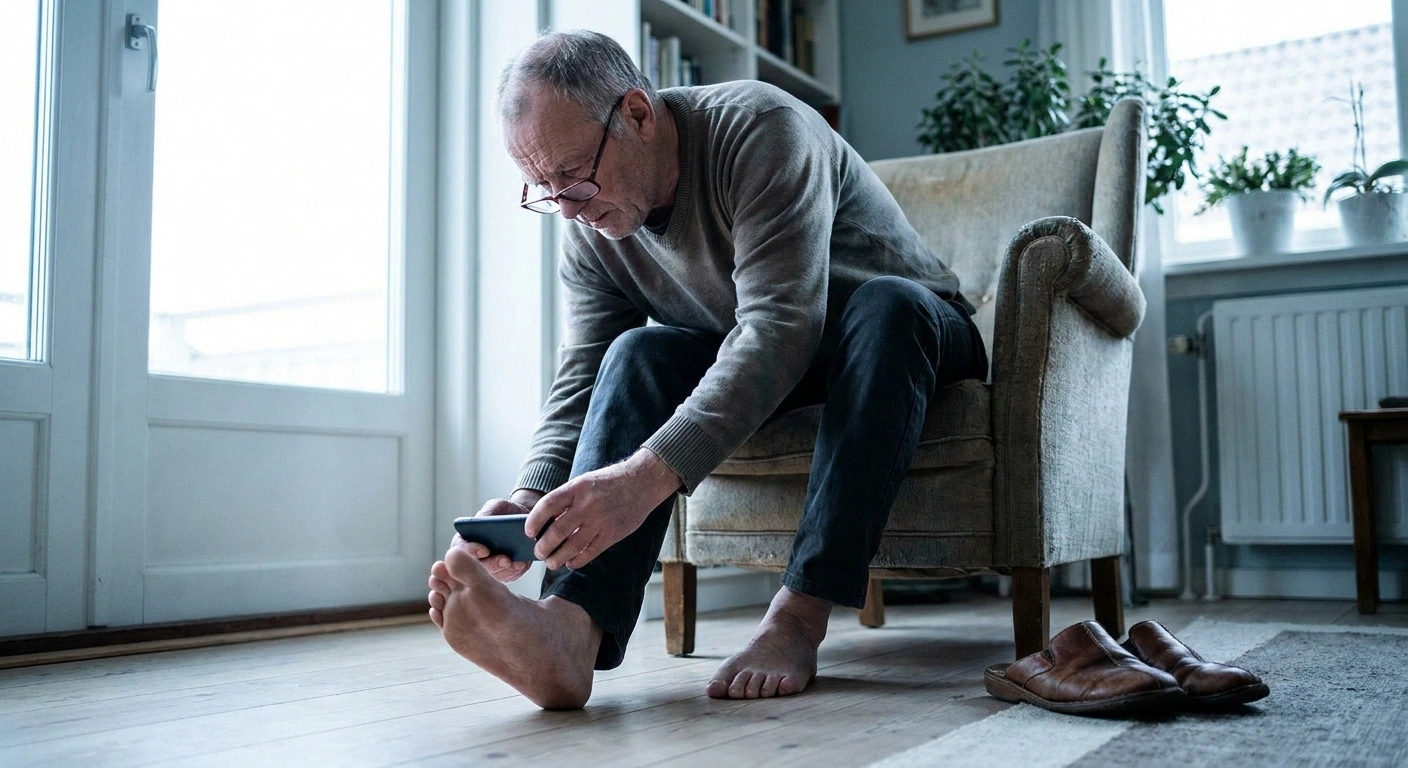
The single most protective habit is looking at your feet every day, ideally at the same time so it sticks. Evenings work well because you can see what the day did.
- Sit down in good light. Check the tops, the soles, the heels and between every toe.
- Use a hand mirror or your phone’s camera for the soles if bending is hard. Some people prop a mirror on the floor.
- Run your hands over your feet, too. Fingers can often detect a bump, a rough spot or a hot patch that numb feet can’t.
- Check your socks when you take them off. A spot of blood or fluid is sometimes the first sign of a cut you’d never otherwise notice.
- Shake out your shoes before you put them on. Pebbles, tacks and even a stray earring back have turned up in mine.
If you can’t see or reach your feet well, ask someone to help. That’s not a failure of independence — it’s a smart division of labor. I go through a full two-minute routine in my daily foot check guide.
Small Cuts and Scrapes: The Home-Care Routine
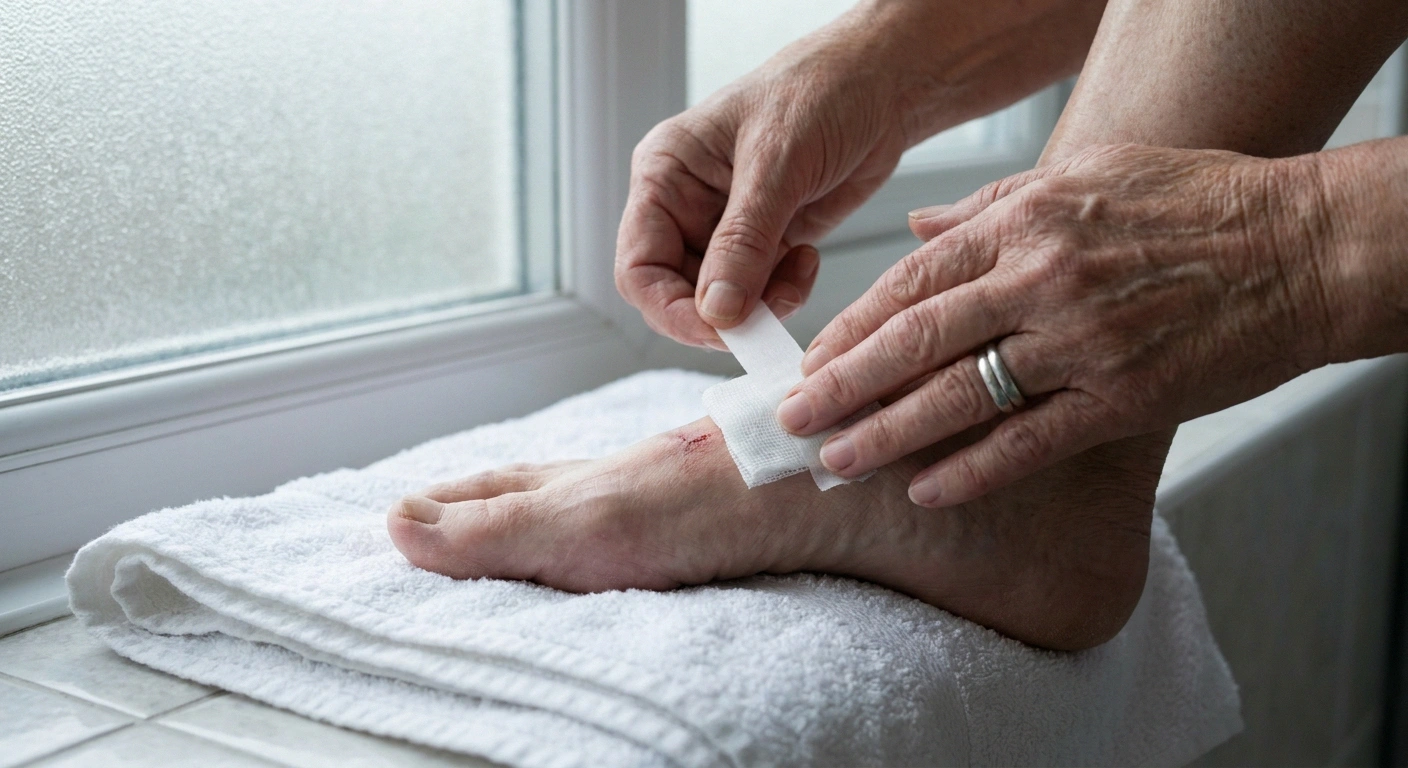
A shallow cut or scrape that’s clean, small and not bleeding much is usually fine to care for at home, as long as you watch it closely afterward. Mayo Clinic’s first-aid guidance for minor cuts lines up with what diabetes foot clinics recommend.
| What you found | Where it goes | Timing |
|---|---|---|
| Shallow, clean scrape or nick | Home care, then watch | Call if not clearly better in 2 to 3 days |
| Any splinter | Podiatrist or primary care | Same or next day |
| Cut that gapes, or grit you can’t rinse out | Urgent care or your doctor | Same day |
| Nail, glass or tack puncture | Podiatrist, doctor or urgent care | Same day |
| Any wound plus fever, chills or red streaks | Emergency room | Now |
- Wash your hands first.
- Stop any bleeding with gentle pressure from a clean cloth or gauze for a few minutes.
- Rinse the wound under clean running water. Wash around it with mild soap, keeping soap out of the cut itself if you can. Look closely for any dirt or grit left inside.
- Skip the harsh stuff. Mayo Clinic advises against hydrogen peroxide and iodine on the wound because they can irritate tissue. Rubbing alcohol isn’t needed either.
- Apply a thin layer of petroleum jelly or an antibiotic ointment to keep the surface moist.
- Cover it with a clean bandage or sterile gauze and paper tape. Choose a size that leaves a margin of normal skin all around.
- Change the dressing daily, or sooner if it gets wet or dirty, and look at the wound every time.
- Take the pressure off. If the cut is on the sole, try to limit walking for a day or two and wear soft, roomy shoes. A bandage under a tight shoe becomes its own pressure spot.
Two things to avoid. Don’t soak your feet to “clean” a cut; soaking softens skin and can make things worse, and with numb feet it’s easy to misjudge water temperature. And don’t use heating pads or hot water bottles on a sore spot — burns on numb feet are a whole separate problem.
Some cuts should go straight to a professional instead: anything deep enough to gape open, a wound with dirt or debris you can’t rinse out, bleeding that won’t stop after ten minutes of pressure, or any cut from an animal bite.
Splinters: The One Job I’d Hand Off
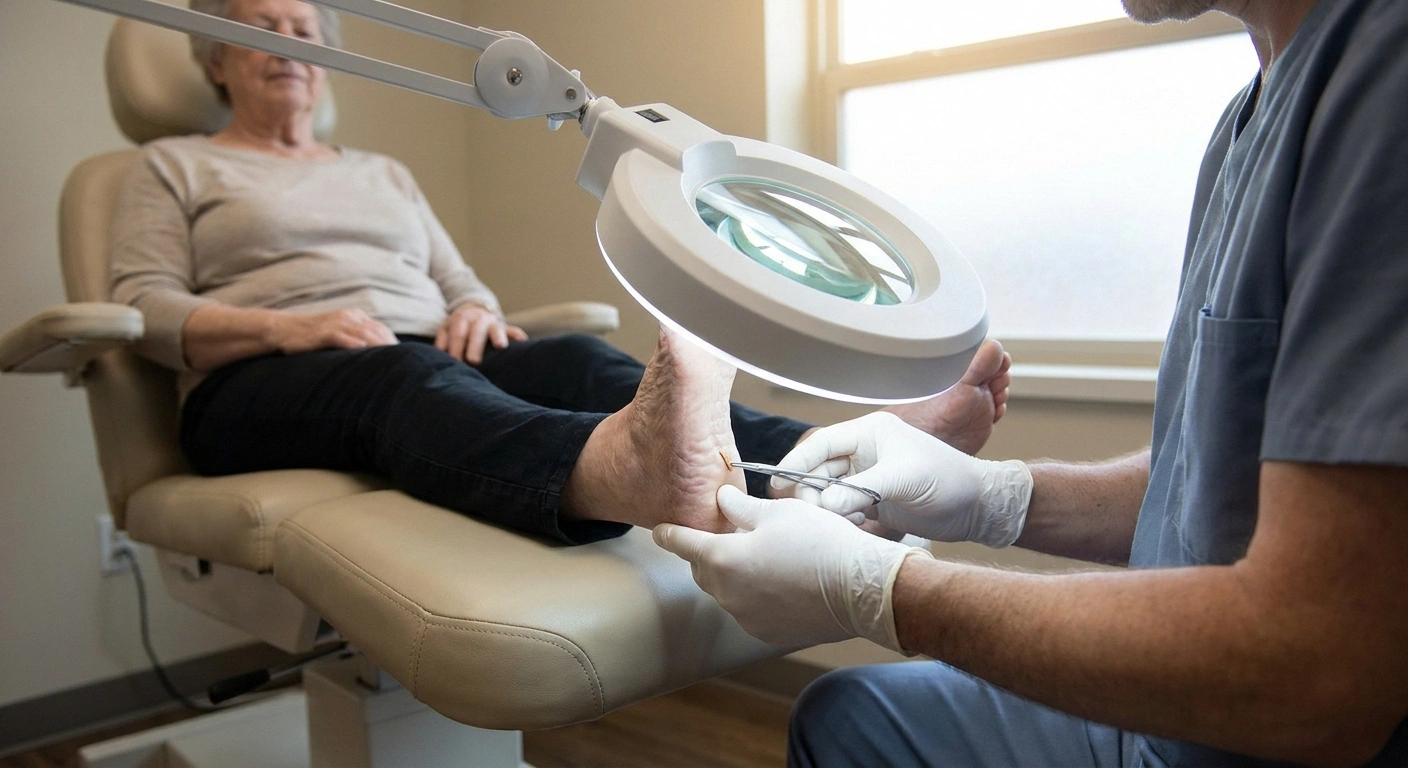
This is where I’m going to be firmer than most first-aid advice. The standard instructions for splinters — sterilize a needle, open the skin, tease it out with tweezers — are written for people who can feel what they’re doing. If your feet are numb, you can’t tell when you’re digging too deep, you won’t feel a fragment break off and stay behind, and the hole you make is a new doorway for bacteria.
Podiatry offices say the same thing. Several clinic guides list “you have diabetes or nerve damage in your feet” as a reason not to remove a splinter yourself and to have it looked at instead. Clinicians may also give people with diabetes antibiotics for what looks like a minor splinter, and they’ll check whether you need a tetanus booster.
What you can do at home while you arrange that:
- Gently wash the area with soap and water.
- Don’t squeeze it, push on it or try to “work it out.” Squeezing can snap a splinter and drive the pieces deeper.
- Take a clear, close photo with a coin beside it for scale. That helps the office judge how urgent it is.
- Cover it loosely and keep weight off that spot if you can.
- Call your podiatrist or primary care office for a same-day or next-day visit. If you can’t get one and the area is red, swollen or draining, go to urgent care.
If you have reasonable sensation in that spot, no diabetes or circulation problems, and a splinter with a clearly exposed end, your own clinician may tell you it’s fine to grasp that end with clean tweezers and pull it out along the angle it went in. That’s a conversation to have before the next splinter, not during it. My piece on when to see a podiatrist includes questions worth asking at your next routine visit.
Stepped on Something Sharp: Nails, Glass and Tacks
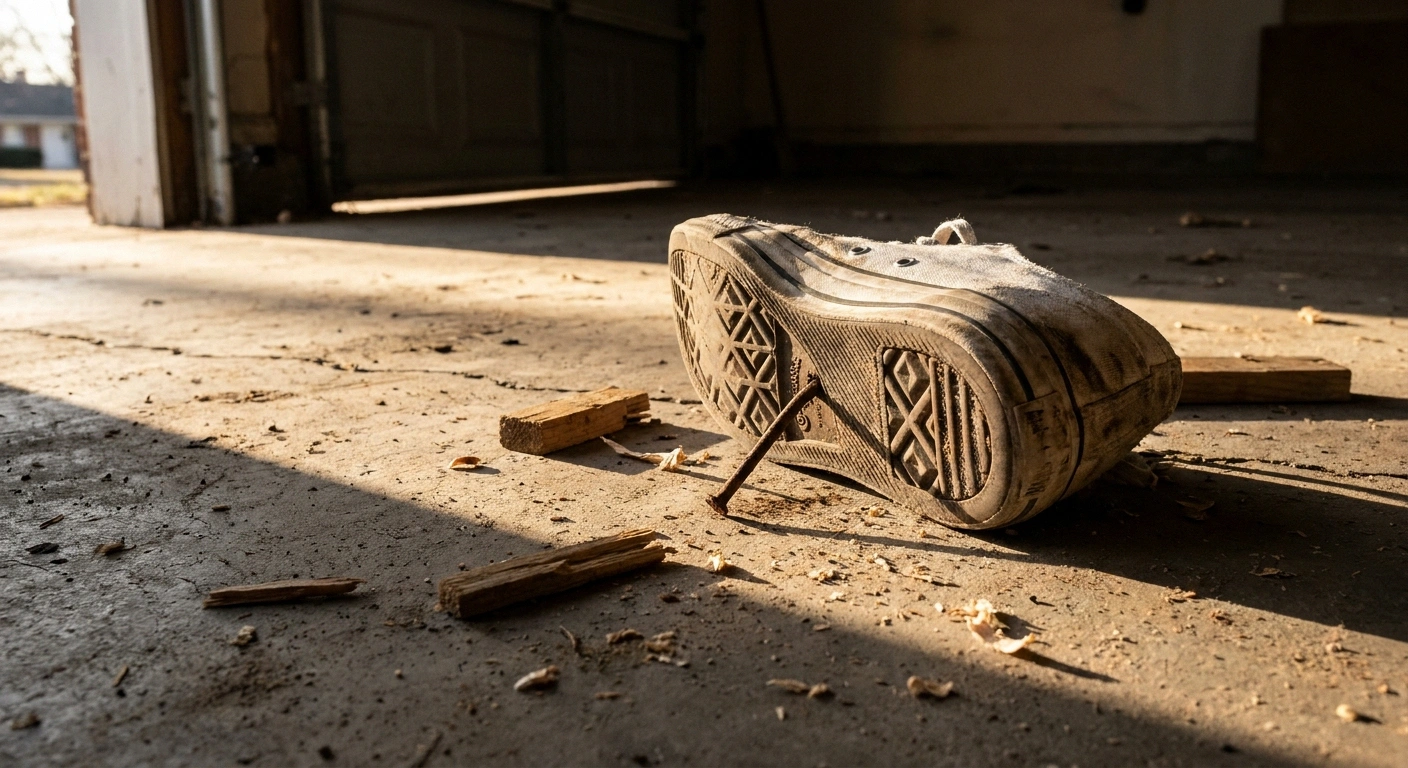
A puncture wound on the bottom of the foot deserves more respect than a cut of the same size. The opening is small and often closes over quickly, which traps whatever went in.
The classic warning involves nails through sneakers. Bacteria called Pseudomonas live in the foam and rubber of shoe soles, and when a nail goes through the shoe and into the foot, it can carry them deep into the tissue and sometimes the bone. Research from the University of Texas Health Science Center at San Antonio, looking at infected puncture wounds, found that people with diabetes were about 17 times more likely than people without diabetes to develop a bone infection (osteomyelitis) after a puncture. That’s a striking number, and it’s why I’d treat any puncture to a numb foot as a same-day call.
If you step on something sharp:
- If an object is still stuck in your foot and it’s anything bigger than a small surface splinter, leave it in and get care. Pulling out a deeply embedded object at home can cause bleeding or leave pieces behind.
- If it’s out, rinse the area well with clean water, cover it and get seen the same day by your podiatrist, primary care office or urgent care. Bring the object or a photo of it if you can.
- Mention whether it went through a shoe, and what kind.
- Glass is tricky because small fragments don’t always show up to the naked eye. Some offices will order an X-ray or ultrasound to check.
One more thing that surprises people: bone infections from punctures can show up weeks later, after the skin looks healed. Keep an eye on that spot for a month, and report new swelling, warmth or drainage even if it seemed fine for a while.
Tetanus: Doing the Math on Your Last Shot
Quick question — when was your last tetanus shot? If you don’t know, you’re in very good company, and this is worth looking up before you need it.
Two quick examples of the tetanus math
Last booster: spring 2021. Nail through a sneaker in late 2026: that’s more than five years for a tetanus-prone wound, so a booster is due.
Last booster: 2019. A clean kitchen-knife nick on the top of the foot in 2026: seven years is under the ten-year line for a clean, minor cut, so no booster is needed for that wound.
These thresholds assume you completed the childhood series. If you’re not sure you did, tell the clinic: the advice changes.
According to the CDC’s wound guidance, puncture wounds count as “dirty” or tetanus-prone wounds, along with wounds contaminated with dirt, soil or saliva. For those, a booster is recommended if it’s been five years or more since your last dose. For a clean, minor cut, the threshold is ten years.
Most adults get Td or Tdap boosters at their doctor’s office or pharmacy. Write the date on a card in your wallet or a note in your phone, so the next time you’re standing in urgent care with a sore you can’t feel, you have the answer.
The 72-Hour Watch
After any cut, scrape, splinter or puncture, the next three days tell you a lot. Since pain may not warn you, use a simple tracking system.
When you call the office, say these six things
- “I have neuropathy and can’t feel my feet well.” (Add diabetes or circulation problems if you have them.)
- What it is and where: splinter, cut or puncture; top, sole, heel or toe.
- When it happened, or when you found it.
- Whether it went through a shoe, and what kind.
- What you see now: redness past your marker line, swelling, drainage, warmth.
- The year of your last tetanus shot, and any recent change in blood sugars.
Offer to send your photos through the patient portal. Many offices triage faster with a picture.
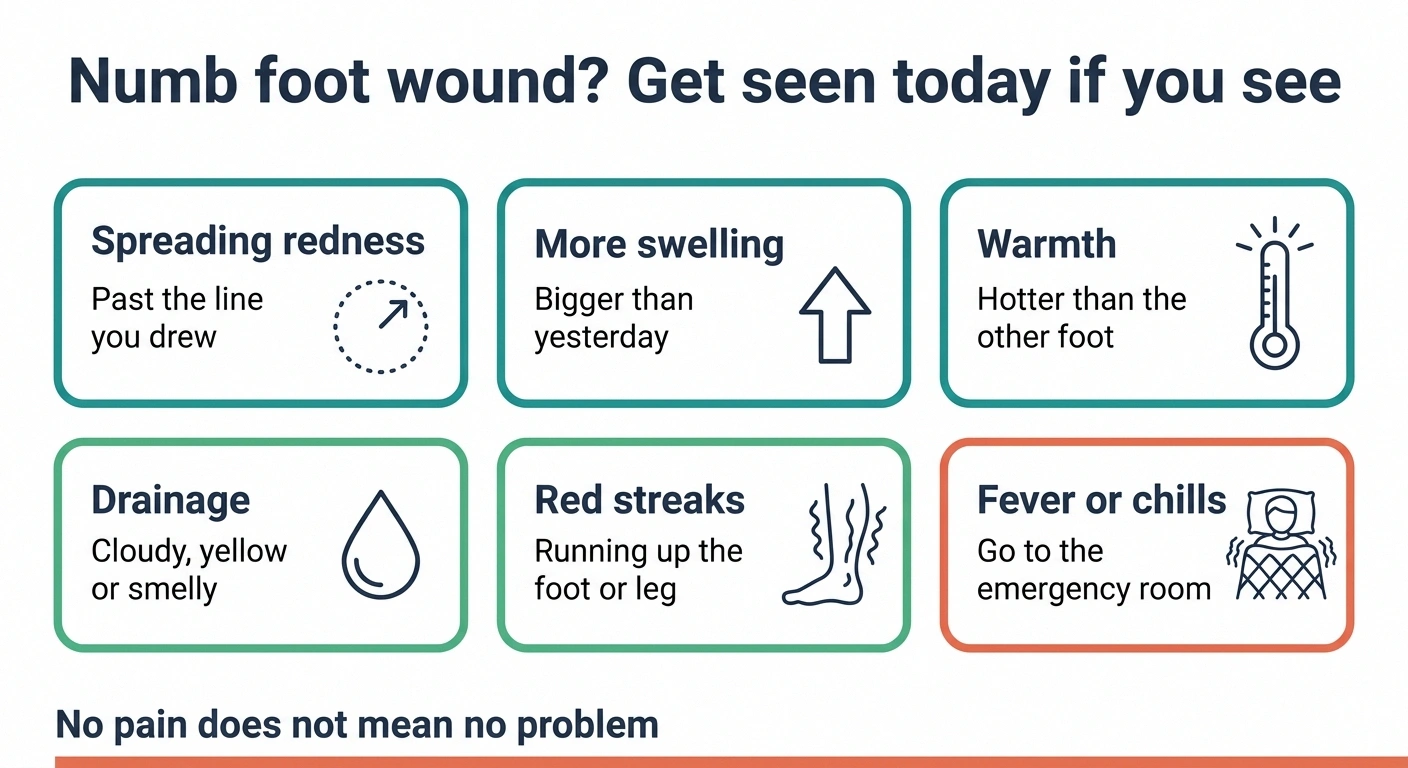
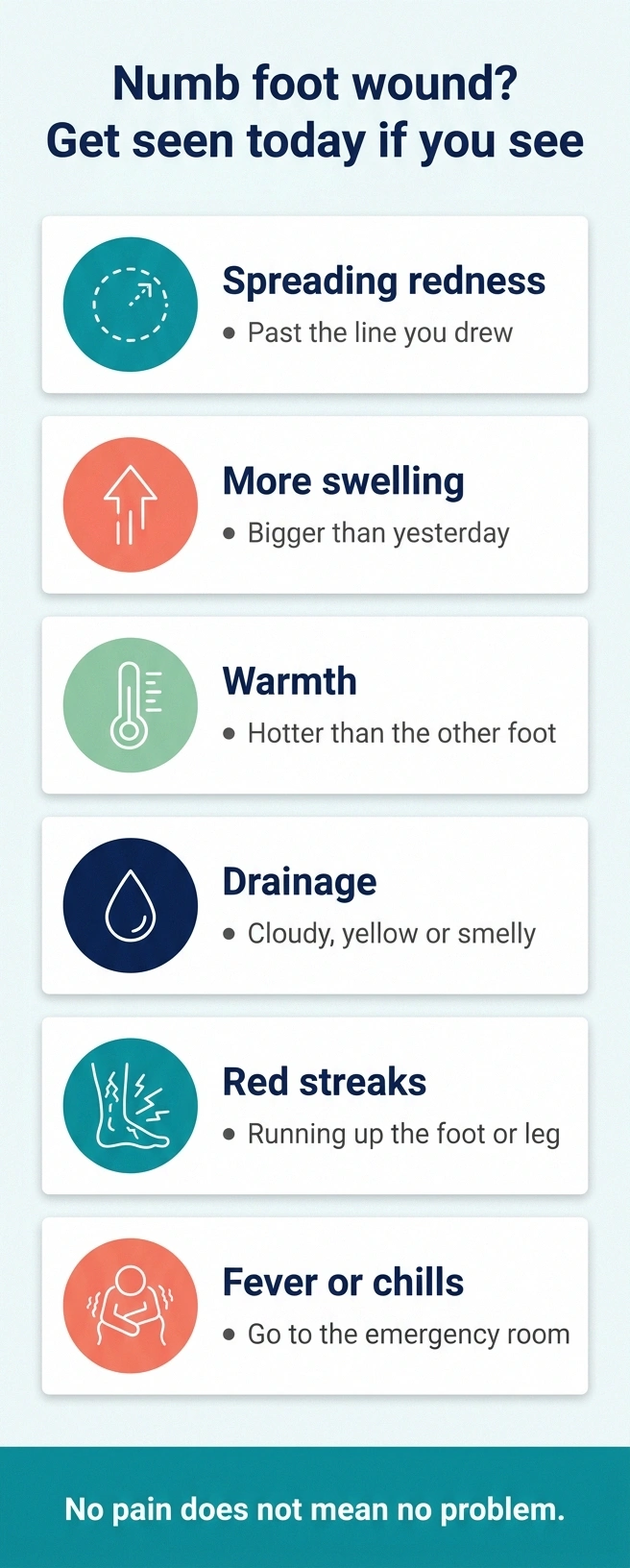
- Draw a line around any redness with a washable marker or pen on day one. Redness spreading past the line is a warning sign.
- Take a photo every evening from the same angle, in the same light. Side-by-side photos are far more reliable than memory.
- Compare warmth with the back of your hand against the same spot on the other foot.
- Note any drainage on the bandage: clear fluid is common at first, but cloudy, yellow or green drainage or a bad smell is not.
Get seen the same day if you notice spreading redness, swelling that’s getting worse, increasing warmth, pus, red streaks running up the foot or leg, or a wound that’s getting bigger or darker. Go to the emergency room if you have fever, chills, feel generally unwell, or if blood sugars suddenly become hard to control — infections often push them up.
And even with no warning signs, a small wound on a numb foot that isn’t clearly better after two or three days deserves a call to your clinician. Slow healing is information too.
A Small First-Aid Kit for Numb Feet
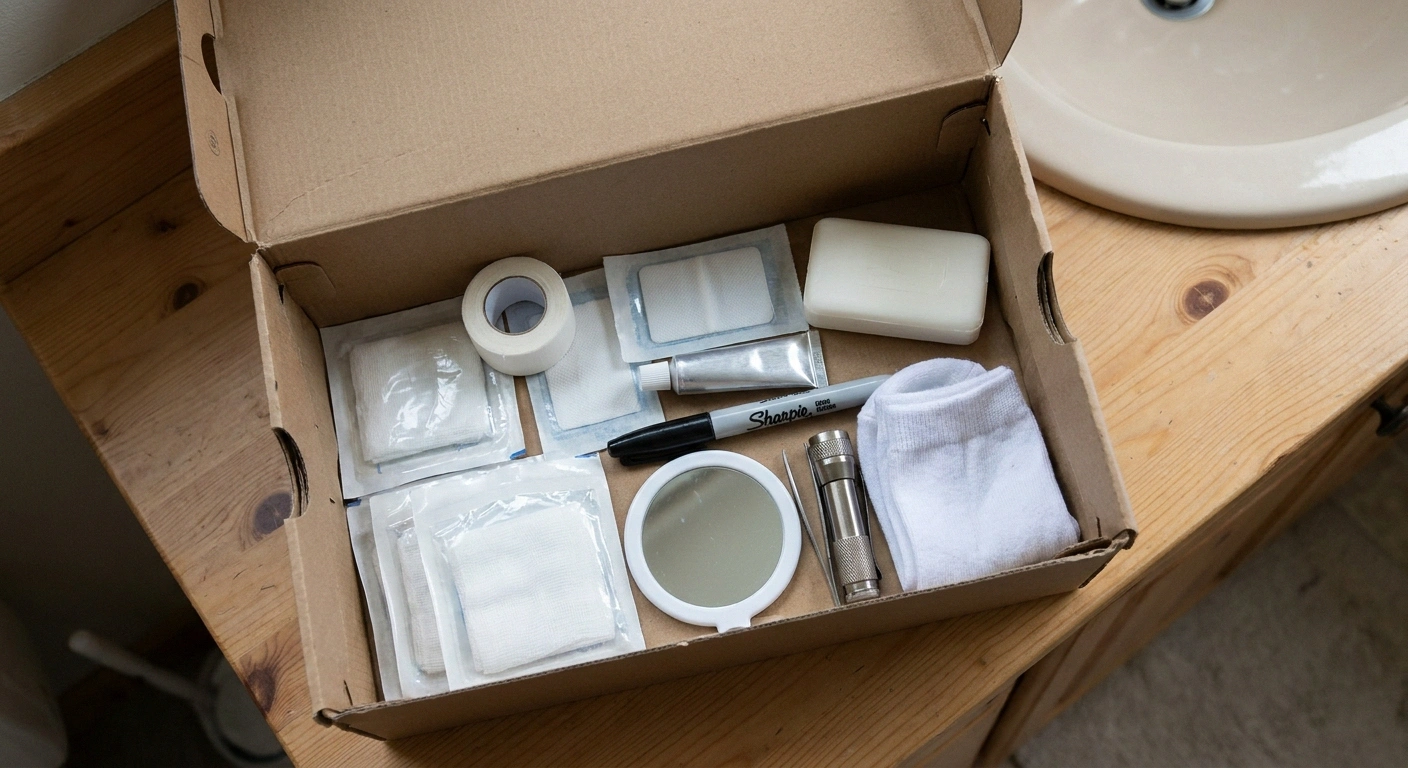
Having the right supplies in one place means you’ll actually use them. Here’s what I keep in a shoebox in the bathroom closet:
- Sterile gauze pads in a couple of sizes, and paper tape (gentler on skin than plastic tape)
- Non-stick pads for wounds that might ooze
- Small tube of petroleum jelly or antibiotic ointment
- Mild, fragrance-free soap
- A washable marker for outlining redness
- A hand mirror, and a small flashlight or magnifier for close looks
- Clean tweezers, for lifting debris off the surface, not for digging
- Soft, seamless socks and a pair of roomy slippers for the days a foot is bandaged
- A card with your podiatrist’s number and the date of your last tetanus shot
What’s deliberately not in there: needles, pins, razor blades, corn plasters with acid, or anything for “minor surgery.” Those tools assume you can feel what you’re doing.
Stopping the Next One
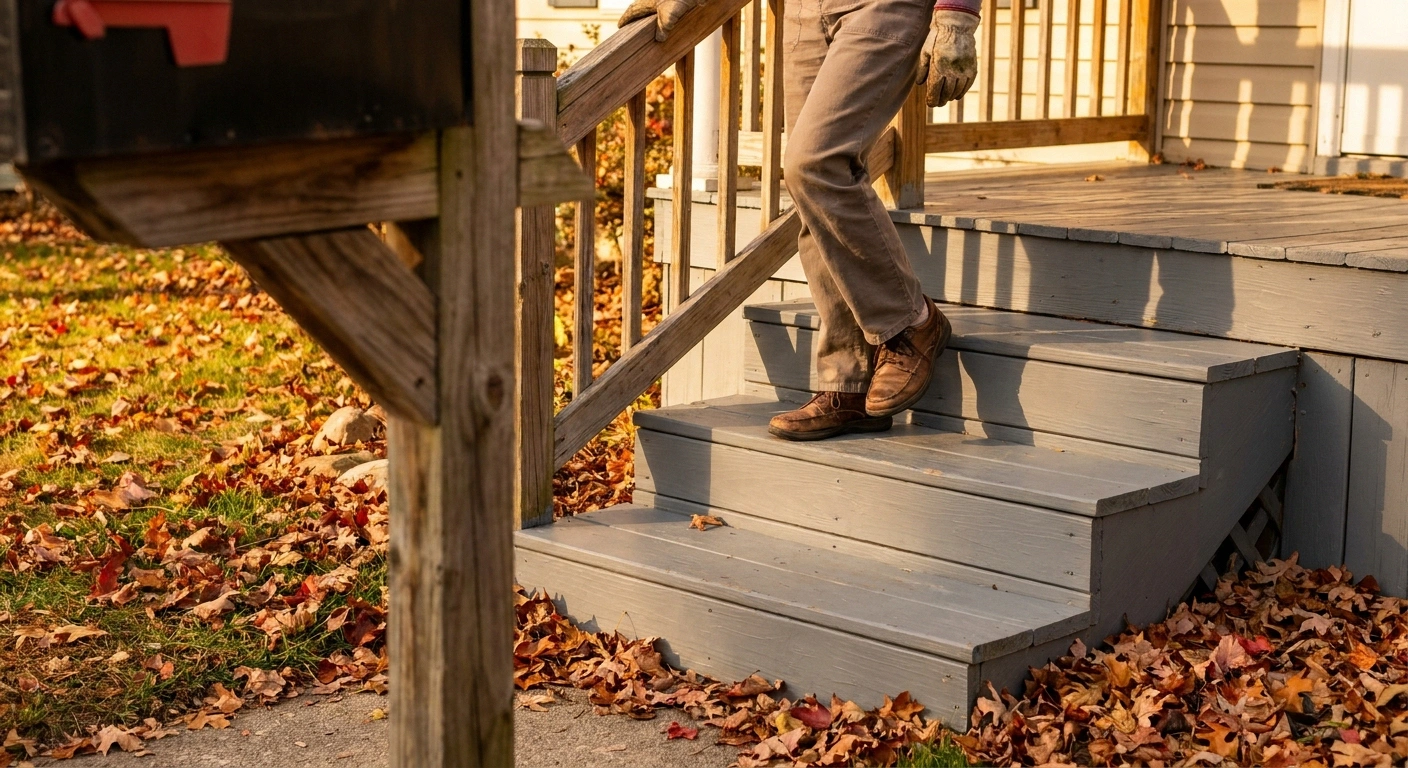
Prevention is mostly about putting something between your skin and the world. That sounds obvious, but most of the splinters and cuts I hear about happen during “just a minute” moments: across the porch to grab the paper, out to the yard to move the hose, a quick trip to the garage.
- Shoes or protective slippers whenever you’re on your feet, including indoors. My piece on going barefoot at home with neuropathy covers house shoes that are easy to slip into.
- Closed toes outside. Sandals and flip-flops leave toes exposed to edges, thorns and splinters. If you love summer sandals, my guide to safer sandals for neuropathy shows what to look for.
- Thick soles in the yard and workshop. Thin canvas shoes won’t stop a nail. My roundup of the best shoes for neuropathy includes sturdier options.
- Fix the splinter sources. Sand or seal old wooden steps and decks, and sweep up after any broken glass, then sweep again with a damp paper towel to catch the slivers.
- Gloves and shoes for garden work. Thorns and bark chips are common culprits. My gardening tips for neuropathy have more on safe outdoor work.
For the full picture of everyday care, including moisturizing and nail trimming, my neuropathy foot care guide pulls it all together. Ruth, by the way, had her porch steps sanded and painted that spring. She says it’s the best money she’s spent on her feet.
Frequently Asked Questions
Should I remove a splinter from my foot if I have neuropathy?
It is safest not to dig it out yourself. Without normal feeling you cannot tell if you are going too deep or leaving fragments behind. Wash the area, cover it, take a photo and call your podiatrist or primary care office. People with diabetes or nerve damage in the feet are commonly advised to have splinters removed by a professional.
How do I treat a small cut on a numb foot?
Wash your hands, stop any bleeding with gentle pressure, rinse the cut under clean running water, apply a thin layer of petroleum jelly or antibiotic ointment, and cover it with a clean bandage. Change the dressing daily and check the wound each time. Avoid hydrogen peroxide, iodine, soaking and heat.
What should I do if I step on a nail with neuropathy?
Get seen the same day. Puncture wounds on the sole can trap bacteria deep in the foot, nails through shoes can carry Pseudomonas bacteria, and people with diabetes have a much higher risk of bone infection after a puncture. Mention whether it went through a shoe and when your last tetanus shot was.
Do I need a tetanus shot for a puncture wound?
CDC guidance treats puncture wounds as tetanus-prone. A booster is recommended if it has been five years or more since your last dose. For a clean, minor cut the threshold is ten years.
How can I tell if a cut on my foot is infected if I cannot feel it?
Look for redness spreading past a line you draw around it, swelling or warmth that increases, cloudy or yellow drainage, a bad smell, red streaks or fever and chills. Compare daily photos taken in the same light. Any of these should be seen the same day.
How long should a small cut on a diabetic foot take to improve?
A small cut should look clearly better within two or three days. If it does not, or if it gets bigger, darker or starts draining, call your clinician even if there is no pain.
About the Author