One of the most common questions I get in our support group goes something like this: “My doctor said I have radiculopathy, but my friend with the same kind of leg pain calls it neuropathy. Which one do I really have?” It's a fair question. The two conditions can feel almost identical from the outside — burning, tingling, numbness, weakness in an arm or a leg — but they happen in completely different parts of the nervous system, they get diagnosed with different tests, and they respond to very different treatments. Getting the label right matters because the wrong label means the wrong treatment plan.
I went through this myself early in my own journey. My first doctor told me I probably had a “pinched nerve in my back” — which is radiculopathy — and I spent six months on muscle relaxers and a chair cushion before a second opinion turned up the truth: small-fiber peripheral neuropathy. The treatments overlap only a little. The diagnostic path is different. And the prognosis — what you can expect a year from now — depends on which one is actually causing your symptoms.
Let's walk through it clearly. If you've been told you have one of these and you're not sure why, or if you're trying to figure out what to ask your doctor at your next visit, this is the article I wish I'd had eighteen months earlier.
The Quick Definition — Where Each One Lives
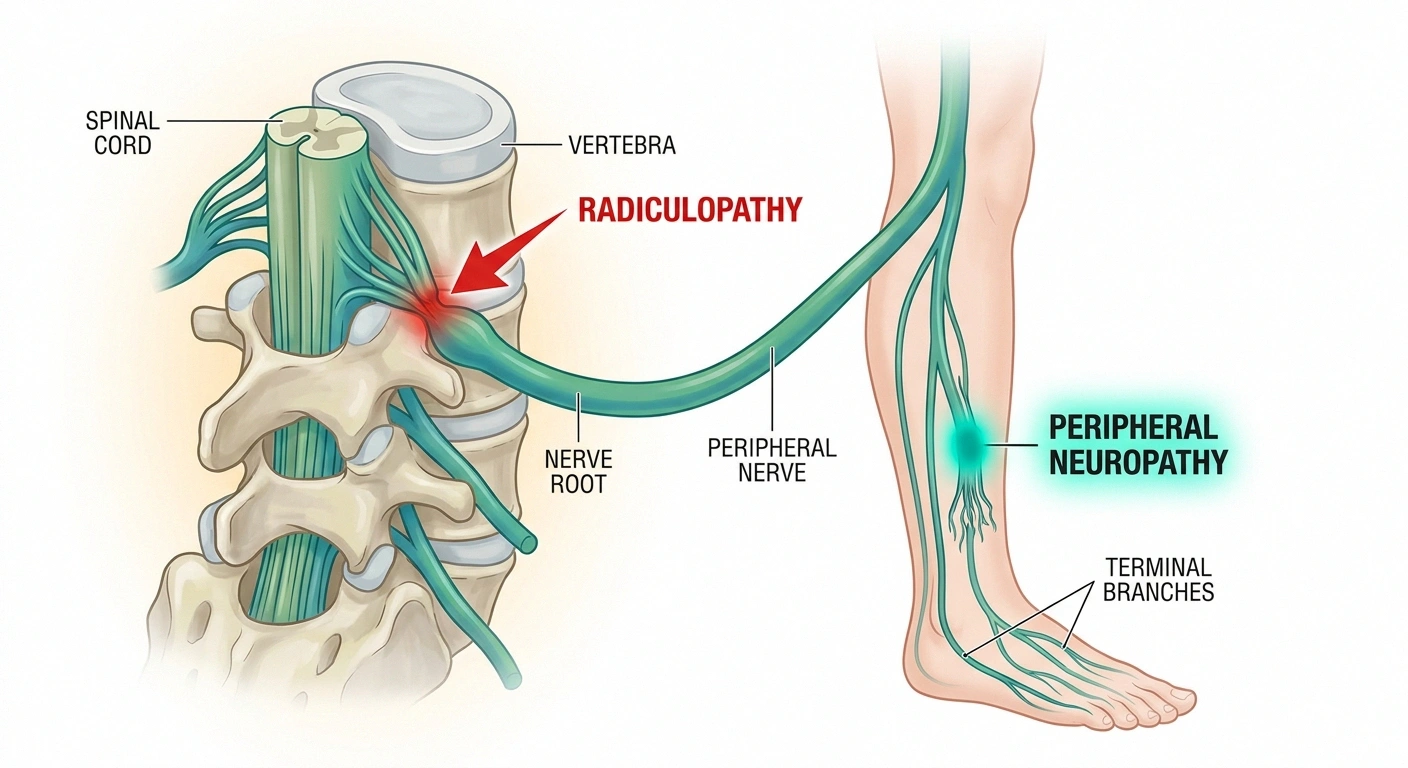
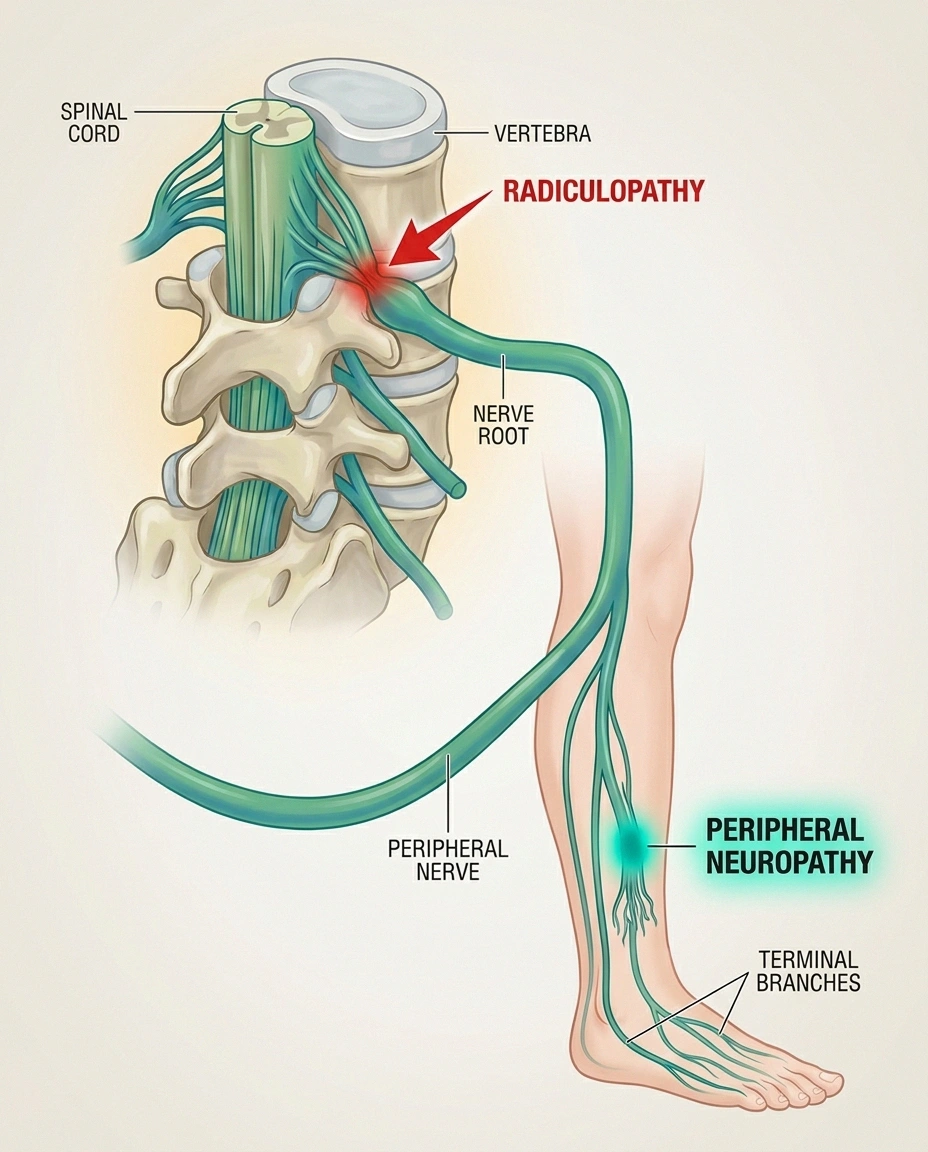
The peripheral nervous system runs from your spinal cord out to your arms, legs, hands, feet, and internal organs. Damage to it can happen at two very different locations, and the location is what separates these two diagnoses.
The Simple Memory Hook
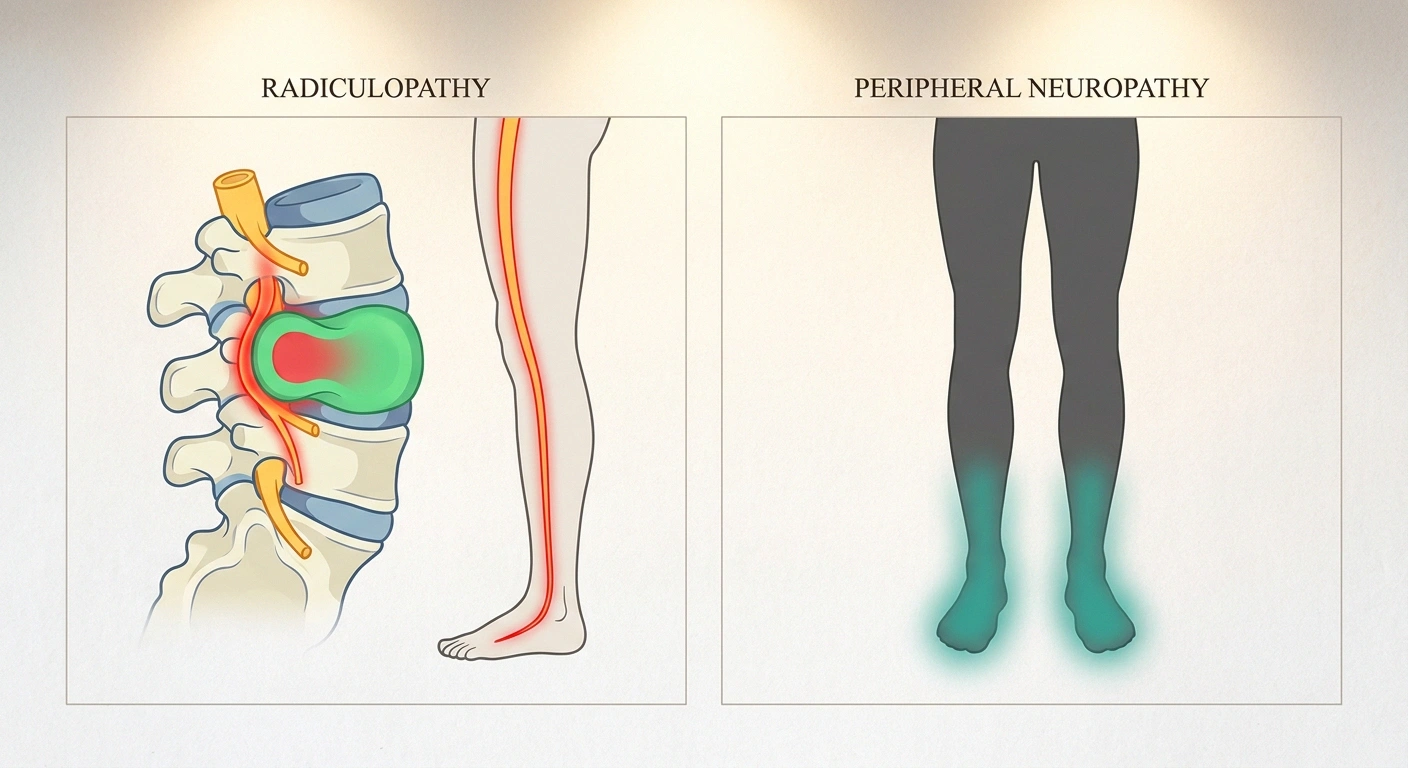
Radiculopathy = a plumbing problem at the wall outlet — the nerve root in the spine, where the nerve exits the spinal column. Peripheral neuropathy = an electrical problem in the wires running through the house — the nerve itself, anywhere along its length out in the body. Same symptoms (burning, tingling, numbness, weakness), entirely different locations, entirely different fixes.
Radiculopathy means damage at the nerve root — the point where a nerve exits the spinal column through a small opening between two vertebrae. The Latin root word radix means “root,” and you can hear it in the diagnosis. Something is pressing on, irritating, or inflaming the nerve at that root level, usually because of a bulging or herniated disc, a bone spur, spinal stenosis (narrowing of the spinal canal), or in rarer cases a tumor or infection. Cervical radiculopathy affects the neck-level roots and sends symptoms down an arm. Lumbar radiculopathy — what most people call “sciatica” when it affects the L5 or S1 root — sends symptoms down a leg.
Peripheral neuropathy means damage to the nerve after it has left the spine, anywhere along its length out in the body. The damage isn't a structural pinch from a bone or disc — it's an internal injury to the nerve fiber itself. The causes are entirely different: diabetes, vitamin deficiencies (especially B12), alcohol, chemotherapy drugs, autoimmune conditions, certain antibiotics, heavy metal exposure, genetic conditions, or, in roughly a third of cases, no identifiable cause at all (called idiopathic neuropathy).
The simplest way to remember the difference: radiculopathy is a plumbing problem at the wall outlet (the nerve root in the spine). Peripheral neuropathy is an electrical problem in the wires running through the house (the nerves themselves, far from the spine).
How the Symptoms Differ — Pattern Matters Most
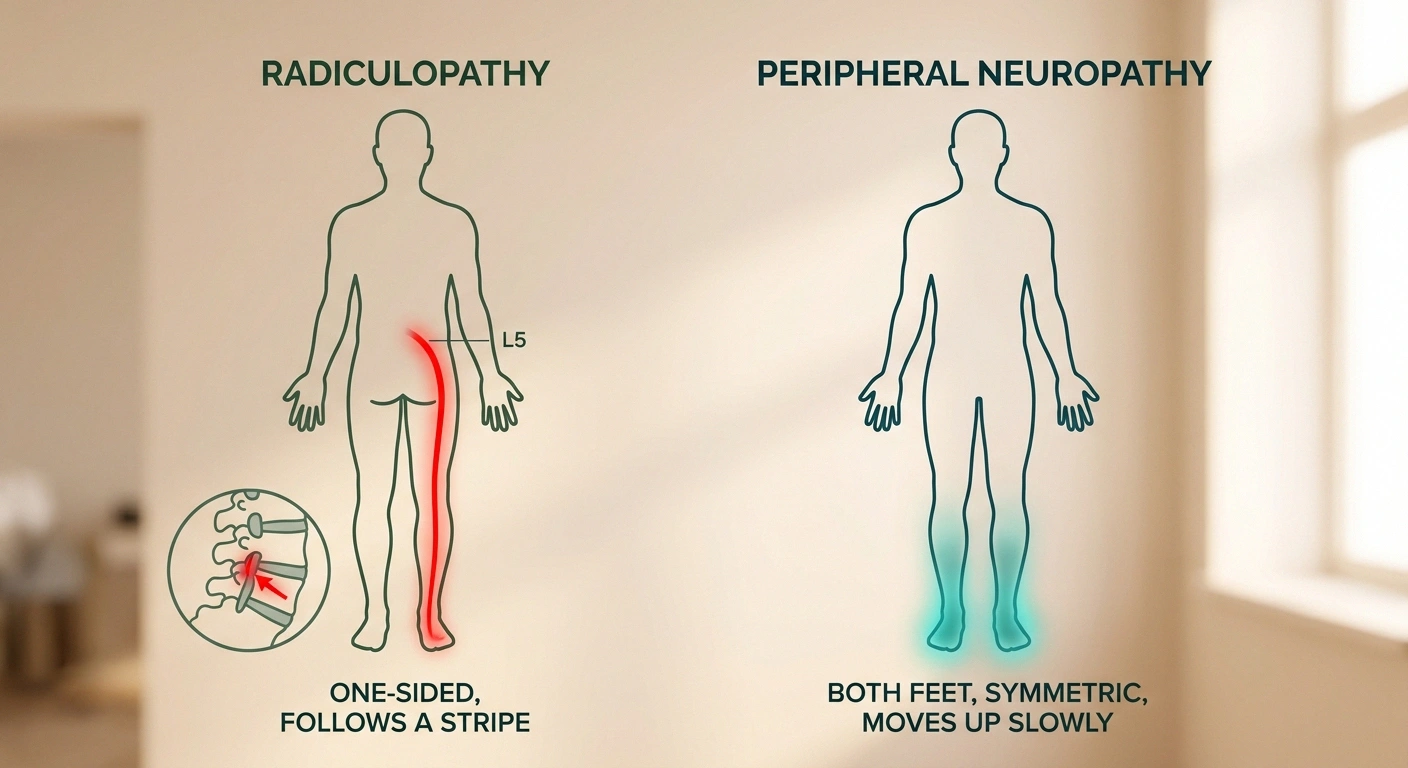
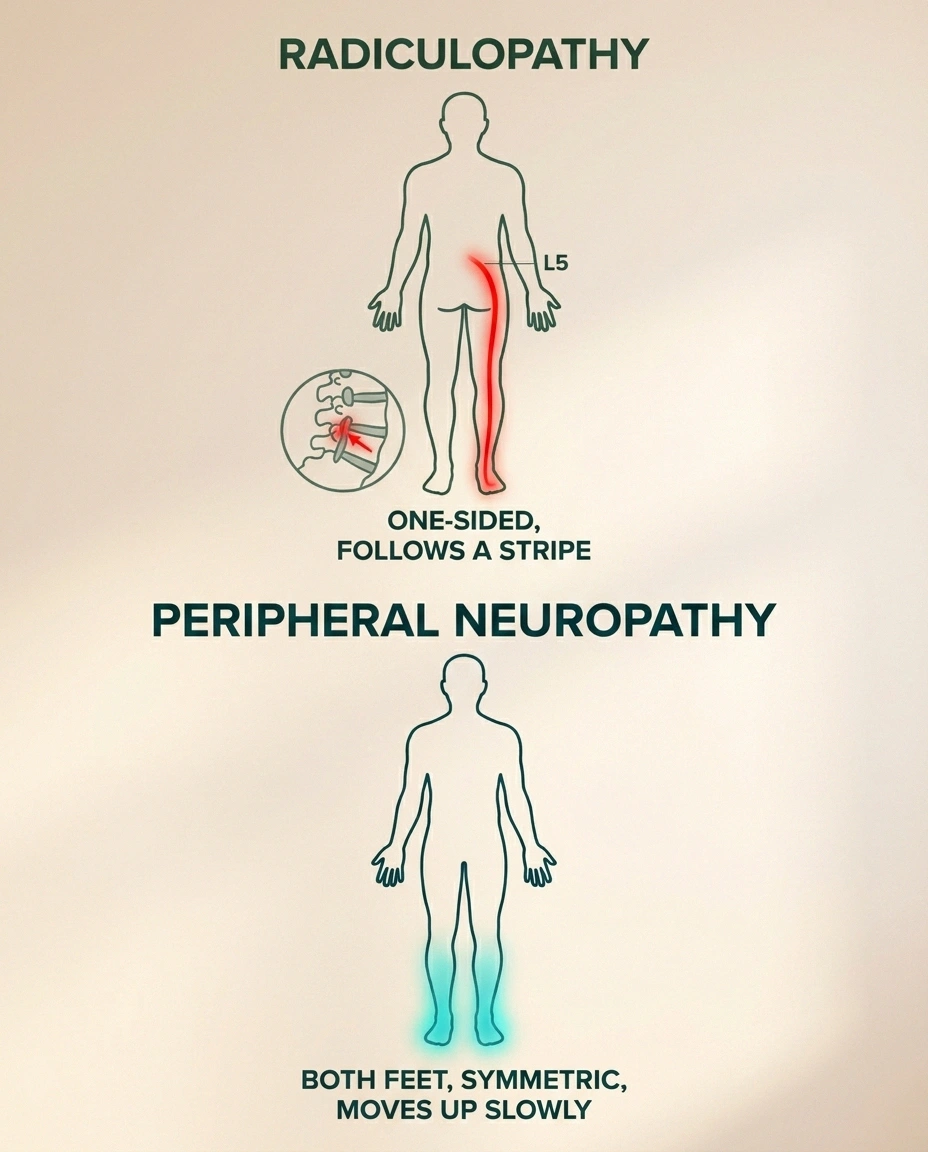
The symptoms — pain, burning, tingling, numbness, weakness — are honestly very similar in both conditions, which is why patients (and sometimes doctors) confuse them. What separates them is the pattern. Where the symptoms show up, how they're distributed, and what makes them worse all tell a story.
Symptom Patterns Side-By-Side
- One-sided typically
- Follows a dermatomal stripe
- Sharp, “electric” shooting quality
- Worse with coughing, sneezing, bending
- Often changes with body position
- Bilateral and symmetric
- Stocking-glove distribution
- Diffuse burning, prickling, numb
- Worse at night, otherwise steady
- Position-independent
Radiculopathy follows a dermatomal pattern. Each nerve root supplies sensation to a specific stripe of skin and motor function to a specific group of muscles. When a single root is compressed, the symptoms travel along that specific stripe. A pinched L5 root, for example, sends pain or numbness down the outside of the thigh, across the front of the shin, and into the top of the foot and big toe — a recognizable line that a doctor can trace on your body. It's typically one-sided. It's typically a “shooting” or “electric” quality of pain that follows a path, not a diffuse field. And it often gets worse with specific movements — coughing, sneezing, bending forward, sitting in certain positions — because those movements change the pressure on the root.
Peripheral neuropathy follows a length-dependent “stocking-glove” pattern. Because the longest nerves are damaged first and most severely, symptoms start in the toes and feet on both sides at the same time (the stocking distribution). As the condition progresses over months or years, symptoms creep upward symmetrically, and once they reach about mid-calf, the fingers and hands typically start to be affected too (the glove distribution). It's almost always bilateral and roughly symmetric. The quality is more often a diffuse burning, prickling, or numb sensation rather than the sharp electric jolts of radiculopathy. And it usually doesn't change much with body position.
There are exceptions to all of this — non-length-dependent small-fiber neuropathy can start in the face or trunk, and certain types of radiculopathy can affect multiple roots — but as a rule of thumb, “one-sided and following a stripe” points to radiculopathy, while “both feet symmetrically, slowly moving up” points to neuropathy.
The Tests That Tell Them Apart
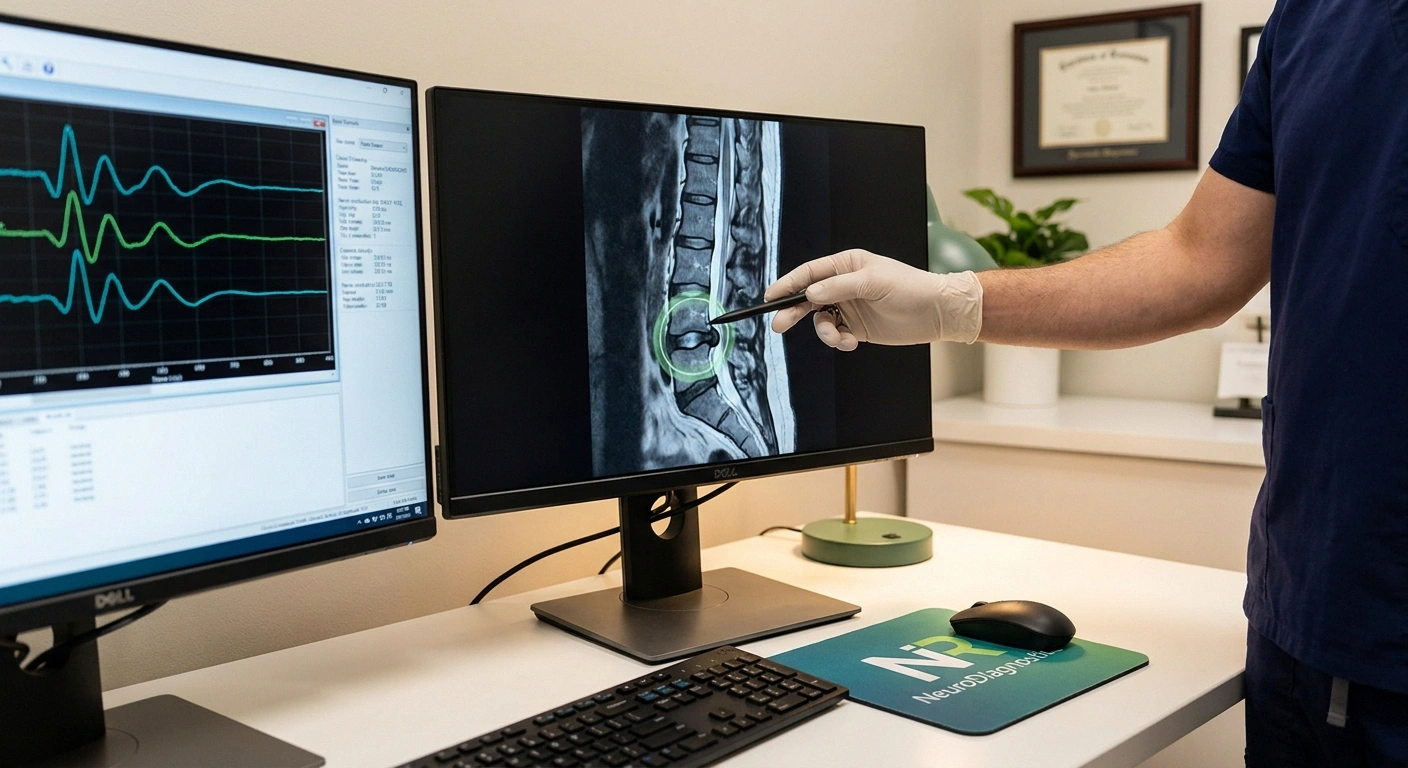
Three categories of testing usually sort this out. You don't necessarily need all of them, but knowing what each one does helps you understand why your doctor orders what they do.
Why MRI Alone Isn't Enough
Spinal MRIs frequently show “abnormalities” — bulging discs, mild stenosis, degenerative changes — in people who have no symptoms whatsoever. By age 60, more than half of healthy asymptomatic adults have a herniated or bulging disc on imaging. That's why a radiculopathy diagnosis needs to match the imaging finding to the actual symptom pattern. If your MRI shows an L4-L5 herniation but your symptoms are bilateral burning in both feet, the herniation is likely a coincidental finding and your real problem is somewhere else.
Imaging — MRI of the spine. If radiculopathy is suspected, MRI is the gold standard. It shows discs, bone spurs, and the spaces where the nerve roots exit the spine. A herniated disc pressing on the L5 root, or a bone spur narrowing the foramen, will show up clearly. Importantly, MRI of the spine does not diagnose peripheral neuropathy — the damage in neuropathy is at the nerve-fiber level and doesn't show up on imaging.
Electrodiagnostic studies — EMG and nerve conduction studies (NCS). These tests measure how electrical signals travel along your nerves and how your muscles respond. They're useful for both diagnoses but in different ways. For radiculopathy, EMG can show denervation patterns in the specific muscles supplied by a compressed root — and crucially, it can confirm that the root is actually being damaged, not just visible as compressed on imaging. (Plenty of people have herniated discs on MRI that aren't causing symptoms.) For peripheral neuropathy, nerve conduction studies show slowed or reduced signals in the peripheral nerves themselves, often in a length-dependent pattern. Your doctor can order both when the picture is unclear.
Blood work and skin biopsy. If peripheral neuropathy is suspected, blood work hunts for the cause: blood sugar and HbA1c (diabetes), B12, folate, thyroid function, kidney and liver panels, inflammation markers, and sometimes autoimmune antibodies. A skin biopsy from the calf or thigh can diagnose small-fiber neuropathy when nerve conduction studies look normal (small fibers don't show up on standard NCS). Blood work has no role in diagnosing radiculopathy itself, but it sometimes turns up causes — like infection or inflammatory conditions — that affect the spine.
Causes — Why It Matters Which One You Have
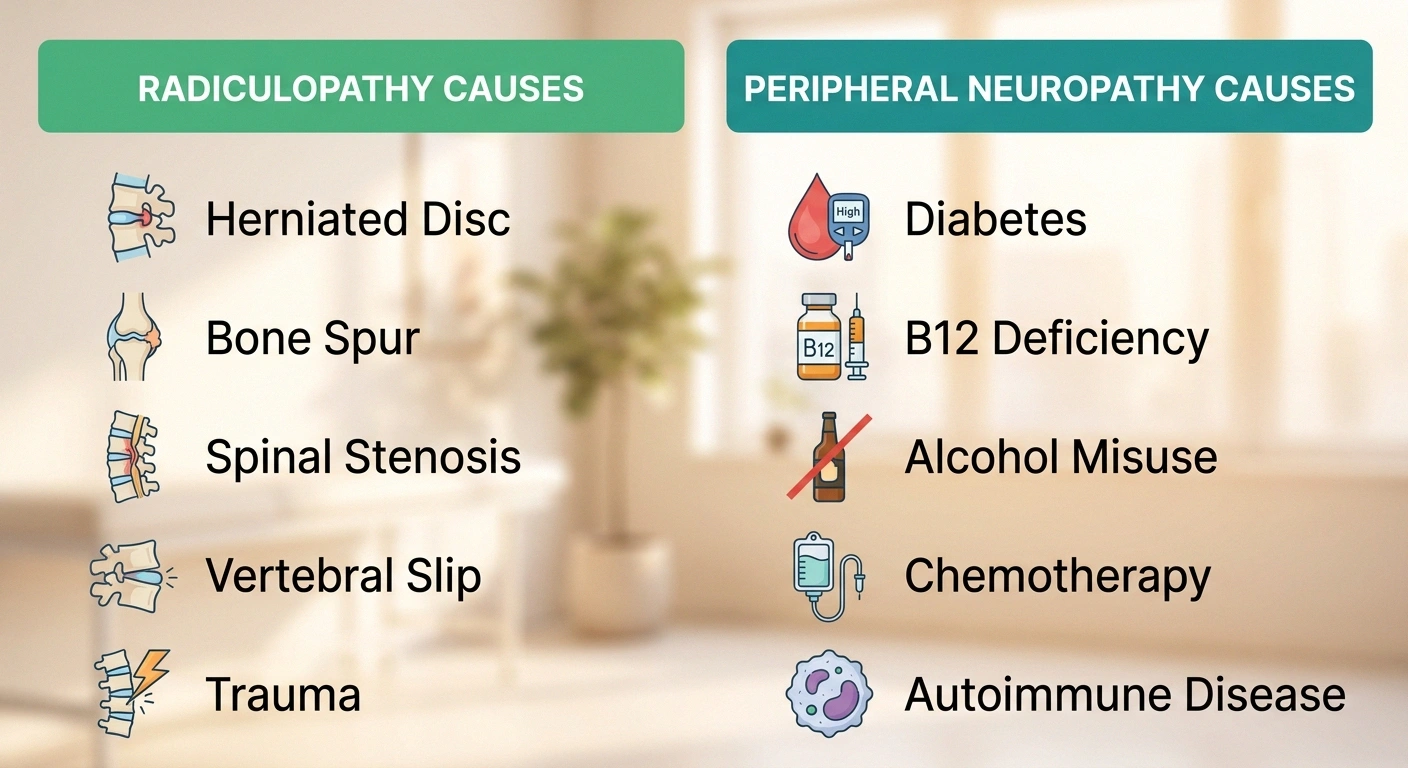
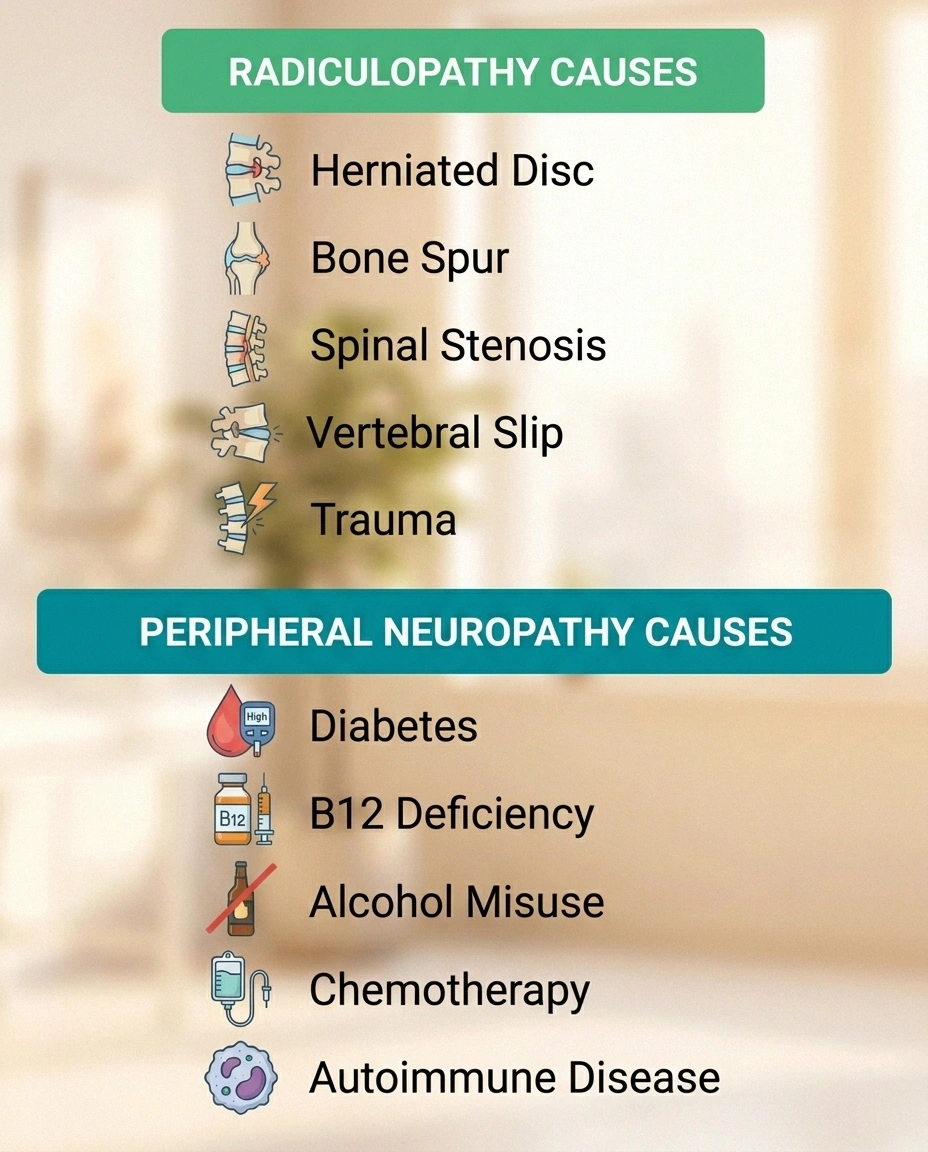
The list of causes for each is almost entirely separate, which is why getting the diagnosis right changes the treatment plan completely.
Diabetes is by far the most common cause of peripheral neuropathy in the US. If you have diabetes and new foot symptoms, the suspicion should start with neuropathy — and the workup should look for it directly, not chase a back MRI first.
Radiculopathy causes are mostly mechanical and structural:
- Herniated or bulging disc pressing on the root
- Bone spurs from degenerative disc disease or arthritis narrowing the space the nerve exits through
- Spinal stenosis (narrowing of the spinal canal, often age-related)
- Spondylolisthesis (one vertebra slipping forward over another)
- Trauma — falls, car accidents, sports injuries
- Less commonly, tumors or infections affecting the spine
Peripheral neuropathy causes are mostly metabolic, toxic, or immune-mediated:
- Diabetes — by far the most common cause in the US
- Vitamin B12 deficiency (and rarer deficiencies of B1, B6, folate, copper, vitamin E)
- Heavy alcohol use over years
- Chemotherapy drugs — especially platinum agents, taxanes, vinca alkaloids, bortezomib
- Autoimmune conditions like Sjögren's syndrome, lupus, and rheumatoid arthritis
- Certain antibiotics (fluoroquinolones, metronidazole, isoniazid)
- HIV, hepatitis C, Lyme disease, and other infections
- Heavy metals — lead, arsenic, mercury
- Genetic conditions like Charcot-Marie-Tooth disease
- About a third of cases are idiopathic — no identifiable cause
You can see why mistaking one for the other matters. If you actually have neuropathy from undiagnosed B12 deficiency, no amount of spinal decompression surgery is going to fix it. If you actually have radiculopathy from a herniated disc, no amount of alpha-lipoic acid or vitamin therapy is going to take the pressure off the root.
How Treatment Differs

The treatment plan flows directly from the diagnosis, and this is where the two conditions diverge most sharply.
Where the Treatment Paths Diverge
Anti-inflammatories, PT, epidural steroids, time. Surgery only if conservative care fails.
Blood sugar control, B12, swap meds. Gabapentin/duloxetine for pain. Lifestyle.
70-80% of acute cases improve substantially within 6-12 weeks.
Slowly progressive without root-cause treatment. Managed, not cured.
Radiculopathy treatment aims to take pressure off the root and let the inflamed nerve heal. The first-line approaches are conservative: anti-inflammatory medications, physical therapy with directional preference exercises (often McKenzie method for low back radiculopathy), targeted epidural steroid injections to reduce inflammation around the root, and time. Most cases — perhaps 70 to 80 percent of acute radiculopathy — improve substantially within six to twelve weeks of conservative care. Surgery is reserved for cases that don't respond to conservative treatment, for progressive weakness, or for “red flag” situations like loss of bowel or bladder control. Common surgeries include microdiscectomy (removing the herniated disc material pressing on the root) and laminectomy or foraminotomy (creating more space for the root to exit). Outcomes for well-selected surgical patients are generally good.
Peripheral neuropathy treatment has two layers: treat the underlying cause if one can be found, and manage the symptoms regardless. Treating the cause might mean tight blood sugar control for diabetic neuropathy, B12 injections for pernicious anemia, stopping or substituting a causative medication, treating an autoimmune condition with immune therapy, or chelation in the rare case of heavy metal toxicity. Symptom management uses a different toolkit than radiculopathy: gabapentin and pregabalin, duloxetine and other SNRIs, low-dose tricyclic antidepressants, topical agents like capsaicin or lidocaine, and lifestyle measures including exercise, alcohol moderation, and careful foot care. Surgery has no role in most peripheral neuropathy — the exception is decompression of an individual entrapped nerve, like the median nerve in carpal tunnel syndrome, which is a focal neuropathy rather than a generalized one.
The other big difference: radiculopathy is usually a discrete episode that resolves, with maybe occasional recurrence. Peripheral neuropathy is typically a chronic, slowly progressive condition that we manage rather than cure. Setting expectations matters — the daily life of someone six months out from a successfully treated disc herniation looks very different from the daily life of someone managing diabetic neuropathy.
Can You Have Both at the Same Time?
Yes, and this is more common than people realize. Older adults frequently have both age-related spinal degeneration (which can cause radiculopathy) and diabetes or another condition that causes peripheral neuropathy. When both are present, the picture gets harder to read because the symptoms blend. A patient might have generalized burning in both feet from neuropathy and on top of that have shooting one-sided leg pain from a compressed L5 root — and treating one without addressing the other only solves part of the problem.
When Symptoms Change Character, Ask for a Fresh Look
If you've been managing one diagnosis for a while and the symptom character changes — diffuse burning is suddenly joined by sharp one-sided shooting pain, or your one-sided sciatica is now accompanied by symmetric foot numbness — that's a strong reason to ask your doctor to re-examine. You can develop a new condition on top of an old one, and treating the wrong one means the new symptoms don't get better.
When the picture seems mixed, the diagnostic workup gets more thorough rather than less. MRI of the lumbar spine to look for root compression, electrodiagnostic studies to assess both root function and peripheral nerve health, blood work to look for neuropathy causes — sometimes all in the same workup. It takes longer to sort out, but it's worth doing carefully. Each condition has different treatments, and treating the wrong one means the symptoms don't get better.
If you've been managing one diagnosis for a while and your symptoms have changed in character — say the diffuse burning has been joined by sharper, one-sided leg pain that follows a stripe — that's a good reason to ask for a fresh look. The body can develop a new problem on top of an old one.
Questions to Ask Your Doctor
If you're not sure which condition you have, or if you've been told one and the treatment isn't working, these are the questions worth bringing to your next appointment.
You're the Pattern Expert
The pattern is the diagnostic key — and you're the only one who knows your pattern in detail. Before your next appointment, write down: where exactly the symptoms are, when they started, whether they're on one side or both, what they feel like (burning, sharp, numb, electric, dull), and what makes them better or worse. A clear pattern description does more for a correct diagnosis than any test ordered without context.
- What is the pattern of my symptoms? Are they one-sided and following a specific stripe (suggesting radiculopathy) or symmetric and starting in both feet (suggesting peripheral neuropathy)?
- What is the suspected cause? If it's radiculopathy, which root is involved, and what's compressing it? If it's neuropathy, what blood work has been done to look for treatable causes?
- What testing would confirm the diagnosis? Has an MRI of the affected spine area been done? Have nerve conduction studies and EMG been done? Has B12, HbA1c, and thyroid function been checked?
- If treatment hasn't worked, could the diagnosis be wrong or incomplete? Could I have both conditions?
- What's the next step if conservative treatment doesn't help? For radiculopathy: an epidural injection? A surgical consultation? For neuropathy: a different medication? A skin biopsy for small-fiber assessment? A referral to a neurologist who specializes in peripheral nerves?
The single most important thing you can do is bring a clear description of your symptoms — where exactly they are, when they started, what makes them better or worse, whether they're on one side or both, and what they feel like (burning, sharp, numb, electric, dull). The pattern is the diagnostic key, and you're the only one who knows your pattern in detail.
Frequently Asked Questions
Is sciatica the same as radiculopathy?
Sciatica is a common name for radiculopathy that affects the sciatic nerve roots — typically L4, L5, or S1 in the lower back. So sciatica is a type of radiculopathy. The term “sciatica” describes the symptoms (pain or numbness shooting down the back or side of the leg), while “radiculopathy” describes the underlying mechanism (a nerve root being compressed or irritated where it exits the spine). When a doctor says “sciatica,” they're almost always referring to lumbar radiculopathy at one of those lower-back roots.
Can a herniated disc cause peripheral neuropathy?
A herniated disc causes radiculopathy, not peripheral neuropathy in the technical sense. Radiculopathy and peripheral neuropathy are damage at different locations on the nerve — radiculopathy at the root, peripheral neuropathy along the nerve after it has left the spine. The symptoms can look identical, which is why they get confused, but the mechanism and treatment are different. A herniated disc compresses the root; it doesn't damage the peripheral nerve fibers themselves out in the leg or foot.
Why are my feet numb on both sides if I have a “pinched nerve” in my back?
This is a great question to bring to your doctor — because symmetric bilateral foot numbness is not the typical pattern for radiculopathy. Radiculopathy is usually one-sided. Symmetric stocking-pattern numbness much more often points to peripheral neuropathy, which has a different cause and a different treatment plan. If a back imaging finding has been blamed for symptoms that don't actually fit the radiculopathy pattern, a second opinion or a workup for peripheral neuropathy is worth considering.
Will an MRI of my back diagnose neuropathy?
No. MRI of the spine images bones, discs, and the spaces nerve roots travel through, so it can identify causes of radiculopathy like a herniated disc or spinal stenosis. But the damage in peripheral neuropathy is at the level of the nerve fibers themselves, far from the spine and far from where MRI looks. You can have a perfectly normal lumbar MRI and severe peripheral neuropathy at the same time. Diagnosing peripheral neuropathy needs nerve conduction studies, blood work, and sometimes a skin biopsy — not spinal imaging.
Does radiculopathy go away on its own?
Often, yes. Acute radiculopathy from a herniated disc improves substantially within 6 to 12 weeks in roughly 70 to 80 percent of patients with conservative care alone — anti-inflammatory medications, physical therapy, time, and activity modification. Even untreated, many cases resolve as the body reabsorbs disc material and the inflammation around the root settles. That's why most clinicians wait at least six weeks before considering more aggressive options like epidural steroid injections or surgery, reserving urgent action for cases with progressive weakness or red-flag features. Peripheral neuropathy, by contrast, usually does not resolve on its own — the damage is to nerve fibers and tends to be slowly progressive without treatment of the underlying cause.
If I have diabetes, am I more likely to have peripheral neuropathy or radiculopathy?
You can have either or both, but diabetes specifically raises the risk for peripheral neuropathy — about half of people with longstanding diabetes develop some form of it. Diabetes does not directly cause radiculopathy, although shared risk factors like age and weight do increase the chance of degenerative spine disease and disc problems. There's also a specific condition called diabetic amyotrophy that can mimic lumbar radiculopathy — it causes sudden one-sided thigh pain and weakness in some people with diabetes — but it's actually a form of neuropathy affecting the lumbosacral plexus, not a spinal root compression.
Can the same medication treat both conditions?
Some medications overlap. Gabapentin and pregabalin are used for radiculopathy and for peripheral neuropathy, because both involve nerve-pain signaling that these drugs can quiet. Duloxetine, an SNRI antidepressant, also has efficacy for both. Where the treatments diverge: corticosteroid epidural injections are useful for radiculopathy but have no role in generalized peripheral neuropathy. Tight blood sugar control is foundational for diabetic neuropathy and irrelevant for radiculopathy. NSAIDs help acute radiculopathy more than they help neuropathy. Surgery makes sense for some radiculopathy cases and almost no generalized neuropathy cases. The overlap in medications is real but the overall treatment plans are quite different.
How long does it take to get an accurate diagnosis?
It varies. A clear case of radiculopathy from a herniated disc — characteristic dermatomal pain, positive straight-leg-raise test, MRI showing a disc pressing on the matching root — can be diagnosed in a single specialist visit. A clear case of diabetic peripheral neuropathy with characteristic stocking-pattern symptoms, longstanding diabetes, and confirming nerve conduction studies — similar single-visit confirmation. The harder cases are the mixed pictures, the atypical patterns, and small-fiber neuropathy (which doesn't show on standard nerve conduction studies and may need a skin biopsy). Those workups can take weeks to months to complete. The pace is set by how quickly you can get appointments with the right specialists and how quickly insurance authorizes testing — not by how complicated the body is.
About the Author