Gardening has always been one of my great joys. There's something deeply grounding about getting your hands into the soil, watching things grow, coaxing color and life out of a patch of earth. When neuropathy started affecting my hands and balance, I wasn't willing to give that up — but I had to admit that the tools I'd been using for decades were no longer working for me.
The wooden handle on my old trowel that I once gripped without thinking had become treacherous — I couldn't feel when it was slipping. Bending over raised beds left me unsteady. And I burned my hands more than once because I couldn't judge how hot the clay pots had become in the afternoon sun.
What I discovered over time is that an enormous amount of adaptive garden equipment exists — much of it designed for arthritis and age-related challenges, but perfectly suited to neuropathy. You don't have to stop gardening. You may need to garden differently.
Here's what I've found actually helps, and what to look for when you're choosing tools.
What Neuropathy Does to Gardening
Before getting into specific tools, it helps to understand the ways neuropathy specifically changes what you need from your equipment.
Key Takeaway
Neuropathy changes what you need from garden tools in specific ways: you need grip that doesn't rely on feeling the handle, leverage that compensates for reduced strength, and balance support that protects against unsteady moments. The right tools address all three.
Reduced grip strength and unpredictable grip: Hand neuropathy doesn't just reduce strength — it makes grip unreliable. You may feel like you have a secure hold when you don't. Tools with thin, smooth handles that rely on grip tension become genuinely dangerous around pruning blades and stakes.
Numbness means not feeling slippage: Healthy hands get early warning when a tool is about to slip — slight pressure change, texture cues from the handle. Numb hands don't. By the time you notice a problem, the tool may already be moving.
Balance challenges: Bending, kneeling, and reaching while crouched are standard gardening positions — and all of them challenge balance. Neuropathy and balance problems are closely linked, and the uneven terrain of a garden makes falls more likely.
Temperature insensitivity: You may not feel when a terracotta pot has heated to skin-burning temperatures in afternoon sun. Or when cold soil is chilling your hands below a safe threshold.
Vibration sensitivity: Power tools transmit vibration that can worsen neuropathy symptoms in hands during use and for hours after.
Each of these challenges has practical solutions. Let's go through them by tool and equipment category.
Hand Tools: What to Look For and What to Avoid
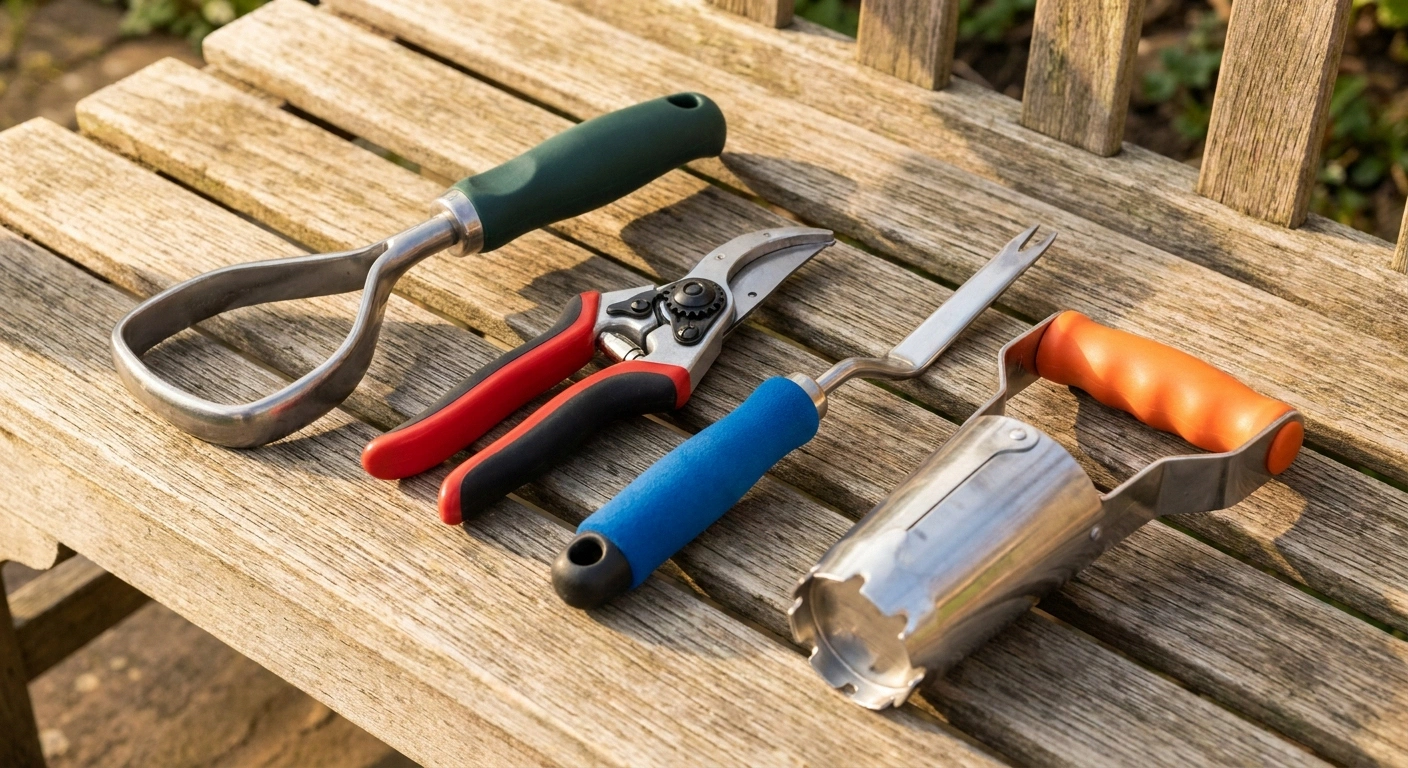
The biggest upgrade you can make to your gardening toolkit is switching from standard handles to ergonomic, cushioned, large-diameter grips.
Hand Tool Shopping Checklist for Neuropathy
✓ Look For
- Soft rubber or foam grip
- Handle ~33mm diameter
- Loop or cuff handle design
- Ratchet mechanism (pruners)
- Lightweight aluminum shaft
✗ Avoid
- Thin smooth wooden handles
- Tools requiring sustained grip
- Ridged handles (concentrate pressure)
- Spring-loaded snap pruners
- Heavy steel tool heads
Handle diameter matters more than you might expect. Research on grip strength consistently shows an optimal handle diameter of approximately 33mm (about 1.3 inches) for maximizing grip efficiency. Standard garden tool handles are often narrower and harder. Look for soft-rubber or foam-padded grips that are thick enough to fill your hand without requiring a tight pinch.
Loop and cuff designs change everything. Standard trowels, weeders, and cultivators require you to grip the handle in your fist and exert force — exactly what neuropathic hands struggle with. Loop-handled tools (where a rigid loop sits over the back of your hand) transfer force to the back of the hand rather than relying entirely on grip. Cuff-style handles do the same. Brands like Radius Garden and Fiskars offer loop-handled versions of basic tools specifically designed for reduced grip dependence. These can be genuinely transformative if grip is your primary issue.
Ratchet pruning shears: Cutting through stems and small branches requires repeated gripping force — a taxing motion for neuropathic hands. Ratchet pruners use a ratcheting mechanism that cuts in stages, requiring less force per squeeze and no sustained pressure. They take longer per cut, but the cumulative force required is dramatically lower. Worth every penny if you do any pruning.
Soil scoops with large handles: Standard trowels have narrow handles that require significant grip. Look for wide-grip scoops or ergonomic bulb planters with soft rubber handles. Some models have pistol-grip shapes that use the web of the hand rather than the fingers — better for neuropathic hands.
What to avoid: Thin wooden or metal handles with no padding. Any tool requiring a sustained tight grip. Handles with ridges that concentrate pressure on specific fingers. Snap-close pruners that require strong finger pressure to open against spring tension.
Long-Handled Tools: Reducing Bending and Improving Stability
Bending and crouching are balance risks. The answer for many gardening tasks is bringing the tool to the plant's level rather than bringing your body to it.
Adjustable-length handles: Telescoping handle systems let you extend a single handle to your ideal working length — typically somewhere between hip and shoulder height, depending on the task. This means you can weed, cultivate, and rake standing fully upright. Look for locking mechanisms that don't require significant hand strength to operate.
Long-handled weeders and cultivators: Standing weeders with forked or claw ends allow you to cut weed roots at the soil level without bending. Some designs let you stand entirely upright for weeding raised beds. This is particularly valuable if balance is a concern when crouching.
Long-handled transplanting tools: Planting bulbs or transplanting seedlings normally requires kneeling. Long-handled bulb planters let you do this standing — though they work better in loose, prepared soil than in clay-heavy ground.
Lightweight materials: Aluminum and composite handles weigh significantly less than hardwood or steel. For longer gardening sessions, the cumulative difference in fatigue is real. If you're shopping in person, actually hold tools before buying — weight distribution matters as much as total weight.
Kneelers, Seats, and Support Equipment
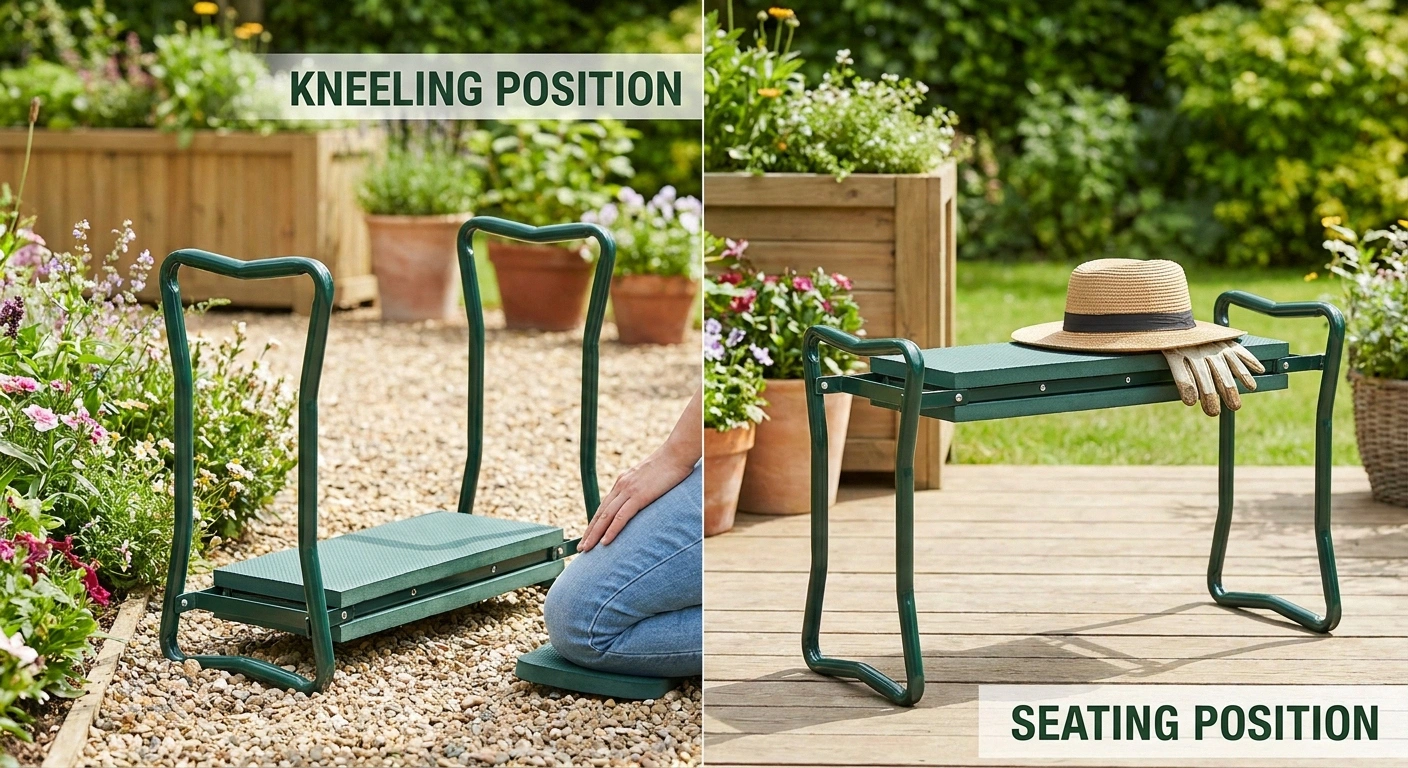
For tasks that genuinely require being close to the ground, the right support equipment protects both your knees and your ability to get back up safely.
Using a Kneeler Bench Safely
Place bench on stable, level ground before putting weight on it
Use the handles to lower yourself slowly — don't drop your weight
When rising, push up through both handles simultaneously — not just one side
Pause in a crouch before standing fully to let balance stabilize
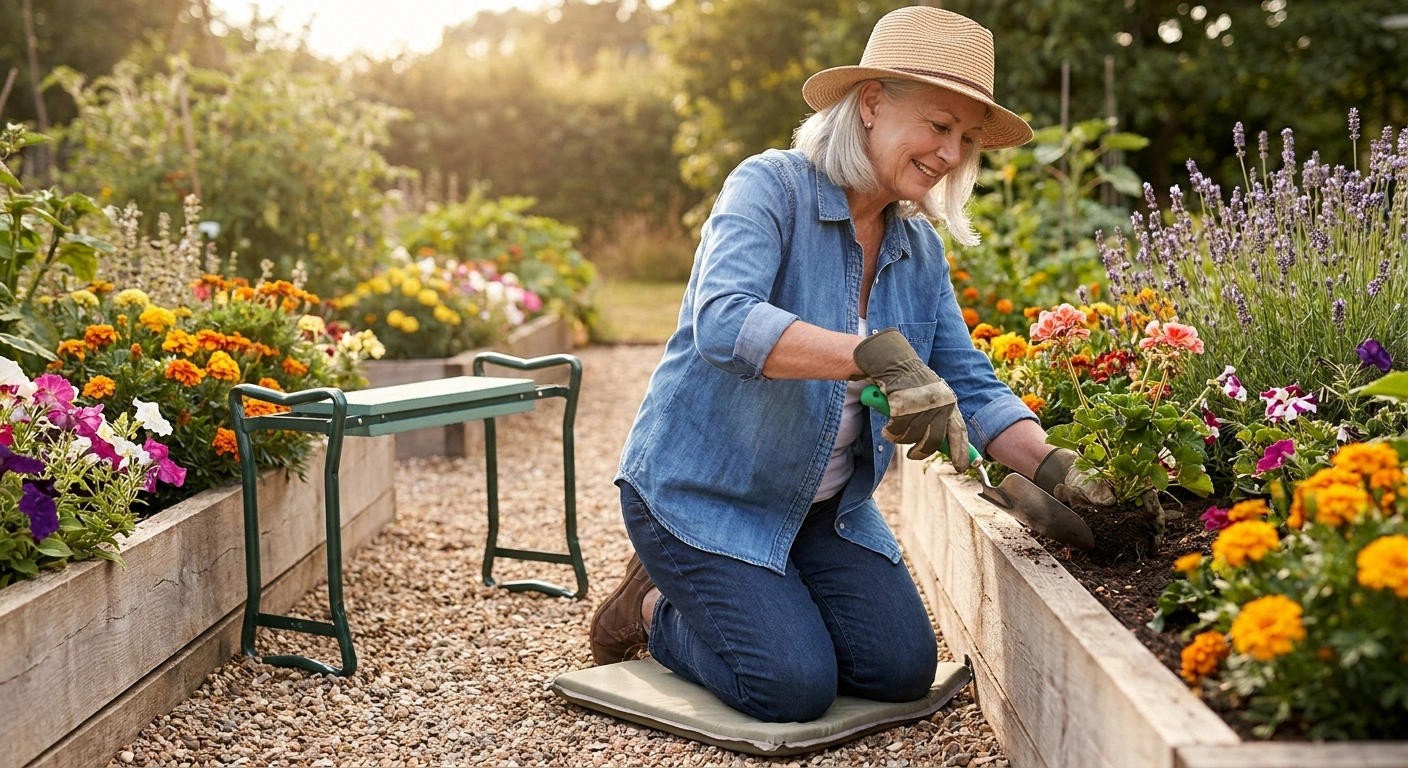
Kneeler benches with handles: These flip between a kneeling pad (with side handles to help you lower yourself) and a seat (same handles now act as armrests). The handles are the critical feature — they let you push up from kneeling without relying entirely on leg strength or balance. For anyone with neuropathy affecting the lower limbs, this is a safety essential rather than a luxury. Look for versions with foam padding substantial enough to protect neuropathic knees that may not register pressure discomfort until damage has occurred.
Garden stools and kneeling carts: Wheeled garden stools let you roll along a bed at a low level without repeatedly standing and kneeling. Some include storage trays for tools. If balance when crouching is more of a concern than the act of kneeling itself, these provide a stable seated position close to soil level.
Raised garden beds: If you're in a position to invest in your garden setup, raised beds at table height eliminate bending entirely. Working at waist level is dramatically safer for anyone with balance issues and reduces the demand on hands and arms for control. Many neuropathy gardeners find that converting to raised beds is the single most impactful change they make.
Gloves That Work With Neuropathic Hands
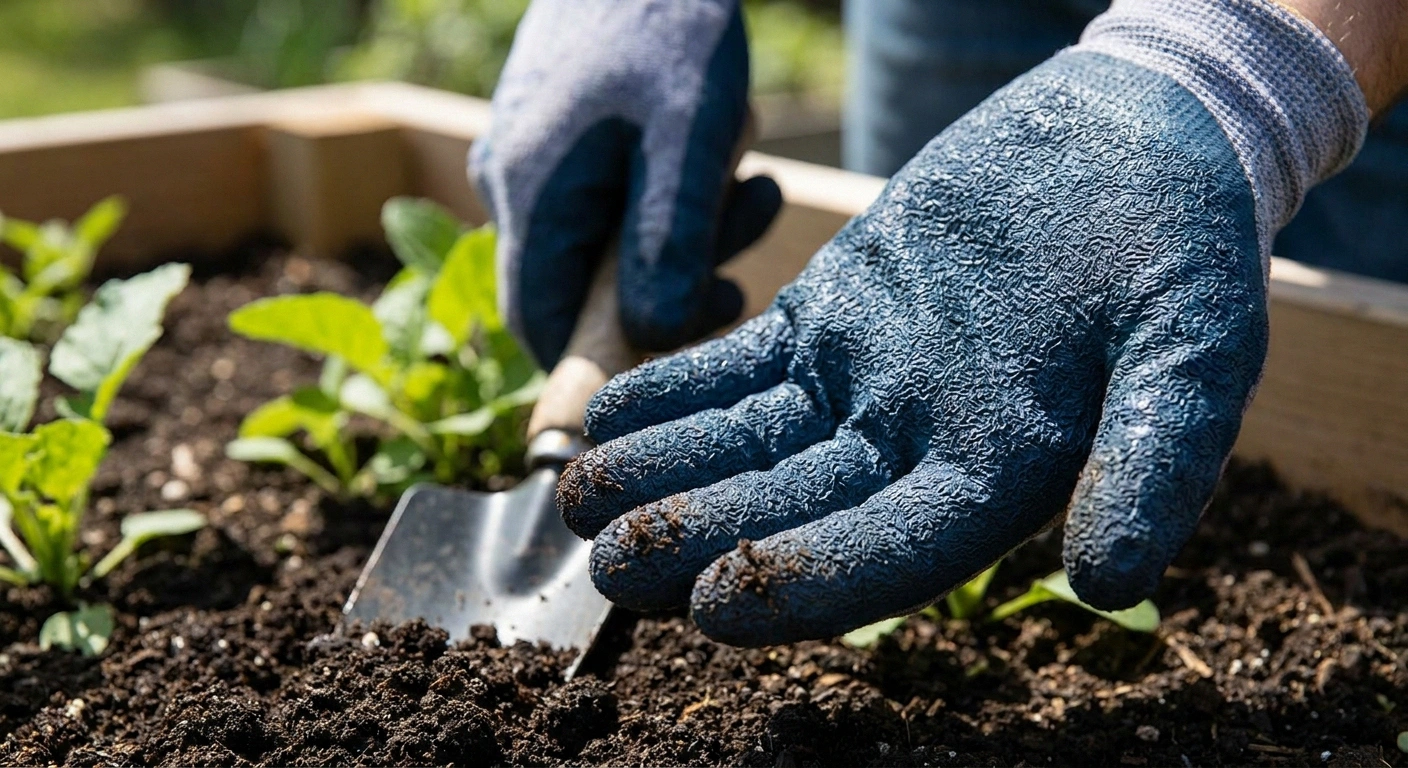
Gloves are complicated for neuropathic hands. You need protection you can't always feel you need — but thick gloves reduce what little grip and sensory feedback you have left. The right balance matters.
Nitrile-coated gloves: The textured nitrile coating on the palm and fingers dramatically improves grip on tools and plants without thick padding. They're thin enough to preserve reasonable tactile feedback while providing protection against abrasion and mild temperature extremes. These are the first choice for most neuropathy gardeners.
Padded palm gloves: If vibration from tools or pressure from gripping is a concern, a thin padded palm can help without eliminating dexterity. Look for gel-padded palm sections rather than thick foam, which compresses unevenly and reduces control.
Avoid: Fleece-lined or heavy cloth gloves for detailed work — they reduce the tactile feedback that neuropathic hands can't afford to lose further. Save heavy gloves for tasks like moving pots where dexterity doesn't matter.
Temperature and gloves: Because you may not reliably feel when your hands are getting dangerously cold, consider setting a timer when gardening in cold weather rather than waiting to feel discomfort. Check hands visually for color changes (white or blue tones indicate circulatory concern) regularly. Compression gloves worn between gardening tasks may help maintain circulation and reduce swelling in neuropathic hands.
Power Tools: Managing Vibration
Power tools are useful in the garden but come with a significant neuropathy caveat: vibration. Research on hand-arm vibration syndrome (a condition overlapping with many neuropathy features) shows that vibration worsens grip strength, numbness, and nerve symptoms in hands — with effects lasting hours after exposure ends.
Power Tool Caution: Vibration and Neuropathy
Vibration from power tools worsens neuropathic symptoms in hands — sometimes for hours after use ends. If you use power garden tools:
- Limit continuous use to 10-15 minutes with breaks
- Use anti-vibration padded gloves
- Choose the lowest effective speed setting
- Stop immediately if symptoms worsen during use
If you use power tools: Keep sessions short. Padded anti-vibration gloves (look for ISO standard 10819 compliance) can reduce transmitted vibration by 40-60%. Use the lowest speed setting that accomplishes the task. Take breaks every 10-15 minutes of use, and stop immediately if symptoms increase.
Battery-operated lightweight alternatives: Modern lithium-ion battery tools are significantly lighter and often lower-vibration than older corded models. A lightweight cordless leaf blower or trimmer may mean the difference between managing your garden independently and needing help.
Adapting Your Garden Layout for Less Pain
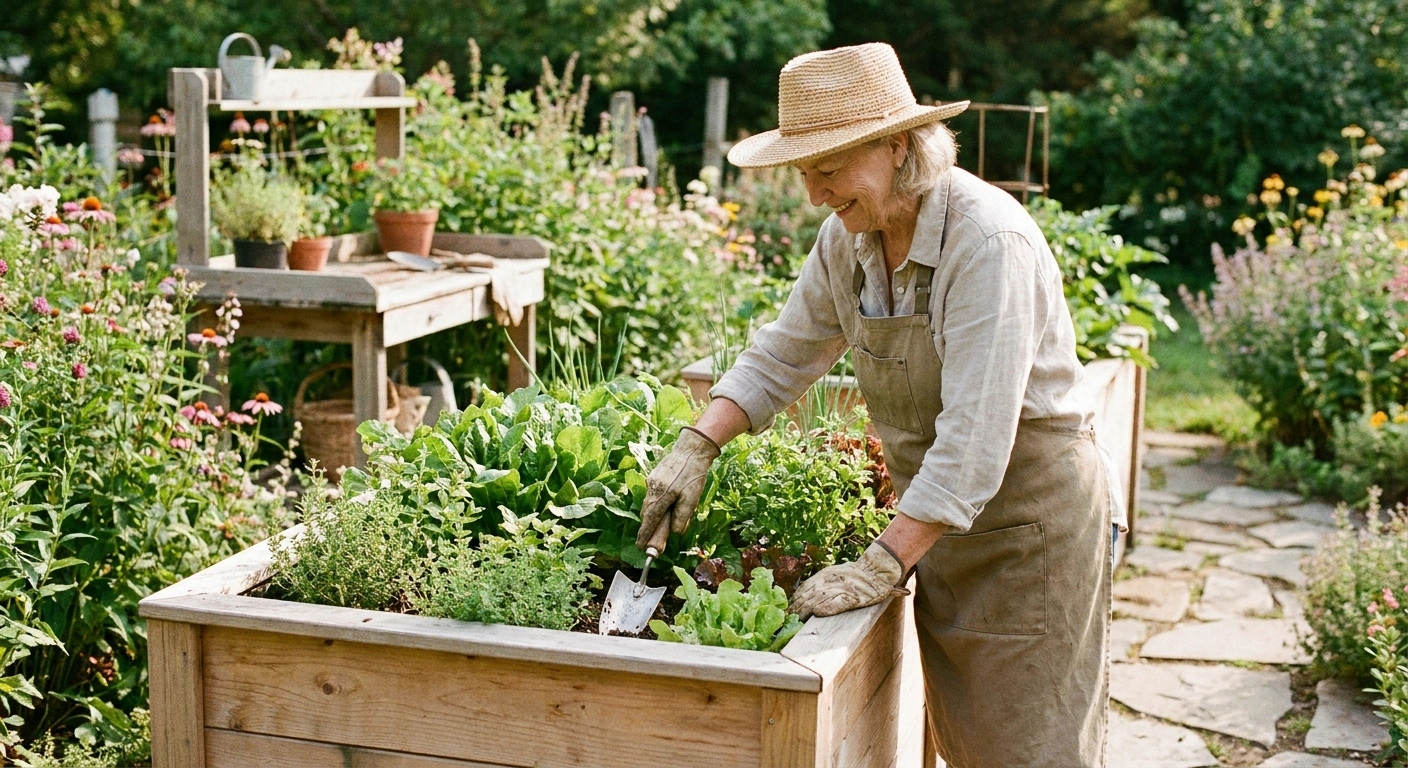
Beyond tools, a few garden layout adjustments can make an enormous difference:
Highest-Impact Garden Adaptations
- Raised beds at waist height — eliminates bending and crouching entirely
- Stable non-slip pathways — reduces fall risk on uneven terrain
- Soaker hose or drip irrigation — removes carrying risk from watering cans
- Tool rack at garden entrance — avoids carrying tools across uneven ground
- Pathways matter: Stable, non-slip pathways through your garden reduce fall risk. Gravel, pavers, or compacted mulch paths are much safer than soft soil or grass for unsteady feet. See neuropathy home safety principles applied to outdoor spaces.
- Tools at hand: Mounting a small tool rack at the garden entrance means you're not carrying tools in both hands across uneven ground. Keep a dedicated set of tools at each bed if possible.
- Accessible water: Long hose dragging or heavy watering cans are balance hazards. A soaker hose system, drip irrigation, or a lightweight coiling hose reduces the carrying and movement demands significantly.
- Work in cooler hours: Morning gardening reduces heat sensitivity issues and means you have peak energy before fatigue sets in later in the day.
For more on occupational therapy approaches to adapting daily activities including gardening, an occupational therapist with experience in chronic pain or neurological conditions can provide assessments and personalized tool recommendations specific to your pattern of neuropathy.
A Note on Assistive Technology for Gardening
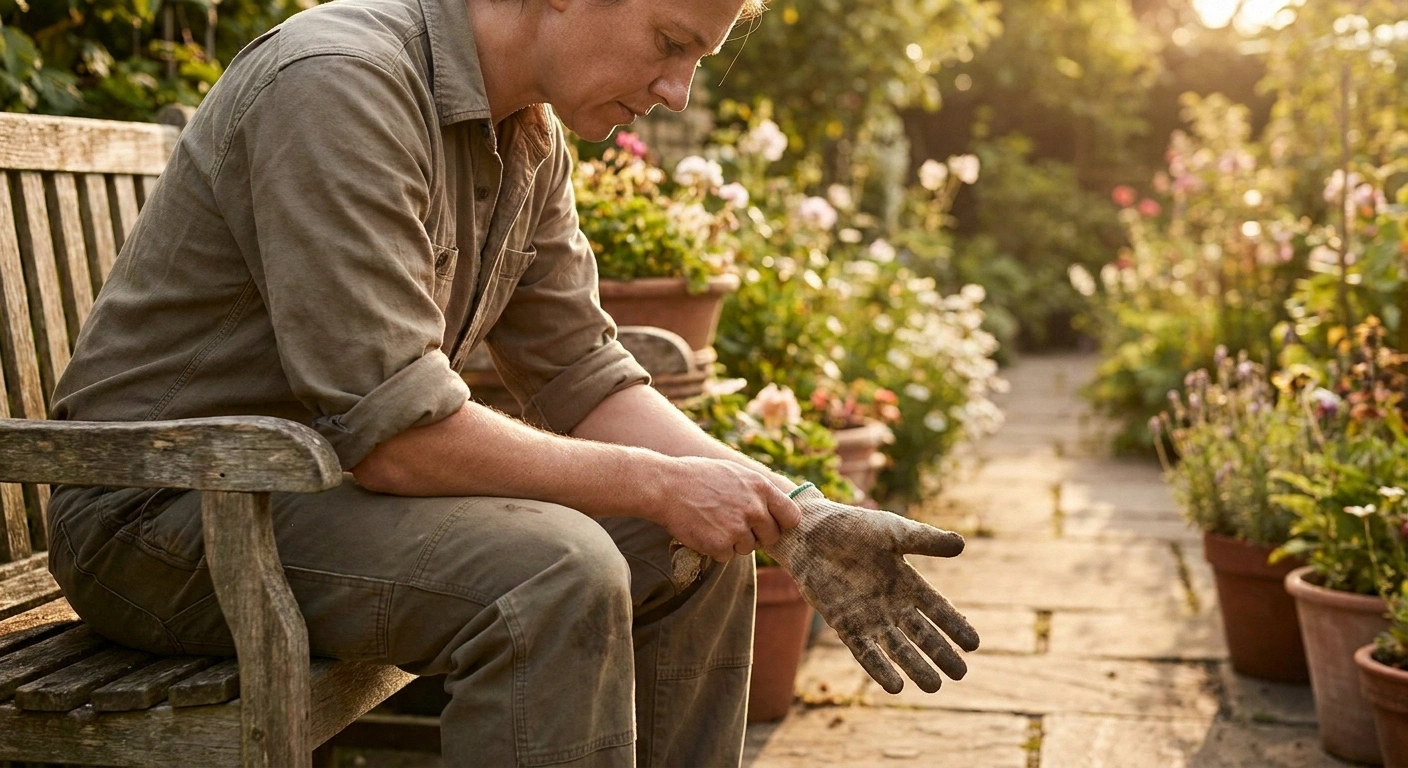
If you're dealing with more significant functional limitations, assistive technology for neuropathy extends beyond traditional adaptive tools into powered garden carts, seated garden scooters, and specialized grip aids that might not be found in standard garden center aisles. Occupational therapy assessment is the best route to identifying what's available and what your specific situation warrants.
The core message I want to leave you with: gardening is worth adapting for, and the tools to do it are more accessible than most people realize. Start with the grip and handle situation — even one or two tool swaps to ergonomic designs can restore enough control to make a meaningful difference. And if your garden needs restructuring to support you better, that's not giving in to neuropathy. That's being smart about something you love.
Frequently Asked Questions
What garden tools are best for people with neuropathy in their hands?
Look for tools with ergonomic rubber grips at least 33mm in diameter, loop or cuff handle designs that reduce grip dependence, and ratchet-mechanism pruners for cutting tasks. Lightweight aluminum handles reduce fatigue over longer sessions. The most impactful changes are usually switching to loop-handled trowels and weeders, and ratchet pruners.
How do I garden safely when I can't feel my hands or feet well?
Use nitrile-coated gloves for grip and protection, always wear stable footwear on garden paths, use kneeler benches with handles for getting up and down safely, and check hands and feet visually for cuts or temperature changes after gardening rather than relying on sensation. Set a timer in cold weather rather than waiting to feel cold in your hands.
Are raised garden beds helpful for neuropathy?
Yes, significantly. Raised beds at waist height eliminate the need to bend, crouch, or kneel, which reduces balance risk and stress on neuropathic feet. They allow comfortable gardening from a standing position or seated on a tall stool. If you have the option to restructure your garden, table-height raised beds are one of the highest-value adaptations for neuropathy.
Can I use power tools in the garden with neuropathy?
Yes, with precautions. Vibration from power tools worsens neuropathic symptoms in hands during and after use. Keep sessions short (10-15 minutes maximum between breaks), use anti-vibration gloves rated to ISO 10819, choose the lowest effective speed setting, and stop if symptoms increase. Lightweight cordless battery tools are generally lower-vibration than older corded models.
What type of gloves are best for neuropathic hands in the garden?
Nitrile-coated gardening gloves are the best choice for most tasks — they provide grip enhancement and protection without thick padding that eliminates tactile feedback. For tasks involving power tools, add gel-padded or anti-vibration gloves. Avoid thick fleece-lined gloves for detail work, as they reduce the sensory input neuropathic hands can't afford to lose.
What are kneeler benches and why are they useful for neuropathy?
Kneeler benches are two-in-one garden supports that flip between a kneeling pad (with side handles for lowering yourself safely) and a seat (same handles as armrests). The handles allow you to lower to and rise from kneeling positions without relying entirely on leg strength or balance, which is particularly important when neuropathy affects your lower limbs and reduces balance confidence.
About the Author