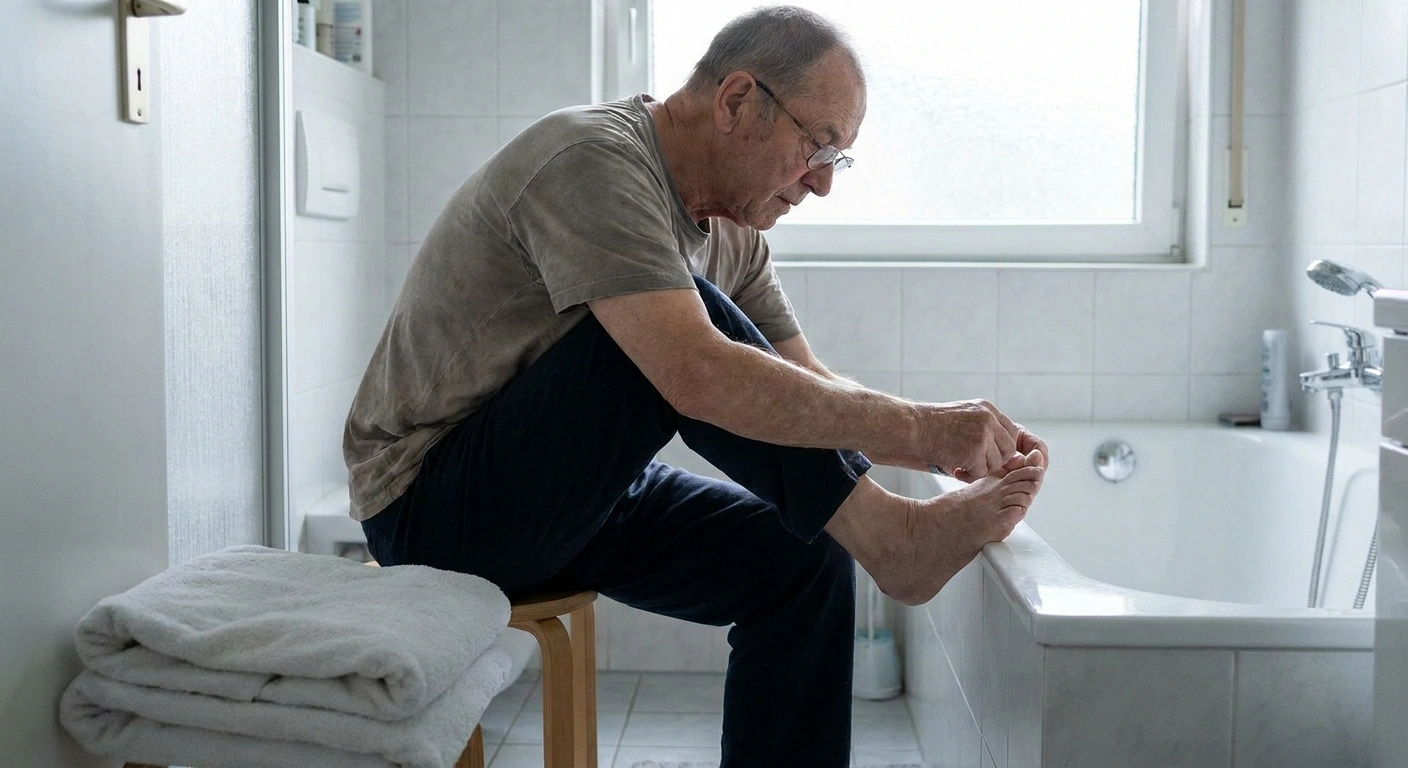
Can you treat an ingrown toenail yourself when you have neuropathy? A little. Much less than the standard advice suggests — and for many of us, the right home care is a short list of things to do while you wait for a podiatrist appointment.
Most ingrown toenail guides are written for people with healthy feet. They say to soak the toe several times a day, tuck something under the nail edge, and give it a week. That advice works well for a teenager with a sore big toe. It assumes two things many of us no longer have — feet that send a clear pain signal when something goes wrong, and circulation that heals small wounds quickly.
Mayo Clinic’s own guidance makes the same point in fewer words. It notes that complications can be especially severe with diabetes, because of poor blood flow and damaged nerves in the feet, and that anyone with diabetes or poor foot circulation who develops a foot sore or infection should see a clinician. Harvard Health goes further: with diabetes, circulation problems or numbness in the toes, skip the home remedies and see a foot specialist.
So this guide is organized around a simple question. What’s safe to do tonight, what should you leave alone, and how do you tell when it can’t wait? I’m a patient advocate who lives with numb feet, not a foot doctor, so treat this as a practical companion to professional care.
Why This Small Problem Plays by Different Rules
An ingrown toenail happens when the edge of the nail, usually on the big toe, curves or grows into the soft skin along its side. The skin gets pierced, then inflamed. Left alone, the area can swell around the nail edge and become infected.
For most people, pain is the alarm that catches this early. The toe throbs in a shoe, they look, they fix it. With neuropathy, that alarm may be muted or missing entirely. You can walk on a toe with a nail edge buried in it for days. By the time anything feels wrong — if it ever does — the skin may already be broken and infected.
Healing adds a second layer. Diabetes, poor circulation and the small-vessel changes that often travel with neuropathy all slow down repair. A break in the skin that would close in a few days on a healthy foot can linger, and a lingering open spot is a doorway for infection. My article on diabetic foot ulcers explains how small injuries can escalate when feeling and blood flow are both reduced.
None of this is meant to frighten you. It’s meant to reset the timeline — nothing more. On a numb foot, “watch it for a week” becomes “look at it today, and get help sooner.”
How Nails End Up Growing Inward
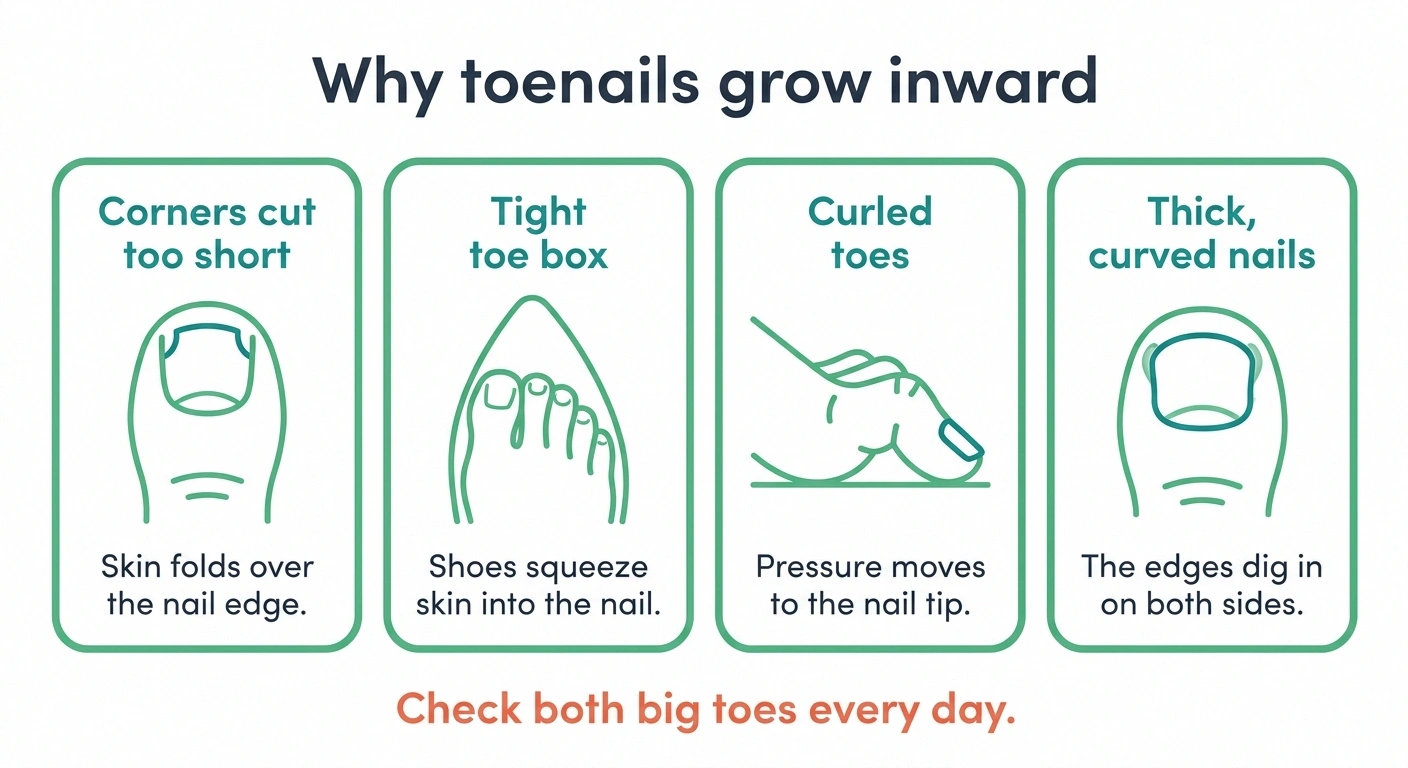
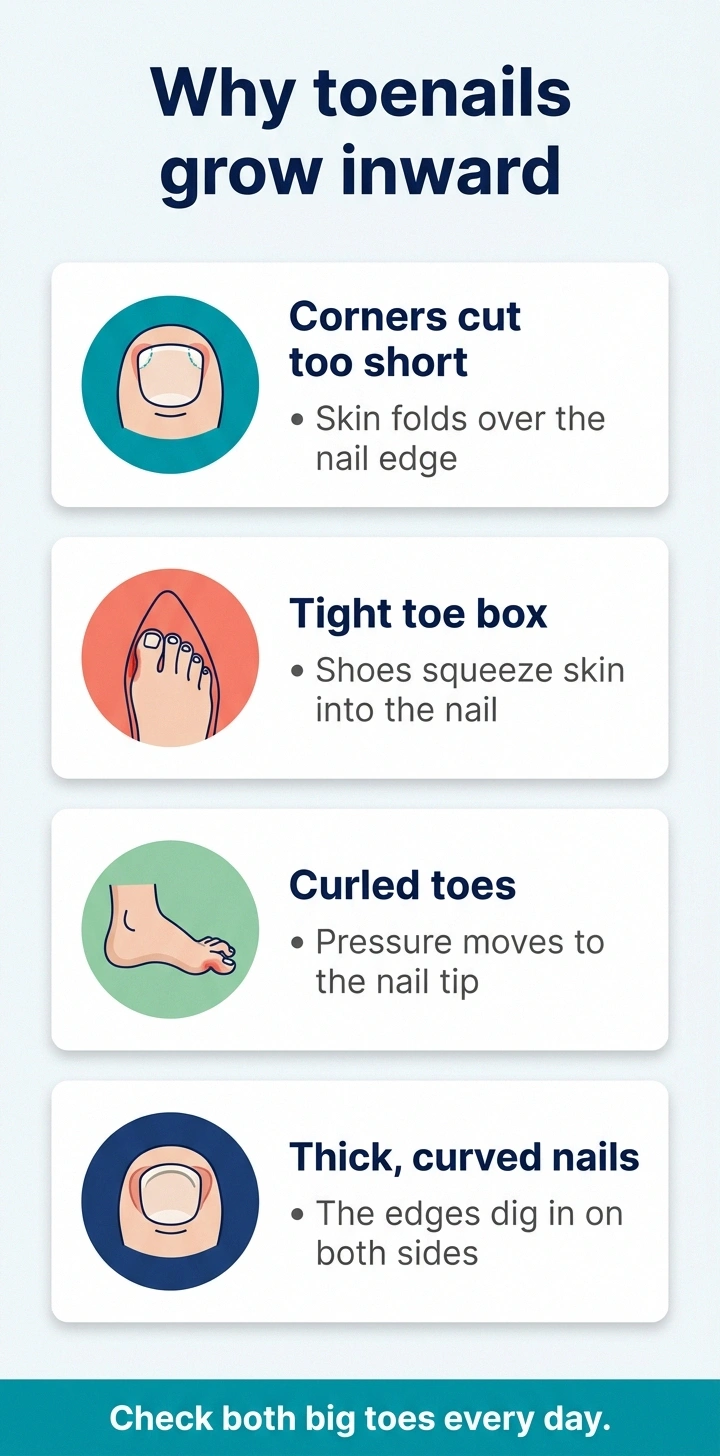
Knowing the usual causes helps with both the current toe and the next one.
Trimming too short or rounding the corners. When the corners are cut back into the groove, the skin at the side can fold over the nail edge as it grows out. The nail then pushes into that skin instead of riding over it.
Tight or narrow shoes. A pointed or shallow toe box squeezes the toes together and presses the skin into the nail. With numb feet, a shoe can be far too tight without feeling tight at all.
Toe shape. Curled or clawed toes, a common change with motor nerve involvement, shift pressure onto the tip and sides of the nail. I’ve written about clawed toes and hammertoes if your toes have changed shape.
Thick or curved nails. Nails often thicken and curve with age, fungal infection or reduced circulation. A strongly curved nail, sometimes called a pincer nail, digs in on both sides.
Stubbing or dropping something on the toe. Easy to do when you can’t feel where your foot is, and easy to forget a day later.
What You Might See Instead of Feeling It
Since pain may not show up, your eyes have to do the job. During your daily foot check, look closely at the sides of each big toenail, and the other toes too.
| What you see | What it often means | What to do |
|---|---|---|
| Small clear or pale yellow spot | Irritated, weeping skin | Look closely today; call this week |
| Pink or blood-tinged spot | Broken skin at the nail edge | Clean, cover loosely, call within a day or two |
| Thick yellow or green mark | Likely pus from infection | Same-day call |
| Any stain plus a bad smell | Infection or a deeper wound | Same-day call; urgent care if the office can’t see you |
Early signs of an ingrown nail:
- Redness or pinkness along one side of the nail
- Skin that looks puffy or rolled up over the nail edge
- A shiny, tight look to the skin beside the nail
- A little clear fluid, or a damp spot on your sock at the toe
A sock is a surprisingly good early-warning tool. A small yellowish or pink stain at the same spot on the inside of the toe, sock after sock, is worth taking seriously. If bending to see your toes is hard, a hand mirror or a phone camera held under the foot works well. My daily foot inspection routine covers tricks for checking feet you can’t easily reach.
Also pay attention to vague signs that don’t seem foot-related: a shoe that suddenly feels different, a change in how you walk, or a higher-than-usual blood sugar reading for no clear reason. Infection can nudge blood sugar up before anything else gives it away.
The Narrow Lane of Safe Home Care
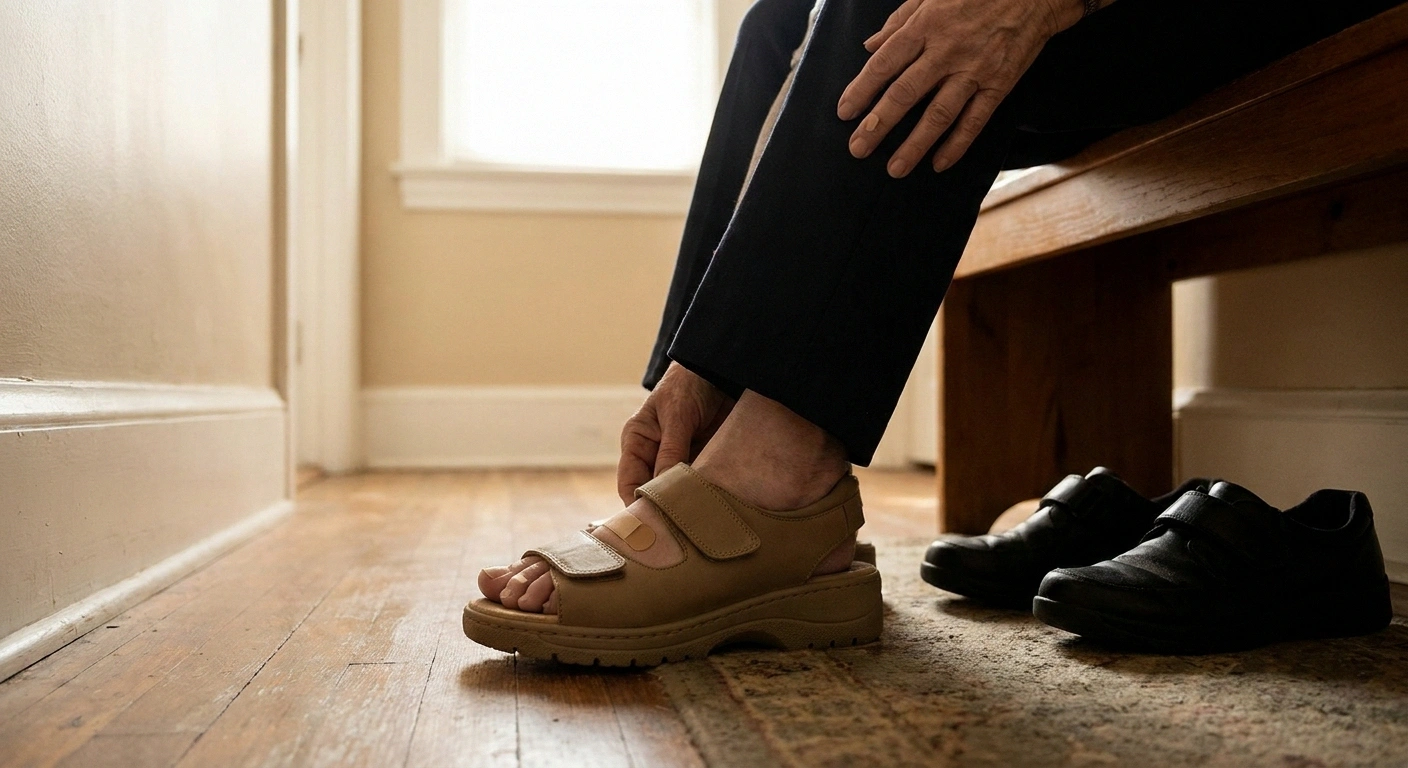
If you notice early redness and there are no signs of infection, here’s what’s generally reasonable while you arrange to be seen. If your podiatrist has given you different instructions, theirs win.
Wash and dry. Clean the toe gently once or twice a day with mild soap and lukewarm water, then pat dry, including between the toes. Damp skin between the toes is a breeding ground for trouble.
Take the pressure off. This is the single most helpful thing you can do — and the most often skipped. Wear shoes with a wide, deep toe box, or open-toed shoes if you can walk safely in them, so nothing presses on that nail. Skip tight socks and tight bedcovers over the feet.
Cover lightly if the skin is broken. A thin layer of plain petroleum jelly or an antibiotic ointment you’ve used before without trouble, plus a loose non-stick bandage, keeps it clean. Avoid wrapping the toe tightly — it can cut off blood flow you can’t afford to lose.
Take a photo. One picture a day from the same angle makes it much easier to tell whether things are getting better or worse, and it’s a great thing to show the podiatrist.
Make the call. With neuropathy, especially with diabetes or circulation problems, booking an appointment is part of home care, not an alternative to it. My article on when to see a podiatrist explains why so many of us benefit from regular visits.
Soaking When You Can’t Judge Water Temperature
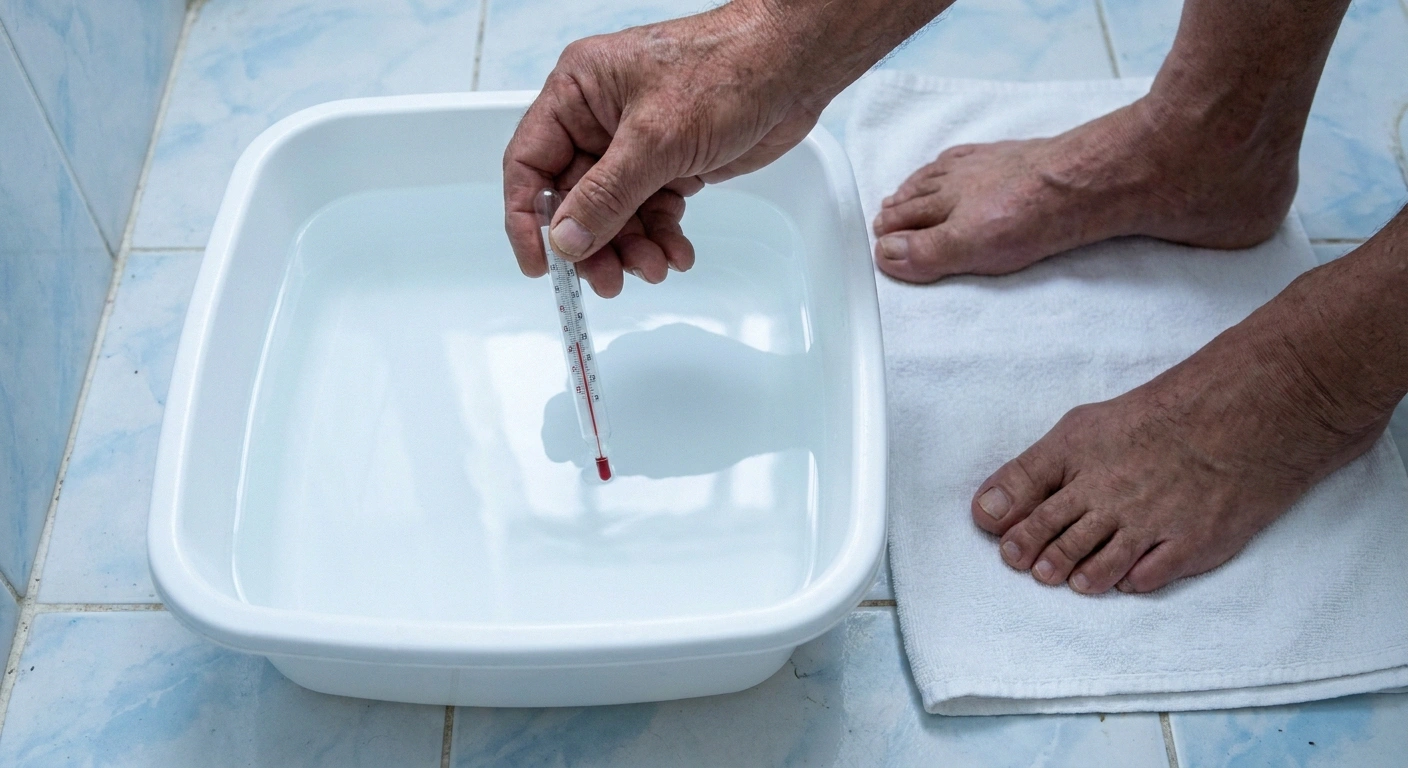
Warm soaks are the backbone of standard ingrown nail advice. Mayo Clinic suggests soaking in warm, soapy water for 10 to 20 minutes, a few times a day. For people with numb feet, soaking carries two risks the standard advice doesn’t mention.
The first is burns. If your feet can’t judge heat, water that feels pleasantly warm to your hand can still be too hot for skin that can’t warn you. Test the water with a thermometer or your elbow, never your foot, and aim for lukewarm, around 90 to 95°F. My article on foot soaks for neuropathy goes into safe setups.
The second is soggy skin. Long, frequent soaks can soften and break down skin, and many diabetic foot programs advise against routine soaking for that reason. If your podiatrist does want you to soak, keep it short, about 10 minutes, and dry thoroughly afterward. If they’d rather you didn’t, a gentle wash does most of the same cleaning job.
Skip adding anything harsh to the water. Bleach, hydrogen peroxide and strong salts can irritate skin that’s already inflamed.
Things to Leave Alone
Some popular fixes work fine on healthy feet and go badly on numb ones. These are the ones I’d avoid:
“Bathroom surgery.” Digging out the nail corner with clippers, scissors or a needle. Without feeling, you can’t tell how deep you’re going, and a cut in an already inflamed spot is an open invitation to infection. This is the most common way a mild ingrown nail becomes a serious one.
Cutting a V in the nail. An old myth says a notch in the middle of the nail pulls the sides up. It doesn’t — the nail grows forward from its base, not inward from the middle.
Packing cotton deep under the edge yourself. Some guides suggest tucking a wisp of cotton or dental floss under the corner after soaking. It can help, but done blind on a numb toe it risks pushing into broken skin or leaving fibers behind. Let the podiatrist decide whether and how to do it.
Over-the-counter ingrown nail gels and acid products. Many of these carry label warnings against use by people with diabetes or poor circulation. Read the box, and when in doubt, leave it on the shelf.
Waiting it out. On a healthy foot, many mild cases settle by themselves. On a numb foot, “wait and see” should mean days, not weeks, and only with daily photos.
When Home Care Should Be Skipped Altogether

For some people, there’s no home-care stage at all. If any of these apply, treat the first sign of an ingrown nail as a reason to call the foot doctor’s office that day:
A call script that gets you seen sooner
“I have diabetes and neuropathy, and I have an ingrown toenail on my right big toe. I can’t feel it well. There’s redness along the side, and it started about three days ago. I’d like to be seen this week.”
Swap in your own details. Say the words “diabetes” and “can’t feel it” early; front-desk triage often runs on those phrases. Offer to send the daily photos through the patient portal.
- Diabetes, especially with numbness in the feet
- Known poor circulation or peripheral artery disease
- A previous foot ulcer, infection or amputation
- A weakened immune system, from medication, chemotherapy or illness
- Kidney failure or dialysis
That might sound like a lot of fuss over a toenail — I know. But most foot doctors would much rather see a mild ingrown nail on a high-risk foot than an infected one a week later. Many offices will fit in a same-week visit for a person with diabetes and a foot problem if you say those words when you call.
Signs It’s Turning Into an Infection
Check the toe in good light every day. These changes mean the problem has moved past simple irritation:
Office, urgent care or emergency room?
- Podiatrist or primary care, this week
- Redness along one side only, no pus, not spreading.
- Same-day call, or urgent care if no appointment
- Pus, swelling that’s growing, raw red tissue at the nail edge, or blood sugars running well above your usual with no other explanation.
- Emergency room now
- Fever or chills with a red, swollen foot; a red streak moving up the foot or leg; skin turning dark, gray or black.
- Redness that’s spreading outward from the nail, or a red streak running up the foot
- Pus, cloudy fluid, or a yellow or green crust
- Swelling that’s growing day to day
- Warmth you can detect with the back of your hand
- A bad smell
- A lump of raw, red, bubbly-looking tissue along the nail edge
- Fever, chills or unexplained high blood sugars
Spreading redness, pus or worsening swelling on a foot with neuropathy deserves a same-day call. Fever with a red, swollen foot, or skin that’s turning dark, gray or black, is an emergency. Go to urgent care or the emergency room rather than waiting for an appointment.
Because you may not feel any of this getting worse, the daily photo really earns its keep here. Side-by-side pictures turn a vague “it looks about the same” into a clear answer.
What Happens at the Podiatrist’s Office
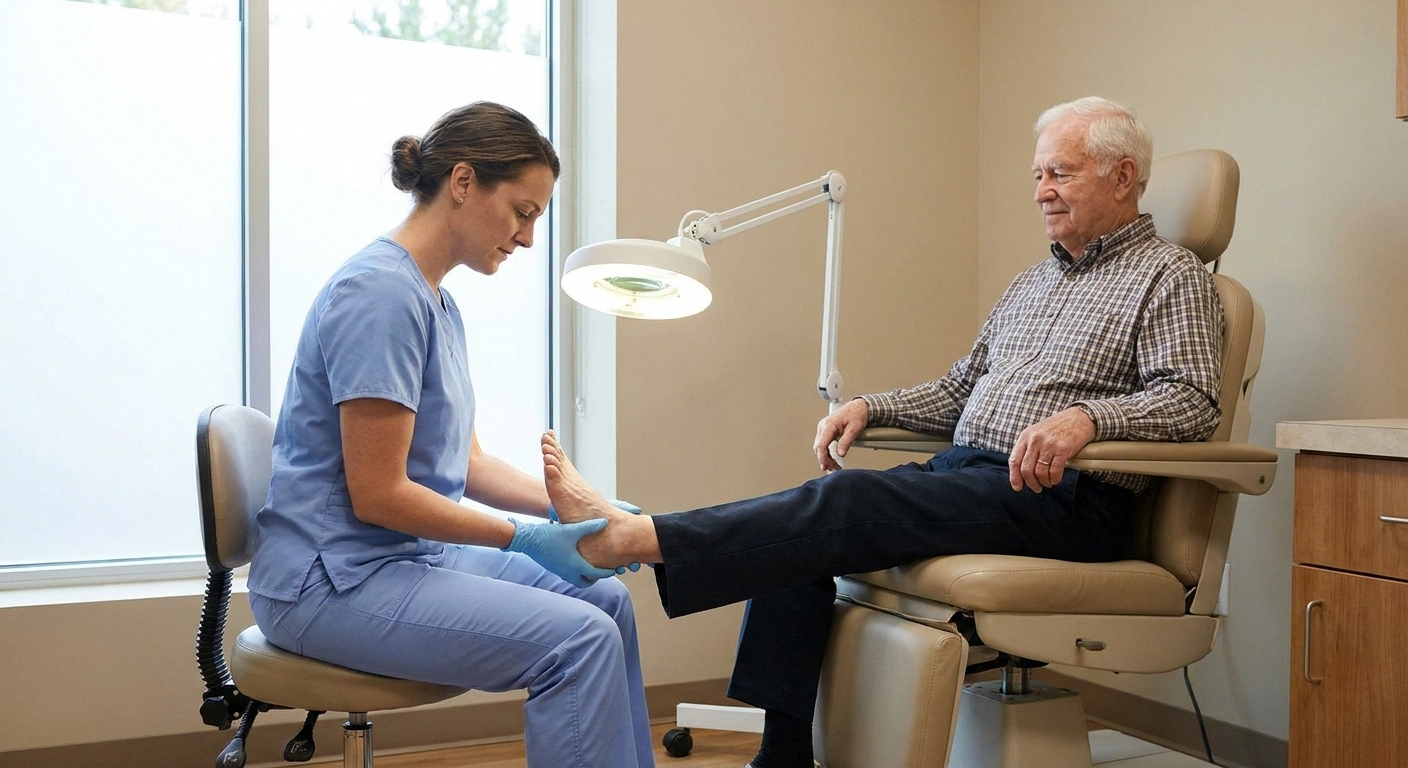
Knowing what to expect takes a lot of the dread out of the visit. Treatment depends on how far things have gone.
Mild cases. The podiatrist may gently lift the nail edge and place a small splint or packing under it so the nail grows over the skin, then trim the nail properly. They’ll check your shoes and your circulation while they’re at it.
Infected or repeating cases. The most common procedure is a partial nail avulsion: after numbing the toe with an injection, the podiatrist removes the narrow strip of nail that’s digging in. Interestingly, people with neuropathy often find the numbing shot less uncomfortable than they expected. Antibiotics may be prescribed if there’s infection.
Stopping it from coming back. For nails that keep growing in, the podiatrist can treat the root of that side strip, often with a chemical called phenol, so it doesn’t regrow. People sometimes worry this is too harsh for diabetic feet. A small study of 57 people with diabetes who had the phenol procedure reported a regrowth rate of about 5% and no significant complications, and another found healing took about six weeks on average for people with and without diabetes alike. Your podiatrist will check blood flow first and decide whether it’s right for you.
Ask for written wound-care instructions before you leave, and book the follow-up visit at the desk. With numb feet, the check-in a week or two later is when quiet problems get caught.
Trimming and Footwear Habits That Prevent a Repeat
Once the toe has healed, a few habits make another ingrown nail much less likely.
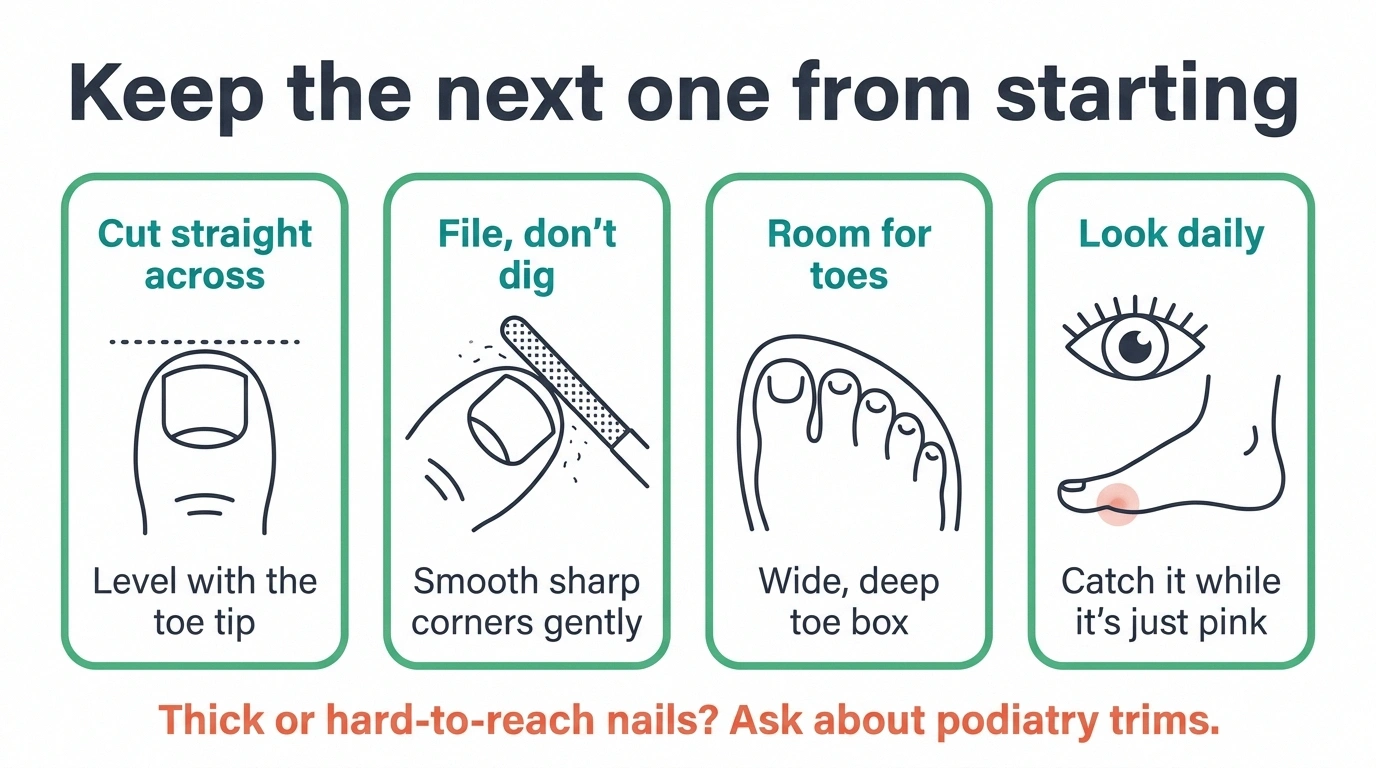
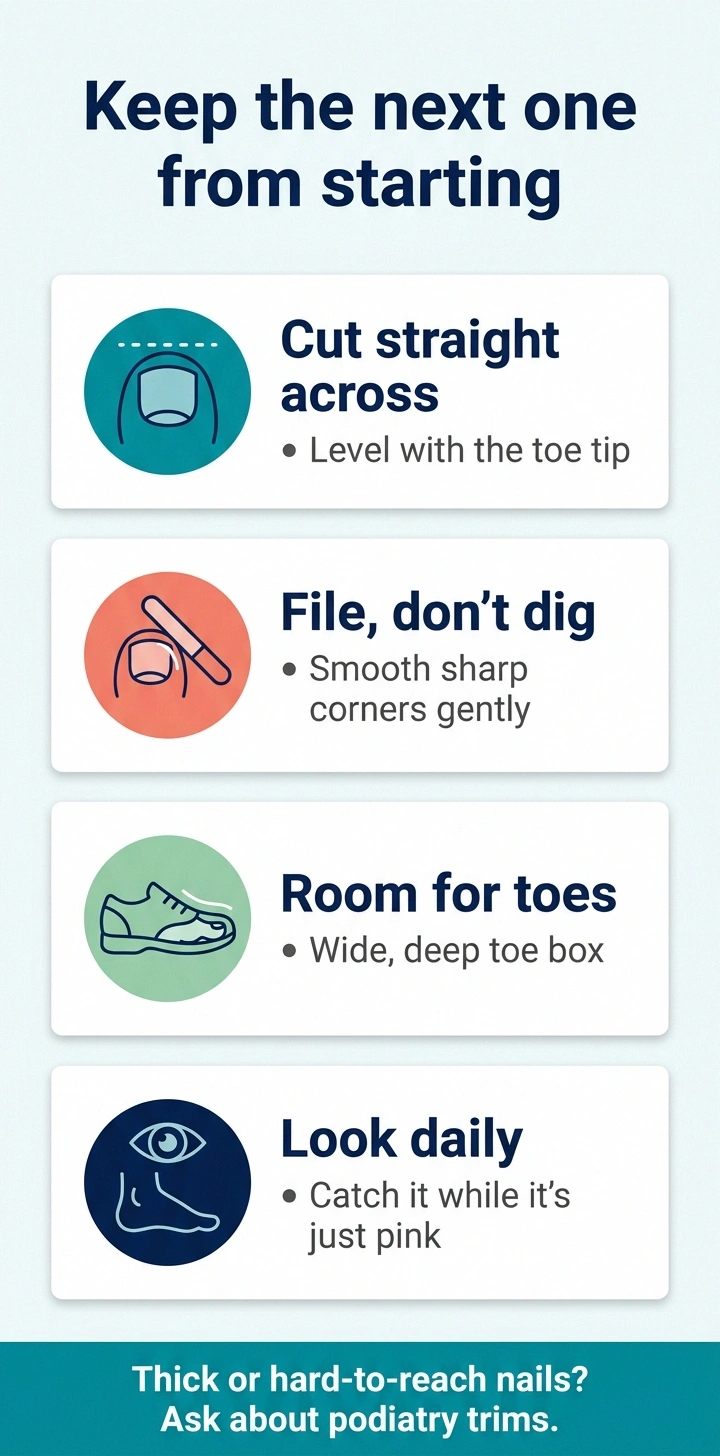
Cut straight across. Trim the nail in a straight line, level with the tip of the toe, and leave the corners alone. Gently smooth any sharp corner with a file rather than cutting into the groove. My step-by-step guide to cutting toenails safely covers tools, timing and positioning.
Consider letting a professional trim. If your nails are thick, curved, or hard to see and reach, routine trimming by a podiatrist is often a covered service for people with diabetes and loss of feeling. It’s one of the most worthwhile appointments on the calendar.
Give your toes room. Choose shoes with a wide, deep toe box and get your feet measured, because feet often widen and lengthen over the years. With reduced feeling, fit by measurement and by checking for red marks after wear, not by comfort alone. My shoe shopping guide walks through what to look for.
Keep looking. The daily foot check is what catches the next one at the “slightly pink” stage, when it’s simple to deal with.
An ingrown toenail is one of the most ordinary foot problems there is. With neuropathy, it just asks for a little more respect — and a quicker phone call. That’s a fair trade for keeping a small problem small.
Frequently Asked Questions
Can I treat an ingrown toenail at home if I have neuropathy?
Only in a limited way. Gentle washing, taking pressure off the toe with roomy shoes, a loose clean dressing and daily photos are reasonable while you arrange an appointment. People with diabetes, poor circulation or numbness in the toes are generally advised to have a foot specialist treat an ingrown nail rather than relying on home remedies.
Should I soak an ingrown toenail if my feet are numb?
Only if your podiatrist recommends it, and carefully. Test the water with a thermometer or your elbow, aim for lukewarm, keep soaks to about 10 minutes and dry the foot thoroughly. Numb feet cannot sense water that is too hot, and long soaks can soften and damage skin.
Is it safe to cut out an ingrown toenail myself?
No. Digging out the nail corner with clippers or a needle is risky on a numb foot because you cannot feel how deep you are cutting, and a cut in inflamed skin can easily become infected. A podiatrist can remove the problem section of nail safely after numbing the toe.
How do I know if my ingrown toenail is infected?
Signs of infection include spreading redness, pus or cloudy fluid, increasing swelling, warmth, a bad smell, raw red tissue at the nail edge, fever or unexplained high blood sugar. With neuropathy, these signs may appear without pain, so a daily visual check is important.
When is an ingrown toenail an emergency?
Fever or chills with a red, swollen foot, a red streak spreading up the foot, or skin that turns dark, gray or black needs urgent care or the emergency room the same day.
What does a podiatrist do for an ingrown toenail?
For mild cases, the podiatrist may lift the nail edge and place a small splint under it. For infected or repeated cases, they usually numb the toe and remove the narrow strip of nail that is growing in, sometimes treating the nail root so that strip does not grow back. Antibiotics may be prescribed if there is infection.
How can I prevent ingrown toenails with neuropathy?
Cut nails straight across without rounding the corners, wear shoes with a wide and deep toe box, check your feet every day, and consider having a podiatrist trim thick or hard-to-reach nails. People with diabetes and loss of feeling may qualify for routine professional nail care.
About the Author