
Shoe shopping with neuropathy is a different sport than shoe shopping used to be. The shoe that looks great might be the one that gives you a blister you can't feel forming. The shoe that fits perfectly at 10 in the morning might be agony by 4 in the afternoon. The cute pair you were eyeing in your old size? Probably wrong now.
I've turned my own shoe shopping into a small ritual — a checklist, a strategy, a few non-negotiables. It's not glamorous, but it works. And if you're staring at the wall of options at the store wondering how to even start, this guide walks through the practical steps that have saved me (and the women in our support group) from a lot of bad purchases and a lot of sore feet.
This is a companion piece to our deeper best shoes for neuropathy roundup — that one tells you which brands and styles to consider; this one walks you through how to actually shop.
Shop Late in the Day
Your feet swell over the course of a day. By late afternoon or evening, your feet are at their largest. Shopping at 10 a.m. with fresh, smaller feet means the shoe you walk out with is too tight by 4 p.m. — and a too-tight shoe with neuropathy is not just uncomfortable; it's a recipe for unnoticed pressure sores.
Time of Day Matters
Always shop in the late afternoon or evening when feet are at their largest. Morning-fitted shoes are too tight by afternoon — and tight shoes on numb feet can cause unnoticed pressure sores.
The simple rule: never shop in the morning. Mid-afternoon onward is the sweet spot. If you've been on your feet that day, even better — that's the swelling level you're trying to fit.
Bring Your Real Stuff With You
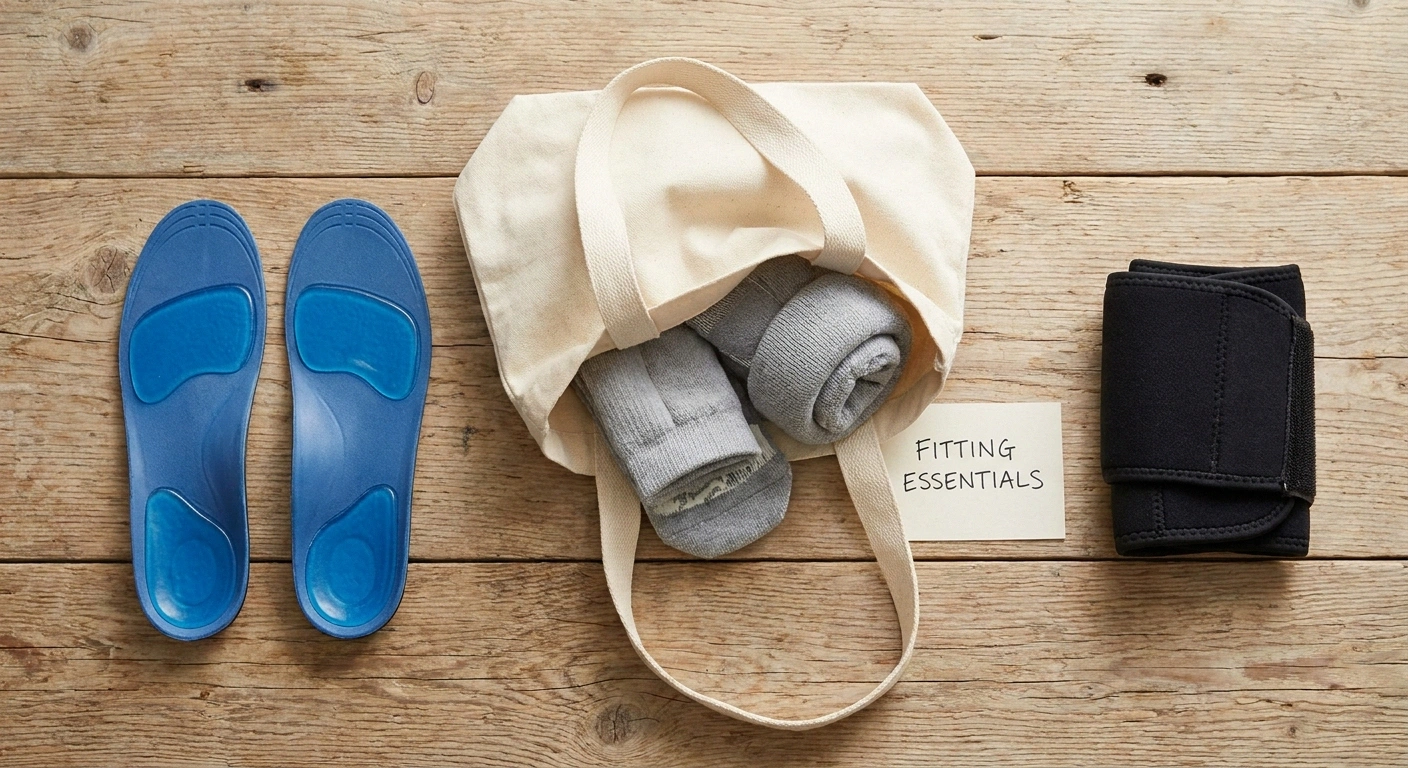
Whatever sock you actually wear, bring it. Whatever orthotic you actually use, bring it. If you wear a brace or AFO, bring that too. The shoe needs to fit AROUND those, not around your bare foot.
I've seen too many people buy shoes that fit beautifully with thin trying-on socks and then find out the shoe doesn't accommodate their cushioned diabetic socks plus their gel insoles. Bring everything. Trying on without your real gear is trying on the wrong size.
The Wide Toe Box Is Non-Negotiable
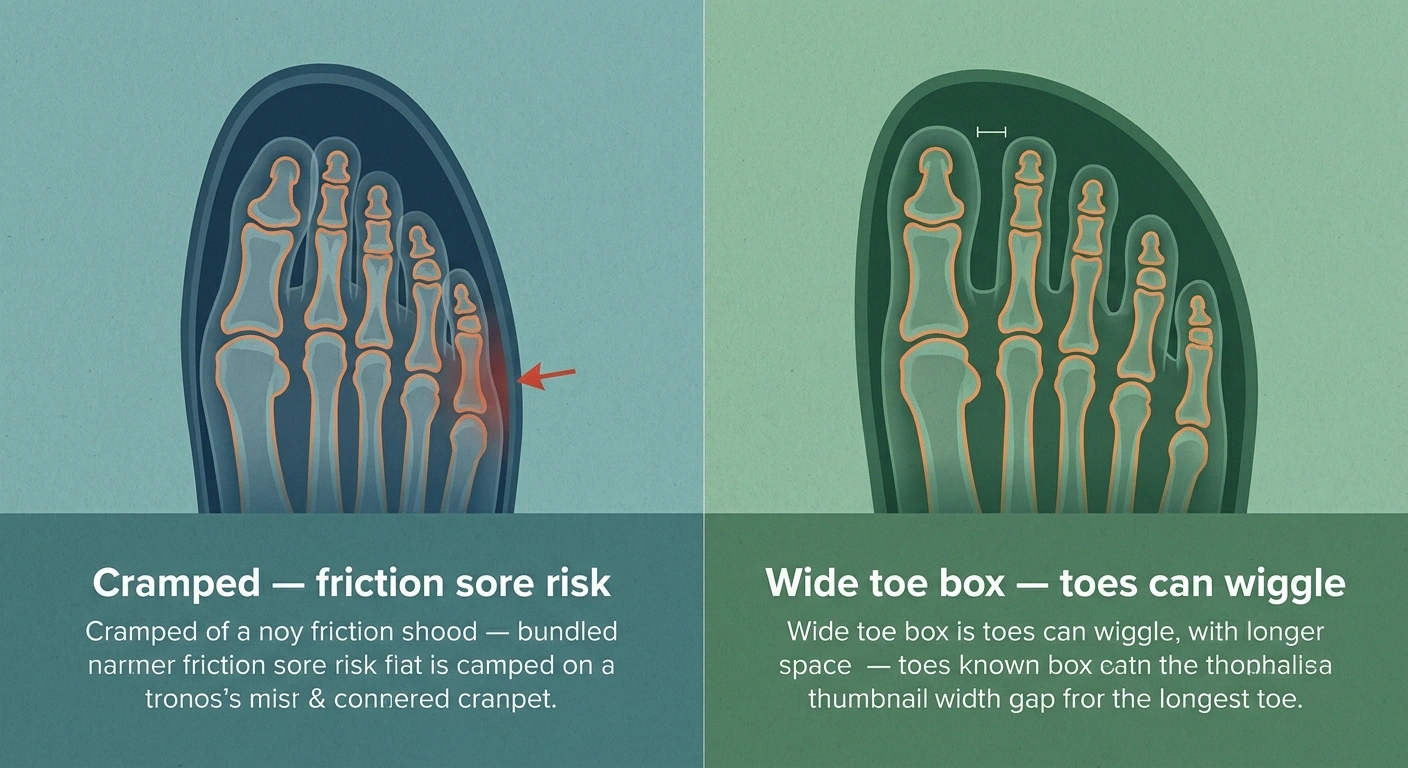
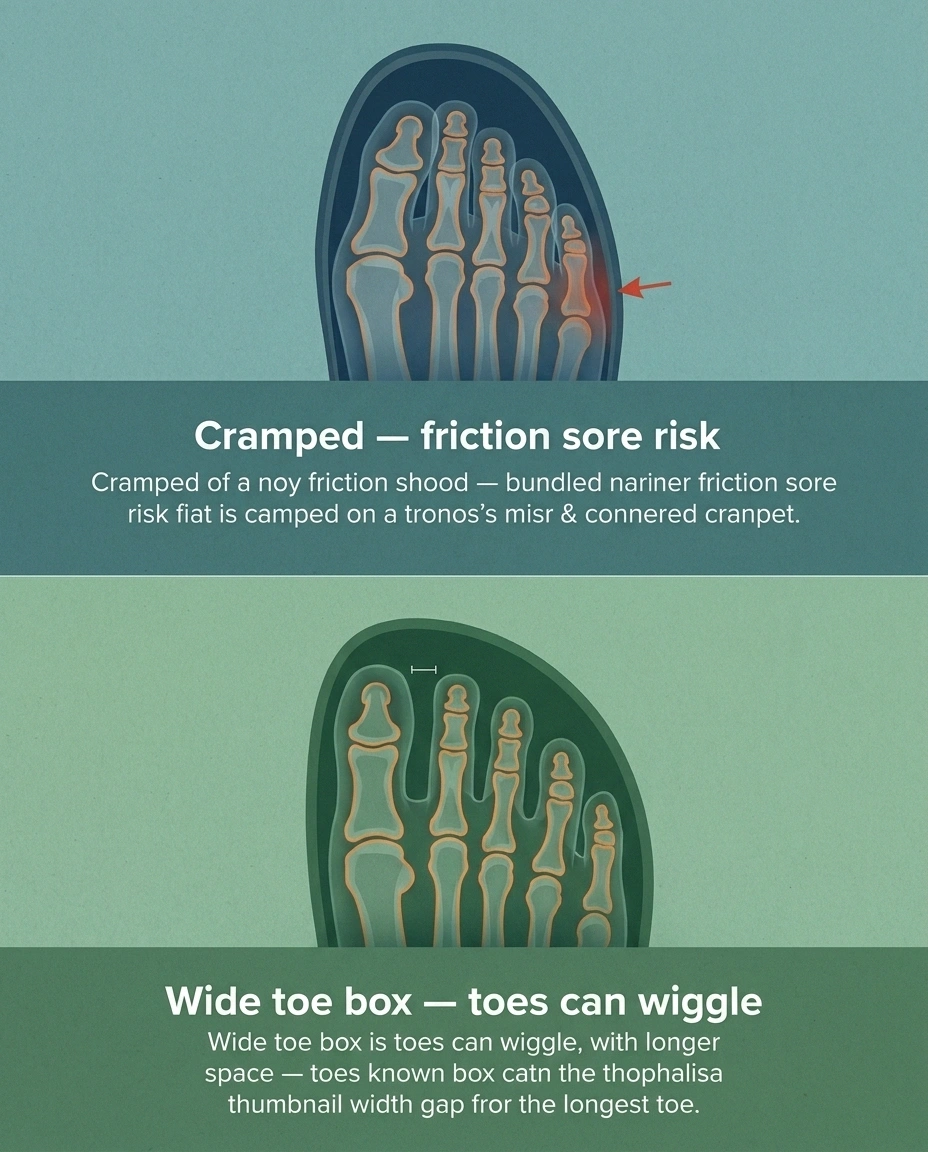
This is the single most important fit feature for neuropathy. Your toes need to wiggle. Pinched toes lead to neuromas flaring, calluses, blisters, claw-toe worsening, and ulcer risk on numb feet.
In-Store Wide Toe Box Test
Stand up in the shoe — never judge fit while sitting. Foot expands under load.
Wiggle every toe — they should move freely, not feel pinched.
Thumbnail's width of space between longest toe and front of shoe.
Big-toe joint sits at widest part of shoe — not pinched against the side.
How to test it in the store:
- Stand up in the shoe (don't judge fit while sitting — your foot expands when you bear weight)
- You should be able to wiggle all your toes freely
- There should be a thumbnail's width of space between your longest toe and the front of the shoe
- The widest part of your foot should sit at the widest part of the shoe — your big-toe joint should not be cramped against the inside edge
Many shoe brands now offer a “wide” or “extra wide” option — D, EE, even EEEE widths for women. Don't be shy about asking for them. A wide-width shoe in your real size will almost always feel better than a regular-width shoe one size up, because the proportions are different.
The Hand-Inside-the-Shoe Check
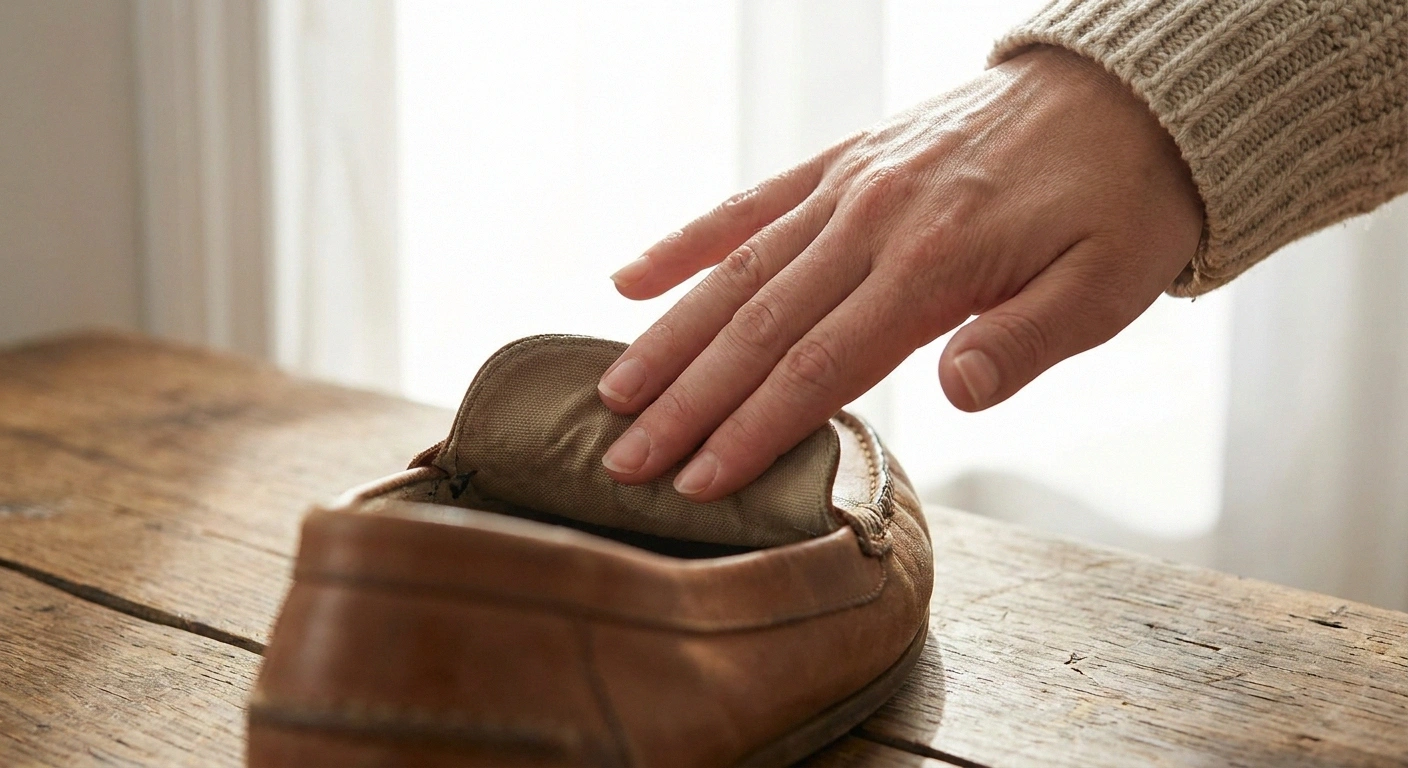
Because you may not be able to feel pressure points the way you used to, you need to look and touch the shoe BEFORE your foot is in it.
Raised Seams = Hot Spots
On numb feet, a raised internal seam doesn't register as discomfort — it just rubs silently for hours. Always run your hand inside before buying. If you find a seam near the toes or heel, keep looking.
Slide your hand inside the shoe and run your fingers along the lining — heel, inner side, outer side, around the toe. You're looking for raised seams, stitching ridges, or rough spots. Anywhere you find a raised seam, especially near the toes or heel, is a hot spot waiting to happen on a numb foot.
Seam-free interiors (sometimes marketed as “diabetic shoes”) are designed exactly to avoid this. They're worth the small premium for neuropathy patients.
Squeeze the Heel Counter
The heel counter is the firm structural piece at the back of the shoe. Squeeze it between your fingers. It should be firm — not floppy, not collapsible. A floppy heel means poor stability, and poor stability raises your fall risk.
This matters more than you think. Fall prevention with neuropathy hinges partly on how well your shoes stabilize your foot. A pretty shoe with no heel structure is a fall hazard.
Adjustable Closure Wins
Laces, hook-and-loop straps, or buckles let you adjust fit through the day as your foot swells. Slip-ons are convenient (especially if you struggle with bending or fine motor control), but they can't be tightened or loosened. If you choose slip-on, make sure it's stretchy enough to handle a swollen afternoon foot without becoming dangerously loose with a slimmer morning foot.
For arthritic hands or for people who struggle with traditional laces, hook-and-loop closures (Velcro) are a quiet revolution. Many quality neuropathy-friendly shoe brands now offer them on adult styles that don't look orthopedic. Worth seeking out.
Watch Out for Stack Height Extremes
Cushioning is good. Maximalist cushioning — those very thick, very soft sole heights — is sometimes too much. When your proprioception (sense of where your feet are in space) is impaired by neuropathy, you actually need some feedback from the ground. Super-cushioned shoes can feel like walking on a mattress and may increase fall risk for some patients.
Cushioning: The Goldilocks Zone
❌ Too Thin / Minimalist
No shock absorption. Every step transfers impact to sensitive feet. Skip these.
✅ Moderate Cushioning + Firm Structure
Shock absorption WITH ground feedback. Stable. The neuropathy sweet spot.
⚠️ Too Thick / Maximalist
“Walking on a mattress” feel. Reduced ground feedback raises fall risk for impaired proprioception.
The goldilocks zone is “well-cushioned but not exaggerated.” A shoe with firm structure, good arch support, and moderate cushioning generally beats a marshmallow-cushioned cloud-feel shoe for neuropathy patients with balance concerns. Try both styles and see which feels stable.
The Two-Pair Trick
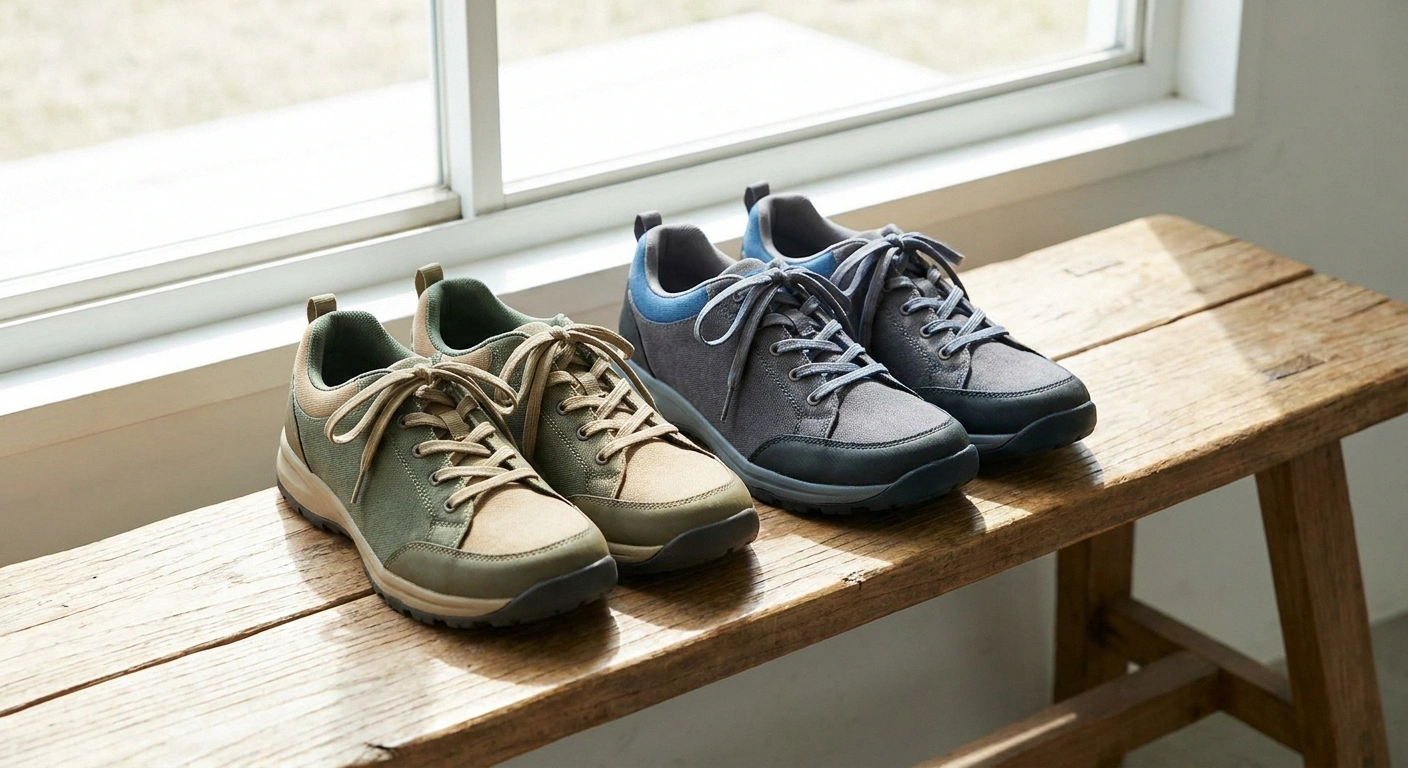
Once you find a shoe that genuinely works, buy two pairs. Rotate them daily. Here's why:
Buy Two, Rotate Daily
When you find a shoe that works, buy two pairs. Rotation lets each pair fully dry between wears (huge for foot health on neuropathy patients) and extends each pair's life by 30-50%.
- Shoes need 24+ hours to fully dry between wears (your feet sweat surprising amounts; damp interiors breed fungus and skin breakdown — both problems for neuropathy patients)
- Rotation extends each pair's life by 30-50%
- You always have a backup if one pair gets wet, lost, or damaged
Two pairs of $130 shoes that last two years each is much better value than one $130 pair that lasts ten months. And for neuropathy patients, the foot health benefit of fully dry shoes is real.
Mind the Return Policy
This is one of those tips that feels small until it saves you a hundred dollars.
A shoe can feel perfect for thirty minutes in a store and turn into a hot spot or rubbing problem on day five at home. With neuropathy, you may not feel the problem developing — you only see it (a red mark, a sore, a callus forming) days in.
The right return window is part of the purchase. Stores like Zappos (365-day returns), REI (1-year for members), and many specialty footwear retailers have generous policies. Online shoe stores are often more forgiving than in-store. Ask before you buy: how long do I have to return these if I find a problem at home?
If a store has a 14-day return policy, you may not have enough time to identify a slow-developing fit issue on numb feet. Factor that in.
Size Up Half a Size — Often
Many neuropathy patients need a half-size larger than they used to wear. Foot shape can change too — feet often widen with age and with neuropathy. Hammertoes, bunions, and bone changes alter the fit you remember.
Don't get attached to your “size.” Get attached to your fit. The number on the box is just a number; what matters is whether the shoe lets your toes wiggle, holds your heel firmly, and doesn't pinch.
Have a salesperson measure both feet — feet aren't usually identical, and most people fit the larger foot. If one foot is consistently larger, fit the bigger foot and use a small insert to take up the slack on the smaller foot.
The Medicare Therapeutic Shoe Benefit
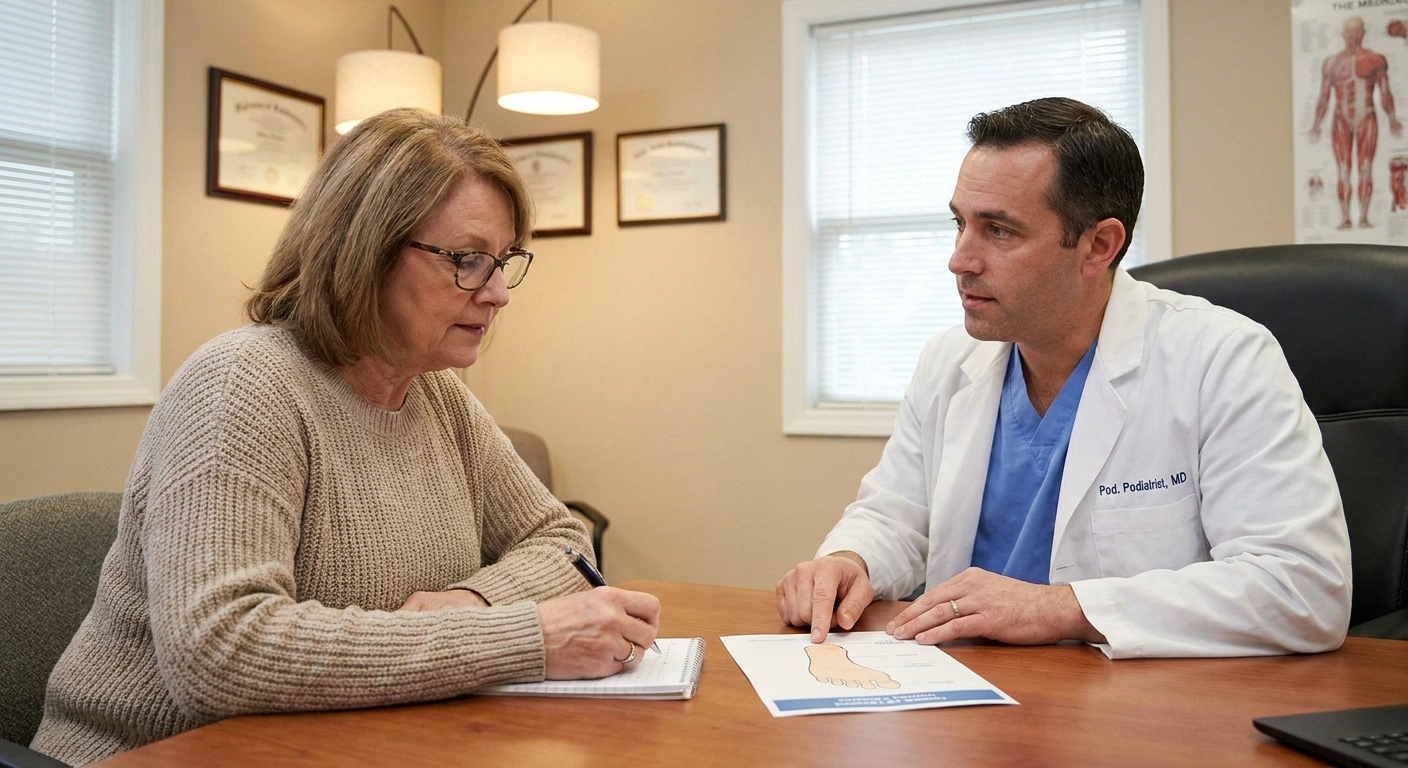
If you have diabetes plus a qualifying foot condition (such as previous ulcer, deformity, neuropathy with callus, poor circulation, or amputation), Medicare Part B may cover one pair of therapeutic shoes plus three pairs of inserts per calendar year. This is sometimes called the Medicare Therapeutic Shoe Benefit.
💰 Medicare Benefit Worth Asking About
Diabetic patients with one of six qualifying foot conditions (including neuropathy with callus) may receive 1 pair of therapeutic shoes + 3 pairs of inserts per calendar year through Medicare Part B. Worth $200-400+ annually. Ask your podiatrist whether you qualify.
Requirements:
- Diagnosis of diabetes
- One of six qualifying foot conditions documented by your doctor
- Prescription from a podiatrist or qualifying physician
- Shoes fitted and dispensed by a Medicare-approved supplier
If you qualify, this is real money — quality therapeutic shoes can run $150-300+ per pair, and Medicare covers most of it. Ask your podiatrist or primary care doctor at your next visit. For broader Medicare-and-neuropathy details, see our neuropathy and Medicare coverage guide.
What to Avoid
A short list of styles that are generally NOT neuropathy-friendly:
- Flip-flops and unsupportive sandals — minimal structure, easy to lose, tend to cause friction sores between toes
- Ballet flats — no support, no structure, often have raised seams
- Narrow heels and pointed-toe pumps — pinch the forefoot, alter balance, instability
- Slippers without traction — the home is where most neuropathy falls happen; slippery soles raise the risk
- Cheap mall shoes with rough internal seams — friction sores on a foot that can't feel them is a common path to ulcer
That doesn't mean you can never wear a sandal or a fancier shoe again. It means the bar for fit and structure is higher than before, and the time you wear them should be shorter.
Inspect Your Feet After Wearing New Shoes
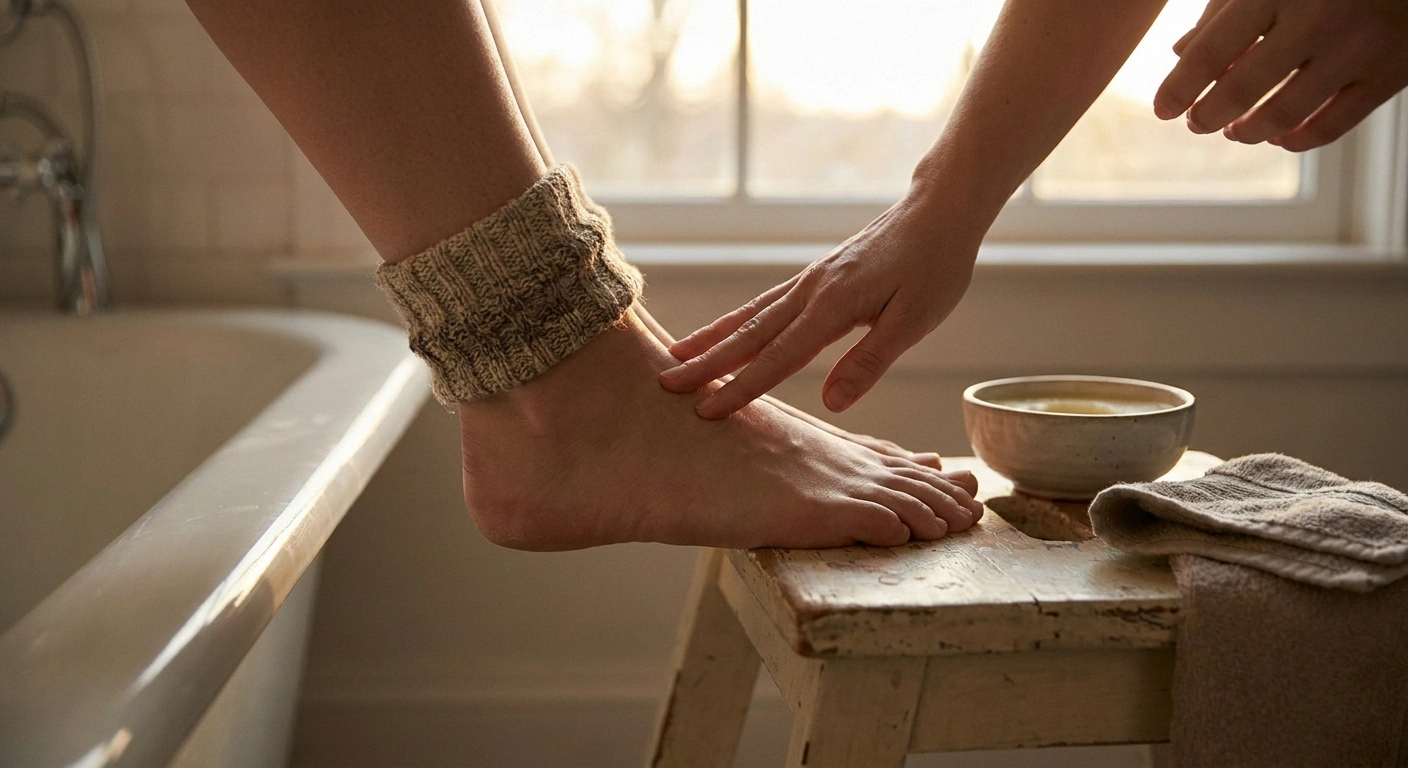
This last habit is worth its weight in gold. After the first day in any new shoe, take them off and look carefully at your feet. Red marks, hot spots, blisters, raw skin — any of those mean the shoe isn't right, even if it felt fine.
This is the visual check that takes the place of the pressure feedback your feet aren't reliably giving you. It only takes thirty seconds at the end of the day. Build it into your routine — same time you take your nighttime medication, or right before showering.
Caught early, a hot spot is just an annoyance. Caught late, it's an open wound. The check is the difference.
A Quick Pre-Shopping Checklist
Before you head to the store or order online, walk through this:
The 6-Point Pre-Shopping Checklist
Shopping in the afternoon or evening
Real socks, orthotics, and braces in hand
Current measured size for both feet
Confirmed return policy (30+ days ideal)
Mentally ready to size up if needed
Time to walk 10+ minutes in the shoe before deciding
- Are you shopping in the afternoon/evening (not morning)?
- Do you have your real socks, orthotics, and any braces with you?
- Do you know your current measured size (both feet)?
- Have you confirmed the return policy is generous (14 days minimum, 30+ days ideal)?
- Are you mentally prepared to size up if needed?
- Have you set aside time to walk around the store (or your living room) for at least 10 minutes in the shoe before deciding?
That ten minutes of walking matters. A shoe that feels okay sitting may pinch when you load weight onto it. Walk to the back of the store and back. Climb a stair if there is one. Stop and feel — both with your hand inside as much as you can, and visually after — for any rubbing or pressure points.
One More Thing: Inspect Your Old Shoes
Look at the wear pattern on your current shoes before you go shop. The way the sole is worn tells you a lot about your gait — uneven heel wear suggests pronation issues, scuff patterns on the inside or outside reveal where pressure is concentrated. A salesperson at a quality footwear store can read those patterns and help you choose accordingly.
And honestly: if your current shoes are more than a year old and you're walking on packed-down cushioning and worn outsoles, a fresh pair will feel like a small miracle. Daily foot care includes the shoes you put on those feet every morning. Don't underestimate the difference a thoughtfully chosen pair makes.
Frequently Asked Questions
What time of day should I shop for shoes with neuropathy?
Shop in the late afternoon or evening when your feet have swollen to their largest size of the day. Shoes that fit fresh morning feet often become uncomfortably tight by the afternoon, and tight shoes on numb feet can cause unnoticed pressure sores. If you've been on your feet that day, even better — that's the swelling level you're fitting to.
Do I need special shoes for neuropathy?
You don't necessarily need shoes labeled “diabetic” or “neuropathy” — many regular athletic and walking shoes work well if they have the right features: wide toe box, firm heel counter, adjustable closure, seam-free or smooth interior, moderate cushioning, and supportive structure. That said, dedicated neuropathy-friendly brands (Orthofeet, Dr. Comfort, New Balance Wide, Brooks) make finding all those features in one shoe easier.
How can I tell if a shoe fits when I can't feel my feet?
Use sight and touch instead of feel. Slide your hand inside the shoe to check for raised seams. Stand up and visually check that there's a thumbnail's width between your longest toe and the front. After wearing the shoe for the first time, inspect your feet for red marks, hot spots, or blisters. Build a routine of visual foot checks at the end of every day, especially with new shoes.
Will Medicare pay for neuropathy shoes?
Medicare Part B may cover one pair of therapeutic shoes and three pairs of inserts per calendar year for diabetic patients with one of six qualifying foot conditions, including neuropathy with callus formation. You need a prescription from a podiatrist or qualifying physician and must use a Medicare-approved supplier. Ask your doctor whether you qualify — quality therapeutic shoes cost $150-300+ per pair, so the benefit is meaningful when applicable.
Should I size up for neuropathy shoes?
Many neuropathy patients need a half-size larger than their pre-neuropathy size, partly because foot shape changes (often widening) and partly because swelling adds bulk. Don't be attached to your “old size” — focus on whether the fit is right. Have both feet measured at the store, fit the larger foot, and use a thin filler insert in the other shoe if needed.
Are diabetic shoes the same as neuropathy shoes?
There's significant overlap. Both share key features: wide toe box, seamless interior, firm heel counter, supportive structure. Shoes specifically marketed as “diabetic” tend to be designed and certified for the Medicare Therapeutic Shoe Benefit. Many shoes that are not labeled “diabetic” — quality wide-width athletic shoes, for example — also work very well for neuropathy. The label matters more for insurance reimbursement than for the underlying fit principles.
Can I wear sandals with neuropathy?
Some sandals work; most don't. Avoid flip-flops and minimally supportive sandals — they offer no protection from stubbed toes, ground debris, or hot surfaces, all of which are riskier when your feet can't feel them. Sandals with secure straps (often three points: across the foot and around the ankle), a firm sole with traction, and a covered toe box are the safer category. Brands like Birkenstock, ECCO, and dedicated neuropathy brands offer supportive sandals.
How often should I replace neuropathy shoes?
Plan for about 300-500 miles of walking before the cushioning compresses meaningfully. For most patients that translates to 6-12 months of regular wear. Watch the outsole wear pattern and the interior for signs of breakdown. Once cushioning packs down and structural elements compress, the shoe stops protecting your feet the way it should — and you may not feel the loss of support until problems develop. Rotating two pairs extends the life of each.
About the Author