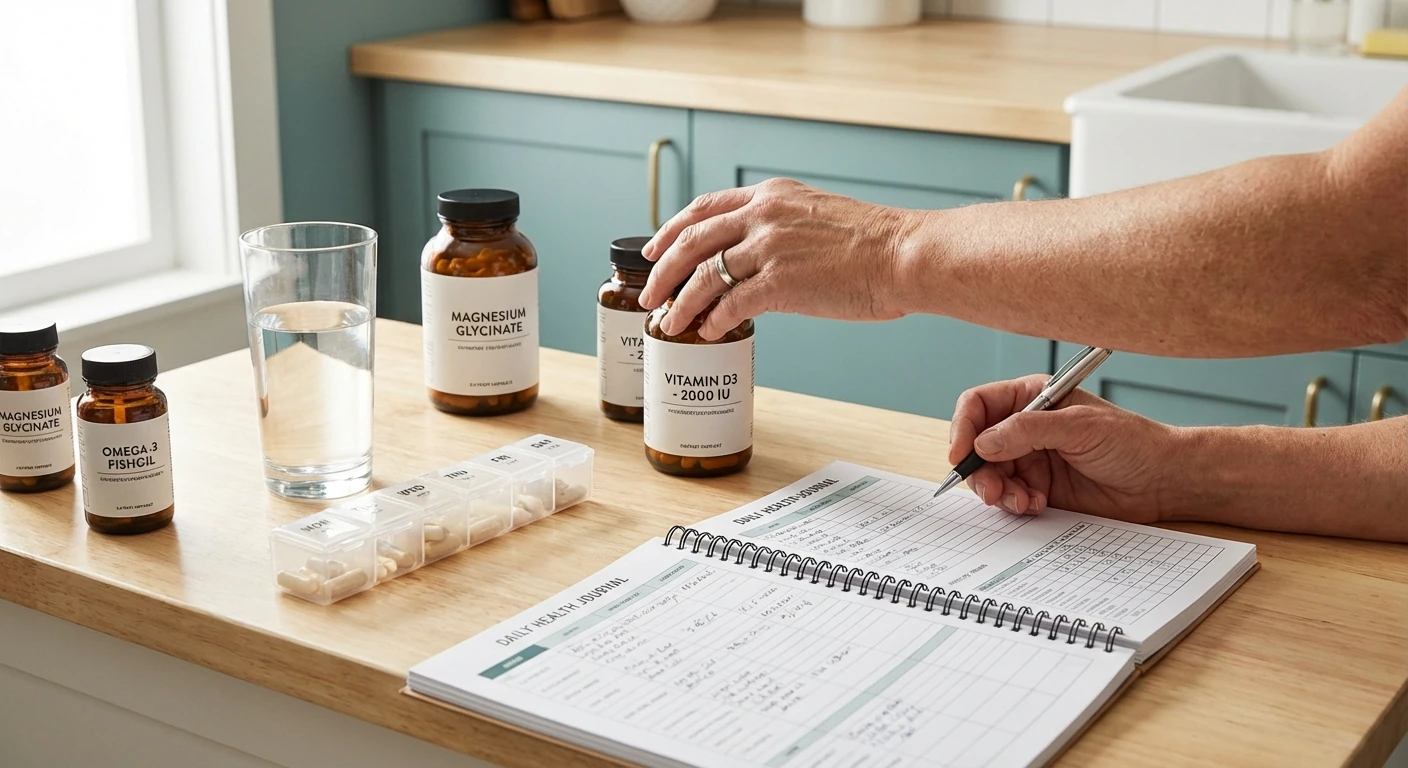
Complete Guide to Neuropathy Supplements
The supplement conversation around neuropathy is messy because people are usually solving three different problems at once: they want less pain, they want healthier nerves, and they want some sense that the damage is not just marching forward unchecked. Those are not the same objective, and a bottle that helps one of them may do almost nothing for the others.
Here is the clean version: supplements help most when they match the mechanism. If you have a deficiency, correcting it matters. If you have diabetic nerve pain, some supplements have modest evidence for symptom relief. If you are buying a five-supplement stack because a label says “nerve repair,” the odds of disappointment go up fast. This guide shows what actually has evidence, what is mostly marketing, and how to build a rational supplement plan without ignoring the real cause of your neuropathy.
What Neuropathy Supplements Can and Cannot Do
Most supplements do not work like a switch that turns damaged nerves back on. They are better understood as support tools. Some reduce oxidative stress. Some help when nerves are starved of specific nutrients. Some may slightly improve symptom severity or nerve conduction in certain subgroups. That is useful — but it is not magic.
That distinction matters because false expectations burn money and time. A supplement may be worth keeping if it helps you sleep, reduces burning pain, or supports a documented deficiency. But if you have untreated diabetes, ongoing alcohol exposure, a medication causing nerve injury, or an unrecognized autoimmune process, the supplement layer will underperform until the bigger architecture is fixed. That is why the best place to start is often diagnosis, not shopping.
- Reasonable upside: correcting deficiencies, modest pain reduction, or supporting recovery when nerves are under metabolic stress
- Common failure mode: taking broad “nerve health” blends without knowing whether you need the ingredients
- Best use case: targeted supplements added to a broader plan that also addresses glucose control, medication review, movement, sleep, and the underlying cause
The Best-Supported Supplements for Neuropathy
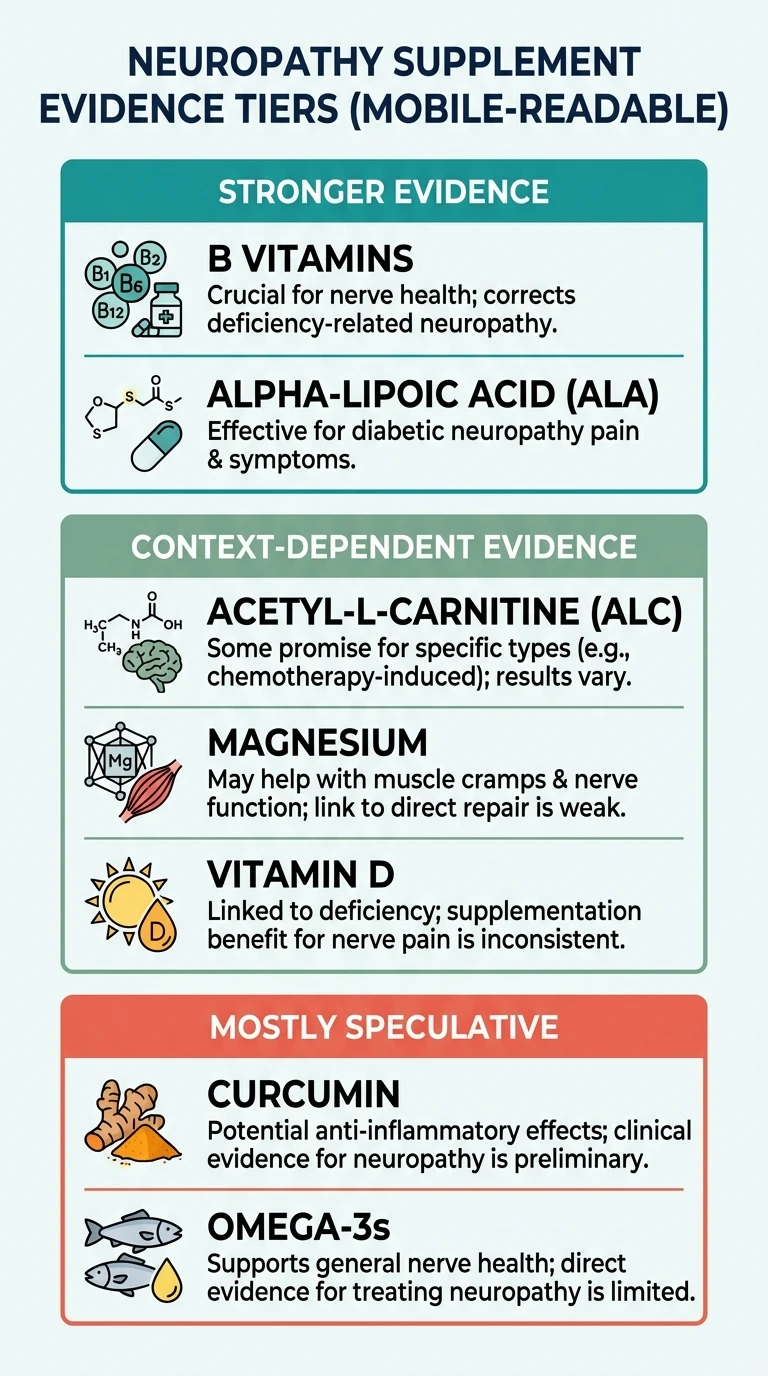
If you want the short list first, the strongest consumer-relevant contenders are B vitamins when deficiency is in play, alpha-lipoic acid for diabetic neuropathy symptom relief, and possibly acetyl-L-carnitine in selected cases. After that, the evidence gets thinner or more conditional.
B Vitamins: Highest Leverage When Deficiency Is the Problem
This is the most important category to understand because B vitamins can be both helpful and misleading. Vitamin B12 deficiency can directly cause neuropathy. Thiamine problems can matter, especially with diabetes, alcohol use, malabsorption, or poor nutrition. Benfotiamine — a fat-soluble thiamine derivative — gets attention because it may help some people with diabetic neuropathy. That does not mean every person with burning feet needs a B-complex.

The highest-leverage move is matching the vitamin to the actual problem. If B12 is low, fixing it matters. If thiamine depletion is plausible, that deserves attention. If you are taking large doses of B6 because the bottle said “nerve support,” that can backfire — too much B6 can cause neuropathy-like symptoms. Our full B-vitamin guide and B12 comparison article go deeper on that.
Alpha-Lipoic Acid: Best Known for Diabetic Neuropathy
Alpha-lipoic acid is probably the most discussed neuropathy supplement after B vitamins, and for good reason. It has antioxidant activity and the best-known human evidence in painful diabetic neuropathy. Some people notice less burning, tingling, or prickling when they use it consistently. The benefit is usually described as modest, not transformational.
Where people go wrong is assuming that because it helps some diabetic neuropathy patients, it must be ideal for every kind of neuropathy. Not necessarily. It is more rational when insulin resistance, blood sugar dysregulation, or diabetic oxidative stress are part of the picture. If that is your lane, the deep dive on alpha-lipoic acid for neuropathy is worth reading.
Acetyl-L-Carnitine, Curcumin, Magnesium, Vitamin D, and Omega-3s
This is the category where nuance matters. Acetyl-L-carnitine has some evidence for nerve support and neuropathic pain, but results are mixed and not all studies point the same way. Curcumin looks biologically interesting because inflammation and oxidative stress are part of many neuropathy stories, but the human evidence is still thinner than the marketing. Magnesium is important for overall nerve and muscle function, but it is usually a support nutrient, not a neuropathy-specific fix. Vitamin D matters most when you are low. Omega-3s may help inflammation and general cardiometabolic health, which can indirectly support nerve health.
Translation: these are not fake ideas, but they are context-dependent ideas. If you are considering them, use a narrower question: is this filling a documented gap, helping a related mechanism, or just adding hope in capsule form? For more specifics, see our pages on magnesium, curcumin, vitamin D, and supplements for nerve repair.
How to Match Supplements to the Cause of Your Neuropathy
This is the real leverage point. The same supplement stack can be smart for one person and useless for another because the root problem is different.
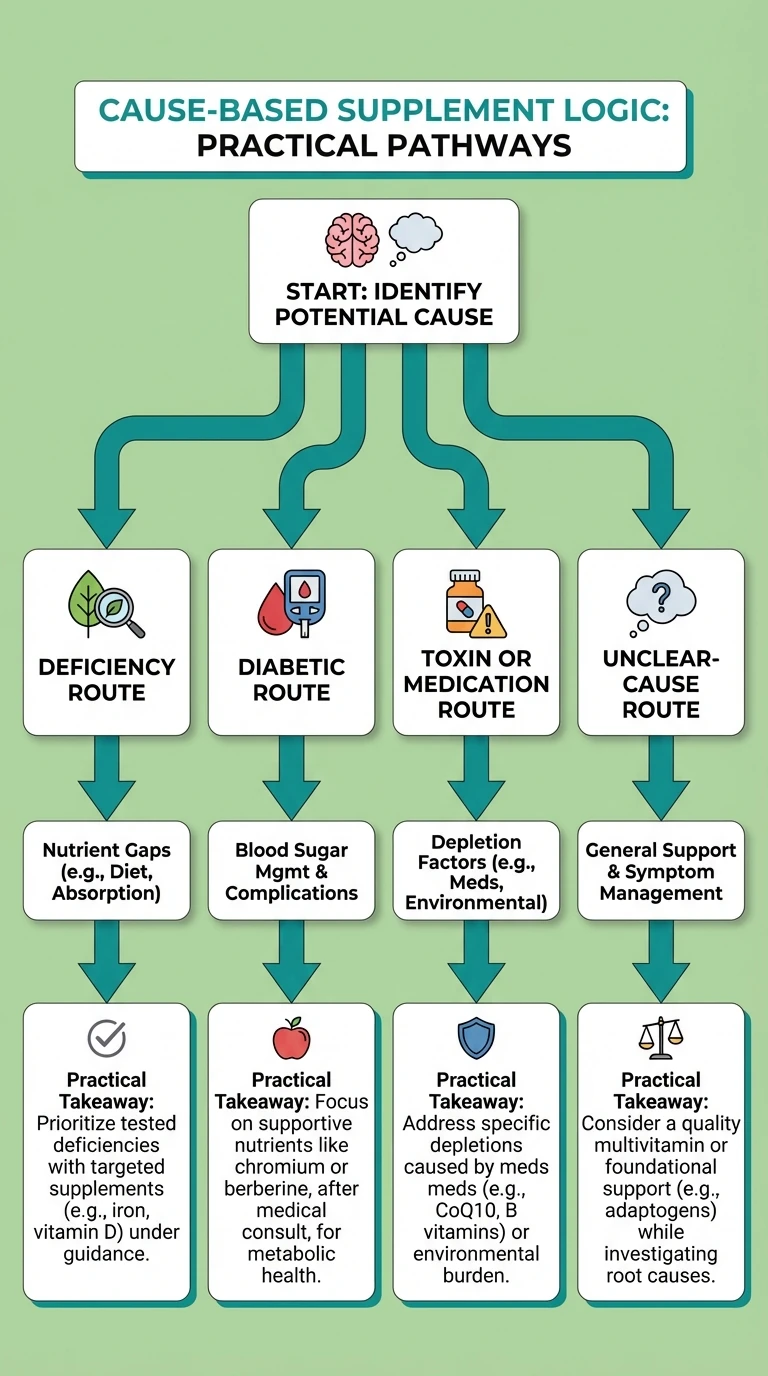
Highest-leverage question
Are you treating a documented deficiency, a diabetic oxidative-stress pattern, or just hoping a generic nerve blend will cover everything? That one answer changes the whole supplement plan.
- If deficiency or malabsorption is likely: prioritize B12, thiamine, and other targeted nutrient testing before guessing.
- If diabetes is central: alpha-lipoic acid and benfotiamine are more rational than a random 12-ingredient blend.
- If alcohol use, chemotherapy, toxin exposure, or medication injury is involved: fixing exposure and supporting recovery beats chasing symptom-only marketing.
- If the cause is still unknown: get more clarity before building an expensive supplement routine around a mystery.
That is also why a supplement hub article should never replace cluster pages that explain vitamin deficiency neuropathy, diabetic neuropathy, or toxic neuropathy. Different causes have different bottlenecks.
How to Build a Rational Supplement Plan
Start smaller than your instincts want. Pick the one or two highest-probability moves, not five. Document what symptoms you are actually trying to improve. Decide what would count as success. Then give the trial enough time to be judged fairly.

Rational Trial Sequence
- Define the target symptom: burning pain, numbness, balance, sleep disruption, or energy
- Check for labs or history that make a supplement logically relevant
- Choose one product with a clear dose instead of a vague proprietary blend
- Track changes for six to twelve weeks, not three days
- Stop if side effects, cost, or pill burden outweigh the benefit
If you need a broader symptom-control framework while you test supplements, combine them with proven layers: better foot protection, movement you can tolerate, medication review, and a realistic pain plan. Our article on questions to ask before starting neuropathy medication and the natural remedies hub help there.
Safety, Interactions, and Red Flags
This is where supplement culture gets sloppy. “Natural” does not mean low-risk. Curcumin can interact with blood thinners. Magnesium can matter for kidney disease and can interfere with absorption of some medications. Alpha-lipoic acid can affect blood sugar. B6 excess can worsen or mimic neuropathy. And blends can hide dosing in a way that makes troubleshooting harder.
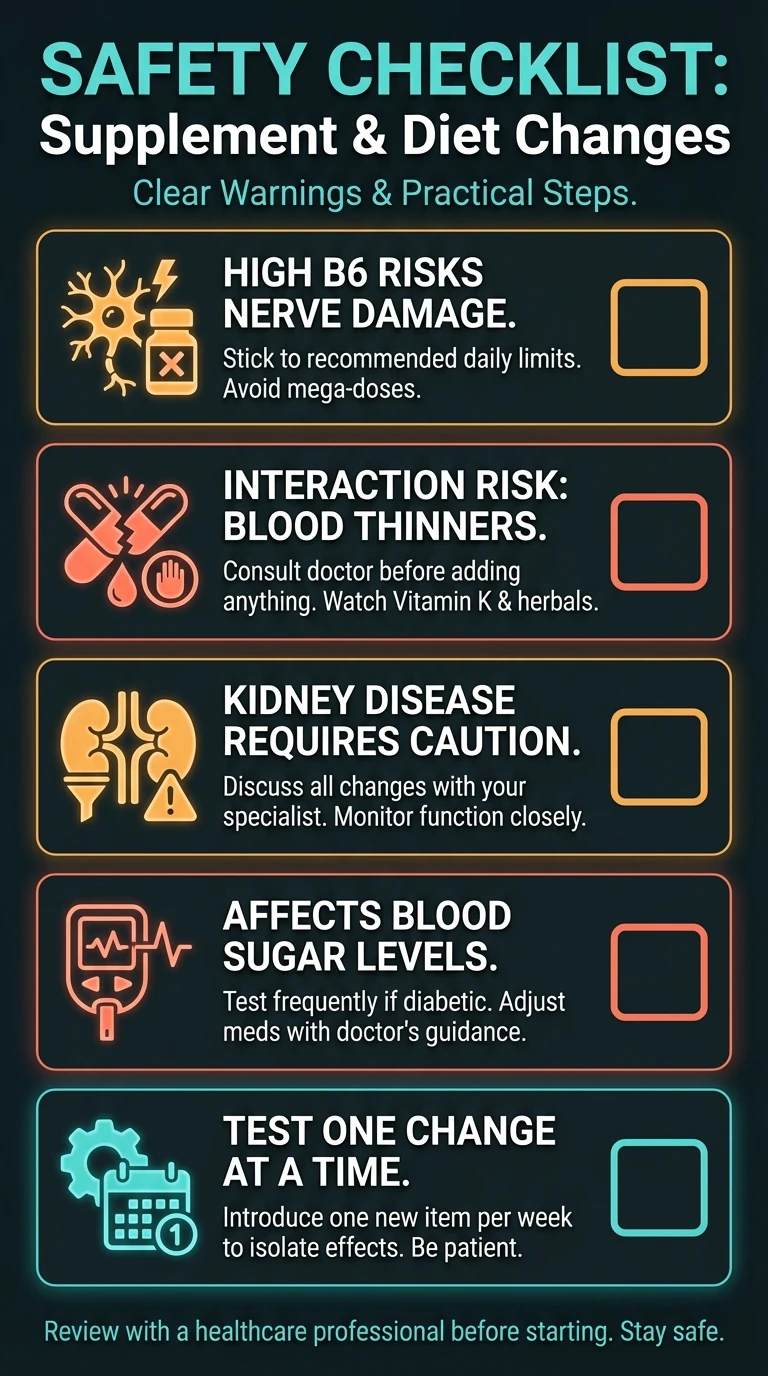
Important safety reality
Vitamin B6 can cause neuropathy when overused. Alpha-lipoic acid can affect blood sugar. Curcumin can matter if you take blood thinners. Natural does not mean friction-free.
The safest approach is boring, which is exactly why it works: check your medication list, add changes one at a time, and tell your clinician what you are taking. If you are older, have kidney disease, take multiple prescriptions, or already feel off-balance, the downside of a “let's try everything” approach gets bigger.
The Bottom Line on Neuropathy Supplements
Supplements are most useful when they solve a real bottleneck: a deficiency, a diabetic oxidative-stress pattern, or a specific pain-support gap. They are least useful when they substitute for diagnosis. If you want the smartest next step, start by identifying the cause, then layer supplements deliberately. The hub at Best Neuropathy Supplements for Nerve Health can help you navigate the category, but the win comes from matching the tool to the mechanism.
Frequently Asked Questions
What is the best supplement for neuropathy?
There is no universal winner. B vitamins matter when deficiency is involved, alpha-lipoic acid has the best diabetic-neuropathy data, and acetyl-L-carnitine or curcumin may help some people. The best choice depends on the cause of your neuropathy, your medications, and your lab work.
Can supplements repair nerve damage?
Sometimes they support recovery, but only when they address the real bottleneck. Correcting a B12 deficiency can prevent ongoing injury and allow healing. Taking random supplements without a deficiency or evidence-based reason usually does less than people hope.
How long should I try a supplement before judging it?
Most reasonable supplement trials run at least six to twelve weeks unless side effects show up sooner. Nerve symptoms change slowly, so expecting a dramatic response in three days is usually unrealistic.
Can I take multiple neuropathy supplements together?
Sometimes, yes, but stacking increases cost, interaction risk, and confusion about what is helping. It is smarter to add one change at a time, especially if you also take medications for blood sugar, blood pressure, thyroid disease, or pain.
Should I get lab work before starting supplements?
Usually yes. A targeted workup can show whether you actually have a B12 problem, thiamine issue, thyroid problem, diabetes, or another cause that deserves more than a supplement guess.
About the Author