My feet are a better weather forecaster than the man on Channel 6. That’s what I used to tell my husband — half joking — on the evenings when the burning in my soles crept up a notch for no reason I could find. More often than not, rain arrived by morning.
For years I assumed I was imagining it — the kind of pattern your mind invents because you want an explanation. Then I started hearing the same thing at my support group. “My toes know when a front is coming.” “Storms make the zapping worse.” Enough people said it that I went looking for whether science had anything to say.
It turns out the research is more interesting than I expected — and more honest about its limits than most of what you’ll read online. Here’s what’s known about barometric pressure and nerve pain, what probably explains it, and the practical things that have helped me and others get through a stormy week with less misery.
What Barometric Pressure Actually Is
Barometric pressure is simply the weight of the air above you pressing down. At sea level it averages around 1,013 hectopascals, which the weather report in the US usually gives as about 29.9 inches of mercury.
| Hectopascals | Inches of mercury | |
|---|---|---|
| Average at sea level | 1,013 | 29.92 |
| Drop with a strong storm | 20 to 30 | 0.6 to 0.9 |
| Drop used in the 1999 rat study | About 27 | About 0.8 |
| Airline cabin in flight | About 750 to 810 | About 22 to 24 |
Most apps let you switch units in settings. Pick one and stick with it so your notes stay comparable.
That number rises and falls as weather systems move through. High pressure tends to bring settled, clear weather. Falling pressure usually means a low-pressure system is approaching, often with clouds, wind, rain or snow. A strong storm can pull the pressure down by 20 or 30 hectopascals over a day or so.
Those changes are small. You can’t feel them the way you’d feel a change in altitude on a plane. But “too small to feel consciously” isn’t the same as “too small for your nervous system to notice,” and that’s where things get interesting.
Here’s a comparison I find helpful. Airline cabins are pressurized to roughly what you’d feel at 6,000 to 8,000 feet, which is about a quarter lower than sea-level pressure. A big storm changes pressure by only two or three percent. So if pressure alone drove nerve pain, every flight would be miserable. That’s one reason researchers suspect the change itself, arriving together with cold, damp air and a shift in your routine, matters more than the pressure number on its own.
What Studies of People Have Found
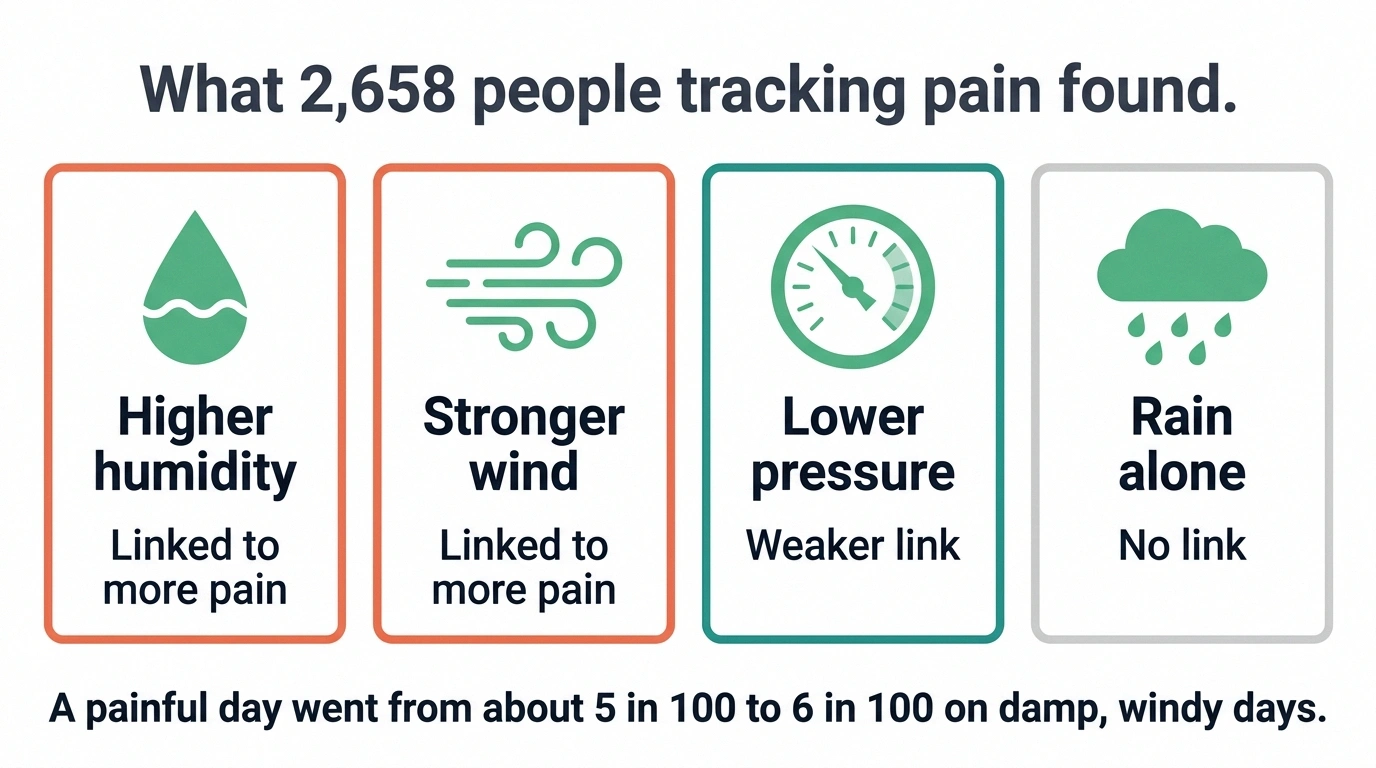
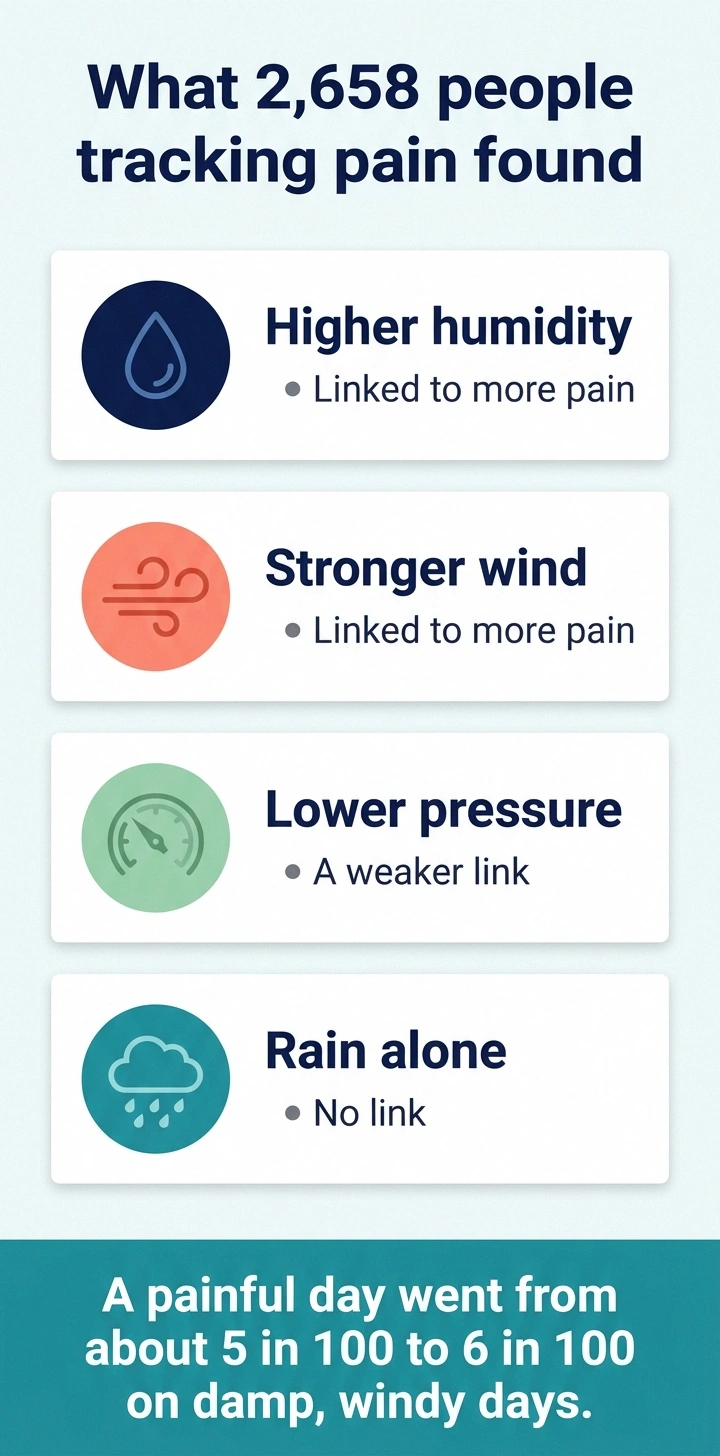
The largest study of weather and pain I know of was a UK project called Cloudy with a Chance of Pain. People with long-term pain, most of them with arthritis, logged their pain every day on a smartphone app while the app recorded their local weather. The researchers analyzed daily data from 2,658 people over 15 months and published the results in 2019.
Here’s what they found:
- Pain was more likely on days with higher humidity and stronger wind.
- Lower air pressure was also linked with more pain, though that link was weaker and showed up mostly in people who already believed weather affected them.
- Rain on its own wasn’t associated with more pain.
- The effect held even after the researchers accounted for mood.
The size of the effect is worth knowing. The researchers gave an example: if your chance of a painful day on an average day were 5 in 100, it would rise to about 6 in 100 on a damp, windy day. That’s real, but modest. Weather isn’t the whole story of a bad week — it’s one ingredient.
Studies focused on neuropathy specifically are much smaller. A small 2024 Hungarian study following people with neuropathic pain found cold days were linked to a higher risk of flare-ups, while rain and humidity weren’t. Surveys of people with chronic pain tend to point the same way: cold is the weather most often blamed, with pressure changes named less often.
The Animal Studies That Point at Nerve Pain
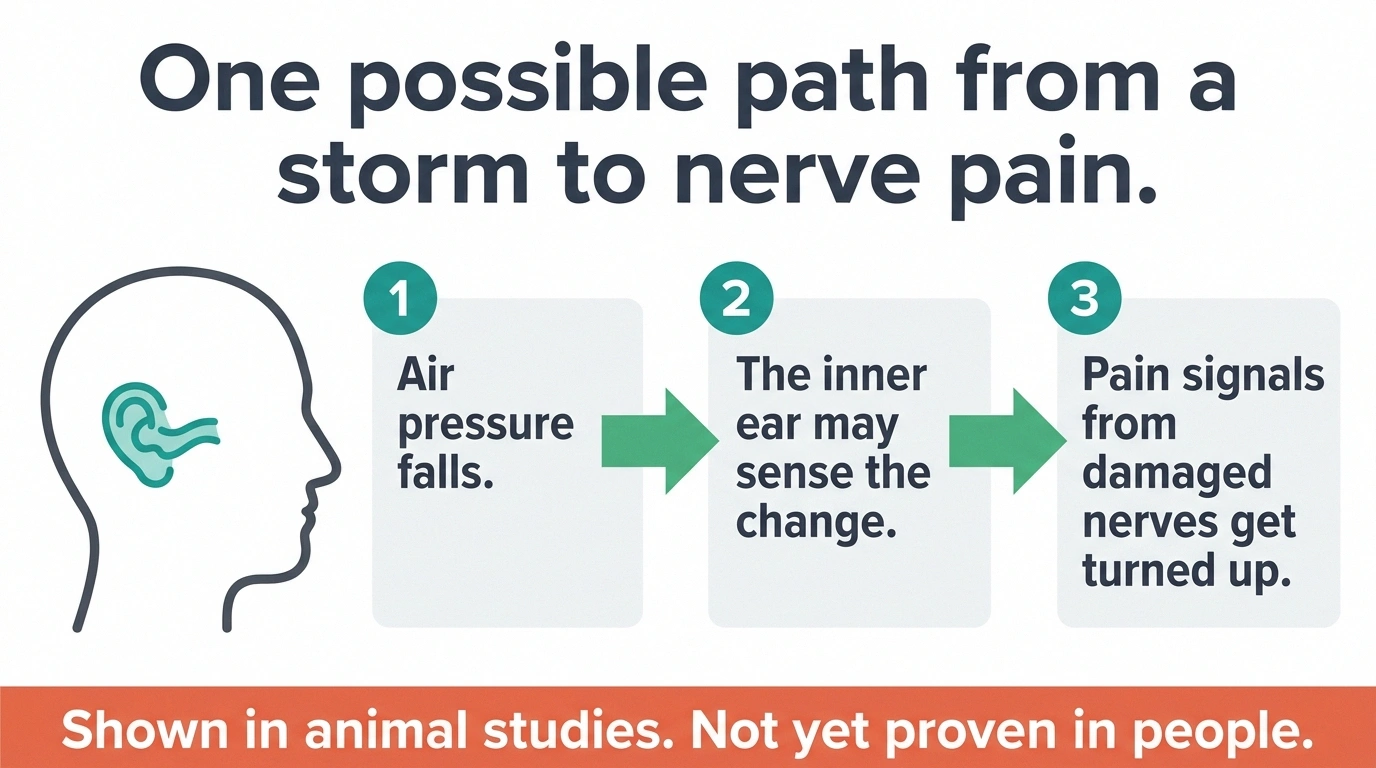
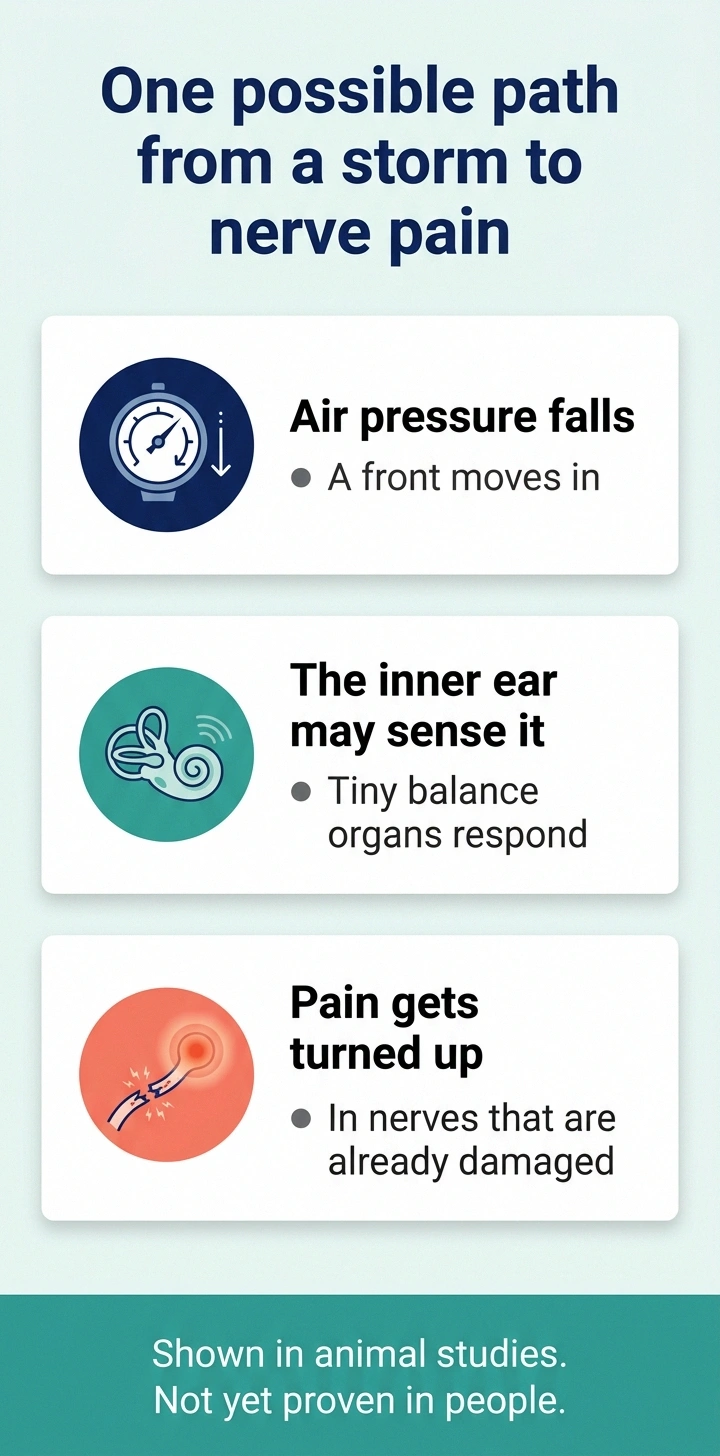
The most striking evidence comes from laboratory research in Japan, and it’s specific to nerve pain.
In 1999, a team led by the Japanese researcher Dr. Sato took rats with an injured nerve (a standard model of neuropathic pain) and placed them in a chamber where the air pressure was lowered by 20 millimeters of mercury, roughly the size of the drop when a strong storm moves in. The rats became noticeably more sensitive to touch on the injured side, reacting to pressure on the paw that wouldn’t normally bother them.
Later work found the same pattern in guinea pigs. And here’s the part that caught my attention: when the researchers damaged the rats’ inner ear, the pressure drop no longer made their pain worse. In mice, a pressure drop of 40 hectopascals lasting under an hour switched on nerve cells in part of the brain that processes signals from the inner ear’s balance organs.
These are animal studies, and they don’t prove the same thing happens in people. But they offer a believable path: something in the inner ear may sense pressure changes, and in an already-damaged nervous system, that signal may turn pain up.
Why Your Nerves Might Notice a Front Moving In
Nobody has the full answer yet, but several ideas fit what we know:
- Inner ear sensing: as the animal research suggests, the inner ear may act like a tiny barometer and feed into stress and pain pathways.
- The sympathetic nervous system: in the rat study, cutting the sympathetic nerves (the “fight or flight” system) blunted the pressure effect. That system also controls blood flow to the feet, and it’s already out of balance in many neuropathies.
- Sensitized nerves: damaged nerves and an over-alert spinal cord respond to inputs that a healthy system would ignore. Small nudges get amplified.
- Cold and damp: storms often bring cooler temperatures, and cold narrows blood vessels in the hands and feet. Less blood flow to nerves that are already struggling may add to the discomfort.
- Behavior changes: on stormy days we tend to move less, sleep worse and sit around feeling gloomy. All three can make pain feel worse on their own.
It’s probably a blend. And the blend may differ from person to person — which is why some of us feel every front and others feel nothing.
Is It the Pressure, the Cold or the Damp?
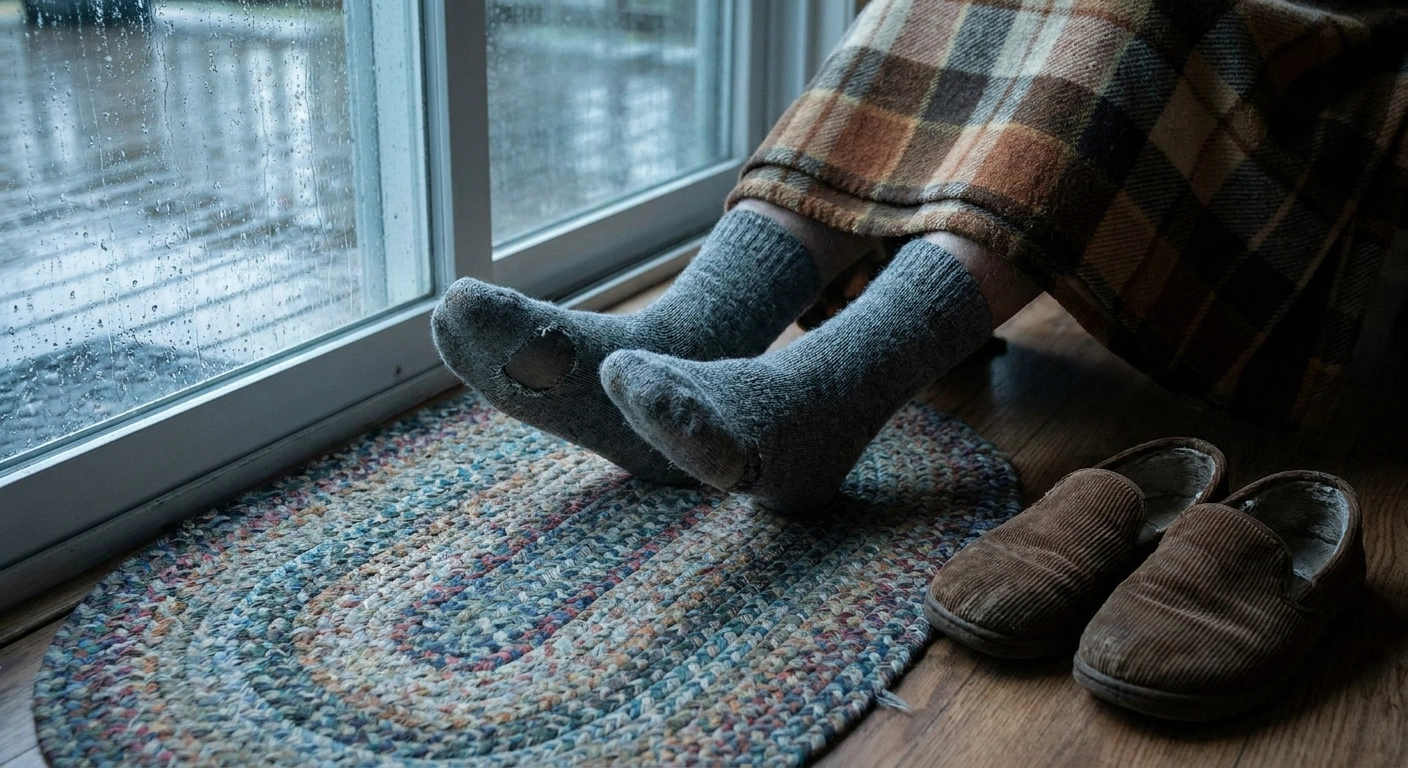
This question matters, because the answer changes what helps.
For many people with neuropathy, cold seems to be the bigger driver. If your flares line up with chilly days whether or not a storm is coming, temperature is the more likely culprit, and my article on neuropathy in cold weather has a full plan for winter.
Other people flare in muggy summer heat instead. That’s a different mechanism, often tied to how damaged nerves and blood vessels react to warmth, and I cover it in tips for neuropathy in hot weather.
And some people notice the change itself, the falling pressure before a storm, regardless of temperature. You can only sort out which group you’re in by paying attention for a few weeks.
How to Find Out If Weather Really Affects You

Our memories are lousy at this. We remember the stormy days when our feet were awful and forget the stormy days when they were fine. A few weeks of simple tracking will tell you far more than years of impressions.
A sample week from a weather log
| Day | Pain | Pressure | Temp | Sleep | Notes |
|---|---|---|---|---|---|
| Mon | 4 | 30.10, steady | 48°F | Good | Short walk |
| Tue | 6 | 29.70, falling | 41°F | Fair | Rain by evening |
| Wed | 5 | 29.85, rising | 39°F | Poor | Windy night |
Rate pain at the same hour every day. After a month, circle your five worst days and look at which columns they share.
Here’s a simple way to do it:
- Pick one time each day, such as after dinner, and rate your nerve pain from 0 to 10.
- Write down the weather. Most phone weather apps show barometric pressure, often under “details.” Note the pressure, the temperature and whether it was rising or falling.
- Add the things that also move pain: how you slept, how active you were, any change in medications, and stress.
- Keep it up for at least three to four weeks, long enough to catch several weather systems.
- Look back at your worst days. Did they follow falling pressure, cold, damp, or none of these? Did they follow a bad night or an overactive day instead?
If you’d like a ready-made format, my guide to keeping a neuropathy symptom journal includes a template you can print. Several people in my group have been surprised by what turned up. One woman discovered her “storm flares” lined up far better with the nights she slept badly, which happened to be stormy nights because the wind kept her awake.
Getting Ahead of a Flare When a Front Is Coming
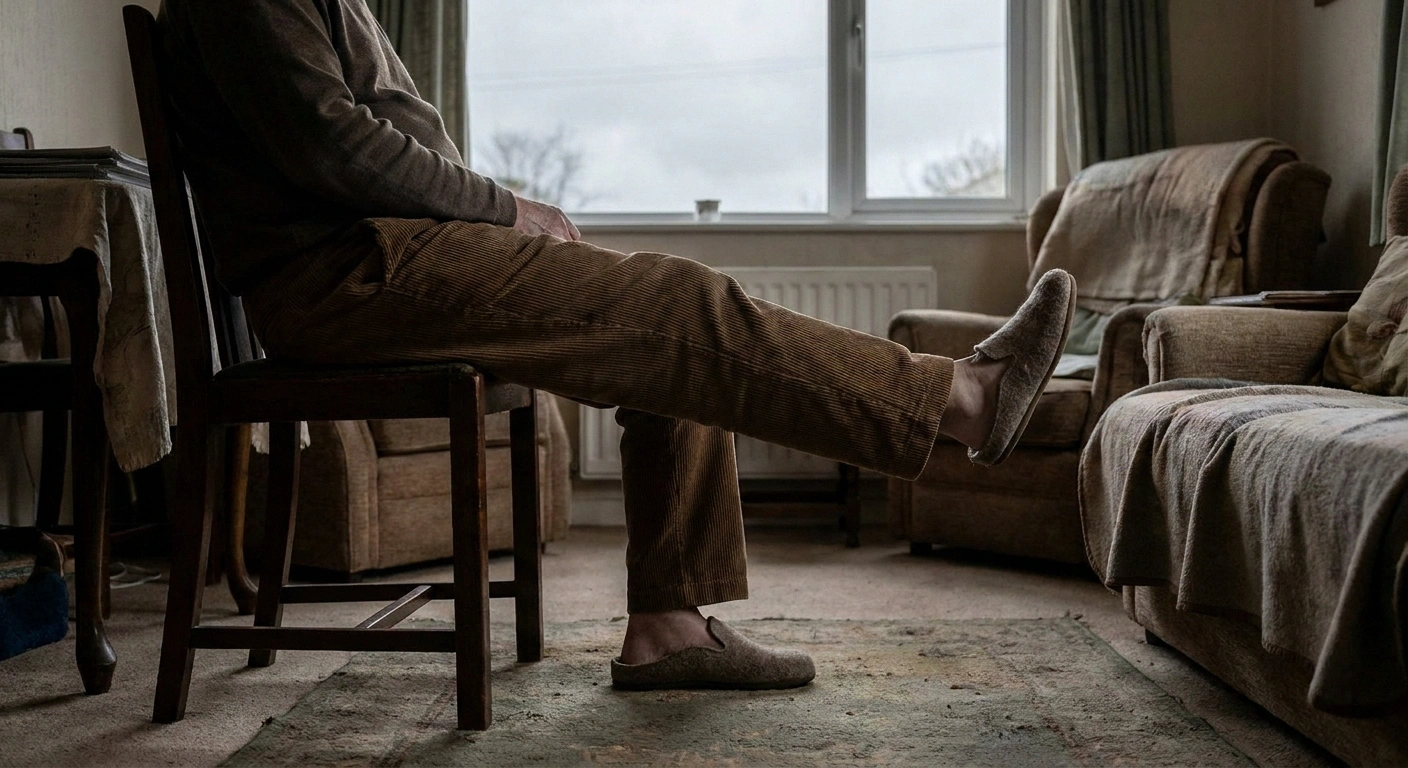
If your tracking does show a weather pattern, the good news is that weather is forecast days in advance. That gives you a head start most flare triggers don’t.
When pressure is set to drop or a cold, damp front is on the way:
- Lighten your schedule. Move the big errand or the deep-cleaning day to after the front passes. My article on pacing with neuropathy explains how to plan around predictable bad days.
- Keep your feet and hands warm before the chill arrives, not after the pain starts. Wool-blend socks, warm slippers indoors and a layer more than you think you need.
- Keep moving gently. A short indoor walk, ankle circles and calf stretches keep blood flowing. Sitting still all day almost always makes my feet worse.
- Protect your sleep. Set up your bedroom the night before: a warm (not hot) room, a foot cradle if sheets bother you, earplugs if wind keeps you awake. My guide on how to sleep with neuropathy has more ideas.
- Know your plan for as-needed medicine. If your prescriber has given you something to use on bad days, ask ahead of time whether it’s fine to take it early when a known trigger is coming. Don’t add doses on your own.
Comfort Measures During a Weather Flare
When the flare arrives anyway, a few simple things help many of us:
Warmth by the numbers when your feet are numb
- Bath or foot soak: aim for about 100°F (38°C) and never above 104°F (40°C). Check with a thermometer.
- Heating pad: low setting, about 15 minutes at a time, with at least an hour between sessions. Never while asleep.
- Space heater: keep it at least 3 feet from your feet, bedding and chair.
- Hot water bottle: wrap it in a towel and keep it off bare skin.
- Gentle warmth on the feet or legs — but carefully. Numb skin can burn without warning. If you use a heating pad, keep it on low, use a timer, and never sleep on it. My article on heating pad safety with neuropathy explains why this matters so much.
- A warm foot soak or bath, with the water temperature checked by a thermometer or an unaffected elbow, never by your feet. See my guide to warm bath safety for safe temperatures.
- Distraction that actually engages you, like a phone call with a friend, a puzzle or a good mystery novel. Pain grabs more attention when there’s nothing else to hold it.
- A little movement every hour, even if it’s just walking to the kitchen and back.
For more ways to ride out bad days, my article on managing neuropathy flare-ups covers the full toolkit.
What Not to Do
A few traps are worth avoiding:
- Don’t double your medication because a storm is coming. Extra doses of nerve pain medicines can cause dizziness and falls.
- Don’t stop moving entirely. A day on the couch usually makes the next day worse.
- Don’t over-heat numb feet. Burns from heating pads, hot water bottles and space heaters are a real and common injury in neuropathy.
- Don’t blame everything on the weather. It’s easy to let “it’s just the barometer” become the explanation for every bad week, and miss a medication issue, a sleep problem or a change in your condition.
- Don’t uproot your life on weather alone. Some people do find a milder climate helps, but the research effect is modest. Test it with a long visit before a big move.
When It Isn’t the Weather
A weather flare should feel like your usual symptoms, turned up, and it should ease as the weather settles. Call your doctor the same day if you notice:
- New weakness, such as tripping over your toes or dropping things.
- Symptoms spreading quickly to new areas.
- A wound, blister or red, warm, swollen area on your foot.
- Pain that keeps climbing for days after the weather clears.
- Any sudden change in balance, bladder or bowel control.
Sudden weakness in a leg or a sudden loss of bladder or bowel control is different: get emergency care right away. All of these deserve attention whatever the forecast says.
Learning to Live With Your Inner Barometer
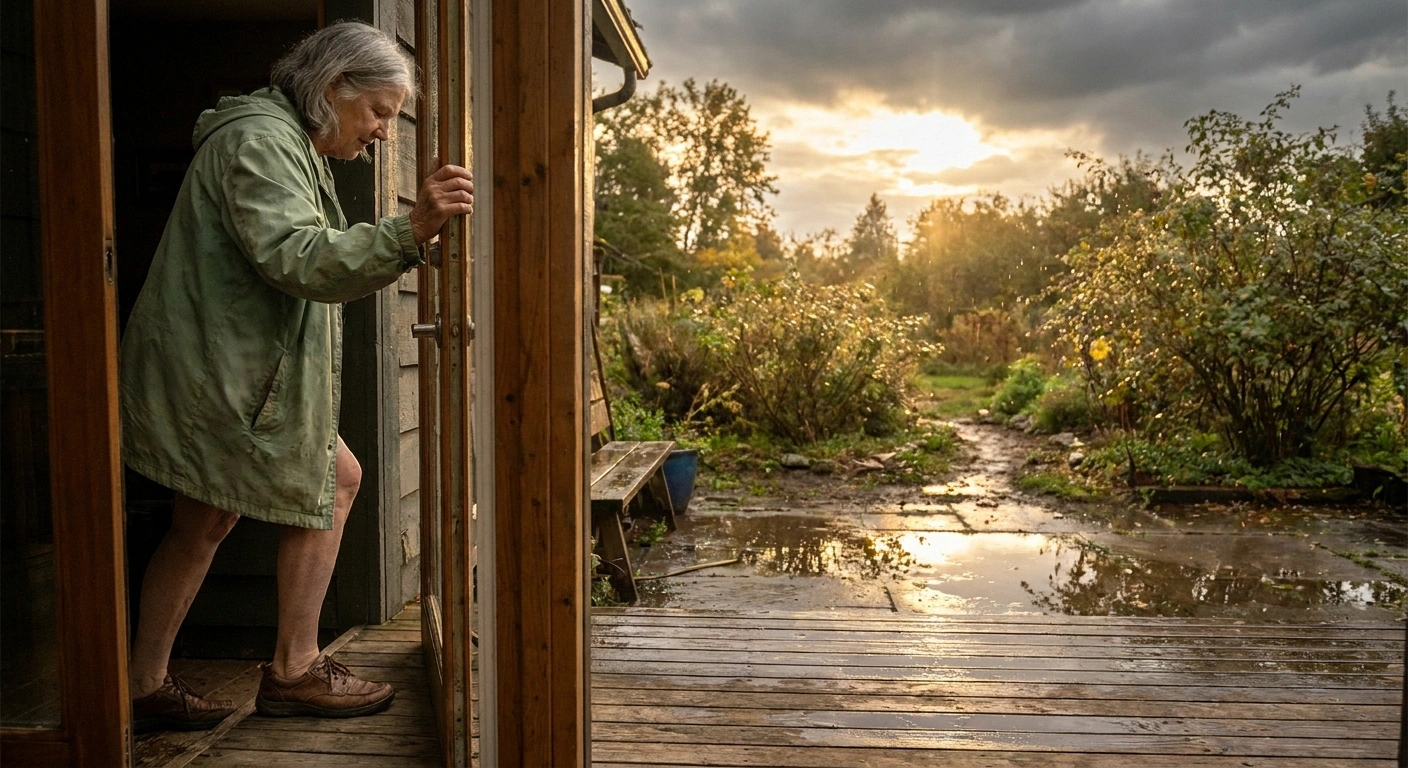
So, can your feet really forecast the weather? The science says it’s plausible. Large studies of people with chronic pain find modest links with humidity, wind and falling pressure. Animal research suggests nerve pain in particular may be sensitive to pressure drops, possibly through the inner ear. For people with neuropathy, cold looks like an even bigger factor.
What helps most isn’t fighting the weather — it’s knowing your own pattern. A few weeks of tracking will show whether storms truly matter for you. If they do, the forecast becomes a tool: lighter plans, warm feet, gentle movement and good sleep set up before the front arrives.
These days, when my soles start to burn on a calm evening, I check the weather app. If a front is coming, I set out my wool socks, move tomorrow’s errands, and make a cup of chamomile tea. I can’t stop the rain. But I’m not caught off guard by it anymore, and that alone makes stormy weeks easier.
Frequently Asked Questions
Can barometric pressure changes make neuropathy pain worse?
Many people with neuropathy report it, and research suggests it is plausible. A large UK study linked lower air pressure, higher humidity and stronger wind to more pain in people with chronic pain conditions, and animal studies show that lowering air pressure worsens nerve pain behaviors. The effect in people appears modest.
Why do my feet hurt more before it rains?
Falling pressure, cooler temperatures and damp air often arrive before rain. Researchers think the inner ear may sense pressure changes and feed into pain pathways, and cold can reduce blood flow to already damaged nerves. Sleeping poorly and moving less on stormy days can also add to pain.
Is cold or barometric pressure worse for neuropathy?
For many people with neuropathy, cold appears to be the bigger trigger. A small 2024 study of people with neuropathic pain found cold days were linked to more flare-ups, while rain and humidity were not. Tracking your own symptoms is the best way to know which affects you.
How can I tell if weather really affects my nerve pain?
Rate your pain at the same time each day for three to four weeks and record the barometric pressure, temperature and whether pressure was rising or falling, along with sleep and activity. Then compare your worst days with the weather. Many phone weather apps show barometric pressure.
What can I do when a storm is coming and my nerves flare?
Plan lighter days around the front, keep your feet warm before the chill arrives, keep moving gently, and protect your sleep. Use warmth carefully, since numb skin can burn easily, and do not take extra doses of medication without your prescriber’s guidance.
Should I move to a different climate because of my neuropathy?
Some people do feel better in milder, drier climates, but the measured effect of weather on pain is modest. If you are considering a move, try an extended stay in the new place first and track your symptoms before making a permanent change.
About the Author