When most people hear “Sjögren's syndrome,” they think of dry eyes and dry mouth. That's the face of the condition most people know — and it's accurate as far as it goes. But there's another side of Sjögren's that often goes unrecognized for years: the nerve damage it causes in roughly one in seven people who have it.
I've heard from several community members who spent a long time dealing with what felt like unexplained neuropathy — tingling, burning, numbness — before anyone thought to check whether Sjögren's might be the cause. Once they got the right diagnosis, treatment became far more targeted. And that's the thing about Sjögren's-related neuropathy: it responds to different treatments than other forms of neuropathy, and knowing the underlying cause changes everything.
Let me walk you through what Sjögren's syndrome neuropathy looks like, how it's diagnosed, and what treatment options are available.
What Is Sjögren's Syndrome?
Sjögren's syndrome (pronounced SHOW-grenz) is an autoimmune condition in which the immune system mistakenly attacks the moisture-producing glands throughout the body — primarily the tear glands (lacrimal glands) and salivary glands. This produces the hallmark symptoms of dry eyes and dry mouth.
Sjögren's can occur on its own (primary Sjögren's) or alongside another autoimmune condition like rheumatoid arthritis or lupus (secondary Sjögren's). It's estimated to affect 1–4 million Americans, with women making up about 90% of cases. The condition is frequently underdiagnosed — the average time from symptom onset to diagnosis is nearly three years.
The autoimmune attack in Sjögren's isn't limited to moisture-producing glands. The immune system dysfunction that drives it can affect the peripheral nervous system — the network of nerves outside the brain and spinal cord that controls sensation and movement in your limbs and organs. This is where Sjögren's and neuropathy intersect.
How Common Is Neuropathy in Sjögren's Syndrome?
More common than most patients are told. A 2023 systematic review and meta-analysis in European Journal of Neurology found that the pooled prevalence of peripheral neuropathy in primary Sjögren's syndrome is approximately 15% — meaning roughly one in seven people with Sjögren's will develop some form of nerve damage.

In clinical practice, the number may be higher, because small fiber neuropathy — which affects the tiny nerve fibers responsible for pain and temperature sensation — often won't show up on standard nerve conduction testing. Patients with Sjögren's and unexplained burning, tingling, or pain may actually have small fiber neuropathy that's being missed because the diagnostic workup hasn't included a skin biopsy.
Key Takeaway
About 15% of people with Sjögren's syndrome develop peripheral neuropathy — often years before or after the dry eye/dry mouth diagnosis. Because it's autoimmune in origin, Sjögren's neuropathy responds to immune-directed treatments (IVIG, rituximab) that don't help most other neuropathies. Getting the right diagnosis opens treatment options that wouldn't otherwise exist.
Types of Neuropathy Sjögren's Can Cause
This is where Sjögren's neuropathy gets medically interesting — it can cause several distinct patterns, and the type matters for treatment planning.
Sensory Neuropathy (Most Common)
Purely sensory nerve damage is the most common neurological manifestation of Sjögren's. Patients experience tingling, pins and needles, numbness, and sometimes burning — typically in the hands and feet, though Sjögren's can affect proximal areas (torso, face) more than many other neuropathies.
Small Fiber Neuropathy
Small fiber neuropathy affects the unmyelinated and thinly myelinated nerve fibers that transmit pain and temperature signals. It can cause lancinating (stabbing) or burning pain, often disproportionately affecting the face, torso, or proximal extremities — a pattern less typical of length-dependent neuropathies. Standard nerve conduction studies are normal; diagnosis requires a skin punch biopsy to count nerve fiber density.
Sensory Neuronopathy (Ganglionopathy)
This is a particularly severe and distinctive form associated with Sjögren's. The immune system attacks the dorsal root ganglia — the nerve cell bodies that feed sensory information from your limbs to your spinal cord. Because the attack is at the cell body level (rather than just the nerve fiber), the damage tends to be asymmetric and can affect proprioception (your sense of where your limbs are in space) severely. Patients may develop significant balance problems and unsteady gait. This form often requires aggressive immune-directed treatment.
Autonomic Neuropathy
Sjögren's can damage the autonomic nerves that regulate involuntary functions — heart rate, blood pressure, digestion, sweating, and bladder function. Symptoms include lightheadedness when standing up (orthostatic hypotension), dry skin or abnormal sweating, constipation, slow gastric emptying, and urinary problems. This type often coexists with sensory neuropathy rather than appearing alone.
Types of Neuropathy in Sjögren's Syndrome
Sensory Neuropathy (Most Common)
Tingling, burning, numbness — often in hands and feet, but can be more widespread than typical neuropathy patterns
Small Fiber Neuropathy
Lancinating or burning pain; can affect face and torso; requires skin biopsy for diagnosis (normal on standard NCS/EMG)
Sensory Neuronopathy (Ganglionopathy)
More severe; immune attack on nerve cell bodies; causes asymmetric damage and significant balance/proprioception loss
Autonomic Neuropathy
Affects heart rate, digestion, sweating, blood pressure — often coexists with sensory neuropathy
Inflammation of blood vessels supplying nerves; more acute, more painful, may cause weakness; best immunotherapy response
Vasculitic Neuropathy
In some cases, Sjögren's causes inflammation in the small blood vessels that supply nerves (vasculitis), cutting off blood supply and causing nerve injury. This type tends to be more acute and painful and is more likely to cause weakness alongside sensory symptoms. It typically responds better to immunosuppressive treatment.
Mononeuropathy Multiplex
Rather than symmetric nerve damage in both hands and feet, this pattern involves damage to individual named nerves, often asymmetrically. A patient might develop carpal tunnel syndrome alongside a peroneal nerve palsy, for example. This asymmetry is a clue pointing toward vasculitis or focal immune attack.
Symptoms to Watch For
The symptom picture varies by neuropathy type, but common presentations include:
- Burning, tingling, or electric sensations — often starts in feet and hands, may involve the face or torso
- Numbness — patchy or progressive, may affect grip or fine motor tasks
- Pain — burning at rest is common; some experience stabbing or shooting pains
- Balance problems — particularly with sensory neuronopathy, can be severe and result in falls
- Autonomic symptoms — dizziness on standing, digestive problems, abnormal sweating
- Weakness — less common in purely sensory forms; more prominent with vasculitic involvement or motor nerve damage
One feature worth knowing: Sjögren's neuropathy doesn't always follow the typical “stocking-glove” distribution (starting at the tips of the longest nerves and working upward) seen in diabetic and toxic neuropathies. Patchy, asymmetric, or unusually proximal distributions should raise suspicion for an autoimmune cause — including Sjögren's.
Diagnosis: Testing for Sjögren's-Related Neuropathy
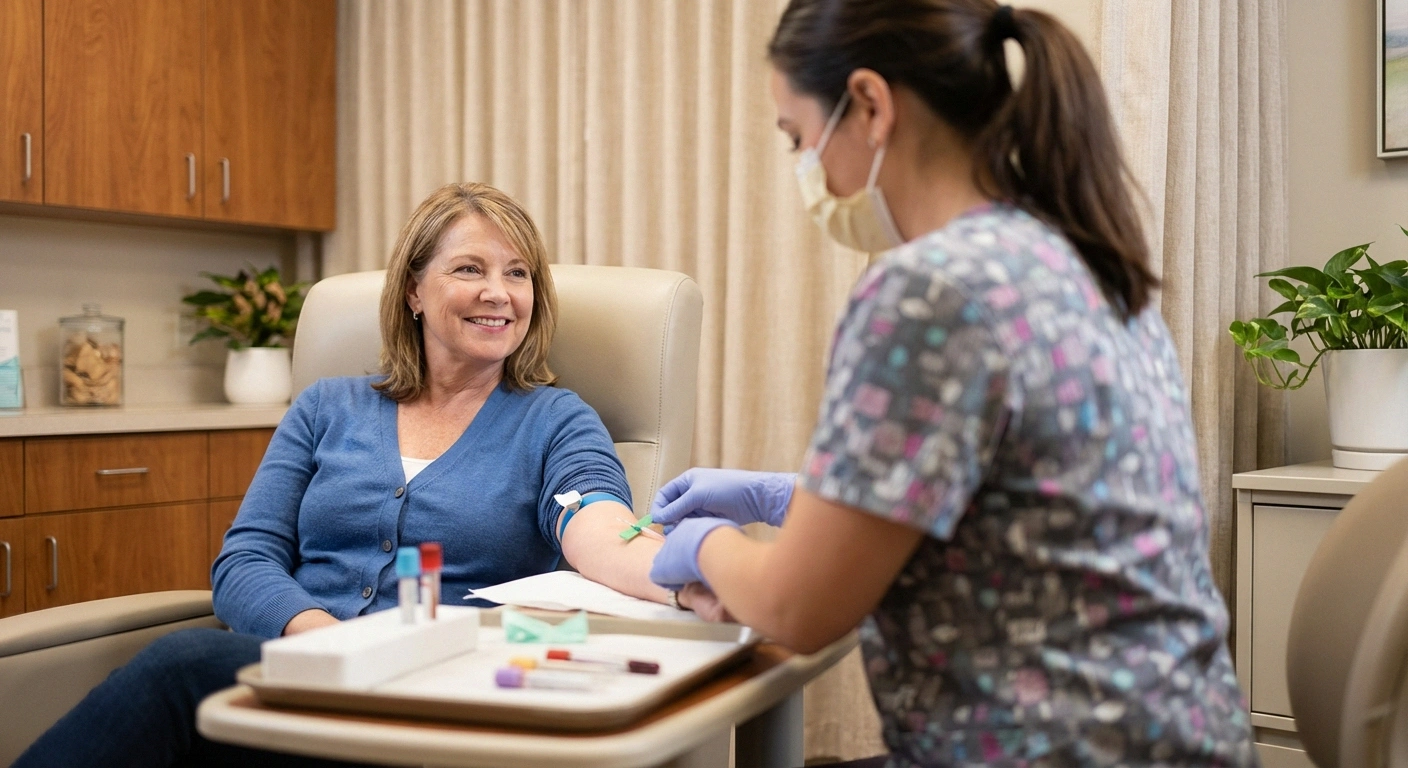
Getting to a diagnosis typically requires two parallel workups: confirming Sjögren's syndrome, and characterizing the neuropathy type.
Diagnostic Checklist: What to Ask Your Doctor
Anti-SSA (Ro) and anti-SSB (La) antibody blood tests
ANA (antinuclear antibody) panel
Nerve conduction studies + EMG (for large fiber neuropathy)
Skin punch biopsy if small fiber neuropathy suspected (NCS normal but symptoms present)
Referral to rheumatology if Sjögren's antibodies are positive
Schirmer's test (tear production) if diagnosis uncertain
Confirming Sjögren's Syndrome
The standard blood tests are anti-SSA (Ro) and anti-SSB (La) antibodies — these are the most specific markers for Sjögren's. However, not everyone with Sjögren's has positive antibodies; seronegative Sjögren's exists and requires other supporting evidence (lip biopsy showing lymphocytic infiltration of salivary glands, Schirmer's test for tear production, etc.).
Other relevant tests include ANA (antinuclear antibody), rheumatoid factor, complete blood count, and inflammatory markers. If Sjögren's neuropathy is suspected, your neuropathy diagnostic workup should include the Sjögren's antibody panel even if dry eye and dry mouth symptoms are mild or absent — neurological Sjögren's can occur with minimal glandular symptoms in some patients.
Characterizing the Neuropathy
Nerve conduction studies (NCS) and electromyography (EMG) are standard starting points. These identify which nerves are affected, whether it's primarily sensory or also motor, and the severity of damage. However, as mentioned above, small fiber neuropathy will show a normal NCS/EMG — in that case, a skin punch biopsy measuring epidermal nerve fiber density is the key diagnostic test.
For suspected sensory neuronopathy, specialized testing may look for asymmetric patterns consistent with ganglionopathy.
Recent guidelines from the Sjögren's Foundation (2025) recommend that neurological evaluation be part of the standard management of Sjögren's syndrome — recognizing that neuropathy has historically been underdiagnosed in this population.
Research Says
A 2025 Sjögren's Foundation consensus guideline recommends coordinated care among rheumatology, neurology, and primary care — with symptom management first, then escalation to immunotherapy (IVIG, rituximab) for severe or progressive presentations. Early diagnosis and treatment significantly improves long-term neurological outcomes.
Treatment Approaches
This is where having the right diagnosis pays off most clearly. Sjögren's-related neuropathy — being autoimmune in origin — has treatment options that aren't available or appropriate for other neuropathy types.

Symptom Management (First Line)
For managing pain, burning, and tingling, the same medications used in other neuropathies are appropriate as initial therapy:
- Tricyclic antidepressants (amitriptyline, nortriptyline) — often at low doses for nerve pain
- SNRIs (duloxetine/Cymbalta) — dual pain and mood benefits
- Calcium channel alpha-2-delta ligands (gabapentin, pregabalin/Lyrica) — reduce nerve excitability
- Topical agents (lidocaine patches, capsaicin cream) — localized pain relief
The 2025 Sjögren's Foundation consensus guidelines recommend starting with symptom management plus lifestyle measures before escalating to immunotherapy — unless the presentation is severe, rapidly progressive, or clearly immune-mediated (vasculitic, ganglionopathy).
Immunotherapy (For Immune-Mediated or Severe Cases)
Because Sjögren's neuropathy is driven by immune system dysfunction, immune-directed treatments can sometimes slow or partially reverse nerve damage. The main options include:
- Intravenous immunoglobulin (IVIG) — particularly useful for sensory neuronopathy (ganglionopathy) and vasculitic neuropathy. Can produce meaningful improvement in about half of treated patients. Standard dosing is 0.4–2g/kg per month.
- Corticosteroids — prednisone and similar drugs reduce inflammation quickly but have significant side effects with long-term use. Usually used for acute or severe presentations.
- Rituximab — a biologic that targets B cells (a key driver of the autoimmune response in Sjögren's). A 2023 study in Neurology documented response in Sjögren's-related small fiber neuropathy. Typically reserved for cases not responding to IVIG or corticosteroids.
- Hydroxychloroquine (Plaquenil) — commonly used to manage Sjögren's systemic symptoms; some evidence for modest neuropathy benefit, particularly for fatigue and minor sensory symptoms.
Coordinated Specialty Care
The 2025 consensus guidelines emphasize a team approach. Rheumatology manages the underlying Sjögren's. Neurology manages the neuropathy. Primary care coordinates overall health. Depending on the pattern of involvement, physical therapy, occupational therapy, or pain management specialists may all play a role. This is particularly true for patients with balance-affecting sensory neuronopathy, where fall prevention and balance therapy are important parts of the management plan.

~15%
of Sjögren's patients
develop neuropathy
~3 yrs
average time from
symptom onset to diagnosis
90%
of Sjögren's patients
are women
What to Expect: Living with Sjögren's Neuropathy
The prognosis for Sjögren's neuropathy is variable and depends heavily on the type. Small fiber neuropathy and sensory neuropathy often follow a stable or slowly progressive course — many patients manage well with symptom treatment and don't develop severe disability. Sensory neuronopathy (ganglionopathy) tends to be more severe and, without treatment, can cause significant balance impairment. Vasculitic neuropathy is often more acute but may respond well to immunotherapy.

Two pieces of perspective that I find genuinely useful:
First, getting the right diagnosis is worth fighting for. If you've had unexplained neuropathy and the standard testing hasn't identified a cause, asking your neurologist about Sjögren's antibody testing (anti-SSA/Ro, anti-SSB/La) is reasonable — especially if you're a woman between 40 and 60, or have any dryness symptoms. The testing is simple blood work.
Second, Sjögren's neuropathy has more treatment options than idiopathic neuropathy, precisely because there's a targetable immune mechanism. People with idiopathic (unknown cause) neuropathy often feel like nothing can be done beyond symptom management. If Sjögren's is your cause, you have immunotherapy pathways worth exploring with a rheumatologist.
Frequently Asked Questions
Can you have Sjögren's neuropathy without dry eyes or dry mouth?
Yes. In some patients, neurological symptoms are the presenting or dominant feature of Sjögren's, with glandular symptoms (dry eyes, dry mouth) being mild or absent. This is sometimes called “extraglandular Sjögren's” and is more common with certain antibody profiles. A neurologist who sees an unusual neuropathy pattern may order Sjögren's antibodies even without obvious dryness symptoms.
Important: Ask About Sjögren's Testing
If you've had unexplained neuropathy and standard testing hasn't found a cause — especially if you're a woman aged 40–60, or have any dryness symptoms — it's reasonable to ask your neurologist specifically for anti-SSA and anti-SSB antibody testing. Sjögren's neuropathy can exist without prominent dry eye or dry mouth. Getting the right diagnosis opens treatment options that aren't available for idiopathic neuropathy.
Will IVIG or rituximab cure my neuropathy?
These treatments can slow progression and in some cases produce partial improvement, but reversal of established nerve damage is limited. The goal is usually to stabilize the neuropathy, reduce pain, and if possible recover some function — not to achieve complete resolution. How much improvement is possible depends on how long the damage has been present and which type of neuropathy is involved.
How is Sjögren's neuropathy different from diabetic neuropathy?
The primary difference is mechanism. Diabetic neuropathy is caused by metabolic damage from high blood sugar, oxidative stress, and microvascular injury. Sjögren's neuropathy is immune-mediated — the immune system directly attacks nerve tissue or the blood vessels supplying nerves. This means Sjögren's neuropathy may respond to immune-directed treatments that don't help diabetic neuropathy, and the distribution can differ (less strictly length-dependent, may be asymmetric or affect proximal areas).
Should I see a rheumatologist or neurologist first?
If your primary symptom is neuropathy and Sjögren's hasn't been diagnosed yet, starting with a neurologist makes sense — they'll characterize the neuropathy and initiate the diagnostic workup. If Sjögren's is already known and neuropathy is a new development, rheumatology and neurology should ideally be involved together. Many academic medical centers have clinics that specifically manage systemic autoimmune diseases with neurological complications.
Can Sjögren's-related neuropathy cause permanent disability?
Sensory neuronopathy (ganglionopathy) can cause severe balance impairment and disability if untreated, and some degree of permanent functional loss is possible with advanced disease. For small fiber and pure sensory neuropathy types, significant disability is less common — most patients manage symptoms and maintain functional independence, though quality of life impacts are real. Early diagnosis and treatment improve outcomes considerably.
Are there lifestyle factors that help Sjögren's neuropathy?
General neuropathy self-care applies: foot care and inspection, fall prevention, avoiding alcohol, staying active with appropriate exercise, and managing fatigue (which is often significant in Sjögren's). There's no specific dietary intervention proven for Sjögren's neuropathy, but an anti-inflammatory diet may help reduce systemic inflammation. Fatigue management is particularly important — Sjögren's produces profound fatigue that can worsen neuropathy symptoms indirectly through disrupted sleep and reduced activity.
What is the connection between Sjögren's and small fiber neuropathy?
Sjögren's is one of the most commonly identified causes of small fiber neuropathy. The immune attack in Sjögren's can directly target the small sensory nerve fibers (those too thin to be measured by standard nerve conduction studies), reducing the density of nerve fibers in the skin. A skin punch biopsy is the key diagnostic test. Treatment with IVIG or immunosuppressants can sometimes increase nerve fiber density over time in Sjögren's-related small fiber neuropathy.
About the Author