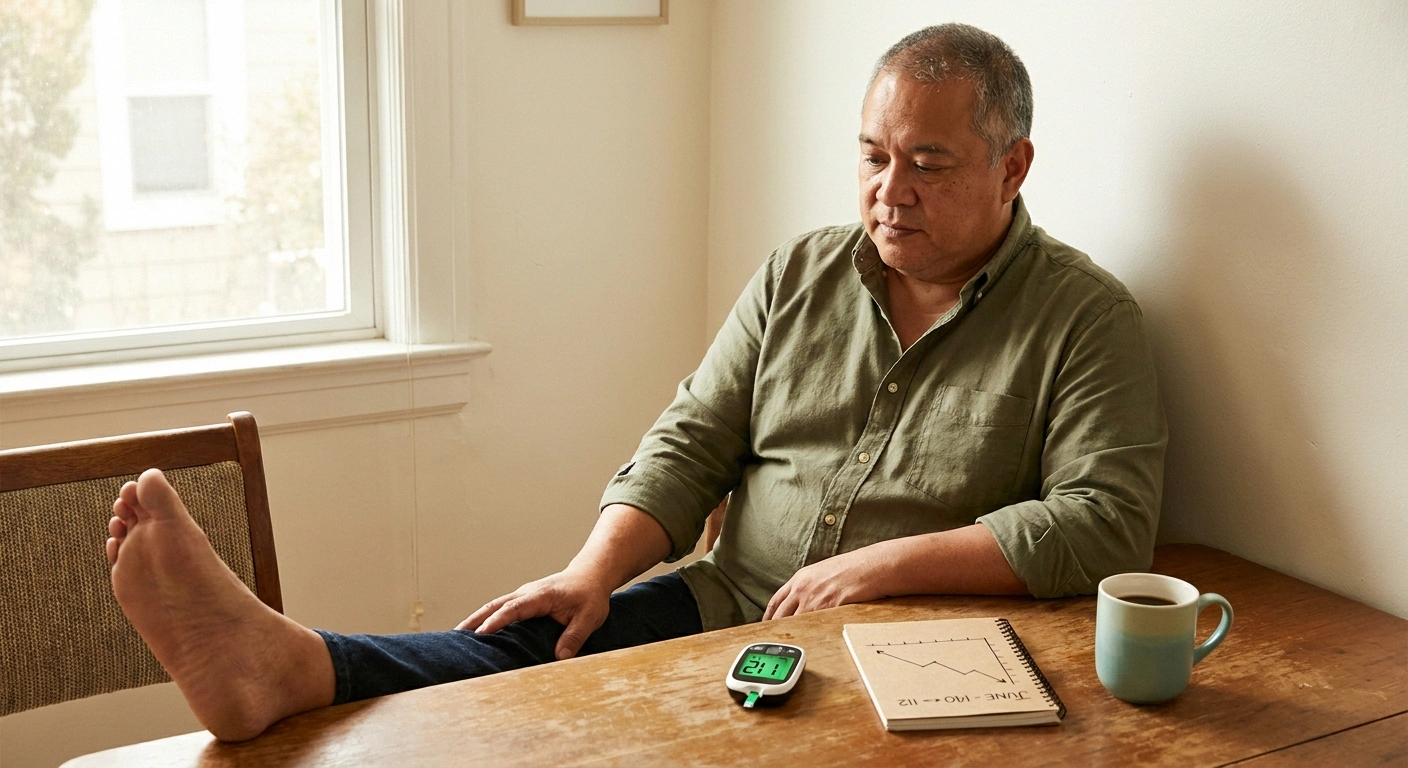
You finally got your A1C down. The number your endocrinologist has been asking about for years — the one that used to be 11 or 12 — is now in the 7s, maybe lower. You started insulin, or you got serious about Ozempic or Mounjaro, or you had bariatric surgery, or you rebuilt what you eat from the ground up. And then, just as you were starting to feel proud of the work, your feet started burning at night. Or a light bedsheet became unbearable. Or you stood up from the couch and the room tilted. The timing feels almost cruel: you did what everyone told you to do, and now you hurt more than before.
This piece is about a real and specific phenomenon called treatment-induced neuropathy of diabetes — the older, less accurate name is insulin neuritis. It happens when blood sugar comes down too fast in someone whose body spent years adapted to running high. It is not a sign that you did the wrong thing, and it is almost never a reason to stop lowering your A1C. I want to walk through what we know, what nerve doctors think is happening, what recovery looks like, and what to actually say to your diabetes care team when you show up frightened and hurting.
What Treatment-Induced Neuropathy of Diabetes Actually Is
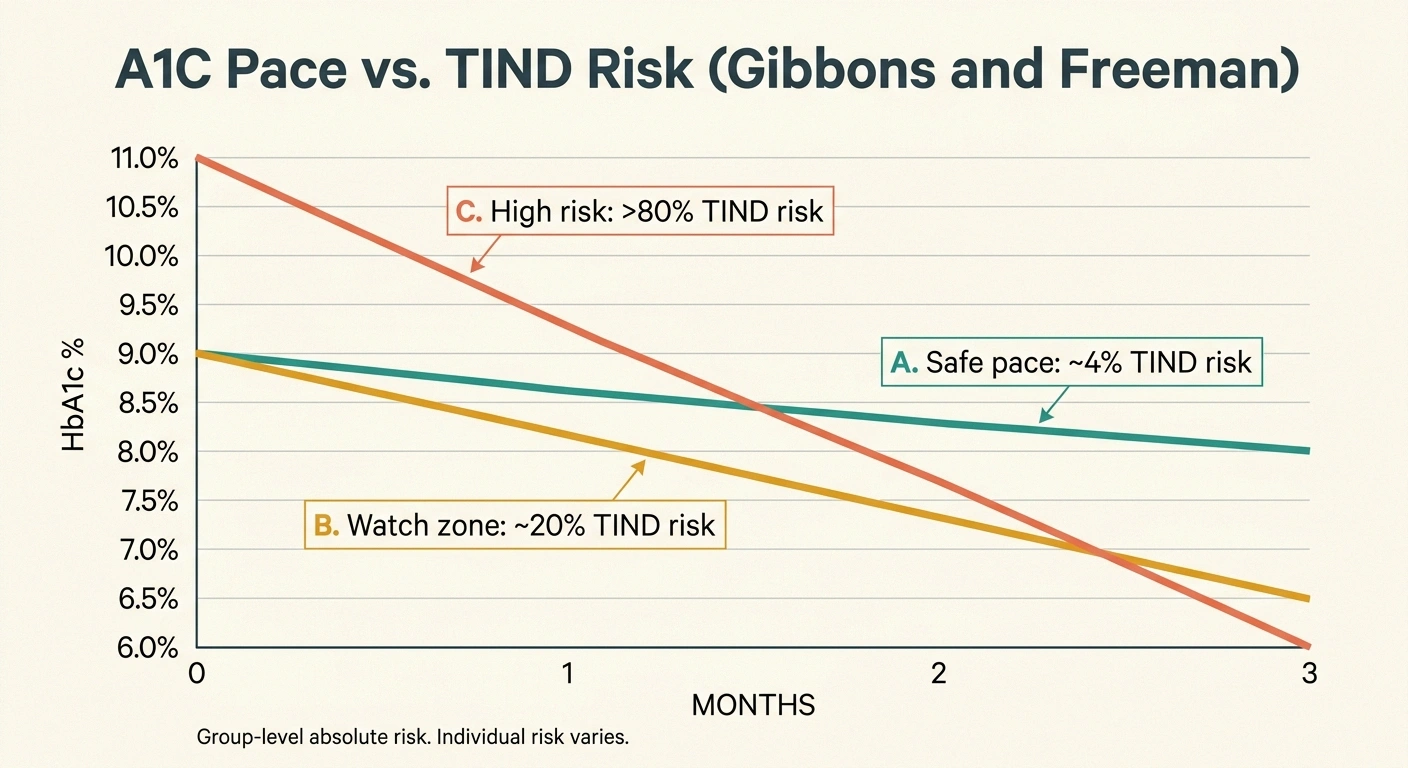
Treatment-induced neuropathy of diabetes, usually abbreviated TIND, is a form of nerve injury that shows up in a very specific window: within about eight weeks after a rapid improvement in blood sugar control. The defining pattern was formalized by Dr. Christopher Gibbons and Dr. Roy Freeman in 2010. Their threshold — the number the field has largely accepted — is a drop in HbA1c of at least two percentage points over three months. It is not the destination that triggers TIND, it is the speed of the descent.
Treatment-induced neuropathy of diabetes is a real, time-limited response to the speed of an A1C drop — not to any specific medication.
Symptoms usually appear within 8 weeks of a rapid glycemic improvement, peak around 3–6 months, and most people improve substantially over 12–24 months of continued good control. The right response is a partnership with your endocrinologist, not stopping the treatment that brought your A1C down.
The neuropathy that shows up is usually a small fiber neuropathy, meaning it hits the tiny unmyelinated nerve endings in the skin and internal organs first — the ones that carry pain, temperature, and autonomic signals. That is why the classic story is burning feet with normal-looking strength on exam. Sometimes larger fibers are involved too, and severe cases can include weakness. But the hallmark is small fiber pain with a heavy autonomic layer.
TIND matters because it is real, more common than we used to think, and often misdiagnosed as “your diabetic neuropathy getting worse” when it is actually a different animal. The chronic diabetic neuropathy most people know builds slowly over years. TIND does the opposite — it slams into the picture in weeks, right after things got better on paper.
Why It’s Called “Insulin Neuritis” — The Historical Story
The story goes back to 1933, when a physician named C. M. Caravati wrote a short case report in the Virginia Medical Monthly. Insulin was still new, and Caravati described a woman with type 1 diabetes who developed severe burning pain in her legs about four weeks after starting insulin. Stopping the insulin resolved the pain; restarting it brought the pain right back. In that era, everyone assumed the same thing: this must be an allergic reaction to insulin. The condition got the name “insulin neuritis” and sat under that heading for the better part of a century.
Insulin was never really the culprit. It was just the fastest tool available at the time for driving a badly elevated blood sugar down, so it was the medication that kept getting blamed. Once other tools capable of similar rapid drops came along — powerful oral medications, then GLP-1 receptor agonists, then bariatric surgery, then aggressive dietary programs — the same syndrome started appearing in patients who had never touched insulin. In 2010, Gibbons and Freeman proposed a rename that made the mechanism clearer: treatment-induced neuropathy of diabetes. The condition is a response to speed, not to any specific drug.
This matters practically. If you tell yourself the story that “the medication is poisoning my nerves,” you will want to stop it. That impulse is understandable, but the frame is wrong. The medication is not the problem. The rate of change is the problem. And chronic high blood sugar is a far larger and slower disaster than a temporary TIND flare.
What Happens Inside the Nerve When Glucose Falls Fast
Nobody has the full mechanism nailed down. There are several strong hypotheses, and they probably all contribute. Understanding them helps because they explain some of the stranger features of the syndrome — like why your eye doctor may see your retina looking worse in the same window your feet started burning.
The endoneurial ischemia hypothesis
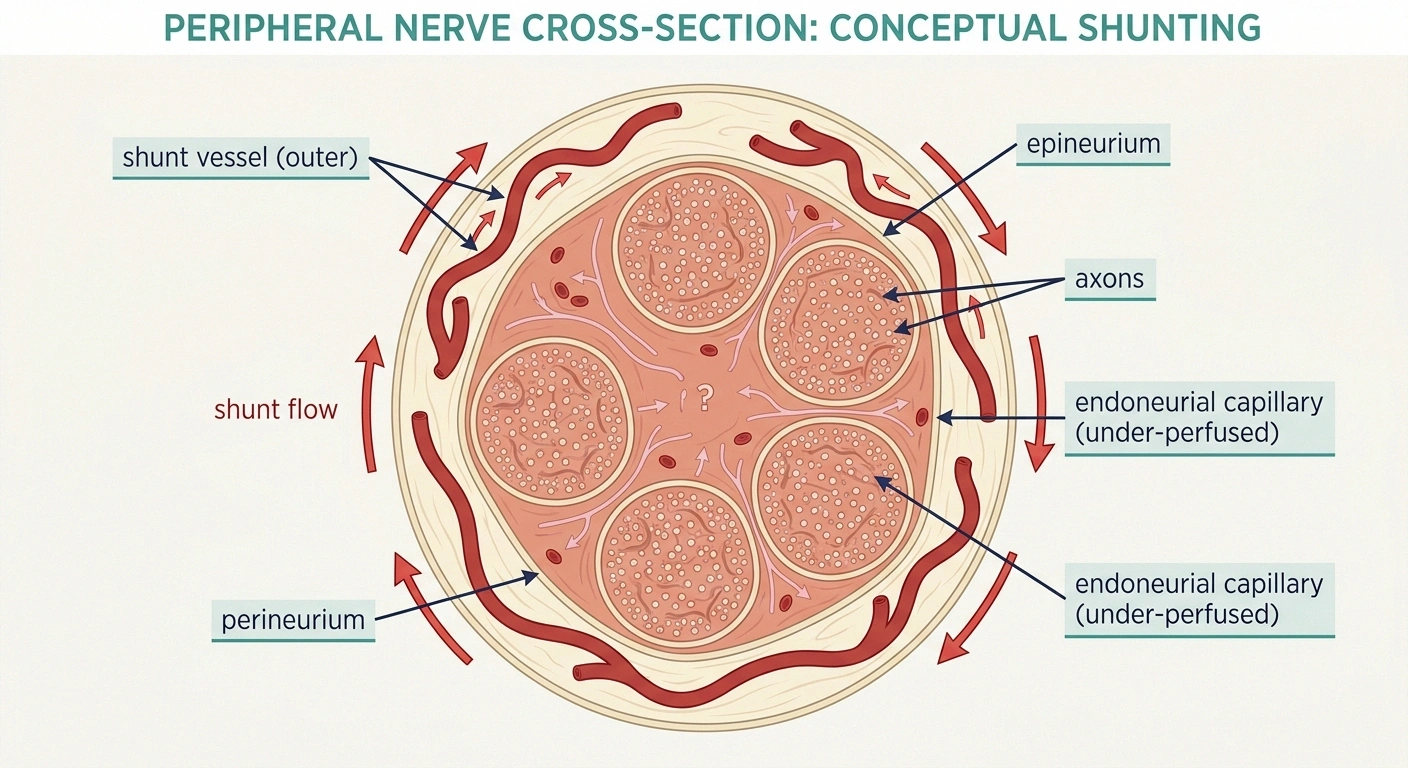
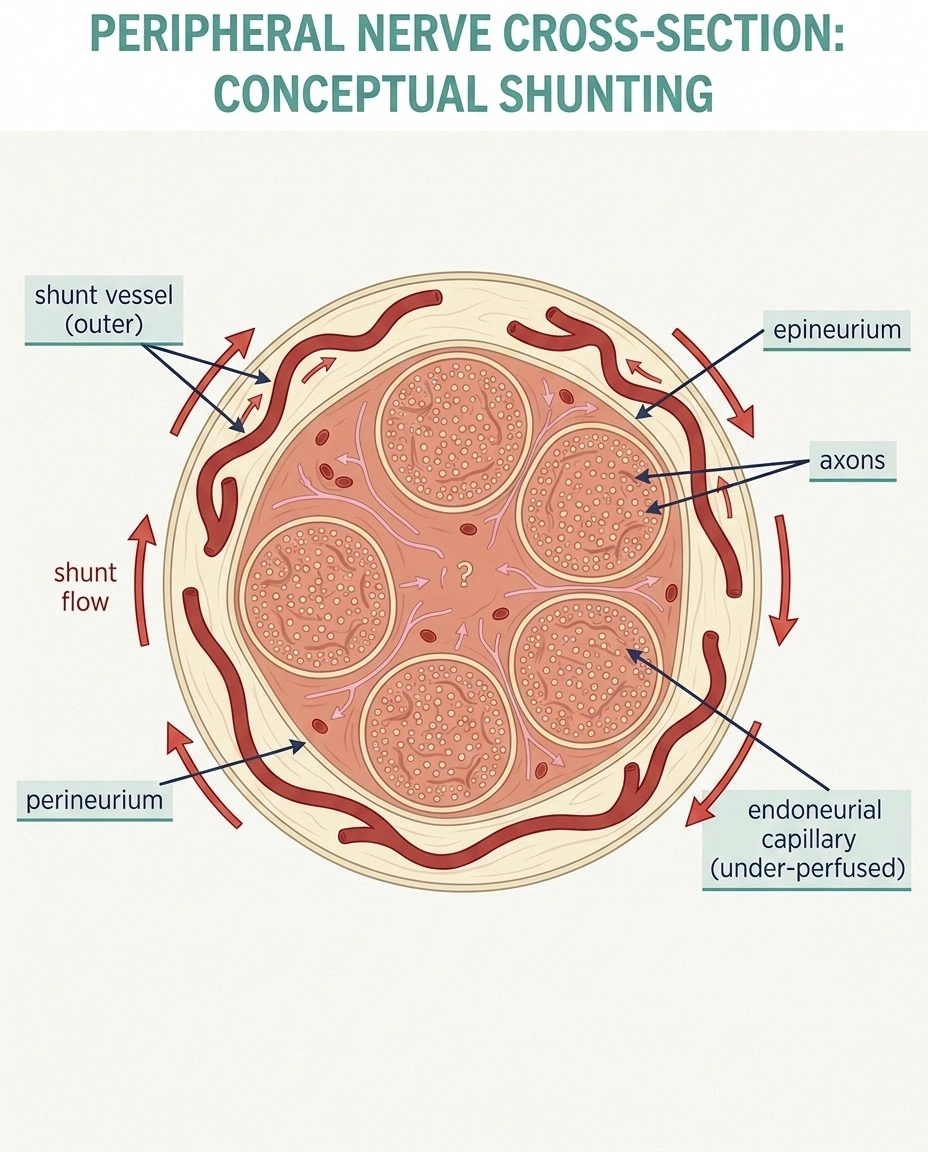
The nerves in your feet are fed by a network of tiny blood vessels. Years of high blood sugar seem to trigger a proliferation of larger, less useful vessels on the outside of the nerve — a maladaptive attempt to deliver more oxygen. When the metabolic environment suddenly normalizes, those larger vessels can act like a shunt: blood takes the path of least resistance, bypassing the small capillaries inside the nerve. The result is endoneurial ischemia — the inside of the nerve, where the axons live, becomes oxygen-starved even as the person as a whole looks metabolically healthy. Researchers call it a vascular steal effect.
The relative hypoglycemia hypothesis
Nerve cells that have run on high sugar for years get remodeled to expect it. When glucose drops toward a normal range, those neurons can experience what feels like a starvation state even though someone without diabetes would be fine at the same level. The most vulnerable are the smallest unmyelinated pain and autonomic fibers — exactly the ones that produce burning, allodynia, and autonomic dysregulation.
The microvascular reperfusion hypothesis
Nerves, the retina, and the kidney share a common small-vessel architecture, and all three can show simultaneous acute worsening during a rapid A1C drop. In the eye, this is called “early worsening of retinopathy” — a recognized short-term consequence of intensive control. The parallel pattern is one of the strongest pieces of evidence that TIND is fundamentally a microvascular event, not just a nerve event. Both usually calm down as the body reaches a new baseline.
Who Gets It — Triggers Beyond Just Insulin
The trigger list has grown in recent years:
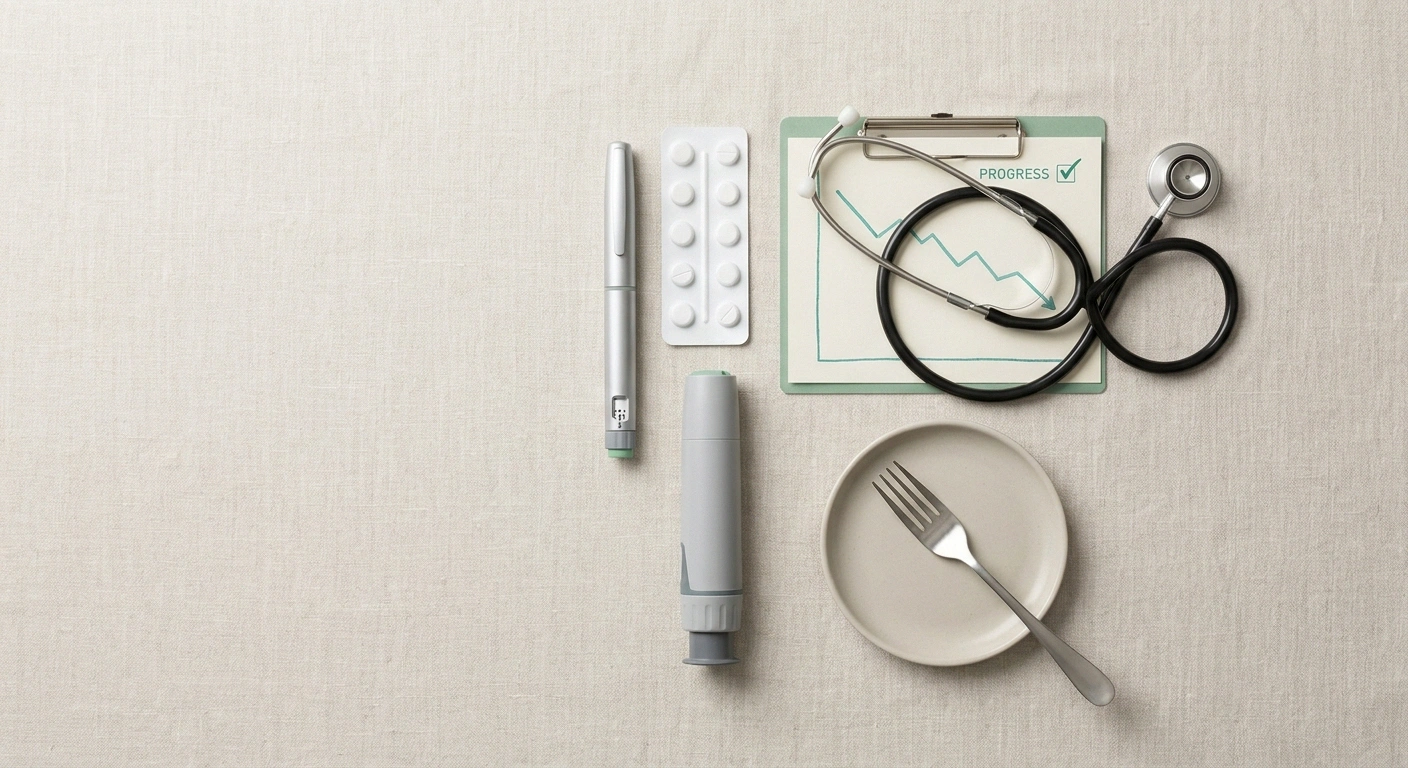
Insulin, still. Starting or dramatically intensifying insulin in someone with a long history of poor control is the classic setup — type 1 patients coming off a rough stretch or type 2 patients finally agreeing to insulin after years of resistance.
Sulfonylureas. Older oral medications like glipizide and glyburide can produce rapid A1C drops, especially when combined with lifestyle changes.
GLP-1 receptor agonists. The category that has changed the TIND conversation the most since 2020. Semaglutide (Ozempic, Wegovy, Rybelsus), liraglutide (Victoza, Saxenda), dulaglutide (Trulicity), and tirzepatide (Mounjaro, Zepbound) all produce large A1C drops in months, often with significant weight loss. Case reports linking these drugs to TIND and other rapid-weight-loss neuropathies are becoming more common.
Bariatric surgery. Roux-en-Y gastric bypass, sleeve gastrectomy, and the newer duodenal switch procedures all produce very rapid glycemic normalization. Some post-bariatric neuropathy is TIND. Some is nutritional — thiamine, B12, folate, and copper deficiencies are common after bypass and produce their own patterns. The two can overlap; a good workup separates them.
Aggressive dietary intervention. Very-low-calorie diets and structured type 2 remission programs (DiRECT, Newcastle) can drop A1C by three or four percentage points in weeks. Reports of TIND after severe dietary restriction go back decades under the older name “diabetic cachectic neuropathy.”
Risk is not evenly distributed. Gibbons and Freeman’s numbers look roughly like this: a two-to-three percentage point A1C drop over three months carries about a 20 percent risk of TIND; a drop of more than four percentage points in that window pushes the risk above 80 percent. Women appear to be at somewhat higher risk than men, and people with type 1 diabetes at higher risk than those with type 2. These are population-level numbers, not predictions about you, but they explain why careful endocrinologists get more cautious as A1C drops accelerate.
Gibbons & Freeman 2010: A drop in HbA1c of more than 2 percentage points over 3 months is the working threshold for TIND risk.
Group-level absolute risk figures from Gibbons & Freeman, published in Brain 2015. Individual risk varies with type of diabetes, sex, and duration of prior hyperglycemia.
What It Feels Like — Symptoms and Timeline
Timing is one of the most useful diagnostic clues. Most people notice something within two to eight weeks after the treatment change; some case series describe symptoms as late as three to six months out. If your feet suddenly start burning three years after you got your diabetes under control, TIND is unlikely.

Typical TIND Timeline: Weeks 0–24 After Rapid A1C Improvement
| Window | What Usually Shows Up |
|---|---|
| Weeks 0–2 | Rapid A1C improvement in progress. Weight loss beginning. No nerve symptoms yet. |
| Weeks 2–8 | Burning feet start. Allodynia to sheets, socks, shoes. Nights worst. Autonomic symptoms may begin (orthostasis, gastroparesis, sudomotor changes). |
| Weeks 4–12 | Early worsening of retinopathy may show on eye exam. Diagnosis usually made in this window. Pain medication started. |
| Months 3–6 | Symptoms typically peak. Autonomic dysfunction on formal testing in ~2 of 3 patients. Weight begins stabilizing. |
| Months 6–24 | Slow, steady improvement in pain, autonomic function, and nerve fiber density in most patients. Residual symptoms in 20–30% at 18 months. |
The most common early symptom is burning feet. People describe it as feeling like their soles are on hot pavement, or like the bones themselves are aching from the inside. Allodynia — pain from things that should not hurt, like a light sheet or the seam of a sock — is very characteristic. Symptoms are often worst at night.
Because TIND heavily involves the autonomic nervous system, the pain rarely comes alone. Roughly two-thirds of patients in the largest series had significant autonomic dysfunction on formal testing. That can look like:
Orthostatic hypotension. You stand up and the room spins or goes dim. Your blood pressure is failing to compensate for the posture change. Falls are the biggest secondary risk.
Gastroparesis. Your stomach empties too slowly. You feel full after a few bites, get nauseous, and your blood sugars start doing strange things because food is arriving unpredictably.
Sudomotor changes. You either sweat in strange patterns or cannot sweat in certain areas at all, which can lead to skin dryness and cracking.
Erectile dysfunction, bladder changes, and heart rate variability shifts. All of these can be autonomic manifestations of TIND, and they can be alarming when they show up in someone who was fine six months earlier.
Weight loss is common — partly from the underlying treatment (GLP-1s and bariatric surgery drive weight loss directly), partly because gastroparesis and pain reduce appetite. And in the same window the feet start burning, an eye exam can show early worsening of retinopathy — new microaneurysms, cotton wool spots, sometimes worsening macular edema. If your ophthalmologist asks about recent changes in your diabetes management, it is because they know why they are seeing what they are seeing.
How Doctors Recognize It — Diagnosis and Workup
The diagnosis is primarily clinical. A careful history is worth more than any single test. The clinician needs to hear the timeline — what your A1C was, what it is now, how fast it changed, and when the symptoms started. When those three data points line up, TIND becomes the leading suspicion.
Most patients still get a formal neuropathy workup to confirm the picture and rule out other things:
Skin biopsy for IENFD. A three-millimeter punch biopsy from the lower leg, stained for a nerve marker called PGP 9.5, measures how many small fibers per millimeter remain. In TIND the density is usually reduced. It confirms small fiber neuropathy but does not distinguish TIND from other small fiber neuropathies — the timing does that.
Autonomic testing. Tilt-table testing looks for orthostatic hypotension. Heart rate variability testing looks at vagal function. QSART measures the sweat response. These confirm the autonomic component and give a baseline to track over time.
Nerve conduction studies and EMG. These test the larger, faster fibers. In pure small fiber TIND they are often normal, which is itself a useful finding. Significant abnormalities point to a larger-fiber component or overlapping process.
Bloodwork to exclude other causes. B12, folate, thiamine, methylmalonic acid, TSH, and sometimes a paraprotein workup. This is especially important after bariatric surgery or GLP-1 use with poor intake, where nutritional neuropathy from B12, thiamine, or copper deficiency can coexist with or be mistaken for TIND. A recent case report described a woman on semaglutide with a severe axonal neuropathy that turned out to be thiamine deficiency. Catching that early matters, because replacement is fast and effective.
Ophthalmology exam. Not to diagnose TIND, but to document what the retina is doing right now and set a baseline for follow-up.
Managing TIND — The Central Paradox
Here is the paradox at the center of everything: the answer is not to walk back your good blood sugar control. Chronic high blood sugar causes far more nerve damage over time than TIND does in the short term, and stopping treatment abruptly can send your metabolic state into chaos and create new problems on top of the neuropathy. The correct move is almost always to hold your A1C where it is — or continue lowering it more slowly — while managing symptoms and letting the nerves rebalance.

Do NOT stop or reduce insulin, GLP-1 medication, or other diabetes treatment on your own to relieve TIND symptoms.
The paradox is real, but the answer is not chronic hyperglycemia. Rebounding to a badly elevated blood sugar creates its own risks — diabetic ketoacidosis in type 1, severe long-term microvascular damage in both types, and it does not reliably improve TIND symptoms.
Instead: call your endocrinologist, describe the timeline and symptoms, and let the treatment plan be adjusted together. Symptomatic pain management and a slower pace of further reductions are almost always the right path.
None of this is a decision you make alone. Your endocrinologist owns the treatment plan. What follows are the pieces of management that typically come into play, so you know what to expect and what to ask about.
Talking with your endocrinologist about pace
Once TIND is on the table, most endocrinologists slow the pace of further A1C reductions rather than reverse what you already achieved. If you dropped from 11 to 8 in three months and the target is 6.5, the next mile is typically covered over a longer runway. If you are already at target, the conversation shifts to maintenance.
Pain management
The medications used for TIND pain are the same as for other painful diabetic neuropathies. Duloxetine, an SNRI, is often first line and helps with the mood impact of sudden neuropathy. Pregabalin and gabapentin are alternatives or add-ons. Topical lidocaine and capsaicin can help with allodynia. Opioids are generally avoided outside short severe episodes.
Autonomic support
Orthostatic hypotension usually responds to hydration, salt liberalization if permitted, waist-high compression stockings, and slower positional changes. Severe cases sometimes require midodrine or fludrocortisone. Gastroparesis is managed with small frequent meals, low-fat and low-fiber choices during flares, and short courses of prokinetic medication.
Eye monitoring and nutrition
Because retinopathy can move fast in this same window, most patients get more frequent ophthalmology follow-up. And anyone with rapid weight loss, bariatric surgery, or a very restrictive diet needs a nutritional assessment. Thiamine, B12, and folate deficiencies produce neuropathies that look very similar to TIND but respond to replacement.
Mental health support
The mental health load of TIND is significant and often ignored. You did the hard thing and your reward has been new pain. Sleep gets wrecked; the future feels less certain. Duloxetine can pull double duty, and short courses of therapy or medication for the mood layer are appropriate.
What Recovery Actually Looks Like
The prognosis is one of the reasons this diagnosis is worth naming. Most people improve substantially. Follow-up studies of TIND patients at 18 to 24 months of continued glycemic control show meaningful reductions in pain, improvement on autonomic testing, and even measurable increases in nerve fiber density on repeat skin biopsy. Nerves can regrow when the metabolic environment stabilizes.
“Most” is not “everyone.” Somewhere in the range of 20 to 30 percent of patients have some residual symptoms at the 18-month mark, and a smaller subset live with a chronic small-fiber neuropathy that never fully resolves. The people who do best are those who maintain glycemic control through the flare and treat symptoms actively. The people who do worst are those who abandon control during the flare, slide back into chronic hyperglycemia, and end up with long-term diabetic neuropathy on top of residual TIND. If you are wondering whether neuropathy can be reversed, TIND is one of the more hopeful stories in the neuropathy world — improvement is the rule, not the exception, provided the metabolic control holds.
Most people describe pain plateauing around three to six months in, then slowly stepping down over the next year. Autonomic symptoms often lag the pain. The retina calms as the microvascular environment reaches a new equilibrium.
Talking to Your Diabetes Care Team
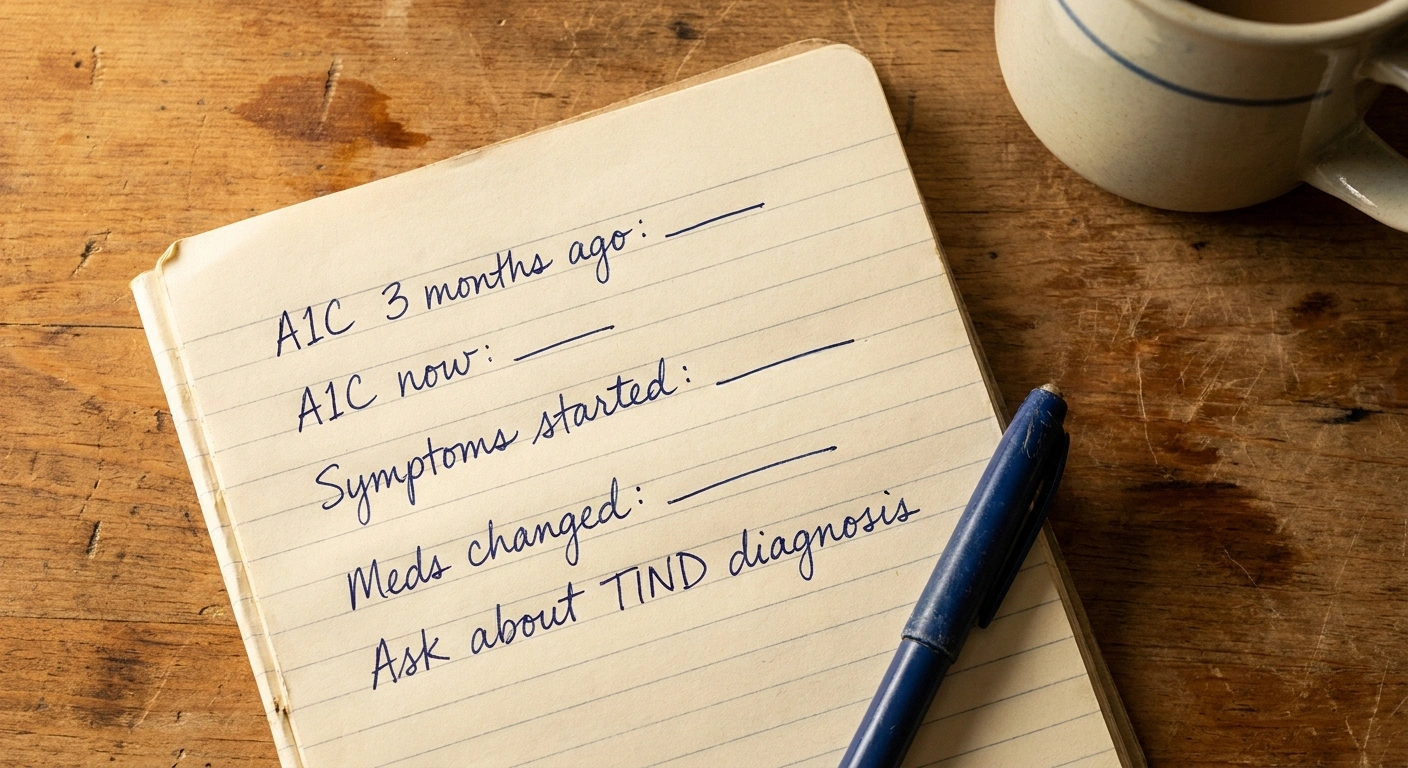
TIND is often diagnosed late because patients do not have the vocabulary to describe what they are experiencing, and busy clinics do not always connect a rapid A1C drop with new nerve pain unless someone spells it out. If you walk into your appointment saying “my feet hurt,” you may come out with a generic diabetic neuropathy conversation. If you walk in saying “I have new burning pain and orthostatic dizziness that started six weeks after we intensified my treatment, and I want to know if this could be treatment-induced neuropathy,” you will get a very different conversation.
Management Priorities for New TIND Symptoms
-
1
Call your endocrinologist first, not the internet.Bring your A1C timeline — three months ago vs. now — and the date your symptoms started.
-
2
Confirm the diagnosis; rule out overlapping causes.Bloodwork for B12, thiamine, folate, copper. Skin biopsy and autonomic testing if the picture is unclear.
-
3
Slow the pace of further A1C reductions — do not reverse them.Endocrinologist decides pace. Rapid rebound is worse than a longer runway.
-
4
Start symptomatic pain management.Duloxetine often first line. Pregabalin or gabapentin as alternatives. Topical lidocaine for allodynia.
-
5
Schedule ophthalmology follow-up.Retinopathy can worsen briefly in the same window. Watch it, do not react by reversing control.
-
6
Ask for a neurology referral if the picture is severe or unclear.Especially with weakness, worsening symptoms, or prominent autonomic dysfunction.
Questions worth writing down in advance:
What was my A1C three months ago and what is it now? Get the actual numbers on paper — that pace anchors everything else.
Given the pace, is treatment-induced neuropathy of diabetes on the differential? Naming the condition matters.
Should I get a referral to a neurologist? Especially with autonomic symptoms, weakness, or an unclear picture. Neurologists who see a lot of neuropathy recognize TIND quickly.
What is our plan for the pace of further A1C reductions? A negotiation, not a demand. You do not want to stop control — you may want a longer runway.
Should I check thiamine, B12, folate, and copper? Especially after bariatric surgery, GLP-1 use with poor intake, or restrictive diets.
When should I see the ophthalmologist next, and what is the plan for pain and autonomic symptoms in the meantime?
One last thing. The paradox of TIND is that the treatment that hurt you was also the treatment that saved you. Chronic uncontrolled diabetes is a slow-motion catastrophe for nerves, eyes, kidneys, and heart. What you accomplished by getting your A1C down is real, and it protects you in ways the current flare does not undo. The right response is a partnership with your care team — slow the pace, treat the symptoms, feed the nerves, hold your ground. Most people come through, and you are more likely to be in that group if you stay in the game.
Frequently Asked Questions
Should I stop my insulin or GLP-1 medication if I think I have TIND?
No, not on your own. Stopping diabetes medication without a plan can send your blood sugar back up rapidly, which brings its own risks and does not reliably improve TIND symptoms. Call your endocrinologist, describe what you are experiencing and the timeline, and let them decide with you whether the plan needs to change. In most cases the answer is to keep control, slow the pace of further reductions, and treat the symptoms.
How fast is too fast when lowering A1C?
The most cited threshold is a drop of more than two percentage points over three months. Below that, the risk of TIND is around four percent. Between two and three points, risk climbs to about twenty percent. Above four points in three months, more than eighty percent develop symptoms in some studies. Group-level numbers, not guarantees, but they explain why careful endocrinologists step A1C down gradually when they can.
Will my TIND ever go away?
For most people, yes — substantially. Follow-up studies show major improvements in pain, autonomic function, and even nerve fiber density over 18 to 24 months of continued good glycemic control. About 20 to 30 percent have some residual symptoms at 18 months. The people who do best are those who maintain glucose control through the flare rather than abandoning treatment.
Can TIND happen after Ozempic, Mounjaro, or bariatric surgery?
Yes. The condition was named “insulin neuritis” because insulin was the only fast tool available in the 1930s. Anything producing a rapid A1C drop can trigger the same pattern — GLP-1 receptor agonists like semaglutide (Ozempic, Wegovy), tirzepatide (Mounjaro, Zepbound), sulfonylureas, bariatric surgery, and severe dietary restriction. If new burning pain or autonomic symptoms started in the first few months after any of these, TIND belongs on the differential.
Why did my retinopathy get worse right when this started?
Rapid glycemic control can cause short-term worsening of retinopathy in some patients — an effect ophthalmologists have long recognized. The vascular changes that likely drive TIND in nerves seem to drive early worsening in the retina at the same time, because both organs share a small-vessel architecture. In most cases the retina stabilizes over the following year. It is a reason to see your eye doctor more often during the high-risk window, not a reason to reverse your diabetes treatment.
How is TIND different from regular diabetic neuropathy?
Classic diabetic neuropathy develops slowly over years of high blood sugar, starts in the toes, and does not include a strong autonomic component early on. TIND does the opposite: it shows up within weeks of a rapid A1C improvement, is dominated by burning pain and autonomic symptoms out of proportion to sensory loss, and often improves rather than worsens over time.
Can supplements like alpha lipoic acid help with TIND?
There is no strong evidence that supplements shorten TIND recovery specifically. Some patients find alpha lipoic acid helpful for general diabetic neuropathy symptoms, and it is generally considered safe. What matters much more is confirming that you are not deficient in something that mimics TIND — thiamine, B12, folate, and copper are the ones to rule out with lab work. Fixing a real deficiency can produce dramatic improvement.
Should I see a neurologist or is my endocrinologist enough?
Many patients are managed jointly. Your endocrinologist owns the glycemic control plan. A neurologist — ideally one who sees a lot of peripheral nerve disease — can confirm the diagnosis with the right testing, rule out overlapping causes like nutritional or inflammatory neuropathies, and manage pain and autonomic symptoms if the first-line approach is not working. If you have significant weakness, an unclear picture, or symptoms getting worse rather than plateauing, a neurology referral is worth asking for.
About the Author