
Browse all our living with neuropathy guides for more articles like this one.
I can't tell you how many people in my neuropathy support group have said some version of the same thing: “My doctor doesn't understand how bad this really is.” Maybe you've experienced it too — you walk into a 15-minute appointment, try to explain the burning, tingling, and numbness you live with every day, and somehow walk out feeling like you weren't really heard. Or worse, you leave with the same prescription that isn't working and no clear plan for what comes next.
The problem usually isn't that your doctor doesn't care. It's that communicating about neuropathy pain is genuinely difficult. Nerve pain doesn't show up on most standard tests the way a broken bone appears on an X-ray. It's invisible, it's subjective, and it fluctuates in ways that are hard to capture in a brief office visit. But there are specific strategies that can dramatically improve these conversations — and ultimately, the quality of care you receive.
After more than a decade of navigating appointments, testing my patience with referral processes, and learning what actually gets results, I've developed an approach that has helped me and many others in our community get the care we deserve. Here's everything I've learned.
Before Your Appointment: Preparation Is Everything
The single biggest thing that separates a productive neuropathy appointment from a frustrating one is preparation. When you walk in organized, you signal to your doctor that you're an engaged patient — and you make the best use of limited appointment time.
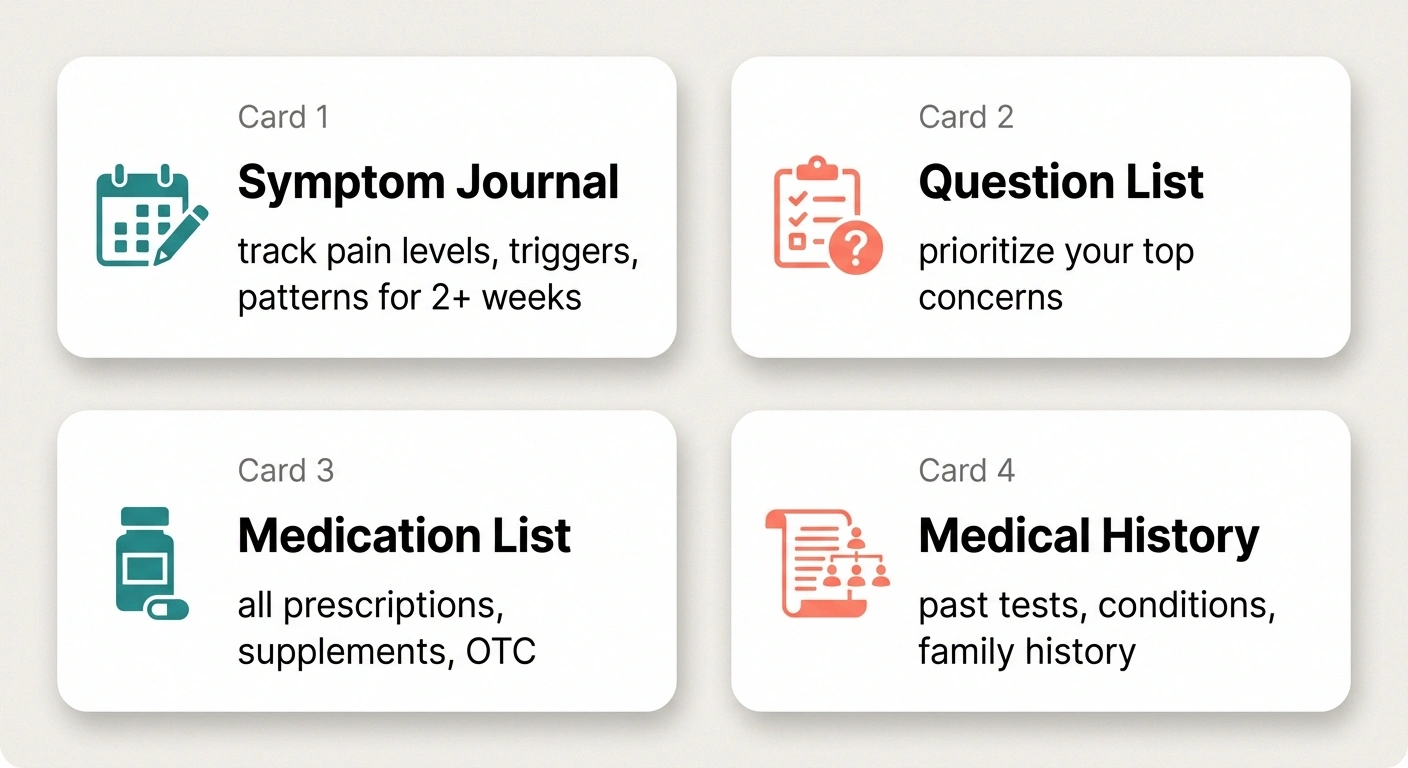
Keep a Symptom Journal
Start tracking your symptoms at least two weeks before your appointment (or ideally, as an ongoing habit). Your journal should capture:

- Pain location and type: Where exactly do you feel it? Is it burning, stabbing, tingling, electric-shock-like, or aching? Neuropathy pain has distinct qualities that help doctors determine which nerve fibers are affected.
- Severity on a 0-10 scale: Rate your pain at different times of day. Many people with neuropathy notice that symptoms worsen at night, and this pattern gives your doctor useful diagnostic information.
- Triggers and patterns: Does cold weather make it worse? Standing for long periods? Certain shoes? Physical activity? Stress? Identifying triggers helps your doctor understand the underlying mechanism.
- Impact on daily life: “I can no longer open jars.” “I fell twice last week because my feet were numb.” “I can't sleep more than 3 hours before the burning wakes me up.” These concrete details matter more than saying “it hurts a lot.”
- Medication effects: If you're already taking medication, note whether it helps, how much, and any side effects you're experiencing.
Bring a printed copy of your symptom journal to the appointment. Doctors can skim a written summary far more efficiently than they can extract the same information through conversation.
Janet's Tip
Don't rely on memory during a 15-minute appointment. A printed symptom journal with dates, pain levels, and specific examples (“dropped 3 glasses this week”) communicates more in 30 seconds of reading than 10 minutes of conversation.
Prepare Your Questions in Advance
Write down your most important questions and prioritize them — appointments run short, and you may not get to everything. Here are questions that are particularly valuable for neuropathy patients to ask:

- What type of neuropathy do I have, and do we know what's causing it?
- What diagnostic tests should I have that I haven't had yet?
- Is my neuropathy likely to progress, and what warning signs should I watch for?
- Are there treatment options beyond my current medication?
- What are the potential side effects of the treatments you're recommending?
- Should I be seeing a specialist (neurologist, pain management doctor) in addition to you?
- Are there lifestyle changes that could help slow progression or manage symptoms?
Gather Your Medical History
Bring a complete list of:

- All current medications, including supplements and over-the-counter products
- Previous treatments you've tried for neuropathy and their results
- Relevant medical conditions (diabetes, autoimmune disorders, vitamin deficiencies, etc.)
- Family history of neuropathy or neurological conditions
- Any recent test results, especially from other providers
During the Appointment: How to Communicate Effectively
The way you describe your symptoms has a real impact on how seriously they're taken and what treatment decisions follow. Here's how to make every minute count.
Use Precise, Descriptive Language
Instead of saying “my feet hurt,” try: “I have a constant burning sensation in the soles of both feet that I'd rate 6 out of 10 during the day, increasing to 8 out of 10 at night. Even the weight of my bedsheet on my feet causes sharp, shooting pain.” This kind of specific description tells your doctor several things at once: the type of nerve fibers involved, the severity, the pattern, and the functional impact.
Here are some neuropathy-specific descriptors that communicate effectively to doctors:
- Burning — suggests small fiber involvement
- Electric shock or stabbing — indicates acute nerve firing
- Pins and needles (paresthesia) — common in early or mild neuropathy
- Numbness with pain (painful numbness) — yes, you can have both simultaneously; it's called anesthesia dolorosa
- Allodynia — pain from things that shouldn't hurt (clothing touching skin, bedsheets on feet)
- Hypersensitivity to temperature — even mildly cold or warm things causing pain
- Loss of proprioception — feeling unsteady because you can't sense where your feet are, which creates balance and fall risks
Using these terms doesn't mean you need to diagnose yourself — it means you're describing your experience in language your doctor can immediately translate into clinical understanding.
❌ Vague Language
“My feet hurt a lot.” “The pain is really bad.” “I can't do things anymore.”
✓ Specific Language
“I have constant burning in both feet, 6/10 by day, 8/10 at night. Even bedsheets cause sharp shooting pain.”
Lead with Functional Impact
Doctors respond to functional limitations more than pain ratings. Instead of focusing only on how much it hurts, emphasize what you can no longer do:
- “I've dropped my coffee mug three times this week because I can't feel it in my hand.”
- “I can't walk through the grocery store without sitting down twice.”
- “I haven't slept more than four hours in a night for the past month.”
- “I'm afraid to carry my grandchild because I might drop her.”
- “I fell on the stairs last Tuesday because my feet were completely numb.”
These statements paint a picture of disability that pain numbers alone can't convey. They also help your doctor assess which treatments and tests to prioritize based on which functions are most compromised.
Be Honest About What Isn't Working
This is the one I struggled with most early on. There's a natural tendency to want to be a “good patient” — to minimize problems, to say medications are helping more than they are, or to avoid seeming difficult. But your doctor can only make good decisions with accurate information.
If gabapentin isn't controlling your pain adequately, say so. If the side effects of your medication — drowsiness, weight gain, cognitive fog — are significantly affecting your quality of life, that's critical information. If you've tried a recommended treatment and stopped because of side effects, mention that too — it helps your doctor understand which alternatives might work better.
You can frame it constructively: “I appreciate that we tried gabapentin, but at the dose where it helps my nerve pain, the drowsiness makes it unsafe for me to drive. Can we explore alternatives that might give me pain relief without that level of sedation?”
Script You Can Use
“I appreciate that we tried [medication], but at the dose where it helps my nerve pain, [specific side effect] is significantly affecting my quality of life. Can we explore alternatives that might give me pain relief without [that side effect]?”
Ask About the Diagnostic Workup
Many neuropathy patients go years without a thorough diagnostic workup. If you haven't had the following tests, ask your doctor whether they're appropriate for your situation:
- Nerve conduction study (NCS) / EMG: The standard test for measuring large fiber nerve function
- Skin biopsy (IENFD): The gold standard for detecting small fiber neuropathy
- Comprehensive blood panel: Including HbA1c, fasting glucose, B12, folate, thyroid, inflammatory markers, and potentially testing for autoimmune conditions
- Quantitative sensory testing (QST): Measures your sensitivity to vibration, temperature, and pressure
- Autonomic testing: If you're experiencing dizziness, digestive issues, or changes in sweating patterns, autonomic neuropathy testing may be warranted
Understanding which tests you've had and which you haven't is part of being an informed patient. You can to help guide this conversation.
When to See a Specialist
Your primary care doctor is often the first person you see about neuropathy symptoms, and they can handle many aspects of diagnosis and treatment. But there are clear situations where a specialist referral is warranted:
You need a neurologist if:
- Your neuropathy has no clear cause (no diabetes, no obvious vitamin deficiency)
- Symptoms are progressing despite treatment
- You need nerve conduction studies or skin biopsy
- Your primary care doctor has tried 2-3 medications without adequate relief
- You have symptoms suggesting a complex or unusual type of neuropathy
You may benefit from a pain management specialist if:
- Standard neuropathy medications haven't provided adequate relief
- You're interested in interventional options like nerve blocks or spinal cord stimulation
- Your pain significantly impacts your ability to function and you need a comprehensive pain management plan
You may benefit from a podiatrist if:
- Neuropathy primarily affects your feet
- You need help with specialized foot care to prevent ulcers and injuries
- You need guidance on protective footwear
Don't be afraid to ask your doctor for a referral. A good primary care doctor welcomes specialist involvement for complex conditions like neuropathy — it's not a sign that you're being “difficult.”
When to Seek Urgent Care
Don't wait for your next scheduled appointment if you experience sudden weakness in your legs, loss of bladder or bowel control, rapidly spreading numbness, or symptoms appearing after starting a new medication. These warrant immediate medical attention.
If You Feel Dismissed: What to Do Next
Let's be direct about something: some doctors minimize neuropathy pain. Maybe they're not familiar with the condition beyond basic diabetic neuropathy. Maybe they're skeptical of invisible pain conditions. Maybe they're overwhelmed with a full patient load and don't have time to dig deeper. Whatever the reason, feeling dismissed by your doctor is one of the most demoralizing experiences in healthcare.
If this happens to you, here's what I'd suggest:
Try once more with better communication. Sometimes what feels like dismissal is actually a miscommunication. Come to your next appointment with your symptom journal, specific functional limitations documented, and a clear statement: “I need you to understand that this pain is significantly affecting my quality of life and ability to function. I need us to develop a more aggressive treatment plan.”
Request a referral. If your primary care doctor doesn't seem equipped to manage complex neuropathy, a neurologist or pain specialist may take your symptoms more seriously and have more tools available.
Get a second opinion. You have every right to see another doctor. Bring all your medical records and test results so the new provider can pick up where the first left off without redundant testing.
Consider a teaching hospital or neuropathy center. Academic medical centers — like the Neuropathic Therapy Center at Loma Linda University Health, Cleveland Clinic's neuropathy program, or Mayo Clinic — often have specialists who focus specifically on complex neuropathy cases and are more current with emerging treatments.
Discussing Treatment Options
A productive treatment conversation covers not just what to try, but why, what to expect, and what comes next if it doesn't work. Here are the topics to explore with your doctor:
Current first-line medications: Gabapentin, pregabalin (Lyrica), and duloxetine (Cymbalta) are the most commonly prescribed medications for neuropathy pain. Ask your doctor which they recommend and why, what the expected timeline is for seeing improvement (typically 2-4 weeks), and what side effects to watch for.
Topical treatments: For localized pain, capsaicin cream, lidocaine patches, and other neuropathy creams can provide relief without systemic side effects. Ask whether these make sense as an add-on to oral medication.
Non-medication approaches: Physical therapy, TENS units, acupuncture, and regular exercise programs all have evidence supporting their use for neuropathy pain. Many doctors don't mention these unless asked, so bring them up.
Supplements: Some supplements have clinical evidence behind them for nerve health — including ALA and neuropathy research, vitamin B12, and acetyl-L-carnitine. Ask your doctor whether any supplements make sense alongside your current treatment plan.
Advanced interventions: If medications haven't worked, ask about spinal cord stimulation, dorsal root ganglion stimulation, and peripheral nerve stimulation. These newer approaches use electrical stimulation to interrupt pain signals and can be life-changing for people with severe neuropathy pain that hasn't responded to other treatments.
Addressing the underlying cause: The most important treatment is often addressing whatever is causing the neuropathy in the first place. Better blood sugar control for diabetic neuropathy, correcting vitamin deficiencies, stopping offending medications — these approaches may slow or even halt nerve damage progression.
Building a Long-Term Relationship With Your Care Team

Neuropathy is usually a long-term condition, which means your relationship with your healthcare providers matters more than any single appointment. Here are principles for building productive, ongoing care:
Schedule regular follow-ups. Don't wait until things get worse to make an appointment. Regular check-ins — even quarterly — allow your doctor to monitor progression, adjust treatments, and catch problems early. Ask your doctor how often they'd like to see you specifically for neuropathy management.
Keep a running document between appointments. Maintain your symptom journal between visits so you arrive at each appointment with a clear picture of what's changed since your last visit. This is far more useful than trying to remember weeks of symptoms on the spot.
Ask about monitoring and progression. What tests should you have periodically to track whether your neuropathy is stable, improving, or worsening? How will you know if your treatment plan needs adjustment? Having clear benchmarks helps both you and your doctor make informed decisions over time.
Bring a support person when it helps. A spouse, family member, or friend can provide a second pair of ears, help you remember questions, and even offer their own observations about how your symptoms affect daily life. Sometimes a family member can describe the functional impact in ways you might underplay.
Frequently Asked Questions

What type of doctor should I see for neuropathy?
Start with your primary care doctor, who can order initial blood work and potentially begin treatment. If symptoms are complex, progressive, or not responding to first-line treatments, ask for a referral to a neurologist. For severe pain that isn't controlled by standard medications, a pain management specialist may be the best next step. Many people with neuropathy end up working with a team that includes two or three of these providers.
What should I bring to my first neuropathy appointment?
Bring a written symptom timeline including when symptoms started and how they've changed, a current medication list including all supplements, any previous test results related to neuropathy, a list of your top questions prioritized by importance, and ideally at least two weeks of symptom journal entries documenting pain levels, triggers, and functional impacts.
How do I describe neuropathy pain to my doctor?
Use specific descriptors rather than general terms. Instead of saying my feet hurt, describe the quality of the pain — burning, stabbing, electric-shock-like, pins and needles — along with the location, severity on a 0-10 scale, timing patterns, and most importantly, how it affects your neuropathy disability benefits. Doctors respond to functional descriptions like I can't stand long enough to cook dinner more than abstract pain ratings.
What if my doctor says there's nothing more they can do?
This usually means you've exhausted what that particular doctor is comfortable managing, not that no options exist. Ask for a referral to a neurologist or pain management specialist. Consider seeking care at an academic medical center with a neuropathy program. New treatments including advanced neuromodulation therapies are becoming available, and specialists at larger centers may have access to clinical trials or emerging treatments your current doctor may not be aware of.
Should I mention supplements I'm taking to my doctor?
Absolutely, always disclose every supplement you take. Some supplements can interact with prescription medications, and some, like high-dose vitamin B6, can actually cause neuropathy rather than help it. Your doctor needs the complete picture to make safe treatment decisions. Many doctors are open to evidence-based supplements as part of a comprehensive treatment plan when they know what you're taking.
How often should I follow up with my doctor about neuropathy?
When starting a new treatment, follow up within 4-6 weeks to assess effectiveness and side effects. Once your treatment plan is established and stable, quarterly visits are typically appropriate for ongoing monitoring. If symptoms suddenly worsen or change character, schedule an appointment sooner. Your doctor may also want periodic nerve conduction studies or blood work to track progression, usually annually or every two years.
You Deserve to Be Heard

Living with neuropathy pain is hard enough without feeling like you're fighting your healthcare system too. But I've seen the difference that effective communication makes — in my own care and in the experiences of hundreds of people in our community. When you walk into an appointment prepared, specific, and clear about what you need, you change the dynamic of that conversation.
Your pain is real. Your functional limitations are real. And you deserve a healthcare team that takes both seriously and works with you to find the best possible management plan. If your current doctor isn't providing that, it's okay to advocate for yourself — because no one else will do it for you.
Always consult with your healthcare provider for medical decisions specific to your situation. This article is for educational purposes and reflects one patient advocate's experience and perspective.
About the Author