When my neurologist first mentioned Schwann cells during an appointment years ago, my eyes glazed over. He said the phrase like I should know what it meant, wrote something in his notes, and moved on to the next talking point. I nodded along, jotted the words on my visit summary, and promised myself I'd look it up later.
Later became a lot of confused Googling. Textbook diagrams. Words like “myelination” and “Wallerian degeneration” thrown around as if we were all in medical school together. It took me weeks to piece together what I wish someone had just told me over coffee: Schwann cells are the reason peripheral nerves can heal at all, and understanding them changes how you think about your neuropathy, your progress, and your patience with the process.
So pour yourself a cup of something warm, and let me walk you through this the way I wish someone had walked me through it. No medical school jargon. No pretending you should already know. Just the story of the little cells that are, right now, quietly working on your behalf.
What Are Schwann Cells, Really?
Picture an old lamp cord. The copper wire inside carries the electricity, but that wire is wrapped in a rubbery insulation. Without the insulation, the signal leaks, the wire overheats, and the lamp flickers or fails. The insulation is not the star of the show, but nothing works without it.
Think of it this way
If a nerve axon is a copper wire, Schwann cells are the rubbery insulation, the maintenance crew, and, when something breaks, the repair team. They wrap, feed, protect, and rebuild every peripheral nerve fiber in your body. Nothing works without them, and almost nobody talks about them.
Schwann cells are the insulation. And the maintenance crew. And, when things go wrong, the repair team that shows up with the tools and the blueprints.
They live throughout your peripheral nervous system, which is the vast network of nerves that runs from your spinal cord out to your fingers, your toes, your organs, your skin. Every signal that tells your foot to move, every twinge of pain, every sensation of warmth or cold, travels along a nerve fiber called an axon. And most of those axons are wrapped, cradled, and cared for by Schwann cells.
They were named after a German scientist named Theodor Schwann, who first described them back in the 1830s. He did not know yet what they did. He just noticed that these unusual cells wrapped themselves around nerve fibers in a way that seemed important. Nearly two centuries later, we know he was looking at one of the most quietly heroic cells in the human body.
Here is the part I love. Schwann cells are not neurons. They are what biologists call glial cells, which for a long time were considered the supporting cast, the stagehands, the crew that made the real actors look good. It turns out the stagehands are running the whole show.
Meet the Two Teams: Myelinating and Remak Schwann Cells
Not all Schwann cells do the same job. There are basically two teams working in your peripheral nerves, and each one handles a different kind of nerve fiber.
Top signal speed along the largest myelinated peripheral nerves. That speed exists because myelinating Schwann cells insulate the axon in the first place.
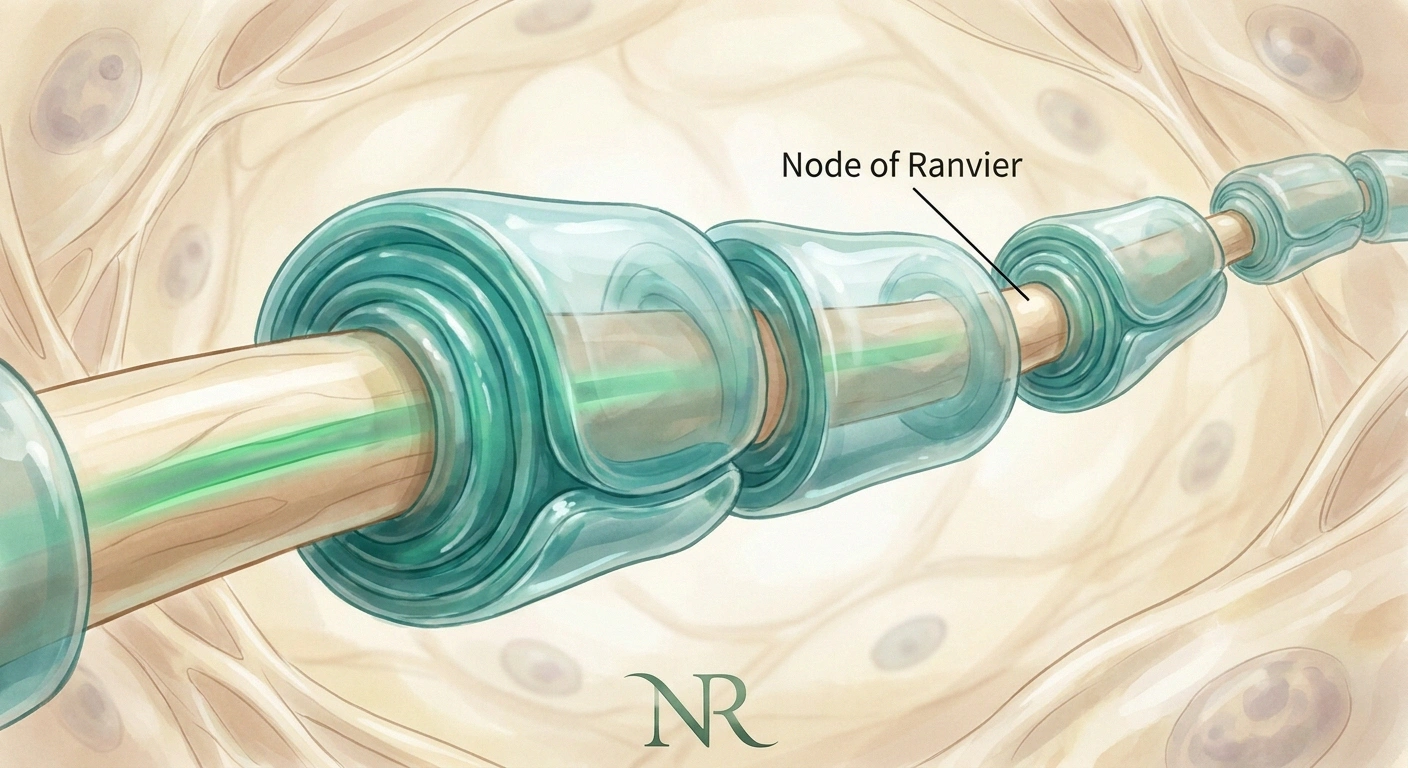
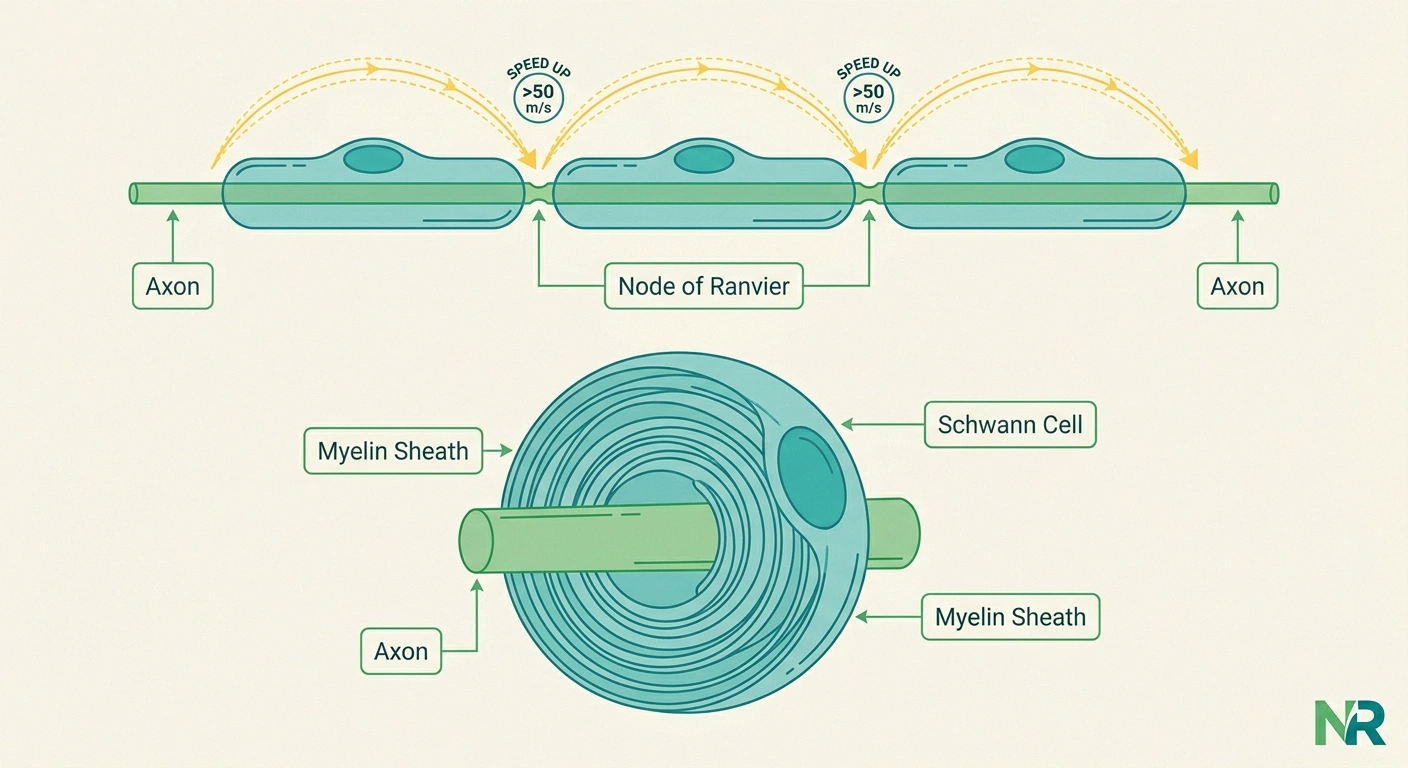
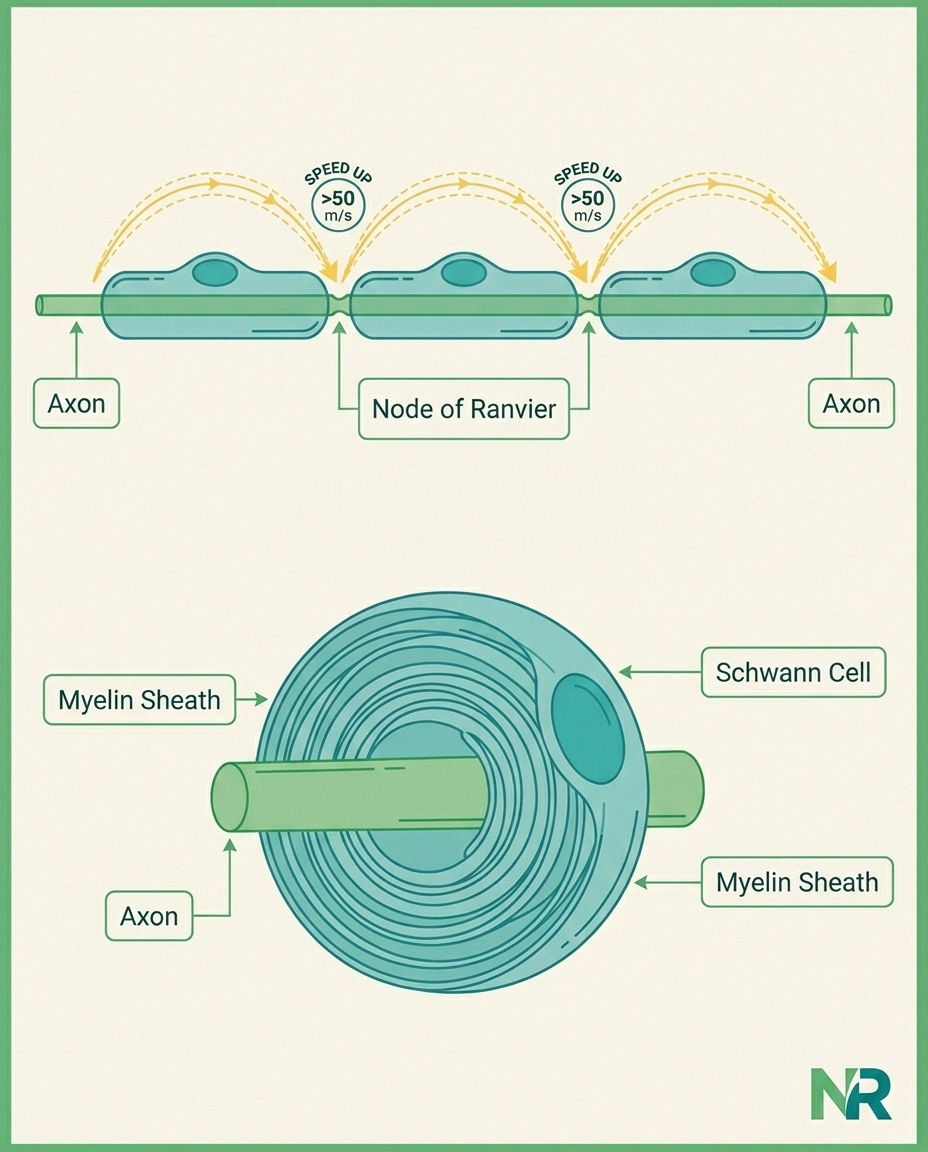
Team one: the myelinating Schwann cells. These are the wrappers. Each one hugs a single large-diameter axon and spirals around it, layer after layer, like wrapping a bandage. Those layers form myelin, the fatty sheath that insulates the nerve and lets signals travel fast. Really fast. We are talking speeds of up to 250 miles per hour along the biggest nerves. This is how your foot knows to jerk back the instant it touches something hot, before you have consciously registered the pain.
Team two: the Remak Schwann cells. These handle the smaller, unmyelinated fibers. A single Remak Schwann cell will cradle several small axons at once, holding them in little grooves along its surface without wrapping them in myelin. These small fibers are the ones that carry pain signals, temperature information, and messages to and from your organs, blood vessels, and sweat glands. They travel more slowly, but they carry an enormous amount of the sensory and autonomic information your body relies on.
This distinction matters when you are trying to make sense of neuropathy. If your symptoms are burning pain, temperature confusion, or trouble regulating things like blood pressure and digestion, the trouble is often in the small fibers, which means the Remak Schwann cells are part of the story. If you have small fiber neuropathy, this is why. On the other hand, if you have muscle weakness, coordination problems, or big losses in vibration and position sense, the large myelinated fibers are more involved, and the myelinating Schwann cells are on center stage.
Neither team works alone. In most people with neuropathy, both teams are affected to some degree, just in different proportions.
How Myelin Works (and Why Speed Matters)
Let me try an analogy that finally made this click for me.
Key Takeaway
Myelin is not just decoration. It is the physics engine of your nervous system. When it thins or breaks, signals do not disappear — they arrive slow, weak, or out of sync. That is why demyelinating problems show up as strange sensations and clumsy timing, not simple numbness.
Imagine you are trying to send a message across a mile-long field. If you had to whisper it person to person, standing shoulder to shoulder the entire way, it would take forever. But if you had ten people spaced far apart, each shouting the message to the next, it would fly.
That is basically what myelin does. The Schwann cell wraps most of the axon in insulation, but leaves tiny bare gaps at regular intervals. These gaps are called nodes of Ranvier. Instead of traveling smoothly along the whole length of the nerve, the electrical signal jumps from one node to the next, skipping over the insulated sections. Scientists call this saltatory conduction, from the Latin word for “to leap.”
The result is speed. And efficiency. And precision.
When myelin gets damaged, those signals still get through, but they get through slowly, or weakly, or with delays that scramble the timing. That is why one of the classic signs of a demyelinating problem is not total numbness, but a strange, distorted sensation. Signals arriving out of sync. Muscles firing a beat late. Reflexes that should be crisp becoming sluggish.
Think about what that means for your daily life. Every step you take requires signals from your feet to arrive at your brain in near-perfect timing so you can balance. Every fine finger movement requires split-second coordination. When myelin is compromised, the whole system starts running on a bad connection. That is not a moral failing. That is physics.
The Repair Crew Springs Into Action
Now here is the part that genuinely amazed me the first time I understood it.
The Repair Crew at Work
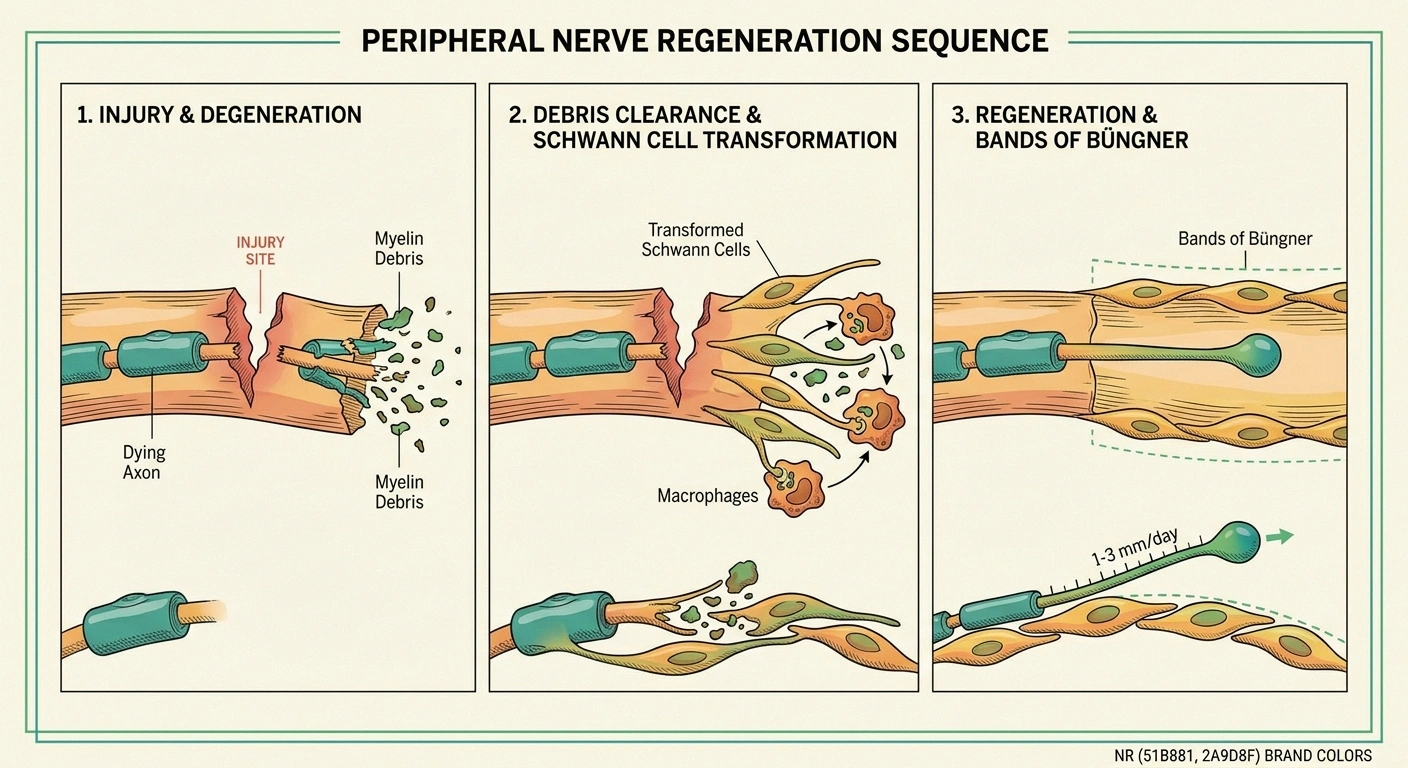
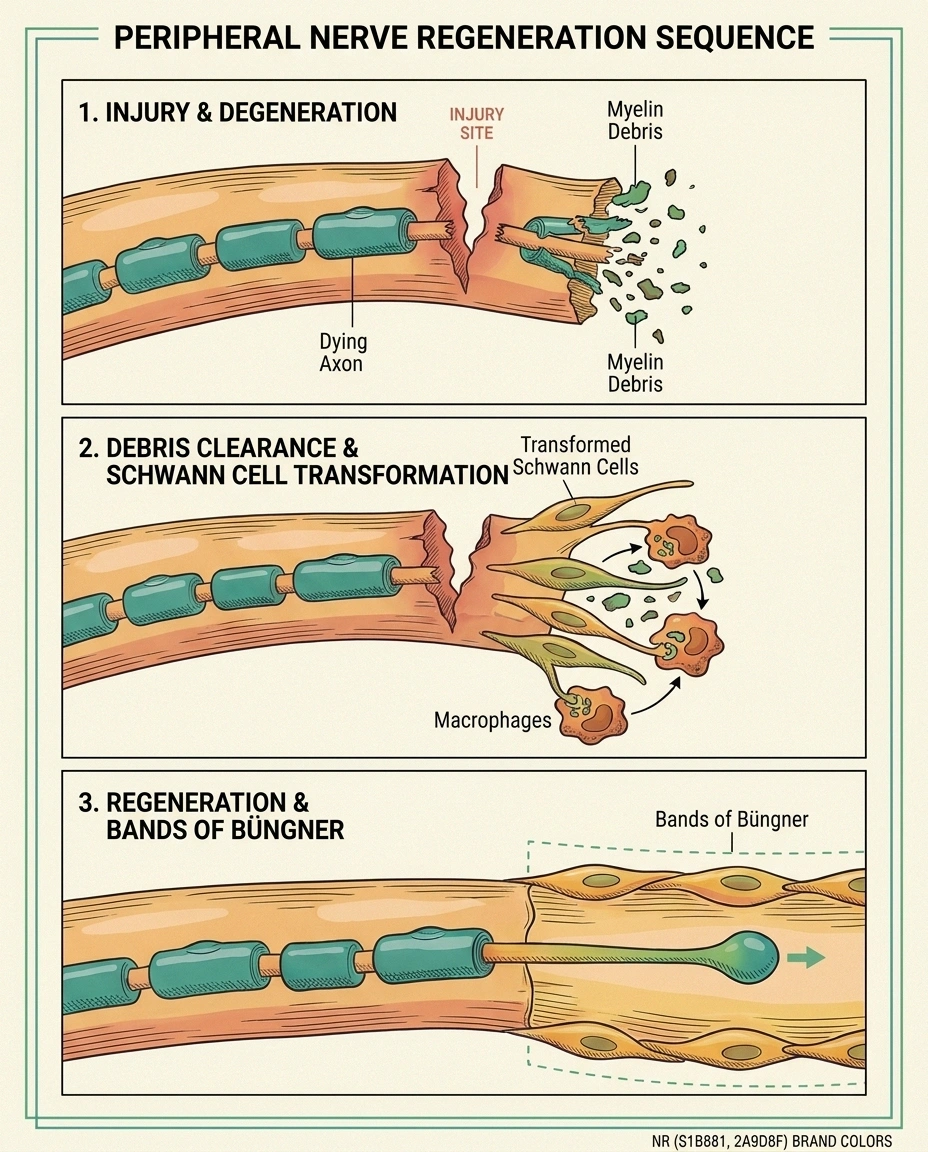
When a peripheral nerve gets injured, whether by a cut, a crush, or the slow damage of a metabolic disease, the axon downstream of the injury begins to die back. The connection is broken. Signals cannot get through. In the central nervous system (your brain and spinal cord), this would often be permanent. But in the peripheral nervous system, something remarkable happens.
The Schwann cells transform.
Within hours of injury, the Schwann cells along that damaged nerve fiber begin to change their identity. They stop being quiet, patient insulators and become active repair workers. Scientists call this dedifferentiation, and it is one of the most dramatic examples of adult cell plasticity in the human body. These cells basically reach back into their genetic toolkit and switch on programs they have not used since your body was still forming as an embryo.
They start by helping to clean up the mess. The old damaged axon has to be cleared away before anything new can grow in its place. This cleanup process is called Wallerian degeneration, named after Augustus Waller who described it in the 1850s. Schwann cells team up with immune cells called macrophages to break down and remove the debris. It is like a demolition crew clearing a lot before construction can begin.
Then comes the beautiful part.
The Schwann cells line up along the empty tube where the axon used to be, forming long chains called Bands of Büngner (named after Otto von Büngner, a German scientist from the late 1800s). These bands are living highways, complete with chemical signposts and growth-promoting molecules, that guide the regrowing axon back to where it needs to go. Without the Bands of Büngner, a regenerating nerve would have no idea which direction to grow. With them, it has a paved road home.
Peripheral nerves grow back at a rate of roughly one to three millimeters per day under good conditions. That is slow. That is why nerve injuries in the hands and feet can take months or even years to recover from. But it is happening. Every day. Millimeter by millimeter. If you have ever wondered why healing from any nerve issue feels so glacial, this is why. Your Schwann cells are laying down highway one small stretch at a time.
Why Peripheral Nerves Can Heal (But the Spinal Cord Mostly Can't)
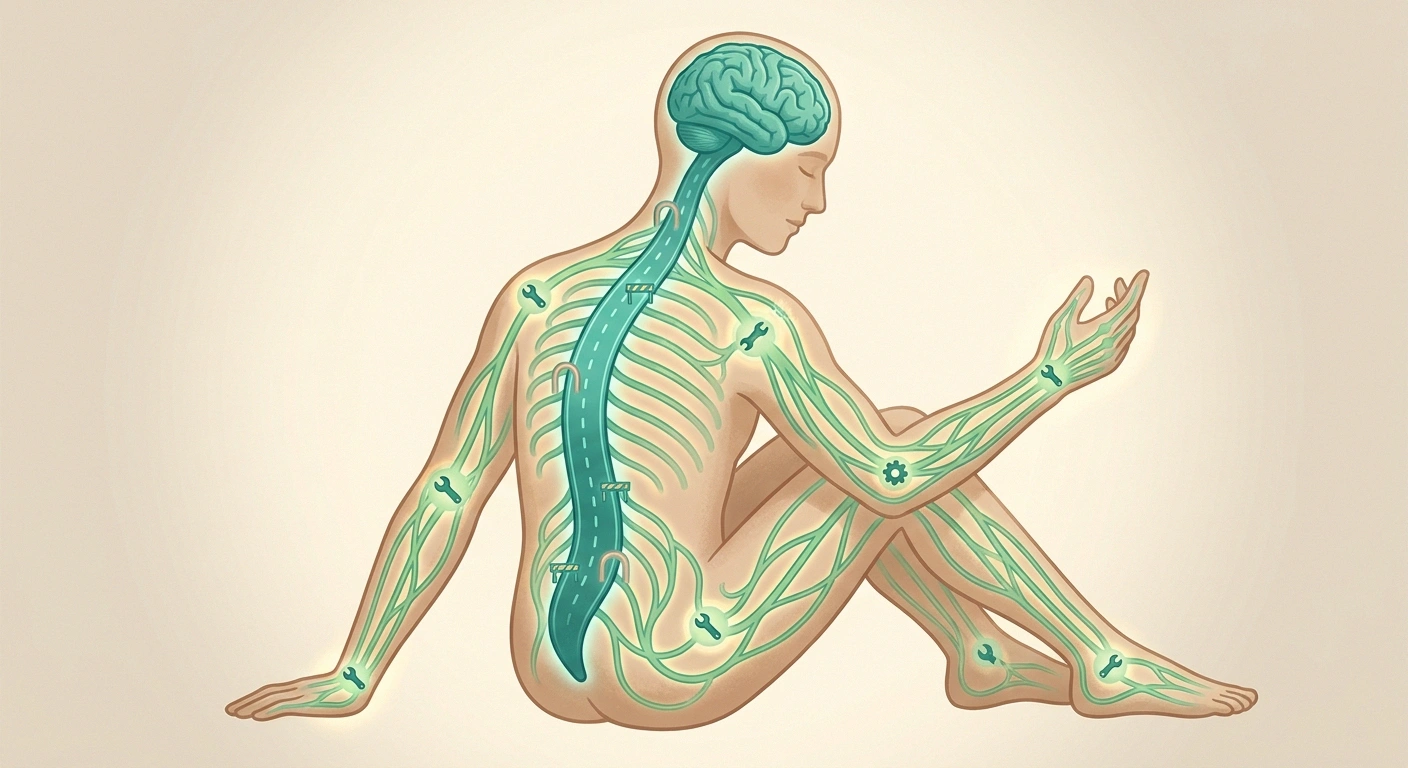
If you have ever wondered why a person can regain use of a nerve-injured hand but a spinal cord injury tends to be permanent, the answer comes down to which glial cells are in charge.
In the peripheral nervous system, Schwann cells run the show. When something breaks, they clean up and rebuild.
In the central nervous system, a different type of cell wraps the nerve fibers. These are called oligodendrocytes. They do the same insulation job that Schwann cells do, but they behave very differently when injured. Instead of transforming into a repair crew, they tend to release molecules that actively block regeneration. And the surrounding environment in the spinal cord and brain forms scar tissue that further prevents axons from finding their way.
Why the difference? Scientists are still working this out. One theory is that the central nervous system prioritizes stability over regeneration. Your brain and spinal cord contain the most delicate wiring in your body, and letting axons regrow willy-nilly could create dangerous mis-connections. Better, evolutionarily speaking, to prevent regrowth than risk chaos.
Whatever the reason, this is why peripheral neuropathy carries a genuine possibility of improvement in a way that central nervous system damage typically does not. Not a guarantee. Not always fast. But possible. Because your Schwann cells are still trying.
When the Repair Crew Falters: Schwann Cells in Neuropathy
All of this raises the obvious question. If Schwann cells are so good at repair, why does neuropathy get worse over time for so many of us?
Watch For This Pattern
Persistently high blood sugar, prolonged B12 deficiency, and certain chemotherapy drugs create an environment where Schwann cells cannot keep up with routine maintenance, let alone repair. The longer that environment persists, the harder it is for the repair crew to bounce back. Addressing root causes matters more than any single symptom treatment.
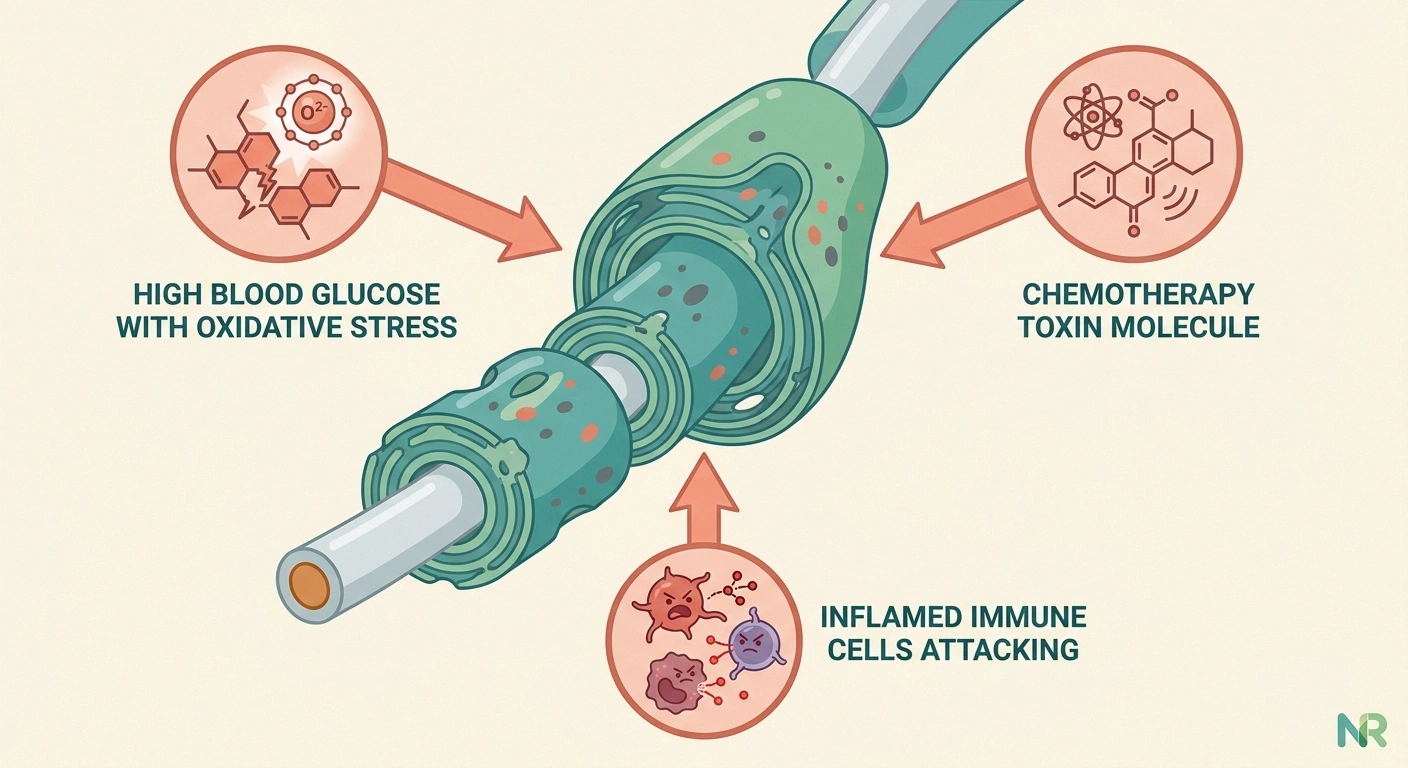
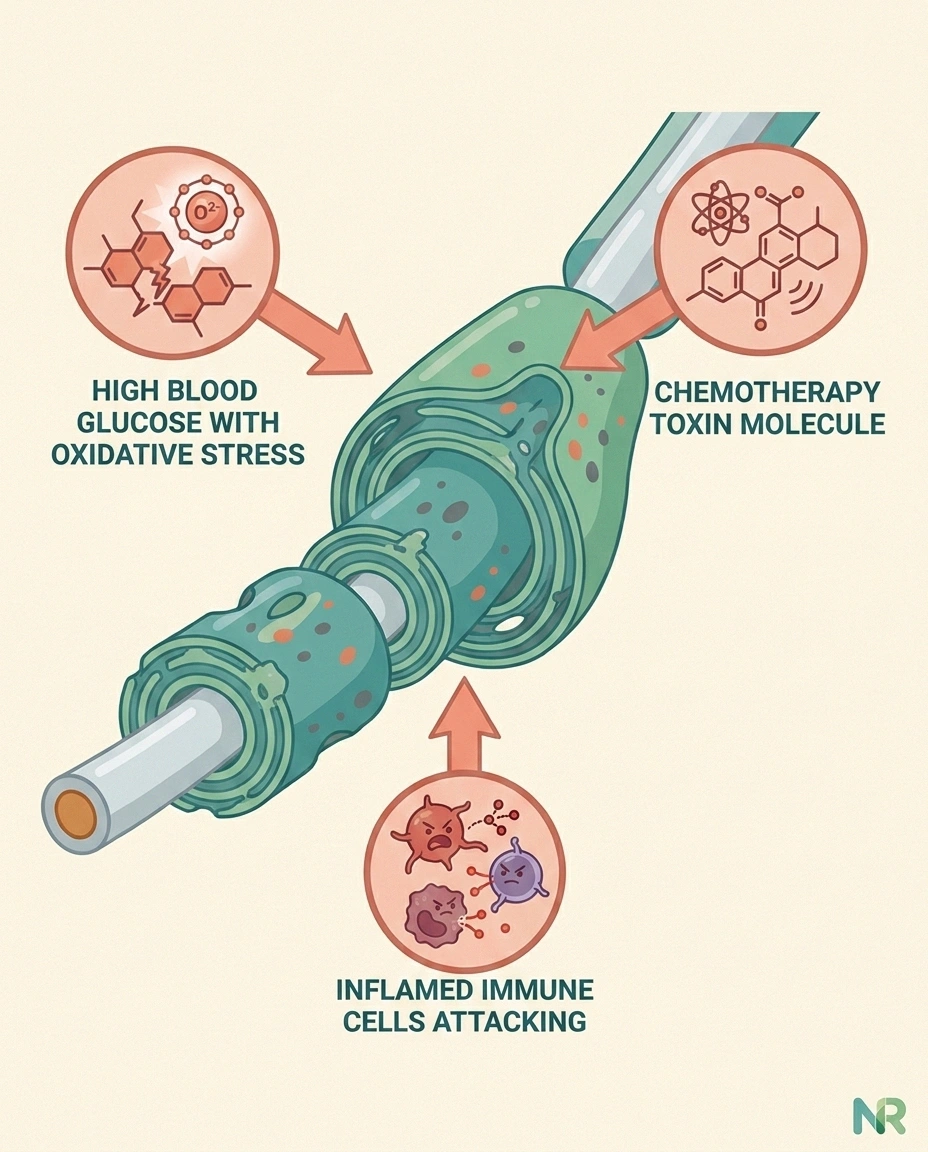
The honest answer is that Schwann cells are not indestructible. They need fuel. They need a healthy environment. They need the right chemistry around them. And in many types of neuropathy, that environment turns against them.
In diabetic neuropathy, chronically high blood sugar creates several problems at once for Schwann cells. It changes the way they process energy, forcing them into a metabolic pathway called the polyol pathway that produces waste products they cannot easily clear. It generates oxidative stress, essentially rusting the cells from the inside out. It also damages the tiny blood vessels that feed the nerves, so Schwann cells end up starved for oxygen and nutrients right when they need them most.
In chemo-induced neuropathy, the culprit is direct toxicity. Certain chemotherapy drugs, especially platinum agents and taxanes, can accumulate in Schwann cells and disrupt their internal machinery. Some appear to interfere with the way Schwann cells maintain their myelin. Others damage the axons directly, so the Schwann cells are left with a broken partner they cannot fully support.
In chronic inflammatory conditions, immune cells that would normally leave Schwann cells alone start treating them as targets. Antibodies attack the myelin. Inflammatory chemicals flood the local environment. The result is disrupted signaling, patchy insulation, and repair processes that cannot keep up with the damage.
And then there is the simple exhaustion factor. Schwann cells are asked to do a lot of maintenance work throughout your life. When the environment gets hostile enough for long enough, some of them can no longer sustain their role. They stop wrapping myelin efficiently. They stop responding to injury as vigorously. The repair crew is still there, but understaffed and undersupplied.
Understanding the stages of neuropathy starts to make more sense when you think of it in Schwann cell terms. Early on, the cells are compensating. They are keeping up. Symptoms flicker but the system is still functional. Later, the compensation runs out. Symptoms become steady. Damage accumulates faster than repair can address it. That progression is not just about the nerves. It is about the crew keeping the nerves alive.
Demyelinating vs. Axonal Neuropathy Through the Schwann Cell Lens
When you get nerve conduction studies, the results usually distinguish between two kinds of trouble: demyelinating and axonal. Understanding what each one means through the Schwann cell lens can help you make sense of your reports.
Demyelinating neuropathies are primarily about the insulation coming apart. The axon is still there, but the myelin sheath is patchy, thin, or damaged. Signals slow down or fail to jump properly from node to node. Conditions like chronic inflammatory demyelinating polyneuropathy (CIDP), Guillain-Barré syndrome, and many forms of Charcot-Marie-Tooth disease fall into this category. In these cases, the Schwann cells themselves, or their myelin products, are the main target of trouble. The good news is that with treatment, demyelinating conditions can sometimes remyelinate and improve, because the Schwann cells can rebuild insulation once the environment calms down.
Axonal neuropathies are about the wire itself dying. The Schwann cells are trying to hold their part together, but the axons they are wrapping are degenerating from within. Diabetic neuropathy, most chemo-induced neuropathies, and many toxic and metabolic neuropathies fall here. Recovery is possible but slower, because it depends on the whole axon regrowing millimeter by millimeter under Schwann cell guidance.
Many people have a mix of both. This is called a mixed axonal-demyelinating pattern, and it is more the rule than the exception in longstanding neuropathy. The distinction is not just academic. It changes what treatments make sense, how quickly improvement might come, and what a realistic timeline looks like. When you see those terms on a report, you are essentially looking at a status report on how your Schwann cells and axons are getting along.
What Actually Helps Your Schwann Cells

This is the part where I want to be very careful, because there is a lot of hopeful marketing out there, and I would rather share what the research actually suggests than promise miracles.
Blood sugar control matters enormously if diabetes is part of your picture. The single most consistent finding in decades of research is that keeping blood glucose in a healthy range slows Schwann cell damage and gives the repair processes a fighting chance. This is not a supplement or a trick. It is the foundational move.
The B vitamins, particularly B12, B1 (thiamine), B6, and folate, are essential building blocks for nerve health. Schwann cells depend on them to maintain myelin and to conduct their metabolic work. Deficiencies, especially in B12, can directly damage myelin and mimic neuropathy on their own. If you cannot absorb B12 well by mouth, which is common as we get older, B12 injections may deliver more consistent blood levels than oral supplements, though the right choice depends on your specific situation and your provider's guidance.
Alpha lipoic acid is one of the most studied antioxidants for diabetic peripheral neuropathy. The research is not unanimous, but multiple trials have shown modest symptom improvements, and the proposed mechanism (reducing oxidative stress on Schwann cells and axons) fits with what we know biologically. It is not a cure, but it is a reasonable, evidence-supported tool for many people.
Acetyl-L-carnitine has shown promise, particularly in chemotherapy-induced and diabetic neuropathies, though the research is mixed and prevention studies in chemo have raised some cautions. It appears to support the metabolic machinery inside nerve cells and Schwann cells, and some studies have shown improved nerve fiber density on biopsy.
Exercise is one of the most underrated tools, and I say this as someone who resisted it for a long time. Regular, moderate physical activity increases the release of neurotrophic factors, which are chemical growth signals that Schwann cells and axons respond to. Aerobic exercise in particular has been shown in multiple studies to improve nerve conduction and small-fiber density over time. You do not have to run marathons. Walking counts. Consistency counts more than intensity.
What I try to remember, and what took me a while to accept, is that supporting your Schwann cells is a long game. These cells work on their own timeline. You do not feel them repairing you. You just wake up one morning several months into a new habit and realize the burning is a little quieter than it used to be.
Where Research Is Heading Next
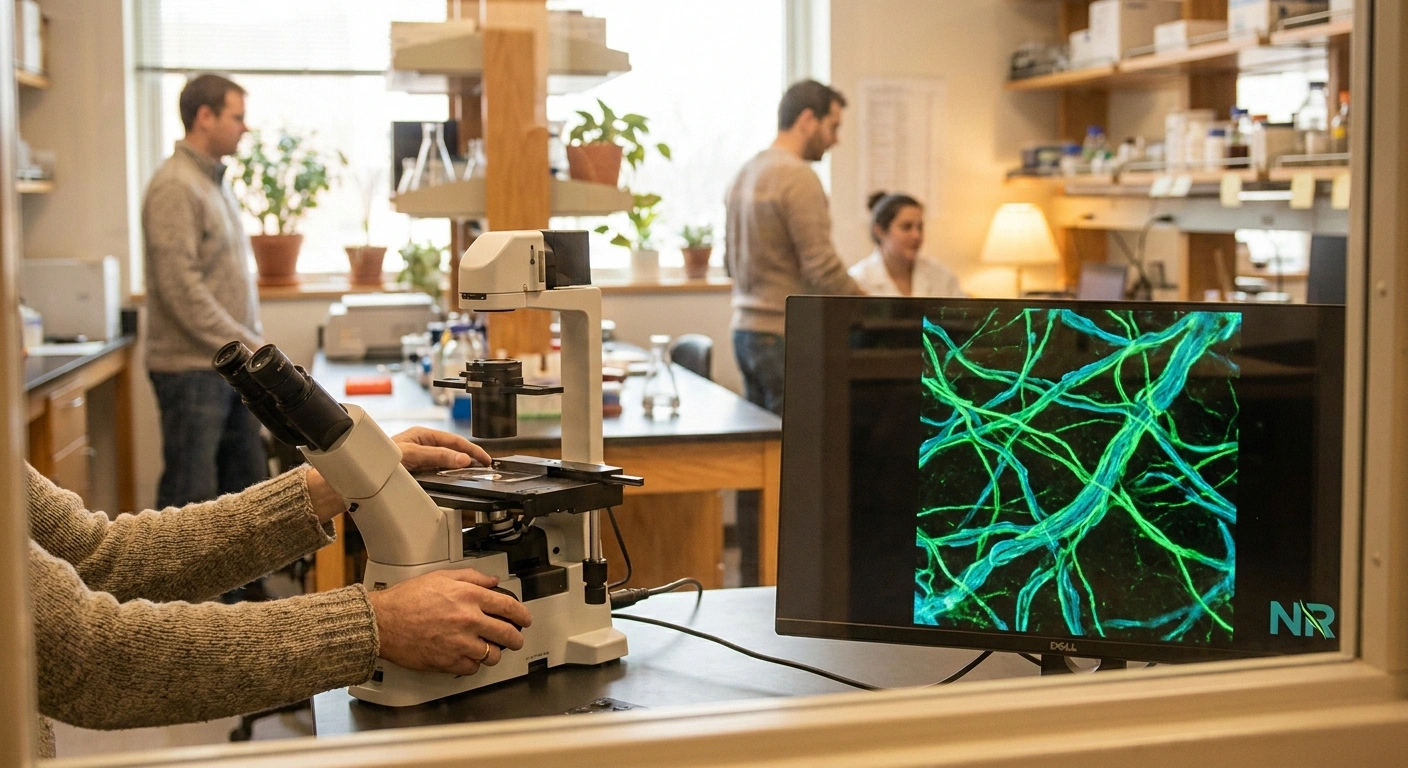
The field of Schwann cell research has exploded in the last decade or so, and some of the directions are genuinely exciting, even if they are still years away from being available.
What Research Says
Schwann cell biology has advanced faster in the last decade than in the century before it. Research on growth factors, gene therapy for inherited neuropathies, and engineered Schwann cell grafts is underway in labs and early clinical trials worldwide. None of it is standard treatment yet, but the direction of the field is real, and it is aimed at the actual repair machinery instead of just the symptoms.
Researchers are working on ways to boost the natural regenerative program in Schwann cells, essentially amplifying the “repair crew” signal so that damaged nerves can rebuild faster and more completely. Some approaches involve growth factors, some involve genetic techniques to switch on regeneration pathways, and some involve grafts of engineered Schwann cells placed at sites of injury.
There is also work on delivering protective molecules directly to Schwann cells in metabolic neuropathies. The idea is not just to treat symptoms, but to change the local environment enough that the cells can do their job even in the presence of chronic disease. Some of these approaches are in early clinical trials.
Gene therapy is a longer-term possibility, particularly for inherited neuropathies like Charcot-Marie-Tooth, where a specific genetic defect makes Schwann cells produce faulty myelin. Correcting the underlying gene is enormously complex, but the tools for doing it are advancing quickly.
None of this is available at your neurologist's office yet. Not for most conditions. But it means the story is not finished, and the researchers working on this are getting better and better at speaking Schwann-cell language. In ten or twenty years, some of the treatments we currently think of as science fiction may be part of standard care.
I mention this not to promise anything, but because hope grounded in real science is different from magical thinking. What we know about these cells now would have been unthinkable to Theodor Schwann sitting at his microscope in 1839. There is every reason to believe the next chapter is being written right now.
What Understanding This Changes About Healing
Here is what shifted for me when I finally understood what Schwann cells do.
The Bottom Line
You are not alone in this. There are living cells inside you whose job is to try to heal your nerves. You can support them with blood sugar control, nutrition, movement, and patience. You cannot rush them. But every good day you give them is a day they can spend rebuilding.
I stopped thinking of my nerves as a broken machine that either worked or didn't. I started thinking of them as a living community with a maintenance crew that showed up every day, doing what it could with what it had. Some days that crew is well-supplied and things get a little better. Some days the environment is harsh and progress stalls. The work does not stop. But it is real work, done at a real biological pace, and it deserves my patience.
I also stopped taking symptom fluctuations quite so personally. When I have a hard day, it does not mean I am failing at management. It means the crew ran into something rough. When I have a good stretch, it does not mean I have solved anything. It means the conditions supported them.
And I stopped expecting linear progress. Nerve healing is not a straight line. It is a slow, back-and-forth process of demolition, cleanup, rebuilding, and refinement. Sometimes what feels like getting worse is actually the messy part in the middle of getting better.
None of this makes neuropathy easy. But knowing that there are actual cells in your body whose job is to try to heal you, and knowing that you can support them or work against them by the choices you make, changes what the daily work of living with this feels like. You are not alone in this fight. You have a crew. Give them what they need. Trust the timeline. And keep going.
Frequently Asked Questions
Can Schwann cells actually regenerate damaged nerves in adults?
Yes, in the peripheral nervous system they can. Peripheral nerves regrow at roughly one to three millimeters per day when Schwann cells are functioning well, though the process can take months or years depending on the injury. Regeneration in the central nervous system is much more limited because different cells (oligodendrocytes) are in charge there.
Why does peripheral neuropathy heal so slowly?
Because axon regrowth happens at millimeter-per-day speeds under Schwann cell guidance, and the process requires clearing debris, forming the guiding Bands of Büngner, and rebuilding both the nerve fiber and its myelin sheath. A single injured nerve fiber from your lower back to your foot may need many months to fully reconnect.
Are Schwann cells damaged in diabetic neuropathy?
Yes. High blood sugar creates oxidative stress, disrupts the metabolic pathways Schwann cells rely on, and damages the small blood vessels that supply them. Over time this reduces both the myelination they provide and their capacity to repair damaged nerves.
What is the difference between Schwann cells and oligodendrocytes?
Schwann cells work in the peripheral nervous system, wrapping one axon each with myelin and actively supporting nerve repair. Oligodendrocytes work in the central nervous system, wrapping many axons at once, and generally block rather than support regeneration after injury. This is a major reason peripheral nerves can heal but spinal cord injuries usually cannot.
Do any supplements support Schwann cell function?
The best-studied are B vitamins (especially B12, B1, and folate), alpha lipoic acid, and acetyl-L-carnitine. None of these are cures, but they support the metabolic environment Schwann cells need to function. Blood sugar control, exercise, and nutrition are foundational and often more impactful than any supplement.
What are Bands of Büngner?
Bands of Büngner are chains of Schwann cells that line up along the empty tube where a damaged axon used to be. They form a living highway that guides regrowing axons back toward their targets, releasing chemical signals that promote and direct growth. Without them, regeneration would have no direction.
Can Schwann cell dysfunction be reversed?
Partially, in many cases. When the underlying cause (high blood sugar, nutrient deficiency, toxin exposure, inflammation) is addressed, Schwann cells can often resume normal function and even rebuild myelin over time. Recovery is usually slow, incomplete, and depends heavily on how long and how severe the damage has been.
Is there any current treatment that directly targets Schwann cells?
Not yet in standard clinical practice. Current treatments address the underlying causes (diabetes management, immunotherapy for inflammatory neuropathies, discontinuing damaging medications) and support the environment Schwann cells need. Direct Schwann-cell-targeted therapies, including growth factor treatments and cell-based therapies, are being studied in research settings but are not yet routinely available.
About the Author