The call comes on a Tuesday and the service is Saturday.
Somewhere between those two facts, once the first shock has settled, a smaller and more embarrassing worry arrives. You start doing arithmetic about your feet. How long is the visitation. Whether there will be anywhere to sit at the graveside. Whether the shoes that go with the dark suit are the ones you have not worn since the last funeral, and whether you could get through two hours in them.
It feels petty to be thinking about this while someone is being buried. It is not petty. A funeral is one of the most physically demanding social days on the calendar, and almost nobody plans for it, because planning feels like making the day about yourself.
So here is the planning, done in advance, so you can put it away and spend Saturday thinking about the person you are there for.
What the Day Actually Asks of Your Feet
The reason a funeral catches people out is that it is not one event. It is three or four stitched together, and each taxes you differently.
The visitation or wake. Frequently the hardest part, and the part people underestimate. Two hours or more of standing on hard floors in a warm room, moving in short shuffles, with no natural moment to sit. Longer than most of us stand in a normal week.
The service. Forty-five minutes to an hour and a half of sitting, usually on a hard pew or a stacking chair, with repeated stand-sit transitions for hymns and prayers. Different problem entirely: pressure, stiffness, and the awkwardness of rising quickly.
The graveside. Fifteen to thirty minutes standing on grass. Uneven ground, no seating, weather, and often a walk from where the cars park.
The reception. Another hour or two, standing, holding a plate and a cup, in a room where all the chairs fill immediately.
Add it up and a full funeral day can involve four hours on your feet, most of it standing still, which is harder on neuropathic feet than walking is. Standing still means constant unchanging pressure on the same points, no muscle pump moving blood back up the legs, and nothing to distract from what your nerves are doing.
You do not have to do all four parts. That is worth knowing before you start.
Shoes That Look Right and Still Work
This is where most of the damage happens, and it is entirely preventable.
Two days out, ten minutes of work
Everything on this list has to happen before Saturday morning, which is why it is worth doing on Thursday evening while there is still time to fix what you find.
- Wear the shoes for an hour indoors. Sitting and standing, not just walking to the kitchen. Seams and pressure points announce themselves in the second half-hour.
- Move your cushioned insoles across. Two minutes. If the dress shoe is too shallow to take them, that shoe has answered the question for you.
- Check the sole for grip. Run a thumb across it. A smooth leather sole on wet grass is the day's largest avoidable risk.
- Set out socks you have already worn a full day in. A funeral is not the day to find out how a new pair behaves at hour four.
- Put a second pair in the car. Soft shoes for the drive home turn a two-day flare into an evening one.
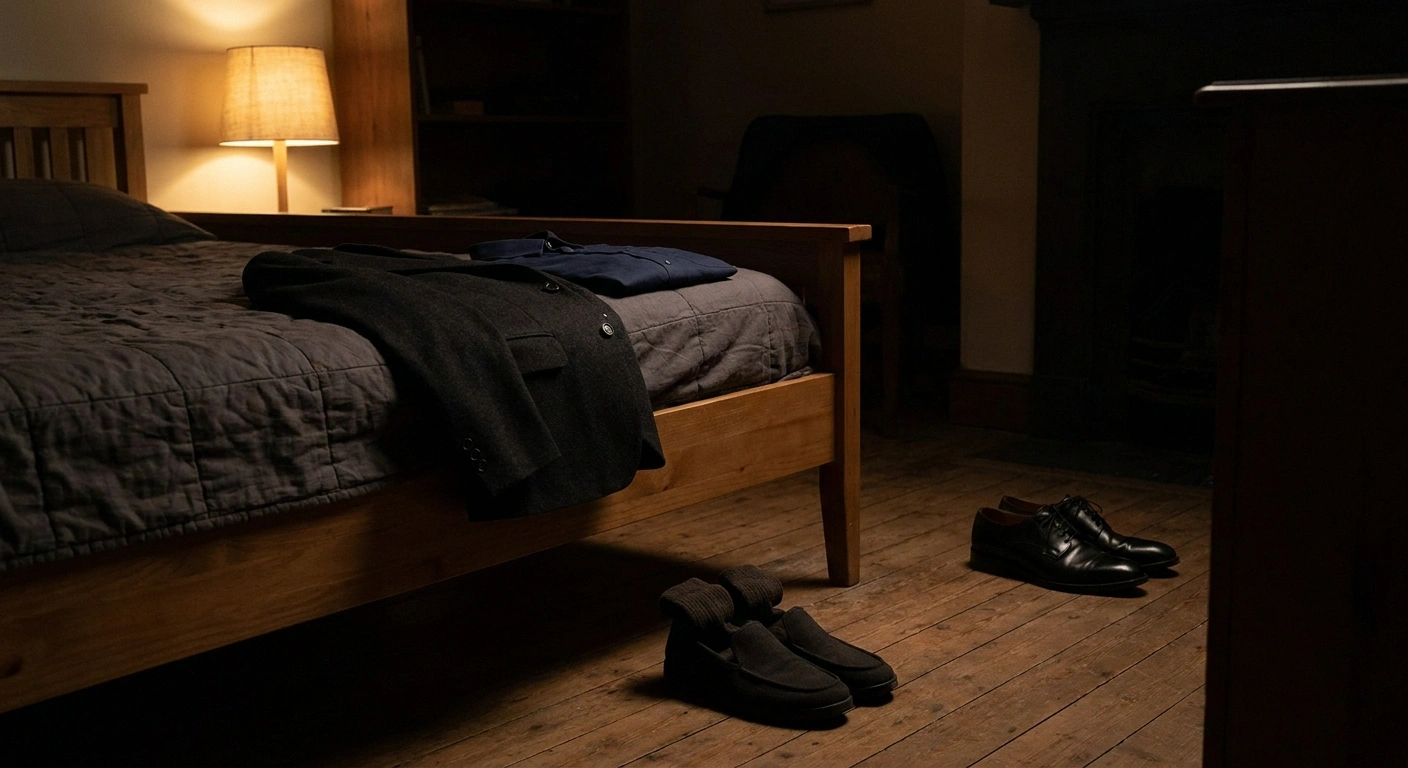
Funeral shoes are the worst shoes most people own. Thin-soled, narrow through the toe, rigid, and worn perhaps twice a year, which means they are stiff and unbroken-in every single time. Then they get asked to do the longest continuous standing of the year.
A few things help.
Wear them for an hour at home first. Two days before. In the house, sitting and standing. You will find out about the seam across the toe box while you can still do something about it.
Choose cushioning over polish. Plain dark leather or fabric walking shoes and dress sneakers in black read as entirely appropriate at a funeral. Nobody is looking at your feet. Genuinely nobody. The one person who might have noticed is the reason everyone is there.
Put your own insoles in. If you have cushioned insoles for daily shoes, move them across. It takes two minutes and changes the whole day.
Skip the heel. A raised heel shifts weight forward onto the ball of the foot, which is exactly where most neuropathic pressure pain concentrates, and it narrows your base at the moment you most need stability on grass.
Socks matter more than you think. Soft, seamless, loose at the top. Tight socks and tight shoes both worsen tingling and pain. If you wear compression socks, wear the ones you have already tested for a full day rather than a new pair.
If footwear is a recurring problem rather than a one-day one, the wider question of choosing shoes for neuropathy is worth working through once properly, so that a suitable dark pair is already sitting in the wardrobe next time.
The Receiving Line
The receiving line is the single hardest part of a funeral for anyone with foot pain, for one structural reason: there is no way out of it. You cannot step aside once you are in it without being noticed, and it moves at a pace nobody controls.
Budgeting the day before it starts
Typical durations. Read the last column first, then decide which parts you are actually going to.
| Part of the day | Usual length | On your feet? | Can you sit? |
|---|---|---|---|
| Visitation or wake | 2 hours or more | Standing almost throughout | Usually yes, at the edges of the room |
| The service | 45 to 90 minutes | Seated, with repeated risings | Yes, and staying seated for hymns is fine |
| Graveside | 15 to 30 minutes | Standing on uneven ground | Rarely, unless family chairs have spares |
| Reception | 1 to 2 hours | Standing, holding a plate | Only if you claim a chair early |
Four hours total, most of it standing still, which is harder on neuropathic feet than four hours of walking would be.
Some tactics.
Go near the end. Wait, sit, let the queue shorten, and join it in the last third. The family will not remember what order people came in.
Sit in view of the line. Find a chair with sight of the queue, sit until it is short, then join. This is not queue-jumping and nobody will read it as such.
Shift your weight deliberately. Small, unobtrusive changes: weight to one foot, then the other, rock gently heel to toe, flex your toes inside the shoe. Standing dead still is the worst thing for neuropathic feet, and all of this is invisible.
Say something short. You do not owe the family a speech. “I am so sorry. He was very kind to me.” That is complete. Long conversations in a receiving line hold up everyone behind you anyway.
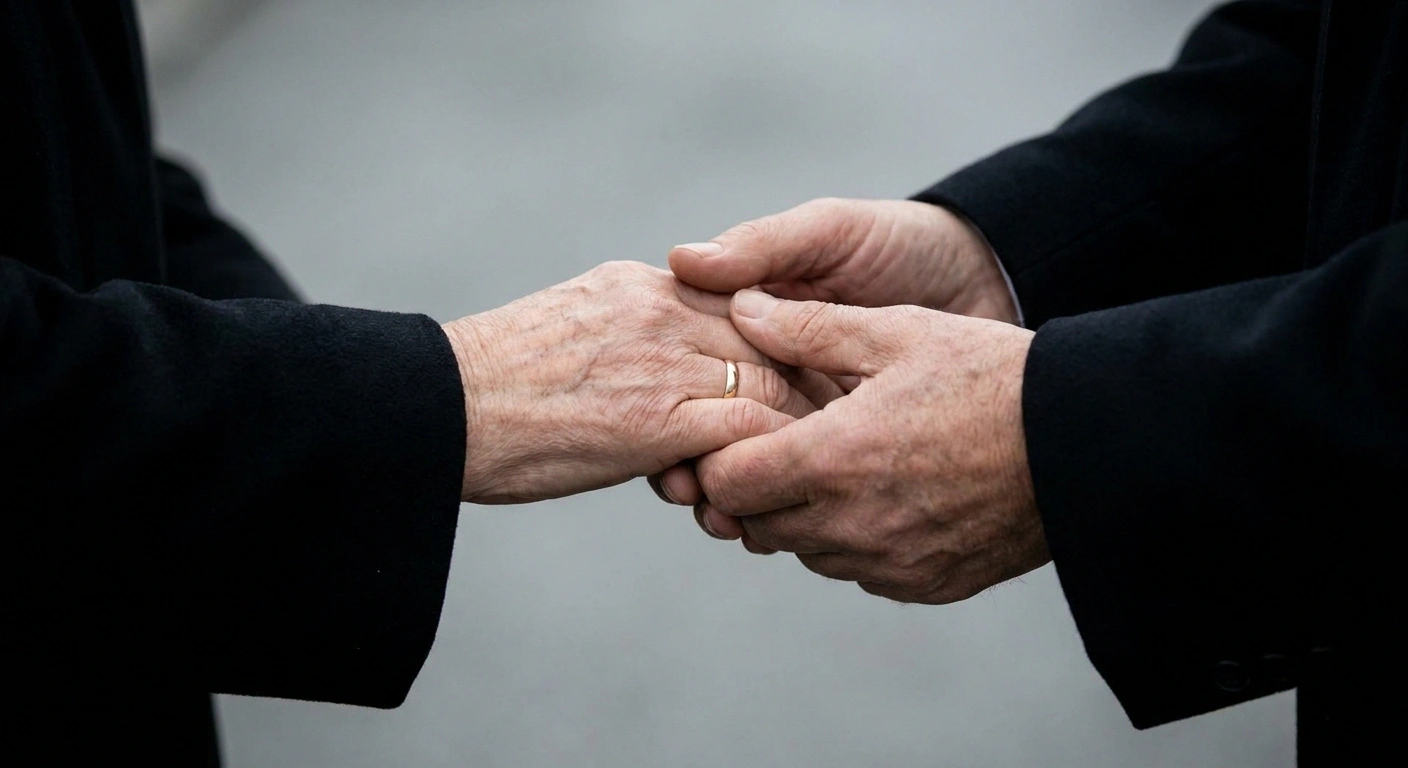
Think about your hands too. A receiving line is thirty handshakes in ten minutes, and if you have neuropathy in your hands, that is its own problem. Offering both hands over someone's hand, rather than a firm grip, is warm, common at funerals, and much easier on sore fingers.
Graveside: Uneven Ground and No Chairs
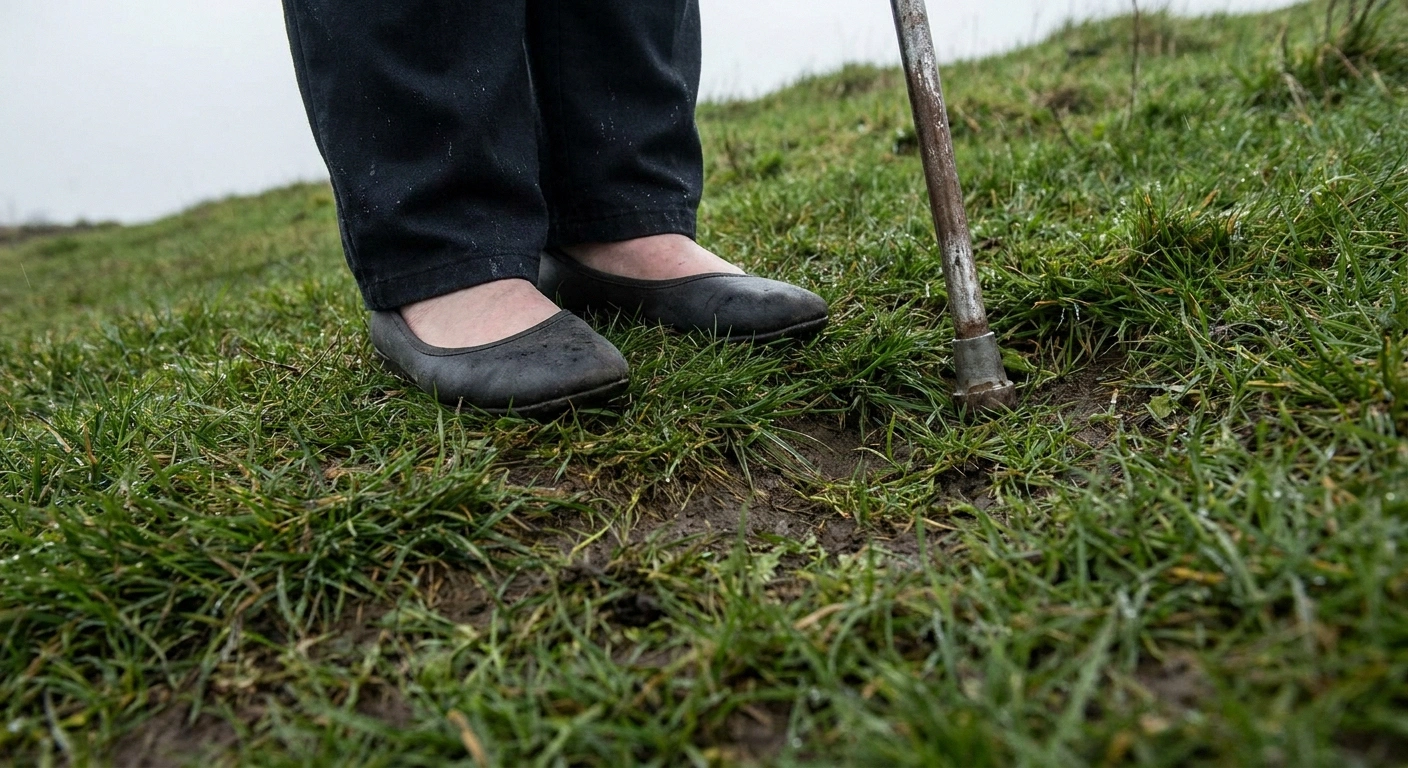
The graveside portion is short, but it carries the day's real fall risk.
The ground is soft, often uneven, sometimes sloped, and frequently covered with artificial turf laid over ground you cannot see. Heels sink. Flat soles slide on wet grass. And if your feet do not report reliably on what they are standing on, you are getting less information than everyone around you at the exact moment the footing is worst. This is where balance and fall risk stops being abstract.
Practical measures.
Walk from the car slowly and look at the ground rather than ahead. Take an arm if one is offered, which at a funeral is read as closeness rather than frailty. Stand on the flattest spot you can find, even if it is not the closest. If chairs are set out for immediate family and there are spares at the back, sitting in one is fine.
Bring a walking stick if you use one at all, even occasionally. A stick at a graveside is unremarkable, and it gives you a third point of contact on ground that is actively working against you.
And if the weather is cold, know that cold reliably worsens neuropathic pain for most people. Warm the car before you leave, keep a coat on, and consider skipping the graveside if it is raining and you have already been on your feet for three hours.
Sitting Through the Service
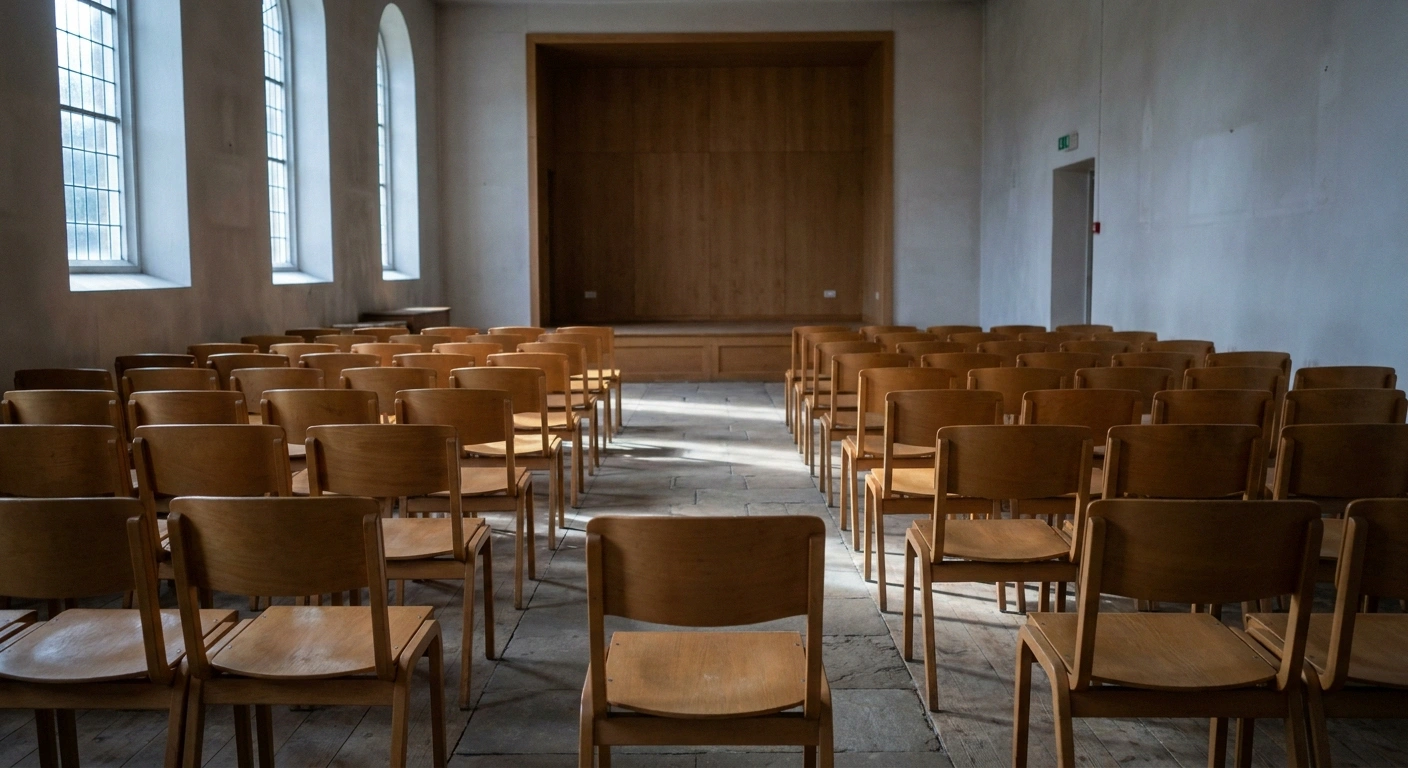
The service is a rest for your feet and a challenge for everything else, and the same pew problems arise in any long seated service, which is covered in more depth in the guide to church and worship services with neuropathy.
Five things to do in a pew that nobody will notice
Run through the set roughly every ten minutes. It takes under a minute and it is what stops the stiffness that makes standing up difficult later.
- Press both feet into the floor for a slow count of five, then release. Works the calf pump without moving your legs.
- Lift both heels keeping the toes down, hold, lower. Repeat five times.
- Roll each ankle in a small slow circle, one direction then the other.
- Spread and curl your toes inside the shoe. Entirely invisible, and it interrupts the constant pressure on one spot.
- Uncross whatever you have crossed. Sustained pressure at the knee compresses a nerve sitting close to the surface, and a dropped foot on standing is a real hazard rather than a nuisance.
Sit on the aisle if you can. It gives you room to stretch one leg out, and it means you can leave quietly if you need to.
Do not cross your legs, however comfortable it feels at first. Sustained pressure at the knee compresses a nerve that runs close to the surface there, and a numb, dropped foot when you stand up is a genuine hazard rather than a nuisance.
Move every ten minutes or so. Press both feet into the floor and release. Roll your ankles. Lift your heels and lower them. All of it is silent and none of it is visible from behind.
Stand up in two stages when everyone rises: hands on the pew in front, come up slowly, take a second before you move. Rising fast from a long sit is when people wobble, and a church aisle full of people is a poor place to discover your foot has gone.
If standing for a hymn is too much, stay seated. Nobody will notice, and anyone who does notice will assume the obvious and correct thing.
What Fits in a Pocket or a Small Bag
Nothing here is unusual, and all of it changes the day.
The bag, and the timing that makes it work
- Pain medication
- Take it so the strongest coverage lands on the visitation and the graveside, not on the drive home. Work backwards from the service time rather than taking it when you wake.
- Water
- Warm rooms and long standing dehydrate people faster than they expect, and dehydration lowers blood pressure at exactly the moment you need to stand up from a pew.
- Foot cream, left in the car
- Ten minutes with your shoes off between the graveside and the reception is the highest-value thing on this page. The gap between venues already exists; use it deliberately.
- Spare soft socks
- If you swell during the day, a fresh looser pair at the halfway point buys back the second half.
- The reception address, written down
- The drive between venues is what people get wrong when they are upset. Have it on paper as well as on the phone.
Your regular pain medication, timed so the strongest cover falls across the standing hours rather than the drive home. A small bottle of water. A folding cane if you own one. Spare soft socks if you are prone to swelling. A pain-relief cream in a bag, for a quiet ten minutes in the car between the service and the reception. Tissues, obviously, and a phone with the address of the reception, because the drive between venues is the part people get wrong when they are upset.
If you use a foot cream that actually helps you, take it. Ten minutes alone in the car with your shoes off and something soothing on your feet, between the graveside and the reception, is the most effective thing on this entire page.
Asking for a Chair Without Explaining Yourself
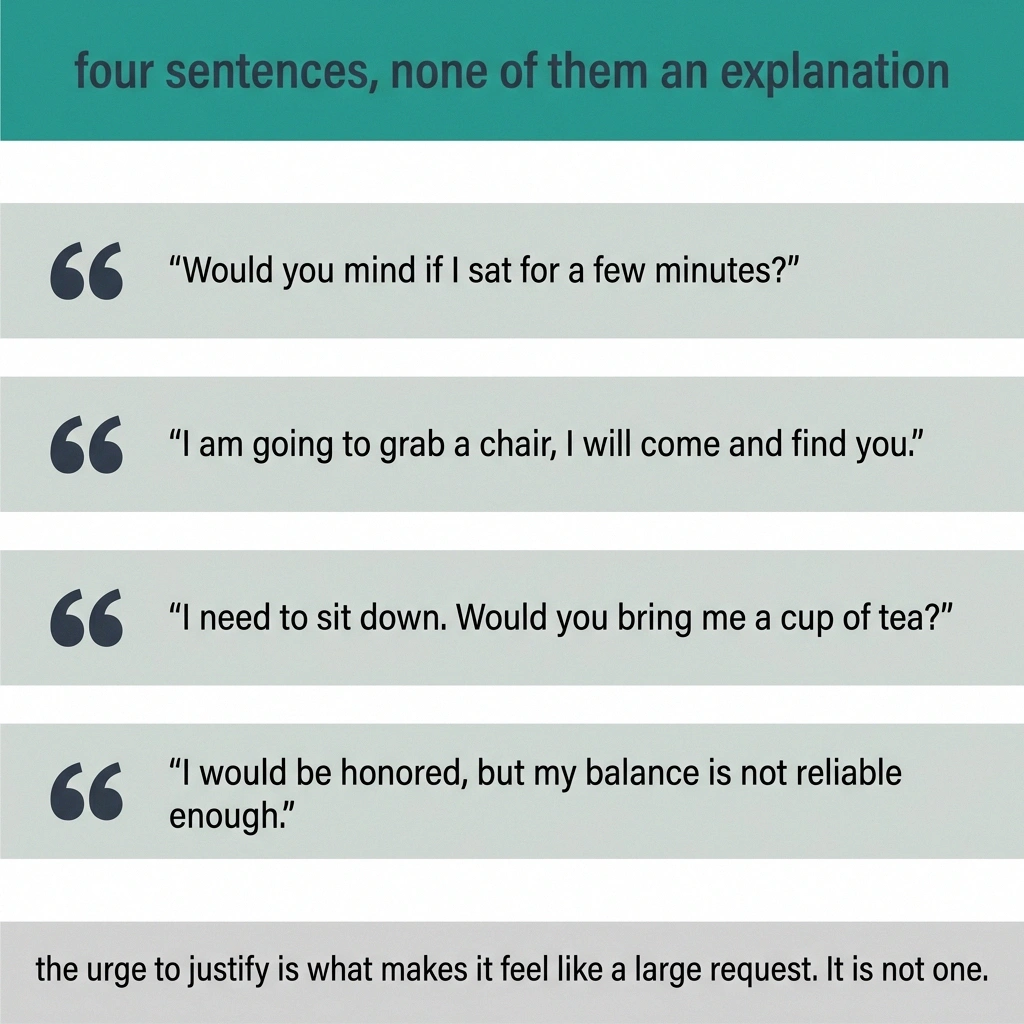
This is the barrier that stops people, and it is a social barrier rather than a physical one. Nobody wants to make a hard day about their own body.
You do not have to explain anything. A short, ordinary sentence is enough, and people respond to it without a flicker.
“Would you mind if I sat for a few minutes?”
“I am going to grab a chair, I will come and find you.”
“I need to sit down. Would you bring me a cup of tea?” This one is useful because it gives the other person a job, and people at funerals are desperate for jobs.
Notice that none of those contain the word neuropathy, or an apology, or a medical explanation. The urge to justify is strong and it is what makes the request feel large. It is not a large request. Half the room over sixty would also like to sit down and is waiting for someone else to do it first.
If you are worried about the optics, arrive early and pick your seat before the room fills. An aisle seat near the back, taken twenty minutes early, solves the entire problem without a single conversation.
If You Are Family, Not a Guest
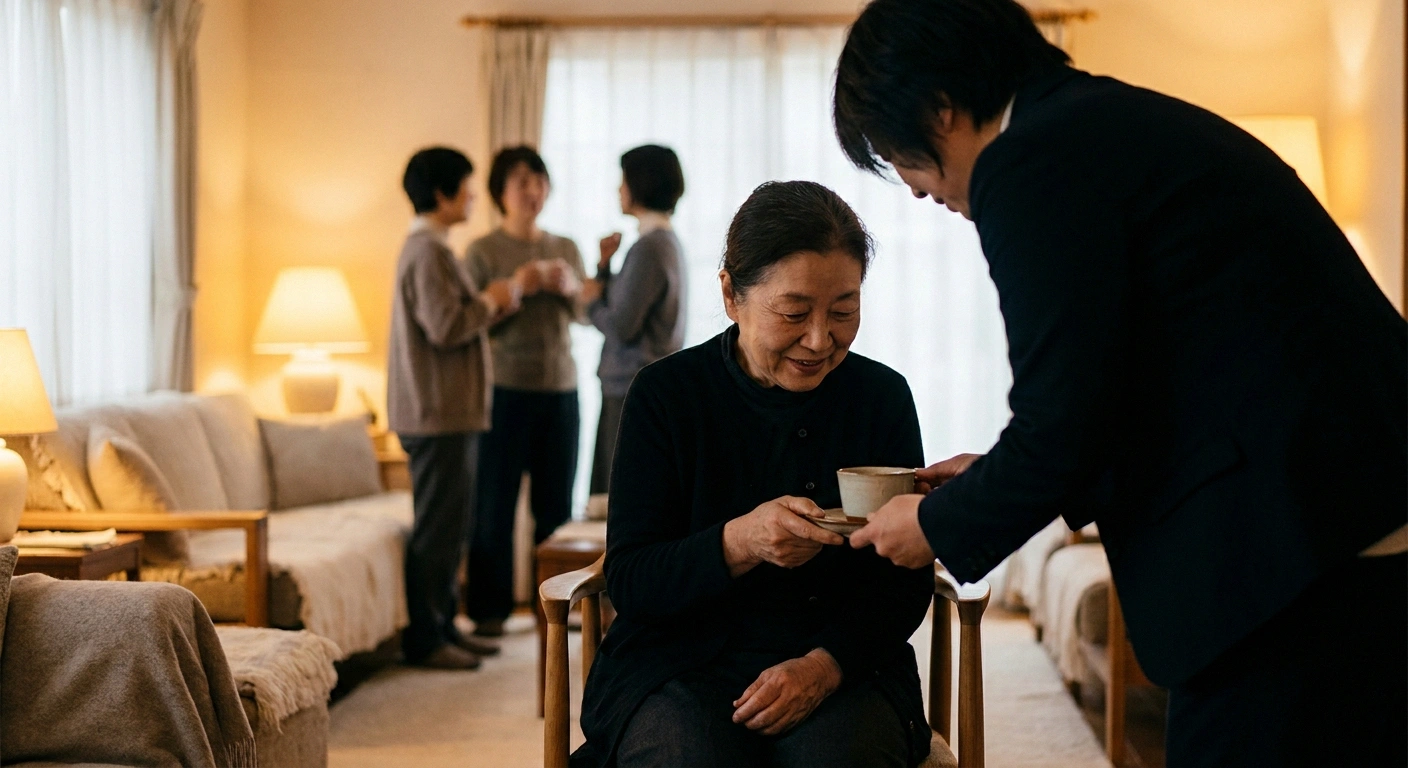
Everything above assumes you can leave. Immediate family cannot, and the day is considerably longer: the funeral home the day before, the receiving line for its full length, the front pew, the graveside, the reception until the last person goes, and the house full of relatives afterwards.
A few things specific to that position.
Delegate the standing roles. Someone else can greet at the door. Someone else can carry things. You do not have to be the one who does everything simply because you always have been.
Decline pallbearing. Carrying an unpredictable, uneven weight down steps and across grass is genuinely dangerous with reduced sensation and balance, both for you and for everyone else holding the casket. “I would be honored, but my balance is not reliable enough and I do not want to risk it” is a complete answer. Many funeral homes offer an honorary pallbearer role that involves walking alongside rather than bearing weight, and asking about it is normal.
Take the twenty minutes. Between the service and the reception there is nearly always a gap. Go somewhere and sit with your shoes off. Every family has a room nobody is using.
Tell one person. Not the whole family. One person who knows to fetch you a chair, to notice when you have gone grey around the edges, and to say “come and sit with me for a minute” in a way that sounds like company rather than concern.
When You Decide Not to Go
Sometimes the honest answer is that you cannot manage it, and that decision deserves to be made deliberately rather than agonised over.
It is not all or nothing
Five real options between attending the whole day and staying home, roughly in order of how much they ask of you.
- 1Visitation only. Often the part that matters most to the family, and the one where you control how long you stay.
- 2Service, then home. Skip the graveside and the reception. Sitting for an hour is the least demanding hour of the day.
- 3Back row, leave during the last hymn. You were there, and nobody watches the back of the room while they are singing.
- 4The grave, a week later. Dry ground, nobody waiting, and as long as you want. For many people this turns out to be the visit that counts.
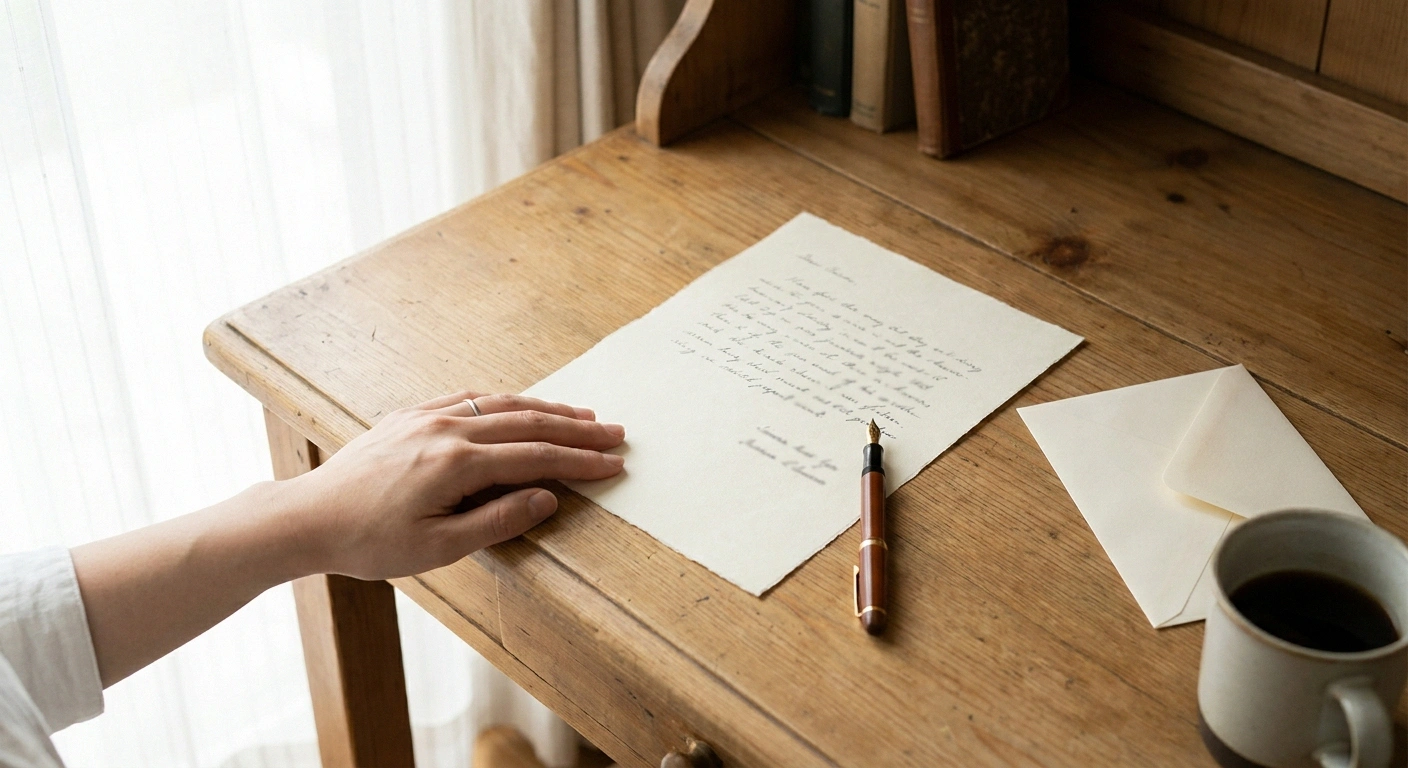
- 5A letter, posted. Say something specific about the person rather than something general about loss. Families keep those for years.
The day after a hard funeral can be genuinely rough. Four hours standing, cold ground, and a night of poor sleep produces a flare that can last several days, and if you are already stretched, that cost is real and it is yours to weigh.
There are also more options than going or not going. You can attend the visitation and skip the burial, which is often the version that matters most to the family anyway. You can go to the service and skip the reception. You can sit at the back and leave quietly during the last hymn. You can go to the graveside a week later, alone, when the ground is dry and nobody is watching and you can take as long as you like.
And if none of that is possible, a letter to the family, written properly and posted, saying something specific about the person, is remembered long after the attendance list is forgotten. People keep those letters for years.
Missing a funeral is not a failure of love. Grief and chronic pain are both exhausting on their own, and carrying them together is heavy enough that the emotional side of it is worth taking as seriously as the physical, which is much of what the discussion of neuropathy and mental health is about. Do what you can manage. That has always been what it means to show up.
Frequently Asked Questions
What shoes should I wear to a funeral if I have neuropathy?
Plain dark cushioned shoes with a flat sole and a wide toe box. Dark walking shoes or black dress sneakers look entirely appropriate and are far kinder to sensitive feet than thin-soled formal shoes worn twice a year. Move your own cushioned insoles across, wear them for an hour at home a couple of days beforehand, and pair them with soft, seamless, loose-topped socks.
Is it rude to sit down during a funeral service?
No. Staying seated during hymns, prayers, or standing portions is ordinary and goes almost entirely unremarked. Anyone who does notice will assume you have a good reason, because you do. Arriving twenty minutes early and taking an aisle seat near the back removes the question altogether.
How do I get through a long receiving line?
Wait until the queue has shortened and join in the last third rather than standing in it from the start. Sit somewhere with a view of the line while you wait. Once in it, shift your weight between feet and flex your toes continuously, since standing still is harder on neuropathic feet than moving. Keep what you say short; two sentences is a complete condolence.
Should I skip the graveside service?
It is a reasonable thing to skip, particularly in wet or cold weather or after several hours already on your feet. The ground is uneven, often soft, sometimes covered with turf hiding what is underneath, and it carries the day's highest fall risk. If you do go, walk slowly, watch the ground, take an offered arm, stand on the flattest spot available, and bring a stick if you ever use one.
How do I decline being a pallbearer?
Say it plainly and without apology: you would be honored, but your balance is not reliable enough and you do not want to risk it. Carrying an uneven weight down steps and across grass with reduced sensation is a real hazard to everyone holding the casket. Ask about an honorary pallbearer role, which involves walking alongside without bearing weight and is offered by most funeral homes.
How do I ask for a chair without making a fuss?
Use a short ordinary sentence with no explanation attached. “Would you mind if I sat for a few minutes?” is enough. Asking someone to bring you a drink while you sit works particularly well, because it gives them something useful to do. The instinct to justify the request is what makes it feel like an imposition, and it is not one.
What should I bring to a funeral if I have neuropathy?
Your usual pain medication, timed so the strongest coverage falls across the standing hours. Water, tissues, a folding cane if you own one, spare soft socks if you swell, and a foot cream for ten quiet minutes in the car between venues. Have the reception address on your phone, since the drive between locations is what people get wrong when they are upset.
What if I cannot manage to go at all?
Attend part of it instead: the visitation without the burial, or the service without the reception. Visiting the grave privately a week later is a real alternative and a much easier one physically. If none of that is possible, write a proper letter to the family saying something specific about the person. Those letters get kept for years, which is more than can be said for most attendance.
About the Author