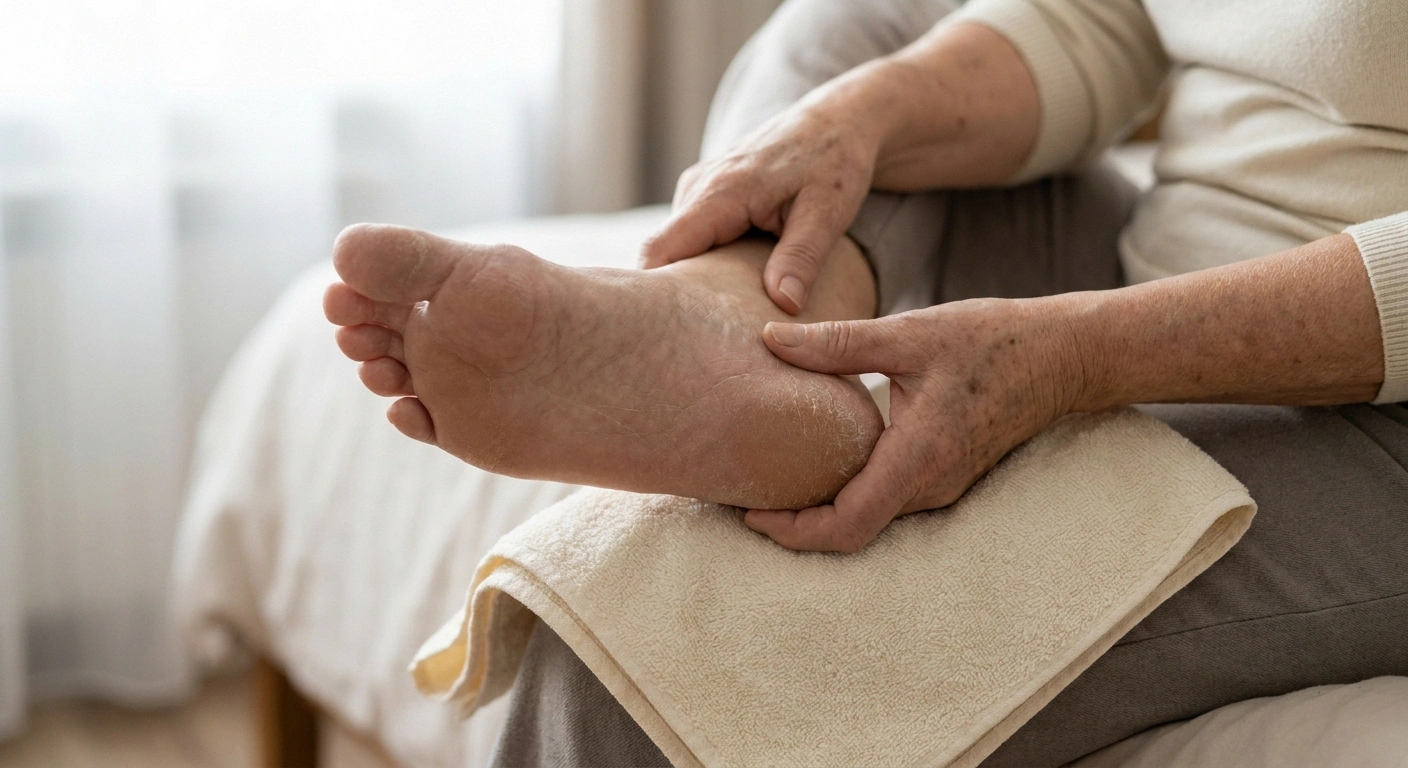
Run your thumb along the outside rim of your heel. If the skin there feels less like skin and more like the edge of an old eraser, you already know the thing this article is about.
Dry feet get filed under cosmetics. Something to fix before sandal season, something a pumice stone and a tub of drugstore lotion should handle. And for most people, that filing is correct.
It is not correct for you.
When nerve damage is in the picture, dry cracked skin on the foot stops being a beauty complaint and becomes a neurological finding with a wound risk attached. That reclassification changes what you buy, where you apply it, what you stop doing immediately, and what you call the doctor about. Most advice on cracked heels was not written with a numb foot in mind, and following it can genuinely hurt you.
Sweat Is a Nerve Signal, Not Just Water
Your sweat glands don’t decide anything on their own. They wait to be told, and the telling is done by small unmyelinated sympathetic C fibers — the same tiny, unprotected nerve fibers that carry burning, temperature, and pain sensation from the skin.
Those fibers are commonly among the earliest affected in distal peripheral neuropathy, though the pattern varies from person to person. They’re thin, they’re unmyelinated, and they run the longest distance in the body to reach your toes. Length works against them. So when nerve damage starts, sweat function in the feet is often one of the earliest things to go, sometimes before numbness is obvious enough to complain about.
Researchers have a name for it: sudomotor dysfunction. In its full form it produces anhidrosis, meaning reduced or absent sweating, and it shows up in the same stocking-shaped distribution as everything else in small fiber neuropathy. Toes first, then the forefoot, then upward. It is common, it’s measurable, and it is very often missed because nobody thinks to ask a patient whether their feet still sweat.
Here is the part that matters for your skin. Sweat isn’t plain water. It carries lactate, urea, amino acids and salts, the water-holding compounds that dermatologists group under the term natural moisturizing factor, and those are a large part of what keeps the outer layer of skin supple. The oily side of the equation comes from separate glands, so sweat is not the whole story. But it supplies the water-holding half, and losing that half leaves the surface brittle. Take away the sweat and you don’t just get dry skin. You get inelastic skin.
Elastic skin stretches when your heel spreads under your body weight. Inelastic skin can’t stretch, so it splits instead.
The Warm Dry Foot, and Why That Combination Is a Clue
There’s a second thing happening at the same time, and it produces a finding worth knowing about because it can help sort out what’s actually wrong with your feet.
Temperature is the first clue, not the only one. These are the other five, and you can observe four of them yourself.
| What to look at | Nerve pattern | Artery pattern |
|---|---|---|
| Skin temperature | Warm, sometimes warmer than the leg | Cool, cooler toward the toes |
| Hair on the toes | Usually still present | Often lost |
| Colour when you raise the leg | Little change | Pales, then reddens on lowering |
| Pulse at the top of the foot | Usually felt | Weak or absent |
| Accompanying symptom | Burning, tingling, numbness | Calf ache after a set walking distance |
| Nail growth | Normal or thickened | Slow, brittle |
Both patterns together is common with long-standing diabetes, and it changes the plan, so it is worth having both assessed rather than assuming one.
The sympathetic nerves that tell sweat glands to work also tell small blood vessels in the skin when to constrict. Lose those nerves and the vessels sit open. Blood flows more freely through the skin than it should, and the foot ends up warm.
So the classic neuropathic foot is warm and dry. That’s an odd pairing, and it’s diagnostically useful, because the other big cause of dry, hairless, fragile skin on the feet is poor arterial circulation — and a poorly perfused foot is cold. Cold, dry, hairless, weak pulses, slow to pink up after you press on it: that pattern points toward the arteries. Warm, dry, decent pulses, plus numbness or burning: that pattern points toward the nerves.
Plenty of people have both at once, particularly with long-standing diabetes, and a clinician can sort it properly. But if you’ve been wondering why your feet feel warm to your spouse’s hand while looking like they belong in a desert, that’s the explanation. Broader background on this branch of the nervous system sits in the autonomic neuropathy overview, and the mirror-image failure — feet that sweat far too much while other areas go dry — is covered in the piece on excessive sweating from autonomic neuropathy. Same wiring, opposite malfunction.
How a Crack Becomes a Wound
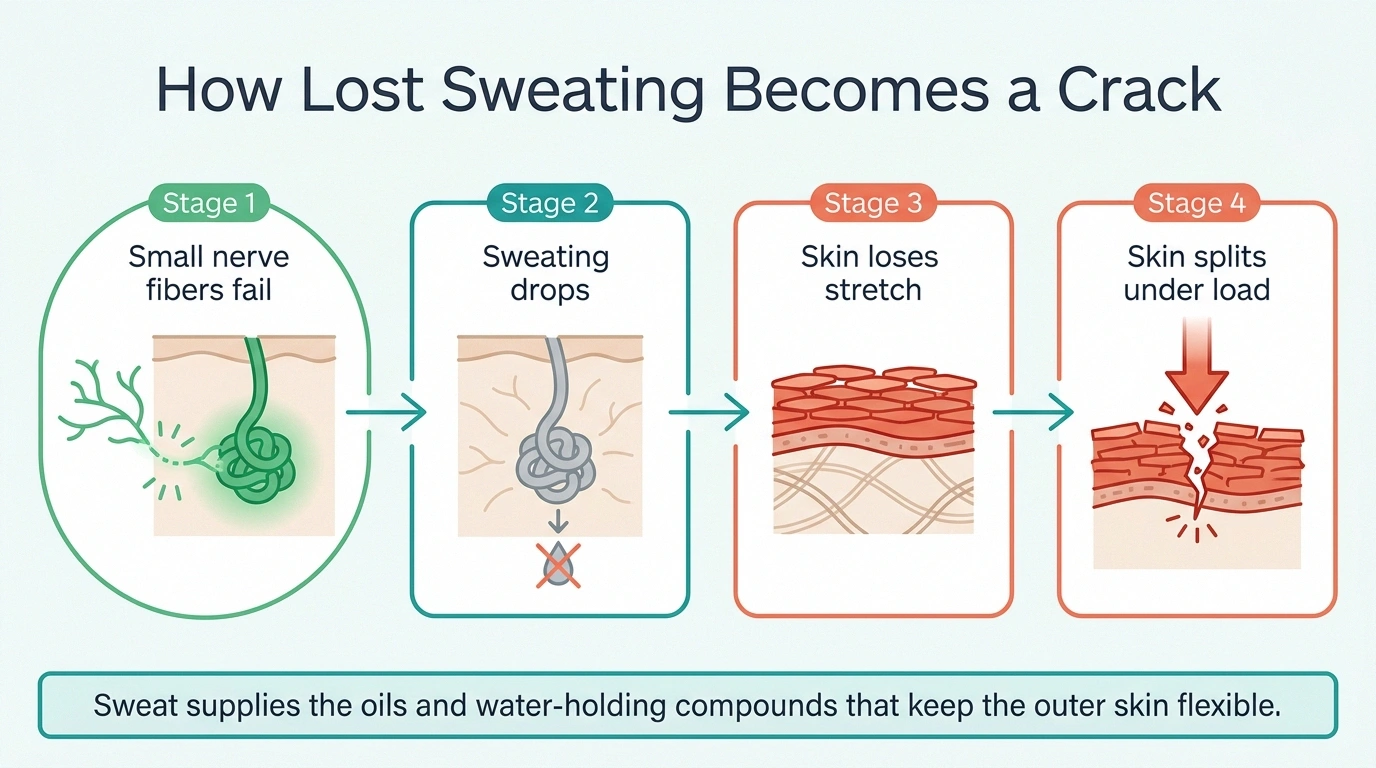
A fissure is not a scratch. It’s a vertical split that goes down through the full thickness of the tough outer layer and often into living tissue underneath. On the heel rim, where shear forces are highest and callus is thickest, it happens easily once the skin loses its give.
The sequence runs like this. Dry inelastic skin thickens into callus in response to pressure. Callus is stiffer than the skin around it, so it concentrates stress at its edges rather than distributing it. Body weight loads the heel, the rim spreads, and the stiff plate splits. Now there’s an opening in the barrier that keeps bacteria and fungi on the outside of you.
On a foot with normal sensation, this hurts. You feel it, you baby it, you put something on it, and you notice within a day if it goes wrong.
On a foot with reduced protective sensation, none of that happens. You keep walking on it at full weight. You don’t notice warmth or tenderness developing around it. The fissure widens, gets contaminated, and starts down a road that the article on diabetic foot ulcers follows all the way to its conclusion. That path is exactly why this topic gets more attention from podiatrists than it does from beauty columns.
The good news is that it’s an unusually preventable problem. Skin that’s kept pliable doesn’t fissure. Almost everything below is aimed at that one job.
Callus Is a Map, Not a Nuisance
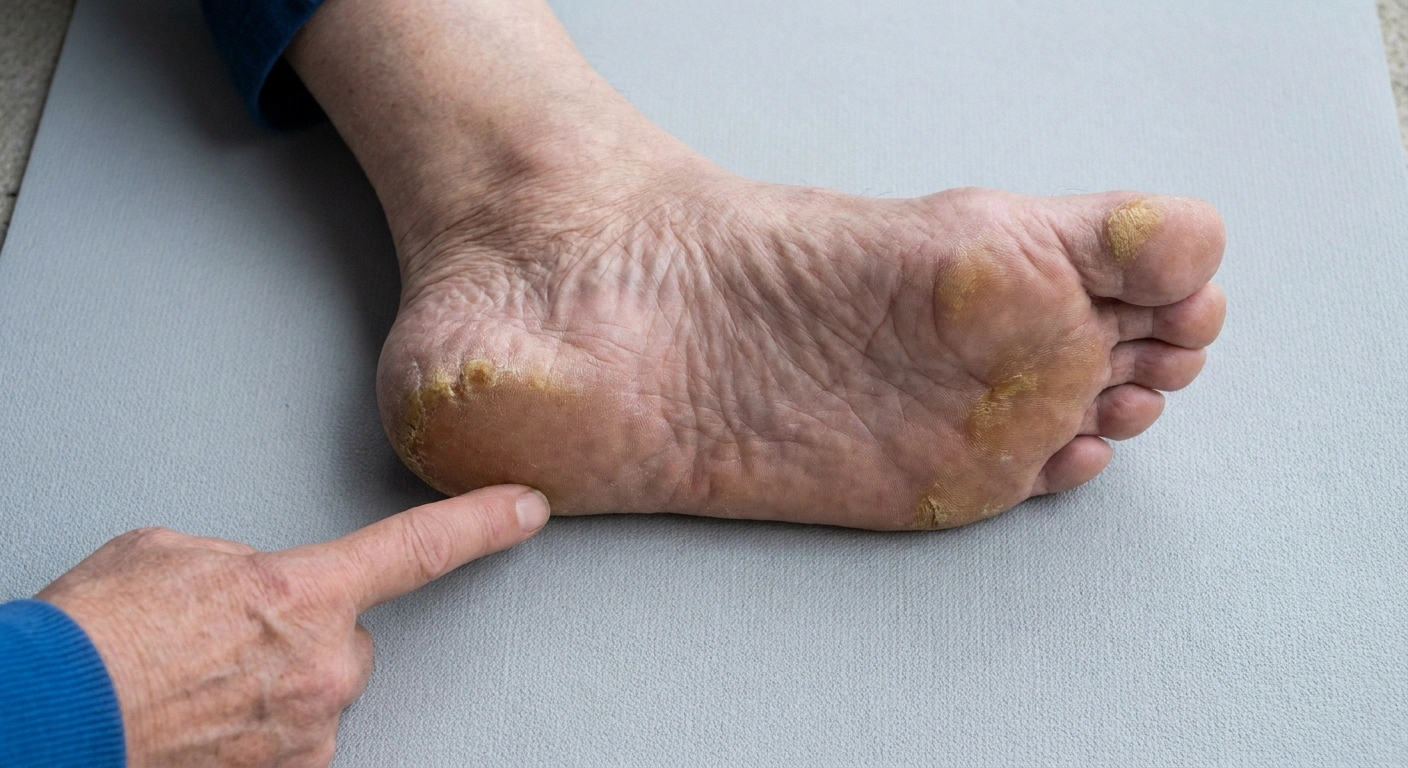
Before the moisturizing routine, one reframe that changes how you look at your own feet.
Callus doesn’t appear randomly. It builds exactly where repeated pressure and shear are highest, which means the pattern of callus on your foot is a printed record of how your weight actually lands. A thick patch under the second metatarsal head says that spot takes more load than it should. A rim of callus around the heel says the heel pad is spreading and the skin can’t keep up.
Read that way, callus is free information about your footwear and your gait. It tells you where the next problem is going to start. Pressure-managing choices — a proper insole, a wider toe box, a rocker sole, whatever your podiatrist recommends after looking at the map — do more for callus than any cream, because they address the cause rather than the symptom. The guide to shoes for neuropathy covers the footwear half of that in detail.
One warning that belongs here and nowhere else in this article: do not remove callus yourself. No pumice stones, no metal callus shavers, no medicated corn plasters. Salicylic acid corn removers cause chemical burns, and a foot that can’t feel a burn is the worst possible place to put one. A callus shaver in the hands of someone who can’t feel how deep they’ve gone is how a routine grooming session turns into a wound that takes three months to close. Callus reduction on an insensate foot is a job for a podiatrist with a scalpel and a good light.
And if you ever see a dark spot, a bruise-like discoloration, or dried blood inside a callus, that’s not cosmetic either. Bleeding under callus means tissue underneath is being damaged, and it’s one of the recognized warning signs that an ulcer is forming below an intact surface. Get that looked at promptly.
What to Actually Put on Your Feet
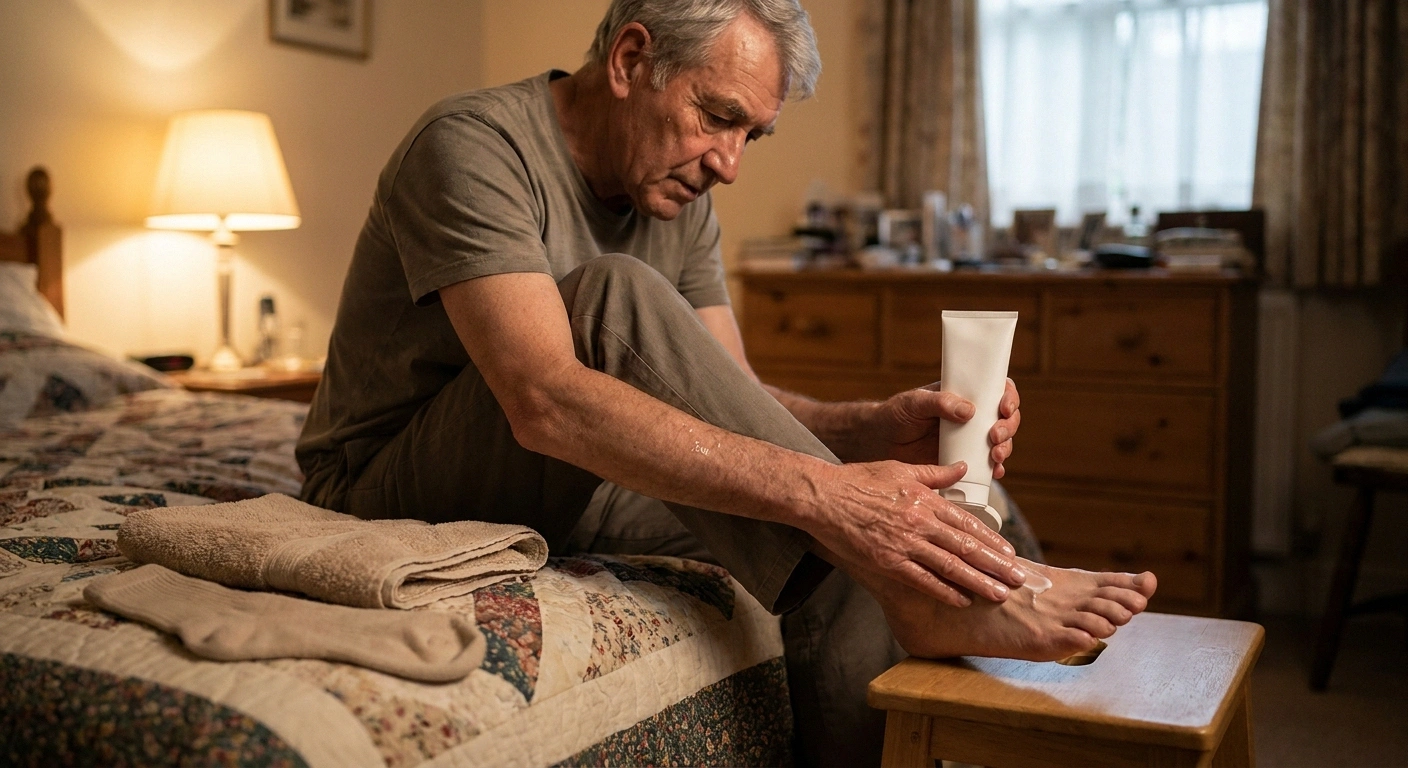
Most lotion sold in the personal care aisle is mostly water with a light emollient, designed to feel nice and absorb fast. For skin that has lost its own moisturizing machinery, that’s not enough. You need something that pulls water into the skin, something that softens the thickened layer, and something that keeps the water from evaporating back out.
- Urea 5 to 10 percent
- Holds water in the skin. A daily moisturizer for generally dry feet. Will not do much to a hardened heel.
- Urea 20 to 25 percent
- Still a humectant, and now also loosens the bonds in thickened skin. This is the usual working strength for heels. Expect a mild sting on cracked areas for the first few days.
- Urea 40 percent and above
- A debriding strength that actively breaks down hardened tissue. Effective and easy to overshoot on a foot that cannot signal irritation. Worth a clinician’s input before starting.
- Ammonium lactate 12 percent
- A comparable alternative with a different feel. Some people tolerate this where urea stings, and the reverse is also true.
- Petrolatum, plain
- Adds nothing and blocks evaporation, which is exactly what a top layer should do. Costs a few dollars and outperforms most heel balms sold at ten times the price.
Products combining urea with a small amount of salicylic acid exist for very thick skin. Those belong in a podiatrist’s hands when protective sensation is reduced.
Urea is the workhorse. It does two jobs at once: it’s a humectant, so it holds water in the outer skin layer, and above roughly 10 percent it also starts breaking down the bonds holding thickened, hardened skin together. Rough guidance on strengths runs like this. Around 10 percent behaves mostly as a daily moisturizer for generally dry skin. Somewhere in the 20 to 25 percent range is the usual working strength for thick, hardened heels. Higher concentrations exist and are genuinely effective, but they’re strong enough to warrant a clinician’s input before you use them on a numb foot.
Ammonium lactate is the main alternative, generally sold at 12 percent, and it works similarly. Some people find urea stings on broken skin and lactate doesn’t, or the reverse. Either is a reasonable place to start.
Plain petrolatum is the cheapest, dullest, and most underrated product in this whole category. It doesn’t add moisture, it prevents moisture leaving, and it’s excellent as a nighttime top layer over whatever active cream you’re using.
Technique matters more than brand:
Apply to damp skin. Within about three minutes of getting out of the bath or shower, while the skin still holds water from the water. You’re sealing water in, not delivering it. Waiting until bedtime an hour later cuts the benefit substantially.
Twice a day, every day, for the foreseeable future. This is maintenance, not a course of treatment. You are manually doing a job your skin used to do for itself, and while sweat function can improve when the underlying cause is treated, through better blood sugar control or correcting a B12 deficiency, small nerve fibers regrow slowly and improvement is not guaranteed. Treat the routine as ongoing rather than as something with an end date. Stopping when the skin looks better is how people end up back at square one in a fortnight.
Never between the toes. This is the rule that surprises people and it is not negotiable. The web spaces stay damp on their own, and cream trapped between toes softens the skin there until it turns white and macerated. Macerated skin tears. Fungus moves in. You’ve created exactly the breach you were trying to prevent, in the least visible place on your foot. Cream goes on the top, the sole, the sides and the heel, and stops at the base of the toes.
Occlude at night for a stubborn heel. Thick cream, then a layer of petrolatum, then a plain cotton sock. The sock keeps it off the sheets and holds everything against the skin for eight hours. Do this nightly for a couple of weeks on a bad heel and the change is usually obvious.
Skip the long hot soak. Soaking feels like it should help and it does the opposite — it strips lipids and leaves the skin drier than before, and hot water on a foot that can’t judge temperature carries a burn risk on top of that. Wash, don’t soak.
Fissures You Already Have
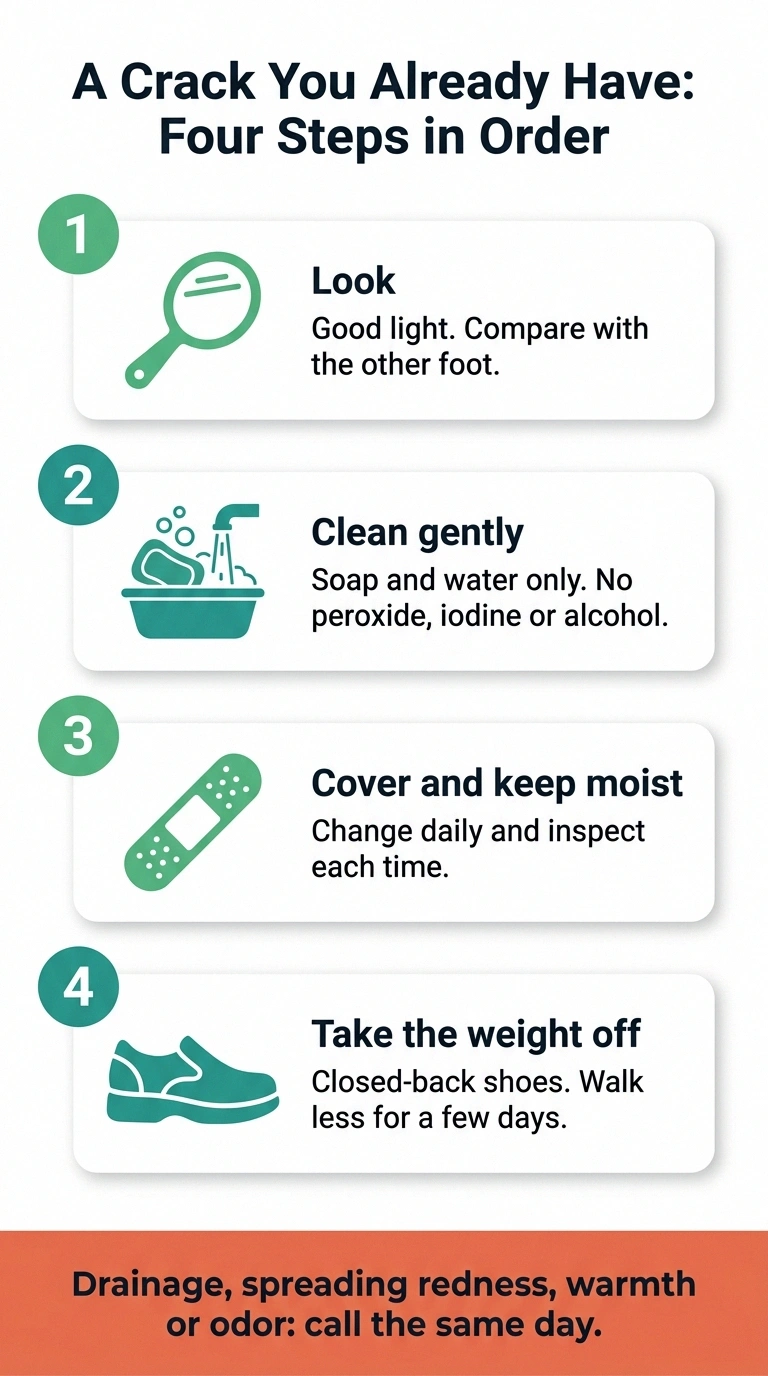
An open crack needs a slightly different approach from prevention, and the order of operations matters.
Start by looking at it properly, in good light, with a mirror if you can’t bring your foot to your eye. You’re checking depth, whether there’s any drainage, and whether the skin surrounding it is red, warm or swollen compared to the same spot on the other foot. That comparison is genuinely useful, because two feet make their own control group.
Clean it gently with soap and water. Not hydrogen peroxide, not iodine, not rubbing alcohol — those damage healing tissue along with the bacteria, and they’ve fallen out of favour for routine wound care for exactly that reason.
Keep it covered and keep it moist. Dry wounds heal slowly; a fissure left open to the air scabs, and the scab splits again the next time you take a step. A simple adhesive bandage or a hydrocolloid dressing does the job. Change it daily and look at what you find each time.
Then unload it. A crack that gets full body weight on every step is being pulled open thousands of times a day, which is why heel fissures are notorious for taking weeks to close. Closed-back cushioned shoes, a heel cup, and honestly a few days of doing less walking than usual will do more than any dressing.
Around all of this, the daily foot check is what converts this from luck into a system. Two minutes, every day, same time. It’s the single habit that catches these things while they’re still trivial, and it matters even more once you know your skin can be quietly failing without hurting.
Red Flags: Stop Managing This at Home

Most dry skin and small cracks respond well to the routine above. A few situations don’t, and on a neuropathic foot the cost of waiting is measured in months of healing rather than days.
Front desks triage by what they hear in the first sentence. A foot problem described as dry skin gets an appointment in three weeks. The same problem described in these terms gets one this week.
- Say the word neuropathy and say that you have reduced sensation in your feet. This single fact changes the urgency category.
- Say there is an open area and how many days it has been there.
- Name the changed signs you can see: drainage, redness spreading outward, warmth compared with the other foot, odor, swelling.
- Mention diabetes if you have it, along with any recent unexplained rise in your readings.
If the earliest offered appointment is more than a few days out and any of those signs are present, ask directly whether the practice has a same-week slot for a wound on a neuropathic foot. Most do.
Call your doctor or podiatrist the same day for any of these:
Any drainage from a crack — clear, cloudy, yellow or bloody. Redness spreading outward from the fissure, or an area that’s warm compared to the matching spot on the other foot. Swelling of the foot or ankle that wasn’t there before. Odor. A dark or bruised spot inside a callus. A crack that goes deep enough to bleed. Any wound that hasn’t clearly started closing after a few days of proper care. And a fever, chills or unexplained blood sugar readings running high, which can be the first sign of infection in someone who can’t feel the infection itself.
One more, and it’s a different problem wearing similar clothes: a foot that becomes warm, red and swollen without any break in the skin, especially after a period of extra walking, deserves urgent assessment for Charcot foot. That’s a bone and joint emergency rather than a skin one, and it gets mistaken for infection or a simple sprain all the time.
None of this is a reason to live in alarm. It’s the opposite. Knowing exactly which findings need a phone call means you can handle everything else calmly at home.
Things That Make Dry Skin Worse Without Anyone Noticing
A few ordinary habits quietly work against you, and they’re worth auditing once.
Barefoot time at home. Comfortable, and hard on skin that can’t stretch — bare heels on hard floors take repeated impact and shear with nothing absorbing it, and there’s a trauma risk on top. The full case is in the piece on going barefoot at home, but the short version is that supportive house shoes are one of the cheapest interventions available.
Open-back shoes and flip-flops. The heel pad spreads sideways with nothing containing it, which is precisely the mechanical setup that splits a rim.
Winter heating. Indoor air in a heated house can be remarkably dry, and it pulls moisture out of skin all season.
Medications and conditions. Hypothyroidism, some diuretics, retinoids and long-term statin use can all contribute to dry skin. Worth raising if your skin changed noticeably around the time a prescription changed.
Age. Sebaceous and sweat gland output declines with age independently of anything neurological. Nerve damage stacks on top of a baseline that was already drifting downward.
A Routine That Fits in Four Minutes
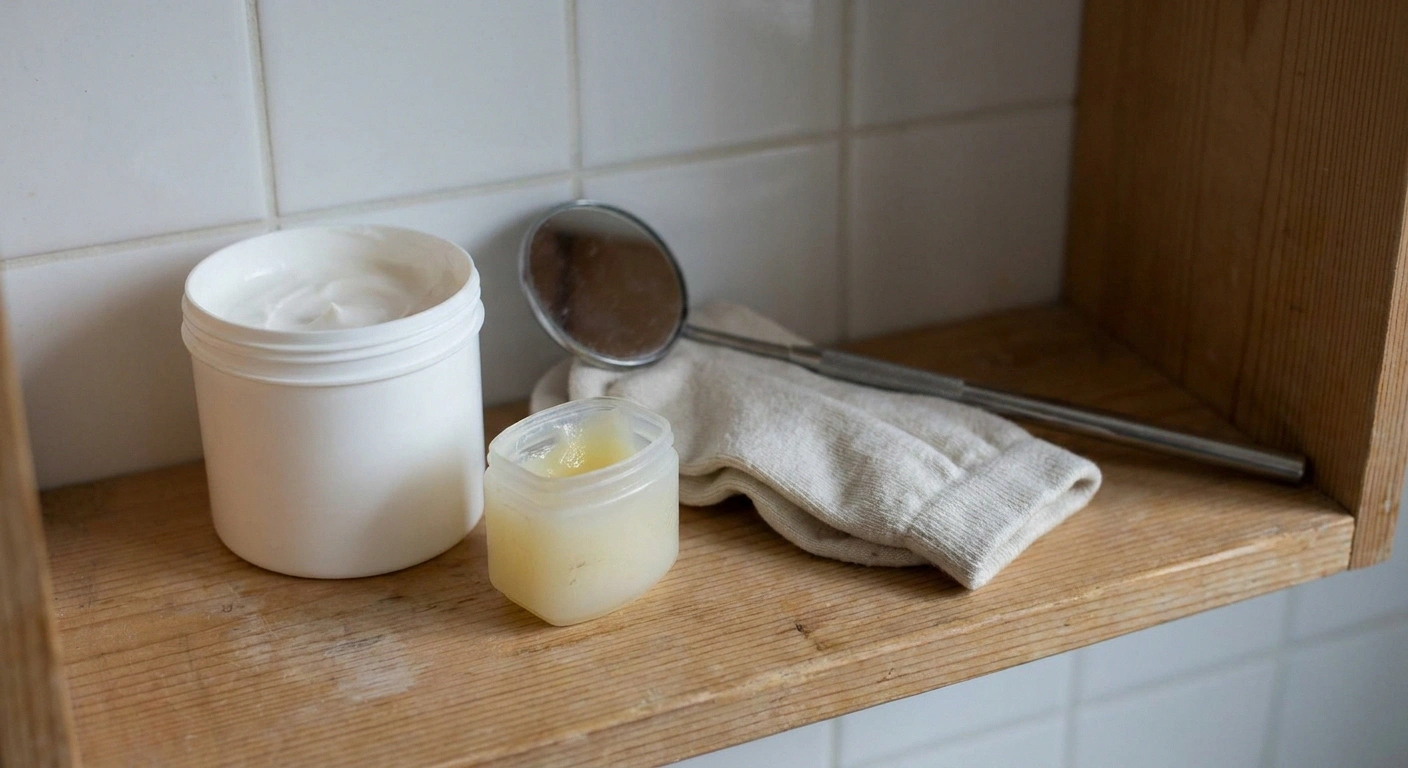
Everything above collapses into a short daily habit. Morning: cream on feet after washing, not between the toes, socks and shoes on. Evening: look at both feet in good light, compare them, then cream again on damp skin and petrolatum over the heels if they need it. Weekly: check whether the callus pattern has shifted, which usually means your shoes or your gait have.
Attaching each piece to something you already do without thinking is what makes it survive past the second week.
| 90 seconds | Cream after the morning shower, while skin is still damp. Attach it to putting socks on. |
| 60 seconds | Evening look at both feet under a lamp, soles included. Attach it to taking shoes off. |
| 60 seconds | Second cream application, plus petrolatum over the heels if they are rough. |
| Once a week | Compare the callus pattern with last week. New thickening in a new place means something about your shoes or your gait changed. |
Then keep going. Consistency beats intensity here by a wide margin — a mediocre cream applied twice daily for a year outperforms an excellent one used in bursts whenever the skin looks bad. The general foot care guide covers nail care, washing and inspection technique if you want to build the rest of the routine around this piece of it.
Feet that can’t feel don’t get to warn you. The routine is the warning system you build to replace the one that stopped working.
Frequently Asked Questions
Why are my feet so dry since my neuropathy started?
The small nerve fibers that tell sweat glands to produce sweat are among the first fibers damaged in peripheral neuropathy. When that signal weakens, the feet produce less sweat, and sweat is what supplies the natural oils and water-holding compounds that keep skin flexible. The result is skin that is not only dry but inelastic, meaning it splits under pressure instead of stretching. This is called sudomotor dysfunction and it is common, though it is often not asked about during appointments. It is not necessarily fixed: sweating can improve when the underlying cause of the neuropathy is treated, although that process is slow and varies a great deal between people.
Can nerve damage really stop the feet from sweating?
Yes. Reduced or absent sweating in the feet is a recognized feature of small fiber and autonomic neuropathy, and it is one of the earliest measurable abnormalities in these conditions. Tests exist that measure sweat response directly, including sweat-indicator plasters and electrochemical skin conductance devices, though they are not part of routine testing everywhere.
What is the best cream for cracked heels with neuropathy?
A urea-based cream is the usual first choice, in the range of 20 to 25 percent for thick or hardened heel skin and around 10 percent for general daily dryness. Ammonium lactate at 12 percent is a reasonable alternative if urea stings. Plain petrolatum applied over the top at night seals moisture in and costs very little. Applying to damp skin within a few minutes of bathing matters more than which brand is chosen.
Why should lotion not go between the toes?
The skin between the toes already stays damp because air does not circulate there. Adding cream keeps it wet longer, which softens and breaks down the skin, a process called maceration. Macerated skin tears easily and creates an entry point for fungal and bacterial infection in a spot that is difficult to see. Cream belongs on the top, sole, sides and heel of the foot, stopping at the base of the toes.
Is it safe to use a pumice stone on a numb foot?
Self-removal of callus is not recommended when protective sensation is reduced. Without the pain feedback that normally signals going too deep, it is easy to remove living tissue and create a wound. Medicated corn and callus removers containing salicylic acid carry a burn risk for the same reason. Callus reduction on an insensate foot should be done by a podiatrist.
Can cracked heels turn into an ulcer?
They can. A fissure breaches the skin barrier, and on a foot that continues bearing full weight without feeling the damage, that opening can widen, become contaminated and progress to an ulcer. This is why dry cracked skin is treated as a wound risk rather than a cosmetic issue when neuropathy is present.
My feet are dry but they feel warm. Is that normal?
It is a recognized pattern. The same sympathetic nerve fibers that control sweating also control constriction of small skin blood vessels, so when they are damaged the vessels stay open and the foot runs warm while remaining dry. Dry skin with a cold foot, weak pulses and hair loss points more toward reduced arterial circulation, which is a different problem requiring different assessment. Both can be present together.
How long does it take for a heel fissure to heal?
A shallow crack often improves within one to two weeks with consistent moisturizing, covering and reduced weight-bearing. Deeper fissures take longer because every step reopens them, and heel wounds are known for slow healing. A crack showing no clear improvement after several days of proper care, or one with drainage, spreading redness or surrounding warmth, should be seen rather than managed at home.
About the Author