The fitted sheet won again.
That's how a friend from my book club opened a text to me last winter, along with a photo of a bare mattress, one corner of the sheet stubbornly snapped back into the middle of the bed. She has neuropathy in her hands. For her, that fourth elastic corner had become the hardest part of the whole week — harder than the grocery run, harder than the stairs.
I laughed, and then I winced, because I knew exactly what she meant. My own trouble is my feet — leaning across a wide bed on soles that can't quite feel the floor is its own small adventure. Changing sheets asks for almost everything neuropathy takes away: fingertip grip, a sense of where your hands are, steady balance while you bend and reach, and the ability to notice when you've scraped a knuckle.
The good news is that almost every step of the job can be made easier, with better sheets, a couple of inexpensive tools, a smarter order of operations, and permission to stop halfway. Here's what works.
Why This Chore Is Harder Than It Looks
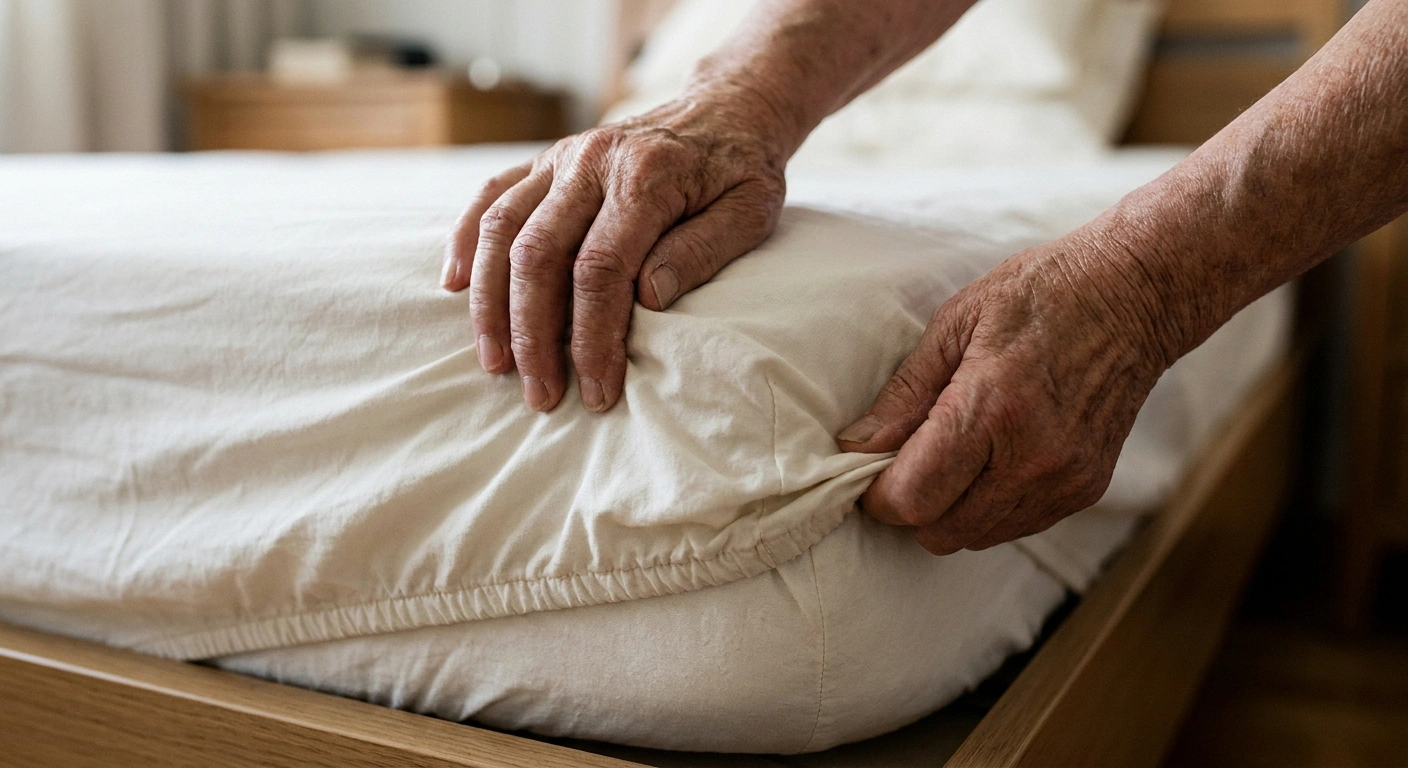
Making a bed is mostly a pinching job. You pinch the elastic edge of a fitted sheet, pinch a pillowcase open, pinch the corners of a duvet to shake it into its cover. That's exactly the kind of grip neuropathy in the hands tends to weaken.
| Hardest step | Easier swap |
|---|---|
| Stretching the last fitted corner | Deeper pockets, elastic all around, and finish that corner sitting down |
| Holding the mattress up to tuck | A plastic mattress wedge props the corner for you |
| Leaning across a wide bed | Walk around to each side, or pull the far edge with a reacher |
| Tucking a flat top sheet | Skip it, or leave it loose under the duvet |
| Stuffing a duvet into its cover | The roll method, or a quilt that needs no cover |
| Pinching slippery fabric | Rubber-dotted gloves, and push with your palms instead |
Research backs this up. A 2021 study of older adults with diabetes found that those with peripheral neuropathy had noticeably weaker fingertip pinch, especially between the thumb and the smaller fingers, and lower scores on a standard pegboard test of hand dexterity. A 2017 study found something subtler — the people with diabetic neuropathy squeezed about as hard as the healthy volunteers, but they controlled their grip less precisely when holding an object, which the researchers said could put them at risk of easily dropping things. Anyone who has watched a sheet corner slip out of their fingers for the fifth time will recognize that description.
Then there's the rest of your body. Stretching a sheet over the far side of a queen bed means leaning forward with your weight on your toes. If your feet are numb, your brain gets less information about where your weight is, and a lean can turn into a stumble. Lifting a mattress corner to tuck a sheet asks your arms and back to hold real weight while your hands do fine work.
And the mattress frame bites back. Knuckles scraped on a box spring or a metal rail are a common, minor injury — but on hands that don't feel much, a scrape can go unnoticed until it's red and sore days later.
Set Up Before You Start
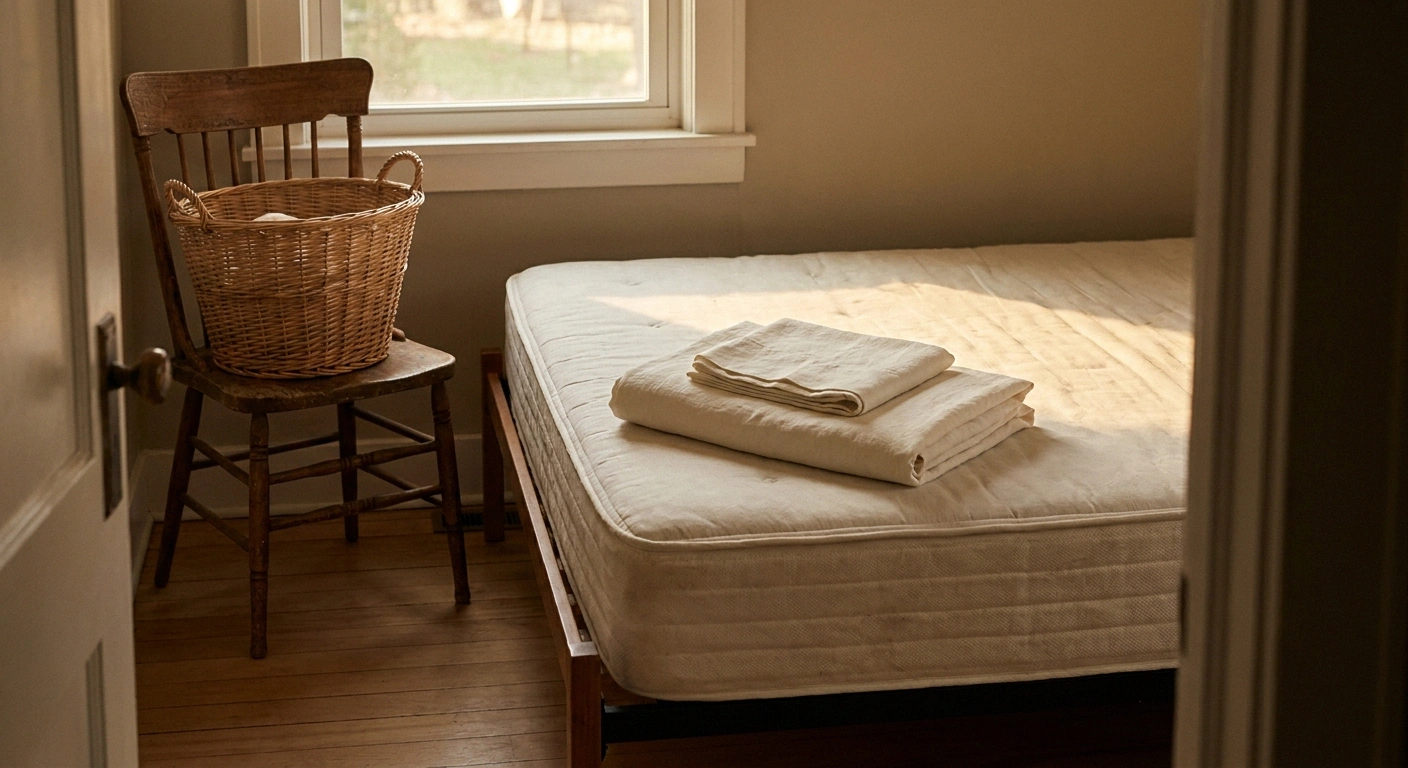
A few minutes of preparation saves a lot of struggle. The goal is to never be caught holding half a sheet, off balance, looking for the thing you need.
Gather everything first. One easy habit is storing each clean set of sheets as a bundle, folded and tucked inside one of its own pillowcases. You grab one soft package from the closet, and everything that belongs together is already together.
Clear the floor around the bed, especially the throw rug, slippers, and last night's book. Pulled-off sheets pool on the floor faster than you'd expect, and fabric underfoot is a classic trip hazard. Drop the dirty ones straight into a laundry basket set on a chair or on the bed, so you aren't bending to the floor to collect them.
Wear shoes with a grippy sole, not socks, particularly on wood or laminate floors. Turn on good light. And put a sturdy chair within arm's reach, both for resting and for sitting down to do the fiddliest steps. My guide to a neuropathy-friendly bedroom setup has more ideas for arranging the room itself.
Timing matters, too. Many people notice a time of day when their hands work best — for some it's late morning, once any stiffness has eased and before fatigue sets in. Save the sheets for your window instead of squeezing them in at bedtime.
The One-Corner-at-a-Time Method
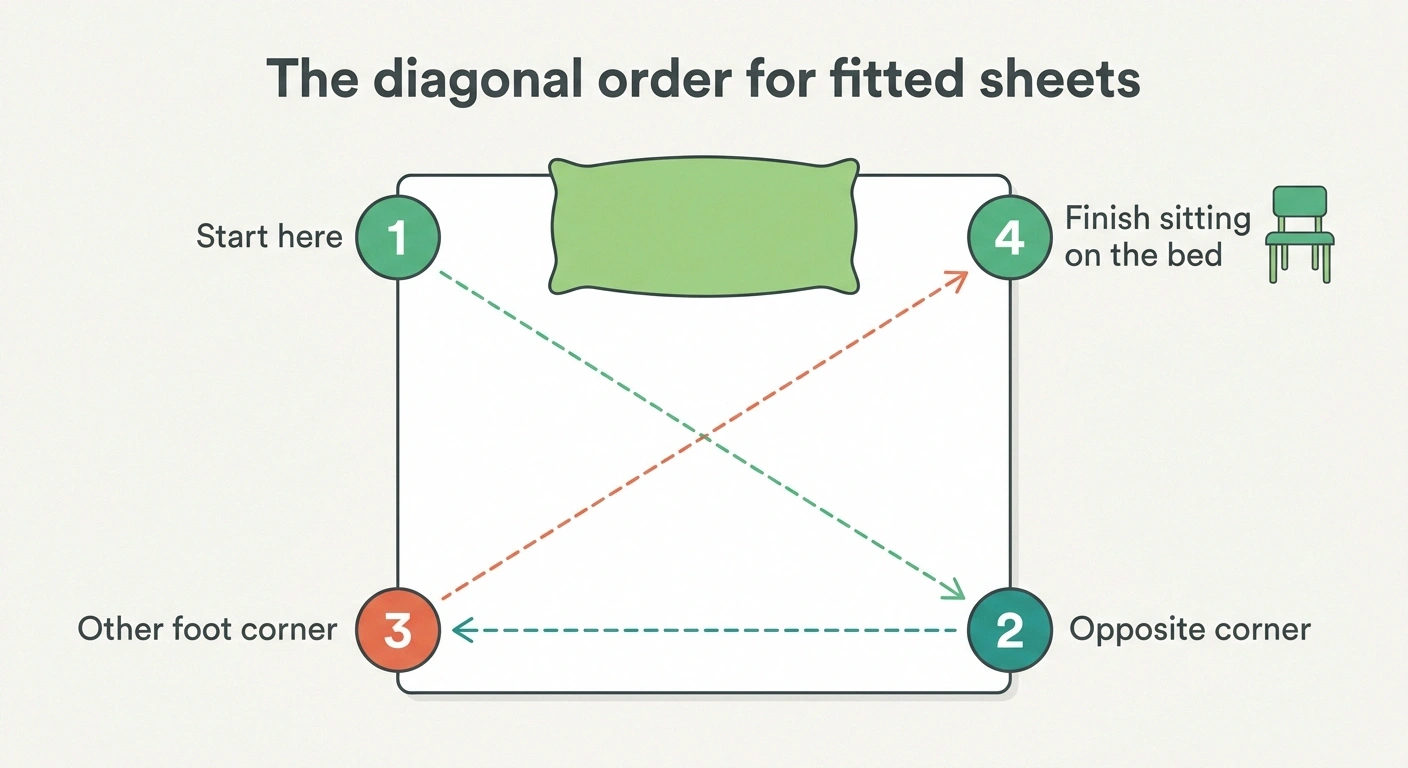
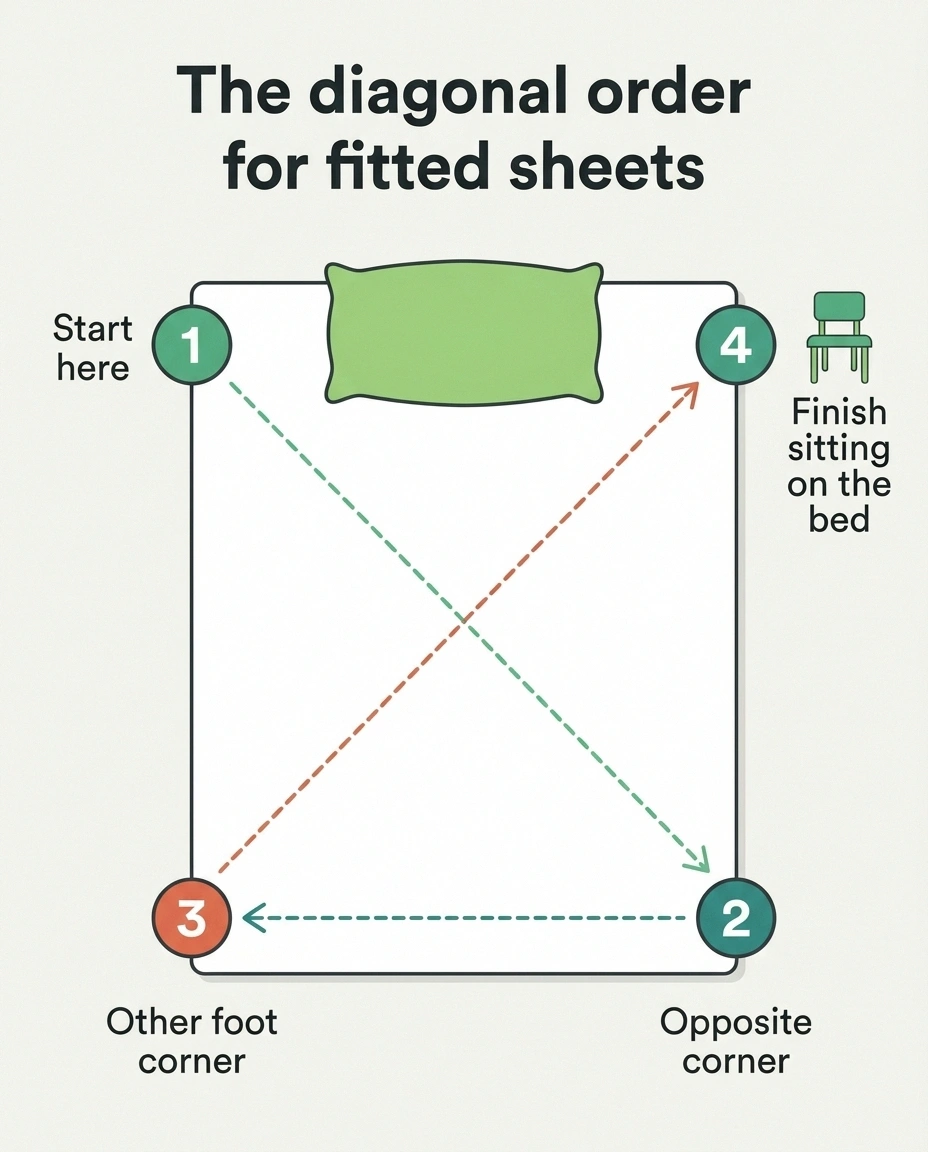
The single most useful trick for fitted sheets is the order you put the corners on. Most of us go around the bed in a circle, which leaves the last corner fighting against three tight ones. Instead, work diagonally.
Start at a top corner, the head end of the bed. Pull the pocket over the mattress corner using your palm and forearm rather than your fingertips, pushing the elastic down and under. Next, go to the opposite corner at the foot of the bed, on the other side. With two diagonal corners anchored, the sheet can't creep back across the mattress. Then do the second foot corner. Save the last head corner for when you can sit on the edge of the bed right next to it, so you're working close to your body instead of reaching.
If the last corner still won't reach, lift the mattress edge an inch or two with one forearm and slide the pocket over with the other hand. Or stay seated right beside the corner, lay the sheet's hem over it, and work the elastic down with the heel of your hand. Kneeling on the floor is only worth it if you can get down and back up safely, with something solid to hold.
Taking the old sheet off follows the same principle in reverse. Don't try to pinch the elastic. Push each corner up and off the mattress with the flat of your hand, then pull the sheet toward you in one sweep.
A small but satisfying trick: put a dot of permanent laundry marker on the tag or seam at the head end of each fitted sheet. No more putting it on sideways and discovering the mistake on the third corner.
Sheets That Do Half the Work
The sheet itself can make the job much easier or much harder. The biggest factor is fit. Measure the depth of your mattress, including any topper or pad, and choose fitted sheets with a pocket depth at least a couple of inches deeper. A sheet that barely fits takes enormous finger strength to stretch over the last corner — one with room to spare slides on with a push.
Look for elastic that runs all the way around the edge, not just at the corners. Full elastic grabs the mattress along every side and forgives a sloppy start. Stretchy fabrics help too. Jersey knit sheets, the same soft material as a T-shirt, give a little as you pull them into place.
Weight matters when you're lifting. Lightweight cotton percale or jersey is easier to handle than heavy flannel, at least outside the coldest months.
Then there's the question of layers. Many people quietly drop the flat top sheet altogether and sleep under a duvet or quilt alone, which removes the hardest tucking job in the bed. If you prefer a top sheet, you can simply leave it untucked.
Zippered bedding is another option some people swear by. The top sheet zips onto the fitted sheet along each side, so there's no tucking and no lifting. Two cautions for our situation: a zipped-in top sheet can press down on sensitive feet, which matters if you live with allodynia, where even light fabric can hurt. And practice unzipping it half-asleep, because you don't want to fumble your way out of bed for a night-time bathroom trip.
Tools Worth Knowing About
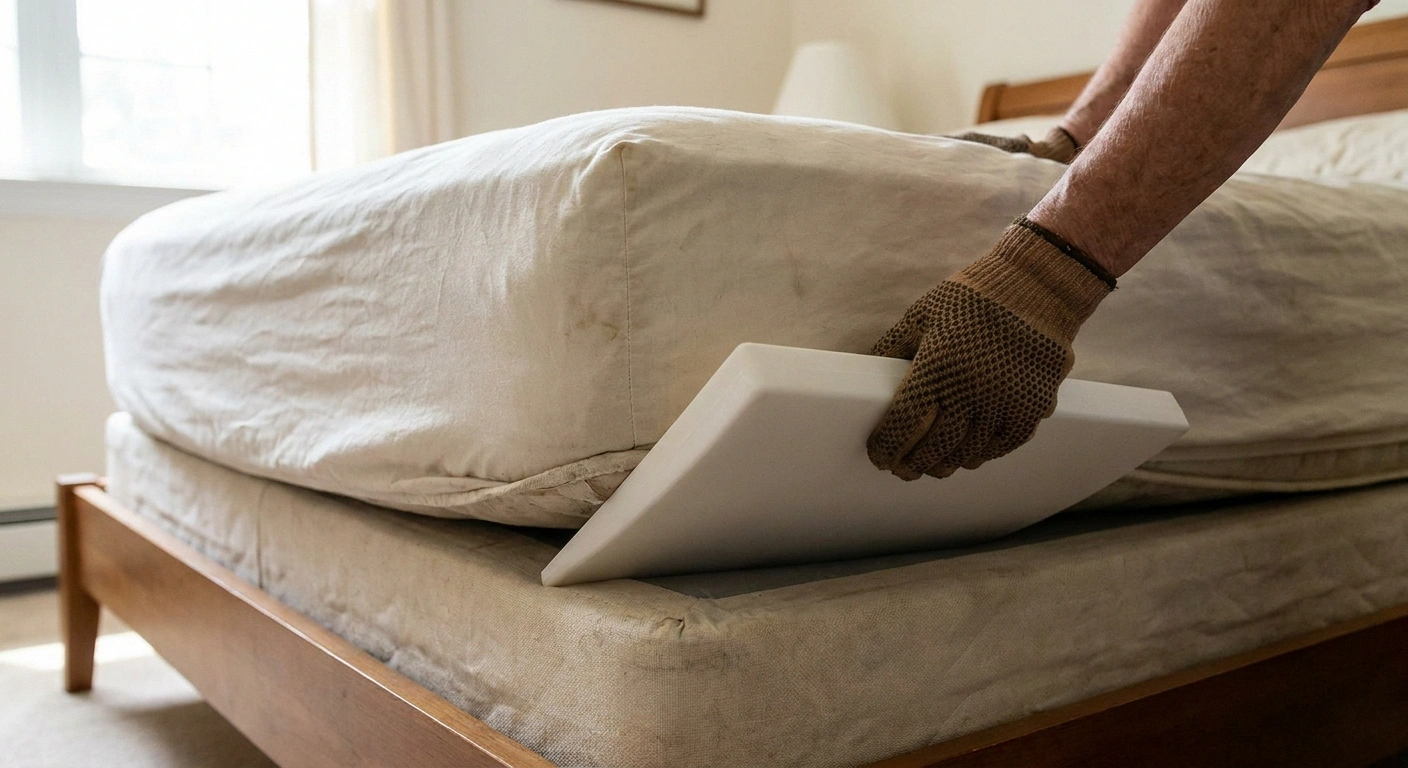
A handful of simple tools can take the heaviest parts out of the job.
A mattress wedge, sometimes sold as a mattress lifter, is a flat plastic wedge you slide between the mattress and the box spring. It props the corner up so you can tuck with both hands instead of holding the mattress with one. Some people keep two, one for each side.
Sheet straps, often called sheet suspenders, are elastic bands that clip onto the corners of a fitted sheet underneath the mattress and keep it from popping off. The clips take some pinch strength, so this is a good job to hand to a family member once; after that they tend to stay put.
Rubber-dotted gardening gloves are a cheap, underrated aid — the kind you probably already own. The grip dots help you hold slippery fabric without squeezing hard, and the gloves protect your knuckles from the mattress frame.
Bed risers, which lift the whole bed a few inches, mean less bending while you work. Be careful here, though. Use sturdy risers made for the purpose, check that the bed doesn't wobble afterward, and make sure it's still a height you can sit on with your feet flat on the floor, or getting in and out becomes the new risk. My guide to getting in and out of bed safely explains how to check that height.
A long-handled reacher can pull a sheet across the far side of the bed so you don't have to lean. If you already use one for dressing or picking things up, it earns its keep here too.
The Duvet Cover Problem
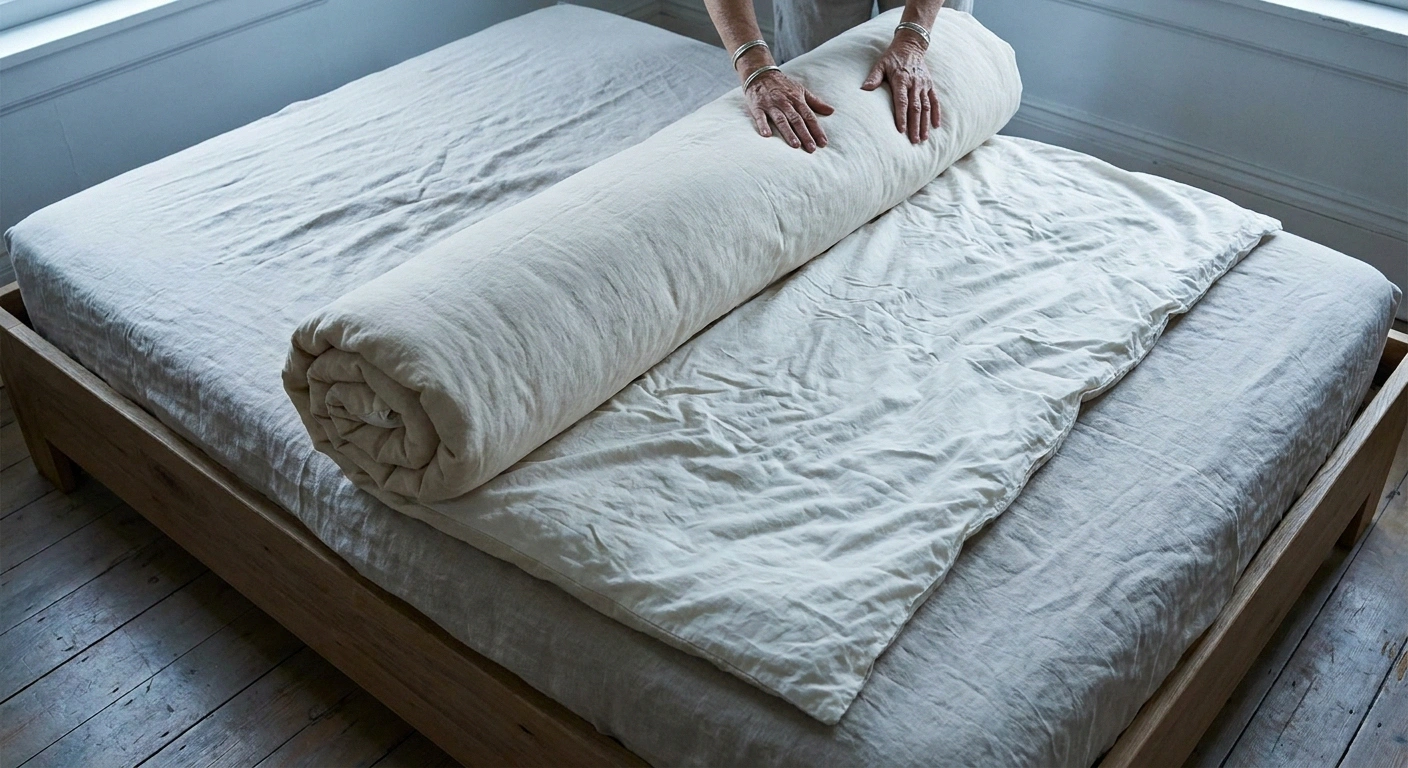
If fitted sheets are the hardest part for the fingers, duvet covers are the hardest for the arms. Wrestling a comforter into a fabric bag while holding the corners aloft is tiring for anyone.
The roll method — sometimes called the burrito method — takes the arm work out of it. Turn the cover inside out and lay it flat on the bed with the opening at the foot end. Lay the duvet flat on top, lining up the corners. Starting at the head end, roll the two layers together toward the foot like a sleeping bag. When you reach the opening, turn the cover's opening back over the end of the roll, one side at a time, to enclose the whole thing. Close the opening, then unroll toward the head. The cover turns right side out around the duvet as you go.
It sounds like a magic trick the first time. By the third, it becomes the easiest part of making the bed.
Two more choices simplify things further. Duvet covers with the opening along a long side, or with a zipper instead of tiny buttons, are much easier for numb fingers. And a quilt or coverlet that needs no cover at all can replace the whole operation, especially in warmer months.
Pillowcases Without the Pinch
Pillowcases look like the easy part, yet holding a floppy case open while stuffing a pillow into it is a two-handed pinching job. There's a better way.
Fold the pillow in half lengthwise, or curl it like a taco, and slide the folded end deep into the case in one push. Let go, and the pillow springs open inside, filling the corners on its own. Then hold the case's open end against your stomach and give the pillow a gentle shake down, which settles it without any corner-pinching at all.
Envelope-style pillowcases, with a flap that tucks over the end of the pillow instead of an open mouth, are easier still — and the pillow can't slide out overnight. If you use zippered pillow protectors, thread a key ring or a loop of ribbon through each zipper pull so you can hook a finger through it instead of hunting for a tiny tab.
Protecting Your Hands and Skin
Because you may not feel small injuries, make a quick look at your hands part of the routine. It takes less than a minute.
- Knuckles and backs of fingers
- Scrapes or bruises from the bed frame or box spring
- Fingertips
- Splits, cracks, or small cuts from zippers and snaps
- Palms
- Redness from pushing elastic down over corners
- The next day
- Anything warm, swollen, or weeping gets looked at promptly, especially if you have diabetes
Watch for heat, too. Sheets straight out of the dryer are usually fine, but metal zippers, snaps, and buttons can get surprisingly hot. If you can't reliably feel temperature in your fingertips, let a load cool for a few minutes before you fold or handle it. My laundry tips for neuropathy cover the washing and drying side of the job in more detail.
Moisturize afterward if your hands tend to crack. Dry, cracked fingertips are both uncomfortable and an easy entry point for infection, and that matters more if diabetes is behind your neuropathy.
If fabric textures bother you, notice which ones. Some people with sensitive skin find brushed cotton or jersey far kinder to touch than crisp, high-thread-count percale, both when making the bed and when sleeping in it.
Pacing: You Don't Have to Do It All at Once

Nobody hands out a prize for changing every layer of a bed in one go. Occupational therapists teach energy conservation for exactly these tasks: plan ahead, break the job into pieces, rest before you're worn out, and use your body's larger, stronger joints in place of small ones wherever you can.
- Morning: strip the bed and start the wash
- Late morning: fitted sheet and pillowcases
- After lunch: rest with your feet up
- Afternoon: top layer or duvet cover
- Day one: fresh pillowcases
- Day two: the fitted sheet
- Day three: duvet cover or quilt
- Wash each layer the day it comes off
For sheets, that might mean stripping the bed in the morning and remaking it after lunch. Or it might mean changing pillowcases one day and the fitted sheet the next. A freshly made bottom sheet with yesterday's duvet on top is still a win.
Sit down between steps. The chair you placed by the bed isn't just for emergencies; it's part of the plan. If you notice your hands getting clumsier or your balance getting shaky, that's your signal to stop for a while rather than push through. My guide to pacing and neuropathy fatigue explains how to budget energy across a whole day, not just one chore.
And lower the bar where it doesn't matter. Hospital corners are optional — truly. A bed that's made, comfortable, and changed on a schedule you can keep is the whole goal.
When to Ask for Help, and How
Some parts of this job are worth handing off, and there's no shame in that. Lifting a heavy mattress, flipping or rotating it, and installing sheet straps are all good tasks for a visiting son, daughter, neighbor, or grandchild. If they're around every couple of weeks, you might time your sheet changes to their visits and do the lighter jobs in between.
If bed-making is one of several daily tasks that have become a struggle, ask for a referral to an occupational therapist. They can watch you do the job, spot where the difficulty really lies, and suggest tools and techniques tailored to your hands and your home. My article on occupational therapy for neuropathy explains what a visit looks like.
And if balance is the bigger problem, bring that up as well. Falls often happen during ordinary chores like this one, and there's a lot you can do about them; my guide to neuropathy and balance is a good place to start.
Frequently Asked Questions
What is the easiest way to put on a fitted sheet with weak hands?
Work diagonally. Anchor one head corner, then the opposite foot corner, then the other foot corner, and finish the last corner while sitting on the edge of the bed. Use your palms and forearms to push the elastic down instead of pinching it.
What kind of sheets are easiest to put on with neuropathy?
Fitted sheets with pockets a couple of inches deeper than your mattress, elastic all the way around, and a stretchy fabric such as jersey knit. Lightweight fabrics are easier to lift than heavy flannel.
Are zipper sheets good for people with neuropathy?
They remove tucking and lifting, which helps many people. Check that the zipped top sheet does not press on sensitive feet, and practice opening it so you can get out of bed quickly at night.
How can I change sheets without bending over so much?
Raise the bed slightly with risers if it keeps the height safe for sitting, use a mattress wedge to hold corners up, sit on the bed edge for the last corner, and keep the laundry basket on a chair instead of the floor.
Is there an easier way to put on a duvet cover?
Yes. Lay the inside-out cover flat with the duvet on top, roll them together toward the opening, turn the opening over the roll, then unroll. The cover ends up right side out around the duvet without any shaking.
Should I wear gloves when making the bed?
Rubber-dotted gardening gloves can help. They improve grip on slippery fabric and protect knuckles from scrapes on the bed frame that numb hands might not notice.
About the Author