I used to think laundry day was the worst day of the week. Then I figured out it didn't have to be one day. That single shift — from a marathon Saturday to one or two small loads slotted through the week — gave me back hours of pain and probably a fall or two I didn't take.
Laundry sounds small until your hands and feet stop cooperating. Then it becomes a chore that hits every weak spot at once: bending, standing, lifting, fine-motor folding, gripping detergent caps, reaching into a washer that swallows the last sock. If you have neuropathy in your hands, your feet, or both, this is a guide to making laundry doable again — without the wipeout that used to follow it. Most of it is rearranging the work itself, with a few small tools that change the math.
Why Laundry Hits Neuropathy Hard
If you've found yourself dreading the basket more than you used to, you're not imagining it. Laundry has four pain points that line up neatly with the weak spots neuropathy creates.
Key Takeaway
Laundry hits four neuropathy weak spots at once: lifting, standing, gripping, and fine-motor sorting. The single highest-impact change is free — stop doing one giant “laundry day” and switch to one small load most days. Then layer in wheeled hampers, seated folding, and a pedestal washer when possible.
Lifting. A full hamper of wet clothes can weigh 25 to 40 pounds. Hauling that down a hallway or up from a basement asks for grip, balance, and trunk strength all at once — and the load shifts as you carry it, which is exactly what unsteady feet can't correct for.
Standing. Most laundry rooms are tile or concrete. Hard surfaces plus long minutes of standing produce the burning escalation that lasts the rest of the day.
Gripping. Detergent caps, softener bottles, stain-remover triggers — every product seems packaged for full hand strength. Neuropathy in the hands turns these into small, repeated frustrations.
Sorting and folding. Without good fingertip feedback, separating darks, matching socks, and folding take three times as long.
Add slick basement floors, the temperature-blindness that makes hot water silently dangerous, and the fall risk of carrying a basket that blocks your view of the stairs, and laundry quietly becomes one of the higher-risk activities of the week. Almost every problem here has a workable solution.
Step One: Stop Doing Laundry Day. Do Laundry Throughout the Week.
This is the single biggest change, and it's free. Pacing.
The Four Laundry Pain Points for Neuropathy
1. Lifting
A wet load can weigh 25-40 lbs. Carrying a shifting basket asks for grip, balance, and trunk strength simultaneously — exactly what unsteady feet can't safely correct.
2. Standing
Hard tile or concrete floors plus extended sorting and folding amplify burning, throbbing pain that lasts the rest of the day.
3. Gripping
Detergent caps, softener bottles, and spray triggers are designed for full hand strength — and aren't friendly to neuropathic hands.
4. Sorting & Folding
Without reliable fingertip sensation, separating darks, matching socks, and folding take three times as long.
The “laundry day” model — save it all up, do six loads on Saturday, finish exhausted — is the most punishing schedule possible for nerve pain. Six hours of standing and bending in one stretch can wipe out the rest of the weekend.
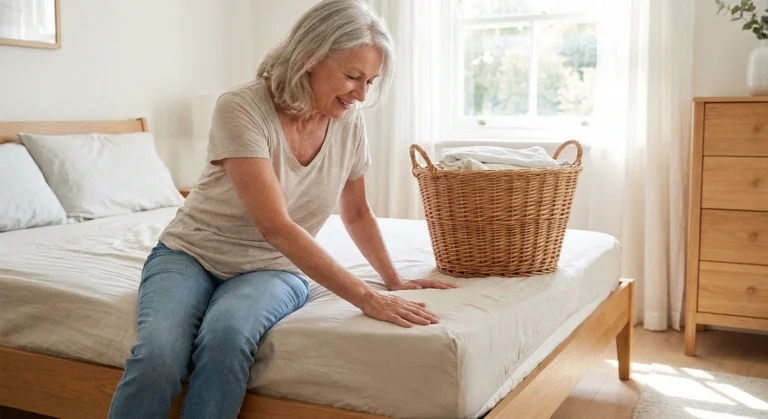
The fix is one small load most days, or two small loads a few days a week. Lighter hampers, shorter standing time, fewer items to fold at once, no marathon exhaustion. You're not adding work — you're spreading the same total work over more days, in portions your body can handle. If you only change one thing in this guide, change this.
The Hamper and Sorting Problem
The traditional tall plastic hamper is terrible equipment for anyone with neuropathy. It encourages overfilling, it's heavy when full, and once it's full you're hugging it across the house with no view of where your feet are landing.
Switch to a wheeled hamper. A lightweight rolling laundry cart — fabric bag on a wire frame, four wheels — eliminates lifting almost entirely. Some have separate compartments for darks and lights so you can pre-sort as you go. They're $25 to $50 and often the single best laundry purchase someone with neuropathy makes.
Never lift a hamper overhead. If your washer is a top-loader and you're tempted to hoist a basket up to dump it in, stop. That's a back injury and a balance loss waiting to happen. Transfer in pieces, not the basket as a single load.
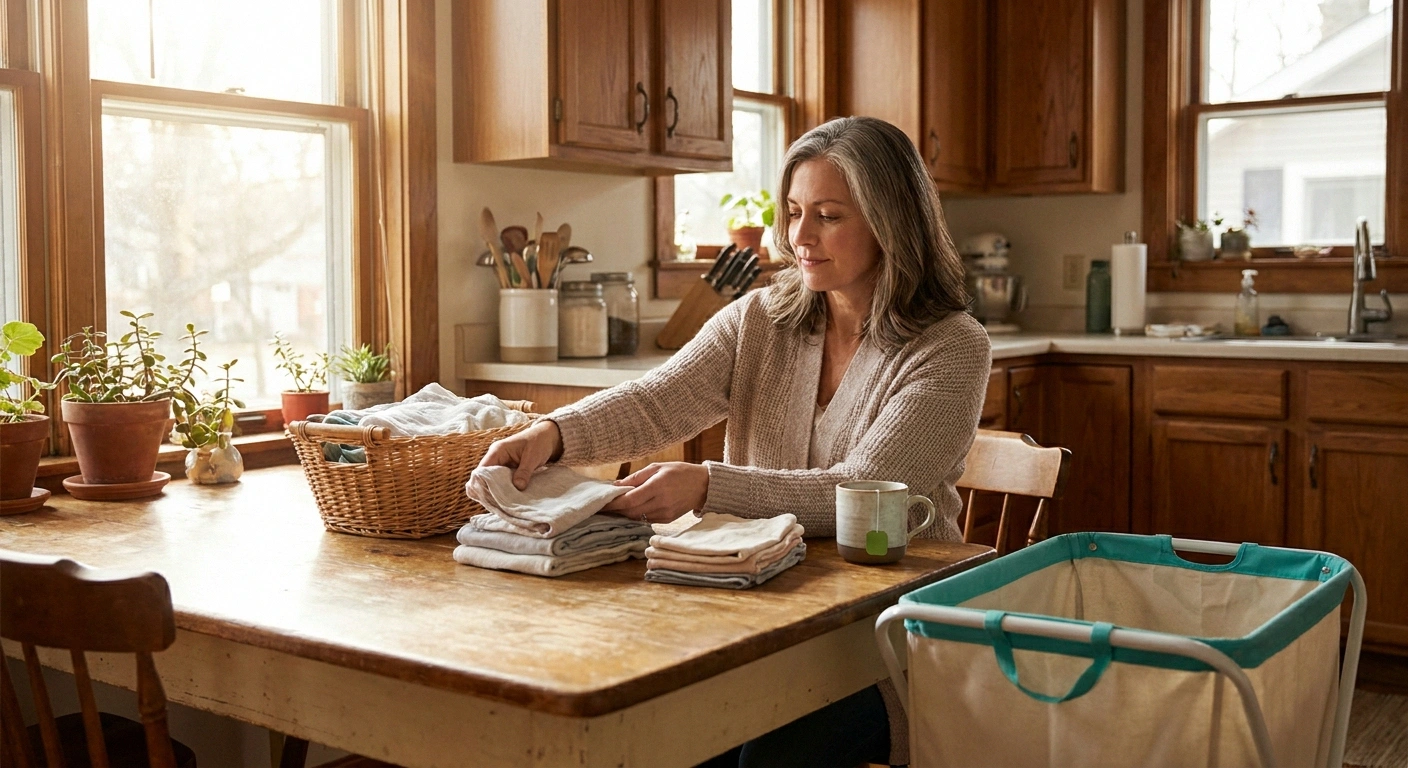
Sort sitting at a kitchen table. This small reframe changes everything. Bring the basket to the table instead of standing at the machine. Sit. Sort into smaller piles. Then transfer one pile at a time. Same task, half the standing time, no bending, full visibility.
Loading the Machine Without Bending or Squatting
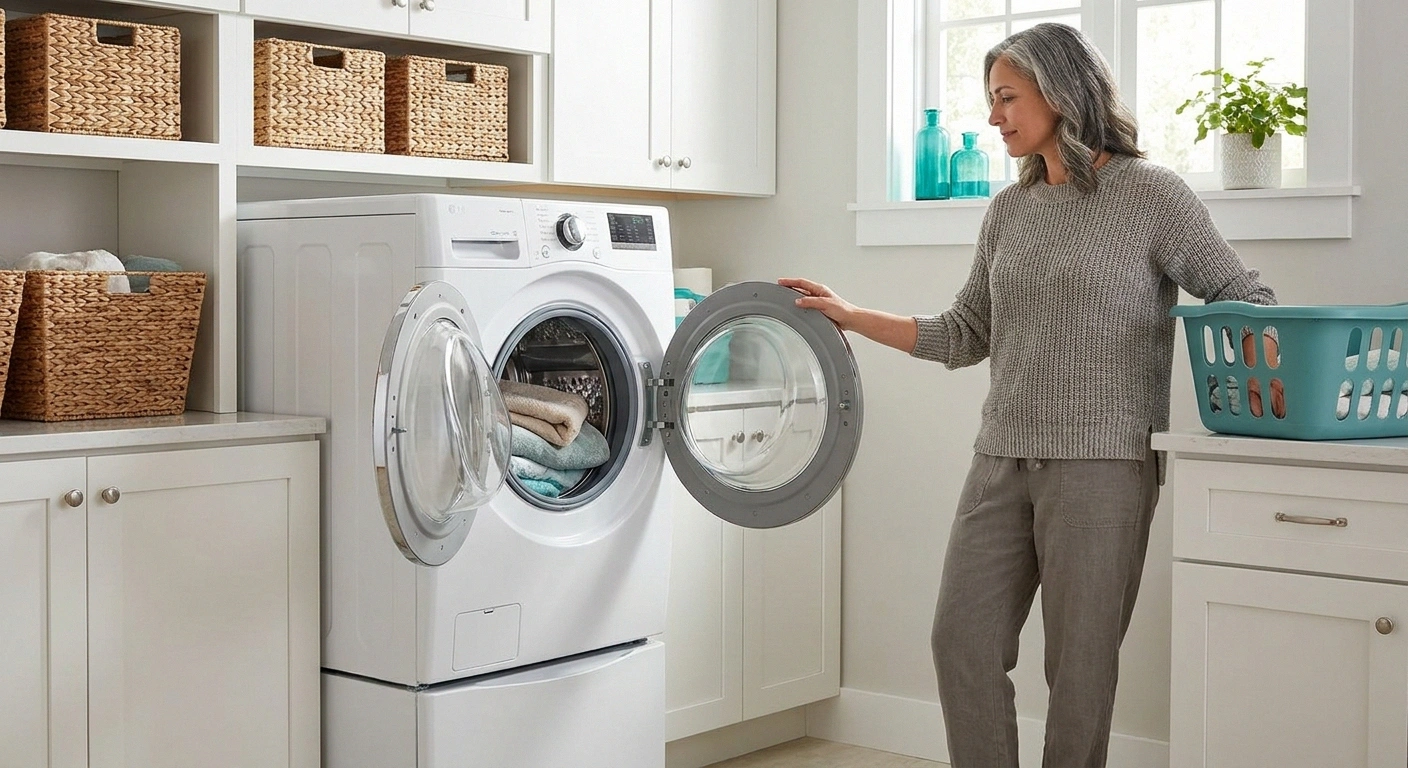
Top-loader vs. front-loader. Both have downsides. Top-loaders make you reach down into a deep drum, often on tiptoe for the last items. Front-loaders at floor level require a deep squat — a balance event and a real fall risk.
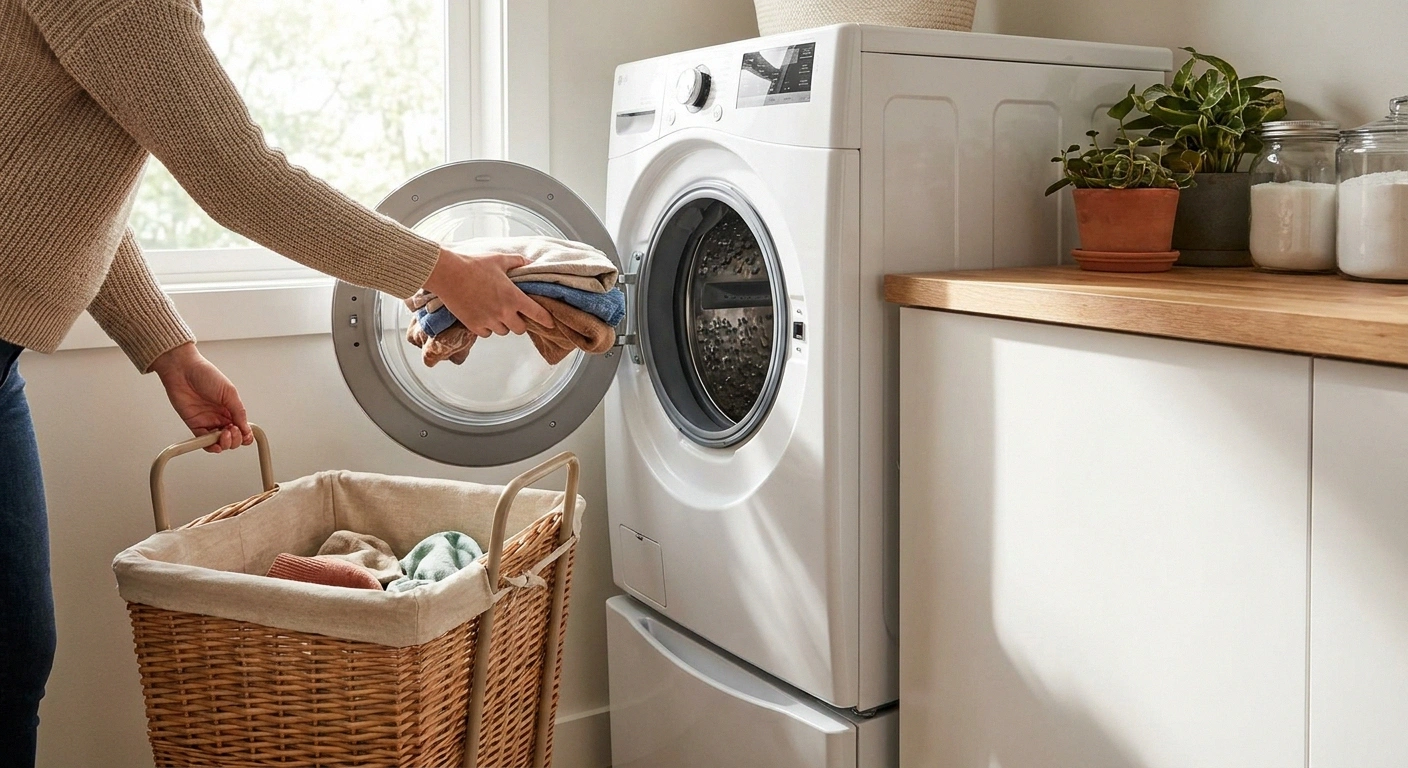
The gold standard: front-loader on a pedestal. A pedestal raises a front-loader by 12 to 15 inches, putting the door at hip height. No bending, no squatting, full visibility. If you're shopping for a new machine, this is the most neuropathy-friendly setup available. Pedestals run $200 to $300 and many double as a storage drawer.
If you can't change the machine. A long-handled grabber tool — sold for picking things up off the floor without bending — works beautifully for fishing the last sock out of a deep drum. Pair it with mesh laundry bags so each load comes out as a unit. Mesh bags also keep socks paired, solving two problems at once.
Smaller loads, more often. A wet load from a top-loader can weigh 20 pounds and is the most common laundry-injury moment. Splitting a full load in half cuts the per-load weight. Yes, it uses slightly more water. The math against a back injury or a fall isn't close.
Hot Water Without Sensation: Safety Settings That Matter
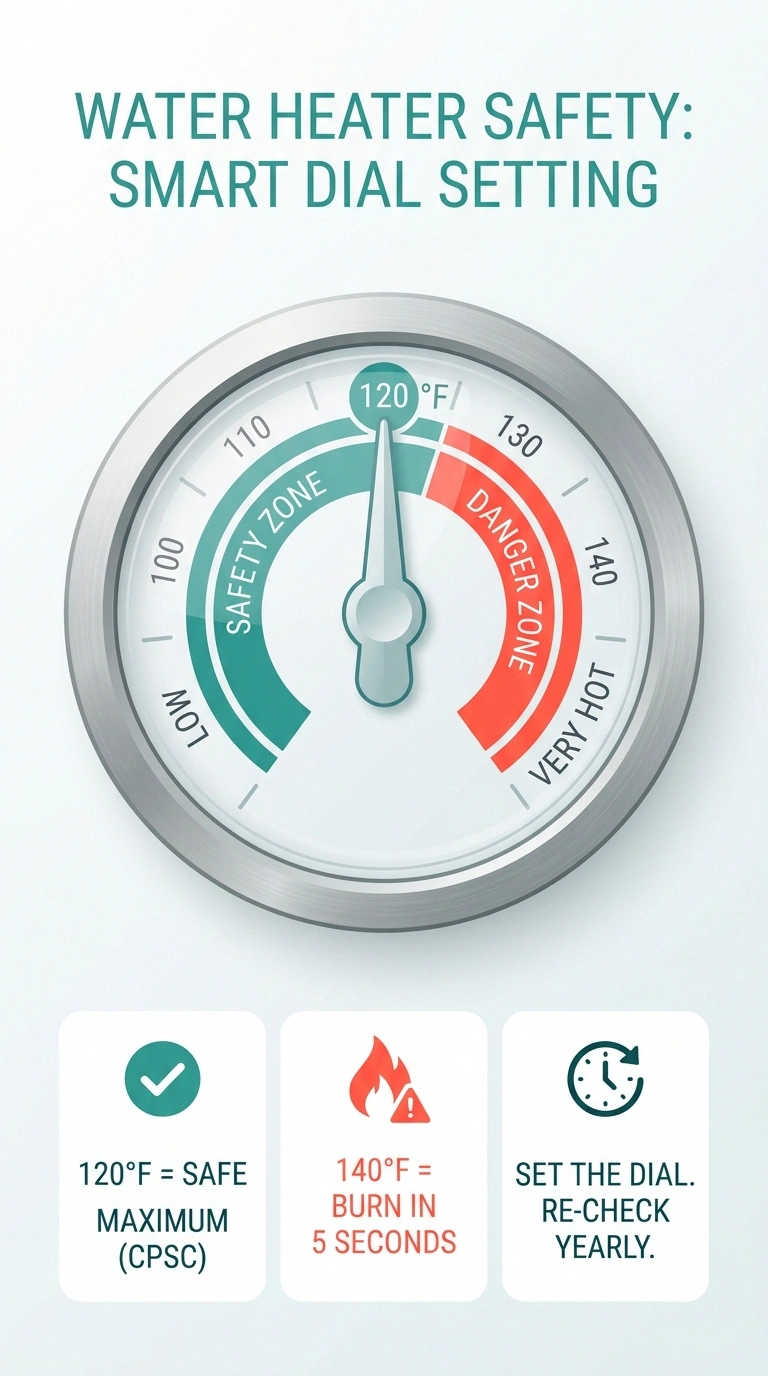
This is the section nobody talks about and everybody should. Neuropathy in the feet — and sometimes hands — often includes the loss of accurate temperature sensation. Water that's actually scalding can feel only “warm” to a damaged nerve. Tap-water burns are a recognized injury pattern for people with neuropathy, especially diabetic neuropathy.
Hot Water Burn Risk
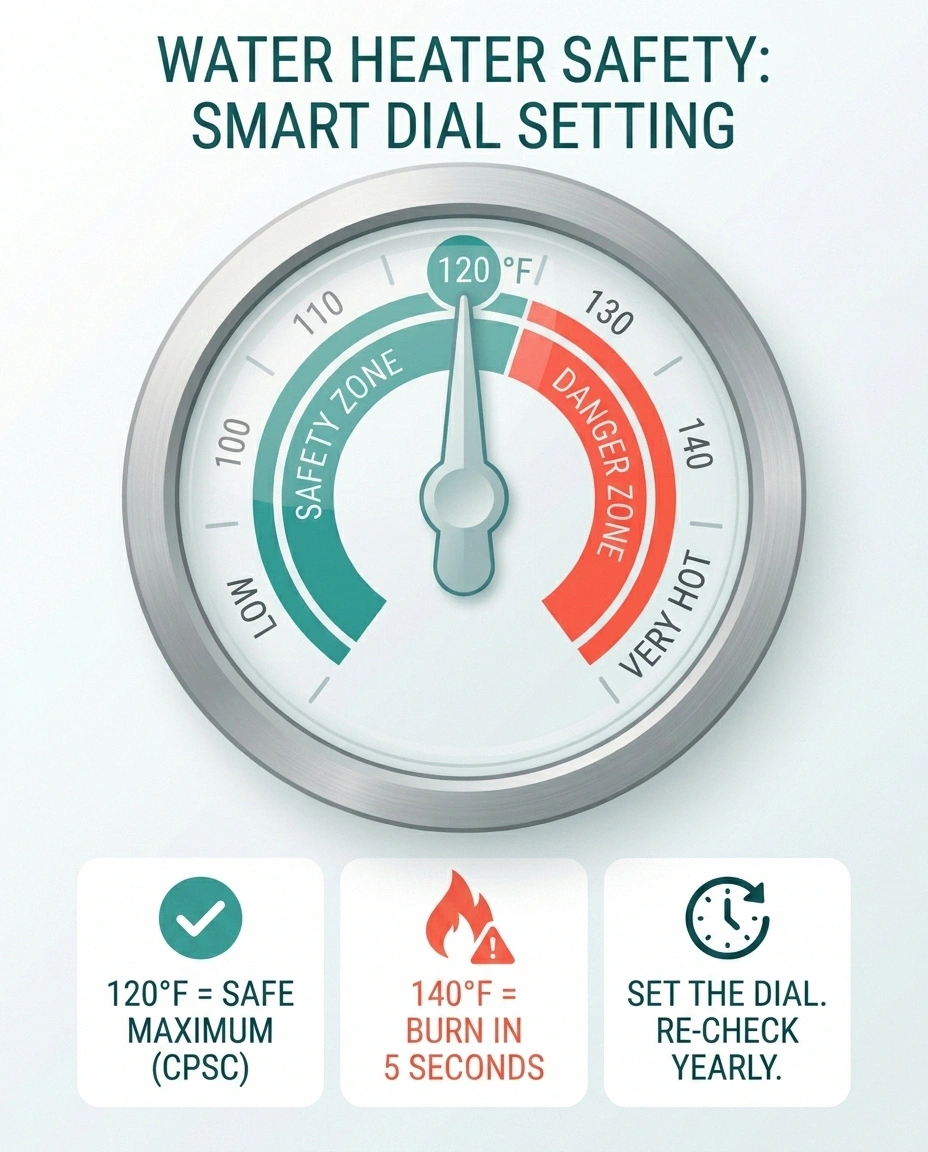
Damaged nerves can fail to register dangerous temperatures in time to pull away. Set your water heater to a maximum of 120°F (the U.S. CPSC's recommended limit). At 140°F, water can cause a third-degree burn in 5 seconds.
Never test water temperature with hands or feet. Use a thermometer or the back of your wrist where sensation is more reliable.
Set your water heater to a maximum of 120°F. This is the U.S. Consumer Product Safety Commission's recommended limit. Many older units come set to 140°F, where water can cause a third-degree burn in five seconds — and if your hand or foot can't feel that, you may not pull away in time. On most modern units there's a dial on the front of the tank.
Never test water with your hands or feet. Use a thermometer or the back of your wrist where sensation is more reliable. If you've spilled hot water, run cool water over the area immediately and check the skin afterward — you may have a burn you can't feel.
This pairs with broader home safety modifications for neuropathy. The water heater setting is one of the cheapest, fastest changes with the biggest payoff.
The Detergent Cap Problem (and a Few Other Small Tools)
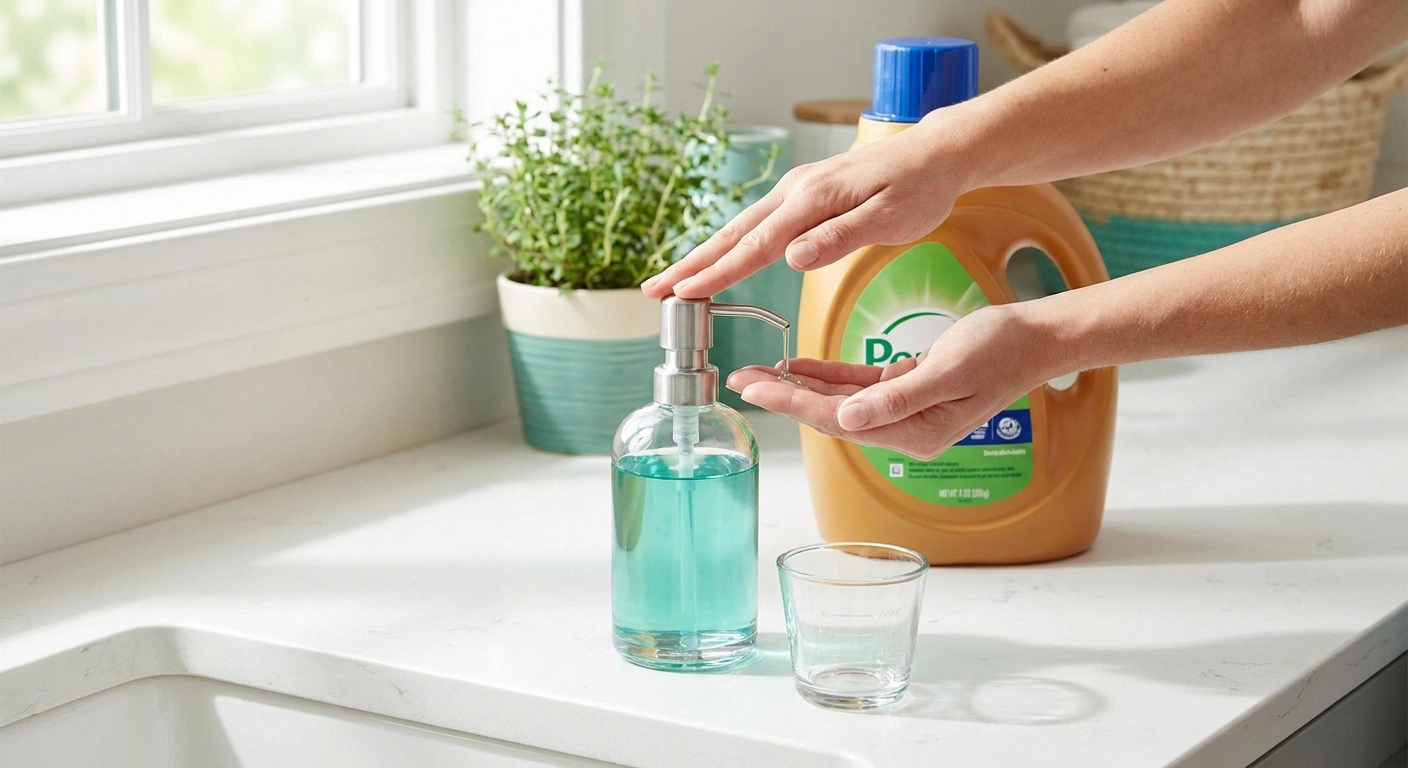
Detergent caps are designed for full hand strength. If yours has slipped out of your hand and dribbled down the side of the bottle more than once, you're in good company.
Adaptive Laundry Tools Checklist
Pour into a pump-action dispenser. Buy a small pump bottle — the kind sold for kitchen dish soap — and decant detergent into it. Two or three pumps equals one load. You skip the cap, the heavy bottle, and the measuring entirely.
Pre-measured pods. Pods are the easiest measurement — toss one in, done. The caution: pods look like candy and cause severe poisoning if bitten. If grandchildren visit, store pods in a high, locked cabinet. If grandchildren are regular guests, use pump bottles instead.
Subscription delivery. Heavy detergent jugs are hard to carry in from the car. A monthly delivery puts a fresh container at your door, and most services let you order smaller, lighter bottles.
Other small tools. A rubber jar-opener gripper makes any cap easier to twist. A stool in the laundry room lets you sit during transfers. Anti-fatigue mats make the standing time more bearable. The right shoes for neuropathy matter even at home — soft slippers with no support are a recipe for foot fatigue.
Folding, Hanging, and the Final Stretch
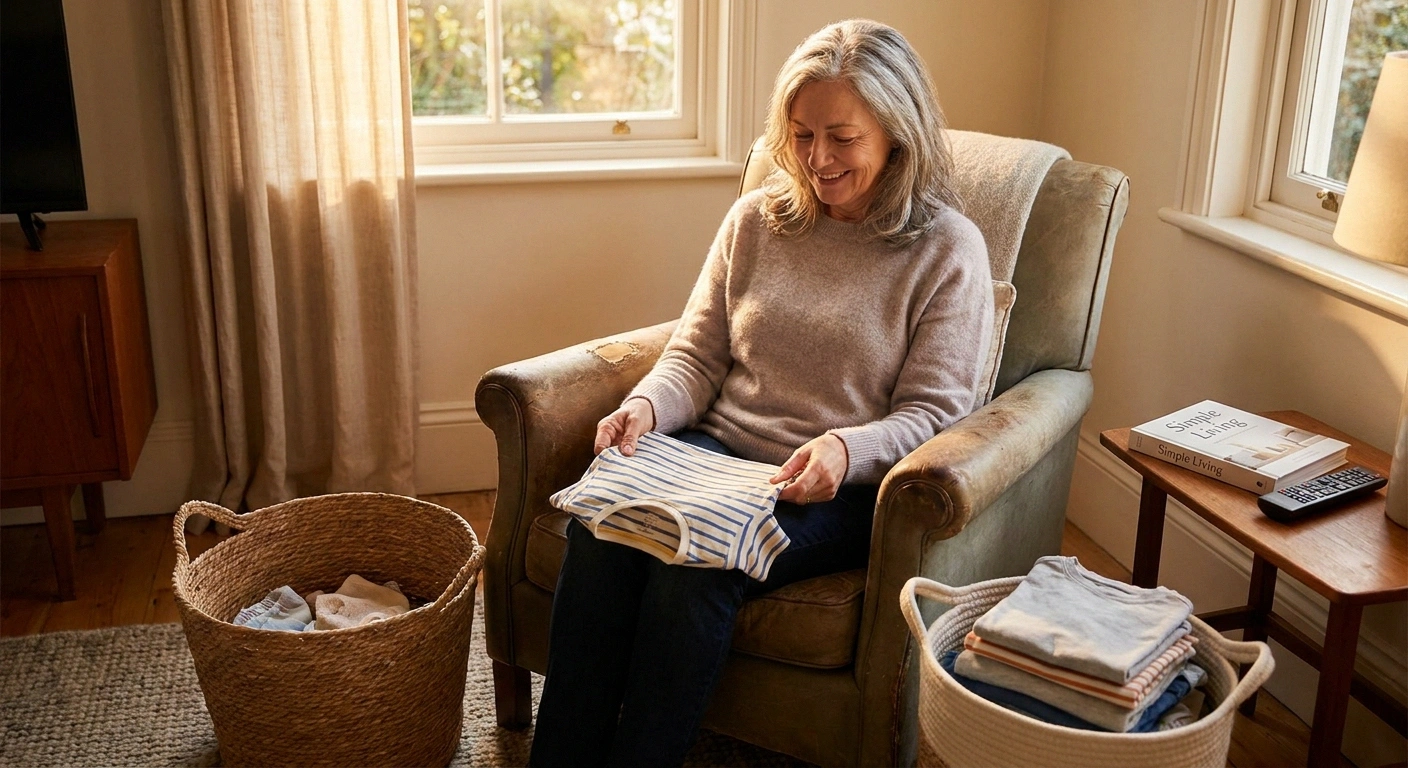
Folding is where standing time piles up and where most of us run out of energy. The fix is the same as the rest of the guide: sit down, work in smaller batches, keep things at chair height.
Fold seated. Bring the basket to the couch or kitchen table. Fold one piece at a time with the basket beside you. Stack folded items in a second basket on the floor. There's no rule that folding has to happen standing at the dryer.
Smaller batches, more often. If you're doing laundry through the week, each load fits in your lap and is folded in fifteen minutes, not ninety.
Use a clothing valet. A small stand at chair height gives you a place to hang shirts and trousers as you fold without reaching to a closet rod. They're $40 to $80 and fold flat.
Lower your closet rods. Drop rods to a height you can reach without stretching. If renovation isn't an option, designate a lower rod for daily-use clothes. Switch to velvet hangers — they grip clothes instead of dropping shirts.
If laundry lives in the basement, treat the stairs the way you'd treat any balance event. One basket at a time, one hand on the rail. Pause at the landing. The fall prevention strategies for neuropathy guide walks through this in more detail.
Ironing, Steamers, and the Heat-Risk Question
Ironing combines two of the worst conditions for neuropathy: standing for long stretches and handling something dangerously hot you might not feel until after the burn. Replace the iron with a handheld steamer. Steamers are lighter, generate less concentrated heat if you slip, and don't require a board. Many wrinkles steam out while the garment hangs and you sit in front of it. A good steamer is $40 to $80 and makes ironing optional for almost everything except dress shirts. If you must iron, sit down for it — a seated ironing board converts ironing from a high-pain task to a low-pain one. Never test the iron with your hand.
When to Outsource and Stop Feeling Guilty About It
Here's the truth I needed someone to tell me years before I figured it out: paying for laundry is one of the smartest things you can buy with $30 a week.
When to Outsource Your Laundry
If laundry day still wipes you out for 24 hours…
→ Try a drop-off wash-and-fold service for the heavy items (towels, sheets, jeans). Keep small loads at home. Cost: $20-50/week.
If leaving the house is the hard part…
→ Look for pickup-and-delivery laundry services in your area. App-based services in larger cities; independent services in smaller ones.
If family lives nearby…
→ Make a specific, finite ask: “Could you come do my laundry on Sunday?” Easier to honor than vague offers of help.
If basement stairs feel risky every single trip…
→ Outsource everything until you can move the laundry setup upstairs. The cost of the service is far less than the cost of a fall.
Outsourcing isn't giving up — it's choosing where your finite daily energy goes.
Wash-and-fold services charge by the pound — usually $1.25 to $2.00 per pound — and a typical week's laundry for one or two people is fifteen to twenty-five pounds. That's $20 to $50 a week to have it picked up, washed, dried, folded, and returned. For two hours of saved standing, lifting, bending, and folding every single week, that's not a luxury — it's a return on investment in your hands, feet, back, and weekend.
- Drop-off laundromats. Most offer wash-and-fold. Drop off a bag, pick up a folded bag a day or two later. Cheapest option.
- Pickup-and-delivery. Local independents or app-based services come to your door. You never leave the house.
- Family or grandkids. Make a specific, finite ask: “Could you come do my laundry on Sunday?” is easier to honor than vague offers of help.
- Trade with a neighbor. If you can still cook or bake, an informal trade sometimes works for both of you.
The framing matters. Outsourcing isn't giving up — it's choosing where your limited energy goes. If skipping laundry frees up enough capacity to cook dinner, walk the dog, or have grandchildren over without being wiped out, that's a smart trade. Occupational therapists often recommend outsourcing for exactly this reason — you're conserving the body's daily energy budget for what matters most.
Frequently Asked Questions
What's the easiest way to do laundry with neuropathy in the hands?
Switch to a pump-action detergent dispenser or pre-measured pods to avoid struggling with caps, use a wheeled hamper to eliminate carrying weight, and fold seated in your lap. Mesh laundry bags help keep small items together so your hands don't fish for individual socks. The biggest change is splitting laundry into smaller loads done several days a week, rather than one big session.
Is a top-loader or front-loader washer better for neuropathy?
A front-loader on a pedestal is the most neuropathy-friendly setup because the door sits at hip height — no bending, no squatting, full visibility. A top-loader requires reaching into a deep drum, often on tiptoe. A front-loader at floor level requires a deep squat. The pedestal is what makes the front-loader work well.
How do I avoid burns from hot water when I can't feel temperature?
Set your home water heater to a maximum of 120°F — the U.S. Consumer Product Safety Commission's recommended limit. At 140°F, water can cause a third-degree burn in five seconds, and damaged nerves may not register the heat in time to pull away. Never test water with your hands or feet; use a thermometer or the back of your wrist.
Are laundry pods safe for someone with neuropathy?
Pods are excellent for hand-strength reasons — no cap to twist, no measuring. The risk isn't to you, it's to small children. Pods look like candy and cause severe poisoning if bitten. If grandchildren visit, store pods in a locked, high cabinet. If young children are regular guests, switch to pump-action liquid detergent instead.
How much does a wash-and-fold service typically cost?
Usually $1.25 to $2.00 per pound. A typical week's laundry for one or two people runs fifteen to twenty-five pounds — around $20 to $50 a week. Pickup-and-delivery costs a few dollars more than drop-off but eliminates the trip. For someone with significant neuropathy, this is often the highest-value service to outsource.
What's the safest way to carry laundry up basement stairs?
Carry small loads — never a basket so full you can't see the next step. Keep one hand free for the railing or use a sling-style laundry bag so both hands stay free. Pause at the landing. If basement stairs are a regular fall worry, talk to your family about moving the laundry setup upstairs or hiring a service.
Should I feel guilty about hiring help for laundry?
No. Outsourcing isn't giving up — it's a smart trade. The hours and capacity you save can go toward cooking, walking, time with family, or simply not being in pain at the end of the day. Occupational therapists routinely recommend outsourcing high-effort, low-meaning tasks. Your daily energy is finite; spending it where it matters most is sound strategy, not weakness.
About the Author