Few things sound more appealing when your feet ache and your muscles are tense than sinking into a hot tub. The warm water, the gentle jets, the promise of temporary relief from the nerve pain that follows you everywhere — I completely understand the appeal. But if you have neuropathy, there are real safety considerations that most hot tub marketing conveniently ignores.
The short answer: yes, many people with neuropathy can use hot tubs safely — but not without precautions. The risks aren't trivial. When your nerves can't accurately sense temperature, you're one carelessly hot soak away from a burn you won't feel happening. And that's just the beginning of what you need to know.
This guide covers the genuine potential benefits of warm water therapy for neuropathy, the specific risks that make hot tubs more dangerous when you have nerve damage, and a practical safety protocol so you can enjoy a soak without creating a new problem.
How Warm Water Affects Neuropathy: The Science
The relationship between warm water and nerve pain has roots that go back thousands of years — ancient Romans and Greeks used therapeutic baths as treatment for all manner of ailments. Modern research has started to explain what they intuitively understood.
How It Works
Warm water provides competing sensory input that may “close the gate” on pain signals reaching your brain (Gate Control Theory). Combined with improved blood flow and muscle relaxation, this explains why many people experience temporary but meaningful pain relief during a warm soak.
When you immerse your body in warm water (typically 92-104°F / 33-40°C), several physiological changes occur that may benefit neuropathy symptoms. Vasodilation — the widening of blood vessels — increases blood flow to your extremities. For neuropathy sufferers, improved circulation to the hands and feet means more oxygen and nutrients reaching the damaged nerves. This won't heal nerve damage, but it may temporarily improve nerve function and reduce pain.
The warmth also relaxes muscles, which matters because neuropathy often causes muscles to tighten and cramp as they compensate for nerve signals that aren't reaching them properly. Muscle relaxation reduces secondary pain — the aching that comes from tense muscles rather than from the nerve damage itself.
Perhaps most interesting is the Gate Control Theory of Pain. This theory, widely supported in pain research, suggests that non-painful sensory input (like warmth and water pressure) can essentially “close the gate” on pain signals traveling to the brain. The warm water provides a competing sensory input that may temporarily reduce your perception of neuropathic pain. It's why many people report that their pain feels significantly less intense during and shortly after a warm soak.
Water buoyancy adds another dimension. Being immersed in water reduces the effect of gravity on your joints and muscles, taking weight and pressure off painful feet. This can make movement more comfortable and allow gentle range-of-motion exercises that might be painful on land. Many of the same benefits apply to swimming and water therapy, which our occupational therapists often recommend.
The Real Benefits of Hot Tubs for Neuropathy
Based on both research and the experiences of people in our neuropathy community, here are the genuine potential benefits.
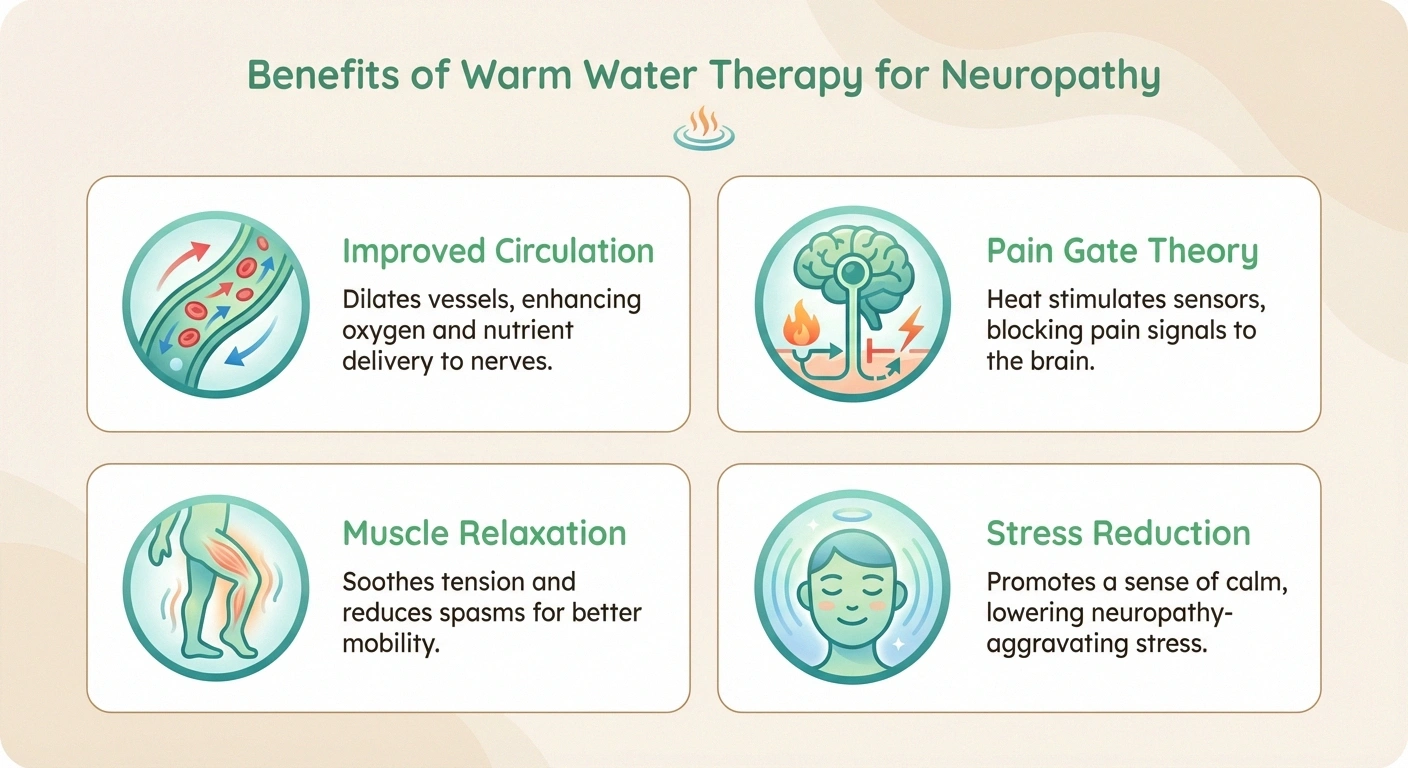
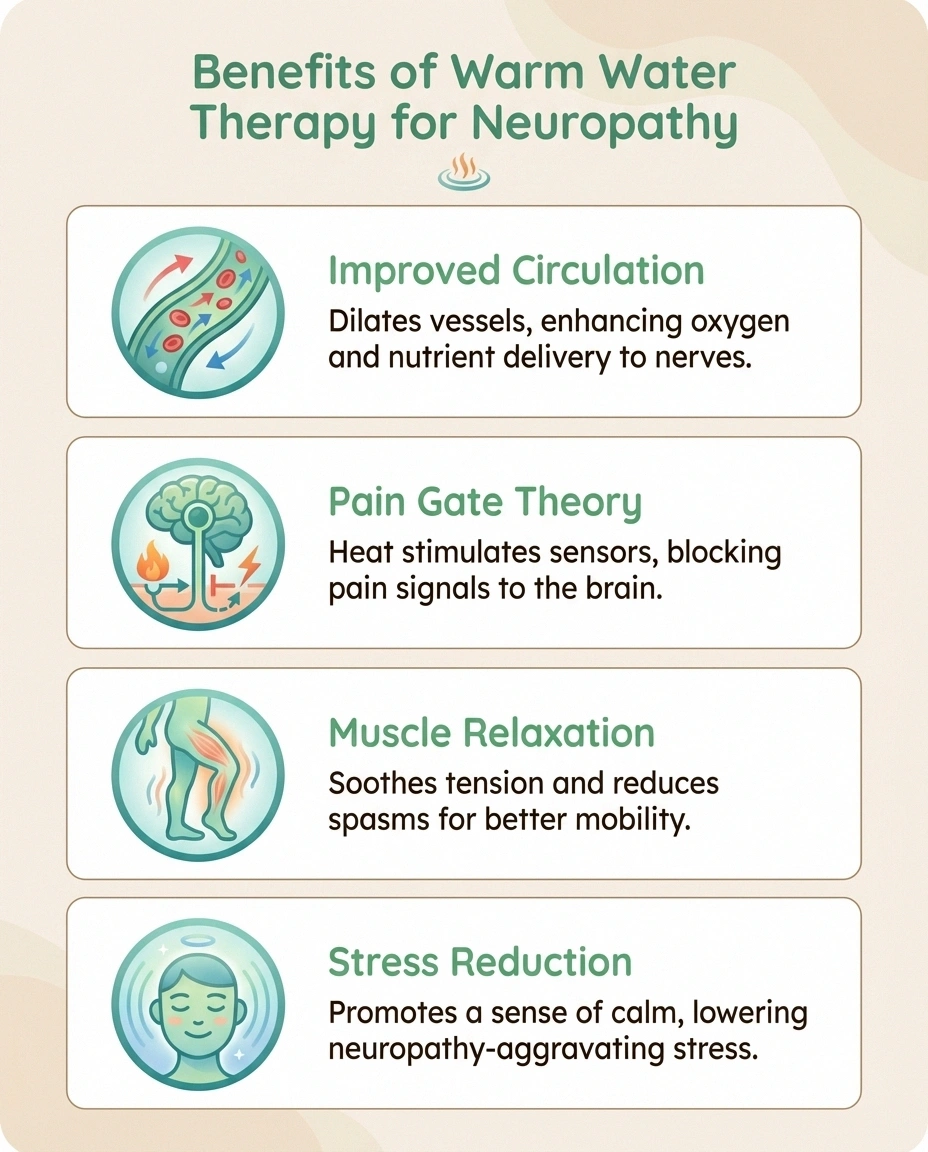
Temporary pain relief is the most consistently reported benefit. Most people experience reduced pain during the soak and for 30 minutes to a few hours afterward. This isn't a cure — the pain returns — but temporary relief has real value for quality of life, especially if it helps you relax enough to sleep better.
Improved circulation is particularly relevant for people whose neuropathy is related to diabetes, where poor peripheral circulation is a common comorbidity. A 2022 cross-sectional study published in Cureus found that habitual hot tub bathing was associated with improved cardiovascular risk markers in people with type 2 diabetes — though this was an association, not proof of causation.
Stress and anxiety reduction shouldn't be underestimated. Chronic pain is exhausting, and the emotional toll of neuropathy is real. Hot tub therapy provides a period of deep relaxation that may lower cortisol levels and reduce the stress that can amplify pain perception. For many people, the mental health benefit is as valuable as the physical relief.
Muscle relaxation and improved flexibility round out the benefits. Warm water loosens tight muscles and allows more comfortable movement, which can make it easier to do the gentle exercises that help maintain strength and balance.
The Serious Risks: What Neuropathy Changes
Everything we just discussed assumes safe use. But neuropathy fundamentally changes the risk profile of hot tub use — and these risks are not hypothetical.
Burn Risk from Impaired Temperature Sensation
This is the biggest danger. When your peripheral nerves are damaged, your ability to sense temperature is often compromised — sometimes severely. You might not realize that the water is dangerously hot because the nerves in your feet and hands that normally scream “too hot!” are damaged or dead.
Critical Safety Rule
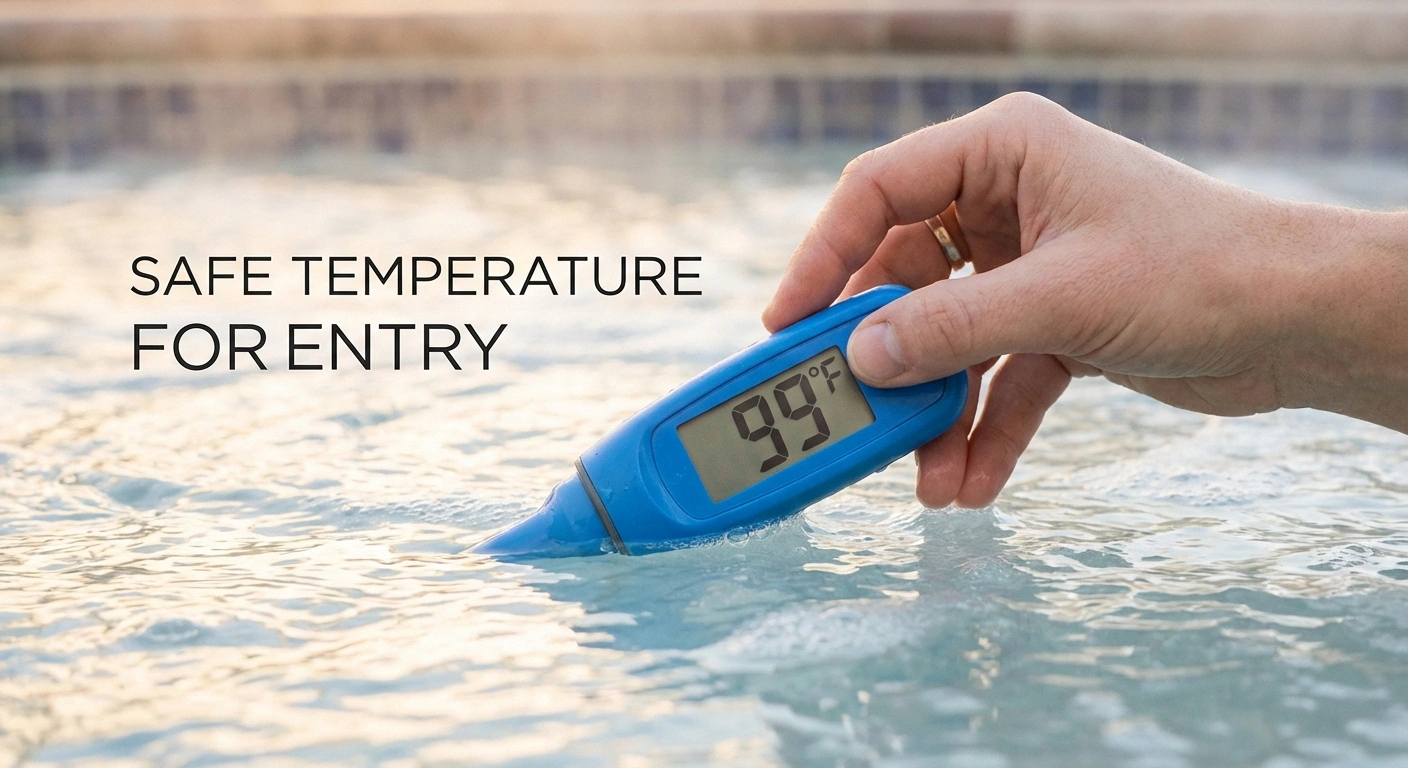
Never rely on how the water “feels” to determine if it's safe. Neuropathy-damaged nerves cannot accurately sense temperature. Always use a thermometer. Keep water at or below 100°F (38°C). This is the single most important safety rule for hot tub use with neuropathy.
Burns from water that feels comfortable to a non-neuropathic person can cause serious tissue damage when you sit in it for 15-20 minutes without feeling the heat buildup. This is especially dangerous for people with diabetic neuropathy, where both impaired sensation AND poor wound healing combine to create a recipe for difficult-to-treat injuries.
The solution isn't to avoid hot tubs — it's to never rely on your body's temperature sensation. Always verify with a thermometer. More on this in the safety protocol below.
Blood Pressure Drops and Dizziness
Hot water causes vasodilation (blood vessel widening), which can drop your blood pressure — sometimes significantly. For most healthy people, the body compensates. But neuropathy can also affect the autonomic nerves that regulate blood pressure (a condition called autonomic neuropathy). When these compensatory mechanisms don't work properly, standing up after a hot soak can cause orthostatic hypotension — a sudden blood pressure drop that leads to dizziness, lightheadedness, or fainting.
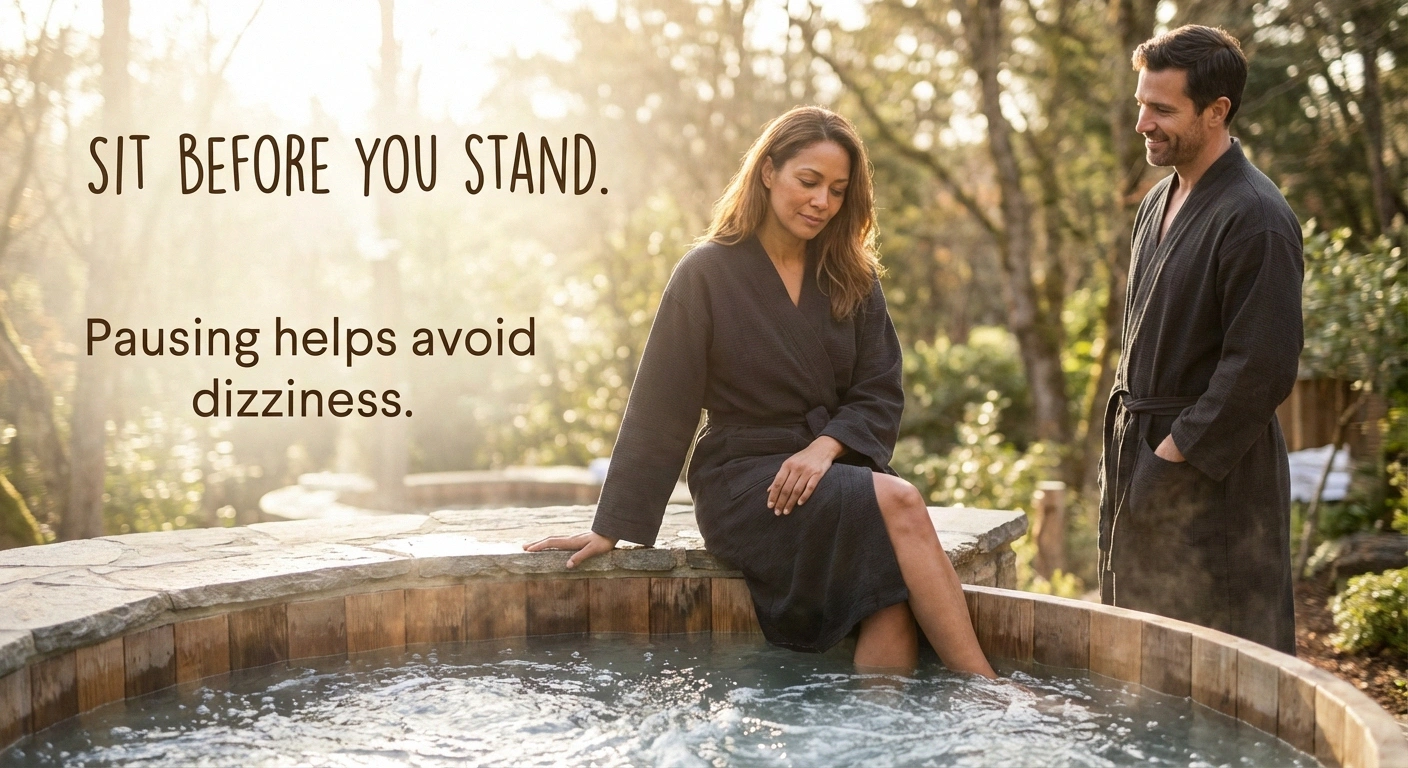
Falling while getting out of a wet, slippery hot tub is a serious injury risk, especially if you already have balance problems from neuropathy.
Skin Integrity and Infection Risk
Neuropathy can compromise skin integrity, making the skin on your feet and hands more susceptible to breakdown. Warm, moist environments are also excellent breeding grounds for bacteria and fungi. If you have any open wounds, cracks in the skin, or ulcers on your feet, entering a hot tub introduces a real infection risk — even in well-maintained water.
This risk is amplified for people with diabetes, where high blood sugar impairs immune function and wound healing. An infection that would be minor for someone with normal healing can become a serious medical problem.
Dehydration
You might not think of dehydration as a hot tub risk, but warm water causes sweating even though you don't feel it (because you're in water). Dehydration can worsen dizziness, fatigue, and headaches. Combined with blood pressure changes, it creates a compounding risk. Alcohol before or during a hot tub session makes this significantly worse — and given the existing relationship between alcohol and neuropathy, it's worth mentioning that hot tub + alcohol + neuropathy is a particularly risky combination.
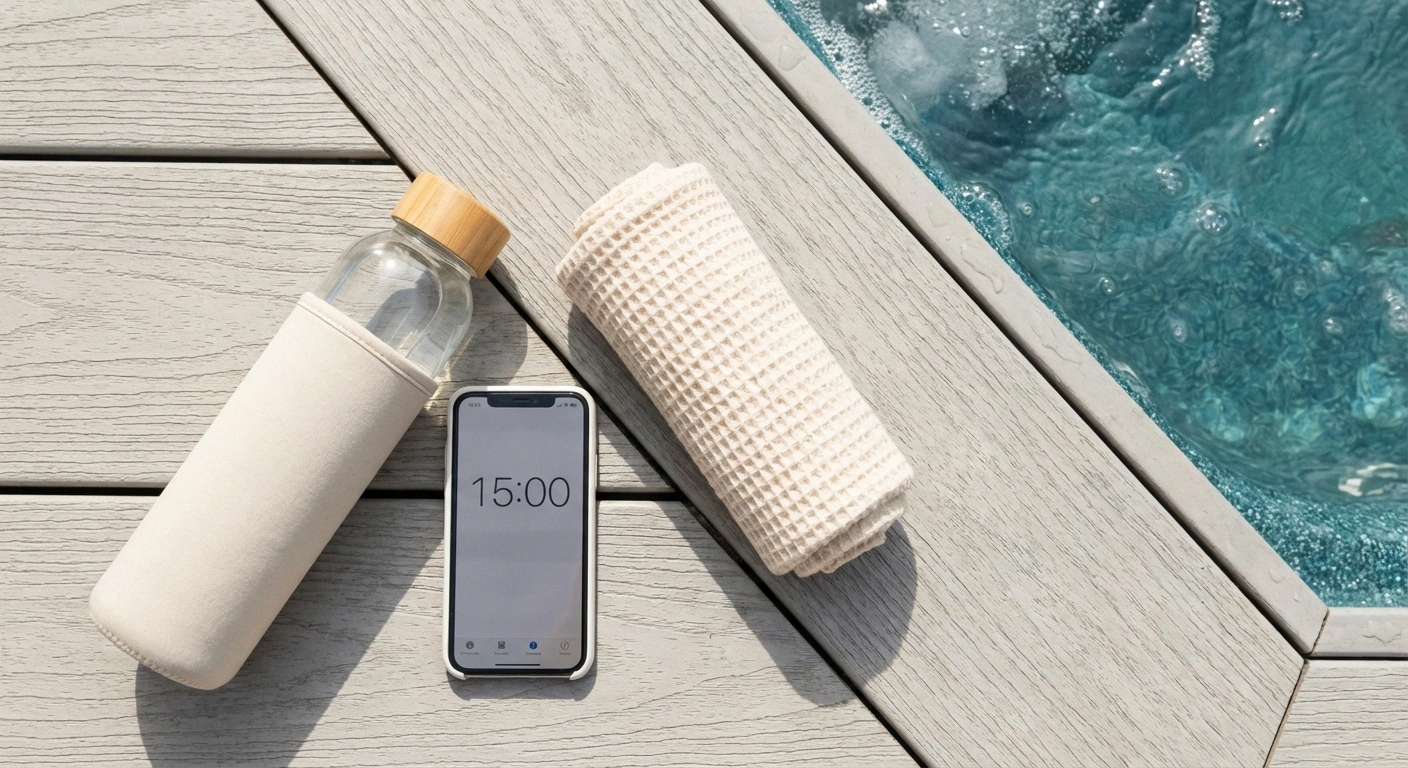
Danger Combination
Hot tub + alcohol + neuropathy is a particularly risky combination. Alcohol worsens dehydration, amplifies blood pressure drops, impairs judgment about exit timing, and can itself worsen neuropathy. Save the drink for afterward — and make it water.
The Hot Tub Safety Protocol for Neuropathy
None of these risks mean you can't enjoy a hot tub. They mean you need a system. Here's a practical safety protocol built specifically for people with neuropathy.
🌡️ Hot Tub Safety Protocol
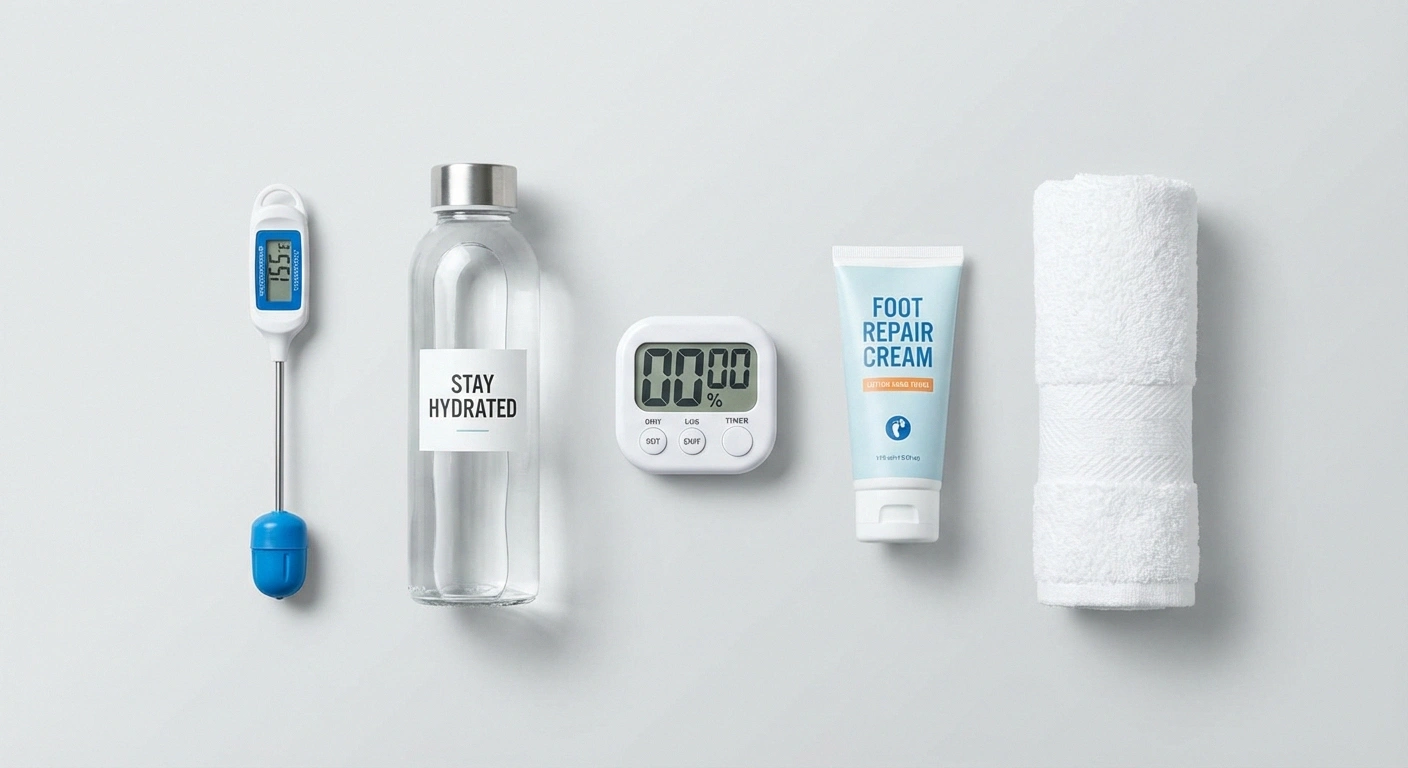
Thermometer check → ≤100°F (38°C)
Inspect feet & hands for wounds
Hydrate → full glass of water before entry
Set timer → 15 minutes maximum
Exit slowly → sit, pause, stand, grab bar
Post-soak → dry feet, inspect skin, hydrate
Before You Get In
Check the water temperature with a thermometer — never rely on how the water “feels.” Keep it at or below 100°F (38°C). While the standard hot tub range goes up to 104°F, the reduced temperature threshold gives you a safety margin when your nerves can't be trusted to report accurately. If the thermometer reads above 100°F, wait for it to cool or reduce the heater setting.
Inspect your feet and hands for any cuts, blisters, cracked skin, or open wounds. If you find any, skip the hot tub until they've fully healed. Even small breaks in the skin can serve as entry points for infection.
Drink a full glass of water before getting in. Have another glass accessible at the edge of the tub. Avoid alcohol before or during your soak.
Make sure you have a secure, non-slip way to enter and exit the tub. Grab bars, non-slip mats, and a stable step are all worth the investment. If your balance is compromised, never enter or exit without another person present.
During Your Soak
Set a timer for 15 minutes. This is your maximum soak time — not a suggestion. Extended heat exposure increases the risk of blood pressure drops, dehydration, and skin damage. When the timer goes off, you're done. If you feel lightheaded, nauseous, or unusually warm at any point, get out immediately (slowly and carefully).
Periodically check your skin during the soak — lift your feet out of the water and visually inspect them for redness. Because you may not feel excessive heat, your eyes have to do the job your nerves normally would. Redness that doesn't fade within a few seconds of lifting the skin out of the water is a warning sign.
Keep your body position stable. Avoid sudden movements that could trigger a blood pressure drop. If the jets are strong, be aware of the force on numb skin — pressure that you can't fully feel could cause irritation or bruising.
Getting Out
This is when the danger peaks. Stand up slowly — pause sitting for 30 seconds, then move to the edge and sit with your legs outside the water for another 30 seconds before standing fully. This graduated transition gives your cardiovascular system time to adjust and reduces the risk of orthostatic hypotension (the sudden dizziness from blood pressure dropping).
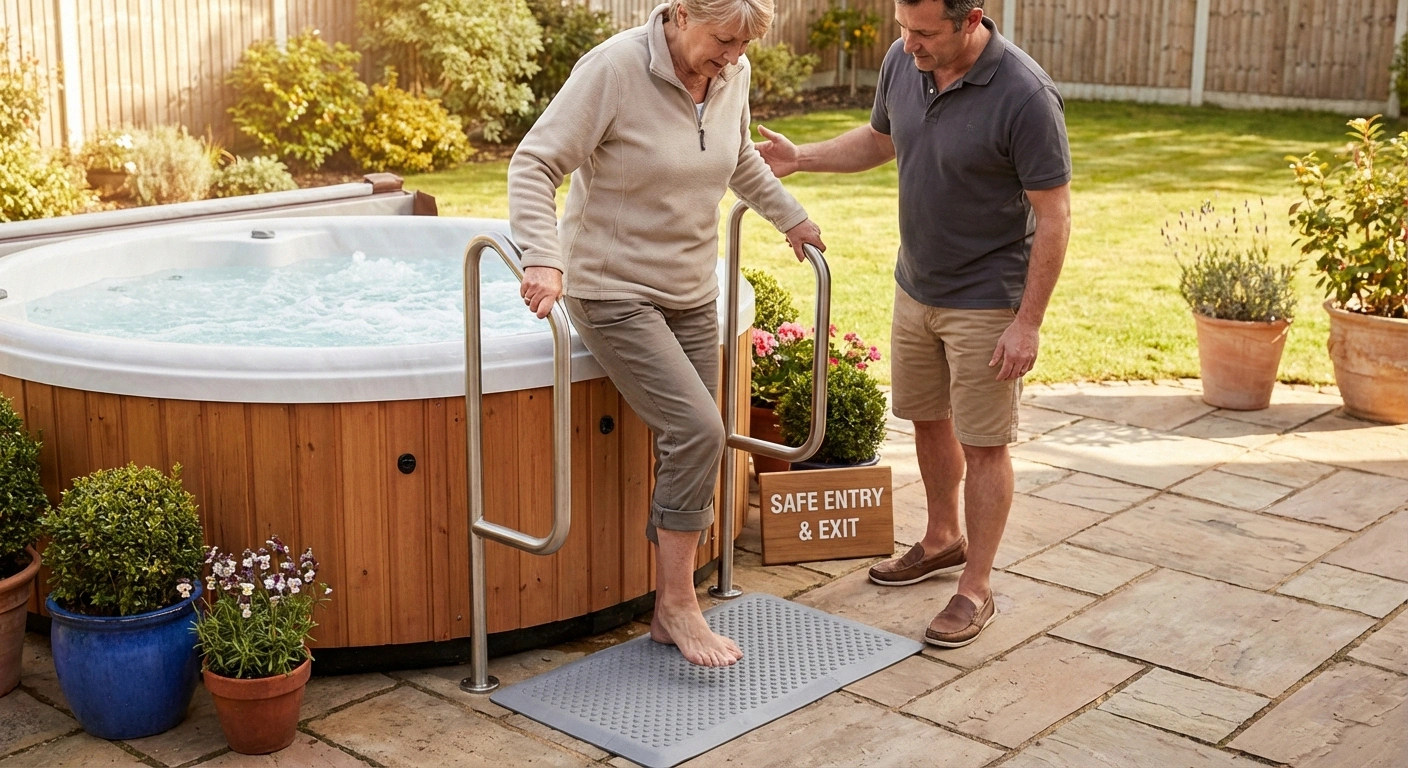
Use the grab bars. Step onto a non-slip mat. Don't rush. More hot tub injuries happen getting out than getting in.
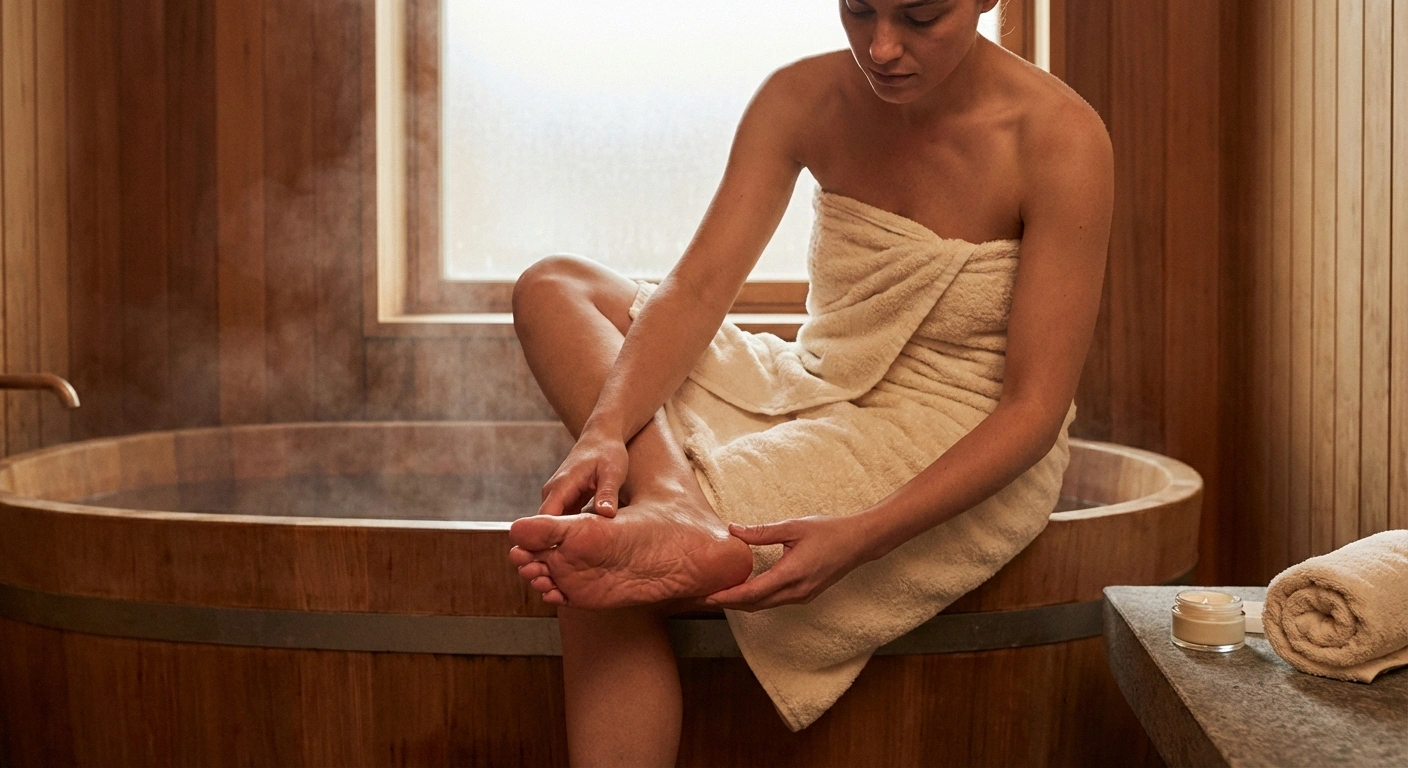
After exiting, dry your feet thoroughly — including between the toes. Moisture trapped between toes creates a fungal-friendly environment. Apply moisturizer to your feet (but not between the toes) to prevent cracking. Inspect your skin again for any redness, marks, or irritation you might not have felt.
Drink another full glass of water to rehydrate.
Special Considerations by Neuropathy Type
Not all neuropathy is equal when it comes to hot tub safety. Your specific type and severity affect your risk level.
🩸 Diabetic
Risk: Highest. Burns + infection + poor healing. Always use buddy system. Doctor approval first.
💊 CIPN
Risk: Moderate. Heat may worsen symptoms. Start at 95-98°F for 10 min to test response.
🔬 Small Fiber
Risk: Moderate. Paradox — can't feel heat but amplified pain. Lower temps, short sessions.
⚡ Autonomic
Risk: High for BP drops. Extra-slow exit. Always have someone present. Consider alternatives.
Diabetic neuropathy carriers the highest risk profile because it often combines impaired temperature sensation, poor wound healing, increased infection susceptibility, and cardiovascular autonomic dysfunction. If you have diabetic neuropathy, talk to your doctor before starting hot tub therapy, use the strictest temperature limits (100°F max), and always have someone with you.
Chemotherapy-induced neuropathy may involve significant temperature sensitivity. Some CIPN patients report that warm water worsens their symptoms rather than improving them. Start with lower temperatures (95-98°F) and shorter durations (10 minutes) to test your individual response before committing to longer sessions.
Small fiber neuropathy often involves both temperature sensation loss and heightened pain sensitivity — a paradoxical combination where you can't accurately feel heat but experience amplified pain responses. Proceed cautiously with lower temperatures and short sessions.
Autonomic neuropathy significantly increases the blood pressure drop risk. If you have documented autonomic neuropathy, the exit protocol becomes even more critical — take extra time transitioning from sitting to standing, and seriously consider always having someone present.
Hot Tub Alternatives for Neuropathy Relief
If hot tubs aren't practical or safe for your situation, other warm water therapies can provide similar benefits with more control over the variables.
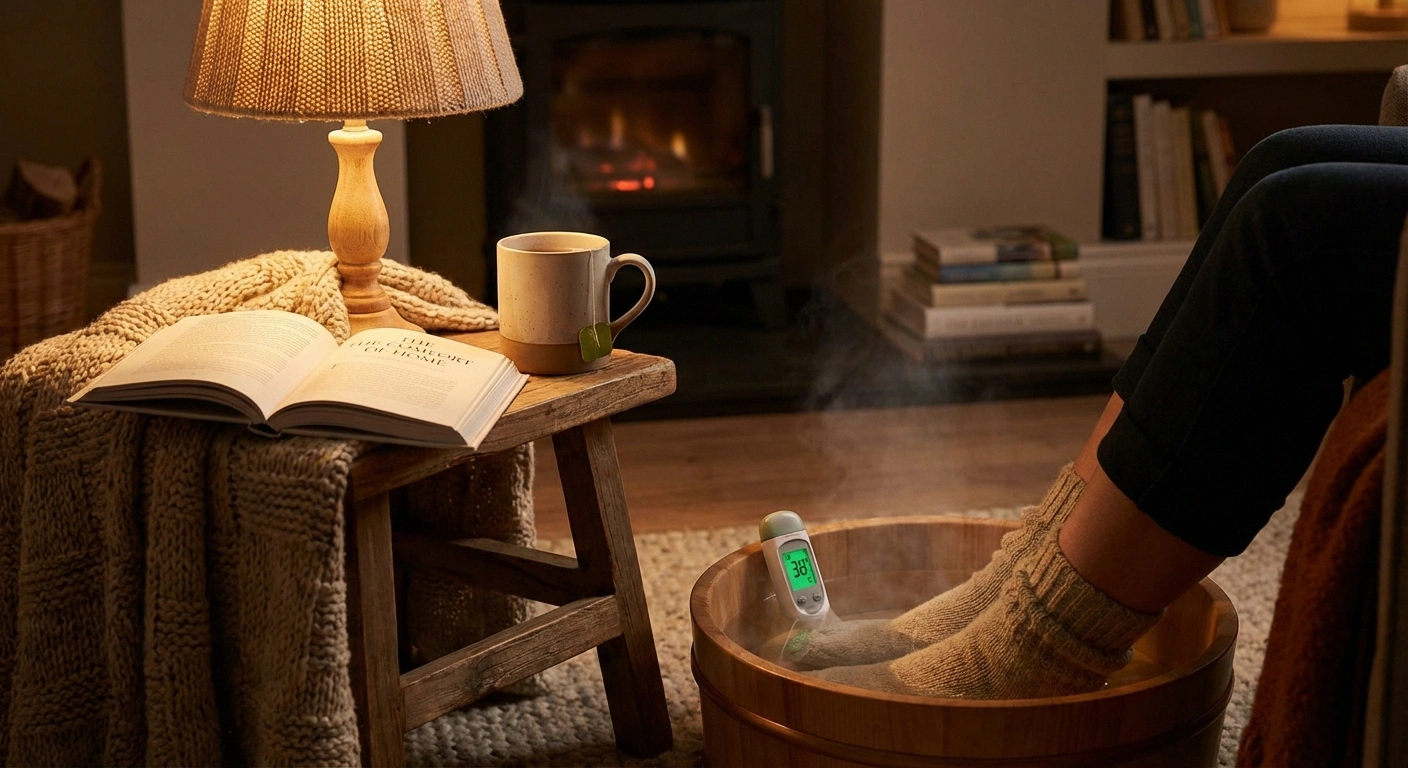
Warm foot soaks allow you to target just your feet with precise temperature control. You can use a thermometer to verify the water temperature in a small basin and easily check your feet during the soak. This is often the safest warm water option for people with significant temperature sensation loss.
Warm water pool therapy (aquatic therapy) provides many of the same benefits — buoyancy, gentle resistance, muscle relaxation — in a supervised therapeutic environment. Pool temperatures are typically lower than hot tubs (83-88°F), reducing burn and blood pressure risks while still providing therapeutic warmth.
Warm compresses applied to specific areas offer targeted heat therapy without the full-body immersion that creates cardiovascular stress. Just be sure to wrap the compress in a towel (never apply directly to numb skin) and limit application to 15-20 minutes.
When to Avoid Hot Tubs Entirely
Some situations make hot tub use inadvisable regardless of precautions. You should avoid hot tubs if you have open wounds, active skin infections, or foot ulcers — no exceptions until fully healed. People with uncontrolled blood pressure (either high or low) should avoid the cardiovascular stress of hot water immersion. If you have severe autonomic neuropathy with a history of fainting or severe dizziness, the blood pressure risks likely outweigh the benefits. And during active infections or fever, hot tub use can worsen your condition.
If you're uncertain whether hot tub use is appropriate for your specific situation, ask your neurologist or primary care doctor. They can assess your individual risk factors — particularly your degree of temperature sensation loss and autonomic function — and give you personalized guidance.
Frequently Asked Questions
What temperature should a hot tub be for someone with neuropathy?
Keep the temperature at or below 100°F (38°C). While standard hot tubs often operate at 102-104°F, people with neuropathy should use a lower setting because damaged nerves cannot accurately detect when water is too hot. Always verify with a thermometer rather than relying on how the water feels to your skin.
How long is it safe to stay in a hot tub with neuropathy?
Limit sessions to 15 minutes maximum. Set a timer and respect it. Extended soaks increase the risk of blood pressure drops, dehydration, and heat-related skin damage that you may not feel happening. If you feel lightheaded, nauseous, or overly warm at any point during the soak, exit immediately using proper safety techniques.
Can a hot tub actually make neuropathy worse?
In most cases, properly used hot tubs do not worsen neuropathy itself. However, excessive heat can temporarily increase nerve symptoms in some people (especially those with chemotherapy-induced neuropathy). There is also the risk of thermal injury to numb skin, which creates a new problem rather than worsening the existing neuropathy. Starting with lower temperatures and shorter sessions helps you gauge your individual response.
Is it safe to use a hot tub if I have diabetic neuropathy?
It can be, with strict precautions. Diabetic neuropathy carries the highest risk profile because it often combines impaired temperature sensation, poor wound healing, and cardiovascular complications. Always use a thermometer (never trust your feet to judge temperature), keep water at 100°F or below, limit sessions to 15 minutes, inspect your feet before and after, and have another person present. Consult your doctor before starting hot tub therapy.
Are hot tub jets safe for numb skin?
Use caution with jets directed at numb areas. Strong water pressure against skin with reduced sensation can cause irritation or bruising that you do not feel. If your hot tub has adjustable jets, reduce the intensity. Avoid positioning numb feet or hands directly in front of high-pressure jet nozzles for extended periods.
Can I use Epsom salt in a hot tub with neuropathy?
Epsom salt (magnesium sulfate) is generally safe in a personal hot tub and some people find it adds to the relaxation and muscle-soothing benefits. However, avoid Epsom salt if you have open wounds or broken skin. Also check with your hot tub manufacturer, as some systems are not designed for salt additives. For a simpler approach, Epsom salt foot soaks in a basin give you more control.
The Bottom Line
Hot tubs can be a genuinely helpful part of your neuropathy symptom management toolkit — providing temporary pain relief, improved circulation, muscle relaxation, and the mental health benefits of deep relaxation. But the safety equation changes when your nerves can't be trusted to sound the alarm on temperature, pressure, or injury.

The protocol isn't complicated: thermometer always, 100°F or less, 15 minutes maximum, inspect your skin, exit slowly, have a buddy. These simple rules let you enjoy the benefits while avoiding the risks that make hot tubs genuinely dangerous for people with nerve damage.
And as always, talk to your doctor before starting any new therapy — including hot tub use. They know your specific situation and can help you decide whether this is right for you. Browse all our living with neuropathy guides for more practical tips on navigating daily life with nerve damage.
About the Author