
You can still do your job. You know it. But some days, the burning in your feet makes standing at that register unbearable. The numbness in your fingers turns typing into a slow-motion guessing game. And asking for help feels like admitting weakness — or worse, painting a target on your back. Here's what I wish someone had told me years ago: you have legal rights, and using them isn't weakness. It's strategy.
The Americans with Disabilities Act (ADA) protects employees with conditions like peripheral neuropathy from workplace discrimination and requires employers to provide reasonable accommodations that allow you to perform your job. This guide explains exactly what the law covers, what accommodations you can request, how to navigate the request process, and how to protect yourself if things go sideways.
Does the ADA Cover Neuropathy?
Yes. Under the ADA Amendments Act of 2008, peripheral neuropathy qualifies as a disability when it substantially limits one or more major life activities — and it almost always does. Walking, standing, lifting, gripping, concentrating through pain, and sleeping are all major life activities, and neuropathy commonly impairs several of them.
employees — any company this size must provide ADA accommodations
The ADA covers you whether your neuropathy is caused by diabetes, chemotherapy, unknown causes, or anything else. The law looks at the functional limitation, not the specific diagnosis. If neuropathy substantially limits what you can do, you're covered.
The ADA applies to employers with 15 or more employees, including state and local governments. Federal employees are covered under the Rehabilitation Act, which provides similar protections. Many states have additional disability discrimination laws that cover smaller employers — check your state's civil rights agency for details.
One critical point: the ADA protects “qualified” individuals with disabilities. This means you can perform the essential functions of your job with or without reasonable accommodations. The law doesn't require employers to eliminate fundamental job duties — but it does require them to modify the way those duties are performed or provide tools that make them accessible to you.
Common Workplace Accommodations for Neuropathy
The accommodations you need depend on your specific symptoms, your job duties, and the physical demands of your workplace. Here are the most commonly requested and granted accommodations for people with neuropathy, organized by the symptoms they address.
For Foot Pain, Numbness, and Balance Issues
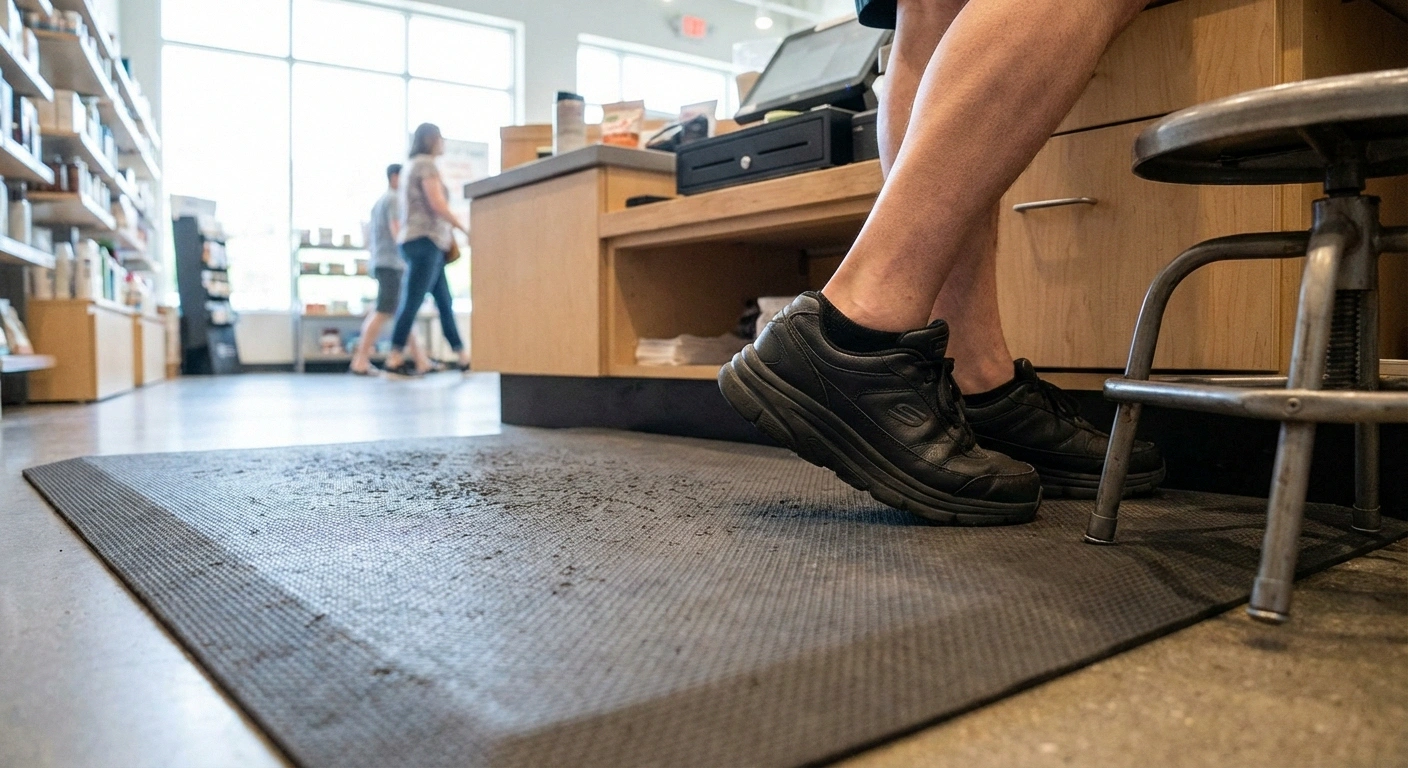
Neuropathy in the feet is the most common form, and it directly impacts jobs that require standing, walking, or navigating uneven surfaces. According to the Job Accommodation Network (JAN) — the leading resource on workplace workplace accommodations before early retirement funded by the U.S. Department of Labor — effective accommodations include permission to use a chair or stool at a workstation that typically requires standing, anti-fatigue floor mats at standing workstations, modified footwear policies allowing therapeutic shoes that don't match standard uniform requirements, reduced walking distances through workstation relocation, scheduled rest breaks to sit and elevate feet, and handrails or grab bars in work areas where balance is a concern.
Most Accommodations Cost Very Little
Studies by the Job Accommodation Network show the majority of workplace accommodations cost under $500, and many cost nothing at all. Schedule modifications, seating permission, and footwear allowances are all zero-cost accommodations.
For Hand Numbness, Tingling, and Grip Problems
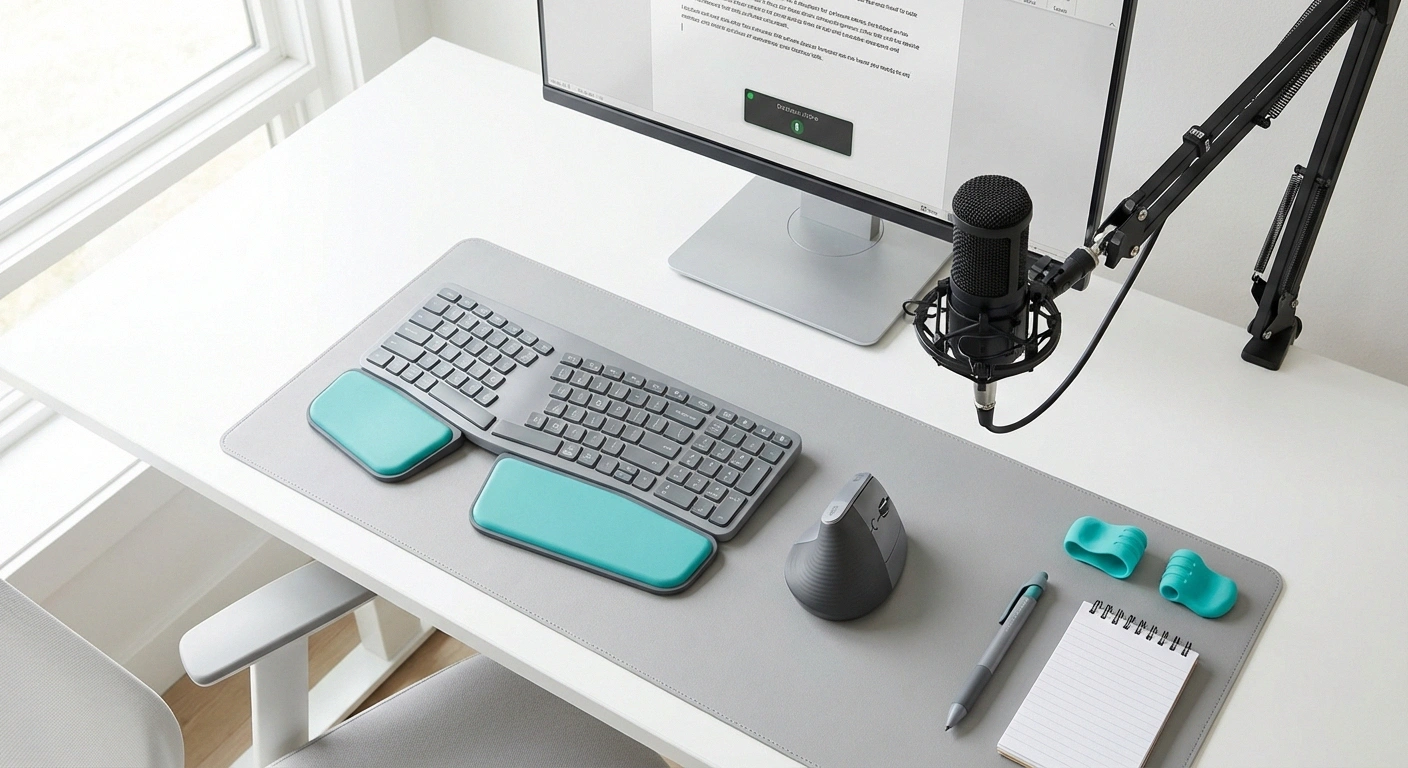
When neuropathy affects your hands, fine motor tasks become challenging. Accommodations that address this include ergonomic keyboards, vertical mice, and touchpad alternatives that reduce strain on fingers and wrists, voice-to-text dictation software as an alternative to typing, grip aids and adaptive tools for handling objects, reducing or eliminating repetitive hand movements through job restructuring, modified computer equipment like larger screens or high-contrast display settings, and pen grips or weighted utensils for writing tasks.
For Fatigue and Pain Management
Chronic neuropathic pain is exhausting. The mental energy required to function through constant pain depletes cognitive resources. Effective accommodations include flexible scheduling — starting later if nighttime symptoms disrupt sleep, or adjusting hours to avoid peak pain periods. Additional break time to manage pain, take medication, or perform stretches during the workday. A private space for rest or pain management during breaks. Reduced overtime or workload during flare periods. And telework or hybrid arrangements that eliminate commute-related pain and allow you to manage your environment (temperature, seating, medication timing) more effectively.
For Temperature Sensitivity
Many people with neuropathy experience worsened symptoms in cold environments or with heat exposure. Workplace accommodations may include workstation relocation away from drafty doors, loading docks, or cold storage areas, a personal space heater or heated footrest at your desk, permission to wear additional layers or thermal gear beyond standard dress code, and modified duty assignments that minimize exposure to temperature extremes — such as rotating off cold-storage tasks or outdoor assignments during extreme weather.
For Cognitive Effects of Pain and Medications
Neuropathy medications like gabapentin and pregabalin can cause drowsiness, brain fog, and reduced concentration — and chronic pain itself impairs cognitive function. Accommodations for these effects include written instructions for complex tasks instead of verbal-only directions, reduced distractions (quieter workspace, noise-canceling headphones), additional time for tasks requiring concentration, task lists and organizational tools to compensate for memory issues, and flexibility around the timing of cognitively demanding work — scheduling it for your clearest hours.
How to Request Accommodations: A Step-by-Step Process
Requesting accommodations doesn't require fancy legal language or formal complaints. The ADA uses a process called the “interactive process” — essentially a conversation between you and your employer to find solutions that work for both sides. Here's how to navigate it effectively.
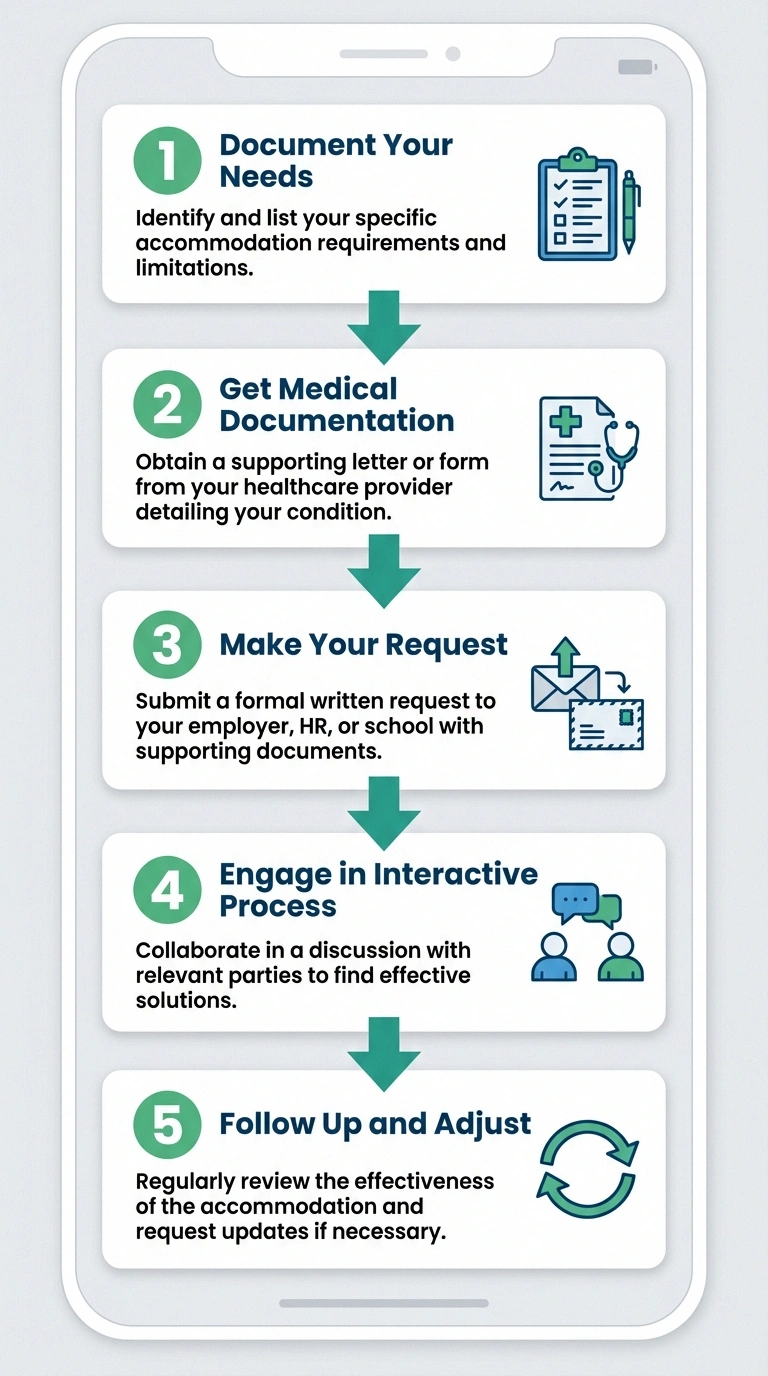
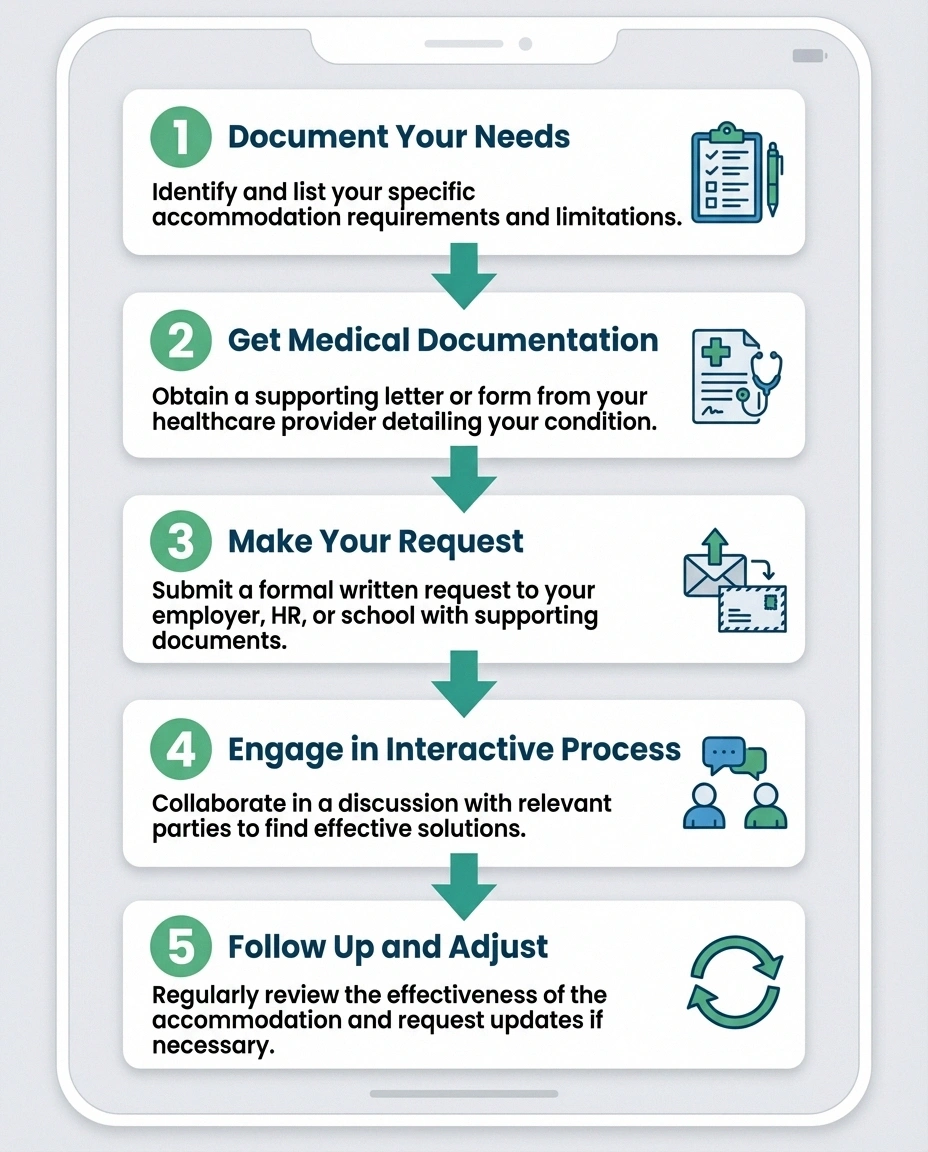
5-Step Accommodation Request Process
Document Your Needs
Write down specific tasks that are difficult and what would help.
Get Medical Documentation
Ask your doctor for a letter describing functional limitations.
Make Your Request
Contact HR or your supervisor. Follow up verbal requests in writing.
Engage in Interactive Process
Be open to alternatives. Document every conversation.
Follow Up and Adjust
Evaluate effectiveness. Request modifications as needs change.
Step 1: Document Your Needs
Before approaching your employer, get clear on exactly what's limiting you and what would help. Write down the specific job tasks that are difficult because of your neuropathy, how your symptoms interfere with those tasks, and what accommodations would reduce or eliminate the barrier. Your symptom journal can be valuable here — it provides concrete evidence of how your symptoms affect your work capacity.
Step 2: Get Medical Documentation
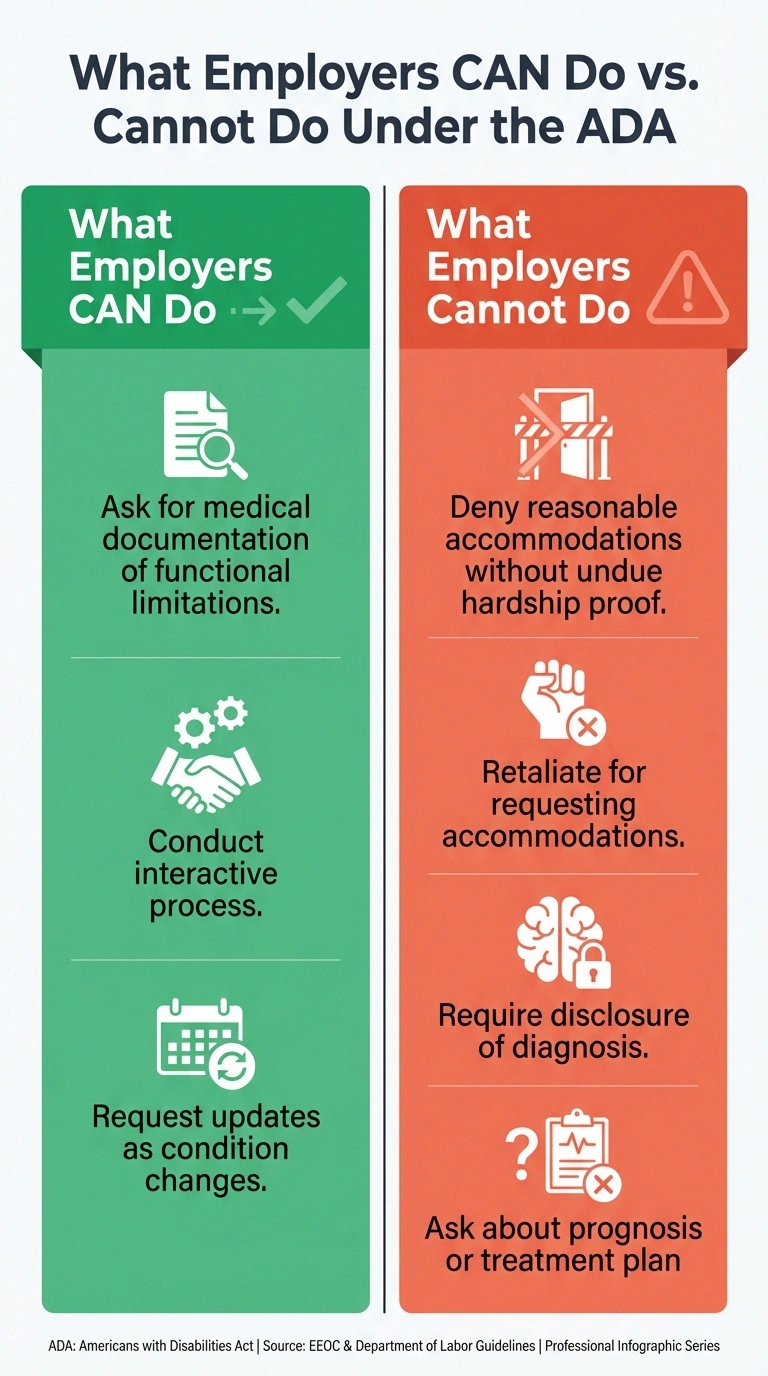
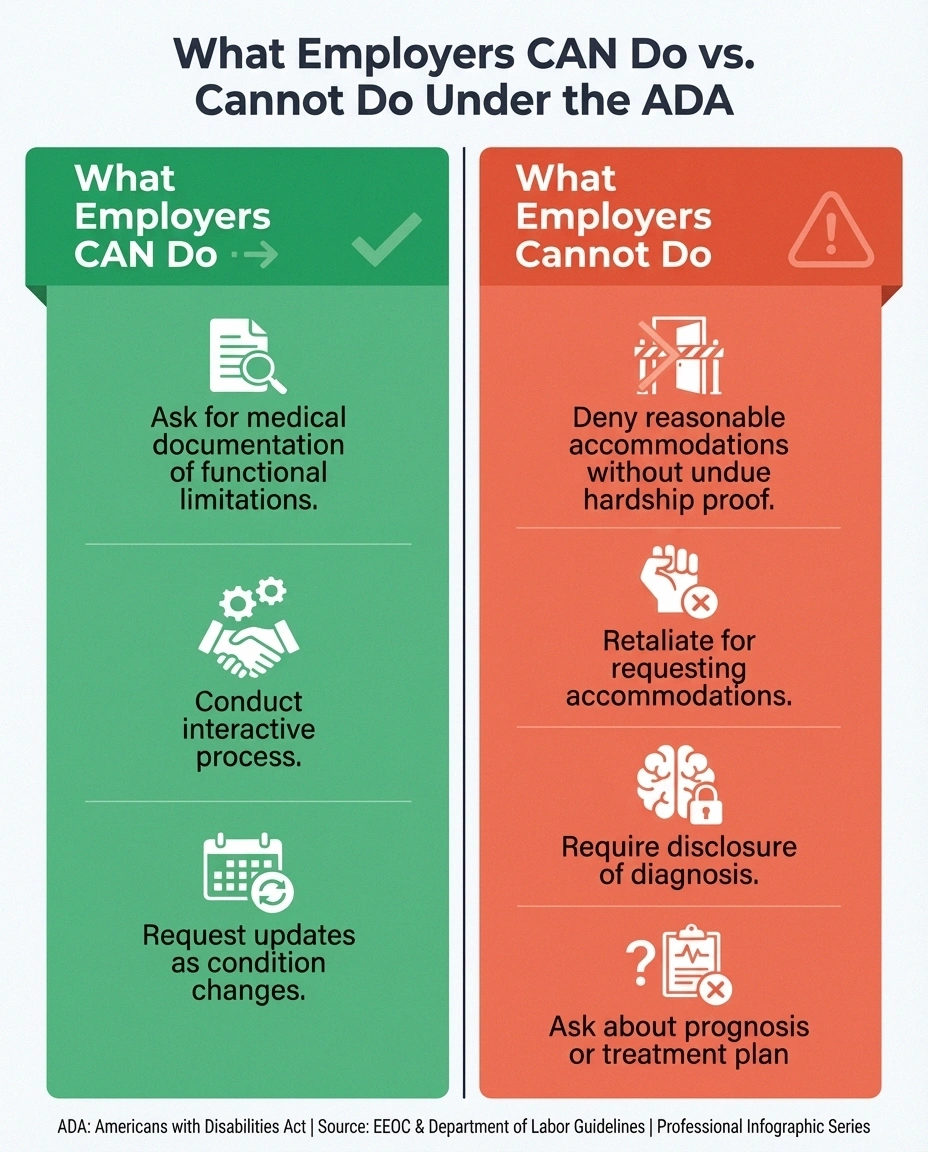
Your employer can't ask for your complete medical records, but they can request documentation that confirms you have a disability and identifies your functional limitations. Ask your doctor (or neurologist) for a letter that states you have a medical condition (they don't need to name it specifically — “peripheral neuropathy” is fine, but they can also use broader language like “a neurological condition”), describes the functional limitations caused by your condition in work-relevant terms (not medical jargon), and recommends specific accommodations. The letter should focus on what you can and cannot do — not your diagnosis details, treatment history, or prognosis.
Step 3: Make Your Request
Contact your supervisor, HR department, or designated ADA coordinator. You can make the request verbally, but always follow up in writing (email is fine) to create a paper trail. A clear, professional request might look like this:
“I have a medical condition that affects my ability to [specific task]. I'm requesting [specific accommodation] as a reasonable accommodation under the ADA. I have documentation from my healthcare provider that I'm happy to provide. I'd like to discuss how we can make this work.”
Keep the tone collaborative. You're proposing a solution, not making a demand. Employers respond much better to “here's how we can solve this together” than to adversarial language.
Step 4: Engage in the Interactive Process
Your employer may agree immediately, suggest alternative accommodations, or ask questions. This back-and-forth is normal and legally required — it's called the interactive process. Be open to alternatives. If you requested a sit-stand desk and the employer offers a high stool at your current workstation instead, consider whether that meets your functional need. The law requires effective accommodation, not your specific preferred accommodation.
Document every conversation. Send follow-up emails summarizing what was discussed and agreed upon. If the process stalls, send a polite written follow-up referencing your original request and the date it was made.
Step 5: Follow Up and Adjust
Once accommodations are in place, evaluate whether they're actually working. Neuropathy can change over time, and accommodations may need adjustment. The interactive process isn't a one-time event — you can request modifications or additional accommodations as your needs change. Just repeat the documentation and request process.
What Employers Cannot Do
Understanding your protections is as important as knowing your rights. Under the ADA, your employer cannot refuse to hire you or promote you because of your neuropathy, fire you or reduce your hours because you requested accommodations, require you to disclose your specific diagnosis to coworkers, retaliate against you for filing an accommodation request, or make you take a medical leave when an accommodation would allow you to keep working.
Know Your Deadlines
If you experience retaliation after requesting accommodations, you have 180 days (300 days in some states) from the discriminatory act to file a charge with the EEOC. Document everything and don't wait.
Employers can deny an accommodation if it would create an “undue hardship” — a significant difficulty or expense relative to the employer's size and resources. But this is a high bar. For large companies, almost any individual accommodation falls far below the undue hardship threshold. Small employers have more flexibility, but they still must engage in the interactive process and consider alternatives before denying a request outright.
If your employer denies your request without a good-faith interactive process, or retaliates against you for requesting accommodations, you may have legal recourse. The Equal Employment Opportunity Commission (EEOC) handles ADA complaints, and many employment attorneys offer free initial consultations for disability discrimination cases.
Accommodations by Job Type
Different jobs present different neuropathy challenges. Here's how accommodations might look across common work environments.
Office and Desk Jobs
Ergonomic equipment is the foundation: a sit-stand desk, ergonomic keyboard and mouse, wrist rests, and a footrest or heated pad under the desk. Voice-to-text software reduces typing demands. Flexible break schedules allow you to stand, stretch, and manage symptoms throughout the day. Remote work — even a few days per week — can be transformative, letting you control your seating, temperature, and pain management environment completely.
Retail and Customer Service
Stool or chair access at the register or counter is the most common accommodation. Anti-fatigue mats where standing is unavoidable. Modified footwear allowances. Rotation between standing and sitting tasks. Reduced shift lengths during flare periods. If the store has multiple departments, assignment to positions with less standing or walking (fitting rooms, customer service desk, cashier instead of stocking shelves).

Warehouse and Physical Labor
Lift-assist devices or team lifting for heavy objects. Rotation off repetitive tasks that aggravate hand neuropathy. Padded or vibration-dampening gloves for tool operation. Modified footwear and insole allowances. Access to a climate-controlled break area. Restructured duties that shift the most physically demanding tasks to other team members while you take on tasks better suited to your abilities — this is legitimate job restructuring, not eliminating essential functions.
Healthcare Workers
Modified shift schedules to avoid extended shifts during peak symptom periods. Adaptive equipment for documentation tasks (voice dictation, ergonomic tools). Footwear accommodations. Assignment to clinical roles with less physical demand during flare periods. Ergonomic modifications to workstations in nursing stations or labs.
Protecting Yourself: Documentation and Paper Trails
The single most important thing you can do throughout the accommodation process is document everything. Keep copies of every written communication — emails, letters, accommodation request forms. After verbal conversations, send a follow-up email: “Per our conversation today, I wanted to confirm that we discussed [topic] and agreed on [outcome].” This isn't paranoia — it's standard practice in any workplace negotiation.

Free Help Available
Call the Job Accommodation Network (JAN) at 1-800-526-7234 for free, confidential guidance on workplace accommodations. They'll help you identify effective accommodations for your specific job and situation.
Keep a file at home (not just at work) with your accommodation request, medical documentation, employer responses, any performance reviews that show you're meeting job expectations, and a log of any negative interactions or comments related to your accommodation or disability. If you ever need to file a complaint, this documentation is your evidence. Without it, disputes become he-said-she-said situations that are much harder to resolve.
If you experience retaliation — sudden negative performance reviews, schedule changes, exclusion from opportunities, or hostile comments after requesting accommodations — contact the EEOC or an employment attorney. You have 180 days (300 days in some states) from the discriminatory act to file a charge with the EEOC. Don't wait.
Resources That Can Help
Several free resources exist specifically to help employees navigate the accommodation process.

Job Accommodation Network (JAN) — askjan.org — offers free, confidential guidance on workplace accommodations. You can call their helpline (1-800-526-7234) and speak with a specialist who will help you identify effective accommodations for your specific situation and job. This is the single most useful resource available.
ADA National Network — adata.org — provides information, training, and guidance on the ADA. Their regional centers offer free consultations and can help you understand your rights.
Equal Employment Opportunity Commission (EEOC) — eeoc.gov — handles discrimination complaints and provides guidance on ADA requirements. Their website includes fact sheets specifically about reasonable accommodations.
Disability Rights Legal Center and local legal aid organizations often provide free legal consultations for disability discrimination cases. If you can't afford an employment attorney, these organizations can help.
Our article on neuropathy disability benefits covers SSDI and SSI options if neuropathy prevents you from working entirely.
Frequently Asked Questions
Do I have to tell my employer about my neuropathy diagnosis?
You don't have to disclose your specific diagnosis. You only need to indicate that you have a medical condition that creates a functional limitation and that you need an accommodation. Your doctor's letter can describe limitations without naming the condition. However, many people find that a straightforward disclosure of neuropathy helps their employer understand the need, since it's a recognizable and well-understood condition.
Can my employer fire me for having neuropathy?
No. Terminating an employee because of a disability violates the ADA. However, employers can terminate employees who cannot perform essential job functions even with reasonable accommodations, or for reasons unrelated to the disability such as performance issues or company layoffs. If you believe you were fired because of your neuropathy or your accommodation request, file a complaint with the EEOC within 180 days.

What if my employer says the accommodation is too expensive?
Employers must demonstrate undue hardship to deny an accommodation, and this is a high legal standard. Most common neuropathy accommodations — ergonomic equipment, schedule modifications, seating — cost very little. Studies by JAN show that the majority of accommodations cost under $500, and many cost nothing. If your employer claims cost as a reason, ask them to provide the specific amount and suggest less expensive alternatives.
Can I request to work from home as a neuropathy accommodation?
Remote work can be a reasonable accommodation if your job duties can be performed from home. The key question is whether physical presence at the workplace is an essential function of your specific role. Since the COVID-19 pandemic normalized remote work, employers have a harder time arguing that in-office presence is essential for roles that were successfully performed remotely during lockdowns.
What if I need accommodations but haven't been formally diagnosed with neuropathy?
You don't need a formal neuropathy diagnosis to request ADA accommodations. You need documentation of a physical condition that substantially limits a major life activity. If your doctor can document your symptoms and functional limitations — regardless of whether the exact cause has been identified — you may still qualify for accommodations.
Are there accommodations for neuropathy flare-ups?
Yes. Intermittent or unpredictable symptoms are covered under the ADA. You can request flexible attendance policies, the ability to work from home during flares, modified duties during bad days, and additional break time during flare periods. The key is establishing through documentation that flares are part of your condition and that the accommodations allow you to maintain overall job performance.
You Have More Power Than You Think
Living with neuropathy while working full-time is genuinely hard. But the law is on your side, and the accommodations that make the difference are usually simple, inexpensive, and easy to implement. A stool at a register. An ergonomic keyboard. Permission to start an hour later on bad mornings. These aren't luxuries — they're tools that let you keep doing the work you're good at.

Start by identifying the specific tasks that neuropathy makes harder. Talk to your doctor about documentation. Then have the conversation with your employer. Most of the time, it goes more smoothly than people expect — managers generally want to keep good employees and are willing to make adjustments when the request is clear, documented, and reasonable.
And if it doesn't go smoothly, you have legal protections and free resources to help you enforce them. You don't have to choose between your health and your livelihood. The ADA exists precisely so you don't have to. Browse all our guides for living with neuropathy for more practical strategies to manage your daily life.
About the Author