
If you’ve been living with neuropathy, you’ve probably asked the question that keeps so many of us up at night: can my nerves actually heal? I remember asking my own doctor that same question years ago, half hoping for a miracle and half bracing myself for bad news. The answer, as I’ve learned through my own journey and years of research, is more nuanced — and more hopeful — than a simple yes or no.
Nerve regeneration is your body’s built-in repair process for damaged peripheral nerves. Unlike the brain and spinal cord, peripheral nerves — the ones affected in neuropathy — do have the ability to regrow and repair themselves under the right conditions. But the process is slow, unpredictable, and depends on many factors that are unique to your situation.
In this article, I’ll walk you through exactly what happens when nerves try to heal, what realistic timelines look like for different types of neuropathy, and what may support or hinder your body’s natural repair process. Whether you’re newly diagnosed or have been managing neuropathy for years, understanding how nerve regeneration works gives you a clearer picture of what’s possible — and what steps you can take today.
How Your Peripheral Nerves Are Built
Before we can understand how nerves heal, it helps to know what they look like on the inside. Think of a peripheral nerve like an electrical cable. At the center is the axon — the long, thin fiber that carries signals between your brain and the rest of your body. Wrapped around many axons is a fatty insulating layer called the myelin sheath, which works like the rubber coating on a wire. It speeds up signal transmission and protects the axon underneath.
The Cable Analogy
Think of a peripheral nerve like an electrical cable: the axon is the copper wire that carries the signal, the myelin sheath is the rubber insulation that protects it and speeds transmission, and Schwann cells are the workers who maintain and rebuild that insulation when it gets damaged.
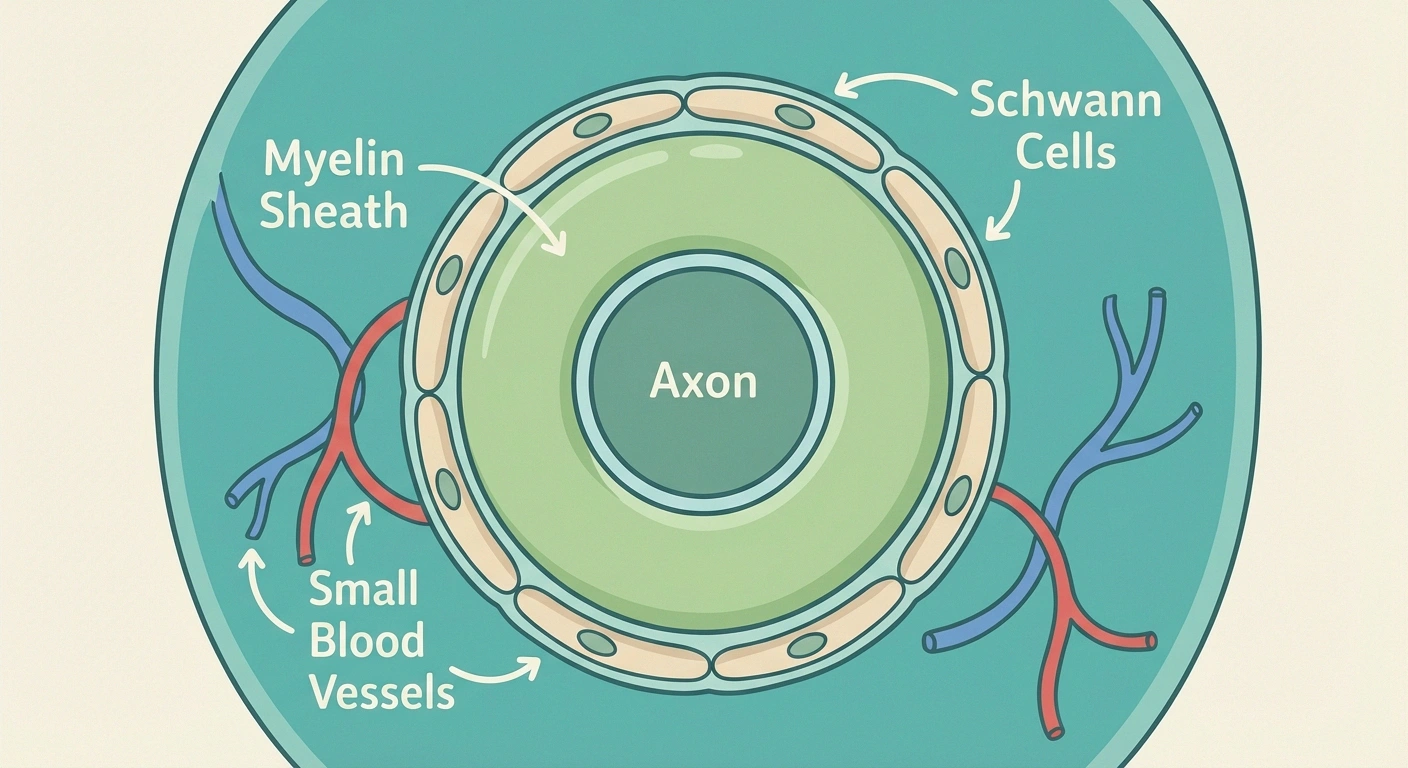
The cells that produce and maintain this myelin coating are called Schwann cells, and they turn out to be some of the most important players in nerve regeneration. When a nerve is damaged, Schwann cells don’t just sit there — they actively participate in the cleanup and rebuilding process.
Peripheral nerves also contain blood vessels that supply oxygen and nutrients. This is why conditions like diabetes that damage blood vessels can be so devastating to nerve health — without adequate blood supply, even healthy nerves struggle to survive, let alone repair themselves.
What Happens When a Nerve Is Damaged
When a peripheral nerve suffers damage — whether from high blood sugar, chemotherapy, physical injury, or inflammation — the response depends on how severe the injury is. There are two main types of damage that matter for regeneration:
Demyelination is when the myelin sheath gets damaged but the axon underneath stays intact. Think of it like the insulation on a wire getting worn away while the copper wire inside remains whole. The nerve signal still travels, but it’s slower, weaker, or distorted. This is the type of damage that tends to have the best recovery outlook because the core structure is preserved.
Axonal damage is when the axon itself — the signal-carrying fiber — gets injured or dies. This is more serious. When an axon is cut or severely damaged, everything downstream from the injury point breaks down in a process called Wallerian degeneration. The portion of the axon beyond the injury essentially dissolves over several days, along with its myelin covering.
That sounds terrible, but here’s the remarkable part: Wallerian degeneration is actually the first step in healing. It’s your body clearing away the debris so regeneration can begin. Schwann cells and immune cells called macrophages rush to the injury site, clean up the damaged tissue, and create a pathway — almost like a guide track — for the axon to regrow along.
The Regeneration Process: How Nerves Rebuild
Once the cleanup is complete, the real rebuilding begins. The nerve cell body — located near the spinal cord — activates special regeneration-associated genes (RAGs) that shift the cell from “maintenance mode” into “repair mode.” It starts producing proteins and materials needed to regrow the axon.
1–3 mm/day
Nerve Regeneration Speed
That’s roughly one inch per month under ideal conditions. An 18-inch distance from knee to toes could take 18 months or longer to regenerate.
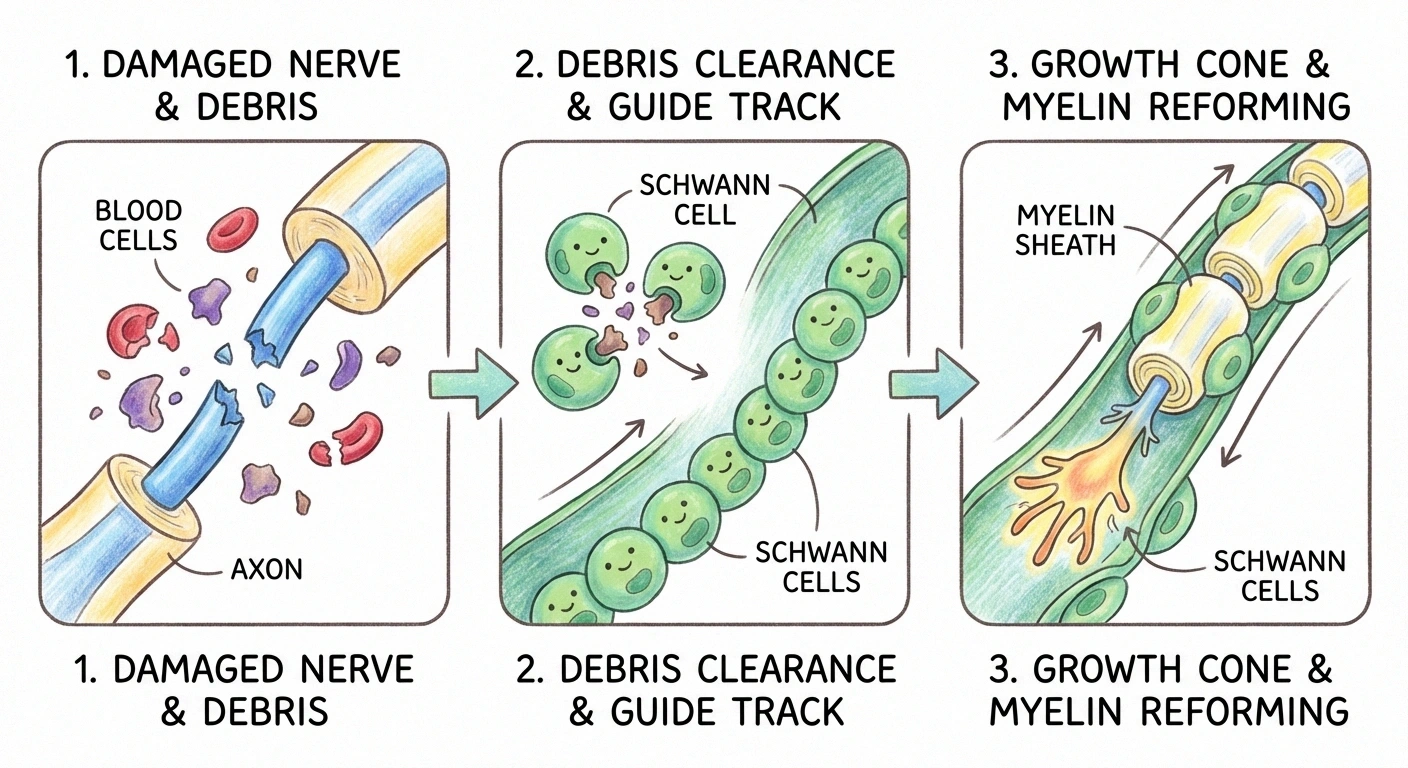
At the tip of the regrowing axon, a structure called a growth cone forms. This growth cone is like a tiny pathfinder, extending and retracting as it follows chemical signals and the guide track laid down by Schwann cells. It’s slowly reaching toward the original target — a muscle, a patch of skin, an organ.
The speed of this regrowth is well-documented: peripheral nerves regenerate at approximately 1 to 3 millimeters per day, which works out to roughly one inch per month under ideal conditions. That number comes from decades of clinical observation and is referenced consistently across research from the National Institutes of Health.
To put that in perspective, if you have nerve damage in your feet and the injury is at knee level — roughly 18 inches away — regrowth to reach your toes could take 18 months or longer, even in the best-case scenario. For damage that originates higher up, the timeline extends further.
After the axon reaches its target, the Schwann cells then need to remyelinate — rebuild the insulating sheath around the new axon. This remyelination process takes additional time, and the new myelin is typically thinner and has shorter segments than the original. That’s why even after successful regeneration, nerve function may not return to exactly what it was before.
Why Neuropathy Nerve Regeneration Is Different from Surgical Nerve Repair
Most of the research you’ll find online about nerve regeneration focuses on surgical nerve repair — reattaching a severed nerve after a traumatic injury. That’s important work, but it’s a very different situation from what most neuropathy patients face.
In neuropathy, the damage is usually diffuse and ongoing. Instead of a clean cut in one location, you’re dealing with widespread, gradual deterioration across many nerve fibers simultaneously. High blood sugar doesn’t cut a single nerve — it slowly damages the smallest, longest fibers first, which is why symptoms typically start in the feet and progress upward.
This creates a unique challenge for regeneration: your nerves may be trying to repair themselves while the underlying cause is still actively doing damage. It’s like trying to rebuild a house while someone is still tearing down the walls. This is why identifying and addressing the root cause is the single most important factor in whether regeneration can succeed.
Realistic Timelines by Neuropathy Type
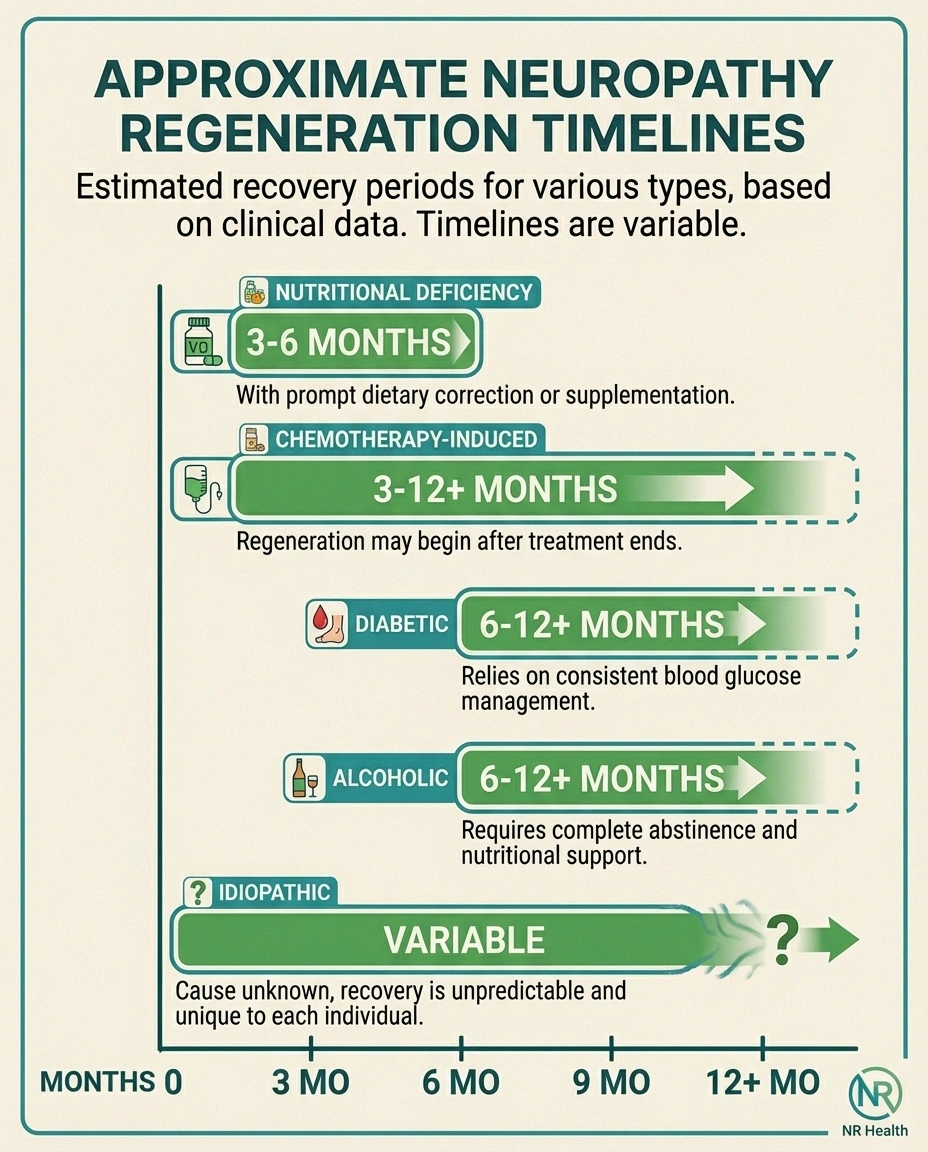
One of the biggest gaps in the information available to neuropathy patients is honest timeline expectations. Let me share what the research shows for different types:
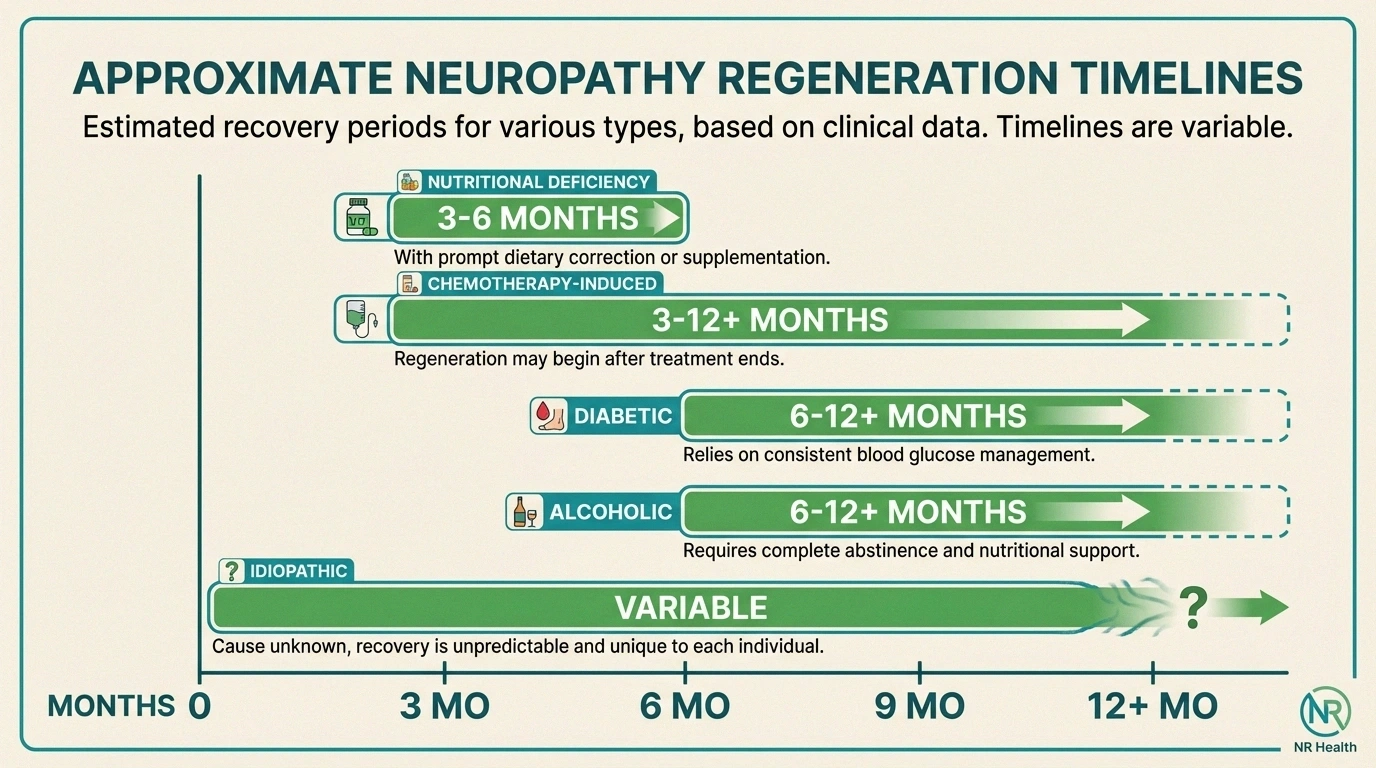
Regeneration Timeline Ranges by Neuropathy Type
Timelines are approximate and vary significantly based on severity, age, and treatment adherence. Talk to your doctor about your specific situation.
Diabetic neuropathy: If blood sugar is brought under tight control, nerve regeneration is possible but slow. Research shows that some patients experience measurable improvement in nerve conduction studies after 6 to 12 months of sustained blood sugar management. However, the longer neuropathy has been present and the more advanced the stage of nerve damage, the less likely full regeneration becomes. Early intervention is everything.
Chemotherapy-induced neuropathy: Many patients see gradual improvement after chemotherapy ends, as the toxic exposure stops and nerves can begin recovery. Timelines vary widely — some people notice improvement within months, while others experience symptoms for a year or more. Some nerve damage from certain chemotherapy agents may be permanent.
Nutritional deficiency neuropathy: This often has the best regeneration outlook. When the deficiency — commonly B12 or other B vitamins — is corrected, nerve repair can begin relatively quickly. Many patients report noticeable improvement within 3 to 6 months of supplementation, though severe or long-standing deficiencies may take longer.
Alcoholic neuropathy: Cessation of alcohol combined with nutritional rehabilitation can allow nerve regeneration, but the timeline is typically 6 to 12+ months. The extent of recovery depends heavily on how long and how heavily someone has been drinking.
Idiopathic neuropathy: When the cause is unknown, regeneration timelines are the hardest to predict. Without a clear cause to address, the focus shifts to slowing progression and supporting the conditions that allow whatever regeneration is possible.
What Helps Nerve Regeneration
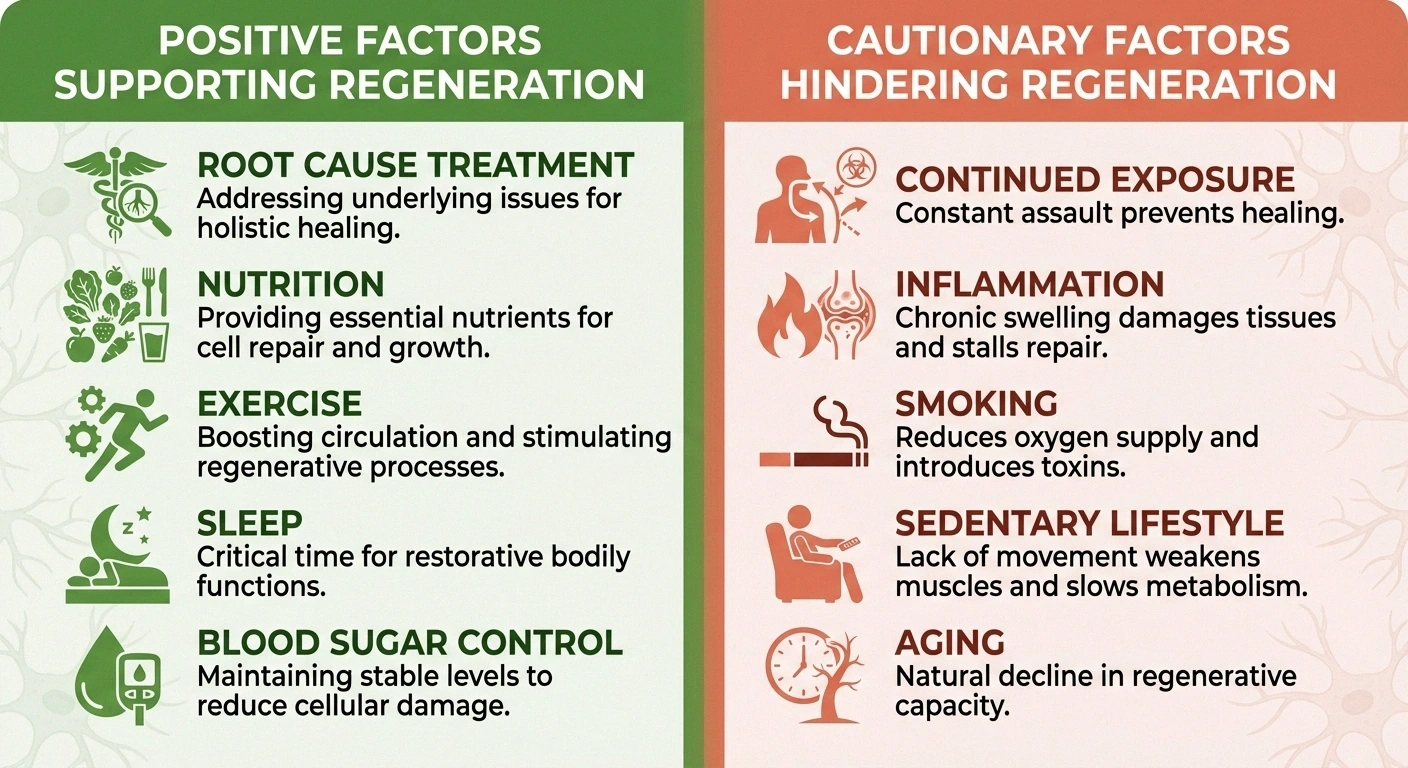
While there’s no magic switch to flip on nerve repair, research has identified several factors that may support your body’s natural regeneration process:
✓ Factors That May Support Nerve Regeneration
- ✅ Addressing the root cause — the single most impactful step
- ✅ B vitamins (B1, B6, B12) — essential building materials for nerve repair
- ✅ Alpha-lipoic acid — antioxidant and nerve-protective properties
- ✅ Regular gentle exercise — improves circulation and neurotrophic factors
- ✅ Blood sugar control — reduces oxidative stress on nerves
- ✅ Quality sleep — supports growth hormone release for tissue repair
Addressing the root cause. This cannot be overstated. Whether it’s controlling blood sugar, stopping a toxic medication, correcting a vitamin deficiency, or reducing alcohol intake — removing the source of damage is the single most impactful step. Your nerves are remarkably resilient, but they can’t rebuild while the assault continues.
Optimal nutrition. Your nerves need specific building materials to regenerate. B vitamins — particularly B1, B6, and B12 — are essential for nerve structure and myelin production. Alpha-lipoic acid (ALA) has shown promise in several clinical trials for its antioxidant and nerve-protective properties. Talk to your doctor about testing your levels and whether supplementation makes sense for your situation.
Physical activity and circulation. Nerve regeneration requires good blood flow to deliver oxygen and nutrients to healing fibers. Regular, gentle exercise — even daily walking — improves circulation to peripheral nerves. Physical activity also stimulates the release of neurotrophic factors, which are proteins that support nerve growth and survival.
Blood sugar control. Even if diabetes isn’t your primary cause of neuropathy, maintaining stable blood sugar levels creates a healthier environment for nerve repair. High blood sugar generates oxidative stress and inflammation that directly interferes with regeneration.
Sleep. Your body does much of its repair work during sleep. Research suggests that growth hormone, which plays a role in tissue repair, is primarily released during deep sleep. Chronic sleep deprivation may impair your body’s ability to regenerate nerve tissue. If neuropathy pain is disrupting your sleep, addressing that is doubly important.
What Hinders Nerve Regeneration
Just as some factors support healing, others can actively slow down or prevent nerve regeneration:
Regeneration Roadblocks
Your nerves cannot outpace ongoing damage. Continued high blood sugar, alcohol use, toxic medication exposure, chronic inflammation, and smoking all directly impair the regeneration process. Addressing these factors isn’t optional — it’s the foundation that makes every other intervention more effective.
Continued exposure to the cause. Persistently high blood sugar, ongoing alcohol use, continued exposure to a toxic medication — if the damage source remains, regeneration cannot outpace destruction.
Chronic inflammation. Low-grade, persistent inflammation creates a hostile environment for nerve repair. Anti-inflammatory dietary approaches may help create better conditions for healing.
Age. As we get older, the regeneration process slows down. Schwann cells become less responsive, the activation of regeneration-associated genes takes longer, and blood supply to peripheral nerves decreases. This doesn’t mean regeneration is impossible with age — it just means timelines are typically longer and recovery may be less complete.
Smoking. Nicotine constricts blood vessels and reduces blood flow to peripheral nerves. This directly impairs the delivery of oxygen and nutrients needed for regeneration. If you smoke and have neuropathy, quitting may be one of the most impactful things you can do for nerve repair.
Sedentary lifestyle. Prolonged inactivity reduces blood flow and deprives nerves of the mechanical signals and neurotrophic factors that support regeneration. Even gentle, regular movement makes a difference.
Myelin Repair vs. Axon Regrowth: Understanding the Difference
This is something most patient-facing articles miss, but it matters enormously for understanding your own recovery.
Myelin Repair
Speed: Faster
Outlook: Generally better
What it is: Schwann cells rebuild the insulating sheath around intact axons
Axon Regrowth
Speed: 1–3 mm/day
Outlook: More uncertain
What it is: Growth cone extends new axon fiber along Schwann cell guide track
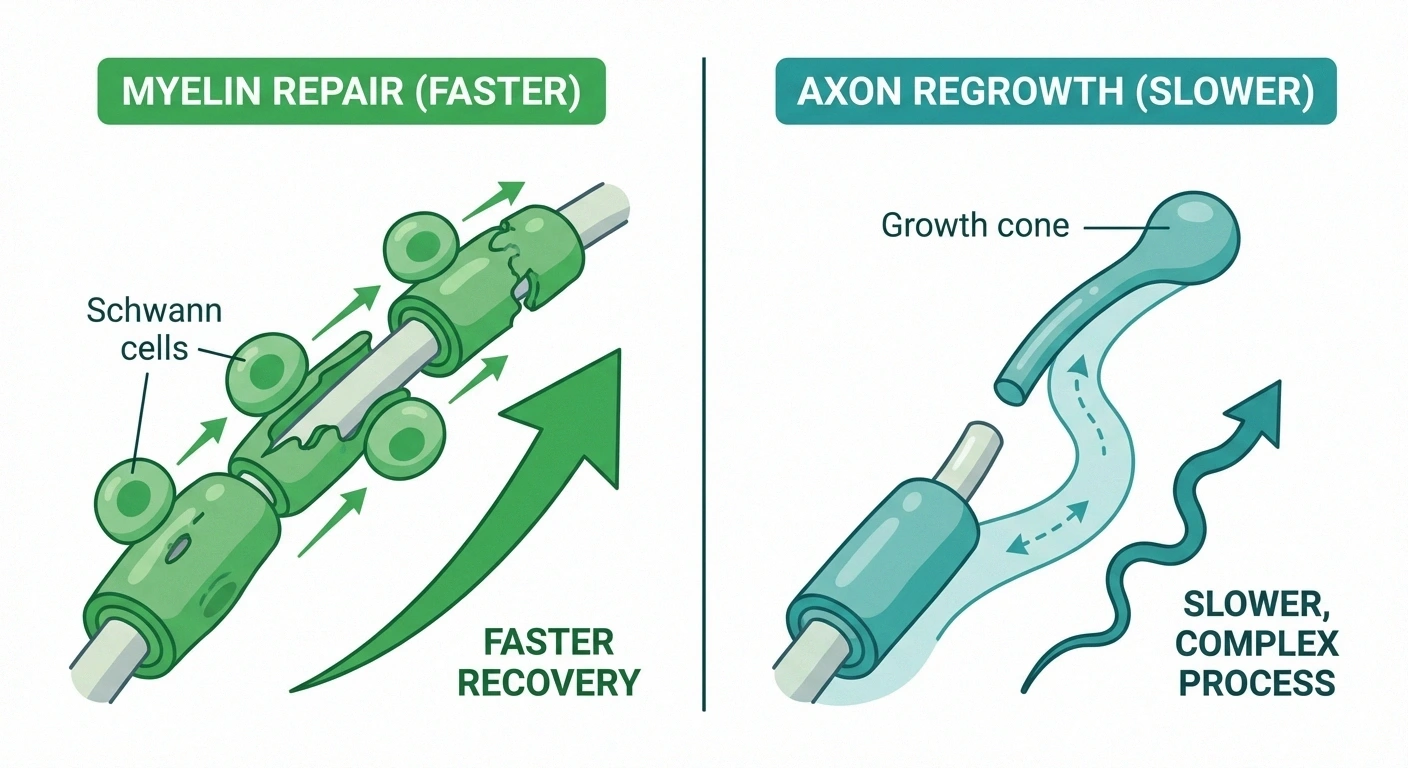
Myelin repair (remyelination) is generally faster and more successful than axon regrowth. If your neuropathy primarily involves demyelination — damaged insulation with intact axons — the recovery outlook is better. Schwann cells can produce new myelin relatively efficiently, and function can improve as remyelination progresses. Conditions like Guillain-Barré syndrome, which is primarily demyelinating, often show significant recovery because the underlying axons are preserved.
Axon regrowth is the slower, more uncertain process. Growing a new axon fiber over long distances — from the spinal cord to the tips of your toes, for example — requires enormous energy and biological resources. The axon must navigate accurately to its original target, and even when it arrives, the new connections need time to mature and function properly.
Most neuropathy patients have some combination of both types of damage. Your neurologist can help determine which type predominates in your case through nerve conduction studies and EMG, which provides valuable information about your regeneration potential.
What “Healing” Actually Means for Neuropathy Patients
I want to be honest with you here because I think misleading hope is just as harmful as no hope at all.
For many neuropathy patients, “healing” doesn’t mean a complete return to how your nerves functioned before. It may mean:
— Stopping the progression so things don’t get worse
— Partial recovery of sensation or reduced pain
— Improved function even if nerve conduction studies aren’t completely normal
— Better quality of life through a combination of nerve repair and effective symptom management
These outcomes are absolutely worth pursuing. Stopping progression alone is a significant victory. Partial recovery of sensation in your feet can mean the difference between walking confidently and fear of falling. Reduced pain can transform your daily experience.
The patients I’ve connected with who have the best outcomes are the ones who combine aggressive management of the underlying cause with a comprehensive approach that includes nutritional support, physical activity, and good medical care — and who measure success not by perfection but by meaningful improvement.
Emerging Research in Nerve Regeneration
The field of nerve regeneration research is more active than it’s ever been, and several areas show real promise:
Neurotrophic factor therapies. Researchers are studying ways to deliver nerve growth factors directly to damaged nerves to accelerate regeneration. While still primarily in laboratory and early clinical trials, this approach targets the molecular signals that control nerve repair.
Electrical stimulation. There’s growing evidence that controlled electrical stimulation may enhance nerve regeneration. Some studies show that brief electrical stimulation at the time of nerve repair can accelerate axon regrowth. Peripheral nerve stimulation techniques are being explored for their potential to support regeneration.
Gut microbiome connections. Recent research from Imperial College London found that intermittent fasting changed gut bacteria in ways that produced a metabolite called IPA (3-Indolepropionic acid), which enhanced axon regeneration by 50% in animal models. While this is still early-stage research, it opens fascinating possibilities for nutritional approaches to nerve repair.
Gene therapy approaches. Scientists are exploring ways to directly activate regeneration-associated genes in nerve cells to boost the regeneration response. This is further from clinical application, but represents a fundamental approach to the problem.
None of these are ready for widespread clinical use yet, but they represent genuine scientific progress — not hype. Talk to your doctor about whether any clinical trials might be appropriate for your situation.
What You Can Do Starting Today
While we wait for tomorrow’s breakthroughs, there’s meaningful action you can take right now to give your nerves the best possible environment for healing:
Your Nerve Regeneration Action Plan
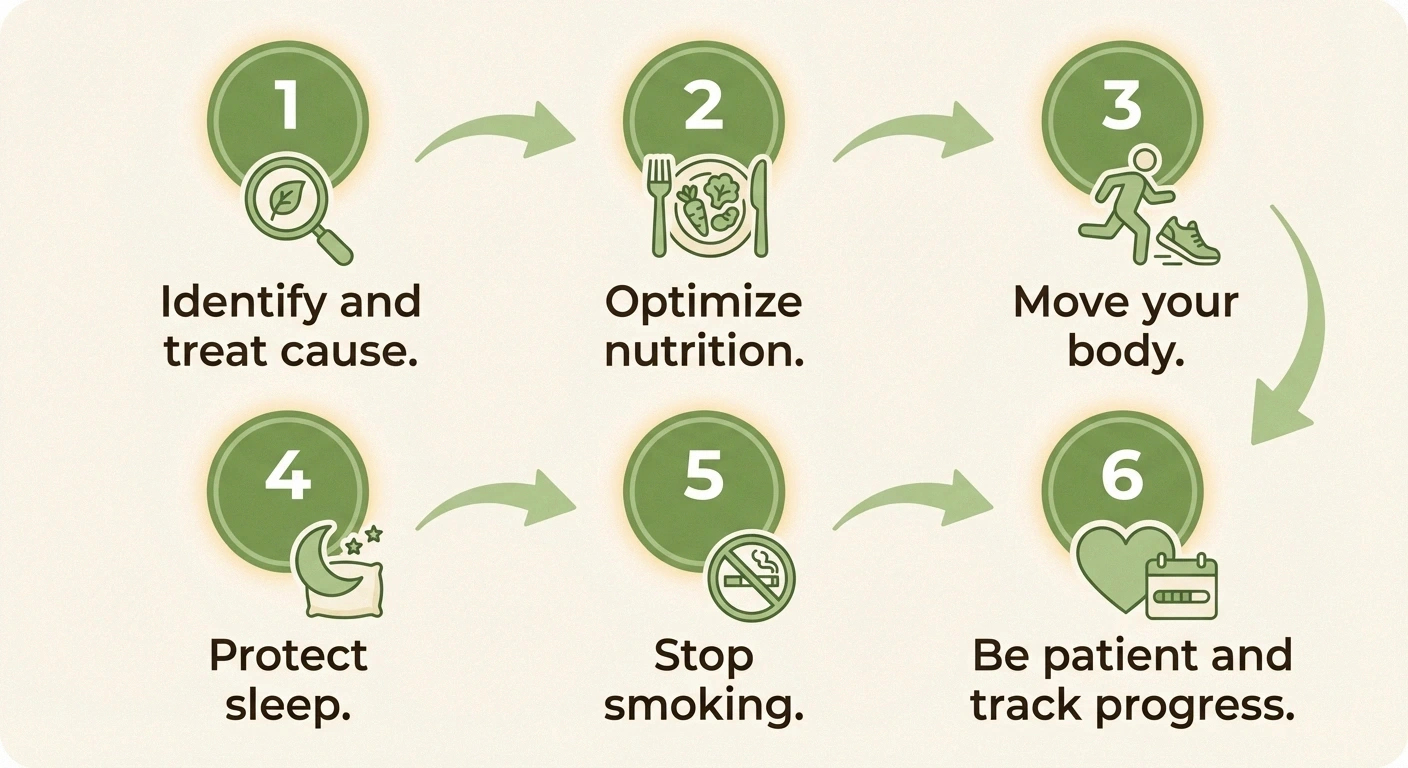
Identify and treat your cause — work with your doctor to find and address what’s driving your neuropathy
Optimize nutrition — ensure adequate B vitamins and discuss ALA with your doctor
Move daily — 20–30 minutes of gentle walking improves circulation to nerves
Protect sleep — 7–8 hours supports growth hormone release for tissue repair
Quit smoking — circulatory benefits begin almost immediately
Track progress in 3–6 month windows — nerve repair is measured in months, not days
1. Get your cause identified and treated. If you haven’t already, work with your doctor to determine what’s driving your neuropathy. If it’s blood sugar, nutritional deficiencies, or another treatable cause, addressing it is your highest-leverage move.
2. Optimize your nutrition. Ensure adequate intake of B vitamins, particularly B12. Talk to your doctor about whether alpha-lipoic acid or other supplements may support your nerve health.
3. Move your body. Even 20 to 30 minutes of gentle walking most days can improve circulation to peripheral nerves and stimulate neurotrophic factor release.
4. Protect your sleep. Prioritize 7 to 8 hours of quality sleep. If pain is disrupting your rest, talk to your doctor about management strategies.
5. Stop smoking if you smoke. The circulatory benefits of quitting begin almost immediately and directly support nerve health.
6. Be patient and measure your progress. Nerve regeneration is measured in months, not weeks. Keep a symptom journal and look for trends over 3- to 6-month windows rather than day-to-day changes.
Frequently Asked Questions
Can peripheral nerves regenerate after neuropathy damage?
Yes, peripheral nerves have the ability to regenerate, unlike nerves in the brain and spinal cord. However, the extent of regeneration depends on the type and severity of damage, the underlying cause, your age, and how quickly the cause is addressed. Removing the source of damage is the most important factor in allowing regeneration to occur.
How fast do nerves regenerate?
Peripheral nerves regenerate at approximately 1 to 3 millimeters per day, which is roughly one inch per month under favorable conditions. This rate can be slower in older adults, in the presence of ongoing damage, or when blood supply to the nerves is compromised. Full recovery timelines range from several months to over a year depending on the distance the nerve needs to regrow.
Is nerve damage from neuropathy permanent?
Not always. Some nerve damage, particularly demyelination where the insulating sheath is damaged but the axon is intact, can recover well. More severe axonal damage may only partially recover or, in advanced cases, may be permanent. Early intervention to stop the underlying cause gives you the best chance of meaningful recovery.

What vitamins and supplements may support nerve regeneration?
B vitamins, especially B1, B6, and B12, are essential for nerve health and myelin production. Alpha-lipoic acid has shown promise in clinical studies for its antioxidant and nerve-protective effects. Magnesium supports nerve function, and omega-3 fatty acids may reduce nerve inflammation. Always discuss supplementation with your doctor to ensure appropriate dosing and avoid interactions with your medications.
Does exercise help nerves regenerate?
Research suggests that regular physical activity supports nerve regeneration by improving blood flow to peripheral nerves, stimulating the release of neurotrophic factors that promote nerve growth, and reducing inflammation. Even gentle, consistent exercise like daily walking may create better conditions for nerve repair. Talk to your doctor before starting any new exercise program.
How do I know if my nerves are regenerating?
Signs that nerves may be regenerating include gradual improvement in sensation, reduced pain levels over time, and improved balance or coordination. Your doctor can track regeneration more objectively through nerve conduction studies performed at regular intervals. It is worth noting that during regeneration, some people experience temporary tingling or mild discomfort as new nerve connections form, which can actually be a positive sign.
Can older adults still experience nerve regeneration?
Yes, nerve regeneration continues throughout life, though the process slows with age. Schwann cells and regeneration-associated genes still function in older adults, just at a reduced pace. Optimizing nutrition, maintaining physical activity, and managing underlying conditions can help maximize whatever regeneration capacity your body retains. Meaningful improvement is possible at any age.
About the Author