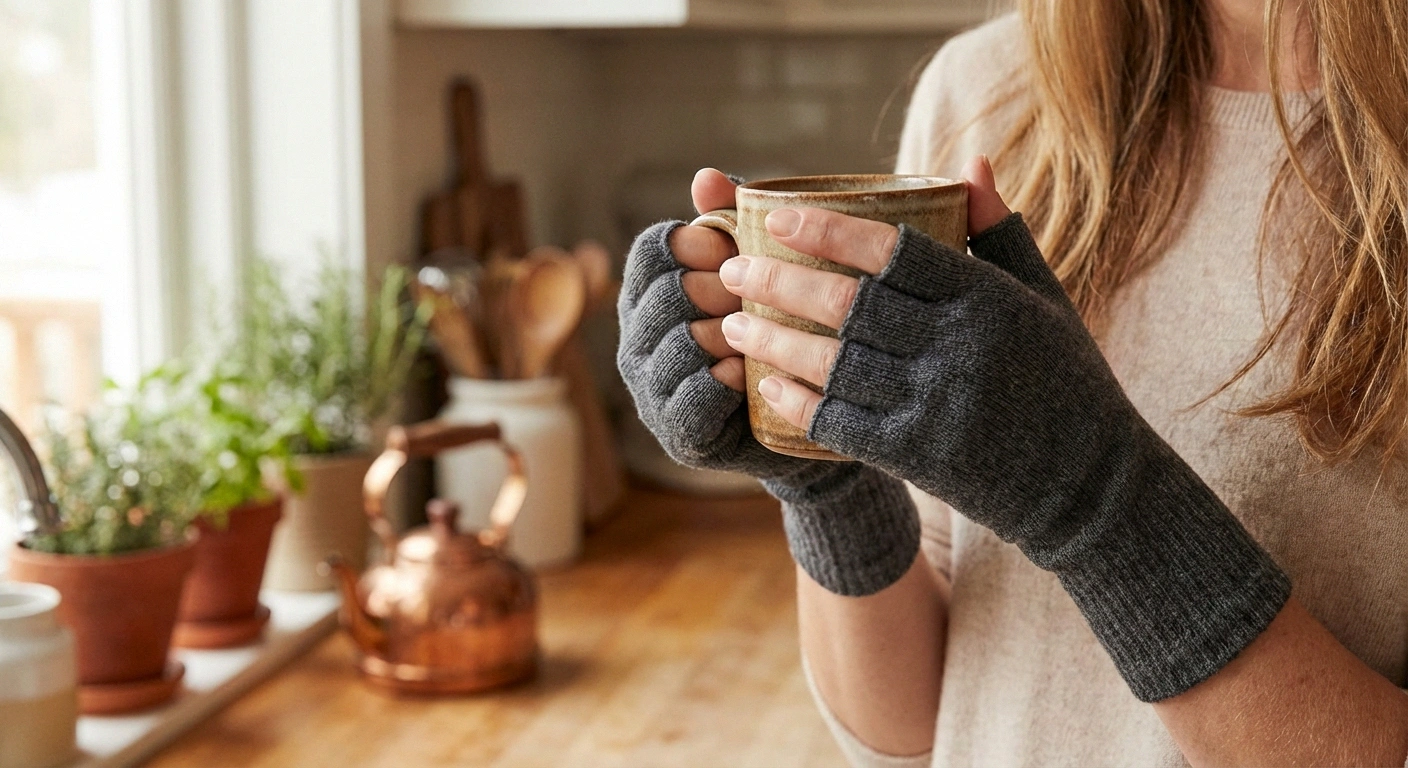
The first time I tried compression gloves, I was skeptical. After years of tingling, numbness, and that maddening pins-and-needles sensation in my hands, the idea that a pair of snug gloves could make any difference felt almost too simple. But for many people living with neuropathy in their hands, compression gloves have become a quiet, everyday lifeline — not a cure, but a tool that takes the edge off enough to get through the day.
If you’ve been considering compression gloves for your neuropathy symptoms, you’re probably wondering: do they actually work? What should you look for? And are they safe to wear with nerve damage? Let’s walk through everything you need to know, including what the research says, what real people experience, and how to find the right pair for your hands.
What Are Compression Gloves and How Do They Work?
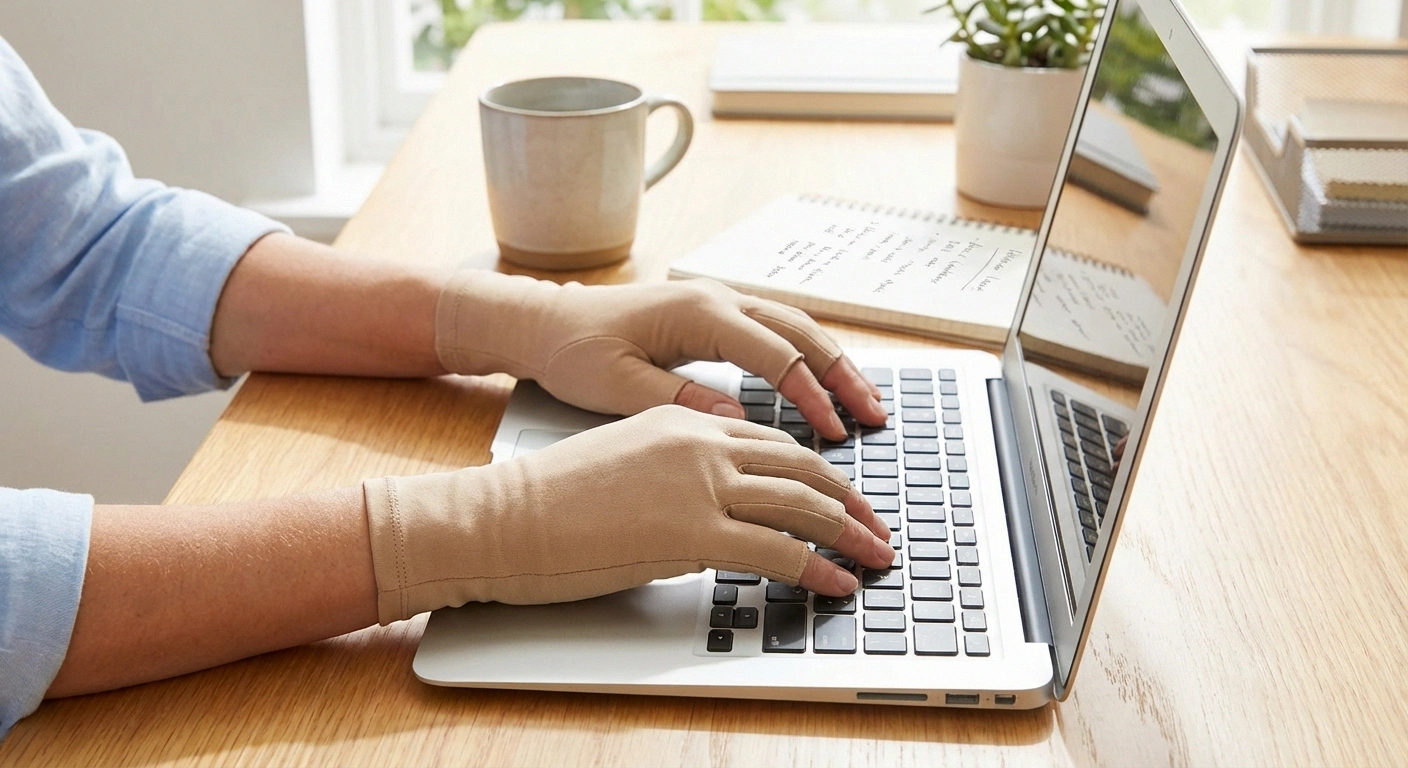
Compression gloves are snug-fitting gloves made from stretchy, breathable fabrics like spandex, nylon, or cotton blends. They apply gentle, consistent pressure to your hands, fingers, and wrists. Most compression gloves are fingerless — leaving your fingertips exposed so you can still grip objects, type, and perform daily tasks.
The basic mechanism is straightforward: the gentle pressure promotes blood circulation in the hands, which may help reduce swelling, ease stiffness, and provide a comforting “grounding” sensation that can partially override the abnormal nerve signals causing your tingling and numbness. Think of it like a steady, reassuring handshake that lasts all day.
For neuropathy specifically, compression gloves work differently than they do for arthritis or carpal tunnel. With nerve damage, the benefit isn’t primarily about reducing joint inflammation — it’s about improving microcirculation to nerve tissue and providing proprioceptive input (sensory feedback) that helps your brain better interpret what your hands are doing and feeling.
What the Research Says About Compression for Neuropathy
Let’s be upfront: the research specifically on compression gloves for peripheral neuropathy is limited. Most clinical studies on compression gloves have focused on arthritis and carpal tunnel syndrome, where results have been mixed but generally positive for pain and stiffness relief.
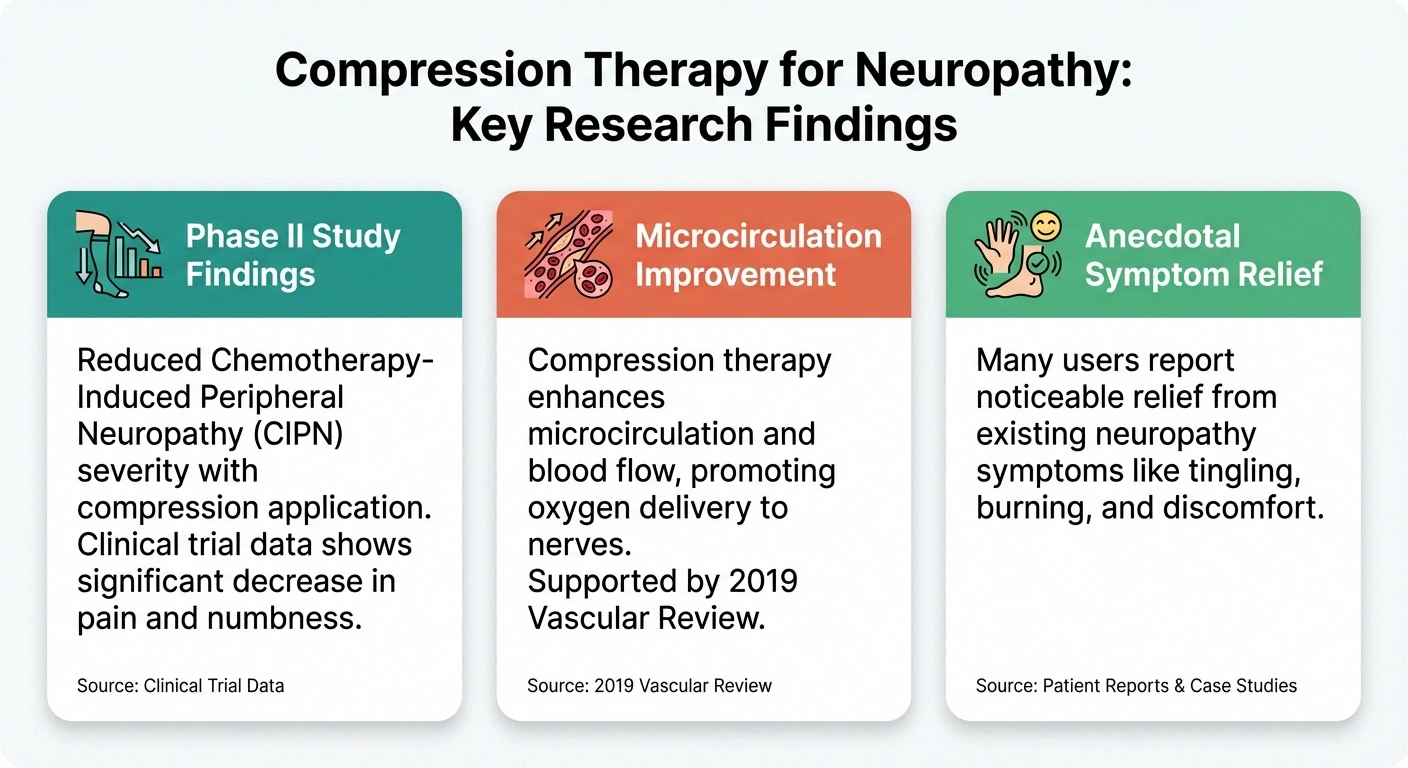
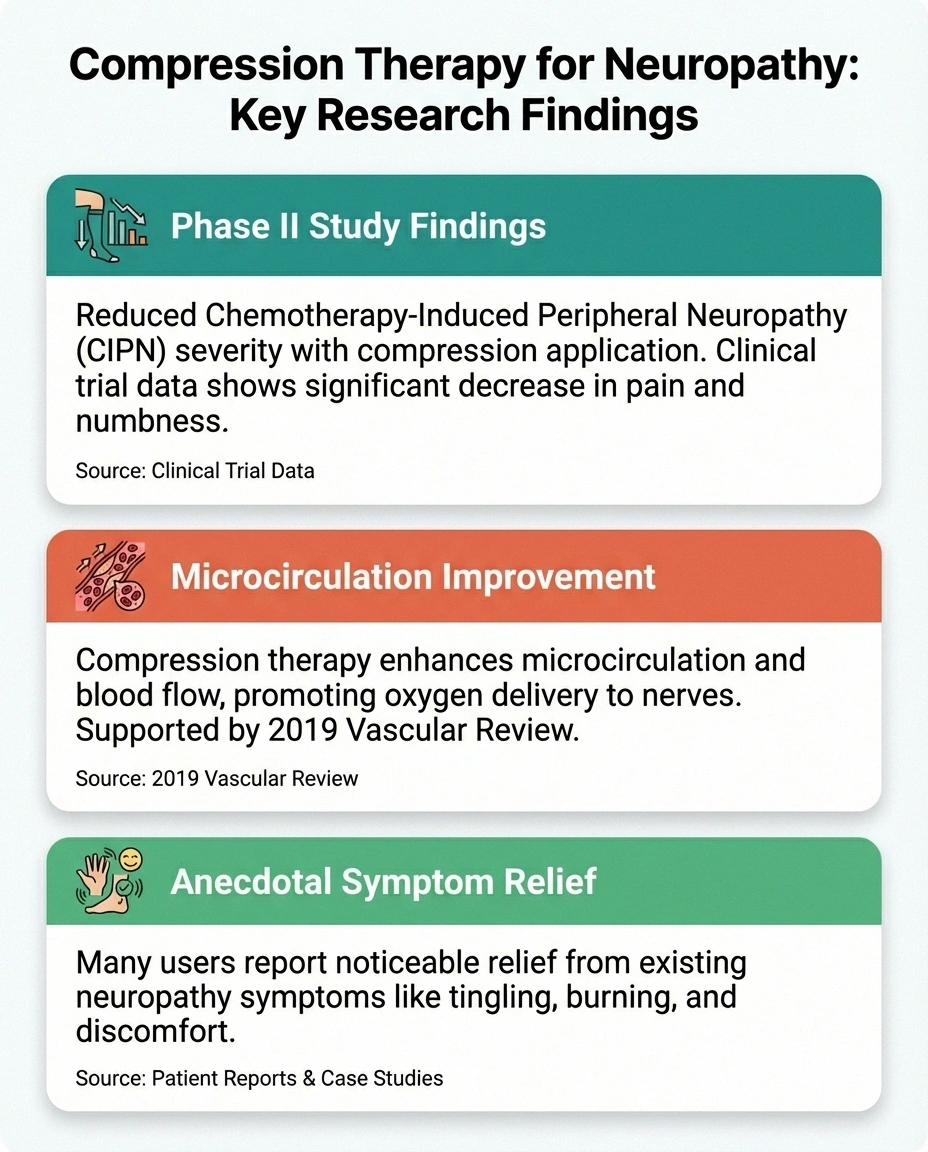
However, there is one area where compression therapy for neuropathy has stronger evidence: chemotherapy-induced peripheral neuropathy (CIPN). A phase II multicenter study published in Breast Cancer Research and Treatment found that wearing tight surgical compression gloves as assistive devices during chemotherapy infusions significantly reduced the severity of neuropathy symptoms in the compressed hand compared to the uncompressed hand. The theory: compression reduces microvascular blood flow to the fingertips during infusion, limiting the amount of neurotoxic drug reaching peripheral nerves.
For people with existing neuropathy from diabetes, idiopathic causes, or other conditions, the evidence is more anecdotal. What we do know from the broader compression therapy literature is that graduated compression improves venous return, reduces edema, and enhances proprioceptive awareness — all of which can benefit neuropathy patients. A 2019 review in the Journal of Vascular Surgery confirmed that compression garments improve microcirculation, which is particularly relevant for diabetic neuropathy where poor circulation compounds nerve damage.
Who Benefits Most from Compression Gloves?
Not everyone with hand neuropathy will get the same benefit from compression gloves. Based on the available evidence and patient experience, compression gloves tend to help most when:
- Your symptoms include swelling or puffiness — compression directly addresses fluid retention in the hands
- You have circulation-related neuropathy — diabetic neuropathy or neuropathy worsened by poor blood flow responds well to improved microcirculation
- Cold sensitivity is a major trigger — the thermal insulation of gloves (even fingerless ones) helps maintain hand temperature, and many people with neuropathy find their symptoms worsen in cold weather
- You experience “phantom” sensations — the steady proprioceptive input from compression can help override abnormal nerve signals
- You need better grip and dexterity — some compression gloves have textured palms that improve grip strength, which is a common issue with hand neuropathy
Compression gloves may be less helpful if your primary symptom is severe burning pain without swelling, or if you have allodynia (pain from light touch) that makes any fabric contact uncomfortable. In those cases, the pressure itself might increase discomfort rather than relieve it.
Types of Gloves for Hand Neuropathy
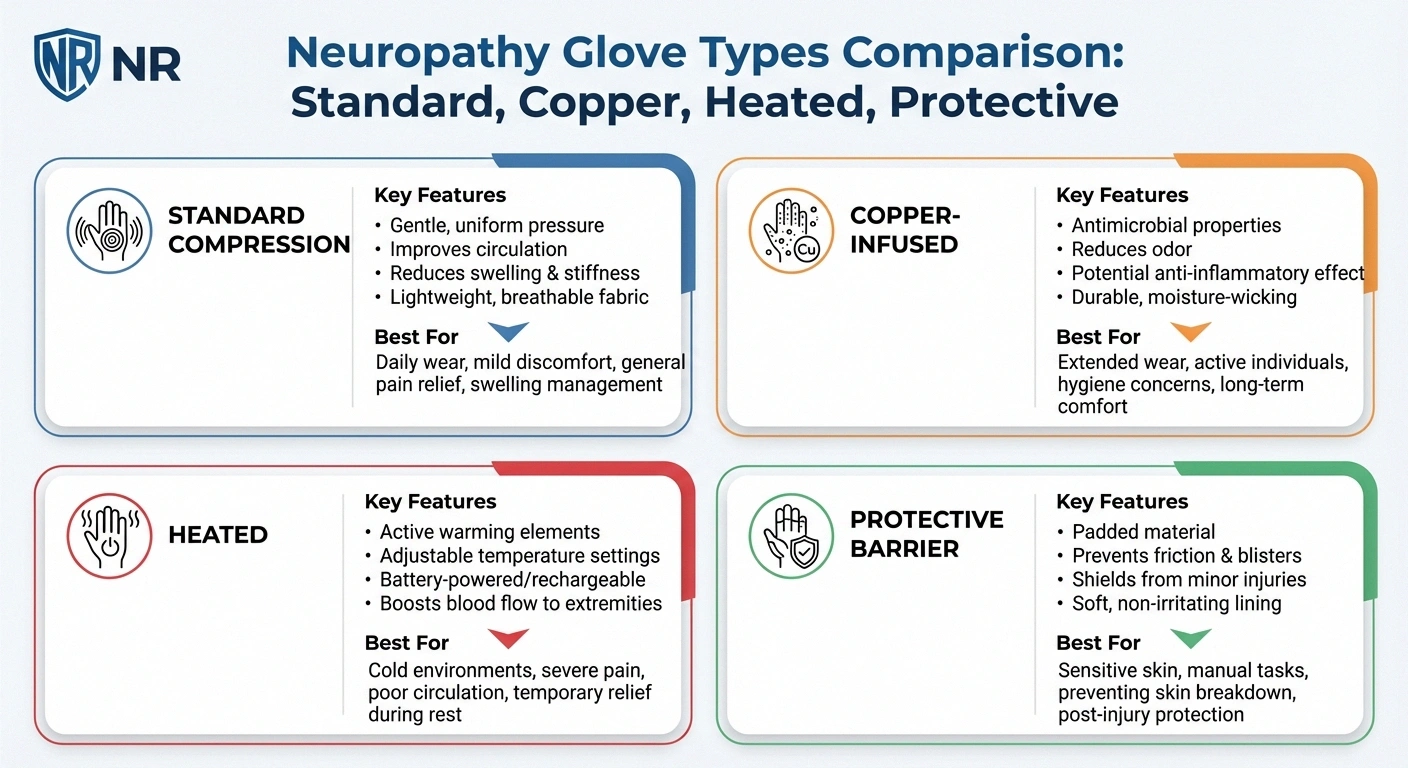
When people say “neuropathy gloves,” they’re actually referring to several different types of gloves, each designed for a different purpose. Understanding the differences helps you choose the right one for your specific symptoms.
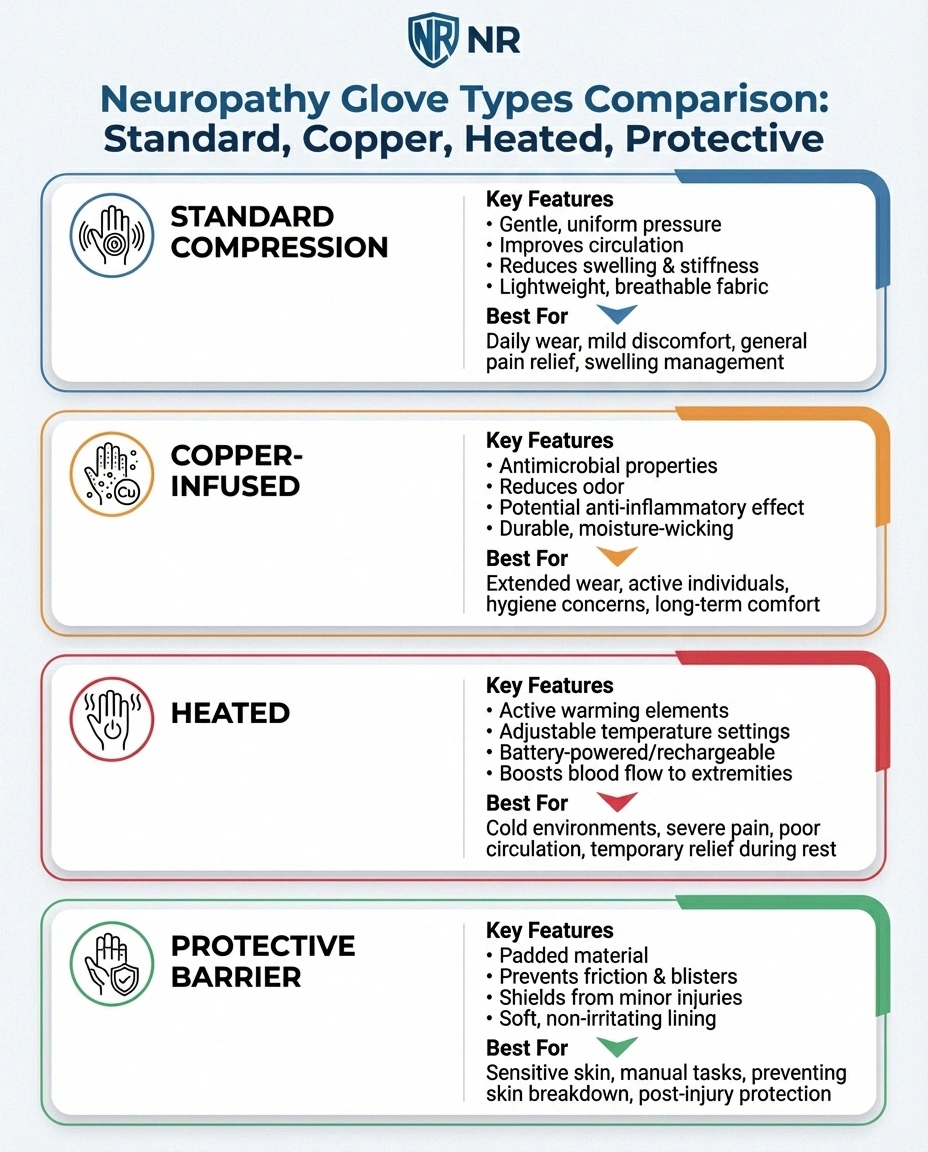
Standard Compression Gloves
These are the most common type. Made from stretchy fabric, they apply uniform pressure across the hand and fingers. Most are fingerless (open-fingertip) to maintain dexterity. Compression levels typically range from 15-20 mmHg for mild support to 20-30 mmHg for moderate compression. For neuropathy, mild to moderate compression (15-20 mmHg) is usually sufficient — too much pressure can restrict blood flow and worsen symptoms.
Copper-Infused Compression Gloves
Brands like Copper Fit and Tommie Copper market gloves infused with copper ions. The claimed benefit is that copper has anti-microbial and anti-inflammatory properties. The reality: a 2014 randomized controlled trial found no significant difference between copper-infused compression gloves and regular compression gloves for arthritis. The compression itself provides the benefit — not the copper. That said, if you like the fit and feel of a copper-infused pair, there’s no harm in wearing them.
Heated Gloves
Electric heated gloves or microwavable hand warmers can be appealing for neuropathy sufferers whose symptoms worsen in cold. However, a critical safety warning: if you have reduced sensation in your hands, heated gloves carry a real burn risk because you may not feel when the temperature becomes dangerously high. If you choose heated gloves, use ones with automatic temperature controls and never fall asleep wearing them.
Protective Barrier Gloves
For people with severe allodynia or hypersensitivity, even air movement across the skin can trigger pain. Barrier gloves like Protexgloves (made by Foxgloves, Inc.) are designed as ultra-thin, seamless protective layers that shield sensitive skin from environmental triggers without significant compression. These aren’t compression gloves in the traditional sense, but they can be invaluable for the subset of neuropathy patients whose primary issue is touch hypersensitivity.
Thermal/Insulated Gloves
Standard winter gloves with soft linings can be effective for neuropathy triggered or worsened by cold. The key features to look for: seamless construction (seams can irritate sensitive skin), soft inner lining (fleece or silk), and a snug-but-not-tight fit. These won’t provide therapeutic compression but address the thermal sensitivity that affects many neuropathy patients.
How to Choose the Right Compression Gloves
Choosing compression gloves when you have neuropathy requires more thought than simply picking the first pair you find online. Your hands are sensitive, and the wrong gloves can make things worse. Here’s what to evaluate:
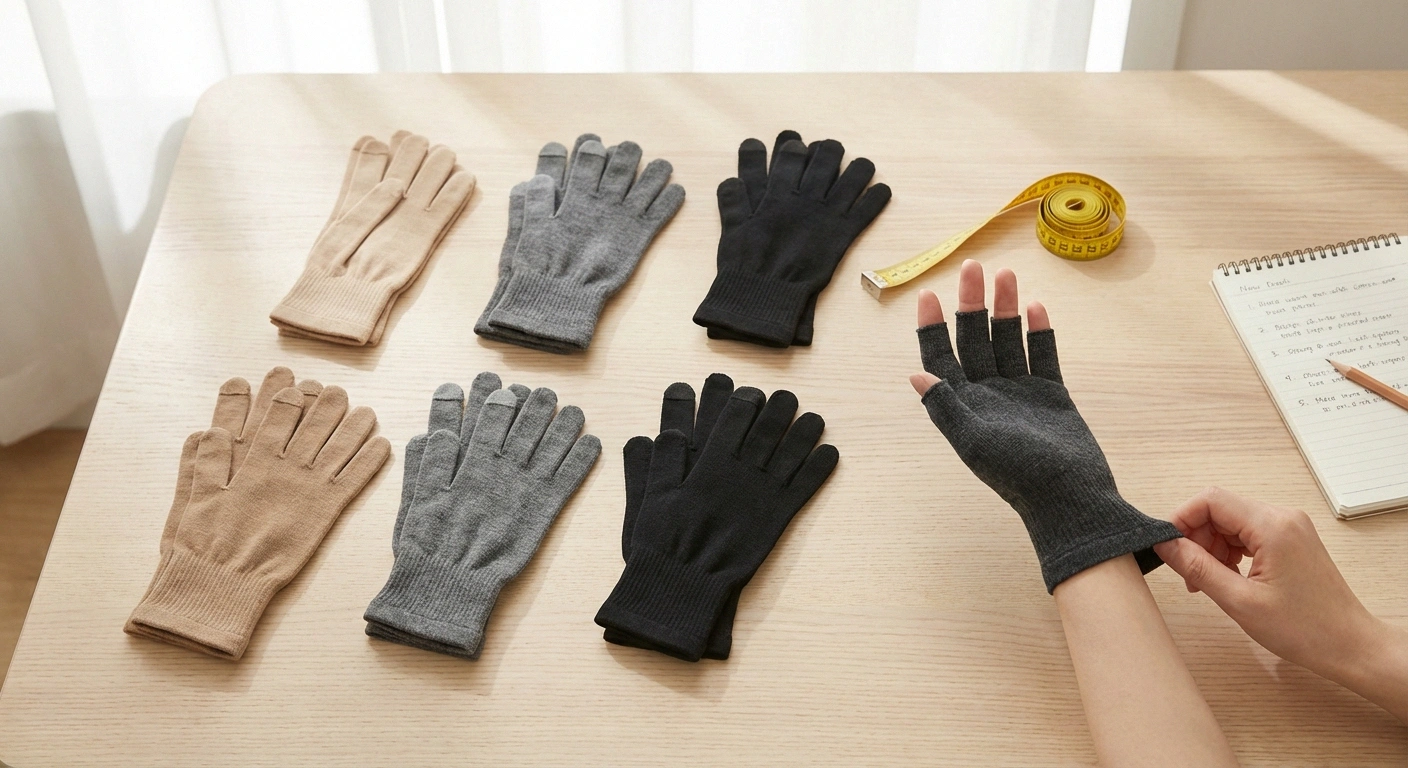
Compression Level
Start with mild compression (15-20 mmHg) unless your doctor recommends otherwise. You can always move up if mild compression isn’t providing enough relief. Avoid heavy compression (30+ mmHg) unless specifically prescribed — excessive pressure can impair circulation, which is counterproductive for nerve health.
Fit and Sizing
Proper fit is crucial. Gloves that are too tight can cut off circulation and worsen numbness. Too loose, and you won’t get any compression benefit. Measure your hand circumference around the widest part of your palm (excluding the thumb) and compare it to the manufacturer’s sizing chart. If you’re between sizes, size up — you can always exchange for a smaller pair, but restricted circulation isn’t worth the risk.
Material and Construction
Look for breathable, moisture-wicking fabrics that won’t trap heat or moisture against your skin. Flat or external seams are essential — raised internal seams can irritate sensitive neuropathic skin and cause friction blisters. Cotton-spandex blends offer the best balance of comfort, breathability, and compression for most people.
Fingerless vs. Full-Finger
Fingerless gloves are the standard recommendation for most daily activities because they preserve dexterity and tactile sensation in your fingertips. Full-finger gloves are better for cold weather protection or overnight wear. If your neuropathy primarily affects your fingertips, full-finger gloves may provide more targeted relief.
Grip Features
Some compression gloves include silicone dots or textured palms for better grip. If you’re frequently dropping objects — a common complaint with hand neuropathy — these grip features can make a meaningful difference in daily activities like cooking, writing, or carrying items.
When and How to Wear Compression Gloves
Getting the most benefit from compression gloves means wearing them strategically, not constantly. Here are evidence-based guidelines:
Duration: Most healthcare providers recommend wearing compression gloves for no more than 8 hours at a time. Extended wear can reduce circulation and cause skin issues. If you want to wear them overnight (many people find this helps morning stiffness), take them off upon waking and give your hands a break.
Best times to wear them: During activities that trigger symptoms (typing, cooking, driving), during cold weather exposure, overnight if morning stiffness and swelling are issues, and during extended periods of hand use.
When to remove them: If you notice increased numbness, color changes in your fingers (white, blue, or purple), increased swelling, or pain that worsens rather than improves, remove the gloves immediately and reassess the fit and compression level.
Care instructions: Hand wash compression gloves in cool water with mild soap and air dry. Machine washing and dryer heat break down the elastic fibers, reducing compression effectiveness over time. Most compression gloves need to be replaced every 3-6 months as the material loses its stretch.
Safety Precautions for Neuropathy Patients
Because neuropathy affects your ability to feel, wearing any hand garment requires extra caution:
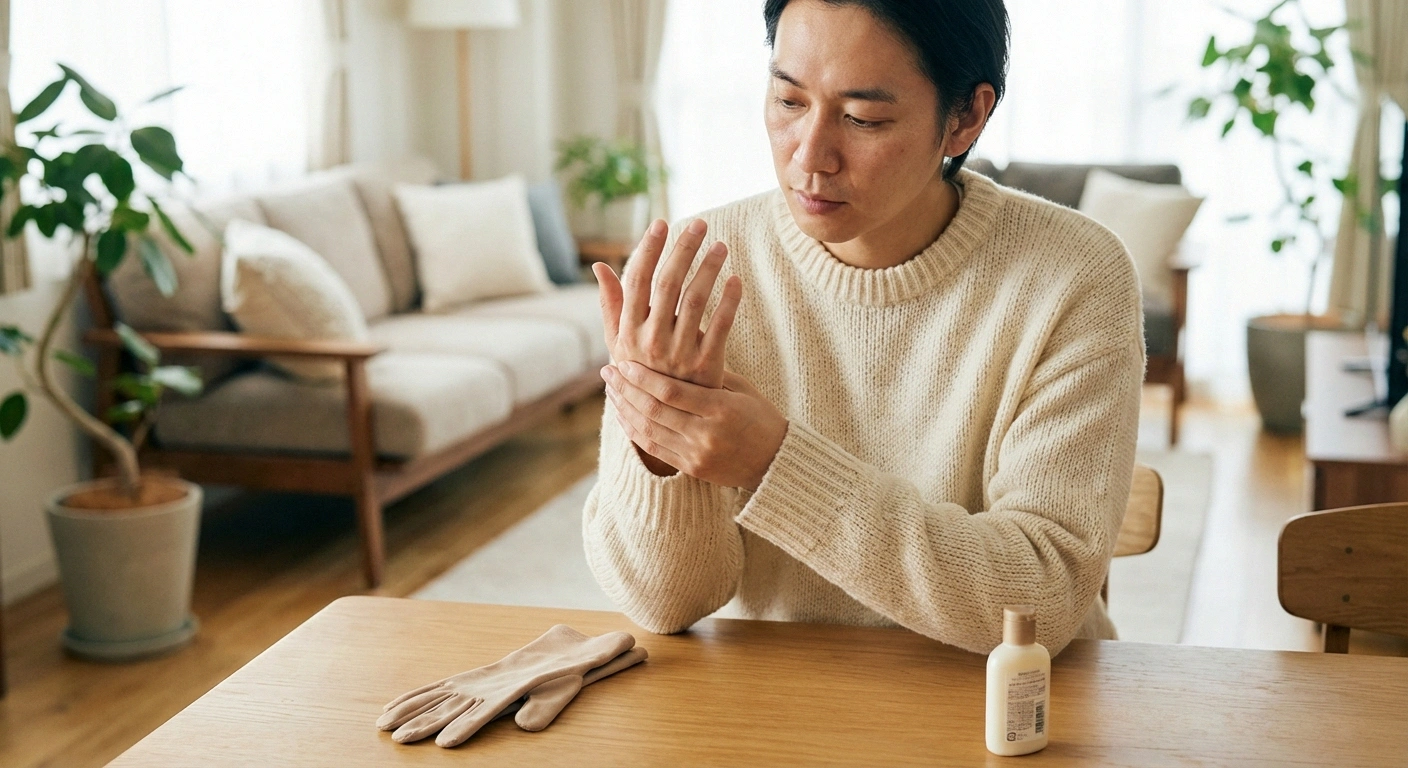
- Check your hands daily — remove gloves and visually inspect your skin for redness, blisters, or pressure marks. With reduced sensation, you may not feel a problem developing until it becomes serious.
- Avoid heated products without temperature controls — if you can’t accurately feel temperature, burns are a real risk. This applies to heated gloves, microwavable warmers, and heating pads. Always use products with automatic shut-off features.
- Watch for allergic reactions — some people with neuropathy also have heightened skin sensitivity. If you notice itching, rash, or increased redness after wearing gloves, try a different material (switch from synthetic to cotton, for example).
- Don’t use compression gloves as a substitute for medical treatment — they’re a comfort tool, not a treatment for the underlying nerve damage. Continue working with your healthcare provider on your overall neuropathy management plan.
- Be cautious with compression if you have peripheral artery disease (PAD) — compression can worsen circulation issues in people with significant arterial disease. Talk to your doctor before starting compression if you have PAD or have been told you have poor arterial circulation.
Compression Gloves vs. Other Hand Neuropathy Treatments
Compression gloves work best as part of a comprehensive approach to managing hand neuropathy, not as a standalone solution. Here’s how they fit alongside other common treatments:
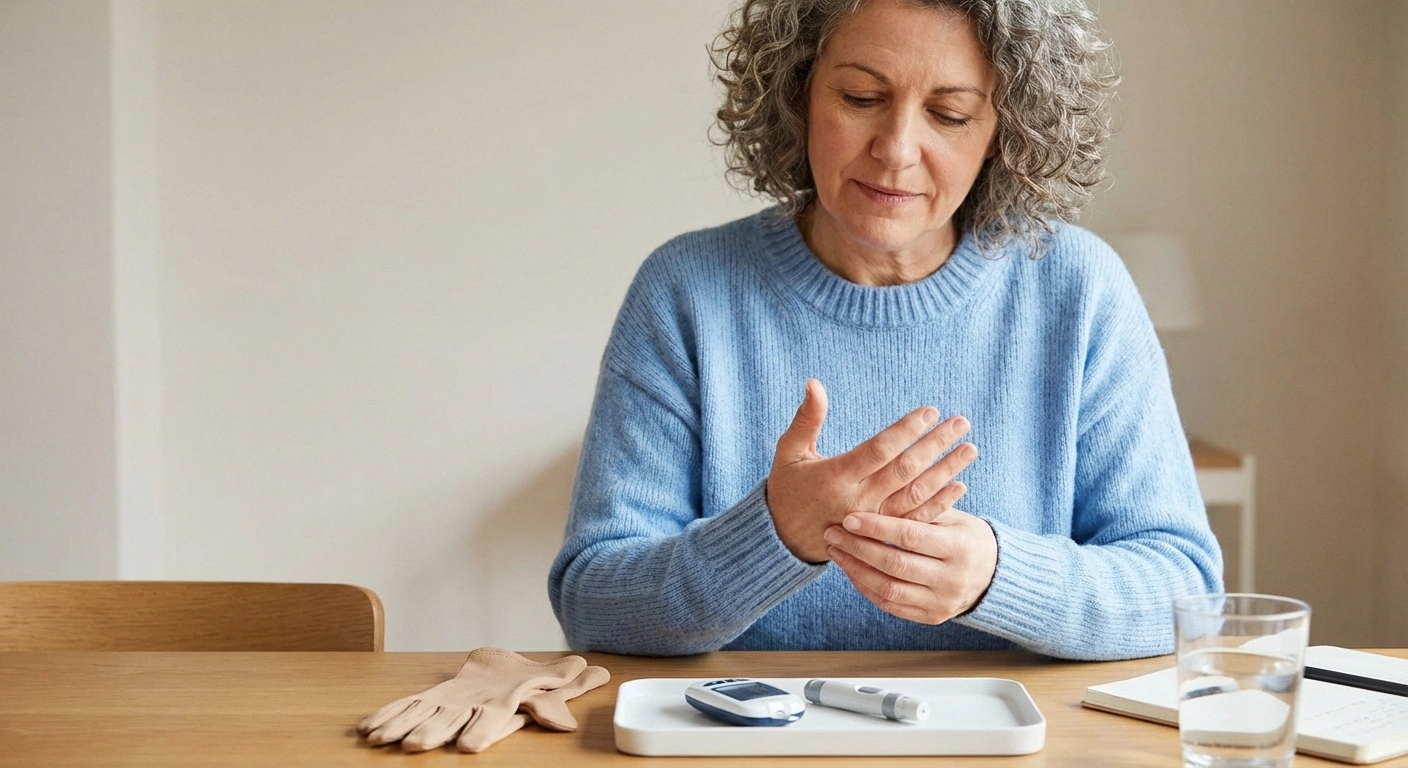
Medications: Prescription medications like gabapentin, pregabalin, or duloxetine address neuropathic pain at the nerve signal level. Compression gloves complement these by providing physical comfort but don’t replace medication when it’s needed.
Topical treatments: Capsaicin cream and lidocaine patches can be applied to hands before putting on compression gloves. The gloves may actually help the topical treatment absorb more effectively by keeping the product in contact with your skin.
Physical and occupational therapy: A hand therapist or occupational therapist can teach you exercises and adaptations specifically for hand neuropathy. Compression gloves may be part of their recommended toolkit.
TENS units: Small TENS devices designed for hands can provide electrical nerve stimulation. Some people alternate between TENS sessions and compression glove wear throughout the day.
What Real Neuropathy Patients Say
After reviewing hundreds of online reviews and community discussions from neuropathy forums and support groups, patterns emerge clearly:

Positive experiences: Many people report that compression gloves reduce the “pins and needles” sensation enough to sleep better, improve grip strength during daily tasks, and provide noticeable relief from cold-triggered symptoms. The most common phrase in positive reviews: “They take the edge off.” That’s a realistic expectation — not a miracle, but enough to matter.
Mixed experiences: Some people find benefit during certain activities (like typing or gardening) but not others. Several reviewers noted that compression helps with swelling but not with burning pain. The takeaway: gloves work best for specific symptom profiles, not universally across all neuropathy symptoms.
Negative experiences: The most common complaints are about fit (too tight, too loose, wrong material) rather than the concept itself. People with severe allodynia sometimes find any compression painful. And a small number report that compression worsens their numbness — a signal that the compression level may be too high or the gloves don’t fit properly.
Tips for Getting Started
If you’re ready to try compression gloves for your hand neuropathy, here’s a practical starting plan:
- Talk to your doctor first — especially if you have diabetes, PAD, or other circulatory conditions. Your healthcare provider can recommend an appropriate compression level.
- Start with an affordable pair — don’t invest in expensive gloves before you know if compression works for you. Try a basic pair in the $10-15 range first.
- Measure carefully — use a flexible tape measure around the widest part of your palm. Compare to the manufacturer’s size chart and size up if you’re between sizes.
- Wear them for short periods initially — start with 2-3 hours and gradually increase. Monitor your hands for any adverse reactions.
- Give it 1-2 weeks — some people notice relief immediately, but for others it takes consistent daily wear over a week or two to feel a difference.
- Buy two pairs — having a second pair means you always have a clean, dry pair available while the other is being washed.
Frequently Asked Questions
Can compression gloves reverse neuropathy damage?
No. Compression gloves are a symptom management tool, not a treatment for the underlying nerve damage. They may help improve comfort and function, but they cannot repair damaged nerves. Addressing the root cause of your neuropathy with your doctor remains essential for any chance of nerve recovery.
How tight should compression gloves be for neuropathy?
Compression gloves should feel snug but not uncomfortable. You should be able to make a full fist and move all your fingers freely. If the gloves leave deep indentations on your skin, restrict finger movement, or cause your fingertips to turn white or blue, they are too tight. Start with mild compression of 15 to 20 mmHg and adjust from there.
Can I sleep in compression gloves?
Many people with neuropathy find that wearing compression gloves overnight reduces morning stiffness and swelling. However, limit overnight wear to 8 hours and remove them upon waking. If you notice increased numbness or color changes in your fingers during the night, stop wearing them while sleeping and consult your doctor.
Do copper compression gloves work better than regular ones?
Clinical research has not found a significant difference between copper-infused and regular compression gloves. The compression itself provides the primary benefit, not the copper content. Choose based on comfort, fit, and quality rather than copper marketing claims.
Are compression gloves safe for diabetic neuropathy?
Generally yes, but with precautions. People with diabetes should check their hands daily for skin breakdown, ensure the compression level is not too tight, and consult their doctor first, especially if they also have peripheral artery disease. The improved circulation from mild compression may actually benefit diabetic neuropathy, but proper fit is critical.
How long do compression gloves last?
Most compression gloves maintain effective compression for 3 to 6 months with regular use. After that, the elastic fibers stretch out and the compression decreases. Hand washing in cool water and air drying extends their lifespan, while machine washing and heat drying accelerate wear.
The Bottom Line on Compression Gloves for Neuropathy
Compression gloves aren’t a cure for hand neuropathy, and no honest guide should claim otherwise. But for many people living with tingling, numbness, swelling, and cold sensitivity in their hands, they’re a simple, affordable tool that can genuinely improve daily comfort and function.
The key is realistic expectations. Compression gloves may help “take the edge off” your symptoms, improve your grip strength, and make activities like typing, cooking, and crafting more manageable. They work best as part of a broader neuropathy management plan that includes medical treatment, regular movement, and ongoing communication with your healthcare team.
Start with an affordable pair, measure carefully, and give them an honest trial of a week or two. Your hands deserve every bit of relief you can find — even if it comes from something as simple as a well-fitting glove.
About the Author