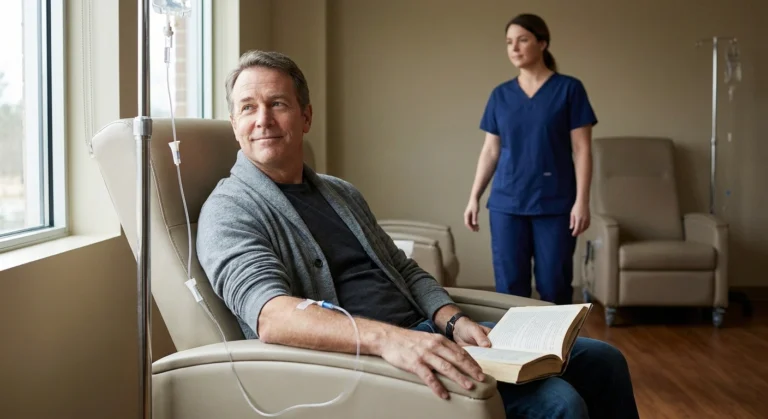
I get this question more than almost any other: “Are there any new treatments coming for neuropathy?” The answer is yes — dozens of potential treatments are in clinical trials right now, from nerve regeneration therapies to novel pain medications to gene-based approaches. But most people with neuropathy don't know these trials exist, let alone how to find one they might qualify for.
Clinical trials aren't a last resort. They're a way to access cutting-edge treatments before they're widely available, contribute to science that helps everyone with neuropathy, and often receive care at no cost. Here's everything you need to know about finding, evaluating, and joining a neuropathy clinical trial.
What Are Clinical Trials and Why Do They Matter for Neuropathy?
Clinical trials are carefully designed research studies that test new treatments in human volunteers. Every medication you've ever taken — gabapentin, pregabalin, duloxetine — went through this process before it reached your pharmacy.
For neuropathy specifically, clinical trials are critical because current treatments are limited. Existing medications manage symptoms but don't address the underlying nerve damage. The next generation of neuropathy treatments — including therapies that may actually repair damaged nerves — are in clinical trials right now. According to the Foundation for Peripheral Neuropathy, under-enrollment is one of the greatest challenges in neuropathy research: 85% of clinical trials finish late due to difficulty finding participants, and nearly one-third never recruit a single subject.
That means treatments that could help millions of people with neuropathy may be delayed — or abandoned entirely — simply because not enough patients knew the studies existed.
Understanding Clinical Trial Phases
Not all clinical trials are the same. They progress through four phases, and understanding these helps you evaluate the potential benefits and risks of any trial you're considering.
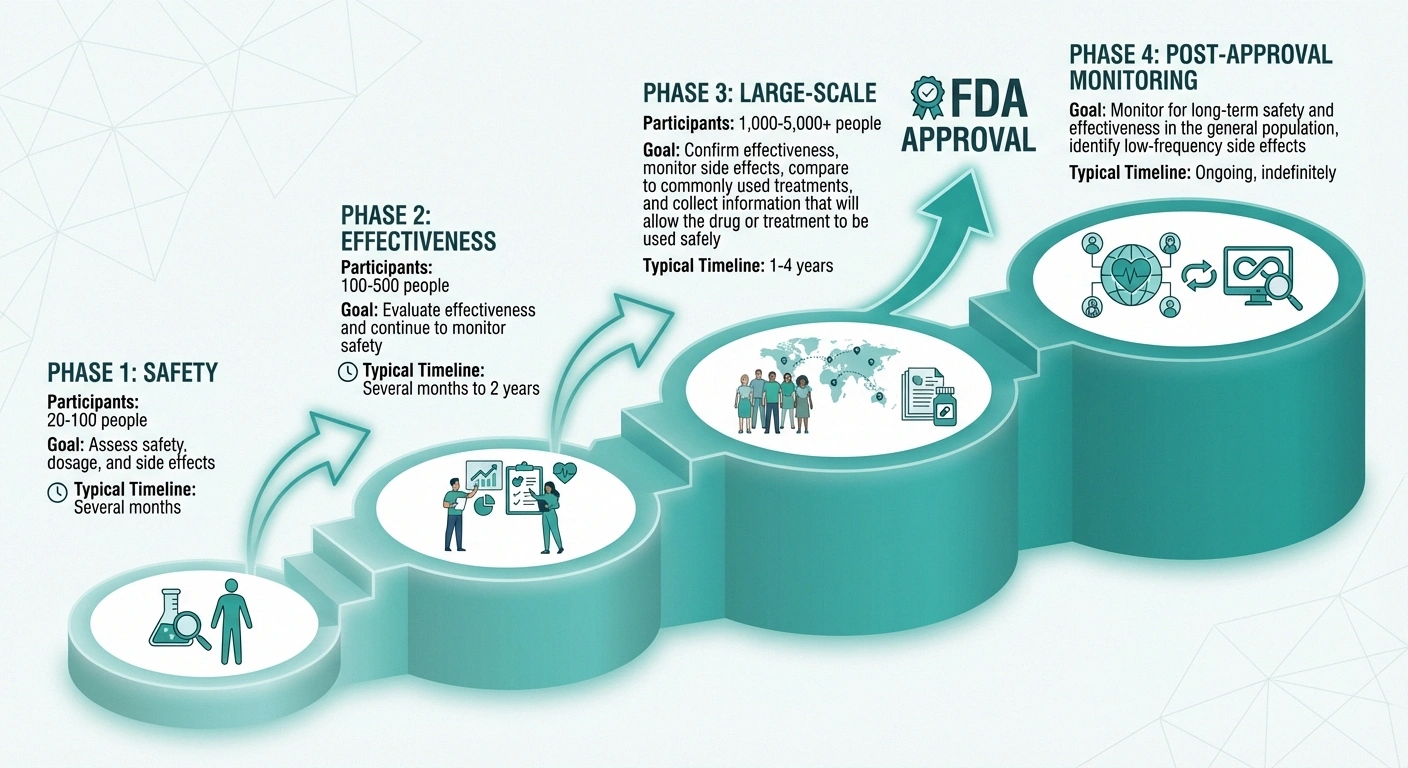
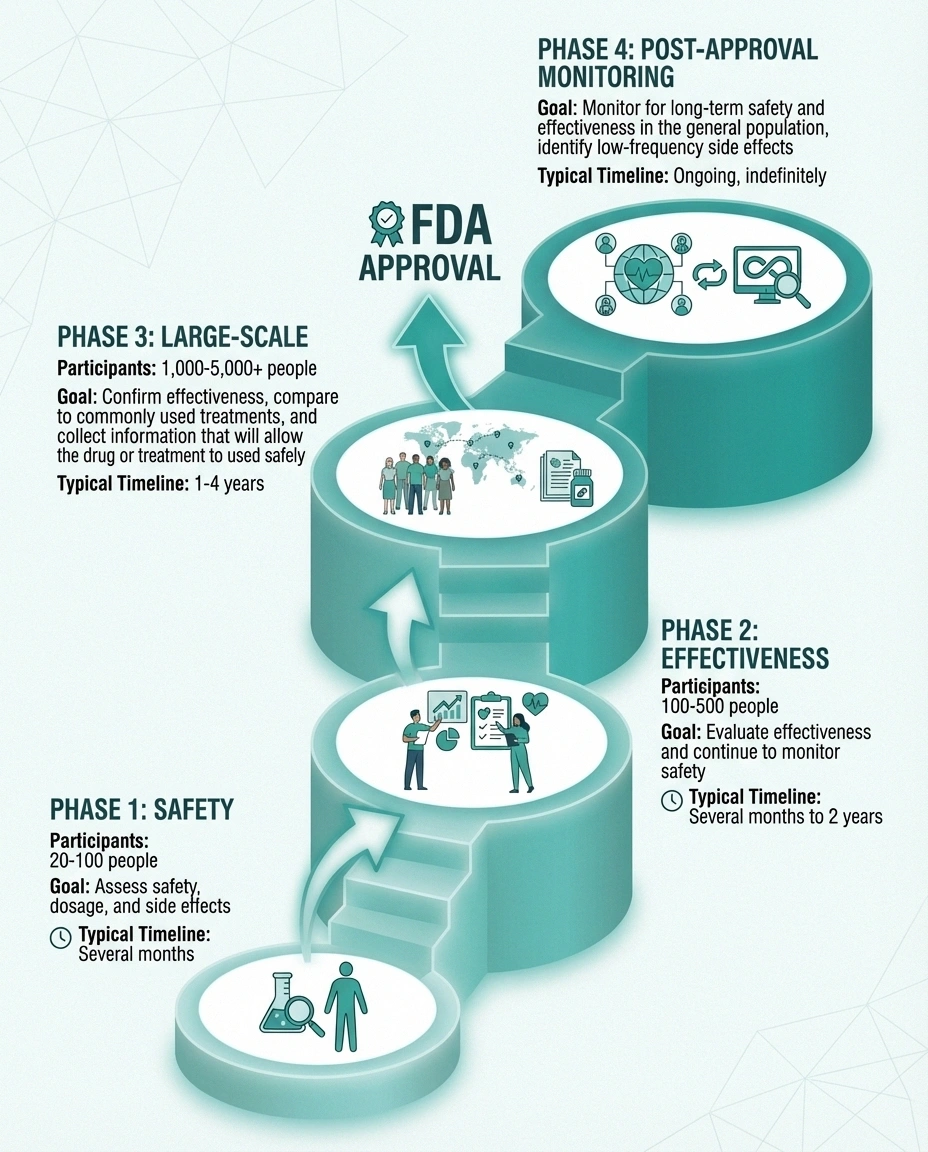
Phase 2: Does it work? (100-500 people)
Phase 3: Does it work at scale? (1,000-5,000+ people) → FDA decision
Phase 4: Long-term monitoring (post-approval)
Phase 1 trials test a new treatment in a small group (typically 20-100 people) for the first time. The primary goal is safety — determining safe dosage ranges and identifying side effects. These are the earliest stage and carry the most uncertainty. Participants are often healthy volunteers, though some Phase 1 neuropathy trials enroll patients directly.
Phase 2 trials expand to 100-500 patients and begin evaluating effectiveness. Does the treatment actually reduce neuropathy symptoms? Researchers also refine dosing and continue monitoring safety. Many Phase 2 trials compare the new treatment against a placebo or standard care.
Phase 3 trials are the large-scale studies — 1,000 to 5,000 or more patients across multiple sites. These generate the data that regulatory agencies like the FDA use to decide whether to approve a treatment. Phase 3 trials typically compare the new treatment to the current standard of care or placebo in a randomized, controlled design.
Phase 4 trials happen after a treatment is already FDA-approved. They study long-term effects, rare side effects, and effectiveness in broader populations. These carry the least risk since the treatment is already approved.
What Types of Neuropathy Trials Are Happening Now?
The current landscape of neuropathy research is broader than most patients realize. Here are the major categories of active trials:
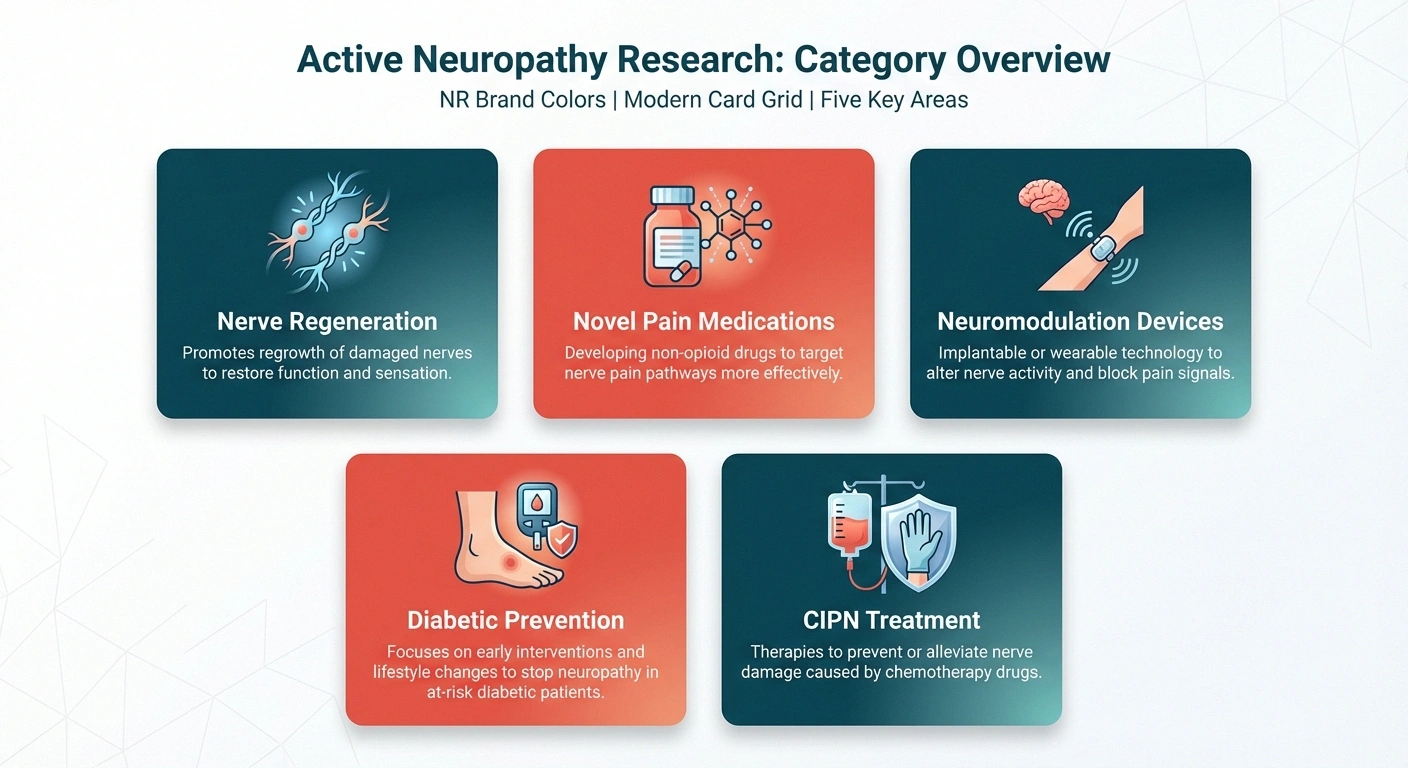
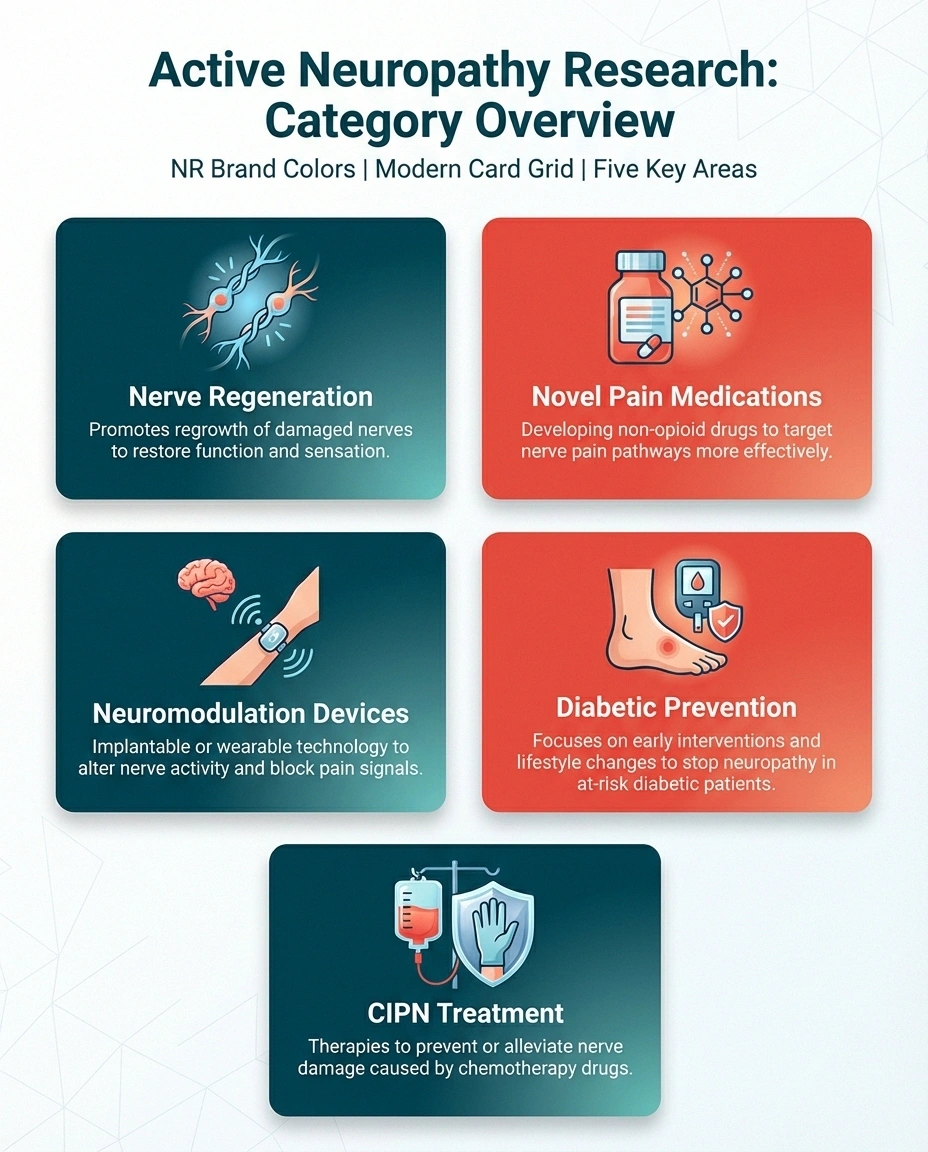
Nerve regeneration and repair: Several companies are testing compounds that may stimulate nerve regrowth. WinSanTor, a clinical-stage biotech company, is running trials on WST-057, which targets the enzyme that drives nerve degeneration. These trials are particularly exciting because they aim to fix the underlying damage rather than just masking pain.
Novel pain medications: New medications targeting specific pain pathways — sodium channel blockers, CGRP inhibitors, and nerve growth factor modulators — are in various trial phases. These aim to provide better pain relief with fewer side effects than current options.
Neuromodulation devices: Trials for advanced nerve stimulation devices, scrambler therapy, and other non-drug approaches are actively recruiting. These use electrical or magnetic stimulation to change how nerves transmit pain signals.
Diabetic neuropathy prevention: Some trials focus on preventing neuropathy from developing or progressing in people with diabetes, testing interventions ranging from intensive glucose control protocols to neuroprotective compounds.
Chemotherapy-induced neuropathy: Cancer centers are running numerous trials aimed at preventing or treating CIPN, including cryotherapy during infusion, neuroprotective supplements, and post-treatment rehabilitation protocols.
How to Find Neuropathy Clinical Trials
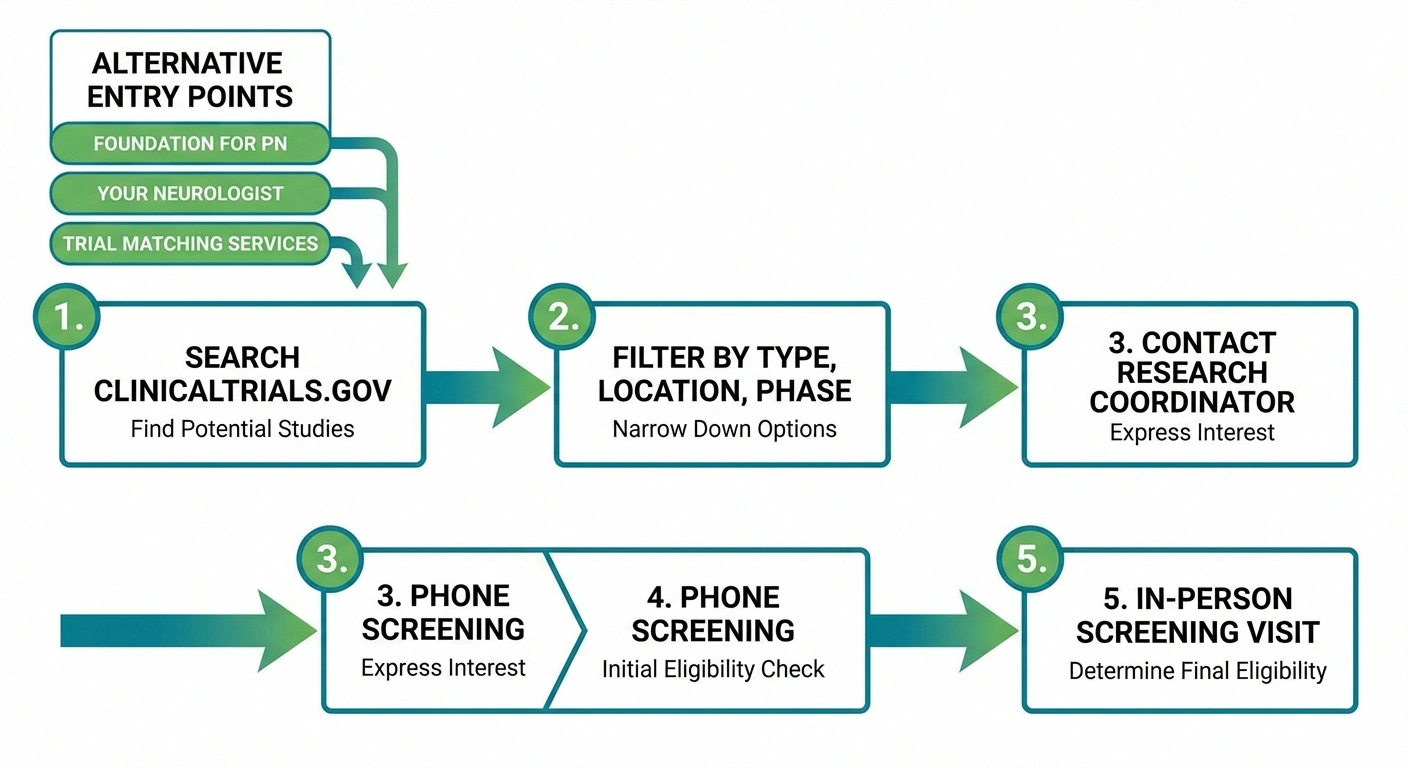
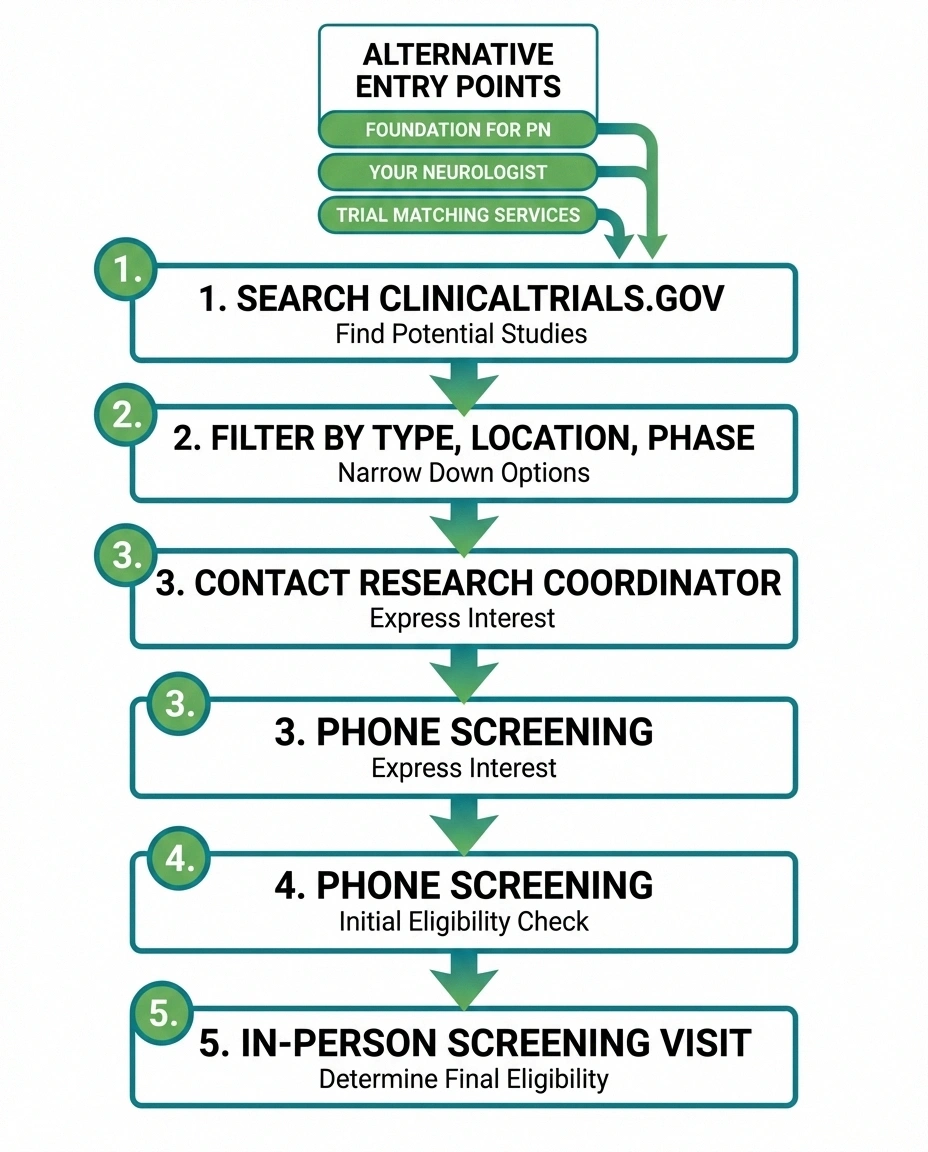
Finding relevant trials requires knowing where to look and how to filter results. Here are the most reliable resources:
2. Foundation for Peripheral Neuropathy — Connects patients with active PN studies
3. Academic Medical Centers — Mayo Clinic, Johns Hopkins, Cleveland Clinic list current studies
4. Your Neurologist — May know about locally recruiting trials
5. Trial Matching Services — WithPower, CenterWatch, Antidote match you to trials
ClinicalTrials.gov
This is the primary database — a registry maintained by the National Institutes of Health (NIH) that lists virtually every clinical trial conducted in the United States and many international trials. Go to ClinicalTrials.gov, type “peripheral neuropathy” in the search bar, and filter by:
- Status: “Recruiting” or “Not yet recruiting” (these are the ones accepting new participants)
- Location: Your state or city (many trials are site-specific)
- Phase: Choose Phase 2 or 3 for the best balance of safety data and potential effectiveness
- Age/Sex: Filter to match your demographics
Each listing includes a plain-language summary, eligibility criteria, study locations, and contact information for the research team.
The Foundation for Peripheral Neuropathy
The Foundation helps connect neuropathy patients with active trials and maintains a registry of patients interested in research participation. They often post about new trials in their newsletters and on their website.
Academic Medical Centers
Major research hospitals — Mayo Clinic, Johns Hopkins, Massachusetts General, Cleveland Clinic, University of Michigan — run many neuropathy trials. Their neurology or pain management departments often list current studies on their websites. If you're near a teaching hospital, call their research coordinator directly.
Your Neurologist
Your doctor may know about trials recruiting locally — especially if they're affiliated with a research institution. Ask directly: “Are there any clinical trials for my type of neuropathy that I might qualify for?” If they don't know of any, ask if they'd be willing to check ClinicalTrials.gov with you at your next appointment. For tips on having this conversation, see our guide on talking to your doctor about neuropathy.
Trial Matching Services
Websites like WithPower, CenterWatch, and Antidote match patients to trials based on their medical profile. You enter your condition details and location, and the platform identifies trials you may qualify for. These can surface trials you might miss searching ClinicalTrials.gov on your own.
Eligibility: Will You Qualify?
Every clinical trial has specific inclusion and exclusion criteria — rules about who can and can't participate. These aren't arbitrary; they're designed to ensure the study measures what it intends to measure and that participants are safe.
Common inclusion criteria for neuropathy trials:
- Confirmed diagnosis of peripheral neuropathy (usually via EMG/NCS or clinical exam)
- Specific neuropathy type (diabetic, CIPN, idiopathic, etc.)
- Minimum pain level on a standardized scale
- Age range (many require 18+ or target specific age groups)
- Stable medication regimen for a specified period
Common exclusion criteria:
- Certain other medical conditions (cancer, severe kidney disease, certain autoimmune disorders)
- Current use of specific medications that could confound results
- Recent surgery or other medical procedures
- Pregnancy or plans to become pregnant
- Participation in another clinical trial within a specified timeframe
Don't self-exclude based on the criteria listed online. Research coordinators often have flexibility, and criteria can be updated during a trial. If a study interests you, contact the research team and let them determine eligibility. The worst that happens is they say no.
What Happens When You Join a Trial
The process follows a predictable path, though details vary by study:
Step 1: Initial contact. You reach out to the research team (or they contact you through a matching service). A coordinator conducts a phone screening to see if you're a potential fit.
Step 2: Screening visit. If the phone screen goes well, you visit the research site for a thorough evaluation. This often includes a physical exam, blood work, nerve testing, and a detailed medical history review. This visit determines final eligibility.
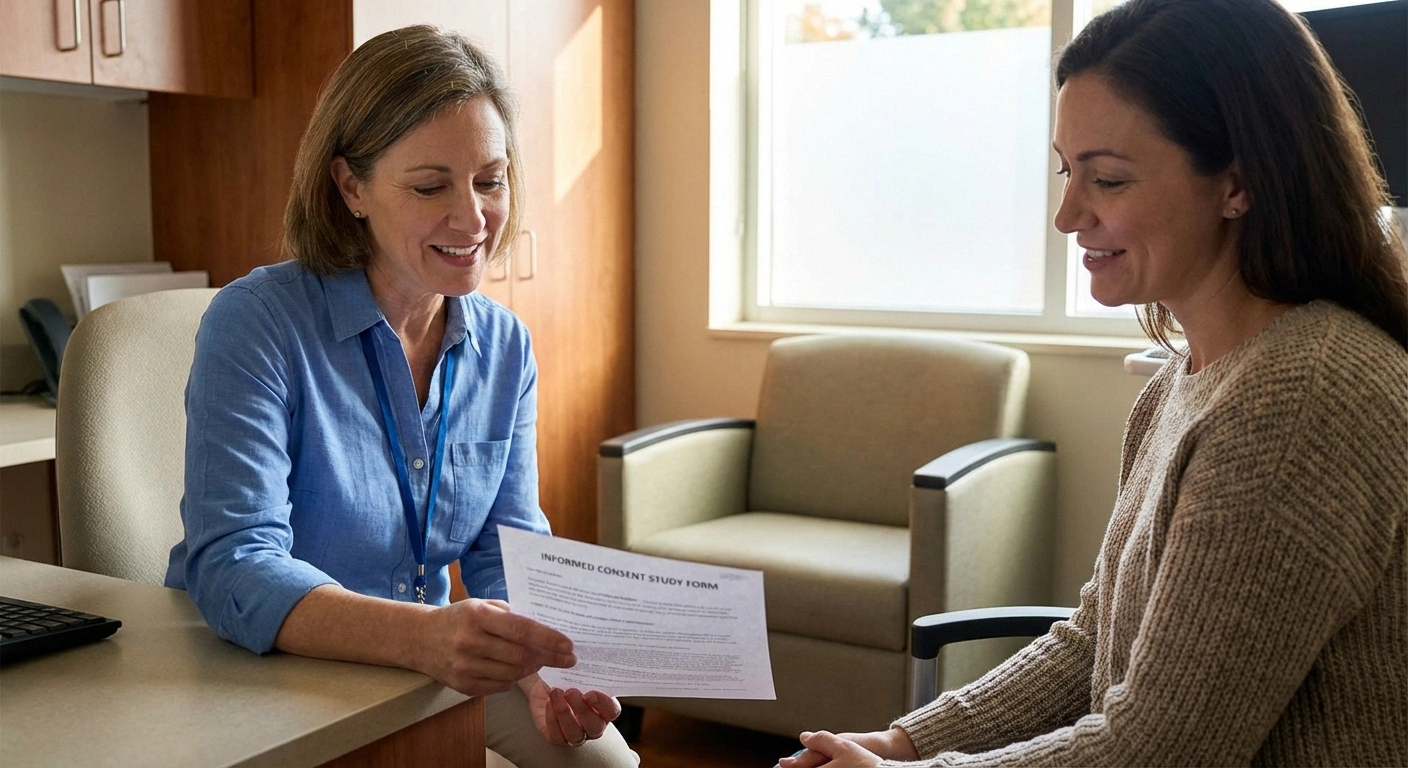
Step 3: Informed consent. Before any treatment begins, you receive a detailed informed consent document explaining the study purpose, procedures, potential risks and benefits, your rights, and what happens if you want to withdraw. Take this home, read it carefully, and ask questions. You're never pressured to sign.
Step 4: Randomization. In controlled trials, a computer randomly assigns you to either the treatment group or the control group. In “blinded” studies, neither you nor your doctor knows which group you're in — this prevents expectations from influencing results.
Step 5: Treatment period. You receive the study treatment (or placebo) according to the trial protocol. You'll have regular check-ins — sometimes weekly, sometimes monthly — where researchers assess your symptoms, monitor safety, and collect data.
Step 6: Follow-up. After the treatment period ends, most trials include follow-up visits to track lasting effects. Some trials offer an “open-label extension” where all participants can receive the active treatment.
Benefits and Risks of Participating
Potential benefits:
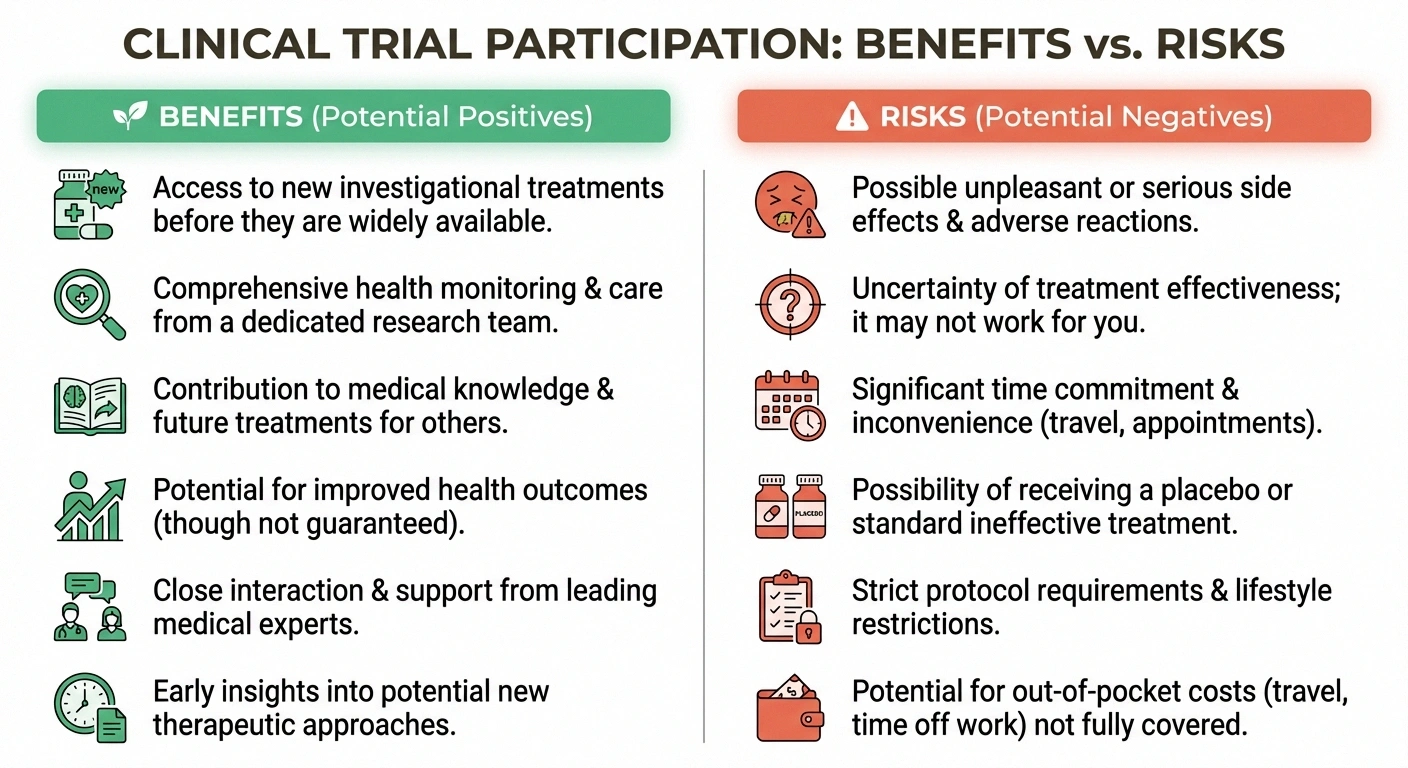
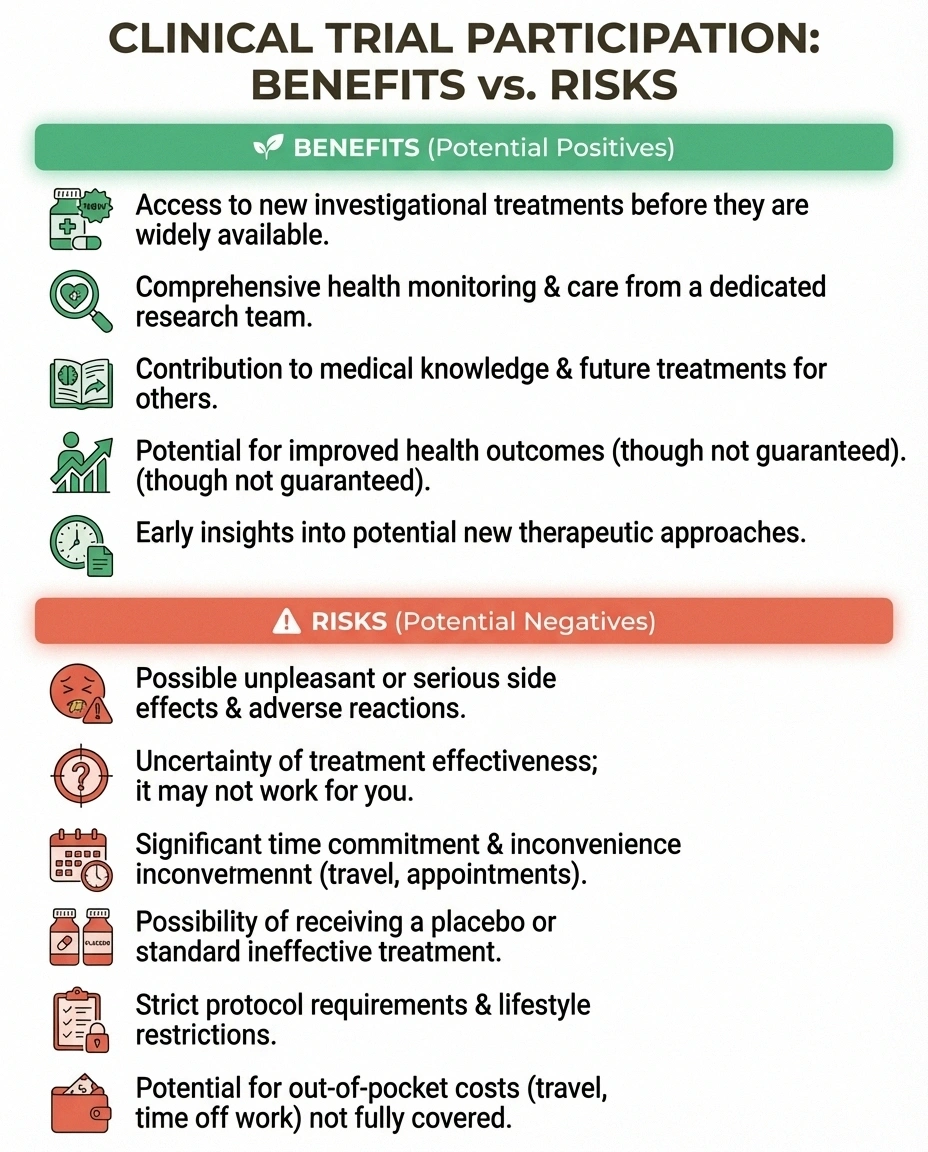
- Access to treatments not yet available to the public
- Expert medical care from specialized research teams, often at no cost
- Comprehensive monitoring that may catch other health issues
- Contributing to research that could help millions of neuropathy patients
- Some trials provide compensation for time and travel
- Opportunity to be more actively involved in your own treatment
Potential risks:
- The treatment may not work for you
- You may receive a placebo instead of the active treatment
- Unknown or unexpected side effects are possible, especially in earlier-phase trials
- Time commitment for visits and procedures
- Travel to research sites (though some trials cover costs)
- Emotional disappointment if the treatment doesn't help
Safety protections are extensive. Every trial is overseen by an Institutional Review Board (IRB) — an independent committee that reviews the study design and monitors participant safety. Data Safety Monitoring Boards (DSMBs) can pause or stop trials if safety concerns emerge. And you can withdraw from any trial at any time, for any reason, without penalty.
Questions to Ask Before Enrolling
Before committing to any trial, get clear answers to these questions:
☑️ Understand which phase the trial is in
☑️ Know the chance of receiving placebo vs. active treatment
☑️ Reviewed all known risks and side effects
☑️ Confirmed time commitment and visit schedule
☑️ Clarified any costs vs. what's covered
☑️ Asked about post-trial access to treatment
☑️ Discussed with your regular neurologist
☑️ Read and understood the informed consent document
- What is the purpose of this study, and what phase is it in?
- What treatment will I receive, and what's the chance I'll get a placebo?
- What are the known risks and side effects so far?
- How long is the study, and how many visits are required?
- Will I need to stop any current medications?
- Are there costs to me, or is everything covered?
- Will I have access to the treatment after the trial ends if it works?
- What happens if I experience side effects during the study?
- Who do I contact if I have problems outside of scheduled visits?
- How will my privacy and medical information be protected?
A good research team welcomes these questions. If they seem impatient or dismissive, consider that a red flag. For more on communicating with medical professionals, see our guide to questions to ask before starting neuropathy treatment.
Common Concerns and Misconceptions
“I'll be a guinea pig.” Modern clinical trials have extensive safety protocols. Every trial is reviewed by an ethics board, monitored by safety committees, and regulated by the FDA. You're a volunteer with rights, not a test subject without recourse.
“I might get a sugar pill.” Some trials use placebos, but many don't — they compare a new treatment to the current standard of care, meaning you'll receive proven treatment either way. Even in placebo-controlled trials, you receive the same level of medical monitoring and care as the treatment group. And many trials offer the active treatment to all participants after the blinded phase ends.
“My current doctor won't approve.” Most neurologists support clinical trial participation. They understand that advancing treatment requires research volunteers. Your trial team will communicate with your regular healthcare providers to ensure coordinated care.
“It's too much of a time commitment.” Trial demands vary enormously. Some require weekly in-person visits; others involve monthly check-ins with home-based assessments. Many now incorporate telehealth visits. Ask about the specific schedule before deciding.
Frequently Asked Questions
Do I have to pay to participate in a clinical trial?
In most clinical trials, the study treatment, tests, and related medical care are provided at no cost to participants. Some trials also cover travel expenses and provide compensation for your time. However, routine care costs that you would incur anyway may still be billed to your insurance. The informed consent document will clearly outline any potential costs before you commit.
Can I leave a clinical trial if I change my mind?
Yes, absolutely. Participation is always voluntary. You can withdraw from a clinical trial at any time, for any reason, without it affecting your regular medical care. The research team may ask why you're leaving for their records, but you're never required to continue.
Will a clinical trial interfere with my current neuropathy medications?
Some trials require you to stop certain medications during the study period, while others allow you to continue your current regimen. This is always clearly stated in the eligibility criteria and informed consent. Never stop medications without discussing it with both the research team and your regular doctor.
How do I know if a clinical trial is legitimate?
Legitimate trials are registered on ClinicalTrials.gov, have an IRB approval number, are affiliated with a recognized institution, and never ask participants to pay for the experimental treatment. Be cautious of studies advertised primarily on social media that lack these credentials.
What neuropathy treatments are closest to being approved?
Treatments in Phase 3 trials are closest to potential FDA approval. As of 2026, several nerve regeneration compounds, novel sodium channel blockers, and advanced neuromodulation devices are in late-stage trials for various types of peripheral neuropathy. The timeline from Phase 3 completion to FDA approval is typically 1-2 years.
Can I participate if I have idiopathic neuropathy with no known cause?
Yes. While many trials focus on specific neuropathy types like diabetic or chemotherapy-induced, some studies specifically recruit patients with idiopathic neuropathy. Others accept patients regardless of cause, focusing instead on symptom management. Search ClinicalTrials.gov with “idiopathic neuropathy” to find relevant studies.
Taking the First Step
If current treatments aren't adequately managing your neuropathy, clinical trials offer a legitimate path to potentially better options — and a chance to help advance the science that will benefit everyone living with nerve damage.
Step 2: Filter to “Recruiting” studies in your state
Step 3: Read 2-3 listings to get familiar with the format
Step 4: Bring your findings to your next neurology appointment
The treatments that may eventually reverse neuropathy are being tested right now. They need participants.
Start with ClinicalTrials.gov. Search for your specific neuropathy type, filter to recruiting studies in your area, and read through a few listings to get comfortable with the format. Then bring what you find to your next neurology appointment and ask your doctor's opinion.
The treatments that may eventually control or reverse neuropathy are being tested right now. They need participants. And one of those participants could be you. Browse all our treatment guides for more options in the meantime.
About the Author