
In 1983, a trial split about fourteen hundred people with type 1 diabetes into two groups.
One group got the standard care of the day. The other got intensive management, aiming their blood sugar as close to normal as could be done safely. The trial ran a mean of six and a half years, and the results were emphatic enough to stop it early: the tightly managed group developed markedly less eye, kidney and nerve damage, with risk reductions running from roughly a third to three quarters depending on the complication.
Then the trial ended, everyone went back to ordinary care — and something quietly remarkable happened.
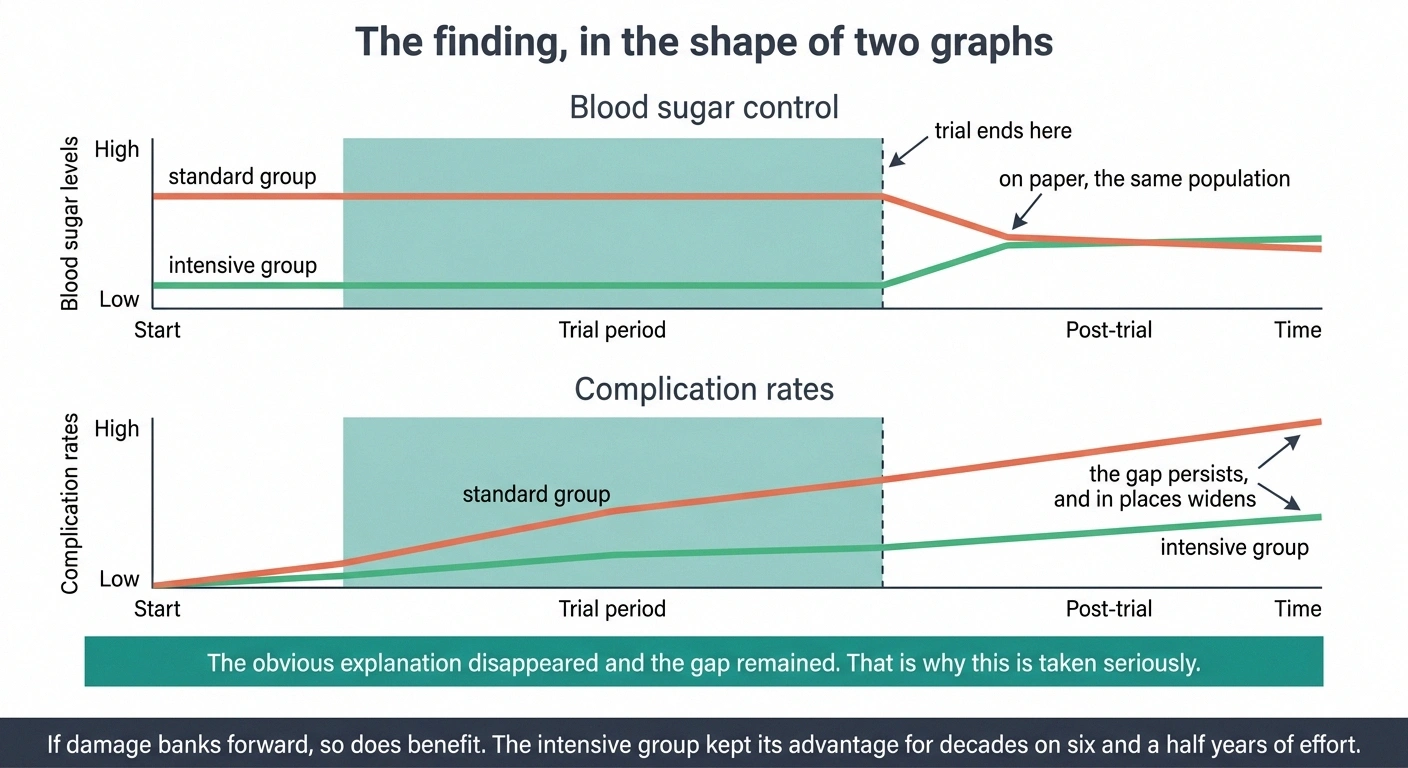
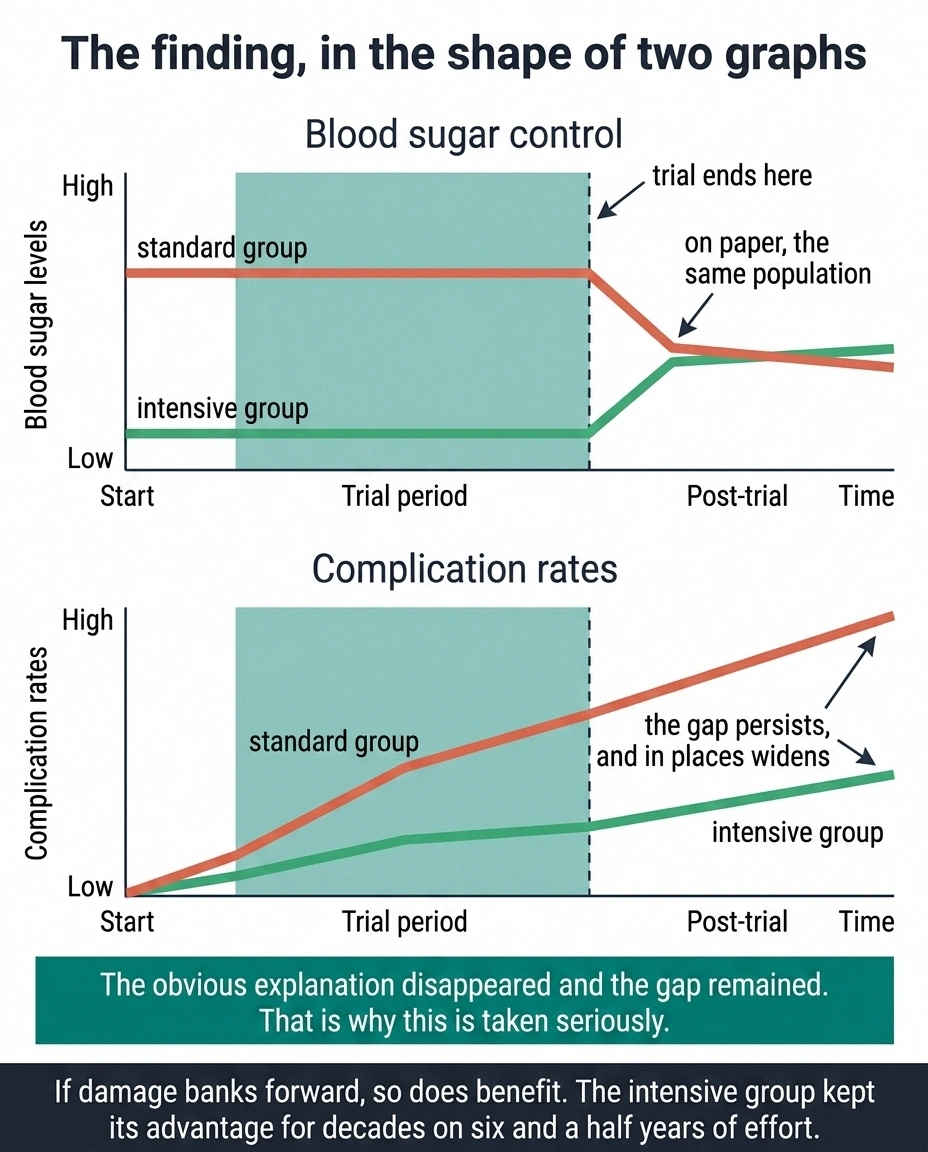
Within a few years, the two groups’ A1c numbers had converged. On paper they’d become the same population. But their complication rates didn’t converge. The group that had spent those six and a half years in tight control kept doing better, year after year, long after their glucose numbers had stopped being any different. And the gap between the groups didn’t just persist. In places, it widened.
The investigators needed a name for that. They called it metabolic memory.
What Metabolic Memory Actually Means
Strip out the machinery and the claim is simple. Your body keeps a record of the blood sugar you used to have — and that record keeps influencing your risk long after the numbers on your meter have changed.
These are the figures the concept is built on. Worth knowing if anyone ever tries to sell you something on the strength of the term.
It runs in both directions, which is the part that usually gets lost. A stretch of high blood sugar raises your long-term risk of complications even after control improves. A stretch of good control lowers your long-term risk even if control later slips. The past does not get erased by the present in either direction.
Two large studies arrived at this from opposite ends of the disease. The type 1 trial above, DCCT, and its long follow-up study, EDIC, produced the term metabolic memory. A separate British trial in type 2 diabetes, UKPDS, found the same phenomenon in its own post-trial follow-up and named it the legacy effect. Different populations, different researchers, same finding.
That second study is the one that matters for most people reading this, since the large majority of diabetic neuropathy arises from type 2 diabetes. Plenty of articles cite DCCT without mentioning it enrolled only people with type 1 — a small sloppiness with real consequences for whether you think the finding applies to you. It does. It was demonstrated separately in your population.
It’s worth pausing on why the evidence here is unusually solid, because “your body remembers” is exactly the kind of phrase that shows up in supplement copy with nothing behind it. The strength comes from the shape of what happened. Two groups were randomly assigned, so they didn’t differ systematically at the start. Their glucose control then converged, removing the obvious explanation for any later difference. And their outcomes diverged anyway, over decades, in a follow-up nobody had to massage. When the thing you’d expect to explain a gap disappears and the gap persists regardless, you’re looking at something real rather than a statistical artifact.
How a Cell Remembers
“Memory” is a metaphor, and a decent one, but nothing here involves the brain. What it describes is a set of changes inside your cells that outlast the conditions that created them.
Researchers have converged on three overlapping mechanisms.
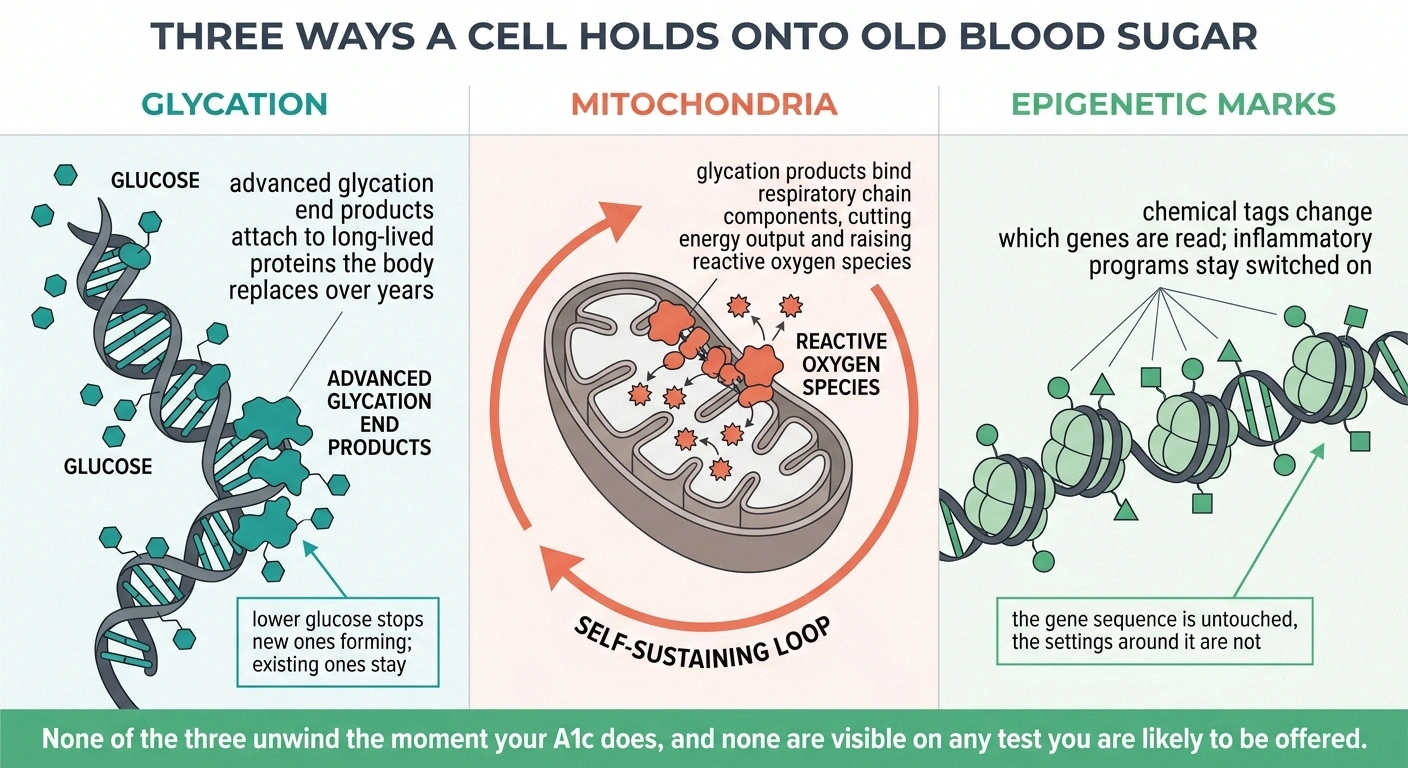
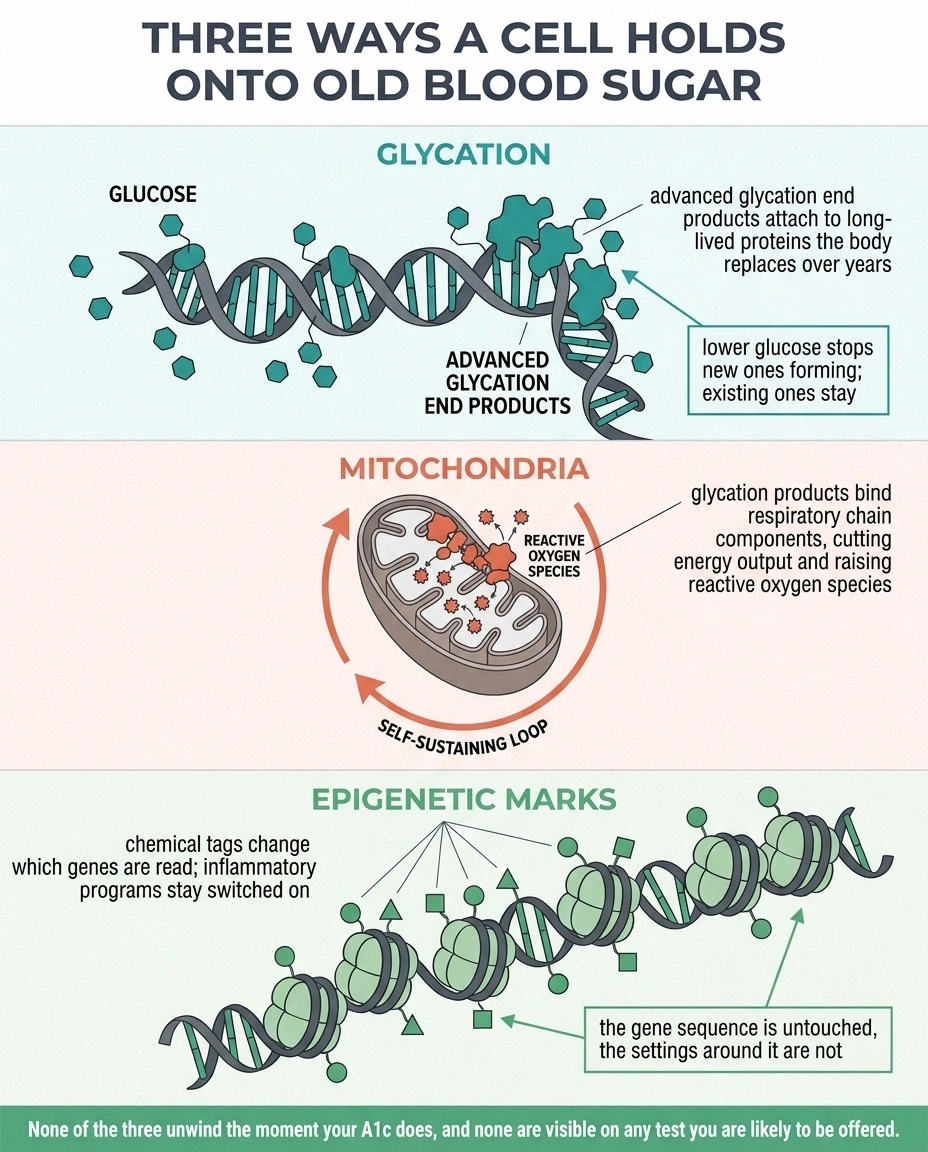
Glycation, and the sticky proteins it leaves. When glucose is abundant it binds to proteins nonenzymatically, without any cellular decision, and forms compounds called advanced glycation end products. Some of these attach to long-lived structural proteins that your body replaces slowly, over years. Lower your blood sugar today and you stop making new ones. The existing ones stay put and keep doing what they do.
Mitochondria that never fully recover. This is the mechanism with the most direct evidence. Those glycation products accumulate inside mitochondria and bind to components of the respiratory chain, the assembly that turns fuel into usable energy. The machinery runs less efficiently, produces less energy, and leaks more reactive oxygen species — the damaging byproducts usually filed under oxidative stress. Then it becomes self-sustaining: the excess reactive oxygen damages mitochondrial components, which makes them leak more still. The loop keeps turning on its own after the glucose that started it has come down.
Epigenetic marks on the genes themselves. The most striking of the three. High glucose leaves chemical tags on the proteins that package your DNA, and those tags change which genes are read and how easily. Inflammatory programs that got switched on during a hyperglycemic stretch can stay switched on. The gene sequence is untouched; the settings around it are not. Cells carrying these marks behave as though glucose were still high while sitting in perfectly normal glucose, and they can pass those settings along when they divide.
Put together, that’s three things at once: sticky proteins that turn over slowly, a self-perpetuating oxidative loop, and altered gene settings. None of them unwind the moment your A1c does — and none of them are visible on any test you’re likely to be offered.
Why Nerves Take This Harder Than Most Tissues
Metabolic memory shows up across diabetes complications, but peripheral nerves are unusually exposed to it, for reasons worth understanding.
Metabolic memory is a plausible explanation for gradual progression despite good control. It is a poor explanation for a sudden change, and it is a genuinely bad reason to skip an evaluation. Several causes of worsening neuropathy are treatable, and most are found with ordinary bloodwork:
- B12 deficiency, which is more likely with long-term metformin use and can be corrected.
- Thyroid disease, which can produce or worsen nerve symptoms.
- Alcohol intake, which is independently toxic to peripheral nerves.
- Kidney function decline, which changes both nerve health and how medications behave.
- A new medication, including certain chemotherapy agents and some antibiotics.
The dividing line worth applying: slow and symmetrical fits the expected pattern. Rapid, one-sided, or moving upward quickly does not, and warrants a fresh look rather than an explanation.
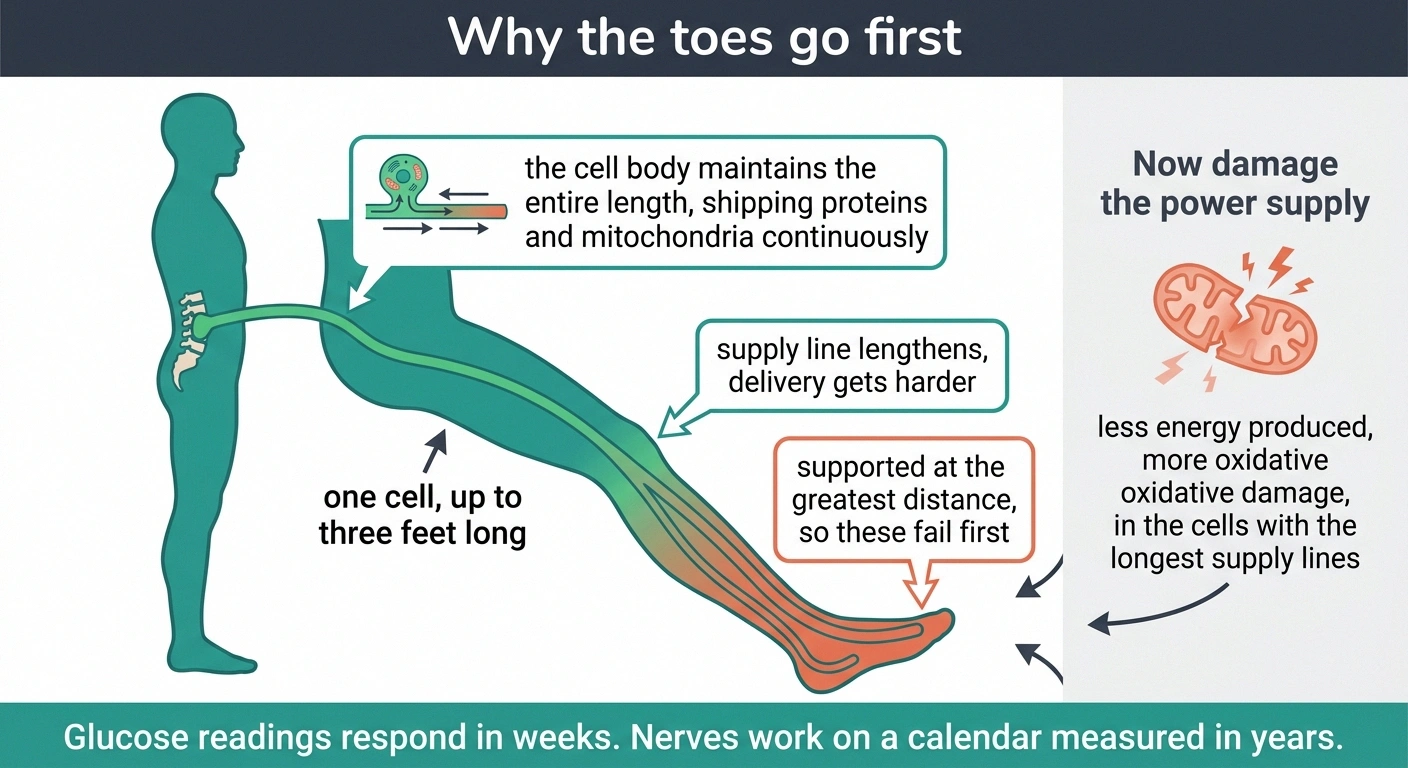
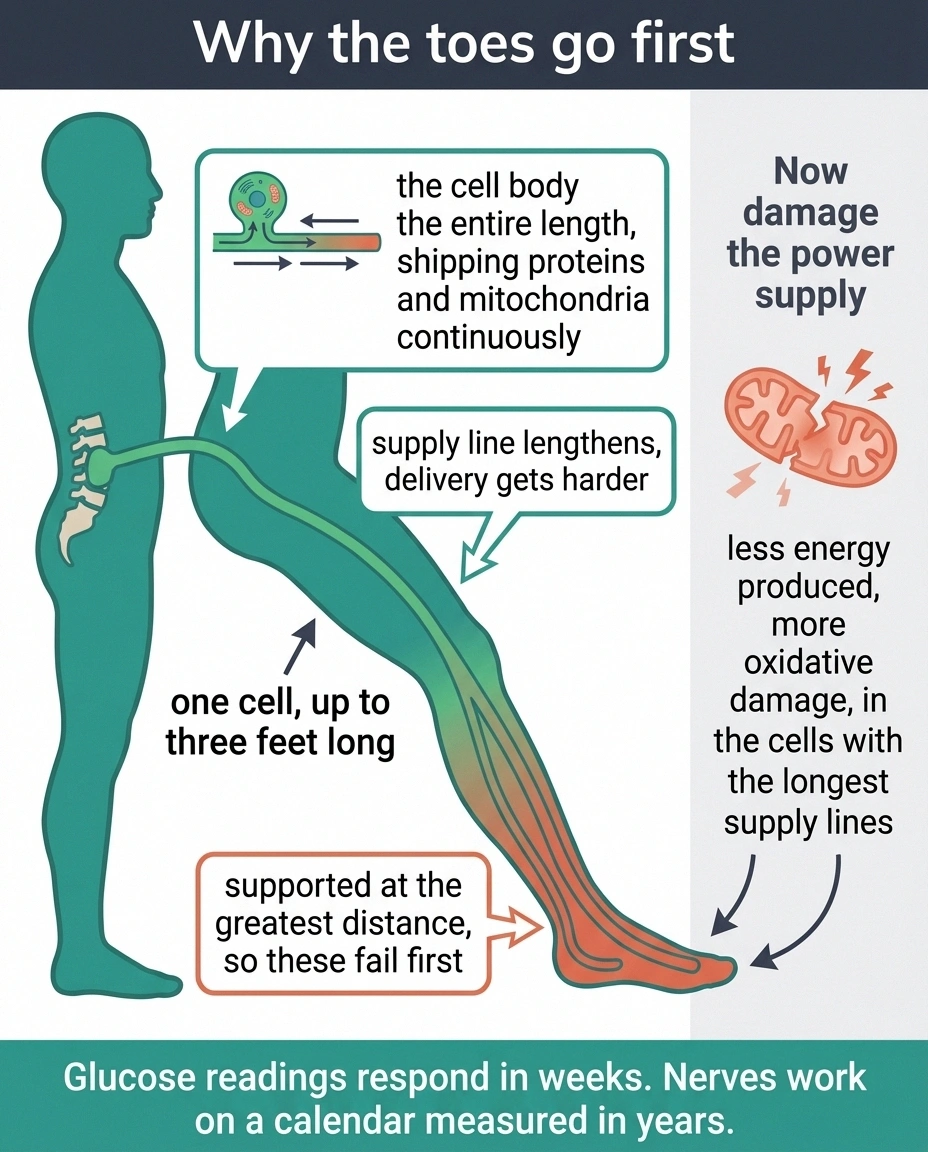
Nerve cells are enormous. A single fiber running from your lower spine to your big toe can be three feet long, and the cell body has to maintain that entire length, shipping proteins and mitochondria down it continuously. That is an extraordinary metabolic bill, and it explains why nerve damage in diabetes so reliably begins at the toes and works upward. The longest fibers are supported at the greatest distance, so they fail first.
Now add mitochondria that produce less energy and more oxidative damage. The cells least able to absorb that hit are exactly the ones with the longest supply lines. That is the mechanistic reason nerve damage tends to progress at its own pace, somewhat detached from what your meter reads today.
Peripheral nerves also have a limited repair capacity. Damage accumulates rather than resetting. And the small vessels that feed the nerves are themselves affected by the same process, so nerves take the injury twice — once directly, and once through their blood supply.
There’s a practical consequence to all this that’s easy to miss. Because nerve damage advances on this slower, partly independent schedule, the feedback you get from your own body is badly timed. You improve your control and your glucose readings respond within weeks. Your nerves are working on a calendar measured in years. Anyone expecting those two to move together is going to conclude, wrongly, that the effort did nothing.
Metabolic memory has been documented specifically in autonomic neuropathy, the branch governing heart rate, digestion, blood pressure and sweating. Which is to say this is not a theoretical concern retrofitted onto nerves. It has been looked for in nerve tissue and found there.
The Half Nobody Tells You
Everything above sounds like a verdict, and it lands hard on people who have improved their control and want credit for it. So let me turn the same finding over, because the other side is genuinely good news and it’s just as well evidenced.
If damage banks forward, so does benefit.
That’s not a consolation prize. It’s the actual finding. The intensive group in that original trial kept their advantage for decades on the strength of six and a half years of effort. They weren’t doing anything different anymore — they were still collecting on work finished long before.
Which reframes what you’re doing now. Every stretch of steadier glucose is being written into the same record. You may not see the return this quarter or even this year — the payoff shows up as risk that falls, and complications that are less likely to develop, on a timescale of years. That’s a genuinely difficult thing to stay motivated by, and it’s worth naming rather than pretending otherwise.
It also means the question “is it too late” has an answer, and the answer is no. Not because the past is erasable, but because the ledger is still open. This is why preventing further nerve damage remains worth real effort at any point in the disease, and why the honest framing of whether neuropathy can be reversed is less binary than either the pessimists or the supplement sellers will tell you.
Does the Memory Fade?
Yes, and this is the most practically useful fact on the page.
| Metabolic memory | Legacy effect | |
|---|---|---|
| Named by | The DCCT and EDIC investigators | The UKPDS investigators |
| Population studied | Type 1 diabetes | Type 2 diabetes |
| What was observed | Benefit persisted and widened after glucose control converged | Benefit persisted through post-trial follow-up |
| Why it matters to you | Produced the term you will see quoted everywhere | This is the evidence in the population most neuropathy comes from |
If an article cites only the type 1 trial while writing for a type 2 audience, that is a signal about how carefully it was put together. The finding does hold in type 2. It was simply established by a different study.
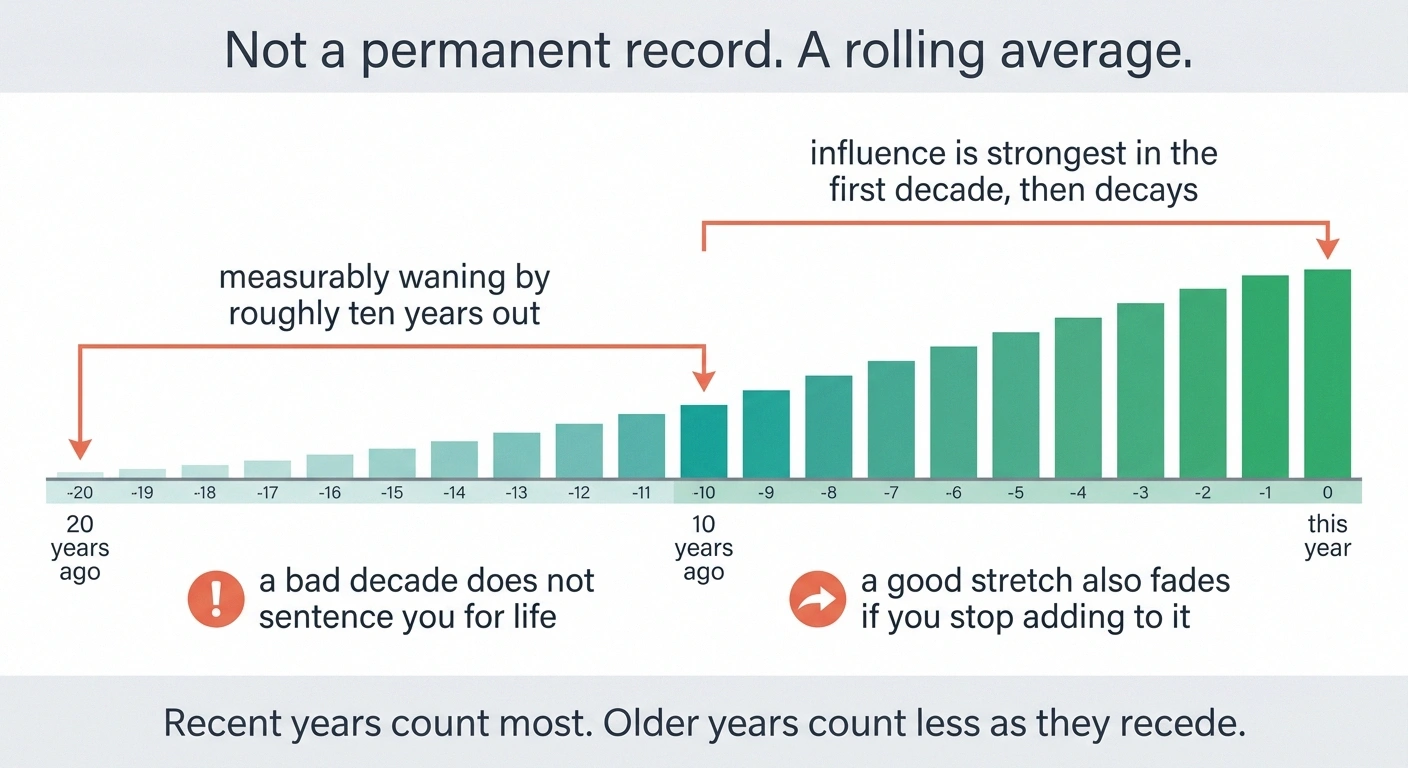
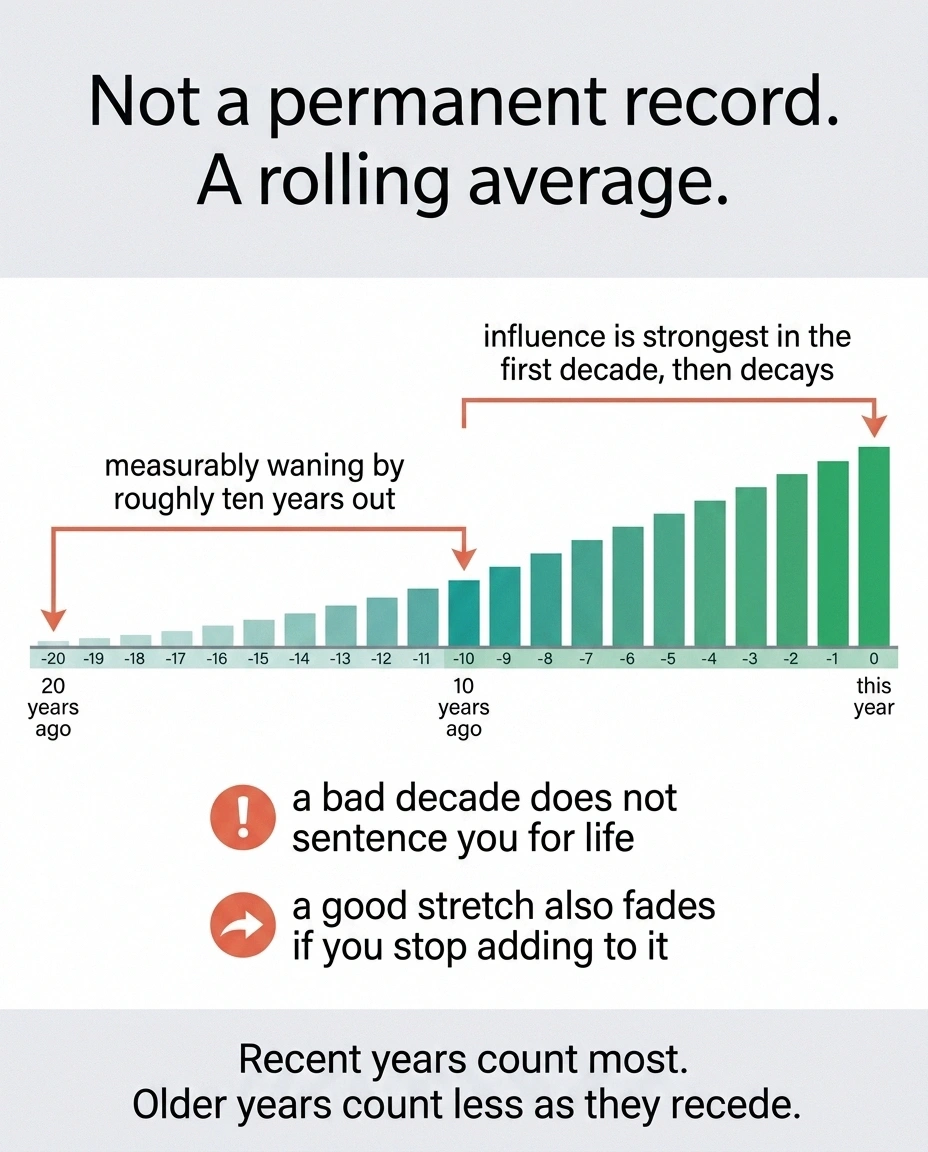
Follow-up analyses tracked how long the effect actually lasted. The influence of that original period peaked during the first decade afterward, then began to decay. By roughly ten years out, the effect of the earlier control was measurably waning. That figure comes from specific follow-up analyses, and how long the effect holds varies between complications and between people, so treat it as an approximate shape rather than a fixed expiry date.
Read that carefully, because it cuts in the direction you want. The record isn’t permanent. A bad decade in your forties does not sentence you for life. Its influence is heaviest in the years immediately following and lightens as time and cell turnover do their work.
The flip side is real too: the benefit of a good period also fades if you don’t keep adding to it. Nobody gets to bank five good years and coast on them at thirty.
What that leaves is something closer to a rolling average than a permanent record. Recent years count most. Older years count less as they recede, which is roughly how most people intuitively hope it works. And that’s a far more livable model than the one most people carry around, where every past mistake sits on the ledger permanently.
What This Actually Changes About Tomorrow

A mechanism you can’t act on is trivia. This one has four practical consequences.
It explains the thing that makes people quit. “My A1c is 6.9 and my feet are worse than last year” is a sentence I’ve heard many times, and it usually arrives with a note of betrayal. That gap between effort and result is not a sign the effort failed. It’s the expected pattern given a mechanism that runs on its own momentum. Knowing that is the difference between an unfair result and an unexplained one, and unexplained results are the ones that make people stop trying.
It raises the value of acting early. The strongest implication of all this is that the earliest years of glucose control are worth more than the same effort applied later, because they’re the years still influencing the record when the following decade unfolds. That’s the real argument for taking prediabetes seriously rather than waiting for a formal diagnosis.
It shifts attention from the average to the pattern. A1c is a mean, and means hide a great deal. Two people can share an A1c of 7.2 while one runs steady and the other swings between 50 and 300 all day. There’s good reason to think the swinging one accumulates more damage, which is what glycemic variability research examines, and why time in range from a continuous monitor tells you things a quarterly average structurally cannot.
It makes the case for consistency over intensity. If what’s being recorded is cumulative exposure, then years of decent control beat months of perfect control followed by burnout. The mechanism rewards the boring approach — the one nobody sells a program around. Our overview of how blood sugar damages nerves covers the underlying chemistry if you want the fuller picture.
There’s also a way this should change what you ask for at an appointment. If the years still influencing your risk are the recent ones, then the useful question isn’t “what was my A1c” but “what has the trend been, and how much of my day sits in range.” Those are different questions with different answers, and only the second one tells you whether the thing you’re actually doing is working. Bring the trend, not the single number — a printed run of the last several results, or a couple of weeks of monitor data if you have it.
What It Does Not Mean

Some ideas do more harm in the hands of the person they’re about than in the paper they came from, so let me close off the misreadings.
It does not mean your neuropathy is fixed in stone. Metabolic memory is a statement about risk trajectories in populations, not a prediction about your feet. Plenty of people with long histories of poor control stabilize. Symptoms respond to treatment regardless of what the underlying trajectory is doing, and how neuropathy progresses varies enormously between individuals.
It does not mean current control is pointless. This is the dangerous misreading, and it’s the reason I’d rather this concept be explained properly than half-explained. Current control still matters enormously. It limits further damage, it feeds the forward-looking half of the ledger, and it affects every other complication too.
It is not a reason for guilt about the past. Most people whose control was poor for years had reasons: an undiagnosed stretch, no insurance, a chaotic period, or plain not knowing. A mechanism is not a moral judgment, and a decade of self-blame will not remove a single glycation product.
And it is not a product opportunity. If anything is going to be sold to you off the back of this concept, it will be an antioxidant marketed as “erasing” metabolic memory. Reversing established epigenetic marks and clearing accumulated glycation products is an active research question with no consumer answer. Treat any supplement that claims to have solved it as a claim about marketing rather than biology.
Frequently Asked Questions
Why is my neuropathy getting worse when my A1c is good?
Metabolic memory is one likely explanation. Damage accumulated during earlier periods of high blood sugar keeps influencing nerve tissue through persistent changes in mitochondria, accumulated glycation products and lasting epigenetic modifications, so progression can continue for a period after glucose control improves. Improved control is still working; it limits further damage and reduces future risk even when current symptoms are not yet reflecting it. Other causes of worsening neuropathy also exist, including B12 deficiency, thyroid disease and alcohol, so a symptom change is still worth investigating rather than attributing to this automatically.
What is metabolic memory in simple terms?
It is the finding that the body retains the effects of past blood sugar levels, so both damage from earlier high glucose and benefit from earlier good control continue to influence complication risk long after the numbers themselves have changed. It was identified in the DCCT and EDIC studies in type 1 diabetes and confirmed as the legacy effect in the UKPDS study in type 2 diabetes.
How long does metabolic memory last?
Follow-up analyses indicate the effect is strongest in the first decade after the period in question and then decays, with a measurable waning after approximately ten years. It behaves less like a permanent record and more like a rolling average in which recent years carry the most weight and older years progressively less.
Does metabolic memory mean it is too late for me?
No. The same mechanism that carries damage forward also carries benefit forward, which is why participants in the original trial retained an advantage for decades after their period of intensive control ended. Control improved today is recorded in the same ledger and continues to lower the risk of complications developing later.
Does this apply to type 2 diabetes or only type 1?
Both. The DCCT and EDIC studies that produced the term enrolled people with type 1 diabetes, while the UKPDS study identified the same phenomenon in type 2 diabetes and described it as the legacy effect. Since most diabetic neuropathy arises from type 2 diabetes, the type 2 evidence is the more directly relevant of the two for most people.
Can anything erase metabolic memory?
Not at present. Reversing established epigenetic modifications and clearing accumulated glycation products are active areas of research without a proven treatment available to patients. Any supplement marketed as erasing or reversing metabolic memory is making a claim that the evidence does not support. Consistent glucose control remains the approach with actual evidence behind it.
Is A1c the best number to watch, given all this?
A1c remains useful but is an average, and averages conceal the pattern underneath. Two people with the same A1c can have very different glucose variability, and there is reason to think large swings contribute additional damage. Time in range from a continuous glucose monitor gives a more detailed picture of what tissue is actually exposed to across a day.
About the Author