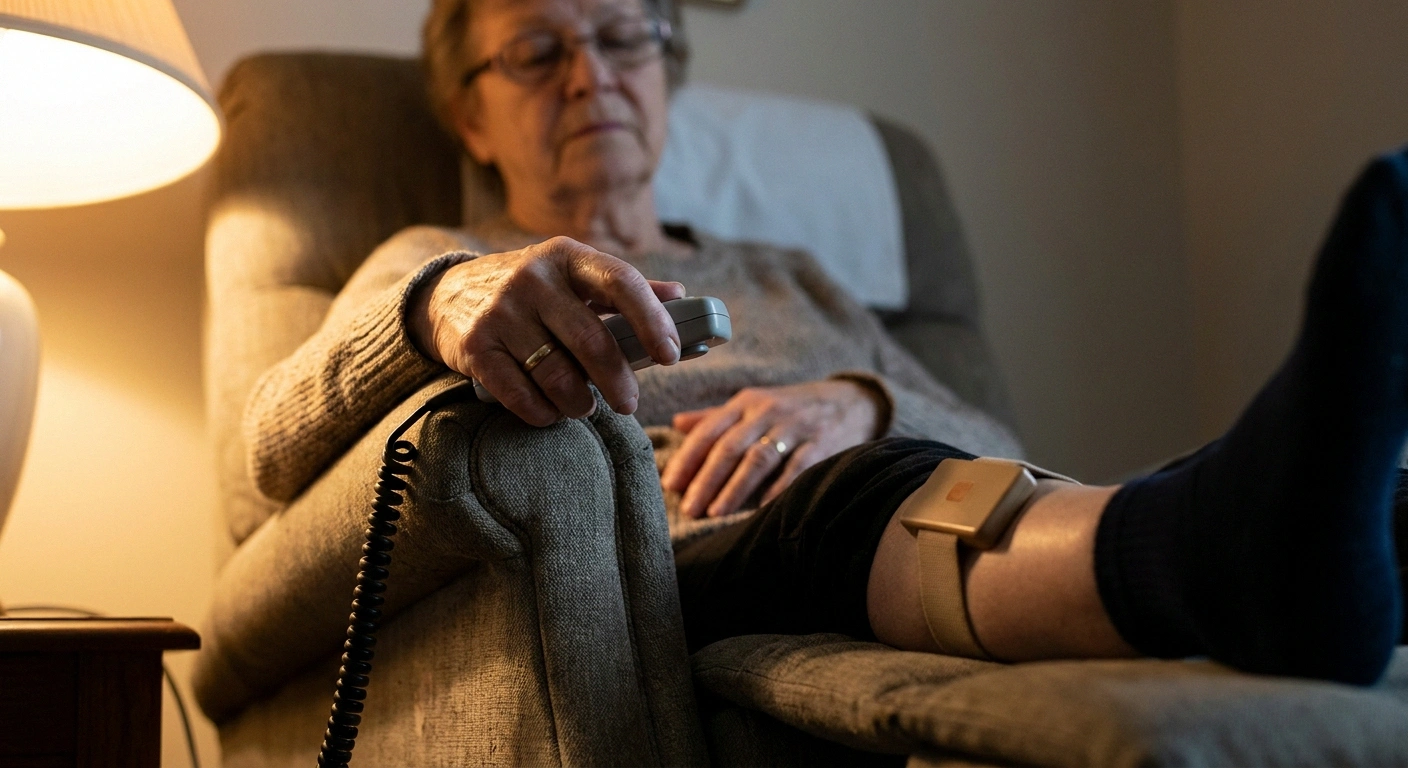
There’s a small metal plate resting against your calf. It’s warm, about the temperature of your own skin, and you’ve been handed a button. The technician says: press it the instant the plate starts to feel cooler. Not when you’re sure. The instant.
So you wait. Twenty seconds pass. You start wondering whether you missed it, whether you’re already failing, whether the plate is even doing anything. Then you press, and the machine records a number, and it does the whole thing again.
That is quantitative sensory testing, and after thirty minutes of it you’ll walk out with the most detailed map of your sensory function that exists outside a research lab. You’ll also walk out with a question that the paperwork never answers: what is this number actually worth?
It’s worth a great deal, in three specific ways. It’s worth almost nothing in a fourth way that people expect it to be. Sorting those apart is what this piece is for.
What the Machine Is Measuring, and Why It Uses You to Do It
Your peripheral nerves come in different sizes, and size determines job.
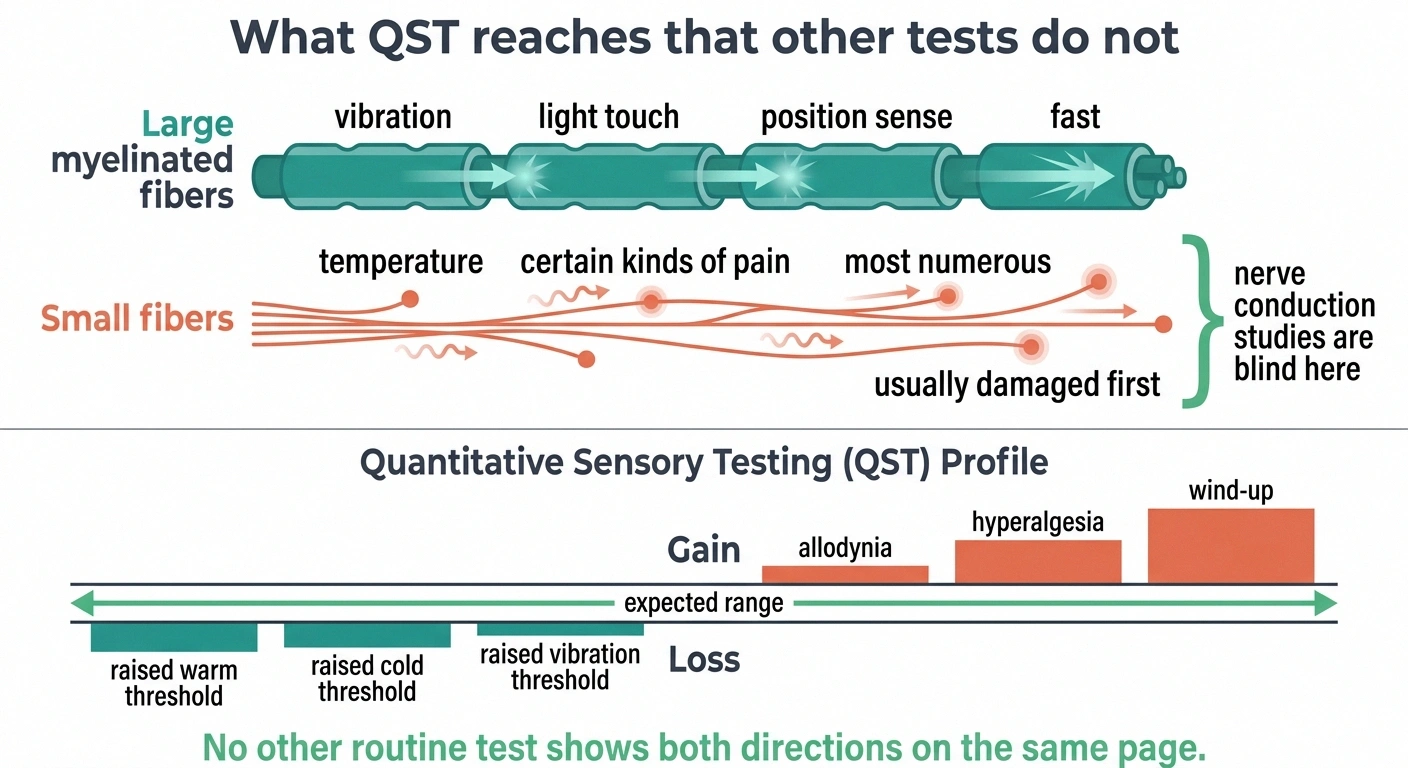
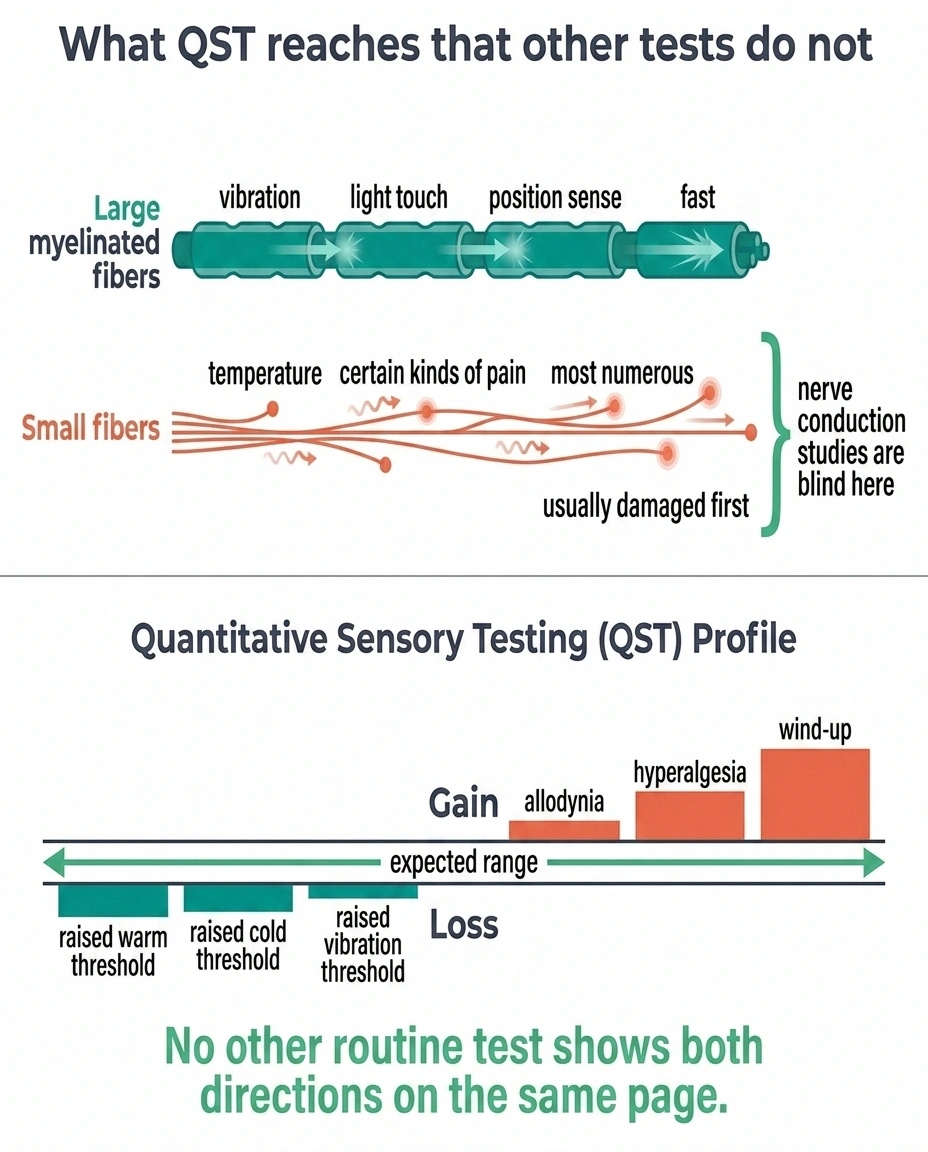
The large, heavily insulated fibers carry vibration, light touch, and position sense. They’re fast. The small fibers — thinly insulated or bare — carry temperature and certain kinds of pain. They’re slow, they’re the most numerous, and they’re usually the first to go in metabolic and toxic nerve damage.
QST tests both classes by presenting a controlled stimulus and asking you to report when you detect it. Warmth and cold probe the small fibers. Vibration probes the large ones. Pinprick, pressure, and light brushing fill in the rest of the picture.
Here’s the structural fact that shapes everything: you are the measuring instrument. The machine controls the stimulus with great precision, but the reading comes from your finger on that button. This is what researchers mean when they call QST psychophysical. It sits in a different category from an EMG and nerve conduction study, where a machine stimulates a nerve and a machine records what comes out the other end, and your opinion never enters the data.
That difference is QST’s greatest strength and its most serious weakness at the same time, which is unusual and worth sitting with for a moment.
The Three Things QST Does Better Than Anything Else
It sees the small fibers
Nerve conduction studies measure only large myelinated fibers. Full stop. If your damage is confined to small fibers, your nerve conduction study will be normal — and an enormous number of people have been told exactly that while their feet burned.
The widely used research protocol measures these in sequence for one body region. Most clinical testing runs a subset. If you want to know what was actually done, ask which of these appear on your report.
- Cold detection
- Warm detection
- Paradoxical heat sensation
- Thermal sensory limen
- Mechanical detection
- Vibration detection
- Cold pain
- Heat pain
- Mechanical pain
- Pressure pain
- Mechanical pain sensitivity
- Wind-up ratio
- Dynamic mechanical allodynia
Paradoxical heat sensation is the odd one worth knowing about: cold stimuli that register as warmth. It is not a mistake on your part, and it is a recognized finding in small fiber damage.
QST reaches where the electrical tests can’t. Elevated warm and cold detection thresholds are one of the recognized signatures of small fiber neuropathy. For readers who’ve been circling that possibility for years, this is the test that can finally put a measurement next to the experience.
It measures gain, not just loss
Almost every neurological test asks whether something is missing. QST also asks whether something has been turned up too high.
The battery includes thresholds where pain begins, how steeply your pain response climbs as a stimulus intensifies, and something called the wind-up ratio, which captures whether repeated identical pokes feel progressively worse. It tests whether a soft brush across the skin registers as pain, which is allodynia, and whether genuinely painful things hurt far more than they should, which is hyperalgesia. If you’ve never been clear on the difference between those two, QST is the test that separates them formally.
This matters clinically. Sensory loss and pain amplification call for different treatment strategies, and QST is the only routine test that shows both on the same page.
It tracks change over time
A single QST profile is a snapshot. Two, taken a year apart, are a trajectory — and the International Association for the Study of Pain specifically recommends QST for quantifying and monitoring sensory deficits over time.
This is arguably its most underused application. If you’re on a treatment and want to know whether it’s doing anything measurable, “my feet feel about the same, maybe?” is a hard thing to act on. A shifted warm detection threshold is not.
The Thing QST Cannot Do
It cannot tell you why.
Every threshold on your report is the point where a physical stimulus crossed into your awareness. The stimulus half is measured to a fraction of a degree. The awareness half comes from you.
That design is the only way to measure certain things at all. There is no electrode that can record whether a soft brush feels painful to you, because painfulness is not an electrical event you can pick up downstream. It has to be reported.
The practical consequence: a QST report carries more weight when it is internally consistent, when the affected side differs clearly from the unaffected side, and when repeat testing agrees with the first. A single borderline value on its own carries the least.
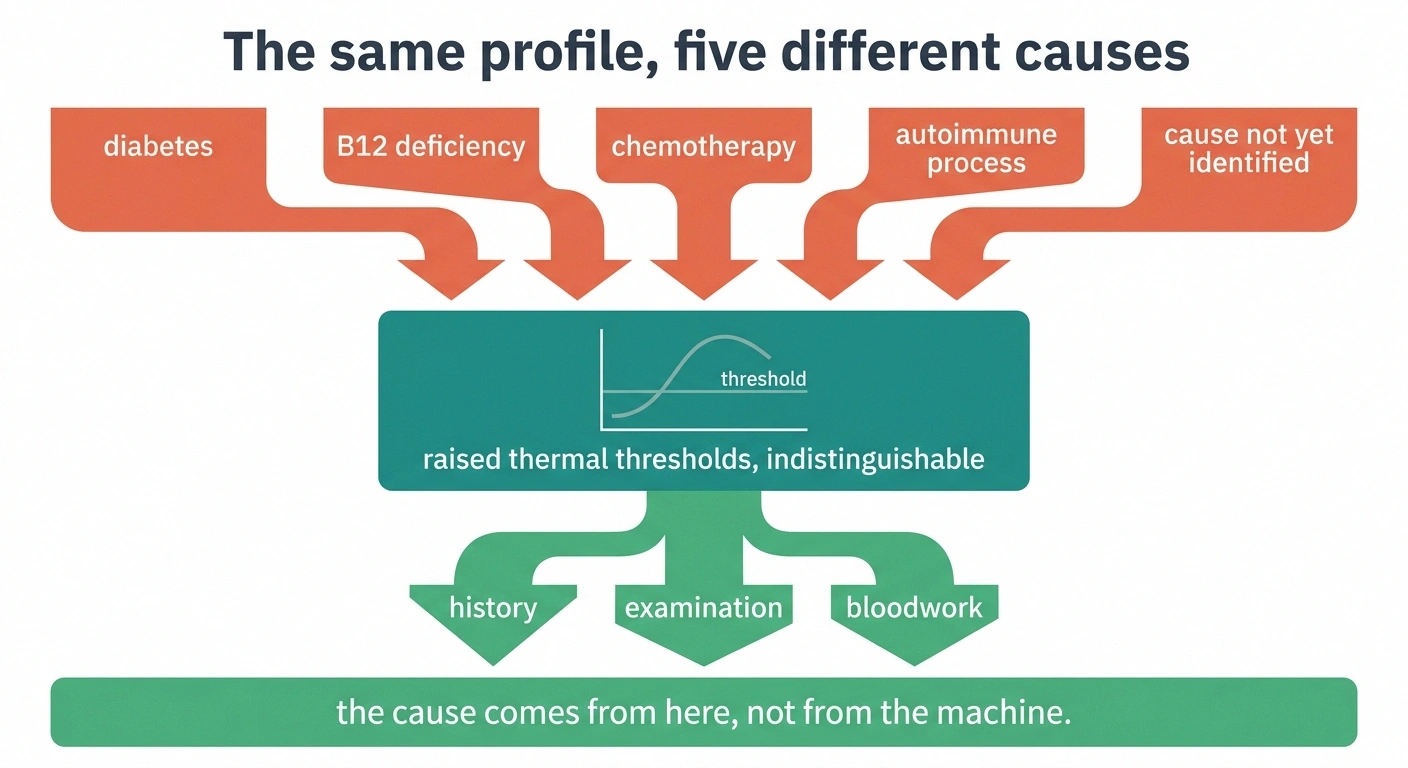
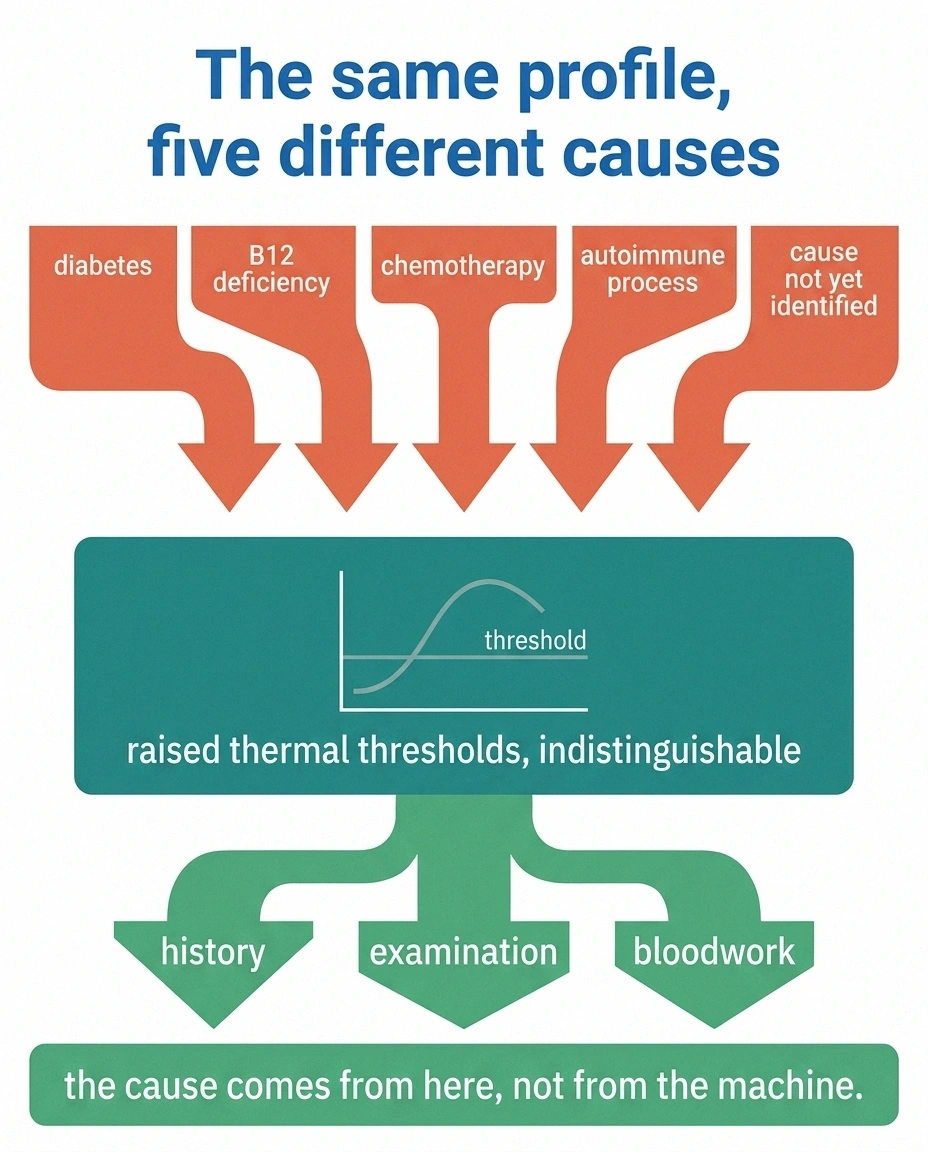
QST characterizes how your sensory system is behaving. It has nothing to say about the cause. Elevated thermal thresholds look the same whether the culprit is diabetes, a B12 deficiency, chemotherapy, an autoimmune process, or something nobody has identified yet. The pattern describes the damage; it doesn’t name the source.
This is why the formal guidance is so consistent on one point: QST should not be the sole criterion for a diagnosis. For diabetic neuropathy specifically, the standard is that at least one other defined abnormality must be present before the diagnosis is made. QST supports the case. It doesn’t close it. The cause still comes from history, examination, and the bloodwork that screens for treatable causes.
There’s a second limitation that follows directly from the psychophysical design. Because your attention and cooperation are part of the measurement, the result degrades when either is compromised. IASP guidance explicitly advises against QST in patients involved in litigation, and in those with significant cognitive impairment, on exactly these grounds. It’s not an accusation of dishonesty. It’s a statement about what the test can and can’t stay reliable through.
Third: reproducibility. Studies tracking healthy volunteers over ten weeks found thresholds that drift on their own. So a value that sits slightly outside a reference range is soft evidence, while a clear shift in your own values between two sessions is much harder evidence. Compare yourself to yourself wherever possible.
Where QST Sits Among the Other Tests
People arrive at this test having already had two or three others, so the practical question is usually what it adds.
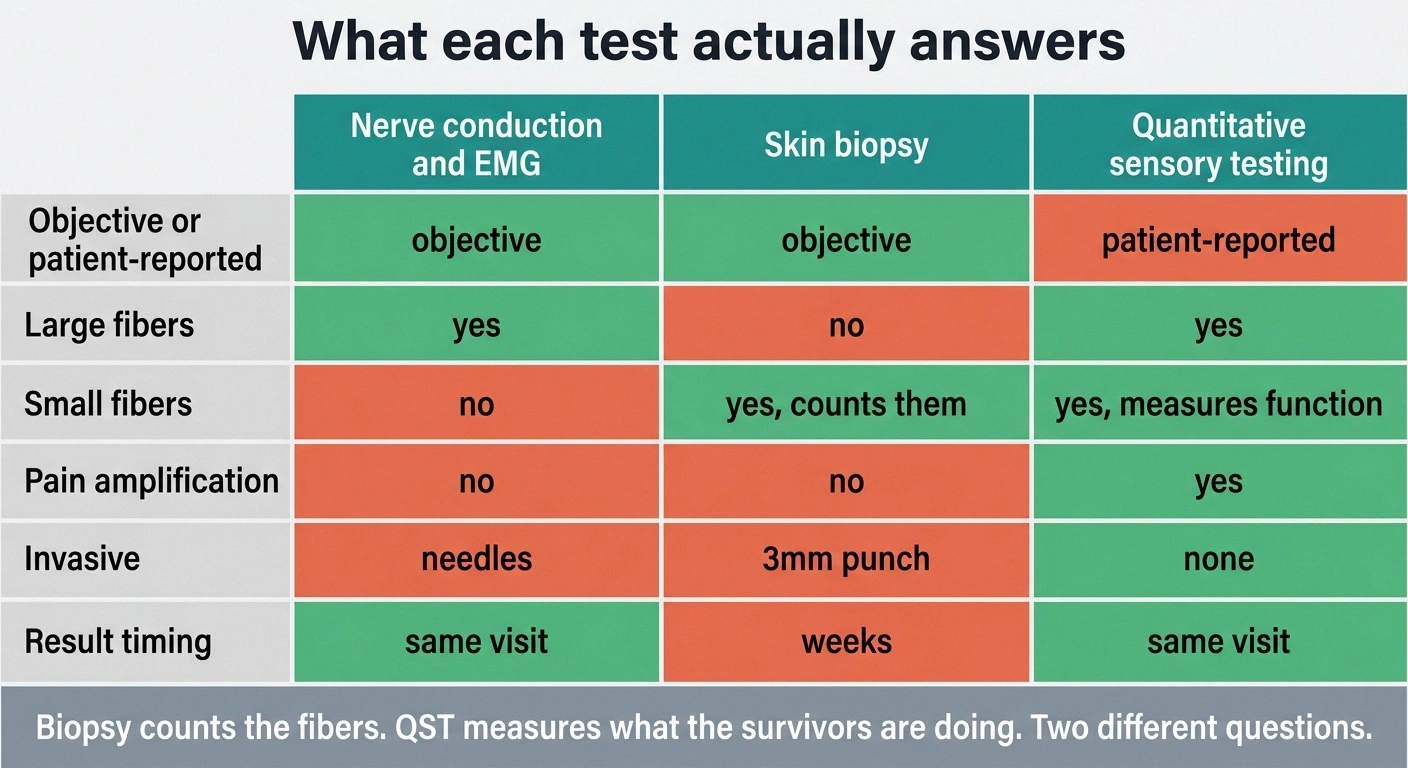
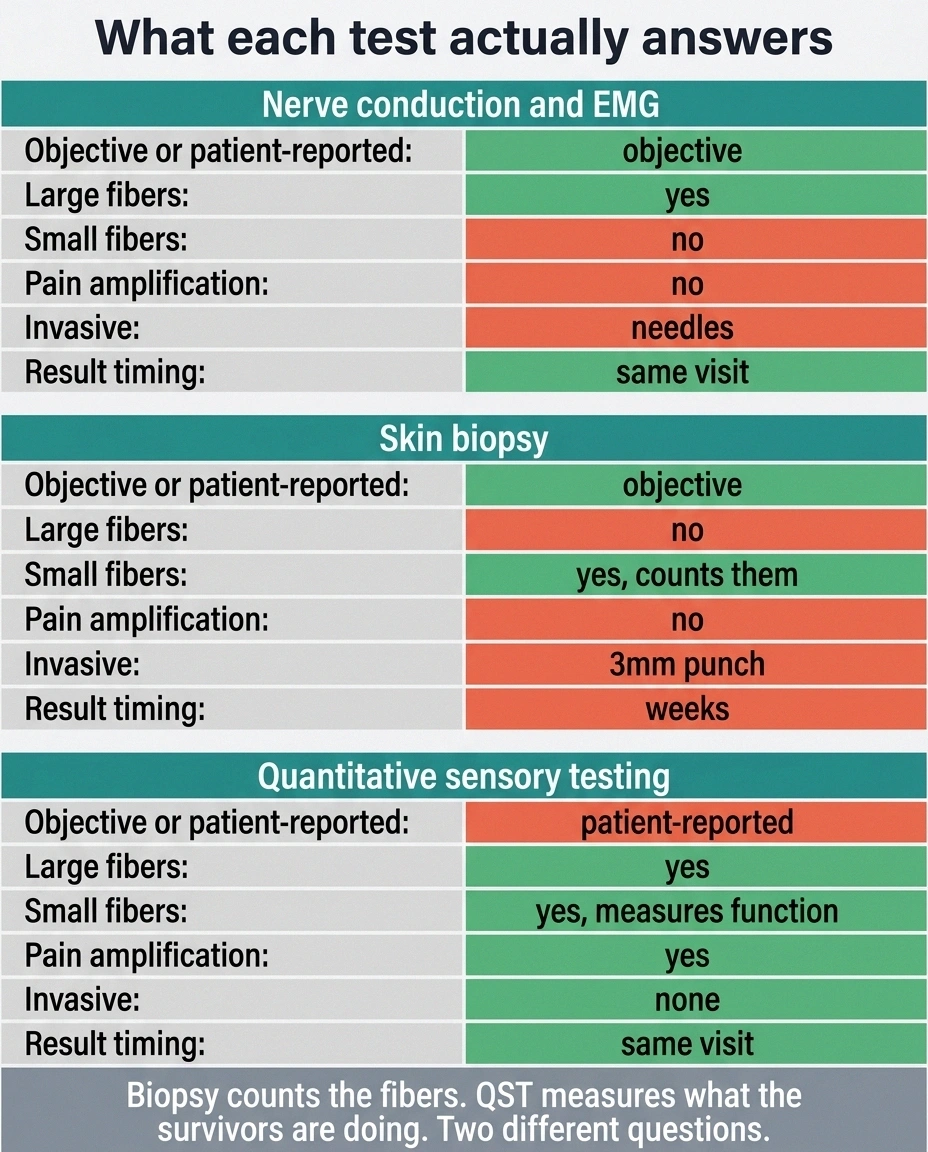
Nerve conduction and EMG measure large-fiber function objectively and localize damage along a nerve. They’re the backbone of a workup and they’re blind to small fibers.
Skin biopsy takes a 3mm punch of skin, usually from the lower leg, and counts nerve fiber endings under a microscope. It’s the objective small fiber test — an actual count of an actual structure. Slightly invasive, results take weeks, and it’s the reference standard when small fiber neuropathy is the question.
QST measures function across both fiber classes, captures pain amplification that no other test sees, and is completely non-invasive. It’s subjective, and that’s the trade.
Notice that skin biopsy and QST aren’t rivals. Biopsy counts the fibers; QST measures what the surviving ones are doing. A person can have a near-normal fiber count with badly disordered thresholds, or the reverse. Two different questions.
None of this replaces the sequence in a standard neuropathy diagnostic workup. QST is a specialized addition, usually ordered when the ordinary tests came back normal and the symptoms didn’t.
What the Appointment Is Actually Like
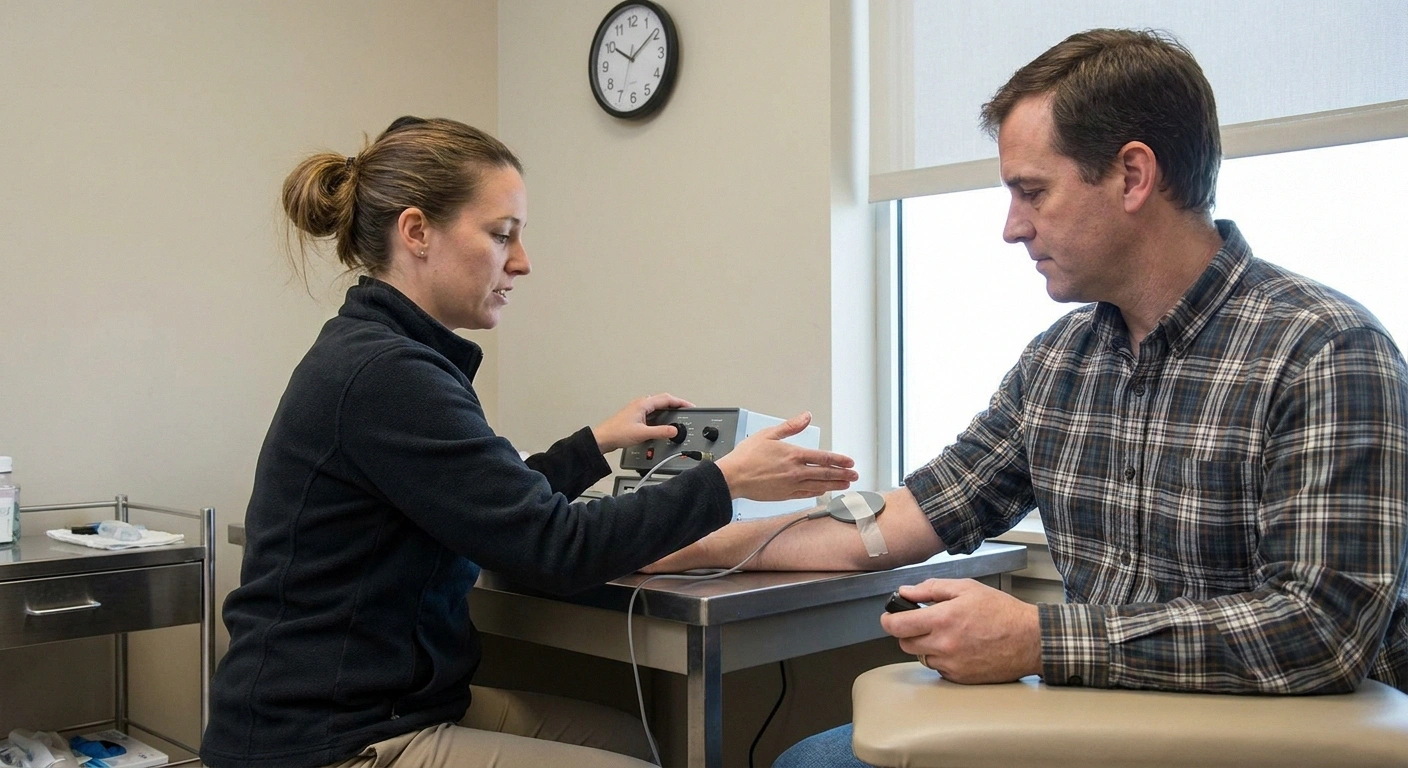
Plan on thirty minutes per body region tested, and often more once setup and instructions are counted. Most protocols test a symptomatic area and a matched control area, so two regions is common.
The thermal portion is where most people’s questions land. The plate — the thermode — sits at 32°C, roughly skin temperature, and ramps slowly up or down. You press the button the moment you notice a change. It returns to 32°C and rests about ten seconds before the next run. Pain thresholds are tested the same way, with you stopping the stimulus yourself, and the equipment has automatic cutoffs so nothing can run away.
Vibration testing uses a small device on a bony landmark, often the great toe or the ankle. You report when you feel it start and when it fades. Mechanical testing uses calibrated filaments and weighted pinprick tools, plus a soft brush for the allodynia check.
Does it hurt? Parts of it are designed to reach your pain threshold — that’s the measurement. But you control the stimulus, you can stop at any point, and the intensities are low compared with, say, the needle portion of an EMG. Most people describe it as tedious rather than painful. The concentration is the tiring part.
How to Get a Result Worth Having
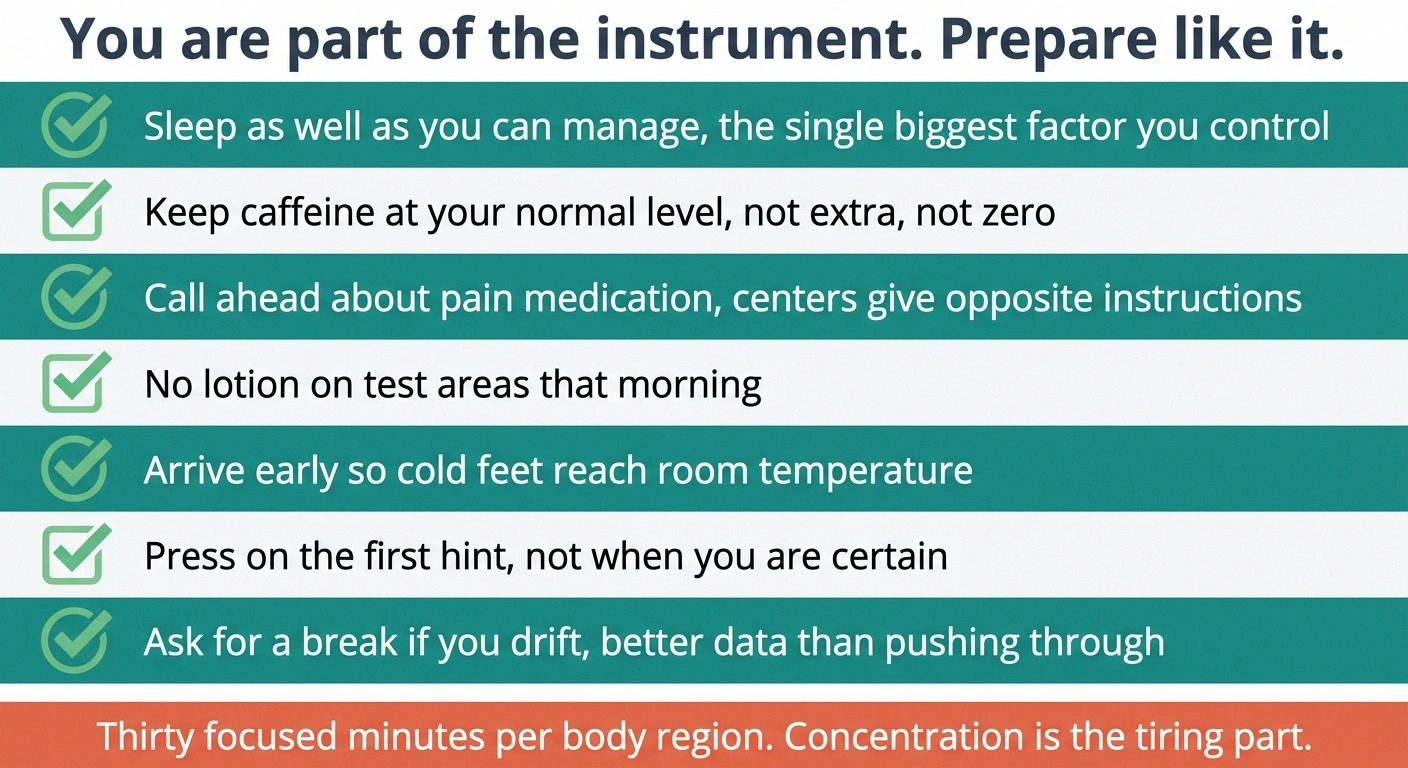
Since you’re part of the instrument, your preparation genuinely changes the data. A few things worth doing:
| Do | Do not |
|---|---|
| Protect the night’s sleep, even at the cost of rearranging the day before | Schedule it after a poor night if you can move it |
| Drink your usual coffee at your usual time | Skip caffeine to “get a clean result” and spend the test in withdrawal |
| Phone ahead about pain and nerve medications | Stop anything on your own initiative the night before |
| Arrive early and sit with your shoes off | Walk in from a cold car and start immediately |
| Press the button on the first faint impression | Wait until you are certain, which raises every threshold you report |
That last row is the most common self-inflicted distortion. Waiting for certainty is a reasonable instinct and it systematically shifts your results toward looking worse than they are.
Sleep, if you can manage it. Fatigue slows reaction time and blurs thresholds. This is the single largest thing under your control.
Keep caffeine ordinary. Not extra, not zero if you normally drink it. Withdrawal is its own distraction.
Ask about medication timing rather than deciding alone. Some centers want pain medication held; others want you comfortable enough to concentrate. Call ahead, because the two instructions are genuinely opposite and guessing wrong wastes the appointment.
Skip lotion on the test areas that morning. It changes how the skin conducts.
Let your skin reach room temperature. Cold feet on arrival shift thermal thresholds. Sitting for ten or fifteen minutes before starting helps.
Report what you feel, not what seems reasonable. The commonest way people distort their own results is second-guessing — waiting to be certain before pressing. Press on the first hint. Uncertainty is part of the design.
Say something if you drift. Thirty minutes of pressing a button is genuinely hard to stay sharp through. Asking for a break produces better data than pushing through in a fog.
Bringing your symptom notes helps too, and the same preparation that makes any neurology appointment go better applies here.
Availability, Cost, and the Honest Picture
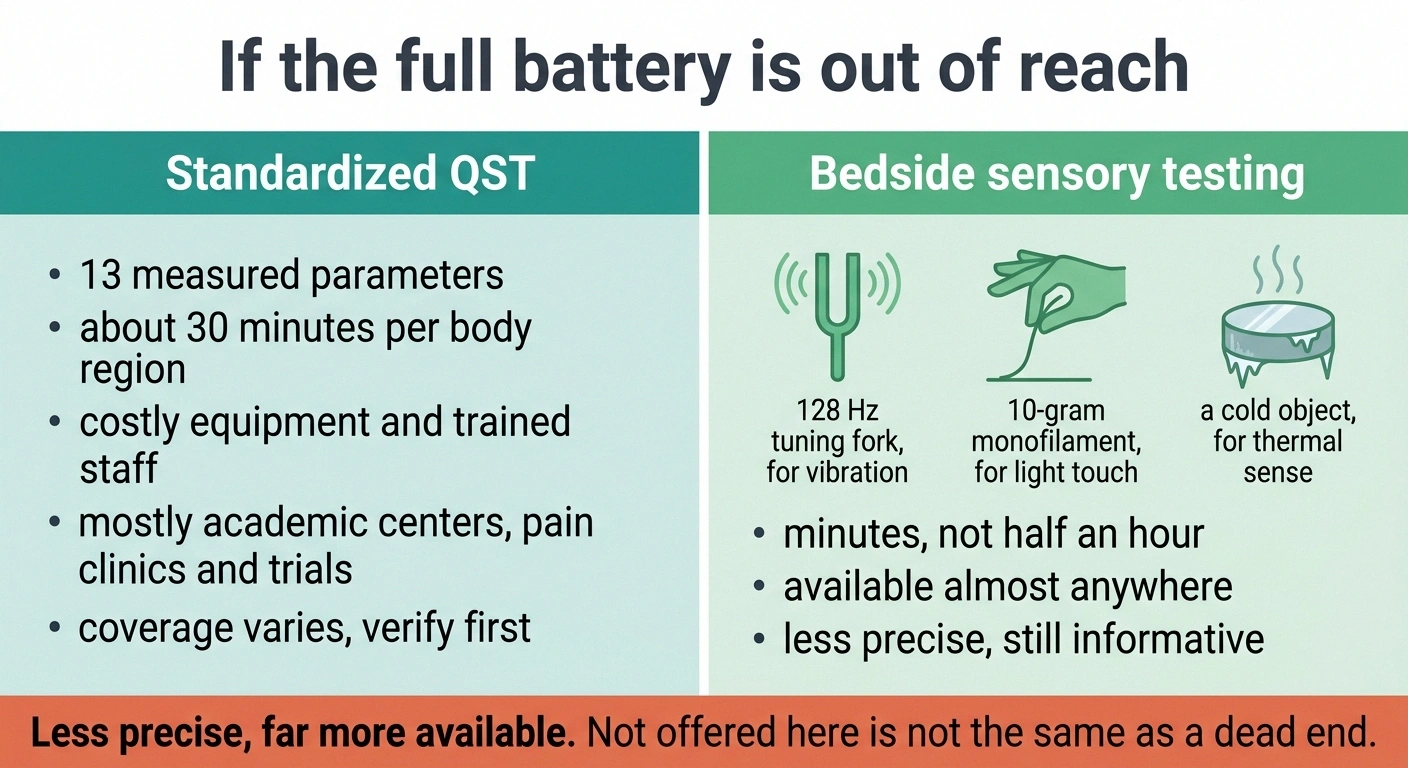
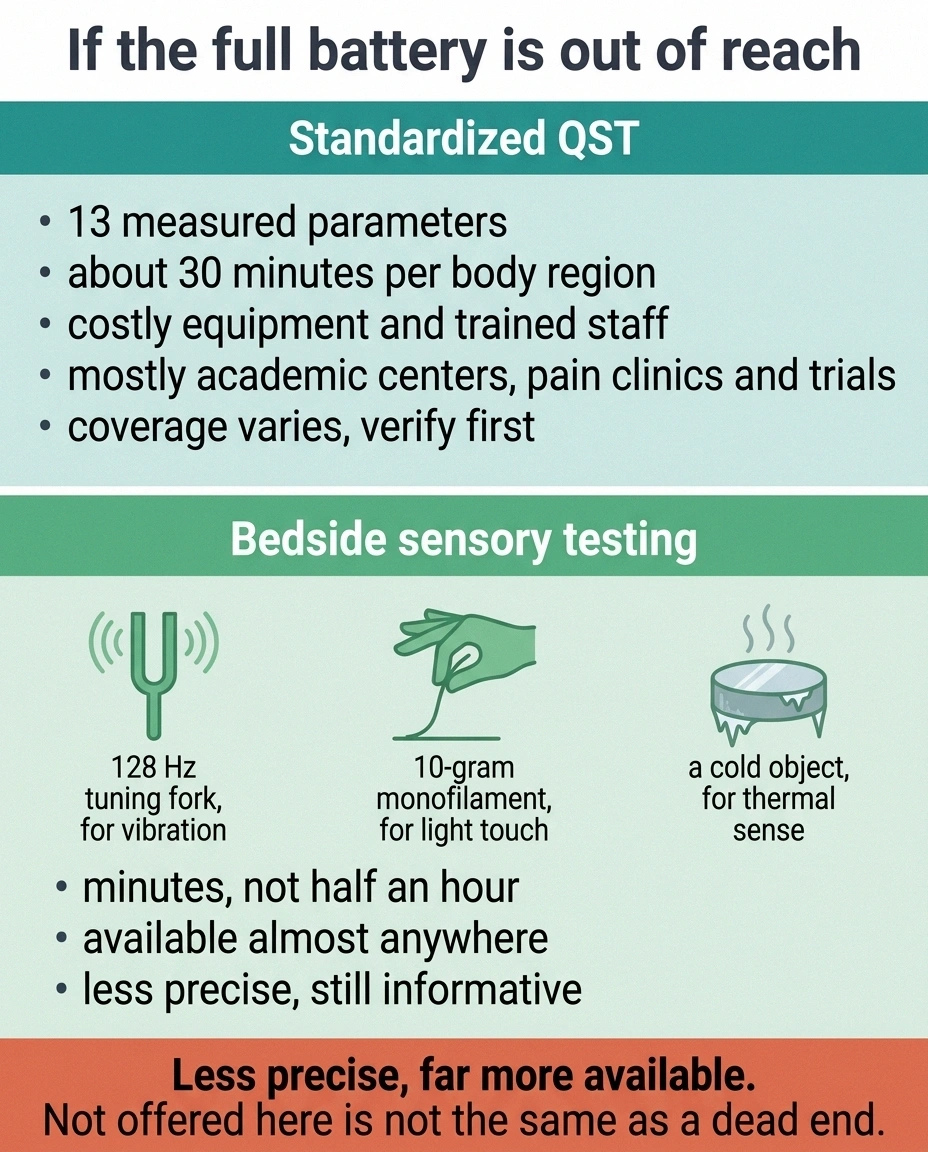
QST equipment is expensive, the protocol is time-consuming, and it requires trained staff. Those three facts together explain why it never became routine, despite being recommended by professional societies for over twenty years. It lives mostly in academic centers, specialized pain clinics, and clinical trials.
- Threshold
- The smallest stimulus you reliably detected. A raised threshold means it took more stimulus to reach you, which indicates loss of function in whichever fiber class that stimulus tests.
- Hypoesthesia and hyperesthesia
- Reduced and increased sensitivity to non-painful stimulation. Both can appear on the same report for different modalities, which looks contradictory and is entirely ordinary in nerve damage.
- Z-score
- How far your value sits from the average for your age and sex, in standard deviations. Values beyond roughly plus or minus two are conventionally treated as outside the expected range. Small deviations are frequently noise.
- Sensory profile
- The overall pattern across all parameters rather than any single number. This is what the interpreting clinician is actually reading, and it is why one abnormal line in isolation rarely changes anything.
Coverage is inconsistent, and some payers still classify it as investigational for certain indications. If it’s being ordered, ask the office to verify coverage before the appointment rather than after.
A practical alternative: if a full QST battery isn’t within reach, an experienced examiner with a tuning fork, a monofilament, and a cold object at the bedside captures a meaningful fraction of the same information. Less precise, far more available. Worth knowing so that “QST isn’t offered here” doesn’t read as a dead end.
The Reframe Worth Taking With You

The best way I’ve found to think about QST is as a portrait rather than a verdict.
It shows, in numbers, what your nerves are doing right now — which classes are struggling, whether your system has drifted toward loss or toward amplification, how the affected side compares with the unaffected one. That portrait is genuinely valuable, especially if you’ve spent years being told everything looks normal while your feet insist otherwise. Having a document that says otherwise changes conversations.
What the portrait won’t do is name the painter. That still comes from the slower work of history, examination, and lab testing — and for a meaningful number of people it ends at idiopathic, which is its own thing to sit with.
If you’re heading in for this test, go in knowing what you’re there to get. A measurement of function, in exchange for thirty focused minutes. Not an explanation. Not a prognosis. A measurement — which, when you’ve been operating on adjectives for years, turns out to be worth quite a lot.
Frequently Asked Questions
Does quantitative sensory testing hurt?
Parts of the protocol are designed to reach your pain threshold, since measuring where pain begins is one of its purposes. However, you control the stimulus and can stop it at any point by pressing the button, and the equipment has automatic safety cutoffs on temperature. Most people describe the experience as tedious rather than painful, because the concentration required over thirty minutes is more demanding than any individual stimulus. It is generally considered less uncomfortable than the needle portion of an EMG.
Can QST diagnose small fiber neuropathy by itself?
No. QST can demonstrate abnormal thermal thresholds consistent with small fiber dysfunction, which is meaningful evidence, but formal guidance holds that it should not serve as the sole diagnostic criterion. At least one other defined abnormality is generally required, most often a skin biopsy showing reduced intraepidermal nerve fiber density, along with a clinical examination and history consistent with the diagnosis. QST strengthens a case rather than settling it.
What is the difference between QST and a nerve conduction study?
A nerve conduction study is objective and measures only large myelinated fibers by stimulating a nerve electrically and recording the response, with no input from the patient. QST is psychophysical and depends on the patient reporting when a stimulus is detected, but it can assess both small and large fibers and can detect pain amplification that nerve conduction cannot see at all. Their blind spots are different, which is why a normal nerve conduction study does not rule out neuropathy and why the two tests are often used together.
Why was my QST normal when my symptoms are severe?
Several explanations are possible. The tested region may not correspond to the most affected area, since QST examines specific sites rather than the whole body. Thresholds vary naturally between individuals and drift over time, so mild abnormalities can fall within a reference range. Pain can also be generated by central mechanisms in the spinal cord and brain rather than by peripheral fiber loss, and peripheral threshold testing does not capture that. A normal result does not indicate that symptoms lack a physical basis.
How should I prepare for QST?
Sleep as well as circumstances allow, since fatigue meaningfully affects reaction time and threshold accuracy. Keep caffeine intake at your normal level rather than increasing or eliminating it. Contact the testing center in advance about pain medication, because policies differ and some centers want medication held while others prefer patients comfortable enough to concentrate. Avoid applying lotion to test areas that morning, and allow ten to fifteen minutes for cold hands or feet to reach room temperature before testing begins.
Is QST covered by insurance?
Coverage varies considerably by insurer and by the indication given. Some plans cover it when ordered as part of a neuropathy or neuropathic pain evaluation, while others classify it as investigational for certain uses. Because the equipment and staff time make it a relatively expensive test, verifying coverage before the appointment rather than afterward is worthwhile. The ordering office can usually confirm requirements, including whether prior authorization is needed.
Where is QST available?
Availability is limited. The combination of costly equipment, a protocol that takes about thirty minutes per body region, and the need for specifically trained technicians has kept QST largely within academic medical centers, specialized pain and neuromuscular clinics, and clinical research programs. Community neurology practices rarely offer the full standardized battery. If it is not available nearby, an experienced clinician performing bedside sensory testing with a tuning fork, monofilament, and cold object can capture a useful portion of the same information.
Should I have QST or a skin biopsy?
They answer different questions and are not interchangeable. Skin biopsy provides an objective count of nerve fiber endings in a small sample of skin and is the reference standard for confirming small fiber neuropathy. QST measures how the remaining nerve fibers are functioning, including pain amplification that a biopsy cannot show, and requires no incision. Someone can have a near-normal fiber count with markedly abnormal thresholds, or the reverse. When both are available, they are frequently used together rather than as alternatives.
About the Author