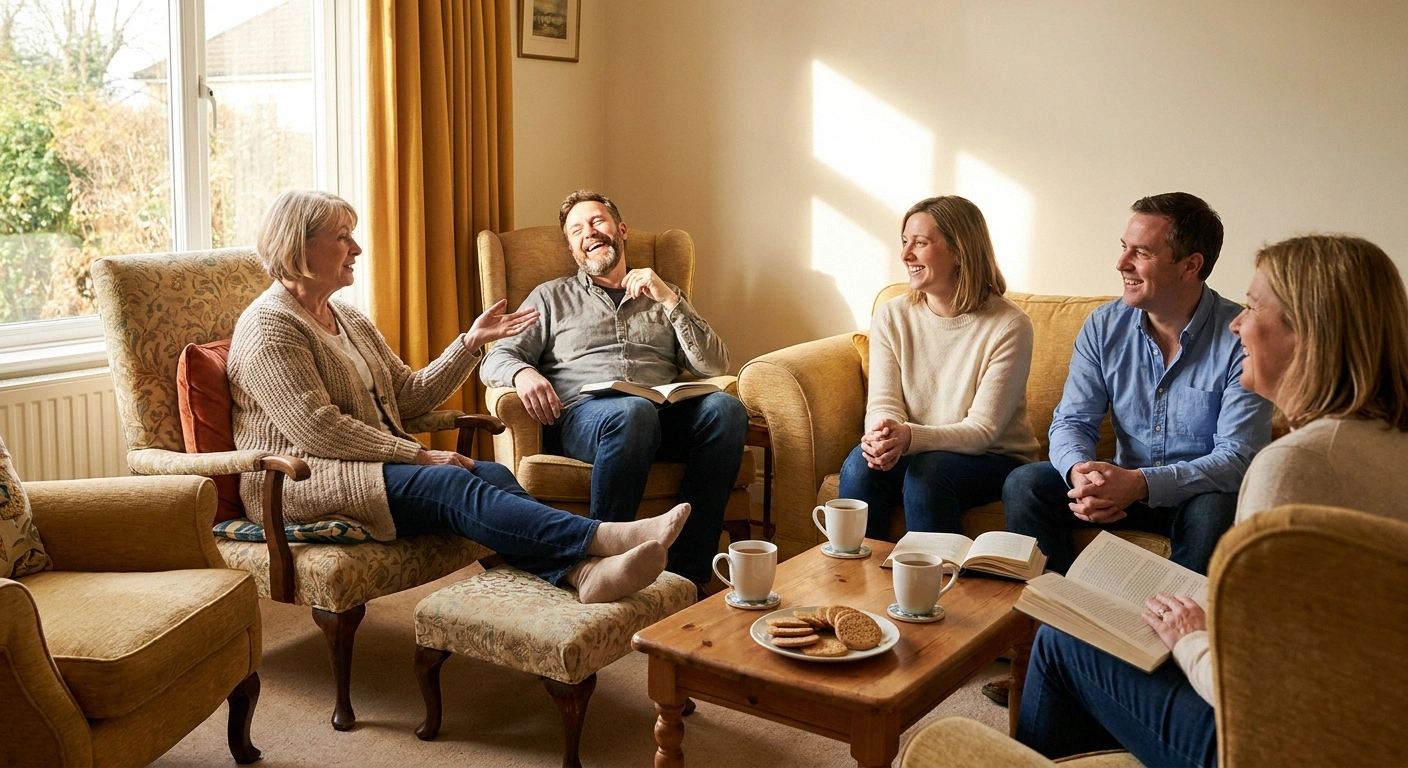
A book club looks like the gentlest possible social commitment. You sit down, you talk about a novel, you go home. No walking, no standing, no queueing, no weather.
Then you get there and discover you have signed up for two hours in a stacking chair, holding a 400-page hardback open with your thumbs, in a room where getting up and moving around feels like announcing something about yourself.
None of that is a reason to skip it. Reading and talking about what you read is one of the few pleasures neuropathy leaves almost entirely intact, and the company is a good deal better than most of what is on offer. But the logistics deserve about twenty minutes of thought before you commit, and almost nobody gives them any.
Here is the whole thing, from choosing a group to hosting one.
Two Hours Is Longer Than It Sounds
Start with the chair, because it is the thing you will be dealing with for the entire meeting.
Most book clubs run ninety minutes to two hours. That is longer than a restaurant meal, longer than a film, and considerably longer than any medical appointment you have sat through. Whatever chair you land in, you are in it for a while.
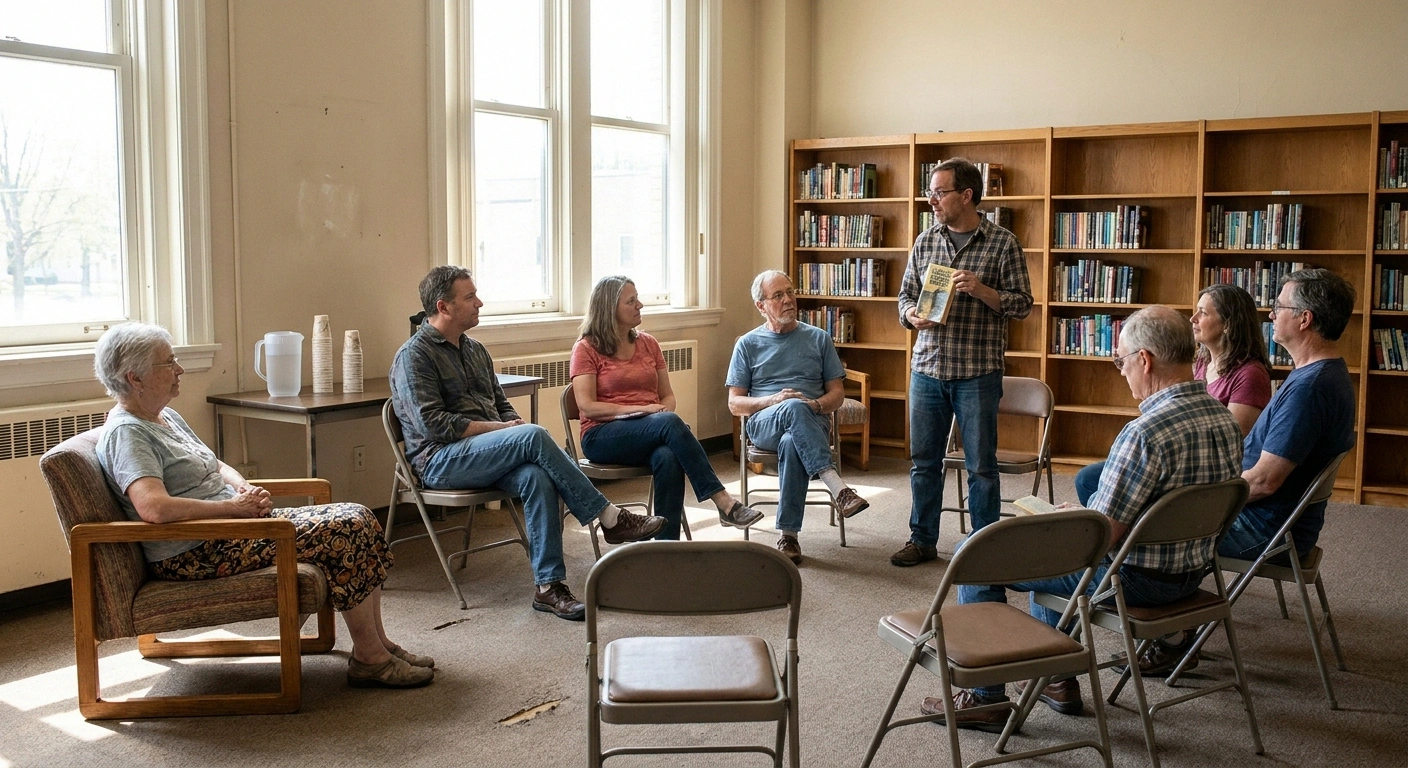
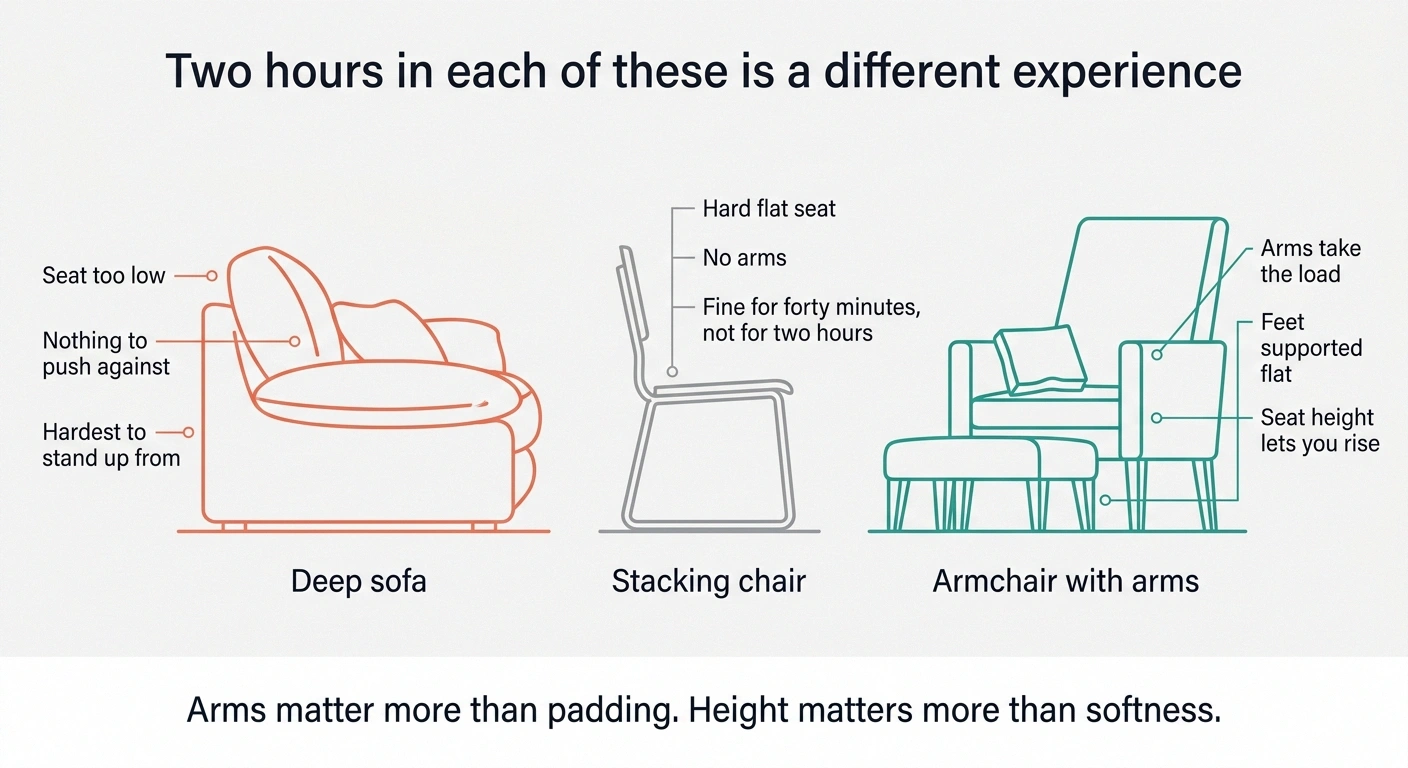
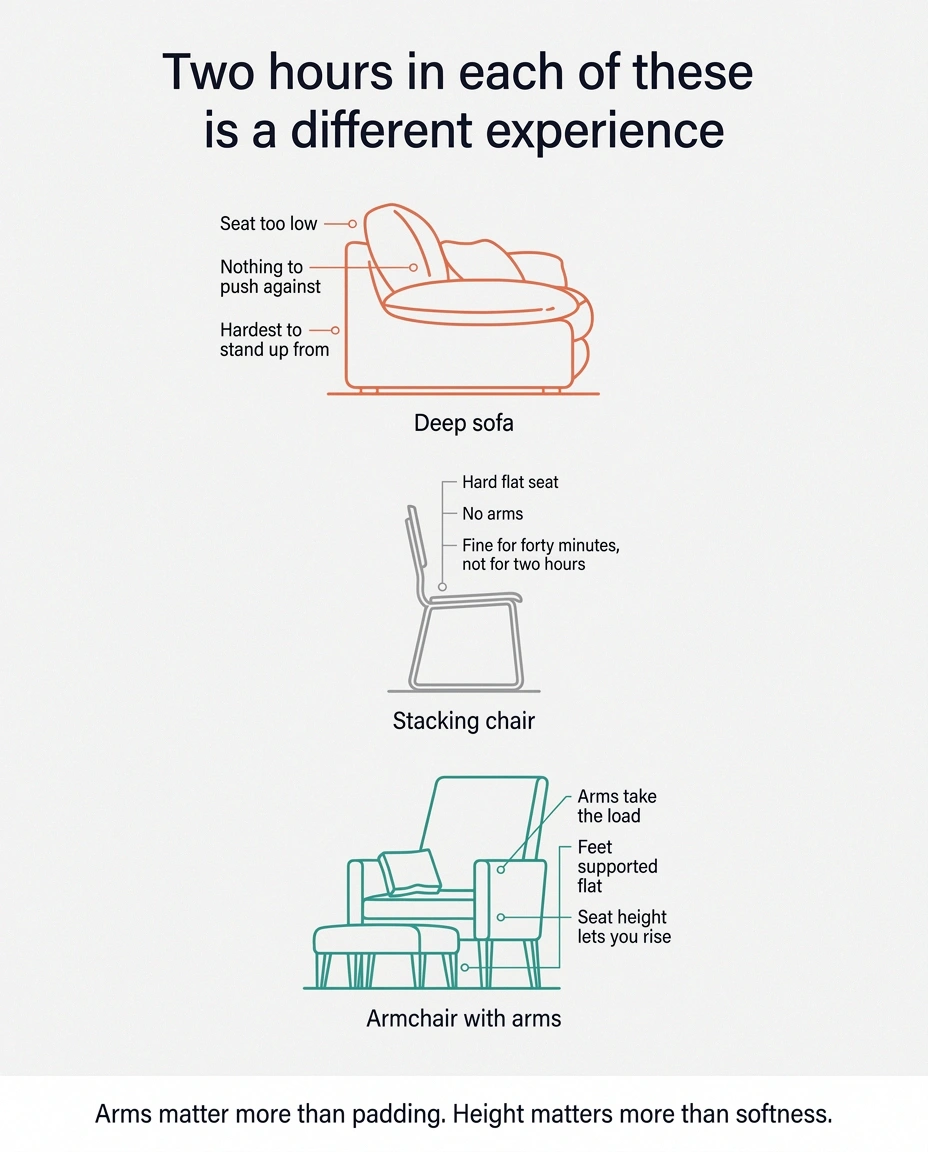
Different venues fail in different ways. Library meeting rooms have stacking chairs: hard, flat, usually no arms, and unforgiving after about forty minutes. Bookstore cafés have small chairs pulled up to tables that are the wrong height. Private homes have deep soft sofas, which sound wonderful and are the single hardest surface in the world to stand up from when your legs are unreliable.
Three things help, and all of them are free or close to it.
Bring your own cushion. A seat pad, a folded scarf, a small travel pillow. Nobody notices, and if they do, nobody cares. Firm and thin beats thick and squashy, because you want the pressure spread rather than your weight sinking into one spot.
Pick your chair on arrival rather than accepting one. Get there five minutes early and take the seat with arms, near the edge of the group, where standing up does not require anyone else to move. Arms matter more than padding, because they are how you get up without loading your legs. Being at the edge matters because it means you can shift, stretch or stand without turning yourself into the room's main event.
Move on a schedule, not on a signal. Every fifteen or twenty minutes, pump your ankles, roll them, press your toes down and release, shift your weight from one side to the other. It is invisible while you are sitting and it prevents the deep ache that arrives when a numb foot has held one position too long. If you wait until you notice discomfort, you have waited too long, because that is the whole problem with feet that report unreliably.
Footwear is worth a thought too, particularly if the meeting is somewhere you have to walk to. Our guide to shoes for neuropathy covers what actually helps, and the short version for a book club is that this is not the evening for anything you are still breaking in.
Holding the Book Is Its Own Job
The second problem catches people by surprise, because reading has never previously been a physical activity.
A hardback is heavy. Holding one open requires sustained grip plus thumb pressure against the spine, held for as long as you read. A paperback is lighter but worse in one respect, because it closes on itself, so your hands are constantly working to keep it open. If your hands are affected, an hour of that is genuinely tiring, and the fatigue shows up as fumbling and dropping rather than as pain.
Page-turning is its own small task. It needs fingertip friction and fine control, which are exactly the two things that go first when sensation fades. People develop workarounds without realizing it: licking a finger, using a knuckle, sliding rather than pinching. Those all work.
The genuine fixes are equipment, and they are cheap.
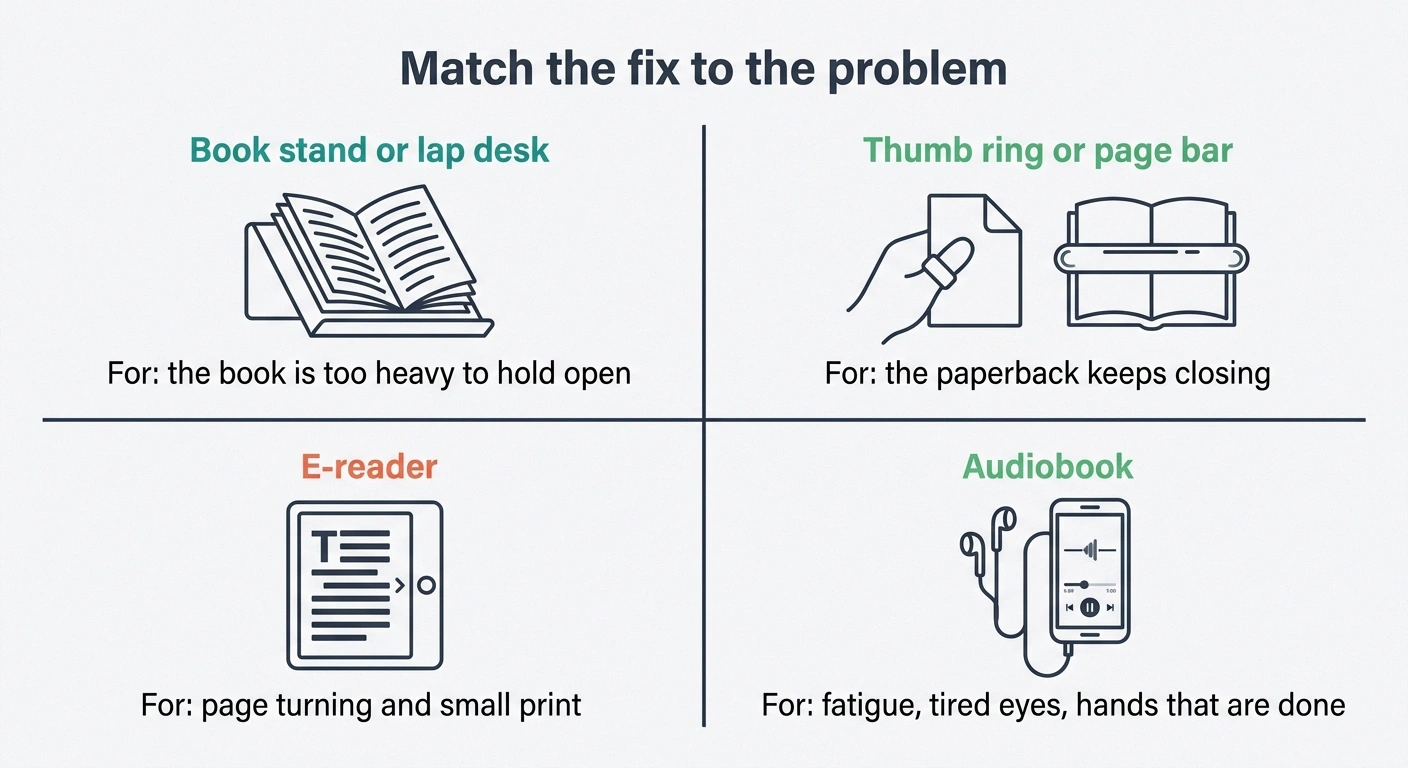
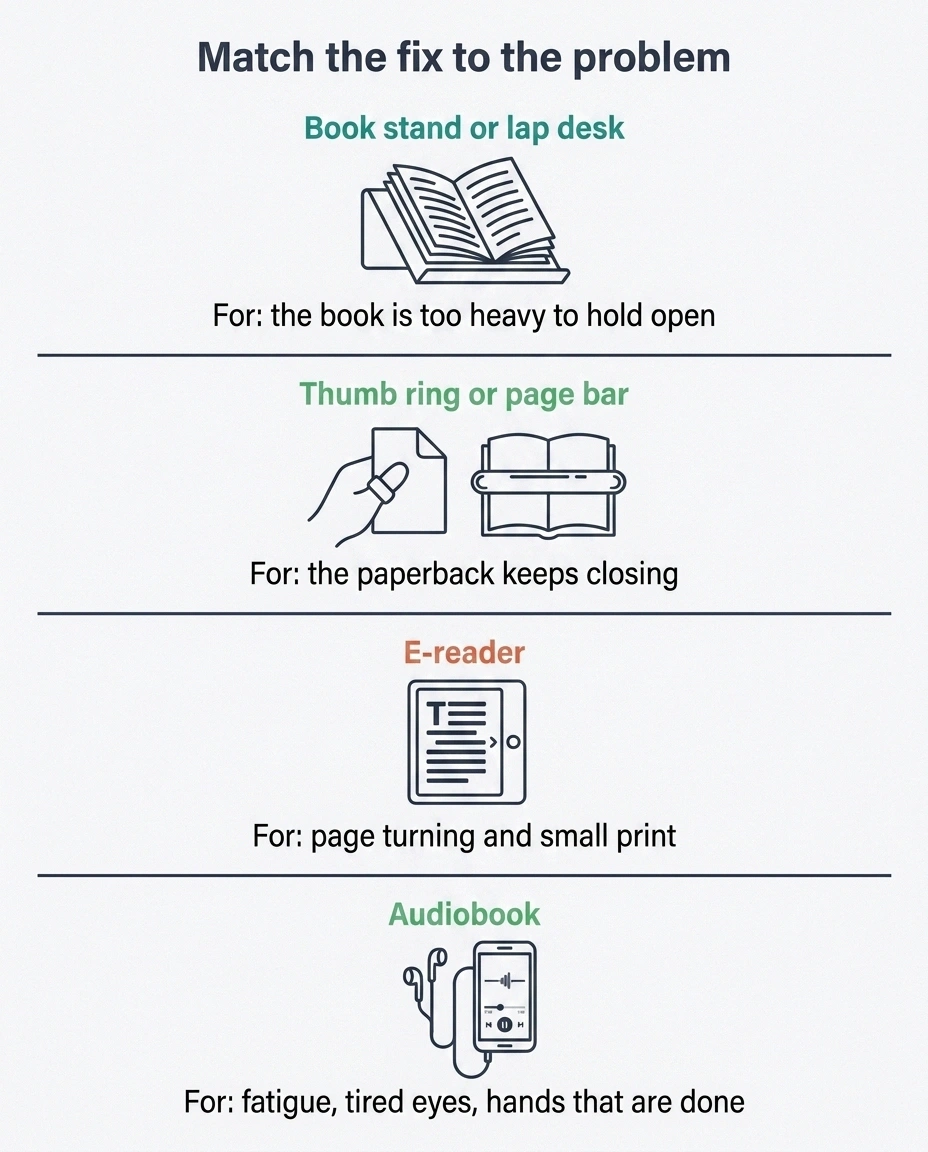
A book stand or lap desk. This removes grip from the equation entirely. The book sits open, you turn pages, your hands otherwise rest. For home reading it changes the experience completely, and a lap desk with a bean-bag base works on a sofa as well as at a table.
Page holders. A thumb ring, a weighted page bar, or in a pinch a couple of heavy coasters. Small, cheap, oddly transformative.
An e-reader. Lighter than almost any hardback, holds itself open, turns pages with a tap or a physical button, and lets you set the type size to whatever your eyes want tonight. If cold hands are part of the picture, the reduced grip demand is the real benefit rather than the technology.
Our guide to neuropathy in the hands goes into more detail on grip and fine-motor problems and what tends to help with each.
Picking a Club That Fits Your Body
Not all book clubs are equally manageable, and this is worth weighing before you join rather than after.
Four kinds of club, four different weak points
Worth knowing before you commit rather than after your third meeting.
Library group
Good: daytime, accessible building, parking, and staff who handle accommodation requests as routine.
Weak point: stacking chairs.
Bookstore or cafe
Good: sociable, easy to drop into, no hosting obligation ever.
Weak point: small chairs, wrong table height, and usually evenings.
Rotating homes
Good: the warmest group culture and the most comfortable seating, when it is the right house.
Weak point: unknown steps, sliding rugs, deep sofas, and your turn to host.
Online
Good: your chair, your cushion, your temperature, and you can stand up unnoticed.
Weak point: thinner conversation, and no lingering afterward.
Library-run groups. Usually daytime, usually accessible buildings, usually parking. The chairs are the weak point. The strength is that libraries are institutionally comfortable with accommodation requests, so asking for a chair with arms gets you a chair with arms rather than a conversation.
Bookstore and café groups. Sociable, and the seating is often poor: small chairs, high tables, background noise. Evening timing is common, which is a real consideration given how reliably symptoms escalate after dark. Our piece on why neuropathy gets worse at night covers what is behind that pattern.
Rotating home groups. The most comfortable seating and the most variable everything else. You are dealing with a different house each month: unfamiliar steps, unknown lighting, rugs that slide, and a sofa you cannot assess until you are already sitting in it. There is also a hosting obligation, covered below. If balance is a concern in unfamiliar spaces, our notes on balance and fall prevention are worth reading before your first rotation.
Online groups. The best physical control available. Your own chair, your own cushion, your own temperature, your own footstool, and you can stand up mid-discussion without anyone registering it. The trade is social texture, which is thinner over video, and the fact that you cannot really linger afterward. For anyone whose symptoms fluctuate unpredictably, the ability to attend a bad day from your own armchair is worth a great deal.
A workable compromise: an in-person group that meets in the daytime, in a building you can assess in advance, with an online option when you need it. Plenty of groups now run hybrid without making a fuss about it.
The Formats That Solve Real Problems
Here is a question that stops more people than the seating does: what if you cannot read the book?
Match the fix to the actual problem
Buying the wrong one is how people conclude that nothing helps.
The book is too heavy to hold open.
A book stand or lap desk. Removes grip from the task entirely. The bean-bag-base kind works on a sofa as well as a table.
The paperback keeps closing on itself.
A thumb ring or weighted page bar. Costs a few pounds or dollars and solves the problem completely.
Turning pages with numb fingertips.
An e-reader with a physical page button, or a rubber fingertip cover. Sliding with a knuckle also works and costs nothing.
Eyes tire before the chapter ends.
Large print from the library, or type size on an e-reader. Libraries will order large print in through interlibrary loan if the branch has none.
Fatigue makes 350 pages in four weeks unrealistic.
Audiobooks, free from your library through Libby or Hoopla. Listen in the car, in the kitchen, on a walk. Positions sync with the print edition on most services.
Not cannot read in the sense of comprehension. Cannot read in the sense that your hands do not want to hold it, your eyes are tired, or the fatigue that comes with chronic pain makes 350 pages in four weeks feel like a mountain.
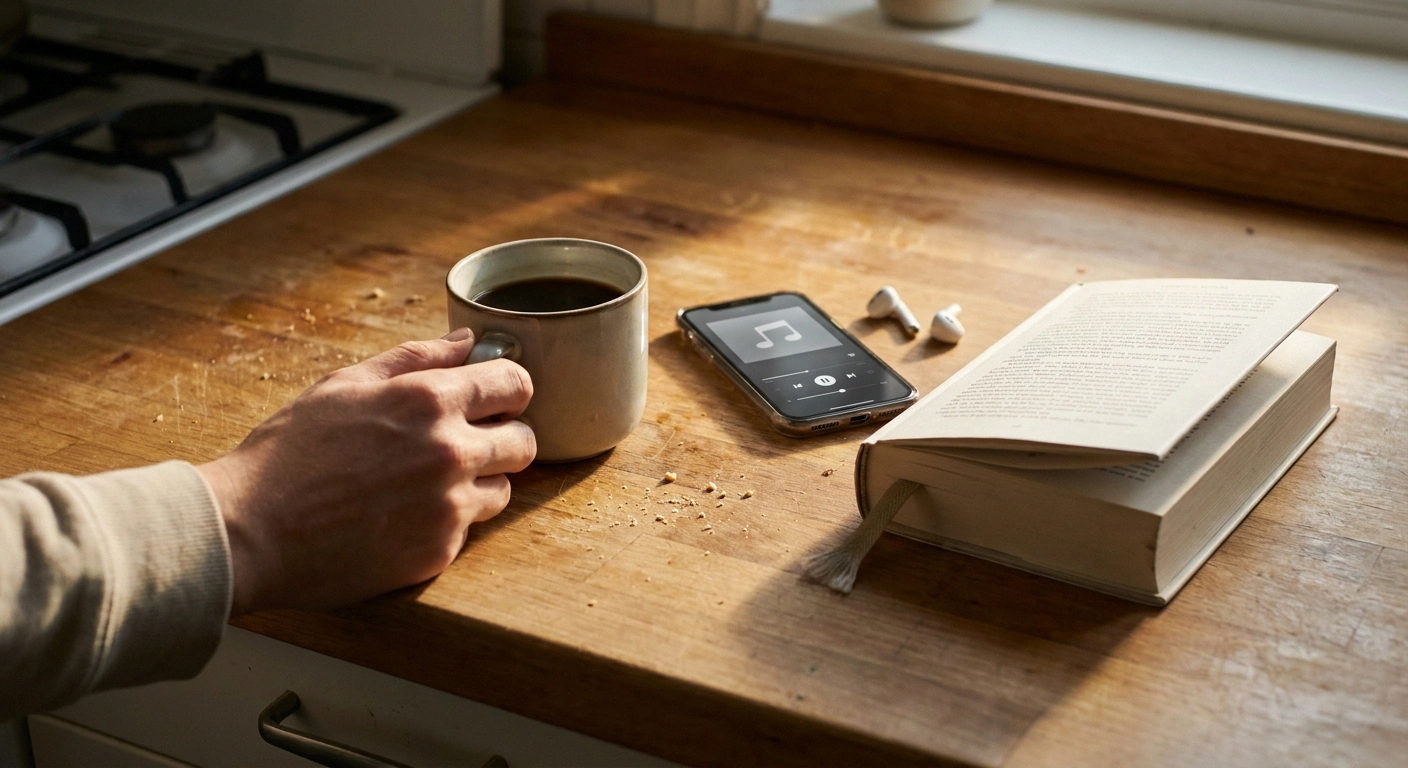
Audiobooks count. This is the answer, and it needs saying plainly because so many people quietly assume otherwise. Listening to a book is reading a book for every purpose a book club has. You will have opinions about the narrator that nobody else has, and you will occasionally be unsure how a character's name is spelled, and that is the extent of the difference. Your library lends audiobooks free through apps like Libby and Hoopla, so this costs nothing to try.
Large print exists and is underused. Most public library systems stock large print editions and will request them through interlibrary loan if the local branch does not have one. They are physically bigger, which is a mixed blessing for grip, but the reduction in eye strain is real.
Mixing formats is normal. Listen in the car and on walks, read at home with a book stand, switch between the two. Many services sync your position across both. There is no purity requirement here.
Reading position matters more than people expect. Reading upright in a supportive chair with feet flat is easier on most symptoms than reading curled on a sofa, which puts pressure on the outside of one knee and one elbow for an hour at a time. If you read in bed, a wedge pillow and a book stand beat propping yourself on an elbow.
Hosting Without Paying for It All Week
If you join a rotating group, your turn comes around. Hosting is not two hours of work. It is shopping, cleaning, cooking, standing, and then cleaning again, and for a lot of people that is a three-day project with a two-day recovery attached.
The same hosting turn, spread over four days
Nothing here is less work in total. It is the compression into one afternoon that costs you the following two days.
- Three days before. Order or buy whatever you are serving. Shop-bought is entirely sufficient and everyone will be relieved.
- Two days before. Clear the room the group will sit in. Nothing else. Rugs that slide get taken up now rather than on the day.
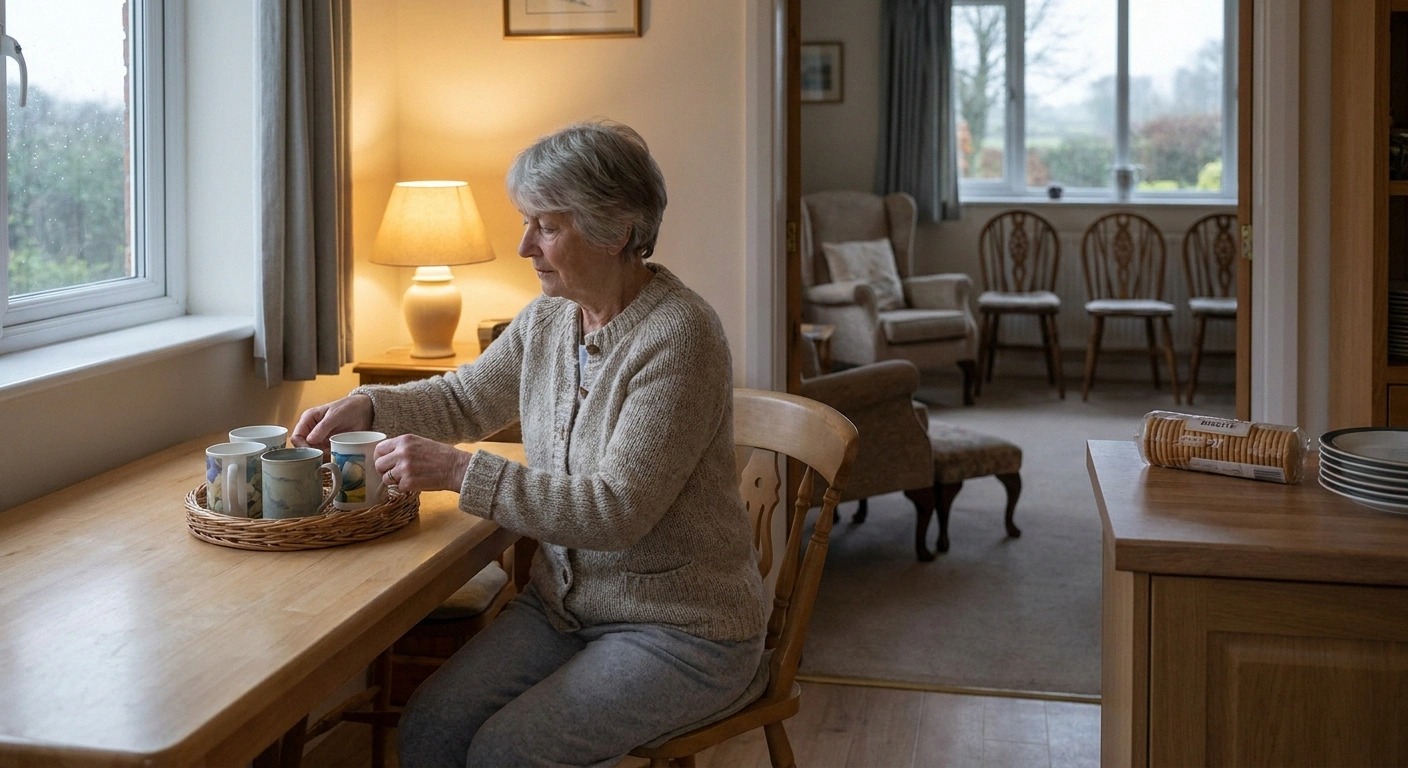
- The night before. Set the chairs out, including your own where you want it, with your footstool already in place. Put the mugs on a tray.
- On the day. Kettle, plates out, sit down. Prepare seated at the table rather than standing at the counter.
- Afterward. Say yes to the person who offers to wash up, and leave the rest until tomorrow. It will still be there.
It is also entirely reasonable to host on your own terms.
Shrink the catering. The unspoken competition over refreshments is one that nobody actually wants to be in. Tea, coffee, and something shop-bought is completely sufficient, and hosts who do this reliably give everyone else permission to relax. Nobody remembers the food. They remember whether the conversation was good.
Split the week. Tidy on one day, shop on another, set up chairs the night before. The damage comes from compressing everything into the same afternoon, not from the total amount.
Sit down to prepare. Arrange things at the kitchen table rather than at the counter. A tall stool at the counter also works and saves your feet the standing time.
Set up your own chair first. You are the host and you get to choose where you sit. Put your good chair where you want it, with a footstool if you use one, and let everyone else fill in around it.
Say yes when people offer to help. Someone will offer to carry the tray or wash up. Let them. The instinct to refuse is strong and it costs you more than it saves anyone.
Ask for a pass if you need one. Groups routinely have one or two people who never host, for all sorts of reasons, and it is far less remarkable than it feels. Offering to do something else instead, such as choosing the books or keeping the reading list, usually settles it entirely.
Saying the Thing Out Loud
The hardest part is rarely the chair. It is telling a room of people you need something.
Say it once, lightly, then never again
Same tone you would use to mention you are parked on a meter. No explanation owed, no apology needed.
“I have a nerve condition in my feet, so I get up and move about every so often. Ignore me when I do.”
“I'll take the chair with arms if that's all right, it's easier for me to get out of.”
“I listened to this one rather than read it, my hands were not cooperating this month.”
“Evenings are harder for me, so if we ever move to daytime I would be delighted.”
In most groups, someone else turns out to have their own version of the same problem and has been waiting for permission to mention it.
You do not owe anyone a medical explanation. But a short, matter-of-fact sentence prevents a lot of low-level worry, because people notice when you shift constantly or stand up mid-sentence, and in the absence of information they tend to assume boredom.
Things that work, said once, lightly, and then never again:
“I have a nerve condition in my feet, so I get up and move about every so often. Ignore me when I do.”
“I'll take the chair with arms if that's all right, it's easier for me to get out of.”
“I listened to this one rather than read it, my hands were not cooperating this month.”
“Evenings are harder for me, so if we ever move to daytime I would be delighted.”
The tone that works is the same one you would use to mention you are parked on a meter. Brief, practical, no apology, no detail. In practice most groups respond by simply accommodating it, and someone else in the room usually turns out to have their own version of the same problem.
Being the person who says it first has a knock-on effect worth noting. Chronic conditions push people out of social life gradually, mostly through the accumulation of small unmentioned difficulties, and the isolation that follows does real damage of its own. We have written about that separately in our piece on neuropathy and mental health.
Starting Your Own
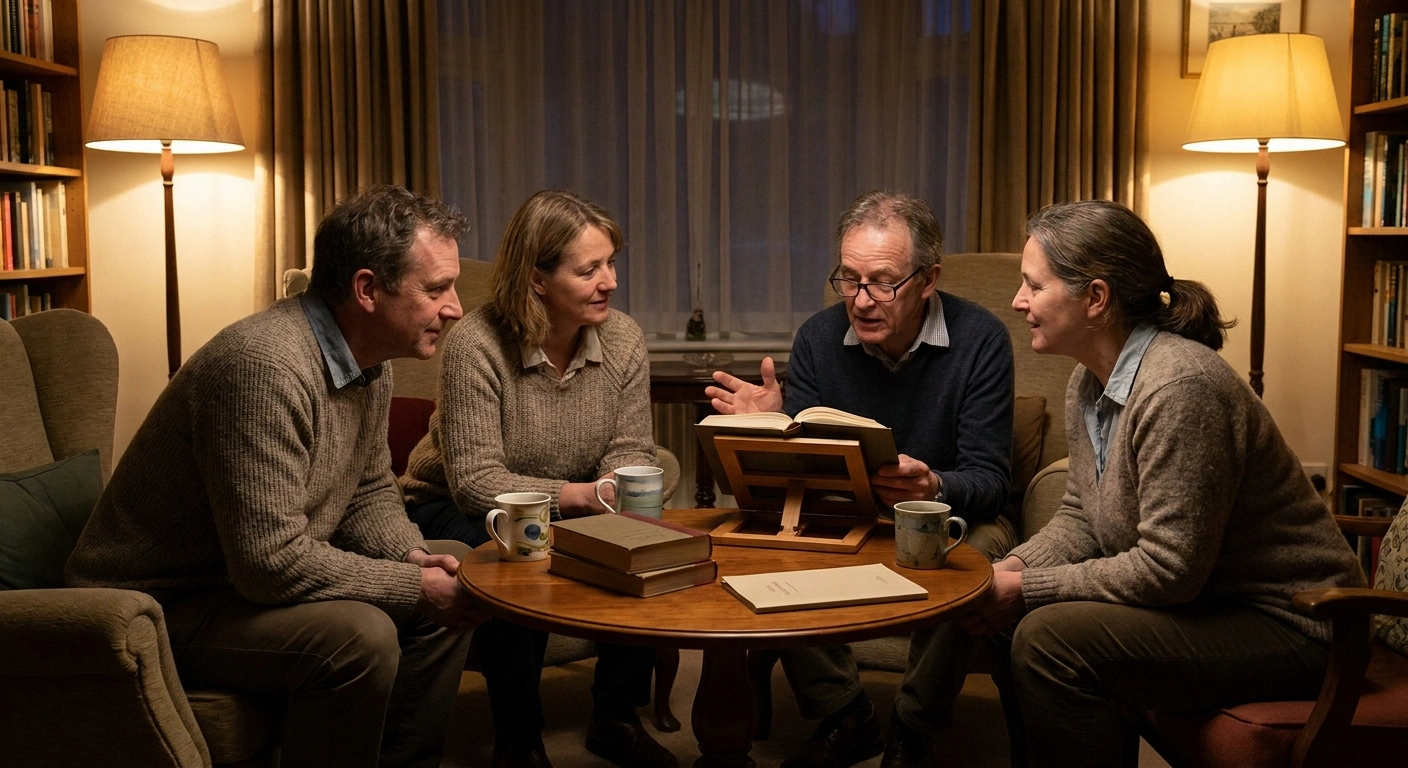
If nothing local fits, the honest option is to build one that does. It is far less work than it sounds, and it puts every variable in your hands.
Four or six people is plenty. Larger groups need more structure and a bigger room.
Pick the time that suits your symptoms. Late morning or early afternoon is kindest for most people with neuropathy, and it turns out to suit a lot of other people too.
Choose a venue you have already assessed. Your own living room, a library room you have booked before, a café with proper chairs at a quiet hour.
Set the norms at the start, because the first meeting sets them permanently whether you intend it or not. Audiobooks count. Nobody has to finish the book. Refreshments are optional and modest. People get up and move around whenever they like. Announcing these as the group's culture on day one means nobody ever has to ask for them as a favor.
Keep the books manageable. A 600-page hardback is a physical commitment as well as a time one. Mixing shorter books and essay collections into the rotation is a kindness to more people than you would guess.
Frequently Asked Questions
Does listening to an audiobook count for a book club?
Yes. You will have absorbed the same story, formed the same opinions, and be able to discuss it exactly as well as anyone who read the print edition. The only practical differences are that you may have views about the narrator that nobody else shares, and you may not know how an unusual name is spelled. Neither has ever damaged a discussion.
How do I ask for a better chair without making it awkward?
Ask before the meeting rather than during it, and keep it practical. “Is there a chair with arms I could use? They're easier for me to get out of” is enough. Libraries and community venues handle these requests routinely. In someone's home, arriving five minutes early and choosing your seat sidesteps the conversation entirely.
What if I cannot finish the book because of fatigue or pain?
Come anyway. Most book club members arrive without having finished at least occasionally, and groups are used to it. Say that you got partway and would rather not know the ending, or that you finished it as an audiobook, or that you did not get to it this month. None of it is unusual.
Are evening meetings really worse?
For many people, yes. Neuropathy symptoms commonly intensify in the evening and at night, and by then you have also spent a full day on your feet. If you can choose, daytime is easier. If your group meets in the evening, arriving rested and planning a lighter following morning helps considerably.
What should I bring to a book club meeting?
A seat cushion, a water bottle, a light layer in case the room runs cold, your reading glasses, and the book in whatever format you used. If you use a walking aid, bring it even on a good day, because unfamiliar homes have unfamiliar steps.
Is an online book club a poor substitute?
It is a different thing rather than a lesser one. You lose the incidental conversation before and after, and you gain complete control over your chair, your temperature, your footstool and your ability to move without being watched. For anyone whose symptoms fluctuate day to day, being able to attend from your own armchair on a bad day means attending far more often overall.
How do I get out of hosting?
Say that hosting is difficult for you and offer something else instead, such as managing the reading list, booking the venue, or bringing something to a meeting elsewhere. Most groups already have members who never host. It is far less noticeable from the inside of the group than it feels from the inside of your head.
What is the best way to hold a book if my hands are weak?
Take the holding out of your hands. A book stand or lap desk supports the book open at a readable angle while your hands rest, and a thumb ring or weighted page holder keeps the pages down. An e-reader solves the same problem in one object, since it holds itself open and turns pages with a tap.
About the Author