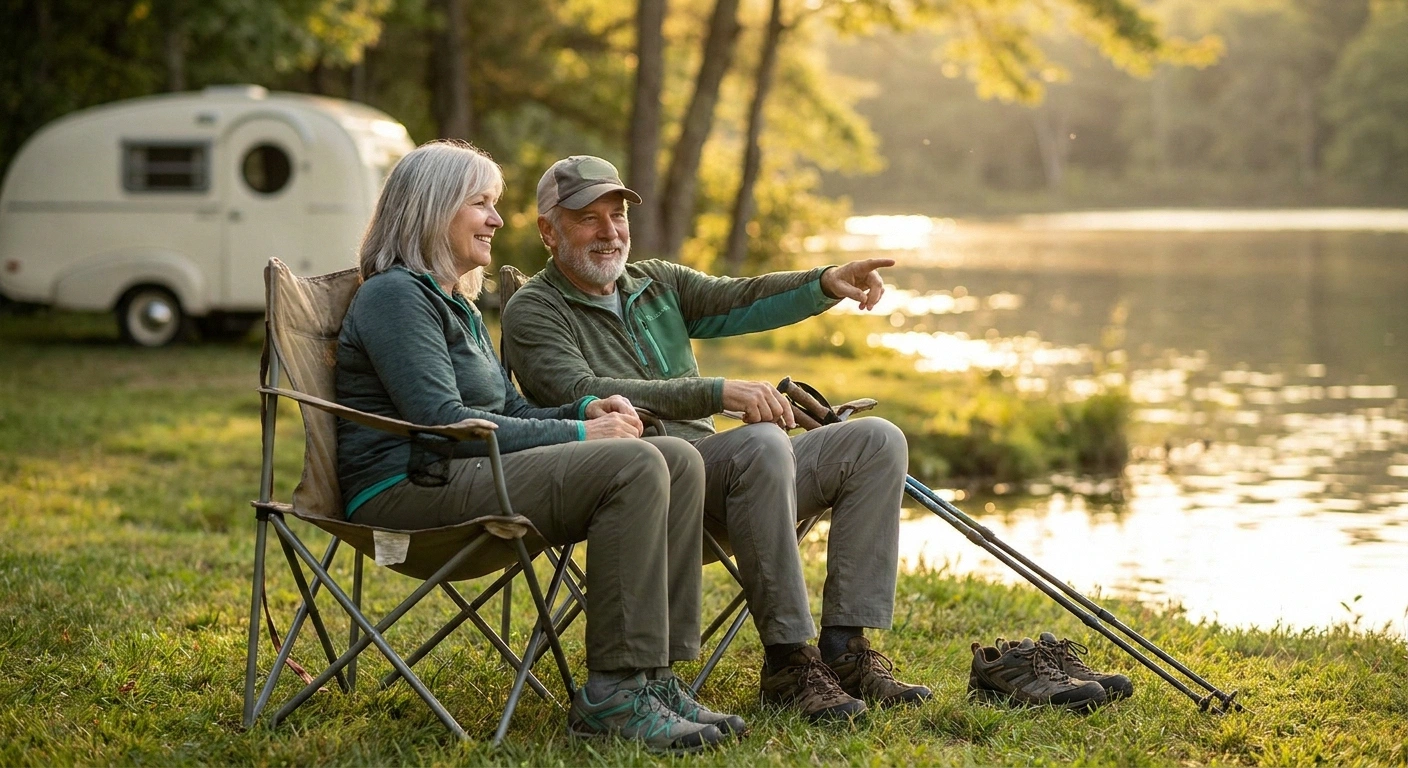
A reader named Carol wrote to me in May with a question I had not been asked before. Her husband Tom had been diagnosed with diabetic neuropathy two years earlier, and the two of them had been camping enthusiasts for thirty years. They had a small camper, a few favorite state parks, and a yearly tradition of a long August weekend at a lake about an hour from their house. Tom had been quietly worrying that this year would be the first year he had to bow out — and he was sad about it in a way that surprised Carol. “He says he's fine missing it,” she wrote, “but I can tell he is not fine.”
I wrote back with what I knew, and Tom and Carol ended up making it work. They went in late August, came back a little tired but happy, and Tom emailed me himself in the fall to say it had been one of his best weekends of the year. He had been worried for nothing — with the right small adjustments, camping was still very much within his reach.
I am writing this article because there are a lot of Toms out there. People who used to camp, who love camping, who think their neuropathy means they have to give it up. The honest truth is that camping is one of the more accommodating outdoor activities for people with neuropathy — once you know what to plan for. This is a practical, no-jargon guide to camping comfortably and safely with neuropathy, from a friend who has had the same conversations with a lot of readers over the years.
The Five Things to Plan For — A Quick Map
Camping with neuropathy comes down to thinking through five categories in advance: sleep, feet and footwear, heat and hydration, terrain and balance, and emergency planning. Almost every comfort or safety issue camping presents can be solved if you have thought about these five before you leave home.
This is not a long article of doom and gloom — it is meant to help you say yes to camping with confidence. Let me walk you through each one.
Sleep — The Single Most Important Variable
A well-rested camper has a wonderful trip. A sleep-deprived camper has a miserable one. With neuropathy, sleep is often already harder than for the average person — pain, restlessness, and temperature sensitivity all conspire against it. Camping makes the sleep equation different from home. Plan for it deliberately.
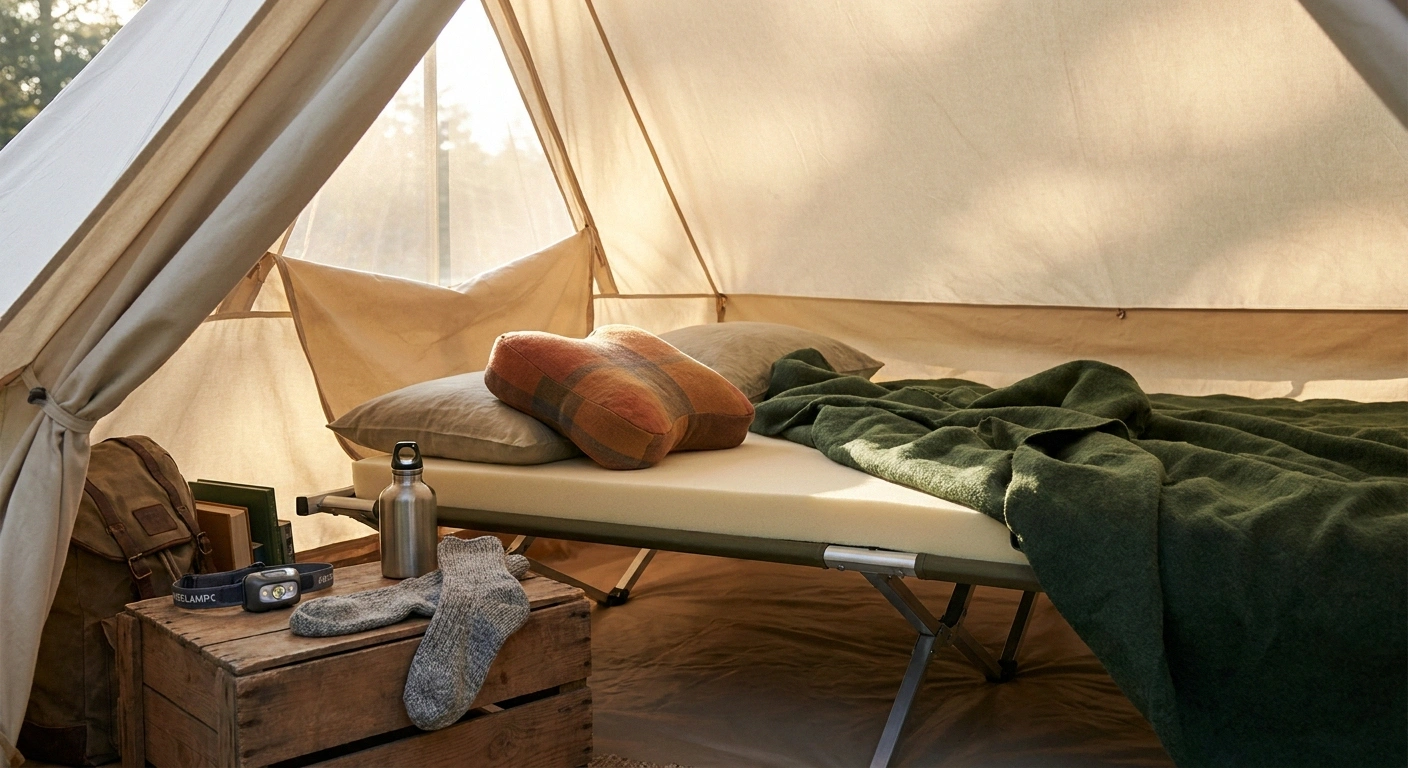
Sleeping surface. A thin foam pad on the ground is going to make your feet, ankles, and back hurt more by morning. Invest in a thicker self-inflating pad (at least 2-3 inches) or use a small inflatable mattress with a built-in pump. Many people with neuropathy do best on a small cot off the ground — it keeps you out of the cold floor and gives a sleep surface that feels more like home. If you have a camper, a real mattress topper makes a huge difference; a memory-foam pad an inch or two thick on top of the existing mattress transforms the comfort level.
Pillow strategy. Bring a small body pillow or extra pillow specifically for putting between your knees if you side-sleep, or under your knees if you back-sleep. This keeps pressure off the sciatic nerve and reduces nighttime burning. Bring more pillows than you think you need — camping is not the time to skimp.
Temperature control. Cold feet at night are a misery for everyone but especially for neuropathy. Pack warm wool socks specifically for sleeping (different from your daytime socks), a hot water bottle or rechargeable hand warmer for your feet, and an extra blanket. If you sleep hot instead of cold, bring a small battery-operated fan and bamboo or linen sheets.
Light. A headlamp on your bedside is essential for nighttime bathroom trips. Falling in the dark on uneven ground is one of the bigger camping risks for someone with balance issues. Keep the headlamp where you can find it without looking.
Bathroom logistics. If you need to get up in the night, the path from your sleeping setup to the bathroom matters enormously. Scout it during the day. Note any roots, rocks, or steps. Use a wide-beam headlamp, not a phone flashlight. If the bathroom is a long walk in the dark, consider a portable nighttime alternative — a small camp commode or a wide-mouth bottle near your bed — to avoid the trip entirely.
Feet and Footwear — Your Most Important Gear
Feet are where most camping problems for neuropathy patients start. Hot pavement, sharp pebbles, unseen sticks, fire pit embers, and creek-bottom rocks all become risks when sensation is reduced. Get the footwear right and most of these vanish.
Bring at least three pairs of shoes. A primary walking shoe for the daytime, a secondary pair if the first gets wet or muddy, and a closed-toe slipper or sandal for around the campsite. Wet shoes on someone with poor temperature sensation can quickly cause blisters or cold injury.
Closed-toe footwear at all times outdoors. Even at the campsite. Even by the campfire. Especially at the campfire. Embers, sparks, falling sticks, and the simple risk of stubbing a numb toe make open-toe sandals a worse choice than they seem. Closed-toe footwear with a back strap is the standard.
Bring extra socks. Many extra. Wool or merino blend is best because it stays warm even when damp. Moisture-wicking is more important than thick. Pack twice as many pairs as you think you need so you can change immediately if your socks get wet — wet socks plus neuropathy plus a long day is a recipe for blisters and worse.
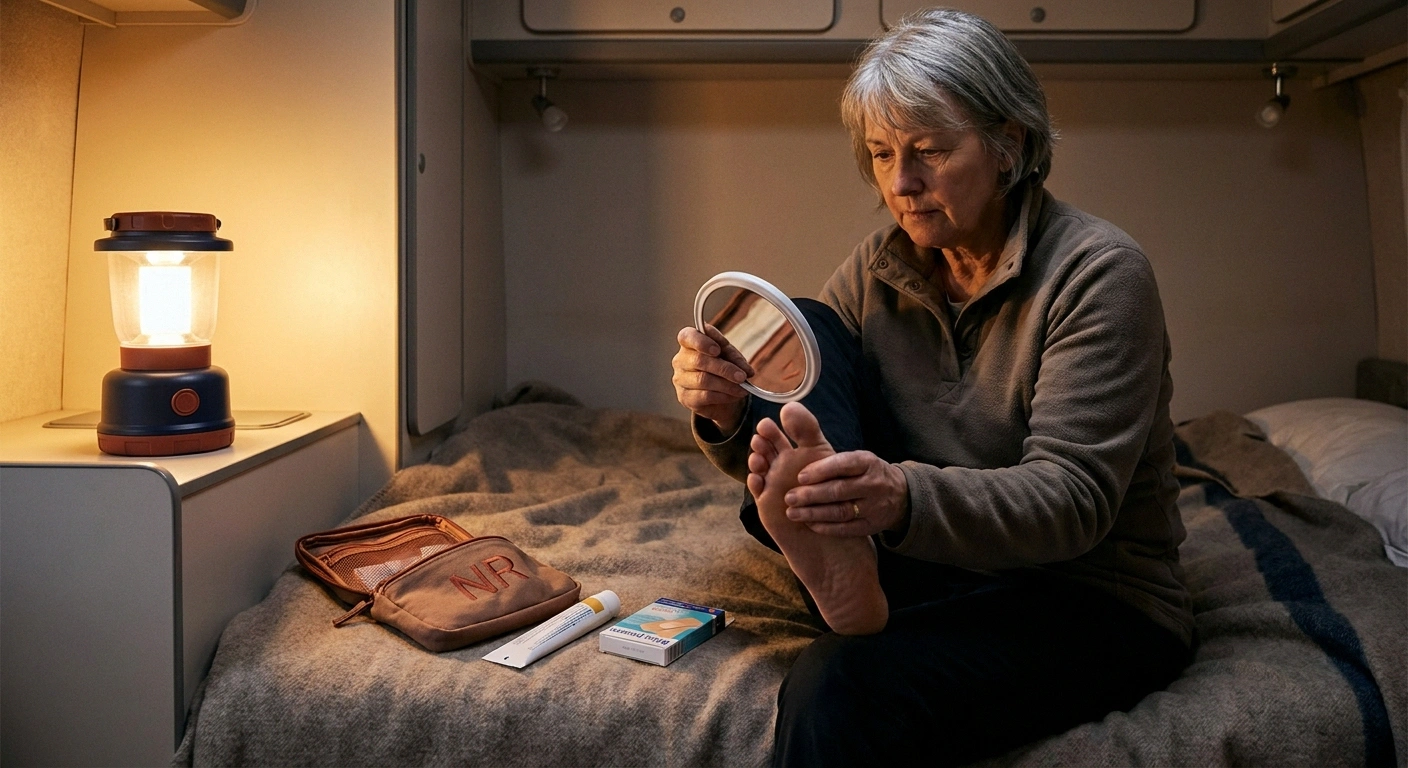
Check your feet every night. This is the single most important habit in camping with neuropathy. Before bed each night, do a quick foot inspection — look for blisters, scrapes, cuts, redness, embedded debris, hot spots, or anything that looks different from yesterday. A small first-aid kit with bandages, antibiotic ointment, blister patches, and a small flashlight should be by your sleeping spot. Catching a problem early prevents the much bigger problem of an infected wound a day later.
Water shoes for any waterfront activity. Sharp rocks, hot beach sand, and unseen broken glass make bare feet risky. A pair of water shoes or closed-toe sport sandals is worth packing.
Heat, Hydration, and the Pacing Problem
Summer camping involves heat that you cannot escape into air conditioning. For someone with neuropathy, heat dilates blood vessels (which can intensify burning), causes faster dehydration (which makes nerve symptoms worse), and disrupts sleep. The whole stack matters.
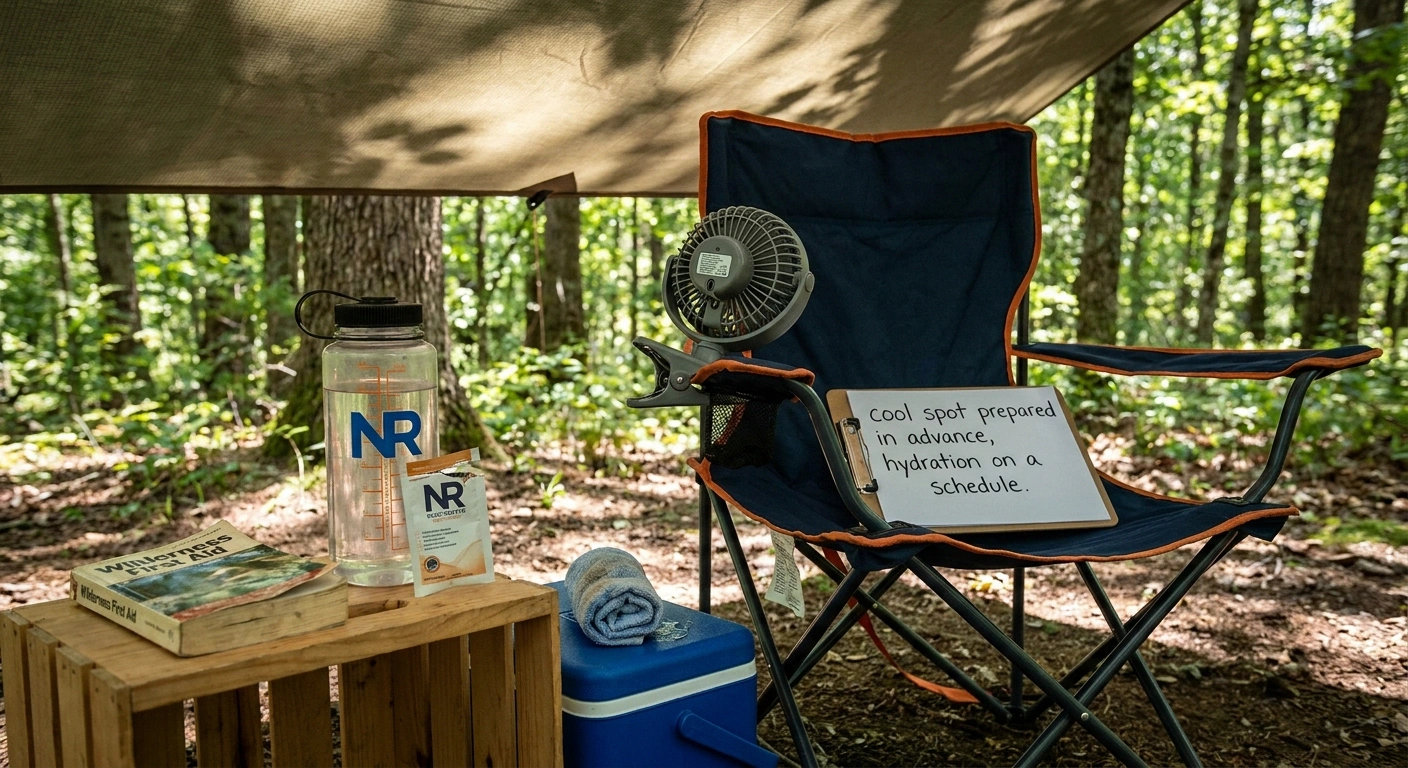
Drink on a schedule, not by thirst. Thirst is a lagging indicator. Aim for a glass of water on waking, a glass with each meal, and at least a glass every couple of hours during the day. Keep a marked water bottle visible at all times — out of sight tends to mean out of mind.
Add electrolytes once a day. An electrolyte powder or tablet (sodium, potassium, magnesium) added to a water bottle once a day helps prevent the muscle cramps that hot-weather camping tends to cause. The salt-and-lemon combination is also fine if you prefer real food.
Pace your activities to the heat curve. Plan your bigger outings — hikes, paddling, longer walks — for the cooler hours of morning and evening. Use the hottest part of the day (roughly noon to 4 PM) for low-effort activities — reading in the shade, napping, gentle puttering around camp. This is not laziness; it is matching your body to the conditions.
Set up a cool spot in advance. Pick your shadiest seating area, set up a camp chair with a small fan, and keep a damp washcloth in a small cooler. When you start to feel overheated, you have a destination ready.
Cool your feet directly. A small basin of cool (not cold) water for foot soaking at the end of the day calms the burning that hot-weather camping intensifies. Bring a small collapsible basin or use a clean dishpan.
Know the warning signs. Confusion, stopping sweating despite the heat, severe cramping, dizziness, and headache that does not respond to water are warning signs of heat illness. Take them seriously, get into shade, drink, and rest. If they do not resolve quickly, head to a medical facility.
Terrain and Balance — Walking the Real World
Campgrounds are not flat sidewalks. The ground has roots, rocks, sticks, gravel, slopes, and unpredictable changes. For someone with reduced sensation in the feet or balance issues, this is where falls happen.
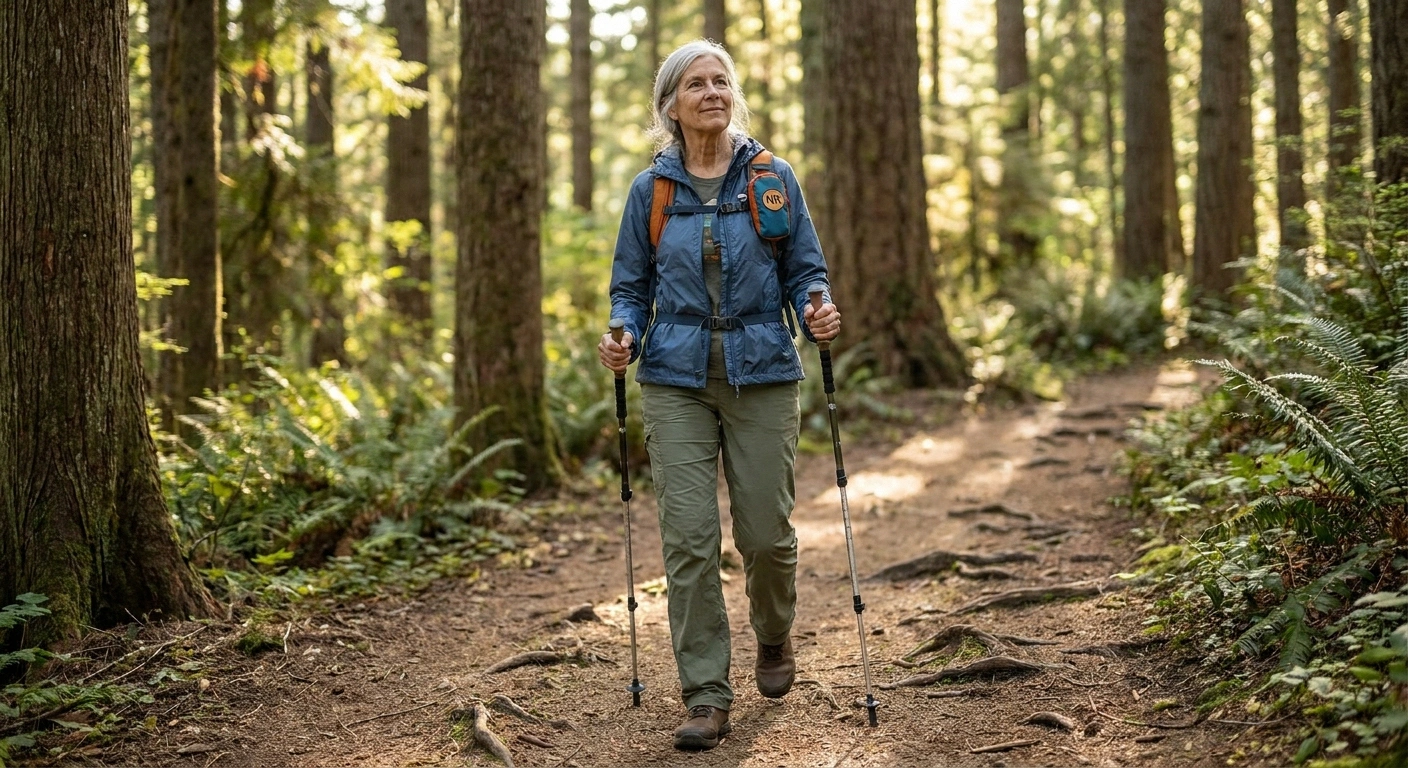
Use trekking poles for any walking outside the immediate campsite. Even on relatively flat trails. A single pole or pair of poles adds two contact points to the ground and dramatically improves balance. Modern collapsible poles fit in a backpack and weigh almost nothing. If you have not used poles before, watch a short video and try them in your backyard before the trip.
Scout the campsite by daylight. When you arrive, do a slow walk around your campsite and note any tripping hazards — roots near the picnic table, a slope down to the fire pit, a step into the camper. Move what you can move; flag what you cannot with a piece of bright tape or a small reflector. Know where the rough spots are before you are walking the same path in the dark.
Bring a sturdy chair. A folding camp chair with a real back, real armrests, and a higher seat height is much easier to get out of than a low folding stool. The cheap stools are part of the reason camping is hard for people with balance problems — they require a deep squat to sit down and stand up.
Plan for graduated activities. If hiking is in the plans, start with shorter, flatter trails. Save the longer or steeper ones for after you have proven to yourself that your feet and balance are good that day. Going out too aggressively early in the trip can put you out of commission for the rest of it.
Have a “rest day” in the middle of longer trips. Two days of light activity is better than three days of fighting through fatigue.
Emergency Planning — Hope for the Best, Plan for the Real
Most camping trips are uneventful. The few that go wrong tend to go wrong faster and worse when you are far from cars, cell signal, and other people. A little planning makes the rare bad day survivable.
Tell someone your plan. Where you are camping, when you expect to arrive, when you expect to come home. Check in once a day if you have cell signal. If you do not have signal, agree on a daily “if you do not hear from me by X, call the campground.” This is basic and free.
Know your nearest medical facility. Before you go, look up the closest urgent care and the closest emergency department to your campsite. Save the addresses in your phone and write them in a paper notebook in your camper. If you are an hour from anywhere, know which hospital that hour gets you to.
Carry a medical summary in writing. A simple page that lists your name, your conditions (neuropathy, diabetes, any other relevant diagnoses), your medications and doses, your allergies, your emergency contacts, and your primary care provider. Keep one copy in your wallet and one in the camper. If you are with a partner, make sure they know where it is.
Bring extra medication. Pack at least three days more than you think you will need. If you take insulin, store it properly. If you take medications that must be taken at specific times, set phone alarms.
Pack a basic first-aid kit upgraded for neuropathy. Beyond the usual: extra blister patches, alcohol wipes, antibiotic ointment, a few sterile gauze pads, medical tape, a small bottle of saline for rinsing wounds, and ibuprofen or acetaminophen. A small mirror is also useful for checking the bottoms of your feet without contorting.
Know the signs that warrant abandoning the trip. A wound on your foot that you cannot keep clean. Increasing redness or warmth around any injury. A fever. Calf pain or swelling that could be a blood clot. New, severe symptoms of any kind. The trip is not worth a worsened medical situation. Be willing to pack up and head home — and have your partner know that this is a possibility.
The Camping Setup Decisions That Matter Most
A few high-leverage choices about how you camp can make a big difference. Worth thinking about before you book a site.
Site location within the campground. Request a flat, level site near (but not directly across from) the bathrooms. Closer to the bathroom means shorter nighttime trips. Avoid sites with steep slopes, deep gravel, or rough terrain. State park websites often show site photos — use them.
Camping vs. cabin vs. RV. Tent camping is the most demanding physically. A cabin (most state parks have them at modest cost) eliminates almost all the ground-level discomfort while keeping the campground experience. An RV or camper is the middle option — real bed, real bathroom, real climate control — and is what many readers gravitate toward as their neuropathy progresses. There is no shame in choosing comfort.
Length of trip. A first trip after a long break, or a first trip with a new diagnosis, should be short — two nights, or even one. Build confidence before tackling longer adventures. A successful short trip is much better than an ambitious long one that turns into a disaster.
Travel partners. Camping with at least one other person is significantly safer for someone with neuropathy. A partner can help with set-up, share night-time bathroom escort, notice signs of heat stress or balance problems you might miss, and provide help in an emergency. Solo camping is doable but requires more careful planning.
Activity selection. Match the activities to your real capacity, not your ideal capacity. Reading by the lake, light hiking, paddling, fishing, watching wildlife, and cooking over the fire are all wonderful camping activities that do not require advanced physical capacity. Save the more demanding goals for a trip when you have warmed up to them.
The Mental Side — Why Camping Still Matters
One of the things I have noticed in talking to readers about camping is that it is often more important to them than they admit at first. People who have camped their whole lives feel a real grief when they consider giving it up. It is not just about the activity. It is about the version of themselves they want to keep being.
That mattering is worth honoring. Camping is one of those things where a small adjustment in your expectations can preserve a huge piece of who you are. You may not climb the mountain you used to climb. You may not paddle as far as you used to. But you can still smell the campfire, see the stars, hear the loons in the morning, sit with someone you love by the water at dusk. That is most of what camping ever was, anyway.
If neuropathy means you do less than you used to, it does not have to mean you do nothing. The trip that takes a little more planning and a little less ambition is still a trip. The night you sit by the fire watching the embers, even if you cannot walk five miles, is still a night at the fire.
Tom and Carol are planning their trip again this year. He has a new pair of trekking poles, a real foam mattress topper for the camper, and a routine for checking his feet every night before bed. Their site is flatter than last year. Their plans are simpler. He told me, when he wrote, that he is looking forward to it.
A Pre-Trip Checklist
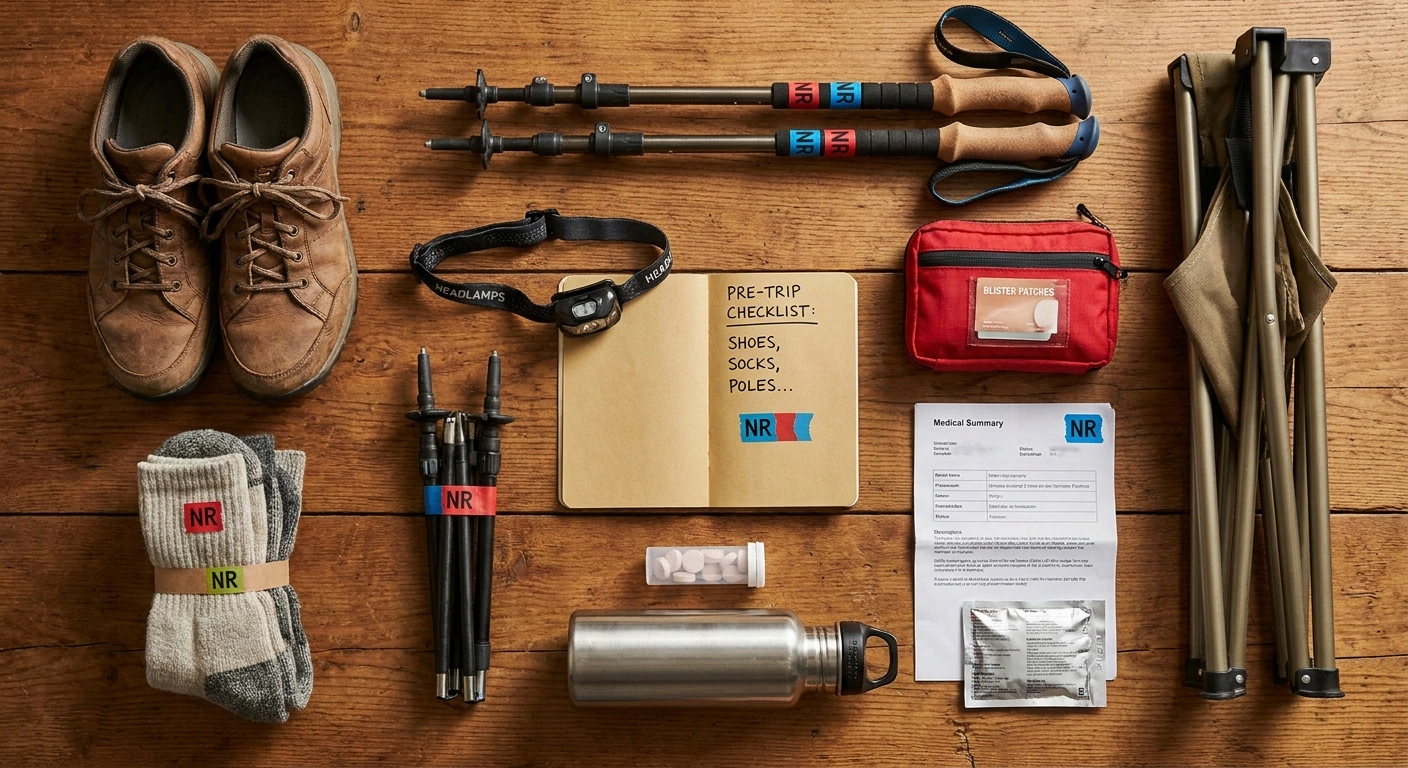
If you want a single page to keep handy, this is the short version of what to think through before any camping trip with neuropathy:
- Site is flat, level, and reasonably close to bathrooms
- Sleeping setup is comfortable enough for real rest (thicker pad, cot, or camper mattress topper)
- Three pairs of shoes minimum, all closed-toe; many pairs of moisture-wicking socks
- Trekking poles for any walking off the campsite
- Hydration plan (schedule + electrolytes) and a cool spot prepared in advance
- Foot-check kit with blister patches, antibiotic ointment, mirror, bandages
- Headlamp with extra batteries at the bedside
- Three-day medication buffer plus a paper medical summary
- Someone at home knows where you are and when you are coming back
- Nearest urgent care and ED addresses saved in your phone
- Realistic activity plan with a rest day if the trip is longer than two nights
- A partner or close-by neighbor at the campground
- Permission to come home early if something is not right
That is the whole list. With those items thought through, most people with neuropathy can have a perfectly comfortable, perfectly safe camping trip.
Frequently Asked Questions
Is tent camping still possible with neuropathy? Yes, with planning. The biggest challenges are sleeping comfortably on the ground (use a cot or thick pad) and night-time bathroom trips on uneven terrain. Many people with neuropathy migrate over time from tent camping to cabin or RV camping for the comfort upgrade, but plenty of people continue to tent camp well into their later years if they prepare for it.
What if I take medications that cause heat sensitivity? Many neuropathy medications (gabapentin, pregabalin, duloxetine, tricyclic antidepressants) can interfere with temperature regulation or hydration. Do not change your medications on your own for camping — talk to your prescriber. The right approach is usually to be extra careful about hydration, heat avoidance, and pacing, not to change your dose.
Can I drink alcohol on a camping trip? Modestly, if your provider has not said otherwise. Heavy alcohol use makes neuropathy worse over time and impairs balance, sleep, and judgment — all of which matter on a camping trip. A glass of wine by the fire is different from a heavy night out.
What if I cannot tell if my feet are hot or cold? This is one of the more important questions. With reduced temperature sensation, use a thermometer to test wash water and any heated surface. Use the back of your hand or your wrist (which retain better sensation in most people) rather than your fingertips to feel temperature. Assume any prolonged contact with heat (fire pit area, sun-warmed metal, hot pavement) is dangerous and create physical distance.
What about bug bites? Use insect repellent diligently — DEET, picaridin, or oil of lemon eucalyptus all work. A bite that goes unnoticed because of reduced sensation can become infected. Check your skin daily during foot inspections, and address any bites with cleaning and topical anti-itch treatment.
Can I go on a longer wilderness trip? The answer depends on how stable your neuropathy is, your overall fitness, and your willingness to plan carefully. Backcountry trips that take you out of cell phone range and away from quick evacuation are higher-stakes for someone with a chronic condition. They are doable, but they require more partner support, more emergency planning, and ideally some experience to start. Build up to them.
What if I have a flare-up in the middle of the trip? Slow down, increase rest, and treat symptomatically (cool feet, gentle stretching, adequate hydration, your usual pain medications). If the flare-up is severe or includes new symptoms (sudden severe pain, fever, wound infection, signs of heat illness), head to a medical facility. Do not push through severe symptoms in the woods.
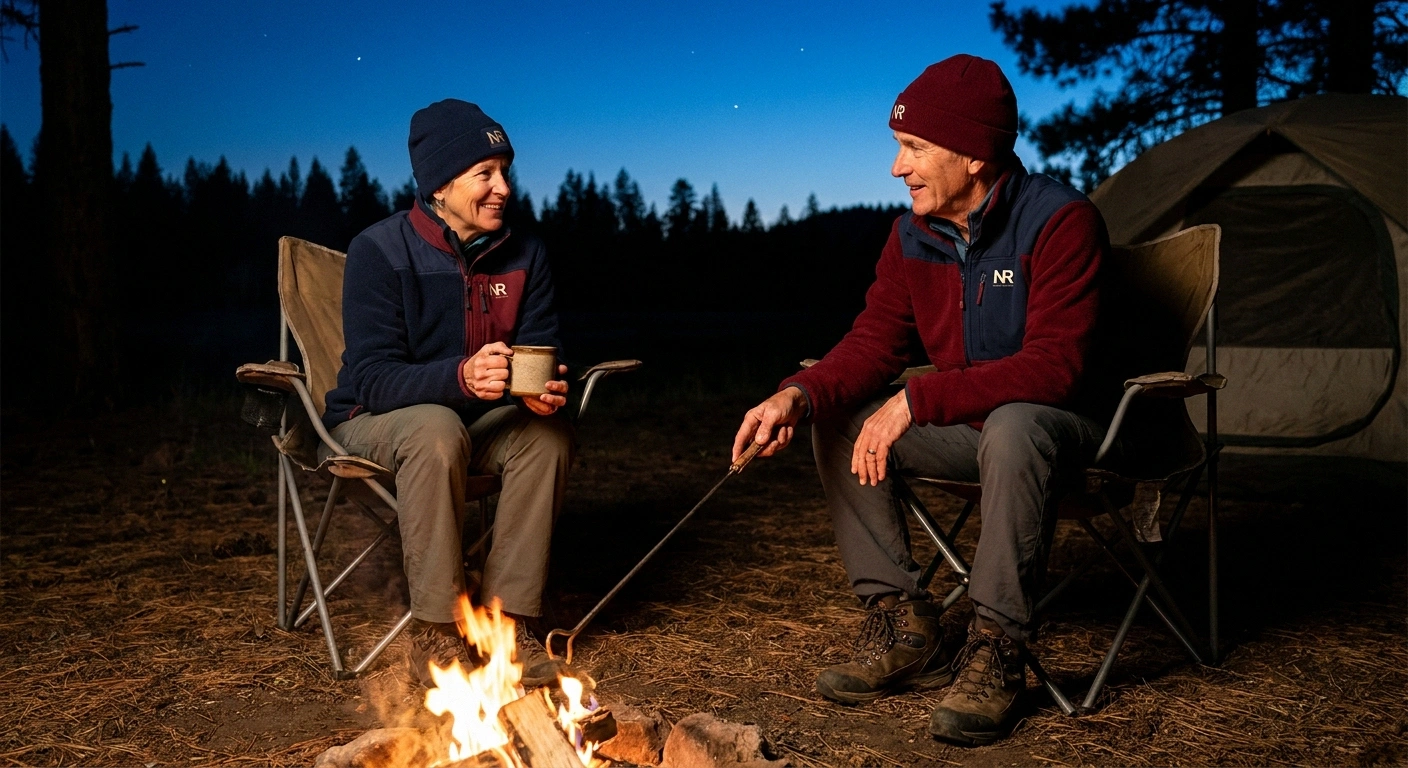
How can I make the campfire safer? Stay in closed-toe footwear at all times near the fire. Sit far enough back that small sparks do not reach you. Have someone else manage the fire if you cannot reliably see and feel where embers land. Use a long fork or tool for any cooking over the fire, never your hands. Do not handle fire-warmed pots without good thick gloves.
About the Author