The first live concert I went to after my neuropathy really settled in was a Willie Nelson show. I'd been dreading it for weeks. What if my feet gave out during the encore? What if I got jostled in the parking lot and couldn't recover my balance? What if I sat down halfway through and missed the songs I'd been waiting to hear for two decades?
I made it through, and I had a wonderful night — but only because a friend who'd been managing her own health issues for years quietly walked me through everything she'd learned. This article is my version of that same conversation. If you're staring at a ticket you already bought (or thinking about buying one), and wondering how in the world you're going to make it through the show, these are the strategies that have worked for me and for the friends I've talked with over the years.
Start With the Ticket Itself
The single biggest decision you can make happens before concert day. It's what kind of seat — or standing spot — you buy.
The biggest concert-comfort decision happens before concert day.
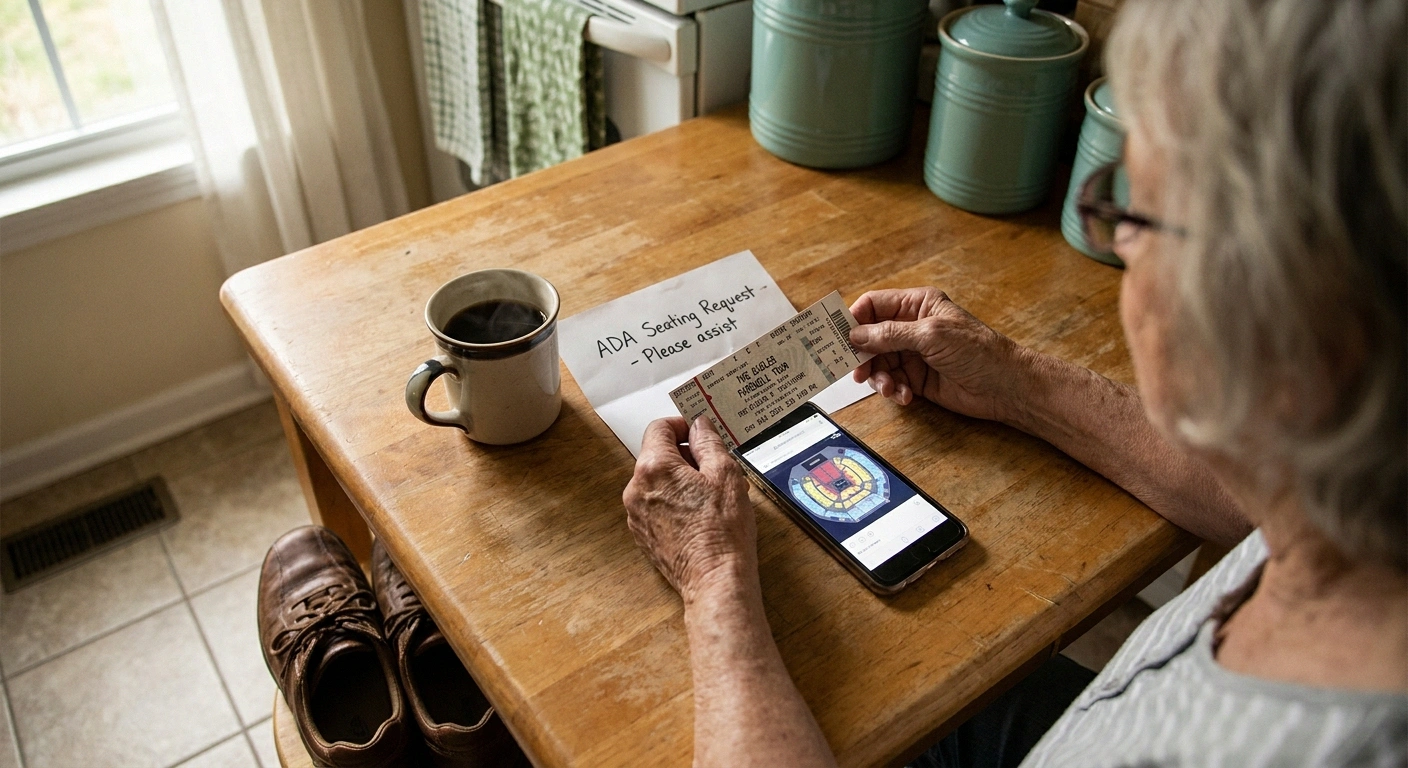
Choose seated over standing whenever possible. Buy aisle seats. Ask about ADA-accessible sections — you don't need a wheelchair to qualify. A ten-minute call to the venue's accessibility desk can transform your night.
Choose seated over standing whenever possible. “General admission floor” and “standing room only” mean you'll be on your feet the entire show, often shoulder-to-shoulder, sometimes for three hours or more. That's a hard ask for anyone with neuropathy. Reserved seating means you have a home base to return to.
Aisle seats are worth extra. An aisle seat means you can stretch a leg, get up for the restroom without climbing over neighbors, and leave a few minutes early to beat the crowd. It's also cooler (less body heat trapping in) and gives your feet more breathing room. If the venue lets you pick, ask for an aisle.
Consider the balcony for smaller-crowd shows. Balconies tend to be less crowded, have easier restroom access, and let you sit calmly without navigating a packed floor. Sightlines are still fine at most modern venues.
Look into ADA seating. Nearly every venue reserves wheelchair-accessible spots plus a companion seat. You do not have to use a wheelchair to qualify — mobility limitations, balance issues, and difficulty standing for long periods all count. A short note from your doctor (or sometimes just a phone call) is usually enough. These seats often have the best access to restrooms, elevators, and exits.
Contact the Venue Before You Go
Every major venue has an accessibility desk. Call them a week or two ahead of the show and ask three questions:
- What are your seating accommodations for people with mobility or standing limitations?
- Is there a designated drop-off zone close to the entrance?
- Are canes, walkers, folding stools, or portable seat-canes allowed inside?
The staff who answer these calls are almost always kind and have seen every situation. Many venues will move you to an ADA-adjacent row, arrange easier drop-off, or send you specifics about elevator locations before the crowds show up. A ten-minute phone call can transform your night.
What to Wear (And Especially What to Put on Your Feet)
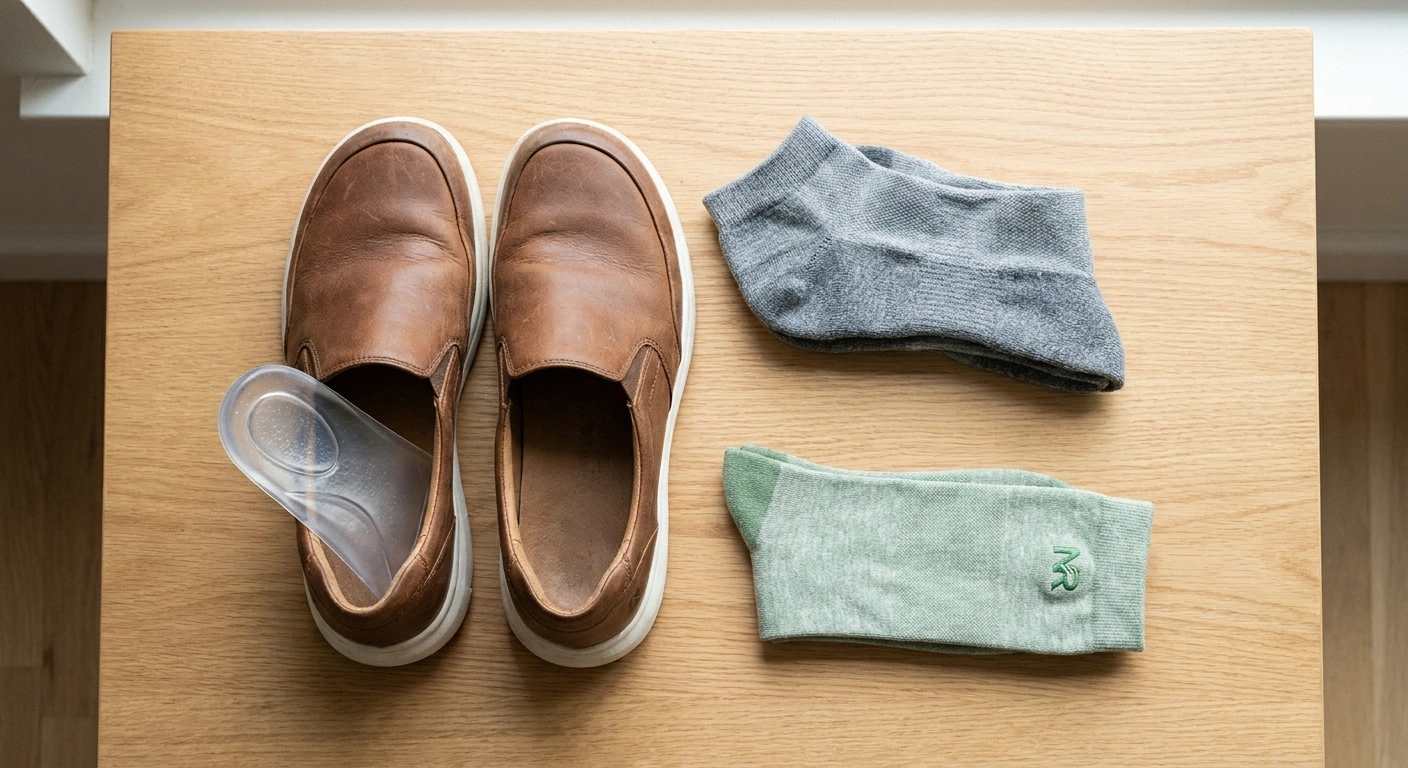
Concert night is not the day to break in new shoes. It's not even the day to wear the ones you bought last month. This is the night for your most tested, most comfortable, most supportive pair — the ones your feet know by heart.
What generally works well:
- Wide toe box. Feet swell over the course of a long night.
- Cushioned insole. A good gel or memory-foam insole makes an enormous difference on hard venue floors. If your regular shoes don't have great cushioning, add an aftermarket insole a week ahead so you're used to it.
- Closed toe. Sandals and open shoes leave your feet vulnerable to being stepped on, dropped drinks, and scraped ankles in crowded aisles.
- Non-slip sole. Venue floors get sticky, wet, and unpredictable.
- Soft, moisture-wicking socks. Cotton holds sweat and creates blisters; merino wool or synthetic athletic socks are much better.
Our roundup of the best shoes for neuropathy covers what to look for in more detail — the same principles apply whether you're walking to the mailbox or standing through a set.
Some people find compression socks genuinely helpful for long standing sessions — they help circulation and reduce end-of-night swelling. If you use them, put them on a couple of hours before the show so your feet get used to them.
For clothing: layers. Concert venues run cold before the show, hot during the show, and cold again on the way out. A light cardigan or zip-front hoodie that can go into a small bag between songs makes the temperature swings much easier.
Pack a Concert Kit
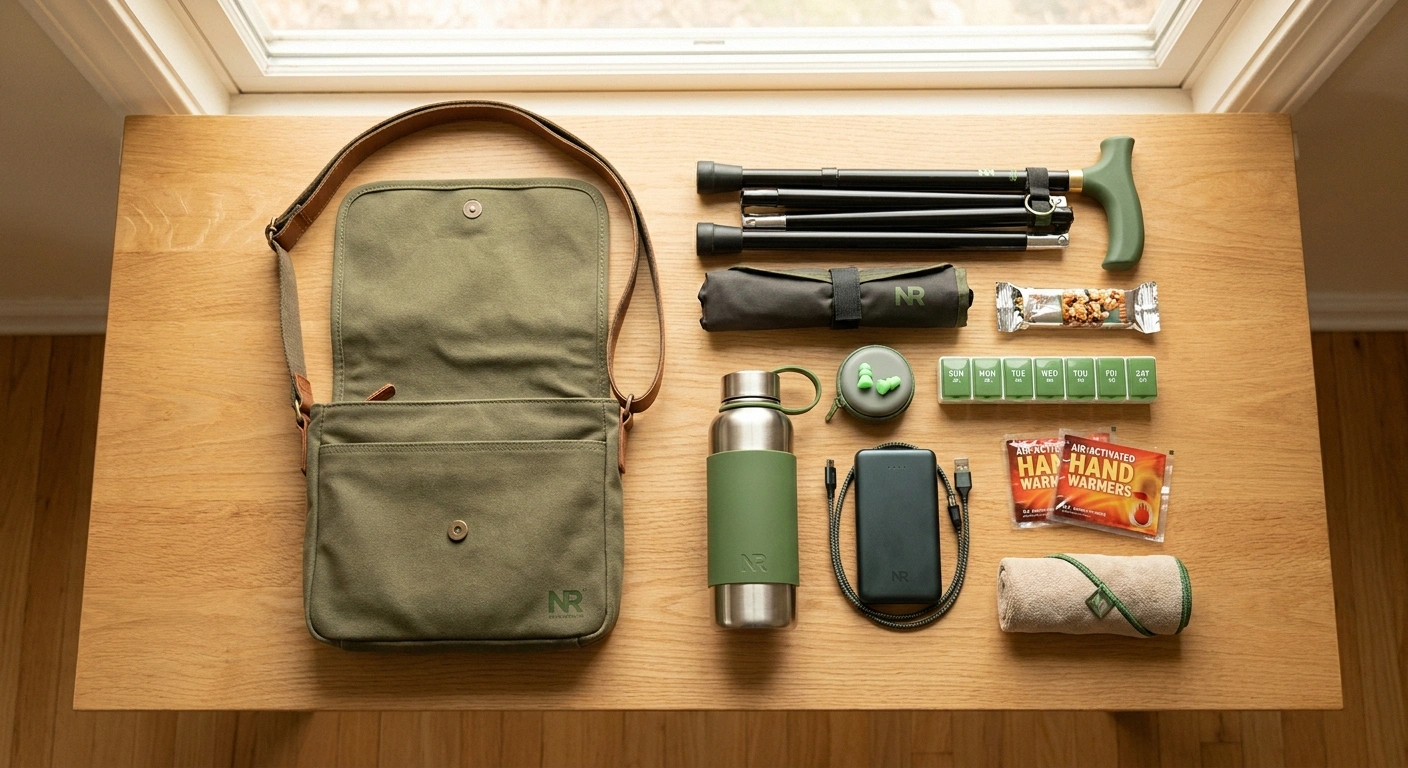
A small crossbody bag or backpack (check venue size limits first — most cap around 12 x 12 inches for a small backpack, or 5 x 7 for a purse) with a few essentials makes an enormous difference:
- Portable folding stool or cane-seat (if venue allows)
- Foldable cane for dim, crowded spaces
- Refillable water bottle (empty through security)
- Small snack — low blood sugar amplifies tingling
- High-fidelity musician-style earplugs
- Regular medications in a small pill case
- Hand warmers for cold-weather shows
- Fully charged phone + backup battery
- Portable folding stool or cane-seat — if the venue allows them. Some do, some don't. Ask when you buy tickets.
- Cane or walking stick — even if you don't use one daily, one can steady you in dim, crowded spaces. Foldable ones fit in a bag.
- Water bottle — refilled inside once you're through security. Dehydration worsens tingling and fatigue.
- Small snack — a granola bar or a handful of nuts. Low blood sugar amplifies neuropathy symptoms.
- Ear plugs — high-fidelity musician-style earplugs let you hear the music clearly while reducing the volume. Loud noise raises your body's arousal state, and higher arousal can worsen pain perception.
- Your usual daily medications — in a small pill case, in case the show runs long past your normal dose time.
- Hand warmers — for cold-weather shows or cold hands.
- Small towel or bandana — for wiping sweat or padding a rough seat back.
- Phone charged to full — plus a small backup battery. You want to be able to call a ride at any moment.
Getting There and Getting In
The trip from car to seat is often harder than the show itself. A few small planning moves help enormously.
Arrive early. Give yourself 45 to 60 minutes of buffer. Parking lots at big venues can be a long walk to the door. Security lines pile up right before showtime. Restrooms are calm 45 minutes before the opening act and impossible ten minutes before the headliner.
Consider rideshare or valet. Skipping the parking-lot walk is worth the extra money for many nights. Most venues have designated rideshare pickup zones near the main entrance.
Ask about drop-off. Many venues let a companion drop you at the entrance and then park separately. This spares you the longest walk.
Use the elevator, not the stairs. Even if you can technically manage stairs, elevators save your energy for the actual concert.
Ask an usher for the closest restroom. Not the one printed on the map — the one that's currently underused. Ushers know.
Sit while others stand in line. Any bench, any low wall, any curb (with a small cushion from your bag) is better than adding another 20 minutes of standing.
Managing the Show Itself
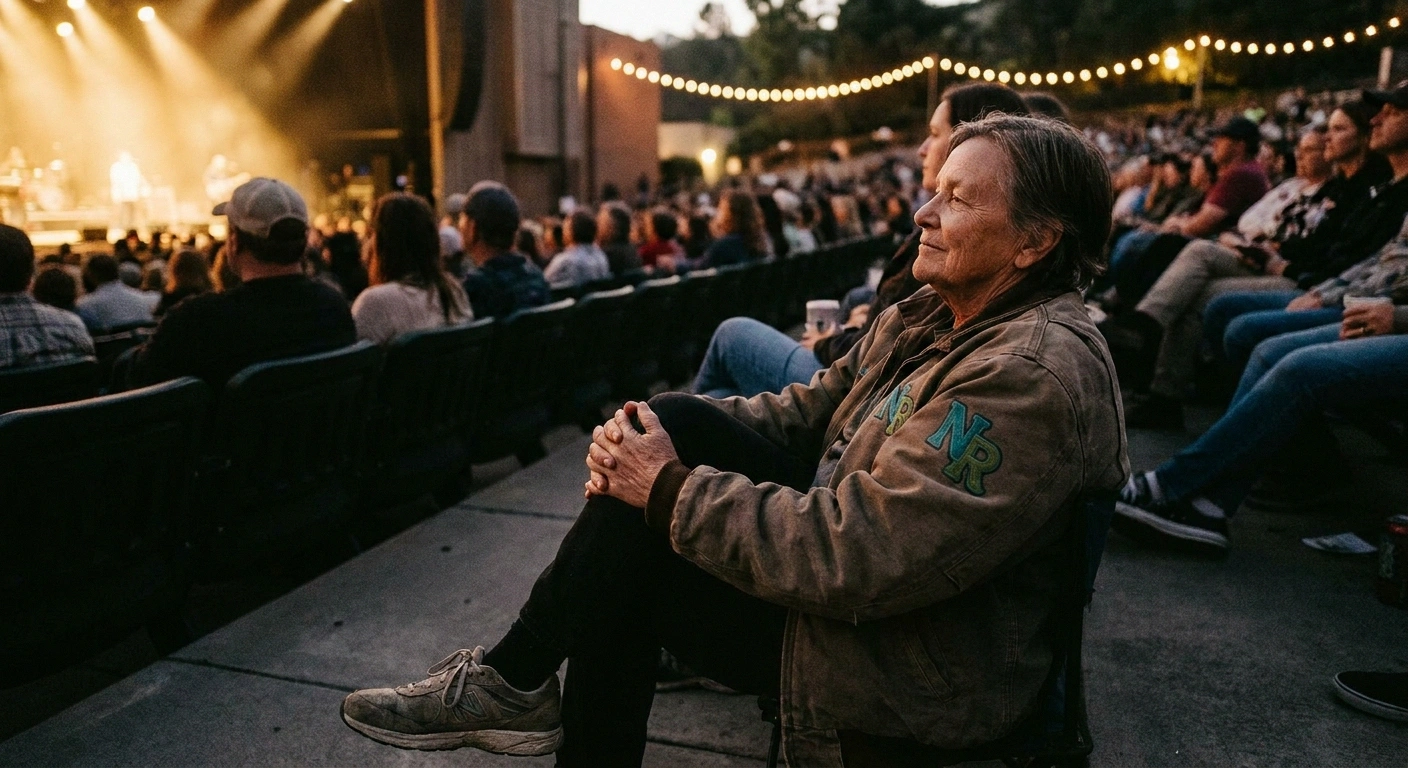
You made it to your seat. The lights go down. Now what?
Whether seated or standing, don't stay frozen. Every 15 to 45 seconds, do something small — nobody notices, and it changes the whole night for your feet.
- Shift weight side to side (standing)
- Rise up on toes, rock back to heels
- Roll ankles in slow circles
- Point and flex toes inside your shoes
- Change sitting position — feet flat, then crossed, then extended
- Lean on a wall or railing during dark moments
Shift your weight often. Even in a seated show, don't stay frozen in one position. Every 15 minutes or so, shift how you're sitting — feet flat, feet crossed, one knee bent, the other extended. Micro-movement keeps circulation going and prevents the deep ache that comes from staying still too long.
Do tiny ankle exercises. Point and flex your toes. Roll your ankles in slow circles. Wiggle your toes. No one will notice, and it makes a real difference in swelling and stiffness.
Take advantage of downtime. Between the opening act and the headliner, stand up and walk to the back, or shift positions substantially. Same for slow songs — that's when to stretch discretely.
Skip the standing ovation if it costs you the encore. Neuropathy budgets are real. If jumping up for a mid-show standing ovation means you can't stay through the last three songs, stay seated and clap enthusiastically. No one will notice, and you'll enjoy the rest of the show.
Hydrate steadily. Sipping water throughout the show is much better than gulping a lot at once. Alcohol dehydrates and interacts with many neuropathy medications — one drink is generally okay for most people, but pushing beyond that is asking for a rough next day.
If you're standing: shift weight side to side every 30 to 45 seconds, rise up on toes and back to heels occasionally, and lean on a wall or barrier if you can. Try to find a spot where you can put a hand on a railing for stability during dark moments (like when the crowd is going wild during a big number).
Standing-Only Shows: A Realistic Assessment
Some concerts have no seated option. A small club show, a general-admission arena floor, a summer outdoor festival — sometimes standing is the whole deal.
Be honest with yourself. Two hours on hard concrete with no place to sit is genuinely difficult for many of us. Ask:
- Is there any ADA-accessible section? (Often yes, even at “standing only” shows.)
- Can I get to the back of the venue where crowds are thinner and I can lean on a wall?
- Is there a bar area with stools I could grab between opening act and headliner?
- Do I have a friend willing to hold my spot while I take a five-minute sit-down break every hour?
If the answer to all four is no, and you know two straight hours of standing will genuinely hurt you, it's fair to skip a show or watch the recording. Neuropathy asks for these calls sometimes. It's not weakness — it's math.
The After-Show Recovery Plan
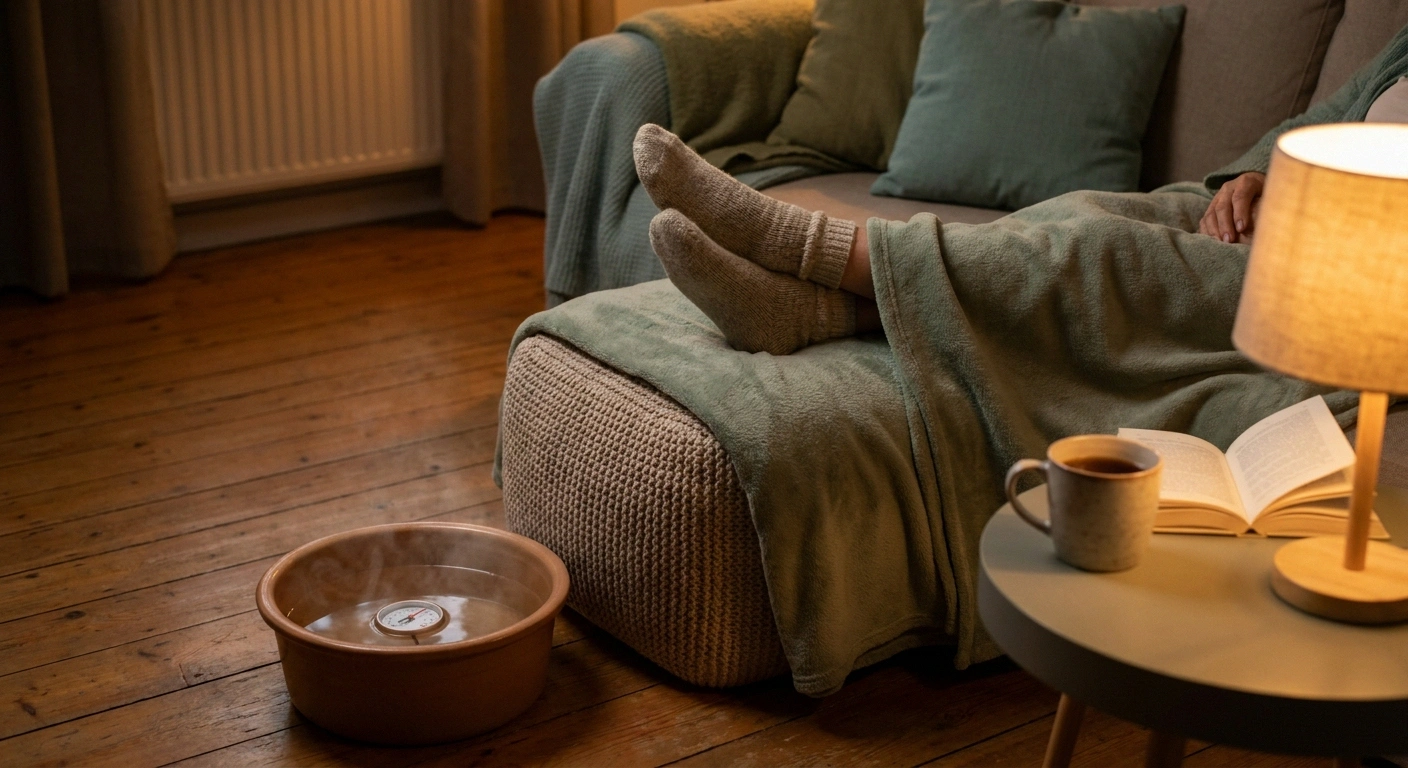
The hours right after a concert are when many people take the biggest hit. A few habits protect you:
Book a low-activity day after any concert.
A next-day flare is normal after any big exertion. It doesn't mean you did damage. Skip the grocery marathon, the yard work, the long walk. Elevate your feet, hydrate, take your usual medications, and expect symptoms to settle back to baseline within a day or two.
Don't push through a next-day errand day. Book a low-activity day after any big concert. No grocery-store marathon, no yard work, no long walk. Give your nerves time to settle.
Elevate your feet for at least 20 minutes when you get home. Legs above heart level, comfortable position, ice water in reach.
Warm foot soak or footrest. A warm (not hot) foot soak can help many people ease end-of-night discomfort. Test the water with your elbow or wrist — never with your numb foot. Water should feel warm but not hot. Even a shallow tub of water at bathtub temperature helps.
Hydrate and eat something. Loud environments plus standing plus a couple hours of concentration burn a surprising amount of energy. A small meal, plenty of water, and a magnesium or electrolyte drink can prevent the “next-day fog” that sometimes follows.
Anticipate a flare and don't panic. Some flare-up the next day is normal after any big exertion. It doesn't mean you did damage or that you shouldn't have gone. It means you did a big thing, and your nervous system is settling. Rest, hydrate, take your usual meds, and don't add anything alarming to your day.
Outdoor Festivals: Extra Considerations
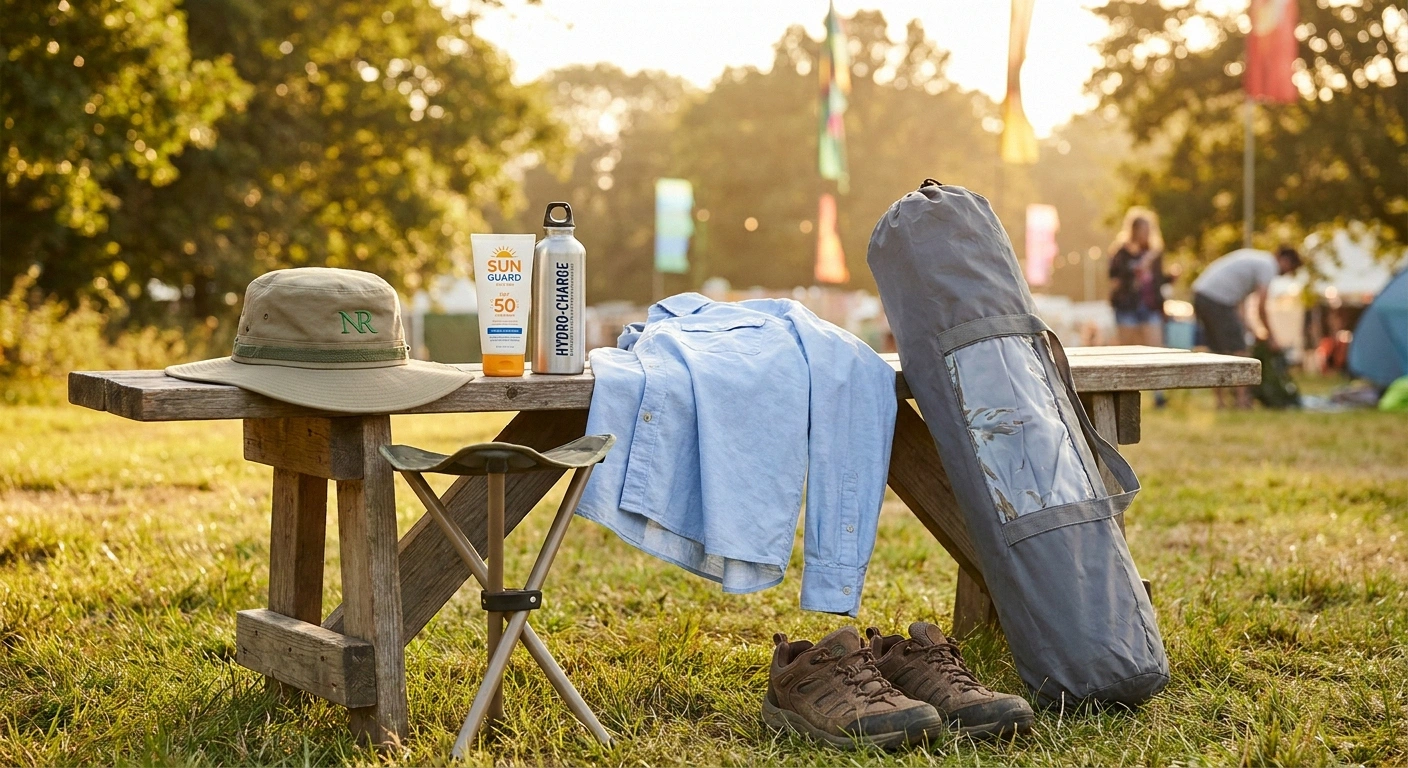
Outdoor summer shows add a whole layer of challenge — heat, uneven ground, longer walking distances, and often more crowded conditions. Some extra strategies:
Any one is manageable. All four at once is a next-day disaster:
- Extreme heat
- Long standing sessions
- Dehydration
- Alcohol
Manage each one — sunscreen and hats, camping stools, electrolyte drinks, water between drinks — and outdoor shows stay enjoyable.
- Sunscreen and a wide-brim hat — sunburn adds inflammation, which most people with neuropathy feel.
- Electrolyte drinks in addition to water — heat plus long standing depletes sodium and potassium fast.
- Bring a lightweight camping stool if allowed. Lawn seating gets old fast, and sitting cross-legged on the ground is often a trigger for outer-thigh or foot symptoms.
- Know where the shade is. Scout the venue early. Cool tents, tree cover, and shaded seating areas fill up quickly.
- Watch for the “concert flare-up” combo: heat + standing + dehydration + alcohol. Any one is fine. All four at once is a next-day disaster.
- Uneven ground and dim paths. Fall risk is higher on grass, gravel, and after dark. Consider a cane even if you don't normally use one. Take the elevator or the paved path.
For anyone worried about balance, fall prevention strategies specific to neuropathy apply everywhere — walking in slowly, using handrails, watching your step in dim spaces, and carrying a flashlight or using your phone's light.
When to Skip a Show (No Guilt)
Some shows are just not worth it, and there's no shame in that call. I'd think twice before committing to:
- A general-admission standing-only show with no seated ADA area, on a night when you're already tired
- An outdoor summer show in extreme heat if your neuropathy worsens in heat
- A late-night show ending after midnight when you'll be exhausted for two days
- Any venue with only stairs and no elevator (rare, but they exist)
- Any show requiring a very long walk on uneven ground with no accessible transport
If you already bought the ticket and the situation looks unmanageable, most venues will let you upgrade to accessible seating even the day of the show. Call before you cancel entirely.
Bringing a Companion
Concerts are almost always easier with a companion who knows what you're managing. A few gentle things to talk about in advance:
- “I might need to sit through some songs. Please don't feel like you have to sit with me.”
- “If I say I need to leave, we leave — no talking me out of it.”
- “I'll need to walk slower than usual, especially in the crowd.”
- “If I fall, don't panic. Help me sit up first, then we'll figure out standing.”
Companions who understand are gold. They notice when your energy is fading, they carry the water bottle, they hold your spot when you need the restroom. Bring the person who wants you there, not the one who'll make you feel like a burden.
Janet's Pre-Concert Routine
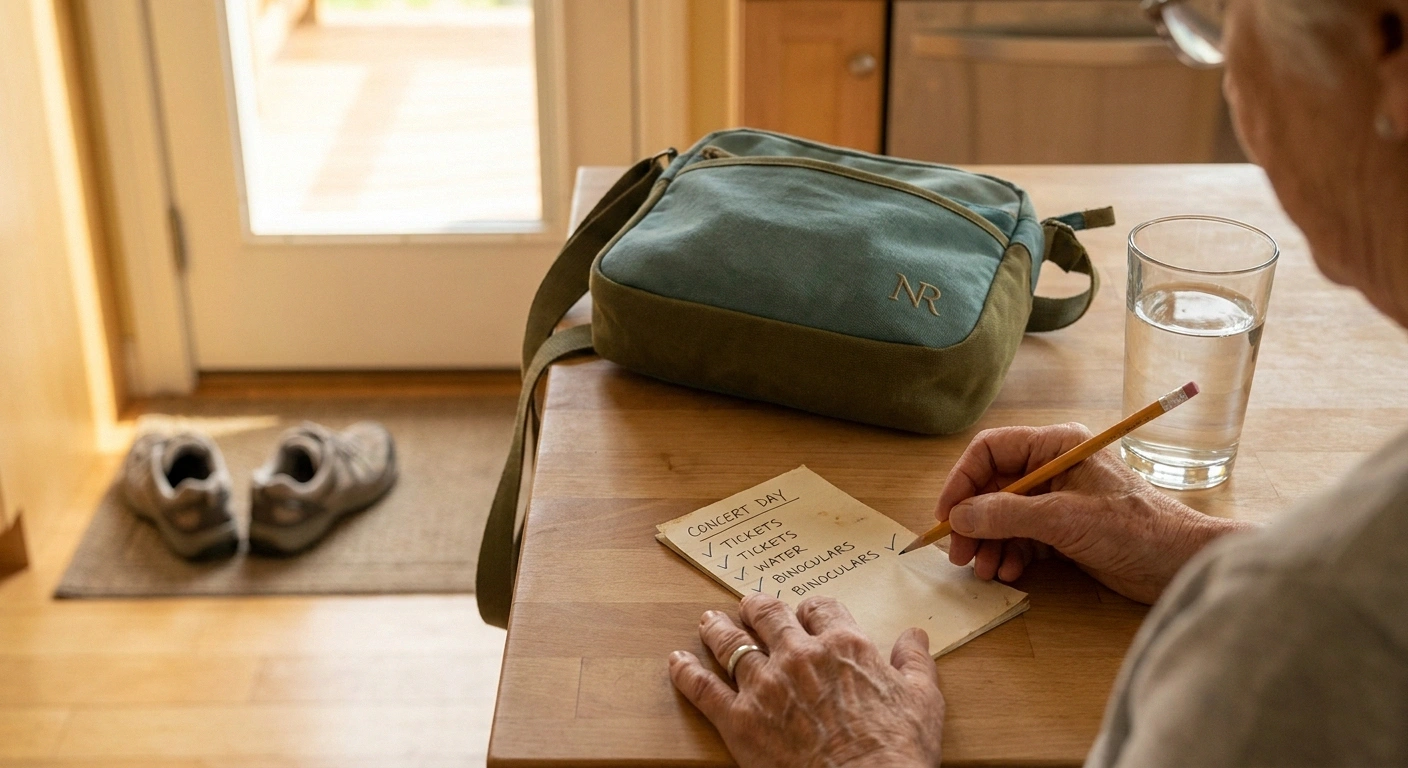
Here's what I do the day of any concert I'm looking forward to. I don't hit every item every time, but this is the general shape:
- Morning — Big breakfast with protein, plenty of water, no skipped meds.
- Early afternoon — 20-minute walk, short rest with feet up, pack the bag.
- Late afternoon — Light dinner, compression socks if using, ibuprofen if doctor-approved.
- Departure — 60-minute buffer to the venue, restroom before leaving.
- Arrival — Shortest path to seat, sit down, set up, deep breath.
- During — Sip water, micro-movements, enjoy the actual music.
- After — Beat the crowd, home, feet up, warm soak, quiet next day.
Morning: Big breakfast with protein. Lots of water. No skipped meds.
Early afternoon: A 20-minute walk to get circulation going. A short rest with feet up. Choose the outfit, lay out shoes, pack the bag.
Late afternoon: A light dinner (nothing that will sit heavily). Compression socks on if I'm using them. Ibuprofen if my doctor has okayed it and I know I'll want the anti-inflammatory boost.
Departure: Give myself 60 minutes of buffer to the venue. Confirm ride, restroom before leaving.
Arrival: Straight to the seat via the shortest path. Sit down. Set up. Deep breath.
During: Sip water. Micro-movements. Enjoy the actual music.
After: Beat the crowd if the encore is long enough. Get home, feet up, warm soak, and to bed with the promise of a quiet next day.
That routine is the difference, for me, between a concert I remember for the music and one I remember for the pain. It's not glamorous, and it takes a bit of planning, but the reward is being able to keep saying yes to the things that make life worth living. Music is one of those things. Don't let neuropathy take it from you — outsmart it instead.
Frequently Asked Questions
Can I get accessible seating at a concert if I don't use a wheelchair?
Yes. ADA-accessible seating is available for anyone with mobility, balance, or standing limitations, not just wheelchair users. Contact the venue's accessibility desk a week or two before the show. Most venues accommodate you with a simple phone call; some ask for basic documentation of your condition, but many don't. A companion seat is typically included.
What kind of shoes should I wear to a concert with neuropathy?
Your most comfortable, most tested pair — never new shoes. Look for a wide toe box, cushioned insole, closed toe (to protect against being stepped on), and a non-slip sole. Soft moisture-wicking socks help prevent blisters. Add a gel insole if your usual shoes lack cushioning, and put it in a week before the show so your feet adjust.
Are portable stools or cane-seats allowed at concerts?
It depends entirely on the venue. Some allow them (especially outdoor venues); many indoor arenas prohibit them for safety and sightline reasons. ADA-accommodation policies vary. Always call the venue's accessibility desk in advance and confirm what's allowed.
How long before the show should I arrive?
Give yourself 45 to 60 minutes of buffer. Parking lots at big venues can be a long walk, security lines can pile up, and restrooms get crowded near showtime. Extra time also means you can sit and rest before the show, rather than arriving out of breath and already fatigued.
Should I take extra pain medication before a concert?
Don't add medications without talking to your doctor. If you already take neuropathy medications, take them at your usual time (or ask your doctor if adjusting the timing to cover the concert is reasonable). Extra ibuprofen or acetaminophen may be okay for some people, but check with your doctor first, especially if you take blood thinners, have kidney issues, or use daily anti-inflammatories.
What's the best way to get to and from the venue?
Rideshare or valet is often worth the money — you skip the long parking-lot walk and the post-concert lot exodus. If someone is driving, ask about drop-off at the entrance. Public transit is fine if it doesn't involve long walks or many stairs. Whatever you choose, plan how you're getting home before you leave.
Will my neuropathy flare up the next day?
Often, yes — some next-day flare is normal after any big exertion. It doesn't mean you did damage. Book a low-activity day after any concert: no long walks, no yard work, no shopping trips. Elevate your feet, hydrate, take your usual medications, and rest. Symptoms typically settle back to baseline within a day or two.
About the Author


