Safe Cooking Tips When You Have Neuropathy
One of the things I missed most when my neuropathy first got bad was cooking. Not just eating good food — actually cooking it. The chopping, stirring, tasting, creating. But when your hands are numb, your grip is unreliable, and you can't always tell if something is burning hot, the kitchen goes from a place of comfort to a place of genuine risk.
I refused to give it up entirely. Instead, I learned to adapt. Over the years, through trial and error (and a few close calls I'd rather not detail), I've developed a set of strategies that let me stay in the kitchen safely. And I've heard similar stories from dozens of people in our community who've found their own ways to keep cooking despite neuropathy.
Whether you're dealing with neuropathy in your hands, numbness in your feet, or both, these tips can help you cook more safely and confidently.
Understanding Your Kitchen Risks with Neuropathy
Before we get into solutions, let's be honest about the specific dangers neuropathy creates in the kitchen. Understanding the risks is the first step toward preventing accidents.
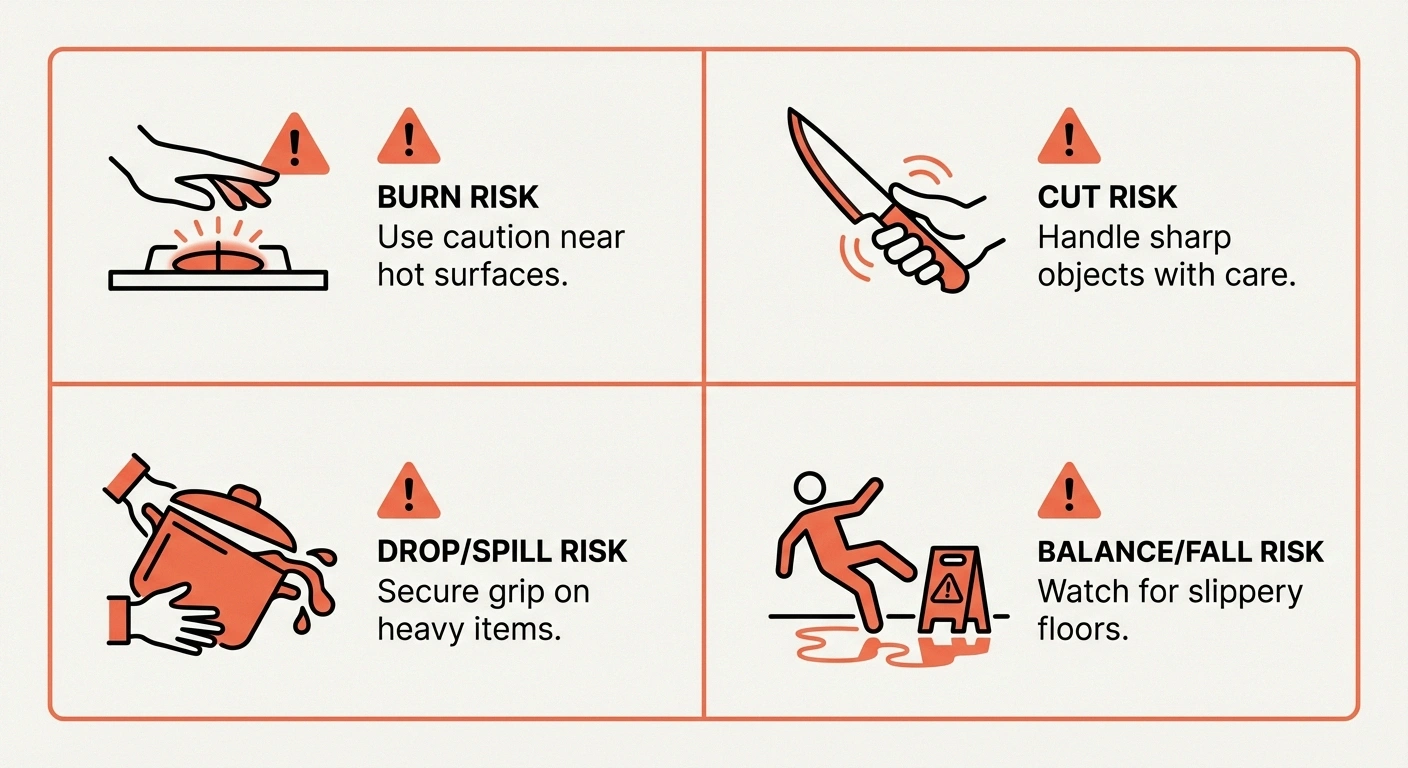
Burn Risk: The Silent Danger
This is the biggest concern, and it's uniquely dangerous with neuropathy. When you have reduced sensation in your hands, you may not feel that a pot handle, baking sheet, or pan is dangerously hot until actual tissue damage has occurred. I've seen burns on people's hands that they didn't even notice until they saw the blistering.
Your feet are also at risk. Spilled hot liquids, dropped hot pans, or even standing near an open oven can cause burns you don't immediately feel — especially if you're dealing with burning feet syndrome where existing sensations mask the warning signs of actual thermal burns.
Cut Risk: When Grip and Sensation Fail
Numb fingers make it harder to maintain a stable grip on knives and to feel proper finger positioning. At the same time, reduced sensation means you might not notice a minor cut until you see blood. The combination of impaired grip and reduced pain feedback creates a real hazard with sharp objects.
Drop and Spill Risk
Weakened grip strength — common with neuropathy in the hands — means pots, pans, and dishes may slip. A pot of boiling water or a heavy casserole dish falling from uncertain hands creates an immediate danger. Glass containers and sharp ceramic edges add to the risk.
Balance and Fall Risk
If you have neuropathy in your feet, standing for extended periods on a kitchen floor can be both painful and destabilizing. The kitchen is full of slip hazards — water on the floor, grease splatters, dropped food — and balance problems from neuropathy magnify these risks considerably.
Essential Kitchen Safety Modifications
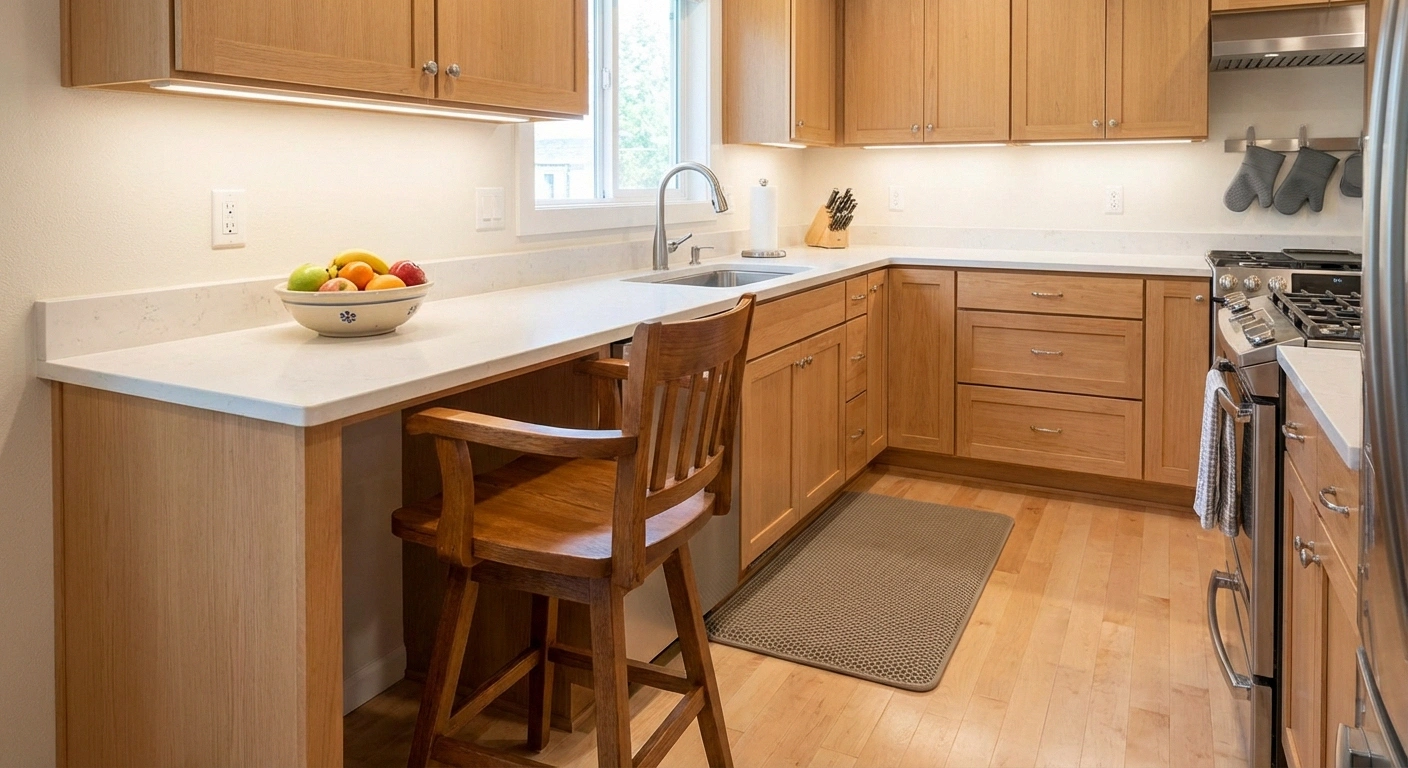
These changes to your kitchen environment can prevent accidents before they happen:
Lighting
This sounds basic, but it matters enormously. When your sense of touch is unreliable, your eyes need to compensate. Make sure your kitchen has:
- Bright, even overhead lighting (no shadows over work areas)
- Under-cabinet task lighting directly over your countertop and stove
- Good visibility into pots and pans (you need to see what you're doing since you can't always feel it)
Flooring and Stability
- Remove all rugs and mats that aren't firmly secured with non-slip backing. A rug that bunches underfoot is a fall waiting to happen.
- Use non-slip footwear in the kitchen. Croc-style clogs with treaded soles or other comfortable, closed-toe shoes with grip are ideal. Never cook barefoot or in socks — you need both traction and some protection from spills and drops.
- Keep floors clean and dry. Wipe up spills immediately. Grease on a floor is invisible until you're already slipping.
- Install a grab bar near the stove or sink if balance is a significant concern. It provides something stable to hold if you feel unsteady.
Work Station Setup
- Get a sturdy kitchen stool or chair. Standing for long periods is both painful and risky when your feet have neuropathy. A bar-height stool at counter level lets you sit while prepping food. Choose one with a back support and non-slip feet.
- Organize frequently used items at waist to chest height. Reaching overhead or bending low shifts your center of gravity and increases fall risk. Move heavy items to accessible shelves.
- Keep your workspace uncluttered. A clear countertop means fewer things to knock over and better visibility of what you're doing.
Protecting Your Hands: Tools and Techniques
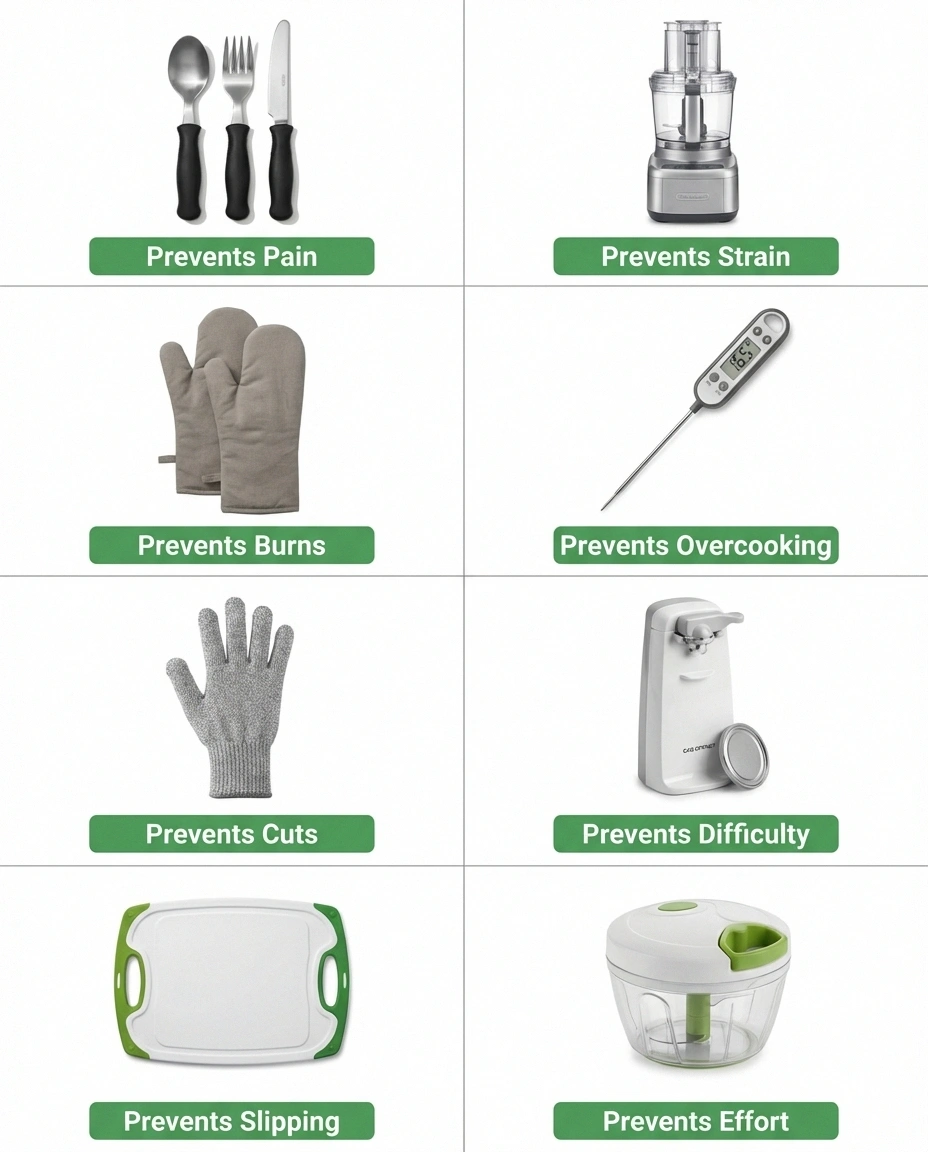
Your hands are your primary tools in the kitchen, and when neuropathy has compromised their function, you need to protect them deliberately.
Temperature Protection
- Use long-cuffed oven mitts for everything hot — not just taking things out of the oven. Get in the habit of reaching for oven mitts whenever you touch a pot handle, oven door, or baking sheet. Since you can't reliably feel temperature, treat everything near the stove as potentially hot.
- Use a food thermometer instead of the “touch test” for meat and other foods. Digital instant-read thermometers are inexpensive and eliminate the need to judge temperature by feel.
- Test water temperature with a thermometer or your elbow (where sensation is usually intact) before putting your hands under it.
- Keep pot handles turned inward on the stove so you don't accidentally bump or grab them.
- Wear thin cotton gloves under rubber dishwashing gloves when washing dishes. The cotton layer insulates against sudden temperature changes, and the rubber protects against hot water you might not feel.
Grip and Cutting Safety
- Invest in wide-grip utensils. Brands like OXO Good Grips design kitchen tools with large, soft, non-slip handles specifically for people with limited hand dexterity. Their vegetable peelers, can openers, and measuring cups can make a real difference.
- Use a food processor instead of hand-chopping whenever possible. A mini 2-cup food processor handles small quantities perfectly and eliminates most knife work. Even a simple pull-cord chopper reduces risk dramatically.
- Buy pre-cut, pre-washed vegetables. Supermarkets sell pre-chopped onions, stir-fry mixes, diced potatoes, and shredded cheese. There's no shame in using them — it's smart adaptation, not giving up.
- If you do use knives, choose ones with textured, non-slip handles. Keep them sharp — a dull knife requires more force, which increases the chance of slipping. Use a cutting board with non-slip feet or place a damp towel underneath it.
- Consider a cut-resistant glove for the hand holding food while cutting. These are inexpensive, washable, and provide a significant safety margin when sensation is reduced.
- Get an electric can opener and an automatic jar opener. Wrestling with manual versions when your grip is weak and your sensation is poor is an unnecessary risk.
Cold Protection
Don't forget that extreme cold can be just as dangerous as heat when you have neuropathy. Handling frozen items can cause cold burns you don't feel. If you're sensitive to temperature changes — and many people with neuropathy-related temperature sensitivity are — wear soft insulated gloves when reaching into the freezer.
Safer Cooking Methods and Appliances
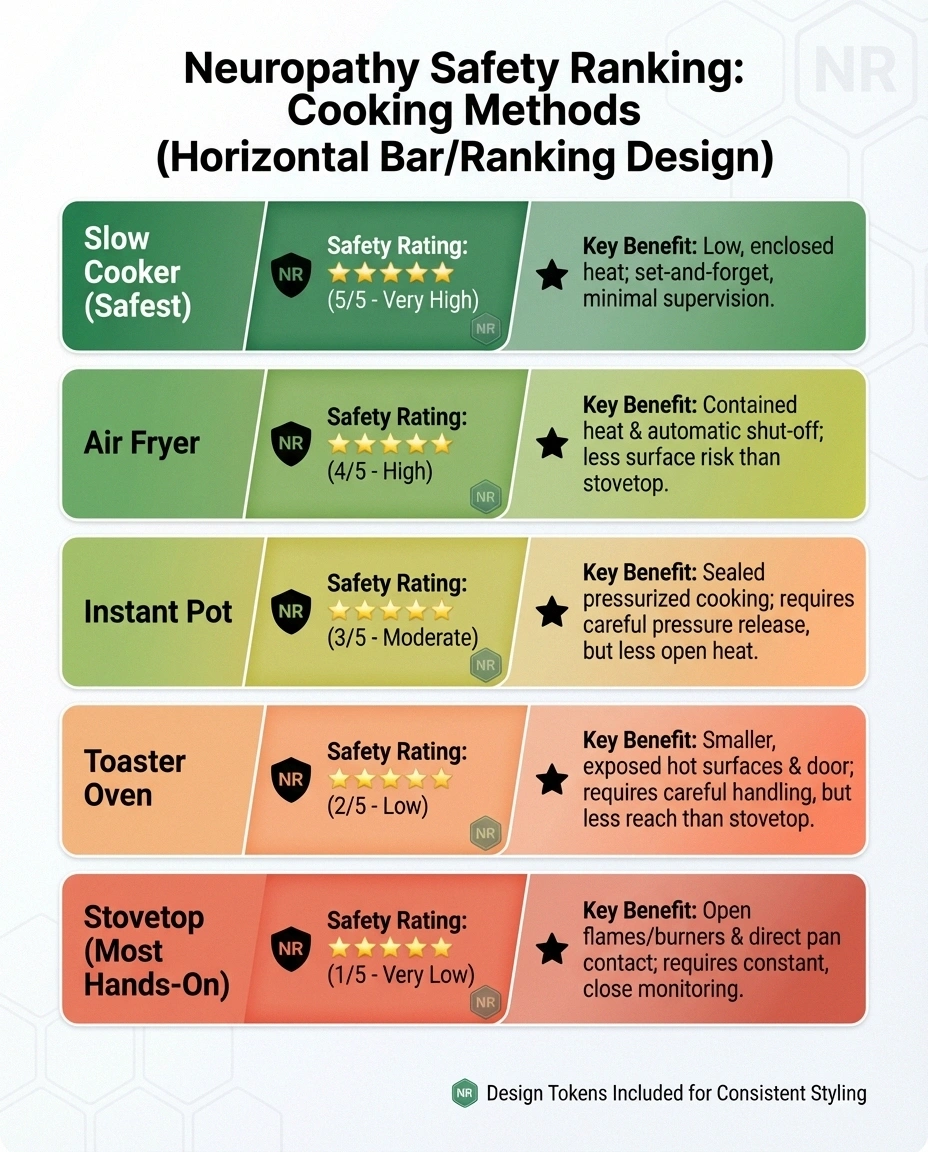
Some cooking methods are inherently safer than others when you have reduced sensation and grip strength. Here are the approaches that minimize risk:
Slow Cookers and Crock-Pots
These are a neuropathy-friendly kitchen's best friend. You prepare ingredients when you're freshest, put everything in the pot, set it, and walk away. No standing over a hot stove, no stirring, no risk of splashing oil. The exterior stays warm rather than burning hot, and there's no open flame or burner.
Air Fryers
Air fryers produce crispy, delicious food with minimal oil and minimal hands-on time. Once food goes in the basket, you close it and wait. The exterior stays manageable, and there's no splashing oil to worry about.
Instant Pots and Pressure Cookers
Electric pressure cookers combine the benefits of slow cooking with faster cooking times. They're fully enclosed, have cool-touch exteriors, and reduce the amount of time you need to stand at the stove.
Microwave and Toaster Ovens
For smaller meals and reheating, these appliances reduce risk compared to stovetop cooking. Use microwave-safe dishes with handles and let food rest briefly after heating to avoid steam burns.
Stovetop Adjustments
If you do cook on the stovetop:
- Use back burners when possible to reduce the risk of bumping into hot pots
- Choose pots and pans with two handles rather than one long handle — two-handed gripping is more stable with neuropathy
- Use a splatter screen when frying or sautéing to prevent hot oil from reaching your skin
- Keep a timer visible so you don't forget things on the stove if you step away
- Never leave cooking unattended — neuropathy can affect cognitive function and memory, making it easier to forget what's on the stove
- Consider an induction cooktop if you're replacing your stove. Induction surfaces only heat when a pan is on them and cool down rapidly, significantly reducing burn risk
Maintaining Your Independence in the Kitchen
There's an emotional component to cooking with neuropathy that doesn't get discussed enough. For many of us, cooking is tied to our identity — feeding our families, sharing meals with friends, maintaining independence. Having to modify how you cook can feel like another loss in a long line of neuropathy-related losses.
Here's what I want you to hear: adapting is not the same as giving up. Using a food processor instead of a knife doesn't make the meal less delicious. Sitting on a stool instead of standing doesn't make you less capable. Buying pre-cut vegetables isn't lazy — it's a smart choice that keeps you safely in the kitchen.
The goal is to find the right balance between safety and independence. That balance is different for everyone and may shift as your neuropathy changes over time. An occupational therapist can be an incredible resource here. They specialize in assessing how you function in daily activities and recommending specific adaptations. Many insurance plans cover OT referrals for neuropathy, and even one or two sessions focused on kitchen safety can be transformative.
Neuropathy-Friendly Recipes and Meal Planning
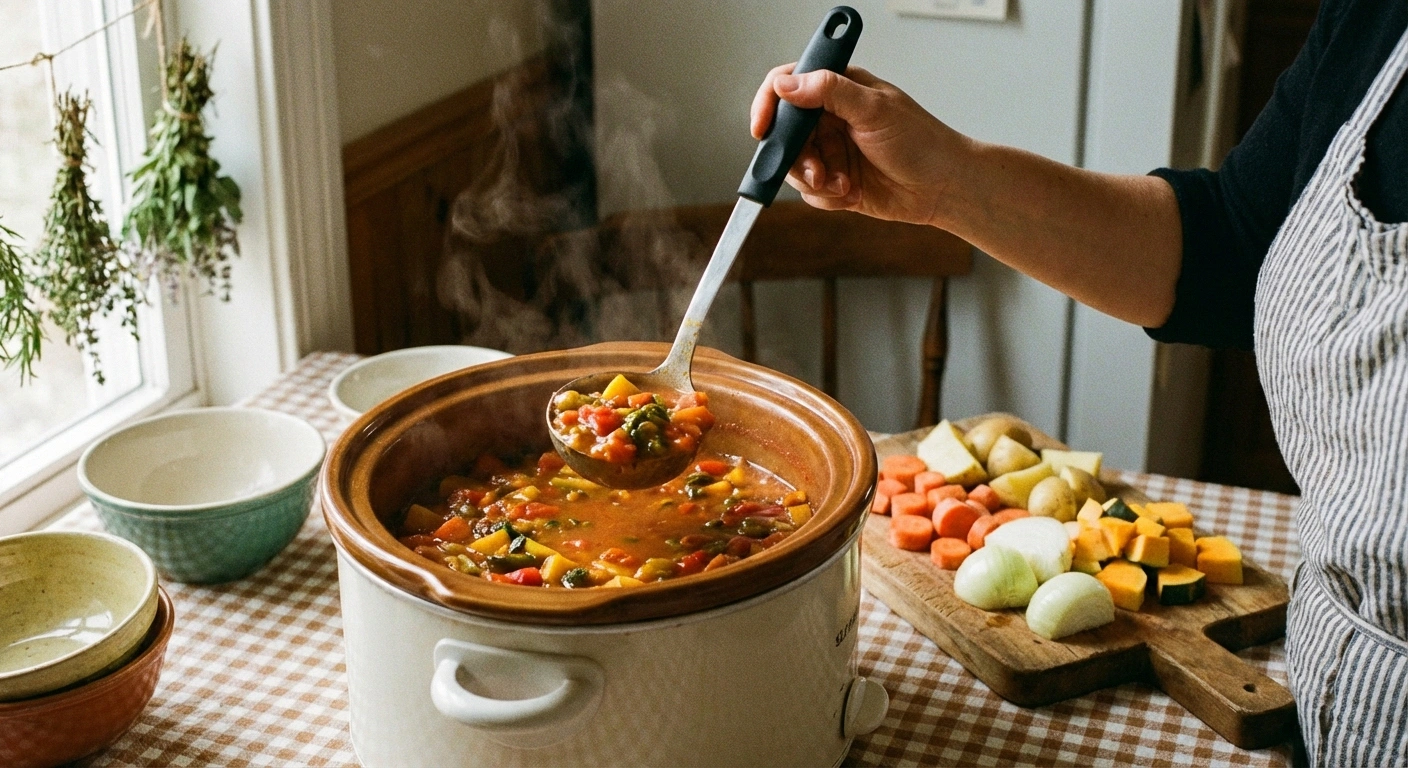
Beyond safety equipment, the recipes you choose can make cooking easier and safer:
Choose Simpler Techniques
- Sheet pan meals: Toss vegetables and protein on a sheet pan, season, and roast. One pan, minimal handling, delicious results.
- One-pot soups and stews: Dump ingredients in, let them simmer. Minimal stirring and handling required.
- Salads with pre-washed greens: Build a meal without any cooking at all. Pre-washed, bagged greens with rotisserie chicken and bottled dressing is a complete meal.
- Baked dishes: Casseroles, baked pasta, and roasted dishes need less active attention than stovetop cooking.
Meal Prep When You're at Your Best
If your neuropathy symptoms fluctuate during the day, do your food preparation during your best hours. Many people with neuropathy find mornings easier, before fatigue and increased symptoms set in. You can prep ingredients in the morning and assemble the meal later with minimal effort.
Batch cooking — making large quantities on a good day and freezing portions — means you always have safe, healthy meals available without needing to cook from scratch when symptoms are bad. For more ideas, check out our neuropathy-friendly recipes.
Anti-Inflammatory Ingredients
While you're adapting your cooking, consider incorporating foods that may support nerve health. An anti-inflammatory diet rich in fatty fish, leafy greens, berries, nuts, and whole grains may complement your other neuropathy management strategies. These foods are also generally simple to prepare, which is a bonus.
Creating a Kitchen Safety Checklist
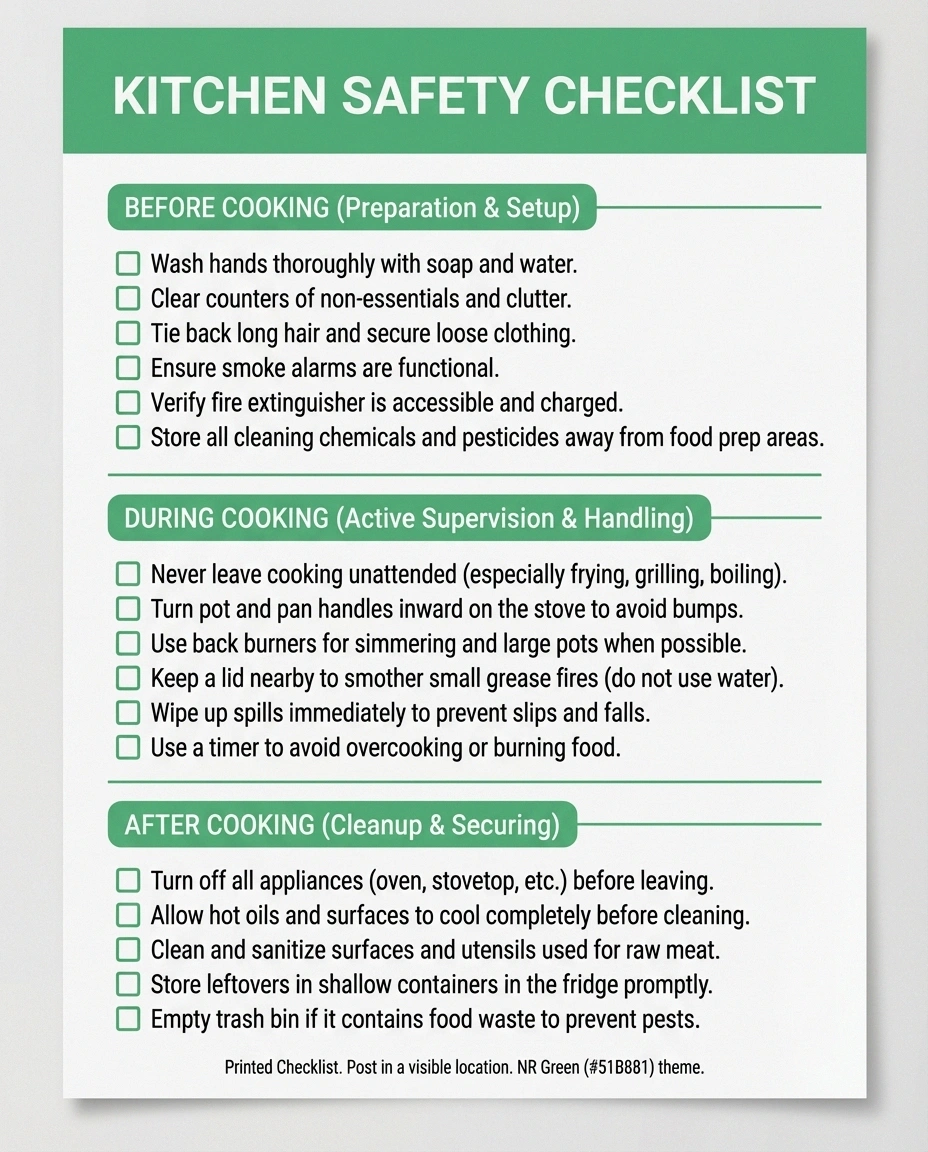
Here's a practical checklist you can post in your kitchen:
Before Cooking:
- Put on appropriate footwear
- Check that the floor is clean and dry
- Set out oven mitts within arm's reach of the stove
- Position your stool or chair where you'll need it
- Ensure lighting is adequate
- Gather all ingredients and tools before starting
During Cooking:
- Use oven mitts for anything near the stove
- Turn pot handles inward
- Set timers for everything
- Use back burners when possible
- Sit when you can
- Don't leave cooking unattended
After Cooking:
- Turn off all burners and appliances (double-check)
- Let hot items cool before handling
- Use dishwashing gloves for cleanup
- Check hands and feet for any injuries you may not have felt
- Wipe up any spills on the floor
When to Ask for Help
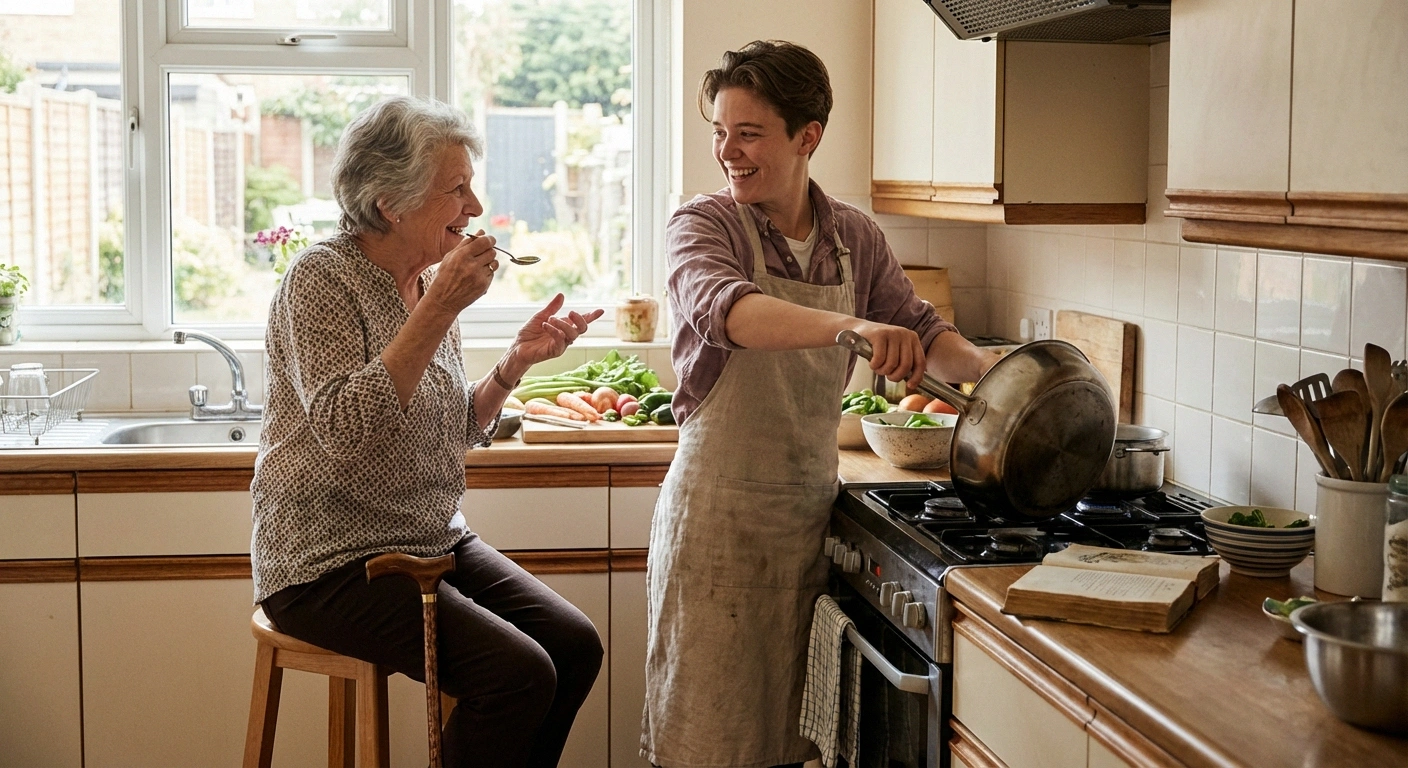
There are situations where cooking alone may not be safe, and recognizing those moments is important:
- When your symptoms are particularly severe or you're having a flare-up
- When you're experiencing significant balance problems
- When fatigue is so severe that your attention and reaction time are compromised
- When handling very hot liquids or heavy dishes
Asking for help with specific tasks — “Can you drain the pasta?” or “Can you take the casserole out of the oven?” — lets you stay involved in cooking while delegating the riskiest moments. It's a reasonable accommodation, not a failure.
Cooking together can also be a way to maintain connection with family members. When neuropathy limits some of your activities, shared cooking time becomes a way to contribute and connect. For more ideas about adapting daily activities, see our articles on travel tips with neuropathy and foot care.
Frequently Asked Questions
How can I cook safely if I can't feel my hands properly?
The most important adaptation is to assume everything near the stove is hot and always use oven mitts. Invest in wide-grip utensils designed for limited dexterity, use a food processor instead of knives when possible, and buy pre-cut vegetables. Test water temperature with a thermometer or your elbow rather than your hands. Wearing thin cotton gloves under rubber dishwashing gloves provides extra protection during cleanup.
What adaptive kitchen tools are best for people with neuropathy?
Key tools include wide-grip utensils like OXO Good Grips brand, an electric can opener, automatic jar opener, food processor or pull-cord chopper, long-cuffed oven mitts, a digital food thermometer, non-slip cutting boards, and a stable bar-height stool for sitting while working. Cut-resistant gloves for food preparation are also valuable when you have reduced sensation in your hands.
How do I prevent burns when I have reduced sensation in my hands?
Always use long-cuffed oven mitts when touching anything near the stove, including pot handles. Keep pot handles turned inward. Use a food thermometer to check food temperature rather than touching. Wear cotton gloves under rubber gloves for dishwashing. Consider an induction cooktop which only heats when a pan is on it. After cooking, visually inspect your hands for any redness or blisters you may not have felt.
Is it safe to cook alone with neuropathy?
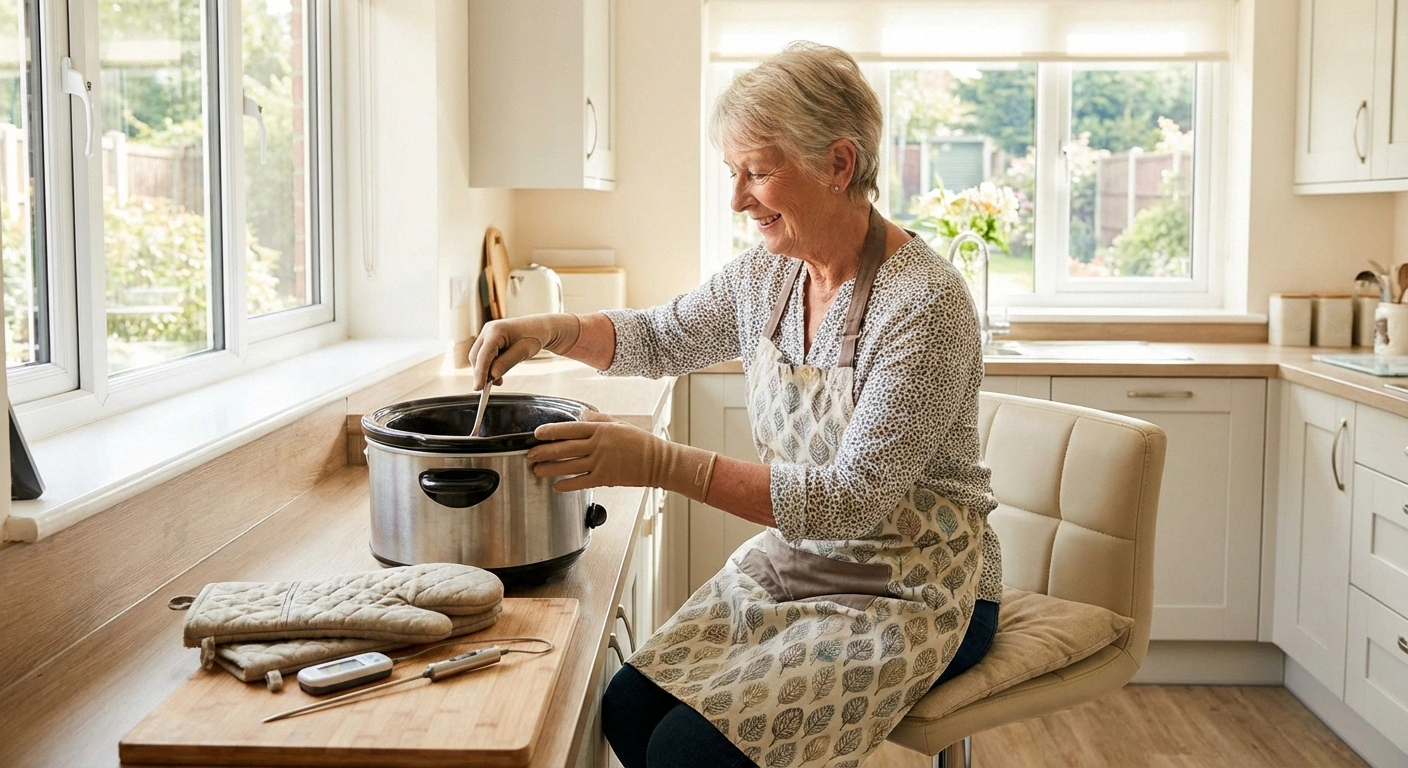
Many people with neuropathy cook safely alone with proper adaptations and equipment. However, there are times when it is better to ask for help, such as during symptom flares, when handling very hot liquids or heavy dishes, or when fatigue is significantly affecting your attention and reaction time. The key is having the right tools, maintaining a safe kitchen environment, and honestly assessing your capability on any given day.
What kitchen appliances are safest for people with nerve damage?
Slow cookers and crock-pots are the safest option because they require minimal handling once food is inside and their exteriors stay warm rather than dangerously hot. Air fryers, electric pressure cookers like the Instant Pot, and toaster ovens also reduce burn risk compared to stovetop cooking. If replacing your stove, induction cooktops are the safest option because the surface only heats when a pan is placed on it and cools down rapidly.
How should I organize my kitchen to reduce injury risk with neuropathy?
Store frequently used items at waist to chest height to avoid reaching or bending. Remove loose rugs and mats that are not firmly secured. Ensure bright, even lighting throughout the kitchen with task lighting over work areas. Keep countertops uncluttered. Place a non-slip mat in front of the sink. Install a grab bar near the stove if balance is a concern. Keep oven mitts right next to the stove where you can always reach them.
Can an occupational therapist help me cook more safely?
Yes. Occupational therapists specialize in assessing how you manage daily activities and recommending specific adaptations. They can evaluate your kitchen setup, recommend adaptive equipment, teach you safer techniques for food preparation, and help you find the right balance between safety and independence. Many insurance plans cover OT referrals for neuropathy, and even one or two sessions focused on kitchen safety can make a significant difference.
The kitchen doesn't have to become off-limits because of neuropathy. With the right tools, smart adaptations, and a willingness to do things differently, you can continue cooking meals you enjoy — safely. Don't let neuropathy take this away from you without a fight.
This article is based on my experience as a patient advocate and the collected wisdom of our community. Please consult with your healthcare provider or an occupational therapist for personalized safety recommendations.
About the Author