Browse all our living with neuropathy guides for more articles like this one.
When I was first diagnosed with neuropathy, one of my earliest fears was: “Does this mean I can't travel anymore?” I remember staring at my swollen, tingling feet after a long car ride, wondering if road trips and flights were things of the past. It took some trial and error — and a lot of honest conversations with my doctor — but I can tell you with confidence: neuropathy doesn't have to mean the end of travel. It just means traveling smarter.
Whether you're planning a road trip to visit grandchildren, a flight to somewhere warm, or an international adventure you've been dreaming about, the right preparation can make the difference between a miserable experience and a genuinely enjoyable one. This guide covers everything I've learned — and what the experts recommend — about traveling comfortably with peripheral neuropathy.
Why Travel Can Be Harder With Neuropathy
Before diving into solutions, it helps to understand why travel is particularly challenging when you're living with neuropathy. Several factors can make symptoms worse during a trip:
Key Takeaway
The biggest travel challenges with neuropathy — prolonged sitting, routine changes, temperature shifts, and unfamiliar terrain — are all manageable with the right planning. Acknowledge your needs, pack accordingly, and give yourself permission to travel at your own pace.
- Prolonged sitting: Long periods without movement reduce blood circulation, which can intensify numbness, tingling, and swelling in the feet and legs. This is a problem on flights, car rides, and even long train journeys.
- Changes in routine: Your body is used to certain patterns of rest, activity, and medication timing. retirement travel with neuropathy disrupts all of these, which can trigger neuropathy flare-ups.
- Temperature shifts: Moving between air-conditioned environments and hot outdoor weather — or traveling to cold climates — can aggravate nerve sensitivity.
- Stress and fatigue: The mental and physical stress of travel (delays, crowds, jet lag) can lower your pain threshold and make existing symptoms feel more intense.
- Unfamiliar terrain: Cobblestone streets, uneven sidewalks, stairs without railings — these are balance and fall risks that you might not face in your usual environment.
None of these challenges are insurmountable. But acknowledging them honestly is the first step toward planning a trip that actually works for your body.
Before You Go: Pre-Trip Planning
The most important thing you can do for a comfortable trip with neuropathy is plan ahead. Here's what I recommend — and what the Foundation for Peripheral Neuropathy and travel medicine experts consistently advise:
Talk to Your Doctor
Schedule an appointment with your healthcare provider before any significant trip. Discuss:
- Whether your current medications are stable enough for travel
- Whether you need extra prescriptions to cover the duration of your trip plus a buffer
- Any activities at your destination that might not be advisable (extended hiking, hot tubs, etc.)
- A letter from your doctor describing your condition and medications — this is especially important for international travel
Research Your Destination
Look up your destination with your neuropathy needs in mind:
- Terrain: Are the streets mostly flat and paved, or will there be cobblestones and steep hills? This affects balance and fatigue planning.
- Climate: Extreme heat or cold can both worsen symptoms. Plan clothing and cooling/warming accessories accordingly.
- Accessibility: Check whether your hotel has elevators, grab bars in the bathroom, and accessible shower options. Many hotels can provide shower chairs if you request them in advance.
- Medical resources: Identify the nearest hospital or urgent care facility at your destination, just in case.
Build a Neuropathy Travel Kit
Pack a dedicated kit with everything you need to manage your symptoms on the go:
Pre-Trip Planning Checklist
Talk to Your Doctor
Review medications, get extra prescriptions, and obtain a doctor's letter for travel.
Research Your Destination
Check terrain, climate, accessibility, and nearby medical resources.
Build Your Travel Kit
Pack medications in original containers, compression socks, comfortable shoes, topical relief, and foot care supplies.
Plan Your Itinerary
Schedule rest days, limit major activities to one per day, and identify accessible alternatives.
- All medications in their original labeled containers (not pill sorters) — this is essential for airport security and international customs
- A copy of your prescriptions and your doctor's letter
- Compression socks for flights and long drives
- Comfortable, well-fitted shoes for neuropathy — break them in before the trip, never wear new shoes on travel day
- Topical creams or patches for pain relief
- A small foot roller or massage ball
- Moisturizing lotion for foot care
- Extra socks — moisture-wicking ones are ideal
Traveling by Car: Road Trip Tips
Road trips offer the most flexibility for managing neuropathy, because you control the schedule. Here's how to make the most of it:
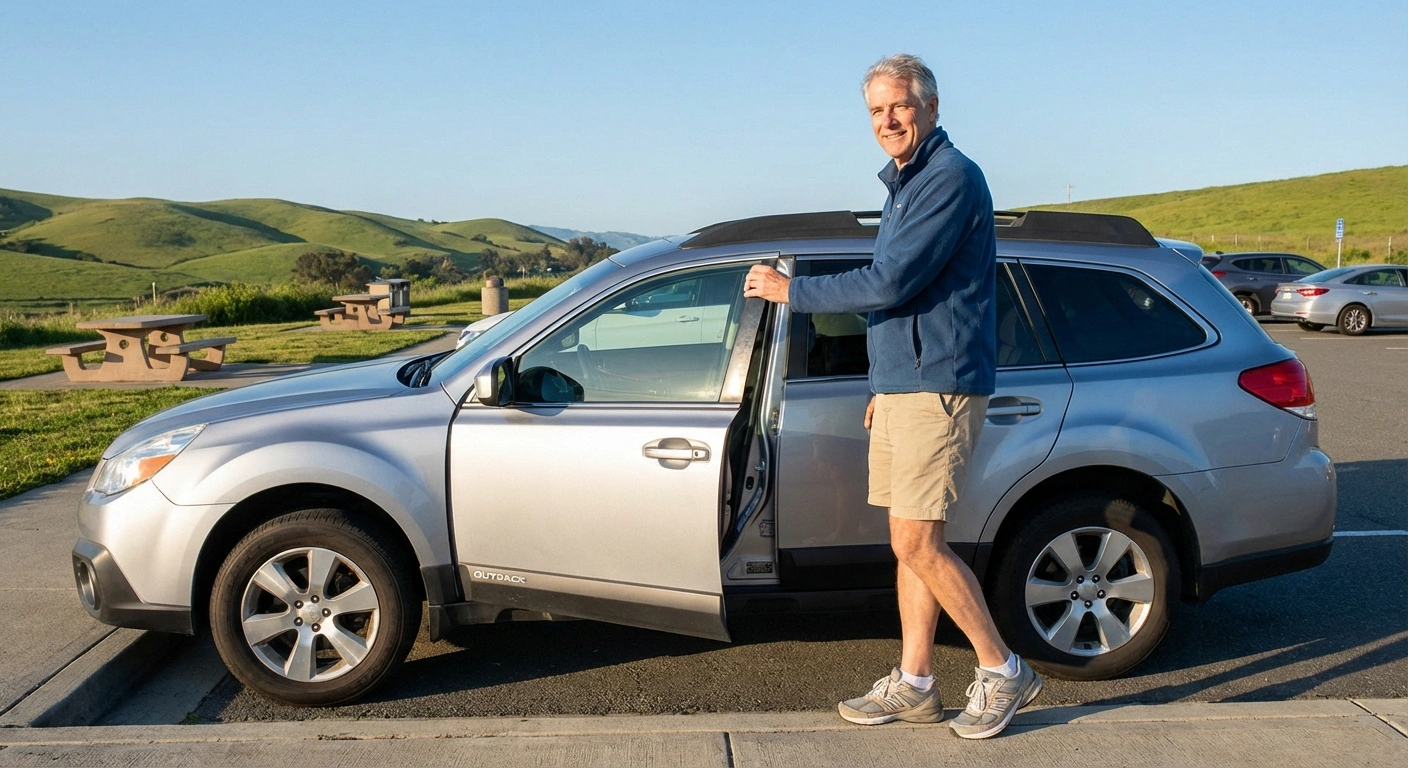
- Stop every ninety minutes to two hours. Get out of the car, walk around, stretch your legs, and wiggle your toes. This isn't optional — prolonged sitting compresses nerves and reduces circulation.
- Adjust your seat for good posture. Keep the seat upright and use a lumbar roll or small pillow behind the curve of your lower back. If you have neuropathy in your feet, make sure you're wearing shoes (not driving barefoot) so you have proper sensation for the pedals.
- Keep the temperature comfortable. Avoid blasting air conditioning directly on your feet and legs — cold air can trigger neuropathy pain. If the car is warm, keep hydrated to prevent swelling.
- Do ankle circles and toe stretches while riding. If you're a passenger, flex and point your feet regularly. Even small movements help maintain blood flow.
- Consider your driving safety — if neuropathy has affected sensation in your feet, honestly assess whether you can safely feel the brake and gas pedals. There's no shame in letting someone else take the wheel.
Flying With Neuropathy: Airport and In-Flight Strategies
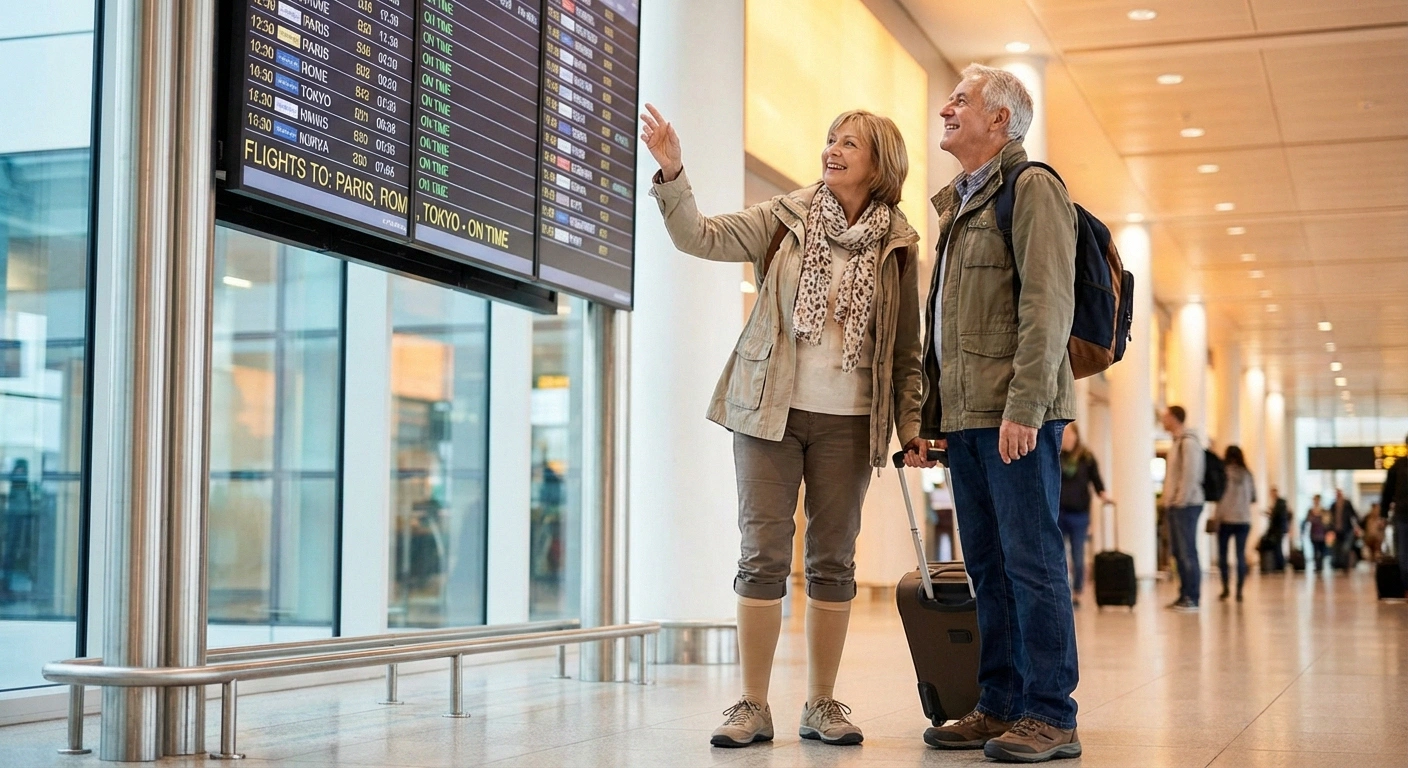
Airports and airplanes present unique challenges for neuropathy — standing in security lines, cramped seating, dry cabin air, and hours without movement. But with the right strategies, flying is very manageable:
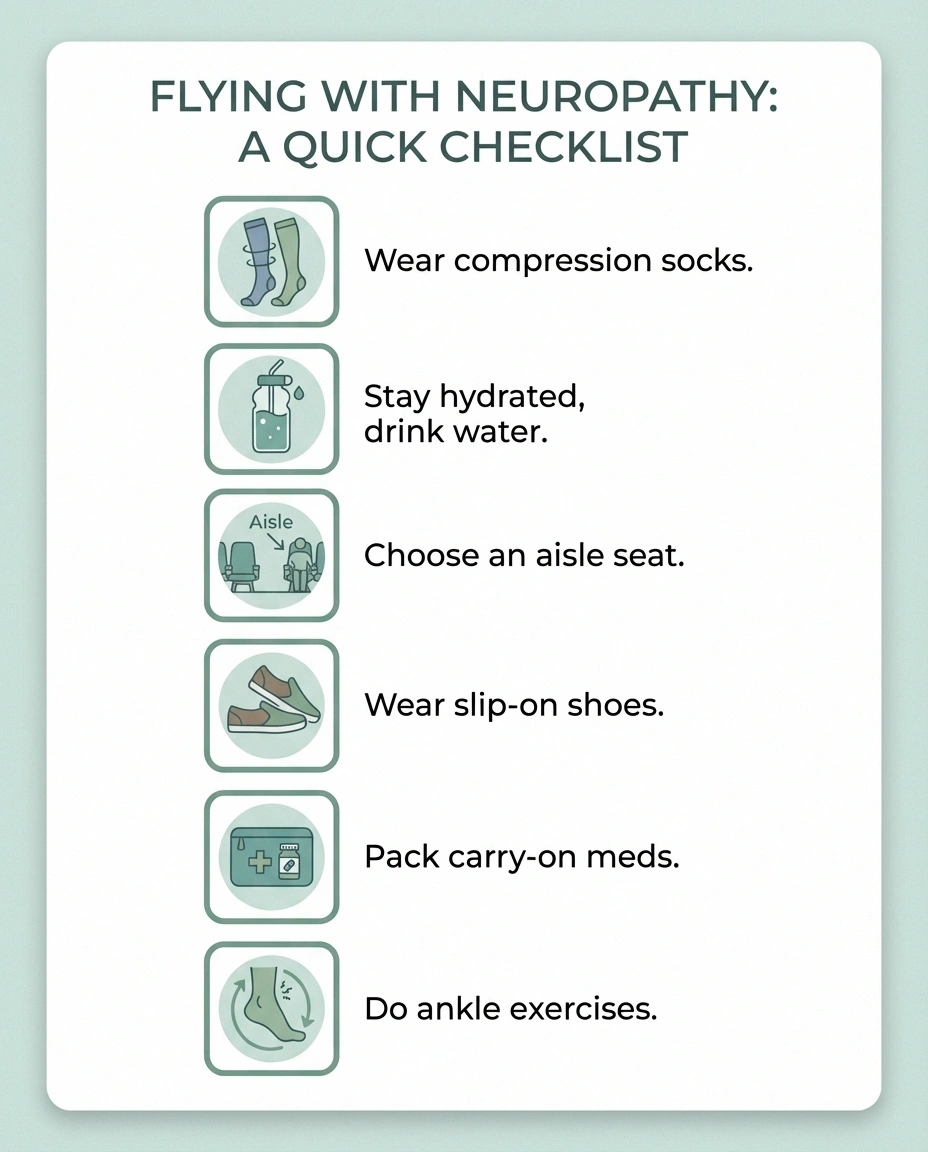
At the Airport
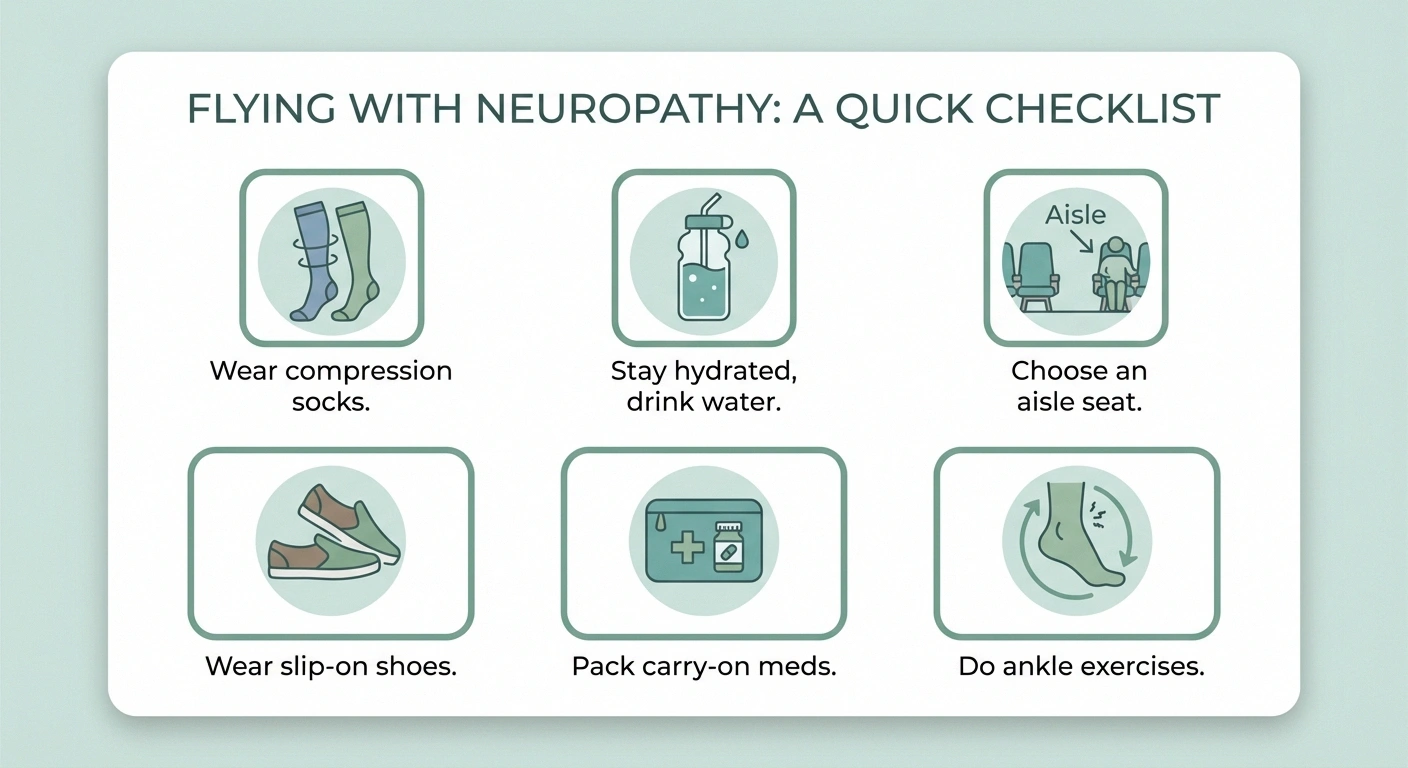
- Request wheelchair assistance if you need it. Most airlines provide free wheelchair service from the terminal to the gate. You need to book this at least forty-eight hours in advance. There's no minimum disability requirement — if standing in long lines aggravates your symptoms, this service is available to you.
- Wear slip-on shoes through security. You'll likely need to remove them at the security checkpoint, so avoid shoes with complicated laces that are hard to manage with numb or tingling fingers.
- Carry medications in your carry-on, never in checked luggage. If your checked bag gets lost, you need your medications with you. TSA allows prescription medications in reasonable quantities.
- Arrive early to reduce stress. Rushing through an airport raises your stress level, which can worsen neuropathy symptoms. Give yourself extra time.
During the Flight
- Choose an aisle seat when possible. This gives you room to stretch your legs and makes it easier to get up and walk without disturbing other passengers.
- Wear compression socks. The reduced cabin pressure at altitude, combined with sitting, can increase foot and ankle swelling. Compression socks help maintain circulation.
- Stay hydrated. Airplane cabins are very dry, and dehydration can worsen neuropathy symptoms. Drink water regularly and limit caffeine and alcohol.
- Move every hour. Stand up, walk to the back of the plane, do calf raises in the aisle. If you can't get up, do seated ankle circles, toe flexes, and gentle calf stretches.
- Bring a small cushion or lumbar support. Airplane seats aren't designed for long-term comfort, especially if you have back issues that accompany your neuropathy.
Managing Medications While Traveling
Medication management is one of the most critical aspects of traveling with neuropathy, and it's the area where small mistakes can lead to real problems:
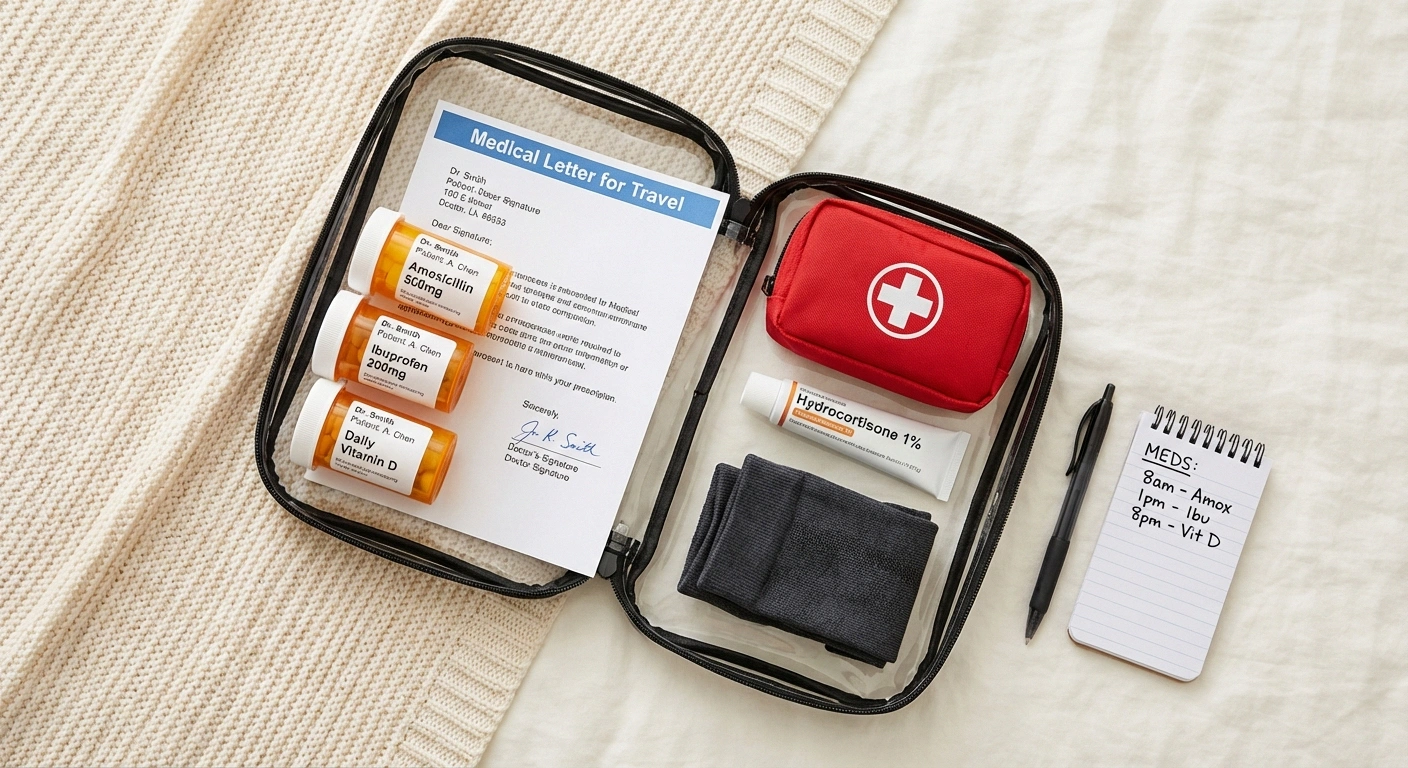
Medication Travel Warning
Always keep neuropathy medications in their original labeled prescription bottles — not in pill sorters or plastic bags. For international travel, carry a doctor's letter and check whether your medications are legal at your destination. Some pain medications and anticonvulsants are restricted in certain countries.
- Bring more than you need. Pack enough medication for your entire trip plus at least three to five extra days' worth in case of delays, lost luggage, or extended travel.
- Keep medications in original containers. This is especially important for controlled substances like gabapentin or pregabalin. Carrying unlabeled pills in a bag can cause problems at customs.
- Adjust for time zones. If you're crossing time zones, work out a medication schedule with your doctor before you leave. Skipping a dose or doubling up because of confusion over time changes can cause breakthrough pain or side effects.
- Research medication legality. Some neuropathy medications — particularly pain medications and certain anticonvulsants — may be restricted or illegal in other countries. Contact the embassy or consulate of your destination country before you travel. Many can answer medication questions via email.
- Store medications properly. Some medications need to be kept at room temperature and away from direct sunlight. Don't leave them in a hot car or in checked luggage in the cargo hold where temperatures may drop below freezing.
Choosing Activities and Pacing Your Trip
One of the biggest mistakes I see people make is treating vacation like a marathon. When you're living with neuropathy, the most enjoyable trips are the ones where you pace yourself thoughtfully:

Pacing Rule of Thumb
Plan one major activity per day, not three. For every high-energy day, schedule a recovery day. Know your walking limit and plan around it, not beyond it. The best trips are the ones you actually enjoy — not the ones where you push through pain to check off a list.
- Plan one major activity per day, not three. Give yourself permission to enjoy things slowly. A morning at a museum followed by an afternoon rest is better than packing in every attraction and paying for it the next two days.
- Schedule rest days. If you're traveling for a week, plan at least two days with no demanding activities. Use these for pool time, reading, or leisurely meals.
- Know your walking limits. If your daily walking capacity is about thirty minutes before symptoms flare, don't plan tours that involve three hours of walking. There's no shame in using a wheelchair, scooter, or taxi to cover longer distances.
- Explore accessible alternatives. Many tourist destinations offer seated tours, boat rides, scenic drives, or other options that don't require extended standing or walking.
What to Eat and Drink While Traveling
Your diet matters even more when you're out of your normal routine. Travel tends to push people toward convenience foods that can worsen inflammation and neuropathy symptoms:
- Stick to anti-inflammatory foods when possible. Fruits, vegetables, whole grains, lean proteins, and foods rich in omega-three fatty acids are all good choices.
- Limit alcohol. Alcohol is inflammatory and dehydrating, both of which can worsen neuropathy pain. If you have diabetes-related nerve damage, alcohol can also affect blood sugar control.
- Stay hydrated with water. Avoid sugary drinks and excessive caffeine, which can increase anxiety and exacerbate nerve sensitivity.
- Watch your sugar intake. This is especially important for people with diabetic neuropathy. Travel disrupts eating routines, and it's easy to reach for sugary snacks when you're tired and hungry.
- Look for restaurants with healthy options. Many travel review sites and apps let you filter for restaurants with fresh, whole-food menus.
Foot Care on the Road
Foot care is always important for people with neuropathy, but it becomes especially critical when you're traveling. You're on your feet more, wearing shoes for longer stretches, and may be walking on unfamiliar surfaces:
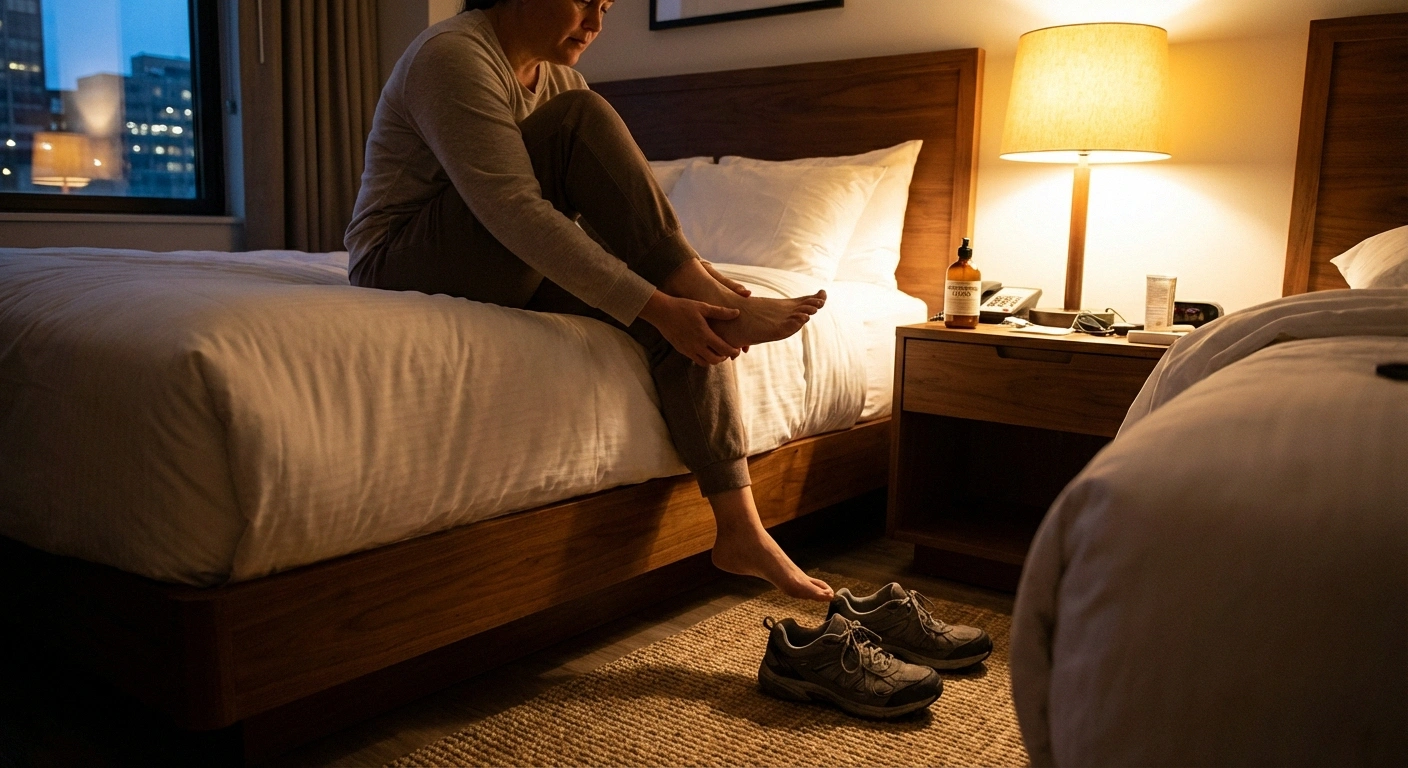
- Inspect your feet every evening. Look for blisters, cuts, redness, or any signs of injury you might not have felt during the day.
- Never walk barefoot — not at the hotel, not at the pool, not on the beach. Numbness means you won't feel sharp objects or hot surfaces.
- Bring two pairs of comfortable shoes and alternate daily. This reduces pressure points and gives shoes time to dry out.
- Moisturize your feet at night but avoid lotion between the toes, where it can create a breeding ground for fungal infections.
- Consider a travel foot soak at the end of long days. Even a warm (not hot) soak in the hotel bathtub with Epsom salts can provide relief.
International Travel: Additional Considerations
If you're traveling internationally, there are a few extra things to keep in mind:
- Learn key phrases in the local language. Know how to say “I have a nerve condition,” “I need to sit down,” and “Where is the nearest pharmacy” in the language of your destination.
- Get travel insurance that covers pre-existing conditions. Standard travel insurance often excludes chronic health conditions. Shop for a policy that explicitly covers neuropathy-related medical needs.
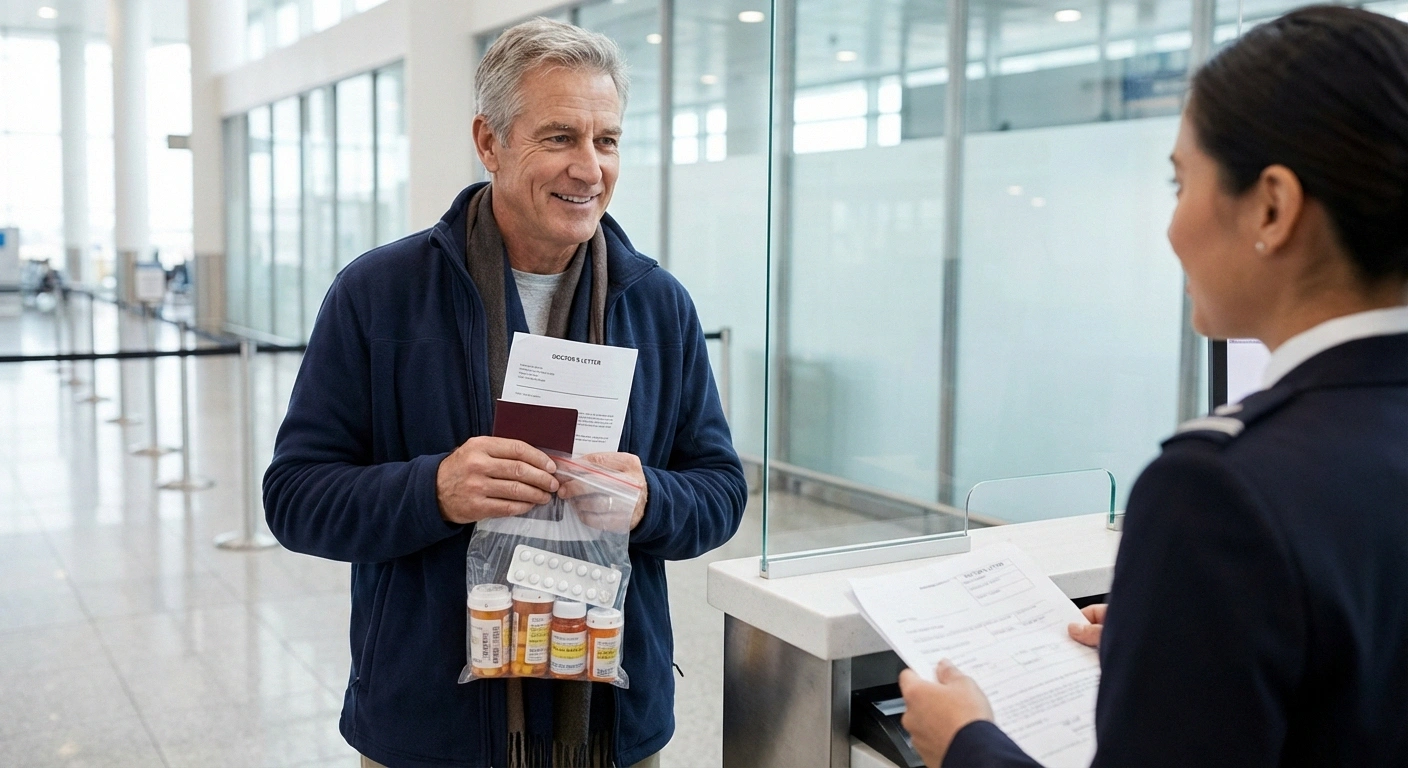
- Check medication import rules. As mentioned above, some neuropathy medications may be restricted. Always carry your prescription and a doctor's letter.
- Plan for accessibility gaps. Not all countries have the same accessibility standards. Sidewalks, public transport, and buildings may be harder to navigate in some destinations. Research this before you go and have backup plans for getting around.
- Consider mobility aids. A collapsible cane or travel wheelchair can be a lifesaver in destinations with lots of walking. Many airlines will check a wheelchair at no extra cost.
Sleep Tips for Travelers With Neuropathy
Many people with neuropathy already struggle with sleep disruptions, and travel often makes this worse. Hotel rooms, time zone changes, and unfamiliar beds all contribute to poor sleep, which in turn lowers your pain threshold:
- Bring earplugs and an eye mask. Block out unfamiliar sounds and light to create a more controlled sleep environment.
- Maintain your medication schedule — including any nighttime doses that help manage pain or promote sleep.
- Request extra pillows. Use them to elevate your feet slightly or support your legs in a comfortable position.
- Avoid screens for thirty minutes before bed. Blue light interferes with melatonin production and makes it harder to fall asleep.
- Keep your room cool. A cooler room temperature often helps with neuropathy-related sleep disturbances.
Frequently Asked Questions About Traveling With Neuropathy
Can I still fly with neuropathy?
Yes. Flying with neuropathy is safe for most people. The key is to stay hydrated, wear compression socks, move regularly during the flight, and choose an aisle seat when possible. Talk to your doctor before the trip if you have concerns about cabin pressure, circulation, or medication timing across time zones.
Will sitting for a long time make my neuropathy worse?
Prolonged sitting can temporarily worsen neuropathy symptoms by reducing blood flow to your extremities. This is especially common on long flights or car rides. Taking breaks to stand, walk, and stretch every sixty to ninety minutes helps minimize this effect.
Should I bring my own mobility aids or rent them at my destination?
It depends on the destination. If you normally use a cane, bring it with you. For wheelchairs or scooters, renting at your destination is often more practical. Research rental options in advance, and confirm availability before you arrive. Many tourist attractions, museums, and airports also offer loaner wheelchairs.
How do I handle neuropathy medication through airport security?
Keep all medications in their original labeled prescription containers and pack them in your carry-on bag. The TSA allows prescription medications in reasonable quantities. For international travel, carry a letter from your doctor and check whether your medications are legal in your destination country.
What type of vacation is best for someone with neuropathy?
Vacations that allow flexibility and pacing tend to work best. Cruise ships, resort stays, and self-guided tours let you rest when you need to. Avoid rigidly scheduled group tours with extensive walking unless you know you can handle the physical demands. Beach vacations and spa resorts are popular choices because they combine relaxation with gentle activity.
Can traveling in hot weather make neuropathy worse?
Heat can increase swelling and nerve sensitivity for some people with neuropathy. Stay hydrated, avoid prolonged direct sun exposure, wear breathable clothing and shoes, and rest in air-conditioned spaces during the hottest part of the day. If heat sensitivity is a major issue for you, consider traveling during cooler seasons or choosing temperate destinations.
You Deserve to See the World
Neuropathy changes the way you travel, but it doesn't have to stop you from traveling. The people I've spoken with who travel successfully with neuropathy all share one thing: they plan ahead, they listen to their bodies, and they give themselves permission to do things differently than they used to.
Your version of a great trip might look different now — fewer miles walked per day, more rest stops, comfortable shoes instead of sandals, a slower itinerary with room to breathe. But the joy of seeing somewhere new, spending time with people you love, and breaking free from your daily routine? That hasn't changed one bit.
Always consult your healthcare provider before making any changes to your medication routine or travel plans. This article is for informational purposes only and is not a substitute for professional medical advice.
About the Author