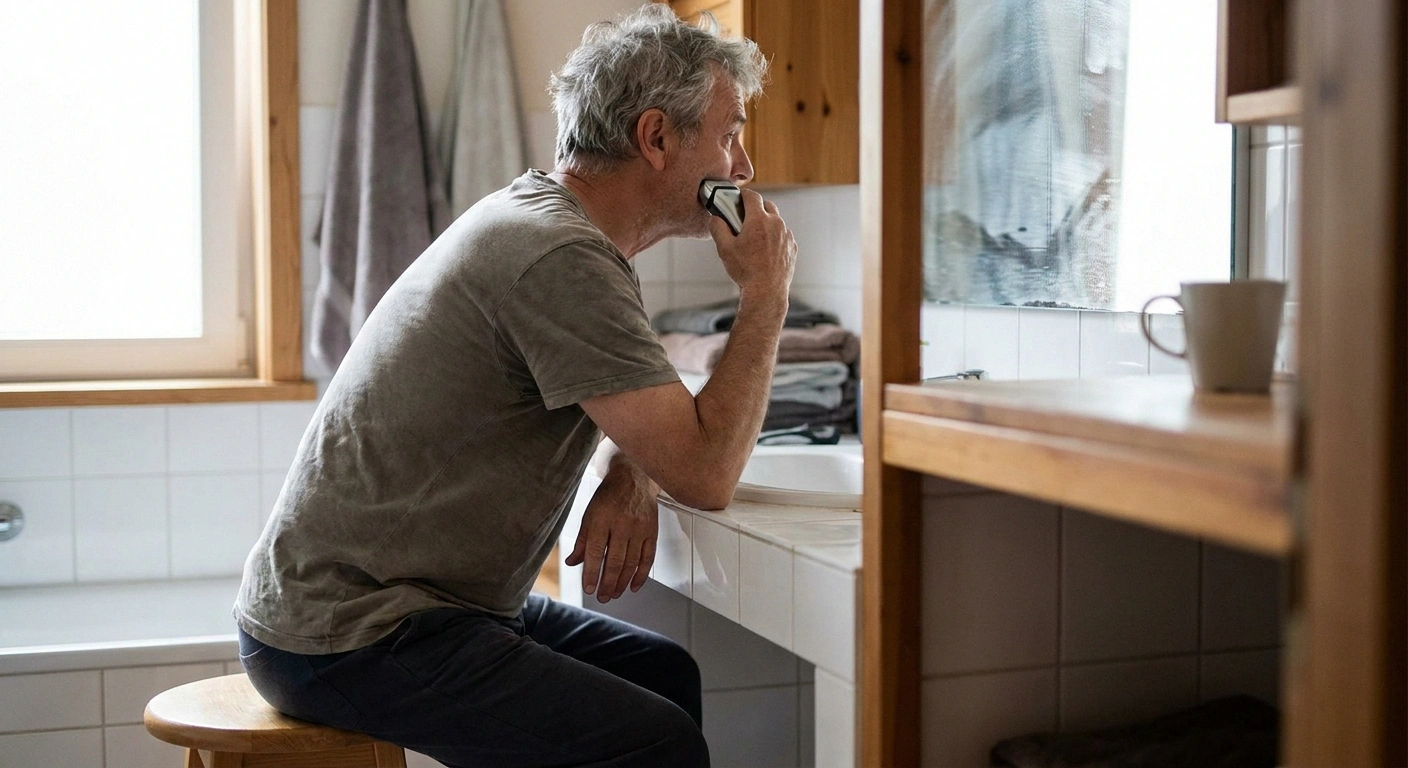
Here's a small thing nobody mentions when neuropathy settles into your hands or legs: shaving stops being automatic. You finish, you rinse, and then you notice a thin line of blood on your shin that you never felt happen. Or you realize you've been pressing the razor so hard against your jaw that the skin is red and raw — and it didn't hurt at all while you were doing it.
Shaving depends on two kinds of feedback most of us never think about. Your hand tells you how firmly you're holding the razor and how much pressure it's putting on your skin. Your skin tells you when the blade catches, when the water is too hot, and when you've nicked yourself. Neuropathy can take away one or both — often without announcing it.
The fix isn't to stop shaving. It's to change a few tools and habits so your eyes and your routine do the job your nerves used to. Most of what follows costs nothing.
Why a Numb Nick Is a Bigger Deal
A small razor cut is nothing for most people. With neuropathy, three things change the math:
- You may not notice it. A cut you didn't feel is a cut you didn't clean or watch.
- Healing can be slower, particularly with diabetes, where circulation and immune response in the skin are often reduced.
- Legs are foot-adjacent territory. A nick on a numb lower leg or ankle deserves the same attention as a foot wound, and for people with diabetes that's a serious category.
None of this is cause for fear. It's the reason a few extra seconds of checking are worth building in, the same way many of us already do a daily foot inspection.
Electric or Blade? The Case for Switching
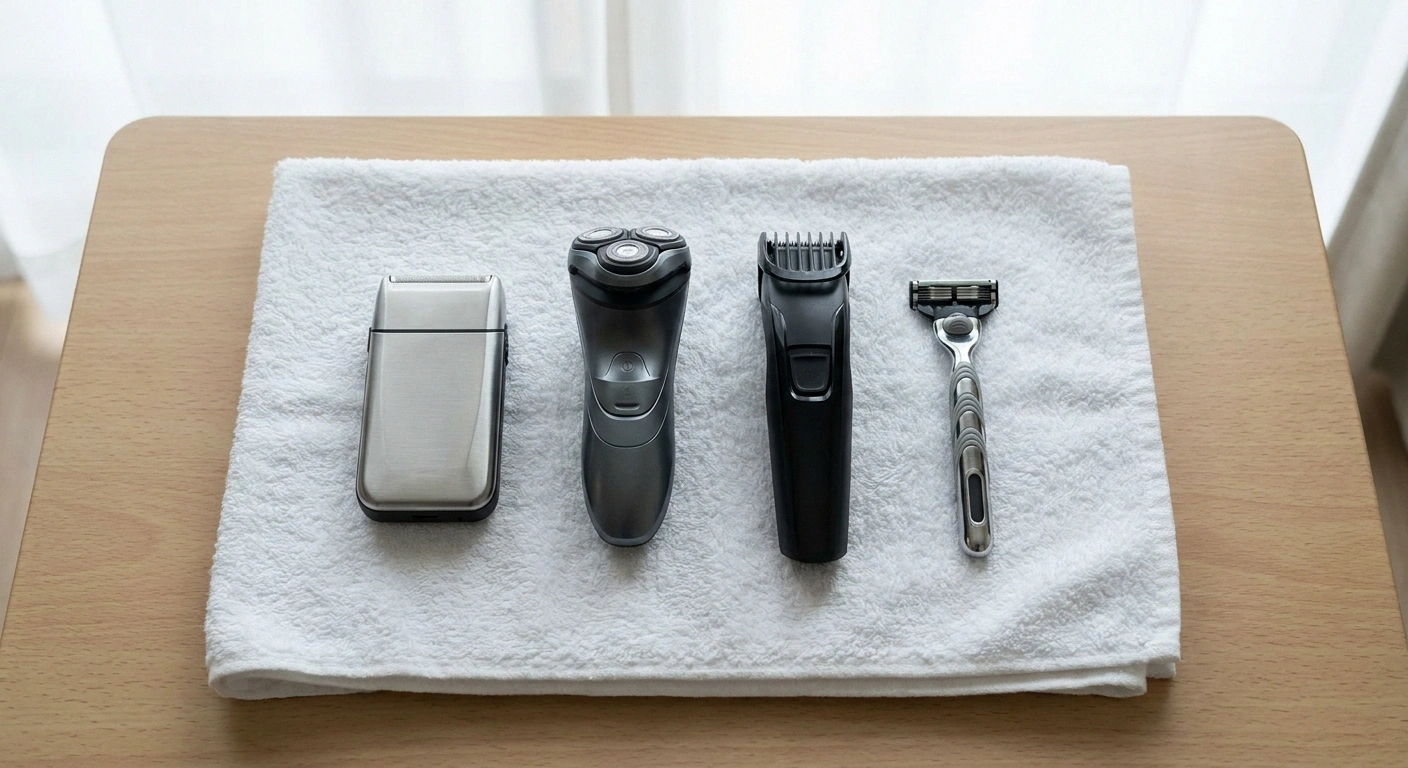
If you take one thing from this article, let it be this: an electric shaver is the single biggest safety upgrade for most people with neuropathy. Diabetes educators and podiatrists have recommended them for years for exactly this reason.
| Option | Cut risk | Best for |
|---|---|---|
| Foil electric | Very low | Close face shave, sensitive skin |
| Rotary electric | Very low | Jaw curves, shaky hands |
| Trimmer with guard | Lowest | Legs, short beard, bad hand days |
| Multi-blade cartridge | Moderate | Steady hands, fresh blade only |
| Straight or safety razor | High | Not recommended with numb skin |
An electric shaver keeps the cutting edge behind a guard or foil, so it's very hard to cut yourself even if you press too hard or your hand wobbles. You also don't need hot water to use one, which takes away a burn risk.
There are two main styles:
- Foil shavers have a straight head with a thin metal screen. They tend to give a closer shave and are often gentler on sensitive skin, but they're moved in straight lines.
- Rotary shavers have round heads that move in circles and follow the curves of the jaw and neck more easily. Some people with tremor find them easier to use.
For legs and underarms, a women's electric shaver or a body groomer with a guard works the same way. You won't get quite as close a result as a fresh blade, but the trade is worth it for many of us.
If you strongly prefer a blade, that's your call — plenty of people keep using one safely. Choose a razor with a pivoting head, multiple blades with safety wires, and a thick, rubberized handle. Replace it often. A dull blade drags, and dragging means pressing harder.
Grip: Holding the Razor When You Can't Feel It
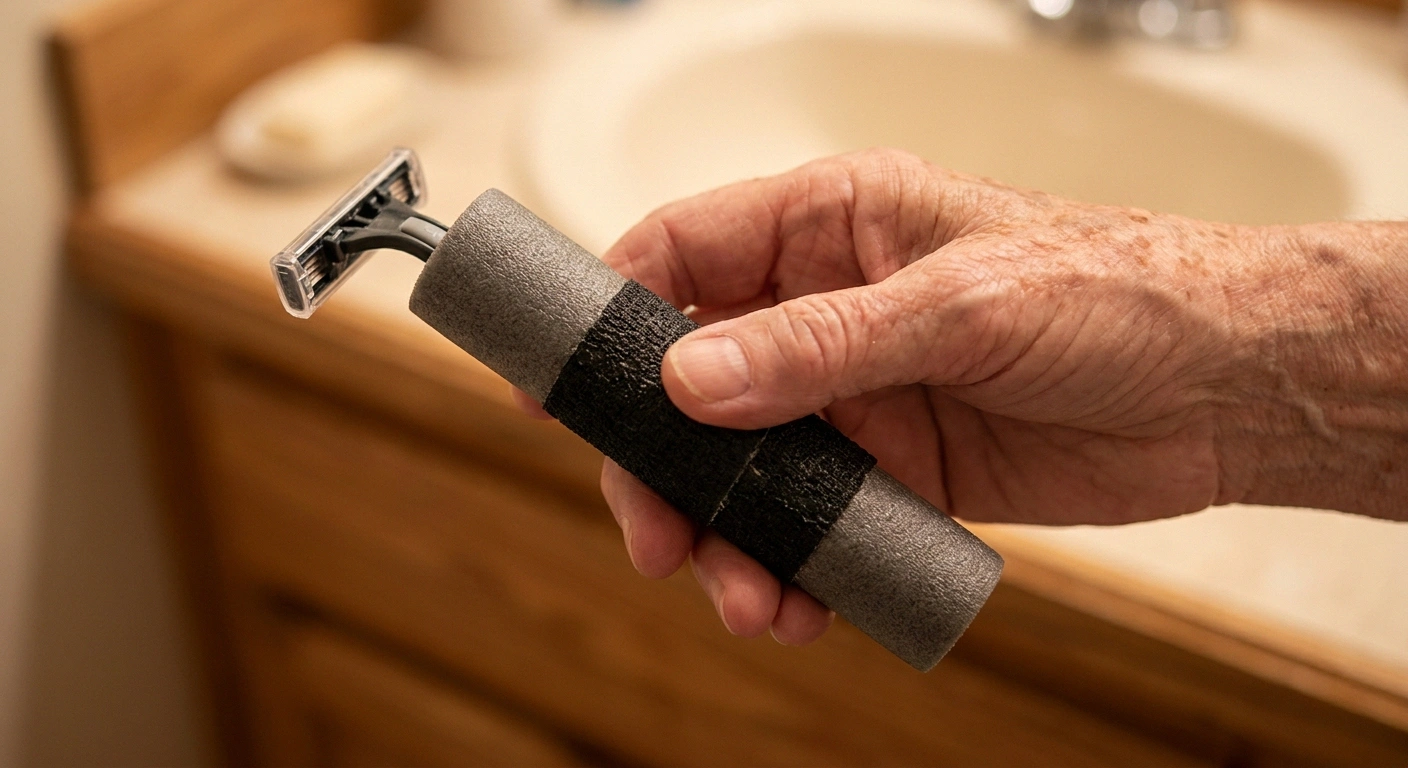
When fingertips go numb, the brain's backup plan is to squeeze harder. You've probably noticed this with a fork or a pen. With a razor, over-gripping translates directly into too much pressure on the skin.
A few ways to help:
- Build up the handle. The same foam grip tubing used on utensils slides over most razor handles. A fatter handle lets you hold with the whole hand and less force. My guide to adaptive utensils for numb hands goes into how to choose thickness.
- Add texture. A wrap of athletic grip tape or a rubber band or two around the handle keeps a wet razor from slipping.
- Brace your elbow. Resting your elbow on the counter while you shave your face steadies the whole arm. For legs, sit down and rest your forearm on your knee.
- Let the tool's weight do the work. Try this: hold the razor so loosely it almost slides, then add just enough grip to control it. That's usually plenty.
If your hands are both numb and weak, an occupational therapist can suggest a universal cuff or a handle adapter so you're not relying on grip at all. More on hand symptoms in general is in my article on neuropathy in the hands.
Water, Heat, and Skin You Can't Trust
Hot water softens hair, and that's the reason so many shaving routines start with a hot towel or a steamy shower. With reduced temperature sensation, that habit carries a real burn risk.
- 120°F (49°C): about 5 minutes
- 130°F (54°C): about 30 seconds
- 140°F (60°C): about 5 seconds
- Set your water heater to 120°F (49°C) or lower if you can.
- Test water with a body part that has normal feeling, like your elbow or the inside of your wrist, if those areas still sense heat well. A cheap bath thermometer removes the guesswork entirely.
- Warm, not hot, is enough to soften hair.
My article on warm baths and neuropathy safety has more on water temperatures and why numb skin burns more easily than you'd think.
Moisture matters too. Use a shaving gel or cream rather than soap, and don't dry-shave with a blade. After shaving, a fragrance-free moisturizer helps protect skin that's already prone to dryness, which is common with neuropathy because the nerves that control sweating are often affected.
A Routine That Works Around Numb Skin
For your face
- Sit if you're unsteady. A stool at the sink is fine.
- Use good lighting and a magnifying mirror if your eyesight isn't sharp.
- Apply gel or cream, or prep the skin for an electric shaver per its instructions.
- Shave in the direction of hair growth first, with short, light strokes. Rinse the blade often.
- Stretch the skin with your free hand only if that hand can feel what it's doing. Otherwise, puff your cheek or tilt your head instead.
- Rinse with cool or lukewarm water.
- Look — not feel — for nicks, redness, or missed patches.
For legs and underarms
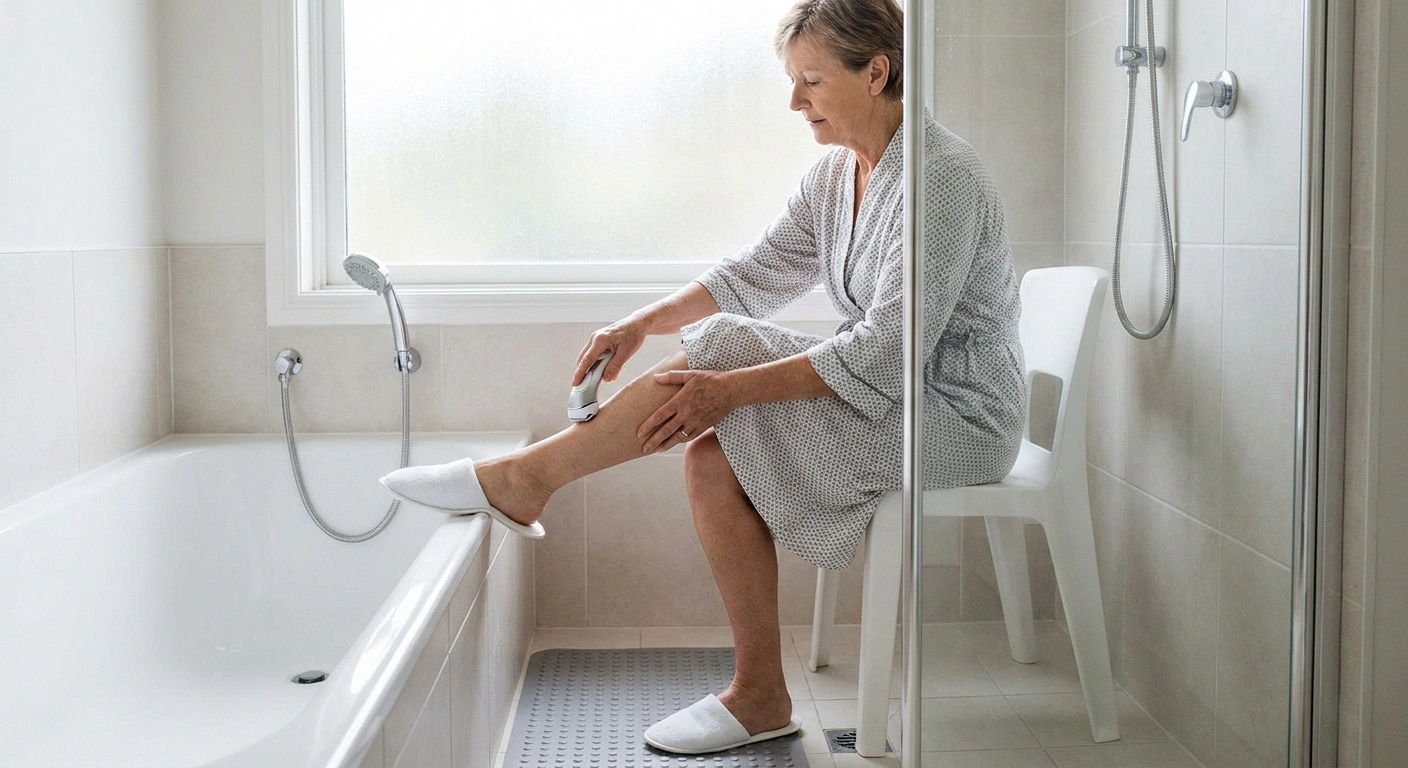
- Sit down to shave your legs. A shower chair or the edge of a tub with a non-slip mat is much safer than balancing on one foot in a wet shower.
- Shave in good light, not in a dim, steamy stall. Some people find it easier to shave legs outside the shower, sitting on a towel with a basin of warm water.
- Go slowly around the ankles, knees, and shins, where bone sits close to the skin.
- Avoid shaving over moles, calluses, scabs, or any broken skin.
- When you're done, run your eyes, not your fingers, over each leg from knee to ankle.
Bathroom safety deserves a mention here too, since the bathroom is where a lot of falls happen. My bathroom safety guide covers grab bars, mats, and seating.
- Shower chair or tub-edge seat with a non-slip mat under your feet
- Handheld shower head so water comes to you, not the other way round
- Razor and gel on a shelf at seated arm height
- A small hand mirror with a long handle for the backs of knees and ankles
Other Ways to Remove Hair, and Which to Skip
Shaving isn't the only option, and a few alternatives suit numb skin better than others:
- Beard or body trimmers leave a little stubble but almost never cut skin. Plenty of men with neuropathy simply switch to a short, trimmed beard and skip daily shaving altogether.
- Depilatory creams dissolve hair chemically. They can cause chemical burns, and numb skin won't warn you when the cream has been on too long. If you use one, patch-test a small area, set a timer rather than going by feel, and never use it on legs with poor circulation or broken skin.
- Waxing and epilators pull hair from the root. They can bruise or tear fragile skin, and hot wax is a burn risk on numb areas. I'd skip these.
- Laser hair removal reduces hair over several sessions. It involves heat, so if you have diabetes or reduced sensation in the treatment area, discuss it with the provider first and make sure they know about your neuropathy.
There's also the option many of us quietly land on: shaving less often. Nobody's grading your shins.
What to Do When You Find a Cut
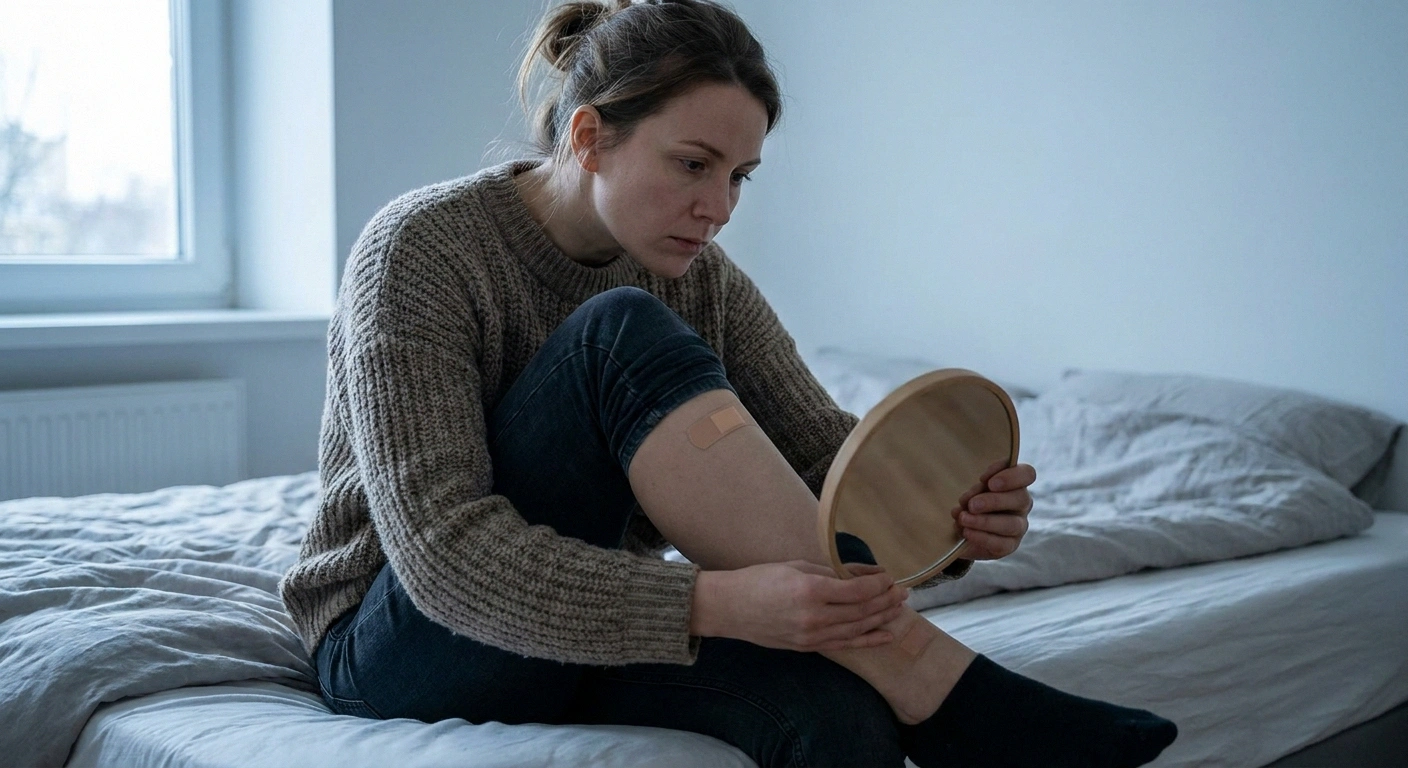
You'll find one eventually. Here's a simple plan:
- Day 1
- Thin line, maybe a small scab, faint pink edge
- Day 2 to 3
- Pinkness shrinking, scab dry
- Call someone if instead
- Redness spreads past a fingertip's width, the area feels warm to your palm, it swells, or it weeps.
- Press gently with a clean tissue or gauze until it stops bleeding.
- Rinse with clean water and pat dry.
- Cover it with a small bandage if it's on your legs or anywhere clothing will rub.
- Check it every day until it's clearly healed.
Get it looked at if you see spreading redness, warmth, swelling, pus, or if it isn't clearly improving within two or three days. That's especially important on the legs and if you have diabetes. My guide to diabetic foot ulcers explains why small wounds on numb lower limbs can become big problems.
Choosing and Caring for an Electric Shaver
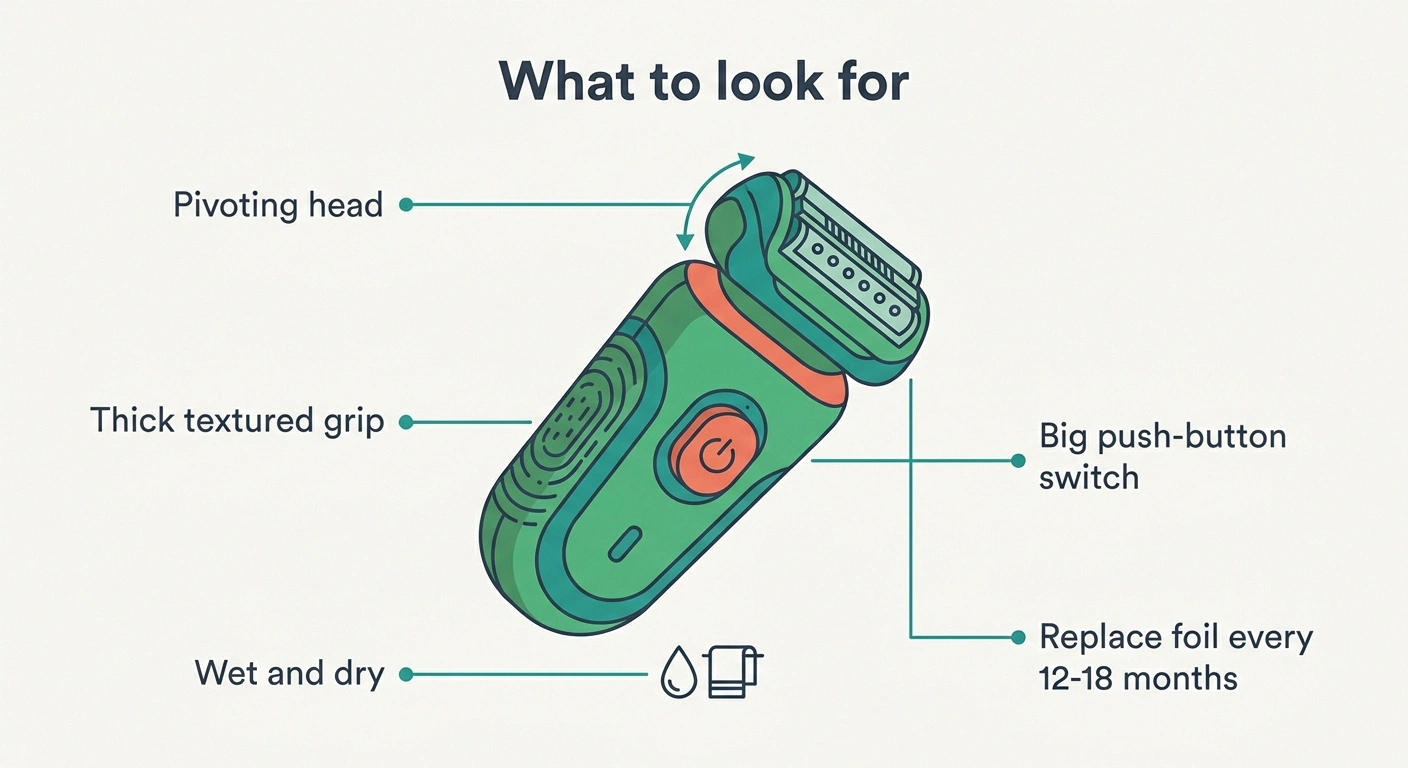
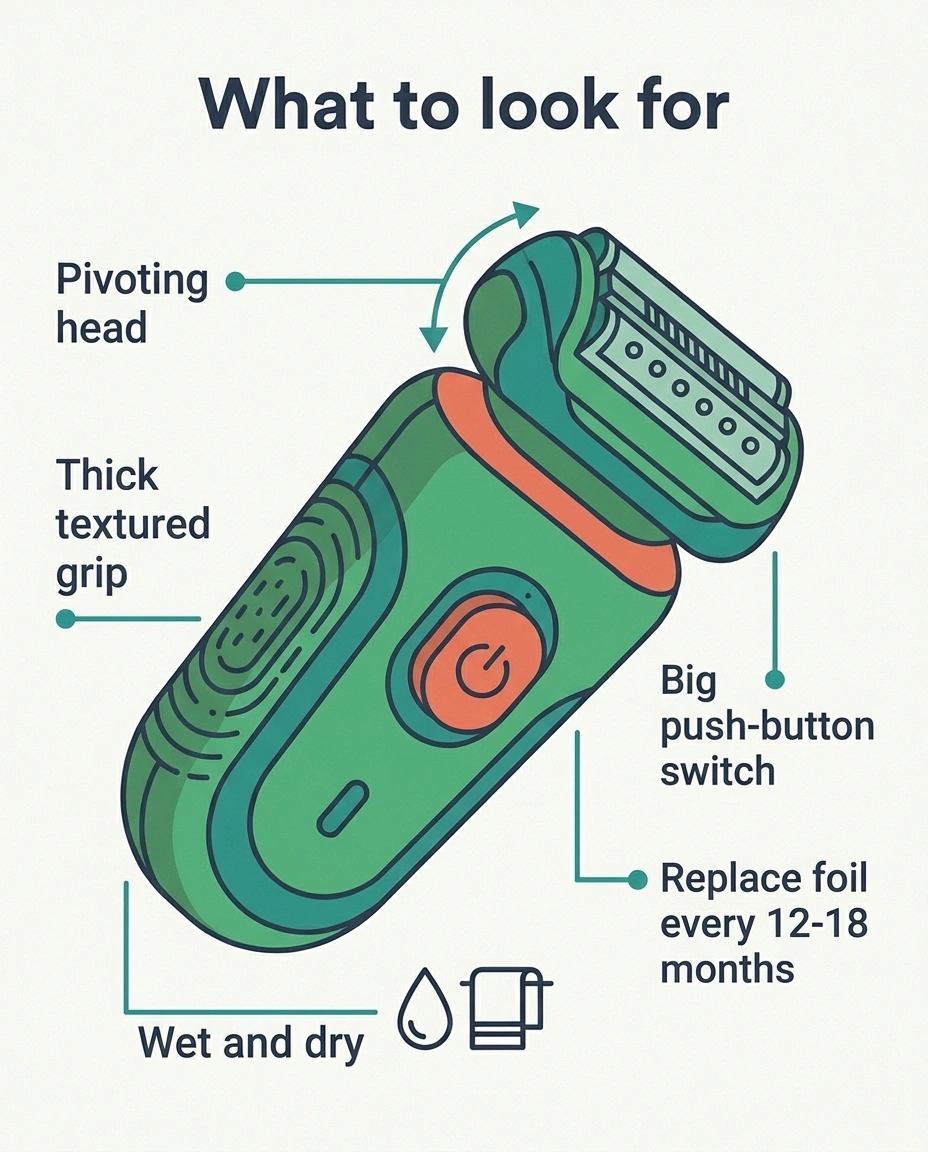
You don't need an expensive model. What matters more for numb hands and numb skin is how the shaver handles, and a few features make a real difference:
- A handle you can actually hold. Look for a thick body with a rubberized or textured grip. Slim, glossy shavers look nice and slide out of wet, numb fingers.
- A big, easy switch. A small slider that takes fingertip precision is frustrating. A large push button or a switch you can operate with your palm is easier.
- Cordless with a long battery life. Cords tangle and snag, and you don't want to be managing a cable near water.
- Wet-and-dry capability. A shaver that can be used with gel or in the shower gives you options, and it can be rinsed clean under the tap instead of taken apart with small brushes.
- A flexible or pivoting head. Heads that follow the contours of the jaw or shin need less pressure from you to stay in contact with the skin.
Maintenance is part of safety. A worn foil or dull cutters pull at hair, and pulling tempts you to press harder. Most manufacturers suggest replacing the foil and cutters every 12 to 18 months, sooner with heavy use. If you notice the shaver tugging or leaving patches, that's the cue.
Clean it after each use, per the instructions. A clogged head works less well and can irritate skin. And if you share a bathroom, keep your shaver to yourself, since small nicks can pass infections.
If You're Shaving Someone Else
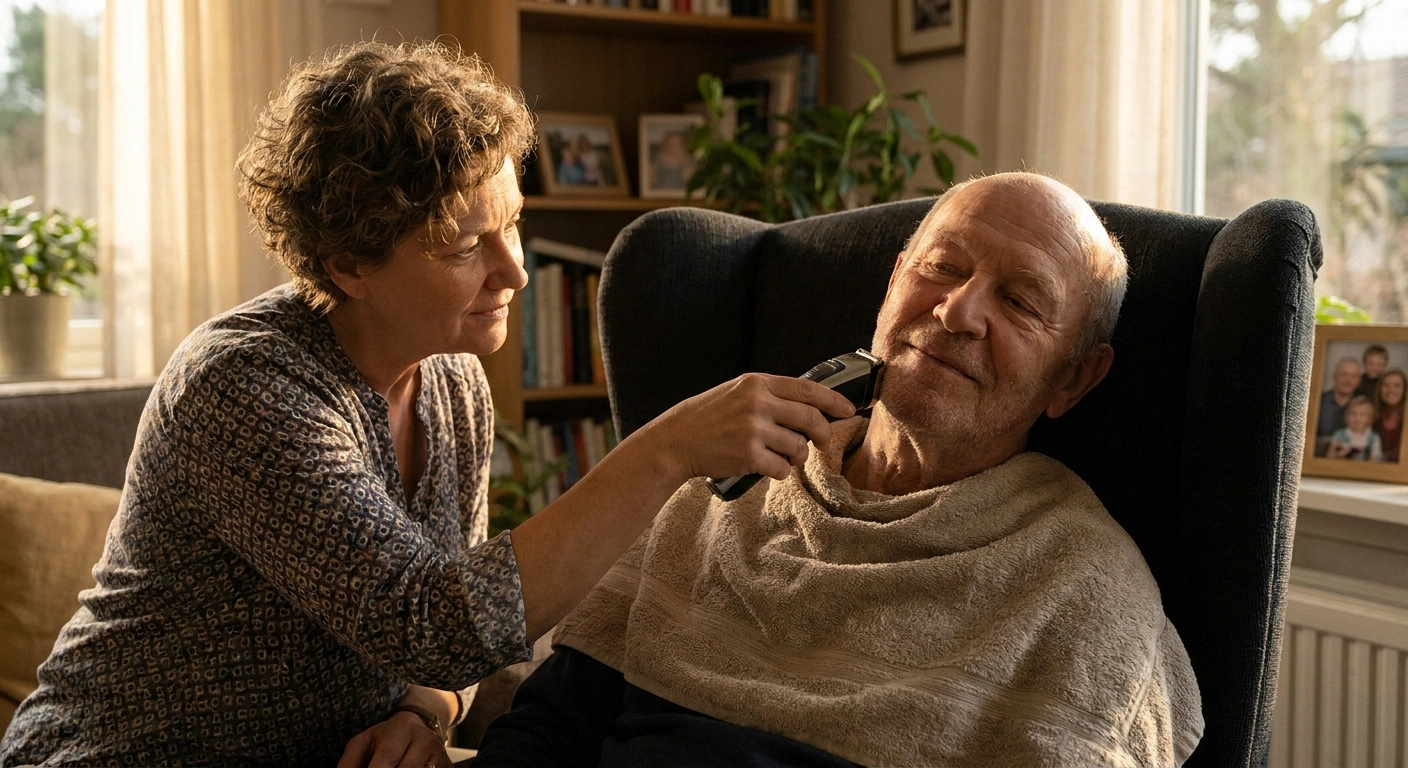
Many caregivers end up shaving a spouse or parent whose hands no longer cooperate. A few things make it easier for both of you:
- Use an electric shaver. It's much safer on someone else's face, especially if they move unexpectedly or have tremor.
- Set up for comfort. Have them sit in a chair with head support, with you standing slightly to the side in good light.
- Talk as you go. Tell them what you're about to do before you do it — “Now the left side of your chin.” People with facial numbness can't feel where you are, and a heads-up keeps them from turning into the shaver.
- Ask, but also look. They may not be able to tell you if the pressure is too much. Watch for redness as you work.
- Finish with a skin check. Look for nicks, irritation, or dry patches, and moisturize afterward.
For many people, being shaved by someone else is a moment where independence feels fragile. If they can still do part of it themselves — holding the shaver while you steady their elbow, or doing one side while you do the other — it's often worth the extra time.
When Your Face Is Affected Too
Most peripheral neuropathy starts in the feet and later the hands, but some people have numbness around the face or jaw. That can come from diabetes, certain medications, or specific cranial nerve conditions. If you've noticed new numbness on your face, it's worth mentioning to your doctor, since new facial numbness has causes that should be checked.
For shaving, facial numbness means leaning more heavily on the mirror, light pressure, and an electric shaver. If you have trigeminal neuralgia, where touching the face can trigger sharp, electric pain, shaving may itself be a trigger. Some people with that condition find an electric shaver used very lightly, or shaving at the time of day when their pain is lowest, makes it bearable.
Small Changes, Less Worry
Shaving with neuropathy mostly comes down to three swaps: an electric shaver or a well-built razor, a thicker handle with a lighter grip, and a mirror check instead of a finger check. Add a seat for your legs and a thermometer for your water, and you've closed most of the gaps.
It's the kind of adjustment that can feel like one more thing neuropathy has taken from you. I try to see it the other way. It's one more thing we've figured out how to keep doing, on our own terms. For more ideas on keeping your daily routine manageable, my guide to a neuropathy-friendly morning routine pairs well with this one.
Frequently Asked Questions
Is an electric razor safer if you have neuropathy?
Yes. Electric shavers keep the cutting edge behind a guard or foil, which makes nicks and cuts much less likely even if you press too hard or cannot feel the razor well. They also do not require hot water, reducing burn risk.
Can people with diabetic neuropathy shave their legs?
Yes, with care. Sitting down, using an electric shaver or a sharp razor with light pressure, shaving in good light, and checking your legs visually afterward all reduce risk. Any cut on a numb leg should be cleaned and watched until it heals.
How do I shave with numb fingers?
Build up the razor handle with foam tubing or grip tape so you can hold it with less force, brace your elbow on a counter, use light strokes, and rely on a mirror rather than touch to check your work.
How hot should the water be for shaving with neuropathy?
Warm, not hot. Keep your water heater at 120 degrees Fahrenheit or lower, and test water with a thermometer or a body part that still senses temperature normally before it touches numb skin.
What should I do if I cut myself shaving and did not feel it?
Apply gentle pressure until bleeding stops, rinse with clean water, and cover it if it is on your legs. Check it daily and get medical advice if you see spreading redness, warmth, swelling, or pus, or if it is not improving within two or three days.
Should I shave sitting down with neuropathy?
For legs, yes. Standing on one foot in a wet shower is a common setup for falls, especially with reduced feeling in the feet. A shower chair or sitting on the edge of the tub is much safer.
Can neuropathy affect the face?
Some people with neuropathy notice numbness around the face or jaw, and certain conditions affect facial nerves directly. New facial numbness should be mentioned to a doctor so the cause can be checked.
About the Author