One of the most common questions people bring to my support group goes something like this: “My feet have been puffy for weeks. I have neuropathy. Are the two connected?” The honest answer is — sometimes. Other times, the swelling is a separate problem that happens to be sitting next to the neuropathy, demanding its own diagnosis. And occasionally — this is the part nobody likes to talk about — the swelling is a warning sign of something urgent that needs a phone call today, not next Tuesday.
I’m Janet. I’m a patient advocate with neuropathy, not a doctor. But I’ve spent a lot of time sorting out which swelling-plus-neuropathy combinations are everyday discomfort and which ones deserve a faster response. This is the lay of the land — what causes feet and ankles to swell when you also have nerve damage, how to tell the routine from the urgent, and what actually helps the routine cases.
First, the Honest Truth About Neuropathy and Swelling
Most of the everyday neuropathy that people live with — the burning-feet, numb-toes, tingling-hands kind that comes from diabetes or chemotherapy or just unknown causes — does not directly cause your feet to swell. That’s worth saying out loud because the assumption that “all of this must be the neuropathy” can lead people to ignore swelling that’s actually coming from something else.
Key Takeaway
Most peripheral neuropathy doesn’t directly cause swelling — autonomic neuropathy is the exception. When the feet and ankles swell, the cause is usually heart, kidney, venous, lymphatic, or medication-related (gabapentin, pregabalin, amlodipine, NSAIDs, steroids, pioglitazone). One-sided swelling, hot-red swelling, or a warm swollen foot in a diabetic patient are urgent. Routine puffiness responds to elevation, calf pumps, salt reduction, and properly-fitted compression.
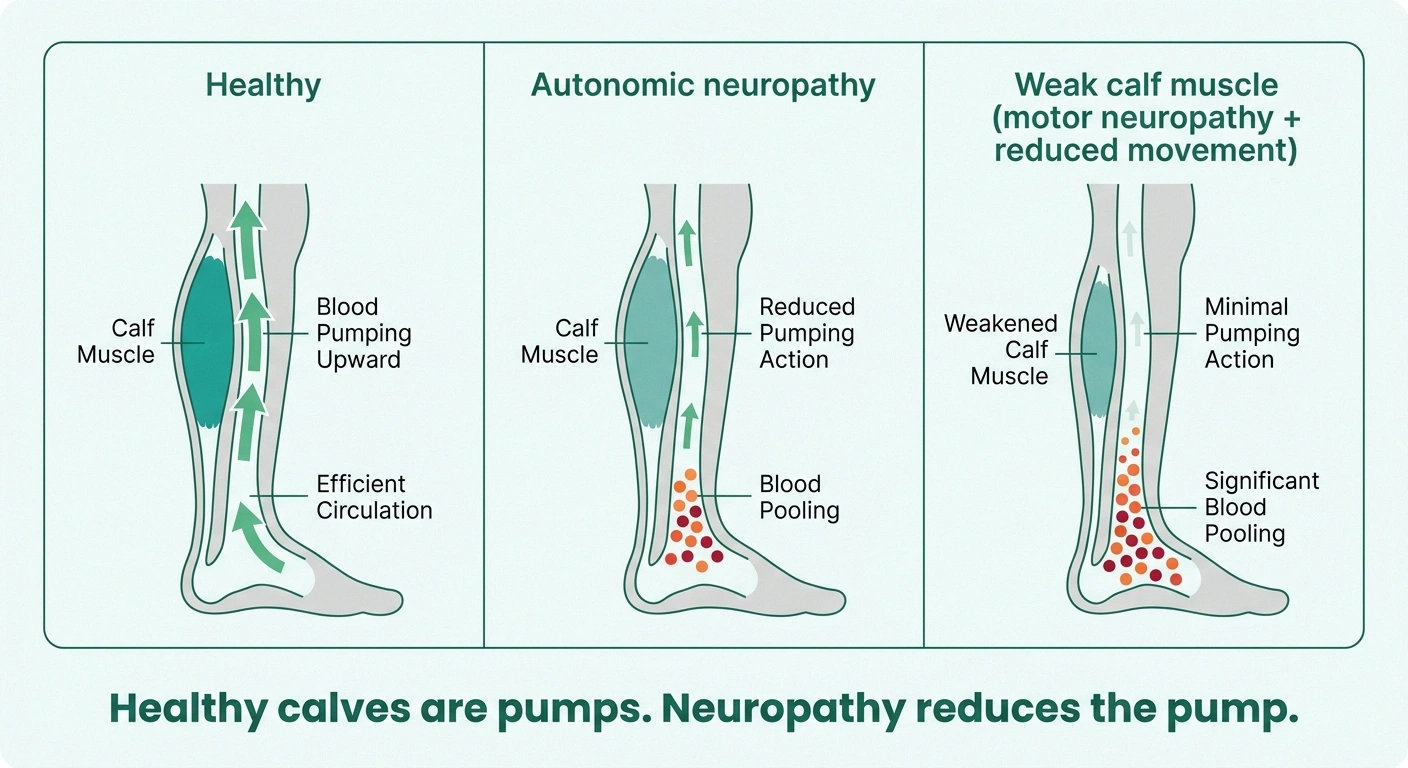
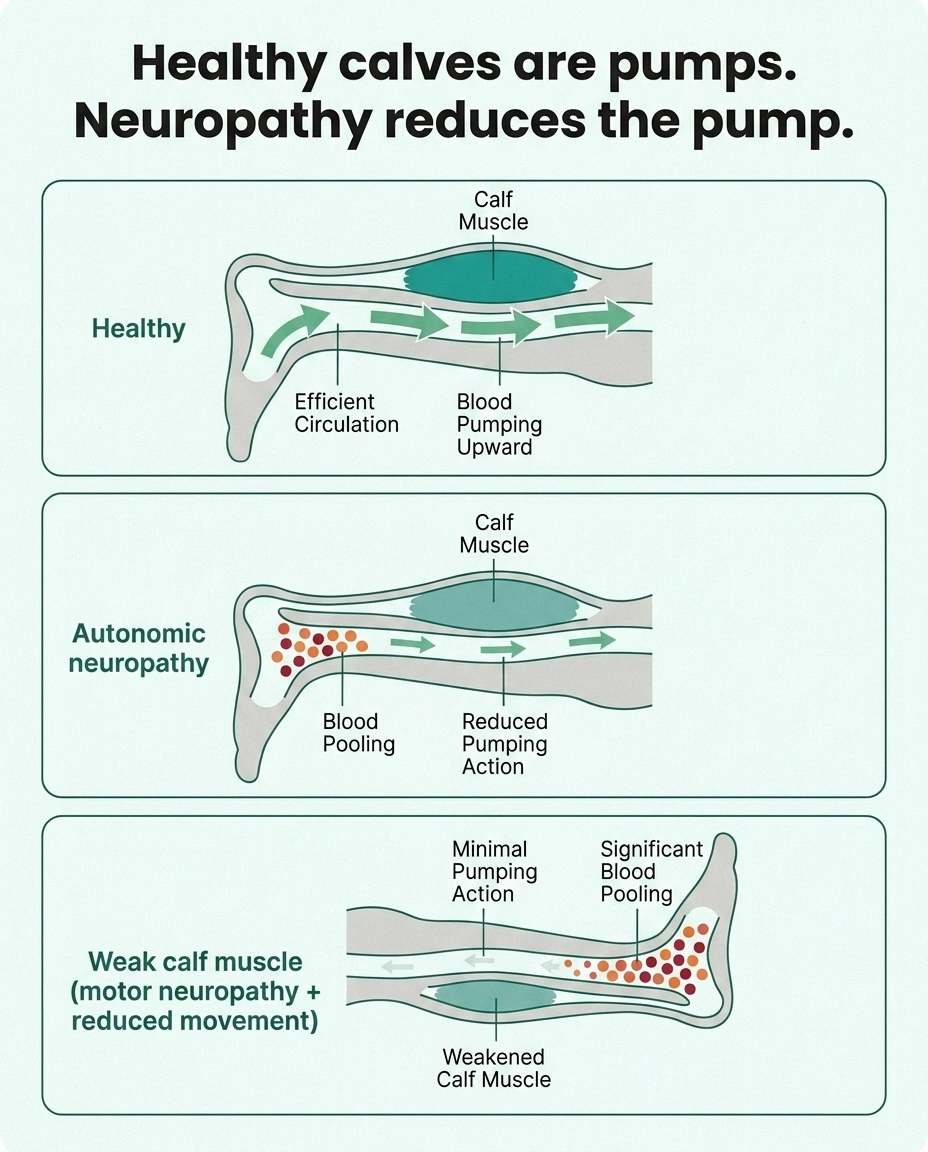
The neuropathy-related swelling that is real comes mostly from a particular subtype called autonomic neuropathy. The autonomic nervous system runs your “background” functions — blood pressure regulation, sweating, heart rate, digestion. When the autonomic nerves are damaged, the small blood vessels in your legs lose some of their normal tone. Blood pools in the lower legs and feet, especially when you’ve been standing or sitting for a while. Fluid follows. Your ankles puff up.
Two other neuropathy-related factors compound the problem:
- Weak calf muscles from motor neuropathy. Your calf muscles are a pump — every step you take squeezes the deep veins and pushes blood back up toward your heart. When the muscles weaken or you stop using them as much, the pump slows, and fluid accumulates downstream.
- Reduced movement. Painful feet are quiet feet. When walking hurts, people sit more. Less movement means less pump action, and the same pooling pattern develops.
So neuropathy can cause some swelling, especially the autonomic kind. But in my experience, most of the swelling people blame on neuropathy actually comes from one of the other causes I’m about to walk through — and a number of those causes deserve their own attention.
The Other Suspects (Often the Real Culprit)
When swelling shows up in a neuropathy patient, the smart medical workup runs through a checklist. None of these are exotic; they’re the same suspects any doctor would think about in any patient with swollen ankles, only made more important by the fact that you also have nerve damage to manage.
Where the Swelling Actually Comes From
- Heart failure, especially the right-sided kind. The heart can’t push fluid forward effectively, so it backs up into the legs. Often comes with shortness of breath, especially when lying flat, and sometimes weight gain over days.
- Kidney disease. Failing kidneys can’t excrete enough fluid and salt. Often coexists with diabetes — which is also the leading cause of neuropathy — so the overlap is huge.
- Liver disease. A scarred liver produces less albumin, the protein that keeps fluid inside blood vessels. Without enough albumin, fluid leaks into tissues.
- Venous insufficiency. The one-way valves in your leg veins wear out with age and weight. Blood pools, the skin around the ankles develops a brownish discoloration, and the ankles swell — worse by evening, better in the morning.
- Lymphedema. After surgery (especially for cancer) or radiation, the lymphatic drainage system can be damaged. Lymphedema swelling has a particular feel — firm, pitting at first, eventually dense and hard. Often involves the foot itself, including the toes.
- Medication side effects. This one deserves its own section. See below.
- Salt and inactivity. A high-salt meal plus an afternoon of TV equals puffy ankles for many people, neuropathy or not.
The Medication List Worth Reviewing
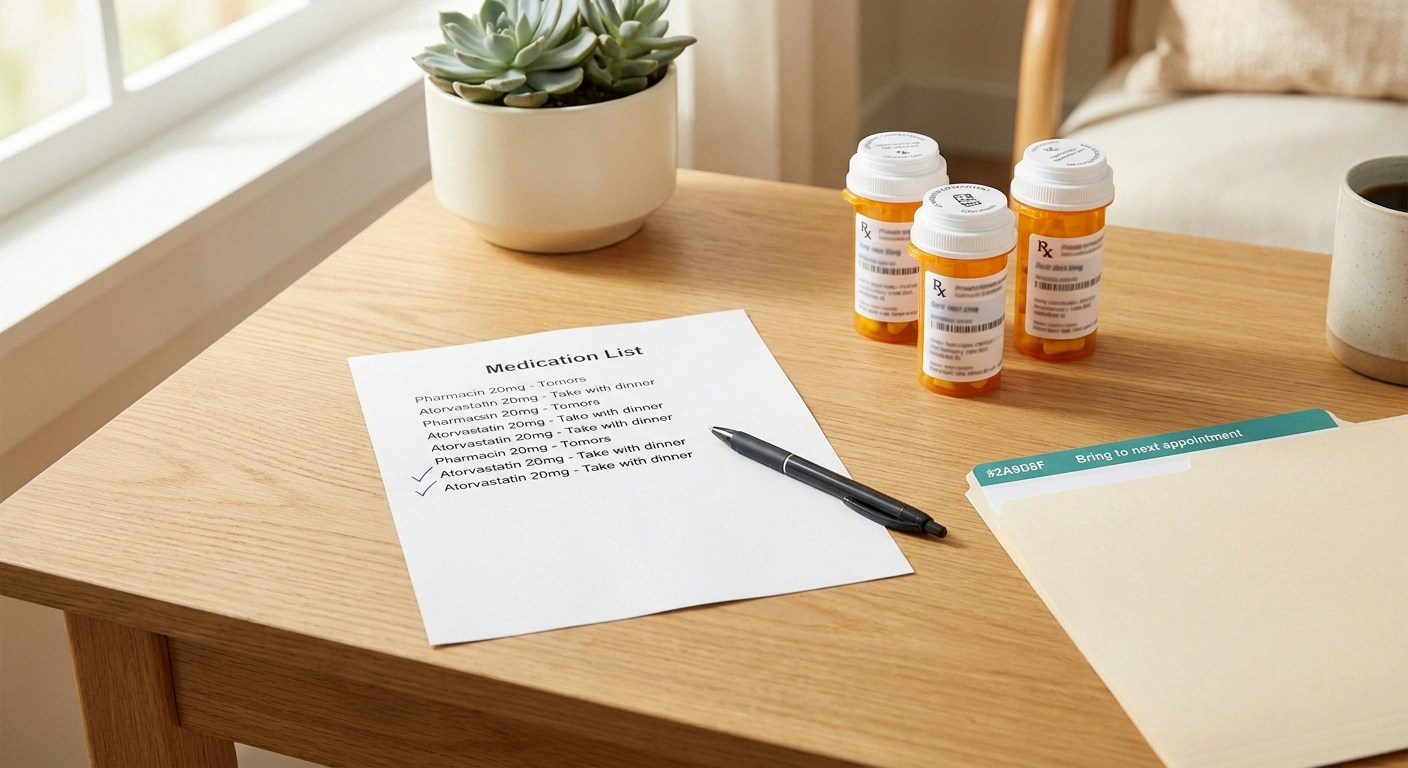
This is the most underappreciated cause of swelling in neuropathy patients, and it’s worth a hard look because some of the offending drugs are the same ones used to treat the neuropathy.
Drugs That Quietly Cause Swelling
- Gabapentin / pregabalin — 10–20% develop peripheral edema
- Amlodipine / other calcium-channel blockers — very common BP drug culprit
- NSAIDs (ibuprofen, naproxen, meloxicam) — salt-and-water retention
- Steroids (prednisone) — fluid retention + appetite
- Pioglitazone (Actos) — diabetes drug with notable peripheral edema
- Some antidepressants and HRT
Never stop a drug on your own. Bring the full med list to your prescriber and have the conversation.
- Gabapentin and pregabalin (Lyrica). Both cause peripheral edema in roughly 10–20% of patients who take them. The swelling typically starts a few weeks after starting the drug or after a dose increase. Many people accept it as the price of pain relief, but it’s worth telling your doctor about — sometimes a dose adjustment or a switch to a different drug class solves it.
- Calcium-channel blockers (amlodipine is the famous one, also nifedipine, felodipine). Common blood-pressure drugs that cause ankle swelling in a meaningful fraction of users. Often the swelling is the reason people stop taking them. There are alternative blood-pressure drugs without this side effect.
- NSAIDs (ibuprofen, naproxen, meloxicam). Cause salt and water retention. Often used long-term for arthritis, sometimes in doses high enough to matter.
- Steroids (prednisone and similar). Cause fluid retention and increased appetite. Common in autoimmune neuropathies, polymyalgia rheumatica, COPD flares.
- Pioglitazone (Actos) — a diabetes medication that causes peripheral edema in a meaningful percentage of users, sometimes severe enough to require stopping.
- Some antidepressants, including a few of the older tricyclics and certain SSRIs, less commonly.
- Hormone replacement therapy — both estrogen-containing forms and some others.
If you’ve had unexplained swelling for weeks and you’re on any of these — especially if the swelling started or worsened after a new prescription or dose change — print your medication list and bring it to your prescriber. Don’t stop anything on your own, especially blood-pressure or diabetes medications. But the conversation is the right next step.
The Red Flags That Mean Call Now
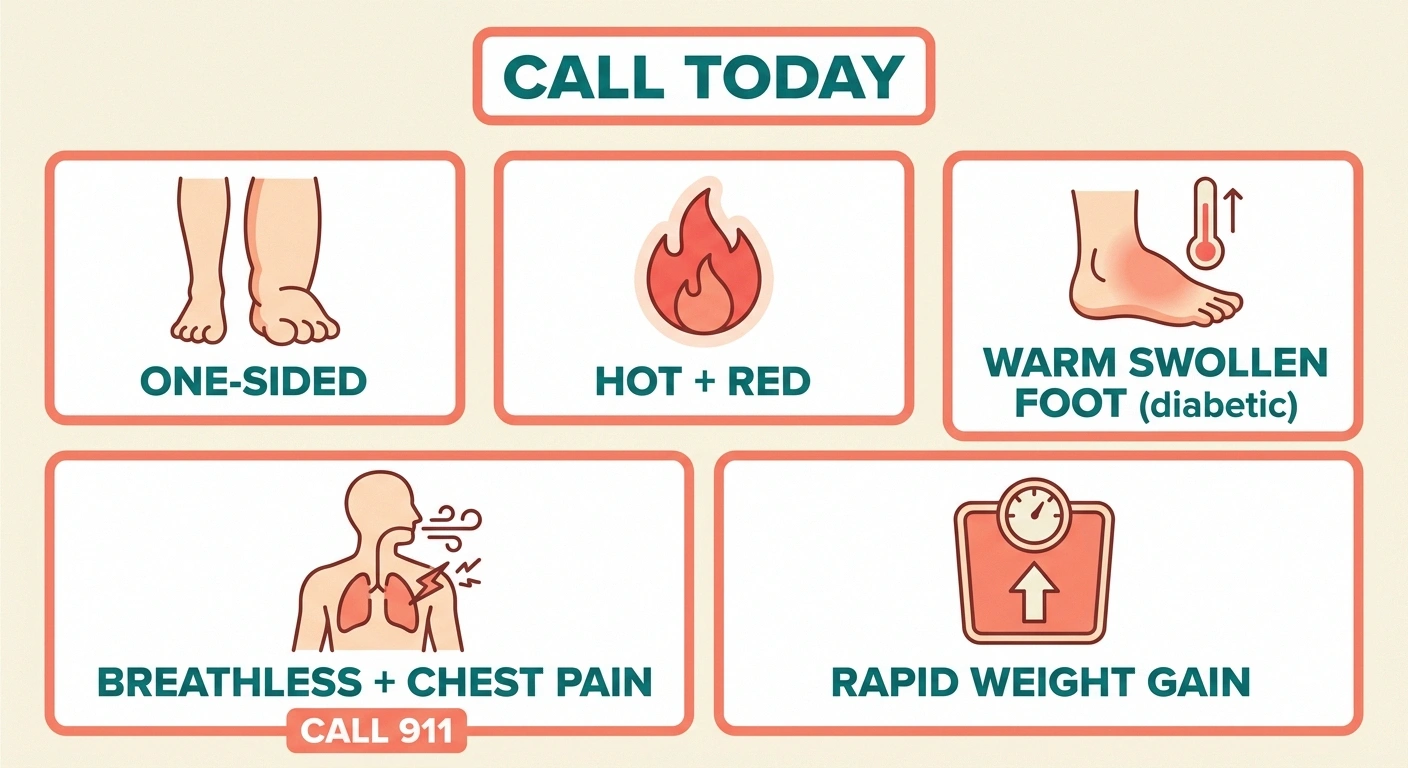
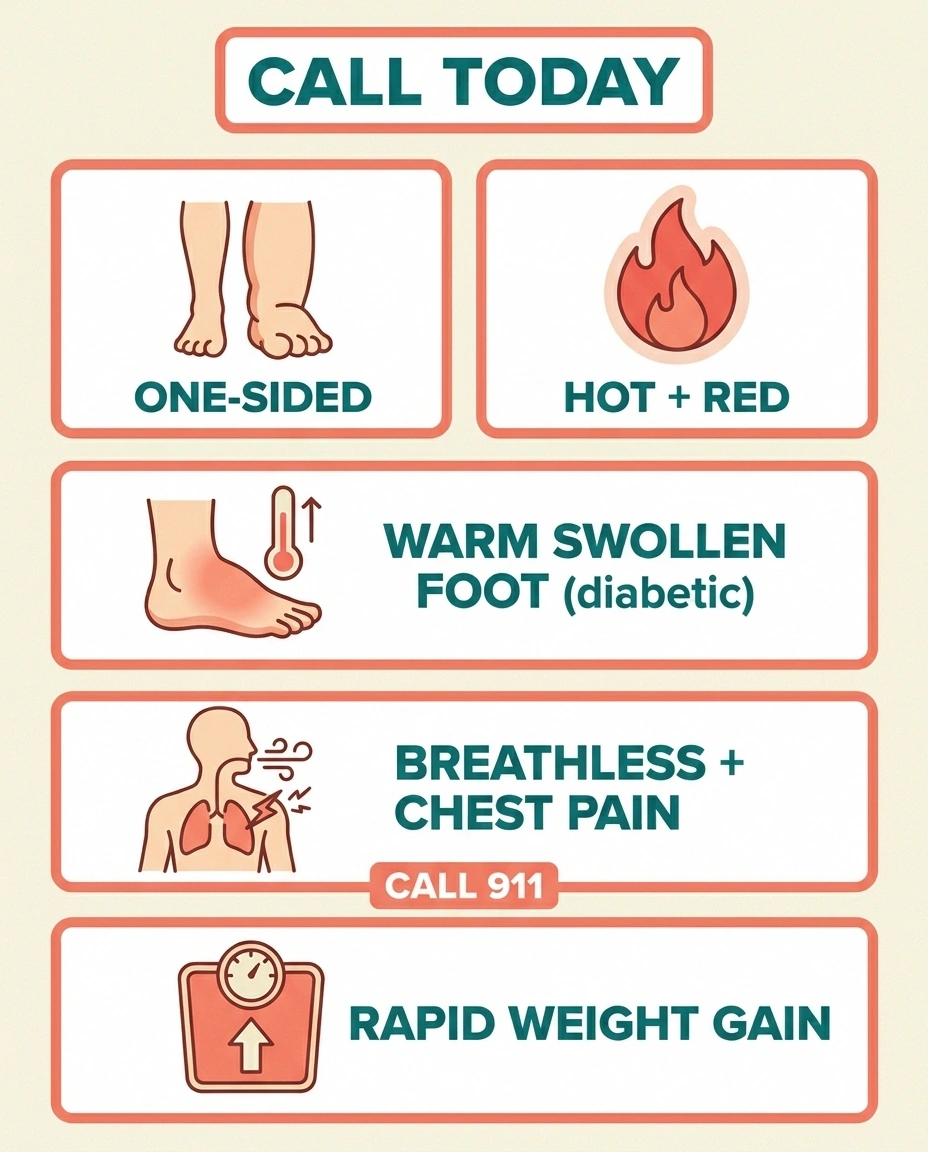
Most ankle swelling is annoying but not urgent. Some patterns are different. If any of these show up, the right move is a phone call to your doctor today — or an emergency room visit, depending on which one.
Swelling Patterns That Mean Call Today
- One leg only — possible blood clot (DVT)
- Hot, red, painful — possible cellulitis (skin infection)
- Warm, swollen, pink foot — no injury — in a diabetic — possible Charcot foot (limb-threatening)
- Shortness of breath, chest pain, coughing blood — possible pulmonary embolism — CALL 911
- Rapid weight gain + can’t breathe lying flat — possible heart failure flare
- Yellow skin or eyes + belly swelling — possible liver decompensation
- One-sided swelling. If only one ankle or one calf is swollen and the other is not, the leading worry is a blood clot (deep vein thrombosis, or DVT). A clot in the leg can travel to the lung and become a medical emergency. Don’t wait. Same goes for unexplained calf pain, especially with redness or warmth.
- Hot, red, painful swelling. Cellulitis is a skin infection that gets worse fast. In someone with diabetic neuropathy, a small unfelt cut can turn into a serious cellulitis quietly. Hot, red, painful — call today.
- Asymmetric warm swollen foot with no obvious injury in a diabetic patient. This is the classic Charcot foot presentation — a slow, painless destruction of foot bones and joints that, if missed, leads to permanent deformity. The foot is warmer than the other one by several degrees, swollen, and often pink. There may be very little pain because the neuropathy masks it. This is an urgent visit.
- Sudden shortness of breath, chest pain, coughing up blood, or fast heartbeat with leg swelling. Possible pulmonary embolism — a clot that’s traveled from the leg to the lung. Call 911.
- Rapid weight gain over days plus shortness of breath when lying flat. Possible heart failure flare. Call your doctor today.
- Yellow skin or eyes, abdominal swelling, plus leg swelling. Possible liver decompensation. Call your doctor today.
- Pitting that takes more than a few seconds to refill in a person who hasn’t been diagnosed with anything — worth a same-week appointment to figure out why.
If you’re not sure which category your swelling fits, err on the side of the phone call. The nurse line at most primary-care practices can triage these in five minutes.
When It’s Just “Routine” Puffy Feet
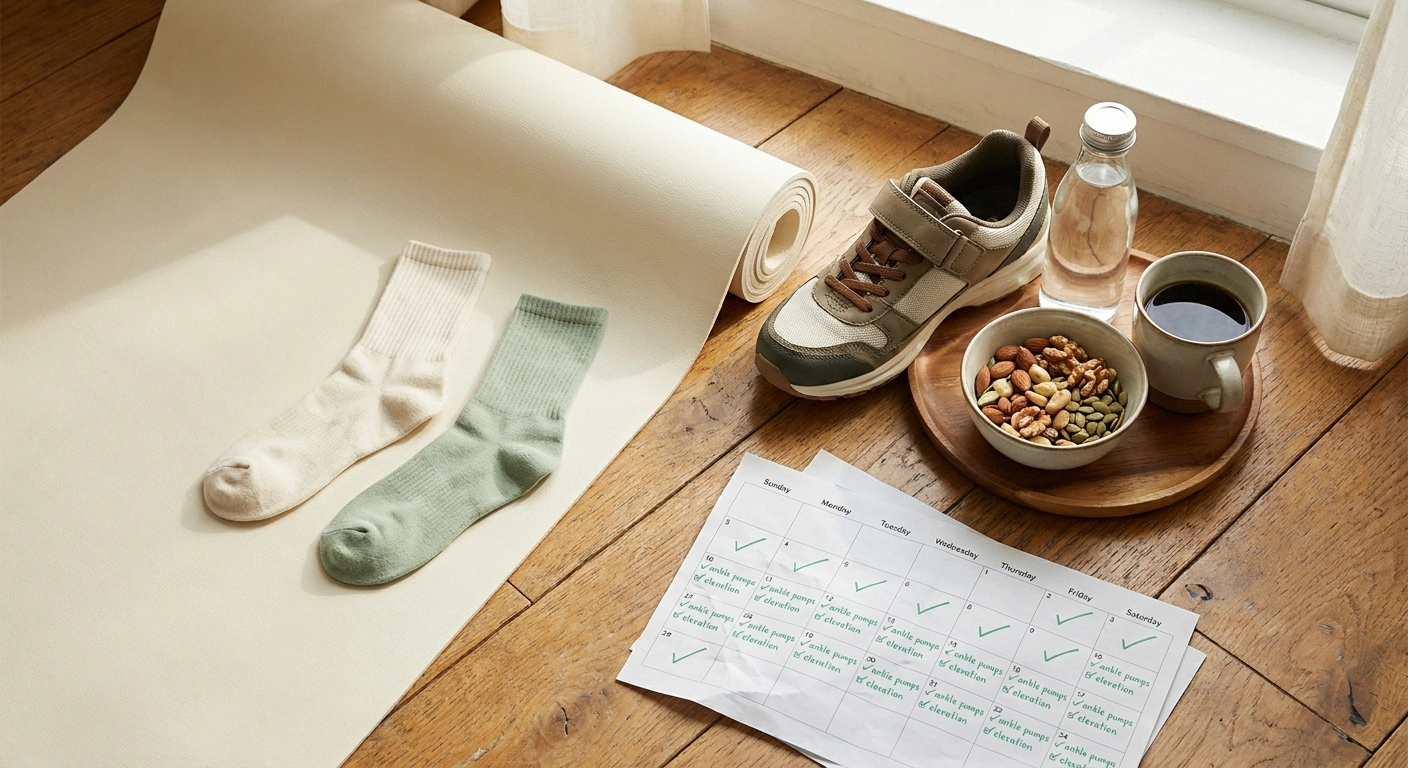
For the much larger group of people whose swelling is the routine end-of-day, both-sides-equal, gets-better-overnight kind, a handful of practical strategies actually help. None of them require a prescription.
The Daily Anti-Swelling Routine
Move the calves. Your calf muscles are the pump. Anything that activates them — walking, ankle circles in a chair, calf raises while doing dishes, marching in place during commercials — pushes fluid back up. Five minutes of ankle pumps every hour beats two long walks a day for swelling management. If walking is hard because of nerve pain, our piece on walking with neuropathy covers gentle entry points.
Elevate when you sit. Get the feet above the level of the heart for 15–30 minutes a couple of times a day. A footstool isn’t enough — that just gets the feet horizontal. Elevate higher: feet on a pillow on the arm of the sofa, or lying down with feet propped on the headboard for a few minutes.
Try compression stockings — carefully. Graduated compression socks push fluid out of the legs. Start with a moderate compression level (15–20 mmHg) unless your doctor specifies otherwise. Put them on first thing in the morning before the legs swell, and take them off at bedtime. Two important cautions for neuropathy patients: (1) if you have peripheral arterial disease — poor circulation in the legs — compression can be dangerous, so get checked first; and (2) numb feet can’t feel a stocking that’s too tight or rolling up the calf, so inspect skin daily and watch for any pressure marks.
Reduce dietary sodium. Most Americans eat far more salt than the body needs. Cutting back to 1,500–2,000 mg per day reduces fluid retention noticeably for many people. The biggest sources are usually processed foods, restaurant meals, soups, and bread — not the salt shaker.
Watch the medication list. If a recent prescription change tracks with the start of the swelling, mention it. There’s almost always an alternative.
Manage your weight if it’s a factor. Carrying extra weight makes the venous-pump problem worse and contributes to swelling in nearly everyone.
Take care of the skin. Swollen skin is more vulnerable to cracks, infections, and pressure injuries — especially in diabetic neuropathy where you can’t feel a problem developing. Moisturize daily, inspect the skin at the end of each day, and treat any new redness, crack, or open spot as a same-week call to your podiatrist or primary-care doctor.
The Compression Sock Conversation Worth Having
Compression stockings are the most useful tool in the routine-swelling toolbox and the most often used wrong. A few things people don’t always know:
Compression Strength Cheat Sheet
Replace every 3–6 months — compression weakens with washing. Old stockings give a false sense of security.
- Compression strengths matter. 8–15 mmHg is essentially loose support — fine for travel, not strong enough for real edema. 15–20 mmHg is the routine starting point for mild swelling. 20–30 mmHg is therapeutic — venous insufficiency, post-DVT, real chronic edema. Above that is for severe lymphedema and requires fitting.
- Length matters. Knee-high stockings handle most ankle/calf swelling. Thigh-high is needed if the swelling extends above the knee. Pantyhose styles for full-leg involvement.
- Get the fit right. Measure the calf and ankle in the morning before any swelling develops. Stockings that are too tight cause more harm than no stockings; stockings that are too loose do nothing.
- Put them on dry skin. Damp skin is harder to slide them onto. Pull them on slowly; bunched or rolled stockings act like tourniquets.
- Replace every 3–6 months. The compression weakens with washing and wear. Old, stretched stockings give a false sense of security.
If you have any doubt about whether compression is safe for you — especially if your feet feel cold or your toes look pale — get checked for peripheral arterial disease first. The same doctor who manages your neuropathy can do this.
What I’d Do If I Were Starting This Conversation Today
If the swelling were new for me, here’s the order I’d run through. None of this replaces a doctor visit, but it’ll make that visit more productive.
- Spend 24 hours noting the pattern. Both ankles or just one? Better in the morning, worse at night? Goes down after elevation? Any new shortness of breath, sudden weight gain, chest tightness, hot redness?
- List my current medications — including over-the-counter — and circle anything I’ve started or had a dose change on in the last few months.
- If any red-flag pattern shows up (one-sided, hot/red, sudden, with breathing problems, with chest pain, with a warm swollen foot in a diabetic patient) — phone call or ER that day.
- Otherwise, schedule a primary care visit. Bring the pattern notes and the med list. Expect basic blood work (kidney function, liver function, possibly thyroid and a heart-related blood test called BNP), a basic exam, and possibly a venous ultrasound if the picture suggests venous insufficiency or clot concern.
- Start the basic routine while you wait — elevation, calf pumps every hour, lower-sodium meals, gentle compression unless told otherwise.
- Watch the feet. Daily inspection. Swollen + numb is high ulcer risk. Our foot care guide covers the routine; tighten it up when swelling appears.
Footwear Matters More When the Feet Swell
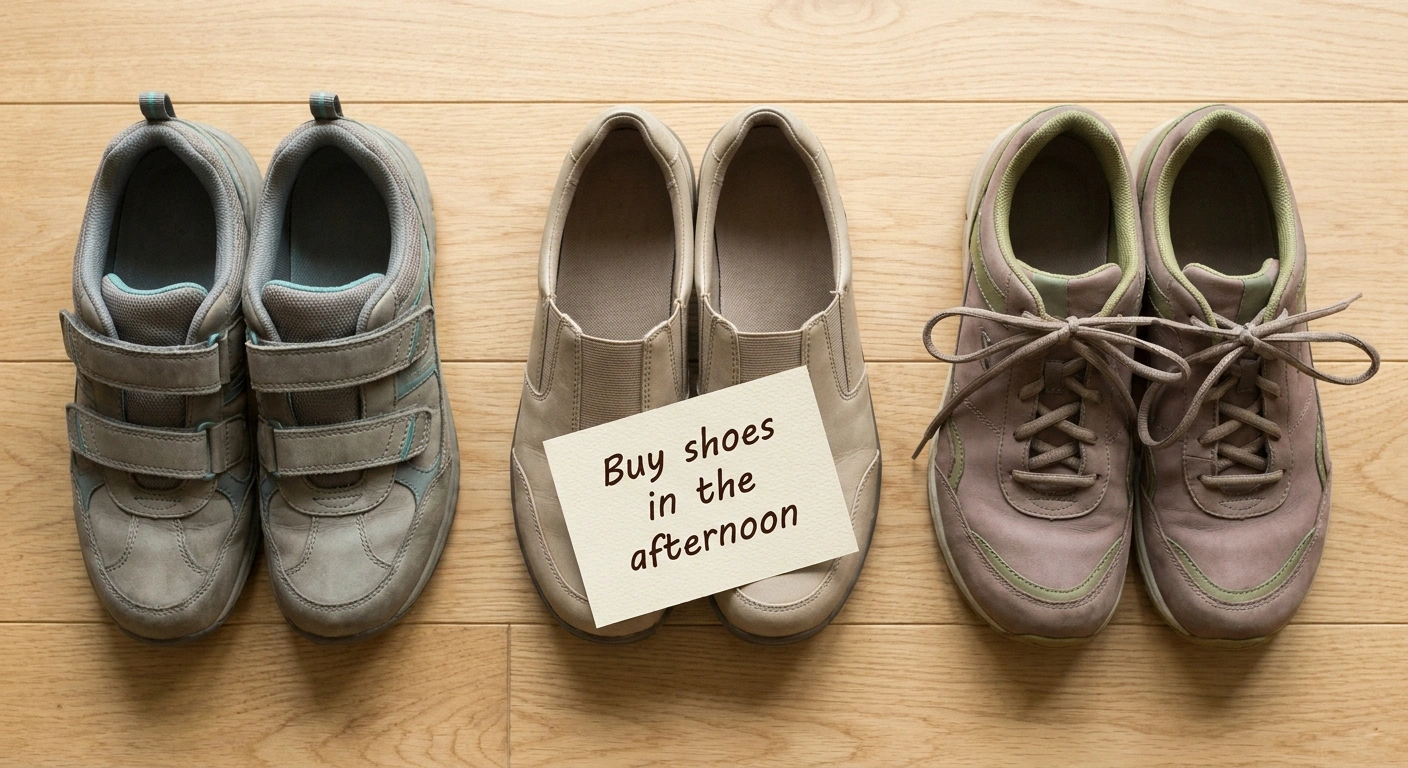
If your normal shoes feel tight by mid-afternoon, that’s information — not just nuisance. Shoes that pinch swollen, numb feet cause pressure injuries that you may not feel until they’re a problem. The fix is straightforward:
- Buy shoes in the afternoon, when the feet are at their largest.
- Look for an adjustable closure (Velcro, laces, or stretch panels) that accommodates a swollen foot in the evening without crushing a thinner foot in the morning.
- Make sure the toe box is roomy enough that toes don’t press against the front when the feet are swollen.
- Avoid sock lines that leave deep grooves — they’re a sign the elastic is too tight for your circulation.
The shoe principles in our best shoes for neuropathy piece all apply with extra force when edema is part of the picture. Your shoes are working harder; treat them that way.
Frequently Asked Questions
Does neuropathy directly cause feet and ankles to swell?
Most peripheral neuropathy does not directly cause swelling. The exception is autonomic neuropathy, where damage to the nerves controlling blood vessel tone allows fluid to pool in the lower legs. Even then, neuropathy is usually one contributor among several — heart, kidney, venous, and medication factors are commonly involved.
Can gabapentin or pregabalin cause my ankles to swell?
Yes. Peripheral edema is a known side effect of both medications, occurring in roughly 10 to 20 percent of users. The swelling typically appears within weeks of starting the drug or after a dose increase. Talk to your prescriber — sometimes a dose adjustment, switch to a different drug class, or addition of compression helps. Do not stop these drugs abruptly; they need a taper.
When does swelling become an emergency?
Call your doctor or 911 right away for: one-sided leg swelling (possible blood clot), hot red painful swelling (possible skin infection), sudden shortness of breath or chest pain with leg swelling (possible clot to the lung or heart failure flare), or a warm swollen foot without injury in a diabetic patient (possible Charcot foot — limb-threatening if missed).
Should I take a water pill for my swollen ankles?
Not on your own. Diuretics treat some causes of swelling (heart failure, certain kidney conditions) and are useless or harmful for others (venous insufficiency, drug-induced edema). Taking them without a workup can mask the real cause and cause dehydration, kidney injury, or electrolyte imbalances. Get the cause identified first.
Are compression stockings safe for everyone with neuropathy?
Not everyone. People with peripheral arterial disease (poor leg circulation) can be harmed by compression — it can further reduce already-marginal blood flow. The same neuropathy that makes you a candidate for compression can also mask the warning signs of a stocking that is too tight, so daily skin inspection is essential. Have your doctor confirm compression is safe for you and check the fit.
How long does it take for swollen ankles to go down?
Routine end-of-day swelling usually resolves overnight with elevation and rest. Swelling that persists for more than 2 to 3 days, gets worse over time, or doesn’t improve with elevation deserves medical attention. Quick reversal usually points to a fluid or salt issue; slow stubborn swelling more often points to venous, lymphatic, or systemic causes.
Will losing weight help?
Often substantially. Extra weight reduces the efficiency of the calf-muscle pump, contributes to venous insufficiency, and worsens diabetes if that’s part of the picture. A gradual, sustainable approach matters more than a crash diet — which can shed water weight initially and then plateau.
Can I prevent the swelling rather than just treat it?
Most of the routine cases are highly preventable: regular movement of the calf muscles, elevation breaks during long sitting or standing, lower-sodium eating, proper-fitting shoes, careful weight management, and morning-applied compression for those who tolerate it. Reviewing your medication list every year with your doctor catches the drug-induced cases before they become entrenched.
About the Author